20 Results for "

cAMP concentrations

" in MedChemExpress (MCE) Product Catalog:
Products (20)

20 Results for "cAMP concentrations" in MCE Product Catalog:

2
2 Cited Publications
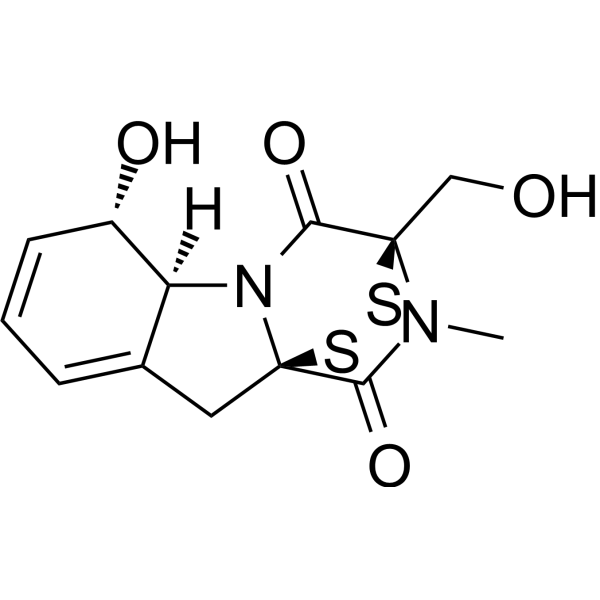
Cat. No.: HY-N6727
CAS No.: 67-99-2
Synonyms: Aspergillin
Gliotoxin is a secondary metabolite, the most abundant mycotoxin secreted by A. fumigatus, inhibits the phagocytosis of macrophages and the immune functions of other immune cells . Gliotoxin inhibits inducible NF-κB activity by preventing IκB degradation, which consequently induces host-cell apoptosis . Gliotoxin activates PKA and increases intracellular cAMP concentration; modulates actin cytoskeleton rearrangement to facilitate A. fumigatus internalization into lung epithelial cells . Gliotoxin is a potent NOTCH2 transactivation inhibitor, can effectively induce apoptosis of chronic lymphocytic leukemia (CLL) cells .
loading...
    loading...
1
1 Cited Publications
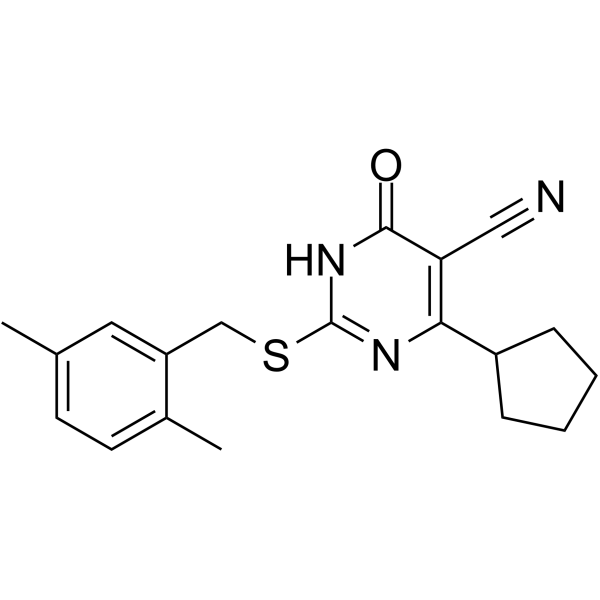
Cat. No.: HY-117958
CAS No.: 1383539-73-8
Purity:  99.62%
Target:  

Ras

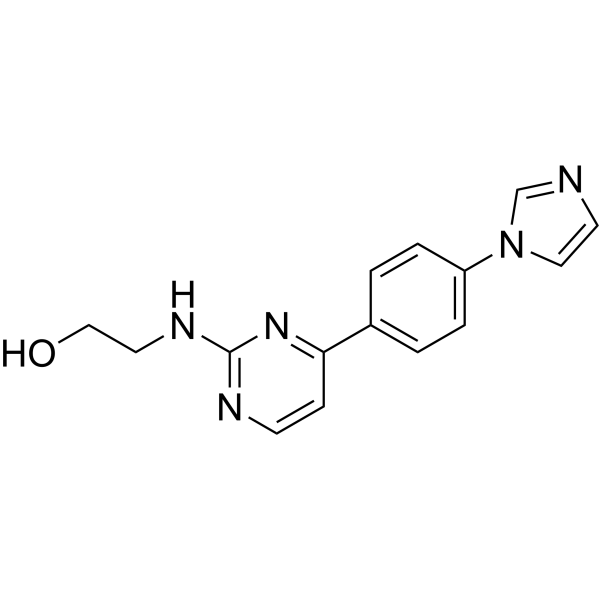
HJC0197 is a potent Epac1 (exchange protein directly activated by cAMP 1) and Epac2 (IC50=5.9 μM for Epac2) antagonist. HJC0197 selectively blocks cAMP-induced Epac activation. HJC0197 inhibits Epac1-mediated Rap1-GDP exchange activity at 25 μM in the presence of equal concentration of cAMP .
loading...
    loading...
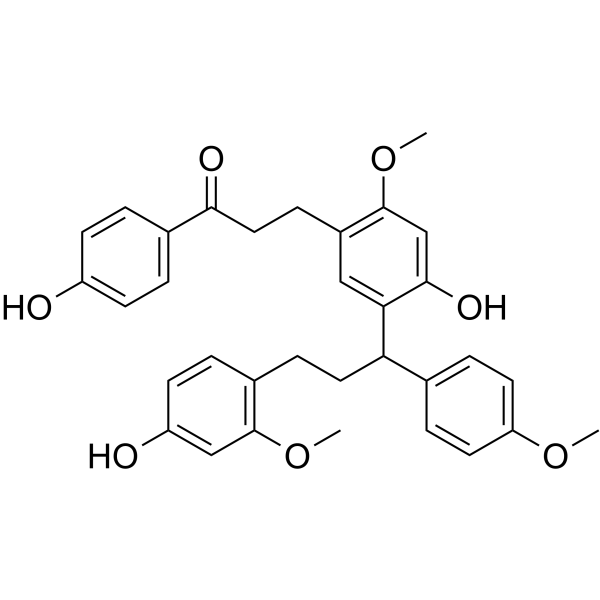
Cat. No.: HY-N2452
CAS No.: 956103-79-0
Cochinchinenin C is a GLP-1R agonist that binds to the extracellular domain of the receptor via hydrophobic interactions and hydrogen bonds, and promotes glucose-dependent insulin secretion from pancreatic β-cells. Cochinchinenin C also increases intracellular cAMP and ATP levels. At low concentrations, Cochinchinenin C binds to human serum albumin, alters its microenvironment, and induces dominant static fluorescence quenching. Cochinchinenin C shows almost no cytotoxicity to pancreatic β-cells, and exerts a synergistic effect with Loureirin A (HY-N1505) when binding to human serum albumin. Cochinchinenin C has been widely used in studies of type 2 diabetes, Helicobacter pylori infection, thrombotic diseases, and other conditions .
loading...
    loading...
Cat. No.: HY-177122
CAS No.: 3034857-88-7
Target:  

Dopamine Receptor

Research Areas:  

Neurological Disease

Raxlaprazine etomoxil is a small molecule compound with dopamine D2 and D3 receptor modulating activity, which has potential application value in research related to mental illnesses. Raxlaprazine etomoxil exhibits high affinity for human recombinant D2L receptors, with an inhibition constant (Ki) of 1.95 nM. Raxlaprazine etomoxil effectively inhibits forskolin-stimulated cAMP accumulation, with an half maximal effective concentration (EC50) of 3.72 nM in functional activity experiments .
loading...
    loading...
Cat. No.: HY-122622
CAS No.: 1655498-17-1
Research Areas:  

Others

PF-04471141 (hydrochloride) is a compound that regulates intracellular cAMP and cGMP concentrations. It is a PDE1 inhibitor and has different effects on different PDE enzymes in regulating intracellular signaling molecule concentrations and cell proliferation in vascular smooth muscle cells.
loading...
    loading...
Cat. No.: HY-114990
CAS No.: 148714-88-9
Research Areas:  

Cardiovascular Disease

EMD 57439 is a selective PDE-III inhibitor. EMD 57439 does not significantly increase c-AMP concentration and has little effect on Ca(50) .
loading...
    loading...
Cat. No.: HY-124381
CAS No.: 174008-52-7
Target:  

5-HT Receptor

Research Areas:  

Others

ML10375 is a compound that modulates 5-HT4 and 5-HT2 receptors, affects gap junction coupling in rat atrial myocytes, and regulates intracellular cAMP concentration and L-type calcium current.
loading...
    loading...
Cat. No.: HY-N3464
CAS No.: 4431-42-9
Isopedicin potently and concentration-dependently inhibits superoxide anion (O2 U?) production in formyl-L-methionyl-L-leucyl-L-phenylalanine (FMLP)-activated cells. Isopedicin increases cAMP formation and PKA activity in FMLP-activated cells by inhibiting phosphodiesterase (PDE) activity .
loading...
    loading...
Cat. No.: HY-69172
CAS No.: 152814-89-6
RS-25344 is a selective inhibitor of phosphodiesterase type IV (PDE4). RS-25344 increases intracellular cAMP (cyclic adenosine phosphate) concentration by inhibiting PDE4 activity. RS-25344 can be used in the study of inflammation, immune diseases, neurodegenerative diseases and cardiovascular diseases .
loading...
    loading...
Cat. No.: HY-153542
CAS No.: 2234276-60-7
Target:  

PKG

Research Areas:  

Others

AP-C6 is a potent inhibitor of guanosine 3′,5′-cyclic monophosphate (cGMP)-dependent protein kinase II (cGKII) with a pIC50 of 6.5. AP-C6 concentration-dependently inhibits human cGKII activity in vitro. AP-C6 potentiate cAMP signaling by PDE inhibition .
loading...
    loading...
Cat. No.: HY-113513
CAS No.: 92008-51-0
Category:  

Microorganisms

Target:  

Others

5(S)-HEPE is an active metabolite of eicosapentaenoic acid. It is formed from EPA by 5-lipoxygenase (5-LO). 5(S)-HEPE is an agonist of G protein-coupled receptor 119 (GPR119). It increases cAMP accumulation in CHO-K1 cells expressing human GPR119 when used at a concentration of 10 μM. 5(S)-HEPE increases glucose-induced insulin secretion from MING6 insulinoma pancreatic islets and glucagon-like peptide 1 (GLP-1) secretion from HuTu 80 adenocarcinoma cells when used at a concentration of 10 μM. Serum levels of 5(S)-HEPE are elevated in patients with hyperlipidemia.
loading...
    loading...
Cat. No.: HY-116755
CAS No.: 55837-29-1
Synonyms: CR 605
Research Areas:  

Neurological Disease

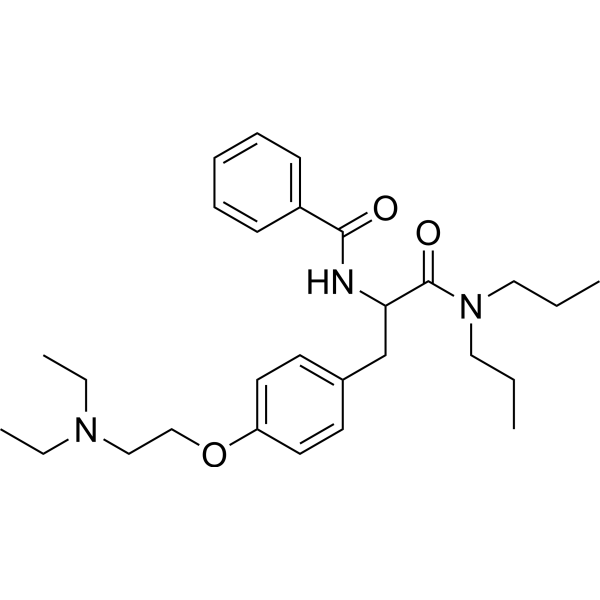
Tiropramide (CR 605) is a tyrosine derivative with antispastic properties. Tiropramide hydrochloride inhibits phosphodiesterase activity involved in cAMP catabolism in rabbit colon homogenates. Tiropramide relaxes smooth muscle in rabbit isolated colon. Tiropramide can be used for the research of irritable colon and biliary dyskinesia .
loading...
    loading...
Cat. No.: HY-116295
CAS No.: 7077-89-6
MRS2690 is a selective P2Y14 receptor agonist. MRS2690 inhibits adenylyl cyclase activity, thereby reducing intracellular cAMP levels and mediating concentration-dependent vasoconstriction of porcine coronary arteries. MRS2690 induces intracellular calcium mobilization, activates P38 and stimulates [ 35S]GTPγS binding to RBL-2H3 cell membranes. MRS2690 enhances antigen (NP-BSA)-, C3a-induced β-hexosaminidase (β-Hex) release. MRS2690can be used for ischemic heart disease .
loading...
    loading...
Cat. No.: HY-116295A
MRS2690 disodium is a selective P2Y14 receptor agonist. MRS2690 disodium inhibits adenylyl cyclase activity, thereby reducing intracellular cAMP levels and mediating concentration-dependent vasoconstriction of porcine coronary arteries. MRS2690 disodium induces intracellular calcium mobilization, activates P38 and stimulates [ 35S]GTPγS binding to RBL-2H3 cell membranes. MRS2690 enhances antigen (NP-BSA)-, C3a-induced β-hexosaminidase (β-Hex) release. MRS2690 disodium can be used for ischemic heart disease .
loading...
    loading...
Cat. No.: HY-P0248F1
Research Areas:  

Others

Kemptide-FITC is a fluorescently labeled Kemptide (HY-P0248). Kemptide is a synthetic heptapeptide that acts as a specific substrate for cAMP-dependent protein kinase (PKA). Kemptide-FITC enables the quantification of PKA activity and can also indirectly determine cAMP concentrations through the activation of PKA in sperm insoluble fractions. Kemptide-FITC is applicable for kinase mobility shift assay (KiMSA), and its fluorescent signal shows a linear response with increasing peptide amount within a specific range on agarose gels .
loading...
    loading...
Cat. No.: HY-43934
CAS No.: 53567-47-8
Synonyms: CR 605 hydrochloride
Research Areas:  

Neurological Disease

Tiropramide (CR 605) hydrochloride is a tyrosine derivative with antispastic properties. Tiropramide hydrochloride inhibits phosphodiesterase activity involved in cAMP catabolism in rabbit colon homogenates. Tiropramide hydrochloride relaxes smooth muscle in rabbit isolated colon. Tiropramide hydrochloride can be used for the research of irritable colon and biliary dyskinesia .
loading...
    loading...
Cat. No.: HY-184849
CAS No.: 7219-59-2
Research Areas:  

Others

Glu-Arg is a dipeptide linked by L-glutamic acid and L-arginine. Glu-Arg contributes to the construction of the hydrophobic network and maintenance of stability of mouse cAMP-dependent protein kinase; it acts as a core hub connecting the activation segment and the GHI subdomain in eukaryotic protein kinases, and promotes signal transmission between elements and within enzymes. As a salt bridge, Glu-Arg regulates the formation and unfolding rates of α-helices, and its optimized spatial conformation is conducive to the stability and folding rate of α-helices. Glu-Arg induces concentration-dependent intracellular calcium changes in cultured human fungiform taste bud cells .
loading...
    loading...
Cat. No.: HY-182774
CAS No.: 1092445-63-0
Target:  

CXCR

Research Areas:  

Cancer

YU241279 is an orally active CXCR5 inhibitor. YU241279 inhibits CXCL13-mediated Gαq-dependent calcium influx and Gαi2-dependent cAMP reduction in CXCR5-expressing cells. YU241279 inhibits the proliferation of CXCR5-expressing lymphoma cells. YU241279 reduces tumor burden in the peripheral blood and bone marrow of mice implanted with lymphoma tissues. YU241279 is well tolerated during oral administration in mice, maintains stable plasma drug concentrations, and shows no metabolic changes. YU241279 can be used in the research of angioimmunoblastic T-cell lymphoma and Burkitt B-cell lymphoma .
loading...
    loading...
Cat. No.: HY-183657
Target:  

Orphan GPCR

Research Areas:  

Neurological Disease

GPR3 inverse agonist-1 is a GPR3 inverse agonist with low micromolar potency in conformational analysis. GPR3 inverse agonist-1 inhibits GPR3-dependent Gs activity in HEK293A cells with an EC50 of 250 nM, and exhibits an EC50 of 2 μM in cAMP assays. GPR3 inverse agonist-1 induces concentration-dependent changes in BRET signals in GPR3 conformational biosensors (EC50 = 5 μM), reduces basal Gs activity downstream of GPR3, and competes for binding sites with the GPR3 agonist DPI (HY-100965). GPR3 inverse agonist-1 can be used in research related to Alzheimer's disease .
loading...
    loading...
Cat. No.: HY-183657A
Target:  

Orphan GPCR

Research Areas:  

Neurological Disease

GPR3 inverse agonist-1 TFA is a GPR3 inverse agonist with low micromolar potency in conformational analysis. GPR3 inverse agonist-1 TFA inhibits GPR3-dependent Gs activity in HEK293A cells with an EC50 of 250 nM, and exhibits an EC50 of 2 μM in cAMP assays. GPR3 inverse agonist-1 TFA induces concentration-dependent BRET signal changes in GPR3 conformational biosensors (EC50 = 5 μM), reduces basal Gs activity downstream of GPR3, competes for binding sites with the GPR3 agonist DPI (HY-100965). GPR3 inverse agonist-1 TFA can be used in research related to Alzheimer's disease .
loading...
    loading...
  • 1

