Search Result
Results for "
cabbage
" in MedChemExpress (MCE) Product Catalog:
3
Biochemical Assay Reagents
1
Isotope-Labeled Compounds
| Cat. No. |
Product Name |
Target |
Research Areas |
Chemical Structure |
-
- HY-N9497
-
|
|
Galectin
Fungal
|
Infection
|
|
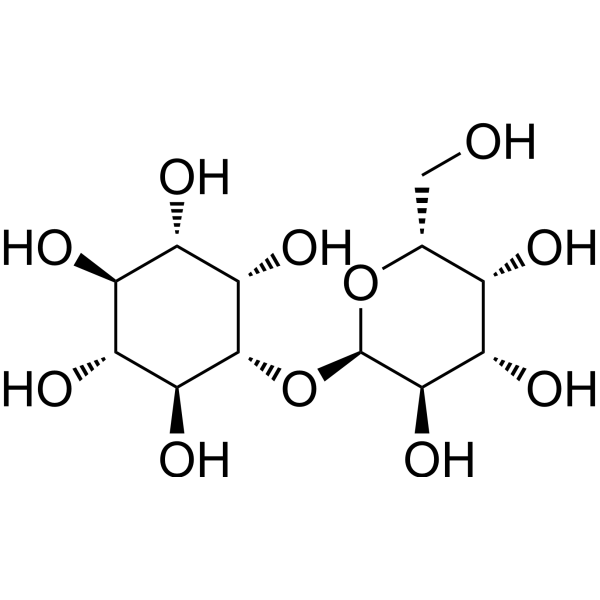
Galactinol is a disaccharide carbohydrate serving as a galactosyl donor, which belongs to the raffinose family oligosaccharide pathway and acts as an important osmoprotectant. Galactinol not only induces disease resistance in plants against fungal and bacterial pathogens, but also significantly enhances plant tolerance to abiotic stresses such as drought, high salinity, low temperature and oxidative damage. In addition, Galactinol has the ability to scavenge hydroxyl radicals, can act as a signaling component for root colonization-induced systemic resistance, and is positively correlated with seed longevity in various crops, making it a potential biomarker for evaluating seed vigor. Therefore, Galactinol can be used in the research of various plant diseases including fungal leaf spot, bacterial angular leaf spot, gray mold and soft rot .
|
-
-
- HY-156041
-
|
Lyso-PE (egg); LPE (egg); L-α-lysophosphatidylethanolamine
|
Endogenous Metabolite
|
Metabolic Disease
|
|
Lysophosphatidylethanolamine (LPE) is a naturally-occurring lysophospholipid that can be generated via deacylation of phosphatidylethanolamine by phospholipase A2 (PLA2). It increases the phosphorylation of ERK1/2 in PC12 cells, an effect that can be blocked by the MEK inhibitors U-0126 (HY-12031A) and PD 98059 (HY-12028) and the EGFR inhibitor AG-1478 (HY-13524).1 LPE also increases neurite outgrowth and expression of neurofilament M in PC12 cells. LPE inhibits the activity of phospholipase D (PLD) partially purified from cabbage.3 This product contains lysophosphatidylethanolamine molecular species with variable fatty acyl chain lengths at the sn-1 position and a hydroxy group at the sn-2 position.
|
-
-
- HY-B1953
-
|
|
Environmental Pollutants
Insecticide
nAChR
|
Infection
|
|
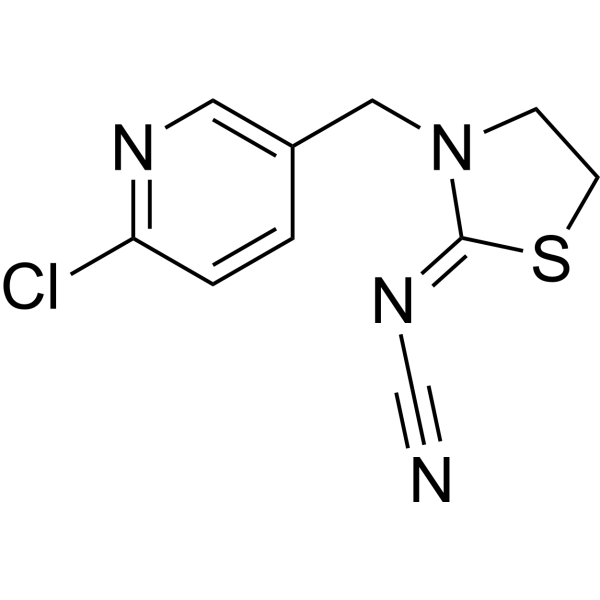
Thiacloprid is an orally active neurotoxic insecticide and also a nAChR agonist. Thiacloprid reduces the viability of healthy cells, depletes reduced glutathione, and increases MDA levels, thereby inducing cytotoxicity and oxidative stress damage. In practical applications, Thiacloprid has lower acute toxicity to honeybees than other compounds of the same class such as Imidacloprid (HY-B0838), but it still significantly impairs the learning and memory function, immune capacity and survival status of honeybees. Thiacloprid induces intestinal microbial dysbiosis and reduces survival rate in middle-aged honeybees, increases the risk of premature collapse in bumblebee colonies, and significantly decreases the final colony weight and reproductive output. Thiacloprid is used in broad-spectrum agricultural pest control, often alone or in combination with Deltamethrin (HY-B1971), and meets the pest management needs of various crops including potatoes, cabbages, various fruits and vegetables, and nuts .
|
-
-
- HY-128421
-
|
Brassylic Acid
|
Endogenous Metabolite
Parasite
|
Infection
Metabolic Disease
|
|
Tridecanedioic acid is an endogenous metabolite. Tridecanedioic acid is an endogenous metabolite. Tridecanedioic acid is related to the metabolic regulation of non-alcoholic fatty liver disease (NASH) and may be an important node molecule in the intestinal microbiota-host metabolism interaction network. Tridecanedioic acid is significantly accumulated in tolerant cabbage-type rapeseed varieties and has a lower content in sensitive varieties. It plays an important role in the defense response against the infection of the small cabbage moth (Plutella xylostella). Tridecanedioic acid can be used as a biomarker for plant insect resistance or a diagnostic marker for metabolic diseases .
|
-
-
- HY-B0941A
-
|
Benzyladenine, suitable for plant cell culture; 6-BAP, suitable for plant cell culture; N6-Benzyladenine, suitable for plant cell culture
|
Biochemical Assay Reagents
|
Others
|
|
6-Benzylaminopurine,suitable for plant cell culture is a cytokinin that induces plant growth and development by stimulating cell division, and prolongs the freshness of green vegetables through inhibiting respiratory kinases .
|
-
-
- HY-N7659
-
|
|
Phytohormone
Apoptosis
Microtubule/Tubulin
|
Cancer
|
|
Glucobrassicin is an indole-based anticancer agent and plant growth-regulating hormone. Glucobrassicin exerts its biological activity by disrupting the integrity of microtubule networks in both plant and mammalian cells. At high concentrations, Glucobrassicin inhibits seed germination and root growth; it can also specifically induce apoptosis in mammalian cancer cells and interfere with the intercellular transmission of viruses that rely on microtubules. In plants, Glucobrassicin can be catalyzed by myrosinase to release growth-regulating substances, exhibiting a concentration-dependent growth-regulating effect .
|
-
-
- HY-P2812B
-
|
|
Phospholipase
|
Cardiovascular Disease
Neurological Disease
Inflammation/Immunology
Cancer
|
|
Phospholipase D, cabbage is an enzyme of the phospholipase superfamily. Phospholipase D, cabbage is widely found in bacteria, yeast, plants, animals and viruses and is often used in biochemical research. Phospholipase D, cabbage can catalyze the hydrolysis of the phosphodiester bond of glycerophospholipids to produce phosphatidic acid and soluble choline. Phospholipase D, cabbage is involved in a variety of disease-related processes, including diabetes, atherosclerosis, obesity, tumorigenesis, immune response and neuroendocrine function .
|
-
-
- HY-137884
-
|
3-Acetoxyindole
|
Biochemical Assay Reagents
|
Others
|
|
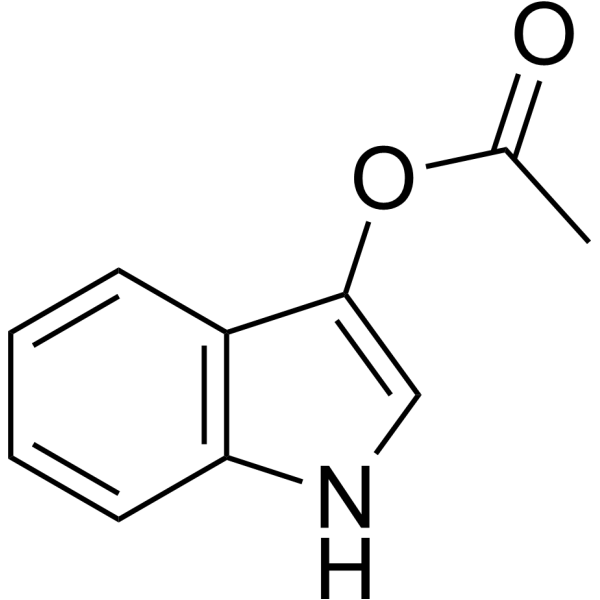
3-Indolyl acetate is an ester derivative of indole that is ubiquitous in various plant tissues, especially in certain cruciferous vegetables such as broccoli and cabbage. 3-Indolyl acetate has unique chemical properties that make it an important signaling molecule in plants, regulating various physiological processes such as growth and defense against pathogens. It also has potential applications in the pharmaceutical industry, as it has been shown to have antitumor and anti-inflammatory effects in some studies.
|
-
-
- HY-128421R
-
|
Brassylic Acid (Standard)
|
Reference Standards
Endogenous Metabolite
Parasite
|
Infection
Metabolic Disease
|
|
Tridecanedioic acid (Standard) is the analytical standard of Tridecanedioic acid (HY-128421). This product is intended for research and analytical applications. Tridecanedioic acid is an endogenous metabolite. Tridecanedioic acid is an endogenous metabolite. Tridecanedioic acid is related to the metabolic regulation of non-alcoholic fatty liver disease (NASH) and may be an important node molecule in the intestinal microbiota-host metabolism interaction network. Tridecanedioic acid is significantly accumulated in tolerant cabbage-type rapeseed varieties and has a lower content in sensitive varieties. It plays an important role in the defense response against the infection of the small cabbage moth (Plutella xylostella). Tridecanedioic acid can be used as a biomarker for plant insect resistance or a diagnostic marker for metabolic diseases.
|
-
-
- HY-W540861
-
|
|
Biochemical Assay Reagents
|
Others
|
|
3,4-Dichlorophenyl Isothiocyanate is an intermediate in organic synthesis and is used to make other isothiocyanate-containing compounds. 3,4-Dichlorophenyl Isothiocyanate and its derivatives can be used to induce cabbage root flies and test their behavioral responses and trap bait effects .
|
-
-
- HY-W714675
-
|
|
Endogenous Metabolite
|
Cancer
|
|
Glucoiberin is a glucosinolate found in Brassica oleracea. Hydrolysis products of Glucoiberin exhibit anticancer activity .
|
-
-
- HY-B1953R
-
|
|
Reference Standards
nAChR
Insecticide
|
Infection
|
|
Thiacloprid (Standard) is the analytical standard of Thiacloprid. This product is intended for research and analytical applications. Thiacloprid is an orally active neurotoxic insecticide and also a nAChR agonist. Thiacloprid reduces the viability of healthy cells, depletes reduced glutathione, and increases MDA levels, thereby inducing cytotoxicity and oxidative stress damage. In practical applications, Thiacloprid has lower acute toxicity to honeybees than other compounds of the same class such as Imidacloprid (HY-B0838), but it still significantly impairs the learning and memory function, immune capacity and survival status of honeybees. Thiacloprid induces intestinal microbial dysbiosis and reduces survival rate in middle-aged honeybees, increases the risk of premature collapse in bumblebee colonies, and significantly decreases the final colony weight and reproductive output. Thiacloprid is used in broad-spectrum agricultural pest control, often alone or in combination with Deltamethrin (HY-B1971), and meets the pest management needs of various crops including potatoes, cabbages, various fruits and vegetables, and nuts .
|
-
-
- HY-N14363
-
-
-
- HY-N18721
-
|
|
Others
|
Cardiovascular Disease
|
|
Cabbage, ext. is a cabbage-derived product with versatility spaning across the research of multifarious ailments, encompassing inflammation-induced disorders, cardiovascular afflictions and even specific cancers.
|
-
-
- HY-B1953S
-
|
|
nAChR
Insecticide
|
Infection
|
|
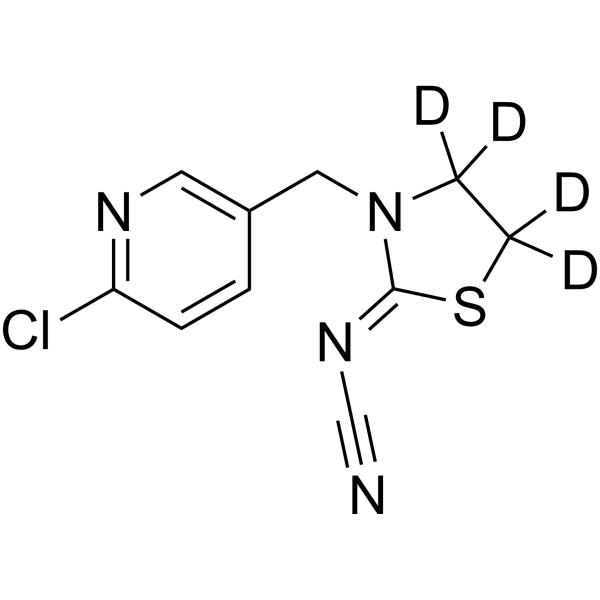
Thiacloprid-d4 is the deuterium labeled Thiacloprid. Thiacloprid is an orally active neurotoxic insecticide and also a nAChR agonist. Thiacloprid reduces the viability of healthy cells, depletes reduced glutathione, and increases MDA levels, thereby inducing cytotoxicity and oxidative stress damage. In practical applications, Thiacloprid has lower acute toxicity to honeybees than other compounds of the same class such as Imidacloprid (HY-B0838), but it still significantly impairs the learning and memory function, immune capacity and survival status of honeybees. Thiacloprid induces intestinal microbial dysbiosis and reduces survival rate in middle-aged honeybees, increases the risk of premature collapse in bumblebee colonies, and significantly decreases the final colony weight and reproductive output. Thiacloprid is used in broad-spectrum agricultural pest control, often alone or in combination with Deltamethrin (HY-B1971), and meets the pest management needs of various crops including potatoes, cabbages, various fruits and vegetables, and nuts .
|
-
-
- HY-W714178
-
|
|
Herbicide
|
Others
|
|
Aziprotryne is a post-emergence selective herbicide active against broadleaf weeds. When tank-mixed with Alachlor (HY-B2014), Aziprotryne provides longer-term weed control in field-grown cabbage plots .
|
-
-
- HY-N19220
-
|
|
Bacterial
Endogenous Metabolite
Antibiotic
|
Infection
Cancer
|
|
Radiclonic acid acts as an antibacterial agent, anticancer agent, and root growth promoter. Radiclonic acid is isolable from fungi of the genus Penicillium. Radiclonic acid exhibits antibacterial activity against MRSA with a MIC of 3.13 μg/mL. Radiclonic acid shows anticancer activity against esophageal cancer, bladder cancer, and liver cancer. Radiclonic acid promotes root growth in Chinese cabbage seedlings. Radiclonic acid is inactive against pancreatic cancer and cervical cancer. Radiclonic acid can be used in research related to Staphylococcus aureus infection, bladder cancer, esophageal cancer, and liver cancer .
|
-
-
- HY-W707148
-
|
|
Endogenous Metabolite
|
Infection
|
|
4-Methyltridecane is a volatile substance specifically released by cabbage root flies (Delia radicum) after feeding. 4-Methyltridecane might be a key signal for the parasitoid bee Trybliographa rapae (Delia radicum’s specific parasitic predator) to locate the host. 4-Methyltridecane can serve as a specific marker for root damage in turnips (Brassica rapa subsp. Rapa) .
|
-
-
- HY-W702980
-
|
|
Drug Derivative
|
Others
|
|
Desulfoglucoraphanin is an aliphatic glucosinolate present in Brassica rapa L. ssp. pekinensis. Desulfoglucoraphanin is the desulfated derivative of Glucoraphanin (HY-N4068) .
|
-
| Cat. No. |
Product Name |
Type |
-
- HY-N9497
-
|
|
Biochemical Assay Reagents
|
|
Galactinol is a disaccharide carbohydrate serving as a galactosyl donor, which belongs to the raffinose family oligosaccharide pathway and acts as an important osmoprotectant. Galactinol not only induces disease resistance in plants against fungal and bacterial pathogens, but also significantly enhances plant tolerance to abiotic stresses such as drought, high salinity, low temperature and oxidative damage. In addition, Galactinol has the ability to scavenge hydroxyl radicals, can act as a signaling component for root colonization-induced systemic resistance, and is positively correlated with seed longevity in various crops, making it a potential biomarker for evaluating seed vigor. Therefore, Galactinol can be used in the research of various plant diseases including fungal leaf spot, bacterial angular leaf spot, gray mold and soft rot .
|
-
- HY-B0941A
-
|
Benzyladenine, suitable for plant cell culture; 6-BAP, suitable for plant cell culture; N6-Benzyladenine, suitable for plant cell culture
|
Biochemical Assay Reagents
|
|
6-Benzylaminopurine,suitable for plant cell culture is a cytokinin that induces plant growth and development by stimulating cell division, and prolongs the freshness of green vegetables through inhibiting respiratory kinases .
|
-
- HY-137884
-
|
3-Acetoxyindole
|
Biochemical Assay Reagents
|
|
3-Indolyl acetate is an ester derivative of indole that is ubiquitous in various plant tissues, especially in certain cruciferous vegetables such as broccoli and cabbage. 3-Indolyl acetate has unique chemical properties that make it an important signaling molecule in plants, regulating various physiological processes such as growth and defense against pathogens. It also has potential applications in the pharmaceutical industry, as it has been shown to have antitumor and anti-inflammatory effects in some studies.
|
| Cat. No. |
Product Name |
Category |
Target |
Chemical Structure |
-
- HY-N9497
-
|
|
Source Classification
|
Galectin
Fungal
|
|
Galactinol is a disaccharide carbohydrate serving as a galactosyl donor, which belongs to the raffinose family oligosaccharide pathway and acts as an important osmoprotectant. Galactinol not only induces disease resistance in plants against fungal and bacterial pathogens, but also significantly enhances plant tolerance to abiotic stresses such as drought, high salinity, low temperature and oxidative damage. In addition, Galactinol has the ability to scavenge hydroxyl radicals, can act as a signaling component for root colonization-induced systemic resistance, and is positively correlated with seed longevity in various crops, making it a potential biomarker for evaluating seed vigor. Therefore, Galactinol can be used in the research of various plant diseases including fungal leaf spot, bacterial angular leaf spot, gray mold and soft rot .
|
-
-
- HY-128421
-
|
Brassylic Acid
|
Classification of Application Fields
Ketones, Aldehydes, Acids
Metabolic Disease
Endogenous metabolite
Disease Research Fields
Source Classification
|
Endogenous Metabolite
Parasite
|
|
Tridecanedioic acid is an endogenous metabolite. Tridecanedioic acid is an endogenous metabolite. Tridecanedioic acid is related to the metabolic regulation of non-alcoholic fatty liver disease (NASH) and may be an important node molecule in the intestinal microbiota-host metabolism interaction network. Tridecanedioic acid is significantly accumulated in tolerant cabbage-type rapeseed varieties and has a lower content in sensitive varieties. It plays an important role in the defense response against the infection of the small cabbage moth (Plutella xylostella). Tridecanedioic acid can be used as a biomarker for plant insect resistance or a diagnostic marker for metabolic diseases .
|
-
-
- HY-N7659
-
|
|
Structural Classification
Isatis tinctoria L.
Glucosinolates
Plants
Brassicaceae
Source Classification
|
Phytohormone
Apoptosis
Microtubule/Tubulin
|
|
Glucobrassicin is an indole-based anticancer agent and plant growth-regulating hormone. Glucobrassicin exerts its biological activity by disrupting the integrity of microtubule networks in both plant and mammalian cells. At high concentrations, Glucobrassicin inhibits seed germination and root growth; it can also specifically induce apoptosis in mammalian cancer cells and interfere with the intercellular transmission of viruses that rely on microtubules. In plants, Glucobrassicin can be catalyzed by myrosinase to release growth-regulating substances, exhibiting a concentration-dependent growth-regulating effect .
|
-
-
- HY-128421R
-
|
Brassylic Acid (Standard)
|
Structural Classification
Ketones, Aldehydes, Acids
Endogenous metabolite
Source Classification
|
Reference Standards
Endogenous Metabolite
Parasite
|
|
Tridecanedioic acid (Standard) is the analytical standard of Tridecanedioic acid (HY-128421). This product is intended for research and analytical applications. Tridecanedioic acid is an endogenous metabolite. Tridecanedioic acid is an endogenous metabolite. Tridecanedioic acid is related to the metabolic regulation of non-alcoholic fatty liver disease (NASH) and may be an important node molecule in the intestinal microbiota-host metabolism interaction network. Tridecanedioic acid is significantly accumulated in tolerant cabbage-type rapeseed varieties and has a lower content in sensitive varieties. It plays an important role in the defense response against the infection of the small cabbage moth (Plutella xylostella). Tridecanedioic acid can be used as a biomarker for plant insect resistance or a diagnostic marker for metabolic diseases.
|
-
-
- HY-W714675
-
-
-
- HY-N14363
-
-
-
- HY-N18721
-
|
|
Structural Classification
Extract
|
Others
|
|
Cabbage, ext. is a cabbage-derived product with versatility spaning across the research of multifarious ailments, encompassing inflammation-induced disorders, cardiovascular afflictions and even specific cancers.
|
-
-
- HY-N19220
-
|
|
Structural Classification
Microorganisms
Lipid
Source Classification
|
Bacterial
Endogenous Metabolite
Antibiotic
|
|
Radiclonic acid acts as an antibacterial agent, anticancer agent, and root growth promoter. Radiclonic acid is isolable from fungi of the genus Penicillium. Radiclonic acid exhibits antibacterial activity against MRSA with a MIC of 3.13 μg/mL. Radiclonic acid shows anticancer activity against esophageal cancer, bladder cancer, and liver cancer. Radiclonic acid promotes root growth in Chinese cabbage seedlings. Radiclonic acid is inactive against pancreatic cancer and cervical cancer. Radiclonic acid can be used in research related to Staphylococcus aureus infection, bladder cancer, esophageal cancer, and liver cancer .
|
-
-
- HY-W707148
-
-
-
- HY-W702980
-
-
| Cat. No. |
Product Name |
Chemical Structure |
-
- HY-B1953S
-
|
|
|
Thiacloprid-d4 is the deuterium labeled Thiacloprid. Thiacloprid is an orally active neurotoxic insecticide and also a nAChR agonist. Thiacloprid reduces the viability of healthy cells, depletes reduced glutathione, and increases MDA levels, thereby inducing cytotoxicity and oxidative stress damage. In practical applications, Thiacloprid has lower acute toxicity to honeybees than other compounds of the same class such as Imidacloprid (HY-B0838), but it still significantly impairs the learning and memory function, immune capacity and survival status of honeybees. Thiacloprid induces intestinal microbial dysbiosis and reduces survival rate in middle-aged honeybees, increases the risk of premature collapse in bumblebee colonies, and significantly decreases the final colony weight and reproductive output. Thiacloprid is used in broad-spectrum agricultural pest control, often alone or in combination with Deltamethrin (HY-B1971), and meets the pest management needs of various crops including potatoes, cabbages, various fruits and vegetables, and nuts .
|
-
| Cat. No. |
Product Name |
|
Classification |
-
- HY-W714178
-
|
|
|
Azide
|
|
Aziprotryne is a post-emergence selective herbicide active against broadleaf weeds. When tank-mixed with Alachlor (HY-B2014), Aziprotryne provides longer-term weed control in field-grown cabbage plots .
|
Your information is safe with us. * Required Fields.
Inquiry Information
- Product Name:
- Cat. No.:
- Quantity:
- MCE Japan Authorized Agent:

