



6-Benzylaminopurine, suitable for plant cell culture

Based on 1 Customer Validation
6-Benzylaminopurine,suitable for plant cell culture is a cytokinin that induces plant growth and development by stimulating cell division, and prolongs the freshness of green vegetables through inhibiting respiratory kinases.
For research use only. We do not sell to patients.
- Purity : 99%
- CAS No.: 1214-39-7
- Formula: C12H11N5
- Molecular Weight:225.25
-
Storage:
Store at room temperature, keep dry and cool.
In solvent -80°C, 1 year , -20°C, 6 months


To place orders, for customer services and technical support, please contact: MedChemExpress USA
Tel: 609-228-6898 E-mail: [email protected] [email protected]


-
 Biological Activity
-
Chemical Information
- Protocols
- Purity & Documentation
- References
-
 Help & FAQs


-

HY-18569B
3-Indoleacetic acid,suitable for plant cell culturePlant Growth-Promoting Hormone -
HY-18572
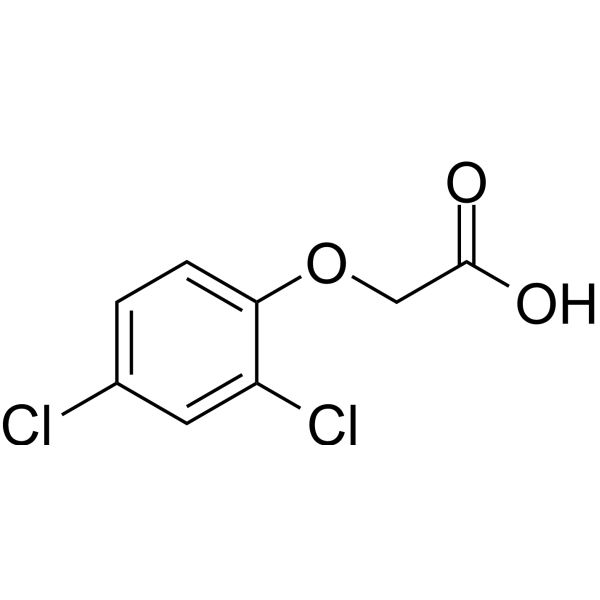
2,4-DHerbicide -
HY-B0941
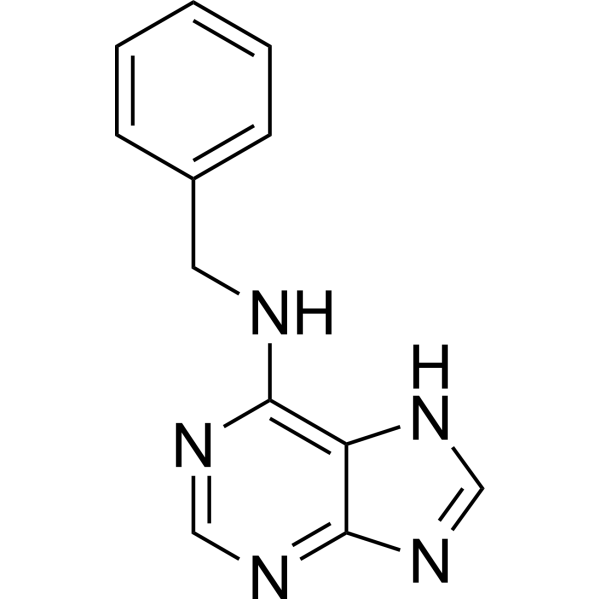
6-BenzylaminopurineCytokinin -

HY-B0941R
6-Benzylaminopurine (Standard)Cytokinin -
HY-N0160
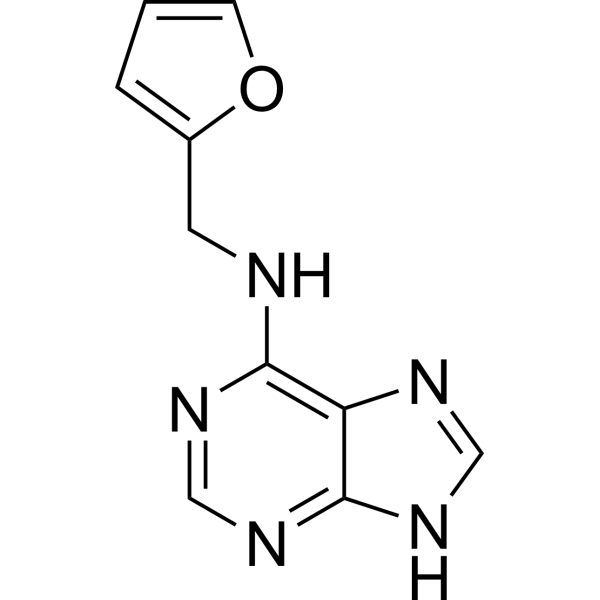
KinetinPlant Hormone -
HY-18569
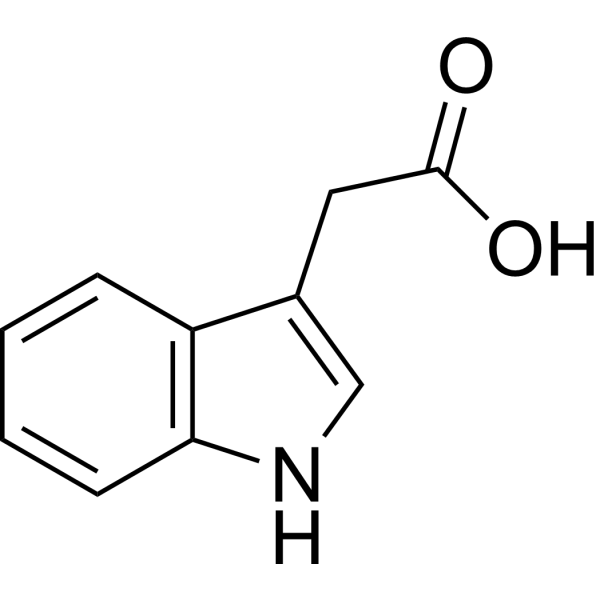
3-Indoleacetic acidPlant Growth Regulator -
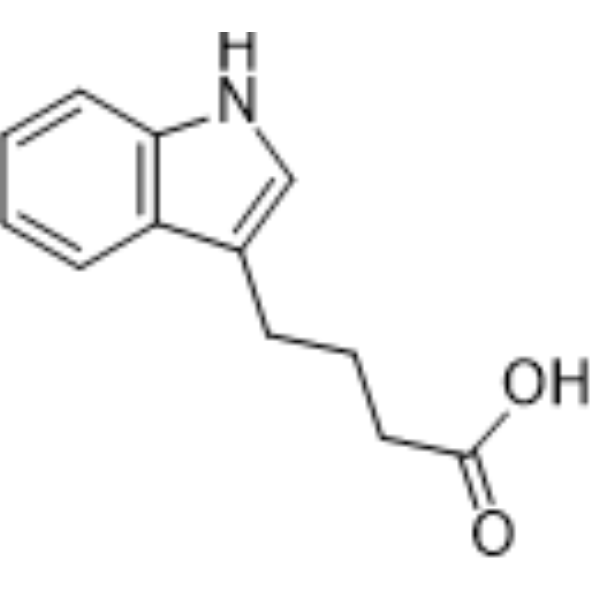
HY-N0186
Indole-3-butyric acidEndogenous Metabolite -
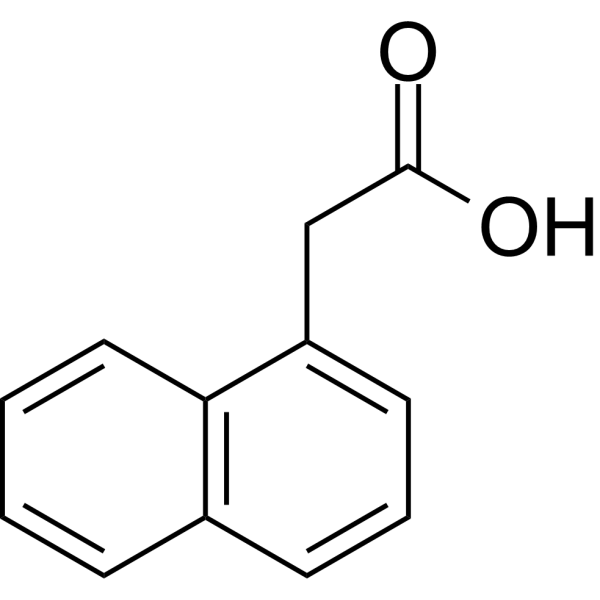
HY-18570
1-Naphthaleneacetic acidPhospholipase Inhibitor -
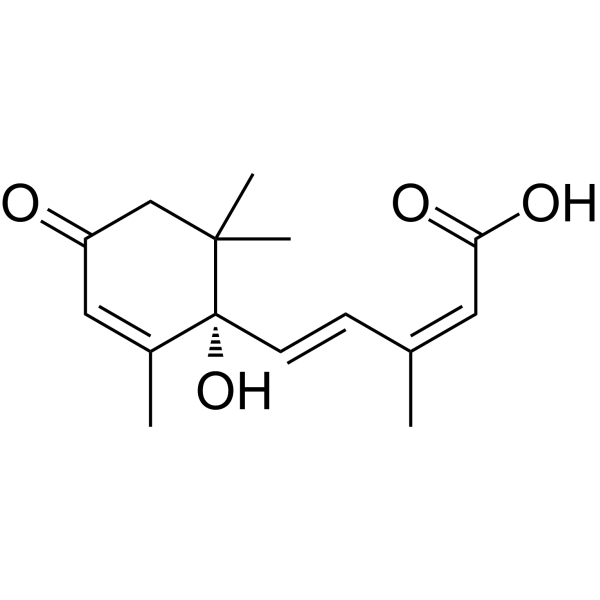
HY-100560
Abscisic acidPlant Hormone -

HY-18570B
1-Naphthaleneacetic acid,suitable for plant cell culturePlant Growth Hormone -
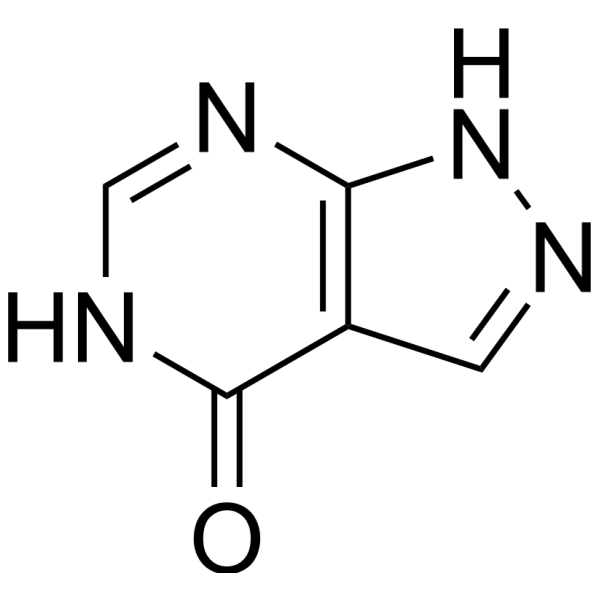
HY-B0219
AllopurinolXanthine Oxidase Inhibitor -

HY-N0160R
Kinetin (Standard)Plant Hormone


Biological Activity
Description
Cellular Effect
|
Cell Line

|
Type | Value | Description | References |
|---|---|---|---|---|
| HL-60 | IC50 |
>100 μM
Compound: BAP, benzylaminopurine
|
Antiproliferative activity against human HL60 cells
Antiproliferative activity against human HL60 cells
|
[PMID: 17300934] |
| Oocyte | IC50 |
200 μM
Compound: 9
|
Inhibitory activity against purified cdc2 p34/Cyclin B obtained from M phase oocytes of the starfish Marthasterias glacialis.
Inhibitory activity against purified cdc2 p34/Cyclin B obtained from M phase oocytes of the starfish Marthasterias glacialis.
|
[PMID: 9046330] |
| RD | CC50 |
547 μM
Compound: 35
|
Cytotoxicity against human RD cells
Cytotoxicity against human RD cells
|
[PMID: 26854380] |
| RD | EC50 |
0.42 μM
Compound: 35
|
Antiviral activity against Enterovirus 71 infected in human RD cells assessed as cell viability after 3 days by MTS assay
Antiviral activity against Enterovirus 71 infected in human RD cells assessed as cell viability after 3 days by MTS assay
|
[PMID: 26854380] |
| Vero C1008 | IC50 |
>2.0 x 10⁵ M
Compound: COVC-0140513452
|
Antiviral activity determined as inhibition of SARS-CoV-2 induced cytotoxicity of VERO-6 cells at 10 uM after 48 hours exposure to 0.01 MOI SARS CoV-2 virus by high content imaging
Antiviral activity determined as inhibition of SARS-CoV-2 induced cytotoxicity of VERO-6 cells at 10 uM after 48 hours exposure to 0.01 MOI SARS CoV-2 virus by high content imaging
|
10.6019/CHEMBL4651402 |
In Vitro
6-Benzylaminopurine, suitable for plant cell culture, mimics the functions of natural cytokinins (such as zeatin). It binds to intracellular receptors and regulates the expression of specific genes through signal transduction pathways, thereby stimulating cells to transition from the G2 phase to the M phase and promoting cell division[1].
MedChemExpress (MCE) has not independently confirmed the accuracy of these methods. They are for reference only. Further protocols information, click here.
In Vivo
6-Benzylaminopurine,suitable for plant cell culture (seed priming; foliar spray) enhances cotton floral bud formation and yield by regulating hormonal dynamics and sugar accumulation[1].
6-Benzylaminopurine,suitable for plant cell culture (postharvest produce treatment) delays Chinese flowering cabbage leaf senescence by inhibiting chlorophyll degradation, reducing respiratory metabolism, and modulating endogenous hormone homeostasis[1].
6-Benzylaminopurine,suitable for plant cell culture (40 mg/L; foliar spray) promotes blackberry stem growth and sugar accumulation, while higher concentrations (20-120 mg/L) reduce root biomass[1].
6-Benzylaminopurine,suitable for plant cell culture (foliar spray; root application) enhances Limonium bicolor salt tolerance by increasing salt gland density, improving photosynthetic capacity, and activating antioxidant defenses[1].
6-Benzylaminopurine,suitable for plant cell culture (foliar spray; root application) improves tall fescue drought tolerance by promoting root elongation, maintaining leaf water balance, preserving photosynthetic capacity, and enhancing carbon storage[1].
6-Benzylaminopurine,suitable for plant cell culture (postharvest fruit dipping; spray) delays mango fruit ripening by inhibiting ethylene biosynthesis and signaling[1].
MedChemExpress (MCE) has not independently confirmed the accuracy of these methods. They are for reference only.


Chemical Information
-
CAS No. 1214-39-7
-
Appearance Solid
-
Molecular Weight 225.25
-
Formula C12H11N5
-
Color White to off-white
-
SMILES
C12=NC=NC(NCC3=CC=CC=C3)=C1NC=N2
-
Synonyms
Benzyladenine, suitable for plant cell culture; 6-BAP, suitable for plant cell culture; N6-Benzyladenine, suitable for plant cell culture
-
Shipping
Room temperature in continental US; may vary elsewhere.
-
Storage
Store at room temperature, keep dry and cool
In solvent -80°C 1 year -20°C 6 months

Protocols
-
CFSE Dye Dilution Proliferation Assay
The CFSE (carboxyfluorescein diacetate succinimidyl ester) dye dilution proliferation assay is based on the covalent labeling of intracellular proteins by a cell-permeant fluorescent dye that becomes fluorescent upon intracellular ester cleavage and then is stably retained within cells. As labeled cells divide, the dye is partitioned equally between daughter cells, resulting in a stepwise halving of fluorescence intensity that can be quantified by flow cytometry to determine the number of cell divisions undergone by each cell population. This fluorescence dilution approach enables quantitative tracking of lymphocyte proliferation at the single-cell level over multiple rounds of division. CFSE-based proliferation analysis has been widely applied to measure antigen-driven lymphocyte expansion in vitro, where discrete fluorescence peaks correspond to successive cell divisions and allow reconstruction of proliferative history within heterogeneous populations.
-
Dye-dilution cell tracking and proliferation staining
Dye-dilution cell tracking assays quantify cell proliferation by covalently labeling intracellular proteins with a stable fluorescent dye that is equally partitioned between daughter cells during mitosis, resulting in stepwise halving of fluorescence intensity with each cell division as measured by flow cytometry histograms. Carboxyfluorescein diacetate succinimidyl ester (CFSE) is a prototypical dye that diffuses into cells, is enzymatically converted into a fluorescent compound, and then covalently binds intracellular amine groups, producing long-lived fluorescence suitable for tracking multiple rounds of division in vitro and in vivo. Successive generations of dividing cells form discrete peaks of decreasing fluorescence intensity, enabling estimation of proliferation history, precursor frequency, and division index within heterogeneous populations. Alternative dyes such as CellTrace Violet (CTV) and far-red membrane dyes (e. g. , PKH26) follow the same dilution principle but differ


Purity & Documentation
-
Data Sheet (272 KB)
-
SDS (251 KB)
- English - EN (251 KB)
- Français - FR (251 KB)
- Deutsch - DE (251 KB)
- Norwegian - NO (251 KB)
- Español - ES (251 KB)
- Swedish - SV (251 KB)
- Italian - IT (251 KB)
- Korean - KR (251 KB)
- Portuguese - PT (251 KB)
-
Handling Instructions (2659 KB)
References

Calculators
Concentration (start) × Volume (start) = Concentration (final) × Volume (final)


6-Benzylaminopurine, suitable for plant cell culture Related Classifications
HY-B0941A Related Classifications
 Powered by Bioz
Keywords
- 6-Benzylaminopurine, suitable for plant cell culture
- 1214-39-7
- Benzyladenine, suitable for plant cell culture
- 6-BAP, suitable for plant cell culture
- N6-Benzyladenine, suitable for plant cell culture
- Biochemical Assay Reagents
- tall fescue
- Limonium bicolor
- GBSS
- mango
- SBE
- blackberry
- Nicotiana tabacum BY-2 cells
- Chinese flowering cabbage
- cotton
- NtAgpS
- Inhibitor
- inhibitor
- inhibit