
1. Search Result
Search Result
Results for "

cardiolipin

" in MedChemExpress (MCE) Product Catalog:

27

Inhibitors & Agonists

4

Fluorescent Dyes

3

Biochemical Assay Reagents

1

Peptides

1

Natural
Products

2

Recombinant Proteins

9

Oligonucleotides

Cat. No. Product Name Target Research Areas Chemical Structure
  • HY-125857
    Cytochrome C
    1 Publications Verification

    Biochemical Assay Reagents Apoptosis Reactive Oxygen Species (ROS) Metabolic Disease
    Cytochrome C is a multi-functional enzyme involving in life and death decisions of the cell. Cytochrome C is essential in mitochondrial electron transport and intrinsic type II apoptosis .
    Cytochrome C
  • HY-134238
    Cardiolipin (Heart, Bovine) sodium
    1 Publications Verification

    Endogenous Metabolite Mitochondrial Metabolism Apoptosis Autophagy Cardiovascular Disease Neurological Disease Inflammation/Immunology
    Cardiolipin (Heart, Bovine) sodium is a mitochondria-exclusive phospholipid that can be extracted from Bovine hear. Cardiolipin (Heart, Bovine) sodium can maintain mitochondrial function, regulate cellular metabolism and signaling and induce apoptosis and autophagy. Cardiolipin (Heart, Bovine) sodium can be coated on microtitre plates for ELISA assay. Cardiolipin (Heart, Bovine) sodium can be used for the researches of inflammation, immunology, cardiovascular and neurological disease .
    Cardiolipin (Heart, Bovine) sodium
  • HY-D0993
    Acridine Orange 10-Nonyl Bromide
    4 Publications Verification

    Nonylacridine orange

    Fluorescent Dye Others
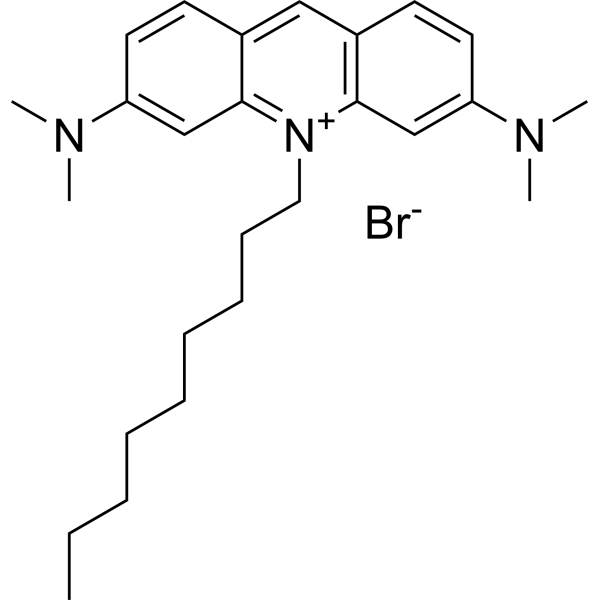
    Acridine Orange 10-Nonyl Bromide is a fluorescent probe for cardiolipinex: 489 nm, λem: 525 nm).
    Acridine Orange 10-Nonyl Bromide
  • HY-125623
    MitoPerOx
    3 Publications Verification

    Fluorescent Dye Others
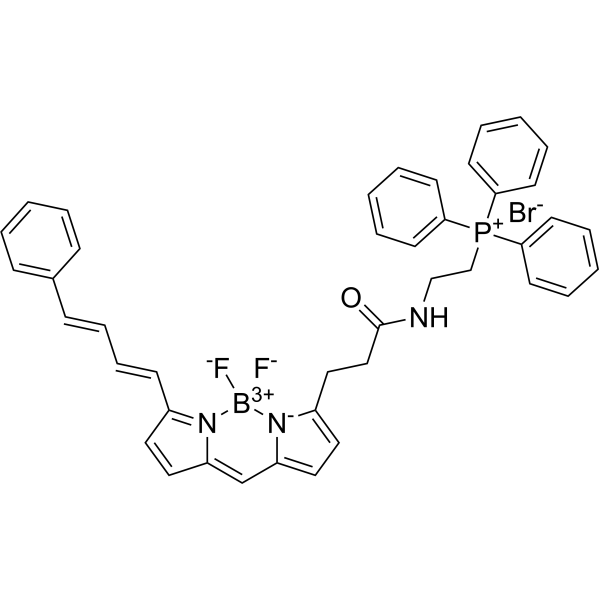
    MitoPerOx is a mitochondrial-targeted, lipid peroxidation-indicating fluorescent probe with BODIPY581/591 fluorophores. The triphenylphosphine cation (TPP+) of MitoPerOx can be selectively enriched in mitochondria (depending on membrane potential) and can be used to detect lipid peroxidation in the inner mitochondrial membrane. Under the action of lipid peroxides, the BODIPY581/591 fluorophores of MitoPerOx shift their emission wavelength from 590 nm (reduced state) to 520 nm (oxidized state), and ratiometric detection can be performed at an excitation wavelength of 488 nm. MitoPerOx can specifically monitor the peroxidation of mitochondrial phospholipids (especially cardiolipin) and is used in the study of oxidative stress-related diseases (such as aging, neurodegenerative diseases, and mitochondrial dysfunction)[1][2].
    MitoPerOx
  • HY-W018587

    Mitochondrial Metabolism Cytochrome P450 TNF Receptor Interleukin Related HSP LDLR Eukaryotic Initiation Factor (eIF) ClpP Metabolic Disease Inflammation/Immunology
    TBPH is a brominated flame retardant. TBPH enhances hepatic steatosis, inflammation, and fibrosis in mice with nonalcoholic steatohepatitis (NASH). TBPH induces dysregulation of phospholipid metabolism, reducing cardiolipin (CL) and phosphatidylserine (PS) levels. TBPH leads to impaired endoplasmic reticulum-mitochondria (ER-Mito) contacts, subsequently causing mitochondrial dysfunction. TBPH induces lung injury through an inflammatory response mediated by mitochondria-derived ds-DNA. TBPH can be used to study the role of MFN2-mediated ER-mitochondria contacts in lipid metabolism homeostasis .
    TBPH
  • HY-148009

    16:0-18:1 cardiolipin sodium

    Biochemical Assay Reagents Others
    Cardiolipin (16:0/18:1/16:0/18:1) (16:0-18:1 Cardiolipin) sodium is a di-saturated mitochondrial-specific anionic phospholipid sodium salt containing the long-chain fatty acid palmitic acid (HY-N0830) and the monounsaturated fatty acid oleic acid (HY-N1446). Cardiolipin (16:0/18:1/16:0/18:1) sodium undergoes in-source fragmentation via diglyceride (DG)-H2O fragment formation and (DG-H2O) fragment loss pathways. Cardiolipin (16:0/18:1/16:0/18:1) sodium can be used in the synthesis of lipid nanodiscs for application in in situ mass spectrometry .
    Cardiolipin (16:0/18:1/16:0/18:1) sodium
  • HY-W013100
    Cytidine-5'-triphosphate disodium
    3 Publications Verification

    Cytidine triphosphate disodium; 5'-CTP disodium

    DNA/RNA Synthesis Nucleoside Antimetabolite/Analog Endogenous Metabolite Metabolic Disease
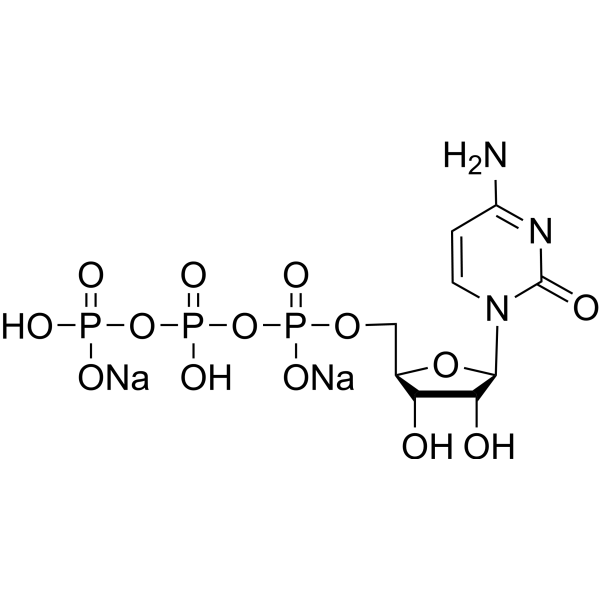
    Cytidine-5'-triphosphate (Cytidine triphosphate; 5'-CTP) disodium is a nucleoside triphosphate, that is invovled in biosynthesis of DNA, RNA and lipid. Cytidine triphosphate synthase can catalyze the formation of cytidine 5′-triphosphate from uridine 5′-triphosphate (UTP). Cytidine 5′-triphosphate disodium is an essential biomolecule in the de novo pyrimidine biosynthetic pathway in T. gondii .
    Cytidine-5'-triphosphate disodium
  • HY-DY1073

    Fluorescent Dye Others
    MitoPerOx (solution) is a mitochondrial-targeted, lipid peroxidation-indicating fluorescent probe with BODIPY581/591 fluorophores. The triphenylphosphine cation (TPP+) of MitoPerOx can be selectively enriched in mitochondria (depending on membrane potential) and can be used to detect lipid peroxidation in the inner mitochondrial membrane. Under the action of lipid peroxides, the BODIPY581/591 fluorophores of MitoPerOx shift their emission wavelength from 590 nm (reduced state) to 520 nm (oxidized state) , and ratiometric detection can be performed at an excitation wavelength of 488 nm. MitoPerOx can specifically monitor the peroxidation of mitochondrial phospholipids (especially cardiolipin) and is used in the study of oxidative stress-related diseases (such as aging, neurodegenerative diseases, and mitochondrial dysfunction) .
    Solvent and concentration: DMSO: 2 mM
    MitoPerOx (solution)
  • HY-160202
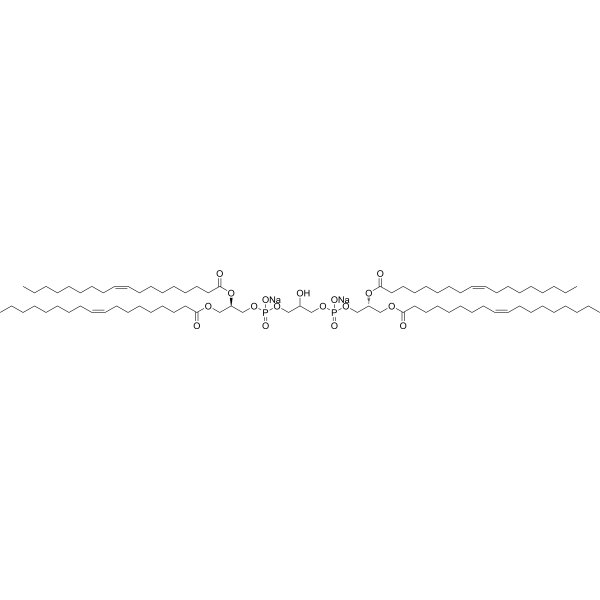
    18:1 Cardiolipin disodium
    1 Publications Verification

    Bacterial Infection
    18:1 Cardiolipin disodium is a virulence regulator with two phosphate groups and four acyl chains.18:1 Cardiolipin disodium can be used in the study of the regulation and mechanism of bacterial infection .
    18:1 Cardiolipin disodium
  • HY-174940

    Biochemical Assay Reagents Others
    E. coli Extract Polar is a polar lipid extract of Escherichia coli containing phosphatidylethanolamine, phosphatidylglycerol, and cardiolipin for reconstitution of membrane proteins.
    E. coli Extract Polar
  • HY-DY1078

    Fluorescent Dye Others
    Acridine Orange 10-Nonyl Bromide (solution) is a fluorescent probe for cardiolipinex: 489 nm, λem: 525 nm).
    Solvent and concentration: DMSO: 10 mM
    Acridine Orange 10-Nonyl Bromide (solution)
  • HY-116447

    Mitochondrial Metabolism Apoptosis Cancer
    Antitumor agent-159 (Compound 13b) targets the mitochondria and downregulates cardiolipin levels. Antitumor agent-159 inhibits the proliferation of cancer cell MDA-MB-231, arrests the cell cycle at sub-G1 phase, and induces apoptosis in MDA-MB-231. Antitumor agent-159 exhibits antitumor efficacy in MDA-MB-231 xenograft mouse models .
    Antitumor agent-159
  • HY-130323

    Bacterial Infection
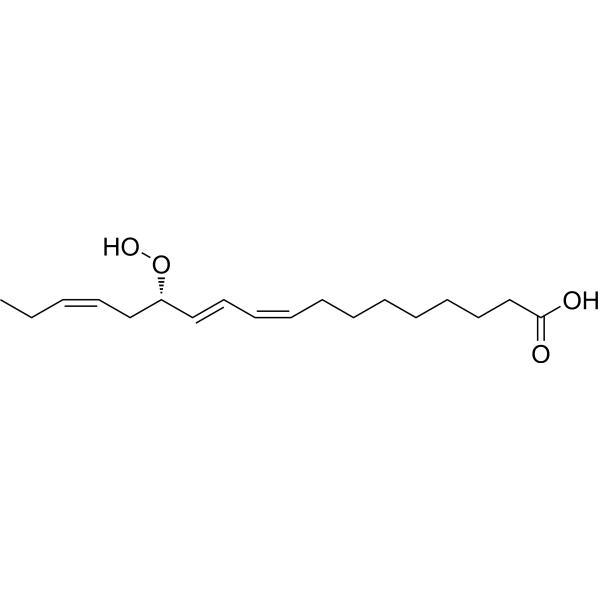
    13-HPOT is a linolenic acid hydroperoxide and an antibacterial agent. 13-HPOT interacts with lipid representatives of bacterial inner membranes. 13-HPOT exerts dose-dependent in vitro antibacterial activity against Pectobacterium carotovorum, Pseudomonas syringae pv. syringae DC3000, and Xanthomonas translucens pv. translucens .
    13-HPOT
  • HY-157661

    1',3'-Bis[1,2-dimyristoyl-sn-glycero-3-phospho]-glycerol sodium

    Biochemical Assay Reagents
    14:0 Cardiolipin sodium (1',3'-Bis[1,2-dimyristoyl-sn-glycero-3-phospho]-glycerol (sodium)) is a kind of biochemical reagent.
    14:0 Cardiolipin sodium
  • HY-168798

    Others Metabolic Disease
    14:1 Cardiolipin sodium is an anionic phospholipid containing the monounsaturated fatty acid Myristoleic acid (HY-113332).
    14:1 Cardiolipin sodium
  • HY-159856

    Diphosphatidylglycerol (16:0)

    Liposome Others
    16:0 Cardiolipin (Diphosphatidylglycerol (16:0)) is a phospholipid derived from Palmitic acid (16:0) that can be used to synthesize lipid nanoparticles (LNP) for delivering mRNA and other payloads .
    16:0 Cardiolipin
  • HY-W590676

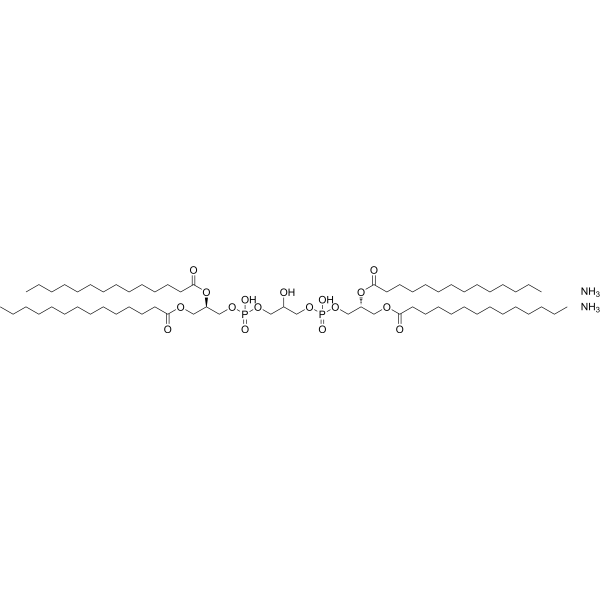
    TMCL diammonium

    Liposome Others
    Tetramyristoylcardiolipin (TMCL) is an anionic lipid. Tetramyristoylcardiolipin can be used to study cell membrane function and drug delivery .
    Tetramyristoylcardiolipin diammonium
  • HY-P2807J

    Lactate Dehydrogenase Metabolic Disease
    L-Lactate Dehydrogenase (L-LDH), pig muscle is an L-lactate dehydrogenase found in pig muscle, mainly present in anaerobic tissues (skeletal muscle, red blood cells). L-Lactate Dehydrogenase (L-LDH), pig muscle can interact with acidic liposomes at low pH, causing protein to adsorb onto the liposomes and inhibit enzyme activity. The IC50 values for L-Lactate Dehydrogenase (L-LDH), pig muscle are 0.05 μM for cardiolipin and 1.3 μM for phosphatidylserine liposomes .
    L-Lactate Dehydrogenase (L-LDH), pig muscle
  • HY-157657

    Diphosphatidylglycerol sodium salt; 16:1 cardiolipin sodium salt; 64:4-CL sodium salt

    Liposome Others
    Cardiolipin (16:1/16:1/16:1/16:1) sodium salt is an anionic phospholipid that promote hydroxyapatite crystallization and supersaturation in a calcium solution .
    Cardiolipin (16:1/16:1/16:1/16:1) sodium salt
  • HY-174158

    Bacterial Infection
    Antibacterial agent 270 (Compound 3e) is an antibacterial agent that acts on bacterial membrane components phosphatidylglycerol (PG), cardiolipin (CL), and bacterial DNA. Antibacterial agent 270 disrupts bacterial membrane structure and binds to DNA to interfere with genetic information transmission. Antibacterial agent 270 is promising for research of infections caused by methicillin-resistant Staphylococcus aureus (MRSA) .
    Antibacterial agent 270
  • HY-169160

    Bacterial Infection
    Anti-MRSA agent 18 (E17) is an inhibitor of MRSA with MIC values of 2 μg/mL for S. aureus and 4 μg/mL for MRSA, respectively. Anti-MRSA agent 18 interacts with bacterial cell membrane phosphatidylglycerol and cardiolipin, causing changes in cell membrane permeability and polarization, increased intracellular ROS, and DNA and protein leakage, thereby accelerating bacterial death .
    Anti-MRSA agent 18
  • HY-176775

    Oxidative Phosphorylation Mitochondrial Metabolism Apoptosis Neurological Disease
    TPP-IOA is a cytochrome c peroxidase inhibitor. TPP-IOA inhibits apoptosis by preventing cardiolipin oxidation and cytochrome c release to the cytosol. TPP-IOA disrupts oxidative phosphorylation in isolated mitochondria. TPP-IOA inhibits cell death in SH-SY5Y cells grown in glucose, but not galactose. TPP-IOA causes mitochondrial depolarization and network fragmentation. TPP-lOA mitigates radiation induced death in mice .
    TPP-IOA
  • HY-160204

    Diphosphatidylglycerol (16:0) disodium

    Biochemical Assay Reagents Metabolic Disease
    16:0 Cardiolipin (Diphosphatidylglycerol (16:0)) disodium is a lipid that can be used to prepare lipid nanoparticles (LNPs) for drug delivery.
    16:0 Cardiolipin disodium
  • HY-183340

    Bacterial Infection
    Antibacterial agent 341 is an anti-bacterial agent. Antibacterial agent 341 shows broad-spectrum Gram-positive antibacterial activity. Antibacterial agent 341 targets phosphatidylglycerol (PG) and cardiolipin (CL) in bacterial cell membranes, induces sustained depolarization of membranes, and disrupts the cell membrane integrity. Antibacterial agent 341 exhibits anti-infection activity against S. aureus-induced subcutaneous abscesses in mice .
    Antibacterial agent 341
  • HY-156600A

    SBT-272 trihydrochloride

    Mitochondrial Metabolism Neurological Disease
    Bevemipretide trihydrochloride (SBT-272 trihydrochloride) is a blood-brain barrier-permeable mitochondrial function repair agent. Bevemipretide trihydrochloride stabilizes cardiolipin in the inner mitochondrial membrane, restores mitochondrial structure, respiratory function, motor capacity and upper motor neuron health. Bevemipretide trihydrochloride reduces astrogliosis and microgliosis in mice with amyotrophic lateral sclerosis. Bevemipretide trihydrochloride prevents stroke-induced mitochondrial dysfunction . Bevemipretide trihydrochloride is applicable to research related to amyotrophic lateral sclerosis, Parkinson's disease, dementia with Lewy bodies and Huntington's disease .
    Bevemipretide trihydrochloride
  • HY-P2817B

    Biochemical Assay Reagents Metabolic Disease
    Phospholipase C, Bacillus cereus (EC 3.1.4.3) is induced by thrombin and platelet-activating factor, forming 1,2-diacylglycerol and phosphatidic acid. Phospholipase C, Bacillus cereus (EC 3.1.4.3) hydrolyzes the phosphate bond on phosphatidylcholine and other glycerophospholipids yielding diacylglycerol. Phospholipase C, Bacillus cereus (EC 3.1.4.3) hydrolyzes the phosphate bonds of sphingomyelin, cardiolipin, choline plasmalogen and ceramide phospholipids.
    Phospholipase C, Bacillus cereus
  • HY-P10519A

    Bacterial Reactive Oxygen Species (ROS) Infection
    Brevicidine TFA is an antimicrobial peptide with selective bactericidal activity against Gram-negative pathogens. Brevicidine TFA disrupts bacterial morphology by binding to lipopolysaccharide (LPS) on the bacterial cell membrane to form pores. Brevicidine TFA causes dissipation of intracellular proton motive force, outer membrane damage, inhibition of ATP biosynthesis and reactive oxygen species accumulation in bacterial cells. As a sensitizer, Brevicidine TFA exerts synergistic activity when combined with a variety of conventional antibiotics .
    Brevicidine TFA

Inquiry Online

Your information is safe with us. * Required Fields.

Salutation


Country or Region *

Applicant Name *


Organization Name *

Department *


Email Address *


Product Name *

Cat. No.


Requested quantity *

Phone Number *


Remarks

Inquiry Online

Inquiry Information

Product Name:
Cat. No.:
Quantity:
MCE Japan Authorized Agent:

