
1. Search Result
Search Result
Pathways Recommended: Membrane Transporter/Ion Channel
Results for "

channels isoforms

" in MedChemExpress (MCE) Product Catalog:

18

Inhibitors & Agonists

1

Screening Libraries

3

Peptides

1

Natural
Products

1

Isotope-Labeled Compounds

Cat. No. Product Name Target Research Areas Chemical Structure
  • HY-N6778
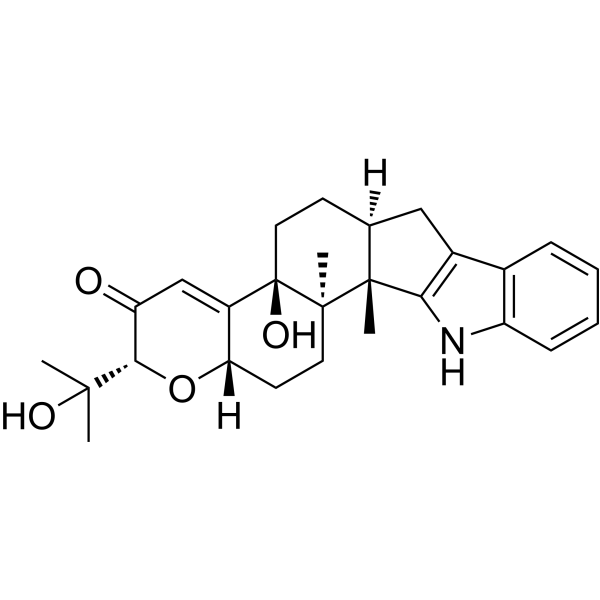
    Paxilline
    5+ Cited Publications

    Potassium Channel Calcium Channel Reactive Oxygen Species (ROS) Neurological Disease
    Paxilline is an indole alkaloid mycotoxin derived from Penicillium paxilli, which effectively inhibits the BK channel through a channel-blocking mechanism. Paxilline also inhibits sarco/endoplasmic reticulum Ca 2+-stimulated ATPase (SERCA), with IC50 values ranging from 5 μM to 50 μM for different SERCA isoforms. Paxilline exhibits significant anticonvulsant and neuroprotective effects, as well as certain antioxidant activity .
    Paxilline
  • HY-147423
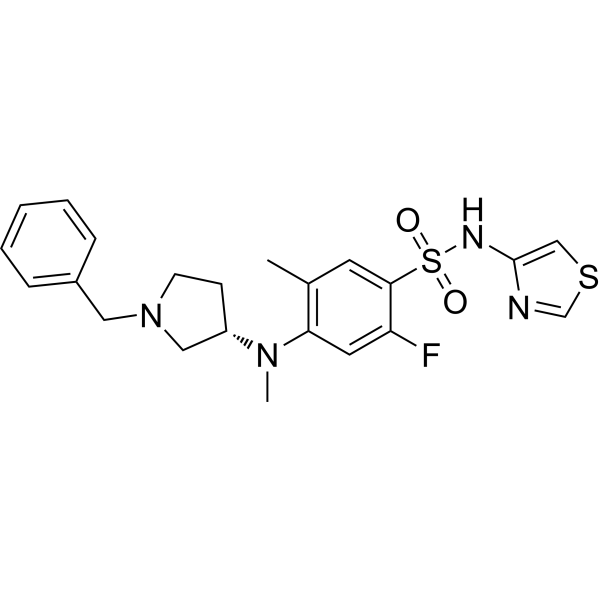
    Zandatrigine
    1 Publications Verification

    NBI-921352; XEN901

    Sodium Channel Neurological Disease
    Zandatrigine (NBI-921352; XEN901) is a selective, orally active, voltage-gated sodium channel NaV1.6/SCN8A inhibitor that can penetrate the blood-brain barrier. Zandatrigine inhibits sodium influx by non-covalently binding to the VSD4 structure of NaV1.6, blocking the persistent and resuscitative currents under pathological conditions. Zandatrigine can reduce neuronal hyperexcitability and reduce epileptic seizures. Zandatrigine is 134-756-fold selective for other isoforms such as NaV1.1 and NaV1.2, and has minimal effect on NaV1.1 expressed by inhibitory interneurons. Zandatrigine can be used to study NaV1.6-mediated neuroexcitability diseases such as SCN8A-related developmental epileptic encephalopathy (SCN8A-DEE) and adult focal epilepsy .
    Zandatrigine
  • HY-132184

    5,6-EET; (±)5,6-EpETrE

    Adrenergic Receptor Calcium Channel Endocrinology
    5,6-Epoxyeicosatrienoic acid (5,6-EET; (±)5,6-EpETrE) is a fully racemic version of the enantiomeric forms biosynthesized from arachidonic acid by cytochrome P450 enzymes. In solution, 5,6-Epoxyeicosatrienoic acid degrades into 5,6-DiHET and 5,6-δ-lactone, which can be converted to 5,6-DiHET and quantified by GC-MS. In neuroendocrine cells, such as the anterior pituitary and pancreatic islets, 5,6-Epoxyeicosatrienoic acid has been implicated in the mobilization of calcium and hormone secretion. 5,6-Epoxyeicosatrienoic acid is an inhibitor of T-type voltage-gated calcium channels (Cav3) that inhibits isoforms Cav3.1, Cav3.2 (IC50=0.54 μM), and Cav3. and decreases nifedipine-resistant phenylephrine-induced vasoconstriction in isolated mouse mesenteric arteries via Cav3.2 blockade when used at a concentration of 3 μM. In addition, it is a substrate of COX-1 and COX-2.
    5,6-Epoxyeicosatrienoic acid
  • HY-135746
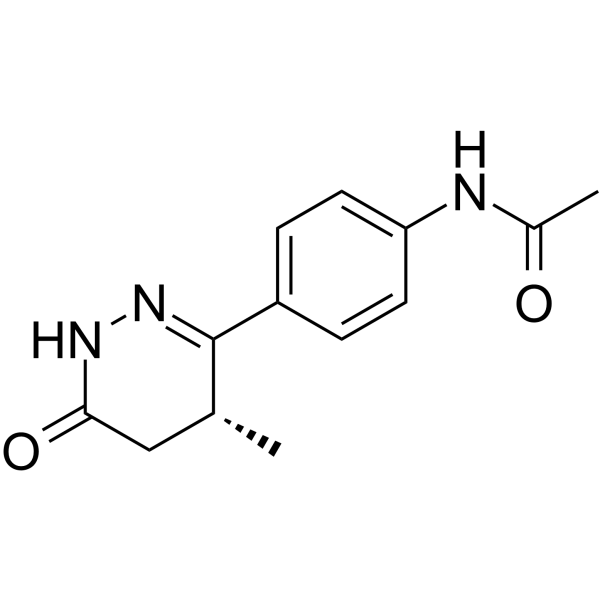
    OR-1896
    2 Publications Verification

    Potassium Channel Phosphodiesterase (PDE) Drug Metabolite Apoptosis Cardiovascular Disease
    OR-1896 is an active long-lived metabolite of Levosimendan. OR-1896 is a highly selective phosphodiesterase (PDE) III isoform inhibitor and a powerful vasodilator. OR-1896 can open ATP-sensitive K + channels and has Ca 2+-sensitizing effect. OR-1896 mitigates cardiomyocyte apoptosis, cardiac remodeling and myocardial inflammation .
    OR-1896
  • HY-W074537

    Phosphodiesterase (PDE) Neurological Disease
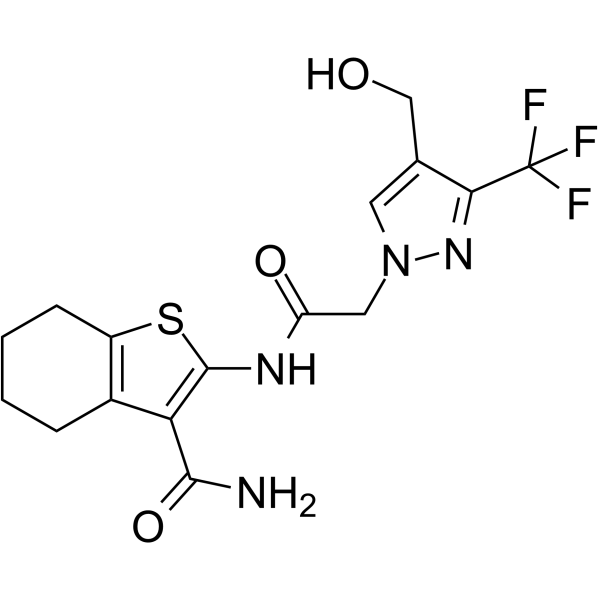
    P7-2104 is a selective CNS-penetrant PDE7A inhibitor with an IC50 of of 31 nM. P7-2104 exhibits selectivity over hERG channels and most CYP450 isoforms. P7-2104 can be used for PDE7-targeted PET neuroimaging, and for the research of neurodegenerative disorders .
    P7-2104
  • HY-P5174

    Sodium Channel Neurological Disease
    MitTx is a complex formed by MitTx-α and MitTx-β. MitTx is an ASIC1 channel activator with EC50 values of 9.4 and 23 nM for ASIC1a and ASIC1b isoforms, respectively. MitTx is highly selective for ASIC1 isoforms at neutral pH. Under acidic conditions, MitTx greatly enhances proton-evoked ASIC2a channel activation .
    MitTx
  • HY-123825

    Sodium Channel Cardiovascular Disease Neurological Disease
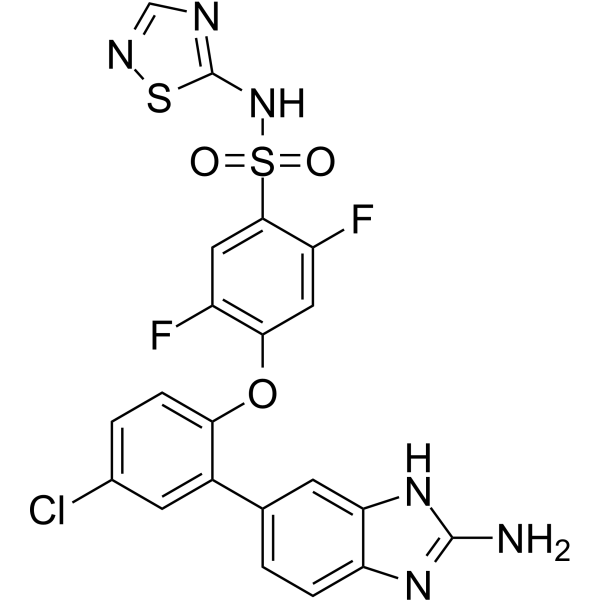
    GX-674 is a potent, state-dependent, isoform-selective voltage-gated sodium channel 1.7 (Nav1.7) antagonist with an IC50 of 0.1 nM at -40 mV .
    GX-674
  • HY-12946

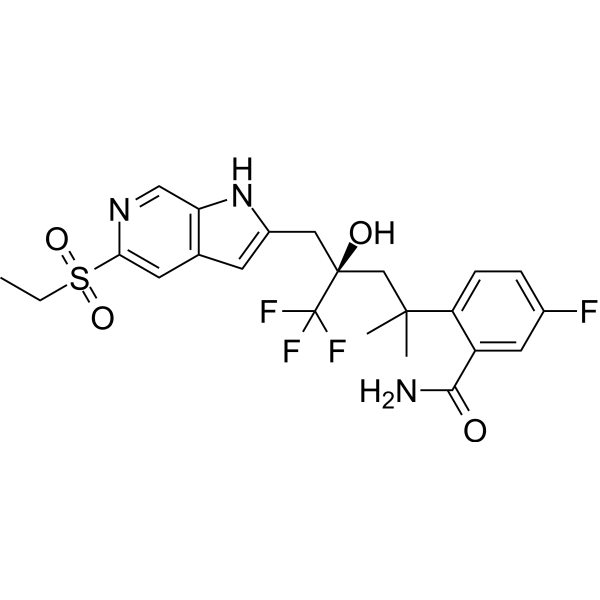
    Glucocorticoid Receptor Cytochrome P450 HCV Protease Infection Inflammation/Immunology
    BI 653048, a chemical probe, is a selective and orally active nonsteroidal glucocorticoid (GC) agonist with an IC50 value of 55 nM . BI 653048 inhibits CP1A2, CYP2D6, CYP2C9, CYP2C19 and CYP3A4 isoforms’ activity and reduces affinity for the hERG ion channel (IC50>30 μM) . BI 653048 (Compound 103) is also a HCV NS3 protease inhibitor that can reduce viral loads infected with the hepatitis C virus .
    BI 653048
  • HY-P1219

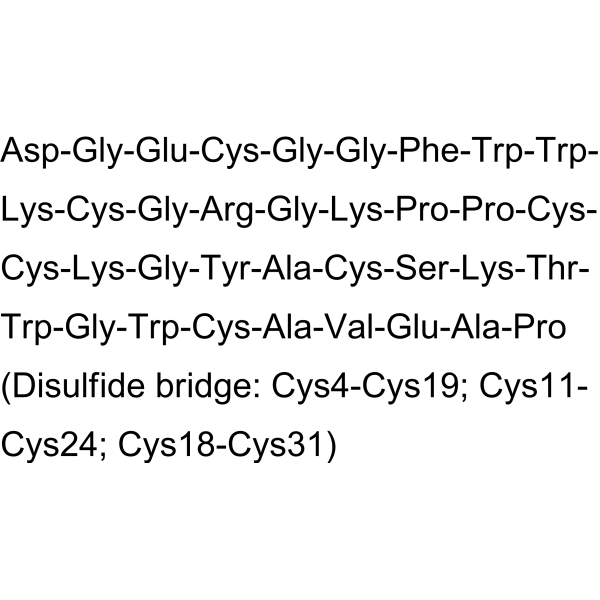
    β-TRTX-Cj1α

    Sodium Channel Neurological Disease
    Jingzhaotoxin-III is a potent and selective blocker of Nav1.5 channels, with an IC50 of 348 nM, and shows no effect on other sodium channel isoforms. Jingzhaotoxin-III can selectively inhibit the activation of cardiac sodium channel but not neuronal subtypes, and hopefully represents an important ligand for discriminating cardiac VGSC subtype .
    Jingzhaotoxin-III
  • HY-108043

    Opioid Receptor Neurological Disease
    AZD-2327 is a potent and selective δ-opioid receptor agonist. AZD-2327 binds to the human opioid receptor (Ki of 0.49 and 0.75 nM and EC50 of 24 and 9.2 nM at the C27 and F27 isoforms, respectively). AZD-2327 shows selectivity of >1000-fold over the human μ- and κ-opioid receptor subtypes as well as >130 other receptors and channels. AZD-2327 exhibits antidepressant and anxiolytic activities and can be used for the research of neurological disease .
    AZD-2327
  • HY-12946A

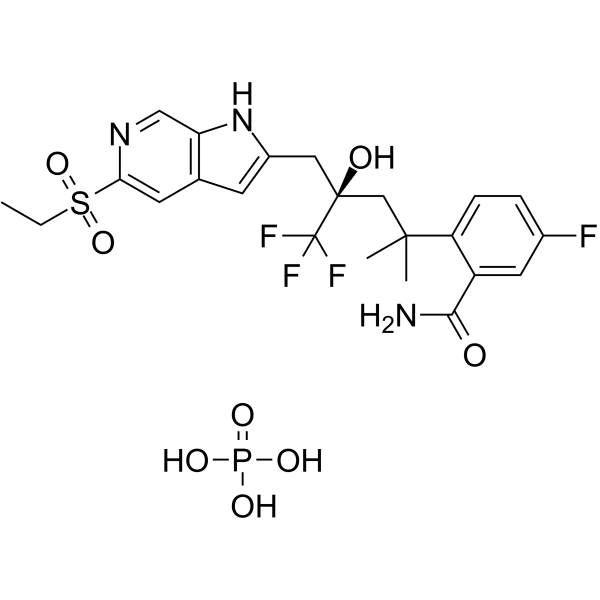
    Glucocorticoid Receptor Cytochrome P450 HCV Protease Infection Inflammation/Immunology
    BI 653048 phosphate is a selective and orally active nonsteroidal glucocorticoid (GC) agonist with an IC50 value of 55 nM . BI 653048 phosphate inhibits CP1A2, CYP2D6, CYP2C9, CYP2C19 and CYP3A4 isoforms’ activity and reduces affinity for the hERG ion channel (IC50>30 μM) . BI 653048 phosphate is extracted from patent WO2005028501A1 (Compound 103), is also a HCV NS3 protease inhibitor that can reduce viral loads infected with the hepatitis C virus .
    BI 653048 phosphate
  • HY-P5771

    Sodium Channel Neurological Disease
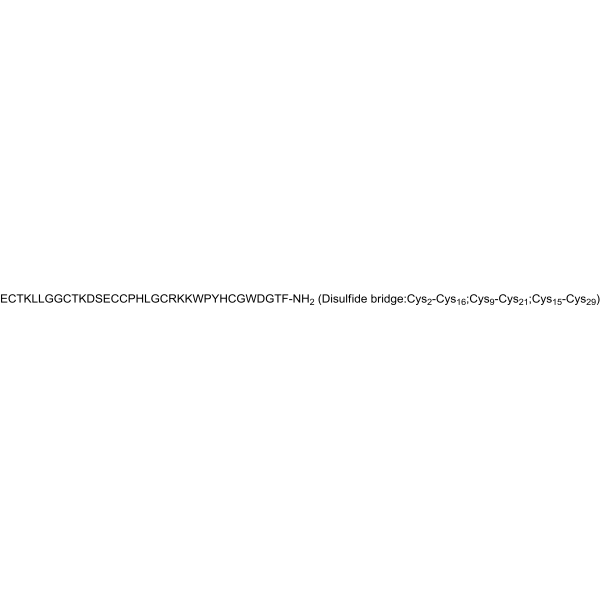
    Jingzhaotoxin-IX, a C-terminally amidated peptide composed of 35 amino acid residues, is a neurotoxin. Jingzhaotoxin-IX inhibits voltage-gated sodium channels (both tetrodotoxin-resistant and tetrodotoxin-sensitive isoforms) and Kv2.1 channel. Jingzhaotoxin-IX has no effect on delayed rectifier potassium channel Kv1.1, 1.2 and 1.3 .
    Jingzhaotoxin-IX
  • HY-124906

    iGluR Neurological Disease
    JAMI1001A is a positive allosteric modulator of AMPA receptor. JAMI1001A efficaciously modulates AMPA receptor deactivation and desensitization of both flip and flop receptor isoforms .
    JAMI1001A
  • HY-130309

    (±)8,9-EEQ; (±)8,9-epoxy Eicosatetraenoic acid

    Angiotensin-converting Enzyme (ACE) Cardiovascular Disease
    Eicosapentaenoic acid (EPA) is converted to epoxyeicosatetraenoic acids (EpETEs) by several cytochrome P450 isoforms. The major product of this epoxygenase pathway, (±)17(18)-EpETE, relaxes vascular and airway smooth muscle by activating large conductance Ca 2+-activated K + (BKCa) channels by directly interacting with BKα channel subunits. (±)8(9)-EpETE is an epoxygenase pathway product produced from EPA by CYP450 both in vitro and in vivo.
    (±)8(9)-EpETE
  • HY-118030

    Calcium Channel Neurological Disease
    RQ-00311651 is a T-type calcium channel blocker that specifically targets the Cav3.2 isoform with a role in neuropathic and visceral pain. RQ-00311651 significantly inhibits T currents in HEK293 cells expressing human Cav3.1 or Cav3.2. RQ-00311651 also inhibited high potassium-induced calcium signaling. RQ-00311651 also inhibits antiallergic properties in rats and mice with neuropathic pain induced by spinal nerve injury or Paclitaxel (HY-B0015). Oral and intraperitoneal injection (10-20 mg/kg) inhibits Cerulein (HY-A0190)-induced acute pancreatitis and cyclophosphamide-induced cystitis in mice .
    RQ-00311651
  • HY-135746S

    Isotope-Labeled Compounds Phosphodiesterase (PDE) Apoptosis Potassium Channel Drug Metabolite Cardiovascular Disease
    OR-1896-d3 is the deuterium labeled OR-1896 (HY-135746). OR-1896 is an active long-lived metabolite of Levosimendan. OR-1896 is a highly selective phosphodiesterase (PDE) III isoform inhibitor and a powerful vasodilator. OR-1896 can open ATP-sensitive K+ channels and has Ca2+-sensitizing effect. OR-1896 mitigates cardiomyocyte apoptosis, cardiac remodeling and myocardial inflammation .
    OR-1896-d3
  • HY-183606

    Bacterial Infection
    Mycobacterium tuberculosis-IN-9 is an orally active Mycobacterium tuberculosis BioA inhibitor with a Ki value of 0.2 nM. Mycobacterium tuberculosis-IN-9 targets the biotin biosynthesis pathway. Mycobacterium tuberculosis-IN-9 inhibits the growth of Mycobacterium tuberculosis in mouse models and is effective against both drug-sensitive and drug-resistant strains. Mycobacterium tuberculosis-IN-9 can be used for the research of tuberculosis .
    Mycobacterium tuberculosis-IN-9
  • HY-183689

    Deubiquitinase Cancer
    OAT-4828 is an orally active ubiquitin-specific protease 7 (USP7) inhibitor with an IC50 of 32 nM. OAT-4828 induces antileukemic activity in B-cell-derived non-Hodgkin's lymphoma models via inhibition of USP7. OAT-4828 is applicable to research related to chronic lymphocytic leukemia .
    OAT-4828

Inquiry Online

Your information is safe with us. * Required Fields.

Salutation


Country or Region *

Applicant Name *


Organization Name *

Department *


Email Address *


Product Name *

Cat. No.


Requested quantity *

Phone Number *


Remarks

Inquiry Online

Inquiry Information

Product Name:
Cat. No.:
Quantity:
MCE Japan Authorized Agent:

