
1. Search Result
Search Result
Results for "

circulating neutrophils

" in MedChemExpress (MCE) Product Catalog:

10

Inhibitors & Agonists

1

Inhibitory Antibodies

3

Natural
Products

2

Isotope-Labeled Compounds

Cat. No. Product Name Target Research Areas Chemical Structure
  • HY-113221

    Proteasome Endogenous Metabolite Apoptosis Metabolic Disease Cancer
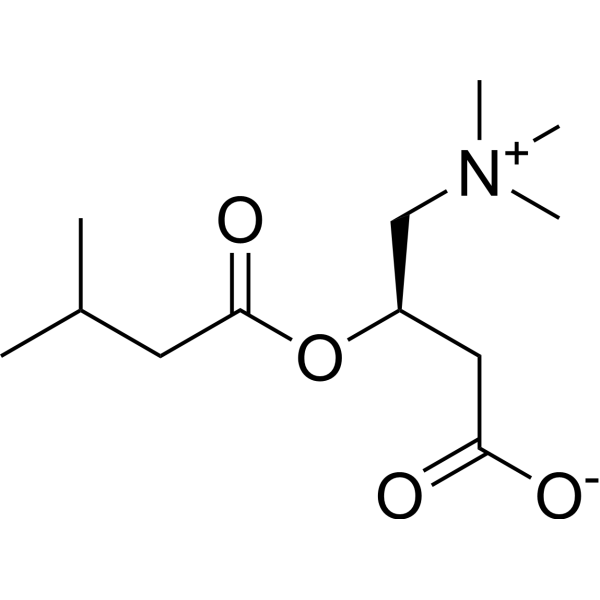
    Isovalerylcarnitine is a metabolite of leucine. Isovalerylcarnitine can specifically activate calpain in human neutrophils. Isovalerylcarnitine inhibits tumor cell proliferation and induces apoptosis. Elevated circulating levels of Isovalerylcarnitine are negatively correlated with reduced lung cancer risk .
    Isovalerylcarnitine
  • HY-145542

    Endogenous Metabolite Proteasome Apoptosis Metabolic Disease Cancer
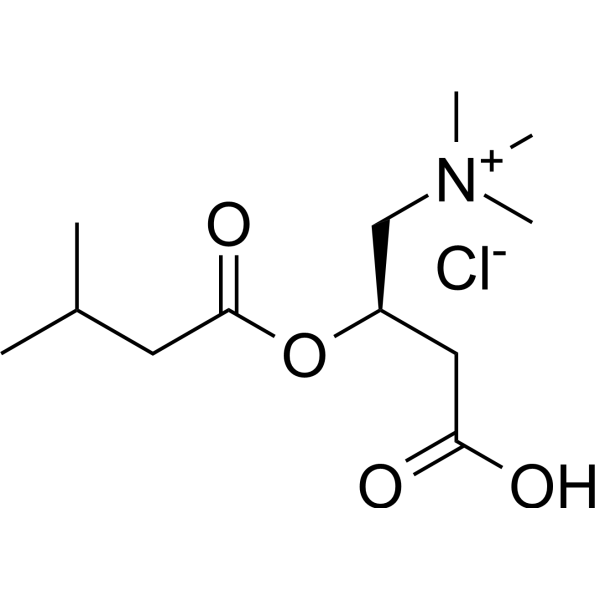
    Isovalerylcarnitine chloride is a metabolite of leucine. Isovalerylcarnitine chloride can specifically activate calpain in human neutrophils. Isovalerylcarnitine chloride inhibits tumor cell proliferation and induces apoptosis. Elevated circulating levels of Isovalerylcarnitine chloride are negatively correlated with reduced lung cancer risk .
    Isovalerylcarnitine chloride
  • HY-P99443

    HuDreg-55

    P-selectin Inflammation/Immunology
    Aselizumab (HuDreg-55) is an humanized IgG4 mAb against L-selectin. However, L-selectin (CD62L) is a cell adhesion molecule expressed on circulating neutrophils. It regulates migrating cells to chemotaxis towards the site of injury. Aselizumab may be account for a high rate of infections and leucopenia after truma .
    Aselizumab
  • HY-130581

    Bacterial Cardiovascular Disease Inflammation/Immunology
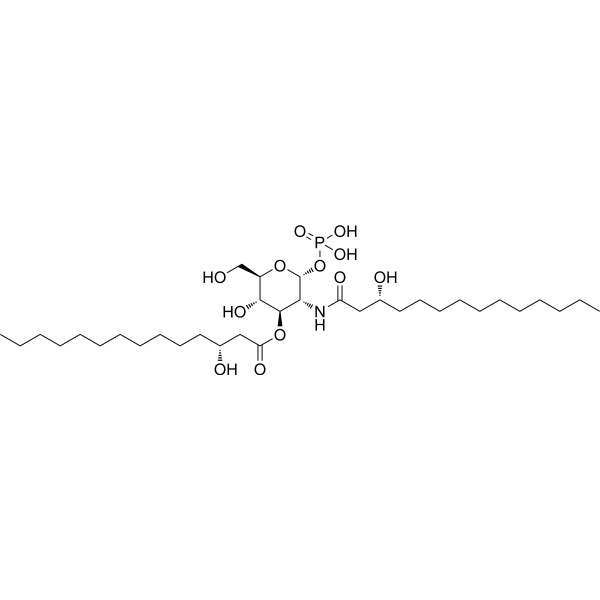
    Lipid X is a 2,3-diacylglucosamine-1-phosphate that serves as the monosaccharide precursor of lipid A, possessing both LPS antagonist and weak agonist activities. Lipid X exerts protective effects by inhibiting tumor necrosis factor production, monocyte procoagulant activity, and neutrophil priming. Lipid X may induce transient pulmonary hypertension, neutropenia, and mild pyrogenic effects in laboratory animals. Lipid X has low toxicity and no in vitro antibacterial activity, but it significantly reduces mortality following Gram-negative bacterial infection and endotoxin exposure. Lipid X tends to accumulate in liver tissue, binds to circulating cellular components, and can be converted to lipid Y through transesterification. Lipid X can be used in research on Gram-negative bacterial sepsis, endotoxemia, and associated pulmonary hypertension .
    Lipid X
  • HY-W996116

    Glutathione Peroxidase Cardiovascular Disease Neurological Disease Inflammation/Immunology
    AZM198 is an orally active myeloperoxidase (MPO) inhibitor. AZM198 irreversibly inactivates MPO (IC50=0.015 μM) via covalent binding to the heme prosthetic group, preferentially targets extracellular MPO activity, and reduces neutrophil extracellular trap formation, reactive oxygen species production and degranulation. AZM198 increases the fibrous cap thickness of atherosclerotic plaques, reduces lesion area, ameliorates hepatic steatosis and fibrosis in non-alcoholic steatohepatitis, and alleviates proteinuria and inflammatory infiltration associated with glomerulonephritis. AZM198 also decreases circulating levels of high-sensitivity Cardiac Troponin I and IL-1β, and mitigates endothelial cell injury. Therefore, AZM198 is suitable for research on various MPO-related diseases, including atherosclerotic cardiovascular disease, myocardial infarction, ischemic stroke, non-alcoholic steatohepatitis and crescentic glomerulonephritis .
    AZM198
  • HY-145542R

    Reference Standards Proteasome Endogenous Metabolite Apoptosis Metabolic Disease Cancer
    Isovalerylcarnitine chloride (Standard) is the analytical standard of Isovalerylcarnitine chloride (HY-145542). This product is intended for research and analytical applications. Isovalerylcarnitine chloride is a metabolite of leucine. Isovalerylcarnitine can specifically activate calpain in human neutrophils. Isovalerylcarnitine chloride inhibits tumor cell proliferation and induces apoptosis. Elevated circulating levels of Isovalerylcarnitine chloride are negatively correlated with reduced lung cancer risk .
    Isovalerylcarnitine chloride (Standard)
  • HY-124099

    Leukotriene Receptor Inflammation/Immunology
    SCH 40120 is a potent leukotriene inhibitor with antiinflammatory effects. SCH 40120 suppresses T cell proliferative responses, antigen-specific and poly-clonally-induced in vitro antibody responses. SCH 40120 suppresses an edematous response and inhibits the recruitment of circulating neutrophils into sites of inflammation. SCH 40120 is proming for rasearch of anti-psoriatic agents .
    SCH 40120
  • HY-113221AS

    Endogenous Metabolite Proteasome Isotope-Labeled Compounds Apoptosis Metabolic Disease Cancer
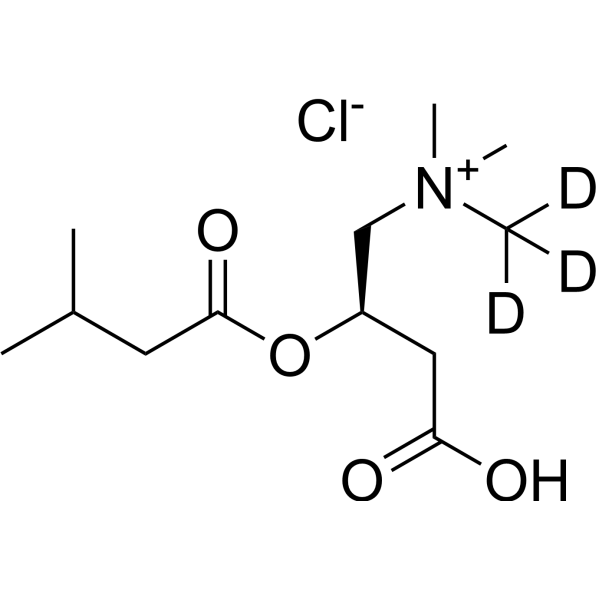
    Isovalerylcarnitine-d3 chloride is the deuterium labeled Isovalerylcarnitine chloride (HY-145542). Isovalerylcarnitine chloride is a metabolite of leucine. Isovalerylcarnitine chloride can specifically activate calpain in human neutrophils. Isovalerylcarnitine chloride inhibits tumor cell proliferation and induces apoptosis. Elevated circulating levels of Isovalerylcarnitine chloride are negatively correlated with reduced lung cancer risk .
    Isovalerylcarnitine-d3 chloride
  • HY-145542S

    Isotope-Labeled Compounds Endogenous Metabolite Proteasome Apoptosis Metabolic Disease Cancer
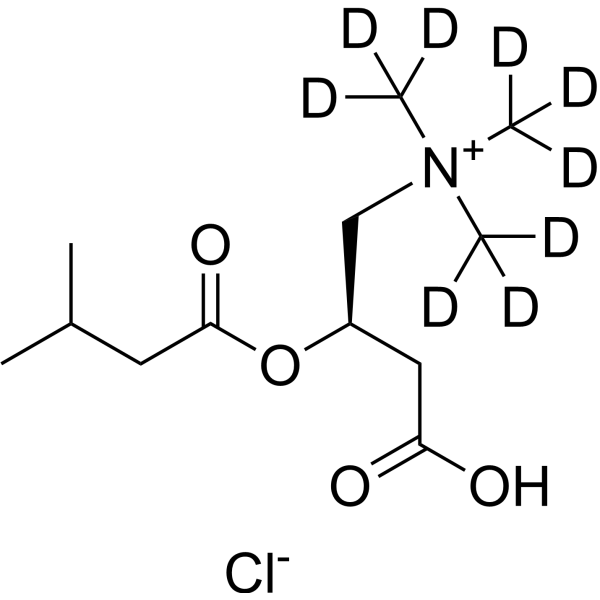
    Isovalerylcarnitine-d9 chloride is the deuterium labeled Isovalerylcarnitine chloride (HY-145542). Isovalerylcarnitine chloride is a metabolite of leucine. Isovalerylcarnitine chloride can specifically activate calpain in human neutrophils. Isovalerylcarnitine chloride inhibits tumor cell proliferation and induces apoptosis. Elevated circulating levels of Isovalerylcarnitine chloride are negatively correlated with reduced lung cancer risk .
    Isovalerylcarnitine-d9 chloride
  • HY-186074

    Estrogen Receptor/ERR Cardiovascular Disease Infection Neurological Disease Inflammation/Immunology
    ERβ agonist-2 (Page 72) is a selective ERβ agonist with an EC50 of 800 nM or lower. ERβ agonist-2 selectively inhibits T cell activation and/or proliferation, thereby reducing circulating T cell levels in subjects, without exerting significant effects on circulating neutrophil, monocyte or B cell levels. ERβ agonist-2 is applicable to studies of chronic heart failure after myocardial infarction, as well as graft-versus-host disease, multiple sclerosis and experimental autoimmune encephalomyelitis .
    ERβ agonist-2

Inquiry Online

Your information is safe with us. * Required Fields.

Salutation


Country or Region *

Applicant Name *


Organization Name *

Department *


Email Address *


Product Name *

Cat. No.


Requested quantity *

Phone Number *


Remarks

Inquiry Online

Inquiry Information

Product Name:
Cat. No.:
Quantity:
MCE Japan Authorized Agent:

