1. Search Result
Search Result
Results for "

combination antibacterial

" in MedChemExpress (MCE) Product Catalog:

19

Inhibitors & Agonists

1

Screening Libraries

5

Natural
Products

1

Isotope-Labeled Compounds

Cat. No. Product Name Target Research Areas Chemical Structure
  • HY-124617A
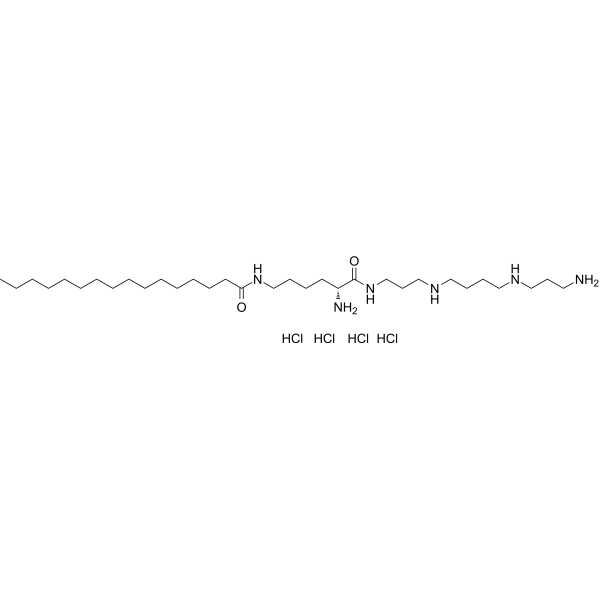
    AMXT-1501 tetrahydrochloride
    Maximum Cited Publications
    10 Publications Verification

    Apoptosis Bacterial Infection Inflammation/Immunology Cancer
    AMXT-1501 tetrahydrochloride is a Bacterial agent and polyamine transport system inhibitor. AMXT-1501 tetrahydrochloride targets membrane phospholipids and exhibits antibacterial activity against a variety of Gram-positive and Gram-negative multidrug-resistant bacteria . AMXT-1501 tetrahydrochloride inhibits capsular biosynthesis in Streptococcus pneumoniae . AMXT-1501 tetrahydrochloride targets ornithine decarboxylase and polyamines to inhibit the proliferation of neuroblastoma cells . AMXT-1501 tetrahydrochloride in combination with DFMO (HY-B0744) induces Apoptosis in neuroblastoma cells. AMXT-1501 tetrahydrochloride is applicable to research related to multidrug-resistant bacterial infections, pneumococcal infections, Streptococcus pneumoniae infections, and neuroblastoma .
    AMXT-1501 tetrahydrochloride
  • HY-124617
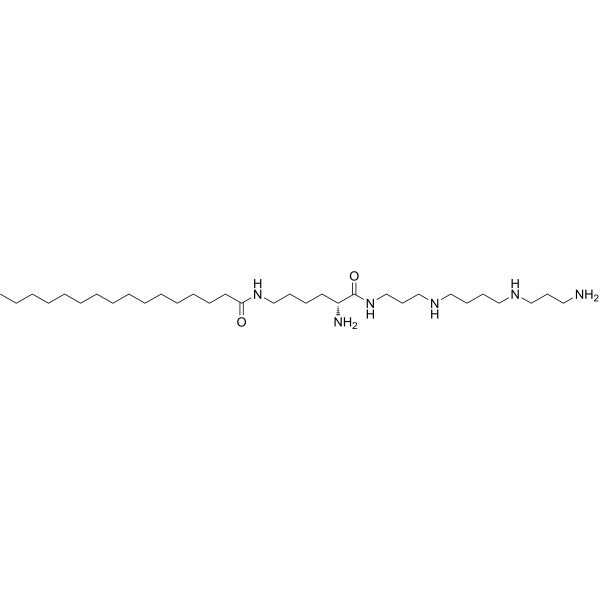
    AMXT-1501
    Maximum Cited Publications
    10 Publications Verification

    Apoptosis Bacterial Infection Cancer
    AMXT-1501 is a Bacterial agent and polyamine transport system inhibitor. AMXT-1501 targets membrane phospholipids and exhibits antibacterial activity against a variety of Gram-positive and Gram-negative multidrug-resistant bacteria . AMXT-1501 inhibits capsular biosynthesis in Streptococcus pneumoniae . AMXT-1501 targets ornithine decarboxylase and polyamines to inhibit the proliferation of neuroblastoma cells . AMXT-1501 in combination with DFMO (HY-B0744) induces Apoptosis in neuroblastoma cells. AMXT-1501 is applicable to research related to multidrug-resistant bacterial infections, pneumococcal infections, Streptococcus pneumoniae infections, and neuroblastoma .
    AMXT-1501
  • HY-141619A

    Bacterial Infection
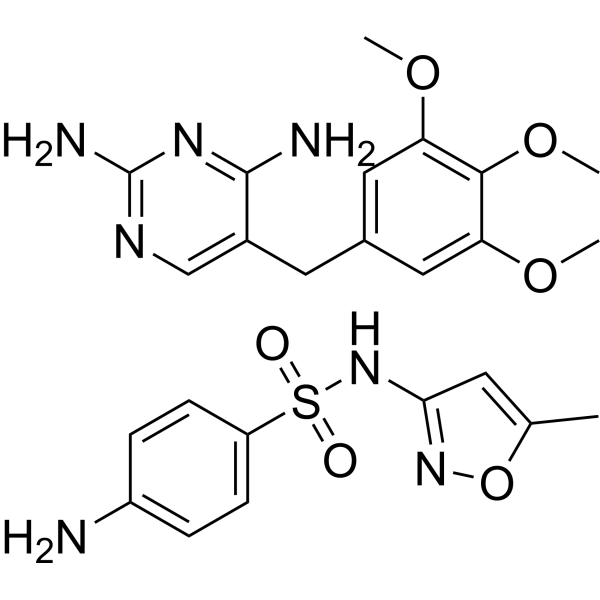
    Cotrimoxazole (Trimethoprim/sulfamethoxazole 1:19), an antibacterial agent, is a Trimethoprim (HY-B0510) and Sulfamethoxazole (HY-B0322) mixture. The ratio of Trimethoprim to Sulfamethoxazole in the combination mixture is 1 : 19 .
    Cotrimoxazole (Trimethoprim/sulfamethoxazole 1:19)
  • HY-141619

    Bacterial Infection
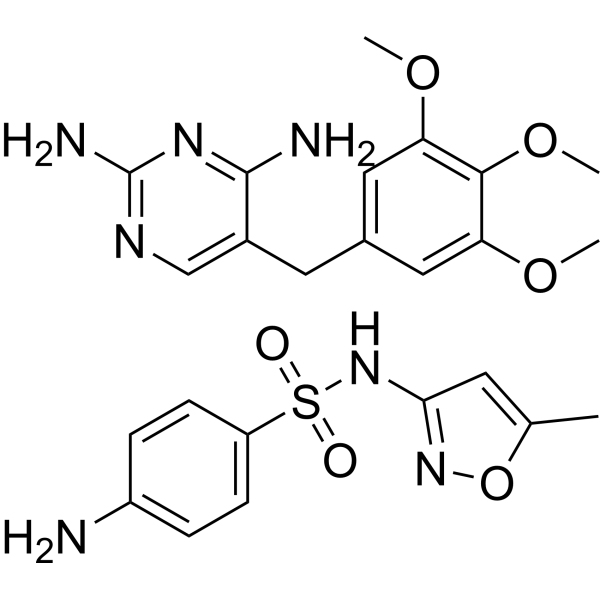
    Cotrimoxazole (Trimethoprim/sulfamethoxazole 1:5), an antibacterial agent, is a Trimethoprim (HY-B0510) and Sulfamethoxazole (HY-B0322) mixture. The ratio of Trimethoprim to Sulfamethoxazole in the combination mixture is 1 : 5 .
    Cotrimoxazole (Trimethoprim/sulfamethoxazole 1:5)
  • HY-Y1718
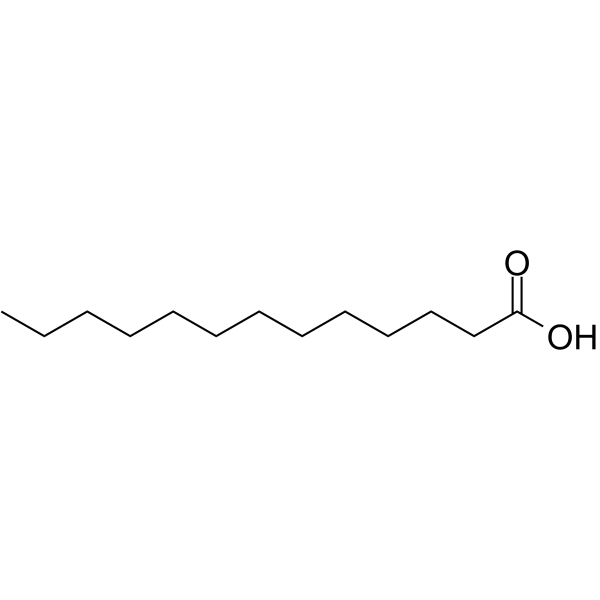
    Tridecanoic acid
    1 Publications Verification

    N-Tridecanoic acid

    Endogenous Metabolite Bacterial Infection
    Tridecanoic acid (N-Tridecanoic acid) is a medium-chain saturated fatty acid and inhibitor with no antibacterial activity against enterohemorrhagic E. coli (EHEC). When used in combination with Ciprofloxacin (HY-B0356) or Ampicillin (HY-B0522), Tridecanoic acid suppresses persister formation in exponentially growing E. coli and EHEC, but exerts no inhibitory effect on persister formation induced by Kanamycin (HY-16566) or in stationary-phase cells. Tridecanoic acid inhibits biofilm formation in EHEC. It can be used in the research of bacterial infections .
    Tridecanoic acid
  • HY-B1127

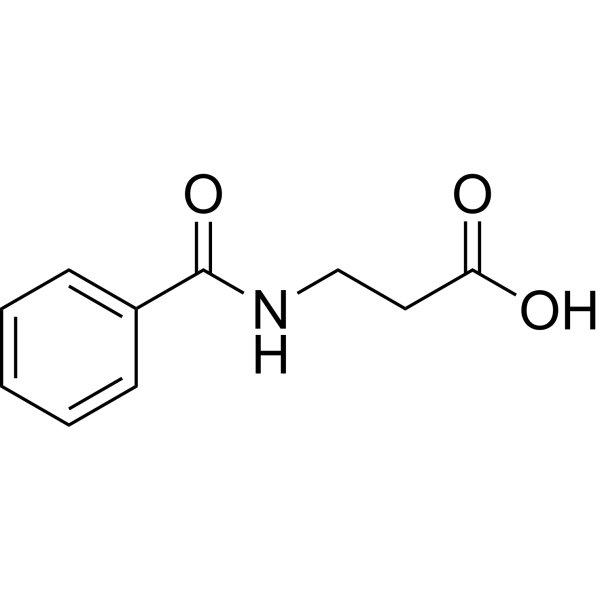
    N-Benzoyl-β-alanine

    Antibiotic Bacterial Infection Endocrinology
    Betamipron (N-benzoyl-β-alanine) is a carbapenem β-lactam antibiotic with antibacterial activity against most Gram-positive and Gram-negative aerobic and anaerobic bacteria. Betamipron can target and inhibit renal organic anion transporters, alleviate renal injury caused by Cisplatin (HY-17394), without interfering with the biological activity of cisplatin. Betamipron is often used in combination with panipenem, which can attenuate the renal effects induced by panipenem and slightly promote the proliferation of Clostridium difficile in the cecum. Betamipron can be used in studies related to renal injury and bacterial infection .
    Betamipron
  • HY-145158

    Bacterial Antibiotic Drug Derivative Beta-lactamase Infection
    Temocillin is a derivative of Ticarcillin (HY-100577) and a β-lactamase-resistant Antibiotic. Temocillin blocks water molecules from entering the active sites of Ambler class A and class C serine-dependent β-lactamases, resisting hydrolysis by these enzymes. Temocillin exhibits antibacterial activity against Enterobacteriaceae and Neisseria gonorrhoeae. Temocillin shows antagonistic effects against some isolated strains when used in combination with Ticarcillin (HY-100577) or Cefazolin (HY-B1892). Temocillin can be used in research related to sepsis, urinary tract infections, and lower respiratory tract infections .
    Temocillin
  • HY-149155

    Bacterial Infection
    o-Cymen-5-ol is a broad-spectrum antimicrobial agent with direct antimicrobial activity. o-Cymen-5-ol showed effective minimum inhibitory concentrations (MICs) against a variety of bacteria and fungi, such as Streptococcus mutans and Candida albicans. The combination of o-Cymen-5-ol and zinc showed synergistic effects, enhancing the inhibitory effect against oral pathogens. o-Cymen-5-ol was able to inhibit the glycolysis process and co-enhanced this effect with zinc. o-Cymen-5-ol showed a stronger antibacterial effect in toothpaste than placebo .
    o-Cymen-5-ol
  • HY-168109

    Antibiotic Bacterial Infection
    Antibacterial agent 246 (compound A33) is a antibacterial agent and has minimum inhibitory concentrations (MICs) of 0.5-4 μg/mL against twenty-three Gram-positive bacteria. Antibacterial agent 246 in combination with Polymyxin E(HY-113678) E inhibits the growth of various Gram-negative bacteria with the fractional inhibitory concentration index of 0.066 .
    Antibacterial agent 246
  • HY-N12171

    Bacterial Infection Neurological Disease
    Isoreserpiline is an orally active and BBB-penetrable indole alkaloids with antibacterial and antipsychotic activity. Isoreserpiline is even more effective when used in combination with antibiotics and inhibits the activity of bacterial efflux pumps. Isoreserpiline improves Amphetamine-induced hyperactivity in mice .
    Isoreserpiline
  • HY-N14918

    Bacterial Infection
    N-(2,6-Diamino-6-hydroxymethylpimelyl)-L-alanine shows anti-Escherichia coli activity, and is combined with several cell wall synthesis inhibitors such as Fosfomycin, Cycloserine, Penicillin, and Cephalosporin, the combination of sporozoin has obvious synergistic antibacterial effect .
    N-(2,6-Diamino-6-hydroxymethylpimelyl)-L-alanine
  • HY-150766

    Bacterial Infection
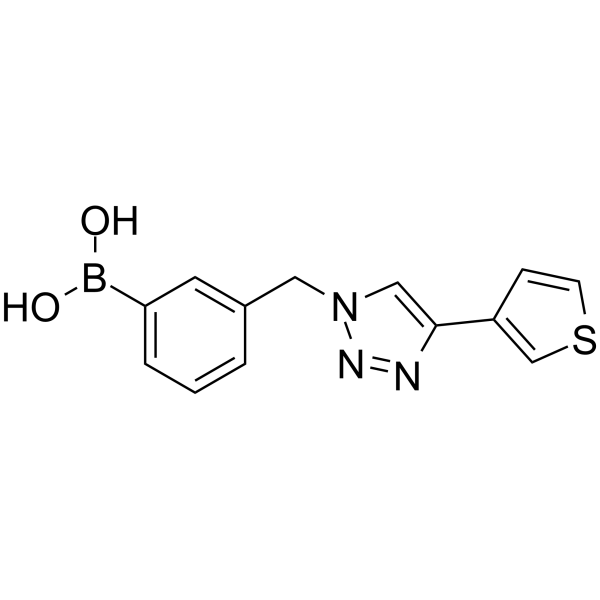
    KPC-2-IN-1, boronic acid derivative, is a potent KPC-2 inhibitor with Ki of 0.032 μM. KPC-2-IN-1 enhances the activity of cefotaxime in KPC-2 expressing E. coli. KPC-2-IN-1 exhibits well tolerated in human HEK-293 cells, which can be used for the study of E. coli resistance to β-lactam antibiotics .
    KPC-2-IN-1
  • HY-129836

    Antibiotic Infection
    L-Amoxicillin is an antibiotic with activity against a wide range of bacterial infections. L-Amoxicillin is commonly used in antibacterial combinations when used in combination with the β-lactamase inhibitor potassium clavulanic acid. The related substances analysis method for L-Amoxicillin has been developed and validated according to the International Conference on Harmonization (ICH) guidelines, ensuring its effectiveness and accuracy in mixtures. L-Amoxicillin and some of its impurities have been further analyzed in stress testing and stability studies, providing support for optimizing its application .
    L-Amoxicillin
  • HY-W015786R

    Reference Standards Bacterial Infection Metabolic Disease
    L-Amoxicillin (Standard) is the analytical standard of L-Amoxicillin. This product is intended for research and analytical applications. L-Amoxicillin is an antibiotic with activity against a wide range of bacterial infections. L-Amoxicillin is commonly used in antibacterial combinations when used in combination with the β-lactamase inhibitor potassium clavulanic acid. The related substances analysis method for L-Amoxicillin has been developed and validated according to the International Conference on Harmonization (ICH) guidelines, ensuring its effectiveness and accuracy in mixtures. L-Amoxicillin and some of its impurities have been further analyzed in stress testing and stability studies, providing support for optimizing its application .
    4-Ethoxyphenol (Standard)
  • HY-W743258

    Isotope-Labeled Compounds Antibiotic Bacterial Others
    L-Amoxicillin-d4 sodium is the deuterium labeled L-Amoxicillin (HY-129836). L-Amoxicillin is an antibiotic with activity against a wide range of bacterial infections. L-Amoxicillin is commonly used in antibacterial combinations when used in combination with the β-lactamase inhibitor potassium clavulanic acid. The related substances analysis method for L-Amoxicillin has been developed and validated according to the International Conference on Harmonization (ICH) guidelines, ensuring its effectiveness and accuracy in mixtures. L-Amoxicillin and some of its impurities have been further analyzed in stress testing and stability studies, providing support for optimizing its application .
    L-Amoxicillin-d4 sodium
  • HY-129836R

    Antibiotic Reference Standards Infection
    L-Amoxicillin (Standard) is the analytical standard of L-Amoxicillin. This product is intended for research and analytical applications. L-Amoxicillin is an antibiotic with activity against a wide range of bacterial infections. L-Amoxicillin is commonly used in antibacterial combinations when used in combination with the β-lactamase inhibitor potassium clavulanic acid. The related substances analysis method for L-Amoxicillin has been developed and validated according to the International Conference on Harmonization (ICH) guidelines, ensuring its effectiveness and accuracy in mixtures. L-Amoxicillin and some of its impurities have been further analyzed in stress testing and stability studies, providing support for optimizing its application .
    L-Amoxicillin (Standard)
  • HY-B1127R

    N-Benzoyl-β-alanine (Standard)

    Reference Standards Bacterial Antibiotic Infection Endocrinology
    Betamipron (Standard) is the analytical standard of Betamipron (HY-B1127). This product is intended for research and analytical applications. Betamipron (N-benzoyl-β-alanine) is a carbapenem β-lactam antibiotic with antibacterial activity against most Gram-positive and Gram-negative aerobic and anaerobic bacteria. Betamipron can target and inhibit renal organic anion transporters, alleviate renal injury caused by Cisplatin (HY-17394), without interfering with the biological activity of cisplatin. Betamipron is often used in combination with panipenem, which can attenuate the renal effects induced by panipenem and slightly promote the proliferation of Clostridium difficile in the cecum. Betamipron can be used in studies related to renal injury and bacterial infection .
    Betamipron (Standard)
  • HY-N19219

    Antibiotic Endogenous Metabolite Bacterial Infection Cancer
    Wailupemycin F is an Antibiotic and anticancer agent. Wailupemycin F is isolated from the marine-derived Streptomyces maritimus. Wailupemycin F exhibits antibacterial activity against Micrococcus luteus with a MIC of 1.1 μM. Wailupemycin F shows anticancer activity against myeloma. When used in combination with enterocin, Wailupemycin F exerts synergistic antibacterial activity against Micrococcus luteus, doubling its potency. Wailupemycin F can be used in studies related to Micrococcus luteus infection .
    Wailupemycin F
  • HY-183075

    Bacterial ATP Synthase Infection
    ND-011458 is an Antibacterial agent, a QcrB inhibitor, and also an inhibitor of cytochrome bcc:aa3 oxidase function. ND-011458 binds to the QcrB subunit of cytochrome bcc:aa3 oxidase. ND-011458 inhibits ATP formation. When used in combination with Clofazimine (HY-B1046), ND-011458 exhibits bactericidal activity against Mycobacterium abscessus. ND-011458 can be used in studies related to Mycobacterium abscessus pulmonary infections .
    ND-011458

Inquiry Online

Your information is safe with us. * Required Fields.

Salutation


Country or Region *

Applicant Name *


Organization Name *

Department *


Email Address *


Product Name *

Cat. No.


Requested quantity *

Phone Number *


Remarks

Inquiry Online

Inquiry Information

Product Name:
Cat. No.:
Quantity:
MCE Japan Authorized Agent:

