
1. Search Result
Search Result
Results for "

deamination

" in MedChemExpress (MCE) Product Catalog:

32

Inhibitors & Agonists

1

Screening Libraries

2

Fluorescent Dyes

3

Biochemical Assay Reagents

1

Peptides

4

Natural
Products

Cat. No. Product Name Target Research Areas Chemical Structure
  • HY-I0960
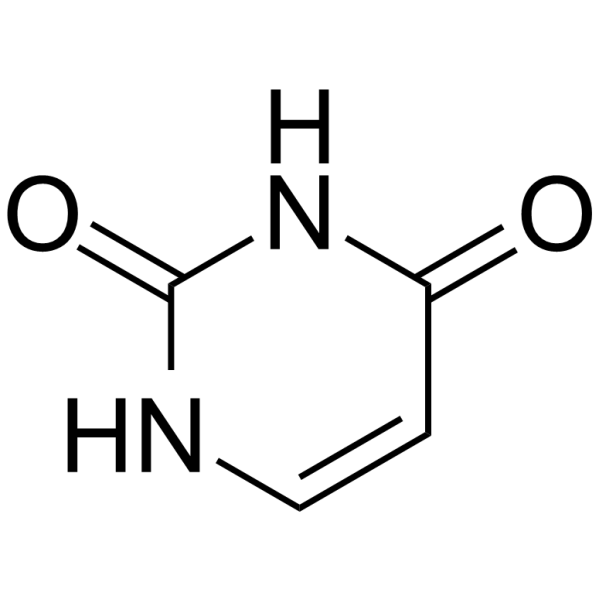
    Uracil
    4 Publications Verification

    Endogenous Metabolite Drug Derivative Infection Cancer
    Uracil is a pyrimidine derivative and one of the four nucleobases in the nucleic acid of RNA. Uracil is a frequently occurring DNA base damage that results from the spontaneous or chemically induced deamination of cytosine and is mutagenic at the level of replication. Uracil could potentially alter transcriptional fidelity, resulting in production of mutant proteins .
    Uracil
  • HY-174262

    Interleukin Related Inflammation/Immunology Cancer
    IL4I1-IN-1 (Compound Ex 232 pg 200) is a selective interleukin 4-induced protein 1 (IL4I1) inhibitor with an EC50 of 2 nM. IL4I1-IN-1 inhibits IL4I1-mediated oxidative deamination of phenylalanine, reducing the production of phenylpyruvate, H2O2 and NH3. IL4I1-IN-1 is promising for research of cancers with high IL4I1 expression, such as endometrial carcinoma, ovarian cancer, and triple-negative breast cancer .
    IL4I1-IN-1
  • HY-114175
    Adenosine deaminase, microorganism
    1 Publications Verification

    RnADA

    Adenosine Deaminase Inflammation/Immunology
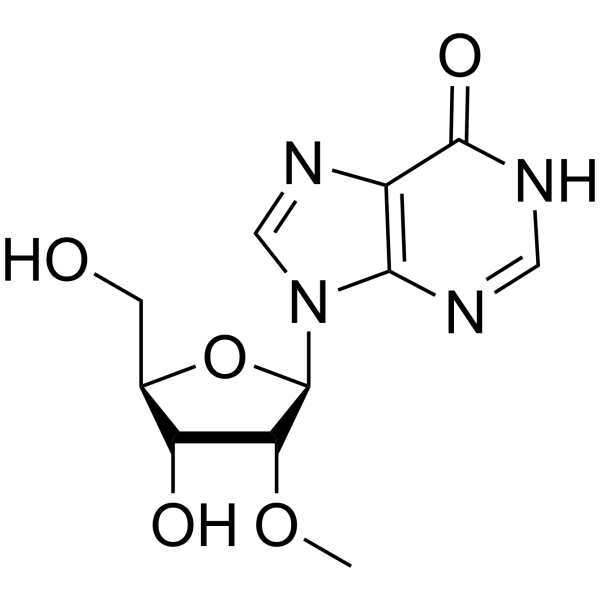
    Adenosine deaminase (RnADA) (EC 3.5.4.4) is an enzyme that catalyzes the irreversible deamination of adenosine and 2'-deoxyadenosine to inosine and 2'-deoxyinosine, respectively.
    Adenosine deaminase, microorganism
  • HY-N2554

    Ostenol

    Monoamine Oxidase PI3K Akt Apoptosis Infection Neurological Disease Cancer
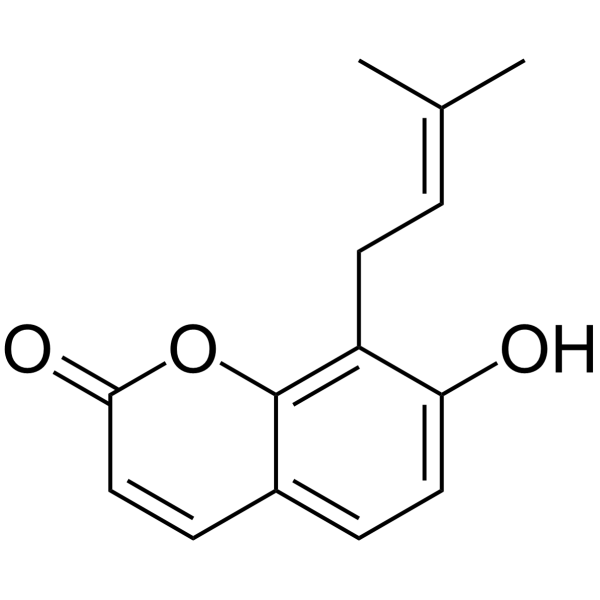
    Osthenol (Ostenol) is a reversible, selective, competitive inhibitor of hMAO-A (IC50=0.74 μM, Ki=0.26 μM), with antifungal and antibacterial activity. Osthenol inhibits the oxidative deamination of hMAO-A and regulates the metabolism of monoamine neurotransmitters. Osthenol also inhibits the PI3K/AKT signaling pathway to induce apoptosis of colon cancer cells, arrest the cell cycle at the G1 phase, and inhibit cell proliferation. Osthenol is mainly used in the study of neurological diseases and cancer, especially depression-related MAO-A targeted intervention and colon cancer .
    Osthenol
  • HY-W012282

    HCV Infection
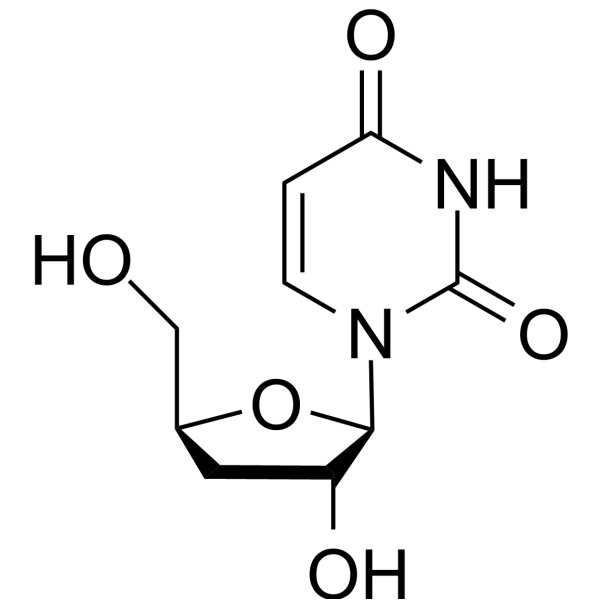
    3′-Deoxyuridine is a 3'-deoxynucleoside analog and a 2',3'-dideoxynucleoside. 3′-Deoxyuridine does not inhibit the replication of HCV-like RNA templates or luciferase levels in human cells at the tested concentrations. 3′-Deoxyuridine serves as a substrate for microbial dideoxyribosylation reactions to generate various 2',3'-dideoxynucleosides, but cannot be converted into 2',3'-dideoxycytidine by resting E. coli AJ 2595 cells. 3′-Deoxyuridine can be formed by the deamination of 3'-deoxycytidine by E. coli BM-11 cytidine deaminase, and can also undergo phosphorolytic cleavage to produce uracil and the corresponding pentose phosphate. 3′-Deoxyuridine has been used in research related to HCV and other relevant fields .
    3′-Deoxyuridine
  • HY-E70517

    Histamine Receptor Others
    Histamine dehydrogenase, Microorganism (EC 1.4.99) is a homodimeric enzyme which catalyzes oxidative deamination of histamine in the presence of electron carrier .
    Histamine dehydrogenase, Microorganism
  • HY-109183

    TAK-831

    Xanthine Oxidase Others
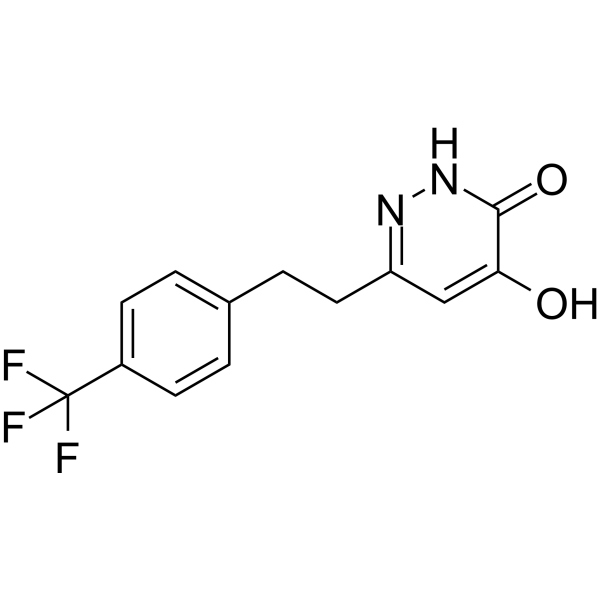
    Luvadaxistat (TAK-831) is an orally active, highly selective, potent D-amino acid oxidase (DAAO) inhibitor. Luvadaxistat inhibits oxidative deamination of D-serine via the human recombinant DAAO enzyme with an IC50 of 14 nM. Luvadaxistat significantly increases D-serine levels in the rodent brain, plasma, and cerebrospinal fluid. Luvadaxistat has the potential for schizophrenia research .
    Luvadaxistat
  • HY-50097

    Drug Intermediate Others
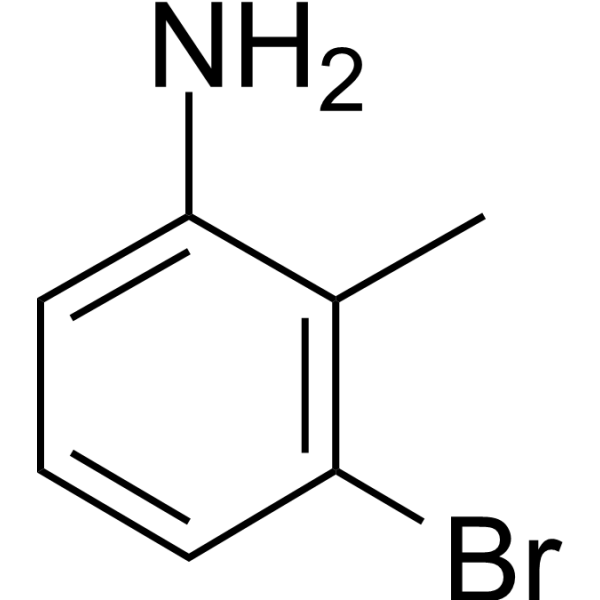
    3-Bromo-2-methylaniline is an aromatic amine compound and aniline derivative that serves as a starting material and synthetic precursor. 3-Bromo-2-methylaniline acts as a starting material for the synthesis of 4-bromo-1H-indazole and racemic 3,9-dibromo-4,10-dimethyl-6H,12H-5,11-methanodibenzodiazocine. It also serves as a precursor for the regioselective bromination and subsequent deamination to synthesize 1,2-dibromo-3-methylbenzene .
    3-Bromo-2-methylaniline
  • HY-114175A

    RnADA, Calf Spleen

    Adenosine Deaminase Inflammation/Immunology
    Adenosine deaminase, Calf Spleen is an enzyme that catalyzes the irreversible deamination of adenosine and 2'-deoxyadenosine to inosine and 2'-deoxyinosine, respectively .
    Adenosine deaminase, Calf Spleen
  • HY-P2911

    GLDH

    Mitochondrial Metabolism Others
    Glutamate dehydrogenase NAD(P) (GLDH) can be found in hepatocytes, renal tissue, brain, muscle, and intestinal cells. Glutamate dehydrogenase NAD(P) is often used in biochemical studies. Glutamate dehydrogenase is a mitochondrial enzyme, it catalyzes the reversible oxidative deamination of glutamate to α-ketoglutarate (α-KG) as part of the urea cycle .
    Glutamate dehydrogenase (NAD(P))
  • HY-P2987

    Endogenous Metabolite Amino Acid Oxidase Metabolic Disease
    L-Amino acid oxidase is a homodimeric proteins containing flavin adenine dinucleotide. L-Amino acid oxidase can catalyze the stereospecific oxidative deamination of L-amino acids to α-keto acids and ammonia .
    L-Amino acid oxidase
  • HY-P2758

    DAO

    Biochemical Assay Reagents Metabolic Disease Inflammation/Immunology Cancer
    Diamine oxidase (DAO) is an orally active enzyme. Diamine oxidase catalyzes oxidative deamination of various polyamines. Diamine oxidase degrades histamine and polyamines to maintain the metabolic balance of amines in the body. Diamine oxidase is a key regulatory enzyme in rapidly proliferating tissues such as bone marrow and intestinal mucosa. Diamine oxidase can be used in research related to intestinal diseases, small bowel transplant rejection, histamine intolerance, and other conditions .
    Diamine oxidase
  • HY-115736A

    5'-XTP trisodium

    DNA/RNA Synthesis Nucleoside Antimetabolite/Analog Phosphatase Others
    Xanthosine-5'-Triphosphate (5'-XTP) trisodium, a nucleotide, is produced by deamination of purine bases. Xanthosine-5'-Triphosphate trisodium is a substrate of inosine triphosphate pyrophosphatase (ITPase) .
    Xanthosine-5'-Triphosphate trisodium solution (100 mM)
  • HY-P2768

    LDH, EC 1.4.1.9

    Endogenous Metabolite Metabolic Disease
    Leucine dehydrogenase, Microorganism (EC 1.4.1.9) can be purified from Bacillus spheroides. Leucine dehydrogenase catalyzed the oxidative deamination of L-leucine, L-valine, L-isoleucine, L-norvaline, L-alpha-aminobutyrate, and L-norleucine, and the reductive amination of their keto analogues .
    Leucine dehydrogenase, Microorganism
  • HY-E70074

    Monoamine Oxidase Neurological Disease
    Monoamine oxidase (EC 1.4.3.4) is an enzyme composed of different polypeptides. Monoamine oxidation catalyzes the oxidative deamination of various biological amines in brain and peripheral tissues by producing hydrogen peroxide. Monoamine oxidase plays an important role in maintaining the regulation of synaptic transmission, emotional behavior and other brain functions .
    Monoamine oxidase, plasma
  • HY-P2964

    Endogenous Metabolite Metabolic Disease
    Phenylalanine dehydrogenase is an NAD +-dependent oxidoreductase targeting L-phenylalanine. Phenylalanine dehydrogenase catalyzes deamination to phenylpyruvate and NADH as part of amino acid metabolism regulation. Phenylalanine dehydrogenase is promising for research of phenylketonuria (PKU) .
    Phenylalanine dehydrogenase
  • HY-115736

    5'-XTP

    DNA/RNA Synthesis Nucleoside Antimetabolite/Analog Phosphatase Others
    Xanthosine-5'-Triphosphate (5'-XTP), a nucleotide, is produced by deamination of purine bases. Xanthosine-5'-Triphosphate is a substrate of inosine triphosphate pyrophosphatase (ITPase) .
    Xanthosine-5'-Triphosphate
  • HY-123129

    5-HT Receptor Monoamine Oxidase Neurological Disease
    RS 2232 is an orally active, competitive 5-HT deamination inhibitor with a Ki of 0.054 μM. RS-2232 exhibits reversible and specific inhibition of type A monoamine oxidase. RS 2232 can be used in brain research .
    RS 2232
  • HY-E70003A

    NADH Dehydrogenase Others
    Glutamate Dehydrogenase, Bovine Liver (EC 1.4.1.4) catalyzes the reversible oxidative deamination of glutamate to alpha-ketoglutarate and ammonia.
    Glutamate Dehydrogenase, Bovine Liver
  • HY-172285

    Fluorescent Dye Others
    Cy3 hydrazide is a cyanine dye linker containing hydrazide, which can be used to label aldehydes and ketones. This reagent allows to label various carbonyl-containing molecules such as antibodies and other glycoproteins after periodate oxidation, proteins after oxidative stress or deamination, or reducing saccarides. Cyanine3 is compatible with a number of fluorescent instruments.
    Cy3 hydrazide
  • HY-W018475

    MK 462 free base

    5-HT Receptor Neurological Disease
    Rizatriptan (MK 462 free base) is an orally active 5-HT1B/5-HT1D receptor agonist, with BBB permeability. Rizatriptan exerts significant anti-migraine effects by constricting intracranial and extracranial blood vessels and inhibiting neuropeptide release. Rizatriptan exhibits species- and tissue-specific metabolic characteristics; for example, it undergoes oxidative deamination mainly by MAO-A in the liver of brown rats, so co-administration with MAO-A inhibitors is prohibited. Rizatriptan may also exacerbate nitroglycerin-induced cutaneous allodynia, prolong the duration of central sensitization, and increase anxiety-like behavior and active drug-seeking behavior in mice. Rizatriptan has been widely used in studies related to migraine and medication-overuse headache .
    Rizatriptan
  • HY-W002114

    Bacterial Infection
    4-Amino-3-hydroxybenzoic acid is an aromatic substrate degradable by Bordetella sp. strain 10d. 4-Amino-3-hydroxybenzoic acid can serve as a carbon source, nitrogen source and energy source for the growth of Bordetella sp. strain 10d. 4-Amino-3-hydroxybenzoic acid acts as a substrate for 2-amino-5-carboxymuconate-6-semialdehyde deaminase and 4-amino-3-hydroxybenzoate 2,3-dioxygenase .
    4-Amino-3-hydroxybenzoic acid
  • HY-D1619

    Fluorescent Dye Others
    Cyanine3 hydrazide dichloride is a carbonyl reactive dye. Cyanine3 hydrazide dichloride allows the labelling of various carbonyl-containing molecules such as antibodies and other glycoproteins after oxidation by periodate, proteins or reducing sugars after oxidative stress or deamination .
    Cyanine3 hydrazide dichloride
  • HY-173334

    Monoamine Oxidase Interleukin Related TNF Receptor Neurological Disease
    hMAO-B-IN-11 (Compound 12) is a selective and reversible inhibitor of human monoamine oxidase B (hMAO-B) with an IC50 of 0.11 µM. hMAO-B-IN-11 acts through competitive binding to the hMAO-B active site, preventing oxidative deamination of monoamines and reducing hydrogen peroxide production. hMAO-B-IN-11 also inhibits pro-inflammatory mediators (NO, TNF-α, IL-1β) in activated microglia, hMAO-B-IN-11 is promising for research of neurodegenerative diseases like Parkinson’s and Alzheimer’s .
    hMAO-B-IN-11
  • HY-157360

    Biochemical Assay Reagents Others
    Acetamide Agar is a solid culture media for non-fermenting bacteria. Acetamide Agar helps differentiate P. acidovorans from other non-sugar-soluble or weakly sugar-soluble Pseudomonas species. Acetamide Agar can be used to test the ability of microorganisms such as Pseudomonas aeruginosa to utilize acetamide through deamination .
    Acetamide Agar
  • HY-E70584

    DNA/RNA Synthesis Infection
    Recombinant APOBEC3A (A3A) Protein is a single-domain cytosine deaminase with antiviral activity that deaminates cytosine to uracil, thereby specifically detecting DNA methylation levels. Recombinant APOBEC3A (A3A) Protein is recombinantly expressed in E.coli and is suitable for bisulfite-free 5-hydroxymethylcytosine whole-genome sequencing (such as ACE-Seq), cytosine deamination, etc .
    Recombinant APOBEC3A (A3A) Protein
  • HY-E70582

    Adenosine Deaminase Others
    E.coli tRNA adenosine deaminase is derived from E.coli and is an adenine deaminase that can deaminate adenine in single-stranded RNA (ssRNA, mainly the loop region within tRNA) or double-stranded RNA (dsRNA), but has no deamination activity on DNA. E.coli tRNA adenosine deaminase is a protein-modified mutant of adenine deaminase, which can efficiently deaminate adenine in ssDNA and can be applied to adenine base editors (ABE) and RNA m6A methylation sequencing .
    E.coli tRNA adenosine deaminase
  • HY-115736B

    5'-XTP lithium

    DNA/RNA Synthesis Nucleoside Antimetabolite/Analog Phosphatase Others
    Xanthosine-5'-Triphosphate (5'-XTP) lithium, a nucleotide, is produced by deamination of purine bases. Xanthosine-5'-Triphosphate lithium is a substrate of inosine triphosphate pyrophosphatase (ITPase) .
    Xanthosine-5'-triphosphate lithium
  • HY-P2854A

    Biochemical Assay Reagents Metabolic Disease
    L-Alanine Dehydrogenase, Bacillus subtilis (EC 1.4.1.1) is an A-stereospecific dehydrogenase that catalyzes the reversible deamination of L-alanine to pyruvate and ammonium.
    L-Alanine Dehydrogenase, Bacillus subtilis
  • HY-180699

    β-Sulfinyl pyruvate

    Nucleoside Antimetabolite/Analog Metabolic Disease
    2-Oxo-3-sulfinopropanoic acid (β-Sulfinyl pyruvate) is the reaction product of cysteine sulfinic acid deamination. 2-Oxo-3-sulfinopropanoic acid can be decomposed into pyruvate and sulfite .
    2-Oxo-3-sulfinopropanoic acid
  • HY-173336

    Monoamine Oxidase Neurological Disease
    MAO-B-IN-42 (Compound 4f) is a selective and reversible inhibitor of monoamine oxidase-B (MAO-B) with an IC50 value of 0.184 μM. MAO-B-IN-42 helps maintain the levels of neurotransmitters by blocking the oxidative deamination of monoamines catalyzed by MAO-B. MAO-B-IN-42 is promising for research of Parkinson's disease .
    MAO-B-IN-42
  • HY-165444

    NGD-913

    GABA Receptor Neurological Disease
    CP-615003 is a potent and subtype-selective partial agonist of GABAA receptor (GABAA receptor) (Ki = 1.1 μM). CP-615003 is mainly converted into the active metabolite CP-900725 through oxidative deamination in monkeys and humans, and the latter also has GABAA receptor affinity. CP-615003 is a substrate of P-glycoprotein (P-gp/MDR1), resulting in severe limitation of its penetration into the central nervous system (CNS). CP-615003 can be used for the study of CNS-related indications .
    CP-615003

Inquiry Online

Your information is safe with us. * Required Fields.

Salutation


Country or Region *

Applicant Name *


Organization Name *

Department *


Email Address *


Product Name *

Cat. No.


Requested quantity *

Phone Number *


Remarks

Inquiry Online

Inquiry Information

Product Name:
Cat. No.:
Quantity:
MCE Japan Authorized Agent:

