1. Search Result
Search Result
Results for "

dopamine receptor subtypes

" in MedChemExpress (MCE) Product Catalog:

23

Inhibitors & Agonists

2

Isotope-Labeled Compounds

Cat. No. Product Name Target Research Areas Chemical Structure
  • HY-10121
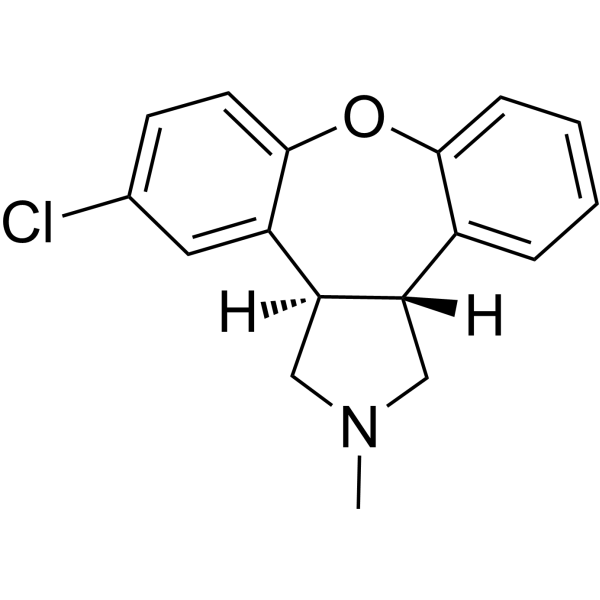
    Asenapine
    3 Publications Verification

    Org 5222

    5-HT Receptor Adrenergic Receptor Dopamine Receptor Histamine Receptor Neurological Disease
    Asenapine (Org 5222), an atypical antipsychotic, is an antagonist of serotonin receptors (pKi: 8.4-10.5), adrenoceptors (pKi: 8.9-9.5), dopamine receptors (pKi: 8.9-9.4) and histamine receptors (pKi: 8.2-9.0). Asenapine can be used in the research of schizophrenia and bipolar disorder .
    Asenapine
  • HY-128770
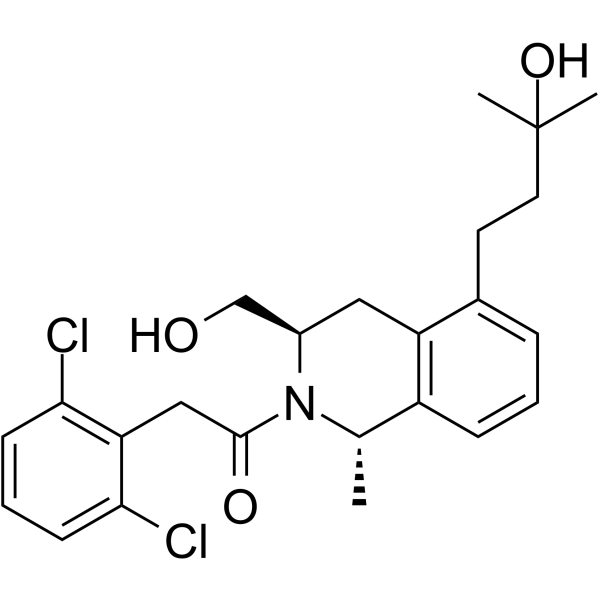
    LY3154207
    2 Publications Verification

    Dopamine Receptor Neurological Disease
    LY3154207 is a potent, subtype selective, and orally available human dopamine D1 receptor positive allosteric modulator (PAM) with minimal allosteric agonist activity (EC50=3 nM) .
    LY3154207
  • HY-11100
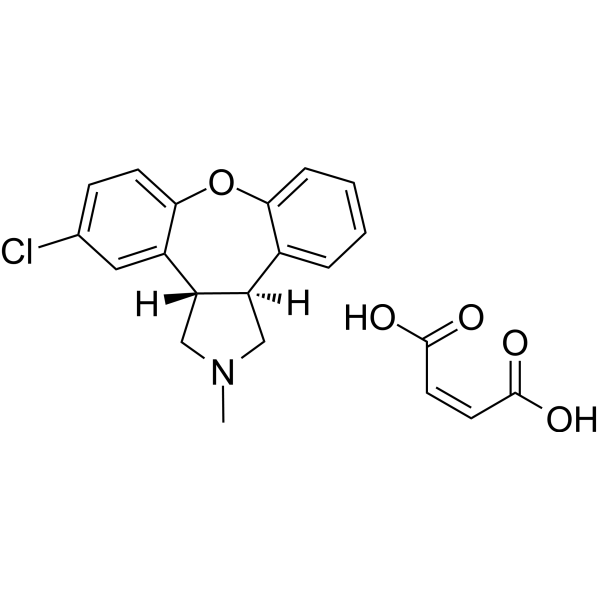
    Asenapine maleate
    3 Publications Verification

    Org 5222 maleate

    5-HT Receptor Neurological Disease
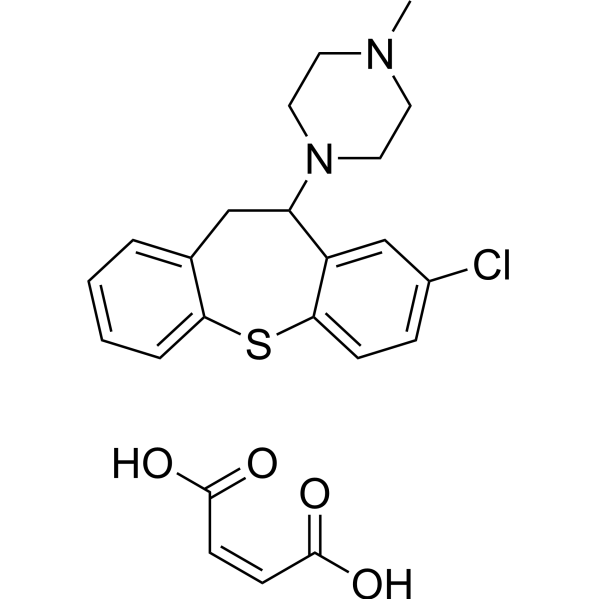
    Asenapine (Org 5222) maleate, a brain-penetrant atypical antipsychotic, is an antagonist of serotonin receptors (pKi: 8.4-10.5), adrenoceptors (pKi: 8.9-9.5), dopamine receptors (pKi: 8.9-9.4) and histamine receptors (pKi: 8.2-9.0). Asenapine maleate can be used in the research of schizophrenia and bipolar disorder .
    Asenapine maleate
  • HY-103100
    SB-699551
    1 Publications Verification

    5-HT Receptor Epigenetic Reader Domain Akt Ribosomal S6 Kinase (RSK) FOXO Neurological Disease Metabolic Disease Inflammation/Immunology Cancer
    SB-699551 is a selective and brain penetrant 5-HT5A receptor antagonist with a pKi of 8.2 nM. SB-699551 shows high selectivity over most other 5-HT receptor subtypes, dopamine receptors, and α1B adrenoceptor. SB-699551 disrupts Gαi/o-coupled and PI3K/AKT/mTOR signaling pathways, alters CREB, ATF1, AKT, PRAS40, S6K, and FOXO1 phosphorylation in breast tumor cells. SB-699551 can be used for the research of anxiety, breast cancer, and Alzheimer's disease .
    SB-699551
  • HY-106432A

    SB-202026 hydrochloride; Memric hydrochloride

    mAChR Dopamine Receptor Neurological Disease
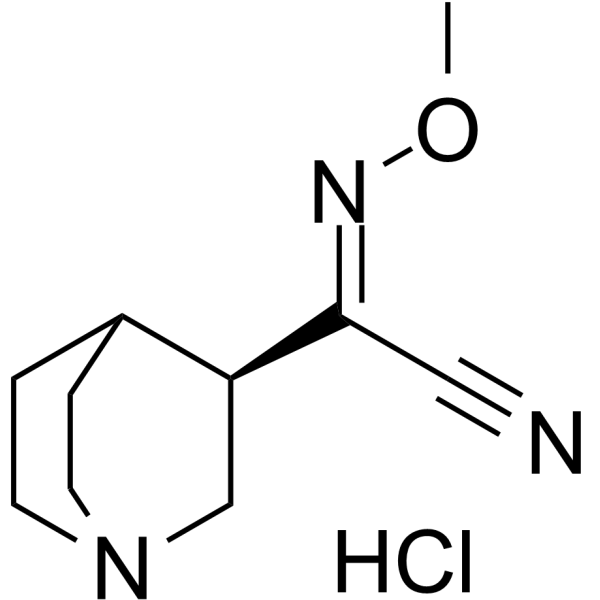
    Sabcomeline (SB-202026; Memric) hydrochloride is a muscarinic receptor agonist capable of crossing the blood-brain barrier. Sabcomeline hydrochloride exhibits affinity for all hM1 to hM5 subtypes (pKi=6.72-7.23), and shows near-full agonism at the hM3 receptor, inducing extracellular acidification. Sabcomeline hydrochloride alters the binding kinetics of dopamine D2 receptors through neural network regulation. Sabcomeline hydrochloride also causes minimal cardiovascular changes, effectively reverses spatial memory deficits in rodents and induces conditioned taste aversion. Sabcomeline hydrochloride is an important tool compound in studies of Alzheimer's disease and related neurodegenerative diseases .
    Sabcomeline hydrochloride
  • HY-16567
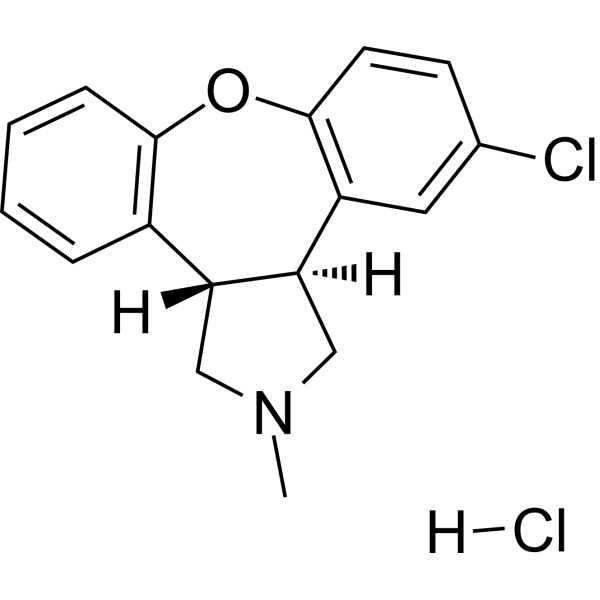
    Asenapine hydrochloride
    3 Publications Verification

    Org 5222 hydrochloride

    5-HT Receptor Dopamine Receptor Adrenergic Receptor Histamine Receptor Neurological Disease
    Asenapine (Org 5222) hydrochloride, an atypical antipsychotic, is an antagonist of serotonin receptors (pKi: 8.4-10.5), adrenoceptors (pKi: 8.9-9.5), dopamine receptors (pKi: 8.9-9.4) and histamine receptors (pKi: 8.2-9.0). Asenapine hydrochloride can be used in the research of schizophrenia and bipolar disorder r .
    Asenapine hydrochloride
  • HY-19545B

    SCH-23388 hydrochloride

    Dopamine Receptor Neurological Disease
    (S)-SCH-23390 hydrochloride is the S-enantiomer of SCH-23390 (HY-19545). SCH-23390 is a dopamine D1-like receptor antagonist (with Ki values of 0.2 nM and 0.3 nM for the D1 and D5 receptor subtypes, respectively) .
    (S)-SCH-23390 hydrochloride
  • HY-W014208

    AF-267B

    mAChR Others
    NGX-267 is a selective agonist of the actin M1 receptor, which has high selectivity among the five actin receptor subtypes, especially for the M1 receptor rather than the M3 receptor. NGX-267 also has significant differences in affinity for dopamine D2 and 5-HT2B receptors .
    NGX-267
  • HY-175504

    Dopamine Receptor PERK Neurological Disease
    MLS6357 is a D3 dopamine receptor (D3R)-selective positive allosteric modulator (PAM)-antagonist. MLS6357 exhibits antagonist activity in the D3R-mediated and the BRET-based β-arrestin recruitment assay with IC50s of 13 and 14 μM, and no activity for other DAR subtypes (D1R/D2R/D4R/D5R) (IC50 > 100 μM). MLS6357 is also an antagonist in the D3R-mediated Go-BRET assay with an IC50 of 17 μM. MLS6357 can be used for the study of neuropsychiatric disorders, including substance use disorder .
    MLS6357
  • HY-19545

    R-(+)-SCH-23390

    Dopamine Receptor Neurological Disease
    SCH-23390 is a dopamine D1-like receptor antagonist (with Ki values of 0.2 nM and 0.3 nM for the D1 and D5 receptor subtypes, respectively). SCH-23390 can shorten the latency period for cocaine-induced lever pressing behavior in rats. SCH-23390 can also eliminate generalized seizures caused by chemical convulsants, such as arecoline (HY-B0726A) and strychnine, and is used in research on neurological disorders related to the dopamine system .
    SCH-23390
  • HY-171807

    nAChR STAT Neurological Disease Inflammation/Immunology
    TC-2559 free base is a α4β2 nicotinic acetylcholine receptor (nAChR) agonists with an EC50 of 0.18 μM. TC-2559 free base shows much weaker potencies on the group of b4-containing nAChR subtypes, α2β4, α4β4 and α3β4 receptors, with EC50s in the range of 10-30 µM. TC-2559 free base can increase the discharge of dopamine cells in the ventral tegmental area (VTA) of rats in vitro, enhancing the excitability and aggressive behavior of VTA dopamine neurons. TC-2559 free base inhibits STAT3 to exert anti-inflammatory properties and relieves mice mechanical allodynia and improve rats cognitive deficits. TC-2559 free base can be used for the study of nerve pain .
    TC-2559 free base
  • HY-111242

    Dopamine Receptor Neurological Disease
    SV 156 is a potent and selective D2 dopamine receptor antagonist, with a Ki of 2.5 nM for hD2. SV 156 has approximately 40-fold binding selectivity for D2 dopamine receptors compared to the D3 receptor subtype. SV 156 can be used for L-DOPA (HY-N0304)-associated abnormal involuntary movements (AIMs) research .
    SV 156
  • HY-100539

    Dopamine Receptor Others
    PD 128907 is a D3 receptor ligand with activities of activating dopamine receptors, inhibiting cell firing, and inhibiting dopamine release. The active (+) enantiomer of PD 128907 has high affinity and selectivity for rat D3 dopamine receptors. PD 128907 inhibits cell firing in the ventral tegmental area and substantia nigra pars compacta with EC50 values of 33nM and 38nM, respectively. PD 128907 also inhibits dopamine release in the caudate putamen with an EC50 of 66nM. However, the selective D2 receptor antagonist L-741,626 has high affinity for receptors activated by PD 128907, indicating that the effects of PD 128907 are more likely on D2 autoreceptors rather than D3 dopamine receptor subtypes.
    PD 128907
  • HY-10121R

    Org 5222 (Standard)

    Reference Standards 5-HT Receptor Adrenergic Receptor Dopamine Receptor Histamine Receptor Neurological Disease Endocrinology
    Asenapine (Standard) is the analytical standard of Asenapine. This product is intended for research and analytical applications. Asenapine (Org 5222), an atypical antipsychotic, is an antagonist of serotonin receptors (pKi: 8.4-10.5), adrenoceptors (pKi: 8.9-9.5), dopamine receptors (pKi: 8.9-9.4) and histamine receptors (pKi: 8.2-9.0). Asenapine can be used in the research of schizophrenia and bipolar disorder .
    Asenapine (Standard)
  • HY-10121S2

    Org 5222-13C,d3

    Adrenergic Receptor Histamine Receptor 5-HT Receptor Dopamine Receptor Isotope-Labeled Compounds Neurological Disease Endocrinology
    Asenapine- 13C,d3 is 13C and deuterated labeled Asenapine (HY-10121). Asenapine (Org 5222), an atypical antipsychotic, is an antagonist of serotonin receptors (pKi: 8.4-10.5), adrenoceptors (pKi: 8.9-9.5), dopamine receptors (pKi: 8.9-9.4) and histamine receptors (pKi: 8.2-9.0). Asenapine can be used in the research of schizophrenia and bipolar disorder .
    Asenapine-13C,d3
  • HY-W769200

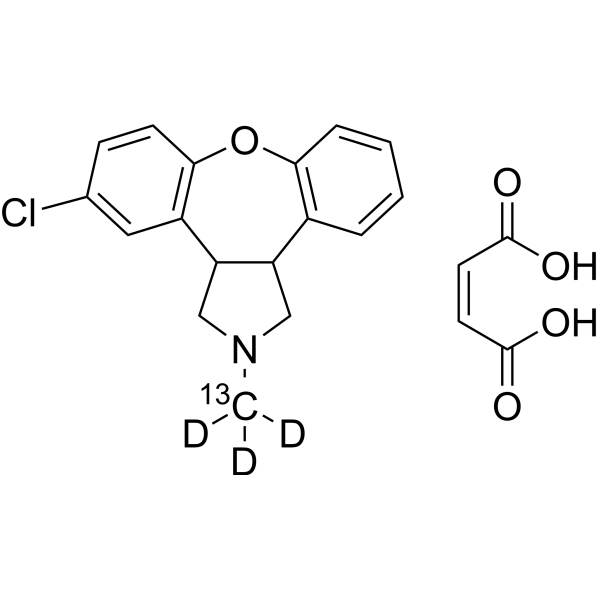
    Org 5222-13C,d3 maleate

    Isotope-Labeled Compounds 5-HT Receptor Adrenergic Receptor Dopamine Receptor Histamine Receptor Others
    Asenapine- 13C,d3 Maleate is the deuterium labeled and 13C-Asenapine Maleate (HY-11100). Asenapine (Org 5222) Maleate, an atypical antipsychotic, is an antagonist of serotonin receptors (pKi: 8.4-10.5), adrenoceptors (pKi: 8.9-9.5), dopamine receptors (pKi: 8.9-9.4) and histamine receptors (pKi: 8.2-9.0). Asenapine Maleate can be used in the research of schizophrenia and bipolar disorder .
    Asenapine-13C,d3 maleate
  • HY-100057

    6-Hydroxybuspirone; 6'-Hydroxybuspirone; BMS 528215

    5-HT Receptor Drug Metabolite Dopamine Receptor Neurological Disease
    BMY 28674 (6-Hydroxybuspirone) is the active metabolite of the anxiolytic buspirone (HY-B1115A) and is metabolized by CYP3A4.4. BMY 28674 binds to the serotonin (5-HT) receptor subtype 5-HT1A in the rat hippocampus and dorsal raphe (EC50s are 4 and 1 μM, respectively) and is an antagonist of dopamine D2, D3, and D4 receptors (IC50s are 3.1, 4.9, and 0.85 μM, respectively). BMY 28674 also inhibits organic cation transporter 1 (OCT1), OCT2, and OCT3 expressing human transporters in S2 proximal tubule cells in a concentration-dependent manner.
    BMY 28674
  • HY-121364

    Histamine Receptor Fluorescent Dye Others
    Bodilisant is a histamine H3 receptor (hH3R) ligand and imaging/labeling agent, with a Ki value of 6.51 nM for hH3R. Bodilisant binds to hH3R to produce strong green fluorescence, localizes to the extracellular membrane without internalization, and generates clear, displaceable fluorescent labeling of hH3R in native human brain tissues. Bodilisant serves as a pharmacological tool to visualize the distribution of hH3R via fluorescence confocal laser scanning microscopy .
    Bodilisant
  • HY-136700

    5-HT Receptor Akt Neurological Disease Cancer
    SB-699551 free base is a selective and brain penetrant 5-HT5A receptor antagonist with a pKi of 8.2 nM. SB-699551 free base shows high selectivity over most other 5-HT receptor subtypes, dopamine receptors, and α1B adrenoceptor. SB-699551 free base disrupts Gαi/o-coupled and PI3K/AKT/mTOR signaling pathways, alters CREB, ATF1, AKT, PRAS40, S6K, and FOXO1 phosphorylation in breast tumor cells. SB-699551 free base can be used for the research of anxiety, breast cancer, and Alzheimer's disease .
    SB-699551 free base
  • HY-111241

    Dopamine Receptor Neurological Disease
    SV 293 is a selective antagonist with neutral antagonist activity. SV 293 binds to human D2 receptors with 100-fold higher affinity and has lower affinity for human D3 and D4 dopamine receptor subtypes. SV 293 was found to block the effects of the full agonist quinpirole in forskolin-dependent adenylate acylase inhibition assays and electrophysiological assays. SV 293 can be used as a useful pharmacological tool to study the role of dopamine D2-like receptor subtypes in dopamine pathways associated with neurological, neuropsychiatric and movement disorders .
    SV 293
  • HY-181047

    Dopamine Receptor Neurological Disease
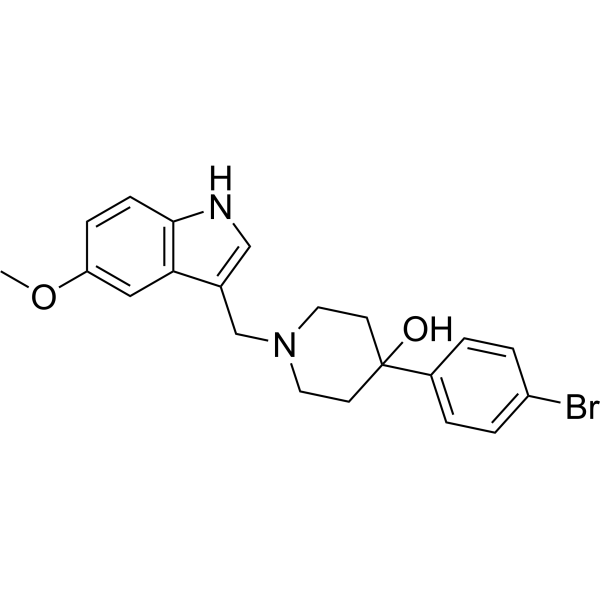
    FMJ-01-042 is a blood-brain barrier-permeable, low-efficacy partial agonist with high affinity (Kᵢ = 4.33 nM) and exceptional subtype selectivity for the dopamine D4 receptor. FMJ-01-042 exhibits good metabolic stability and is suitable for research on neurological and psychiatric disorders .
    FMJ-01-042
  • HY-181049

    Dopamine Receptor Neurological Disease
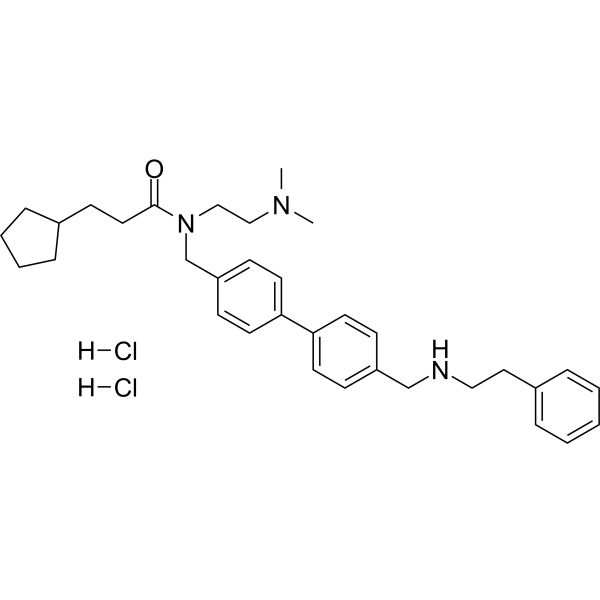
    FMJ-01-054 is a selective dopamine D4 Receptor (D4R) antagonist with a Ki od 77.7 nM. FMJ-01-054 shows subtype selectivity over D2R and D3R. FMJ-01-054 inhibits D4R-mediated β-arrestin recruitment and cAMP production with IC50 values of 3800 nM and 134 nM, respectively. FMJ-01-054 has desirable plasma half-life and brain exposure in rats. FMJ-01-054 can be used for the research of neurological disorders .
    FMJ-01-054
  • HY-180372

    5-HT Receptor Adrenergic Receptor GABA Receptor Serotonin Transporter Dopamine Receptor Neurological Disease
    CSP-2503 is a potent and selective 5-HT1A receptor agonist , with an EC50 of 0.15 μM and a Ki of 4.1 nM. CSP-2503 exhibits excellent selectivity over α1-adrenoceptors (Ki > 1000 nM), 5-HT4 receptors, and benzodiazepine receptors. CSP-2503 inhibits cAMP increase in vitro and exhibits anxiolytic activity in vivo. CSP-2503 can be used for the research of anxiety-related disorders .
    CSP-2503

Inquiry Online

Your information is safe with us. * Required Fields.

Salutation


Country or Region *

Applicant Name *


Organization Name *

Department *


Email Address *


Product Name *

Cat. No.


Requested quantity *

Phone Number *


Remarks

Inquiry Online

Inquiry Information

Product Name:
Cat. No.:
Quantity:
MCE Japan Authorized Agent:

