1. Search Result
Search Result
Results for "

embryo toxicity

" in MedChemExpress (MCE) Product Catalog:

31

Inhibitors & Agonists

1

Fluorescent Dyes

3

Natural
Products

2

Isotope-Labeled Compounds

1

Click Chemistry

Cat. No. Product Name Target Research Areas Chemical Structure
  • HY-W011689
    6PPD
    1 Publications Verification

    Reactive Oxygen Species (ROS) Others
    6PPD is a rubber antioxidant that scavenges ozone and forms nitro radicals. Exposure to 6PPD reduces the hatching rate, impairs spontaneous locomotor activity, shortens body length and causes malformations in zebrafish embryos. 6PPD also induces oxidative stress in zebrafish embryos .
    6PPD
  • HY-D1416
    HMBR
    1 Publications Verification

    Fluorescent Dye Others
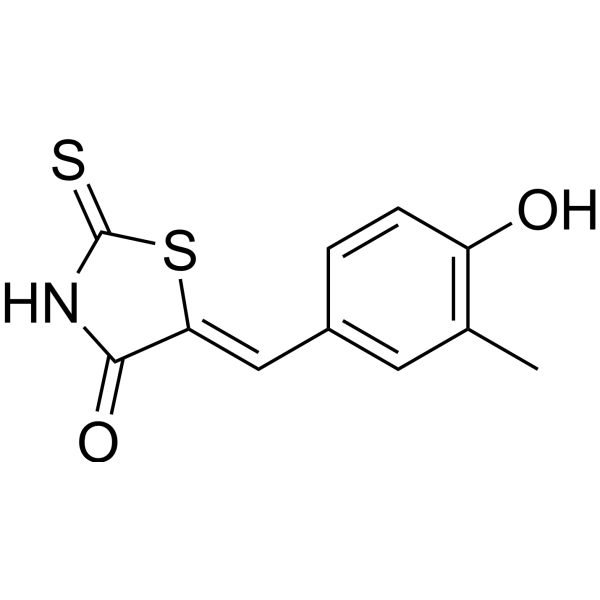
    HMBR is an analogue with an additional methyl group on the aromatic ring and is non-fluorescent. HMBR conjugated with Y-FAST emits yellow fluorescence under blue light excitation (Ex= 419 nm; Em= 525–539 nm). HMBR is non-toxic to zebrafish embryos. HMBR has high cell permeability .
    HMBR
  • HY-A0277

    Environmental Pollutants Fungal Others
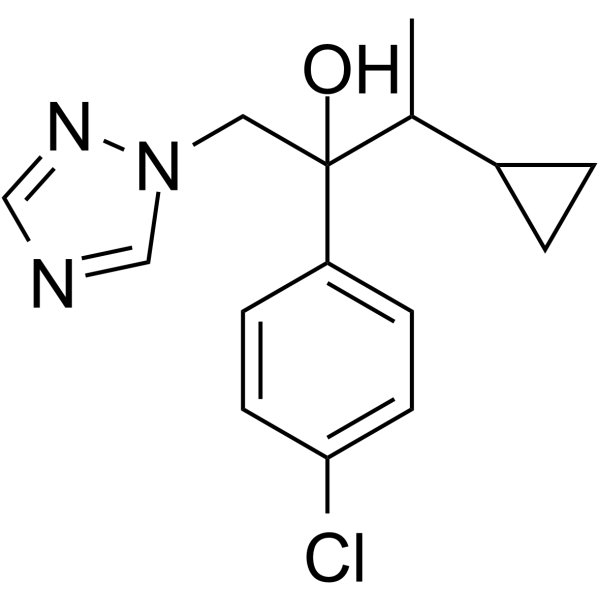
    Cyproconazole is a triazole fungicide used to protect crops, fruits and vegetables against a wide range of fungal pathogens. Cyproconazole can cause hepatocellular adenomas and carcinomas in CD-1 mice. Cyproconazole also exhibits low toxicity to zebrafish embryos and affects locomotor activity .
    Cyproconazole
  • HY-N6786

    Endogenous Metabolite Metabolic Disease
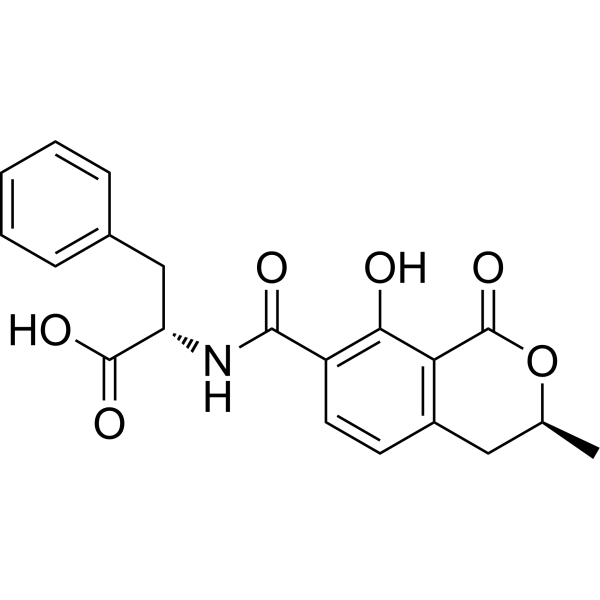
    Ochratoxin B is an orally active secondary metabolite of Aspergillus ochraceus and non-chlorinated analog of the mycotoxin Ochratoxin A. Ochratoxin B reduces the toxic effects of Ochratoxin A (HY-N6788). Ochratoxin B inhibits cell division. Ochratoxin B causes craniofacial malformations in Xenopus laevis embryos .
    Ochratoxin B
  • HY-W099479

    Ethyl butylacetylaminopropionate; IR-3535

    Environmental Pollutants Apoptosis Reactive Oxygen Species (ROS) Parasite SOD Infection Inflammation/Immunology
    Insect repellent M 3535 (Ethyl butylacetylaminopropionate) is a broad-spectrum, mild insect repellent based on the structure of β-alanine. Insect repellent M 3535 exerts repellent effects by interfering with the olfaction of mosquitoes, but it poses risks of developmental and cardiac toxicity to aquatic organisms such as zebrafish embryos in aquatic environments, and can activate oxidative stress responses .
    Insect repellent M 3535
  • HY-W002199

    6:2 FTOH; 1H,1H,2H,2H-Perfluoro-1-octanol; 2-(Perfluorohexyl)ethanol

    Bacterial Apoptosis ERK TNF Receptor Infection Neurological Disease
    6:2 Fluorotelomer alcohol (6:2 FTOH) is an orally active, blood-brain barrier-permeable modulator of cyclin D1 and ETS1. 6:2 Fluorotelomer alcohol downregulates cyclin D1 expression, upregulates ETS1 via the TNF-α/ERK 1/2 pathway, impairs mitochondrial membrane potential and respiratory function, increases reactive oxygen species levels, disrupts calcium homeostasis and activates endoplasmic reticulum stress markers, and induces cell proliferation inhibition and endothelial-mesenchymal transition. Furthermore, 6:2 Fluorotelomer alcohol induces morphological abnormalities in zebrafish embryos and liver developmental damage, while disrupting the brain immune microenvironment in mice, causing systemic toxicity and delayed pup maturation in CD-1 mice. 6:2 Fluorotelomer alcohol also induces cortical neuron apoptosis, glial cell activation, synaptic abnormalities, colonic barrier damage, intestinal dysbiosis and autism spectrum disorder-like symptoms in mice. 6:2 Fluorotelomer alcohol shows no mutagenic, clastogenic, primary skin/eye irritation or skin sensitizing effects, exhibits no selective reproductive toxicity in CD-1 mice, and is classified as GHS Category 4 for acute oral toxicity. 6:2 Fluorotelomer alcohol can be used in studies of neurodevelopmental disorders and autism spectrum disorders .
    6:2 Fluorotelomer alcohol
  • HY-136355

    Environmental Pollutants Reactive Oxygen Species (ROS) Fungal SOD Infection Inflammation/Immunology
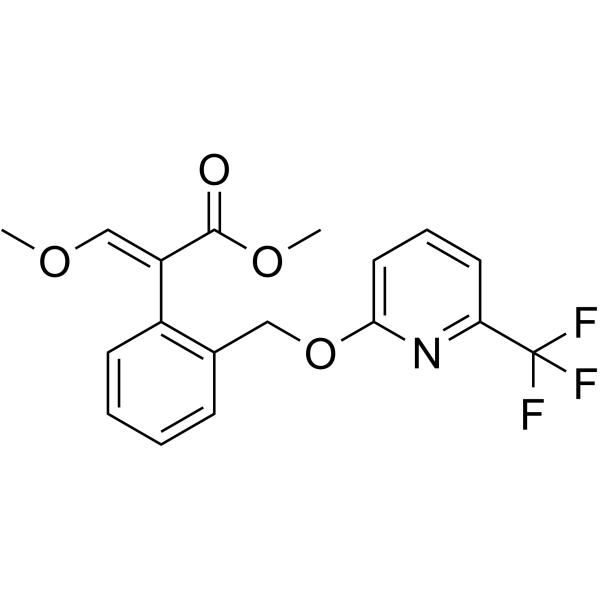
    Picoxystrobin is a strobilurin fungicide. Picoxystrobin controls plant diseases by inhibiting mitochondrial respiration. Picoxystrobin is highly toxic to zebrafish embryos, causing developmental abnormalities, oxidative stress, and immunotoxicity .
    Picoxystrobin
  • HY-21191

    PFBS

    Biochemical Assay Reagents PPAR Reactive Oxygen Species (ROS) Metabolic Disease
    Perfluorobutanesulfonic acid (PFBS) is a short-chain perfluoroalkyl substance and the main replacement for perfluorooctanesulfonic acid. Perfluorobutanesulfonic acid induces fat accumulation in human HepG2 hepatoma cells. Perfluorobutanesulfonic acid promotes lipid accumulation by activating PPARγ pathway and triggering oxidative stress, endoplasmic reticulum stress and calcium dyshomeostasis. Perfluorobutanesulfonic acid impairs reproduction and causes developmental disorders in offspring of Caenorhabditis elegans. Perfluorobutanesulfonic acid disrupts pancreatic organogenesis and lipid homeostasis in zebrafish embryos. Perfluorobutanesulfonic acid can be used in environmental toxicology, lipid metabolism and developmental toxicity studies .
    Perfluorobutanesulfonic acid
  • HY-119896

    Environmental Pollutants Herbicide Neurological Disease
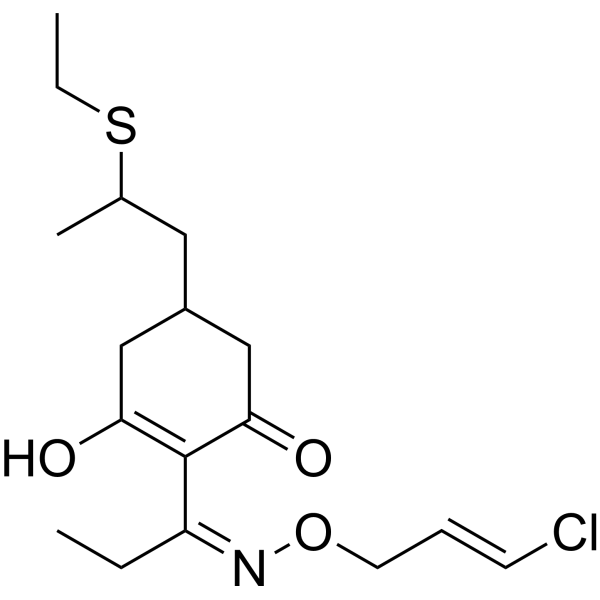
    Clethodim is a postemergence herbicide. Clethodim shows developmental toxicity and neurotoxicity in zebrafish embryos and larvae .
    Clethodim
  • HY-W099479R

    Ethyl butylacetylaminopropionate (Standard); IR-3535 (Standard)

    Reference Standards Reactive Oxygen Species (ROS) Apoptosis Infection Inflammation/Immunology
    Insect repellent M 3535 (Ethyl butylacetylaminopropionate) Standard is the analytical standard of Insect repellent M 3535 (HY-W099479). This product is intended for research and analytical applications. Insect repellent M 3535 (Ethyl butylacetylaminopropionate) is a broad-spectrum, mild insect repellent based on the structure of β-alanine. Insect repellent M 3535 exerts repellent effects by interfering with the olfaction of mosquitoes, but it poses risks of developmental and cardiac toxicity to aquatic organisms such as zebrafish embryos in aquatic environments, and can activate oxidative stress responses.
    Insect repellent M 3535 (Standard)
  • HY-A0277R

    Reference Standards Fungal Others
    Cyproconazole (Standard) is the analytical standard of Cyproconazole. This product is intended for research and analytical applications. Cyproconazole is a triazole fungicide used to protect crops, fruits and vegetables against a wide range of fungal pathogens. Cyproconazole can cause hepatocellular adenomas and carcinomas in CD-1 mice. Cyproconazole also exhibits low toxicity to zebrafish embryos and affects locomotor activity .
    Cyproconazole (Standard)
  • HY-136380

    Herbicide Others
    Clodinafop-propargyl, a main member of aryloxyphenoxy-propionate herbicides, is used for postemergence control of annual grasses in cereals, including Avena, Lolium, Setaria, Phalaris and Alopecurus spp . Clodinafop-propargyl is a click chemistry reagent, it contains an Alkyne group and can undergo copper-catalyzed azide-alkyne cycloaddition (CuAAc) with molecules containing Azide groups. Clodinafop-propargyl has developmental toxicity to zebrafish embryos .
    Clodinafop-propargyl
  • HY-124021

    Aryl Hydrocarbon Receptor Others
    Benzyl 2-naphthyl ether is a compound mentioned in the study of the effects of aromatic sensitizers on zebrafish embryos. It can cause morphological abnormalities and changes in gene expression in zebrafish embryos. Its toxicity mechanism is partly related to AHR, and there may be other mechanisms independent of AHR.
    Benzyl 2-naphthyl ether
  • HY-178453

    VEGFR Apoptosis Cancer
    VEGFR-2-IN-74 (compound 55) is a potent VEGFR-2 inhibitor (IC50 = 0.035 µM). VEGFR-2-IN-74 exhibits good anti proliferative activity and can induce apoptosis in various cancer cells, such as A549 (IC50 = 2.67 µM) and HCT116 (IC50 = 10.87 µM) cells. VEGFR-2-IN-74 has low toxicity to normal cells. VEGFR-2-IN-74 shows significant anti angiogenic effects in chicken embryo models. VEGFR-2-IN-74 can be used in the research of cancer .
    VEGFR-2-IN-74
  • HY-110296

    Endogenous Metabolite Metabolic Disease
    EC19 is an analogue of 13-cis retinoic acid (HY-15127). EC19 shows embryo toxicity. EC19 causes mild effects on upper beak outgrowth .
    EC19
  • HY-119896R

    Herbicide Reference Standards Neurological Disease
    Clethodim (Standard) is the analytical standard of Clethodim. This product is intended for research and analytical applications. Clethodim is a postemergence herbicide. Clethodim shows developmental toxicity and neurotoxicity in zebrafish embryos and larvae .
    Clethodim (Standard)
  • HY-136355S

    Isotope-Labeled Compounds Fungal Reactive Oxygen Species (ROS) SOD Infection Inflammation/Immunology
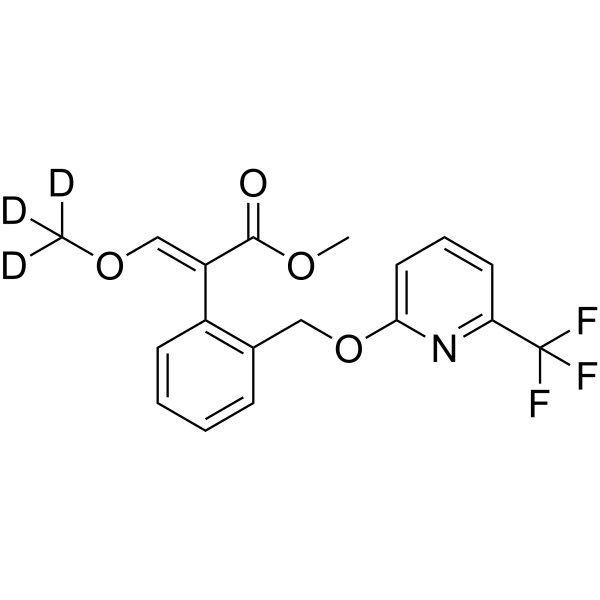
    Picoxystrobin-d3 is the deuterium labeled Picoxystrobin (HY-136355). Picoxystrobin is a strobilurin fungicide. Picoxystrobin controls plant diseases by inhibiting mitochondrial respiration. Picoxystrobin is highly toxic to zebrafish embryos, causing developmental abnormalities, oxidative stress, and immunotoxicity .
    Picoxystrobin-d3
  • HY-120367

    Carbonic Anhydrase Cancer
    DTP348 is an inhibitor for carbonic anhydrase IX with a Ki of 8.3 nM in vitro and an IC50 of 19.26 μM in Xenopus oocytes. DTP348 exhibits slight toxicity in zebrafish embryos with LD50 of 3.5 mM. DTP348 can be used in the anti-cancer research .
    DTP348
  • HY-136355R

    Reference Standards Fungal Reactive Oxygen Species (ROS) SOD Infection Inflammation/Immunology
    Picoxystrobin (Standard) is the analytical standard of Picoxystrobin (HY-136355). This product is intended for research and analytical applications. Picoxystrobin is a strobilurin fungicide. Picoxystrobin controls plant diseases by inhibiting mitochondrial respiration. Picoxystrobin is highly toxic to zebrafish embryos, causing developmental abnormalities, oxidative stress, and immunotoxicity .
    Picoxystrobin (Standard)
  • HY-155331

    Fungal Infection
    Antifungal agent 77 (Compound 13h) is an antifungal agent. Antifungal agent 77 (500 μg/mL) also shows good insecticidal activity against Mythimna separate, Helicoverpa armigera, Ostrinia nubilalis, and Spodoptera frugiperda with a death rate of 30%, 25%, 40%, and 25%. Antifungal agent 77 shows toxicity in zebrafish embryo with a LC50 of 2.43 μg/mL .
    Antifungal agent 77
  • HY-N6786R

    Endogenous Metabolite Reference Standards Metabolic Disease
    Ochratoxin B (Standard) is the analytical standard of Ochratoxin B (HY-N6786). This product is intended for research and analytical applications. Ochratoxin B is an orally active secondary metabolite of Aspergillus ochraceus and non-chlorinated analog of the mycotoxin Ochratoxin A. Ochratoxin B reduces the toxic effects of Ochratoxin A (HY-N6788). Ochratoxin B inhibits cell division. Ochratoxin B causes craniofacial malformations in Xenopus laevis embryos .
    Ochratoxin B (Standard)
  • HY-N6786S

    Isotope-Labeled Compounds Endogenous Metabolite Metabolic Disease
    Ochratoxin B- 13C20 is 13C-labeled Ochratoxin B (HY-N6786). Ochratoxin B is an orally active secondary metabolite of Aspergillus ochraceus and non-chlorinated analog of the mycotoxin Ochratoxin A. Ochratoxin B reduces the toxic effects of Ochratoxin A (HY-N6788). Ochratoxin B inhibits cell division. Ochratoxin B causes craniofacial malformations in Xenopus laevis embryos .
    Ochratoxin B-13C20
  • HY-B2041

    Insecticide Infection
    Benfuracarb is a broad-spectrum carbamate insecticide with crop protection activity. Benfuracarb is used to control springtails, aphids, and other pests, typically on sugar beet crops. Benfuracarb exhibits toxicity to humans and aquatic organisms. Benfuracarb exposure to zebrafish embryos resulted in a reduction in the body length of zebrafish larvae. Superoxide dismutase (SOD) activity was significantly increased after Benfuracarb treatment. Benfuracarb also interfered with the transcriptional levels of marker genes associated with early embryonic development .
    Benfuracarb
  • HY-W099331R

    MEGX hydrochloride (Standard); Norlidocaine hydrochloride (Standard)

    Reference Standards Drug Metabolite Metabolic Disease Inflammation/Immunology
    Benfuracarb (Standard) is the analytical standard of Benfuracarb. This product is intended for research and analytical applications. Benfuracarb is a broad-spectrum carbamate insecticide with crop protection activity. Benfuracarb is used to control springtails, aphids, and other pests, typically on sugar beet crops. Benfuracarb exhibits toxicity to humans and aquatic organisms. Benfuracarb exposure to zebrafish embryos resulted in a reduction in the body length of zebrafish larvae. Superoxide dismutase (SOD) activity was significantly increased after Benfuracarb treatment. Benfuracarb also interfered with the transcriptional levels of marker genes associated with early embryonic development .
    Monoethylglycinexylidide hydrochloride (Standard)
  • HY-B2041R

    Parasite Reference Standards Infection
    Benfuracarb (Standard) is the analytical standard of Benfuracarb. This product is intended for research and analytical applications. Benfuracarb is a broad-spectrum carbamate insecticide with crop protection activity. Benfuracarb is used to control springtails, aphids, and other pests, typically on sugar beet crops. Benfuracarb exhibits toxicity to humans and aquatic organisms. Benfuracarb exposure to zebrafish embryos resulted in a reduction in the body length of zebrafish larvae. Superoxide dismutase (SOD) activity was significantly increased after Benfuracarb treatment. Benfuracarb also interfered with the transcriptional levels of marker genes associated with early embryonic development .
    Benfuracarb (Standard)
  • HY-144818

    Apoptosis Microtubule/Tubulin Cancer
    Tubulin inhibitor 23 is a potent Tubulin inhibitor with an IC50 of 4.8 µM. Tubulin inhibitor 23 induces cell apoptosis. Tubulin inhibitor 23 shows antiangiogenic activity in a dose-dependent manner. Tubulin inhibitor 23 has the potential for the research of leukaemia .
    Tubulin inhibitor 23
  • HY-104044A

    BGB-290 maleate

    Apoptosis Neurological Disease
    Pamiparib maleate (BGB-290 maleate) is a highly potent and selective PARP inhibitor with neurotoxicity-inducing activity. Pamiparib maleate can effectively penetrate the blood-brain barrier and cause cerebral hemorrhage, brain atrophy, and movement disorders in zebrafish embryos exposed. Pamiparib maleate exposure downregulates the activities of acetylcholinesterase (AChE) and adenosine triphosphatase (ATPase) and leads to upregulation of oxidative stress, which triggers apoptosis and interferes with the expression of neurodevelopment-related genes. The use of pamiparib maleate is also accompanied by downregulation of the Notch signaling pathway, while activation of the Notch signaling pathway can partially rescue neurodevelopmental toxicity. Therefore, pamiparib maleate provides a reference for evaluating its potential neurotoxicity during embryonic development .
    Pamiparib maleate
  • HY-W747601

    Cholinesterase (ChE) SOD Reactive Oxygen Species (ROS) Bcl-2 Family MDM-2/p53 Apoptosis Insecticide Infection
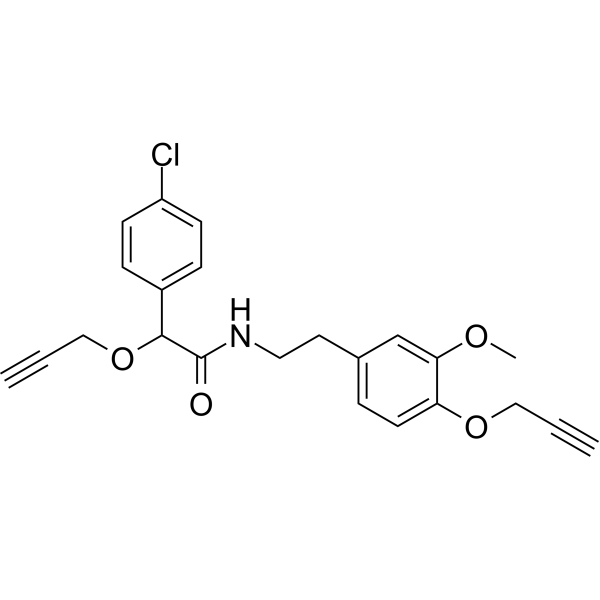
    Chlorphoxim is a broad-spectrum and highly efficient insecticide. Chlorphoxim kills pests by inhibiting AChE. Chlorphoxim inhibits the activities of SOD and CAT in zebrafish embryos. Chlorphoxim induces oxidative stress in zebrafish embryos by activating ROS. Chlorphoxim induces apoptosis by upregulating the expression levels of Bax, Bcl2 and p53 in zebrafish embryos. Chlorphoxim exhibits neurotoxicity and developmental toxicity. Chlorphoxim is used in agricultural research for the control of various pests .
    Chlorphoxim
  • HY-W042298

    Environmental Pollutants Others
    Triisobutyl phosphate is an environmental pollutant that undergoes biodegradation. TiBP can be degraded in activated sludge via hydrolysis, dehydrogenation and hydroxylation, a process mediated by an acclimated microbial community with Pseudomonas as the key strain, and enhanced by TiBP-induced enzymatic activity. TiBP exerts toxic effects on zebrafish embryos .
    Triisobutyl phosphate
  • HY-W008927

    Fungal Reactive Oxygen Species (ROS) DNA/RNA Synthesis Apoptosis Infection
    Fluoxastrobin is a fungicide. By binding to NAD-dependent epimerase/dehydratase, Fluoxastrobin interferes with electron transport, reduces ATP production and inhibits mycelial growth, thereby effectively controlling foliar diseases of tea plants. Fluoxastrobin induces oxidative stress by increasing ROS levels and lipid peroxidation, causes DNA damage and promotes apoptosis; meanwhile, it shows high acute toxicity to Danio rerio embryos and larvae. Fluoxastrobin can be used in research related to tea foliar diseases (including tea red leaf spot and tea gray leaf spot) .
    Fluoxastrobin
  • HY-N18470

    DNA/RNA Synthesis Apoptosis Reactive Oxygen Species (ROS) Inflammation/Immunology
    Gadusol is a potent, maternally supplied natural sunscreen. Gadusol is synthesized by the mother during oogenesis and stored in eggs, representing the primary sunscreen mechanism during the early developmental stages of fish. Gadusol directly prevents UVB-induced DNA damage and reduces the generation of ROS thereby avoiding cellular stress and apoptosis. Gadusol does not exert antioxidant functions in zebrafish embryos. Gadusol can be used in studies related to topical photoprotective cosmetics .
    Gadusol

Inquiry Online

Your information is safe with us. * Required Fields.

Salutation


Country or Region *

Applicant Name *


Organization Name *

Department *


Email Address *


Product Name *

Cat. No.


Requested quantity *

Phone Number *


Remarks

Inquiry Online

Inquiry Information

Product Name:
Cat. No.:
Quantity:
MCE Japan Authorized Agent:

