Search Result
Results for "
endogenous adenosine
" in MedChemExpress (MCE) Product Catalog:
3
Biochemical Assay Reagents
27
Isotope-Labeled Compounds
| Cat. No. |
Product Name |
Target |
Research Areas |
Chemical Structure |
-
- HY-B2176
-
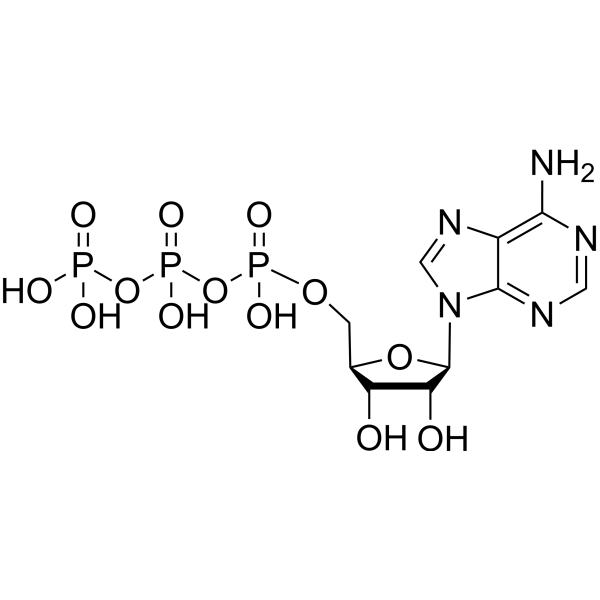
ATP
Maximum Cited Publications
152 Publications Verification
adenosine 5'-triphosphate
|
Endogenous Metabolite
NOD-like Receptor (NLR)
Interleukin Related
Bacterial
|
Infection
Metabolic Disease
Inflammation/Immunology
|
|
ATP (Adenosine 5'-triphosphate) is a central component of energy storage and metabolism in vivo. ATP provides the metabolic energy to drive metabolic pumps and serves as a coenzyme in cells. ATP is an important endogenous signaling molecule in immunity and inflammation. ATP can activate the NLRP3 inflammasome and induce IL-1β and chemokines secretion. ATP has anti-bacterial infection effects and can protect mice against bacterial infection in mice .
|
-
-
- HY-B0228
-
-
-
- HY-N0092
-
-
-
- HY-B0345A
-
|
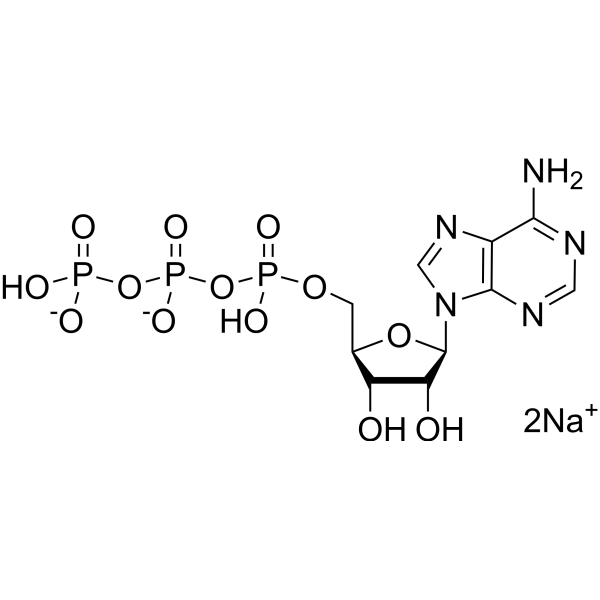
adenosine 5'-triphosphate disodium salt; Disodium adenosine triphosphate
|
Endogenous Metabolite
|
Metabolic Disease
Inflammation/Immunology
Cancer
|
|
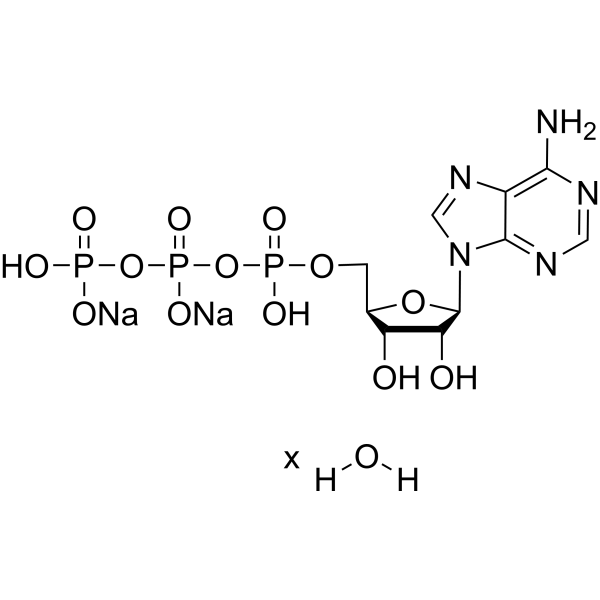
ATP disodium salt (Adenosine 5'-triphosphate disodium salt) is a central component of energy storage and metabolism in vivo, provides the metabolic energy to drive metabolic pumps and serves as a coenzyme in cells. ATP disodium salt is an important endogenous signaling molecule in immunity and inflammation .
|
-
-
- HY-B2176A
-
|
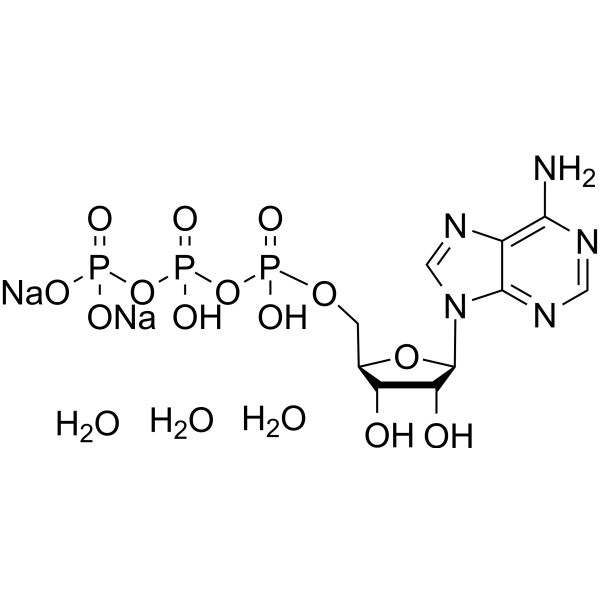
adenosine-5'-triphosphate disodium trihydrate
|
Endogenous Metabolite
|
Metabolic Disease
Inflammation/Immunology
Cancer
|
|
ATP disodium trihydrate (Adenosine 5'-triphosphate disodium trihydrate) is a central component of energy storage and metabolism in vivo. ATP disodium trihydrate provides the metabolic energy to drive metabolic pumps and serves as a coenzyme in cells. ATP disodium trihydrate is an important endogenous signaling molecule in immunity and inflammation .
|
-
-
- HY-W010735
-
|
adenosine 5'-triphosphate disodium salt hydrate
|
Endogenous Metabolite
|
Metabolic Disease
Inflammation/Immunology
Cancer
|
|
ATP disodium salt hydrate (Adenosine 5'-triphosphatedisodium salt hydrate) is a central component of energy storage and metabolism in vivo, provides the metabolic energy to drive metabolic pumps and serves as a coenzyme in cells. ATP disodium salt hydrate is an important endogenous signaling molecule in immunity and inflammation .
|
-
-
- HY-B2176B
-
|
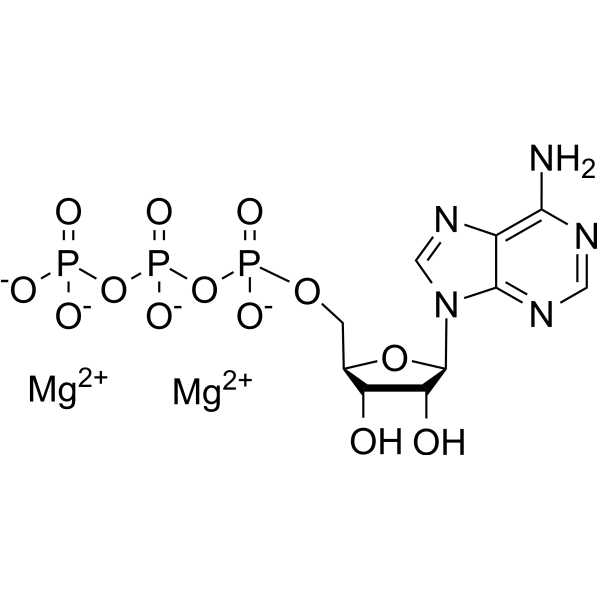
adenosine 5'-triphosphate dimagnesium
|
Endogenous Metabolite
|
Inflammation/Immunology
|
|
ATP (Adenosine 5'-triphosphate) dimagnesium is a central component of energy storage and metabolism in vivo. ATP dimagnesium provides the metabolic energy to drive metabolic pumps and serves as a coenzyme in cells. ATP dimagnesium is an important endogenous signaling molecule in immunity and inflammation .
|
-
-
- HY-B2176R
-
|
adenosine 5'-triphosphate (Standard)
|
Reference Standards
Endogenous Metabolite
|
Metabolic Disease
Inflammation/Immunology
|
ATP (Standard) is the analytical standard of ATP. This product is intended for research and analytical applications. ATP (Adenosine 5'-triphosphate) is a central component of energy storage and metabolism in vivo. ATP provides the metabolic energy to drive metabolic pumps and serves as a coenzyme in cells. ATP is an important endogenous signaling molecule in immunity and inflammation .
In Vitro: ATP (5 mM; 1 hour) co-treatment with LPS (1 μg/mL) has a synergistic effect on the activation of the NLRP3 inflammasome in HGFs .
ATP (2 mM; 0.5-24 hours) induces secretion of IL-1β, KC and MIP-2 from BMDMs in a caspase-1 activation-dependent manner .
ATP promotes neutrophil chemotaxis in vitro .
In Vivo: ATP (50 mg/kg; i.p.) protects mice against bacterial infection in vivo .
ATP induces the secretion of IL-1β, KC and MIP-2 and neutrophils recruitment in vivo .
|
-
-
- HY-101984
-
|
|
Nucleoside Antimetabolite/Analog
Adenosine Receptor
Akt
SARS-CoV
|
Infection
Cancer
|
|
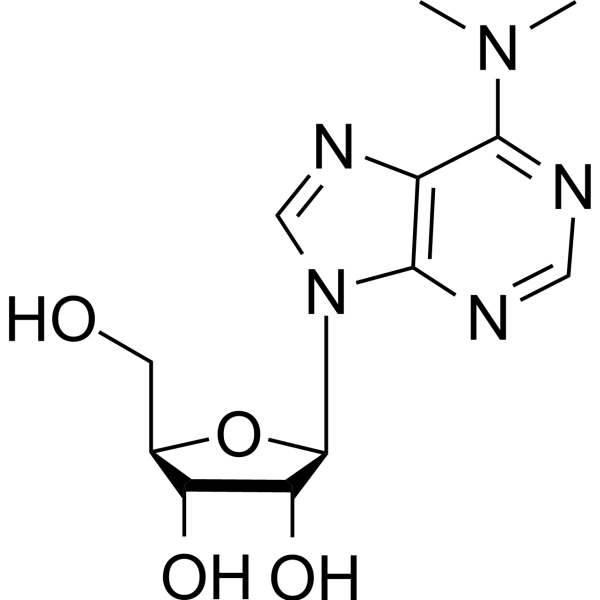
N6,N6-Dimethyladenosine, a modified ribonucleoside, is an endogenous A3 adenosine receptor ligand. N6,N6-Dimethyladenosine is an AKT inhibitor with antitumor effects. N6, N6-Dimethyladenosine targets SARS-CoV-2 entry protein ADAM17. N6, N6-Dimethyladenosine robustly inhibits AKT signaling in a variety of non-small cell lung cancer cell lines .
|
-
-
- HY-B0228S1
-
|
Adenine riboside-13C5; D-adenosine-13C5
|
Apoptosis
Nucleoside Antimetabolite/Analog
Autophagy
Endogenous Metabolite
|
Cancer
|
|
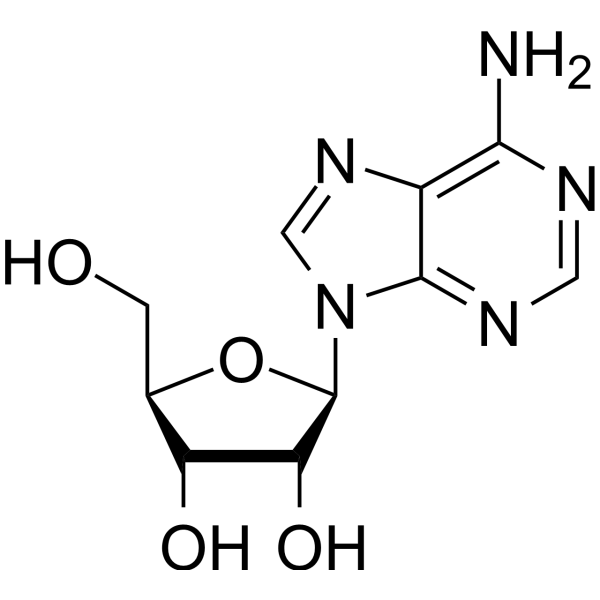
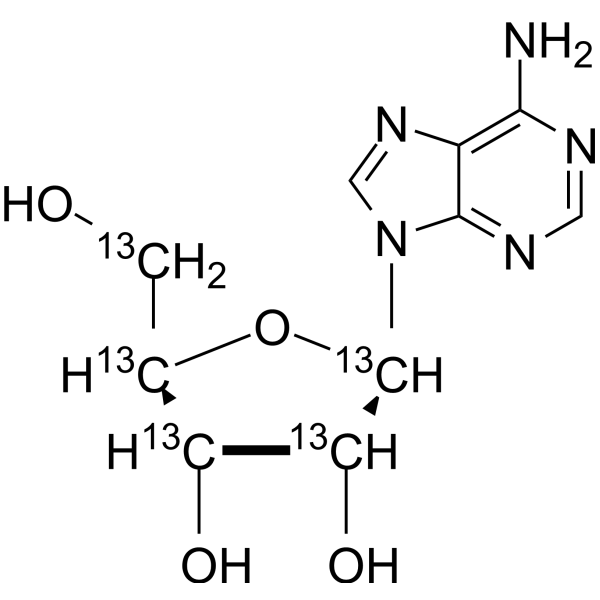
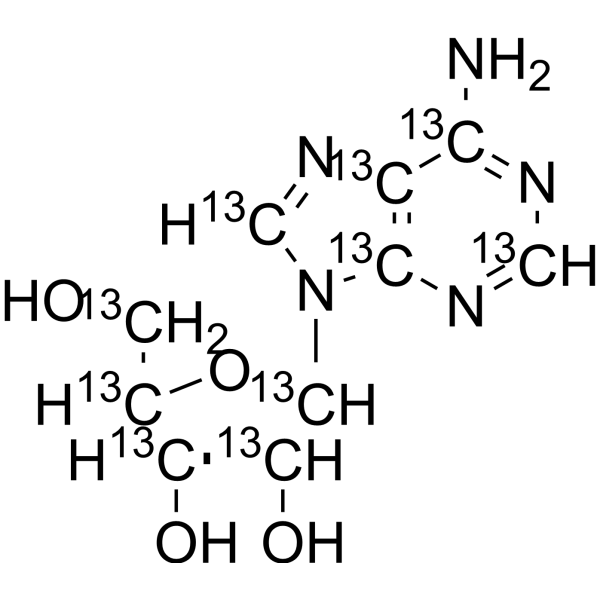
Adenosine- 13C5 is the 13C labeled Adenosine . Adenosine (Adenine riboside), a ubiquitous endogenous autacoid, acts through the enrollment of four G protein-coupled receptors: A1, A2A, A2B, and A3. Adenosine affects almost all aspects of cellular physiology, including neuronal activity, vascular function, platelet aggregation, and blood cell regulation .
|
-
-
- HY-B0228S11
-
|
Adenine riboside-15N5; D-adenosine-15N5
|
Isotope-Labeled Compounds
|
Cancer
|
|
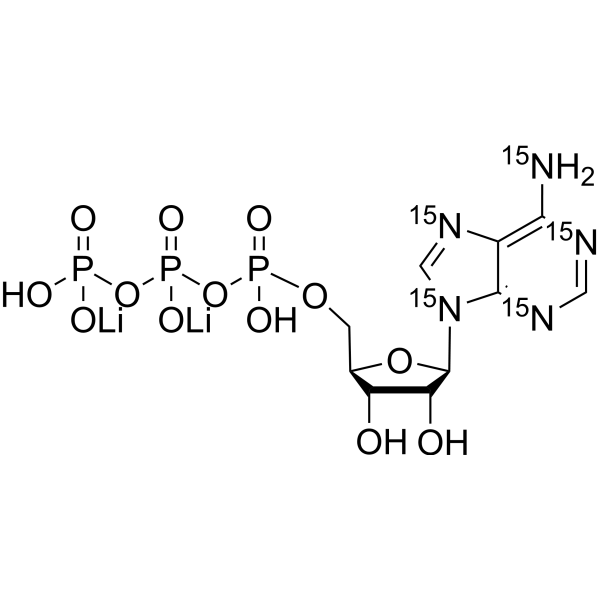
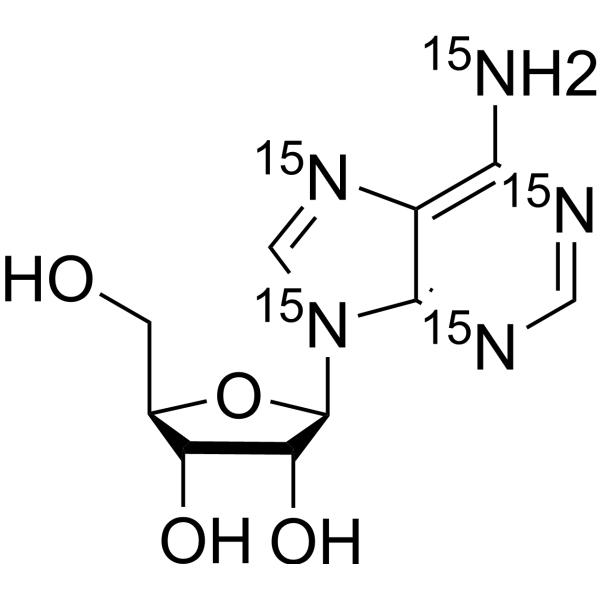
Adenosine- 15N5 (Adenine riboside- 15N5; D-Adenosine- 15N5) is the 15N labled Adenosine (HY-B0228). Adenosine (Adenine riboside), a ubiquitous endogenous autacoid, acts through the enrollment of four G protein-coupled receptors: A1, A2A, A2B, and A3. Adenosine affects almost all aspects of cellular physiology, including neuronal activity, vascular function, platelet aggregation, and blood cell regulation .
|
-
-
- HY-N0092S2
-
-
-
- HY-139644
-
|
|
Adenosine Receptor
|
Neurological Disease
|
|
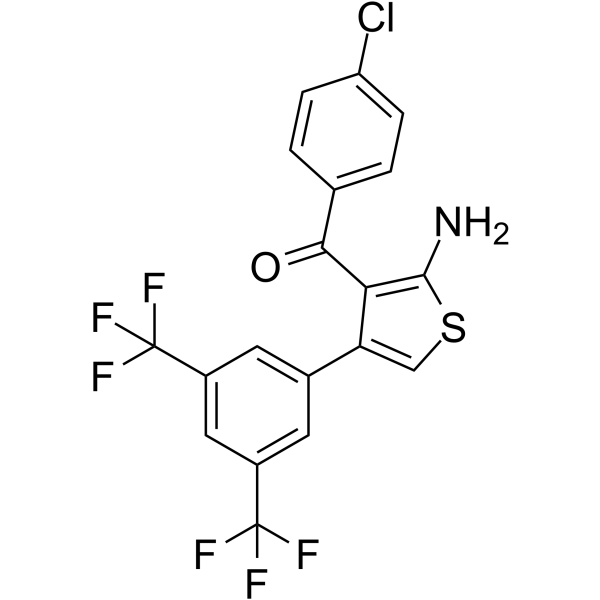
MIPS521 is a positive allosteric modulator of adenosine A1 receptor (A1AR). MIPS521 also has a lower A1R allosteric affinity (pKB=4.95; KB=11 μM). MIPS521 exhibits pain-relieving effects in vivo through modulation of the increased levels of endogenous adenosine .
|
-
-
- HY-B2176S6
-
|
adenosine 5'-triphosphate-13C10 dilithium
|
Isotope-Labeled Compounds
Endogenous Metabolite
|
Metabolic Disease
Inflammation/Immunology
|
|
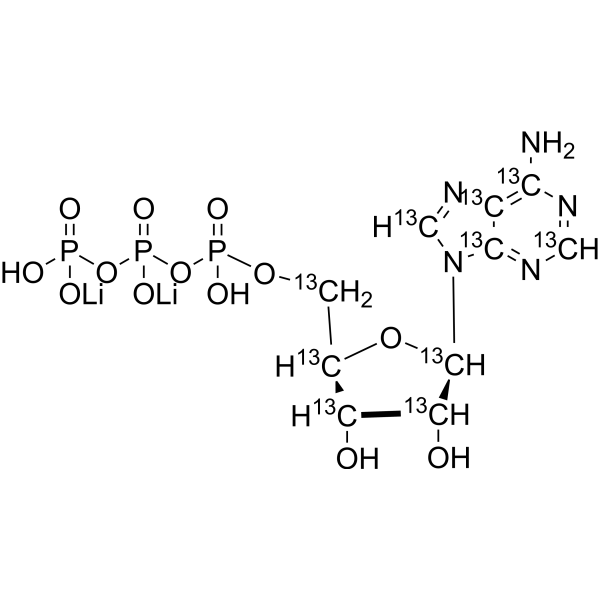
ATP- 13C10 (Adenosine 5'-triphosphate- 13C10) dilithium is 13C-labeled ATP (HY-B2176). ATP (Adenosine 5'-triphosphate) is a central component of energy storage and metabolism in vivo. ATP provides the metabolic energy to drive metabolic pumps and serves as a coenzyme in cells. ATP is an important endogenous signaling molecule in immunity and inflammation.
|
-
-
- HY-B2176S
-
|
adenosine 5'-triphosphate-13C10,15N5
|
Endogenous Metabolite
|
Metabolic Disease
|
|
ATP- 13C10, 15N5 is the 13C and 15N labeled ATP . ATP (Adenosine 5'-triphosphate) is a central component of energy storage and metabolism in vivo. ATP provides the metabolic energy to drive metabolic pumps and serves as a coenzyme in cells. ATP is an important endogenous signaling molecule in immunity and inflammation .
|
-
-
- HY-B2176I
-
|
adenosine 5'-triphosphate disodium salt, 100 mM Solution, PCR Grade
|
Endogenous Metabolite
NOD-like Receptor (NLR)
Interleukin Related
Bacterial
|
Infection
Metabolic Disease
Inflammation/Immunology
|
|
ATP (Adenosine 5'-triphosphate) disodium salt, 100 mM Solution, PCR Grade is a central component of energy storage and metabolism in vivo. ATP disodium salt, 100 mM Solution, PCR Grade provides the metabolic energy to drive metabolic pumps and serves as a coenzyme in cells. ATP disodium salt, 100 mM Solution, PCR Grade is an important endogenous signaling molecule in immunity and inflammation. ATP disodium salt, 100 mM Solution, PCR Grade can activate the NLRP3 inflammasome and induce IL-1β and chemokines secretion. ATP disodium salt, 100 mM Solution, PCR Grade has anti-bacterial infection effects and can protect mice against bacterial infection in mice .
|
-
-
- HY-B0228S13
-
-
-
- HY-B0228R
-
|
Adenine riboside (Standard); D-adenosine (Standard)
|
Reference Standards
Nucleoside Antimetabolite/Analog
Autophagy
Apoptosis
Endogenous Metabolite
|
Metabolic Disease
Cancer
|
|
Adenosine (Standard) is the analytical standard of Adenosine. This product is intended for research and analytical applications. Adenosine (Adenine riboside), a ubiquitous endogenous autacoid, acts through the enrollment of four G protein-coupled receptors: A1, A2A, A2B, and A3. Adenosine affects almost all aspects of cellular physiology, including neuronal activity, vascular function, platelet aggregation, and blood cell regulation .
|
-
-
- HY-B0228S9
-
|
|
Isotope-Labeled Compounds
Apoptosis
Nucleoside Antimetabolite/Analog
Autophagy
Endogenous Metabolite
|
Metabolic Disease
Cancer
|
|
Adenosine- 13C10, 15N5 is the 13C and 15N labeled Adenosine (HY-B0228) . Adenosine (Adenine riboside), a ubiquitous endogenous autacoid, acts through the enrollment of four G protein-coupled receptors: A1, A2A, A2B, and A3. Adenosine affects almost all aspects of cellular physiology, including neuronal activity, vascular function, platelet aggregation, and blood cell regulation .
|
-
-
- HY-137243
-
|
|
Endogenous Metabolite
Nucleoside Antimetabolite/Analog
|
Others
|
|
Adenosine 3',5'-diphosphate disodium is an endogenous purine nucleotide. Adenosine 3',5'-diphosphate disodium acts as an inhibitor of bovine adrenal estrogen sulfotransferase (EST) with a Ki value of 7.0 μM. It also serves as an indispensable specific cofactor for the pregnenolone-binding protein (PBP) steroid-binding complex, with an EC50 value of 1.5 μM in guinea pigs .
|
-
-
- HY-B0228S6
-
-
-
- HY-B2176S5
-
|
adenosine 5'-triphosphate-15N5 dilithium
|
Isotope-Labeled Compounds
Endogenous Metabolite
|
Metabolic Disease
Inflammation/Immunology
|
|
ATP- 15N5 (Adenosine 5'-triphosphate- 15N5) dilithium is 15N labeled ATP (HY-B2176). ATP (Adenosine 5'-triphosphate) is a central component of energy storage and metabolism in vivo. ATP provides the metabolic energy to drive metabolic pumps and serves as a coenzyme in cells. ATP is an important endogenous signaling molecule in immunity and inflammation.
|
-
-
- HY-118301
-
|
|
GABA Receptor
5-HT Receptor
|
Neurological Disease
|
|
ADX71441 is an orally active, blood-brain barrier penetrant positive allosteric modulator of GABAB receptor. ADX71441 potentiates the activity of endogenous GABA at GABAB receptor, with an EC50 of 96 nM. ADX71441 functionally inhibits adenosine transporters and 5-HT2B receptor. ADX71441 produces anxiolytic-like, analgesic, muscle relaxant, hypothermic and overactive bladder inhibitory effects, reduces acute locomotor activity levels, decreases voluntary intake of alcohol and saccharin, attenuates stress-induced neuronal activation, and exhibits anti-hyperalgesic activity .
|
-
-
- HY-B0228S4
-
-
-
- HY-U00116
-
|
|
Adenosine Receptor
|
Cardiovascular Disease
|
|
GP531 is a potent, second-generation adenosine regulating agent, is pharmacologically silent under basal conditions but increases localized endogenous adenosine during ischemia.
|
-
-
- HY-B0228S
-
-
-
- HY-N0092R
-
|
|
Reference Standards
Adenosine Receptor
Endogenous Metabolite
|
Neurological Disease
Inflammation/Immunology
|
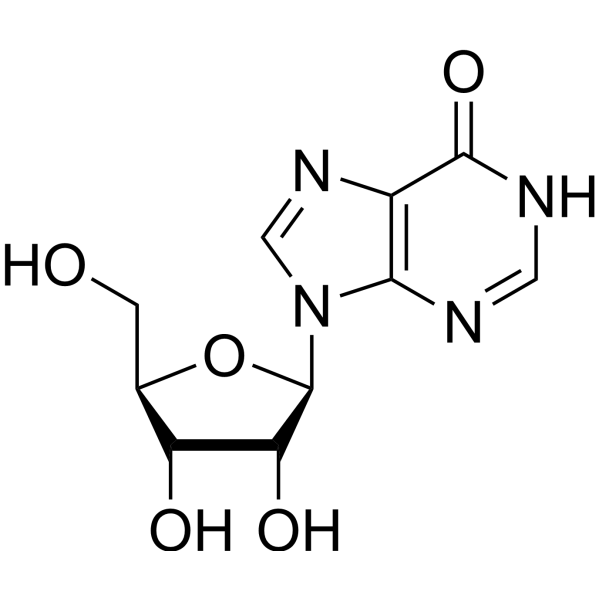
Inosine (Standard) is the analytical standard of Inosine. This product is intended for research and analytical applications. Inosine is an endogenous purine nucleoside produced by catabolism of adenosine. Inosine has anti-inflammatory, antinociceptive, immunomodulatory and neuroprotective effects. Inosine is an agonist for adenosine A1 (A1R) and A2A (A2AR) receptors . In Vitro:Inosine dose-dependently stimulates cAMP production mediated through the A2AR . Inosine dose-dependently induces hA2AR-mediated ERK1/2 phosphorylation . Inosine (100 μM; 24 hours) reduces oxidative stress in MES 23.5 cells cultured with astrocytes . In Vivo:Inosine (10-100 mg/kg; i.p.) exhibits antinociceptive effect in mice .
|
-
-
- HY-B0228S5
-
-
-
- HY-150709S1
-
|
|
Isotope-Labeled Compounds
Endogenous Metabolite
|
Metabolic Disease
Inflammation/Immunology
|
|
Adenosine 5'-triphosphate-13C10,15N5 dilithium is 13C and 15N labeled dilithium salt form of Adenosine 5'-triphosphate (HY-B2176). Adenosine 5'-triphosphate is a central component of energy storage and metabolism in vivo. Adenosine 5'-triphosphate provides the metabolic energy to drive metabolic pumps and serves as a coenzyme in cells. Adenosine 5'-triphosphate is an important endogenous signaling molecule in immunity and inflammation .
|
-
-
- HY-N0092S
-
-
-
- HY-B2176S4
-
|
adenosine 5'-triphosphate-d14 dilithium
|
Isotope-Labeled Compounds
Endogenous Metabolite
|
Metabolic Disease
Inflammation/Immunology
|
|
ATP-d14 (Adenosine 5'-triphosphate-d14) dilithium is deuterium labeled ATP (HY-B2176). ATP (Adenosine 5'-triphosphate) is a central component of energy storage and metabolism in vivo. ATP provides the metabolic energy to drive metabolic pumps and serves as a coenzyme in cells. ATP is an important endogenous signaling molecule in immunity and inflammation.
|
-
-
- HY-B2176S7
-
|
adenosine 5'-triphosphate-13C2 dilithium
|
Isotope-Labeled Compounds
Endogenous Metabolite
|
Metabolic Disease
Inflammation/Immunology
|
|
ATP- 13C2 (Adenosine 5'-triphosphate- 13C2) dilithium is 13C-labeled ATP (HY-B2176). ATP (Adenosine 5'-triphosphate) is a central component of energy storage and metabolism in vivo. ATP provides the metabolic energy to drive metabolic pumps and serves as a coenzyme in cells. ATP is an important endogenous signaling molecule in immunity and inflammation.
|
-
-
- HY-B2176C
-
|
adenosine 5'-triphosphate dipotassium
|
Endogenous Metabolite
|
Metabolic Disease
Inflammation/Immunology
Cancer
|
|
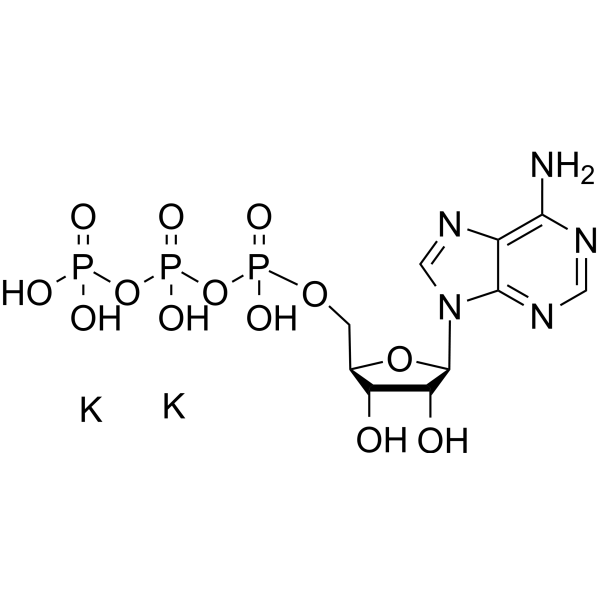
ATP dipotassium (Adenosine 5'-triphosphate dipotassium) is a central component of energy storage and metabolism in vivo. ATP dipotassium provides the metabolic energy to drive metabolic pumps and serves as a coenzyme in cells. ATP dipotassium is an important endogenous signaling molecule in immunity and inflammation .
|
-
-
- HY-B0345AS
-
|
|
Endogenous Metabolite
|
Metabolic Disease
|
|
ATP- 18O4 (disodium salt) is the 18O labeled ATP disodium salt . ATP disodium salt (Adenosine 5'-triphosphate disodium salt) is a central component of energy storage and metabolism in vivo, provides the metabolic energy to drive metabolic pumps and serves as a coenzyme in cells. ATP disodium salt is an important endogenous signaling molecule in immunity and inflammation .
|
-
-
- HY-D2361
-
|
|
Nucleoside Antimetabolite/Analog
|
Others
|
|
Adenosine 2'-PEG-Biotin is a biochemical reagent derived from adenosine. Adenosine 2'-PEG-Biotin regulates cell signaling pathways by mimicking the effects of endogenous adenosine and binding to its receptors. Adenosine 2'-PEG-Biotin can be used in the research of bioprobes, biosensors and diagnostic reagents .
|
-
-
- HY-B0228S12
-
-
-
- HY-B2176E
-
|
adenosine 5'-triphosphate magnesium
|
Endogenous Metabolite
|
Metabolic Disease
Inflammation/Immunology
|
|
ATP (Adenosine 5'-triphosphate) magnesium is a central component of energy storage and metabolism in vivo. ATP magnesium provides the metabolic energy to drive metabolic pumps and serves as a coenzyme in cells. ATP magnesium is an important endogenous signaling molecule in immunity and inflammation .
|
-
-
- HY-B0345AR
-
|
adenosine 5'-triphosphate disodium (Standard); Disodium adenosine triphosphate (Standard)
|
Reference Standards
Endogenous Metabolite
|
Metabolic Disease
Inflammation/Immunology
Cancer
|
|
ATP disodium salt (Standard) is the analytical standard of ATP disodium salt (HY-B0345A). This product is intended for research and analytical applications. ATP disodium salt (Adenosine 5'-triphosphate disodium salt) is a central component of energy storage and metabolism in vivo, provides the metabolic energy to drive metabolic pumps and serves as a coenzyme in cells. ATP disodium salt is an important endogenous signaling molecule in immunity and inflammation .
|
-
-
- HY-101984R
-
|
|
Reference Standards
Nucleoside Antimetabolite/Analog
Adenosine Receptor
Akt
SARS-CoV
|
Infection
Cancer
|
|
N6,N6-Dimethyladenosine (Standard) is the analytical standard of N6,N6-Dimethyladenosine (HY-101984). This product is intended for research and analytical applications. N6,N6-Dimethyladenosine, a modified ribonucleoside, is an endogenous A3 adenosine receptor ligand. N6,N6-Dimethyladenosine is an AKT inhibitor with antitumor effects. N6, N6-Dimethyladenosine targets SARS-CoV-2 entry protein ADAM17. N6, N6-Dimethyladenosine robustly inhibits AKT signaling in a variety of non-small cell lung cancer cell lines.
|
-
-
- HY-114901
-
|
|
Adenosine Kinase
|
Neurological Disease
|
|
A-134974 is a novel, high-selectivity adenosine kinase (IC50 = 60 pM) inhibitor. A-134974 enhances endogenous adenosine signaling in the spinal cord, effectively alleviates neuropathic pain, and does not cause movement disorders. A-134974 can be used for the study of neuropathic pain .
|
-
-
- HY-148166
-
|
|
Nucleoside Antimetabolite/Analog
|
Others
|
|
L-Inosine is the L-configuration of Inosine (HY-N0092). Inosine is an endogenous purine nucleoside produced by catabolism of adenosine. Inosine has anti-inflammatory, antinociceptive, immunomodulatory and neuroprotective effects .
|
-
-
- HY-W010735R
-
|
adenosine 5'-triphosphate disodium salt hydrate (Standard)
|
Reference Standards
Endogenous Metabolite
|
Metabolic Disease
Inflammation/Immunology
Cancer
|
|
ATP (disodium salt hydrate) (Standard) is the analytical standard of ATP (disodium salt hydrate). This product is intended for research and analytical applications. ATP disodium salt hydrate (Adenosine 5'-triphosphatedisodium salt hydrate) is a central component of energy storage and metabolism in vivo, provides the metabolic energy to drive metabolic pumps and serves as a coenzyme in cells. ATP disodium salt hydrate is an important endogenous signaling molecule in immunity and inflammation .
|
-
-
- HY-B0228S8
-
-
-
- HY-B0228S14
-
|
Adenine riboside-d9; D-adenosine-d9
|
Isotope-Labeled Compounds
|
Others
|
|
Adenosine-d9 is the deuterium labeled Adenosine. Adenosine (Adenine riboside), a ubiquitous endogenous autacoid, acts through the enrollment of four G protein-coupled receptors: A1, A2A, A2B, and A3. Adenosine affects almost all aspects of cellular physio .
|
-
-
- HY-B0228S2
-
-
-
- HY-N0092S1
-
-
-
- HY-B2176AR
-
|
adenosine-5'-triphosphate disodium trihydrate (Standard)
|
Endogenous Metabolite
Reference Standards
|
Metabolic Disease
Inflammation/Immunology
Cancer
|
|
ATP (disodium trihydrate) (Standard) is the analytical standard of ATP (disodium trihydrate). This product is intended for research and analytical applications. ATP disodium trihydrate (Adenosine 5'-triphosphate disodium trihydrate) is a central component of energy storage and metabolism in vivo. ATP disodium trihydrate provides the metabolic energy to drive metabolic pumps and serves as a coenzyme in cells. ATP disodium trihydrate is an important endogenous signaling molecule in immunity and inflammation .
|
-
-
- HY-170948
-
|
|
Adenosine Receptor
|
Cancer
|
|
A2AR modulator-1 (Compound 45) is a selective negative allosteric adenosine A2a receptor (A2aR) modulator with an IC50 value of 9 nM. A2AR modulator-1 reduces the affinity of endogenous adenosine for the receptor and inhibits cAMP signaling pathway activation. A2AR modulator-1 potently restores pCREB phosphorylation in CD4 + T cells, reversing immunosuppression in the tumor microenvironment, and shows potential to suppress tumor growth and metastasis in triple-negative breast cancer models .
|
-
-
- HY-B0228S7
-
-
-
- HY-B0228S3
-
-
- HY-W779021
-
-
- HY-B2176S3
-
|
adenosine 5'-triphosphate-15N5,d14 dilithium
|
Isotope-Labeled Compounds
Endogenous Metabolite
|
Metabolic Disease
Inflammation/Immunology
|
|
ATP- 15N5,d14 (Adenosine 5'-triphosphate- 15N5,d14) dilithium is deuterium and 15N labeled ATP (HY-B2176). ATP (Adenosine 5'-triphosphate) is a central component of energy storage and metabolism in vivo. ATP provides the metabolic energy to drive metabolic pumps and serves as a coenzyme in cells. ATP is an important endogenous signaling molecule in immunity and inflammation.
|
-
- HY-B2176D
-
|
adenosine 5'-triphosphate ditromethamine
|
Endogenous Metabolite
|
Metabolic Disease
Inflammation/Immunology
|
|
ATP ditromethamine (Adenosine 5'-triphosphate ditromethamine) is a central component of energy storage and metabolism in vivo. ATP ditromethamine provides the metabolic energy to drive metabolic pumps and serves as a coenzyme in cells. ATP ditromethamine is an important endogenous signaling molecule in immunity and inflammation .
|
-
- HY-138247R
-
|
EX-A4764 (Standard); UUN51204 (Standard)
|
Beta-lactamase
Reference Standards
Bacterial
Antibiotic
|
Infection
|
|
ATP (disodium salt) (Standard) is the analytical standard of ATP (disodium salt). This product is intended for research and analytical applications. ATP disodium salt (Adenosine 5'-triphosphate disodium salt) is a central component of energy storage and metabolism in vivo, provides the metabolic energy to drive metabolic pumps and serves as a coenzyme in cells. ATP disodium salt is an important endogenous signaling molecule in immunity and inflammation .
|
-
- HY-B2176BR
-
|
adenosine 5'-triphosphate dimagnesium (Standard)
|
Endogenous Metabolite
Reference Standards
|
Inflammation/Immunology
|
|
ATP (dimagnesium) (Standard) is the analytical standard of ATP (dimagnesium). This product is intended for research and analytical applications. ATP (Adenosine 5'-triphosphate) dimagnesium is a central component of energy storage and metabolism in vivo. ATP dimagnesium provides the metabolic energy to drive metabolic pumps and serves as a coenzyme in cells. ATP dimagnesium is an important endogenous signaling molecule in immunity and inflammation .
|
-
- HY-129668
-
|
|
Adrenergic Receptor
|
Neurological Disease
|
|
Bremazocine is a potent opioid kappa receptor agonist with analgesic activity. Bremazocine induces peripheral analgesia by releasing endogenous norepinephrine. The analgesic effect of bremazocine is associated with interaction with adenosine receptors. Bremazocine produces a dose-dependent peripheral analgesia after topical application. The effect of bremazocine is affected by nonselective α(2) adrenaline receptor antagonists, suggesting that it acts through a norepinephrine pathway .
|
-
- HY-B2176S8
-
|
adenosine 5'-triphosphate-13C10,15N5,d14 dilithium
|
Isotope-Labeled Compounds
Endogenous Metabolite
NOD-like Receptor (NLR)
Interleukin Related
Bacterial
|
Others
|
|
ATP- 13C10, 15N5,d14 (Adenosine 5'-triphosphate- 13C10, 15N5,d14) dilithium is the 13C-, 15N- and deuterium labeled ATP dilithium. ATP (Adenosine 5'-triphosphate) is a central component of energy storage and metabolism in vivo. ATP provides the metabolic energy to drive metabolic pumps and serves as a coenzyme in cells. ATP is an important endogenous signaling molecule in immunity and inflammation. ATP can activate the NLRP3 inflammasome and induce IL-1β and chemokines secretion. ATP has anti-bacterial infection effects and can protect mice against bacterial infection in mice.
|
-
| Cat. No. |
Product Name |
Type |
-
- HY-D2361
-
|
|
Fluorescent Dye
|
|
Adenosine 2'-PEG-Biotin is a biochemical reagent derived from adenosine. Adenosine 2'-PEG-Biotin regulates cell signaling pathways by mimicking the effects of endogenous adenosine and binding to its receptors. Adenosine 2'-PEG-Biotin can be used in the research of bioprobes, biosensors and diagnostic reagents .
|
| Cat. No. |
Product Name |
Type |
-
- HY-B2176B
-
|
adenosine 5'-triphosphate dimagnesium
|
Biochemical Assay Reagents
|
|
ATP (Adenosine 5'-triphosphate) dimagnesium is a central component of energy storage and metabolism in vivo. ATP dimagnesium provides the metabolic energy to drive metabolic pumps and serves as a coenzyme in cells. ATP dimagnesium is an important endogenous signaling molecule in immunity and inflammation .
|
-
- HY-B2176I
-
|
adenosine 5'-triphosphate disodium salt, 100 mM Solution, PCR Grade
|
Biochemical Assay Reagents
|
|
ATP (Adenosine 5'-triphosphate) disodium salt, 100 mM Solution, PCR Grade is a central component of energy storage and metabolism in vivo. ATP disodium salt, 100 mM Solution, PCR Grade provides the metabolic energy to drive metabolic pumps and serves as a coenzyme in cells. ATP disodium salt, 100 mM Solution, PCR Grade is an important endogenous signaling molecule in immunity and inflammation. ATP disodium salt, 100 mM Solution, PCR Grade can activate the NLRP3 inflammasome and induce IL-1β and chemokines secretion. ATP disodium salt, 100 mM Solution, PCR Grade has anti-bacterial infection effects and can protect mice against bacterial infection in mice .
|
-
- HY-B2176BR
-
|
adenosine 5'-triphosphate dimagnesium (Standard)
|
Biochemical Assay Reagents
|
|
ATP (dimagnesium) (Standard) is the analytical standard of ATP (dimagnesium). This product is intended for research and analytical applications. ATP (Adenosine 5'-triphosphate) dimagnesium is a central component of energy storage and metabolism in vivo. ATP dimagnesium provides the metabolic energy to drive metabolic pumps and serves as a coenzyme in cells. ATP dimagnesium is an important endogenous signaling molecule in immunity and inflammation .
|
| Cat. No. |
Product Name |
Category |
Target |
Chemical Structure |
-
- HY-B2176
-
-
-
- HY-B0228
-
-
-
- HY-N0092
-
-
-
- HY-B0345A
-
-
-
- HY-B2176A
-
-
-
- HY-W010735
-
-
-
- HY-B2176B
-
-
-
- HY-B2176R
-
|
adenosine 5'-triphosphate (Standard)
|
Structural Classification
Alkaloids
Human Gut Microbiota Metabolites
Microorganisms
other families
Animals
Other Alkaloids
Plants
Endogenous metabolite
Source Classification
|
Reference Standards
Endogenous Metabolite
|
ATP (Standard) is the analytical standard of ATP. This product is intended for research and analytical applications. ATP (Adenosine 5'-triphosphate) is a central component of energy storage and metabolism in vivo. ATP provides the metabolic energy to drive metabolic pumps and serves as a coenzyme in cells. ATP is an important endogenous signaling molecule in immunity and inflammation .
In Vitro: ATP (5 mM; 1 hour) co-treatment with LPS (1 μg/mL) has a synergistic effect on the activation of the NLRP3 inflammasome in HGFs .
ATP (2 mM; 0.5-24 hours) induces secretion of IL-1β, KC and MIP-2 from BMDMs in a caspase-1 activation-dependent manner .
ATP promotes neutrophil chemotaxis in vitro .
In Vivo: ATP (50 mg/kg; i.p.) protects mice against bacterial infection in vivo .
ATP induces the secretion of IL-1β, KC and MIP-2 and neutrophils recruitment in vivo .
|
-
-
- HY-101984
-
-
-
- HY-B0228R
-
-
-
- HY-N0092R
-
-
-
- HY-B2176C
-
-
-
- HY-B0345AR
-
-
-
- HY-101984R
-
|
|
Microorganisms
Source Classification
|
Reference Standards
Nucleoside Antimetabolite/Analog
Adenosine Receptor
Akt
SARS-CoV
|
|
N6,N6-Dimethyladenosine (Standard) is the analytical standard of N6,N6-Dimethyladenosine (HY-101984). This product is intended for research and analytical applications. N6,N6-Dimethyladenosine, a modified ribonucleoside, is an endogenous A3 adenosine receptor ligand. N6,N6-Dimethyladenosine is an AKT inhibitor with antitumor effects. N6, N6-Dimethyladenosine targets SARS-CoV-2 entry protein ADAM17. N6, N6-Dimethyladenosine robustly inhibits AKT signaling in a variety of non-small cell lung cancer cell lines.
|
-
-
- HY-W010735R
-
-
-
- HY-B2176AR
-
|
adenosine-5'-triphosphate disodium trihydrate (Standard)
|
Structural Classification
Ketones, Aldehydes, Acids
Endogenous metabolite
Source Classification
|
Endogenous Metabolite
Reference Standards
|
|
ATP (disodium trihydrate) (Standard) is the analytical standard of ATP (disodium trihydrate). This product is intended for research and analytical applications. ATP disodium trihydrate (Adenosine 5'-triphosphate disodium trihydrate) is a central component of energy storage and metabolism in vivo. ATP disodium trihydrate provides the metabolic energy to drive metabolic pumps and serves as a coenzyme in cells. ATP disodium trihydrate is an important endogenous signaling molecule in immunity and inflammation .
|
-
-
- HY-B2176D
-
-
-
- HY-B2176BR
-
|
adenosine 5'-triphosphate dimagnesium (Standard)
|
Structural Classification
Natural Products
Endogenous metabolite
Source Classification
|
Endogenous Metabolite
Reference Standards
|
|
ATP (dimagnesium) (Standard) is the analytical standard of ATP (dimagnesium). This product is intended for research and analytical applications. ATP (Adenosine 5'-triphosphate) dimagnesium is a central component of energy storage and metabolism in vivo. ATP dimagnesium provides the metabolic energy to drive metabolic pumps and serves as a coenzyme in cells. ATP dimagnesium is an important endogenous signaling molecule in immunity and inflammation .
|
-
| Cat. No. |
Product Name |
Chemical Structure |
-
- HY-B0228S1
-
|
|
|
Adenosine- 13C5 is the 13C labeled Adenosine . Adenosine (Adenine riboside), a ubiquitous endogenous autacoid, acts through the enrollment of four G protein-coupled receptors: A1, A2A, A2B, and A3. Adenosine affects almost all aspects of cellular physiology, including neuronal activity, vascular function, platelet aggregation, and blood cell regulation .
|
-
-
- HY-B0228S11
-
|
|
|
Adenosine- 15N5 (Adenine riboside- 15N5; D-Adenosine- 15N5) is the 15N labled Adenosine (HY-B0228). Adenosine (Adenine riboside), a ubiquitous endogenous autacoid, acts through the enrollment of four G protein-coupled receptors: A1, A2A, A2B, and A3. Adenosine affects almost all aspects of cellular physiology, including neuronal activity, vascular function, platelet aggregation, and blood cell regulation .
|
-
-
- HY-N0092S2
-
2 Publications Verification
|
|
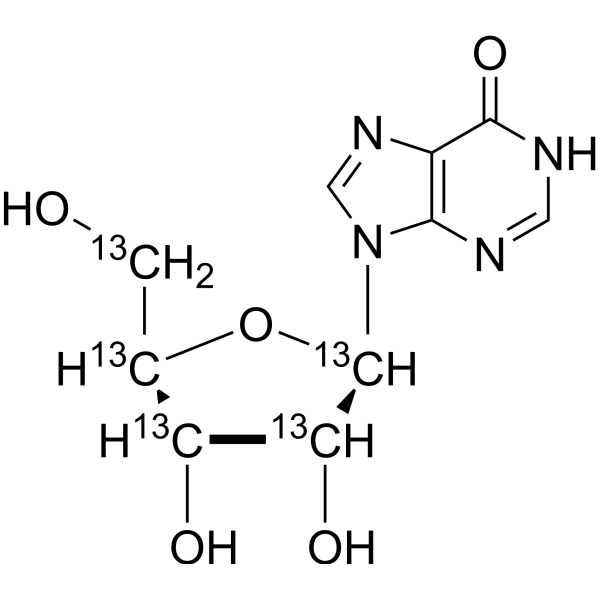
Inosine- 13C5 is the 13C5 labeled Inosine (HY-N0092). Inosine is an endogenous purine nucleoside produced by catabolism of adenosine. Inosine has anti-inflammatory, antinociceptive, immunomodulatory and neuroprotective effects. Inosine is an agonist for adenosine A1 (A1R) and A2A (A2AR) receptors .
|
-
-
- HY-B2176S6
-
|
|
|
ATP- 13C10 (Adenosine 5'-triphosphate- 13C10) dilithium is 13C-labeled ATP (HY-B2176). ATP (Adenosine 5'-triphosphate) is a central component of energy storage and metabolism in vivo. ATP provides the metabolic energy to drive metabolic pumps and serves as a coenzyme in cells. ATP is an important endogenous signaling molecule in immunity and inflammation.
|
-
-
- HY-B2176S
-
|
|
|
ATP- 13C10, 15N5 is the 13C and 15N labeled ATP . ATP (Adenosine 5'-triphosphate) is a central component of energy storage and metabolism in vivo. ATP provides the metabolic energy to drive metabolic pumps and serves as a coenzyme in cells. ATP is an important endogenous signaling molecule in immunity and inflammation .
|
-
-
- HY-B0228S13
-
|
|
|
Adenosine- 13C10 (Adenine riboside- 13C10; D-Adenosine- 13C10) is 13C-labeled Adenosine (HY-B0228). Adenosine (Adenine riboside), a ubiquitous endogenous autacoid, acts through the enrollment of four G protein-coupled receptors: A1, A2A, A2B, and A3. Adenosine affects almost all aspects of cellular physiology, including neuronal activity, vascular function, platelet aggregation, and blood cell regulation.
|
-
-
- HY-B0228S9
-
|
|
|
Adenosine- 13C10, 15N5 is the 13C and 15N labeled Adenosine (HY-B0228) . Adenosine (Adenine riboside), a ubiquitous endogenous autacoid, acts through the enrollment of four G protein-coupled receptors: A1, A2A, A2B, and A3. Adenosine affects almost all aspects of cellular physiology, including neuronal activity, vascular function, platelet aggregation, and blood cell regulation .
|
-
-
- HY-B0228S6
-
|
|
|
Adenosine-d2 is the deuterium labeled Adenosine. Adenosine (Adenine riboside), a ubiquitous endogenous autacoid, acts through the enrollment of four G protein-coupled receptors: A1, A2A, A2B, and A3. Adenosine affects almost all aspects of cellular physio
|
-
-
- HY-B2176S5
-
|
|
|
ATP- 15N5 (Adenosine 5'-triphosphate- 15N5) dilithium is 15N labeled ATP (HY-B2176). ATP (Adenosine 5'-triphosphate) is a central component of energy storage and metabolism in vivo. ATP provides the metabolic energy to drive metabolic pumps and serves as a coenzyme in cells. ATP is an important endogenous signaling molecule in immunity and inflammation.
|
-
-
- HY-B0228S4
-
|
|
|
Adenosine-1′- 13C is the 13C labeled Adenosine. Adenosine (Adenine riboside), a ubiquitous endogenous autacoid, acts through the enrollment of four G protein-coupled receptors: A1, A2A, A2B, and A3. Adenosine affects almost all aspects of cellular physiolo
|
-
-
- HY-B0228S
-
|
|
|
Adenosine-d is the deuterium labeled Adenosine. Adenosine (Adenine riboside), a ubiquitous endogenous autacoid, acts through the enrollment of four G protein-coupled receptors: A1, A2A, A2B, and A3. Adenosine affects almost all aspects of cellular physiology, including neuronal activity, vascular function, platelet aggregation, and blood cell regulation .
|
-
-
- HY-B0228S5
-
|
|
|
Adenosine- 13C is the 13C labeled Adenosine. Adenosine (Adenine riboside), a ubiquitous endogenous autacoid, acts through the enrollment of four G protein-coupled receptors: A1, A2A, A2B, and A3. Adenosine affects almost all aspects of cellular physiology,
|
-
-
- HY-150709S1
-
|
|
|
Adenosine 5'-triphosphate-13C10,15N5 dilithium is 13C and 15N labeled dilithium salt form of Adenosine 5'-triphosphate (HY-B2176). Adenosine 5'-triphosphate is a central component of energy storage and metabolism in vivo. Adenosine 5'-triphosphate provides the metabolic energy to drive metabolic pumps and serves as a coenzyme in cells. Adenosine 5'-triphosphate is an important endogenous signaling molecule in immunity and inflammation .
|
-
-
- HY-N0092S
-
|
|
|
Inosine-2,8-d2 is the deuterium labeled Inosine. Inosine is an endogenous purine nucleoside produced by catabolism of adenosine. Inosine has anti-inflammatory, antinociceptive, immunomodulatory and neuroprotective effects. Inosine is an agonist for adenosine A1 (A1R) and A2A (A2AR) receptors .
|
-
-
- HY-B2176S4
-
|
|
|
ATP-d14 (Adenosine 5'-triphosphate-d14) dilithium is deuterium labeled ATP (HY-B2176). ATP (Adenosine 5'-triphosphate) is a central component of energy storage and metabolism in vivo. ATP provides the metabolic energy to drive metabolic pumps and serves as a coenzyme in cells. ATP is an important endogenous signaling molecule in immunity and inflammation.
|
-
-
- HY-B2176S7
-
|
|
|
ATP- 13C2 (Adenosine 5'-triphosphate- 13C2) dilithium is 13C-labeled ATP (HY-B2176). ATP (Adenosine 5'-triphosphate) is a central component of energy storage and metabolism in vivo. ATP provides the metabolic energy to drive metabolic pumps and serves as a coenzyme in cells. ATP is an important endogenous signaling molecule in immunity and inflammation.
|
-
-
- HY-B0345AS
-
|
|
|
ATP- 18O4 (disodium salt) is the 18O labeled ATP disodium salt . ATP disodium salt (Adenosine 5'-triphosphate disodium salt) is a central component of energy storage and metabolism in vivo, provides the metabolic energy to drive metabolic pumps and serves as a coenzyme in cells. ATP disodium salt is an important endogenous signaling molecule in immunity and inflammation .
|
-
-
- HY-B0228S12
-
|
|
|
Adenosine-d13 (Adenine riboside-d13; D-Adenosine-d13) is deuterium labeled Adenosine (HY-B0228). Adenosine (Adenine riboside), a ubiquitous endogenous autacoid, acts through the enrollment of four G protein-coupled receptors: A1, A2A, A2B, and A3. Adenosine affects almost all aspects of cellular physiology, including neuronal activity, vascular function, platelet aggregation, and blood cell regulation.
|
-
-
- HY-B0228S8
-
|
|
|
Adenosine-d-2 is the deuterium labeled Adenosine. Adenosine (Adenine riboside), a ubiquitous endogenous autacoid, acts through the enrollment of four G protein-coupled receptors: A1, A2A, A2B, and A3. Adenosine affects almost all aspects of cellular phys
|
-
-
- HY-B0228S14
-
|
|
|
Adenosine-d9 is the deuterium labeled Adenosine. Adenosine (Adenine riboside), a ubiquitous endogenous autacoid, acts through the enrollment of four G protein-coupled receptors: A1, A2A, A2B, and A3. Adenosine affects almost all aspects of cellular physio .
|
-
-
- HY-B0228S2
-
|
|
|
Adenosine-2′- 13C is the 13C labeled Adenosine. Adenosine (Adenine riboside), a ubiquitous endogenous autacoid, acts through the enrollment of four G protein-coupled receptors: A1, A2A, A2B, and A3. Adenosine affects almost all aspects of cellular physiolo
|
-
-
- HY-N0092S1
-
|
|
|
Inosine- 13C is the 13C labeled Inosine. Inosine is an endogenous purine nucleoside produced by catabolism of adenosine. Inosine has anti-inflammatory, antinociceptive, immunomodulatory and neuroprotective effects. Inosine is an agonist for adenosine A1 (A1R) and A2A (A2AR) receptors .
|
-
-
- HY-B0228S7
-
|
|
|
Adenosine-d-1 is the deuterium labeled Adenosine. Adenosine (Adenine riboside), a ubiquitous endogenous autacoid, acts through the enrollment of four G protein-coupled receptors: A1, A2A, A2B, and A3. Adenosine affects almost all aspects of cellular phys
|
-
-
- HY-B0228S3
-
|
|
|
Adenosine-3′- 13C is the 13C labeled Adenosine. Adenosine (Adenine riboside), a ubiquitous endogenous autacoid, acts through the enrollment of four G protein-coupled receptors: A1, A2A, A2B, and A3. Adenosine affects almost all aspects of cellular physiolo
|
-
-
- HY-W779021
-
|
|
|
Adenosine- 15N (Adenine riboside- 15N) is 15N labeled Adenosine. Adenosine (Adenine riboside), a ubiquitous endogenous autacoid, acts through the enrollment of four G protein-coupled receptors: A1, A2A, A2B, and A3. Adenosine affects almost all aspects of cellular physiology, including neuronal activity, vascular function, platelet aggregation, and blood cell regulation .
|
-
-
- HY-B2176S3
-
|
|
|
ATP- 15N5,d14 (Adenosine 5'-triphosphate- 15N5,d14) dilithium is deuterium and 15N labeled ATP (HY-B2176). ATP (Adenosine 5'-triphosphate) is a central component of energy storage and metabolism in vivo. ATP provides the metabolic energy to drive metabolic pumps and serves as a coenzyme in cells. ATP is an important endogenous signaling molecule in immunity and inflammation.
|
-
-
- HY-B2176S8
-
|
|
|
ATP- 13C10, 15N5,d14 (Adenosine 5'-triphosphate- 13C10, 15N5,d14) dilithium is the 13C-, 15N- and deuterium labeled ATP dilithium. ATP (Adenosine 5'-triphosphate) is a central component of energy storage and metabolism in vivo. ATP provides the metabolic energy to drive metabolic pumps and serves as a coenzyme in cells. ATP is an important endogenous signaling molecule in immunity and inflammation. ATP can activate the NLRP3 inflammasome and induce IL-1β and chemokines secretion. ATP has anti-bacterial infection effects and can protect mice against bacterial infection in mice.
|
-
| Cat. No. |
Product Name |
|
Classification |
-
- HY-B2176
-
ATP
Maximum Cited Publications
152 Publications Verification
adenosine 5'-triphosphate
|
|
Nucleotide Analogs
|
|
ATP (Adenosine 5'-triphosphate) is a central component of energy storage and metabolism in vivo. ATP provides the metabolic energy to drive metabolic pumps and serves as a coenzyme in cells. ATP is an important endogenous signaling molecule in immunity and inflammation. ATP can activate the NLRP3 inflammasome and induce IL-1β and chemokines secretion. ATP has anti-bacterial infection effects and can protect mice against bacterial infection in mice .
|
-
- HY-B2176A
-
|
adenosine-5'-triphosphate disodium trihydrate
|
|
Nucleotide Analogs
|
|
ATP disodium trihydrate (Adenosine 5'-triphosphate disodium trihydrate) is a central component of energy storage and metabolism in vivo. ATP disodium trihydrate provides the metabolic energy to drive metabolic pumps and serves as a coenzyme in cells. ATP disodium trihydrate is an important endogenous signaling molecule in immunity and inflammation .
|
-
- HY-B2176B
-
|
adenosine 5'-triphosphate dimagnesium
|
|
Nucleotide Analogs
|
|
ATP (Adenosine 5'-triphosphate) dimagnesium is a central component of energy storage and metabolism in vivo. ATP dimagnesium provides the metabolic energy to drive metabolic pumps and serves as a coenzyme in cells. ATP dimagnesium is an important endogenous signaling molecule in immunity and inflammation .
|
-
- HY-137243
-
|
|
|
Nucleotide Analogs
Adenine Nucleotide
|
|
Adenosine 3',5'-diphosphate disodium is an endogenous purine nucleotide. Adenosine 3',5'-diphosphate disodium acts as an inhibitor of bovine adrenal estrogen sulfotransferase (EST) with a Ki value of 7.0 μM. It also serves as an indispensable specific cofactor for the pregnenolone-binding protein (PBP) steroid-binding complex, with an EC50 value of 1.5 μM in guinea pigs .
|
-
- HY-B2176C
-
|
adenosine 5'-triphosphate dipotassium
|
|
Nucleotide Analogs
|
|
ATP dipotassium (Adenosine 5'-triphosphate dipotassium) is a central component of energy storage and metabolism in vivo. ATP dipotassium provides the metabolic energy to drive metabolic pumps and serves as a coenzyme in cells. ATP dipotassium is an important endogenous signaling molecule in immunity and inflammation .
|
-
- HY-D2361
-
|
|
|
Nucleoside Analogs
Adenosine
|
|
Adenosine 2'-PEG-Biotin is a biochemical reagent derived from adenosine. Adenosine 2'-PEG-Biotin regulates cell signaling pathways by mimicking the effects of endogenous adenosine and binding to its receptors. Adenosine 2'-PEG-Biotin can be used in the research of bioprobes, biosensors and diagnostic reagents .
|
-
- HY-148166
-
|
|
|
Nucleoside Analogs
Inosine
|
|
L-Inosine is the L-configuration of Inosine (HY-N0092). Inosine is an endogenous purine nucleoside produced by catabolism of adenosine. Inosine has anti-inflammatory, antinociceptive, immunomodulatory and neuroprotective effects .
|
-
- HY-B2176D
-
|
adenosine 5'-triphosphate ditromethamine
|
|
Nucleotide Analogs
|
|
ATP ditromethamine (Adenosine 5'-triphosphate ditromethamine) is a central component of energy storage and metabolism in vivo. ATP ditromethamine provides the metabolic energy to drive metabolic pumps and serves as a coenzyme in cells. ATP ditromethamine is an important endogenous signaling molecule in immunity and inflammation .
|
Your information is safe with us. * Required Fields.
Inquiry Information
- Product Name:
- Cat. No.:
- Quantity:
- MCE Japan Authorized Agent:

