



ATP-13C10 dilithium

Based on 1 Customer Validation
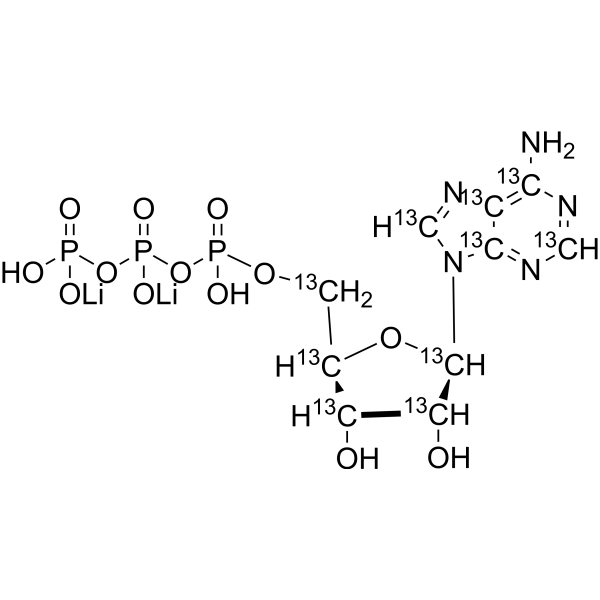
ATP-13C10 (Adenosine 5'-triphosphate-ATP-13C10) dilithium is the 13C10-labeled ATP (HY-B2176). ATP is a central component of energy storage and metabolism in vivo. ATP provides the metabolic energy to drive metabolic pumps and serves as a coenzyme in cells. ATP is an important endogenous signaling molecule in immunity and inflammation. ATP can activate the NLRP3 inflammasome and induce IL-1β and chemokines secretion. ATP has anti-bacterial infection effects and can protect mice against bacterial infection in mice.
For research use only. We do not sell to patients.
- Purity : 99.97%
- Formula: 13C10H14Li2N5O13P3
- Molecular Weight:528.97
-
Storage:
Solution, -20°C, 2 years

To place orders, for customer services and technical support, please contact: MedChemExpress USA
Tel: 609-228-6898 E-mail: [email protected] [email protected]


-
 Biological Activity
-
Chemical Information
-
Solvent & Solubility
- Protocols
- Purity & Documentation
- References
-
 Help & FAQs



All Endogenous Metabolite Isoforms
More

Biological Activity
Description
IC50 & Target
|
NLRP3 inflammasome |
IL-1β |
Application
1. This compound can be used as a tracer
2. This compound can be used as an internal standard for quantitative analysis by NMR, GC-MS, or LC-MS.


Chemical Information
-
Unlabeled CAS 56-65-5
-
Appearance Liquid
-
Molecular Weight 528.97
-
Formula 13C10H14Li2N5O13P3
-
Color Colorless to light yellow
-
SMILES
O=P(O)(O[Li])OP(OP(O[13CH2][13C@H]1O[13C@@H](N2[13C]3=N[13CH]=N[13C](N)=[13C]3N=[13CH]2)[13C@H](O)[13C@@H]1O)(O)=O)(O[Li])=O
-
Synonyms
Adenosine 5'-triphosphate-13C10 dilithium
-
Shipping
Room temperature in continental US; may vary elsewhere.
-
Storage
Solution, -20°C, 2 years


Solvent & Solubility
In Vitro:
H2O : ≥ 50 mg/mL (94.52 mM)
* "≥" means soluble, but saturation unknown.

Protocols
-
Research Protocol for Infectious Diseases
Infectious-disease experiments test how pathogens interact with host barriers, innate immune receptors, inflammatory signaling, pathogen replication, and tissue injury; pattern-recognition receptors such as TLRs, RIG-I-like receptors, NOD-like receptors, and inflammasomes detect microbial molecules and activate NF-κB, interferon, and cytokine responses. The central hypothesis is that infection severity reflects the balance between pathogen burden and host response: protective inflammation restricts pathogen growth, whereas excessive or mislocalized inflammation contributes to tissue damage and disease phenotype. Unresolved questions include which host pathways are protective versus pathogenic, why some infection models fail to translate to human disease, and which combined readouts best predict clinically relevant infection outcomes.
-
Research Protocol for Inflammation-related Diseases
The NLRP3 inflammasome is a cytosolic innate immune signaling platform that integrates priming signals and danger-signal activation to promote caspase-1 activation, maturation of IL-1β and IL-18, and gasdermin D-mediated pyroptotic cell death. The core experimental logic is to determine whether inflammatory disease phenotypes are driven by increased NLRP3 expression, ASC-containing inflammasome assembly, caspase-1 cleavage, GSDMD cleavage, and extracellular release of IL-1β/IL-18 rather than by nonspecific cell injury alone. The pathway is strongly linked to inflammation-related disease phenotypes because monosodium urate crystals activate NALP3/NLRP3 inflammasome signaling in gout-like crystal inflammation, cholesterol crystals activate NLRP3 inflammasomes in atherogenesis models, and DSS-induced intestinal inflammation has been reported to involve NLRP3 inflammasome activity. However, experimental colitis studies also show context-dependent protective effects of NLRP3 inflammasome co
-
Pyroptosis Solutions
Pyroptosis is a lytic inflammatory cell-death pathway executed by gasdermin pores, most classically through inflammasome-mediated activation of caspase-1, cleavage of gasdermin D, membrane pore formation, LDH release, and secretion of IL-1β and IL-18. The canonical pathway is commonly modeled by priming cells with an inflammatory signal such as LPS to induce pro-IL-1β and inflammasome components, followed by an activation signal such as ATP or nigericin to activate NLRP3, ASC speck formation, caspase-1 cleavage, GSDMD cleavage, cytokine release, and pyroptotic membrane rupture. The non-canonical pathway is triggered when cytosolic LPS activates mouse caspase-11 or human caspase-4/5, leading to GSDMD cleavage and pyroptosis, and this can secondarily activate NLRP3-dependent IL-1β release. Pyroptosis is linked to inflammatory injury, infection, cancer, liver disease, ocular disease, placental inflammation, and other disease phenotypes, but unresolved questions include which gasdermin fam


Purity & Documentation
-
Data Sheet (274 KB)
-
SDS (252 KB)
- English - EN (252 KB)
- Français - FR (252 KB)
- Deutsch - DE (252 KB)
- Norwegian - NO (252 KB)
- Español - ES (252 KB)
- Swedish - SV (252 KB)
- Italian - IT (252 KB)
- Korean - KR (252 KB)
- Portuguese - PT (252 KB)
-
Handling Instructions (2659 KB)
References
[1]. Swennen EL, et al. Immunoregulatory effects of adenosine 5'-triphosphate on cytokine release from stimulated whole blood. Eur J Immunol. 2005 Mar;35(3):852-8. [Content Brief]
[2]. M J L Bours, et al. Adenosine 5'-triphosphate and adenosine as endogenous signaling molecules in immunity and inflammation. Pharmacol Ther. 2006 Nov;112(2):358-404. [Content Brief]
[3]. Shuo Xu, et al. Doxycycline inhibits NAcht Leucine-rich repeat Protein 3 inflammasome activation and interleukin-1β production induced by Porphyromonas gingivalis-lipopolysaccharide and adenosine triphosphate in human gingival fibroblasts. Arch Oral Biol. 2019 Nov;107:104514. [Content Brief]
[4]. Yang Xiang, et al. Adenosine-5'-Triphosphate (ATP) Protects Mice against Bacterial Infection by Activation of the NLRP3 Inflammasome. PLoS One. 2013; 8(5): e63759. [Content Brief]

Calculators
Concentration (start) × Volume (start) = Concentration (final) × Volume (final)


Complete Stock Solution Preparation Table
Please refer to the solubility information to select the appropriate solvent. Once prepared, please aliquot and store the solution to prevent product inactivation from repeated freeze-thaw cycles.
Storage method and period of stock solution: -80°C, 6 months; -20°C, 1 month. When stored at -80°C, please use it within 6 months. When stored at -20°C, please use it within 1 month.
| Optional Solvent | Concentration Solvent Mass | 1 mg | 5 mg | 10 mg | 25 mg |
|---|---|---|---|---|---|
| H2O | 1 mM | 1.8905 mL | 9.4523 mL | 18.9047 mL | 47.2617 mL |
| 5 mM | 0.3781 mL | 1.8905 mL | 3.7809 mL | 9.4523 mL | |
| 10 mM | 0.1890 mL | 0.9452 mL | 1.8905 mL | 4.7262 mL | |
| 15 mM | 0.1260 mL | 0.6302 mL | 1.2603 mL | 3.1508 mL | |
| 20 mM | 0.0945 mL | 0.4726 mL | 0.9452 mL | 2.3631 mL | |
| 25 mM | 0.0756 mL | 0.3781 mL | 0.7562 mL | 1.8905 mL | |
| 30 mM | 0.0630 mL | 0.3151 mL | 0.6302 mL | 1.5754 mL | |
| 40 mM | 0.0473 mL | 0.2363 mL | 0.4726 mL | 1.1815 mL | |
| 50 mM | 0.0378 mL | 0.1890 mL | 0.3781 mL | 0.9452 mL | |
| 60 mM | 0.0315 mL | 0.1575 mL | 0.3151 mL | 0.7877 mL | |
| 80 mM | 0.0236 mL | 0.1182 mL | 0.2363 mL | 0.5908 mL |
* Note: If you choose water as the stock solution, please dilute it to the working solution, then filter and sterilize it with a 0.22 μm filter before use.


ATP-13C10 dilithium Related Classifications
HY-B2176S6 Related Classifications
 Powered by Bioz