

Search Result
Results for "
engagement
" in MedChemExpress (MCE) Product Catalog:
| Cat. No. |
Product Name |
Target |
Research Areas |
Chemical Structure |
-
- HY-112088
-
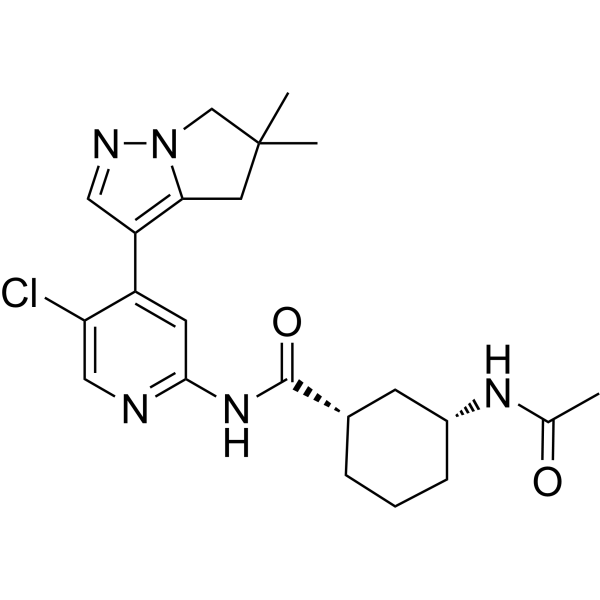
AZD4573
Maximum Cited Publications
14 Publications Verification
|
CDK
|
Cancer
|
|
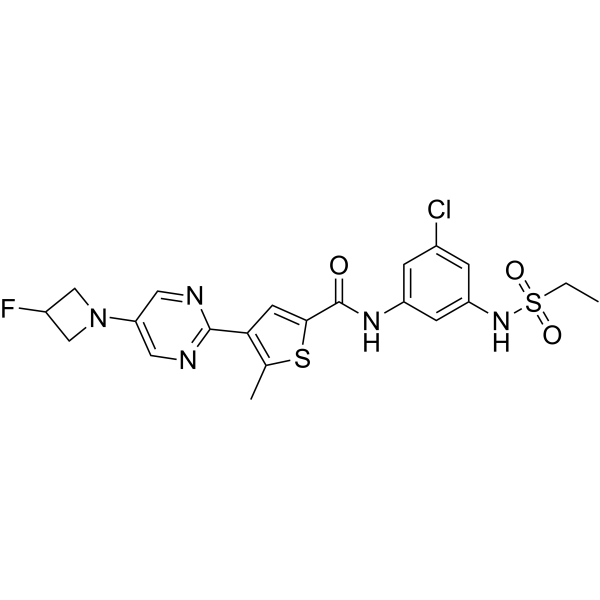
AZD4573 is a potent and highly selective CDK9 inhibitor (IC50 of <4 nM) that enables transient target engagement for the treatment of hematologic malignancies .
|
-
-
- HY-136557A
-
|
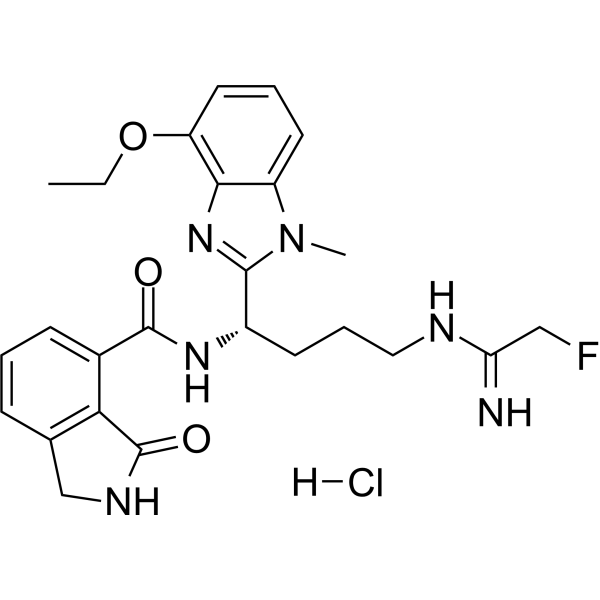
PAD2-IN-1 hydrochloride
|
Protein Arginine Deiminase
|
Inflammation/Immunology
Cancer
|
|
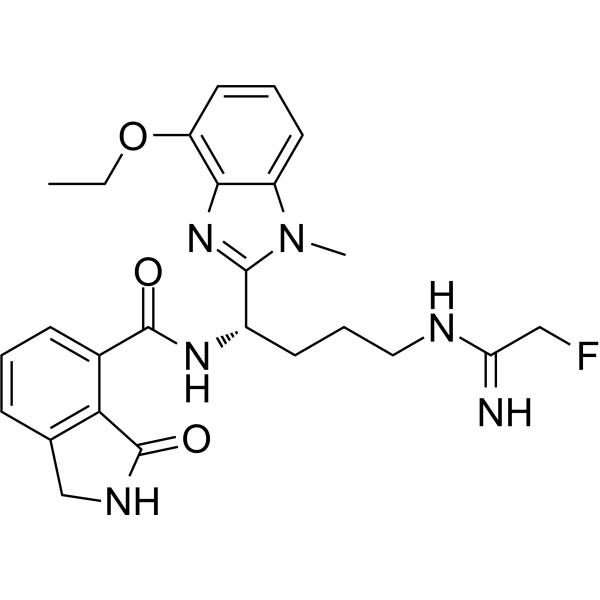
AFM32a (PAD2-IN-1) hydrochloride, a benzimidazole-based derivative, is a potent and selective protein arginine deiminase 2 (PAD2) inhibitor. AFM32a hydrochloride shows superior selectivity for PAD2 over PAD4 (95-fold) and PAD3 (79-fold) .
|
-
-
- HY-141550
-
|
|
NF-κB
|
Inflammation/Immunology
|
|
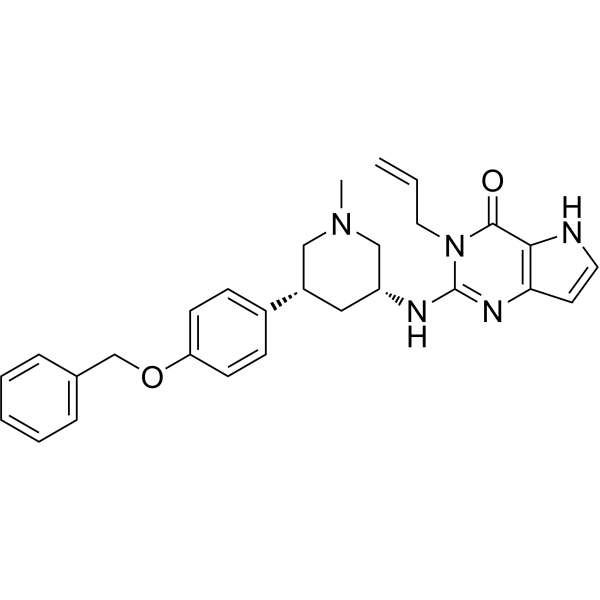
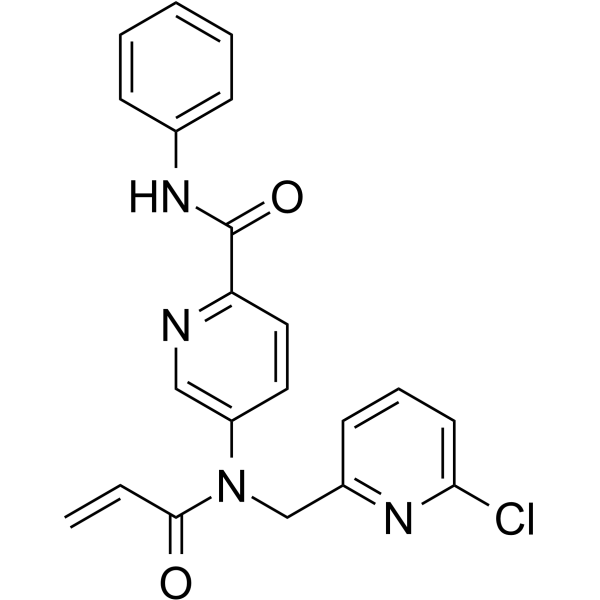
BPK-25, an active acrylamide, promotes degradation of nucleosome remodeling and deacetylation (NuRD) complex proteins by a post-translational mechanism involving covalent protein engagement. BPK-25 inhibits TMEM173 activation by the cyclic dinucleotide ligand cGAMP .
|
-
-
- HY-178129
-
|
|
Syk
|
Inflammation/Immunology
|
|
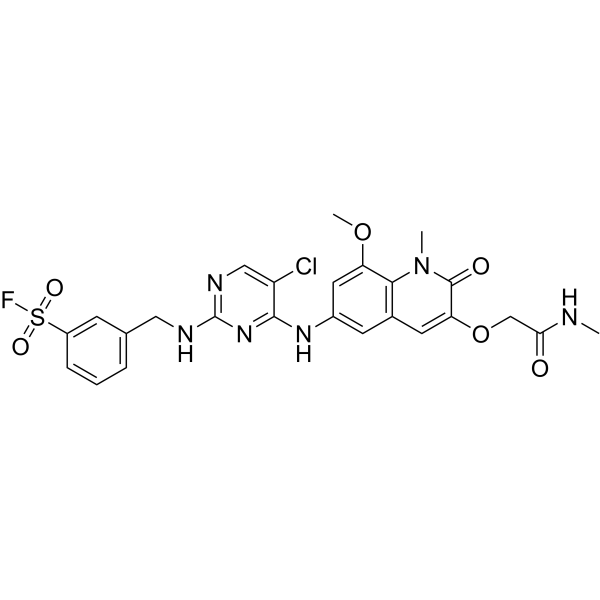
MRL-SYKi is a chemical probe for gain-of-function variants of spleen tyrosine kinase (SYK). MRL-SYKi reduces the catalytic activity of SYK S550Y, SYK S550F and SYK P342T, and downregulates the phosphorylation level of SYK S550Y. MRL-SYKi serves as a template for developing NanoBRET tracers targeting SYK, enabling NanoBRET cellular target engagement assays for gain-of-function variants of SYK. MRL-SYKi is applicable to research related to inflammatory and immune diseases .
|
-
-
- HY-117570
-
|
|
PDI
|
Neurological Disease
|
|
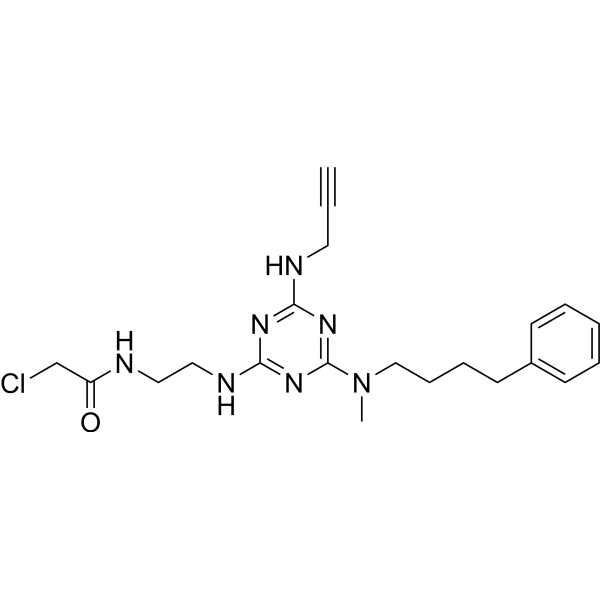
KSC-34, a covalent modifier of protein disulfide isomerase A1 (PDIA1), is also a selective and potent a-site inhibitor of PDIA1 with an IC50 of 3.5 μM. KSC-34 displays a 30-fold selectivity for a domain over a′ domain and displays high selectivity for PDIA1 in complex proteomes with minimal engagement of other members of the PDI family . KSC-34 is a click chemistry reagent, it contains an Alkyne group and can undergo copper-catalyzed azide-alkyne cycloaddition (CuAAc) with molecules containing Azide groups.
|
-
-
- HY-141539
-
|
|
Histone Methyltransferase
Akt
|
Cancer
|
|
SETDB1-TTD-IN-1 is a SETDB1 methyltransferase activator and SETDB1-TTD competitive inhibitor (Kd of 88 nM), and selectivity for SETDB1-TTD over other tudor and bromodomain proteins. SETDB1-TTD-IN-1 stimulates methyltransferase activity via increased catalytic activity, promotes Akt1 Lys64 methylation, Akt1 Thr308 phosphorylation and activation. SETDB1-TTD-IN-1 prevents SETDB1-TTD-histone H3 peptide association, induces global gene expression changes, exhibits cellular target engagement, and acts as a tool compound for SETDB1-TTD function exploration. SETDB1-TTD-IN-1 can be used for the research of breast cancer .
|
-
-
- HY-P99404
-
|
E6011
|
CXCR
|
Inflammation/Immunology
Cancer
|
|
Quetmolimab (E6011) is a humanized anti-Fractalkine (CX3CL1) monoclonal antibody. Quetmolimab binds to membrane-bound and soluble Fractalkine, neutralizes Fractalkine-induced migration of CX3CR1-expressing cells, mediates target-bound complex elimination from serum. Quetmolimab suppresses free soluble Fractalkine levels in cynomolgus monkeys, with target engagement linked to increased serum total Fractalkine concentration. Quetmolimab can be used for the research of Crohn’s disease, rheumatoid arthritis, and primary biliary cholangitis .
|
-
-
- HY-148739
-
|
|
PROTACs
Epigenetic Reader Domain
Apoptosis
|
Cancer
|
|
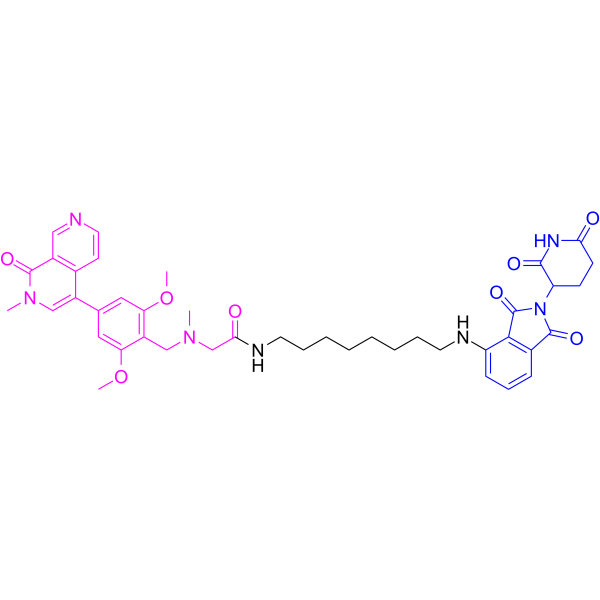
dBRD 9-A is a selective BRD9 PROTAC degrader. dBRD 9-A induces near complete BRD9 degradation dependent on E3 ubiquitin ligase CRBN and BRD9 bromodomain engagement, and drives loss of BRD9 chromatin binding genome-wide. dBRD 9-A downregulates oncogenic SS18-SSX-driven transcriptional programs, super enhancer-associated gene expression, and SS18-SSX1 super enhancer binding, and depletes GBAF complex members GLTSCR1/1L from SS18-SSX complexes. dBRD 9-A induces cell cycle arrest and increases apoptosis in synovial sarcoma cells. dBRD 9-A can be used for the research of synovial sarcoma .
|
-
-
- HY-157604
-
|
|
DNA/RNA Synthesis
|
Cancer
|
|
DHX9-IN-9 (509) is a RNA helicase DHX9 inhibitor, with an EC50 of 0.0177 μM in DHX9 cellular target engagement. Used in cancer research .
|
-
-
- HY-P99431
-
|
Alomfilimab; SAR 445256
|
CD28
|
Inflammation/Immunology
Cancer
|
|
KY-1044 (Alomfilimab; SAR 445256) is a fully human IgG1 antibody targeting inducible costimulatory receptor (ICOS). KY-1044 depletes ICOS high cells via antibody-dependent cellular cytotoxicity (ADCC) through the engagement of FcgRIIIa. KY-1044 act as a costimulatory molecule on cells expressing lower ICOS levels, such as CD8 + TEff cells (through FcgR-dependent clustering). KY-1044 exploit the differential expression of ICOS on T-cell subtypes to improve the intratumoral immune contexture and restore an antitumor immune response .
|
-
-
- HY-148281
-
|
|
Bcl-2 Family
|
Cancer
|
|
TMX-2164 is a potent, irreversible B-cell lymphoma 6 (BCL6) inhibitor with an IC50 value of 152 nM. TMX-2164 displays sustained target engagement and antiproliferative activity in cells .
|
-
-
- HY-136557
-
|
PAD2-IN-1
|
Protein Arginine Deiminase
|
Inflammation/Immunology
Cancer
|
|
AFM32a (PAD2-IN-1), a benzimidazole-based derivative, is a potent and selective protein arginine deiminase 2 (PAD2) inhibitor. AFM32a shows superior selectivity for PAD2 over PAD4 (95-fold) and PAD3 (79-fold) .
|
-
-
- HY-158821A
-
|
|
TGF-beta/Smad
|
Neurological Disease
|
|
ISTH0036 sodium is a phosphorothioate LNA-modified antisense oligonucleotide gapmer that selectively targets and downregulates TGF-β2 mRNA. ISTH0036 sodium suppresses TGF-β2 expression, reduces choroidal neovascularization and vascular leakage, inhibits fibrosis, blocks epithelial-to-mesenchymal transition, and inhibits angiogenesis while promoting bleb survival. ISTH0036 sodium exhibits long-lasting, dose-dependent ocular tissue distribution and target engagement in rabbit and non-human primate eyes. ISTH0036 sodium can be used for the study of various ocular disorders, such as glaucoma and neovascular retinal diseases .
|
-
-
- HY-157612
-
|
|
DNA/RNA Synthesis
|
Cancer
|
|
DHX9-IN-16 (208) is a RNA helicase DHX9 inhibitor, with an EC50 of 0.125 μM in DHX9 cellular target engagement. Used in cancer research .
|
-
-
- HY-157606
-
|
|
DNA/RNA Synthesis
|
Cancer
|
|
DHX9-IN-13 (389) is a RNA helicase DHX9 inhibitor, with an EC50 of 3.4 μM in DHX9 cellular target engagement. Used in cancer research .
|
-
-
- HY-157607
-
|
|
DNA/RNA Synthesis
|
Cancer
|
|
DHX9-IN-15 (287) is a RNA helicase DHX9 inhibitor, with an EC50 of 0.232 μM in DHX9 cellular target engagement. Used in cancer research .
|
-
-
- HY-157605
-
|
|
DNA/RNA Synthesis
|
Cancer
|
|
DHX9-IN-11 (469) is a RNA helicase DHX9 inhibitor, with an EC50 of 0.0838 μM in DHX9 cellular target engagement. Used in cancer research .
|
-
-
- HY-157611
-
|
|
DNA/RNA Synthesis
|
Cancer
|
|
DHX9-IN-17 (186) is a RNA helicase DHX9 inhibitor, with an EC50 of 0.161 μM in DHX9 cellular target engagement. Used in cancer research .
|
-
-
- HY-157602
-
|
|
DNA/RNA Synthesis
|
Cancer
|
|
DHX9-IN-8 (Compound 6) is a RNA helicase DHX9 inhibitor, with an EC50 of 3.4 μM in DHX9 cellular target engagement. Used in cancer research .
|
-
-
- HY-175656
-
|
|
LIM Kinase (LIMK)
|
Neurological Disease
Cancer
|
|
MDI-117740 is a dual LIMK1/2 inhibitor. MDI-117740 shows effective cellular target engagement with LIMK1 (pIC50 = 6.73) and LIMK2 (pIC50 = 7.18) in HEK293 cells. MDI-117740 exerts significant anti-migratory activity in MDA-MB-231 cells. MDI-117740 can be used for the study of cancers and neurodegenerative disorders .
|
-
-
- HY-158821
-
|
|
TGF-beta/Smad
|
Neurological Disease
|
|
ISTH0036 is a phosphorothioate LNA-modified antisense oligonucleotide gapmer that selectively targets and downregulates TGF-β2 mRNA. ISTH0036 suppresses TGF-β2 expression, reduces choroidal neovascularization and vascular leakage, inhibits fibrosis, blocks epithelial-to-mesenchymal transition, and inhibits angiogenesis while promoting bleb survival. ISTH0036 exhibits long-lasting, dose-dependent ocular tissue distribution and target engagement in rabbit and non-human primate eyes. ISTH0036 can be used for the study of various ocular disorders, such as glaucoma and neovascular retinal diseases .
|
-
-
- HY-112081A
-
|
|
DNA/RNA Synthesis
|
Others
|
|
BAY-707 acetate is a highly potent and selective substrate-competitive inhibitor of MTH1 with superior cellular target engagement and pharmacokinetic properties.
|
-
-
- HY-157603
-
|
|
DNA/RNA Synthesis
|
Cancer
|
|
DHX9-IN-7 (550) is a RNA helicase DHX9 inhibitor, with an EC50 of 0.105 μM in DHX9 cellular target engagement. Used in cancer research .
|
-
-
- HY-157610
-
|
|
DNA/RNA Synthesis
|
Cancer
|
|
DHX9-IN-14 (161) is a RNA helicase DHX9 inhibitor, with an EC50 of 3.4 μM in DHX9 cellular target engagement. Used in cancer research .
|
-
-
- HY-157609
-
|
|
DNA/RNA Synthesis
|
Cancer
|
|
DHX9-IN-12 (83) is a RNA helicase DHX9 inhibitor, with an EC50 of 0.917 μM in DHX9 cellular target engagement. Used in cancer research .
|
-
-
- HY-157608
-
|
|
DNA/RNA Synthesis
|
Cancer
|
|
DHX9-IN-10 (49) is a RNA helicase DHX9 inhibitor, with an EC50 of 9.04 μM in DHX9 cellular target engagement. Used in cancer research .
|
-
-
- HY-P5017
-
|
|
Oxytocin Receptor
|
Endocrinology
|
|
(Val3,Pro8)-Oxytocin is the Gq-dependent pathway agonist. (Val3,Pro8)-Oxytocin is also a weaker agonist for the β-arrestin engagement and endocytosis toward the oxytocin receptor (OXTR) .
|
-
-
- HY-P10937
-
|
|
Aquaporin
|
Inflammation/Immunology
|
|
AQP4 (205-215) is a fragment of Aquaporin-4 (AQP4). AQP4 is a neuromyelitis optica autoantigen that is upregulated and presented in B cells after engagement of CD40. AQP4 is associated with autoimmune inflammatory diseases of the central nervous system (CNS), neuromyelitis optica (NMO) .
|
-
-
- HY-P10937A
-
|
|
Aquaporin
|
Inflammation/Immunology
|
|
AQP4 (205-215) TFA is a fragment of Aquaporin-4 (AQP4). AQP4 is a neuromyelitis optica autoantigen that is upregulated and presented in B cells after engagement of CD40. AQP4 is associated with autoimmune inflammatory diseases of the central nervous system (CNS), neuromyelitis optica (NMO) .
|
-
-
- HY-169922
-
|
|
HDAC
Parasite
Caspase
|
Cancer
|
|
HDAC-IN-82 (Compound 18b) is a histone deacetylase (HDAC) inhibitor with selective antiplasmodial and anticancer activity. HDAC-IN-82 shows potent antiproliferative activity and caspase 3/7 activation in cancer cells. HDAC-IN-82 causes hyperacetylation of histone H3 and α-tubulin .
|
-
-
- HY-161064
-
|
|
Dihydrofolate reductase (DHFR)
|
Cancer
|
|
DHFR-IN-15 (compound 34) is a dihydrofolate reductase (DHFR) inhibitor with potential anticancer activity. DHFR-IN-15 effectively binds to DHFR in cells, reducing DHFR levels to 10 nM .
|
-
-
- HY-161063
-
-
-
- HY-180571
-
|
|
PROTACs
CCR
|
Cancer
|
|
LUF7996 is a CCR2 PROTAC Degrader degrading CCR2 with DC50 = 2.6 μM. LUF7996 demonstrates engagement of both and the E3 ligase cereblon and displays sustain and concentration-dependent degradation of CCR2. LUF7996 reliance on the lysosomal pathway to induce CCR2 degradation. LUF7996 efficiently inhibits monocyte migration in virto .
|
-
-
- HY-183888
-
|
|
Carbamoyl Phosphate Synthetase (CPS)
|
Cancer
|
|
H3B-616 is a selective carbamoyl phosphate synthetase 1 (CPS1) inhibitor with a human IC50 of 66 nM. H3B-616 binds to an allosteric pocket in the CPS1 integrating domain to exert target engagement and inhibit enzyme activity. H3B-616 can be used for the research of nonsmall cell lung cancer and gastric cancer .
|
-
-
- HY-180554
-
|
|
Synaptic Vesicle Proteins
|
Neurological Disease
|
|
UCB1244283 is a synaptic vesicle glycoprotein 2A (SV2A) allosteric modulator. UCB1244283 binds to a secondary ligand-binding site in SV2A and enhances orthosteric ligand engagement when the orthosteric site is occupied, by stabilizing the occluded state and slowing ligand dissociation. UCB1244283 shows a clear protective effect against both tonic and clonic convulsions in sound-sensitive mice. UCB1244283 can be used for epilepsy research .
|
-
-
- HY-183785
-
|
|
PROTACs
Anaplastic lymphoma kinase (ALK)
|
Inflammation/Immunology
|
|
PROTAC ALK5 Degrader-1 is a selective ALK5 PROTAC degrader. PROTAC ALK5 Degrader-1 induces ALK5 degradation via ALK5 ATP-binding pocket engagement, CRBN recruitment, and the ubiquitin-proteasome system.PROTAC ALK5 Degrader-1 inhibits ALK5 downstream signaling. PROTAC ALK5 Degrader-1 can be used for the research of pulmonary fibrosis .
|
-
-
- HY-158821B
-
|
|
TGF-beta/Smad
|
Neurological Disease
|
|
ISTH0036 sodium scrambled negative control is the sequence scrambled negative control of ISTH0036 sodium (HY-158821A). ISTH0036 sodium is a phosphorothioate LNA-modified antisense oligonucleotide gapmer that selectively targets and downregulates TGF-β2 mRNA. ISTH0036 sodium suppresses TGF-β2 expression, reduces choroidal neovascularization and vascular leakage, inhibits fibrosis, blocks epithelial-to-mesenchymal transition, and inhibits angiogenesis while promoting bleb survival. ISTH0036 sodium exhibits long-lasting, dose-dependent ocular tissue distribution and target engagement in rabbit and non-human primate eyes. ISTH0036 sodium can be used for the study of various ocular disorders, such as glaucoma and neovascular retinal diseases.
|
-
-
- HY-158821D
-
|
|
Fluorescent Dye
TGF-beta/Smad
|
Neurological Disease
|
|
Cy3 labled ISTH0036 sodium is a Cy3 labled ISTH0036 sodium (HY-158821A). ISTH0036 sodium is a phosphorothioate LNA-modified antisense oligonucleotide gapmer that selectively targets and downregulates TGF-β2 mRNA. ISTH0036 sodium suppresses TGF-β2 expression, reduces choroidal neovascularization and vascular leakage, inhibits fibrosis, blocks epithelial-to-mesenchymal transition, and inhibits angiogenesis while promoting bleb survival. ISTH0036 sodium exhibits long-lasting, dose-dependent ocular tissue distribution and target engagement in rabbit and non-human primate eyes. ISTH0036 sodium can be used for the study of various ocular disorders, such as glaucoma and neovascular retinal diseases.
|
-
-
- HY-158821C
-
|
|
Fluorescent Dye
TGF-beta/Smad
|
Neurological Disease
|
|
FAM labled ISTH0036 sodiumis a FAM labled ISTH0036 sodium (HY-158821A). ISTH0036 sodium is a phosphorothioate LNA-modified antisense oligonucleotide gapmer that selectively targets and downregulates TGF-β2 mRNA. ISTH0036 sodium suppresses TGF-β2 expression, reduces choroidal neovascularization and vascular leakage, inhibits fibrosis, blocks epithelial-to-mesenchymal transition, and inhibits angiogenesis while promoting bleb survival. ISTH0036 sodium exhibits long-lasting, dose-dependent ocular tissue distribution and target engagement in rabbit and non-human primate eyes. ISTH0036 sodium can be used for the study of various ocular disorders, such as glaucoma and neovascular retinal diseases.
|
-
-
- HY-160184
-
|
|
COX
|
Neurological Disease
Inflammation/Immunology
|
|
COX-1-IN-5 (example 13, compound PS13) is a potent and selective COX-1 inhibitor (COX-1 IC50 = 1 nM, COX-2 IC50 > 0.1 μM) exhibiting >1000-fold selectivity over COX-2. COX-1-IN-5 possesses strong anti-inflammatory, antipyretic, analgesic, antithrombotic, anti-cancer activities. COX-1-IN-5 can be used for COX-mediated diseases research, such as inflammatory conditions and pain. COX-1-IN-5 radiolabeled with 11C can be used as a selective PET tracer for whole‑body imaging of COX‑1 distribution and target engagement in vivo .
|
-
-
- HY-179404
-
|
|
Ras
|
Cancer
|
|
KRASG12C IN-18 is an orally active covalent KRAS G12C inhibitor that achieves complete covalent engagement of KRAS G12C in both GDP- and GMPPNP-bound states and displays strong antiproliferative activity against KRAS G12C and resistance-associated variants, including KRAS G12C/R68S, with low-nanomolar IC50 values.
KRASG12C IN-18 exhibits marked in vivo efficacy in KRAS G12C-driven solid tumor and KRAS G12C/R68S xenograft models and can be used for colorectal cancer research .
|
-
-
- HY-179617
-
|
|
E1/E2/E3 Enzyme
Interleukin Related
|
Cancer
|
|
Cbl-b-IN-30 is an orally active Casitas B-lineage lymphoma-b (CBLB) inhibitor. Cbl-b-IN-30 specifically binds to CBLB and inhibits its E3 ubiquitin ligase activity with an IC50 of 9.1 nM. Cbl-b-IN-30 can promote IL-2 secretion (EC50 = 187.5 nM) and enhance T cell activation. Cbl-b-IN-30 exerts antitumor activity and can induce immune memory. Cbl-b-IN-30 can be used for the research of colon cancer .
|
-
| Cat. No. |
Product Name |
Target |
Research Area |
-
- HY-P5017
-
|
|
Oxytocin Receptor
|
Endocrinology
|
|
(Val3,Pro8)-Oxytocin is the Gq-dependent pathway agonist. (Val3,Pro8)-Oxytocin is also a weaker agonist for the β-arrestin engagement and endocytosis toward the oxytocin receptor (OXTR) .
|
-
- HY-P10937
-
|
|
Aquaporin
|
Inflammation/Immunology
|
|
AQP4 (205-215) is a fragment of Aquaporin-4 (AQP4). AQP4 is a neuromyelitis optica autoantigen that is upregulated and presented in B cells after engagement of CD40. AQP4 is associated with autoimmune inflammatory diseases of the central nervous system (CNS), neuromyelitis optica (NMO) .
|
-
- HY-P10937A
-
|
|
Aquaporin
|
Inflammation/Immunology
|
|
AQP4 (205-215) TFA is a fragment of Aquaporin-4 (AQP4). AQP4 is a neuromyelitis optica autoantigen that is upregulated and presented in B cells after engagement of CD40. AQP4 is associated with autoimmune inflammatory diseases of the central nervous system (CNS), neuromyelitis optica (NMO) .
|
| Cat. No. |
Product Name |
Target |
Research Area |
Image |
-
- HY-P99404
-
|
E6011
|
CXCR
|
Inflammation/Immunology
Cancer
|
|
Quetmolimab (E6011) is a humanized anti-Fractalkine (CX3CL1) monoclonal antibody. Quetmolimab binds to membrane-bound and soluble Fractalkine, neutralizes Fractalkine-induced migration of CX3CR1-expressing cells, mediates target-bound complex elimination from serum. Quetmolimab suppresses free soluble Fractalkine levels in cynomolgus monkeys, with target engagement linked to increased serum total Fractalkine concentration. Quetmolimab can be used for the research of Crohn’s disease, rheumatoid arthritis, and primary biliary cholangitis .
|
-
(5)
-
- HY-P99431
-
|
Alomfilimab; SAR 445256
|
CD28
|
Inflammation/Immunology
Cancer
|
|
KY-1044 (Alomfilimab; SAR 445256) is a fully human IgG1 antibody targeting inducible costimulatory receptor (ICOS). KY-1044 depletes ICOS high cells via antibody-dependent cellular cytotoxicity (ADCC) through the engagement of FcgRIIIa. KY-1044 act as a costimulatory molecule on cells expressing lower ICOS levels, such as CD8 + TEff cells (through FcgR-dependent clustering). KY-1044 exploit the differential expression of ICOS on T-cell subtypes to improve the intratumoral immune contexture and restore an antitumor immune response .
|
-
(5)
| Cat. No. |
Product Name |
|
Classification |
-
- HY-117570
-
|
|
|
Alkynes
|
|
KSC-34, a covalent modifier of protein disulfide isomerase A1 (PDIA1), is also a selective and potent a-site inhibitor of PDIA1 with an IC50 of 3.5 μM. KSC-34 displays a 30-fold selectivity for a domain over a′ domain and displays high selectivity for PDIA1 in complex proteomes with minimal engagement of other members of the PDI family . KSC-34 is a click chemistry reagent, it contains an Alkyne group and can undergo copper-catalyzed azide-alkyne cycloaddition (CuAAc) with molecules containing Azide groups.
|
-
- HY-179404
-
|
|
|
Alkynes
|
|
KRASG12C IN-18 is an orally active covalent KRAS G12C inhibitor that achieves complete covalent engagement of KRAS G12C in both GDP- and GMPPNP-bound states and displays strong antiproliferative activity against KRAS G12C and resistance-associated variants, including KRAS G12C/R68S, with low-nanomolar IC50 values.
KRASG12C IN-18 exhibits marked in vivo efficacy in KRAS G12C-driven solid tumor and KRAS G12C/R68S xenograft models and can be used for colorectal cancer research .
|
| Cat. No. |
Product Name |
|
Classification |
-
- HY-158821A
-
|
|
|
Antisense Oligonucleotides
|
|
ISTH0036 sodium is a phosphorothioate LNA-modified antisense oligonucleotide gapmer that selectively targets and downregulates TGF-β2 mRNA. ISTH0036 sodium suppresses TGF-β2 expression, reduces choroidal neovascularization and vascular leakage, inhibits fibrosis, blocks epithelial-to-mesenchymal transition, and inhibits angiogenesis while promoting bleb survival. ISTH0036 sodium exhibits long-lasting, dose-dependent ocular tissue distribution and target engagement in rabbit and non-human primate eyes. ISTH0036 sodium can be used for the study of various ocular disorders, such as glaucoma and neovascular retinal diseases .
|
-
- HY-158821
-
|
|
|
Antisense Oligonucleotides
|
|
ISTH0036 is a phosphorothioate LNA-modified antisense oligonucleotide gapmer that selectively targets and downregulates TGF-β2 mRNA. ISTH0036 suppresses TGF-β2 expression, reduces choroidal neovascularization and vascular leakage, inhibits fibrosis, blocks epithelial-to-mesenchymal transition, and inhibits angiogenesis while promoting bleb survival. ISTH0036 exhibits long-lasting, dose-dependent ocular tissue distribution and target engagement in rabbit and non-human primate eyes. ISTH0036 can be used for the study of various ocular disorders, such as glaucoma and neovascular retinal diseases .
|
-
- HY-158821B
-
|
|
|
Antisense Oligonucleotides
|
|
ISTH0036 sodium scrambled negative control is the sequence scrambled negative control of ISTH0036 sodium (HY-158821A). ISTH0036 sodium is a phosphorothioate LNA-modified antisense oligonucleotide gapmer that selectively targets and downregulates TGF-β2 mRNA. ISTH0036 sodium suppresses TGF-β2 expression, reduces choroidal neovascularization and vascular leakage, inhibits fibrosis, blocks epithelial-to-mesenchymal transition, and inhibits angiogenesis while promoting bleb survival. ISTH0036 sodium exhibits long-lasting, dose-dependent ocular tissue distribution and target engagement in rabbit and non-human primate eyes. ISTH0036 sodium can be used for the study of various ocular disorders, such as glaucoma and neovascular retinal diseases.
|
-
- HY-158821D
-
|
|
|
Antisense Oligonucleotides
|
|
Cy3 labled ISTH0036 sodium is a Cy3 labled ISTH0036 sodium (HY-158821A). ISTH0036 sodium is a phosphorothioate LNA-modified antisense oligonucleotide gapmer that selectively targets and downregulates TGF-β2 mRNA. ISTH0036 sodium suppresses TGF-β2 expression, reduces choroidal neovascularization and vascular leakage, inhibits fibrosis, blocks epithelial-to-mesenchymal transition, and inhibits angiogenesis while promoting bleb survival. ISTH0036 sodium exhibits long-lasting, dose-dependent ocular tissue distribution and target engagement in rabbit and non-human primate eyes. ISTH0036 sodium can be used for the study of various ocular disorders, such as glaucoma and neovascular retinal diseases.
|
-
- HY-158821C
-
|
|
|
Antisense Oligonucleotides
|
|
FAM labled ISTH0036 sodiumis a FAM labled ISTH0036 sodium (HY-158821A). ISTH0036 sodium is a phosphorothioate LNA-modified antisense oligonucleotide gapmer that selectively targets and downregulates TGF-β2 mRNA. ISTH0036 sodium suppresses TGF-β2 expression, reduces choroidal neovascularization and vascular leakage, inhibits fibrosis, blocks epithelial-to-mesenchymal transition, and inhibits angiogenesis while promoting bleb survival. ISTH0036 sodium exhibits long-lasting, dose-dependent ocular tissue distribution and target engagement in rabbit and non-human primate eyes. ISTH0036 sodium can be used for the study of various ocular disorders, such as glaucoma and neovascular retinal diseases.
|
Your information is safe with us. * Required Fields.
Inquiry Information
- Product Name:
- Cat. No.:
- Quantity:
- MCE Japan Authorized Agent:

