18 Results for "

enzalutamide resistant

" in MedChemExpress (MCE) Product Catalog:
Products (18)

18 Results for "enzalutamide resistant" in MCE Product Catalog:

15
15 Cited Publications
Cat. No.: HY-145388
CAS No.: 2380274-50-8
Purity:  99.89%
Target:  

PROTACs SWI/SNF Complex

Research Areas:  

Cancer

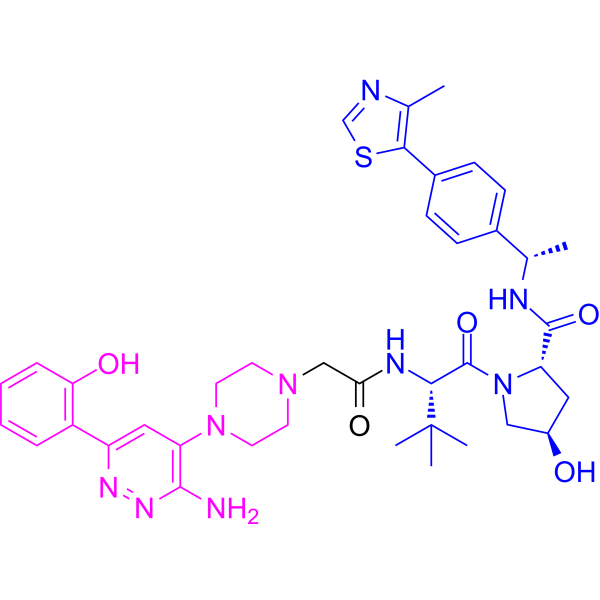
AU-15330 is a proteolysis-targeting chimera (PROTAC) degrader of the SWI/SNF ATPase subunits, SMARCA2 and SMARCA4. AU-15330 induces potent inhibition of tumour growth in xenograft models of prostate cancer and synergizes with the AR antagonist enzalutamide. AU-15330 induces disease remission in castration-resistant prostate cancer (CRPC) models without toxicity .
loading...
    loading...
1
1 Cited Publications
Cat. No.: HY-150102
CAS No.: 2139288-26-7
Purity:  99.86%
Target:  

Androgen Receptor

Research Areas:  

Cancer

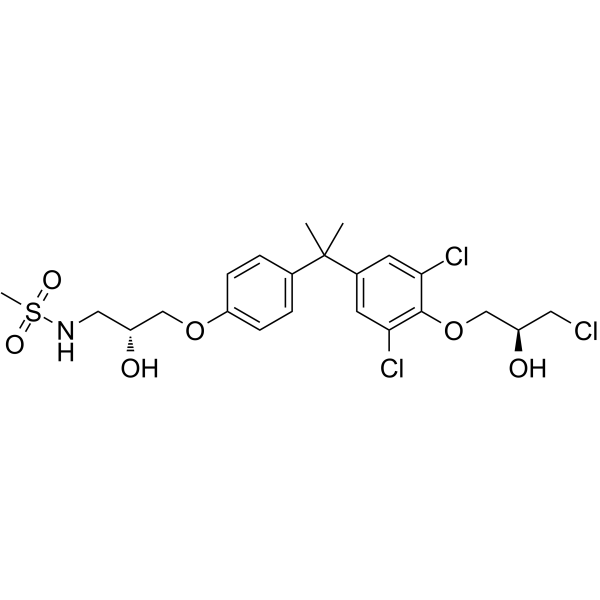
EPI-7170, a ralaniten analogue, is a potent androgen receptor N-terminal structural domain antagonist that blocks the transcriptional activity of full-length AR (FL-AR) and AR splice variants (AR-Vs). EPI-7170 has antitumor effects against enzalutamide resistant castration-resistant prostate cancer (CRPC) .
loading...
    loading...
Cat. No.: HY-163340
CAS No.: 1386811-71-7
Research Areas:  

Cancer

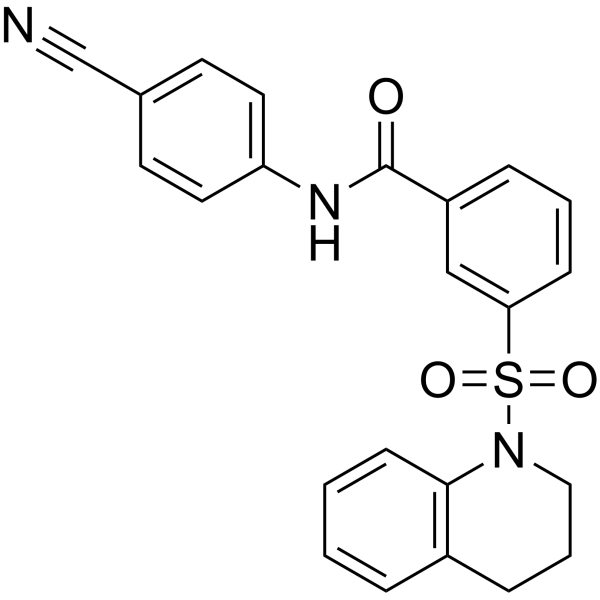
GA32 (compound 58r) is potent androgen receptor (AR)/glucocorticoid receptor (GR) dual inhibitor with IC50 values of 0.13 μM and 0.83 μM for AR and GR, respectively. GA32 inhibits the proliferation of Enzalutamide (HY-70002) resistance castration-resistant prostate cancer both in vitro and in vivo .
loading...
    loading...
Cat. No.: HY-175455
Research Areas:  

Cancer

LYA914 is an orally active AR/AR-V7 PROTAC degrader. LYA914 targets the proteolytic degradation of the conserved DNA binding domain (DBD) of the androgen receptor (AR). LYA914 exhibits potent antiproliferative effects in Enzalutamide (HY-70002)-insensitive/resistant cells. LYA914 inhibits tumor growth in VCaP/LNCaP tumor mouse models. LYA914 can be used to study castration-resistant prostate cancer (CRPC) .
loading...
    loading...
Cat. No.: HY-143471
CAS No.: 2412707-81-2
Synonyms: PLK1/BRD4-IN-1
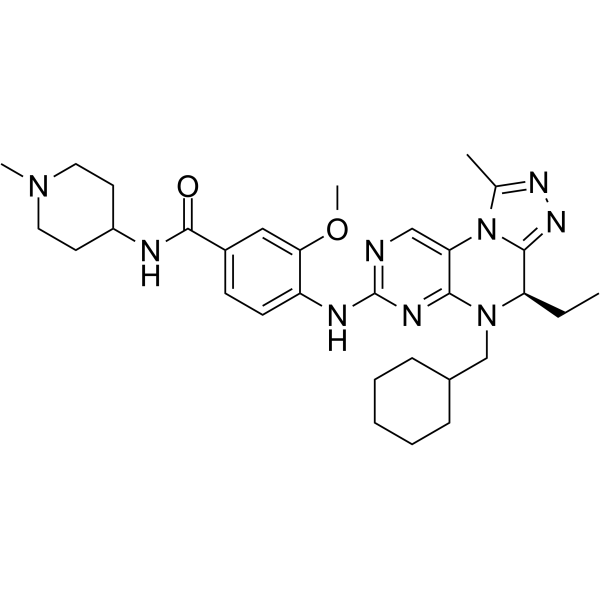
WNY0824 (PLK1/BRD4-IN-1) is an orally active dual inhibitor of PLK1 and BET protein families, with IC50 values ​​of 22, 402.5, 150.7, 103.9, and 311.9 nmol/L for PLK1, BRD2, BRD3, BRD4, and BRDT, respectively. WNY0824 induces cell cycle arrest and apoptosis by inhibiting AR- and MYC-mediated transcriptional processes. In addition, WNY0824 also inhibits tumor growth in Enzalutamide (HY-70002) resistant CRPC xenograft tumor models .
loading...
    loading...
Cat. No.: HY-178938
CAS No.: 1182011-65-9
AR Degrader-3 is an orally active molecular glue that targets AR/ARV7 and induces the degradation of AR and ARV7 through the ubiquitin-proteasome pathway (UPP). AR Degrader-3 directly interacts with the ligand-binding domain (LBD) and the N-terminal domain (NTD) of AR. AR Degrader-3 effectively suppresses the transcriptional activity of wild-type AR (AR-WT), AR mutants, and ARV7. AR Degrader-3 downregulates the mRNA and protein levels of downstream AR target genes, thereby overcoming antiandrogen resistance mediated by ARV7 and AR point mutations. AR Degrader-3 induces apoptosis in Enzalutamide (HY-70002) (ENZa)-resistant cells and increases cleaved caspase-3 protein levels. AR Degrader-3 can be used for the study of castration-resistant prostate cancer (CRPC) .
loading...
    loading...
Cat. No.: HY-163609
Target:  

PROTACs 17β-HSD

Research Areas:  

Cancer

PROTAC AKR1C3 degrader-1 is a PROTAC degrader targeting AKR1C3, with a DC50 of 52 nM. PROTAC AKR1C3 degrader-1 induces proteasome-dependent degradation of AKR1C3 and inhibits the enzymatic activities of AKR1C3, AKR1C1 and AKR1C2. PROTAC AKR1C3 degrader-1 degrades ARv7 by disrupting the stable AKR1C3/ARv7 complex. PROTAC AKR1C3 degrader-1 reduces the viability of prostate cancer cells expressing AKR1C3 and sensitizes Enzalutamide (HY-70002)-resistant prostate cancer cells. PROTAC AKR1C3 degrader-1 can be used in the research of prostate cancer .
loading...
    loading...
Cat. No.: HY-164371
CAS No.: 2135545-34-3
Target:  

Androgen Receptor

Research Areas:  

Cancer

(+)-JJ-74-138, a novel non-competitive androgen receptor (AR) antagonist, is capable of inhibiting Enzalutamide-resistant CRPC .
loading...
    loading...
Cat. No.: HY-403733A
CAS No.: 1998094-23-7
Target:  

Androgen Receptor

Research Areas:  

Cancer

(-)-JJ-450 is a non-competitive antagonist targeting the androgen receptor (AR). (-)-JJ-450 is more potent than (+)-JJ-450 (HY-403733B) in inhibiting androgen-induced AR activity, and the mechanism of AR inhibition by (+)-JJ-450 is different from that of Enzalutamide (MDV3100) (HY-70003), which may target the ligand binding domain (LBD) of AR. (-)-JJ-450 inhibits the transcriptional activity of wild-type AR and mutant AR F876L by inhibiting AR nuclear translocation and promoting nuclear degradation of unbound AR. (-)-JJ-450 can be used in the study of castration-resistant prostate cancer (CRPC) resistant to Enzalutamide .
loading...
    loading...
Cat. No.: HY-164477
CAS No.: 1431166-12-9
Target:  

Androgen Receptor

Research Areas:  

Cancer

FL442 is an Androgen Receptor (AR) modulator. FL442 exhibits strong inhibitory effects in AR-dependent prostate cancer cells, showing similar inhibitory efficiency to traditional antiandrogen drugs Bicalutamide (HY-14249) and Enzalutamide (HY-70002), while maintaining antiandrogenic activity against the AR mutant F876L, which is highly resistant to Enzalutamide. Pharmacokinetic studies of FL442 in mice reveal a long half-life (8 hours), good targeting (prostate tissue), and metabolic stability, and it effectively inhibits LNCaP tumor growth at low plasma concentrations (30 ng/mL) .
loading...
    loading...
Cat. No.: HY-173559
CAS No.: 2902679-42-7
Target:  

Androgen Receptor

Research Areas:  

Cancer

AR antagonist 12 (compound 20i) is an orally active androgen receptor antagonist wiith IC50 values of 119.3 μM and 98.2 μM for wt-AR and AR-F877L,respectively. AR antagonist 12 induces a dose-dependent and time-dependent reduction in AR, AR-V7, and PSA protein levels. AR antagonist 1 shows anticancer activuty and can be used for the study of Enzalutamide (HY-70002)-resistant Prostate cancer .
loading...
    loading...
Cat. No.: HY-121588
CAS No.: 851688-13-6
Target:  

Adrenergic Receptor

Research Areas:  

Cancer

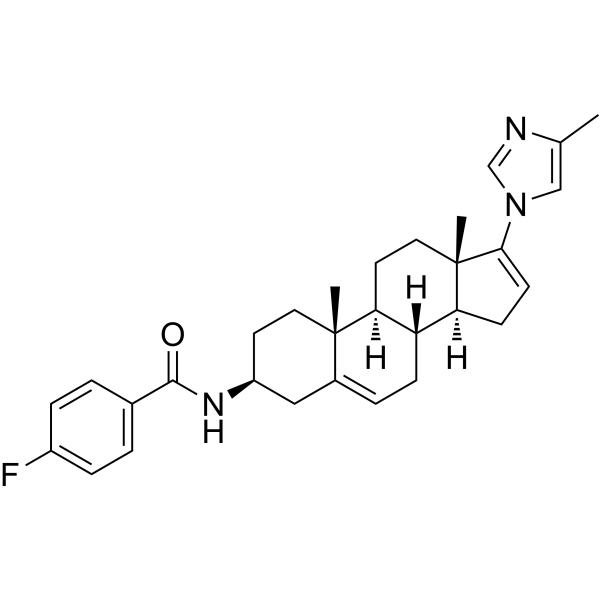
IMTPPE is an inhibitor of the androgen receptor (AR) in C4-2 prostate cancer cells, inhibiting its transcriptional activity and protein levels. IMTPPE inhibited the proliferation of AR-positive prostate cancer cells but had no effect on AR-negative prostate cancer cells. IMTPPE also inhibited the growth of enzalutamide-resistant 22Rv1 xenograft tumors .
loading...
    loading...
Cat. No.: HY-155666
CAS No.: 2952994-34-0
Target:  

Androgen Receptor

Research Areas:  

Cancer

YXG-158 (Compound 23-h) is an orally active AR degrader and CYP17A1 inhibitor. YXG-158 has AR degradation activity with DC50 value of 1.28 μM. YXG-158 can inhibit CYP17A1 with IC50 value of 100 nM. XG-158 can be used for the research of enzalutamide-resistant prostate cancer .
loading...
    loading...
Cat. No.: HY-118409
CAS No.: 110763-24-1
Target:  

Androgen Receptor

Research Areas:  

Endocrinology Cancer

VPC-3033 is an androgen receptor antagonist. VPC-3033 has a strong androgen DHT replacement potency (IC50: 0.625-2.5 μM), can effectively inhibit androgen receptor transcriptional activity (IC50=0.3 μM), and has a strong androgen receptor degradation ability. In addition, VPC-3033 exhibits significant anti-androgen receptor activity against prostate cancer cells resistant to Enzalutamide (HY-70002) .
loading...
    loading...
Cat. No.: HY-403733B
CAS No.: 1998094-24-8
Research Areas:  

Cancer

(+)-JJ-450 is a non-competitive antagonist targeting the androgen receptor (AR) that inhibits AR nuclear localization and transcriptional activity in the absence of androgen. (+)-JJ-450 is less active than (-)-JJ-450 (HY-403733A) in inhibiting prostate-specific antigen (PSA) expression in LN95 cells, possibly because (+)-JJ-450 targets the ligand binding domain (LBD) of AR. (+)-JJ-450 inhibits the transcriptional activity of AR and its splice variants (e.g., ARv7) by promoting the degradation of unliganded AR in the nucleus and reducing the binding of AR to androgen response elements (AREs). (+)-JJ-450 can be used in castration-resistant prostate cancer (CRPC) studies that are resistant to enzalutamide (MDV3100) (HY-70003) .
loading...
    loading...
Cat. No.: HY-403733C
CAS No.: 2020353-42-6
Target:  

Androgen Receptor

Research Areas:  

Cancer

JJ-450 is a non-competitive antagonist androgen receptor (AR) that inhibits the transcriptional activity of wild-type AR and mutant AR F876L. JJ-450 has an IC50 of approximately 1-10 μM in inhibiting AR transcriptional activity in PC3 cells. It is selective for AR binding and does not compete with androgens for binding to the ligand binding domain (LBD) of AR. JJ-450 inhibits the transcriptional activity of AR and its splice variants (such as AR F876L) by inhibiting AR nuclear translocation and promoting the degradation of unliganded AR in the nucleus. JJ-450 can be used in castration-resistant prostate cancer (CRPC) studies that are resistant to Enzalutamide (MDV3100) (HY-70003) .
loading...
    loading...
Cat. No.: HY-182722
CAS No.: 2388536-21-6
Target:  

Androgen Receptor

Research Areas:  

Cancer

UT-105 is an orally active androgen receptor (AR) degrader. UT-105 binds to the N-terminal domain of AR and promotes its degradation. UT-105 inhibits the growth of enzalutamide-resistant breast cancer xenografts and reduces tumor cell proliferation. UT-105 can be used in the research of estrogen receptor-positive breast cancer .
loading...
    loading...
Cat. No.: HY-171808
CAS No.: 2798907-16-9
Research Areas:  

Cancer

ITRI-90 is an orally active androgen receptor (AR) PROTAC degrader. ITRI-90 effectively degrades both full-length AR (AR-FL) and the splice variant AR-V7 protein via the ubiquitin-proteasome system, thereby inhibiting AR transcriptional activity and the target gene expression. ITRI-90 significantly inhibits the proliferation of prostate cancer cells and induces apoptosis, include Enzalutamide-resistant growth cell. ITRI-90 exhibits favorable pharmacokinetic properties and demonstrates potent antitumor efficacy in vivo. ITRI-90 can be used for prostate cancer research .
loading...
    loading...
  • 1

