1. Search Result
Search Result
Results for "

films

" in MedChemExpress (MCE) Product Catalog:

77

Inhibitors & Agonists

2

Screening Libraries

2

Fluorescent Dyes

30

Biochemical Assay Reagents

1

Peptides

2

MCE Kits

1

Inhibitory Antibodies

6

Natural
Products

3

Isotope-Labeled Compounds

7

Oligonucleotides

Cat. No. Product Name Target Research Areas Chemical Structure
  • HY-Y1310A

    Environmental Pollutants Biochemical Assay Reagents Others
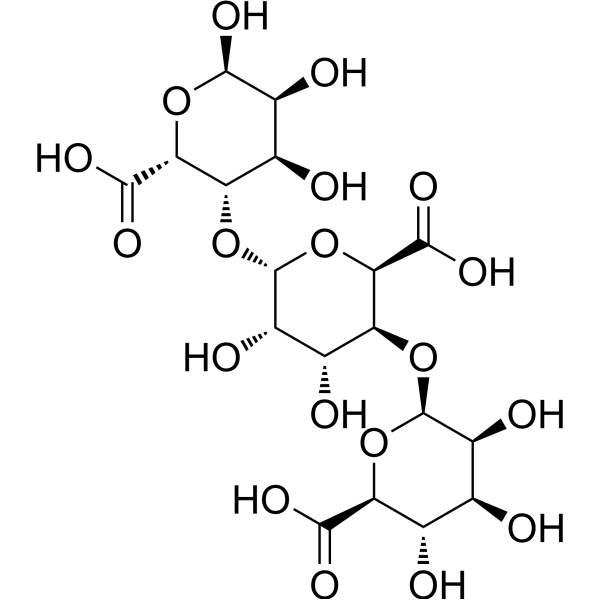
    Sodium alginate is an anionic straight chain polysaccharide. Sodium alginate can be obtained from different species of algae. Sodium alginate has different properties, such as pH-sensitivity, nontoxicity, nonimmunogenicity. Sodium alginate has weak gelation, viscosity, and film-forming properties. Sodium alginate can be utilized to prepare gels and film materials for food preservation. Sodium alginate is a versatile functional biomaterial for viscosity enhancement, stabilizer, matrixing agent, encapsulation polymer, bioadhesive and film former .
    Sodium alginate (Viscosity 200±20mpa.s)
  • HY-W088065

    Environmental Pollutants DNA/RNA Synthesis Others
    Sodium formate acts as a key promoter for heterogeneous nucleation of ZIF crystals and thin film synthesis. It is also recognized as a GRAS substance by the FDA, and serves as a cosmetic preservative and food additive. Sodium formate has low acute oral toxicity (acute oral LD50=7410 mg/kg and acute intravenous LD50=807 mg/kg in mice), with no heritable or carcinogenic effects, but exhibits embryonic developmental toxicity and teratogenicity at high concentrations. Sodium formate may cause moderate irritation to rabbit eyes, is relatively safe to the skin, and does not induce tumor formation in rats in vivo. Sodium formate is rapidly absorbed and oxidized to carbon dioxide in vivo, and forms DNA adducts in specific metabolic deficiency models or upon high-dose exposure .
    Sodium formate
  • HY-125940

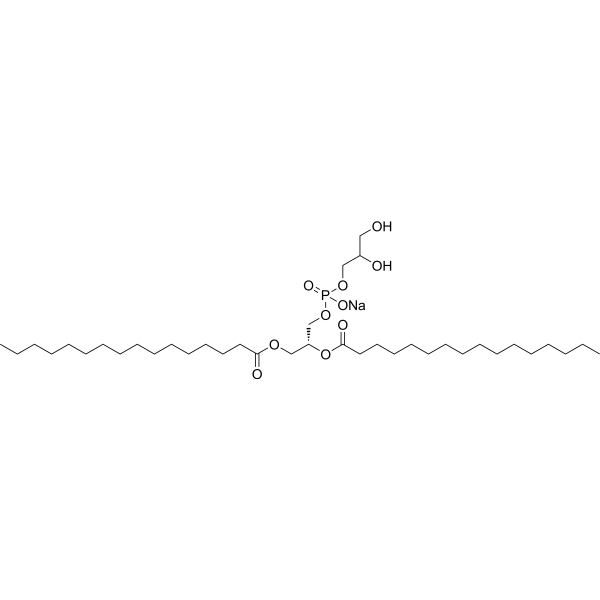
    1,2-Dipalmitoyl-sn-glycero-3-phosphoglycerol sodium

    Liposome Others
    DPPG (1,2-Dipalmitoyl-sn-glycero-3-phosphoglycerol sodium) is a phospholipid that contains long-chain (16:0) palmitic acid inserted at the sn-1 and sn-2 positions, and it serves as an active component to prevent BaP molecules from entering the water subphase. DPPG is used to prepare micelles, liposomes, and other types of artificial membranes that can resist damage from UV radiation .
    DPPG
  • HY-W011426

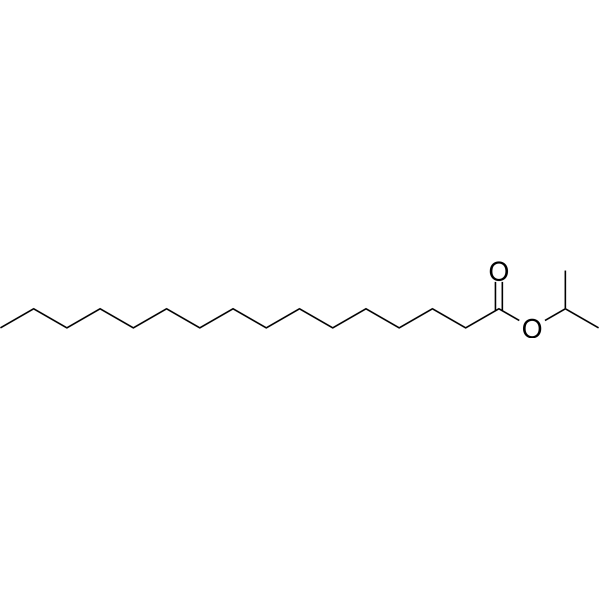
    Propan-2-yl hexadecanoate

    Environmental Pollutants Biochemical Assay Reagents Liposome Others
    Isopropyl palmitate is an fatty acid ester. Isopropyl palmitate can be used for design and characterization of bioactive bilayer films. The bilayer membrane not only has the ability to scavenge free radicals and inhibit lipid peroxidation, but also can inhibit the growth of known foodborne pathogens. Isopropyl palmitate can be used as an excipient, such as lubricant, oily carrier, solvent, controlled-release transdermal film. Pharmaceutical excipients, or pharmaceutical auxiliaries, refer to other chemical substances used in the pharmaceutical process other than pharmaceutical ingredients. Pharmaceutical excipients generally refer to inactive ingredients in pharmaceutical preparations, which can improve the stability, solubility and processability of pharmaceutical preparations. Pharmaceutical excipients also affect the absorption, distribution, metabolism, and elimination (ADME) processes of co-administered drugs .
    Isopropyl palmitate
  • HY-W115746

    Ethyl cellulose N-200

    Environmental Pollutants Biochemical Assay Reagents Infection Cancer
    Ethyl cellulose is a derivative of cellulose. Ethyl cellulose is a non-toxic, biodegradable polymer. Ethyl cellulose has unique properties such as oil gel formation, active ingredient delivery and film formation. Ethyl cellulose can be used as a pharmaceutical excipient, such as a coating agent, flavoring agent, tablet filler, etc. Ethyl cellulose can be used to prepare nanoparticles for active compound delivery .
    Ethyl cellulose
  • HY-W019885A

    Sodium triphosphate pentabasic, 98%

    Environmental Pollutants Biochemical Assay Reagents Others
    Sodium tripolyphosphate (STPP), 98% is an inorganic, non-toxic polyphosphate crosslinker, inducer and enhancer. Sodium tripolyphosphate (STPP), 98% induces the formation of unique needle-like microcrystals in sodium alginate-chitosan composite films. Sodium tripolyphosphate (STPP), 98% enhances the DPPH free radical scavenging activity of sodium alginate-chitosan composite films .
    Sodium tripolyphosphate (STPP), 98%
  • HY-W392209A

    Environmental Pollutants Biochemical Assay Reagents Others
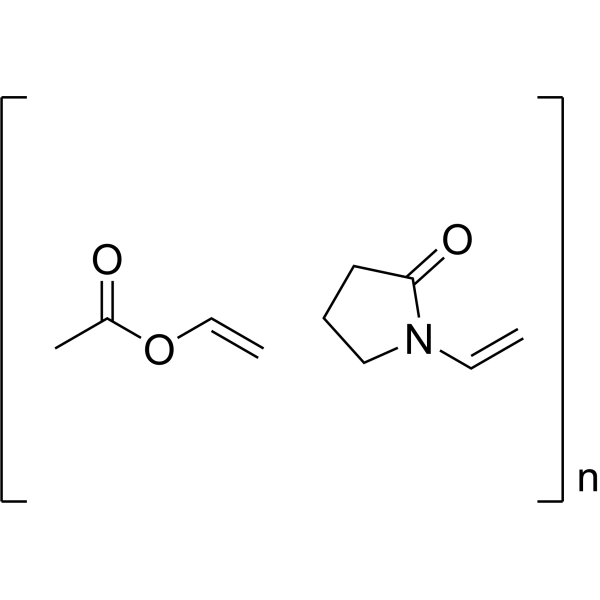
    Copovidone can be used as an excipient, such as Film formers, adhesives, etc. Pharmaceutical excipients, or pharmaceutical auxiliaries, refer to other chemical substances used in the pharmaceutical process other than pharmaceutical ingredients. Pharmaceutical excipients generally refer to inactive ingredients in pharmaceutical preparations, which can improve the stability, solubility and processability of pharmaceutical preparations. Pharmaceutical excipients also affect the absorption, distribution, metabolism, and elimination (ADME) processes of co-administered drugs .
    Copovidone (50% in ethanol)
  • HY-W127758
    Alginic acid
    1 Publications Verification

    Histamine Receptor Apoptosis Autophagy Endogenous Metabolite Inflammation/Immunology Endocrinology
    Alginic acid is a natural polysaccharide, which has been widely concerned and applied due to its excellent water solubility, film formation, biodegradability and biocompatibility. Alginic acid induces oxidative stress-mediated hormone secretion disorder, apoptosis and autophagy in mouse granulosa cells and ovaries. Alginic acid has an inhibitory effect on histamine release. Anti-anaphylactic and anti-inflammatory properties .
    Alginic acid
  • HY-W089777

    GPTMS

    Biochemical Assay Reagents Others
    3-Glycidyloxypropyltrimethoxysilane (GPTMS) is a silicon source for the preparation of inorganic-organic hybrid polymers. 3-Glycidyloxypropyltrimethoxysilane can be used to prepare hard coatings of organic polymers, such as contact lens materials in the optical industry, as well as related materials in the fields of electronics, thin films, sensors, nanoimprinting, waveguides, and biology .
    3-Glycidyloxypropyltrimethoxysilane
  • HY-W007531

    Biochemical Assay Reagents Others
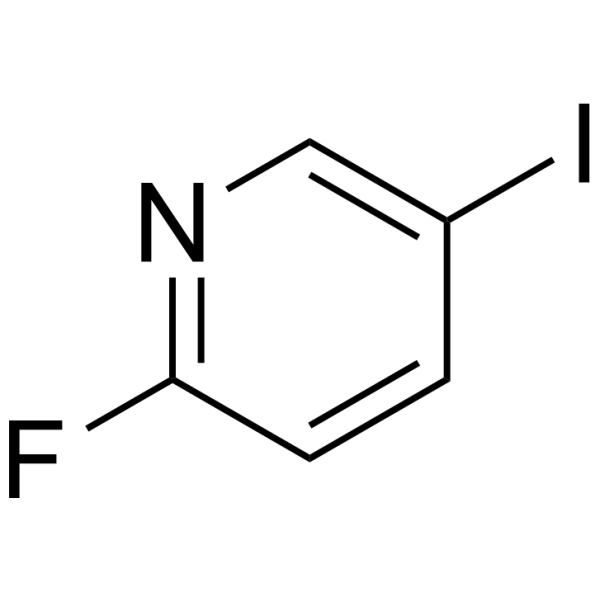
    2-Fluoro-5-iodopyridine is an electrolyte additive. 2-Fluoro-5-iodopyridine can not only effectively protect the anode by forming a stable SEI film, but also convert dead lithium into active lithium. 2-Fluoro-5-iodopyridine effectively improves the performance of lithium metal batteries .
    2-Fluoro-5-iodopyridine
  • HY-D0947

    DNA Stain Others
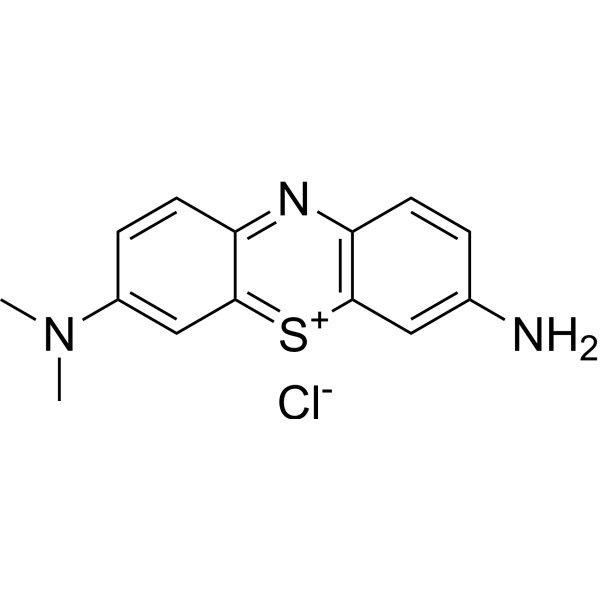
    Azure A chloride is a phenothiazine dye. Azure A chloride is an alternative DNA dye used for the separation of DNA and protein fragments in agarose gel electrophoresis and PAGE. Azure A chloride can be chemisorbed on the surface of mild steel according to the Langmuir adsorption isotherm to form a protective film. Azure A chloride binds to double-stranded DNA in a non-cooperative manner via weak intercalation, triggering molecular conformational disturbance, restricted rotational motion, and changes in optical activity .
    Azure A chloride
  • HY-Y1365C

    Biochemical Assay Reagents Others
    Fish Gelatin,suitable for cell culture is an essential natural biopolymer. Fish Gelatin,suitable for cell culture can be isolated from fish processing by-products, such as fish skin, scales, bones and fish maw. Fish Gelatin,suitable for cell culture has been considered as a feasible substitute for mammalian gelatin. Modified Fish gelatin shows significant promise across various industries, including nanomaterials, 3D printing, thin films, coatings, and biopharmaceuticals. Fish Gelatin,suitable for cell culture can be used for cell culture .
    Fish Gelatin,suitable for cell culture
  • HY-W392100A

    PCL-diol (MW 530)

    Biochemical Assay Reagents Fungal Infection
    Polycaprolactone diol (MW 530) (PCL-diol (MW 530)) is a poly (ε-caprolactone) diol with an average molecular weight of 530 g·mol −1, which serves as a monomer for biodegradable network elastic polyesters. Network polyester films undergo enzymatic hydrolysis by Rhizopus delemar lipase .
    Polycaprolactone diol (MW 530)
  • HY-W143531

    NOV03; SHR8058

    Biochemical Assay Reagents Inflammation/Immunology
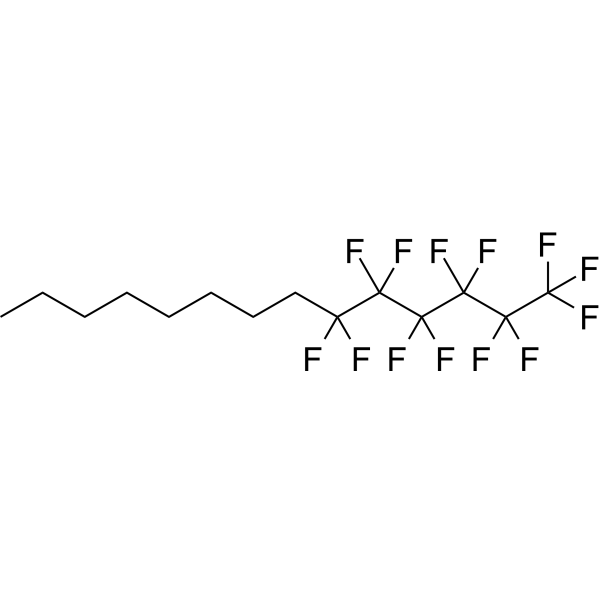
    Perfluorohexyloctane (NOV03), a semifluorinated alkane, reduces tear film instability in Meibomian gland dysfunction and evaporative dry eye disease. Perfluorohexyloctane is a long-term tamponade agent. Perfluorohexyloctane increases tear film breakup time and lipid layer thickness .
    Perfluorohexyloctane
  • HY-W010708

    Endogenous Metabolite Inflammation/Immunology
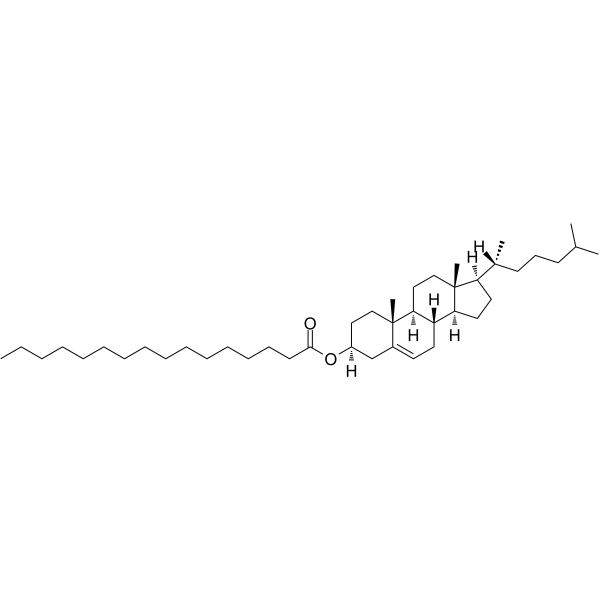
    Cholesteryl palmitate is the main cholesterol ester found in human blephariol and has been used to form a stable tear film to study amphiphilic block copolymers as surfactants for dry eye syndrome. Cholesteryl palmitate can be used as a predictor of fetal lung maturity. Cholesteryl palmitate can be used as a prognostic biomarker for chronic interstitial pneumonia .
    Cholesteryl palmitate
  • HY-139410

    c-Fms Inflammation/Immunology
    Sodium caseinates is a kind of sodium salts of major milk proteins, which act as protein-based biopolymers and innate immune system activators. Sodium caseinates induce granulopoiesis, activation and differentiation, promote the production of M-CSF, and increase serum levels of G-CSF and GM-CSF. Sodium caseinates inhibit the proliferation and reduce the viability of leukemia macrophage-like cells, thereby significantly improving the survival rate of mice inoculated with leukemia cells. Sodium caseinates can serve as carriers for probiotics in edible films and exhibit anti-Listeria activity. Sodium caseinates effectively protect vitamin A from degradation, enhance its stability, bioaccessibility and bioavailability, and regulate protein digestibility when complexed with vitamin A. Sodium caseinates can be applied to research related to acute monocytic leukemia and vitamin A deficiency .
    Sodium caseinates
  • HY-154636

    Biochemical Assay Reagents Endocrinology
    Liquid Paraffin is a petroleum-derived mixture of saturated hydrocarbons and an orally active fecal lubricant. Liquid Paraffin is widely used in studies of constipation and fecal incontinence in children through its lubricating effect and the osmotic effect generated by its conversion to hydroxy fatty acids. Liquid Paraffin has high safety, is non-carcinogenic, and does not affect fat-soluble vitamin levels with long-term use. Liquid Paraffin does not cause abdominal pain or electrolyte disorders, but may lead to lipoid pneumonia and granulomas caused by rectal administration. Liquid Paraffin can also be used as a phase change material for thermal energy storage, or combined with nanoparticles to form a protective boundary film to reduce mechanical wear .
    Liquid Paraffin
  • HY-W004048

    Sodium p-toluenesulfonate

    Environmental Pollutants Drug Intermediate Others
    Sodium 4-methylbenzenesulfonate (Sodium p-toluenesulfonate) is a drug intermediate, capable of being used to synthesize xanthine oxidase inhibitors. Sodium 4-methylbenzenesulfonate can be used as a dopant to construct a polypyrrole (PPy) conductive film on the surface of titanium (Ti) implants .
    Sodium 4-methylbenzenesulfonate
  • HY-Y1809

    Stearyl alcohol

    Environmental Pollutants Biochemical Assay Reagents Inflammation/Immunology
    1-Hydroxyoctadecane (Stearyl alcohol) is a long-chain fatty alcohol and excipient. 1-Hydroxyoctadecane forms a closed oil film, thereby reducing transepidermal water loss (TEWL) and promoting skin moisturization. 1-Hydroxyoctadecane improves Imiquimod (HY-B0180)-induced psoriatic skin inflammation in mice .
    1-Hydroxyoctadecane
  • HY-W141932

    Stearoylglycine; N-Octadecanoylglycine

    Endogenous Metabolite Others
    N-stearoylglycine is a lipid and has a small ionizable polar headgroup whose charge is pH dependent and whose amide moiety can form H-bonded network between adjacent molecules in ordered films .
    N-Stearoylglycine
  • HY-W011875

    Biochemical Assay Reagents Others
    2-Isopropylthioxanthone is a photoinitiator that is widely used in printing ink of packaging materials. 2-Isopropylthioxanthone triggers the radical polymerization of the acrylic component of inks, thus causing the liquid ink film to dry .
    2-Isopropylthioxanthone
  • HY-W001952

    Fluorescent Dye Drug Intermediate Others
    6-Bromo-2-naphthol is an RTP (real-time polymerase chain reaction) probe that forms a 1:1 or 2:1 complex with β-cyclodextrin (β-CD). 6-Bromo-2-naphthol is capable of real-time monitoring of PCR reactions and quantification of specific nucleic acid sequences. RTP probes are a class of small DNA or RNA sequences labeled with fluorescent dyes and quencher molecules, which can be widely used in gene expression analysis, SNP genotyping, and pathogen detection. 6-Bromo-2-naphthol embeds into the cyclodextrin cavity through hydrophobic interactions, inhibits the oxygen quenching effect, and emits a phosphorescent signal at room temperature. 6-Bromo-2-naphthol can also be used as an intermediate for the synthesis of antibacterial azo dyes, and its derivatives show antibacterial activity against Staphylococcus aureus, Escherichia coli and other bacteria .
    6-Bromo-2-naphthol
  • HY-W013430

    Fluorescent Dye Others
    4-Amino-3-hydroxynaphthalene-1-sulfonic acid is utilized as a fluorescent dye. 4-Amino-3-hydroxynaphthalene-1-sulfonic acid forms polypyrrole (PPy) conducting film with pyrrole, and is utilized in electrochemie .
    4-Amino-3-hydroxynaphthalene-1-sulfonic acid
  • HY-W007392

    Methyl 4-bromopyrrole-2-carboxylate

    Biochemical Assay Reagents Others
    Methyl 4-bromo-1H-pyrrole-2-carboxylate (Methyl 4-bromopyrrole-2-carboxylate) is a biologically active pyrrole derivative. Methyl 4-bromo-1H-pyrrole-2-carboxylate can be used in studies on the development of pyrrole-related biosensors .
    Methyl 4-bromo-1H-pyrrole-2-carboxylate
  • HY-160113E

    Biochemical Assay Reagents Others
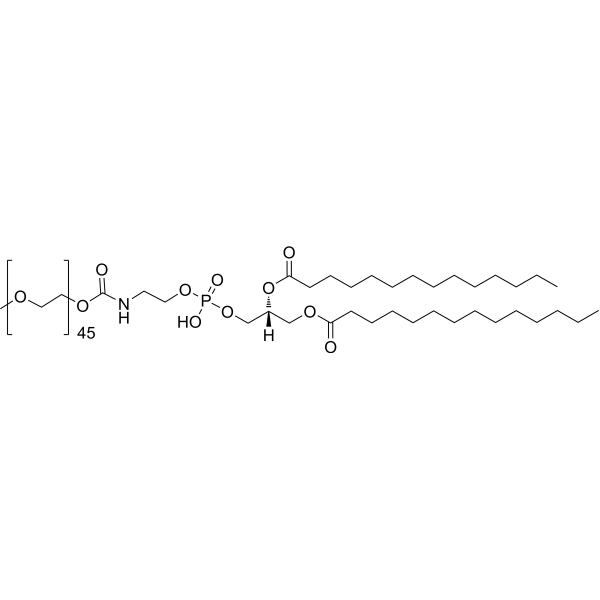
    Sodium phosphate buffer 0.1M, pH 8.0 is an aqueous sodium phosphate buffer with a concentration of 0.1M and a pH value of 8.0. Sodium phosphate buffer 0.1M, pH 8.0 can be used for the preparation of hydrated micellar membranes, the construction of pH-sensitive nanocarriers, and the maintenance of stable environmental conditions for pH-cleavable PEG-Hz-PE micelles. Sodium phosphate buffer 0.1M, pH 8.0 can also serve as a universal solvent, reaction medium and eluent, and is widely applied in experimental processes such as antibody thiolation, nanoparticle purification and cross-linking reactions .
    Sodium phosphate buffer 0.1M, pH 8.0
  • HY-Y0850U1

    Polyvinyl alcohol (Mw 61000, 98-99% hydrolyzed, ~1400 polymerization); Poly(Ethenol) (Mw 61000, 98-99% hydrolyzed, ~1400 polymerization)

    Biochemical Assay Reagents Others
    PVA (Mw 61000, 98-99% hydrolyzed, ~1400 polymerization) (Polyvinyl alcohol (Mw 61000, 98-99% hydrolyzed, ~1400 polymerization); Poly(Ethenol) (Mw 61000, 98-99% hydrolyzed, ~1400 polymerization)) is a biodegradable of polymer. PVA (Mw 61000, 98-99% hydrolyzed, ~1400 polymerization) can be used to produce bio-composite films .
    PVA (Mw 61000, 98-99% hydrolyzed, ~1400 polymerization)
  • HY-Y0850U2

    Polyvinyl alcohol (Mw 130000, 87-89% hydrolyzed, ~2700 polymerization); Poly(Ethenol) (Mw 130000, 87-89% hydrolyzed, ~2700 polymerization)

    Biochemical Assay Reagents Others
    PVA (Mw 130000, 87-89% hydrolyzed, ~2700 polymerization) (Polyvinyl alcohol (Mw 130000, 87-89% hydrolyzed, ~2700 polymerization); Poly(Ethenol) (Mw 130000, 87-89% hydrolyzed, ~2700 polymerization)) is a biodegradable of polymer. PVA (Mw 130000, 87-89% hydrolyzed, ~2700 polymerization) can be used to blend with various biopolymers and hydrophilic synthetic polymers to improve mechanical properties of films .
    PVA (Mw 130000, 87-89% hydrolyzed, ~2700 polymerization)
  • HY-W009641

    PyM; 1-HMP

    Biochemical Assay Reagents Others
    1-Pyrenemethanol is an organic compound that can be used to prepare graphene films with excellent thermal conductivity, flexibility and mechanical properties. 1-Pyrenemethanol binds to graphene oxide sheets through hydrogen bonds and π-π interactions to form GO-PyM films, increasing the dispersion and stability of the material .
    1-Pyrenemethanol
  • HY-Y0383

    Biochemical Assay Reagents Others
    Dimethyl terephthalate is a low toxicity, low volatility industrial chemical widely used in the production of polyester fibers and films .
    Dimethyl terephthalate
  • HY-129197

    Environmental Pollutants Bacterial Infection
    Stearyldiethanolamine is a typical amine-based surfactant used in development for antibacterial freshness-keeping film or antibacterial nonwoven fabric. Stearyldiethanolamine can be used as a collector towards the surfaces of quartz and malachite, to recover efficiently malachite from quartz. Stearyldiethanolamine can disrupt bacterial cell membrane with the alkyl chain, leading to irreversible damage and cell death .
    Stearyldiethanolamine
  • HY-Y0407A

    TPAOH (40% w/w in water)

    Biochemical Assay Reagents Others
    Tetrapropylammonium hydroxide (40% w/w in water)It is a compound belonging to the class of quaternary ammonium compounds and is a strong base with cationic properties. Tetrapropylammonium hydroxide (40% w/w in water)It is usually used as a phase transfer catalyst to promote the transfer of reactants between immiscible phases in various organic synthesis reactions. It is also used in the production of semiconductors, especially the manufacture of thin-film transistors and other electronic devices.
    Tetrapropylammonium hydroxide (40% w/w in water)
  • HY-W102545

    Biochemical Assay Reagents Others
    Diaza-15-crown-5 extends the lifetime of M intermediates in BR membranes. Diaza-15-crown-5 is a crown ether compound that alters the surface charge of BR membranes. Diaza-15-crown-5 changes the surface charge of the BR film. and overall membrane stability. Diaza-15-crown-5 allows the M state to be maintained for a longer period of time .
    Diaza-15-crown-5
  • HY-Y0425

    Drug Intermediate Biochemical Assay Reagents Others
    Terephthalaldehyde is a crosslinking agent. Terephthalaldehyde forms a crosslinked structure inside the gelatin matrix by forming Schiff base imines with the amino groups of gelatin, thereby constructing a three-dimensional network. Terephthalaldehyde improves the hydrophobicity of the gelatin matrix, delays water vapor penetration and enhances the liquid water resistance of gelatin films. Terephthalaldehyde can be used as a crosslinking agent to prepare crosslinked chitosan hydrogel (CAAT) via ultrasound-induced synthesis. Terephthalaldehyde helps CAAT hydrogels selectively adsorb anionic dyes from aqueous media, including multi-component systems containing cationic dyes. Terephthalaldehyde serves as a starting material for the synthesis of bis-heterocyclic compounds (including bis-thiazole and bis-triazolopyrimidine compounds) .
    Terephthalaldehyde
  • HY-W127391

    (Rac)-1,2-Didodecanoylglycerol

    Biochemical Assay Reagents Others
    1,2-Dilaurin is a diacylglycerol containing lauric acid at the sn-1 and sn-2 positions. It has been used as an internal standard for the quantification of diglycerides in rat desheathed sciatic nerves. [1] Monomolecular films containing 1,2-dilauroyl-rac-glycerol have been used as substrates to measure surface pressure and the effect of pancreatic procolipase and colipase on porcine pancreatic lipase activity. [2] References: [1]. Zhu, X. and Eichberg, J. 1,2-Diacylglycerol content and its arachidonyl-containing molecular species are reduced in the sciatic nerve of streptozotocin-induced diabetic rats. J. Neurochemistry. 55(3), 1087-1090 (1990).[2]. Wieloch, T., Borgstr m, B., Piéroni, G. et al. Porcine trypsinogen and its trypsin-activated form: lipid binding and lipase activation on monomolecular membranes. FEBS Express. 128(2), 217-220 (1981).
    1,2-Dilaurin
  • HY-23497

    Others Others
    Poly(4-vinylphenol) is a polymer cross-linking agent that can be used to prepare non-toxic films. Poly(4-vinylphenol) is a sensitizer of titania for visible light photocatalysis. Poly(4-vinylphenol) also can be used as a water resistive wood adhesive, as a gate dielectric insulator in organic field effect transistors, and as a responsive surface coating .
    Poly(4-vinylphenol)
  • HY-164070

    Biochemical Assay Reagents Others
    Dextran Hydroxypropyltrimonium Chloride is a cationic polymer with excellent antistatic, moisturizing, film-forming, foam-stabilizing and emulsifying abilities. Dextran Hydroxypropyltrimonium Chloride can be used in the research of pharmaceuticals and cosmetics .
    Dextran Hydroxypropyltrimonium Chloride
  • HY-W773294

    Tetramethylammonium silicate, 16-20% in water

    Biochemical Assay Reagents Others
    Tetramethylammonium silicate solution is a salt solution formed by tetramethylammonium cations and silicate anions. Tetramethylammonium silicate solution can be used to prepare high-quality silicon dioxide films on substrates .
    Tetramethylammonium silicate solution
  • HY-W143948

    NFDHA; Perfluoro-3,6-dioxaheptanoic acid

    Environmental Pollutants Others
    Nonafluoro-3,6-dioxaheptanoic acid (NFDHA) is a component of the aqueous film-forming foam FN-3. Nonafluoro-3,6-dioxaheptanoic acid is mainly distributed and transported in water. Nonafluoro-3,6-dioxaheptanoic acid is considered as an environmental contaminant in watersheds .
    Nonafluoro-3,6-dioxaheptanoic acid
  • HY-W115746B

    Biochemical Assay Reagents Others
    Ethyl cellulose (viscosity 300 cP) serves as a non-toxic and biodegradable polymer, with unique properties such as oleogel formation, delivery of active component, and film-forming ability in the food and pharmaceutical sectors. Ethyl cellulose (viscosity 300 cP) can be used as an excipient, such as coating agent, flavoring agent, tablet filler .
    Ethyl cellulose (viscosity 300 cP)
  • HY-W115746A

    Biochemical Assay Reagents Others
    Ethyl cellulose (viscosity 10 cP) serves as a non-toxic and biodegradable polymer, with unique properties such as oleogel formation, delivery of active component, and film-forming ability in the food and pharmaceutical sectors. Ethyl cellulose (viscosity 10 cP) can be used as an excipient, such as coating agent, flavoring agent, tablet filler .
    Ethyl cellulose (viscosity 10 cP)
  • HY-P991072

    MAPP-66

    HIV HSV Infection
    MB-66 (MAPP-66) is a fully human IgG1 antibody that targets HSV and HIV. MB-66 is a monoclonal antibody film for vaginal application. The isotype control for MB-66 can refer to Human IgG1 kappa, Isotype Control (HY-P99001) .
    MB-66
  • HY-W250194

    Biochemical Assay Reagents Others
    Luviquat FC 550 is a cationic polymer commonly used in a variety of personal care and cosmetics. It is a viscous liquid containing quaternary ammonium groups which give it a positive charge. Luviquat FC 550 has a variety of properties suitable for these applications including its ability to provide conditioning, antistatic and film-forming properties to hair and skin. In addition, it is used as a binder in oral care products and as a flocculant in industrial water treatment.
    Luviquat FC 550
  • HY-W012663

    Environmental Pollutants Drug Intermediate Others
    1,2,6-Hexanetriol, a polyol, is an intermediate for wetting agents, solvents, and pharmaceuticals with excellent moisturizing property. 1,2,6-Hexanetriol is a humectant and plasticizer for hydrophilic films. 1,2,6-Hexanetriol has no significant toxicity in rats, rabbits, and dogs via oral (16 mL/kg), intraperitoneal (10 g/kg) and intravenous (5.6 mL/kg) routes. 1,2,6-Hexanetriol can be used for the cosmetics and resin industries .
    1,2,6-Hexanetriol
  • HY-W272811

    Drug Intermediate Fungal Infection
    Camphorsulfonate sodium is an organic synthesis intermediate. Camphorsulfonate sodium can be used for synthesis of derivatives with SDH inhibitory activity through scaffold hopping. Camphorsulfonate sodium is also an organocatalyst that can be used as a pore-forming additive for modulating the porosity of the graphene film. Camphorsulfonate sodium can be used for binder-free porous graphene film and fungicide research .
    Camphorsulfonate sodium
  • HY-141460

    Ile-Ala; L-Isoleucyl-L-alanine

    Biochemical Assay Reagents Others
    H-Ile-Ala-OH (Ile-Ala; L-Isoleucyl-L-alanine) is a linear aliphatic dipeptide and self-reactive cyclization reagent that self-assembles into amorphous films or spherical structures from specific solvents. H-Ile-Ala-OH also serves as a precursor for the synthesis of the cyclic peptide cyclo (L-isoleucyl-L-alanine) (HY-N9251). H-Ile-Ala-OH undergoes solid-state cyclization when heated above 206 °C, and its initiation temperature is closely related to the size of side-chain substituents .
    H-Ile-Ala-OH
  • HY-W099735

    Biochemical Assay Reagents Others
    Bis(2-ethylhexyl) maleate can enhance the water sensitivity of polyvinyl acetate (PVAc) films and improve the tackiness, adhesion, and wash resistance of polyacrylate .
    Bis(2-ethylhexyl) maleate
  • HY-Y0383S2

    Isotope-Labeled Compounds Others
    Dimethyl terephthalate- 13C2-1 is 13C labeled Dimethyl terephthalate. Dimethyl terephthalate is a low toxicity, low volatility industrial chemical widely used in the production of polyester fibers and films .
    Dimethyl terephthalate-13C2-1
  • HY-W088188

    Cobalt(II) acetylacetonate

    Biochemical Assay Reagents Others
    Co (acac)2 is an organometallic compound with catalytic activity, in which the central cobalt ion is chelated with acetylacetonate ligands. Co (acac)2 can serve as a precursor for thin films and nanomaterials, and is applicable to researches in organic synthesis, materials science, industrial applications, and other fields .
    Co(acac)2
  • HY-W142308

    Biochemical Assay Reagents
    Diammonium dithiodiglycolate is a film-forming polymer used as a crosslinking agent, with the activity of promoting crosslinking of materials and enhancing their stability. Diammonium dithiodiglycolate plays a key role in biomedical applications, especially in the preparation of biocompatible materials. The unique chemical properties of Diammonium dithiodiglycolate make it an ideal choice to achieve high-performance polymer properties.
    Diammonium dithiodiglycolate
  • HY-W739372

    Biochemical Assay Reagents
    Poly (sodium 4-styrenesulfonate) is a cation exchange polyelectrolyte used to prepare highly mechanically stable and highly reproducible coatings. During the reduction of graphene oxide, Poly (sodium 4-styrenesulfonate) is used to synthesize polymer-coated graphite nanosheets. Furthermore, the interactions between Poly (sodium 4-styrenesulfonate) and metal ions have been studied, and it has been combined with Nafion for mixed coatings in bismuth film electrodes, showcasing its broad application potential in functional materials and electrochemical research .
    Polysodium 4-styrenesulfonate

Inquiry Online

Your information is safe with us. * Required Fields.

Salutation


Country or Region *

Applicant Name *


Organization Name *

Department *


Email Address *


Product Name *

Cat. No.


Requested quantity *

Phone Number *


Remarks

Inquiry Online

Inquiry Information

Product Name:
Cat. No.:
Quantity:
MCE Japan Authorized Agent:

