



Search Result
Results for "
fluorescence detection
" in MedChemExpress (MCE) Product Catalog:
6
Biochemical Assay Reagents
| Cat. No. |
Product Name |
Target |
Research Areas |
Chemical Structure |
-
- HY-15142
-
|
Hydroxydaunorubicin hydrochloride; ADR
|
Topoisomerase
ADC Payload
AMPK
Autophagy
Apoptosis
HIV
HBV
Mitophagy
Antibiotic
Bacterial
Fluorescent Dye
|
Infection
Cancer
|
|
Doxorubicin hydrochloride (Hydroxydaunorubicin hydrochloride; ADR), a cytotoxic anthracycline antibiotic, is an anti-cancer chemotherapy agent. Doxorubicin hydrochloride is a potent human DNA topoisomerase I and topoisomerase II inhibitor with IC50s of 0.8 μM and 2.67 μM, respectively. Doxorubicin hydrochloride reduces basal phosphorylation of AMPK and its downstream target acetyl-CoA carboxylase. Doxorubicin hydrochloride induces apoptosis and autophagy .
|
-
-
- HY-D0815
-
|
|
Fluorescent Dye
DNA/RNA Synthesis
|
Others
|
|
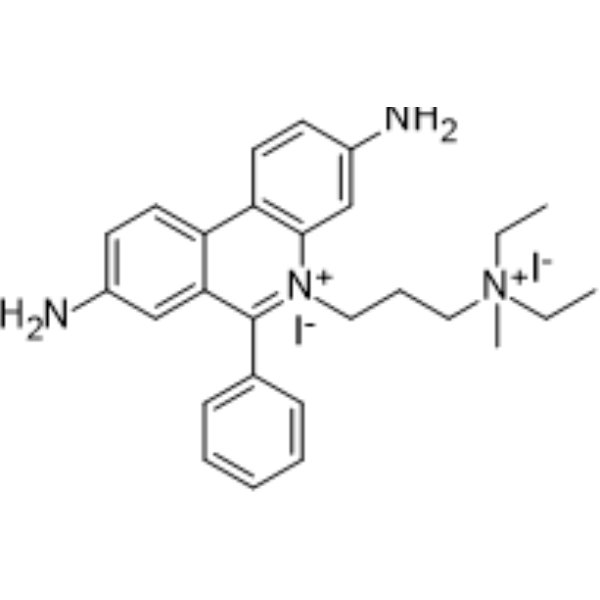
Propidium Iodide (PI) is a nuclear staining agent that stains DNA. Propidium Iodide is an analogue of ethidine bromide that emits red fluorescence upon embedding in double-stranded DNA. Propidium Iodide cannot pass through living cell membranes, but it can pass through damaged cell membranes to stain the nucleus. Propidium Iodide has a fluorescence wavelength of 493/617 nm and a wavelength of 536/635 nm after Mosaic with DNA. Propidium Iodide is commonly used in the detection of apoptosis (apoptosis) or necrosis (necrosis), and is often used in flow cytometry analysis.
|
-
-
- HY-D0718
-
|
Nile Blue A oxazone; Phenoxazone 9
|
Fluorescent Dye
|
Others
|
|
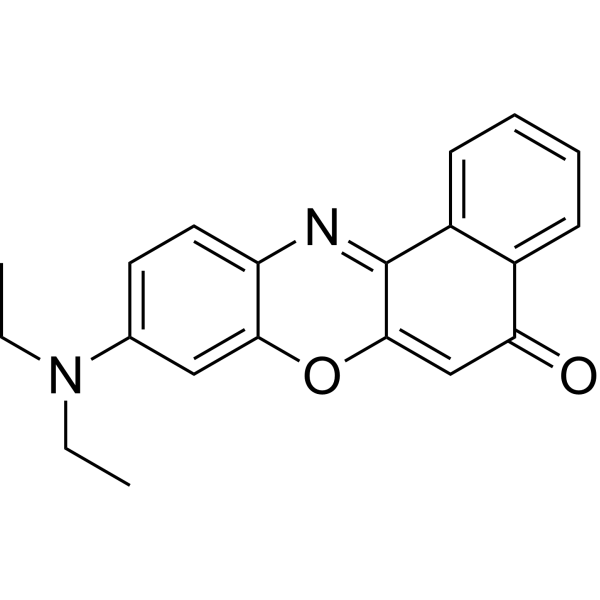
Nile red (Nile blue oxazone) is a lipophilic stain. Nile red has environment-sensitive fluorescence. Nile red is intensely fluorescent in a lipid-rich environment while it has minimal fluorescence in aqueous media. Nile red is an excellent vital stain for the detection of intracellular lipid droplets by fluorescence microscopy and flow cytof uorometry. Nile red stains intracellular lipid droplets red. The fluorescence wavelength is 559/635 nm .
|
-
-
- HY-116215
-
|
|
Fluorescent Dye
|
Others
|
|
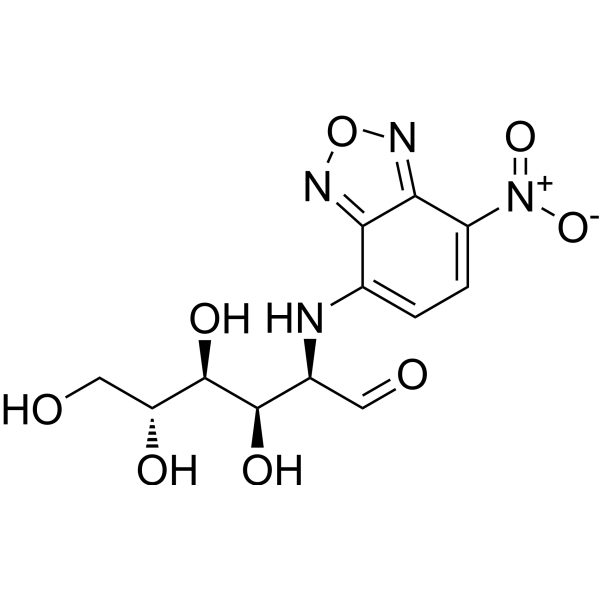
2-NBDG is a fluorescently-labeled deoxyglucose analog that is used primarily to directly monitor glucose uptake by living cells and tissues. It is also used as a topical contrast reagent for the detection of neoplasia. 2-NBDG can be used in real-time confocal, high-resolution, or wide-field fluorescence microscopy as well as in flow cytometry. The probe can be excited by the Argon laser at 488 nm to give the environment-sensitive fluorescence. It has lower photostability than the rhodamine-based fluorescent probes.
|
-
-
- HY-D0090
-
|
|
Fluorescent Dye
|
Others
|
|
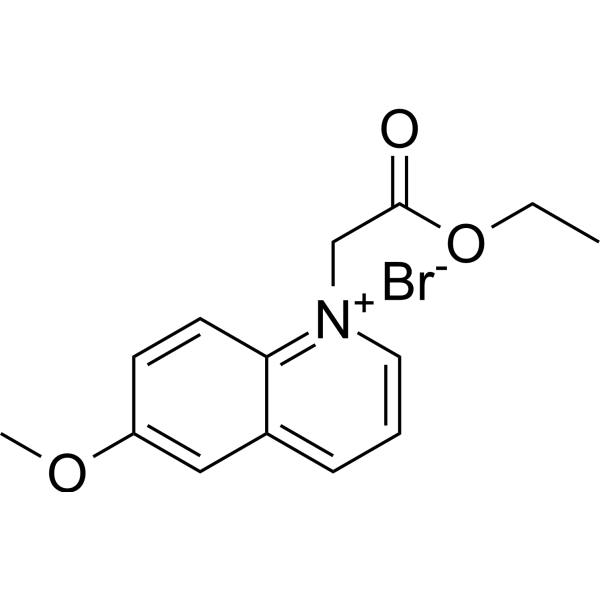
MQAE is a chloride ion (Cl -) fluorescent probe that can be used to measure chloride concentrations. The fluorescence intensity of MQAE decreases proportionally as Cl - ions increase. MQAE has high cell permeability and is suitable for fluorescence detection such as confocal microscopy and flow cytometry (Ex/Em=350/460 nm) .
|
-
-
- HY-D0041
-
|
Calcein acetoxymethyl ester
|
Fluorescent Dye
|
Cancer
|
|
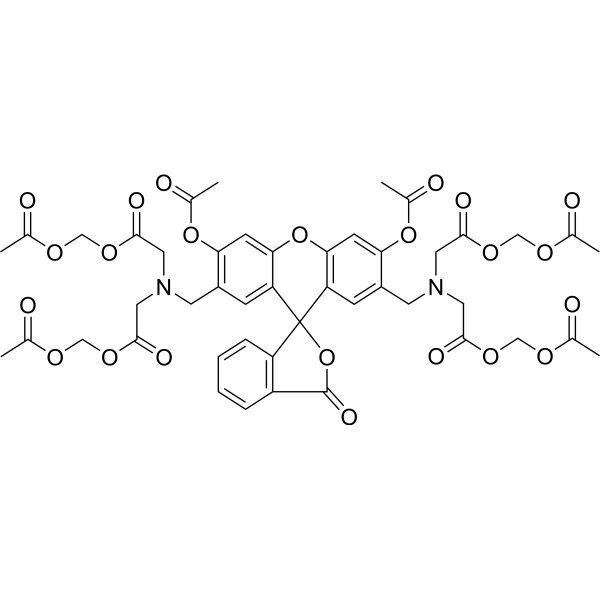
Calcein AM, has cell membrane permeability and can easily enter the cell. Calcein AM has no fluorescence and is hydrolyzed by endogenous esterase in the cell to produce polar molecule Calcein (Calcein), which has strong negative charge and cannot permeate the cell membrane. Calcein can emit strong green fluorescence, so it is often used with Propidium Iodide for cell viability/virulence detection, excitation/emission wavelength: 494/515 nm .
|
-
-
- HY-D1119
-
|
|
Fluorescent Dye
|
Others
|
|
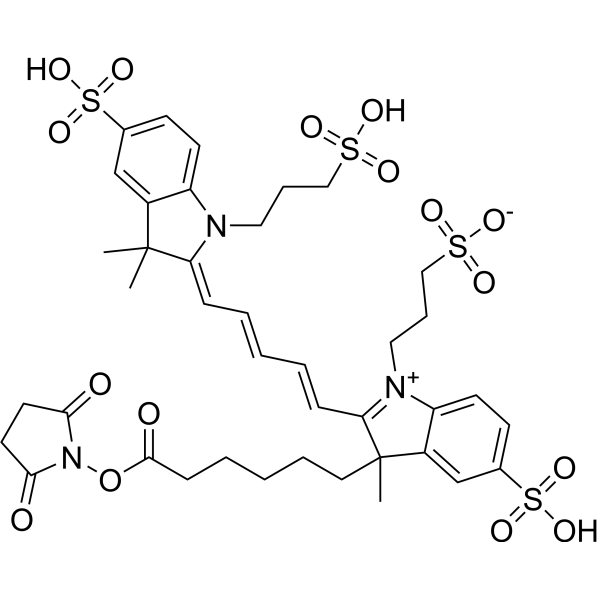
AF647-NHS ester is an analog of Alexa Fluor 647 (AF647). NHS ester can covalently bind to molecules with amino groups (such as proteins, antibodies, etc.). AF647 is a far-red fluorescent dye with an excitation wavelength (λex) of 635 nm (conventional fluorescence detection)/620 nm (instantaneous detection). Storage: Protect from light .
|
-
-
- HY-15142R
-
|
Hydroxydaunorubicin hydrochloride (Standard); ADR (Standard)
|
Reference Standards
Topoisomerase
ADC Payload
AMPK
Autophagy
Apoptosis
HIV
HBV
Mitophagy
Antibiotic
Bacterial
Fluorescent Dye
|
Infection
Cancer
|
|
Doxorubicin hydrochloride (Standard) is the analytical standard of Doxorubicin hydrochloride. This product is intended for research and analytical applications. Doxorubicin (Hydroxydaunorubicin) hydrochloride, a cytotoxic anthracycline antibiotic, is an anti-cancer chemotherapy agent. Doxorubicin hydrochloride is a potent human DNA topoisomerase I and topoisomerase II inhibitor with IC50s of 0.8 μM and 2.67 μM, respectively. Doxorubicin hydrochloride reduces basal phosphorylation of AMPK and its downstream target acetyl-CoA carboxylase. Doxorubicin hydrochloride induces apoptosis and autophagy .
|
-
-
- HY-117695
-
|
6-Aminoquinolyl-N-hydroxysccinimidyl carbamate
|
Fluorescent Dye
|
Others
|
|
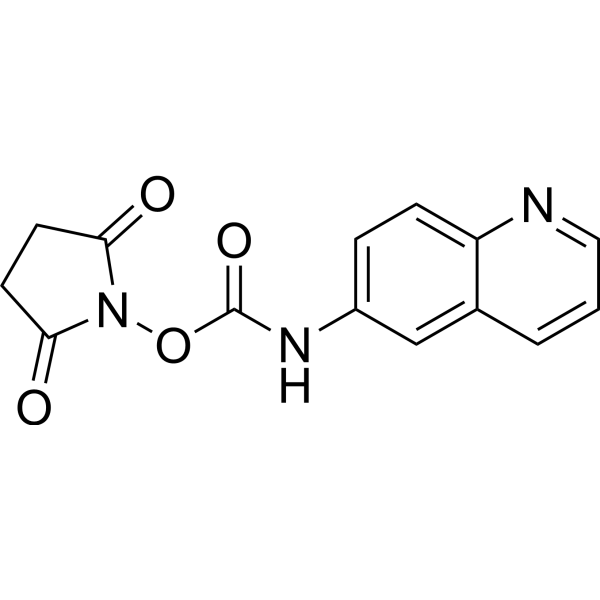
AQC (6-Aminoquinolyl-N-hydroxysccinimidyl carbamate) is a reagent used for amino acid or protein sequence analysis by HPLC with fluorescence detection. AQC reacts with primary and secondary amino acids to yield fluorescent derivates, allowing amino acid detection at under-picomolar levels .
|
-
-
- HY-15142A
-
-
-
- HY-W074143
-
|
|
Fluorescent Dye
|
Others
|
|
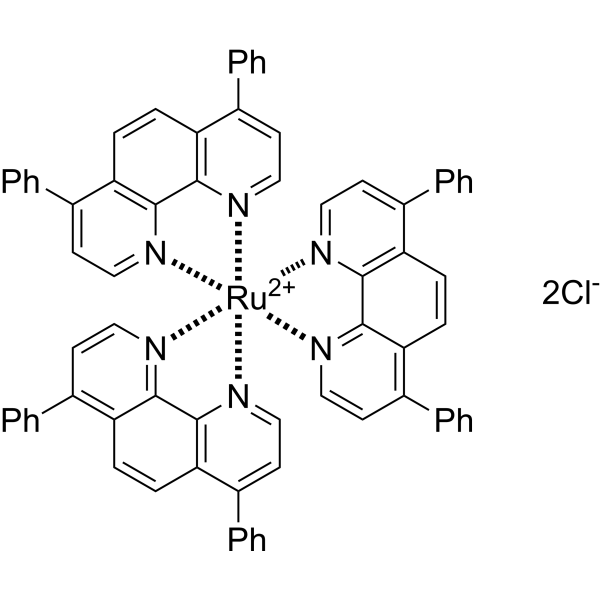
Tris(4,7-diphenyl-1,10-phenanthroline)ruthenium(II) dichloride ([Ru(dpp)3] 2+) is an electrochemiluminescent (ECL) probe and oxygen-sensitive sensor. Tris(4,7-diphenyl-1,10-phenanthroline)ruthenium(II) dichloride can be used to modify electrode surfaces for the detection of sulfates (S2O8 2-) and oxalates, based on electrochemical reactions that generate excited-state species, releasing photons through irreversible redox reactions. Tris(4,7-diphenyl-1,10-phenanthroline)ruthenium(II) dichloride utilizes the oxygen quenching of fluorescence mechanism, where fluorescence intensity reflects the metabolic rate of living microorganisms or oxygen levels within cells/tumors, allowing for real-time detection. Tris(4,7-diphenyl-1,10-phenanthroline)ruthenium(II) dichloride's main applications include microbial detection, antibacterial activity studies, and tumor microenvironment research .
|
-
-
- HY-D1119C
-
|
|
Fluorescent Dye
|
Others
|
|
AF647-NHS ester is an analogue of Alexa Fluor 647 (AF647), which has excitation wavelength (λex) of 635 nm (conventional fluorescence detection)/620 nm (instantaneous detection). NHS ester can covalently bind to molecules with amino groups (such as proteins, antibodies, etc.) .
|
-
-
- HY-15943
-
6-TAMRA
1 Publications Verification
6-Carboxytetramethylrhodamine
|
Fluorescent Dye
|
Others
|
|
6-TAMRA (6-Carboxytetramethylrhodamine) is a fluorescent dye. 6-TAMRA is often used in combination with 6-FAM (HY-66021) as an acceptor or fluorescence quencher for fluorescence resonance energy transfer (FRET) in biochemical studies such as potassium ion detection and ribonuclease activity assays .
|
-
-
- HY-D0155
-
|
|
Fluorescent Dye
|
Others
|
|
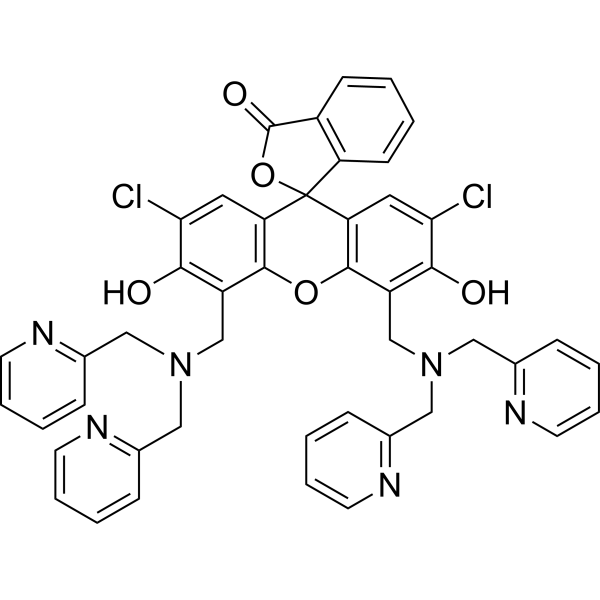
Zinpyr-1 is a zinc-responsive fluorescent indicator and a membrane-permeable metal-binding probe. Zinpyr-1 forms a complex with Mn 2+ ions and generates a fluorescence turn-on signal. Zinpyr-1 binds to free zinc ions in serum, enabling quantitative detection of free zinc concentration. Zinpyr-1 produces fluorescence signals reflecting the relative zinc concentration in plant root cells, localizes to specific layers of plant root cells, and can be used to support analyses related to plant zinc transporter mutations and homeostasis .
|
-
-
- HY-D2001
-
|
|
Fluorescent Dye
|
Others
|
|
ATTO 488 NHS ester is a new fluorescent marker based on the Rhodamine structure. It has strong absorption, high fluorescence quantum yield, high thermal stability and photochemical stability, and is suitable for single molecule detection and high-resolution microscopy. ATTO 488 NHS ester is an NHS ester derivative of ATTO 488 that can be used to label proteins or antibodies.
|
-
-
- HY-DY1036
-
|
|
Fluorescent Dye
|
Cancer
|
Calcein AM (solution) , has cell membrane permeability and can easily enter the cell. Calcein AM has no fluorescence and is hydrolyzed by endogenous esterase in the cell to produce polar molecule Calcein (Calcein) , which has strong negative charge and cannot permeate the cell membrane. Calcein can emit strong green fluorescence, so it is often used with Propidium Iodide for cell viability/virulence detection, excitation/emission wavelength: 494/515 nm . Solvent and concentration: DMSO: 2 mM
|
-
-
- HY-P1003
-
|
|
Fluorescent Dye
|
Others
|
|
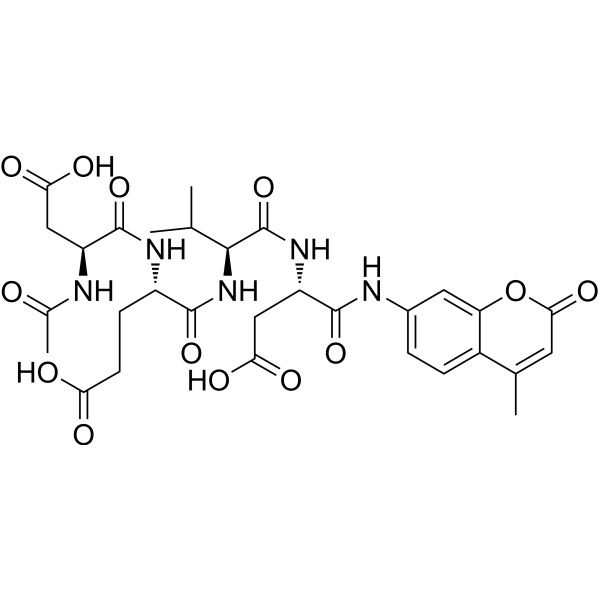
Ac-DEVD-AMC is a fluorescent substrate of caspase-3/caspase-7. When treating Ac-DEVD-AMC with cell lysate, Ac-DEVD-AMC releases amino-4-methylcoumarin (AMC) for fluorescence detection, with an excitation wavelength of 380 nm and an emission wavelength of 460 nm .
|
-
-
- HY-129109
-
|
|
Fluorescent Dye
|
Inflammation/Immunology
Cancer
|
|
NBD-Pen is the first fluorescence probe for lipid radicals with high selectivity and sensitivity (λex: 470 nm, λem: 530 nm). NBD-Pen specifically detects lipid derived radicals over other reactive species present in biological systems, including H2O2, ClO -, O2 -?, and ?OH. NBD-Pen directly detects lipid radicals in living cells by turn-on fluorescence. NBD-Pen decreases inflammation, apoptosis, and oxidative stress markers. NBD-Pen can be studied in various disease models such as hepatic carcinoma .
|
-
-
- HY-DY1008
-
|
|
Fluorescent Dye
|
Others
|
Nile Red (solution) is a lipophilic stain. Nile red has environment-sensitive fluorescence. Nile red is intensely fluorescent in a lipid-rich environment while it has minimal fluorescence in aqueous media. Nile red is an excellent vital stain for the detection of intracellular lipid droplets by fluorescence microscopy and flow cytof uorometry. Nile red stains intracellular lipid droplets red. The fluorescence wavelength is 559/635 nm . Solvent and concentration: DMSO: 1 mM
|
-
-
- HY-W923198
-
|
Methacryloyloxy fluorescein
|
Fluorescent Dye
|
Others
|
|
Fluorescein O-methacrylate (Methacryloyloxy fluorescein) is a pH-responsive fluorescent monomeric dye. Fluorescein O-methacrylate exhibits pH-responsive fluorescence properties: its fluorescence is activated under alkaline conditions and quenched under neutral or acidic conditions; reversible switching of fluorescence is achievable by adjusting the pH of the solution. Fluorescein O-methacrylate can be used as a monomer for the synthesis of amphiphilic fluorescein polymers. These polymers can self-assemble into stable polymer nanoparticles with enhanced aqueous-phase fluorescence, and also enable the conjugation of nanoparticles with amine-containing biomolecules to support sensitive optical detection of biomarkers (Ex/Em = 490/520 nm) .
|
-
-
- HY-134620
-
|
|
Fluorescent Dye
|
Others
|
|
Cyanine 5 NHS ester tetrafluoroborate (Compound Cy5) is a cyanine dye that is used to in fluorescence detection of macromolecules. Cyanine 5 NHS ester tetrafluoroborate exhibits an excitation wavelength of 638 nm .
|
-
-
- HY-66020
-
6-FITC
1 Publications Verification
6-Fluorescein Isothiocyanate
|
Fluorescent Dye
Drug Isomer
|
Others
|
|
6-FITC (6-Fluorescein Isothiocyanate) is a fluorescein isomer and also serves as a fluorescent label for biomolecules (FITC isomers have similar excitation/emission wavelengths, which are 495 nm/519 nm in fluorescence detection) .
|
-
-
- HY-DY1019
-
|
|
Fluorescent Dye
|
Others
|
2-NBDG (solution) is a fluorescently-labeled deoxyglucose analog that is used primarily to directly monitor glucose uptake by living cells and tissues. It is also used as a topical contrast reagent for the detection of neoplasia. 2-NBDG can be used in real-time confocal, high-resolution, or wide-field fluorescence microscopy as well as in flow cytometry. The probe can be excited by the Argon laser at 488 nm to give the environment-sensitive fluorescence. It has lower photostability than the rhodamine-based fluorescent probes. Solvent and Concentration: Sterile PBS: 5 mM
|
-
-
- HY-D0006
-
|
|
Fluorescent Dye
|
Others
|
|
Bathophenanthroline is a nitrogen-containing organic ligand that can form stable complexes with transition metal ions such as Ru 2+. In proteomics, Bathophenanthroline is often used for in-gel protein staining. The negatively charged sulfonic acid groups of Bathophenanthroline interact electrostatically with the positively charged amino acid residues of proteins, thereby achieving specific binding to proteins and enhancing the fluorescent signal of detection. Bathophenanthroline can be used for protein separation and detection in SDS-PAGE gels in the field of proteomics, as well as other fluorescence studies[1]. Ex/Em=532 nm/610 nm[1].
|
-
-
- HY-D1249
-
|
|
Fluorescent Dye
|
Others
|
|
Calcein (mixture of isomers), Calcein (HY-D0040) Derivative, is a fluorescent dye (Ex/Em = 495/515 nm). Calcein (mixture of isomers) can be used for the researches for live cell staining, calcium ion detection, bone fluorescence labeling and membrane permeability leakage detection.
|
-
-
- HY-153081
-
|
|
Fluorescent Dye
|
Others
|
|
The eGFP circRNA will express green fluorescent protein, originally isolated from the jellyfish, Aequorea victoria. The eGFP is a commonly used direct detection reporter in mammalian cell culture, yielding bright green fluorescence with an emission peak at 509 nm. The eGFP circRNA is therefore ideal for monitoring and optimizing transfection efficiency and is recommended as a positive control for circular RNA transfections.
|
-
-
- HY-D1191
-
|
|
Fluorescent Dye
DNA/RNA Synthesis
|
Others
|
SYBR Green I chloride is a highly sensitive fluorescent nucleic acid dye that binds specifically to the minor groove of double-stranded DNA or intercalates between base pairs. SYBR Green I chloride exhibits weak fluorescence in the unbound state but emits bright fluorescence upon binding, and it preferentially binds to large-fragment DNA and DNA with high G+C content. SYBR Green I chloride is suitable for real-time PCR technology; its fluorescence intensity correlates with the amount and size of amplification products, enabling accurate quantification of gene expression and discrimination of amplicons via melting curve analysis without additional post-processing. SYBR Green I chloride is widely used in preclinical in vitro nucleic acid detection .
|
-
-
- HY-D2001A
-
|
|
Fluorescent Dye
|
Others
|
|
TTO 488 NHS ester TEA is a new fluorescent marker based on the Rhodamine structure. It has strong absorption, high fluorescence quantum yield, high thermal stability and photochemical stability, and is suitable for single molecule detection and high-resolution microscopy. TTO 488 NHS ester TEA is an NHS ester derivative of ATTO 488 that can be used to label proteins or antibodies.
|
-
-
- HY-130189
-
|
|
Drug Metabolite
|
Others
|
|
S-Phenylmercapturic acid, a metabolite of benzene, can be used as a biomarker, identified by GC, HPLC (UV or fluorescence detection), GC-MS, LC-MS/MS or immunoassay .
|
-
-
- HY-D2864
-
|
|
Fluorescent Dye
|
Others
|
|
Aza-CyBz is a selective NaCl-responsive fluorescent probe. Aza-CyBz visualizes plant salt stress by forming ordered aggregates with NaCl, leading to near-infrared fluorescence quenching. Aza-CyBz acts via electrostatic interaction between the cationic cyanine dye and NaCl to form J-aggregates, causing fluorescence quenching with a detection limit of 170 μM .
|
-
-
- HY-133705
-
|
|
HSP
|
Others
|
|
Geldanamycin-FITC, a Geldanamycin fluorescent probe, can be used in a fluorescence polarization assay for HSP90 inhibitors. Geldanamycin-FITC also can be used for detection of cell surface HSP90 (Ex/Em = 488/515 nm) .
|
-
-
- HY-D1601
-
|
|
Fluorescent Dye
|
Others
|
|
N-Aminofluorescein is a fluorescein hydrazide with spiro form, a highly selective and sensitive fluorescence probe for Cu 2+. N-Aminofluorescein has no selective fluorescence response to other common metal ions, can be used for direct detection of Cu 2+ in biological systems with λex/em=495/516 nm . N-Aminofluorescein can be used to measure the concentration of copper ions in cells .
|
-
-
- HY-131618
-
|
Bz-Gly-Arg
|
Amino Acid Derivatives
|
Others
|
|
Hippuryl-Arg (Bz-Gly-Arg) is a substrate used for fluorescence detection and is commonly used in biochemical studies, especially in studying enzyme activity. The phenylalanine portion of Hippuryl-Arg is connected by an aromatic side chain, which allows it to be detected under ultraviolet light. Hippuryl-Arg is used to detect enzymes that recognize and cut peptide bonds containing arginine .
|
-
-
- HY-DY1070
-
|
|
Fluorescent Dye
|
Others
|
AQC (6-Aminoquinolyl-N-hydroxysccinimidyl carbamate) (solution) is a reagent used for amino acid or protein sequence analysis by HPLC with fluorescence detection. AQC reacts with primary and secondary amino acids to yield fluorescent derivates, allowing amino acid detection at under-picomolar levels . Solvent and concentration: DMSO: 10 mM The 1 mL volume is defined as the base specification. All larger sizes correspond to incremental volumes of this base.
|
-
-
- HY-D1305
-
|
|
Fluorescent Dye
|
Others
|
|
ATTO 488 carboxylic acid is a new fluorescent label based on the Rhodamine structure. It has strong absorption, high fluorescence quantum yield, high thermal stability and photochemical stability, and is suitable for single molecule detection and high-resolution microscopy. ATTO 488 carboxylic acid is a carboxylic acid derivative of ATTO 488, which can be used to label proteins or antibodies.
|
-
-
- HY-P10144
-
|
|
Biochemical Assay Reagents
|
Others
|
|
Ac-Orn-Phe-Arg-AMC is a potent fluorescent substrate of cd-Tryptase and β 1-Tryptase. Ac-Orn-Phe-Arg-AMC releases amino-4-methylcoumarin (AMC) for fluorescence detection .
|
-
-
- HY-D1190
-
|
|
RAR/RXR
|
Others
|
|
DC271 is a RAR agonist and synthetic retinoid that binds to the retinoid-binding site of cellular retinoic acid-binding protein II (CRBP-II). DC271 exhibits solvatochromic fluorescence properties: it produces intense blue-shifted emission in nonpolar environments and weak red-shifted emission in polar environments, and its severe fluorescence quenching in aqueous solutions can be reversed by embedding in the hydrophobic retinoid-binding protein pocket. DC271 enables direct detection of the binding between unlabeled compounds and related retinoid-binding proteins via fluorescence competition assays (Ex/Em = 355 nm/460 nm) .
|
-
-
- HY-D2002
-
|
|
Fluorescent Dye
|
Others
|
|
ATTO 488 maleimide is a new fluorescent marker based on the Rhodamine structure. It has strong absorption, high fluorescence quantum yield, high thermal stability and photochemical stability, and is suitable for single molecule detection and high-resolution microscopy. ATTO 488 maleimide is a maleimide derivative of ATTO 488, which can be used to label proteins or antibodies.
|
-
-
- HY-D1959
-
|
|
Fluorescent Dye
|
Others
|
|
ATTO 565 NHS ester is a new fluorescent marker based on the Rhodamine structure. It has strong absorption, high fluorescence quantum yield, high thermal stability and photochemical stability, and is suitable for single molecule detection and high-resolution microscopy. ATTO 565 NHS ester is an NHS ester derivative of ATTO 565 that can be used to label proteins or antibodies.
|
-
-
- HY-148947
-
|
|
Fluorescent Dye
Phosphoramidites
|
Others
|
|
Cy5 Phosphoramidite is a fluorescent labeling reagent . Cy5 Phosphoramidite serves as a fluorescent tag for 3' terminal labeling of single-stranded DNA, enabling fluorescence-based nucleic acid detection, monitoring, quantification, and in vitro study .
|
-
-
- HY-171995
-
|
Rotor NO.4 TFA
|
Fluorescent Dye
Bacterial
|
Infection
|
|
Rf470 (Rotor NO.4) TFA is a FMR-probe-D-lysine conjugate (Max Ex: 470 nM; Max Em: 640 nM) that can be covalently incorporated into peptidoglycan by bacteria. Rf470 TFA has extremely weak fluorescence in the free state, but its fluorescence is significantly enhanced when it is catalytically incorporated into peptidoglycan by transpeptidases. Through fluorescence changes, Rf470 TFA can be used for real-time monitoring of peptidoglycan biosynthesis, detection of transpeptidase activity, and screening of antibiotics, etc .
|
-
-
- HY-130189R
-
|
|
Drug Metabolite
Reference Standards
|
Others
|
|
S-Phenylmercapturic acid (Standard) is the analytical standard of S-Phenylmercapturic acid. This product is intended for research and analytical applications. S-Phenylmercapturic acid, a metabolite of benzene, can be used as a biomarker, identified by GC, HPLC (UV or fluorescence detection), GC-MS, LC-MS/MS or immunoassay .
|
-
-
- HY-174496
-
|
|
mRNA
|
Others
|
|
eGFP mRNA (5moU) expresses a green fluorescent protein, originally isolated from the jellyfish, Aequorea victoria. EGFP is a commonly used direct detection reporter in mammalian cell culture, yielding bright green fluorescence. The substitution with 5’-Methoxyuridine (5moU) improves protein expression and reduces innate immune response.
|
-
-
- HY-153524
-
|
|
Fluorescent Dye
|
Others
|
|
ATTO 425 NHS ester is a new fluorescent marker based on the Rhodamine structure. It has strong absorption, high fluorescence quantum yield, high thermal stability and photochemical stability, and is suitable for single molecule detection and high-resolution microscopy. ATTO 425 NHS ester is an NHS ester derivative of ATTO 425 that can be used to label proteins or antibodies.
|
-
-
- HY-N16309
-
|
|
Fluorescent Dye
|
Others
|
|
Cyanine 7 free acid bromide is a near-infrared fluorescent probe for labelling amine groups such as those on antibodies, nucleic acids, and proteins and can be detected using a variety of fluorescence detection techniques such as microscopy and flow cytometry.
|
-
-
- HY-D1915
-
|
|
Fluorescent Dye
|
Others
|
|
ATTO 390 is a new fluorescent marker based on the Rhodamine structure. It has strong absorption, high fluorescence quantum yield, high thermal stability and photochemical stability, and is suitable for single molecule detection and high-resolution microscopy.
|
-
-
- HY-D1957
-
|
|
Fluorescent Dye
|
Others
|
|
ATTO 633 NHS ester is a new fluorescent marker based on the Rhodamine structure. It has strong absorption, high fluorescence quantum yield, high thermal stability and photochemical stability, and is suitable for single molecule detection and high-resolution microscopy. ATTO 633 NHS ester is an NHS ester derivative of ATTO 633 that can be used to label proteins or antibodies.
|
-
-
- HY-D2019
-
|
|
Fluorescent Dye
|
Others
|
|
ATTO 550 NHS ester is a new fluorescent marker based on the Rhodamine structure. It has strong absorption, high fluorescence quantum yield, high thermal stability and photochemical stability, and is suitable for single molecule detection and high-resolution microscopy. ATTO 550 NHS ester is an NHS ester derivative of ATTO 550 that can be used to label proteins or antibodies.
|
-
-
- HY-D2073
-
|
|
Fluorescent Dye
|
Others
|
|
ATTO 680 NHS ester is a new fluorescent marker based on the Rhodamine structure. It has strong absorption, high fluorescence quantum yield, high thermal stability and photochemical stability, and is suitable for single molecule detection and high-resolution microscopy. ATTO 680 NHS ester is an NHS ester derivative of ATTO 680 that can be used to label proteins or antibodies.
|
-
-
- HY-D2021
-
|
|
Fluorescent Dye
|
Others
|
|
ATTO 550 maleimide is a new fluorescent marker based on the Rhodamine structure. It has strong absorption, high fluorescence quantum yield, high thermal stability and photochemical stability, and is suitable for single molecule detection and high-resolution microscopy. ATTO 550 maleimide is a maleimide derivative of ATTO 550, which can be used to label proteins or antibodies.
|
-
- HY-D2058
-
|
|
Fluorescent Dye
|
Others
|
|
ATTO 700 NHS ester is a new fluorescent marker based on the Rhodamine structure. It has strong absorption, high fluorescence quantum yield, high thermal stability and photochemical stability, and is suitable for single molecule detection and high-resolution microscopy. ATTO 700 NHS ester is an NHS ester derivative of ATTO 700 that can be used to label proteins or antibodies.
|
-
- HY-D2016
-
|
|
Fluorescent Dye
|
Others
|
|
ATTO 565 cadaverine is a new fluorescent marker based on the Rhodamine structure. It has strong absorption, high fluorescence quantum yield, high thermal stability and photochemical stability, and is suitable for single molecule detection and high-resolution microscopy. ATTO 565 cadaverine is a cadaverine derivative of ATTO 565, which can be used to label proteins or antibodies.
|
-
- HY-D2046
-
|
|
Fluorescent Dye
|
Others
|
|
ATTO 532 NHS ester is a new fluorescent marker based on the Rhodamine structure. It has strong absorption, high fluorescence quantum yield, high thermal stability and photochemical stability, and is suitable for single molecule detection and high-resolution microscopy. ATTO 532 NHS ester is an NHS ester derivative of ATTO 532 that can be used to label proteins or antibodies.
|
-
- HY-D1935
-
|
|
Fluorescent Dye
|
Others
|
|
ATTO 465 NHS ester is a new fluorescent marker based on the Rhodamine structure. It has strong absorption, high fluorescence quantum yield, high thermal stability and photochemical stability, and is suitable for single molecule detection and high-resolution microscopy. ATTO 465 NHS ester is an NHS ester derivative of ATTO 465 that can be used to label proteins or antibodies.
|
-
- HY-143285
-
|
|
Fluorescent Dye
|
Infection
|
|
AMC-GlcNAc (compound 1) is a potent fluorogenic probe for detection and characterization of β-hexosaminidase enzyme activity. AMC-GlcNAc enables continuous monitoring by turn-on fluorescence and fluorescence signal is constant over a wide pH range (Ex=325 nm, Em=390 nm). AMC-GlcNAc enables ratiometric fluorescence detection with high sensitivity and low background, which can be used to screen for recombinant dispersin B activity in E. coli cell lysate .
|
-
- HY-D2160
-
|
|
Fluorescent Dye
|
Others
|
|
AF 647 carboxylic acid is a derivative of the far-infrared dye AF 647. AF 647 is often used as a replacement for Cy5 dye, with an excitation wavelength (λex) of 635 nm (conventional fluorescence detection)/620 nm (instantaneous detection). The maximum excitation wavelength is 647 nm and the maximum emission wavelength is 671 nm. AF 647 carboxylic acid has a carboxylic acid group and can be coupled to biomolecules with amino groups to achieve dye labeling .
|
-
- HY-D1119A
-
|
|
Fluorescent Dye
|
Others
|
|
AF647-NHS ester tripotassium is an analogue of Alexa Fluor 647 (AF647) (HY-D1119). NHS ester can covalently bind to molecules with amino groups (such as proteins, antibodies, etc.). AF647 is a bright, far-red fluorescent dye with an excitation wavelength (λex) of 635 nm (conventional fluorescence detection)/620 nm (instantaneous detection). Storage: protect from light .
|
-
- HY-D2379
-
|
|
Fluorescent Dye
|
Endocrinology
Cancer
|
HMRG is a type of hydroxymethyl rhodamine green fluorescent scaffold, featuring an open non-cyclic structure. HMRG can produce significant dynamic fluorescence changes through a one-step enzymatic reaction at physiological pH, which is useful for developing various probes. Fluorescent probes based on HMRG can be used for fluorescence detection of diseases such as tumors and diabetic nephropathy .
|
-
- HY-P10144A
-
|
|
Biochemical Assay Reagents
|
Others
|
|
Ac-Orn-Phe-Arg-AMC acetate is a potent fluorescent substrate of cd-Tryptase and β 1-Tryptase. Ac-Orn-Phe-Arg-AMC acetate releases amino-4-methylcoumarin (AMC) for fluorescence detection .
|
-
- HY-D1917
-
|
|
Fluorescent Dye
|
Others
|
|
ATTO 390 NHS ester is a new fluorescent marker based on the Rhodamine structure. It has strong absorption, high fluorescence quantum yield, high thermal stability and photochemical stability, and is suitable for single molecule detection and high-resolution microscopy. ATTO 390 NHS ester is an NHS ester derivative of ATTO 390 that can be used to label proteins or antibodies.
|
-
- HY-D2038
-
|
|
Fluorescent Dye
|
Others
|
|
ATTO 550 alkyne is a new fluorescent marker based on the Rhodamine structure. It has strong absorption, high fluorescence quantum yield, high thermal stability and photochemical stability, and is suitable for single molecule detection and high-resolution microscopy. ATTO 550 alkyne is an alkyne derivative of ATTO 550 and can be used to label proteins or antibodies.
|
-
- HY-D1929
-
|
|
Fluorescent Dye
|
Others
|
|
ATTO 594 NHS ester is a new fluorescent marker based on the Rhodamine structure. It has strong absorption, high fluorescence quantum yield, high thermal stability and photochemical stability, and is suitable for single molecule detection and high-resolution microscopy. ATTO 594 NHS ester is an NHS ester derivative of ATTO 594 that can be used to label proteins or antibodies.
|
-
- HY-D1999
-
|
|
Fluorescent Dye
|
Others
|
|
ATTO 665 NHS ester is a new fluorescent marker based on the Rhodamine structure. It has strong absorption, high fluorescence quantum yield, high thermal stability and photochemical stability, and is suitable for single molecule detection and high-resolution microscopy. ATTO 665 NHS ester is an NHS ester derivative of ATTO 665 that can be used to label proteins or antibodies.
|
-
- HY-D1932
-
|
|
Fluorescent Dye
|
Others
|
|
ATTO 590 NHS ester is a new fluorescent marker based on the Rhodamine structure. It has strong absorption, high fluorescence quantum yield, high thermal stability and photochemical stability, and is suitable for single molecule detection and high-resolution microscopy. ATTO 590 NHS ester is an NHS ester derivative of ATTO 590 that can be used to label proteins or antibodies.
|
-
- HY-D2074
-
|
|
Fluorescent Dye
|
Others
|
|
ATTO 680 maleimide is a new fluorescent marker based on the Rhodamine structure. It has strong absorption, high fluorescence quantum yield, high thermal stability and photochemical stability, and is suitable for single molecule detection and high-resolution microscopy. ATTO 680 maleimide is a maleimide derivative of ATTO 680, which can be used to label proteins or antibodies.
|
-
- HY-D2015
-
|
|
Fluorescent Dye
|
Others
|
|
ATTO 488 alkyne is a new fluorescent marker based on the Rhodamine structure. It has strong absorption, high fluorescence quantum yield, high thermal stability and photochemical stability, and is suitable for single molecule detection and high-resolution microscopy. ATTO 488 alkyne is an alkyne derivative of ATTO 488 and can be used to label proteins or antibodies.
|
-
- HY-D1933
-
|
|
Fluorescent Dye
|
Others
|
|
ATTO 590 maleimide is a new fluorescent marker based on the Rhodamine structure. It has strong absorption, high fluorescence quantum yield, high thermal stability and photochemical stability, and is suitable for single molecule detection and high-resolution microscopy. ATTO 590 maleimide is a maleimide derivative of ATTO 590, which can be used to label proteins or antibodies.
|
-
- HY-D2059
-
|
|
Fluorescent Dye
|
Others
|
|
ATTO 700 maleimide is a new fluorescent marker based on the Rhodamine structure. It has strong absorption, high fluorescence quantum yield, high thermal stability and photochemical stability, and is suitable for single molecule detection and high-resolution microscopy. ATTO 700 maleimide is a maleimide derivative of ATTO 700, which can be used to label proteins or antibodies.
|
-
- HY-D2026
-
|
|
Fluorescent Dye
|
Others
|
|
ATTO 514 NHS ester is a new fluorescent marker based on the Rhodamine structure. It has strong absorption, high fluorescence quantum yield, high thermal stability and photochemical stability, and is suitable for single molecule detection and high-resolution microscopy. ATTO 514 NHS ester is an NHS ester derivative of ATTO 514 that can be used to label proteins or antibodies.
|
-
- HY-D2014
-
|
|
Fluorescent Dye
|
Others
|
|
ATTO 565 alkyne is a new fluorescent marker based on the Rhodamine structure. It has strong absorption, high fluorescence quantum yield, high thermal stability and photochemical stability, and is suitable for single molecule detection and high-resolution microscopy. ATTO 565 alkyne is an alkyne derivative of ATTO 565 and can be used to label proteins or antibodies.
|
-
- HY-D2035
-
|
|
Fluorescent Dye
|
Others
|
|
ATTO 514 alkyne is a new fluorescent marker based on the Rhodamine structure. It has strong absorption, high fluorescence quantum yield, high thermal stability and photochemical stability, and is suitable for single molecule detection and high-resolution microscopy. ATTO 514 alkyne is an alkyne derivative of ATTO 514 and can be used to label proteins or antibodies.
|
-
- HY-D2047
-
|
|
Fluorescent Dye
|
Others
|
|
ATTO 532 maleimide is a new fluorescent marker based on the Rhodamine structure. It has strong absorption, high fluorescence quantum yield, high thermal stability and photochemical stability, and is suitable for single molecule detection and high-resolution microscopy. ATTO 532 maleimide is a maleimide derivative of ATTO 532, which can be used to label proteins or antibodies.
|
-
- HY-D1939
-
|
|
Fluorescent Dye
|
Others
|
|
ATTO 465 amine is a new fluorescent marker based on the Rhodamine structure. It has strong absorption, high fluorescence quantum yield, high thermal stability and photochemical stability, and is suitable for single molecule detection and high-resolution microscopy. ATTO 465 amine is an amine derivative of ATTO 465 and can be used to label proteins or antibodies.
|
-
- HY-D2063
-
|
|
Fluorescent Dye
|
Others
|
|
ATTO 740 maleimide is a new fluorescent marker based on the Rhodamine structure. It has strong absorption, high fluorescence quantum yield, high thermal stability and photochemical stability, and is suitable for single molecule detection and high-resolution microscopy. ATTO 740 maleimide is a maleimide derivative of ATTO 740, which can be used to label proteins or antibodies.
|
-
- HY-D1961
-
|
|
Fluorescent Dye
|
Others
|
|
ATTO 565 maleimide is a new fluorescent marker based on the Rhodamine structure. It has strong absorption, high fluorescence quantum yield, high thermal stability and photochemical stability, and is suitable for single molecule detection and high-resolution microscopy. ATTO 565 maleimide is a maleimide derivative of ATTO 565, which can be used to label proteins or antibodies.
|
-
- HY-D2052
-
|
|
Fluorescent Dye
|
Others
|
|
ATTO 532 iodacetamid is a new fluorescent marker based on the Rhodamine structure. It has strong absorption, high fluorescence quantum yield, high thermal stability and photochemical stability, and is suitable for single molecule detection and high-resolution microscopy. ATTO 532 iodacetamid is an iodoacetamide derivative of ATTO 532, which can be used to label proteins or antibodies.
|
-
- HY-D1946
-
|
|
Fluorescent Dye
|
Others
|
|
ATTO 590 alkyne is a new fluorescent marker based on the Rhodamine structure. It has strong absorption, high fluorescence quantum yield, high thermal stability and photochemical stability, and is suitable for single molecule detection and high-resolution microscopy. ATTO 590 alkyne is an alkyne derivative of ATTO 590 and can be used to label proteins or antibodies.
|
-
- HY-P10317
-
|
|
Fluorescent Dye
|
Others
|
|
Suc-YVAD-AMC is used to measure the cysteine proteins of the proteasome.Suc-YVAD-AMC releases fluorescent AMC when cleaved by cysteine proteases to assess the enzymatic activity of the proteasome .
|
-
- HY-D0038
-
|
|
Fluorescent Dye
|
Inflammation/Immunology
|
|
BTBCT is mainly used as a label in time-resolved fluorescence immunoassays (TRFIA). The lower limit of detection for TSH TR-IFMA is 0.011 mIU/L in a 10 μl sample volume. The high fluorescence intensity and stability of BTBCT improves the sensitivity of the assay .
|
-
- HY-D1119B
-
|
|
Fluorescent Dye
|
Others
|
|
AF647-NHS ester (trisodium) is an analogue of Alexa Fluor 647 (AF647) (HY-D1119). NHS ester can covalently bind to molecules with amino groups (such as proteins, antibodies, etc.). AF647 is a bright, far-red fluorescent dye with an excitation wavelength (λex) of 635 nm (conventional fluorescence detection)/620 nm (instantaneous detection). Storage: protect from light .
|
-
- HY-P10142
-
|
|
Fluorescent Dye
|
Others
|
|
Ac-YEVD-AMC is a fluorescent substrate of caspase-1/11. Ac-YEVD-AMC releases amino-4-methylcoumarin (AMC) for fluorescence detection when treating with cell lysate .
|
-
- HY-152103
-
|
|
Fluorescent Dye
|
Others
|
|
CB2-H is a dual-channel fluorescent probe for the simultaneous detection of HOCl and ONOO -. CB2-H enables the concurrent detection of HOCl and ONOO - at two independent channels without spectral cross-interference and can be applied for dual-channel fluorescence imaging of endogenously produced HOCl and ONOO - in living cells and zebrafish under different stimulants .
|
-
- HY-D2094
-
|
|
Fluorescent Dye
|
Inflammation/Immunology
Cancer
|
|
PerCP Maleimide is a fluorescent dye that reacts with free sulfhydryl groups on proteins. PerCP is a red fluorescence albuminous dye for immunostaining and Maleimide can be leveraged for the preparation of fluorogenic probe, which is mainly used for the specific detection of thiol analytes .
|
-
- HY-D0035
-
|
|
Fluorescent Dye
|
Others
|
|
MPAC-Br is a highly sensitive fluorescent derivatization reagent for carboxylic acids in HPLC .
|
-
- HY-NP061
-
|
BSA-AF750
|
Biochemical Assay Reagents
|
Others
|
|
Bovine Serum Albumin-AF750 (BSA-AF750) is an AF750 conjugated BSA (Ex=752 nM, Em=780 nm). Bovine Serum Albumin-AF750 can be used in the research of protein fluorescence detection .
|
-
- HY-131589
-
|
Atenolol acid
|
Endogenous Metabolite
|
Others
|
|
Metoprolol acid (Atenolol acid) is a urinary metabolite with no pharmacological activity. Metoprolol acid does not exert its pharmacological effects in vivo. Metoprolol acid can be detected by solid phase extraction and reversed phase high performance liquid chromatography. The analysis of metoprolol acid requires specific conditions, such as the use of fluorescence detection and specific eluents .
|
-
- HY-D2012
-
|
|
Fluorescent Dye
|
Others
|
|
ATTO 488 iodacetamid is a fluorescent dye suitable for single molecule detection applications and high-resolution microscopy for use in flow cytometry (FACS), fluorescence in situ hybridization (FISH) experiments. ATTO 488 iodacetamid has an effective excitation wavelength of 480-515 nm. When using an argon ion laser, the excitation wavelength is recommended to be 488 nm.
|
-
- HY-N16316
-
|
|
Fluorescent Dye
|
Others
|
|
Meso-Cl cyanine 7 free acid chloride is a Meso-Cl cyanine fluorescent dye. Meso-Cl cyanine 7 free acid chloride can be used for labelling amine groups such as those on antibodies, nucleic acids, and proteins and can be detected using a variety of fluorescence detection techniques such as microscopy and flow cytometry (Ex/Em = 778/805 nm) .
|
-
- HY-D2983
-
|
|
Fluorescent Dye
Histone Acetyltransferase
|
Infection
|
|
ARHB is a highly selective and sensitive NAT2 fluorescent probe suitable for real-time detection of NAT2 activity in various bacteria. ARHB can successfully penetrate the bacterial cells, and the fluorescence intensity is positively correlated with the expression level of NAT2. ARHB is used for high-throughput screening of natural inhibitors for tuberculosis .
|
-
- HY-D2230
-
|
|
Fluorescent Dye
|
Others
|
|
Cy3.5 alkyne, a fluorescent dye, is a click chemistry reagent, it contains an Alkyne group and can undergo copper-catalyzed azide-alkyne cycloaddition (CuAAc) with molecules containing Azide groups. Cy3.5 alkyne can be used for the detection and labeling of azide-containing molecules/ biomolecules with fluorescence spectroscopy after azide-alkyne cycloaddition .
|
-
- HY-D3206
-
|
|
Fluorescent Dye
|
Cancer
|
|
CuFS is a reaction-based fluorescent sensor for detecting Cu 2+ with zero background fluorescence. CuFS acts as a fluorescence quencher in the absence of Cu 2+ and as a fluorescence enhancer in the presence of Cu 2+. CuFS can be fabricated into test strips and applied to the detection of Cu 2+ in human cancer cells .
|
-
- HY-D3009
-
|
|
Fluorescent Dye
|
Others
|
|
LCE1 is an azacrown ether-based NIR fluorescence probe. LCT can be used for the detection of Pb 2+ in food, environmental water, plant and animal samples .
|
-
- HY-D3269
-
|
|
Fluorescent Dye
|
Others
|
|
Mito-Cu (II) is a mitochondria-targeted fluorescent probe (Ex/Em = 370/450 nM). Mito-Cu (II) specifically accumulates in mitochondria of living cells and enables real-time detection of exogenous Cu 2+ within mitochondria of living cells. Mito-Cu (II) achieves "on-off-on" fluorescence switching through sequential exposure to Cu 2+ and ethylenediaminetetraacetic acid (EDTA) (HY-Y0682). Its fluorescence is quenched after forming a 1:1 complex with Cu 2+, and the fluorescence recovers when Cu 2+ is chelated by EDTA .
|
-
- HY-D3244
-
|
|
Fluorescent Dye
|
Others
|
|
RDDB is a rhodamine-based turn-on fluorescent and colorimetric chemosensor selective for Mn 2+, with a limit of detection of 5×10 -8 M (excitation wavelength: 480-550 nm; fluorescence signal collection range: >590 nm). In the presence of Mn 2+, RDDB undergoes a spirolactam ring-opening reaction of its rhodamine hydrazide moiety, resulting in turn-on fluorescence and a color change. RDDB can be used for intracellular Mn 2+ imaging .
|
-
- HY-114118F5
-
-
- HY-D3140
-
|
|
Fluorescent Dye
Tyrosinase
|
Cancer
|
|
MB-m-borate is a double-locked near-infrared fluorescence-activated probe (Ex/Em ≈ 647 nm/684 nm). MB-m-borate undergoes cascade activation by hydrogen peroxide and tyrosinase to release the fluorophore methylene blue, thereby generating a fluorescence activation response. MB-m-borate enables precise detection of melanoma in melanoma cells and mouse models. MB-m-borate can be used for melanoma research .
|
-
- HY-D3447
-
|
|
Fluorescent Dye
Ferroptosis
|
Others
|
|
LPd peroxida probe-2 (Compound I-1) is a lipid peroxidation fluorescent indicator (Ex = 488 nm, Em = 535 nm). LPd peroxida probe-2 undergoes fluorescence spectral changes in response to lipid hydroperoxides and can be used for Ferroptosis detection and cell imaging.
|
-
- HY-D2755
-
|
|
Fluorescent Dye
|
Others
|
|
BP Light 650 carboxylic acid is an vibrant far-red fluorochrome with comparable or improved performance over other dyes, including BP Fluor 647 and Cy5 dye, for fluorescent applications. It is used to label antibodies and other proteins as molecular probes for cellular imaging and other fluorescence detection methods application.
|
-
- HY-D3209
-
|
|
Fluorescent Dye
Quinone Reductase
|
Cancer
|
|
NIR-ASM is a near-infrared fluorescent probe that can cross cell membranes and be activated by NQO1. NIR-ASM can distinguish NQO1-expressing cancer cells from normal cells via fluorescence microscopy and flow cytometry. NIR-ASM generates near-infrared fluorescence with a high signal-to-noise ratio in tumor models with NQO1 activity, enabling the detection of endogenous NQO1 activity in vivo. NIR-ASM is applicable to the research of lung cancer and breast cancer .
|
-
- HY-N16307
-
|
|
Fluorescent Dye
|
Others
|
|
Meso-Cl cyanine 7.5 free acid chloride is a Meso-Cl cyanine fluorescent dye. Meso-Cl cyanine 7.5 free acid chloride can be used for labelling amine groups such as those on antibodies, nucleic acids, and proteins and can be detected using a variety of fluorescence detection techniques such as microscopy and flow cytometry (Ex/Em = 815/825 nm) .
|
-
- HY-155438
-
|
|
Fluorescent Dye
|
Others
|
|
Mal-Cz is a maltose-derived fluorescence-on imaging probe for the detection of E. coli and Staphylococcus aureus . It contains an Azide group and can undergo copper-catalyzed azide-alkyne cycloaddition reaction (CuAAc) with molecules containing Alkyne groups. It can also undergo strain-promoted alkyne-azide cycloaddition (SPAAC) reactions with molecules containing DBCO or BCN groups.
|
-
- HY-137604A
-
|
|
Biochemical Assay Reagents
|
Infection
|
|
(γ-AmNS)UTP (trisodium) is a fluorescent derivative of UTP and enables the detection of RNA polymerase activity. Incorporation of UMP in RNA results in the release of γ-AmNS-PPi, which has higher intrinsic fluorescence than (γ-AmNS) UTP. (γ-AmNS)UTP (trisodium) can be used for antibacterial and antituberculosis agents study .
|
-
- HY-D0102
-
|
ABD-F
|
Fluorescent Dye
|
Others
|
|
4-(Aminosulfonyl)-7-fluoro-2,1,3-benzoxadiazole (ABD-F) is a fluorescent reagent for the sensitive and specific detection of thiols (Ex/Em: 380/510 nm). 4-(Aminosulfonyl)-7-fluoro-2,1,3-benzoxadiazole has low fluorescence background, and good stability of fluorophor .
|
-
- HY-D3139
-
|
|
Fluorescent Dye
|
Others
|
|
Pinkment-OAc is an AND logic gate-based dual-analyte-dependent fluorescence inducer (Ex/Em = 545 nm/590 nm) that can be used for the simultaneous detection of hydrogen peroxide (H2O2) and esterases (e.g., porcine liver esterase PLE). Pinkment-OAc triggers a fluorescent response only when both esterase and hydrogen peroxide are present .
|
-
- HY-D2443
-
|
|
Fluorescent Dye
|
Cancer
|
|
AF594 DBCO is an AlexaFluor 594-conjugated DBCO click chemistry probe for fluorescent labeling of azido-modified cholesterol probes. DBCO is a commonly used chemical biomarker group. AF594 DBCO (Excitation wavelength about 590 nm, emission wavelength about 617 nm) can be used to label proteins, cells and other biomolecules for fluorescence imaging and flow cytometry detection .
|
-
- HY-NP062
-
|
BSA-Cy5.5
|
Fluorescent Dye
|
Others
|
|
Bovine Serum Albumin-Cy5.5 is Cy5.5-labeled Bovine Serum Albumin (BSA) (HY-D0842). Bovine Serum Albumin-Cy5.5 can be used in fields such as bioimaging, molecular tracing, drug delivery research, and in vitro and in vivo fluorescence detection (Ex/Em = 680/710 nm) .
|
-
- HY-D3208
-
|
|
Fluorescent Dye
|
Inflammation/Immunology
|
|
oLOX is a fluorescent activity reporter. oLOX can be activated by lysyl oxidase family (LOXF) enzymes, which in turn releases a luciferin fluorescent product that reports LOXF enzyme activity. After oLOX is activated in in vitro fibrotic lung tissues, the fluorescence intensity increases, enabling real-time detection of fibrotic activity. oLOX can be used in studies related to pulmonary fibrosis .
|
-
- HY-D2843
-
|
|
Fluorescent Dye
|
Others
|
|
FITC-PEG1000-FITC is a fluorescent dye composed of two FITC (HY-66019) molecules and one PEG. FITC-PEG-FITC is connected to each end of the two FITC (HY-66019) molecules to form a dual-labeling structure, which is suitable for high-sensitivity fluorescence detection and imaging (Ex/Em=488/525 nm) .
|
-
- HY-131589R
-
|
Atenolol acid (Standard)
|
Endogenous Metabolite
Reference Standards
|
Others
|
|
Metoprolol acid (Standard) is the analytical standard of Metoprolol acid. This product is intended for research and analytical applications. Metoprolol acid (Atenolol acid) is a urinary metabolite with no pharmacological activity. Metoprolol acid does not exert its pharmacological effects in vivo. Metoprolol acid can be detected by solid phase extraction and reversed phase high performance liquid chromatography. The analysis of metoprolol acid requires specific conditions, such as the use of fluorescence detection and specific eluents .
|
-
- HY-W040821R
-
|
|
Reference Standards
Endogenous Metabolite
|
Neurological Disease
|
|
Metoprolol acid (Standard) is the analytical standard of Metoprolol acid. This product is intended for research and analytical applications. Metoprolol acid (Atenolol acid) is a urinary metabolite with no pharmacological activity. Metoprolol acid does not exert its pharmacological effects in vivo. Metoprolol acid can be detected by solid phase extraction and reversed phase high performance liquid chromatography. The analysis of metoprolol acid requires specific conditions, such as the use of fluorescence detection and specific eluents .
|
-
- HY-D2062
-
|
|
Fluorescent Dye
Integrin
|
Cancer
|
|
ATTO 740 NHS ester is a near-infrared fluorescent dye and a multimodal fluorescence/photoacoustic contrast agent with excellent near-infrared emission properties and extremely high photostability. The photoacoustic signal of ATTO 740 NHS ester shows no significant decrease after continuous irradiation with a 750 nm laser for 30 min, making it suitable for in vivo fluorescence imaging and photoacoustic contrast imaging. When conjugated with the cystine knot peptide R01, ATTO 740 NHS ester enables precise detection of integrin αvβ6-positive cells and tumors in nude mouse xenograft models .
|
-
- HY-W005148
-
|
|
Biochemical Assay Reagents
|
Others
|
|
3-Amino-2-naphthoic acid is a derivative of naphthalene and can be used to synthesize other compounds. 3-Amino-2-naphthoic acid is commonly used as the base material for synthesizing various dyes and pigments. 3-Amino-2-naphthoic acid has been developed as a "turn-on" fluorescence probe for the specific detection of the cyanate anion (CNO -) .
|
-
- HY-D2264
-
|
|
Fluorescent Dye
|
Others
|
|
Caffeine orange (Compound 1) is an aqueous-phase fluorescence turn-on sensor for caffeine that is highly selective to caffeine. Caffeine orange makes caffeinated coffee appear orange when exposed to 532 nM of green excitation light. Caffeine orange has excellent photophysical properties such as high extinction coefficient, high light stability and narrow emission bandwidth, which can be used in the research of caffeine detection devices .
|
-
- HY-D3200
-
|
|
Fluorescent Dye
Cuproptosis
|
Others
|
|
Dns-LLC is a cell-permeable Cu +-selective fluorescent probe that forms a 1:1 complex with Cu +. The thiol group of Dns-LLC plays a key binding role, while the sulfonamide and amide groups jointly contribute to the stabilization of the complex. Upon binding to Cu + in aqueous buffer solutions, Dns-LLC generates a turn-on fluorescence response, which can be used for the detection of Cu + in the Golgi apparatus .
|
-
- HY-D3186
-
|
|
Fluorescent Dye
Glycosidase
|
Cancer
|
|
HMRef-βGal is a fluorescent probe and a substrate responsive to β-galactosidase (β-galactosidase) (Ex/Em=498 nm/505-600 nm). After being cleaved by β-galactosidase, HMRef-βGal triggers significant fluorescence enhancement via intramolecular spirocyclic function regulation. HMRef-βGal generates bright fluorescence in cancer cells with elevated β-galactosidase activity, enabling visualization of tiny peritoneal metastases in mouse models. HMRef-βGal exhibits low in vitro cytotoxicity and low acute in vivo toxicity in mice. HMRef-βGal can be used for preclinical fluorescence-guided diagnosis and cytoreductive surgery of peritoneal metastases, including compatibility with real-time naked-eye detection and endoscopic imaging, as well as for studies related to peritoneal metastases of ovarian cancer .
|
-
- HY-D3000
-
|
|
Fluorescent Dye
|
Metabolic Disease
|
|
NIR-RED ROS-H2O2 Probe is a near-infrared fluorescent probe used for detecting hydrogen peroxide (H₂O₂) and featuring dual-modal fluorescence/photoacoustic imaging capabilities. NIR-RED ROS-H2O2 Probe successfully detects the upregulated fluorescence signal of H₂O₂ in HepG2 cells and a mouse liver injury model. NIR-RED ROS-H2O2 Probe can be used as a biomarker detection tool for drug-induced liver injury (DILI) .
|
-
- HY-P3123
-
|
|
Fluorescent Dye
|
Others
|
|
Dnp-RPLALWRS is a fluorescent peptide substrate designed for human matrilysin (MMP-7). After enzymatic cleavage of Dnp-RPLALWRS at the alanine-leucine bond, the release of the Dnp group alleviates fluorescence quenching, thereby enabling real-time quantitative analysis of MMP-7 activity by increasing tryptophan emission. Dnp-RPLALWRS provides a sensitive and efficient detection method for kinetic studies and inhibitor screenin .
|
-
- HY-118210
-
|
|
FAAH
|
Metabolic Disease
|
|
PHOP is a fatty acid amide hydrolase (FAAH) inhibitor used to assess inhibitory activity in a fluorometric assay. PHOP can determine FAAH activity by measuring the amount of 4-pyridin-1-ylbutyric acid released by the enzyme in rat brain microsomes. PHOP demonstrates potential as a FAAH inhibitor and can directly measure FAAH activity by reversed-phase HPLC and fluorescence detection, providing a basis for the development of new inhibitors.
|
-
- HY-D1872
-
|
|
Fluorescent Dye
|
Others
|
|
800CW NHS ester is a near-infrared fluorescent dye active ester that can conjugate with amine-containing small molecules, antibodies, peptides, and other substances to form fluorescent conjugates. 800CW NHS ester exhibits high fluorescence quantum yield and low non-specific binding properties. 800CW NHS ester can be used in biomedical research such as microbial infection imaging, tumor imaging, and biochemical detection .
|
-
- HY-153079
-
|
|
mRNA
|
Others
|
|
eGFP mRNA (N1-Me-Pseudo UTP) will express green fluorescent protein, originally isolated from the jellyfish, Aequorea victoria. The eGFP is a commonly used direct detection reporter in mammalian cell culture, yielding bright green fluorescence. The substitution with N1-Me-Pseudo UTP (m1Ψ) improves protein expression and reduces innate immune response.
|
-
- HY-137018
-
|
|
Biochemical Assay Reagents
|
Others
|
|
27-Alkyne cholesterol is a modified lipid containing an omega-terminal alkyne. The terminal alkyne group can be used in a highly specific linking reaction with azide-containing reagents, known as click chemistry, in the presence of a copper-containing catalyst.
Alkyne cholesterol represents a versatile, sensitive, and easy-to-use tool for tracking cellular cholesterol metabolism and localization as it allows for manifold detection methods including mass spectrometry, and fluorescence microscopy.
|
-
- HY-172754
-
|
|
Fluorescent Dye
|
Cancer
|
|
ICAAc is a solvatochromic fluorophore with reduced basicity. ICAAc demonstrates significant solvatochromic behavior across solvents of varying polarity, with a large dipole moment difference and low quantum yield in water, making it a tunable solvatochromic fluorophore. ICAAc enables pH sensing via UV-vis/fluorescence detection and in microenvironments including sodium lauryl sulfate micelle Stern layers. ICAAc acts as a supravital cell stain for epifluorescence imaging of live cancer cells .
|
-
- HY-D3319
-
|
|
Biochemical Assay Reagents
MMP
|
Inflammation/Immunology
Cancer
|
|
BHQ‑3 carboxylic acid is an azo‑containing dark fluorescence quencher. BHQ‑3 carboxylic acid is conjugated to an MMP‑cleavable peptide and paired with a fluorophore to form an activatable probe for MMP activity detection in vitro. BHQ‑3 carboxylic acid shows maximal absorption in the 620 to 730 nm range. BHQ‑3 carboxylic acid–based fluorescent probes can be used in the research of arthritis and tumor‑related pathological processes. .
|
-
- HY-P3123A
-
|
|
Fluorescent Dye
|
Others
|
|
Dnp-RPLALWRS TFA is a fluorescent peptide substrate designed for human matrilysin (MMP-7). After enzymatic cleavage of Dnp-RPLALWRS TFA at the alanine-leucine bond, the release of the Dnp group alleviates fluorescence quenching, thereby enabling real-time quantitative analysis of MMP-7 activity by increasing tryptophan emission. Dnp-RPLALWRS TFA provides a sensitive and efficient detection method for kinetic studies and inhibitor screenin .
|
-
- HY-W751238
-
|
DMMB
|
Fluorescent Dye
|
Others
|
|
Dimethyl methylene blue zinc chloride double salt (DMMB) is a cationic dye. Dimethyl methylene blue zinc chloride double salt competitively binds to the active site of the PANI-Benz-Ag nanocomposite with endotoxin, releasing DMMB and increasing the fluorescence intensity. Dimethyl methylene blue zinc chloride double salt can be used as a fluorescent probe for the detection of bacteria (such as E. Coli) endotoxin . Dimethyl methylene blue zinc chloride double salt can be used for the quantification of sulfated glycosaminoglycans .
|
-
- HY-DY1006
-
|
|
Fluorescent Dye
DNA/RNA Synthesis
|
Others
|
Propidium Iodide (PI) (solution) is a nuclear staining agent that stains DNA. Propidium Iodide is an analogue of ethidine bromide that emits red fluorescence upon embedding in double-stranded DNA. Propidium Iodide cannot pass through living cell membranes, but it can pass through damaged cell membranes to stain the nucleus. Propidium Iodide has a fluorescence wavelength of 493/617 nm and a wavelength of 536/635 nm after Mosaic with DNA. Propidium Iodide is commonly used in the detection of apoptosis (apoptosis) or necrosis (necrosis) , and is often used in flow cytometry analysis. Solvent and Concentration: Sterile water: 1 mg/mL The 1 mL volume is defined as the base specification. All larger sizes correspond to incremental volumes of this base.
|
-
- HY-174497
-
|
|
mRNA
|
Others
|
|
eGFP mRNA expresses green fluorescent protein derived from the jellyfish Aequorea victoria. eGFP is a commonly used direct-detection reporter gene in mammalian cell culture, which produces bright green fluorescence. This product is synthesized without modified nucleosides, with a Cap1 version cap analog at the 5' end and a 100nt PolyA tail at the 3' end. It can be used as a positive reference for IVT (in vitro transcription) or LNP delivery systems.
|
-
- HY-W090065
-
|
1-Pyrenemethylamine hydrochloride
|
Biochemical Assay Reagents
|
Others
|
|
Pyren-1-ylmethanamine hydrochloride, Pyren-1-ylmethanamine hydrochloride is commonly used as a fluorescent probe in biochemistry and molecular biology to detect and study nucleic acids, proteins and other biomolecules, moreover, it has been used in analytical chemistry Among them, for the detection of heavy metals and other pollutants in environmental samples, the pyrene group in the molecule exhibits strong fluorescence properties, which makes it useful as a sensitive and selective detector in various applications.
|
-
- HY-P11057
-
|
|
Fluorescent Dye
|
Others
|
|
FGGH is a water-soluble peptide-based probe. FGGH performs the sequential detection of Cu 2+ and S 2- by fluorescence and colorimetry with high sensitivity (LOD: 1.42 and 22.2 nM for Cu 2+ and S 2-, respectively) (Ex=488 nm, Em=525 nm), and images both two ions in living cells and zebrafish models with low cytotoxicity. FGGH can be used for in vivo imaging and environmental pollution monitoring research .
|
-
- HY-D0150
-
|
|
Fluorescent Dye
|
Others
|
|
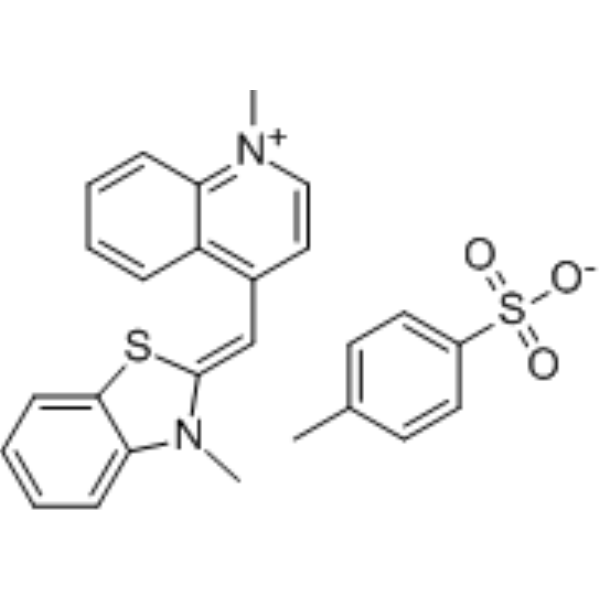
Thiazole Orange is an asymmetric anthocyanin dye that can be coupled with oligonucleotides (ONs) to prepare fluorescent hybridization probes. Thiazole Orange has been widely used in biomolecular detection and staining of DNA/ RNA in gels and can be used for reticulocyte analysis. Thiazole orange generates a significant fluorescence enhancement and high quantum yield when it binds with nucleic acids, especially RNA. Thiazole orange can permeate living cell membranes. Thiazole orange can use UV light for detection, but can also be detected with blue light. The excitation and emission of Thiazole orange are λex = 510 nm (488 nm and 470 nm also show strong excitation) and λem = 527 nm, respectively .
|
-
- HY-D3003
-
|
|
Fluorescent Dye
|
Others
|
|
M-H2S is an endoplasmic reticulum-targeted ratio-type near-infrared fluorescent probe (Ex/Em : 480 nm/560 nm) specifically designed for the detection of hydrogen sulfide (H2S) in living cells and zebrafish. M-H2S exhibits detection limit for H2S of 39.1 nM, and the fluorescence intensity ratio (F₆₅₀/F₅₆₀) within the range of 0-40 μM shows a linear relationship with the H2S concentration. M-H2S responds best under pH = 7.2 (the normal physiological pH of the endoplasmic reticulum) conditions, making it suitable for the detection of the microenvironment of the endoplasmic reticulum. M-H2S can be used to study the role of H2S in endoplasmic reticulum function, stress response, and related diseases .
|
-
- HY-D3002
-
|
|
Fluorescent Dye
|
Metabolic Disease
|
|
ONOO-/O2- tracker probe is a dual-responsive near-infrared fluorescent probe. ONOO-/O2- tracker probe will only emit a strong fluorescence signal when both peroxynitrite (ONOO⁻) and superoxide anion (O₂•⁻), the two key reactive oxygen/nitrogen species, are present simultaneously. ONOO-/O2- tracker probe can be used as a biomarker detection tool for drug-induced liver injury (DILI) .
|
-
- HY-P5485
-
|
|
Bacterial
|
Others
|
|
Dabcyl-QALPETGEE-Edans is a synthetic peptide substrate for fluorescence resonance energy transfer (FRET) detection of Sortase A (SrtA) enzymatic activity. Dabcyl-QALPETGEE-Edans is labeled at both ends with the fluorescent group Edans (donor) and the quencher Dabcyl (acceptor), respectively. Dabcyl-QALPETGEE-Edans's central sequence contains a conserved motif specifically recognized by SrtA. Dabcyl-QALPETGEE-Edans demonstrates high sensitivity in vitro assays, enabling precise determination of the half-maximal inhibitory concentration of SrtA .
|
-
- HY-W423080
-
|
|
Biochemical Assay Reagents
Fluorescent Dye
|
Others
|
|
TAMRA alkyne, 5-isomer (Compound 3) is an alkyne derivative of TAMRA and can be used for the enrichment, in-gel fluorescence detection, and identification of O-GlcNAc-modified proteins. TAMRA alkyne, 5-isomer contains an Alkyne group and can undergo copper-catalyzed azide-alkyne cycloaddition reaction (CuAAc) with molecules containing Azide groups. It can also undergo strain-promoted alkyne-azide cycloaddition (SPAAC) reactions with molecules containing DBCO or BCN groups .
|
-
- HY-137855
-
|
|
Biochemical Assay Reagents
|
Others
|
|
4-Methylumbelliferyl sulfate (potassium), a fluorescent substrate, is commonly used to detect sulfatase activity in biochemical and biomedical research. It consists of a sulfate group attached to a fluorescent molecule, which can be cleaved by sulfatase enzymes. Upon cleavage, 4-Methylumbelliferyl sulfate releases a highly fluorescent product that can be detected using fluorescence microscopy or spectroscopy. The use of 4-Methylumbelliferyl sulfate as a substrate for sulfatase enzymes allows accurate detection and quantification of these enzymes in a variety of biological samples.
|
-
- HY-D2204
-
|
|
Phosphatase
SHP1
Fluorescent Dye
|
Cancer
|
|
SHP1-IN-1 (compound 5p) is a fluorescent probe for the protein tyrosine phosphatase SHP1 containing the Src homology 2 domain. SHP1-IN-1 has SHP1 inhibitory activity, selectivity for Fe 3+ ions and good fluorescence properties. SHP1-IN-1 exhibits aggregation post-quenching (ACQ) effect, good interference immunity and low detection limit (5.55 μM) .
|
-
- HY-159500A
-
|
OTL-0078 sodium; OTL78 sodium
|
Biochemical Assay Reagents
|
Cancer
|
|
Zopocianine sodium (OTL-0078 sodium; OTL78 sodium) is a near-infrared optical probe targeting PSMA. Zopocianine sodium binds to PSMA on the surface of PSMA-expressing cells, enters cells via receptor-mediated endocytosis, and accumulates in acidic endosomes. Zopocianine sodium selectively accumulates in PSMA-positive cancer tissues and enables the detection of small tumors, primary prostate tumors, and locoregional metastases. Zopocianine sodium helps achieve negative tumor surgical margins during fluorescence-guided surgery. Zopocianine sodium is applicable to research related to prostate cancer .
|
-
- HY-D2413
-
|
BODIPY FL PEG4-VH032
|
Fluorescent Dye
|
Others
|
|
BODIPY FL VH032 is a high-affinity VHL fluorescent probe with a Kd value of 3.01 nM. BODIPY FL VH032 consists of von Hippel-Lindau (VHL) ligand VH032 (HY-120217) and BODIPY FL (HY-43520). BODIPY FL VH032 can be used for time-resolved fluorescence resonance energy transfer (TR-FRET) detection for high-throughput identification and characterization of VHL ligands with maximum excitation emission wavelength: 504/520 nm .
|
-
- HY-D3222
-
|
|
Fluorescent Dye
|
Neurological Disease
|
|
NIR-PN1 is a blood-brain barrier-permeable near-infrared fluorescent indicator targeting peroxynitrite anion (ONOO −) (Ex/Em = 510 nm/670 nm). NIR-PN1 reacts with ONOO − to trigger a strong near-infrared fluorescence enhancement, enabling the detection of ONOO − flux. NIR-PN1 allows the imaging of ONOO − flux in various Parkinson's disease models. NIR-PN1 is applicable to Parkinson's disease-related research .
|
-
- HY-D3224
-
|
|
Fluorescent Dye
|
Neurological Disease
|
|
HCP is a two-photon fluorescent probe capable of crossing the blood-brain barrier, which is specifically designed for real-time detection of hypochlorous acid (HClO/ClO -) produced by myeloperoxidase (MPO). Chlorination of the quinoline skeleton of HCP generates HCP-Cl, which eliminates intramolecular charge transfer (ICT) quenching and thereby produces fluorescence. HCP is suitable for in vivo dynamic imaging of HClO in the brains of epileptic mice and high-throughput screening of antiepileptic drugs (HCP-Cl: Ex/Em = 800 nm/495 nm) .
|
-
- HY-W112090
-
|
PdTFPP; 5,10,15,20-Tetrakis(pentafluorophenyl)-21H,23H-porphine palladium(II)
|
Fluorescent Dye
|
Others
|
|
Palladium meso-tetra(pentafluorophenyl)porphyrin (PdTFPP) derives from palladium(II), acting as a fluorescence-quenched optical probe and high-performance oxygen concentration sensor with outstanding photostability and antioxidant capacity. Palladium meso-tetra(pentafluorophenyl)porphyrin exhibits reduced luminescence intensity as dissolved oxygen concentration rises. Palladium meso-tetra(pentafluorophenyl)porphyrin can be applied for real-time monitoring of live-cell respiration, hypoxic tissue imaging, and nanofibrous organic semiconductors in photodetectors for ambient oxygen detection .
|
-
- HY-159500
-
|
OTL-0078; OTL78
|
PSMA
|
Cancer
|
|
Zopocianine (OTL-0078; OTL78) is a near-infrared optical probe targeting PSMA. Zopocianine binds to PSMA on the surface of PSMA-expressing cells, enters cells via receptor-mediated endocytosis, and accumulates in acidic endosomes. Zopocianine selectively accumulates in PSMA-positive cancer tissues and enables the detection of small tumors, primary prostate tumors, and locoregional metastases. Zopocianine helps achieve negative tumor surgical margins during fluorescence-guided surgery. Zopocianine is applicable to research related to prostate cancer .
|
-
- HY-P4551
-
|
N-Benzoyl-Gly-His-Leu
|
Angiotensin-converting Enzyme (ACE)
Amino Acid Derivatives
|
Cardiovascular Disease
|
|
Hippuryl-His-Leu-OH (N-Benzoyl-Gly-His-Leu) is a specific substrate for angiotensin-converting enzyme (ACE I) and a molecular tool used for ACE activity detection in in vitro experiments. Hippuryl-His-Leu-OH is hydrolyzed by ACE through competitive binding. Under ACE catalysis, Hippuryl-His-Leu-OH undergoes hydrolysis to produce hippuric acid (HA). The amount of HA produced can be used to quantitatively assess ACE activity or screen for ACE inhibitors. The released His-Leu can also react with o-phthalaldehyde or Fluorescamine (HY-D0715) for fluorescence detection. Hippuryl-His-Leu-OH can be applied to the in vitro screening of ACE inhibitors for hypertension and cardiovascular diseases, and is also used in the study of ACE activity changes in physiological and pathological processes such as renal compensatory hypertrophy .
|
-
- HY-DY1097
-
|
|
Fluorescent Dye
|
Others
|
Thiazole Orange (solution) is an asymmetric anthocyanin dye that can be coupled with oligonucleotides (ONs) to prepare fluorescent hybridization probes. Thiazole Orange has been widely used in biomolecular detection and staining of DNA/ RNA in gels and can be used for reticulocyte analysis. Thiazole orange generates a significant fluorescence enhancement and high quantum yield when it binds with nucleic acids, especially RNA. Thiazole orange can permeate living cell membranes. Thiazole orange can use UV light for detection, but can also be detected with blue light. The excitation and emission of Thiazole orange are λex = 510 nm (488 nm and 470 nm also show strong excitation) and λem = 527 nm, respectively . Solvent and concentration: DMSO: 10 mM The 1 mL volume is defined as the base specification. All larger sizes correspond to incremental volumes of this base.
|
-
- HY-D0163
-
|
|
DNA Stain
|
Others
|
|
Methyl Green is a non-intercalating fluorescent labeling agent that selectively binds to the major groove of DNA. Methyl Green electrostatically interacts with the major groove of DNA through positively charged groups, exhibiting key activities such as high affinity, resistance to photobleaching, and stable fluorescence emission. Methyl Green can be directly measured by microscopy and flow cytometry, with peaks at 633 and 677 nm. Methyl Green can be used for fluorescent labeling of the nuclei of embryonic tissues or cells, or DNA staining and cell activity detection in gel electrophoresis[1][2][3].
|
-
- HY-D2970
-
|
|
Fluorescent Dye
|
Neurological Disease
|
|
Golgi-P is a near-infrared Golgi-targeted fluorescent probe specifically used for the detection of Golgi polarity in living cells and living tissues. Golgi-P exhibits a significant polarity-dependent spectral behavior, with its emission wavelength shifting redward with polarity (Ex/Em: 700 nm/780-825 nm). Golgi-P achieves near-infrared fluorescence imaging directly in the brain tissue of depressed mice. Golgi-P combines polarity sensing with Golgi-targeting functionality, providing a new tool for the molecular diagnosis of depression .
|
-
- HY-D3405
-
|
|
Fluorescent Dye
|
Others
|
|
BO-TAP-3 is an orange fluorescent carbocyanine monomer dye, and it is also a cell impermeable nucleic acid staining agent. When there is no nucleic acid present, BO-TAP-3 shows a non-fluorescent state. However, when it binds to double-stranded DNA, it exhibits multiple fluorescence enhancement effects. BO-TAP-3 can be used for cell nucleus and cytoplasm imaging, bacterial and sperm labeling, and can also be applied in nucleic acid detection and amplification research. It can also be used as a temperature sensor (Ex/Em = 564/600 nM).
|
-
- HY-137875
-
|
N-Benzoyl-Gly-His-Leu hydrate
|
Angiotensin-converting Enzyme (ACE)
Amino Acid Derivatives
|
Cardiovascular Disease
|
|
Hippuryl-His-Leu-OH (N-Benzoyl-Gly-His-Leu) hydrate is a specific substrate for angiotensin-converting enzyme ACE I and is a molecular tool used for ACE activity detection in in vitro experiments. Hippuryl-His-Leu-OH hydrate is hydrolyzed by ACE through competitive binding. Under ACE catalysis, Hippuryl-His-Leu-OH hydrate undergoes hydrolysis to produce hippuric acid (HA). The amount of HA produced can be used to quantitatively assess ACE activity or screen for ACE inhibitors. The His-Leu released from Hippuryl-His-Leu-OH hydrate can also react with o-phthalaldehyde or Fluorescamine (HY-D0715) for fluorescence detection. Hippuryl-His-Leu-OH hydrate can be applied to the in vitro screening of ACE inhibitors for hypertension and cardiovascular diseases, and is also used in the study of changes in ACE activity during physiological and pathological processes such as renal compensatory hypertrophy .
|
-
- HY-W127716
-
|
|
Fluorescent Dye
|
Cancer
|
|
Ru(bpy)2(mcbpy-O-Su-ester)(PF6)2 is a potent ruthenium-based dye. Ru(bpy)2(mcbpy-O-Su-ester)(PF6)2 can bu used as an effective quencher of quantum dots (QDs) fluorescence and the capture probe of virus antigen EV71. Ru(bpy)2(mcbpy-O-Su-ester)(PF6)2 can be used sensitive electrogenerated chemiluminescence (ECL) labels for detection of matrix metalloproteinases (MMPs) .
|
-
- HY-35556
-
-
- HY-D1993
-
|
|
Fluorescent Dye
HIV
|
Infection
|
|
ATTO 647 NHS ester is a fluorescent label targeting free amino groups. ATTO 647 NHS ester can undergo a nucleophilic reaction with the free amino groups of EF-C peptide via its activated carboxylic acid group to form a stable covalent conjugate. ATTO 647 NHS ester-labeled nanofibers not only retain retroviral transduction-enhancing activity but also maintain stable fluorescent signals in both buffer and cell culture systems. ATTO 647 NHS ester is suitable for detection applications including fluorescence spectroscopy, microscopy and flow cytometry. ATTO 647 NHS ester has been used in studies related to HIV-1 infection .
|
-
- HY-D1701
-
|
|
Fluorescent Dye
|
Others
|
|
Calcium is an important part of the human body, usually in the form of calcium, a large number of bones and teeth of the human body, a small amount of blood and tissues.
MCE calcium ion detection probe can specifically identify intracellular calcium ions, with high sensitivity, low cytotoxicity, increased AM acetylmethyl ester can enter the cell well, after being sheared by the intracellular esterase stay in the cell to bind to calcium ions, produce strong fluorescence, in addition, Mag-indo-1/AM and Mag-Fluo-4 AM at a certain concentration (usually 5 mM) can effectively identify intracellular magnesium ions .
|
-
- HY-D0952
-
|
|
Parasite
|
Others
|
|
Acridine Orange base is a cell-permeable fluorescent dye that stains organisms (bacteria, parasites, viruses, etc.) bright orange and, when used under appropriate conditions (pH=3.5, Ex=460 nm), distinguishes human cells in green for detection by fluorescence microscopy. Acridine Orange base fluoresces green when bound to dsDNA (Ex=488, Em=520-524) and red when bound to ssDNA (Ex=457, Em=630-644) or ssRNA (Ex=457, Em=630-644), also can be used in cell cycle assays .
|
-
- HY-101898
-
|
Indo-1 Acetoxymethyl ester
|
Fluorescent Dye
|
Others
|
|
Calcium is an important part of the human body, usually in the form of calcium, a large number of bones and teeth of the human body, a small amount of blood and tissues.
MCE calcium ion detection probe can specifically identify intracellular calcium ions, with high sensitivity, low cytotoxicity, increased AM acetylmethyl ester can enter the cell well, after being sheared by the intracellular esterase stay in the cell to bind to calcium ions, produce strong fluorescence, in addition, Mag-indo-1/AM and Mag-Fluo-4 AM at a certain concentration (usually 5 mM) can effectively identify intracellular magnesium ions .
|
-
- HY-175132
-
|
NBD L-threo cer (d18:1/12:0); NBD L-threo ceramide (d18:1/12:0); N-Dodecanoyl-NBD L-threo-sphingosine
|
Fluorescent Dye
|
Others
|
|
C12 NBD L-threo Ceramide (d18:1/12:0) (NBD L-threo cer (d18:1/12:0); NBD L-threo ceramide (d18:1/12:0); N-Dodecanoyl-NBD L-threo-sphingosine) is an NBD fluorescently labeled ceramide analog. C12 NBD L-threo Ceramide (d18:1/12:0) is an isomer of C12 NBD ceramide. C12 NBD L-threo Ceramide (d18:1/12:0) can be used for fluorescence detection, imaging, and kinetic analysis.
|
-
- HY-W327027
-
|
|
Fluorescent Dye
|
Others
|
|
7-(2,4-Dinitrophenoxy)-4-methyl-2H-chromen-2-one (Compound 1) is a fluorescent probe for the detection of hydrogen sulfide (H2S). 7-(2,4-Dinitrophenoxy)-4-methyl-2H-chromen-2-one has a low detection limit (4×10 -6 mol/L), good selectivity and high sensitivity. 7-(2,4-Dinitrophenoxy)-4-methyl-2H-chromen-2-one shows almost no cytotoxicity at concentrations of 150 µg/mL. 7-(2,4-Dinitrophenoxy)-4-methyl-2H-chromen-2-one has the excitation peak of 331 nm, and the emission peak about 385 nm in DMSO solvent. Upon the addition of increasing amounts of HS -, the fluorescence intensity increases obviously at about 392 nm .
|
-
- HY-150175
-
|
|
Fluorescent Dye
|
Inflammation/Immunology
|
|
HKSOX-1 and its derivatives (HKSOX-1r and HKSOX-1m) are novel fluorescent probes designed for highly sensitive and selective detection of the superoxide anion radical (O2 •−) in cellular environments. These probes utilize an aryl trifluoromethanesulfonate group that undergoes O2 •−-mediated cleavage, releasing a free phenol and emitting fluorescence. They demonstrate excellent specificity and sensitivity across various pH ranges, withstand interference from strong oxidants and reductants typical in cellular contexts. HKSOX-1r, optimized for cellular retention, has been effectively employed in diverse assays including confocal imaging, flow cytometry, and zebrafish embryo studies, highlighting its utility in investigating O2 •− roles in inflammation, mitochondrial stress, and other physiological processes .
|
-
- HY-D3391
-
|
|
Bacterial
|
Infection
|
|
RMR-Tre is a fluorescent probe targeting the mycobacterial acyltransferase Ag85. Under the catalysis of Ag85, RMR-Tre undergoes 6-position mycoloylation and anchors to the mycobacterial membrane, while achieving fluorescence activation by inhibiting the intramolecular twisted charge transfer state transition. RMR-Tre can distinguish live mycobacteria from dead ones through metabolism-driven labeling, enabling rapid, wash-free, low-background detection of viable bacteria. RMR-Tre reports the drug resistance of Mycobacterium tuberculosis via the trehalose catalytic shift activity readout associated with TreS. In addition, RMR-Tre can be combined with flow cytometry or high-content imaging techniques to visualize and quantitatively analyze the metabolic heterogeneity of Mycobacterium tuberculosis related to persistence and drug resistance. RMR-Tre is widely used in tuberculosis-related research .
|
-
- HY-142021
-
|
|
Cathepsin
Parasite
|
Infection
Inflammation/Immunology
|
|
Z-Leu-Arg-AMC is a fluorogenic peptide substrate for cysteine proteases (e.g., Cathepsin) (Ex=350 nm,Em=460 nm). Z-Leu-Arg-AMC is preferentially cleaved by Cathepsin K and S under weakly acidic conditions, while its hydrolysis relies on residual Cathepsin S activity at neutral pH. Z-Leu-Arg-AMC serves as a substrate for recombinant Sphenophorus levis Cathepsin L, falcipain-2, falcipain-3, berghepain-2, knowlepain-2, vivapain-2, as well as falcipain-2 chimeras and constructs. It enables quantitative detection of cysteine protease activity in human inflammatory bronchoalveolar lavage fluid via fluorescence generation. Z-Leu-Arg-AMC can be used in research related to pulmonary inflammatory diseases and malaria .
|
-
| Cat. No. |
Product Name |
Type |
-
- HY-D0815
-
|
|
Fluorescent Dye
|
|
Propidium Iodide (PI) is a nuclear staining agent that stains DNA. Propidium Iodide is an analogue of ethidine bromide that emits red fluorescence upon embedding in double-stranded DNA. Propidium Iodide cannot pass through living cell membranes, but it can pass through damaged cell membranes to stain the nucleus. Propidium Iodide has a fluorescence wavelength of 493/617 nm and a wavelength of 536/635 nm after Mosaic with DNA. Propidium Iodide is commonly used in the detection of apoptosis (apoptosis) or necrosis (necrosis), and is often used in flow cytometry analysis.
|
-
- HY-D0718
-
|
Nile Blue A oxazone; Phenoxazone 9
|
Fluorescent Dye
|
|
Nile red (Nile blue oxazone) is a lipophilic stain. Nile red has environment-sensitive fluorescence. Nile red is intensely fluorescent in a lipid-rich environment while it has minimal fluorescence in aqueous media. Nile red is an excellent vital stain for the detection of intracellular lipid droplets by fluorescence microscopy and flow cytof uorometry. Nile red stains intracellular lipid droplets red. The fluorescence wavelength is 559/635 nm .
|
-
- HY-116215
-
|
|
Fluorescent Dye
|
|
2-NBDG is a fluorescently-labeled deoxyglucose analog that is used primarily to directly monitor glucose uptake by living cells and tissues. It is also used as a topical contrast reagent for the detection of neoplasia. 2-NBDG can be used in real-time confocal, high-resolution, or wide-field fluorescence microscopy as well as in flow cytometry. The probe can be excited by the Argon laser at 488 nm to give the environment-sensitive fluorescence. It has lower photostability than the rhodamine-based fluorescent probes.
|
-
- HY-D0090
-
|
|
Fluorescent Dye
|
|
MQAE is a chloride ion (Cl -) fluorescent probe that can be used to measure chloride concentrations. The fluorescence intensity of MQAE decreases proportionally as Cl - ions increase. MQAE has high cell permeability and is suitable for fluorescence detection such as confocal microscopy and flow cytometry (Ex/Em=350/460 nm) .
|
-
- HY-D0041
-
|
Calcein acetoxymethyl ester
|
Fluorescent Dye
|
|
Calcein AM, has cell membrane permeability and can easily enter the cell. Calcein AM has no fluorescence and is hydrolyzed by endogenous esterase in the cell to produce polar molecule Calcein (Calcein), which has strong negative charge and cannot permeate the cell membrane. Calcein can emit strong green fluorescence, so it is often used with Propidium Iodide for cell viability/virulence detection, excitation/emission wavelength: 494/515 nm .
|
-
- HY-D1119
-
|
|
Fluorescent Dye
|
|
AF647-NHS ester is an analog of Alexa Fluor 647 (AF647). NHS ester can covalently bind to molecules with amino groups (such as proteins, antibodies, etc.). AF647 is a far-red fluorescent dye with an excitation wavelength (λex) of 635 nm (conventional fluorescence detection)/620 nm (instantaneous detection). Storage: Protect from light .
|
-
- HY-W751238
-
|
DMMB
|
Fluorescent Dye
|
|
Dimethyl methylene blue zinc chloride double salt (DMMB) is a cationic dye. Dimethyl methylene blue zinc chloride double salt competitively binds to the active site of the PANI-Benz-Ag nanocomposite with endotoxin, releasing DMMB and increasing the fluorescence intensity. Dimethyl methylene blue zinc chloride double salt can be used as a fluorescent probe for the detection of bacteria (such as E. Coli) endotoxin . Dimethyl methylene blue zinc chloride double salt can be used for the quantification of sulfated glycosaminoglycans .
|
-
- HY-117695
-
|
6-Aminoquinolyl-N-hydroxysccinimidyl carbamate
|
Fluorescent Dye
|
|
AQC (6-Aminoquinolyl-N-hydroxysccinimidyl carbamate) is a reagent used for amino acid or protein sequence analysis by HPLC with fluorescence detection. AQC reacts with primary and secondary amino acids to yield fluorescent derivates, allowing amino acid detection at under-picomolar levels .
|
-
- HY-D0150
-
|
|
Fluorescent Dye
|
|
Thiazole Orange is an asymmetric anthocyanin dye that can be coupled with oligonucleotides (ONs) to prepare fluorescent hybridization probes. Thiazole Orange has been widely used in biomolecular detection and staining of DNA/ RNA in gels and can be used for reticulocyte analysis. Thiazole orange generates a significant fluorescence enhancement and high quantum yield when it binds with nucleic acids, especially RNA. Thiazole orange can permeate living cell membranes. Thiazole orange can use UV light for detection, but can also be detected with blue light. The excitation and emission of Thiazole orange are λex = 510 nm (488 nm and 470 nm also show strong excitation) and λem = 527 nm, respectively .
|
-
- HY-W074143
-
|
|
Fluorescent Dye
|
|
Tris(4,7-diphenyl-1,10-phenanthroline)ruthenium(II) dichloride ([Ru(dpp)3] 2+) is an electrochemiluminescent (ECL) probe and oxygen-sensitive sensor. Tris(4,7-diphenyl-1,10-phenanthroline)ruthenium(II) dichloride can be used to modify electrode surfaces for the detection of sulfates (S2O8 2-) and oxalates, based on electrochemical reactions that generate excited-state species, releasing photons through irreversible redox reactions. Tris(4,7-diphenyl-1,10-phenanthroline)ruthenium(II) dichloride utilizes the oxygen quenching of fluorescence mechanism, where fluorescence intensity reflects the metabolic rate of living microorganisms or oxygen levels within cells/tumors, allowing for real-time detection. Tris(4,7-diphenyl-1,10-phenanthroline)ruthenium(II) dichloride's main applications include microbial detection, antibacterial activity studies, and tumor microenvironment research .
|
-
- HY-D1119C
-
|
|
Fluorescent Dye
|
|
AF647-NHS ester is an analogue of Alexa Fluor 647 (AF647), which has excitation wavelength (λex) of 635 nm (conventional fluorescence detection)/620 nm (instantaneous detection). NHS ester can covalently bind to molecules with amino groups (such as proteins, antibodies, etc.) .
|
-
- HY-15943
-
6-TAMRA
1 Publications Verification
6-Carboxytetramethylrhodamine
|
Fluorescent Dye
|
|
6-TAMRA (6-Carboxytetramethylrhodamine) is a fluorescent dye. 6-TAMRA is often used in combination with 6-FAM (HY-66021) as an acceptor or fluorescence quencher for fluorescence resonance energy transfer (FRET) in biochemical studies such as potassium ion detection and ribonuclease activity assays .
|
-
- HY-D0155
-
|
|
Fluorescent Dye
|
|
Zinpyr-1 is a zinc-responsive fluorescent indicator and a membrane-permeable metal-binding probe. Zinpyr-1 forms a complex with Mn 2+ ions and generates a fluorescence turn-on signal. Zinpyr-1 binds to free zinc ions in serum, enabling quantitative detection of free zinc concentration. Zinpyr-1 produces fluorescence signals reflecting the relative zinc concentration in plant root cells, localizes to specific layers of plant root cells, and can be used to support analyses related to plant zinc transporter mutations and homeostasis .
|
-
- HY-D2001
-
|
|
Fluorescent Dye
|
|
ATTO 488 NHS ester is a new fluorescent marker based on the Rhodamine structure. It has strong absorption, high fluorescence quantum yield, high thermal stability and photochemical stability, and is suitable for single molecule detection and high-resolution microscopy. ATTO 488 NHS ester is an NHS ester derivative of ATTO 488 that can be used to label proteins or antibodies.
|
-
- HY-DY1036
-
|
|
Fluorescent Dye
|
Calcein AM (solution) , has cell membrane permeability and can easily enter the cell. Calcein AM has no fluorescence and is hydrolyzed by endogenous esterase in the cell to produce polar molecule Calcein (Calcein) , which has strong negative charge and cannot permeate the cell membrane. Calcein can emit strong green fluorescence, so it is often used with Propidium Iodide for cell viability/virulence detection, excitation/emission wavelength: 494/515 nm . Solvent and concentration: DMSO: 2 mM
|
-
- HY-P1003
-
|
|
Fluorescent Dye
|
|
Ac-DEVD-AMC is a fluorescent substrate of caspase-3/caspase-7. When treating Ac-DEVD-AMC with cell lysate, Ac-DEVD-AMC releases amino-4-methylcoumarin (AMC) for fluorescence detection, with an excitation wavelength of 380 nm and an emission wavelength of 460 nm .
|
-
- HY-D1872
-
|
|
Fluorescent Dye
|
|
800CW NHS ester is a near-infrared fluorescent dye active ester that can conjugate with amine-containing small molecules, antibodies, peptides, and other substances to form fluorescent conjugates. 800CW NHS ester exhibits high fluorescence quantum yield and low non-specific binding properties. 800CW NHS ester can be used in biomedical research such as microbial infection imaging, tumor imaging, and biochemical detection .
|
-
- HY-129109
-
|
|
Fluorescent Dye
|
|
NBD-Pen is the first fluorescence probe for lipid radicals with high selectivity and sensitivity (λex: 470 nm, λem: 530 nm). NBD-Pen specifically detects lipid derived radicals over other reactive species present in biological systems, including H2O2, ClO -, O2 -?, and ?OH. NBD-Pen directly detects lipid radicals in living cells by turn-on fluorescence. NBD-Pen decreases inflammation, apoptosis, and oxidative stress markers. NBD-Pen can be studied in various disease models such as hepatic carcinoma .
|
-
- HY-DY1008
-
|
|
Fluorescent Dye
|
Nile Red (solution) is a lipophilic stain. Nile red has environment-sensitive fluorescence. Nile red is intensely fluorescent in a lipid-rich environment while it has minimal fluorescence in aqueous media. Nile red is an excellent vital stain for the detection of intracellular lipid droplets by fluorescence microscopy and flow cytof uorometry. Nile red stains intracellular lipid droplets red. The fluorescence wavelength is 559/635 nm . Solvent and concentration: DMSO: 1 mM
|
-
- HY-D0102
-
|
ABD-F
|
Fluorescent Dye
|
|
4-(Aminosulfonyl)-7-fluoro-2,1,3-benzoxadiazole (ABD-F) is a fluorescent reagent for the sensitive and specific detection of thiols (Ex/Em: 380/510 nm). 4-(Aminosulfonyl)-7-fluoro-2,1,3-benzoxadiazole has low fluorescence background, and good stability of fluorophor .
|
-
- HY-DY1006
-
|
|
Fluorescent Dye
|
Propidium Iodide (PI) (solution) is a nuclear staining agent that stains DNA. Propidium Iodide is an analogue of ethidine bromide that emits red fluorescence upon embedding in double-stranded DNA. Propidium Iodide cannot pass through living cell membranes, but it can pass through damaged cell membranes to stain the nucleus. Propidium Iodide has a fluorescence wavelength of 493/617 nm and a wavelength of 536/635 nm after Mosaic with DNA. Propidium Iodide is commonly used in the detection of apoptosis (apoptosis) or necrosis (necrosis) , and is often used in flow cytometry analysis. Solvent and Concentration: Sterile water: 1 mg/mL The 1 mL volume is defined as the base specification. All larger sizes correspond to incremental volumes of this base.
|
-
- HY-W923198
-
|
Methacryloyloxy fluorescein
|
Fluorescent Dye
|
|
Fluorescein O-methacrylate (Methacryloyloxy fluorescein) is a pH-responsive fluorescent monomeric dye. Fluorescein O-methacrylate exhibits pH-responsive fluorescence properties: its fluorescence is activated under alkaline conditions and quenched under neutral or acidic conditions; reversible switching of fluorescence is achievable by adjusting the pH of the solution. Fluorescein O-methacrylate can be used as a monomer for the synthesis of amphiphilic fluorescein polymers. These polymers can self-assemble into stable polymer nanoparticles with enhanced aqueous-phase fluorescence, and also enable the conjugation of nanoparticles with amine-containing biomolecules to support sensitive optical detection of biomarkers (Ex/Em = 490/520 nm) .
|
-
- HY-134620
-
|
|
Fluorescent Dye
|
|
Cyanine 5 NHS ester tetrafluoroborate (Compound Cy5) is a cyanine dye that is used to in fluorescence detection of macromolecules. Cyanine 5 NHS ester tetrafluoroborate exhibits an excitation wavelength of 638 nm .
|
-
- HY-66020
-
6-FITC
1 Publications Verification
6-Fluorescein Isothiocyanate
|
Fluorescent Dye
|
|
6-FITC (6-Fluorescein Isothiocyanate) is a fluorescein isomer and also serves as a fluorescent label for biomolecules (FITC isomers have similar excitation/emission wavelengths, which are 495 nm/519 nm in fluorescence detection) .
|
-
- HY-DY1019
-
|
|
Fluorescent Dye
|
2-NBDG (solution) is a fluorescently-labeled deoxyglucose analog that is used primarily to directly monitor glucose uptake by living cells and tissues. It is also used as a topical contrast reagent for the detection of neoplasia. 2-NBDG can be used in real-time confocal, high-resolution, or wide-field fluorescence microscopy as well as in flow cytometry. The probe can be excited by the Argon laser at 488 nm to give the environment-sensitive fluorescence. It has lower photostability than the rhodamine-based fluorescent probes. Solvent and Concentration: Sterile PBS: 5 mM
|
-
- HY-D0006
-
|
|
Fluorescent Dye
|
|
Bathophenanthroline is a nitrogen-containing organic ligand that can form stable complexes with transition metal ions such as Ru 2+. In proteomics, Bathophenanthroline is often used for in-gel protein staining. The negatively charged sulfonic acid groups of Bathophenanthroline interact electrostatically with the positively charged amino acid residues of proteins, thereby achieving specific binding to proteins and enhancing the fluorescent signal of detection. Bathophenanthroline can be used for protein separation and detection in SDS-PAGE gels in the field of proteomics, as well as other fluorescence studies[1]. Ex/Em=532 nm/610 nm[1].
|
-
- HY-D1249
-
|
|
Fluorescent Dye
|
|
Calcein (mixture of isomers), Calcein (HY-D0040) Derivative, is a fluorescent dye (Ex/Em = 495/515 nm). Calcein (mixture of isomers) can be used for the researches for live cell staining, calcium ion detection, bone fluorescence labeling and membrane permeability leakage detection.
|
-
- HY-D1191
-
|
|
Fluorescent Dye
|
SYBR Green I chloride is a highly sensitive fluorescent nucleic acid dye that binds specifically to the minor groove of double-stranded DNA or intercalates between base pairs. SYBR Green I chloride exhibits weak fluorescence in the unbound state but emits bright fluorescence upon binding, and it preferentially binds to large-fragment DNA and DNA with high G+C content. SYBR Green I chloride is suitable for real-time PCR technology; its fluorescence intensity correlates with the amount and size of amplification products, enabling accurate quantification of gene expression and discrimination of amplicons via melting curve analysis without additional post-processing. SYBR Green I chloride is widely used in preclinical in vitro nucleic acid detection .
|
-
- HY-D2264
-
|
|
Fluorescent Dye
|
|
Caffeine orange (Compound 1) is an aqueous-phase fluorescence turn-on sensor for caffeine that is highly selective to caffeine. Caffeine orange makes caffeinated coffee appear orange when exposed to 532 nM of green excitation light. Caffeine orange has excellent photophysical properties such as high extinction coefficient, high light stability and narrow emission bandwidth, which can be used in the research of caffeine detection devices .
|
-
- HY-D2001A
-
|
|
Fluorescent Dye
|
|
TTO 488 NHS ester TEA is a new fluorescent marker based on the Rhodamine structure. It has strong absorption, high fluorescence quantum yield, high thermal stability and photochemical stability, and is suitable for single molecule detection and high-resolution microscopy. TTO 488 NHS ester TEA is an NHS ester derivative of ATTO 488 that can be used to label proteins or antibodies.
|
-
- HY-D2864
-
|
|
Fluorescent Dye
|
|
Aza-CyBz is a selective NaCl-responsive fluorescent probe. Aza-CyBz visualizes plant salt stress by forming ordered aggregates with NaCl, leading to near-infrared fluorescence quenching. Aza-CyBz acts via electrostatic interaction between the cationic cyanine dye and NaCl to form J-aggregates, causing fluorescence quenching with a detection limit of 170 μM .
|
-
- HY-133705
-
|
|
Fluorescent Dye
|
|
Geldanamycin-FITC, a Geldanamycin fluorescent probe, can be used in a fluorescence polarization assay for HSP90 inhibitors. Geldanamycin-FITC also can be used for detection of cell surface HSP90 (Ex/Em = 488/515 nm) .
|
-
- HY-D1601
-
|
|
Fluorescent Dye
|
|
N-Aminofluorescein is a fluorescein hydrazide with spiro form, a highly selective and sensitive fluorescence probe for Cu 2+. N-Aminofluorescein has no selective fluorescence response to other common metal ions, can be used for direct detection of Cu 2+ in biological systems with λex/em=495/516 nm . N-Aminofluorescein can be used to measure the concentration of copper ions in cells .
|
-
- HY-D2443
-
|
|
Fluorescent Dye
|
|
AF594 DBCO is an AlexaFluor 594-conjugated DBCO click chemistry probe for fluorescent labeling of azido-modified cholesterol probes. DBCO is a commonly used chemical biomarker group. AF594 DBCO (Excitation wavelength about 590 nm, emission wavelength about 617 nm) can be used to label proteins, cells and other biomolecules for fluorescence imaging and flow cytometry detection .
|
-
- HY-DY1070
-
|
|
Fluorescent Dye
|
AQC (6-Aminoquinolyl-N-hydroxysccinimidyl carbamate) (solution) is a reagent used for amino acid or protein sequence analysis by HPLC with fluorescence detection. AQC reacts with primary and secondary amino acids to yield fluorescent derivates, allowing amino acid detection at under-picomolar levels . Solvent and concentration: DMSO: 10 mM The 1 mL volume is defined as the base specification. All larger sizes correspond to incremental volumes of this base.
|
-
- HY-D1305
-
|
|
Fluorescent Dye
|
|
ATTO 488 carboxylic acid is a new fluorescent label based on the Rhodamine structure. It has strong absorption, high fluorescence quantum yield, high thermal stability and photochemical stability, and is suitable for single molecule detection and high-resolution microscopy. ATTO 488 carboxylic acid is a carboxylic acid derivative of ATTO 488, which can be used to label proteins or antibodies.
|
-
- HY-D1190
-
|
|
Fluorescent Dye
|
|
DC271 is a RAR agonist and synthetic retinoid that binds to the retinoid-binding site of cellular retinoic acid-binding protein II (CRBP-II). DC271 exhibits solvatochromic fluorescence properties: it produces intense blue-shifted emission in nonpolar environments and weak red-shifted emission in polar environments, and its severe fluorescence quenching in aqueous solutions can be reversed by embedding in the hydrophobic retinoid-binding protein pocket. DC271 enables direct detection of the binding between unlabeled compounds and related retinoid-binding proteins via fluorescence competition assays (Ex/Em = 355 nm/460 nm) .
|
-
- HY-D2062
-
|
|
Fluorescent Dye
|
|
ATTO 740 NHS ester is a near-infrared fluorescent dye and a multimodal fluorescence/photoacoustic contrast agent with excellent near-infrared emission properties and extremely high photostability. The photoacoustic signal of ATTO 740 NHS ester shows no significant decrease after continuous irradiation with a 750 nm laser for 30 min, making it suitable for in vivo fluorescence imaging and photoacoustic contrast imaging. When conjugated with the cystine knot peptide R01, ATTO 740 NHS ester enables precise detection of integrin αvβ6-positive cells and tumors in nude mouse xenograft models .
|
-
- HY-D2413
-
|
BODIPY FL PEG4-VH032
|
Fluorescent Dye
|
|
BODIPY FL VH032 is a high-affinity VHL fluorescent probe with a Kd value of 3.01 nM. BODIPY FL VH032 consists of von Hippel-Lindau (VHL) ligand VH032 (HY-120217) and BODIPY FL (HY-43520). BODIPY FL VH032 can be used for time-resolved fluorescence resonance energy transfer (TR-FRET) detection for high-throughput identification and characterization of VHL ligands with maximum excitation emission wavelength: 504/520 nm .
|
-
- HY-D2002
-
|
|
Fluorescent Dye
|
|
ATTO 488 maleimide is a new fluorescent marker based on the Rhodamine structure. It has strong absorption, high fluorescence quantum yield, high thermal stability and photochemical stability, and is suitable for single molecule detection and high-resolution microscopy. ATTO 488 maleimide is a maleimide derivative of ATTO 488, which can be used to label proteins or antibodies.
|
-
- HY-D1959
-
|
|
Fluorescent Dye
|
|
ATTO 565 NHS ester is a new fluorescent marker based on the Rhodamine structure. It has strong absorption, high fluorescence quantum yield, high thermal stability and photochemical stability, and is suitable for single molecule detection and high-resolution microscopy. ATTO 565 NHS ester is an NHS ester derivative of ATTO 565 that can be used to label proteins or antibodies.
|
-
- HY-153524
-
|
|
Fluorescent Dye
|
|
ATTO 425 NHS ester is a new fluorescent marker based on the Rhodamine structure. It has strong absorption, high fluorescence quantum yield, high thermal stability and photochemical stability, and is suitable for single molecule detection and high-resolution microscopy. ATTO 425 NHS ester is an NHS ester derivative of ATTO 425 that can be used to label proteins or antibodies.
|
-
- HY-D1915
-
|
|
Fluorescent Dye
|
|
ATTO 390 is a new fluorescent marker based on the Rhodamine structure. It has strong absorption, high fluorescence quantum yield, high thermal stability and photochemical stability, and is suitable for single molecule detection and high-resolution microscopy.
|
-
- HY-D1957
-
|
|
Fluorescent Dye
|
|
ATTO 633 NHS ester is a new fluorescent marker based on the Rhodamine structure. It has strong absorption, high fluorescence quantum yield, high thermal stability and photochemical stability, and is suitable for single molecule detection and high-resolution microscopy. ATTO 633 NHS ester is an NHS ester derivative of ATTO 633 that can be used to label proteins or antibodies.
|
-
- HY-D2019
-
|
|
Fluorescent Dye
|
|
ATTO 550 NHS ester is a new fluorescent marker based on the Rhodamine structure. It has strong absorption, high fluorescence quantum yield, high thermal stability and photochemical stability, and is suitable for single molecule detection and high-resolution microscopy. ATTO 550 NHS ester is an NHS ester derivative of ATTO 550 that can be used to label proteins or antibodies.
|
-
- HY-D2073
-
|
|
Fluorescent Dye
|
|
ATTO 680 NHS ester is a new fluorescent marker based on the Rhodamine structure. It has strong absorption, high fluorescence quantum yield, high thermal stability and photochemical stability, and is suitable for single molecule detection and high-resolution microscopy. ATTO 680 NHS ester is an NHS ester derivative of ATTO 680 that can be used to label proteins or antibodies.
|
-
- HY-D2021
-
|
|
Fluorescent Dye
|
|
ATTO 550 maleimide is a new fluorescent marker based on the Rhodamine structure. It has strong absorption, high fluorescence quantum yield, high thermal stability and photochemical stability, and is suitable for single molecule detection and high-resolution microscopy. ATTO 550 maleimide is a maleimide derivative of ATTO 550, which can be used to label proteins or antibodies.
|
-
- HY-D2058
-
|
|
Fluorescent Dye
|
|
ATTO 700 NHS ester is a new fluorescent marker based on the Rhodamine structure. It has strong absorption, high fluorescence quantum yield, high thermal stability and photochemical stability, and is suitable for single molecule detection and high-resolution microscopy. ATTO 700 NHS ester is an NHS ester derivative of ATTO 700 that can be used to label proteins or antibodies.
|
-
- HY-D2016
-
|
|
Fluorescent Dye
|
|
ATTO 565 cadaverine is a new fluorescent marker based on the Rhodamine structure. It has strong absorption, high fluorescence quantum yield, high thermal stability and photochemical stability, and is suitable for single molecule detection and high-resolution microscopy. ATTO 565 cadaverine is a cadaverine derivative of ATTO 565, which can be used to label proteins or antibodies.
|
-
- HY-D2046
-
|
|
Fluorescent Dye
|
|
ATTO 532 NHS ester is a new fluorescent marker based on the Rhodamine structure. It has strong absorption, high fluorescence quantum yield, high thermal stability and photochemical stability, and is suitable for single molecule detection and high-resolution microscopy. ATTO 532 NHS ester is an NHS ester derivative of ATTO 532 that can be used to label proteins or antibodies.
|
- HY-D1935
-
|
|
Fluorescent Dye
|
|
ATTO 465 NHS ester is a new fluorescent marker based on the Rhodamine structure. It has strong absorption, high fluorescence quantum yield, high thermal stability and photochemical stability, and is suitable for single molecule detection and high-resolution microscopy. ATTO 465 NHS ester is an NHS ester derivative of ATTO 465 that can be used to label proteins or antibodies.
|
- HY-143285
-
|
|
Fluorescent Dye
|
|
AMC-GlcNAc (compound 1) is a potent fluorogenic probe for detection and characterization of β-hexosaminidase enzyme activity. AMC-GlcNAc enables continuous monitoring by turn-on fluorescence and fluorescence signal is constant over a wide pH range (Ex=325 nm, Em=390 nm). AMC-GlcNAc enables ratiometric fluorescence detection with high sensitivity and low background, which can be used to screen for recombinant dispersin B activity in E. coli cell lysate .
|
- HY-D2160
-
|
|
Fluorescent Dye
|
|
AF 647 carboxylic acid is a derivative of the far-infrared dye AF 647. AF 647 is often used as a replacement for Cy5 dye, with an excitation wavelength (λex) of 635 nm (conventional fluorescence detection)/620 nm (instantaneous detection). The maximum excitation wavelength is 647 nm and the maximum emission wavelength is 671 nm. AF 647 carboxylic acid has a carboxylic acid group and can be coupled to biomolecules with amino groups to achieve dye labeling .
|
- HY-D1119A
-
|
|
Fluorescent Dye
|
|
AF647-NHS ester tripotassium is an analogue of Alexa Fluor 647 (AF647) (HY-D1119). NHS ester can covalently bind to molecules with amino groups (such as proteins, antibodies, etc.). AF647 is a bright, far-red fluorescent dye with an excitation wavelength (λex) of 635 nm (conventional fluorescence detection)/620 nm (instantaneous detection). Storage: protect from light .
|
- HY-D2379
-
|
|
Fluorescent Dye
|
HMRG is a type of hydroxymethyl rhodamine green fluorescent scaffold, featuring an open non-cyclic structure. HMRG can produce significant dynamic fluorescence changes through a one-step enzymatic reaction at physiological pH, which is useful for developing various probes. Fluorescent probes based on HMRG can be used for fluorescence detection of diseases such as tumors and diabetic nephropathy .
|
- HY-D3000
-
|
|
Fluorescent Dye
|
|
NIR-RED ROS-H2O2 Probe is a near-infrared fluorescent probe used for detecting hydrogen peroxide (H₂O₂) and featuring dual-modal fluorescence/photoacoustic imaging capabilities. NIR-RED ROS-H2O2 Probe successfully detects the upregulated fluorescence signal of H₂O₂ in HepG2 cells and a mouse liver injury model. NIR-RED ROS-H2O2 Probe can be used as a biomarker detection tool for drug-induced liver injury (DILI) .
|
- HY-D3002
-
|
|
Fluorescent Dye
|
|
ONOO-/O2- tracker probe is a dual-responsive near-infrared fluorescent probe. ONOO-/O2- tracker probe will only emit a strong fluorescence signal when both peroxynitrite (ONOO⁻) and superoxide anion (O₂•⁻), the two key reactive oxygen/nitrogen species, are present simultaneously. ONOO-/O2- tracker probe can be used as a biomarker detection tool for drug-induced liver injury (DILI) .
|
- HY-D1917
-
|
|
Fluorescent Dye
|
|
ATTO 390 NHS ester is a new fluorescent marker based on the Rhodamine structure. It has strong absorption, high fluorescence quantum yield, high thermal stability and photochemical stability, and is suitable for single molecule detection and high-resolution microscopy. ATTO 390 NHS ester is an NHS ester derivative of ATTO 390 that can be used to label proteins or antibodies.
|
- HY-D2038
-
|
|
Fluorescent Dye
|
|
ATTO 550 alkyne is a new fluorescent marker based on the Rhodamine structure. It has strong absorption, high fluorescence quantum yield, high thermal stability and photochemical stability, and is suitable for single molecule detection and high-resolution microscopy. ATTO 550 alkyne is an alkyne derivative of ATTO 550 and can be used to label proteins or antibodies.
|
- HY-D1929
-
|
|
Fluorescent Dye
|
|
ATTO 594 NHS ester is a new fluorescent marker based on the Rhodamine structure. It has strong absorption, high fluorescence quantum yield, high thermal stability and photochemical stability, and is suitable for single molecule detection and high-resolution microscopy. ATTO 594 NHS ester is an NHS ester derivative of ATTO 594 that can be used to label proteins or antibodies.
|
- HY-D1999
-
|
|
Fluorescent Dye
|
|
ATTO 665 NHS ester is a new fluorescent marker based on the Rhodamine structure. It has strong absorption, high fluorescence quantum yield, high thermal stability and photochemical stability, and is suitable for single molecule detection and high-resolution microscopy. ATTO 665 NHS ester is an NHS ester derivative of ATTO 665 that can be used to label proteins or antibodies.
|
- HY-D1932
-
|
|
Fluorescent Dye
|
|
ATTO 590 NHS ester is a new fluorescent marker based on the Rhodamine structure. It has strong absorption, high fluorescence quantum yield, high thermal stability and photochemical stability, and is suitable for single molecule detection and high-resolution microscopy. ATTO 590 NHS ester is an NHS ester derivative of ATTO 590 that can be used to label proteins or antibodies.
|
- HY-D2074
-
|
|
Fluorescent Dye
|
|
ATTO 680 maleimide is a new fluorescent marker based on the Rhodamine structure. It has strong absorption, high fluorescence quantum yield, high thermal stability and photochemical stability, and is suitable for single molecule detection and high-resolution microscopy. ATTO 680 maleimide is a maleimide derivative of ATTO 680, which can be used to label proteins or antibodies.
|
- HY-D2015
-
|
|
Fluorescent Dye
|
|
ATTO 488 alkyne is a new fluorescent marker based on the Rhodamine structure. It has strong absorption, high fluorescence quantum yield, high thermal stability and photochemical stability, and is suitable for single molecule detection and high-resolution microscopy. ATTO 488 alkyne is an alkyne derivative of ATTO 488 and can be used to label proteins or antibodies.
|
- HY-D1933
-
|
|
Fluorescent Dye
|
|
ATTO 590 maleimide is a new fluorescent marker based on the Rhodamine structure. It has strong absorption, high fluorescence quantum yield, high thermal stability and photochemical stability, and is suitable for single molecule detection and high-resolution microscopy. ATTO 590 maleimide is a maleimide derivative of ATTO 590, which can be used to label proteins or antibodies.
|
- HY-D2059
-
|
|
Fluorescent Dye
|
|
ATTO 700 maleimide is a new fluorescent marker based on the Rhodamine structure. It has strong absorption, high fluorescence quantum yield, high thermal stability and photochemical stability, and is suitable for single molecule detection and high-resolution microscopy. ATTO 700 maleimide is a maleimide derivative of ATTO 700, which can be used to label proteins or antibodies.
|
- HY-D2026
-
|
|
Fluorescent Dye
|
|
ATTO 514 NHS ester is a new fluorescent marker based on the Rhodamine structure. It has strong absorption, high fluorescence quantum yield, high thermal stability and photochemical stability, and is suitable for single molecule detection and high-resolution microscopy. ATTO 514 NHS ester is an NHS ester derivative of ATTO 514 that can be used to label proteins or antibodies.
|
- HY-D2014
-
|
|
Fluorescent Dye
|
|
ATTO 565 alkyne is a new fluorescent marker based on the Rhodamine structure. It has strong absorption, high fluorescence quantum yield, high thermal stability and photochemical stability, and is suitable for single molecule detection and high-resolution microscopy. ATTO 565 alkyne is an alkyne derivative of ATTO 565 and can be used to label proteins or antibodies.
|
- HY-D2035
-
|
|
Fluorescent Dye
|
|
ATTO 514 alkyne is a new fluorescent marker based on the Rhodamine structure. It has strong absorption, high fluorescence quantum yield, high thermal stability and photochemical stability, and is suitable for single molecule detection and high-resolution microscopy. ATTO 514 alkyne is an alkyne derivative of ATTO 514 and can be used to label proteins or antibodies.
|
- HY-D2047
-
|
|
Fluorescent Dye
|
|
ATTO 532 maleimide is a new fluorescent marker based on the Rhodamine structure. It has strong absorption, high fluorescence quantum yield, high thermal stability and photochemical stability, and is suitable for single molecule detection and high-resolution microscopy. ATTO 532 maleimide is a maleimide derivative of ATTO 532, which can be used to label proteins or antibodies.
|
- HY-D1939
-
|
|
Fluorescent Dye
|
|
ATTO 465 amine is a new fluorescent marker based on the Rhodamine structure. It has strong absorption, high fluorescence quantum yield, high thermal stability and photochemical stability, and is suitable for single molecule detection and high-resolution microscopy. ATTO 465 amine is an amine derivative of ATTO 465 and can be used to label proteins or antibodies.
|
- HY-D2063
-
|
|
Fluorescent Dye
|
|
ATTO 740 maleimide is a new fluorescent marker based on the Rhodamine structure. It has strong absorption, high fluorescence quantum yield, high thermal stability and photochemical stability, and is suitable for single molecule detection and high-resolution microscopy. ATTO 740 maleimide is a maleimide derivative of ATTO 740, which can be used to label proteins or antibodies.
|
- HY-D1961
-
|
|
Fluorescent Dye
|
|
ATTO 565 maleimide is a new fluorescent marker based on the Rhodamine structure. It has strong absorption, high fluorescence quantum yield, high thermal stability and photochemical stability, and is suitable for single molecule detection and high-resolution microscopy. ATTO 565 maleimide is a maleimide derivative of ATTO 565, which can be used to label proteins or antibodies.
|
- HY-D2052
-
|
|
Fluorescent Dye
|
|
ATTO 532 iodacetamid is a new fluorescent marker based on the Rhodamine structure. It has strong absorption, high fluorescence quantum yield, high thermal stability and photochemical stability, and is suitable for single molecule detection and high-resolution microscopy. ATTO 532 iodacetamid is an iodoacetamide derivative of ATTO 532, which can be used to label proteins or antibodies.
|
- HY-D1946
-
|
|
Fluorescent Dye
|
|
ATTO 590 alkyne is a new fluorescent marker based on the Rhodamine structure. It has strong absorption, high fluorescence quantum yield, high thermal stability and photochemical stability, and is suitable for single molecule detection and high-resolution microscopy. ATTO 590 alkyne is an alkyne derivative of ATTO 590 and can be used to label proteins or antibodies.
|
- HY-D0038
-
|
|
Fluorescent Dye
|
|
BTBCT is mainly used as a label in time-resolved fluorescence immunoassays (TRFIA). The lower limit of detection for TSH TR-IFMA is 0.011 mIU/L in a 10 μl sample volume. The high fluorescence intensity and stability of BTBCT improves the sensitivity of the assay .
|
- HY-D1119B
-
|
|
Fluorescent Dye
|
|
AF647-NHS ester (trisodium) is an analogue of Alexa Fluor 647 (AF647) (HY-D1119). NHS ester can covalently bind to molecules with amino groups (such as proteins, antibodies, etc.). AF647 is a bright, far-red fluorescent dye with an excitation wavelength (λex) of 635 nm (conventional fluorescence detection)/620 nm (instantaneous detection). Storage: protect from light .
|
- HY-D2094
-
|
|
Fluorescent Dye
|
|
PerCP Maleimide is a fluorescent dye that reacts with free sulfhydryl groups on proteins. PerCP is a red fluorescence albuminous dye for immunostaining and Maleimide can be leveraged for the preparation of fluorogenic probe, which is mainly used for the specific detection of thiol analytes .
|
- HY-D0035
-
|
|
Fluorescent Dye
|
|
MPAC-Br is a highly sensitive fluorescent derivatization reagent for carboxylic acids in HPLC .
|
- HY-D2012
-
|
|
Fluorescent Dye
|
|
ATTO 488 iodacetamid is a fluorescent dye suitable for single molecule detection applications and high-resolution microscopy for use in flow cytometry (FACS), fluorescence in situ hybridization (FISH) experiments. ATTO 488 iodacetamid has an effective excitation wavelength of 480-515 nm. When using an argon ion laser, the excitation wavelength is recommended to be 488 nm.
|
- HY-D2983
-
|
|
Fluorescent Dye
|
|
ARHB is a highly selective and sensitive NAT2 fluorescent probe suitable for real-time detection of NAT2 activity in various bacteria. ARHB can successfully penetrate the bacterial cells, and the fluorescence intensity is positively correlated with the expression level of NAT2. ARHB is used for high-throughput screening of natural inhibitors for tuberculosis .
|
- HY-D2230
-
|
|
Fluorescent Dye
|
|
Cy3.5 alkyne, a fluorescent dye, is a click chemistry reagent, it contains an Alkyne group and can undergo copper-catalyzed azide-alkyne cycloaddition (CuAAc) with molecules containing Azide groups. Cy3.5 alkyne can be used for the detection and labeling of azide-containing molecules/ biomolecules with fluorescence spectroscopy after azide-alkyne cycloaddition .
|
- HY-155438
-
|
|
Fluorescent Dye
|
|
Mal-Cz is a maltose-derived fluorescence-on imaging probe for the detection of E. coli and Staphylococcus aureus . It contains an Azide group and can undergo copper-catalyzed azide-alkyne cycloaddition reaction (CuAAc) with molecules containing Alkyne groups. It can also undergo strain-promoted alkyne-azide cycloaddition (SPAAC) reactions with molecules containing DBCO or BCN groups.
|
- HY-D2843
-
|
|
Fluorescent Dye
|
|
FITC-PEG1000-FITC is a fluorescent dye composed of two FITC (HY-66019) molecules and one PEG. FITC-PEG-FITC is connected to each end of the two FITC (HY-66019) molecules to form a dual-labeling structure, which is suitable for high-sensitivity fluorescence detection and imaging (Ex/Em=488/525 nm) .
|
- HY-D3003
-
|
|
Fluorescent Dye
|
|
M-H2S is an endoplasmic reticulum-targeted ratio-type near-infrared fluorescent probe (Ex/Em : 480 nm/560 nm) specifically designed for the detection of hydrogen sulfide (H2S) in living cells and zebrafish. M-H2S exhibits detection limit for H2S of 39.1 nM, and the fluorescence intensity ratio (F₆₅₀/F₅₆₀) within the range of 0-40 μM shows a linear relationship with the H2S concentration. M-H2S responds best under pH = 7.2 (the normal physiological pH of the endoplasmic reticulum) conditions, making it suitable for the detection of the microenvironment of the endoplasmic reticulum. M-H2S can be used to study the role of H2S in endoplasmic reticulum function, stress response, and related diseases .
|
- HY-D2204
-
|
|
Fluorescent Dye
|
|
SHP1-IN-1 (compound 5p) is a fluorescent probe for the protein tyrosine phosphatase SHP1 containing the Src homology 2 domain. SHP1-IN-1 has SHP1 inhibitory activity, selectivity for Fe 3+ ions and good fluorescence properties. SHP1-IN-1 exhibits aggregation post-quenching (ACQ) effect, good interference immunity and low detection limit (5.55 μM) .
|
- HY-D3206
-
|
|
Fluorescent Dye
|
|
CuFS is a reaction-based fluorescent sensor for detecting Cu 2+ with zero background fluorescence. CuFS acts as a fluorescence quencher in the absence of Cu 2+ and as a fluorescence enhancer in the presence of Cu 2+. CuFS can be fabricated into test strips and applied to the detection of Cu 2+ in human cancer cells .
|
- HY-D3009
-
|
|
Fluorescent Dye
|
|
LCE1 is an azacrown ether-based NIR fluorescence probe. LCT can be used for the detection of Pb 2+ in food, environmental water, plant and animal samples .
|
- HY-D3269
-
|
|
Fluorescent Dye
|
|
Mito-Cu (II) is a mitochondria-targeted fluorescent probe (Ex/Em = 370/450 nM). Mito-Cu (II) specifically accumulates in mitochondria of living cells and enables real-time detection of exogenous Cu 2+ within mitochondria of living cells. Mito-Cu (II) achieves "on-off-on" fluorescence switching through sequential exposure to Cu 2+ and ethylenediaminetetraacetic acid (EDTA) (HY-Y0682). Its fluorescence is quenched after forming a 1:1 complex with Cu 2+, and the fluorescence recovers when Cu 2+ is chelated by EDTA .
|
- HY-D3244
-
|
|
Fluorescent Dye
|
|
RDDB is a rhodamine-based turn-on fluorescent and colorimetric chemosensor selective for Mn 2+, with a limit of detection of 5×10 -8 M (excitation wavelength: 480-550 nm; fluorescence signal collection range: >590 nm). In the presence of Mn 2+, RDDB undergoes a spirolactam ring-opening reaction of its rhodamine hydrazide moiety, resulting in turn-on fluorescence and a color change. RDDB can be used for intracellular Mn 2+ imaging .
|
- HY-D3140
-
|
|
Fluorescent Dye
|
|
MB-m-borate is a double-locked near-infrared fluorescence-activated probe (Ex/Em ≈ 647 nm/684 nm). MB-m-borate undergoes cascade activation by hydrogen peroxide and tyrosinase to release the fluorophore methylene blue, thereby generating a fluorescence activation response. MB-m-borate enables precise detection of melanoma in melanoma cells and mouse models. MB-m-borate can be used for melanoma research .
|
- HY-D2755
-
|
|
Fluorescent Dye
|
|
BP Light 650 carboxylic acid is an vibrant far-red fluorochrome with comparable or improved performance over other dyes, including BP Fluor 647 and Cy5 dye, for fluorescent applications. It is used to label antibodies and other proteins as molecular probes for cellular imaging and other fluorescence detection methods application.
|
- HY-D3209
-
|
|
Fluorescent Dye
|
|
NIR-ASM is a near-infrared fluorescent probe that can cross cell membranes and be activated by NQO1. NIR-ASM can distinguish NQO1-expressing cancer cells from normal cells via fluorescence microscopy and flow cytometry. NIR-ASM generates near-infrared fluorescence with a high signal-to-noise ratio in tumor models with NQO1 activity, enabling the detection of endogenous NQO1 activity in vivo. NIR-ASM is applicable to the research of lung cancer and breast cancer .
|
- HY-D3139
-
|
|
Fluorescent Dye
|
|
Pinkment-OAc is an AND logic gate-based dual-analyte-dependent fluorescence inducer (Ex/Em = 545 nm/590 nm) that can be used for the simultaneous detection of hydrogen peroxide (H2O2) and esterases (e.g., porcine liver esterase PLE). Pinkment-OAc triggers a fluorescent response only when both esterase and hydrogen peroxide are present .
|
- HY-D3208
-
|
|
Fluorescent Dye
|
|
oLOX is a fluorescent activity reporter. oLOX can be activated by lysyl oxidase family (LOXF) enzymes, which in turn releases a luciferin fluorescent product that reports LOXF enzyme activity. After oLOX is activated in in vitro fibrotic lung tissues, the fluorescence intensity increases, enabling real-time detection of fibrotic activity. oLOX can be used in studies related to pulmonary fibrosis .
|
- HY-D3200
-
|
|
Fluorescent Dye
|
|
Dns-LLC is a cell-permeable Cu +-selective fluorescent probe that forms a 1:1 complex with Cu +. The thiol group of Dns-LLC plays a key binding role, while the sulfonamide and amide groups jointly contribute to the stabilization of the complex. Upon binding to Cu + in aqueous buffer solutions, Dns-LLC generates a turn-on fluorescence response, which can be used for the detection of Cu + in the Golgi apparatus .
|
- HY-D3186
-
|
|
Fluorescent Dye
|
|
HMRef-βGal is a fluorescent probe and a substrate responsive to β-galactosidase (β-galactosidase) (Ex/Em=498 nm/505-600 nm). After being cleaved by β-galactosidase, HMRef-βGal triggers significant fluorescence enhancement via intramolecular spirocyclic function regulation. HMRef-βGal generates bright fluorescence in cancer cells with elevated β-galactosidase activity, enabling visualization of tiny peritoneal metastases in mouse models. HMRef-βGal exhibits low in vitro cytotoxicity and low acute in vivo toxicity in mice. HMRef-βGal can be used for preclinical fluorescence-guided diagnosis and cytoreductive surgery of peritoneal metastases, including compatibility with real-time naked-eye detection and endoscopic imaging, as well as for studies related to peritoneal metastases of ovarian cancer .
|
- HY-D3319
-
|
|
Fluorescent Dye
|
|
BHQ‑3 carboxylic acid is an azo‑containing dark fluorescence quencher. BHQ‑3 carboxylic acid is conjugated to an MMP‑cleavable peptide and paired with a fluorophore to form an activatable probe for MMP activity detection in vitro. BHQ‑3 carboxylic acid shows maximal absorption in the 620 to 730 nm range. BHQ‑3 carboxylic acid–based fluorescent probes can be used in the research of arthritis and tumor‑related pathological processes. .
|
- HY-172754
-
|
|
Fluorescent Dye
|
|
ICAAc is a solvatochromic fluorophore with reduced basicity. ICAAc demonstrates significant solvatochromic behavior across solvents of varying polarity, with a large dipole moment difference and low quantum yield in water, making it a tunable solvatochromic fluorophore. ICAAc enables pH sensing via UV-vis/fluorescence detection and in microenvironments including sodium lauryl sulfate micelle Stern layers. ICAAc acts as a supravital cell stain for epifluorescence imaging of live cancer cells .
|
- HY-D3222
-
|
|
Fluorescent Dye
|
|
NIR-PN1 is a blood-brain barrier-permeable near-infrared fluorescent indicator targeting peroxynitrite anion (ONOO −) (Ex/Em = 510 nm/670 nm). NIR-PN1 reacts with ONOO − to trigger a strong near-infrared fluorescence enhancement, enabling the detection of ONOO − flux. NIR-PN1 allows the imaging of ONOO − flux in various Parkinson's disease models. NIR-PN1 is applicable to Parkinson's disease-related research .
|
- HY-D3224
-
|
|
Fluorescent Dye
|
|
HCP is a two-photon fluorescent probe capable of crossing the blood-brain barrier, which is specifically designed for real-time detection of hypochlorous acid (HClO/ClO -) produced by myeloperoxidase (MPO). Chlorination of the quinoline skeleton of HCP generates HCP-Cl, which eliminates intramolecular charge transfer (ICT) quenching and thereby produces fluorescence. HCP is suitable for in vivo dynamic imaging of HClO in the brains of epileptic mice and high-throughput screening of antiepileptic drugs (HCP-Cl: Ex/Em = 800 nm/495 nm) .
|
- HY-DY1097
-
|
|
Fluorescent Dye
|
Thiazole Orange (solution) is an asymmetric anthocyanin dye that can be coupled with oligonucleotides (ONs) to prepare fluorescent hybridization probes. Thiazole Orange has been widely used in biomolecular detection and staining of DNA/ RNA in gels and can be used for reticulocyte analysis. Thiazole orange generates a significant fluorescence enhancement and high quantum yield when it binds with nucleic acids, especially RNA. Thiazole orange can permeate living cell membranes. Thiazole orange can use UV light for detection, but can also be detected with blue light. The excitation and emission of Thiazole orange are λex = 510 nm (488 nm and 470 nm also show strong excitation) and λem = 527 nm, respectively . Solvent and concentration: DMSO: 10 mM The 1 mL volume is defined as the base specification. All larger sizes correspond to incremental volumes of this base.
|
- HY-D0163
-
|
|
Fluorescent Dye
|
|
Methyl Green is a non-intercalating fluorescent labeling agent that selectively binds to the major groove of DNA. Methyl Green electrostatically interacts with the major groove of DNA through positively charged groups, exhibiting key activities such as high affinity, resistance to photobleaching, and stable fluorescence emission. Methyl Green can be directly measured by microscopy and flow cytometry, with peaks at 633 and 677 nm. Methyl Green can be used for fluorescent labeling of the nuclei of embryonic tissues or cells, or DNA staining and cell activity detection in gel electrophoresis[1][2][3].
|
- HY-D2970
-
|
|
Fluorescent Dye
|
|
Golgi-P is a near-infrared Golgi-targeted fluorescent probe specifically used for the detection of Golgi polarity in living cells and living tissues. Golgi-P exhibits a significant polarity-dependent spectral behavior, with its emission wavelength shifting redward with polarity (Ex/Em: 700 nm/780-825 nm). Golgi-P achieves near-infrared fluorescence imaging directly in the brain tissue of depressed mice. Golgi-P combines polarity sensing with Golgi-targeting functionality, providing a new tool for the molecular diagnosis of depression .
|
- HY-D3405
-
|
|
Fluorescent Dye
|
|
BO-TAP-3 is an orange fluorescent carbocyanine monomer dye, and it is also a cell impermeable nucleic acid staining agent. When there is no nucleic acid present, BO-TAP-3 shows a non-fluorescent state. However, when it binds to double-stranded DNA, it exhibits multiple fluorescence enhancement effects. BO-TAP-3 can be used for cell nucleus and cytoplasm imaging, bacterial and sperm labeling, and can also be applied in nucleic acid detection and amplification research. It can also be used as a temperature sensor (Ex/Em = 564/600 nM).
|
- HY-W127716
-
|
|
Fluorescent Dye
|
|
Ru(bpy)2(mcbpy-O-Su-ester)(PF6)2 is a potent ruthenium-based dye. Ru(bpy)2(mcbpy-O-Su-ester)(PF6)2 can bu used as an effective quencher of quantum dots (QDs) fluorescence and the capture probe of virus antigen EV71. Ru(bpy)2(mcbpy-O-Su-ester)(PF6)2 can be used sensitive electrogenerated chemiluminescence (ECL) labels for detection of matrix metalloproteinases (MMPs) .
|
- HY-D1993
-
|
|
Fluorescent Dye
|
|
ATTO 647 NHS ester is a fluorescent label targeting free amino groups. ATTO 647 NHS ester can undergo a nucleophilic reaction with the free amino groups of EF-C peptide via its activated carboxylic acid group to form a stable covalent conjugate. ATTO 647 NHS ester-labeled nanofibers not only retain retroviral transduction-enhancing activity but also maintain stable fluorescent signals in both buffer and cell culture systems. ATTO 647 NHS ester is suitable for detection applications including fluorescence spectroscopy, microscopy and flow cytometry. ATTO 647 NHS ester has been used in studies related to HIV-1 infection .
|
- HY-D1701
-
|
|
Fluorescent Dye
|
|
Calcium is an important part of the human body, usually in the form of calcium, a large number of bones and teeth of the human body, a small amount of blood and tissues.
MCE calcium ion detection probe can specifically identify intracellular calcium ions, with high sensitivity, low cytotoxicity, increased AM acetylmethyl ester can enter the cell well, after being sheared by the intracellular esterase stay in the cell to bind to calcium ions, produce strong fluorescence, in addition, Mag-indo-1/AM and Mag-Fluo-4 AM at a certain concentration (usually 5 mM) can effectively identify intracellular magnesium ions .
|
- HY-D0952
-
|
|
Fluorescent Dye
|
|
Acridine Orange base is a cell-permeable fluorescent dye that stains organisms (bacteria, parasites, viruses, etc.) bright orange and, when used under appropriate conditions (pH=3.5, Ex=460 nm), distinguishes human cells in green for detection by fluorescence microscopy. Acridine Orange base fluoresces green when bound to dsDNA (Ex=488, Em=520-524) and red when bound to ssDNA (Ex=457, Em=630-644) or ssRNA (Ex=457, Em=630-644), also can be used in cell cycle assays .
|
- HY-101898
-
|
Indo-1 Acetoxymethyl ester
|
Fluorescent Dye
|
|
Calcium is an important part of the human body, usually in the form of calcium, a large number of bones and teeth of the human body, a small amount of blood and tissues.
MCE calcium ion detection probe can specifically identify intracellular calcium ions, with high sensitivity, low cytotoxicity, increased AM acetylmethyl ester can enter the cell well, after being sheared by the intracellular esterase stay in the cell to bind to calcium ions, produce strong fluorescence, in addition, Mag-indo-1/AM and Mag-Fluo-4 AM at a certain concentration (usually 5 mM) can effectively identify intracellular magnesium ions .
|
- HY-D3391
-
|
|
Fluorescent Dye
|
|
RMR-Tre is a fluorescent probe targeting the mycobacterial acyltransferase Ag85. Under the catalysis of Ag85, RMR-Tre undergoes 6-position mycoloylation and anchors to the mycobacterial membrane, while achieving fluorescence activation by inhibiting the intramolecular twisted charge transfer state transition. RMR-Tre can distinguish live mycobacteria from dead ones through metabolism-driven labeling, enabling rapid, wash-free, low-background detection of viable bacteria. RMR-Tre reports the drug resistance of Mycobacterium tuberculosis via the trehalose catalytic shift activity readout associated with TreS. In addition, RMR-Tre can be combined with flow cytometry or high-content imaging techniques to visualize and quantitatively analyze the metabolic heterogeneity of Mycobacterium tuberculosis related to persistence and drug resistance. RMR-Tre is widely used in tuberculosis-related research .
|
| Cat. No. |
Product Name |
Type |
-
- HY-D0155
-
|
|
Biochemical Assay Reagents
|
|
Zinpyr-1 is a zinc-responsive fluorescent indicator and a membrane-permeable metal-binding probe. Zinpyr-1 forms a complex with Mn 2+ ions and generates a fluorescence turn-on signal. Zinpyr-1 binds to free zinc ions in serum, enabling quantitative detection of free zinc concentration. Zinpyr-1 produces fluorescence signals reflecting the relative zinc concentration in plant root cells, localizes to specific layers of plant root cells, and can be used to support analyses related to plant zinc transporter mutations and homeostasis .
|
-
- HY-137855
-
|
|
Biochemical Assay Reagents
|
|
4-Methylumbelliferyl sulfate (potassium), a fluorescent substrate, is commonly used to detect sulfatase activity in biochemical and biomedical research. It consists of a sulfate group attached to a fluorescent molecule, which can be cleaved by sulfatase enzymes. Upon cleavage, 4-Methylumbelliferyl sulfate releases a highly fluorescent product that can be detected using fluorescence microscopy or spectroscopy. The use of 4-Methylumbelliferyl sulfate as a substrate for sulfatase enzymes allows accurate detection and quantification of these enzymes in a variety of biological samples.
|
-
- HY-NP062
-
|
BSA-Cy5.5
|
Biochemical Assay Reagents
|
|
Bovine Serum Albumin-Cy5.5 is Cy5.5-labeled Bovine Serum Albumin (BSA) (HY-D0842). Bovine Serum Albumin-Cy5.5 can be used in fields such as bioimaging, molecular tracing, drug delivery research, and in vitro and in vivo fluorescence detection (Ex/Em = 680/710 nm) .
|
-
- HY-W005148
-
|
|
Biochemical Assay Reagents
|
|
3-Amino-2-naphthoic acid is a derivative of naphthalene and can be used to synthesize other compounds. 3-Amino-2-naphthoic acid is commonly used as the base material for synthesizing various dyes and pigments. 3-Amino-2-naphthoic acid has been developed as a "turn-on" fluorescence probe for the specific detection of the cyanate anion (CNO -) .
|
-
- HY-W090065
-
|
1-Pyrenemethylamine hydrochloride
|
Biochemical Assay Reagents
|
|
Pyren-1-ylmethanamine hydrochloride, Pyren-1-ylmethanamine hydrochloride is commonly used as a fluorescent probe in biochemistry and molecular biology to detect and study nucleic acids, proteins and other biomolecules, moreover, it has been used in analytical chemistry Among them, for the detection of heavy metals and other pollutants in environmental samples, the pyrene group in the molecule exhibits strong fluorescence properties, which makes it useful as a sensitive and selective detector in various applications.
|
-
- HY-NP061
-
|
BSA-AF750
|
Biochemical Assay Reagents
|
|
Bovine Serum Albumin-AF750 (BSA-AF750) is an AF750 conjugated BSA (Ex=752 nM, Em=780 nm). Bovine Serum Albumin-AF750 can be used in the research of protein fluorescence detection .
|
| Cat. No. |
Product Name |
Target |
Research Area |
-
- HY-137875
-
|
N-Benzoyl-Gly-His-Leu hydrate
|
Angiotensin-converting Enzyme (ACE)
Amino Acid Derivatives
|
Cardiovascular Disease
|
|
Hippuryl-His-Leu-OH (N-Benzoyl-Gly-His-Leu) hydrate is a specific substrate for angiotensin-converting enzyme ACE I and is a molecular tool used for ACE activity detection in in vitro experiments. Hippuryl-His-Leu-OH hydrate is hydrolyzed by ACE through competitive binding. Under ACE catalysis, Hippuryl-His-Leu-OH hydrate undergoes hydrolysis to produce hippuric acid (HA). The amount of HA produced can be used to quantitatively assess ACE activity or screen for ACE inhibitors. The His-Leu released from Hippuryl-His-Leu-OH hydrate can also react with o-phthalaldehyde or Fluorescamine (HY-D0715) for fluorescence detection. Hippuryl-His-Leu-OH hydrate can be applied to the in vitro screening of ACE inhibitors for hypertension and cardiovascular diseases, and is also used in the study of changes in ACE activity during physiological and pathological processes such as renal compensatory hypertrophy .
|
-
- HY-P1003
-
|
|
Fluorescent Dye
|
Others
|
|
Ac-DEVD-AMC is a fluorescent substrate of caspase-3/caspase-7. When treating Ac-DEVD-AMC with cell lysate, Ac-DEVD-AMC releases amino-4-methylcoumarin (AMC) for fluorescence detection, with an excitation wavelength of 380 nm and an emission wavelength of 460 nm .
|
-
- HY-P10144
-
|
|
Biochemical Assay Reagents
|
Others
|
|
Ac-Orn-Phe-Arg-AMC is a potent fluorescent substrate of cd-Tryptase and β 1-Tryptase. Ac-Orn-Phe-Arg-AMC releases amino-4-methylcoumarin (AMC) for fluorescence detection .
|
-
- HY-P11057
-
|
|
Fluorescent Dye
|
Others
|
|
FGGH is a water-soluble peptide-based probe. FGGH performs the sequential detection of Cu 2+ and S 2- by fluorescence and colorimetry with high sensitivity (LOD: 1.42 and 22.2 nM for Cu 2+ and S 2-, respectively) (Ex=488 nm, Em=525 nm), and images both two ions in living cells and zebrafish models with low cytotoxicity. FGGH can be used for in vivo imaging and environmental pollution monitoring research .
|
-
- HY-P5485
-
|
|
Bacterial
|
Others
|
|
Dabcyl-QALPETGEE-Edans is a synthetic peptide substrate for fluorescence resonance energy transfer (FRET) detection of Sortase A (SrtA) enzymatic activity. Dabcyl-QALPETGEE-Edans is labeled at both ends with the fluorescent group Edans (donor) and the quencher Dabcyl (acceptor), respectively. Dabcyl-QALPETGEE-Edans's central sequence contains a conserved motif specifically recognized by SrtA. Dabcyl-QALPETGEE-Edans demonstrates high sensitivity in vitro assays, enabling precise determination of the half-maximal inhibitory concentration of SrtA .
|
-
- HY-130189R
-
|
|
Drug Metabolite
Reference Standards
|
Others
|
|
S-Phenylmercapturic acid (Standard) is the analytical standard of S-Phenylmercapturic acid. This product is intended for research and analytical applications. S-Phenylmercapturic acid, a metabolite of benzene, can be used as a biomarker, identified by GC, HPLC (UV or fluorescence detection), GC-MS, LC-MS/MS or immunoassay .
|
-
- HY-P10461
-
|
|
Peptides
|
Others
|
|
Abz-Val-Ala-Asp-Nva-Arg-Asp-Arg-Gln-EDDnp is a fluorescence-quenched peptide substrate for human proteinase 3 (kcat/Km = 1,570 mM -1s -1), and can be used for detection of proteinase 3 (PR3) activity .
|
-
- HY-P3123A
-
|
|
Fluorescent Dye
|
Others
|
|
Dnp-RPLALWRS TFA is a fluorescent peptide substrate designed for human matrilysin (MMP-7). After enzymatic cleavage of Dnp-RPLALWRS TFA at the alanine-leucine bond, the release of the Dnp group alleviates fluorescence quenching, thereby enabling real-time quantitative analysis of MMP-7 activity by increasing tryptophan emission. Dnp-RPLALWRS TFA provides a sensitive and efficient detection method for kinetic studies and inhibitor screenin .
|
-
- HY-P4551
-
|
N-Benzoyl-Gly-His-Leu
|
Angiotensin-converting Enzyme (ACE)
Amino Acid Derivatives
|
Cardiovascular Disease
|
|
Hippuryl-His-Leu-OH (N-Benzoyl-Gly-His-Leu) is a specific substrate for angiotensin-converting enzyme (ACE I) and a molecular tool used for ACE activity detection in in vitro experiments. Hippuryl-His-Leu-OH is hydrolyzed by ACE through competitive binding. Under ACE catalysis, Hippuryl-His-Leu-OH undergoes hydrolysis to produce hippuric acid (HA). The amount of HA produced can be used to quantitatively assess ACE activity or screen for ACE inhibitors. The released His-Leu can also react with o-phthalaldehyde or Fluorescamine (HY-D0715) for fluorescence detection. Hippuryl-His-Leu-OH can be applied to the in vitro screening of ACE inhibitors for hypertension and cardiovascular diseases, and is also used in the study of ACE activity changes in physiological and pathological processes such as renal compensatory hypertrophy .
|
-
- HY-P10144A
-
|
|
Biochemical Assay Reagents
|
Others
|
|
Ac-Orn-Phe-Arg-AMC acetate is a potent fluorescent substrate of cd-Tryptase and β 1-Tryptase. Ac-Orn-Phe-Arg-AMC acetate releases amino-4-methylcoumarin (AMC) for fluorescence detection .
|
-
- HY-P10317
-
|
|
Fluorescent Dye
|
Others
|
|
Suc-YVAD-AMC is used to measure the cysteine proteins of the proteasome.Suc-YVAD-AMC releases fluorescent AMC when cleaved by cysteine proteases to assess the enzymatic activity of the proteasome .
|
-
- HY-P10142
-
|
|
Fluorescent Dye
|
Others
|
|
Ac-YEVD-AMC is a fluorescent substrate of caspase-1/11. Ac-YEVD-AMC releases amino-4-methylcoumarin (AMC) for fluorescence detection when treating with cell lysate .
|
-
- HY-P3123
-
|
|
Fluorescent Dye
|
Others
|
|
Dnp-RPLALWRS is a fluorescent peptide substrate designed for human matrilysin (MMP-7). After enzymatic cleavage of Dnp-RPLALWRS at the alanine-leucine bond, the release of the Dnp group alleviates fluorescence quenching, thereby enabling real-time quantitative analysis of MMP-7 activity by increasing tryptophan emission. Dnp-RPLALWRS provides a sensitive and efficient detection method for kinetic studies and inhibitor screenin .
|
-
- HY-114118F5
-
-
- HY-K1077
-
2 Publications Verification
|
|
Annexin V-mCherry/SYTOX Green Apoptosis Detection Kit provides a rapid and convenient method to detect cell apoptosis and necrosis. After staining, live cells show little or no fluorescence, apoptosis cells show red fluorescence, necrosis cells show red and green fluorescence.
|
-
- HY-KD1005
-
|
|
|
MCE offers a wide range of multiplex fluorescence kits for simultaneous detection of up to six targets to maximise customer satisfaction.
|
-
- HY-K1076
-
|
|
|
Annexin V-mCherry Apoptosis Detection Kit provides a rapid and convenient method to detect cell apoptosis and necrosis. After staining, live cells show little or no fluorescence, apoptosis cells and necrosis cells show red fluorescence.
|
-
- HY-K1078
-
|
|
|
MCE One Step TUNEL Apoptosis Detection Kit (FITC) provides a rapid and convenient method to detect cell apoptosis. After staining cells with this kit, live cells have no fluorescence, apoptosis cells show green fluorescence.
|
-
- HY-K1079
-
|
|
|
MCE One Step TUNEL Apoptosis Detection Kit (Cyanine 3) provides a rapid and convenient method to detect cell apoptosis. After staining cells with this kit, live cells have no fluorescence, apoptosis cells show red fluorescence.
|
-
- HY-K1075
-
1 Publications Verification
|
|
MCE Annexin V-PE Apoptosis Detection Kit provides a rapid and convenient method to detect cell apoptosis and necrosis. After staining, live cells show little or no fluorescence, apoptosis cells and necrosis cells show red fluorescence.
|
-
- HY-K0322
-
4 Publications Verification
|
|
MCE Cell Ferrous Iron (Fe2+) Assay Kit (Fluorometric) utilizes fluorescence detection technology to analyze the levels of ferrous ions (Fe2+) in cells.
|
-
- HY-K1073
-
Maximum Cited Publications
66 Publications Verification
|
|
MCE Annexin V-FITC/PI Apoptosis Detection Kit provides a rapid and convenient method to detect cell apoptosis and necrosis. After staining, live cells show little or no fluorescence (Annexin V-/PI-), early apoptosis cells show green fluorescence(Annexin V+/PI-), late apoptosis cells and necrosis cells show red and green fluorescence (Annexin V+/PI+).
|
-
- HY-K1080
-
1 Publications Verification
|
|
MCE Annexin V-iFluor 488/PI Apoptosis Detection Kit provides a rapid and convenient method to detect cell apoptosis and necrosis. After staining, live cells show little or no fluorescence (Annexin V-/PI-),, early apoptosis cells show green fluorescence (Annexin V+/PI-), late apoptosis cells and necrosis cells show red and green fluorescence (Annexin V+/PI+).
|
-
- HY-K1092
-
|
|
|
MCE YO-PRO-1/PI Apoptosis and Necrosis Detection Kit is a dual-fluorescence method based on the green fluorescent dye YO-PRO-1 (YP1) and the red fluorescent dye Propidium Iodide (PI) for detecting cell apoptosis and necrosis.
|
-
- HY-K1095
-
2 Publications Verification
|
|
MCE Live & Dead Bacterial Viability and Counting Kit is based on dual-fluorescence staining technology, which can effectively differentiate live bacteria from dead bacteria and enable quantitative detection using flow cytometry. It can also be used for quantitative analysis of various bacterial mixtures.
|
-
- HY-KD1006
-
1 Publications Verification
|
|
MCE offers a wide range of multiplex fluorescence kits for simultaneous detection of up to six targets to maximise customer satisfaction (MCE offers six VF series dyes: VF 480, VF 520, VF 570, VF 620, VF 690, and VF 780, allowing customers to flexibly select the appropriate formula based on their specific needs).
|
-
- HY-KD1007
-
|
|
|
MCE offers a wide range of multiplex fluorescence kits for simultaneous detection of up to six targets to maximise customer satisfaction (MCE offers six VF series dyes: VF 480, VF 520, VF 570, VF 620, VF 690, and VF 780, allowing customers to flexibly select the appropriate formula based on their specific needs).
|
-
- HY-KD1008
-
|
|
|
MCE offers a wide range of multiplex fluorescence kits for simultaneous detection of up to six targets to maximise customer satisfaction (MCE offers six VF series dyes: VF 480, VF 520, VF 570, VF 620, VF 690, and VF 780, allowing customers to flexibly select the appropriate formula based on their specific needs).
|
-
- HY-KD1009
-
|
|
|
MCE offers a wide range of multiplex fluorescence kits for simultaneous detection of up to six targets to maximise customer satisfaction (MCE offers six VF series dyes: VF 480, VF 520, VF 570, VF 620, VF 690, and VF 780, allowing customers to flexibly select the appropriate formula based on their specific needs).
|
-
- HY-KD1010
-
|
|
|
MCE offers a wide range of multiplex fluorescence kits for simultaneous detection of up to six targets to maximise customer satisfaction (MCE offers six VF series dyes: VF 480, VF 520, VF 570, VF 620, VF 690, and VF 780, allowing customers to flexibly select the appropriate formula based on their specific needs).
|
| Cat. No. |
Product Name |
Category |
Target |
Chemical Structure |
-
- HY-15142
-
-
-
- HY-15142R
-
-
-
- HY-15142A
-
-
-
- HY-N16309
-
|
|
Lipid
|
Fluorescent Dye
|
|
Cyanine 7 free acid bromide is a near-infrared fluorescent probe for labelling amine groups such as those on antibodies, nucleic acids, and proteins and can be detected using a variety of fluorescence detection techniques such as microscopy and flow cytometry.
|
-
-
- HY-N16316
-
|
|
Lipid
|
Fluorescent Dye
|
|
Meso-Cl cyanine 7 free acid chloride is a Meso-Cl cyanine fluorescent dye. Meso-Cl cyanine 7 free acid chloride can be used for labelling amine groups such as those on antibodies, nucleic acids, and proteins and can be detected using a variety of fluorescence detection techniques such as microscopy and flow cytometry (Ex/Em = 778/805 nm) .
|
-
-
- HY-W040821R
-
-
-
- HY-N16307
-
|
|
Lipid
|
Fluorescent Dye
|
|
Meso-Cl cyanine 7.5 free acid chloride is a Meso-Cl cyanine fluorescent dye. Meso-Cl cyanine 7.5 free acid chloride can be used for labelling amine groups such as those on antibodies, nucleic acids, and proteins and can be detected using a variety of fluorescence detection techniques such as microscopy and flow cytometry (Ex/Em = 815/825 nm) .
|
-
| Cat. No. |
Product Name |
|
Classification |
-
- HY-D2443
-
|
|
|
DBCO
|
|
AF594 DBCO is an AlexaFluor 594-conjugated DBCO click chemistry probe for fluorescent labeling of azido-modified cholesterol probes. DBCO is a commonly used chemical biomarker group. AF594 DBCO (Excitation wavelength about 590 nm, emission wavelength about 617 nm) can be used to label proteins, cells and other biomolecules for fluorescence imaging and flow cytometry detection .
|
-
- HY-W423080
-
|
|
|
Alkynes
|
|
TAMRA alkyne, 5-isomer (Compound 3) is an alkyne derivative of TAMRA and can be used for the enrichment, in-gel fluorescence detection, and identification of O-GlcNAc-modified proteins. TAMRA alkyne, 5-isomer contains an Alkyne group and can undergo copper-catalyzed azide-alkyne cycloaddition reaction (CuAAc) with molecules containing Azide groups. It can also undergo strain-promoted alkyne-azide cycloaddition (SPAAC) reactions with molecules containing DBCO or BCN groups .
|
-
- HY-D2230
-
|
|
|
Alkynes
|
|
Cy3.5 alkyne, a fluorescent dye, is a click chemistry reagent, it contains an Alkyne group and can undergo copper-catalyzed azide-alkyne cycloaddition (CuAAc) with molecules containing Azide groups. Cy3.5 alkyne can be used for the detection and labeling of azide-containing molecules/ biomolecules with fluorescence spectroscopy after azide-alkyne cycloaddition .
|
-
- HY-155438
-
|
|
|
Azide
|
|
Mal-Cz is a maltose-derived fluorescence-on imaging probe for the detection of E. coli and Staphylococcus aureus . It contains an Azide group and can undergo copper-catalyzed azide-alkyne cycloaddition reaction (CuAAc) with molecules containing Alkyne groups. It can also undergo strain-promoted alkyne-azide cycloaddition (SPAAC) reactions with molecules containing DBCO or BCN groups.
|
-
- HY-137018
-
|
|
|
Alkynes
|
|
27-Alkyne cholesterol is a modified lipid containing an omega-terminal alkyne. The terminal alkyne group can be used in a highly specific linking reaction with azide-containing reagents, known as click chemistry, in the presence of a copper-containing catalyst.
Alkyne cholesterol represents a versatile, sensitive, and easy-to-use tool for tracking cellular cholesterol metabolism and localization as it allows for manifold detection methods including mass spectrometry, and fluorescence microscopy.
|
| Cat. No. |
Product Name |
|
Classification |
-
- HY-153079
-
|
|
|
mRNA
|
|
eGFP mRNA (N1-Me-Pseudo UTP) will express green fluorescent protein, originally isolated from the jellyfish, Aequorea victoria. The eGFP is a commonly used direct detection reporter in mammalian cell culture, yielding bright green fluorescence. The substitution with N1-Me-Pseudo UTP (m1Ψ) improves protein expression and reduces innate immune response.
|
-
- HY-174497
-
|
|
|
mRNA
Reporter Genes
|
|
eGFP mRNA expresses green fluorescent protein derived from the jellyfish Aequorea victoria. eGFP is a commonly used direct-detection reporter gene in mammalian cell culture, which produces bright green fluorescence. This product is synthesized without modified nucleosides, with a Cap1 version cap analog at the 5' end and a 100nt PolyA tail at the 3' end. It can be used as a positive reference for IVT (in vitro transcription) or LNP delivery systems.
|
-
- HY-148947
-
|
|
|
Phosphoramidites
Fluorescent Dye Phosphoramidite
|
|
Cy5 Phosphoramidite is a fluorescent labeling reagent . Cy5 Phosphoramidite serves as a fluorescent tag for 3' terminal labeling of single-stranded DNA, enabling fluorescence-based nucleic acid detection, monitoring, quantification, and in vitro study .
|
-
- HY-174496
-
|
|
|
mRNA
Reporter Genes
|
|
eGFP mRNA (5moU) expresses a green fluorescent protein, originally isolated from the jellyfish, Aequorea victoria. EGFP is a commonly used direct detection reporter in mammalian cell culture, yielding bright green fluorescence. The substitution with 5’-Methoxyuridine (5moU) improves protein expression and reduces innate immune response.
|
Your information is safe with us. * Required Fields.
Inquiry Information
- Product Name:
- Cat. No.:
- Quantity:
- MCE Japan Authorized Agent:

