



162558-52-3
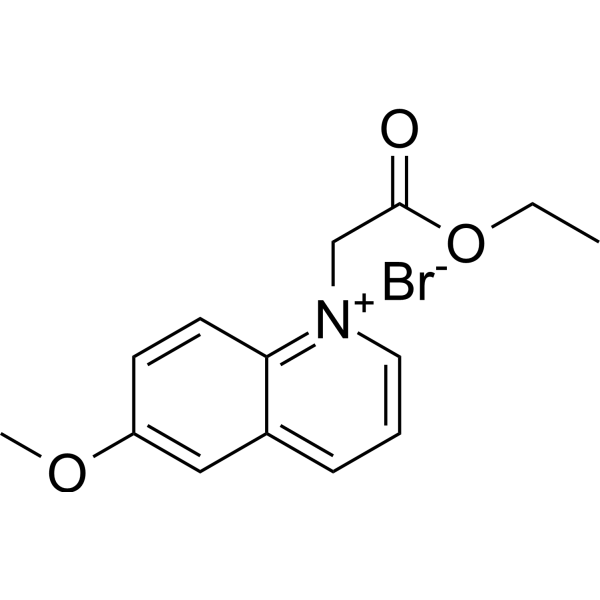
162558-52-3
Chemical Structure
MQAE
- CAS No.: 162558-52-3
- Formula:C14H16BrNO3
- Molecular Weight:326.19
IUPAC Name: 1-(2-ethoxy-2-oxoethyl)-6-methoxyquinolin-1-ium bromide
InChIKey: DSLLHVISNOIYHR-UHFFFAOYSA-M
SMILES: COC1=CC2=CC=C[N+](CC(OCC)=O)=C2C=C1.[Br-]
Biological Activity: MQAE is a chloride ion (Cl-) fluorescent probe that can be used to measure chloride concentrations. The fluorescence intensity of MQAE decreases proportionally as Cl- ions increase. MQAE has high cell permeability and is suitable for fluorescence detection such as confocal microscopy and flow cytometry (Ex/Em=350/460 nm)[1][2].
| Cat. No. | Product Name | Purity | Description | Pricing | |||||||||||||||||||
|---|---|---|---|---|---|---|---|---|---|---|---|---|---|---|---|---|---|---|---|---|---|---|---|
|
|
MQAE | 99.42% | MQAE is a chloride ion (Cl-) fluorescent probe that can be used to measure chloride concentrations. The fluorescence intensity of MQAE decreases proportionally as Cl- ions increase. MQAE has high cell permeability and is suitable for fluorescence detection such as confocal microscopy and flow cytometry (Ex/Em=350/460 nm). | ||||||||||||||||||||
|
loading...
/
|
|||||||||||||||||||||||
Structural Analogs
-
Similarity Score 0.74
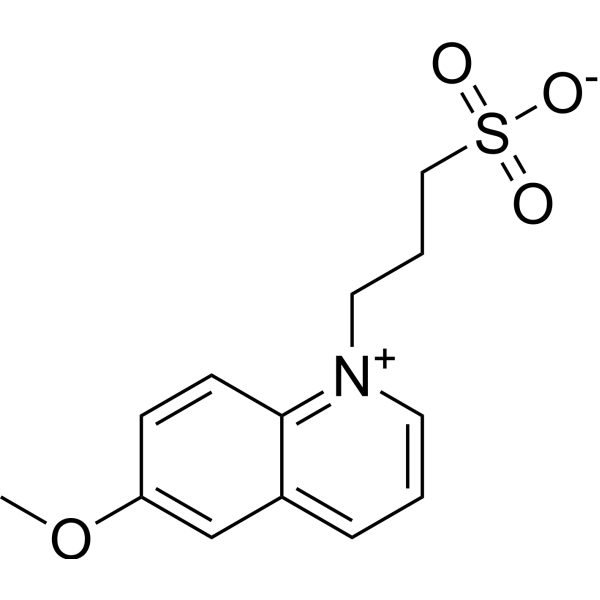 HY-D0936SPQ
-
Similarity Score 0.66
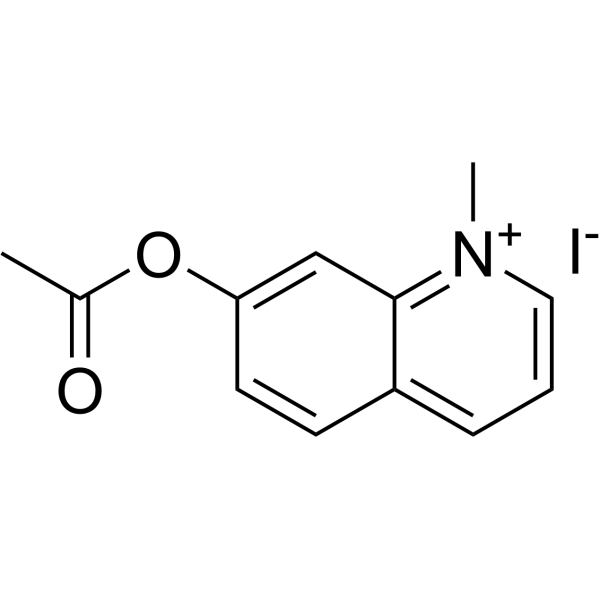 HY-1311277-Acetoxy-1-methylquinolinium iodide
-
Similarity Score 0.66
 HY-164220PPM1A-IN-1
-
Similarity Score 0.62
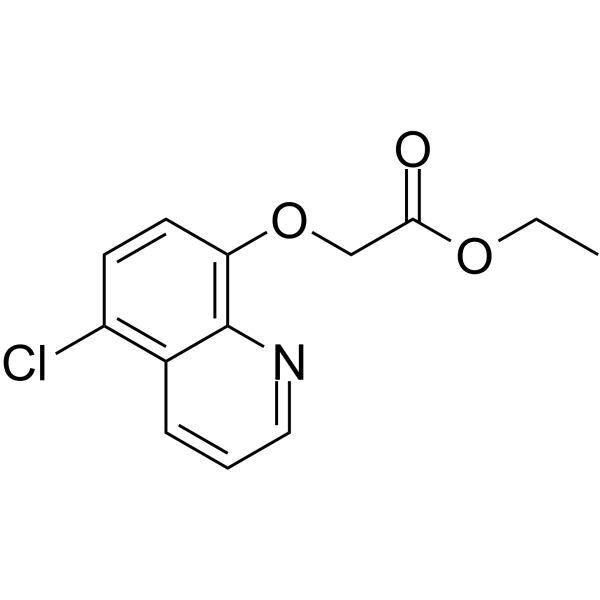 HY-137563A2793
-
Similarity Score 0.62
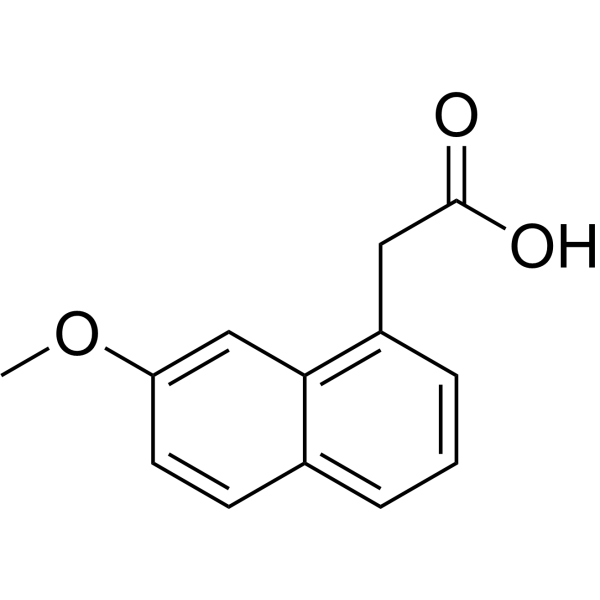 HY-W0038367-Methyl-1-naphthyl acetic acid
-
Similarity Score 0.62
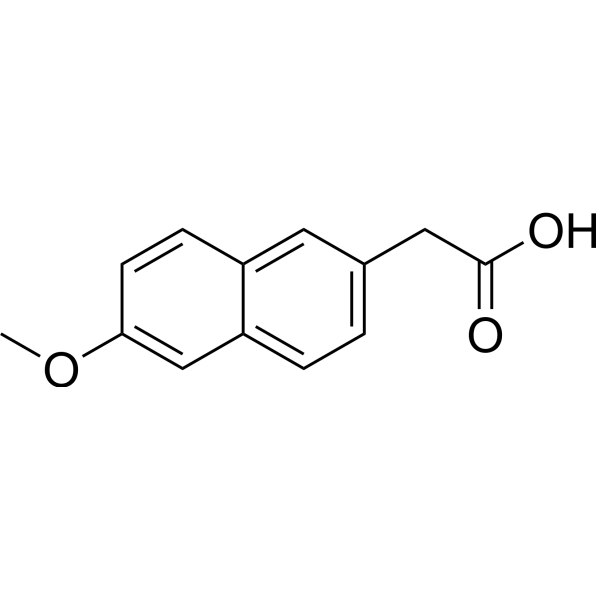 HY-W086896α-Demethylnaproxen
-
Similarity Score 0.60
 HY-173403TrxR-IN-8
-
Similarity Score 0.60
 HY-W3285992-Naphthalenyl octanoate
-
Similarity Score 0.59
 HY-N17543-(4-Methoxyphenyl)-1-(pyrrol-1-yl)propan-1-one
-

Explore the MedChemAI to find more analogs


References
- [1]. Ye X, et al. Volume-activated chloride channels contribute to lipopolysaccharide plus nigericin-induced pyroptosis in bone marrow-derived macrophages. Biochem Pharmacol. 2021 Nov;193:114791.
- [2]. Kovalchuk Y, et al. Two-photon chloride imaging using MQAE in vitro and in vivo. Cold Spring Harb Protoc. 2012 Jul 1;2012(7):778-85. [Content Brief]



