Search Result
Results for "
fluorophore
" in MedChemExpress (MCE) Product Catalog:
7
Biochemical Assay Reagents
1
Isotope-Labeled Compounds
| Cat. No. |
Product Name |
Target |
Research Areas |
Chemical Structure |
-
- HY-D0208
-
|
Uranine sodium
|
Environmental Pollutants
Fluorescent Dye
|
Cancer
|
|
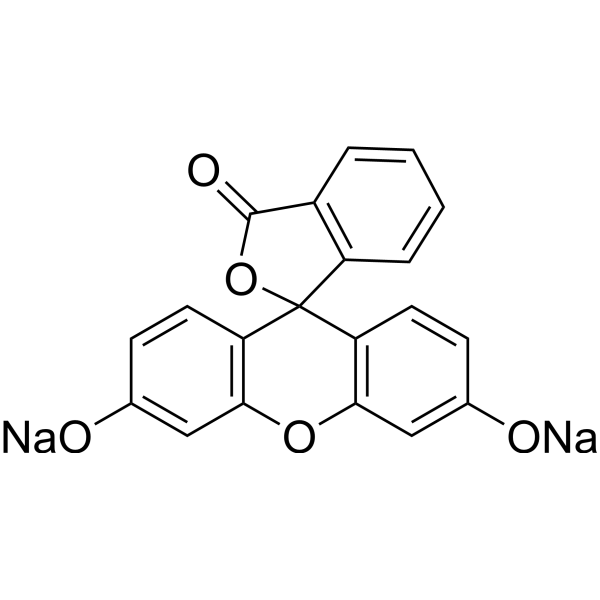
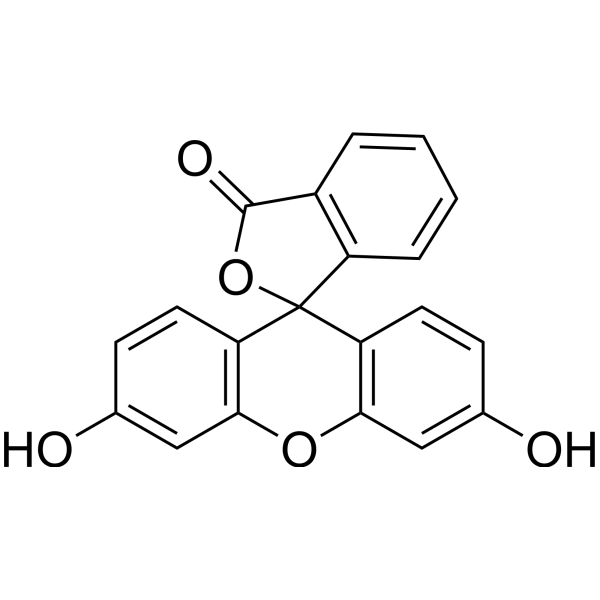
Fluorescein (Uranine) sodium is widely used as a fluorescent tracer in medicinal and biological applications and tumor infected tissues tracer. Fluorescein (Uranine) sodium is a representative green fluorophore that has been widely used as a scaffold of practically useful green fluorescent probes .
|
-
-
- HY-D0251
-
Fluorescein
Maximum Cited Publications
13 Publications Verification
Uranine
|
Fluorescent Dye
|
Cancer
|
|
Fluorescein (Uranine) is widely used as a fluorescent tracer in medicinal and biological applications and tumor infected tissues tracer. Fluorescein (Uranine) is a representative green fluorophore that has been widely used as a scaffold of practically useful green fluorescent probes .
|
-
-
- HY-124409
-
WSP-1
2 Publications Verification
|
Fluorescent Dye
|
Others
|
|
WSP-1 is a selective and rapid-reaction H2S specific fluorescent dye (Ex/Em=465/515 nm). WSP-1 reacts with H2S with the releasing of fluorophore .
|
-
-
- HY-133852
-
FD-1080
1 Publications Verification
|
Fluorescent Dye
MOFs
|
Others
|
|
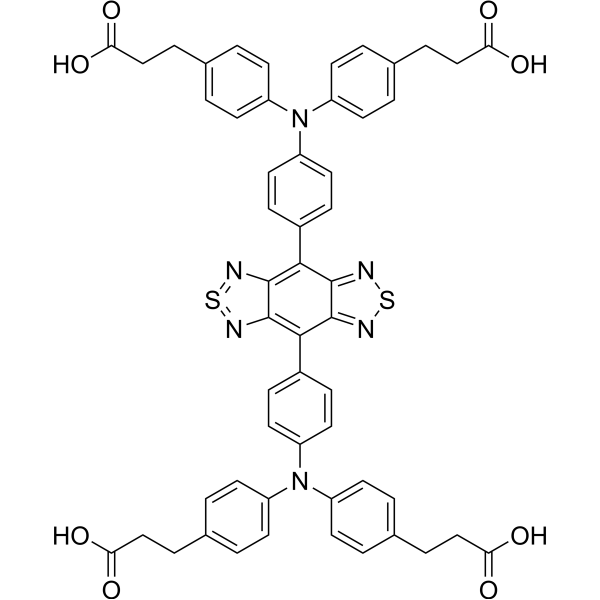
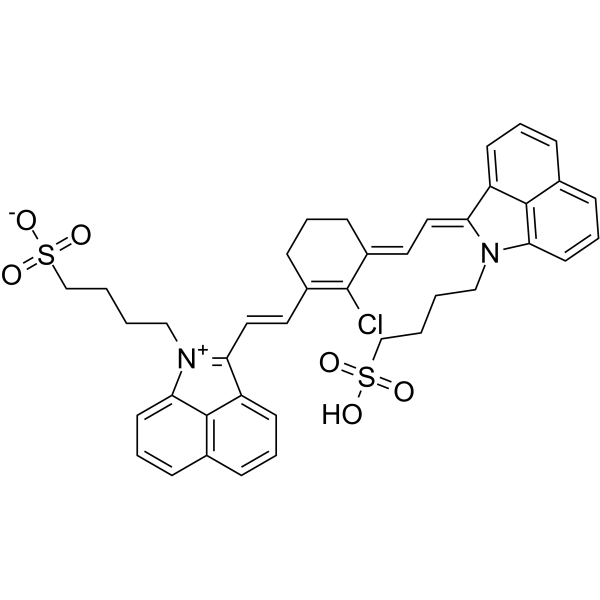
FD-1080 is a fluorophore with both excitation and emission in the NIR-II region (Ex=1064 nm, Em=1080 nm). FD-1080 can be used for in vivo imaging .
|
-
-
- HY-D0049
-
|
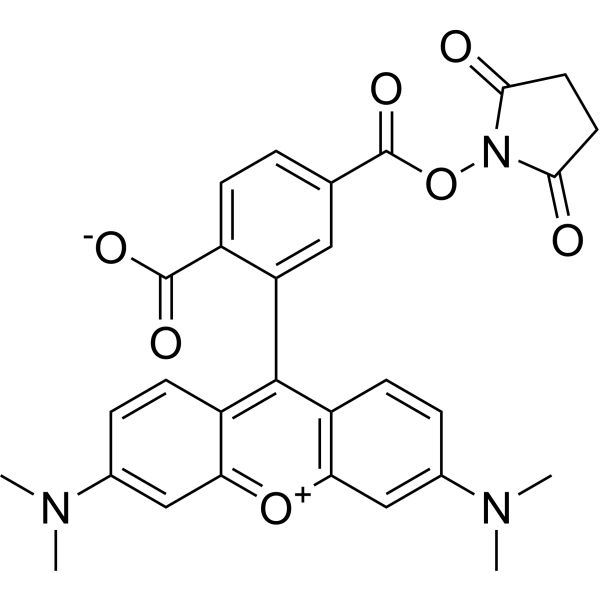
6-TAMRA-NHS ester; 6-Carboxytetramethylrhodamine N-succinimidyl ester
|
DNA Stain
|
Others
|
|
6-TAMRA-SE (6-TAMRA-NHS ester) is a fluorescent dye carrying the amine reactive group. 6-TAMRA-SE is one of the traditional fluorophores used for automated DNA sequencing .
|
-
-
- HY-D1464
-
CH1055
1 Publications Verification
|
Fluorescent Dye
|
Cancer
|
|
CH1055 is a near-infrared II (NIR-II) fluorescent dye that can be used as a fluorescent probe for in vivo imaging. CH1055 can be conjugated with antibodies or ligands for specific imaging (for example the tumor imaging) .
|
-
-
- HY-W440911
-
|
|
Liposome
Fluorescent Dye
|
Cancer
|
|
DSPE-PEG2000-Cy5 is a Cy5 (HY-D0821) fluorophore-labeled conjugate of distearoylphosphatidylethanolamine and polyethylene glycol, as well as a liposome component. The Cy5 fluorophore is commonly used for labeling proteins and nucleic acids in imaging, flow cytometry and genomic applications. DSPE-PEG2000-Cy5 supports cell membrane modification, in vivo tumor targeting research and long-term in vivo circulation of its liposomal formulations (Ex/Em=633/670 nm) .
|
-
-
- HY-133852A
-
|
|
Fluorescent Dye
|
Others
|
|
FD-1080 free acid is a fluorophore with both excitation and emission in the NIR-II region (Ex=1064 nm, Em=1080 nm). FD-1080 free acid can be used for in vivo imaging .
|
-
-
- HY-N0729F
-
|
|
Fluorescent Dye
|
Metabolic Disease
|
|
BODIPY-Linoleic acid is a conjugate of the BODIPY fluorophore and Linoleic acid (HY-N0729) (C18:2) and is a lipid metabolism probe.
|
-
-
- HY-P1986
-
|
|
Caspase
|
Cancer
|
|
Z-DEVD-AFC is a cell-permeant substrate for caspase-3, which causes a shift in fluorescence uponcleavage of the AFC fluorophore. Z-DEVD-AFC can be used to detect caspase-3-like enzymes activity .
|
-
-
- HY-D0074
-
|
|
Fluorescent Dye
|
Others
|
|
Prodan, a solvatochromic fluorophore, has been used as a microenvironment-sensitive membrane reporter. Based on the chemistry of Prodan, fluorescent nucleosides are designed and synthesized.The fluorescent nucleosides sensitively varied the Stokes shift values depending on the orientational polarizability of the solvent .
|
-
-
- HY-D1590
-
|
|
Fluorescent Dye
|
Others
|
|
ODIPY Green 8-P2M is a novel thiol-reactive fluorescence probe based on the BODIPY fluorophore, the fluorescence is strongly quenched by d-PeT and then can be restored after reaction with thiol, resulting in an extremely high signal-to-noise ratio. ODIPY Green 8-P2M can be useful for detecting extremely low concentrations of protein in the gel after SDS-PAGE .
|
-
-
- HY-W073524
-
|
|
Fluorescent Dye
|
Others
|
|
DFAME is a red fluorophore (Ex = 508 nm, Em = 641 nm). DFAME binds to Beetroot and Corn (dimeric fluorescent RNA aptamers) to form Beetroot-DFAME (Kd = 460 nM) and Corn-DFAME (Kd = 3600 nM). Beetroot-DFAME and Corn-DFAME can be used to form RNA assemblies in living cells. Creating RNA assemblies can be used for the study of RNA Nanostructures. DNA/RNA Nanostructures would be useful in cell and gene therapy (CGT) research .
|
-
-
- HY-100335
-
|
|
Fluorescent Dye
Btk
|
Cancer
|
|
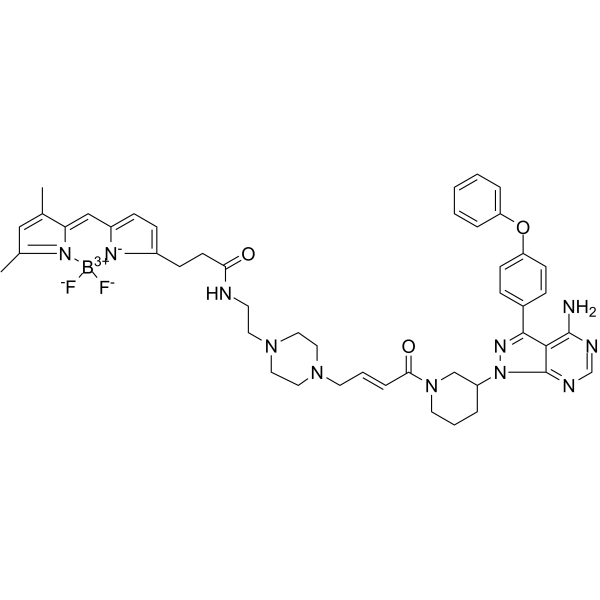
PCI-33380 is a fluorescent probe ( (Ex=532 nm, Em=555 nm). PCI-33380 consists of a (BTK) inhibitor PCI-32765 (HY-10997) attaching with a Bodipy-FL fluorophore via a piperazine linker. PCI-33380 binds predominantly to Btk in B cell lysates with cell permeable activity. PCI-33380 can be used for imaging live cancer cells such as non-Hodgkin lymphoma research
|
-
-
- HY-D1090
-
|
|
DNA Stain
Fluorescent Dye
|
Others
|
|
JOE is a xanthene fluorophore (i.e., 4′,5′-dichloro-2′,7′-dimethoxy-5 (6)-carboxyfluorescein; 2',7'-dimethoxy-4',5'-dichloro-6-carboxyfluorescein) with an absorption wavelength of approximately 525 nm and an emission wavelength of approximately 550 nm. The fluorescence quantum yield of JOE correlates with the rigidity of the linker arm and the distance to dG nucleoside. JOE is commonly used as a fluorescent label for oligonucleotides and molecular beacon probes, and also serves as the acceptor fluorophore in fluorescence energy transfer primers for DNA sequencing .
|
-
-
- HY-I1120
-
|
|
SGLT
|
Metabolic Disease
|
|
SGLT2-IN-1 (Compound 5) is an inhibitor for sodium-dependent glucose cotransporter (SGLT2), with IC50 of 33 nM in CHO cells transfected with human SGLT2. SGLT2-IN-1 is selective for SGLT2 over SGLT1. SGLT2-IN-1 is an active metabolite of dapagliflozinactive metabolite of dapagliflozin .
|
-
-
- HY-137845
-
|
|
Fluorescent Dye
|
Others
|
|
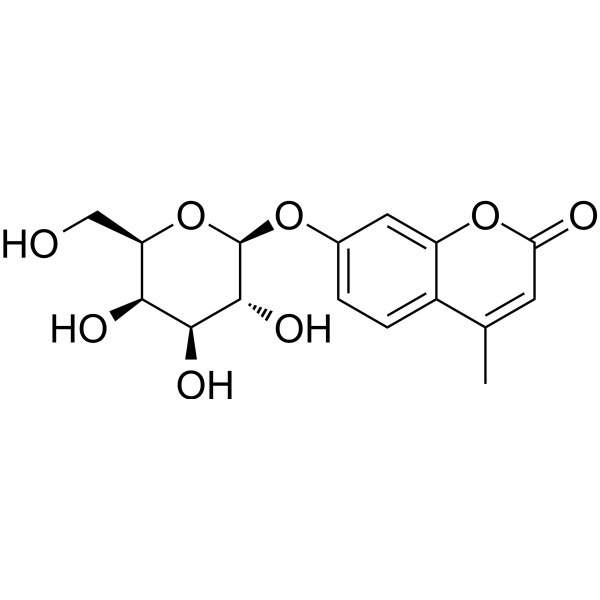
4-Methylumbelliferyl β-D-galactopyranoside is a fluorescent substrate for β-galactosidase which, when cleaved, produces a water-soluble blue fluorescent coumarin fluorophore that can be detected using a fluoroenzymeter or fluorometer .
|
-
-
- HY-151720
-
|
|
ADC Linker
|
Others
|
|
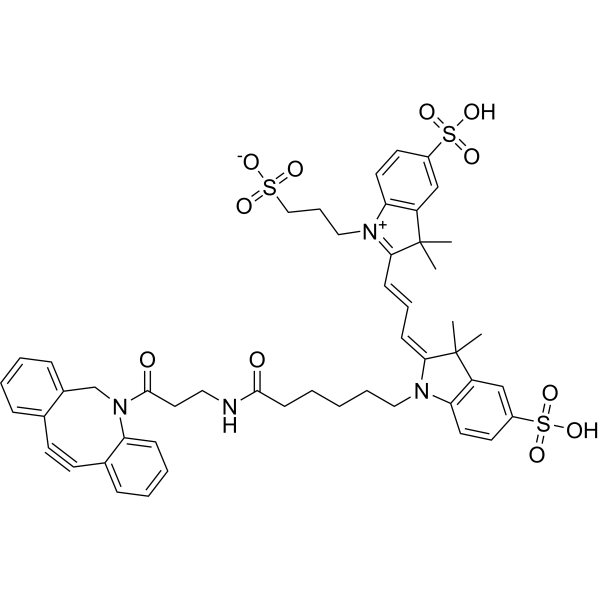
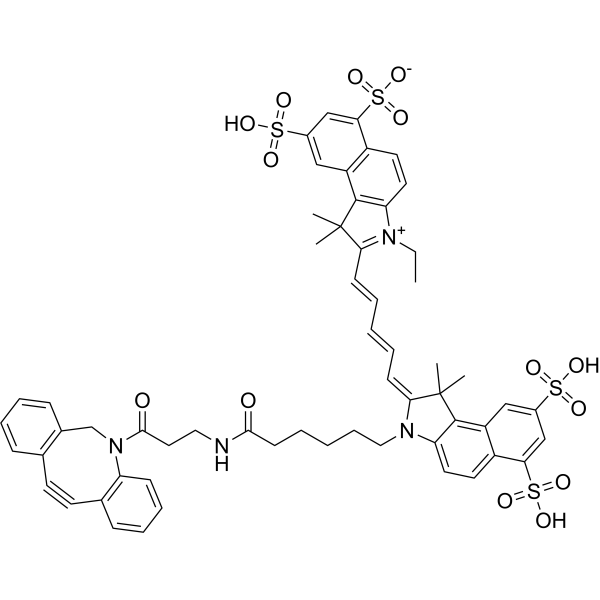
Cy5.5 DBCO is a click chemistry reagent containing an cycloalkynes group. Cy5.5 DBCO is a linker of Cyanine5.5 fluorophore. DBCO group enables copper free biocompatible click chemistry with fast reaction kinetics and good stability .
|
-
-
- HY-W017873
-
|
|
Fluorescent Dye
|
Others
|
|
9-Fluorenylmethyl carbazate is used as a fluorophore reagent for a fluorimetric detection of glycans .
|
-
-
- HY-D1554
-
|
|
Fluorescent Dye
|
Others
|
|
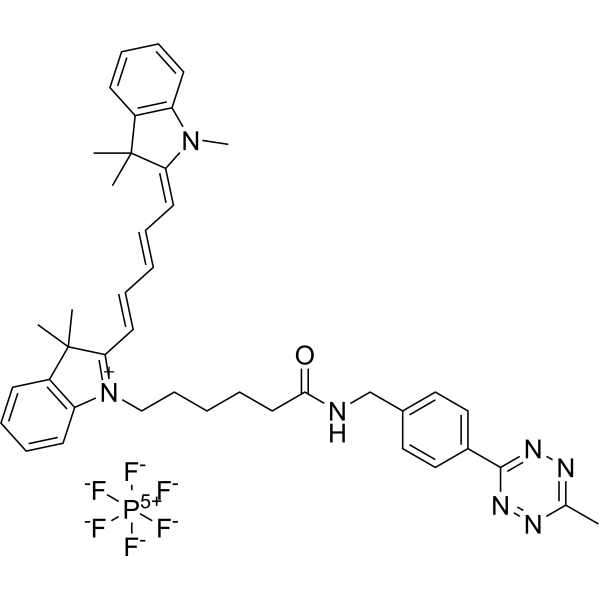
Cyanine5 tetrazine, a fluorophore, is a molecule that contains a cyano5 fluorophore and a tetrazine moiety .
|
-
-
- HY-W440908
-
|
|
Liposome
|
Others
|
|
DSPE-PEG2000-Cy3 is a PEG lipid conjugated with a fluorophore. The Cy3 fluorophore is commonly used in applications such as immunolabeling, nucleic acid labeling, fluorescence microscopy and flow cytometry. The absorption wavelength of the Cy3 fluorophore peaks at 548-552 nm, while its emission wavelength reaches a maximum at 562-570 nm .
|
-
-
- HY-W142395
-
|
|
DNA Stain
|
Others
|
|
6-TAMRA free acid is a fluorophore widely used in the preparation of fluorescent antibodies and avidin derivatives for immunohistochemistry.
|
-
-
- HY-D1760
-
|
|
Fluorescent Dye
|
Others
|
|
SBFI is a cell-impermeant, fluorescent Na + indicator dye. SBFI is excited at 340 nm and the fluorophore emission is collected at 450 nm . SBFI selective for Na + over K + with Kd values of 20 and 120 mM for these ions, respectively. .
|
-
-
- HY-D1566
-
|
|
Fluorescent Dye
|
Others
|
|
Sulfo-Cy7.5 maleimide is a CY dye. CY, short for Cyanine, is a compound consisting of two nitrogen atoms connected by an odd number of methyl units. Cyanine compounds have the characteristics of long wavelength, adjustable absorption and emission, high extinction coefficient, good water solubility and relatively simple synthesis . CY dyes are of en used for the labeling of proteins, antibodies and small molecular compounds. For the labeling of protein antibodies, the combination can be completed through a simple mixing reaction. Below, we introduce the labeling method of protein antibody labeling, which has certain reference significance .
|
-
-
- HY-148796
-
|
GE3126
|
Fluorescent Dye
|
Others
|
|
Rizedisben (GE3126) is a fluorophore that can be used in fluorescence image-guided surgery. Rizedisben reduces non-specific adipose tissue fluorescence intensity and enhances nerve visibility .
|
-
-
- HY-134566
-
|
|
Fluorescent Dye
|
Others
|
|
NBD-X, SE, the acceptor fluorophore, can be used to create environment sensitive bioconjugates .
|
-
-
- HY-W010947
-
|
|
Fluorescent Dye
|
Inflammation/Immunology
|
|
4-Methylumbelliferyl palmitate is an excellent fluorophore for measuring acid lipase in human leukocytes. Acidity and solvent have important influence on its fluorescence. 4-Methylumbelliferyl palmitate exists mainly as neutral molecular form which can be produced strong fluorescence at 445 nm in near neutral aqueous solutions, and exist mainly as anion form which can be produced stronger fluorescence at 445 nm in weak alkaline solutions .
|
-
-
- HY-D1560
-
|
|
Fluorescent Dye
|
Others
|
|
FG 488 DHPE is a lipid-coupled fluorochrome, has be used as a fluorophore Oregon Green 488. FG 488 DHPE monitors acidification of lipid vesicles with λex/λem=508/534 nm.FG 488 DHPE is also used for Hv1-induced proton translocation quantificatio with λex/λem=508/534 nm as well .
|
-
-
- HY-103594
-
-
-
- HY-P2496
-
|
|
Endothelin Receptor
|
Cardiovascular Disease
|
|
Endothelin 1 (swine, human), Alexa Fluor 488-labeled is a synthetic Endothelin 1 peptide labled with Alexa Fluor 488. Endothelin 1 (swine, human) is a synthetic peptide with the sequence of human and swine Endothelin 1, which is a potent endogenous vasoconstrictor. Endothelin 1 acts through two types of receptors ETA and ETB .
|
-
-
- HY-P5372A
-
|
|
Protease Activated Receptor (PAR)
|
Cancer
|
|
Ala-parafluoroPhe-Arg-Cha-Cit-Tyr-NH2 TFA, a bioactive peptide, is a selective Protease activating receptor 1 (PAR-1) agonist over PAR-2. PAR-1 belongs to a subfamily of G-protein coupled receptors and is known to mediate the cellular effects of thrombin. In addition to its varied cellular effects of thrombin, PAR-1 has also been shown to coordinate with PAR-4 and regulate thrombin-induced hepatocellular carcinoma harboring thrombin formation within the tumor environment classified as 'coagulation type' .
|
-
-
- HY-D1464A
-
|
|
Fluorescent Dye
|
Cancer
|
|
CH1055 triethylamine is a near-infrared II (NIR-II) fluorescent dye that can be used as a fluorescent probe for in vivo imaging. CH1055 triethylamine can be conjugated with antibodies or ligands for specific imaging (for example the tumor imaging) .
|
-
-
- HY-151712
-
|
|
Fluorescent Dye
|
Others
|
|
Sulfo-Cy5-Methyltetrazine is a click chemistry reagent containing a methyltetrazine group. Sulfo-Cy5-Methyltetrazine acts as a fluorophore linker for trans-cyclooctene-based labeling. Sulfo-Cy5-Methyltetrazine shows good stability at physiological pH and is also highly reactive towards cyclooctene.
|
-
-
- HY-151728
-
|
|
Fluorescent Dye
|
Others
|
|
Trisulfo-Cy3-Alkyne is a water soluble cyanine linker containing an alkyne group, which enables Click Chemistry to attach trisulfo-Cy3 to various azide-bearing molecules. Trisulfo-Cyanine3 is a fluorophore which is compatible with a wide range of fluorescent scanners, imagers, microscopes, etc. It is a bright and photostable dye and can be easily detected in gels by naked eye in low amounts (nmol). Reagent grade, for research use only . Trisulfo-Cy3-Alkyne is a click chemistry reagent, it contains an Alkyne group and can undergo copper-catalyzed azide-alkyne cycloaddition (CuAAc) with molecules containing Azide groups.
|
-
-
- HY-137791
-
-
-
- HY-D2292
-
|
|
Fluorescent Dye
|
Cancer
|
|
BODIPY TMR acid is a fluorescent dye. BODIPY TMR acid is a high quantum yield fluorophore which can be coupled with Rebastinib .
|
-
-
- HY-160277
-
|
|
Fluorescent Dye
|
Others
|
|
DSPE-PEG2000-Fluor 594 is a PEGylated lipid with a DSPE group and a Fluor 594 fluorophore. DSPE is a phospholipid. Fluor 594 is a red water-soluble dye .
|
-
-
- HY-160272
-
|
|
Fluorescent Dye
|
Others
|
|
DOPE-PEG2000-Fluor 488 is a PEG lipid, composed of a DOPE phospholipid and a Fluor 488 fluorophore. DOPE is an unsaturated phospholipid. Fluor 488 has excitation and emission maxima at 499 nm and 520 nm .
|
-
-
- HY-W848699
-
|
|
Fluorescent Dye
|
Others
|
|
FAM NHS ester, 6-isomer is a hydrophilic fluorophore. The NHS ester can react specifically and efficiently with primary amines such as the side chain of lysine residue or aminosilane-coated surfaces at neutral or slight basic conditions to form a covalent bond.
|
-
-
- HY-P3430
-
|
|
Biochemical Assay Reagents
|
Cancer
|
|
JM3A is a highly specific peptoid reagent that targets newly appears cell surface vimentin (CSV) on tumor-transformed early lung cancer cells. JM3A can detect and stain CSV by coupling with fluorophores .
|
-
-
- HY-P3364
-
|
|
Fluorescent Dye
Sirtuin
HDAC
|
Others
|
|
Ac-QPKK(Ac)-AMC is a p53-derived peptide conjugated with a fluorophore, which serves as a fluorescent peptide substrate for detecting the deacylase activity of zinc-dependent HDACs and sirtuins (Ex = 360 nm; Em = 460 nm) .
|
-
-
- HY-D1592
-
|
|
Fluorescent Dye
|
Others
|
|
BODIPY TMR C5-maleimide is a fluorescent dye. BODIPY TMR C5-maleimide is a high quantum yield fluorophore which can be coupled with peptides .
|
-
-
- HY-D2095
-
|
|
Fluorescent Dye
|
Cancer
|
|
Medical fluorophore 33 is a novel quinoline-isoquinoline salt. Medical fluorophore 33 exhibits a strong fluorescent signal, good microsomal stability and high biocompatibility in vivo. Medical fluorophore 33 has antitumor activity in colorectal cancer mice .
|
-
-
- HY-W040291
-
|
|
Fluorescent Dye
|
Cancer
|
|
7-Hydroxy-4-methylcoumarin-3-acetic acid, SE is a blue fluorophore that has pH-dependent and environment-sensitive fluorescence. It is widely used for preparing bioconjugates of blue fluorescence.
|
-
-
- HY-D2227
-
|
|
Autophagy
Apoptosis
|
Cancer
|
|
IR-58, a mitochondria-targeting near-infrared (NIR) fluorophore, is an autophagy enhancer. IR-58 kills tumour cells and induces apoptosis via inducing excessive autophagy, which is mediated through the reactive oxygen species (ROS)-Akt-mTOR pathway .
|
-
-
- HY-111661
-
|
|
Drug Intermediate
|
Others
|
|
6,7-Dimethyl-8-ribityllumazine is a direct biosynthetic precursor of Riboflavin (RBF; HY-B0456). 6,7-Dimethyl-8-ribityllumazine is a noncovalently bound fluorophore of Lumazine protein (LumP), which is a fluorescent accessory protein .
|
-
-
- HY-D1338
-
|
Cy 3.5 carboxylic acid chloride
|
Fluorescent Dye
|
Others
|
|
Cyanine3.5 carboxylic acid chloride is an anthocyanin dye. Cyanine3.5 carboxylic acid chloride is Cyanine3.5 free unactivated monofunctional carboxylic acid and can be used as a reference or control for non-reactive dye. Cyanine3.5 also is an analog of Cy3.5 fluorophore .
|
-
-
- HY-112526
-
|
|
Fluorescent Dye
|
Others
|
|
Thiofluor 623 (Compound 3) is a fluorescent turn-on probe that can be used for the selective sensing and bioimaging of thiols. Thiofluor 623 displays excellent immunity to interference from nitrogen and oxygen nucleophiles. Thiofluor 623 is essentially nonfluorescent in the absence of thiols, which cleave the probe and release the red-emissive donor-acceptor fluorophore (Ex=563 nm, Em=623 nm) .
|
-
-
- HY-D1596
-
|
Cy3.5 NHS ester chloride; Cy 3.5 chloride
|
Fluorescent Dye
|
Others
|
|
Cyanine 3.5 (Cy3.5 NHS ester) chloride is an analog of Cy3.5 fluorophore. Cyanine 3.5 chloride is a reactive, red fluorescent dye. Cyanine 3.5 chloride is used for labeling of amino-groups in peptides, proteins, and oligonucleotides. (λex=591 nm, λem=604 nm) .
|
-
-
- HY-133532
-
|
Ocean Blue, SE
|
Fluorescent Dye
|
Others
|
|
PB succiniMidyl ester (Ocean Blue, SE) is a fluorophore with the λexcitation/emission of ~405/455 nm .
|
-
- HY-P5372
-
|
|
Protease Activated Receptor (PAR)
|
Cancer
|
|
Ala-parafluoroPhe-Arg-Cha-Cit-Tyr-NH2, a bioactive peptide, is a selective Protease activating receptor 1 (PAR-1) agonist over PAR-2. PAR-1 belongs to a subfamily of G-protein coupled receptors and is known to mediate the cellular effects of thrombin. In addition to its varied cellular effects of thrombin, PAR-1 has also been shown to coordinate with PAR-4 and regulate thrombin-induced hepatocellular carcinoma harboring thrombin formation within the tumor environment classified as 'coagulation type' .
|
-
- HY-D2929
-
|
SNAP-JF585
|
Fluorescent Dye
|
Others
|
|
BG-JF585 is Benzylguanine-conjugated JF585 (HY-131025). Benzylguanine is the substrate for SNAP tags. JF585 is a fluorophore (λabs: 593 nm; λem: 611 nm).
|
-
- HY-174486
-
|
|
mRNA
|
Others
|
|
mCherry mRNA (5moU) encodes the fluorescent protein, mCherry, which is derived from DsRed, a protein found in Discosoma sp. mCherry is a monomeric fluorophore with a peak absorption at 587 nm and emission at 610 nm. It is stable and resistant to photobleaching.
|
-
- HY-164169
-
|
|
Biochemical Assay Reagents
|
Others
|
|
GDP-Azido-Fucose is a chemically modified donor substrate. GDP-Azido-Fucose can be used to synthesize fluorophore-conjugated GDP-fucose. GDP-Azido-Fucose can be used to study glycosyltransferase reactions .
|
-
- HY-W440303
-
|
HITC
|
Fluorescent Dye
|
Others
|
|
1,1',3,3,3',3'-Hexamethylindotricarbocyanine perchlorate (HITC) is a long-wavelength, membrane-potential sensitive dye. It is a slow-response potentiometric fluorophore and has also been used as a laser dye for infrared lasers.
|
-
- HY-142523
-
-
- HY-D0078
-
|
|
Fluorescent Dye
|
Others
|
|
DCIA is a fluorescent dye. DCIA contains a coumarin fluorophore and conjugates specifically with free cysteines in the protein .
|
-
- HY-D2414
-
-
- HY-P4138
-
|
|
Fluorescent Dye
|
Cancer
|
|
Antennapedia Peptide FAM-labeled is a fluorophore labeled peptide. Antennapedia Peptide FAM-labeled also can be used for the research of cancer as a molecular probe .
|
-
- HY-D2219
-
|
|
Fluorescent Dye
|
Others
|
|
Sulfo-Cy7 tetrazine is a near-infrared water-soluble fluorophore. Sulfo-Cy7 tetrazine contains the methyltetrazine group for rapid, efficient, and metal-free conjugation to cycloolefin in a reaction called TCO linkage .
|
-
- HY-D2183
-
|
|
Fluorescent Dye
|
Others
|
|
6-Carboxy-JF5252 is a fluorophore. 6-Carboxy-JF5252 can be used as probes, dyes, tags. 6-Carboxy-JF5252 can be used for the research of super-resolution imaging .
|
-
- HY-151756
-
|
|
Fluorescent Dye
|
Others
|
|
diSulfo-Cy3 alkyne is a water-soluble dye and a Click Chemistry reagent containing an alkyne group. Absorbance and emission of the dye are identical to Cy3 fluorophore. diSulfo-Cy3 alkyne can be used for the labeling of proteins, and even intact biological objects in water phase .
|
-
- HY-D2857
-
|
|
Fluorescent Dye
|
Metabolic Disease
|
|
NBD-Stearic acid is a stearic acid labeled with a nitrobenzoxadiazole (NBD) fluorophore. NBD-Stearic acid can be used as a probe for fatty acid uptake or the the ligand binding sites of fatty acid and sterol carrier proteins (FABP)
|
-
- HY-D2953
-
|
CLIP-CPY
|
Fluorescent Dye
|
Others
|
|
BC-CPY is a CLIP-tagged probe based on the pyridine-benzoanthrone (CPY) fluorophore (Ex/Em: 580 nm/610 nm). BC-CPY has excellent cell membrane permeability, enabling deep imaging, low phototoxicity and high signal-to-noise ratio. BC-CPY can be used for super-resolution microscopy imaging of living cells .
|
-
- HY-D2946
-
|
BC-TMR
|
Fluorescent Dye
|
Infection
|
CLIP-TMR (BC-TMR) is a TMR-labeled CLIP tag fluorescent probe. CLIP-TMR combines the high specificity recognition ability of the CLIP-tag and the excellent optical performance of the TMR fluorophore, and can be used for the specific labeling and visualization of the HCV NS5A protein .
|
-
- HY-103467
-
|
|
Fluorescent Dye
|
Others
|
|
NPE-caged-HPTS sodium is a caged fluorophore that fluoresces upon uncaged fluorophore release, releasing the free highly polar fluorophore HPTS (Exc=470/40 nm, Em=525/50 nm). HPTS releases the fluorophore rapidly and uniformly, allowing for measurement of diffusion within tissues, with a diffusion coefficient of μm 2s -1, similar to that of synaptic L-glutamate .
|
-
- HY-W998662
-
|
|
Fluorescent Dye
|
Others
|
|
Coumarin 343 X carboxylic acid is a blue emitting fluorophore used as a laser dye. The fluorophore can serve as a FRET donor for FAM (fluorescein).
|
-
- HY-112797
-
-
- HY-D1349
-
|
|
Fluorescent Dye
|
|
|
Bodipy TR alkyneis one of a boron dipyrromethene fluorophore for the ROX (Texas Red) channel. This is a versatile fluorophore that can be used in microscopy, fluorescence polarization measurements, and other applications. This derivative is a terminal alkyne of copper-catalyzed click chemistry.
|
-
- HY-18675
-
|
|
Fluorescent Dye
|
Others
|
|
IQ-R is a novel hypoxia-sensitive fluorescent probe, consisting of an indolequinone unit and a rhodol fluorophore.
|
-
- HY-D1268
-
|
|
Fluorescent Dye
|
Cancer
|
|
Seph-PAO is the modified PAO attached a sepharose fluorophore and is used to detect the thioredoxin reductase (TrxR) .
|
-
- HY-D1564
-
-
- HY-147177
-
|
|
Fluorescent Dye
|
Others
|
|
BODIPY-8-chloromethane is a fluorophore. BODIPY-8-chloromethane can be used as as a fluorescent probe .
|
-
- HY-156302
-
|
|
Fluorescent Dye
|
Others
|
|
Coumarin-PEG2-endoBCN is a fluorescent dye containing a coumarin fluorophore and can be used as a click chemistry reagent .
|
-
- HY-D2749
-
|
|
Fluorescent Dye
|
Others
|
|
Sulfo-Bis-(N,N'-carboxylic acid)-Cy5 is a free unactivated carboxylic acid. Its absorbance and emission spectra are identical with Cy5 fluorophore.
|
-
- HY-W705969
-
|
|
Biochemical Assay Reagents
|
Others
|
|
tris-NTA TFA is a His-tagged protein ligand. tris-NTA TFA can be used alone or in combination with a fluorophore for purification and detection of His-tagged proteins .
|
-
- HY-I1120R
-
|
|
Reference Standards
SGLT
|
Metabolic Disease
|
|
SGLT2-IN-1 (standard) is the analytical standard for SGLT2-IN-1. This product is used for research and analytical applications. SGLT2-IN-1 (Compound 5) is an inhibitor for sodium-dependent glucose cotransporter (SGLT2), with IC50 of 33 nM in CHO cells transfected with human SGLT2. SGLT2-IN-1 is selective for SGLT2 over SGLT1. SGLT2-IN-1 is an active metabolite of dapagliflozinactive metabolite of dapagliflozin.
|
-
- HY-D1267
-
|
|
Apoptosis
|
Cancer
|
PAO-Nap is the modified PAO attached a naphthalimide fluorophore using aminocaproic acid as a linker. PAO induces oxidative stress-mediated apoptosis in HL-60 cells by selectively targeting thioredoxin reductase .
|
-
- HY-D1501
-
|
|
Fluorescent Dye
|
Others
|
|
Fura PE-3 potassium is a Ca 2+sensitive fluorophore. Fura PE-3 potassium loads in IPA (intrapulmonary arteries) and MA (mesenteric resistance arteries) for the research of vasoconstriction .
|
-
- HY-D2752
-
|
|
Fluorescent Dye
|
Others
|
|
Cy5.5 dimethyl is a free non-activated dye and can be used as a non-reactive fluorophore for experiment controls and instrument calibration. It is a non-sulfonated reagent with good solubility in organic solvents and limited aquous solubility.
|
-
- HY-D2325
-
|
|
Fluorescent Dye
|
Others
|
|
Arg-Flipper 34 is one of the flipper probes which have been introduced as small molecule fluorophores to image membrane tension in living systems. Arg-Flipper 34 can be used to assess the mechanics of early endocytosis .
|
-
- HY-D1621
-
|
|
Fluorescent Dye
|
Others
|
|
C-12 NBD cholesterol is a cholesterol derivative with a hydrophilic fluorophore tag (NBD: Ex=465 nm, Em=535 nm). C-12 NBD cholesterol can be used to study the utilization and metabolism of cholesterol .
|
-
- HY-163140
-
|
|
Fluorescent Dye
Interleukin Related
|
Others
|
|
BODIPY-phenyl-amide-alkyne (compound 6) is an alkyne-containing OFF-to-ON fluorophore. BODIPY-phenyl-amide-alkyne is a BODIPY derivative that can be conjugated to protein IL-33 Y143azidoPhe via CuAAC reaction .
|
-
- HY-D2974
-
|
|
Fluorescent Dye
|
Others
|
|
DCI-Ac-HMPC is a near-infrared thiol probe. DCI-Ac-HMPC can trigger the intramolecular cascade reaction to in-situ generate NIR coumarin fluorophore. DCI-Ac-HMPC can be used to track the level of thiols .
|
-
- HY-D2770
-
|
|
Fluorescent Dye
|
Others
|
|
Cyanine3.5 dimethyl is a non-sulfonated cyanine dye with good solubility in organic solvents and bright fluorescence in the yellow-orange spectrum range. The dye can be used as a non-reactive fluorophore for control experiments, calibration, and other technical applications.
|
-
- HY-D2928
-
|
SNAP-JF549
|
Fluorescent Dye
|
Others
|
|
BG-JF549 is a Xanthene-based fluorophore. BG-JF549 has a similar affinity for SNAP C145A to BG-TMR .
|
-
- HY-172754
-
|
|
Fluorescent Dye
|
Cancer
|
|
ICAAc is a solvatochromic fluorophore with reduced basicity. ICAAc demonstrates significant solvatochromic behavior across solvents of varying polarity, with a large dipole moment difference and low quantum yield in water, making it a tunable solvatochromic fluorophore. ICAAc enables pH sensing via UV-vis/fluorescence detection and in microenvironments including sodium lauryl sulfate micelle Stern layers. ICAAc acts as a supravital cell stain for epifluorescence imaging of live cancer cells .
|
-
- HY-100335R
-
|
|
Fluorescent Dye
Reference Standards
Btk
|
Cancer
|
|
PCI-33380 (Standard) is the analytical standard of PCI-33380 (HY-100335). This product is intended for research and analytical applications. PCI-33380 is a fluorescent probe ( (Ex=532 nm, Em=555 nm). PCI-33380 consists of a (BTK) inhibitor PCI-32765 (HY-10997) attaching with a Bodipy-FL fluorophore via a piperazine linker. PCI-33380 binds predominantly to Btk in B cell lysates with cell permeable activity. PCI-33380 can be used for imaging live cancer cells such as non-Hodgkin lymphoma research
|
-
- HY-W008583
-
|
DBDPA
|
Fluorescent Dye
Biochemical Assay Reagents
|
Others
|
|
Bis (4-tert-butylphenyl) amine (DBDPA) is a C4 alkyl-substituted diphenylamine-based amino antioxidant. Bis (4-tert-butylphenyl) amine serves as a polymer additive in car seats. Bis (4-tert-butylphenyl) amine acts as a synthetic precursor for donor-acceptor-donor (D-A-D) type π-conjugated fluorophores .
|
-
- HY-D3229
-
|
|
Fluorescent Dye
|
Others
|
|
SiR-BCN is a Fluorophore-labeled bicyclononyne. SiR-BCN can be used for protein modification and labeling studies .
|
-
- HY-D3015
-
|
|
Fluorescent Dye
|
Others
|
|
Cy3.5 DBCO is a bright and photostable orange-red fluorophore with a terminal DBCO group .
|
-
- HY-D3387
-
|
|
Fluorescent Dye
|
Others
|
|
TBI is a fluorescence enhancer with a Kd of 71 nM for the Broccoli fluorogenic RNA aptamer. TBI binds to the Broccoli fluorogenic RNA aptamer to activate its fluorescence.TBI undergoes photobleaching of its trans form, which dissociates rapidly, while cis-TBI from the media replaces the dissociated fluorophore to enable fluorophore recycling.TBI enables enhanced fluorescence of Broccoli during continuous cellular imaging (Ex/Em = 485/527 nm) .
|
-
- HY-D2774
-
|
|
Fluorescent Dye
|
Others
|
|
BP Fluor 488 Alkyne is a fluorophore. Its absorption and emission spectra are similar to fluorescein, but it is fluorescent in acidic media, and it is much more stable against photobleaching and oxidation.
|
-
- HY-D3271
-
|
|
Fluorescent Dye
|
Others
|
|
IR 750 NHS ester is a near-infrared fluorescent dye composed of IRDye 750 near-infrared fluorophore and NHS ester reactive group. IR 750 NHS ester can be applied to fluorescent labeling, imaging and detection.
|
-
- HY-D3270
-
|
|
Fluorescent Dye
|
Others
|
|
IR 750 Maleimide is a near-infrared fluorescent dye composed of IRDye 750 near-infrared fluorophore and maleimide reactive group. IR 750 Maleimide can be applied to fluorescent labeling, imaging and detection.
|
-
- HY-173532
-
|
2-Methylthio TNP-Inosine 5'-triphosphate tetrasodium
|
Fluorescent Dye
|
Others
|
|
2-Methylthio TNP-ITP (2-Methylthio TNP-Inosine 5'-triphosphate) tetrasodium is a fluorescent derivative of inosine triphosphate (ITP) with a TNP (2,4,6-trinitrophenyl) fluorophore .
|
-
- HY-W806655
-
|
|
Fluorescent Dye
|
Others
|
|
Cy3.5 carboxylic acid is a fluorophore featuring a carboxylic acid. The carboxylic acid is readily attacked by amines to form a stable amide bond. Cy3.5 is a cyanine dye with excitation and emission maxima at 576 nm and 603 nm respectively.
|
-
- HY-164169A
-
|
|
Biochemical Assay Reagents
|
Others
|
|
GDP-Azido-Fucose disodium is a chemically modified donor substrate. GDP-Azido-Fucose disodium can be used to synthesize fluorophore-conjugated GDP-fucose. GDP-Azido-Fucose can be used to study glycosyltransferase reactions .
|
-
- HY-P3364A
-
|
|
Fluorescent Dye
Sirtuin
HDAC
|
Others
|
|
Ac-QPKK(Ac)-AMC acetate is a p53-derived peptide conjugated with a fluorophore, which serves as a fluorescent peptide substrate for detecting the deacylase activity of zinc-dependent HDACs and sirtuins (Ex = 360 nm; Em = 460 nm) .
|
-
- HY-D3242
-
|
FD-1080-MAL
|
Fluorescent Dye
|
Others
|
|
FD-1080 Maleimide (FD-1080-MAL) is a fluorophore with both excitation and emission in the NIR-II region (Ex=1064 nm, Em=1080 nm). FD-1080 can be used for in vivo imaging .
|
-
- HY-D1254
-
|
NBL-SS perchlorate
|
Fluorescent Dye
|
Others
|
|
Trx-red (NBL-SS perchlorate) is a red-emitting fluorescent probe derivatized from the nile blue fluorophore. Trx-red is used for selectively imaging thioredoxin (Trx) in live cells and in vivo (λex=615 nm, λem=661 nm) .
|
-
- HY-D1563
-
|
|
Fluorescent Dye
|
Others
|
|
pH Receptor Probe is a pH-sensitive cyanine derivative and a environmental sensitive fluorophore. pH Receptor Probe has a pH-sensitive maximal absorption at 644 nm and emission at 664 nm. pH Receptor Probe has been used as a pH sensor of lysosomal compartments .
|
-
- HY-160289
-
|
|
FAP
|
Cancer
|
|
ARI-3144 is an excellent and specific substrate for fibroblast activation protein (FAP). ARI-3144 is usually coupled with the fluorophore 7-Amino-4-methylcoumarin (HY-D0027) (AMC) for detection and quantification of FAP .
|
-
- HY-157744
-
|
|
Mitochondrial Metabolism
|
Cancer
|
|
Coumarin–quinone conjugate is a fluorescent substrate for NADH:ubiquinone oxidoreductases which consists of a coumarin fluorophore and a ubiquinone analog. Coumarin–quinone conjugate can be used to measure the kinetic parameters of AIFM2/FSP1 for researches such as ferroptosis .
|
-
- HY-D2320
-
|
|
Fluorescent Dye
|
Others
|
|
ER Flipper-TR 28 is a flipper probe with a small molecule fluorophore that can image membrane tension in the endoplasmic reticulum (ER). ER Flipper-TR 28 bears a pentafluorophenyl group and also reacts with protein thiolate on the ER surface facing the cytoplasm .
|
-
- HY-111263
-
NIAD-4
1 Publications Verification
|
Fluorescent Dye
Amyloid-β
|
Others
|
|
NIAD-4 is a blood-brain barrier permeable fluorophore for optical imaging of amyloid-β (Aβ) in the central nervous system (CNS) for Alzheimer’s disease (AD). NIAD-4 binds to the same Aβ site with the binding affinity (Ki) of 10 nM .
|
-
- HY-W141127
-
|
|
Biochemical Assay Reagents
|
Cancer
|
|
1-(Bromomethyl)pyrene is a Br compound with antitumor activity. 1-(Bromomethyl)pyrene is widely used in the synthesis of fluorophores for the fluorescent sensing of variety of analytes. 1-(Bromomethyl)pyrene can be also used in the synthesis of photoinitiators (PIs) .
|
-
- HY-125623
-
|
|
Fluorescent Dye
|
Others
|
|
MitoPerOx is a mitochondrial-targeted, lipid peroxidation-indicating fluorescent probe with BODIPY581/591 fluorophores. The triphenylphosphine cation (TPP+) of MitoPerOx can be selectively enriched in mitochondria (depending on membrane potential) and can be used to detect lipid peroxidation in the inner mitochondrial membrane. Under the action of lipid peroxides, the BODIPY581/591 fluorophores of MitoPerOx shift their emission wavelength from 590 nm (reduced state) to 520 nm (oxidized state), and ratiometric detection can be performed at an excitation wavelength of 488 nm. MitoPerOx can specifically monitor the peroxidation of mitochondrial phospholipids (especially cardiolipin) and is used in the study of oxidative stress-related diseases (such as aging, neurodegenerative diseases, and mitochondrial dysfunction)[1][2].
|
-
- HY-114353
-
|
|
Fluorescent Dye
|
Others
|
|
BODIPY FL azide is a BDP dye connector containing an azide group capable of Click Chemistry. The green fluorophore is representative of the borodipyrromethane class of fluorescent dyes and has a high quantum yield in aqueous environments, high stability to photobleaching and is compatible with FAM fluorescence measurement instruments .
|
-
- HY-P4425
-
|
|
Biochemical Assay Reagents
|
Others
|
|
Gly-Phe-AMC is a fluorogenic peptide substrate consisting of a peptide sequence composed of glycine and phenylalanine, linked to the fluorophore AMC. Gly-Phe-AMC also serves as a cathepsin C substrate. Gly-Phe-AMC is widely used to detect the activity of various proteases .
|
-
- HY-DY1073
-
|
|
Fluorescent Dye
|
Others
|
MitoPerOx (solution) is a mitochondrial-targeted, lipid peroxidation-indicating fluorescent probe with BODIPY581/591 fluorophores. The triphenylphosphine cation (TPP+) of MitoPerOx can be selectively enriched in mitochondria (depending on membrane potential) and can be used to detect lipid peroxidation in the inner mitochondrial membrane. Under the action of lipid peroxides, the BODIPY581/591 fluorophores of MitoPerOx shift their emission wavelength from 590 nm (reduced state) to 520 nm (oxidized state) , and ratiometric detection can be performed at an excitation wavelength of 488 nm. MitoPerOx can specifically monitor the peroxidation of mitochondrial phospholipids (especially cardiolipin) and is used in the study of oxidative stress-related diseases (such as aging, neurodegenerative diseases, and mitochondrial dysfunction) . Solvent and concentration: DMSO: 2 mM
|
-
- HY-N16310
-
|
|
Fluorescent Dye
|
Others
|
|
Cyanine 3 DBCO chloride is a click chemistry reagent containing an cycloalkynes group. Cyanine 3 DBCO chloride is a linker of Cyanine5.5 fluorophore. DBCO group enables copper free biocompatible click chemistry with fast reaction kinetics and good stability (Ex/Em = 550/570 nm).
|
-
- HY-D1652
-
|
|
Caspase
|
Others
|
|
Ac-LEHD-AMC is a fluorogenic substrate for caspase-9 (Excitation: 341 nm; Emission: 441 nm). Caspase-9 can induce hydrolysis of Ac-LEHD-AMC, resulting in the release of AMC fluorophore and its fluorescence can be used to quantify caspase-9 activity .
|
-
- HY-D2434
-
|
|
Fluorescent Dye
|
Others
|
|
HRP-PEG-Cy3 is a HRP and Cy3 (HY-D0822) labeled PEG. The Cy3 fluorophore is commonly used in applications such as immunolabeling, nucleic acid labeling, fluorescence microscopy, and flow cytometry. Cy3 has an emission maximum around 562-570 nm.
|
-
- HY-D1389
-
|
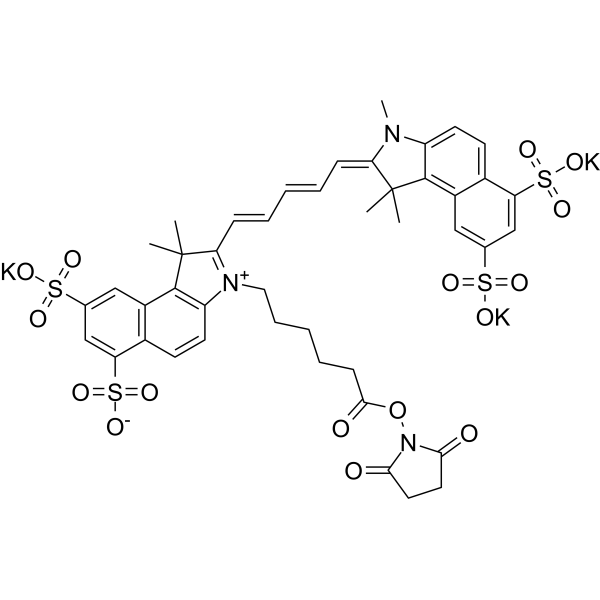
Sulfo-Cyanine5.5 NHS ester tripotassium
|
Fluorescent Dye
|
Others
|
Sulfo-CY-5.5 NHS ester (Sulfo-Cyanine5.5 NHS ester) tripotassium is an amine-reactive ester of sulfonated far-red Cyanine5.5 fluorophore, which can be used to label antibodies, proteins, etc., as well as for in vivo NIR imaging .
|
-
- HY-N16305
-
|
|
Fluorescent Dye
|
Others
|
|
Cyanine 7 DBCO chloride is a click chemistry reagent containing an cycloalkynes group. Cyanine 7 DBCO chloride is a linker of Cyanine5.5 fluorophore. DBCO group enables copper free biocompatible click chemistry with fast reaction kinetics and good stability (Ex/Em = 745/785 nm) .
|
-
- HY-DY1071
-
|
|
Fluorescent Dye
|
Others
|
pH Receptor Probe (solution) is a pH-sensitive cyanine derivative and a environmental sensitive fluorophore. pH Receptor Probe has a pH-sensitive maximal absorption at 644 nm and emission at 664 nm. pH Receptor Probe has been used as a pH sensor of lysosomal compartments . Solvent and concentration: DMSO: 10 mM
|
-
- HY-D0159
-
|
|
Fluorescent Dye
|
Others
|
|
ZnAF-1F is a potent fluorophore for with an Kd value of 2.2 nM. ZnAF-1F can be used as fluorescent probes for Zn 2+ in cells. ZnAF-1F shows λ excitation of 489 nm and λ emission of 514 nm .
|
-
- HY-151774
-
|
|
Fluorescent Dye
|
Others
|
|
TAMRA hydrazide (6-isomer) is a click chemistry reagent that can be coupled to carbonyl compounds. The dye hydrazide in TAMRA hydrazide (6-isomer) labels carbonyl compounds such as aldehydes and ketones. TAMRA in TAMRA hydrazide (6-isomer) is a xanthene red fluorophore that reacts with terminal alkynes .
|
-
- HY-N16302
-
|
|
Fluorescent Dye
|
Others
|
|
Cyanine 5.5 DBCO chloride is a click chemistry reagent containing an cycloalkynes group. Cyanine 5.5 DBCO chloride is a linker of Cyanine5.5 fluorophore. DBCO group enables copper free biocompatible click chemistry with fast reaction kinetics and good stability (Ex/Em = 680/715 nm) .
|
-
- HY-D1623
-
|
|
Fluorescent Dye
|
Others
|
|
Cyanine3 carboxylic acid chloride is a non-toxic red fluorescent dye with good solubility in organic solvents. Cyanine3 carboxylic acid chloride can be used as a non-reactive fluorophore for experimental control and calibration. Cyanine3 carboxylic acid chloride can also be synthesized with targeted agents as fluorescent probes for rapid detection of agent reactions .
|
-
- HY-D1324
-
|
|
Fluorescent Dye
|
Others
|
|
Cyanine5.5 hydrazide, an analog of Cyanine5.5 fluorophore, is a near-infrared (NIR) fluorescent dye. Cyanine5.5 hydrazide is used for labeling of biomolecules through the condensation between the hydrazide groups and the carbonyl groups. (λex=684 nm, λem=710 nm) .
|
-
- HY-N16324
-
|
|
Fluorescent Dye
|
Others
|
|
Cyanine 7.5 DBCO chloride is a click chemistry reagent containing an cycloalkynes group. Cyanine 7.5 DBCO chloride is a linker of Cyanine5.5 fluorophore. DBCO group enables copper free biocompatible click chemistry with fast reaction kinetics and good stability (Ex/Em = 780/820 nm) .
|
-
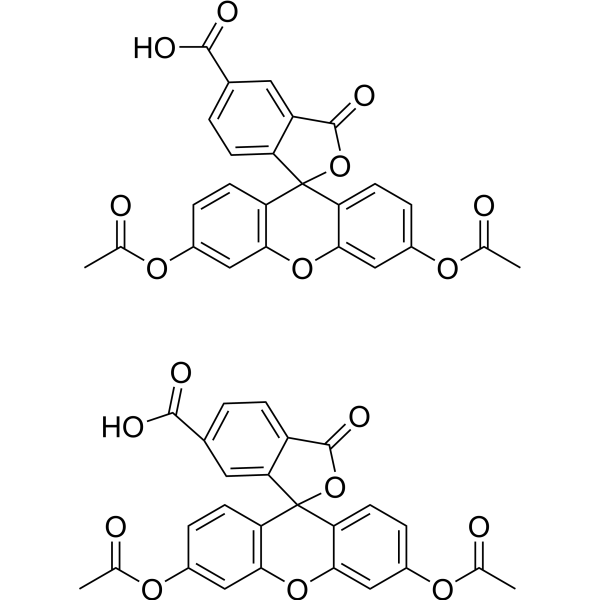
- HY-D0722
-
|
5-(6)-Carboxyfluorescein diacetate; CFDA
|
Fluorescent Dye
|
Others
|
|
5(6)-CFDA is a common aliphatic luciferin-line organism. CFDA conducts free diffusion into cells, and then it is hydrolyzed into carboxyl fluorescein (CF) by intracellular non-specific lipase. CF containing portion contains an additional negative charge so that it is better retained in cells, compared to fluorescein dyes .
|
-
- HY-P10932
-
|
|
Fluorescent Dye
|
Neurological Disease
|
|
pGk13a is an amphipathic membrane-labeling probe containing an azide group, which can bind to fluorophores. pGk13a enables high-resolution imaging of cell membranes in the ultrastructure expansion microscopy (umExM) technique, facilitating the observation of membrane-associated structures and proteins. pGk13a is applicable to neuronal structure research .
|
-
- HY-D1336
-
|
|
Fluorescent Dye
|
|
|
FAM amine, 6-isomer is a fluorescein derivative with an amine group and contains an isomer of the fluorophore. Can be used to modify biomolecules through enzymatic transamination. Its fatty amine groups can also react with electrophiles such as activated esters. The amine can also be conjugated to carbonyl compounds (aldehydes and ketones) by reductive amination.
|
-
- HY-P0201AF
-
|
|
Fluorescent Dye
Endogenous Metabolite
|
Cancer
|
|
Substance P, FAM-labeled (TFA) is Substance P TFA (HY-P02101A) labeled with FAM fluorophore. Substance P TFA (Neurokinin P TFA) is a neuropeptide that acts as a neurotransmitter and neuromodulator in the central nervous system. The endogenous receptor of Substance P is neurokinin 1 receptor (NK1R) .
|
-
- HY-D3165
-
|
|
Fluorescent Dye
|
Cancer
|
|
DCM-gal-CF is a fluorescent probe containing a DCM fluorophore scaffold and a D-galactose recognition moiety. DCM-gal-CF itself shows weak fluorescence, and its fluorescence is enhanced after cleavage by β-galactosidase. DCM-gal-CF can be used to detect β-galactosidase activity .
|
-
- HY-D1677
-
|
|
Fluorescent Dye
|
Others
|
|
5(6)-Carboxynaphthofluorescein is a pH-dependent fluorophore. 5(6)-Carboxynaphthofluorescein shows good sensitivity in an alkaline pH range and it can be exploited in the construction of fiber-optic pH sensors. 5(6)-Carboxynaphthofluorescein can be used as a fluorescent pH indicator (Ex/Em=593/668 nm) .
|
-
- HY-D2040
-
|
|
Fluorescent Dye
|
Others
|
|
ROX tetrazine is a derivative of ROX (Rhodamine X, Rhodamine 101) dye, a red-emitting fluorophore possessing high brightness and fluorescence quantum yield. This compound contains tetrazine moiety that reacts with trans-cycloalkenes and other strained olefins in inverse electron demand Diels-Alder reaction (IEDDA). The reaction is very quick and specific.
|
-
- HY-D2348
-
|
|
Fluorescent Dye
|
Infection
Others
|
|
ACE is a low-background, photostable fluorophore with nanomolar binding affinity for the Okra RNA aptamer. ACE enables clear visualization of mRNA in live bacteria and mammalian cells, including tracking the trafficking of mRNA to stress granules and dual-color super-resolution imaging of RNA in live cells. (Ex=488 nm, Em=555 nm) .
|
-
- HY-D0159A
-
|
|
Fluorescent Dye
|
Others
|
|
ZnAF-1F tetraTFA is a potent fluorophore for with an Kd value of 2.2 nM. ZnAF-1F tetraTFA can be used as fluorescent probes for Zn 2+ in cells. ZnAF-1F tetraTFA shows λ excitation of 489 nm and λ emission of 514 nm .
|
-
- HY-P5380
-
|
Dabcyl-GABA-Pro-Gln-Gly-Leu-Glu(EDANS)-Ala-Lys-NH2
|
MMP
Fluorescent Dye
|
Others
|
|
TNO211 (Dabcyl-GABA-Pro-Gln-Gly-Leu-Glu(EDANS)-Ala-Lys-NH2) is a fluorogenic substrate, containing the MMP cleavable Gly-Leu bond and EDANS/Dabcyl as fluorophore/quencer combination. TNO211 can specifically detect MMP activity (Ex/Em = 340/485 nm) .
|
-
- HY-P5296
-
|
|
Fluorescent Dye
|
Others
|
|
Dabsyl-Leu-Gly-Gly-Gly-Ala-Edans is a fluorophore Dabsyl-labeled peptide. Dabsyl-Leu-Gly-Gly-Gly-Ala-Edans can be used to test the peptidase activity of the LasA protease of Pseudomonas aeruginosa. Dabsyl-Leu-Gly-Gly-Gly-Ala-Edans has enzyme specificity and has application value .
|
-
- HY-P2089
-
|
|
MMP
|
Others
|
|
Dnp-PYAYWMR is a peptide substrate that selectively targets MMP3. Dnp-PYAYWMR is cleaved by MMP3 to produce Dnp-PYA (nonfluorescent) and YWMR (fluorophore detectable at 360 nm). After incubation of MMP3 with Dnp-PYAYWMR for 2 h, MMP3 fluorescence intensity was measured. Ex/Em=328/350 nm .
|
-
- HY-P10162A
-
|
|
Caspase
|
Others
|
|
Ac-DMQD-AMC TFA is a fluorogenic substrate for caspase-3 or caspase-10. Similar to Ac-DEVD-AMC, it releases the AMC (7-amino-4-methylcoumarin) fluorophore, resulting in fluorescence. Ac-DMQD-AMC TFA can be used to measure caspase activity in in vitro apoptosis monitoring .
|
-
- HY-D0251R
-
|
Uranine (Standard)
|
Fluorescent Dye
Reference Standards
|
Cancer
|
|
Fluorescein (Standard) is the analytical standard of Fluorescein. This product is intended for research and analytical applications. Fluorescein (Uranine) is widely used as a fluorescent tracer in medicinal and biological applications and tumor infected tissues tracer. Fluorescein (Uranine) is a representative green fluorophore that has been widely used as a scaffold of practically useful green fluorescent probes .
|
-
- HY-153847
-
|
|
Biochemical Assay Reagents
|
Others
|
|
RNA Aptamer Mango Ⅱ (sodium) has an exceptionally high affinity to TO1-biotin (a thiazole orange derivative fluorophore), and can be used to visualize RNA expression or localization in live cells. Compared to the original Mango I aptamer, RNA Aptamer Mango Ⅱ (sodium) has markedly improved fluorescent properties, binding affinities, and salt dependencies.
|
-
- HY-D2348A
-
|
|
Fluorescent Dye
|
Infection
|
|
ACE TFA is a low-background, photostable fluorophore with nanomolar binding affinity for the Okra RNA aptamer. ACE TFA enables clear visualization of mRNA in live bacteria and mammalian cells, including tracking the trafficking of mRNA to stress granules and dual-color super-resolution imaging of RNA in live cells. (Ex=488 nm, Em=555 nm) .
|
-
- HY-P5380A
-
|
Dabcyl-GABA-Pro-Gln-Gly-Leu-Glu(EDANS)-Ala-Lys-NH2 TFA
|
MMP
Fluorescent Dye
|
Cancer
|
|
TNO211 (Dabcyl-GABA-Pro-Gln-Gly-Leu-Glu(EDANS)-Ala-Lys-NH2) TFA is a fluorogenic substrate, containing the MMP cleavable Gly-Leu bond and EDANS/Dabcyl as fluorophore/quencer combination. TNO211 TFA can specifically detect MMP activity (Ex/Em = 340/485 nm) .
|
-
- HY-D1545
-
|
Acid Violet 9
|
Fluorescent Dye
|
Others
|
|
Violamine R (Acid Violet 9) is a potent fluorophore. Violamine R shows environment and temperature-dependent photoluminescence (PL) intermittency in poly(vinyl alcohol) (PVOH) and potassium acid phthalate (KAP). Violamine R can be used to measure the temperatures spanning the glass-transition temperature (Tg) of the polymer host by the fluorescence intermittency or blinking in poly(vinyl alcohol) (PVA) .
|
-
- HY-173535
-
|
TNP-β-L-Guanosine 5'-triphosphate tetrasodium
|
Arf Family GTPase
|
Others
|
|
TNP-β-L-GTP (TNP-β-L-Guanosine 5'-triphosphate) tetrasodium is a fluorescent GTP mimetic that can be used to study the binding kinetics and affinity of GTP-binding proteins (such as G proteins and GTPases). TNP-β-L-GTP tetrasodium carries a TNP fluorophore, which changes fluorescence intensity upon protein binding, allowing for quantitative analysis .
|
-
- HY-D2740
-
|
|
Fluorescent Dye
|
Others
|
|
ROX azide, 6-isomer is an alkyne-reactive derivative of ROX (Rhodamine X, Rhodamine 101) dye. ROX is a red-emitting fluorophore possessing high brightness and fluorescence quantum yield. This reagent is a pure 6-isomer. It is used for labeling alkyne and cycloalkyne-containing biomolecules via copper-catalyzed and copper-free click chemistry reactions.
|
-
- HY-D1596A
-
|
Cy3.5 NHS ester bromide; Cy 3.5 bromide
|
Fluorescent Dye
|
Others
|
|
Cyanine 3.5 bromide (Cy3.5 NHS ester bromide) is an analog of the Cy3.5 fluorophore. Cyanine 3.5 bromide is a red reactive fluorescent dye. Cyanine 3.5 bromide is used to label amino groups in peptides, proteins, and oligonucleotides. (λex=591 nm, λem=604 nm) .
|
-
- HY-P3432
-
|
|
Biochemical Assay Reagents
|
Others
|
|
DfTat is a dimer of the prototypical cell-penetrating peptide TAT. DfTat can deliver small molecules, peptides and proteins into live cells with a particularly high efficiency. DfTat labeled with the rhodamine can be used as a tracer for easy detection .
|
-
- HY-D2440
-
|
|
Fluorescent Dye
|
Others
|
|
cRGD-PEG-Cy3 is a Cy3 (HY-D0822) labeled cRGD-PEG conjugate. The Cy3 fluorophore is commonly used in applications such as immunolabeling, nucleic acid labeling, fluorescence microscopy, and flow cytometry. Cy3 has an emission maximum around 562-570 nm. cRGD can be used to modify lipid for improved stability .
|
-
- HY-173530
-
|
8-Bromo TNP-Guanosine 5'-triphosphate tetrasodium
|
Fluorescent Dye
|
Others
|
|
8-Bromo TNP-GTP (8-Bromo TNP-Guanosine 5'-triphosphate) tetrasodium is a fluorescent TNP-GTP analogue with a TNP fluorophore and a bromo group at the 8-position. 8-Bromo TNP-GTP tetrasodium can be used to analyze the binding activity of GTP-binding proteins (such as Ras and Gα subunits) .
|
-
- HY-D2750
-
|
|
Fluorescent Dye
|
Others
|
|
Sulfo-Cy5 Picolyl Azide is a fluorophore featuring a sulfonate group and an azide. Azide groups are click chemistry handles which are reactive towards terminal alkynes and strained cyclooctynes such as BCN or DBCO. Cy5 is a cyanine dye with excitation and emission maxima at 651 nm and 670 nm respectively. The sulfonate group on the Cy5 dye increases this compound’s water solubility.
|
-
- HY-W800818
-
|
|
Biochemical Assay Reagents
|
Others
|
|
(Z)-Non-2-enyl 6-bromohexanoate is an analogue of Biotin and a protein cross-linking agent.(Z)-Non-2-enyl 6-bromohexanoate binds less tightly to biotin-binding proteins such as Avidin and is easily displaced by Biotin. It is used in the preparation of agarose matrices for affinity-based isolation of streptavidin-fluorophore conjugates.
|
-
- HY-P10932A
-
|
|
Fluorescent Dye
|
Neurological Disease
|
|
pGk13a TFA is an azide (azide group can be combined with fluorophore)-containing amphiphilic membrane labeling probe. pGk13a TFA enables high-resolution imaging of cell membranes in the ultrastructural membrane expansion microscopy (umExM) technique, facilitating the observation of membrane-associated structures and proteins. pGk13a TFA can be used for neuronal structural studies .
|
-
- HY-P2651
-
|
|
Fluorescent Dye
|
Others
|
|
Dansyl-D-Ala-Gly-Phe(pNO2)-Gly is a synthetic peptide substrate. As a substrate of NEP, Dansyl-D-Ala-Gly-Phe(pNO2)-Gly can be specifically recognized and cleaved by the enzyme, thereby releasing the fluorophore dansyl, which can be quantitatively detected. Therefore, it is often used to determine the activity of NEP .
|
-
- HY-D1351
-
|
Sulfo-Cy5.5 maleimide potassium
|
Fluorescent Dye
|
Others
|
|
Sulfo-Cyanine5.5 maleimide (Sulfo-Cy5.5 maleimide) potassium is a fluorescent dye. Sulfo-Cyanine5.5 is a nearinfrared (NIR) fluorophore with excitation maximum 675 nm and emission maximum 694 nm. Sulfo-Cyanine5.5 maleimide potassium can be used for the labeling of sensitive proteins, nanoparticles, and highly hydrophylic biopolymers .
|
-
- HY-160043
-
|
|
Biochemical Assay Reagents
|
Cancer
|
|
AL6 aptamer sodium is a short-chain nucleic acid aptamer chemically synthesized in vitro. AL6 aptamer sodium specifically targets Angiopoietin (Ang) for the specific detection of Ang. The AL6 aptamer binds to Ang, causing the rotational motion of the fluorophore on the AL6 aptamer to become slower. The concentration of Ang in the test solution can be quantified by detecting the anisotropy of AL6 aptamer/Ang .
|
-
- HY-D1366
-
|
|
Fluorescent Dye
|
|
|
Sulfo-Cyanine5.5 carboxylic acidCI Pigment violet 32 is a water-soluble, far-red emitting fluorophore. Due to its four sulfo groups, this dye has a negative charge at neutral pH and is very hydrophilic. As a cyanine dye, sulfo-Cyanine5.5 shows a very low dependence of fluorescence on pH and a very high extinction coefficient.
|
-
- HY-172721
-
|
|
Fluorescent Dye
|
Others
|
|
Cy3B maleimide is a mono-reactive dye containing maleimide group, which can selectively and efficiently attach Cyanine3 fluorophore (an analog of Cy3) to proteins and peptides containing cysteine residues, as well as to other thiolated molecules (such as thiol-containing oligonucleotides). Cy3B is an improved version of Cy3 dyes with significantly increased fluorescence quantum yield and photostability.
|
-
- HY-P5423D
-
|
|
Exosomes
|
Others
|
|
Ahx-GALA-Cys is a GALA peptide (HY-P5423) derivative with an N-terminal 6-aminohexanoic acid (Ahx) linker and a C-terminal cysteine residue. Ahx-GALA-Cys possesses strong covalent coupling capacity, which can be used to conjugate fluorophores and targeting ligands for investigating the surface functionalization of small extracellular vesicles (sEV) and lysosomal escape .
|
-
- HY-D2437
-
|
|
Fluorescent Dye
Antibiotic
|
Cardiovascular Disease
Cancer
|
|
DOX-PEG-Cy3 (Doxorubicin-PEG-Cy3) is a Cy3 (HY-D0822) labeled DOX-PEG conjugate. The Cy3 fluorophore is commonly used in applications such as immunolabeling, nucleic acid labeling, fluorescence microscopy, and flow cytometry. Cy3 has an emission maximum around 562-570 nm. DOX is a broad-spectrum anthracycline antibiotic with cytotoxic properties .
|
-
- HY-P1169A
-
|
|
Caspase
|
Others
|
|
Ac-IETD-AFC TFA is a synthetic fluorogenic substrate that can be used to specifically detect caspase-8 activity. INDO 1 pentasodium is imbued with the fluorophore AFC (7-amino-4-trifluoromethylcoumarin). When caspase-8 recognizes and cleaves the amide bond following the IETD sequence in this substrate, AFC is released and emits fluorescence (Ex = ~400 nm; Em = ~505 nm) .
|
-
- HY-D2381
-
|
|
Fluorescent Dye
|
Others
|
|
AF 488 maleimide is a thiol-reactive dye used to label SH groups of proteins, which can attach the AF 488 fluorophore to cysteine residue-containing proteins and peptides as well as other thiolated molecules. AF 488 maleimide enables real-time visualization of dynamic pilus extension and retraction in live bacterial cells via epifluorescence microscopy (Ex/Em = 470/520 nm) .
|
-
- HY-133536
-
|
PA-JF549-NHS
|
Fluorescent Dye
|
Others
|
|
PA Janelia Fluor 549, SE (PA-JF549-NHS) is a bright photoactivatable fluorophore of JF549,SE (JF549,NHS). JF549,SE (JF549,NHS) is a fluorescent dye with the absorption maximum (λab (max)) of 549 nm and emission maximum (λem (max)) of 571 nm .
|
-
- HY-D2706
-
|
|
Fluorescent Dye
|
Others
|
|
Cy3 Dextran (MW 3000) is a fluorescent labeling reagent that combines Cy3 (HY-D0822) fluorescent dye and Dextran (HY-112624). The Cy3 fluorophore is commonly used in applications such as immunolabeling, nucleic acid labeling, fluorescence microscopy, and flow cytometry. Dextran has an inhibitory effect on thrombocyte aggregation and coagulation factors and is used as a plasma volume expander (Ex/Em = 550/570 nm) .
|
-
- HY-D2712
-
|
|
Fluorescent Dye
|
Others
|
|
Cy3 Dextran (MW 500000) is a fluorescent labeling reagent that combines Cy3 (HY-D0822) fluorescent dye and Dextran (HY-112624). The Cy3 fluorophore is commonly used in applications such as immunolabeling, nucleic acid labeling, fluorescence microscopy, and flow cytometry. Dextran has an inhibitory effect on thrombocyte aggregation and coagulation factors and is used as a plasma volume expander (Ex/Em = 550/570 nm) .
|
-
- HY-D2708
-
|
|
Fluorescent Dye
|
Others
|
|
Cy3 Dextran (MW 10000) is a fluorescent labeling reagent that combines Cy3 (HY-D0822) fluorescent dye and Dextran (HY-112624). The Cy3 fluorophore is commonly used in applications such as immunolabeling, nucleic acid labeling, fluorescence microscopy, and flow cytometry. Dextran has an inhibitory effect on thrombocyte aggregation and coagulation factors and is used as a plasma volume expander (Ex/Em = 550/570 nm) .
|
-
- HY-75706
-
|
|
PARP
Ligands for Target Protein for PROTAC
|
Cancer
|
|
N-Descyclopropanecarbaldehyde Olaparib is an analogue of Olaparib (HY-10162) containing DOTA moiety. N-Descyclopropanecarbaldehyde Olaparib is a PARP inhibitor used for synthesizing novel dual EGFR and PARP PROTAC, DP-C-4 (HY-141481) . N-Descyclopropanecarbaldehyde Olaparib can be radiolabeled with F-18 or fluorophore for positron emission tomography (PET) or optical imaging in several types of tumor .
|
-
- HY-D2710
-
|
|
Fluorescent Dye
|
Others
|
|
Cy3 Dextran (MW 40000) is a fluorescent labeling reagent that combines Cy3 (HY-D0822) fluorescent dye and Dextran (HY-112624). The Cy3 fluorophore is commonly used in applications such as immunolabeling, nucleic acid labeling, fluorescence microscopy, and flow cytometry. Dextran has an inhibitory effect on thrombocyte aggregation and coagulation factors and is used as a plasma volume expander (Ex/Em = 550/570 nm) .
|
-
- HY-D2707
-
|
|
Fluorescent Dye
|
Others
|
|
Cy3 Dextran (MW 5000) is a fluorescent labeling reagent that combines Cy3 (HY-D0822) fluorescent dye and Dextran (HY-112624). The Cy3 fluorophore is commonly used in applications such as immunolabeling, nucleic acid labeling, fluorescence microscopy, and flow cytometry. Dextran has an inhibitory effect on thrombocyte aggregation and coagulation factors and is used as a plasma volume expander (Ex/Em = 550/570 nm) .
|
-
- HY-D2705
-
|
|
Fluorescent Dye
|
Others
|
|
Cy3 Dextran (MW 2000) is a fluorescent labeling reagent that combines Cy3 (HY-D0822) fluorescent dye and Dextran (HY-112624). The Cy3 fluorophore is commonly used in applications such as immunolabeling, nucleic acid labeling, fluorescence microscopy, and flow cytometry. Dextran has an inhibitory effect on thrombocyte aggregation and coagulation factors and is used as a plasma volume expander (Ex/Em = 550/570 nm) .
|
-
- HY-D2711
-
|
|
Fluorescent Dye
|
Others
|
|
Cy3 Dextran (MW 100000) is a fluorescent labeling reagent that combines Cy3 (HY-D0822) fluorescent dye and Dextran (HY-112624). The Cy3 fluorophore is commonly used in applications such as immunolabeling, nucleic acid labeling, fluorescence microscopy, and flow cytometry. Dextran has an inhibitory effect on thrombocyte aggregation and coagulation factors and is used as a plasma volume expander (Ex/Em = 550/570 nm) .
|
-
- HY-D2431
-
|
|
Fluorescent Dye
|
Others
|
|
Galactose-PEG-Cy3 is a Cy3 (HY-D0822) labeled Galactose-PEG conjugate. The Cy3 fluorophore is commonly used in applications such as immunolabeling, nucleic acid labeling, fluorescence microscopy, and flow cytometry. Cy3 has an emission maximum around 562-570 nm. Galactose-PEG improves drug cellular uptake and reduces endosomal degradation, and can be used in drug delivery .
|
-
- HY-D2430
-
|
|
Fluorescent Dye
Bacterial
Fungal
|
Infection
Cancer
|
|
Chitosan-PEG-Cy3 is a fluorescent labeling reagent that combines Cy3 (HY-D0822) fluorescent dye, Chitosan and polyethylene glycol (PEG). The Cy3 fluorophore is commonly used in applications such as immunolabeling, nucleic acid labeling, fluorescence microscopy, and flow cytometry. Cy3 has an emission maximum around 562-570 nm. Chitosan exhibits antimicrobial activity against various bacteria and fungi .
|
-
- HY-170466
-
|
1-Palmitoyl-2-stearoyl-(12-doxyl)-sn-glycero-3-phosphocholine
|
Biochemical Assay Reagents
|
Others
|
|
16:0-12 Doxyl PC (1-Palmitoyl-2-stearoyl-(12-doxyl)-sn-glycero-3-phosphocholine) is a fluorescence quencher, and its nitrogen oxide is located downstream of the sn-2 chain. 16:0-12 Doxyl PC has a better fluorescence quenching effect onthe fluorophore is buried within the hydrocarbon interior of the bilayer .
|
-
- HY-143702
-
|
NBD-DOTAP
|
Fluorescent Dye
Liposome
|
Inflammation/Immunology
Cancer
|
|
Fluorescent DOTAP (NBD-DOTAP) is a cationic lipid which can be used for nucleic acid and protein delivery. Fluorescent DOTAP is labeled with a fluorophore NBD (maximum excitation/emission wavelength ∼463/536 nm). Fluorescent DOTAP can be used for gene delivery systems, drug delivery, as well as cell imaging and nanocarrier tracking. Fluorescent DOTAP is an ideal candidate for both biological and pharmaceutical formulation (e.g. co-delivery of vaccines) research .
|
-
- HY-D2906
-
|
|
Fluorescent Dye
|
Others
|
|
Alexa fluor 647 maleimide is a bright, far-red-emitting fluorescent dye for labeling of protein SH groups (Ex/Em = 656/670 nm). Alexa fluor 647 maleimide can be used to attach AF 647 fluorophore to proteins and peptides containing cysteine residues, as well as to other thiolated molecules (such as thiol-containing oligonucleotides). Alexa Fluor 647 maleimide is promising for research of cell biology, neuroscience, and disease diagnostics .
|
-
- HY-D3140
-
|
|
Fluorescent Dye
Tyrosinase
|
Cancer
|
|
MB-m-borate is a double-locked near-infrared fluorescence-activated probe (Ex/Em ≈ 647 nm/684 nm). MB-m-borate undergoes cascade activation by hydrogen peroxide and tyrosinase to release the fluorophore methylene blue, thereby generating a fluorescence activation response. MB-m-borate enables precise detection of melanoma in melanoma cells and mouse models. MB-m-borate can be used for melanoma research .
|
-
- HY-D2433
-
|
|
Fluorescent Dye
|
Others
|
|
Glucose-PEG2000-Cy3 is a Cy3 (HY-D0822) labeled Glucose-PEG conjugate. The Cy3 fluorophore is commonly used in applications such as immunolabeling, nucleic acid labeling, fluorescence microscopy, and flow cytometry. Cy3 has an emission maximum around 562-570 nm. Glucose-PEG improves drug cellular uptake and reduces endosomal degradation, and can be used in drug delivery .
|
-
- HY-D3319
-
|
|
Biochemical Assay Reagents
MMP
|
Inflammation/Immunology
Cancer
|
|
BHQ‑3 carboxylic acid is an azo‑containing dark fluorescence quencher. BHQ‑3 carboxylic acid is conjugated to an MMP‑cleavable peptide and paired with a fluorophore to form an activatable probe for MMP activity detection in vitro. BHQ‑3 carboxylic acid shows maximal absorption in the 620 to 730 nm range. BHQ‑3 carboxylic acid–based fluorescent probes can be used in the research of arthritis and tumor‑related pathological processes. .
|
-
- HY-134928
-
|
A2E
|
Apoptosis
Autophagy
Reactive Oxygen Species (ROS)
|
Cancer
|
|
Pyridinium bisretinoid A2E (A2E) is a fluorophore that can be isolated from lipofuscin in the retinal pigment epithelium (RPE). Pyridinium bisretinoid A2E is an initiator of blue-light-induced apoptosis. Photoactivation of Pyridinium bisretinoid A2E mediates autophagy and the production of reactive oxygen species. Pyridinium bisretinoid A2E can be used in the study of retinal degenerative diseases .
|
-
- HY-D2466
-
|
|
Fluorescent Dye
|
Cardiovascular Disease
|
|
Cy3 Dextran (MW 70000) is a fluorescent labeling reagent that conjugates the Cy3 (HY-D0822) fluorescent dye with Dextran (HY-112624). The Cy3 fluorophore is commonly used in applications such as immunolabeling, nucleic acid labeling, fluorescence microscopy, and flow cytometry. The maximum emission wavelength of Cy3 is approximately 562-570 nm. Dextran inhibits platelet aggregation and coagulation factors, and serves as a plasma volume expander .
|
-
- HY-D2709
-
|
|
Fluorescent Dye
|
Others
|
|
Cy3 Dextran (MW 20000) is a fluorescent labeling reagent that combines Cy3 (HY-D0822) fluorescent dye and Dextran (HY-112624). The Cy3 fluorophore is commonly used in applications such as immunolabeling, nucleic acid labeling, fluorescence microscopy, and flow cytometry. Dextran has an inhibitory effect on thrombocyte aggregation and coagulation factors and is used as a plasma volume expander (Ex/Em = 550/570 nm) .
|
-
- HY-136675
-
|
|
Fluorescent Dye
|
Others
|
|
ASMI is a ratiometric, two-photon excited fluorescent probe, composed of a highly two-photon active and biocompatible merocyanine fluorophore and an acrylate moiety as a thiol reactive site. ASMI is able to selectively detect and monitor mitochondrial Cys with rapid responsiveness, imaging living cells and intact tissues with high contrast and brightness at a depth of 150 μm. The two-photon action cross section (Φσmax) of ASMI is 65.2 GM, corresponding to an excitation wavelength (λex) of 740 nm.
|
-
- HY-D2601
-
|
|
Fluorescent Dye
|
Others
|
|
ICG PEG3400 NH2 is a polyethylene glycol derivative containing Indocyanine green (ICG) (HY-D0711) fluorescent dye and polyethylene glycol (PEG) and an amino group. The Indocyanine green fluorophore is commonly used in applications such as immunolabeling, nucleic acid labeling, fluorescence microscopy, and flow cytometry. ICG PEG3400 NH2 can be used for fluorescence imaging, fluorescence tracing and fluorescence labeling (Ex/Em=785/813 nm).
|
-
- HY-125452
-
|
|
Fluorescent Dye
|
Others
|
|
DiSBAC10 is a voltage-sensitive fluorescent probe used to study cell membrane electrical activity in FRET assays. In a resting polarized cell, DiSBAC10 resides on the outer leaflet of the membrane where it accepts photons from excited fluorescein-labeled proteins and re-emits the photons at a higher wavelength. Depolarization of the cell causes rapid translocation of DiSBAC10 to the inner leaflet of the membrane, thereby increasing the distance between fluorophores and reducing the FRET signal.
|
-
- HY-D2600
-
|
|
Fluorescent Dye
|
Others
|
|
ICG PEG2000 NH2 is a polyethylene glycol derivative containing Indocyanine green (ICG) (HY-D0711) fluorescent dye and polyethylene glycol (PEG) and an amino group. The Indocyanine green fluorophore is commonly used in applications such as immunolabeling, nucleic acid labeling, fluorescence microscopy, and flow cytometry. ICG PEG2000 NH2 can be used for fluorescence imaging, fluorescence tracing and fluorescence labeling (Ex/Em=785/813 nm).
|
-
- HY-149380
-
|
|
Raf
|
Cancer
|
|
Vem-L-Cy5 (compound 3),modified with the NIR fluorophore cyanine-5 (Cy5),is a Vemurafenib (HY-12057)-based inhibitor of BRAF. Vem-L-Cy5 targets to BRAF V600E,and also inhibits MEK phosphorylation. Vem-L-Cy5 has cell permeability,and inhibits cell growth of many types of cancer .
|
-
- HY-D2602
-
|
|
Fluorescent Dye
|
Others
|
|
ICG PEG5000 NH2 is a polyethylene glycol derivative containing Indocyanine green (ICG) (HY-D0711) fluorescent dye and polyethylene glycol (PEG) and an amino group. The Indocyanine green fluorophore is commonly used in applications such as immunolabeling, nucleic acid labeling, fluorescence microscopy, and flow cytometry. ICG PEG5000 NH2 can be used for fluorescence imaging, fluorescence tracing and fluorescence labeling (Ex/Em=785/813 nm).
|
-
- HY-D2170
-
|
|
Fluorescent Dye
|
Others
|
|
AF488 streptavidin is a fluorescently labeled streptavidin. AF488 streptavidin is a streptavidin conjugated to Alexa Fluor 488, with 4 fluorophores per protein molecule, enabling stoichiometric fluorescent labeling of cell surface targets. AF488 streptavidin can form a complex with biotinylated E07 aptamer to stain cells expressing EGFR, and the staining is reversible after treatment with mA9 detoxifying oligonucleotides (Ex/Em = 470/520 nm) .
|
-
- HY-D2441
-
|
|
Fluorescent Dye
|
Cancer
|
|
TAT-PEG-Cy3 is a fluorescent labeling reagent that combines Cy3 fluorescent dye, Cell membrane penetrating peptide (TAT) and polyethylene glycol (PEG). The Cy3 fluorophore is commonly used in applications such as immunolabeling, nucleic acid labeling, fluorescence microscopy, and flow cytometry. Cy3 has an emission maximum around 562-570 nm. TAT-PEG-Cy3 can be used for cell targeted delivery and biological imaging .
|
-
- HY-D2599
-
|
|
Fluorescent Dye
|
Others
|
|
ICG PEG1000 NH2 is a polyethylene glycol derivative containing Indocyanine green (ICG) (HY-D0711) fluorescent dye and polyethylene glycol (PEG) and an amino group. The Indocyanine green fluorophore is commonly used in applications such as immunolabeling, nucleic acid labeling, fluorescence microscopy, and flow cytometry. ICG PEG1000 NH2 can be used for fluorescence imaging, fluorescence tracing and fluorescence labeling (Ex/Em=785/813 nm).
|
-
- HY-P11302
-
|
|
CHIKV
Virus Protease
|
Infection
|
|
DABCYL-RAGGYIFS-(E-EDANS)-NH2, an octapeptide, is a FRET-based substrate peptide of CHIKV nsP2protease with highly sensitivity. DABCYL-RAGGYIFS-(E-EDANS)-NH2 can be cleaved by the active CHIKV nsP2protease, separating fluorophore and quencher and resulting in an increase of fluorescence signal. DABCYL-RAGGYIFS-(E-EDANS)-NH2 can used for the determination of CHIKV nsP2protease activity .
|
-
- HY-D2964
-
|
|
Fluorescent Dye
|
Others
|
|
NBzF-BG is a novel H2O2-specific fluorescent probe. NBzF-BG shows visible absorption centered at 505 nm and weak fluorescence with an emission maximum at 525 nm. NBzF-BG is covalently and selectively conjugated with the SNAP-tag protein, leading to formation of the fluorophore-protein conjugate (SNAP-NBzF). SNAP-NBzF rapidly reacts with H2O2 and thereby shows an enhancement in fluorescence .
|
-
- HY-D2603
-
|
|
Fluorescent Dye
|
Others
|
|
ICG PEG10000 NH2 is a polyethylene glycol derivative containing Indocyanine green (ICG) (HY-D0711) fluorescent dye and polyethylene glycol (PEG) and an amino group. The Indocyanine green fluorophore is commonly used in applications such as immunolabeling, nucleic acid labeling, fluorescence microscopy, and flow cytometry. ICG PEG10000 NH2 can be used for fluorescence imaging, fluorescence tracing and fluorescence labeling (Ex/Em=785/813 nm).
|
-
- HY-P10322
-
|
|
Fluorescent Dye
|
Cancer
|
|
Z-IETD-R110 is a fluorescent substrate of caspases. Z-IETD-R110 acts as a substrate for caspase-8. When caspase-8 is activated, it can recognize and cut Z-IETD-R110, releasing fluorophore, which can be detected by fluorescence microscopy. Z-IETD-R110 can be used to study oxidative stress-induced apoptosis, particularly in pancreatic acinar cells .
|
-
- HY-D2588
-
|
|
Fluorescent Dye
|
Others
|
|
Cy7.5 PEG-NH2 is a polyethylene glycol derivative containing CY7.5 (HY-D0926) fluorescent dye and polyethylene glycol (PEG) and an amino group. The CY7.5 fluorophore is commonly used in applications such as immunolabeling, nucleic acid labeling, fluorescence microscopy, and flow cytometry. Cy7.5 PEG-NH2 can be used for fluorescence imaging, fluorescence tracing and fluorescence labeling.
|
-
- HY-134928A
-
|
A2E TFA; N-retinylidene-N-retinylethanolamine TFA
|
Apoptosis
Autophagy
Reactive Oxygen Species (ROS)
|
Cancer
|
|
Pyridinium bisretinoid A2E (A2E) TFA is a fluorophore that can be isolated from lipofuscin in the retinal pigment epithelium (RPE). Pyridinium bisretinoid A2E TFA is an initiator of blue-light-induced apoptosis. Photoactivation of Pyridinium bisretinoid A2E TFA mediates autophagy and the production of reactive oxygen species. Pyridinium bisretinoid A2E TFA can be used in the study of retinal degenerative diseases .
|
-
- HY-D1373
-
HBC
3 Publications Verification
HBC 530
|
Fluorescent Dye
|
Others
|
|
HBC (HBC 530) is a GFP fluorophore-like synthetic dye, with a structurally rigid electron acceptor and a strong electron donor. HBC has a low fluorescence background, and when combined with Pepper (RNA aptamer), HBC forms a tight complex and activates and emits bright fluorescence (Kd of ~3.5 nM). HBC emission peaks vary in different complexes and covers the spectrum from cyan to red. HBC can be used in the live cell imaging of RNA (Em/Ex = 530/485 nm) .
|
-
- HY-159194
-
|
|
Liposome
|
Cancer
|
|
DSPE-PEG2000-Cy5.5 is a phospholipid-fluorophore conjugate consisting of Cy5.5 covalently linked to 1,2-distearoyl-sn-glycero-3-phosphoethanolamine (DSPE), serving as a surface label for liposomes in multimodal CT/optical imaging.DSPE-PEG2000-Cy5.5 can be used for the research of non-small cell lung cancer .
|
-
- HY-D2426
-
|
|
Fluorescent Dye
Transferrin Receptor
|
Cardiovascular Disease
|
|
Cy3-Transferrin is a fluorescent labeling reagent that combines Cy3 (HY-D0822) fluorescent dye and Transferrin (HY-P3267). The Cy3 fluorophore is commonly used in applications such as immunolabeling, nucleic acid labeling, fluorescence microscopy, and flow cytometry. Cy3 has an emission maximum around 562-570 nm. Transferrin, a blood-plasma glycoprotein, is a target ligand for transferrin receptor. Transferrin can bind to and mediate the transport of iron .
|
-
- HY-D2436
-
|
|
Fluorescent Dye
Microtubule/Tubulin
Apoptosis
|
Cardiovascular Disease
Cancer
|
|
PTX-PEG-Cy3 (Paclitaxel-PEG-Cy3) is a Cy3 (HY-D0822) labeled PTX-PEG conjugate. The Cy3 fluorophore is commonly used in applications such as immunolabeling, nucleic acid labeling, fluorescence microscopy, and flow cytometry. Cy3 has an emission maximum around 562-570 nm. PTX stabilizes tubulin polymerization. PTX can cause both mitotic arrest and apoptotic cell death. PTX also induces autophagy .
|
-
- HY-P2031
-
|
|
Arp2/3 Complex
|
Others
|
|
Phallacidin is a natural bicyclic heptapeptide derived from the poisonous mushroom Amanita phalloides. Phallacidin binds to filamentous actin specifically with high affinity, with a Kd of 20 nM. After binding to F-actin, Phallacidin strongly inhibits its depolymerization, stabilizes microfilament structures, and prevents their disruption by drugs such as cytochalasins. When conjugated with a fluorophore, Phallacidin serves as a specific fluorescent probe for F-actin, which is used to clearly visualize the distribution of actin in the cytoskeleton (e.g., stress fibers, cortical peripheral bands) under fluorescence microscopy .
|
-
- HY-P6023
-
|
|
Factor Xa
|
Cardiovascular Disease
|
|
D-Leu-Pro-Arg-Rh110-D-Pro is a substrate for Factor Xa I (FXIa) with binding affinity. D-Leu-Pro-Arg-Rh110-D-Pro consists of Rhodamine 110 (HY-D0817) linked to a peptide chain through a cleavable bond. Cleavable bond cleavage enhances fluorophore intensity. D-Leu-Pro-Arg-Rh110-D-Pro can be used to detect FXIa activity .
|
-
- HY-D2439
-
|
|
Fluorescent Dye
|
Cancer
|
|
RGD-PEG-Cy3 is a fluorescent labeling reagent that combines Cy3 fluorescent dye, peptide (RGD) and polyethylene glycol (PEG). The Cy3 fluorophore is commonly used in applications such as immunolabeling, nucleic acid labeling, fluorescence microscopy, and flow cytometry. Cy3 has an emission maximum around 562-570 nm. RGD is a peptide sequence (CRGDKGPDCiRGD) that binds to αvβ3 and αvβ5 integrin receptors on tumor neovasculogenesis to achieve specific tumor tissue targeting .
|
-
- HY-D3446
-
|
|
Fluorescent Dye
|
Others
|
|
PA-SiR-Halo is a photoactivatable fluorophore targeting HaloTag. When bound to HaloTag, PA-SiR-Halo stabilizes its fluorescent form under physiological pH. After conjugation and photoactivation, it exhibits enhanced resistance to nucleophiles, and enables live-cell confocal imaging, fixed-cell single-molecule localization microscopy imaging, live-cell single-particle tracking, as well as live-cell single-molecule localization microscopy imaging of dynamic mitochondrial structures without the need for washing .
|
-
- HY-D2942
-
|
|
Fluorescent Dye
|
Others
|
|
BDP-V BG-BODIPY is a SNAP tag fluorescent probe labeled with a BODIPY molecular motor. BDP-V BG-BODIPY contains a BODIPY molecular rotor that functions as a viscosity-sensitive fluorophore, which is highly responsive to local viscosity changes and enables the specific monitoring of the local microviscosity of proteins. BDP-V BG-BODIPY supports one-photon and two-photon imaging, with an excitation wavelength (Ex) of 488 nm (for one-photon excitation) and 850 nm (for two-photon excitation), and an emission wavelength (Em) of 500-600 nm .
|
-
- HY-D2438
-
|
|
Fluorescent Dye
|
Cancer
|
|
CDDP-PEG-Cy3 is a CDDP-PEG conjugate labeled with Cy3 (HY-D0822). The Cy3 fluorophore is commonly used in applications such as immunolabeling, nucleic acid labeling, fluorescence microscopy, and flow cytometry. The maximum emission wavelength of Cy3 is approximately 562-570 nm. Cisplatin (CDDP) (HY-17394) is an antineoplastic chemotherapy agent by cross-linking with DNA and causing DNA damage in cancer cells. Cisplatin activates ferroptosis and induces autophagy .
|
-
- HY-P6023B
-
|
|
Factor Xa
|
Cardiovascular Disease
|
|
D-Leu-Pro-Arg-Rh110-D-Pro acetate is a substrate for Factor Xa I (FXIa) with binding affinity. D-Leu-Pro-Arg-Rh110-D-Pro acetate consists of Rhodamine 110 (HY-D0817) linked to a peptide chain through a cleavable bond. Cleavable bond cleavage enhances fluorophore intensity. D-Leu-Pro-Arg-Rh110-D-Pro acetate can be used to detect FXIa activity .
|
-
- HY-136894
-
|
|
Fluorescent Dye
|
Others
|
|
Rhod-5N is a cell-impermeant calcium-binding fluorescent dye composed of a BAPTA chelating group and a rhodamine fluorophore. Rhod-5N is often added to MOPS buffer to complex and indicate cation content. The selectivity of Rhod-5N for Cd 2+ is higher than other interfering cations ((Na+, K+, Mg 2+, Ca 2+, Zn 2+) except Pb 2+), and the detection limit is 3.1 μg/L .
|
-
- HY-D2759
-
|
|
Fluorescent Dye
|
Others
|
|
Cyanine3B azide for click chemistry conjugation with terminal alkynes via a copper-catalyzed click reaction or strained cyclooctynes via a copper-free click reaction.
Cyanine3B is a yellow-emitting cyanine dye that is an improved version of the Cyanine3 fluorophore with significantly higher fluorescence quantum yield and photostability. Due to the fixed conformation, Cyanine3B has the highest emission quantum yield compared to other dyes of this wavelength.
This is a non-sulfonated dye that requires an organic co-solvent (DMF, DMSO, or other) for efficient labeling in water.
|
-
- HY-P6023A
-
|
|
Factor Xa
|
Cardiovascular Disease
|
|
D-Leu-Pro-Arg-Rh110-D-Pro TFA is a substrate for Factor Xa I (FXIa) with binding affinity. D-Leu-Pro-Arg-Rh110-D-Pro TFA consists of Rhodamine 110 (HY-D0817) linked to a peptide chain through a cleavable bond. Cleavable bond cleavage enhances fluorophore intensity. D-Leu-Pro-Arg-Rh110-D-Pro TFA can be used to detect FXIa activity .
|
-
- HY-151801
-
|
|
mAChR
|
Others
|
|
DIBA-Cy5 is a fluorescent DIBA antagonist made up be DIBA-alkyne binding Cyanine5 fluorophores (Cy5) and polyethylene glycol (PEG) biomolecules. DIBA-Cy5 can serve as a fluorescent ligand, suitable for probe attachment through click chemistry. DIBA-Cy5 exerts a high binding affinity to type-2 mAChR (M2R) with the Kd value of 1.80 nM, can directly stain M2R receptors in the sinoatrial node of a mouse heart .
|
-
- HY-W654272
-
|
4-MU-α-idoa 2-sulfate sodium
|
Fluorescent Dye
|
Metabolic Disease
|
|
4-Methylumbelliferyl-α-L-iduronide 2-sulfate (4-MU-α-idoa 2-sulfate) sodium is a fluorogenic substrate of iduronate-2-sulfatase (I2S). 4-Methylumbelliferyl-α-L-iduronide 2-sulfate sodium can be hydrolyzed by lysosomal enzyme α-l-iduronidase (IDUA) and release the fluorophore 4-Methylumbelliferone (HY-N0187). 4-Methylumbelliferyl-α-L-iduronide 2-sulfate sodium can be used to detect Hurler syndrome .
|
-
- HY-W150770
-
|
Isophthalic acid diamide
|
Drug Intermediate
|
Others
|
|
Isophthalamide (Isophthalic acid diamide) is a widely used chemical scaffold for the design of high-performance fluorescent chemosensors.Isophthalamide, with its inherent hydrogen-bond-donating properties and tunable chelating cavity, enables highly selective recognition and detection of various analytes ranging from inorganic ions to complex organic molecules.Isophthalamide can be incorporated with various fluorophores to develop sensors displaying “turn-on” or “turn-off” signal responses.Isophthalamide-based sensors are thus capable of detecting diverse analytes including metal ions, anions, neutral molecules, pharmaceuticals, and explosives .
|
-
- HY-D1069
-
|
DBCO-Sulfo-Cy3
|
Fluorescent Dye
|
Others
|
|
DBCO-Cy3 (DBCO-Sulfo-Cy3) is the derivative of Cyanine3 fluorophore, a pH insensitive from pH (4-10) orange fluorescent dyewith excitation maximum 555 nm and emission maximum of 580nm. DBCO-Cy3 has fast reaction kinetics and good stability, and is productive to use in many standard fluorescent instrumentations. DBCO-Cy3 is a click chemistry reagent, it contains a DBCO group that can undergo strain-promoted alkyne-azide cycloaddition (SPAAC) with molecules containing Azide groups.
|
-
- HY-D3240
-
|
|
Fluorescent Dye
|
Others
|
|
Photoactive NTR probe (Compound 1) is a covalent crosslinker and Fluorescent indicator targeting Nitroreductase. The Photoactive NTR probe undergoes a sequential activation process: it is first activated via nitroreductase-mediated nitro-to-amino conversion, and then forms a fluorescent product upon photoactivation. The Photoactive NTR probe can form covalent adducts with the side chains of cysteine, tyrosine, lysine and histidine in adjacent proteins to reduce fluorophore diffusion. The Photoactive NTR probe enables super-resolution (STORM) imaging of active mitochondrial nitroreductase microdomains in living cells .
|
-
- HY-D3327
-
|
|
Fluorescent Dye
|
Others
|
|
PE-AF700 is a tandem fluorescent dye used for flow cytometry, consisting of the donor phycoerythrin (PE) and the acceptor Alexa Fluor 700 (AF700) (Ex/Em = 488 nm/715 nm) .
|
-
- HY-D2923
-
|
|
Fluorescent Dye
|
Others
|
|
PA-JF549-Halo ligand is a covalently linked conjugate comprising the photoactivatable fluorescent dye PA-JF549 and a ligand for the HaloTag protein. PA-JF549-Halo ligand exhibts inherent structural properties and predispose it to localize within mitochondria. PA-JF549-Halo ligand combines the exceptional brightness, photostability, and cell permeability of the JF549 dye with photoactivation capabilities and the high specificity characteristic of HaloTag protein labeling technology. PA-JF549-Halo ligand enables high-quality single-molecule imaging and super-resolution imaging of specific proteins within live cells .
|
-
- HY-P4948
-
|
|
Biochemical Assay Reagents
|
Others
|
|
Coumarin-phalloidin is a kind of phalloidin labeled with Coumarin (HY-N0709). Coumarin-phalloidin is a new type of actin probe that can be used for triple immunofluorescence microscopic observation of the cell skeleton .
|
-
- HY-D2505
-
|
|
Fluorescent Dye
|
Others
|
|
Cy3-PEG1000-NH2 is a polyethylene glycol derivative containing Cy3 (HY-D0822) fluorescent dye and polyethylene glycol (PEG) and an amino group. The Cy3 fluorophore is commonly used in applications such as immunolabeling, nucleic acid labeling, fluorescence microscopy, and flow cytometry. Cy3 has an emission maximum around 562-570 nm. Cy3-PEG1000-NH2 can be used for fluorescence imaging, fluorescence tracing and fluorescence labeling .
|
-
- HY-D2506
-
|
|
Fluorescent Dye
|
Others
|
|
Cy3-PEG3400-NH2 is a polyethylene glycol derivative containing Cy3 (HY-D0822) fluorescent dye and polyethylene glycol (PEG) and an amino group. The Cy3 fluorophore is commonly used in applications such as immunolabeling, nucleic acid labeling, fluorescence microscopy, and flow cytometry. Cy3 has an emission maximum around 562-570 nm. Cy3-PEG3400-NH2 can be used for fluorescence imaging, fluorescence tracing and fluorescence labeling .
|
-
- HY-D2508
-
|
|
Fluorescent Dye
|
Others
|
|
Cy3-PEG10000-NH2 is a polyethylene glycol derivative containing Cy3 (HY-D0822) fluorescent dye and polyethylene glycol (PEG) and an amino group. The Cy3 fluorophore is commonly used in applications such as immunolabeling, nucleic acid labeling, fluorescence microscopy, and flow cytometry. Cy3 has an emission maximum around 562-570 nm. Cy3-PEG10000-NH2 can be used for fluorescence imaging, fluorescence tracing and fluorescence labeling .
|
-
- HY-D2994
-
|
SNAP-MaP555
|
Fluorescent Dye
|
Others
|
|
SPY555-BG (SNAP-MaP555) is the benzylguanine derivative of SPY555 fluorophore. SPY555-BG emits light in the orange part of the UV-ViS spectrum. SPY555-BG is fluorogenic, highly cell permeable and well suited for STED and SIM superresolution imaging. SPY555-BG can be imaged with a standard Cy3 filterset. SPY555-BG can be used for widefield, confocal, SIM or STED imaging in living or fixed cells and tissue .
|
-
- HY-D2507
-
|
|
Fluorescent Dye
|
Others
|
|
Cy3-PEG5000-NH2 is a polyethylene glycol derivative containing Cy3 (HY-D0822) fluorescent dye and polyethylene glycol (PEG) and an amino group. The Cy3 fluorophore is commonly used in applications such as immunolabeling, nucleic acid labeling, fluorescence microscopy, and flow cytometry. Cy3 has an emission maximum around 562-570 nm. Cy3-PEG5000-NH2 can be used for fluorescence imaging, fluorescence tracing and fluorescence labeling .
|
-
- HY-D2554
-
|
|
Fluorescent Dye
|
Others
|
|
Cy5.5-PEG5000-NH2 is a polyethylene glycol derivative containing Cy5.5 (HY-D0924) fluorescent dye and polyethylene glycol (PEG) and an amino group. The Cy5.5 fluorophore is commonly used in applications such as immunolabeling, nucleic acid labeling, fluorescence microscopy, and flow cytometry. Cy5.5 has an emission maximum around 710 nm. Cy5.5-PEG5000-NH2 can be used for fluorescence imaging, fluorescence tracing and fluorescence labeling.
|
-
- HY-D3182
-
|
|
Fluorescent Dye
Aldehyde Dehydrogenase (ALDH)
|
Cancer
|
|
AldeRed 588-A is a fluorescent labeling reagent and a substrate for aldehyde dehydrogenase (ALDH). AldeRed 588-A is metabolized by functionally active ALDH enzymes, thereby specifically labeling viable ALDH bright cell populations with red-shifted fluorescence. AldeRed 588-A supports one-step isolation and sorting of ALDH-expressing cells (including normal stem cells and cancer stem cells), and can be used in combination with green fluorophores for multicolor experimental applications. AldeRed 588-A is widely applicable to research related to various cancers such as bladder cancer, breast cancer, and head and neck cancer .
|
-
- HY-D2553
-
|
|
Fluorescent Dye
|
Others
|
|
Cy5.5-PEG3400-NH2 is a polyethylene glycol derivative containing Cy5.5 (HY-D0924) fluorescent dye and polyethylene glycol (PEG) and an amino group. The Cy5.5 fluorophore is commonly used in applications such as immunolabeling, nucleic acid labeling, fluorescence microscopy, and flow cytometry. Cy5.5 has an emission maximum around 710 nm. Cy5.5-PEG3400-NH2 can be used for fluorescence imaging, fluorescence tracing and fluorescence labeling.
|
-
- HY-D2552
-
|
|
Fluorescent Dye
|
Others
|
|
Cy5.5-PEG1000-NH2 is a polyethylene glycol derivative containing Cy5.5 (HY-D0924) fluorescent dye and polyethylene glycol (PEG) and an amino group. The Cy5.5 fluorophore is commonly used in applications such as immunolabeling, nucleic acid labeling, fluorescence microscopy, and flow cytometry. Cy5.5 has an emission maximum around 710 nm. Cy5.5-PEG1000-NH2 can be used for fluorescence imaging, fluorescence tracing and fluorescence labeling.
|
-
- HY-D2435
-
|
|
Fluorescent Dye
|
Inflammation/Immunology
Cancer
|
|
CDDP-PEG-Cy3 is a MTX-PEG conjugate labeled with Cy3 (HY-D0822). The Cy3 fluorophore is commonly used in applications such as immunolabeling, nucleic acid labeling, fluorescence microscopy, and flow cytometry. The maximum emission wavelength of Cy3 is approximately 562-570 nm. Methotrexate (Amethopterin; MTX) (HY-14519), an antimetabolite and antifolate agent, inhibits the enzyme dihydrofolate reductase, thereby preventing the conversion of folic acid into tetrahydrofolate, and inhibiting DNA synthesis. Methotrexate, also an immunosuppressant and antineoplastic agent, is used for the research of rheumatoid arthritis and a number of different cancers (such as acute lymphoblastic leukemia) .
|
-
- HY-D2428
-
|
|
Fluorescent Dye
|
Cardiovascular Disease
Infection
Inflammation/Immunology
Cancer
|
|
OVA-PEG-Cy3 is a Cy3 (HY-D0822)-labeled OVA-PEG conjugate. The Cy3 fluorophore is commonly used in applications such as immunolabeling, nucleic acid labeling, fluorescence microscopy, and flow cytometry. The maximum emission wavelength of Cy3 is approximately 562-570 nm. Ovalbumins (OVA), the main protein found in egg whites, have various biological activities such as anticancer, antihypertensive, antibacterial, antioxidant and immunomodulatory activities. Ovalbumins are the most abundant proteins synthesized in progesterone- or estrogen-treated fallopian tubes and are commonly used as markers to study hormone regulation of gene expression in tissues .
|
-
- HY-D2555
-
|
|
Fluorescent Dye
|
Others
|
|
Cy5.5-PEG10000-NH2 is a polyethylene glycol derivative containing Cy5.5 (HY-D0924) fluorescent dye and polyethylene glycol (PEG) and an amino group. The Cy5.5 fluorophore is commonly used in applications such as immunolabeling, nucleic acid labeling, fluorescence microscopy, and flow cytometry. Cy5.5 has an emission maximum around 710 nm. Cy5.5-PEG10000-NH2 can be used for fluorescence imaging, fluorescence tracing and fluorescence labeling.
|
-
- HY-W007359
-
-
- HY-D1376
-
|
|
Fluorescent Dye
|
|
|
Sulfo-Cyanine5.5 amine potassium is a water-soluble cyanine dye suitable for far-red/near-infrared applications such as in vivo imaging. The dye has four sulfonate groups, making it highly hydrophilic and water-soluble. Like other cyanines, sulfo-Cyanine5.5 has an excellent extinction coefficient, making it a bright fluorescent marker in the far-red region. This is an amine-containing fluorescent dye. The amine group is separated from the fluorophore by a relatively long linker that facilitates conjugation. Aliphatic primary amine groups can be coupled with various electrophiles (activated esters, epoxides, etc.) and can also be used for enzymatic transamination labeling.
|
-
- HY-148947
-
|
|
Fluorescent Dye
Phosphoramidites
|
Others
|
|
Cy5 Phosphoramidite is a fluorescent labeling reagent . Cy5 Phosphoramidite serves as a fluorescent tag for 3' terminal labeling of single-stranded DNA, enabling fluorescence-based nucleic acid detection, monitoring, quantification, and in vitro study .
|
-
- HY-D2940
-
|
SiR650-BG
|
Fluorescent Dye
|
Others
|
SiR-SNAP (SiR650-BG) is a SiR-labeled SNAP tag near-infrared fluorescent probe (Ex/Em: 645 nm/661 nm). SiR-SNAP combines excellent optical properties, good cell membrane permeability, and environmentally sensitive fluorescence characteristics, providing a powerful tool for the dynamic study of proteins in living cells .
|
-
- HY-D0233
-
|
|
Fluorescent Dye
|
Others
|
|
Leucocrystal violet is a cationic triarylmethane dye. Leucocrystal violet generates a colored purple product in the presence of hydrogen peroxide and horseradish peroxidase, or when oxidized by periodate under the catalysis of horseradish peroxidase. Leucocrystal violet serves as a chromogenic reagent for the determination of submicrogram-level hydrogen peroxide, with no interference from tryptophan, persulfate or chromate. Leucocrystal violet reacts with blood to produce a purple/violet color in the presence of hydrogen peroxide; it forms a very weak fluorophore when acting with whole blood in an unbuffered solution, with a maximum absorption wavelength of 630 nm and a maximum fluorescence emission wavelength of 665 nm upon excitation at 630 nm. Leucocrystal violet is widely used for staining blood residues on porous and non-porous materials .
|
-
- HY-D0233S
-
|
|
Isotope-Labeled Compounds
Fluorescent Dye
|
Others
|
|
Leucocrystal violet-d6 is the deuterium labeled Leucocrystal violet (HY-D0233). Leucocrystal violet is a cationic triarylmethane dye. Leucocrystal violet generates a colored purple product in the presence of hydrogen peroxide and horseradish peroxidase, or when oxidized by periodate under the catalysis of horseradish peroxidase. Leucocrystal violet serves as a chromogenic reagent for the determination of submicrogram-level hydrogen peroxide, with no interference from tryptophan, persulfate or chromate. Leucocrystal violet reacts with blood to produce a purple/violet color in the presence of hydrogen peroxide; it forms a very weak fluorophore when acting with whole blood in an unbuffered solution, with a maximum absorption wavelength of 630 nm and a maximum fluorescence emission wavelength of 665 nm upon excitation at 630 nm. Leucocrystal violet is widely used for staining blood residues on porous and non-porous materials.
|
-
- HY-114354
-
|
BOD FL alkyne
|
Fluorescent Dye
|
Inflammation/Immunology
|
|
BODIPY (BOD) FL alkyne is an alkyne-containing BODIPY fluorophore derivative. BODIPY FL alkyne is a bioorthogonal labeling reagent with low toxicity and extremely low non-specific reactivity, and it is widely used in fluorescent bioimaging. BODIPY FL alkyne specifically labels azide groups on intracellular glycoconjugates mainly via strain-promoted azide-alkyne cycloaddition (SPAAC), or mediates site-specific conjugation with proteins such as IL-33, and supports positive cross-linking with other probes (e.g., DBCO-SCy5) for dual labeling. With the advantages of high specificity and low background interference, BODIPY FL alkyne can be used in the research of related diseases such as asthma, atopic dermatitis and inflammatory bowel disease .
|
-
- HY-D3191
-
|
|
Fluorescent Dye
Aminopeptidase
Monoamine Oxidase
|
Infection
Metabolic Disease
|
|
L&M-D-MR is a highly specific fluorescent "AND" logic probe with response moieties for leucine aminopeptidase (LAP) and monoamine oxidase (MAO). The coexistence of both LAP and MAO is required for L&M-D-MR to trigger intramolecular cyclization, release fluorophores and activate fluorescence. In the presence of only a single enzyme, L&M-D-MR generates only an extremely weak signal. L&M-D-MR enables bioimaging in living cells and mouse models, and can effectively distinguish different subtypes of liver diseases via blood samples or test strips. L&M-D-MR is widely used in studies related to liver cirrhosis, hepatitis B and drug-induced liver injury .
|
-
- HY-178819
-
|
|
Integrin
Drug Intermediate
|
Cancer
|
|
NM-001 is a theranostic prodrug that targets ανβ3 integrin. NM-001 consists of cRGD and GFLG peptides, a DCM fluorophore and Chlorambucil (HY-13593). NM-001 internalizes into lysosomes of tumor cells via the cRGD peptide, and generates NM-002 (HY-178820) and Chlorambucil through intracellular cleavage at the GFLG peptide by overexpressed Cathepsin B (CTSB). NM-001 exhibits green fluorescence under physiological conditions, and converts to NIR fluorescence by CTSB activation. NM-001 has significant antitumor activity with low toxicity in HeLa cell xenografts mouse models. NM-001 can be used for real-time drug release monitoring research .
|
-
- HY-153843
-
|
|
Biochemical Assay Reagents
|
Others
|
|
RNA Aptamer Corn (sodium) is a 28-nt-long aptamer that is substantially shorter than Spinach and Spinach2 and exhibits bright red fluorescence upon binding DFHO (a soluble analog of the intrinsic fluorophore of red fluorescent protein), RNA Aptamer Corn (sodium) can be used to visualize RNA expression or localization in live cells which have been soaked with chromophores. The Corn-DFHO does not become appreciably cytotoxic when illuminated. And most importantly, Corn-DFHO exhibits markedly increased photostability compared to other aptamer-chromophore complexes both in vitro and in vivo. (36 nt Corn construct: 5'-GGCGCGAGGAAGGAGGUCUGAGGAGGUCACUGCGCC-3'; A 36-nt RNA construct, comprised of the 28-nt minimal Corn sequence extended proximally with a 4 base-pair stem.)
|
-
- HY-D1991
-
|
|
Fluorescent Dye
|
Others
|
|
ATTO 647 is a carborhodamine fluorophore and imaging tracer with photostable properties. ATTO 647 serves as a fluorescent probe to investigate cell membrane structure and diffusion characteristics. When conjugated with wheat germ agglutinin, ATTO 647 specifically binds to N-acetyl-β-D-glucosamine and sialic acid residues on membrane glycoproteins, enabling single-molecule tracing of glycoprotein diffusion. ATTO 647 exhibits highly stable fluorescence properties with significantly reduced blinking in mounting media such as ROXS (AA/MV) and ROXS (TX/TQ), whereas its brightness properties vary in Ibidi-MM and Vectashield. ATTO 647 can also be used to label histone H2B-GFP in fixed cells for confocal microscopy photobleaching experiments .
|
-
- HY-D3216
-
|
|
Fluorescent Dye
|
Others
|
|
ER-Cu (II) is an endoplasmic reticulum-selective fluorescent Cu 2+ probe. ER-Cu (II) localizes specifically to the endoplasmic reticulum of hepatocytes .
|
-
- HY-D2763
-
|
|
Fluorescent Dye
|
Others
|
|
BP Fluor 532 maleimide is a photostable, bright yellow-fluorescent dye with pH insensitive emission from pH 4 to pH 10. The excitation of BP Fluor 532 is ideally suited for the frequency-doubled Nd:YAG laser line. BP Fluor 532 dye can be conjugated to a variety of antibodies, peptides, proteins, tracers, and amplification substrates, and is often used for the generation of stable signals in imaging and flow cytometry.
Maleimide is the most popular sulfhydryl-reactive group for conjugating the dye to a thiol group on a protein, oligonucleotide thiophosphate, or low molecular weight ligand. The maleimide group specifically and efficiently reacts with reduced thiols (sulfhydryl groups, –SH) at pH 6.5 to 7.5 to form a stable thioether bond. The resulting conjugates exhibit brighter fluorescence and greater photostability than the conjugates of many other spectrally similar fluorophores.
|
-
- HY-D0233R
-
|
|
Reference Standards
Fluorescent Dye
|
Others
|
|
Leucocrystal violet (Standard) is the analytical standard of Leucocrystal violet (HY-D0233). This product is intended for research and analytical applications. Leucocrystal violet is a cationic triarylmethane dye. Leucocrystal violet generates a colored purple product in the presence of hydrogen peroxide and horseradish peroxidase, or when oxidized by periodate under the catalysis of horseradish peroxidase. Leucocrystal violet serves as a chromogenic reagent for the determination of submicrogram-level hydrogen peroxide, with no interference from tryptophan, persulfate or chromate. Leucocrystal violet reacts with blood to produce a purple/violet color in the presence of hydrogen peroxide; it forms a very weak fluorophore when acting with whole blood in an unbuffered solution, with a maximum absorption wavelength of 630 nm and a maximum fluorescence emission wavelength of 665 nm upon excitation at 630 nm. Leucocrystal violet is widely used for staining blood residues on porous and non-porous materials.
|
-
- HY-182383
-
|
|
CDK
Apoptosis
|
Cancer
|
|
VMY-1-101 is a fluorescent cyclin-dependent kinase (CDK) inhibitor, with an excitation of 410 nm and emission of 512 nm. VMY-1-101 competitively inhibits ATP binding to CDKs. VMY-1-101 induces G2/M cell cycle arrest in human breast cancer cells. VMY-1-101 induces modest apoptosis in human breast cancer cells. VMY-1-101 blocks proliferation of human breast cancer cells, including multidrug resistance-positive cells, and is not a substrate for p-glycoprotein. VMY-1-101 localizes to the cytoplasm of human breast cancer cells. VMY-1-101 shows increased binding to human breast cancer tissue compared to fluorophore alone. VMY-1-101 can be used for the research of breast cancer .
|
-
- HY-D2939
-
|
|
Fluorescent Dye
|
Others
|
BGSBD is a SNAP-tag-based fluorescent probe (Ex/Em: 435 nm/516 nm) based on the environmentally sensitive fluorescent group SBD, specifically designed for protein labeling of live cells without washing. BGSBD achieves a 280-fold fluorescence enhancement after labeling by ingeniously utilizing the hydrophobic binding pocket of the SNAP-tag protein, providing an ideal tool for real-time monitoring of protein dynamics within cells .
|
-
- HY-D3206
-
|
|
Fluorescent Dye
|
Cancer
|
|
CuFS is a reaction-based fluorescent sensor for detecting Cu 2+ with zero background fluorescence. CuFS acts as a fluorescence quencher in the absence of Cu 2+ and as a fluorescence enhancer in the presence of Cu 2+. CuFS can be fabricated into test strips and applied to the detection of Cu 2+ in human cancer cells .
|
-
- HY-D3235
-
|
|
Fluorescent Dye
|
Endocrinology
|
|
FDOCl-22 is a HOCl-responsive probe. FDOCl-22 reacts with hypochlorous acid to significantly enhance near-infrared emission and absorption signals, enabling the detection of HOCl levels associated with reagent-induced acute kidney injury. FDOCl-22 can be used in studies related to reagent-induced acute kidney injury .
|
-
- HY-146248
-
|
|
SARS-CoV
Poly(ADP-ribose) Glycohydrolase (PARG)
Protease Activated Receptor (PAR)
|
Infection
|
|
TFMU-ADPr is a selective reporter substrate of SARS-CoV-2 Macro1 (IC50=0.59 μM), with an excitation wavelength (λEx) of 385 nm, and an emission wavelength (λEm) of 502 nm (or 495 nm). TFMU-ADPr can also undergo enzymatic hydrolysis with Poly(ADP-ribose) Glycohydrolase (PARG) sourced from human, Tetrahymena thermophila and ADP-ribosylhydrolase 3 from human to release fluorophores, thereby directly reporting total poly (ADP-ribose) hydrolase activity. TFMU-ADPr binds to the ADPr-binding site of SARS-CoV-2 Macro1, and its TFMU moiety inserts into the narrow hydrophobic groove of this protein. TFMU-ADPr can thus be used to evaluate small-molecule inhibitors targeting PAR hydrolases under in vitro conditions, to investigate the regulatory mechanisms of ADP-ribosyl catabolic enzymes, or to detect PAR hydrolase activity in whole-cell lysate assays. TFMU-ADPr is also applicable to COVID-19-related research .
|
-
- HY-146248B
-
|
|
Poly(ADP-ribose) Glycohydrolase (PARG)
SARS-CoV
Protease Activated Receptor (PAR)
|
Metabolic Disease
|
|
TFMU-ADPr diammonium is a selective reporter substrate of SARS-CoV-2 Macro1 (IC50=0.59 μM), with an excitation wavelength (λEx) of 385 nm, and an emission wavelength (λEm) of 502 nm (or 495 nm). TFMU-ADPr diammonium can also undergo enzymatic hydrolysis with Poly(ADP-ribose) Glycohydrolase (PARG) sourced from human, Tetrahymena thermophila and ADP-ribosylhydrolase 3 from human to release fluorophores, thereby directly reporting total poly (ADP-ribose) hydrolase activity. TFMU-ADPr diammonium binds to the ADPr-binding site of SARS-CoV-2 Macro1, and its TFMU moiety inserts into the narrow hydrophobic groove of this protein. TFMU-ADPr diammonium can thus be used to evaluate small-molecule inhibitors targeting PAR hydrolases under in vitro conditions, to investigate the regulatory mechanisms of ADP-ribosyl catabolic enzymes, or to detect PAR hydrolase activity in whole-cell lysate assays. TFMU-ADPr diammonium is also applicable to COVID-19-related research .
|
-
- HY-146248A
-
|
|
Poly(ADP-ribose) Glycohydrolase (PARG)
SARS-CoV
Protease Activated Receptor (PAR)
|
Others
|
|
TFMU-ADPr triethylamine is a selective reporter substrate of SARS-CoV-2 Macro1 (IC50=0.59 μM), with an excitation wavelength (λEx) of 385 nm, and an emission wavelength (λEm) of 502 nm (or 495 nm). TFMU-ADPr triethylamine can also undergo enzymatic hydrolysis with Poly(ADP-ribose) Glycohydrolase (PARG) sourced from human, Tetrahymena thermophila and ADP-ribosylhydrolase 3 from human to release fluorophores, thereby directly reporting total poly (ADP-ribose) hydrolase activity. TFMU-ADPr triethylamine binds to the ADPr-binding site of SARS-CoV-2 Macro1, and its TFMU moiety inserts into the narrow hydrophobic groove of this protein. TFMU-ADPr triethylamine can thus be used to evaluate small-molecule inhibitors targeting PAR hydrolases under in vitro conditions, to investigate the regulatory mechanisms of ADP-ribosyl catabolic enzymes, or to detect PAR hydrolase activity in whole-cell lysate assays. TFMU-ADPr triethylamine is also applicable to COVID-19-related research .
|
-
- HY-D1314
-
|
6-FAM azide
|
Fluorescent Dye
|
Others
|
|
FAM azide, 6-isomer (6-FAM azide) is a 6-carboxyfluorescein derivative with an azide functional group and coupling partner in copper-catalyzed azide-alkyne cycloaddition. FAM azide, 6-isomer participates in synthesis of fluorescently tagged disparlure enantiomers for pheromone-binding protein binding assays. FAM azide, 6-isomer is widely used for labeling oligonucleotides (Ex/Em = 493/517 nm) .
|
-
- HY-D0077
-
|
Oregon green 488
|
Fluorescent Dye
|
Others
|
|
2',7'-Difluorofluorescein (Oregon green 488) is a fluorescein derivative and a pH-sensitive fluorescent probe (pKa ~4.7). Upon excitation at 488 nm, 2',7'-Difluorofluorescein exhibits pH-sensitive fluorescence intensity through the formation of dianions, while its pH sensitivity decreases under excitation at 450 nm, allowing its use in ratiometric pH analysis. 2',7'-Difluorofluorescein can be used for the quantitative analysis of pH values in the range of 2-7 in submicron aerosol particles. 2',7'-Difluorofluorescein undergoes buffer-mediated and buffer-free excited-state proton transfer between different protonated forms, and its cationic form undergoes rapid excited-state deprotonation. 2',7'-Difluorofluorescein is resistant to photodegradation, maintains stable absorption and fluorescence properties within the physiological pH range, and serves as a fluorescent protein label, a component of Ca 2+ indicators, a fluorescent imaging agent, and an anisotropy probe .
|
-
| Cat. No. |
Product Name |
Type |
-
- HY-D0251
-
Fluorescein
Maximum Cited Publications
13 Publications Verification
Uranine
|
Fluorescent Dyes
|
|
Fluorescein (Uranine) is widely used as a fluorescent tracer in medicinal and biological applications and tumor infected tissues tracer. Fluorescein (Uranine) is a representative green fluorophore that has been widely used as a scaffold of practically useful green fluorescent probes .
|
-
- HY-124409
-
WSP-1
2 Publications Verification
|
Fluorescent Dyes
|
|
WSP-1 is a selective and rapid-reaction H2S specific fluorescent dye (Ex/Em=465/515 nm). WSP-1 reacts with H2S with the releasing of fluorophore .
|
-
- HY-D1563
-
|
|
Fluorescent Dyes
|
|
pH Receptor Probe is a pH-sensitive cyanine derivative and a environmental sensitive fluorophore. pH Receptor Probe has a pH-sensitive maximal absorption at 644 nm and emission at 664 nm. pH Receptor Probe has been used as a pH sensor of lysosomal compartments .
|
-
- HY-125623
-
|
|
Fluorescent Dyes
|
|
MitoPerOx is a mitochondrial-targeted, lipid peroxidation-indicating fluorescent probe with BODIPY581/591 fluorophores. The triphenylphosphine cation (TPP+) of MitoPerOx can be selectively enriched in mitochondria (depending on membrane potential) and can be used to detect lipid peroxidation in the inner mitochondrial membrane. Under the action of lipid peroxides, the BODIPY581/591 fluorophores of MitoPerOx shift their emission wavelength from 590 nm (reduced state) to 520 nm (oxidized state), and ratiometric detection can be performed at an excitation wavelength of 488 nm. MitoPerOx can specifically monitor the peroxidation of mitochondrial phospholipids (especially cardiolipin) and is used in the study of oxidative stress-related diseases (such as aging, neurodegenerative diseases, and mitochondrial dysfunction)[1][2].
|
-
- HY-D1389
-
|
Sulfo-Cyanine5.5 NHS ester tripotassium
|
Fluorescent Dyes
|
Sulfo-CY-5.5 NHS ester (Sulfo-Cyanine5.5 NHS ester) tripotassium is an amine-reactive ester of sulfonated far-red Cyanine5.5 fluorophore, which can be used to label antibodies, proteins, etc., as well as for in vivo NIR imaging .
|
-
- HY-133852
-
FD-1080
1 Publications Verification
|
Fluorescent Dyes
|
|
FD-1080 is a fluorophore with both excitation and emission in the NIR-II region (Ex=1064 nm, Em=1080 nm). FD-1080 can be used for in vivo imaging .
|
-
- HY-D0049
-
|
6-TAMRA-NHS ester; 6-Carboxytetramethylrhodamine N-succinimidyl ester
|
Fluorescent Dyes
|
|
6-TAMRA-SE (6-TAMRA-NHS ester) is a fluorescent dye carrying the amine reactive group. 6-TAMRA-SE is one of the traditional fluorophores used for automated DNA sequencing .
|
-
- HY-111263
-
NIAD-4
1 Publications Verification
|
Fluorescent Dyes
|
|
NIAD-4 is a blood-brain barrier permeable fluorophore for optical imaging of amyloid-β (Aβ) in the central nervous system (CNS) for Alzheimer’s disease (AD). NIAD-4 binds to the same Aβ site with the binding affinity (Ki) of 10 nM .
|
-
- HY-D0722
-
|
5-(6)-Carboxyfluorescein diacetate; CFDA
|
Fluorescent Dyes
|
|
5(6)-CFDA is a common aliphatic luciferin-line organism. CFDA conducts free diffusion into cells, and then it is hydrolyzed into carboxyl fluorescein (CF) by intracellular non-specific lipase. CF containing portion contains an additional negative charge so that it is better retained in cells, compared to fluorescein dyes .
|
-
- HY-D1464
-
CH1055
1 Publications Verification
|
Fluorescent Dyes
|
|
CH1055 is a near-infrared II (NIR-II) fluorescent dye that can be used as a fluorescent probe for in vivo imaging. CH1055 can be conjugated with antibodies or ligands for specific imaging (for example the tumor imaging) .
|
-
- HY-D2348A
-
|
|
Fluorescent Dyes
|
|
ACE TFA is a low-background, photostable fluorophore with nanomolar binding affinity for the Okra RNA aptamer. ACE TFA enables clear visualization of mRNA in live bacteria and mammalian cells, including tracking the trafficking of mRNA to stress granules and dual-color super-resolution imaging of RNA in live cells. (Ex=488 nm, Em=555 nm) .
|
-
- HY-N0729F
-
|
|
Fluorescent Dyes
|
|
BODIPY-Linoleic acid is a conjugate of the BODIPY fluorophore and Linoleic acid (HY-N0729) (C18:2) and is a lipid metabolism probe.
|
-
- HY-P1986
-
|
|
Fluorescent Dyes
|
|
Z-DEVD-AFC is a cell-permeant substrate for caspase-3, which causes a shift in fluorescence uponcleavage of the AFC fluorophore. Z-DEVD-AFC can be used to detect caspase-3-like enzymes activity .
|
-
- HY-DY1073
-
|
|
Fluorescent Dyes
|
MitoPerOx (solution) is a mitochondrial-targeted, lipid peroxidation-indicating fluorescent probe with BODIPY581/591 fluorophores. The triphenylphosphine cation (TPP+) of MitoPerOx can be selectively enriched in mitochondria (depending on membrane potential) and can be used to detect lipid peroxidation in the inner mitochondrial membrane. Under the action of lipid peroxides, the BODIPY581/591 fluorophores of MitoPerOx shift their emission wavelength from 590 nm (reduced state) to 520 nm (oxidized state) , and ratiometric detection can be performed at an excitation wavelength of 488 nm. MitoPerOx can specifically monitor the peroxidation of mitochondrial phospholipids (especially cardiolipin) and is used in the study of oxidative stress-related diseases (such as aging, neurodegenerative diseases, and mitochondrial dysfunction) . Solvent and concentration: DMSO: 2 mM
|
-
- HY-D2381
-
|
|
Fluorescent Dyes
|
|
AF 488 maleimide is a thiol-reactive dye used to label SH groups of proteins, which can attach the AF 488 fluorophore to cysteine residue-containing proteins and peptides as well as other thiolated molecules. AF 488 maleimide enables real-time visualization of dynamic pilus extension and retraction in live bacterial cells via epifluorescence microscopy (Ex/Em = 470/520 nm) .
|
-
- HY-D0074
-
|
|
Fluorescent Dyes
|
|
Prodan, a solvatochromic fluorophore, has been used as a microenvironment-sensitive membrane reporter. Based on the chemistry of Prodan, fluorescent nucleosides are designed and synthesized.The fluorescent nucleosides sensitively varied the Stokes shift values depending on the orientational polarizability of the solvent .
|
-
- HY-W073524
-
|
|
Fluorescent Dyes
|
|
DFAME is a red fluorophore (Ex = 508 nm, Em = 641 nm). DFAME binds to Beetroot and Corn (dimeric fluorescent RNA aptamers) to form Beetroot-DFAME (Kd = 460 nM) and Corn-DFAME (Kd = 3600 nM). Beetroot-DFAME and Corn-DFAME can be used to form RNA assemblies in living cells. Creating RNA assemblies can be used for the study of RNA Nanostructures. DNA/RNA Nanostructures would be useful in cell and gene therapy (CGT) research .
|
-
- HY-D1090
-
|
|
Fluorescent Dyes
|
|
JOE is a xanthene fluorophore (i.e., 4′,5′-dichloro-2′,7′-dimethoxy-5 (6)-carboxyfluorescein; 2',7'-dimethoxy-4',5'-dichloro-6-carboxyfluorescein) with an absorption wavelength of approximately 525 nm and an emission wavelength of approximately 550 nm. The fluorescence quantum yield of JOE correlates with the rigidity of the linker arm and the distance to dG nucleoside. JOE is commonly used as a fluorescent label for oligonucleotides and molecular beacon probes, and also serves as the acceptor fluorophore in fluorescence energy transfer primers for DNA sequencing .
|
-
- HY-137845
-
|
|
Fluorescent Dyes
|
|
4-Methylumbelliferyl β-D-galactopyranoside is a fluorescent substrate for β-galactosidase which, when cleaved, produces a water-soluble blue fluorescent coumarin fluorophore that can be detected using a fluoroenzymeter or fluorometer .
|
-
- HY-114353
-
|
|
Fluorescent Dyes
|
|
BODIPY FL azide is a BDP dye connector containing an azide group capable of Click Chemistry. The green fluorophore is representative of the borodipyrromethane class of fluorescent dyes and has a high quantum yield in aqueous environments, high stability to photobleaching and is compatible with FAM fluorescence measurement instruments .
|
-
- HY-D1623
-
|
|
Fluorescent Dyes
|
|
Cyanine3 carboxylic acid chloride is a non-toxic red fluorescent dye with good solubility in organic solvents. Cyanine3 carboxylic acid chloride can be used as a non-reactive fluorophore for experimental control and calibration. Cyanine3 carboxylic acid chloride can also be synthesized with targeted agents as fluorescent probes for rapid detection of agent reactions .
|
-
- HY-D1336
-
|
|
Fluorescent Dyes
|
|
FAM amine, 6-isomer is a fluorescein derivative with an amine group and contains an isomer of the fluorophore. Can be used to modify biomolecules through enzymatic transamination. Its fatty amine groups can also react with electrophiles such as activated esters. The amine can also be conjugated to carbonyl compounds (aldehydes and ketones) by reductive amination.
|
-
- HY-D2348
-
|
|
Fluorescent Dyes
|
|
ACE is a low-background, photostable fluorophore with nanomolar binding affinity for the Okra RNA aptamer. ACE enables clear visualization of mRNA in live bacteria and mammalian cells, including tracking the trafficking of mRNA to stress granules and dual-color super-resolution imaging of RNA in live cells. (Ex=488 nm, Em=555 nm) .
|
-
- HY-133536
-
|
PA-JF549-NHS
|
Fluorescent Dyes
|
|
PA Janelia Fluor 549, SE (PA-JF549-NHS) is a bright photoactivatable fluorophore of JF549,SE (JF549,NHS). JF549,SE (JF549,NHS) is a fluorescent dye with the absorption maximum (λab (max)) of 549 nm and emission maximum (λem (max)) of 571 nm .
|
-
- HY-D2708
-
|
|
Fluorescent Dyes
|
|
Cy3 Dextran (MW 10000) is a fluorescent labeling reagent that combines Cy3 (HY-D0822) fluorescent dye and Dextran (HY-112624). The Cy3 fluorophore is commonly used in applications such as immunolabeling, nucleic acid labeling, fluorescence microscopy, and flow cytometry. Dextran has an inhibitory effect on thrombocyte aggregation and coagulation factors and is used as a plasma volume expander (Ex/Em = 550/570 nm) .
|
-
- HY-W142395
-
|
|
Fluorescent Dyes
|
|
6-TAMRA free acid is a fluorophore widely used in the preparation of fluorescent antibodies and avidin derivatives for immunohistochemistry.
|
-
- HY-D1760
-
|
|
Fluorescent Dyes
|
|
SBFI is a cell-impermeant, fluorescent Na + indicator dye. SBFI is excited at 340 nm and the fluorophore emission is collected at 450 nm . SBFI selective for Na + over K + with Kd values of 20 and 120 mM for these ions, respectively. .
|
-
- HY-D1566
-
|
|
Fluorescent Dyes
|
|
Sulfo-Cy7.5 maleimide is a CY dye. CY, short for Cyanine, is a compound consisting of two nitrogen atoms connected by an odd number of methyl units. Cyanine compounds have the characteristics of long wavelength, adjustable absorption and emission, high extinction coefficient, good water solubility and relatively simple synthesis . CY dyes are of en used for the labeling of proteins, antibodies and small molecular compounds. For the labeling of protein antibodies, the combination can be completed through a simple mixing reaction. Below, we introduce the labeling method of protein antibody labeling, which has certain reference significance .
|
-
- HY-D2320
-
|
|
Fluorescent Dyes
|
|
ER Flipper-TR 28 is a flipper probe with a small molecule fluorophore that can image membrane tension in the endoplasmic reticulum (ER). ER Flipper-TR 28 bears a pentafluorophenyl group and also reacts with protein thiolate on the ER surface facing the cytoplasm .
|
-
- HY-DY1071
-
|
|
Fluorescent Dyes
|
pH Receptor Probe (solution) is a pH-sensitive cyanine derivative and a environmental sensitive fluorophore. pH Receptor Probe has a pH-sensitive maximal absorption at 644 nm and emission at 664 nm. pH Receptor Probe has been used as a pH sensor of lysosomal compartments . Solvent and concentration: DMSO: 10 mM
|
-
- HY-134566
-
|
|
Fluorescent Dyes
|
|
NBD-X, SE, the acceptor fluorophore, can be used to create environment sensitive bioconjugates .
|
-
- HY-W010947
-
|
|
Fluorescent Dyes
|
|
4-Methylumbelliferyl palmitate is an excellent fluorophore for measuring acid lipase in human leukocytes. Acidity and solvent have important influence on its fluorescence. 4-Methylumbelliferyl palmitate exists mainly as neutral molecular form which can be produced strong fluorescence at 445 nm in near neutral aqueous solutions, and exist mainly as anion form which can be produced stronger fluorescence at 445 nm in weak alkaline solutions .
|
-
- HY-D1560
-
|
|
Fluorescent Dyes
|
|
FG 488 DHPE is a lipid-coupled fluorochrome, has be used as a fluorophore Oregon Green 488. FG 488 DHPE monitors acidification of lipid vesicles with λex/λem=508/534 nm.FG 488 DHPE is also used for Hv1-induced proton translocation quantificatio with λex/λem=508/534 nm as well .
|
-
- HY-103594
-
|
|
Fluorescent Dyes
|
|
2-Aminoacridone is a widely used fluorophore (λexc=428 nm, λem=525 nm).
|
-
- HY-D1464A
-
|
|
Fluorescent Dyes
|
|
CH1055 triethylamine is a near-infrared II (NIR-II) fluorescent dye that can be used as a fluorescent probe for in vivo imaging. CH1055 triethylamine can be conjugated with antibodies or ligands for specific imaging (for example the tumor imaging) .
|
-
- HY-D1254
-
|
NBL-SS perchlorate
|
Fluorescent Dyes
|
|
Trx-red (NBL-SS perchlorate) is a red-emitting fluorescent probe derivatized from the nile blue fluorophore. Trx-red is used for selectively imaging thioredoxin (Trx) in live cells and in vivo (λex=615 nm, λem=661 nm) .
|
-
- HY-151712
-
|
|
Fluorescent Dyes
|
|
Sulfo-Cy5-Methyltetrazine is a click chemistry reagent containing a methyltetrazine group. Sulfo-Cy5-Methyltetrazine acts as a fluorophore linker for trans-cyclooctene-based labeling. Sulfo-Cy5-Methyltetrazine shows good stability at physiological pH and is also highly reactive towards cyclooctene.
|
-
- HY-D2292
-
|
|
Fluorescent Dyes
|
|
BODIPY TMR acid is a fluorescent dye. BODIPY TMR acid is a high quantum yield fluorophore which can be coupled with Rebastinib .
|
-
- HY-W848699
-
|
|
Fluorescent Dyes
|
|
FAM NHS ester, 6-isomer is a hydrophilic fluorophore. The NHS ester can react specifically and efficiently with primary amines such as the side chain of lysine residue or aminosilane-coated surfaces at neutral or slight basic conditions to form a covalent bond.
|
-
- HY-D0159
-
|
|
Fluorescent Dyes
|
|
ZnAF-1F is a potent fluorophore for with an Kd value of 2.2 nM. ZnAF-1F can be used as fluorescent probes for Zn 2+ in cells. ZnAF-1F shows λ excitation of 489 nm and λ emission of 514 nm .
|
-
- HY-D0159A
-
|
|
Fluorescent Dyes
|
|
ZnAF-1F tetraTFA is a potent fluorophore for with an Kd value of 2.2 nM. ZnAF-1F tetraTFA can be used as fluorescent probes for Zn 2+ in cells. ZnAF-1F tetraTFA shows λ excitation of 489 nm and λ emission of 514 nm .
|
-
- HY-D1596A
-
|
Cy3.5 NHS ester bromide; Cy 3.5 bromide
|
Fluorescent Dyes
|
|
Cyanine 3.5 bromide (Cy3.5 NHS ester bromide) is an analog of the Cy3.5 fluorophore. Cyanine 3.5 bromide is a red reactive fluorescent dye. Cyanine 3.5 bromide is used to label amino groups in peptides, proteins, and oligonucleotides. (λex=591 nm, λem=604 nm) .
|
-
- HY-D2440
-
|
|
Fluorescent Dyes
|
|
cRGD-PEG-Cy3 is a Cy3 (HY-D0822) labeled cRGD-PEG conjugate. The Cy3 fluorophore is commonly used in applications such as immunolabeling, nucleic acid labeling, fluorescence microscopy, and flow cytometry. Cy3 has an emission maximum around 562-570 nm. cRGD can be used to modify lipid for improved stability .
|
-
- HY-D2750
-
|
|
Fluorescent Dyes
|
|
Sulfo-Cy5 Picolyl Azide is a fluorophore featuring a sulfonate group and an azide. Azide groups are click chemistry handles which are reactive towards terminal alkynes and strained cyclooctynes such as BCN or DBCO. Cy5 is a cyanine dye with excitation and emission maxima at 651 nm and 670 nm respectively. The sulfonate group on the Cy5 dye increases this compound’s water solubility.
|
-
- HY-172721
-
|
|
Fluorescent Dyes
|
|
Cy3B maleimide is a mono-reactive dye containing maleimide group, which can selectively and efficiently attach Cyanine3 fluorophore (an analog of Cy3) to proteins and peptides containing cysteine residues, as well as to other thiolated molecules (such as thiol-containing oligonucleotides). Cy3B is an improved version of Cy3 dyes with significantly increased fluorescence quantum yield and photostability.
|
-
- HY-D2437
-
|
|
Fluorescent Dyes
|
|
DOX-PEG-Cy3 (Doxorubicin-PEG-Cy3) is a Cy3 (HY-D0822) labeled DOX-PEG conjugate. The Cy3 fluorophore is commonly used in applications such as immunolabeling, nucleic acid labeling, fluorescence microscopy, and flow cytometry. Cy3 has an emission maximum around 562-570 nm. DOX is a broad-spectrum anthracycline antibiotic with cytotoxic properties .
|
-
- HY-D2706
-
|
|
Fluorescent Dyes
|
|
Cy3 Dextran (MW 3000) is a fluorescent labeling reagent that combines Cy3 (HY-D0822) fluorescent dye and Dextran (HY-112624). The Cy3 fluorophore is commonly used in applications such as immunolabeling, nucleic acid labeling, fluorescence microscopy, and flow cytometry. Dextran has an inhibitory effect on thrombocyte aggregation and coagulation factors and is used as a plasma volume expander (Ex/Em = 550/570 nm) .
|
-
- HY-D1592
-
|
|
Fluorescent Dyes
|
|
BODIPY TMR C5-maleimide is a fluorescent dye. BODIPY TMR C5-maleimide is a high quantum yield fluorophore which can be coupled with peptides .
|
-
- HY-D2095
-
|
|
Fluorescent Dyes
|
|
Medical fluorophore 33 is a novel quinoline-isoquinoline salt. Medical fluorophore 33 exhibits a strong fluorescent signal, good microsomal stability and high biocompatibility in vivo. Medical fluorophore 33 has antitumor activity in colorectal cancer mice .
|
-
- HY-W040291
-
|
|
Fluorescent Dyes
|
|
7-Hydroxy-4-methylcoumarin-3-acetic acid, SE is a blue fluorophore that has pH-dependent and environment-sensitive fluorescence. It is widely used for preparing bioconjugates of blue fluorescence.
|
- HY-D2227
-
|
|
Fluorescent Dyes
|
|
IR-58, a mitochondria-targeting near-infrared (NIR) fluorophore, is an autophagy enhancer. IR-58 kills tumour cells and induces apoptosis via inducing excessive autophagy, which is mediated through the reactive oxygen species (ROS)-Akt-mTOR pathway .
|
- HY-112526
-
|
|
Fluorescent Dyes
|
|
Thiofluor 623 (Compound 3) is a fluorescent turn-on probe that can be used for the selective sensing and bioimaging of thiols. Thiofluor 623 displays excellent immunity to interference from nitrogen and oxygen nucleophiles. Thiofluor 623 is essentially nonfluorescent in the absence of thiols, which cleave the probe and release the red-emissive donor-acceptor fluorophore (Ex=563 nm, Em=623 nm) .
|
- HY-D1596
-
|
Cy3.5 NHS ester chloride; Cy 3.5 chloride
|
Fluorescent Dyes
|
|
Cyanine 3.5 (Cy3.5 NHS ester) chloride is an analog of Cy3.5 fluorophore. Cyanine 3.5 chloride is a reactive, red fluorescent dye. Cyanine 3.5 chloride is used for labeling of amino-groups in peptides, proteins, and oligonucleotides. (λex=591 nm, λem=604 nm) .
|
- HY-133532
-
|
Ocean Blue, SE
|
Fluorescent Dyes
|
|
PB succiniMidyl ester (Ocean Blue, SE) is a fluorophore with the λexcitation/emission of ~405/455 nm .
|
- HY-D2929
-
|
SNAP-JF585
|
Fluorescent Dyes
|
|
BG-JF585 is Benzylguanine-conjugated JF585 (HY-131025). Benzylguanine is the substrate for SNAP tags. JF585 is a fluorophore (λabs: 593 nm; λem: 611 nm).
|
- HY-W440303
-
|
HITC
|
Fluorescent Dyes
|
|
1,1',3,3,3',3'-Hexamethylindotricarbocyanine perchlorate (HITC) is a long-wavelength, membrane-potential sensitive dye. It is a slow-response potentiometric fluorophore and has also been used as a laser dye for infrared lasers.
|
- HY-151774
-
|
|
Fluorescent Dyes
|
|
TAMRA hydrazide (6-isomer) is a click chemistry reagent that can be coupled to carbonyl compounds. The dye hydrazide in TAMRA hydrazide (6-isomer) labels carbonyl compounds such as aldehydes and ketones. TAMRA in TAMRA hydrazide (6-isomer) is a xanthene red fluorophore that reacts with terminal alkynes .
|
- HY-D0251R
-
|
Uranine (Standard)
|
Fluorescent Dyes
|
|
Fluorescein (Standard) is the analytical standard of Fluorescein. This product is intended for research and analytical applications. Fluorescein (Uranine) is widely used as a fluorescent tracer in medicinal and biological applications and tumor infected tissues tracer. Fluorescein (Uranine) is a representative green fluorophore that has been widely used as a scaffold of practically useful green fluorescent probes .
|
- HY-D1545
-
|
Acid Violet 9
|
Fluorescent Dyes
|
|
Violamine R (Acid Violet 9) is a potent fluorophore. Violamine R shows environment and temperature-dependent photoluminescence (PL) intermittency in poly(vinyl alcohol) (PVOH) and potassium acid phthalate (KAP). Violamine R can be used to measure the temperatures spanning the glass-transition temperature (Tg) of the polymer host by the fluorescence intermittency or blinking in poly(vinyl alcohol) (PVA) .
|
- HY-D1351
-
|
Sulfo-Cy5.5 maleimide potassium
|
Fluorescent Dyes
|
|
Sulfo-Cyanine5.5 maleimide (Sulfo-Cy5.5 maleimide) potassium is a fluorescent dye. Sulfo-Cyanine5.5 is a nearinfrared (NIR) fluorophore with excitation maximum 675 nm and emission maximum 694 nm. Sulfo-Cyanine5.5 maleimide potassium can be used for the labeling of sensitive proteins, nanoparticles, and highly hydrophylic biopolymers .
|
- HY-D1366
-
|
|
Fluorescent Dyes
|
|
Sulfo-Cyanine5.5 carboxylic acidCI Pigment violet 32 is a water-soluble, far-red emitting fluorophore. Due to its four sulfo groups, this dye has a negative charge at neutral pH and is very hydrophilic. As a cyanine dye, sulfo-Cyanine5.5 shows a very low dependence of fluorescence on pH and a very high extinction coefficient.
|
- HY-D2710
-
|
|
Fluorescent Dyes
|
|
Cy3 Dextran (MW 40000) is a fluorescent labeling reagent that combines Cy3 (HY-D0822) fluorescent dye and Dextran (HY-112624). The Cy3 fluorophore is commonly used in applications such as immunolabeling, nucleic acid labeling, fluorescence microscopy, and flow cytometry. Dextran has an inhibitory effect on thrombocyte aggregation and coagulation factors and is used as a plasma volume expander (Ex/Em = 550/570 nm) .
|
- HY-D0078
-
|
|
Fluorescent Dyes
|
|
DCIA is a fluorescent dye. DCIA contains a coumarin fluorophore and conjugates specifically with free cysteines in the protein .
|
- HY-D2414
-
|
|
Fluorescent Dyes
|
|
SCOTfluor-89 is a small, conjugatable, orthogonal and multi-colored fluorophores for in vivo imaging of cell metabolism .
|
- HY-D2219
-
|
|
Fluorescent Dyes
|
|
Sulfo-Cy7 tetrazine is a near-infrared water-soluble fluorophore. Sulfo-Cy7 tetrazine contains the methyltetrazine group for rapid, efficient, and metal-free conjugation to cycloolefin in a reaction called TCO linkage .
|
- HY-D2183
-
|
|
Fluorescent Dyes
|
|
6-Carboxy-JF5252 is a fluorophore. 6-Carboxy-JF5252 can be used as probes, dyes, tags. 6-Carboxy-JF5252 can be used for the research of super-resolution imaging .
|
- HY-151756
-
|
|
Fluorescent Dyes
|
|
diSulfo-Cy3 alkyne is a water-soluble dye and a Click Chemistry reagent containing an alkyne group. Absorbance and emission of the dye are identical to Cy3 fluorophore. diSulfo-Cy3 alkyne can be used for the labeling of proteins, and even intact biological objects in water phase .
|
- HY-D2857
-
|
|
Fluorescent Dyes
|
|
NBD-Stearic acid is a stearic acid labeled with a nitrobenzoxadiazole (NBD) fluorophore. NBD-Stearic acid can be used as a probe for fatty acid uptake or the the ligand binding sites of fatty acid and sterol carrier proteins (FABP)
|
- HY-D2953
-
|
CLIP-CPY
|
Fluorescent Dyes
|
|
BC-CPY is a CLIP-tagged probe based on the pyridine-benzoanthrone (CPY) fluorophore (Ex/Em: 580 nm/610 nm). BC-CPY has excellent cell membrane permeability, enabling deep imaging, low phototoxicity and high signal-to-noise ratio. BC-CPY can be used for super-resolution microscopy imaging of living cells .
|
- HY-D2946
-
|
BC-TMR
|
Fluorescent Dyes
|
CLIP-TMR (BC-TMR) is a TMR-labeled CLIP tag fluorescent probe. CLIP-TMR combines the high specificity recognition ability of the CLIP-tag and the excellent optical performance of the TMR fluorophore, and can be used for the specific labeling and visualization of the HCV NS5A protein .
|
- HY-W998662
-
|
|
Fluorescent Dyes
|
|
Coumarin 343 X carboxylic acid is a blue emitting fluorophore used as a laser dye. The fluorophore can serve as a FRET donor for FAM (fluorescein).
|
- HY-D1349
-
|
|
Fluorescent Dyes
|
|
Bodipy TR alkyneis one of a boron dipyrromethene fluorophore for the ROX (Texas Red) channel. This is a versatile fluorophore that can be used in microscopy, fluorescence polarization measurements, and other applications. This derivative is a terminal alkyne of copper-catalyzed click chemistry.
|
- HY-D1268
-
|
|
Fluorescent Dyes
|
|
Seph-PAO is the modified PAO attached a sepharose fluorophore and is used to detect the thioredoxin reductase (TrxR) .
|
- HY-D1564
-
|
|
Fluorescent Dyes
|
|
Cy7.5 hydrazide is a fluorophore Cy7.5-labeled hydrazide fluorescent dye.
|
- HY-147177
-
|
|
Fluorescent Dyes
|
|
BODIPY-8-chloromethane is a fluorophore. BODIPY-8-chloromethane can be used as as a fluorescent probe .
|
- HY-156302
-
|
|
Fluorescent Dyes
|
|
Coumarin-PEG2-endoBCN is a fluorescent dye containing a coumarin fluorophore and can be used as a click chemistry reagent .
|
- HY-D2749
-
|
|
Fluorescent Dyes
|
|
Sulfo-Bis-(N,N'-carboxylic acid)-Cy5 is a free unactivated carboxylic acid. Its absorbance and emission spectra are identical with Cy5 fluorophore.
|
- HY-D2752
-
|
|
Fluorescent Dyes
|
|
Cy5.5 dimethyl is a free non-activated dye and can be used as a non-reactive fluorophore for experiment controls and instrument calibration. It is a non-sulfonated reagent with good solubility in organic solvents and limited aquous solubility.
|
- HY-D2325
-
|
|
Fluorescent Dyes
|
|
Arg-Flipper 34 is one of the flipper probes which have been introduced as small molecule fluorophores to image membrane tension in living systems. Arg-Flipper 34 can be used to assess the mechanics of early endocytosis .
|
- HY-D1621
-
|
|
Fluorescent Dyes
|
|
C-12 NBD cholesterol is a cholesterol derivative with a hydrophilic fluorophore tag (NBD: Ex=465 nm, Em=535 nm). C-12 NBD cholesterol can be used to study the utilization and metabolism of cholesterol .
|
- HY-163140
-
|
|
Fluorescent Dyes
|
|
BODIPY-phenyl-amide-alkyne (compound 6) is an alkyne-containing OFF-to-ON fluorophore. BODIPY-phenyl-amide-alkyne is a BODIPY derivative that can be conjugated to protein IL-33 Y143azidoPhe via CuAAC reaction .
|
- HY-D2974
-
|
|
Fluorescent Dyes
|
|
DCI-Ac-HMPC is a near-infrared thiol probe. DCI-Ac-HMPC can trigger the intramolecular cascade reaction to in-situ generate NIR coumarin fluorophore. DCI-Ac-HMPC can be used to track the level of thiols .
|
- HY-D2770
-
|
|
Fluorescent Dyes
|
|
Cyanine3.5 dimethyl is a non-sulfonated cyanine dye with good solubility in organic solvents and bright fluorescence in the yellow-orange spectrum range. The dye can be used as a non-reactive fluorophore for control experiments, calibration, and other technical applications.
|
- HY-D2434
-
|
|
Fluorescent Dyes
|
|
HRP-PEG-Cy3 is a HRP and Cy3 (HY-D0822) labeled PEG. The Cy3 fluorophore is commonly used in applications such as immunolabeling, nucleic acid labeling, fluorescence microscopy, and flow cytometry. Cy3 has an emission maximum around 562-570 nm.
|
- HY-D1324
-
|
|
Fluorescent Dyes
|
|
Cyanine5.5 hydrazide, an analog of Cyanine5.5 fluorophore, is a near-infrared (NIR) fluorescent dye. Cyanine5.5 hydrazide is used for labeling of biomolecules through the condensation between the hydrazide groups and the carbonyl groups. (λex=684 nm, λem=710 nm) .
|
- HY-D2040
-
|
|
Fluorescent Dyes
|
|
ROX tetrazine is a derivative of ROX (Rhodamine X, Rhodamine 101) dye, a red-emitting fluorophore possessing high brightness and fluorescence quantum yield. This compound contains tetrazine moiety that reacts with trans-cycloalkenes and other strained olefins in inverse electron demand Diels-Alder reaction (IEDDA). The reaction is very quick and specific.
|
- HY-D2740
-
|
|
Fluorescent Dyes
|
|
ROX azide, 6-isomer is an alkyne-reactive derivative of ROX (Rhodamine X, Rhodamine 101) dye. ROX is a red-emitting fluorophore possessing high brightness and fluorescence quantum yield. This reagent is a pure 6-isomer. It is used for labeling alkyne and cycloalkyne-containing biomolecules via copper-catalyzed and copper-free click chemistry reactions.
|
- HY-D2712
-
|
|
Fluorescent Dyes
|
|
Cy3 Dextran (MW 500000) is a fluorescent labeling reagent that combines Cy3 (HY-D0822) fluorescent dye and Dextran (HY-112624). The Cy3 fluorophore is commonly used in applications such as immunolabeling, nucleic acid labeling, fluorescence microscopy, and flow cytometry. Dextran has an inhibitory effect on thrombocyte aggregation and coagulation factors and is used as a plasma volume expander (Ex/Em = 550/570 nm) .
|
- HY-D2707
-
|
|
Fluorescent Dyes
|
|
Cy3 Dextran (MW 5000) is a fluorescent labeling reagent that combines Cy3 (HY-D0822) fluorescent dye and Dextran (HY-112624). The Cy3 fluorophore is commonly used in applications such as immunolabeling, nucleic acid labeling, fluorescence microscopy, and flow cytometry. Dextran has an inhibitory effect on thrombocyte aggregation and coagulation factors and is used as a plasma volume expander (Ex/Em = 550/570 nm) .
|
- HY-D2928
-
|
SNAP-JF549
|
Fluorescent Dyes
|
|
BG-JF549 is a Xanthene-based fluorophore. BG-JF549 has a similar affinity for SNAP C145A to BG-TMR .
|
- HY-172754
-
|
|
Fluorescent Dyes
|
|
ICAAc is a solvatochromic fluorophore with reduced basicity. ICAAc demonstrates significant solvatochromic behavior across solvents of varying polarity, with a large dipole moment difference and low quantum yield in water, making it a tunable solvatochromic fluorophore. ICAAc enables pH sensing via UV-vis/fluorescence detection and in microenvironments including sodium lauryl sulfate micelle Stern layers. ICAAc acts as a supravital cell stain for epifluorescence imaging of live cancer cells .
|
- HY-D3229
-
|
|
Fluorescent Dyes
|
|
SiR-BCN is a Fluorophore-labeled bicyclononyne. SiR-BCN can be used for protein modification and labeling studies .
|
- HY-D3015
-
|
|
Fluorescent Dyes
|
|
Cy3.5 DBCO is a bright and photostable orange-red fluorophore with a terminal DBCO group .
|
- HY-D3387
-
|
|
Fluorescent Dyes
|
|
TBI is a fluorescence enhancer with a Kd of 71 nM for the Broccoli fluorogenic RNA aptamer. TBI binds to the Broccoli fluorogenic RNA aptamer to activate its fluorescence.TBI undergoes photobleaching of its trans form, which dissociates rapidly, while cis-TBI from the media replaces the dissociated fluorophore to enable fluorophore recycling.TBI enables enhanced fluorescence of Broccoli during continuous cellular imaging (Ex/Em = 485/527 nm) .
|
- HY-D2774
-
|
|
Fluorescent Dyes
|
|
BP Fluor 488 Alkyne is a fluorophore. Its absorption and emission spectra are similar to fluorescein, but it is fluorescent in acidic media, and it is much more stable against photobleaching and oxidation.
|
- HY-D3271
-
|
|
Fluorescent Dyes
|
|
IR 750 NHS ester is a near-infrared fluorescent dye composed of IRDye 750 near-infrared fluorophore and NHS ester reactive group. IR 750 NHS ester can be applied to fluorescent labeling, imaging and detection.
|
- HY-D3270
-
|
|
Fluorescent Dyes
|
|
IR 750 Maleimide is a near-infrared fluorescent dye composed of IRDye 750 near-infrared fluorophore and maleimide reactive group. IR 750 Maleimide can be applied to fluorescent labeling, imaging and detection.
|
- HY-W806655
-
|
|
Fluorescent Dyes
|
|
Cy3.5 carboxylic acid is a fluorophore featuring a carboxylic acid. The carboxylic acid is readily attacked by amines to form a stable amide bond. Cy3.5 is a cyanine dye with excitation and emission maxima at 576 nm and 603 nm respectively.
|
- HY-D3242
-
|
FD-1080-MAL
|
Fluorescent Dyes
|
|
FD-1080 Maleimide (FD-1080-MAL) is a fluorophore with both excitation and emission in the NIR-II region (Ex=1064 nm, Em=1080 nm). FD-1080 can be used for in vivo imaging .
|
- HY-D3165
-
|
|
Fluorescent Dyes
|
|
DCM-gal-CF is a fluorescent probe containing a DCM fluorophore scaffold and a D-galactose recognition moiety. DCM-gal-CF itself shows weak fluorescence, and its fluorescence is enhanced after cleavage by β-galactosidase. DCM-gal-CF can be used to detect β-galactosidase activity .
|
- HY-D2705
-
|
|
Fluorescent Dyes
|
|
Cy3 Dextran (MW 2000) is a fluorescent labeling reagent that combines Cy3 (HY-D0822) fluorescent dye and Dextran (HY-112624). The Cy3 fluorophore is commonly used in applications such as immunolabeling, nucleic acid labeling, fluorescence microscopy, and flow cytometry. Dextran has an inhibitory effect on thrombocyte aggregation and coagulation factors and is used as a plasma volume expander (Ex/Em = 550/570 nm) .
|
- HY-D2711
-
|
|
Fluorescent Dyes
|
|
Cy3 Dextran (MW 100000) is a fluorescent labeling reagent that combines Cy3 (HY-D0822) fluorescent dye and Dextran (HY-112624). The Cy3 fluorophore is commonly used in applications such as immunolabeling, nucleic acid labeling, fluorescence microscopy, and flow cytometry. Dextran has an inhibitory effect on thrombocyte aggregation and coagulation factors and is used as a plasma volume expander (Ex/Em = 550/570 nm) .
|
- HY-D2431
-
|
|
Fluorescent Dyes
|
|
Galactose-PEG-Cy3 is a Cy3 (HY-D0822) labeled Galactose-PEG conjugate. The Cy3 fluorophore is commonly used in applications such as immunolabeling, nucleic acid labeling, fluorescence microscopy, and flow cytometry. Cy3 has an emission maximum around 562-570 nm. Galactose-PEG improves drug cellular uptake and reduces endosomal degradation, and can be used in drug delivery .
|
- HY-D2430
-
|
|
Fluorescent Dyes
|
|
Chitosan-PEG-Cy3 is a fluorescent labeling reagent that combines Cy3 (HY-D0822) fluorescent dye, Chitosan and polyethylene glycol (PEG). The Cy3 fluorophore is commonly used in applications such as immunolabeling, nucleic acid labeling, fluorescence microscopy, and flow cytometry. Cy3 has an emission maximum around 562-570 nm. Chitosan exhibits antimicrobial activity against various bacteria and fungi .
|
- HY-D2906
-
|
|
Fluorescent Dyes
|
|
Alexa fluor 647 maleimide is a bright, far-red-emitting fluorescent dye for labeling of protein SH groups (Ex/Em = 656/670 nm). Alexa fluor 647 maleimide can be used to attach AF 647 fluorophore to proteins and peptides containing cysteine residues, as well as to other thiolated molecules (such as thiol-containing oligonucleotides). Alexa Fluor 647 maleimide is promising for research of cell biology, neuroscience, and disease diagnostics .
|
- HY-D3140
-
|
|
Fluorescent Dyes
|
|
MB-m-borate is a double-locked near-infrared fluorescence-activated probe (Ex/Em ≈ 647 nm/684 nm). MB-m-borate undergoes cascade activation by hydrogen peroxide and tyrosinase to release the fluorophore methylene blue, thereby generating a fluorescence activation response. MB-m-borate enables precise detection of melanoma in melanoma cells and mouse models. MB-m-borate can be used for melanoma research .
|
- HY-D2433
-
|
|
Fluorescent Dyes
|
|
Glucose-PEG2000-Cy3 is a Cy3 (HY-D0822) labeled Glucose-PEG conjugate. The Cy3 fluorophore is commonly used in applications such as immunolabeling, nucleic acid labeling, fluorescence microscopy, and flow cytometry. Cy3 has an emission maximum around 562-570 nm. Glucose-PEG improves drug cellular uptake and reduces endosomal degradation, and can be used in drug delivery .
|
- HY-D3319
-
|
|
Fluorescent Dyes
|
|
BHQ‑3 carboxylic acid is an azo‑containing dark fluorescence quencher. BHQ‑3 carboxylic acid is conjugated to an MMP‑cleavable peptide and paired with a fluorophore to form an activatable probe for MMP activity detection in vitro. BHQ‑3 carboxylic acid shows maximal absorption in the 620 to 730 nm range. BHQ‑3 carboxylic acid–based fluorescent probes can be used in the research of arthritis and tumor‑related pathological processes. .
|
- HY-D2466
-
|
|
Fluorescent Dyes
|
|
Cy3 Dextran (MW 70000) is a fluorescent labeling reagent that conjugates the Cy3 (HY-D0822) fluorescent dye with Dextran (HY-112624). The Cy3 fluorophore is commonly used in applications such as immunolabeling, nucleic acid labeling, fluorescence microscopy, and flow cytometry. The maximum emission wavelength of Cy3 is approximately 562-570 nm. Dextran inhibits platelet aggregation and coagulation factors, and serves as a plasma volume expander .
|
- HY-D2709
-
|
|
Fluorescent Dyes
|
|
Cy3 Dextran (MW 20000) is a fluorescent labeling reagent that combines Cy3 (HY-D0822) fluorescent dye and Dextran (HY-112624). The Cy3 fluorophore is commonly used in applications such as immunolabeling, nucleic acid labeling, fluorescence microscopy, and flow cytometry. Dextran has an inhibitory effect on thrombocyte aggregation and coagulation factors and is used as a plasma volume expander (Ex/Em = 550/570 nm) .
|
- HY-D2601
-
|
|
Fluorescent Dyes
|
|
ICG PEG3400 NH2 is a polyethylene glycol derivative containing Indocyanine green (ICG) (HY-D0711) fluorescent dye and polyethylene glycol (PEG) and an amino group. The Indocyanine green fluorophore is commonly used in applications such as immunolabeling, nucleic acid labeling, fluorescence microscopy, and flow cytometry. ICG PEG3400 NH2 can be used for fluorescence imaging, fluorescence tracing and fluorescence labeling (Ex/Em=785/813 nm).
|
- HY-125452
-
|
|
Fluorescent Dyes
|
|
DiSBAC10 is a voltage-sensitive fluorescent probe used to study cell membrane electrical activity in FRET assays. In a resting polarized cell, DiSBAC10 resides on the outer leaflet of the membrane where it accepts photons from excited fluorescein-labeled proteins and re-emits the photons at a higher wavelength. Depolarization of the cell causes rapid translocation of DiSBAC10 to the inner leaflet of the membrane, thereby increasing the distance between fluorophores and reducing the FRET signal.
|
- HY-D2600
-
|
|
Fluorescent Dyes
|
|
ICG PEG2000 NH2 is a polyethylene glycol derivative containing Indocyanine green (ICG) (HY-D0711) fluorescent dye and polyethylene glycol (PEG) and an amino group. The Indocyanine green fluorophore is commonly used in applications such as immunolabeling, nucleic acid labeling, fluorescence microscopy, and flow cytometry. ICG PEG2000 NH2 can be used for fluorescence imaging, fluorescence tracing and fluorescence labeling (Ex/Em=785/813 nm).
|
- HY-D2602
-
|
|
Fluorescent Dyes
|
|
ICG PEG5000 NH2 is a polyethylene glycol derivative containing Indocyanine green (ICG) (HY-D0711) fluorescent dye and polyethylene glycol (PEG) and an amino group. The Indocyanine green fluorophore is commonly used in applications such as immunolabeling, nucleic acid labeling, fluorescence microscopy, and flow cytometry. ICG PEG5000 NH2 can be used for fluorescence imaging, fluorescence tracing and fluorescence labeling (Ex/Em=785/813 nm).
|
- HY-D2170
-
|
|
Fluorescent Dyes
|
|
AF488 streptavidin is a fluorescently labeled streptavidin. AF488 streptavidin is a streptavidin conjugated to Alexa Fluor 488, with 4 fluorophores per protein molecule, enabling stoichiometric fluorescent labeling of cell surface targets. AF488 streptavidin can form a complex with biotinylated E07 aptamer to stain cells expressing EGFR, and the staining is reversible after treatment with mA9 detoxifying oligonucleotides (Ex/Em = 470/520 nm) .
|
- HY-D2441
-
|
|
Fluorescent Dyes
|
|
TAT-PEG-Cy3 is a fluorescent labeling reagent that combines Cy3 fluorescent dye, Cell membrane penetrating peptide (TAT) and polyethylene glycol (PEG). The Cy3 fluorophore is commonly used in applications such as immunolabeling, nucleic acid labeling, fluorescence microscopy, and flow cytometry. Cy3 has an emission maximum around 562-570 nm. TAT-PEG-Cy3 can be used for cell targeted delivery and biological imaging .
|
- HY-D2599
-
|
|
Fluorescent Dyes
|
|
ICG PEG1000 NH2 is a polyethylene glycol derivative containing Indocyanine green (ICG) (HY-D0711) fluorescent dye and polyethylene glycol (PEG) and an amino group. The Indocyanine green fluorophore is commonly used in applications such as immunolabeling, nucleic acid labeling, fluorescence microscopy, and flow cytometry. ICG PEG1000 NH2 can be used for fluorescence imaging, fluorescence tracing and fluorescence labeling (Ex/Em=785/813 nm).
|
- HY-D2964
-
|
|
Fluorescent Dyes
|
|
NBzF-BG is a novel H2O2-specific fluorescent probe. NBzF-BG shows visible absorption centered at 505 nm and weak fluorescence with an emission maximum at 525 nm. NBzF-BG is covalently and selectively conjugated with the SNAP-tag protein, leading to formation of the fluorophore-protein conjugate (SNAP-NBzF). SNAP-NBzF rapidly reacts with H2O2 and thereby shows an enhancement in fluorescence .
|
- HY-D2603
-
|
|
Fluorescent Dyes
|
|
ICG PEG10000 NH2 is a polyethylene glycol derivative containing Indocyanine green (ICG) (HY-D0711) fluorescent dye and polyethylene glycol (PEG) and an amino group. The Indocyanine green fluorophore is commonly used in applications such as immunolabeling, nucleic acid labeling, fluorescence microscopy, and flow cytometry. ICG PEG10000 NH2 can be used for fluorescence imaging, fluorescence tracing and fluorescence labeling (Ex/Em=785/813 nm).
|
- HY-D2588
-
|
|
Fluorescent Dyes
|
|
Cy7.5 PEG-NH2 is a polyethylene glycol derivative containing CY7.5 (HY-D0926) fluorescent dye and polyethylene glycol (PEG) and an amino group. The CY7.5 fluorophore is commonly used in applications such as immunolabeling, nucleic acid labeling, fluorescence microscopy, and flow cytometry. Cy7.5 PEG-NH2 can be used for fluorescence imaging, fluorescence tracing and fluorescence labeling.
|
- HY-D1373
-
HBC
3 Publications Verification
HBC 530
|
Fluorescent Dyes
|
|
HBC (HBC 530) is a GFP fluorophore-like synthetic dye, with a structurally rigid electron acceptor and a strong electron donor. HBC has a low fluorescence background, and when combined with Pepper (RNA aptamer), HBC forms a tight complex and activates and emits bright fluorescence (Kd of ~3.5 nM). HBC emission peaks vary in different complexes and covers the spectrum from cyan to red. HBC can be used in the live cell imaging of RNA (Em/Ex = 530/485 nm) .
|
- HY-159194
-
|
|
Fluorescent Dyes
|
|
DSPE-PEG2000-Cy5.5 is a phospholipid-fluorophore conjugate consisting of Cy5.5 covalently linked to 1,2-distearoyl-sn-glycero-3-phosphoethanolamine (DSPE), serving as a surface label for liposomes in multimodal CT/optical imaging.DSPE-PEG2000-Cy5.5 can be used for the research of non-small cell lung cancer .
|
- HY-D2426
-
|
|
Fluorescent Dyes
|
|
Cy3-Transferrin is a fluorescent labeling reagent that combines Cy3 (HY-D0822) fluorescent dye and Transferrin (HY-P3267). The Cy3 fluorophore is commonly used in applications such as immunolabeling, nucleic acid labeling, fluorescence microscopy, and flow cytometry. Cy3 has an emission maximum around 562-570 nm. Transferrin, a blood-plasma glycoprotein, is a target ligand for transferrin receptor. Transferrin can bind to and mediate the transport of iron .
|
- HY-D2436
-
|
|
Fluorescent Dyes
|
|
PTX-PEG-Cy3 (Paclitaxel-PEG-Cy3) is a Cy3 (HY-D0822) labeled PTX-PEG conjugate. The Cy3 fluorophore is commonly used in applications such as immunolabeling, nucleic acid labeling, fluorescence microscopy, and flow cytometry. Cy3 has an emission maximum around 562-570 nm. PTX stabilizes tubulin polymerization. PTX can cause both mitotic arrest and apoptotic cell death. PTX also induces autophagy .
|
- HY-D2439
-
|
|
Fluorescent Dyes
|
|
RGD-PEG-Cy3 is a fluorescent labeling reagent that combines Cy3 fluorescent dye, peptide (RGD) and polyethylene glycol (PEG). The Cy3 fluorophore is commonly used in applications such as immunolabeling, nucleic acid labeling, fluorescence microscopy, and flow cytometry. Cy3 has an emission maximum around 562-570 nm. RGD is a peptide sequence (CRGDKGPDCiRGD) that binds to αvβ3 and αvβ5 integrin receptors on tumor neovasculogenesis to achieve specific tumor tissue targeting .
|
- HY-D3446
-
|
|
Fluorescent Dyes
|
|
PA-SiR-Halo is a photoactivatable fluorophore targeting HaloTag. When bound to HaloTag, PA-SiR-Halo stabilizes its fluorescent form under physiological pH. After conjugation and photoactivation, it exhibits enhanced resistance to nucleophiles, and enables live-cell confocal imaging, fixed-cell single-molecule localization microscopy imaging, live-cell single-particle tracking, as well as live-cell single-molecule localization microscopy imaging of dynamic mitochondrial structures without the need for washing .
|
- HY-D2942
-
|
|
Fluorescent Dyes
|
|
BDP-V BG-BODIPY is a SNAP tag fluorescent probe labeled with a BODIPY molecular motor. BDP-V BG-BODIPY contains a BODIPY molecular rotor that functions as a viscosity-sensitive fluorophore, which is highly responsive to local viscosity changes and enables the specific monitoring of the local microviscosity of proteins. BDP-V BG-BODIPY supports one-photon and two-photon imaging, with an excitation wavelength (Ex) of 488 nm (for one-photon excitation) and 850 nm (for two-photon excitation), and an emission wavelength (Em) of 500-600 nm .
|
- HY-D2438
-
|
|
Fluorescent Dyes
|
|
CDDP-PEG-Cy3 is a CDDP-PEG conjugate labeled with Cy3 (HY-D0822). The Cy3 fluorophore is commonly used in applications such as immunolabeling, nucleic acid labeling, fluorescence microscopy, and flow cytometry. The maximum emission wavelength of Cy3 is approximately 562-570 nm. Cisplatin (CDDP) (HY-17394) is an antineoplastic chemotherapy agent by cross-linking with DNA and causing DNA damage in cancer cells. Cisplatin activates ferroptosis and induces autophagy .
|
- HY-136894
-
|
|
Fluorescent Dyes
|
|
Rhod-5N is a cell-impermeant calcium-binding fluorescent dye composed of a BAPTA chelating group and a rhodamine fluorophore. Rhod-5N is often added to MOPS buffer to complex and indicate cation content. The selectivity of Rhod-5N for Cd 2+ is higher than other interfering cations ((Na+, K+, Mg 2+, Ca 2+, Zn 2+) except Pb 2+), and the detection limit is 3.1 μg/L .
|
- HY-D2759
-
|
|
Fluorescent Dyes
|
|
Cyanine3B azide for click chemistry conjugation with terminal alkynes via a copper-catalyzed click reaction or strained cyclooctynes via a copper-free click reaction.
Cyanine3B is a yellow-emitting cyanine dye that is an improved version of the Cyanine3 fluorophore with significantly higher fluorescence quantum yield and photostability. Due to the fixed conformation, Cyanine3B has the highest emission quantum yield compared to other dyes of this wavelength.
This is a non-sulfonated dye that requires an organic co-solvent (DMF, DMSO, or other) for efficient labeling in water.
|
- HY-151801
-
|
|
Fluorescent Dyes
|
|
DIBA-Cy5 is a fluorescent DIBA antagonist made up be DIBA-alkyne binding Cyanine5 fluorophores (Cy5) and polyethylene glycol (PEG) biomolecules. DIBA-Cy5 can serve as a fluorescent ligand, suitable for probe attachment through click chemistry. DIBA-Cy5 exerts a high binding affinity to type-2 mAChR (M2R) with the Kd value of 1.80 nM, can directly stain M2R receptors in the sinoatrial node of a mouse heart .
|
- HY-D1069
-
|
DBCO-Sulfo-Cy3
|
Fluorescent Dyes
|
|
DBCO-Cy3 (DBCO-Sulfo-Cy3) is the derivative of Cyanine3 fluorophore, a pH insensitive from pH (4-10) orange fluorescent dyewith excitation maximum 555 nm and emission maximum of 580nm. DBCO-Cy3 has fast reaction kinetics and good stability, and is productive to use in many standard fluorescent instrumentations. DBCO-Cy3 is a click chemistry reagent, it contains a DBCO group that can undergo strain-promoted alkyne-azide cycloaddition (SPAAC) with molecules containing Azide groups.
|
- HY-D3240
-
|
|
Fluorescent Dyes
|
|
Photoactive NTR probe (Compound 1) is a covalent crosslinker and Fluorescent indicator targeting Nitroreductase. The Photoactive NTR probe undergoes a sequential activation process: it is first activated via nitroreductase-mediated nitro-to-amino conversion, and then forms a fluorescent product upon photoactivation. The Photoactive NTR probe can form covalent adducts with the side chains of cysteine, tyrosine, lysine and histidine in adjacent proteins to reduce fluorophore diffusion. The Photoactive NTR probe enables super-resolution (STORM) imaging of active mitochondrial nitroreductase microdomains in living cells .
|
- HY-D3327
-
|
|
Fluorescent Dyes
|
|
PE-AF700 is a tandem fluorescent dye used for flow cytometry, consisting of the donor phycoerythrin (PE) and the acceptor Alexa Fluor 700 (AF700) (Ex/Em = 488 nm/715 nm) .
|
- HY-D2923
-
|
|
Fluorescent Dyes
|
|
PA-JF549-Halo ligand is a covalently linked conjugate comprising the photoactivatable fluorescent dye PA-JF549 and a ligand for the HaloTag protein. PA-JF549-Halo ligand exhibts inherent structural properties and predispose it to localize within mitochondria. PA-JF549-Halo ligand combines the exceptional brightness, photostability, and cell permeability of the JF549 dye with photoactivation capabilities and the high specificity characteristic of HaloTag protein labeling technology. PA-JF549-Halo ligand enables high-quality single-molecule imaging and super-resolution imaging of specific proteins within live cells .
|
- HY-D2505
-
|
|
Fluorescent Dyes
|
|
Cy3-PEG1000-NH2 is a polyethylene glycol derivative containing Cy3 (HY-D0822) fluorescent dye and polyethylene glycol (PEG) and an amino group. The Cy3 fluorophore is commonly used in applications such as immunolabeling, nucleic acid labeling, fluorescence microscopy, and flow cytometry. Cy3 has an emission maximum around 562-570 nm. Cy3-PEG1000-NH2 can be used for fluorescence imaging, fluorescence tracing and fluorescence labeling .
|
- HY-D2506
-
|
|
Fluorescent Dyes
|
|
Cy3-PEG3400-NH2 is a polyethylene glycol derivative containing Cy3 (HY-D0822) fluorescent dye and polyethylene glycol (PEG) and an amino group. The Cy3 fluorophore is commonly used in applications such as immunolabeling, nucleic acid labeling, fluorescence microscopy, and flow cytometry. Cy3 has an emission maximum around 562-570 nm. Cy3-PEG3400-NH2 can be used for fluorescence imaging, fluorescence tracing and fluorescence labeling .
|
- HY-D2508
-
|
|
Fluorescent Dyes
|
|
Cy3-PEG10000-NH2 is a polyethylene glycol derivative containing Cy3 (HY-D0822) fluorescent dye and polyethylene glycol (PEG) and an amino group. The Cy3 fluorophore is commonly used in applications such as immunolabeling, nucleic acid labeling, fluorescence microscopy, and flow cytometry. Cy3 has an emission maximum around 562-570 nm. Cy3-PEG10000-NH2 can be used for fluorescence imaging, fluorescence tracing and fluorescence labeling .
|
- HY-D2994
-
|
SNAP-MaP555
|
Fluorescent Dyes
|
|
SPY555-BG (SNAP-MaP555) is the benzylguanine derivative of SPY555 fluorophore. SPY555-BG emits light in the orange part of the UV-ViS spectrum. SPY555-BG is fluorogenic, highly cell permeable and well suited for STED and SIM superresolution imaging. SPY555-BG can be imaged with a standard Cy3 filterset. SPY555-BG can be used for widefield, confocal, SIM or STED imaging in living or fixed cells and tissue .
|
- HY-D2507
-
|
|
Fluorescent Dyes
|
|
Cy3-PEG5000-NH2 is a polyethylene glycol derivative containing Cy3 (HY-D0822) fluorescent dye and polyethylene glycol (PEG) and an amino group. The Cy3 fluorophore is commonly used in applications such as immunolabeling, nucleic acid labeling, fluorescence microscopy, and flow cytometry. Cy3 has an emission maximum around 562-570 nm. Cy3-PEG5000-NH2 can be used for fluorescence imaging, fluorescence tracing and fluorescence labeling .
|
- HY-D2554
-
|
|
Fluorescent Dyes
|
|
Cy5.5-PEG5000-NH2 is a polyethylene glycol derivative containing Cy5.5 (HY-D0924) fluorescent dye and polyethylene glycol (PEG) and an amino group. The Cy5.5 fluorophore is commonly used in applications such as immunolabeling, nucleic acid labeling, fluorescence microscopy, and flow cytometry. Cy5.5 has an emission maximum around 710 nm. Cy5.5-PEG5000-NH2 can be used for fluorescence imaging, fluorescence tracing and fluorescence labeling.
|
- HY-D3182
-
|
|
Fluorescent Dyes
|
|
AldeRed 588-A is a fluorescent labeling reagent and a substrate for aldehyde dehydrogenase (ALDH). AldeRed 588-A is metabolized by functionally active ALDH enzymes, thereby specifically labeling viable ALDH bright cell populations with red-shifted fluorescence. AldeRed 588-A supports one-step isolation and sorting of ALDH-expressing cells (including normal stem cells and cancer stem cells), and can be used in combination with green fluorophores for multicolor experimental applications. AldeRed 588-A is widely applicable to research related to various cancers such as bladder cancer, breast cancer, and head and neck cancer .
|
- HY-D2553
-
|
|
Fluorescent Dyes
|
|
Cy5.5-PEG3400-NH2 is a polyethylene glycol derivative containing Cy5.5 (HY-D0924) fluorescent dye and polyethylene glycol (PEG) and an amino group. The Cy5.5 fluorophore is commonly used in applications such as immunolabeling, nucleic acid labeling, fluorescence microscopy, and flow cytometry. Cy5.5 has an emission maximum around 710 nm. Cy5.5-PEG3400-NH2 can be used for fluorescence imaging, fluorescence tracing and fluorescence labeling.
|
- HY-D2552
-
|
|
Fluorescent Dyes
|
|
Cy5.5-PEG1000-NH2 is a polyethylene glycol derivative containing Cy5.5 (HY-D0924) fluorescent dye and polyethylene glycol (PEG) and an amino group. The Cy5.5 fluorophore is commonly used in applications such as immunolabeling, nucleic acid labeling, fluorescence microscopy, and flow cytometry. Cy5.5 has an emission maximum around 710 nm. Cy5.5-PEG1000-NH2 can be used for fluorescence imaging, fluorescence tracing and fluorescence labeling.
|
- HY-D2435
-
|
|
Fluorescent Dyes
|
|
CDDP-PEG-Cy3 is a MTX-PEG conjugate labeled with Cy3 (HY-D0822). The Cy3 fluorophore is commonly used in applications such as immunolabeling, nucleic acid labeling, fluorescence microscopy, and flow cytometry. The maximum emission wavelength of Cy3 is approximately 562-570 nm. Methotrexate (Amethopterin; MTX) (HY-14519), an antimetabolite and antifolate agent, inhibits the enzyme dihydrofolate reductase, thereby preventing the conversion of folic acid into tetrahydrofolate, and inhibiting DNA synthesis. Methotrexate, also an immunosuppressant and antineoplastic agent, is used for the research of rheumatoid arthritis and a number of different cancers (such as acute lymphoblastic leukemia) .
|
- HY-D2428
-
|
|
Fluorescent Dyes
|
|
OVA-PEG-Cy3 is a Cy3 (HY-D0822)-labeled OVA-PEG conjugate. The Cy3 fluorophore is commonly used in applications such as immunolabeling, nucleic acid labeling, fluorescence microscopy, and flow cytometry. The maximum emission wavelength of Cy3 is approximately 562-570 nm. Ovalbumins (OVA), the main protein found in egg whites, have various biological activities such as anticancer, antihypertensive, antibacterial, antioxidant and immunomodulatory activities. Ovalbumins are the most abundant proteins synthesized in progesterone- or estrogen-treated fallopian tubes and are commonly used as markers to study hormone regulation of gene expression in tissues .
|
- HY-D2555
-
|
|
Fluorescent Dyes
|
|
Cy5.5-PEG10000-NH2 is a polyethylene glycol derivative containing Cy5.5 (HY-D0924) fluorescent dye and polyethylene glycol (PEG) and an amino group. The Cy5.5 fluorophore is commonly used in applications such as immunolabeling, nucleic acid labeling, fluorescence microscopy, and flow cytometry. Cy5.5 has an emission maximum around 710 nm. Cy5.5-PEG10000-NH2 can be used for fluorescence imaging, fluorescence tracing and fluorescence labeling.
|
- HY-D1376
-
|
|
Fluorescent Dyes
|
|
Sulfo-Cyanine5.5 amine potassium is a water-soluble cyanine dye suitable for far-red/near-infrared applications such as in vivo imaging. The dye has four sulfonate groups, making it highly hydrophilic and water-soluble. Like other cyanines, sulfo-Cyanine5.5 has an excellent extinction coefficient, making it a bright fluorescent marker in the far-red region. This is an amine-containing fluorescent dye. The amine group is separated from the fluorophore by a relatively long linker that facilitates conjugation. Aliphatic primary amine groups can be coupled with various electrophiles (activated esters, epoxides, etc.) and can also be used for enzymatic transamination labeling.
|
- HY-D2940
-
|
SiR650-BG
|
Fluorescent Dyes
|
SiR-SNAP (SiR650-BG) is a SiR-labeled SNAP tag near-infrared fluorescent probe (Ex/Em: 645 nm/661 nm). SiR-SNAP combines excellent optical properties, good cell membrane permeability, and environmentally sensitive fluorescence characteristics, providing a powerful tool for the dynamic study of proteins in living cells .
|
- HY-D0233
-
|
|
Fluorescent Dyes
|
|
Leucocrystal violet is a cationic triarylmethane dye. Leucocrystal violet generates a colored purple product in the presence of hydrogen peroxide and horseradish peroxidase, or when oxidized by periodate under the catalysis of horseradish peroxidase. Leucocrystal violet serves as a chromogenic reagent for the determination of submicrogram-level hydrogen peroxide, with no interference from tryptophan, persulfate or chromate. Leucocrystal violet reacts with blood to produce a purple/violet color in the presence of hydrogen peroxide; it forms a very weak fluorophore when acting with whole blood in an unbuffered solution, with a maximum absorption wavelength of 630 nm and a maximum fluorescence emission wavelength of 665 nm upon excitation at 630 nm. Leucocrystal violet is widely used for staining blood residues on porous and non-porous materials .
|
- HY-114354
-
|
BOD FL alkyne
|
Fluorescent Dyes
|
|
BODIPY (BOD) FL alkyne is an alkyne-containing BODIPY fluorophore derivative. BODIPY FL alkyne is a bioorthogonal labeling reagent with low toxicity and extremely low non-specific reactivity, and it is widely used in fluorescent bioimaging. BODIPY FL alkyne specifically labels azide groups on intracellular glycoconjugates mainly via strain-promoted azide-alkyne cycloaddition (SPAAC), or mediates site-specific conjugation with proteins such as IL-33, and supports positive cross-linking with other probes (e.g., DBCO-SCy5) for dual labeling. With the advantages of high specificity and low background interference, BODIPY FL alkyne can be used in the research of related diseases such as asthma, atopic dermatitis and inflammatory bowel disease .
|
- HY-D3191
-
|
|
Fluorescent Dyes
|
|
L&M-D-MR is a highly specific fluorescent "AND" logic probe with response moieties for leucine aminopeptidase (LAP) and monoamine oxidase (MAO). The coexistence of both LAP and MAO is required for L&M-D-MR to trigger intramolecular cyclization, release fluorophores and activate fluorescence. In the presence of only a single enzyme, L&M-D-MR generates only an extremely weak signal. L&M-D-MR enables bioimaging in living cells and mouse models, and can effectively distinguish different subtypes of liver diseases via blood samples or test strips. L&M-D-MR is widely used in studies related to liver cirrhosis, hepatitis B and drug-induced liver injury .
|
- HY-D1991
-
|
|
Fluorescent Dyes
|
|
ATTO 647 is a carborhodamine fluorophore and imaging tracer with photostable properties. ATTO 647 serves as a fluorescent probe to investigate cell membrane structure and diffusion characteristics. When conjugated with wheat germ agglutinin, ATTO 647 specifically binds to N-acetyl-β-D-glucosamine and sialic acid residues on membrane glycoproteins, enabling single-molecule tracing of glycoprotein diffusion. ATTO 647 exhibits highly stable fluorescence properties with significantly reduced blinking in mounting media such as ROXS (AA/MV) and ROXS (TX/TQ), whereas its brightness properties vary in Ibidi-MM and Vectashield. ATTO 647 can also be used to label histone H2B-GFP in fixed cells for confocal microscopy photobleaching experiments .
|
- HY-D3216
-
|
|
Fluorescent Dyes
|
|
ER-Cu (II) is an endoplasmic reticulum-selective fluorescent Cu 2+ probe. ER-Cu (II) localizes specifically to the endoplasmic reticulum of hepatocytes .
|
- HY-D2763
-
|
|
Fluorescent Dyes
|
|
BP Fluor 532 maleimide is a photostable, bright yellow-fluorescent dye with pH insensitive emission from pH 4 to pH 10. The excitation of BP Fluor 532 is ideally suited for the frequency-doubled Nd:YAG laser line. BP Fluor 532 dye can be conjugated to a variety of antibodies, peptides, proteins, tracers, and amplification substrates, and is often used for the generation of stable signals in imaging and flow cytometry.
Maleimide is the most popular sulfhydryl-reactive group for conjugating the dye to a thiol group on a protein, oligonucleotide thiophosphate, or low molecular weight ligand. The maleimide group specifically and efficiently reacts with reduced thiols (sulfhydryl groups, –SH) at pH 6.5 to 7.5 to form a stable thioether bond. The resulting conjugates exhibit brighter fluorescence and greater photostability than the conjugates of many other spectrally similar fluorophores.
|
- HY-D0233R
-
|
|
Fluorescent Dyes
|
|
Leucocrystal violet (Standard) is the analytical standard of Leucocrystal violet (HY-D0233). This product is intended for research and analytical applications. Leucocrystal violet is a cationic triarylmethane dye. Leucocrystal violet generates a colored purple product in the presence of hydrogen peroxide and horseradish peroxidase, or when oxidized by periodate under the catalysis of horseradish peroxidase. Leucocrystal violet serves as a chromogenic reagent for the determination of submicrogram-level hydrogen peroxide, with no interference from tryptophan, persulfate or chromate. Leucocrystal violet reacts with blood to produce a purple/violet color in the presence of hydrogen peroxide; it forms a very weak fluorophore when acting with whole blood in an unbuffered solution, with a maximum absorption wavelength of 630 nm and a maximum fluorescence emission wavelength of 665 nm upon excitation at 630 nm. Leucocrystal violet is widely used for staining blood residues on porous and non-porous materials.
|
- HY-D2939
-
|
|
Fluorescent Dyes
|
BGSBD is a SNAP-tag-based fluorescent probe (Ex/Em: 435 nm/516 nm) based on the environmentally sensitive fluorescent group SBD, specifically designed for protein labeling of live cells without washing. BGSBD achieves a 280-fold fluorescence enhancement after labeling by ingeniously utilizing the hydrophobic binding pocket of the SNAP-tag protein, providing an ideal tool for real-time monitoring of protein dynamics within cells .
|
- HY-D3206
-
|
|
Fluorescent Dyes
|
|
CuFS is a reaction-based fluorescent sensor for detecting Cu 2+ with zero background fluorescence. CuFS acts as a fluorescence quencher in the absence of Cu 2+ and as a fluorescence enhancer in the presence of Cu 2+. CuFS can be fabricated into test strips and applied to the detection of Cu 2+ in human cancer cells .
|
- HY-D3235
-
|
|
Fluorescent Dyes
|
|
FDOCl-22 is a HOCl-responsive probe. FDOCl-22 reacts with hypochlorous acid to significantly enhance near-infrared emission and absorption signals, enabling the detection of HOCl levels associated with reagent-induced acute kidney injury. FDOCl-22 can be used in studies related to reagent-induced acute kidney injury .
|
- HY-146248
-
|
|
Fluorescent Dyes
|
|
TFMU-ADPr is a selective reporter substrate of SARS-CoV-2 Macro1 (IC50=0.59 μM), with an excitation wavelength (λEx) of 385 nm, and an emission wavelength (λEm) of 502 nm (or 495 nm). TFMU-ADPr can also undergo enzymatic hydrolysis with Poly(ADP-ribose) Glycohydrolase (PARG) sourced from human, Tetrahymena thermophila and ADP-ribosylhydrolase 3 from human to release fluorophores, thereby directly reporting total poly (ADP-ribose) hydrolase activity. TFMU-ADPr binds to the ADPr-binding site of SARS-CoV-2 Macro1, and its TFMU moiety inserts into the narrow hydrophobic groove of this protein. TFMU-ADPr can thus be used to evaluate small-molecule inhibitors targeting PAR hydrolases under in vitro conditions, to investigate the regulatory mechanisms of ADP-ribosyl catabolic enzymes, or to detect PAR hydrolase activity in whole-cell lysate assays. TFMU-ADPr is also applicable to COVID-19-related research .
|
- HY-D1314
-
|
6-FAM azide
|
Fluorescent Dyes
|
|
FAM azide, 6-isomer (6-FAM azide) is a 6-carboxyfluorescein derivative with an azide functional group and coupling partner in copper-catalyzed azide-alkyne cycloaddition. FAM azide, 6-isomer participates in synthesis of fluorescently tagged disparlure enantiomers for pheromone-binding protein binding assays. FAM azide, 6-isomer is widely used for labeling oligonucleotides (Ex/Em = 493/517 nm) .
|
| Cat. No. |
Product Name |
Type |
-
- HY-W440911
-
|
|
Biochemical Assay Reagents
|
|
DSPE-PEG2000-Cy5 is a Cy5 (HY-D0821) fluorophore-labeled conjugate of distearoylphosphatidylethanolamine and polyethylene glycol, as well as a liposome component. The Cy5 fluorophore is commonly used for labeling proteins and nucleic acids in imaging, flow cytometry and genomic applications. DSPE-PEG2000-Cy5 supports cell membrane modification, in vivo tumor targeting research and long-term in vivo circulation of its liposomal formulations (Ex/Em=633/670 nm) .
|
-
- HY-143702
-
|
NBD-DOTAP
|
Biochemical Assay Reagents
|
|
Fluorescent DOTAP (NBD-DOTAP) is a cationic lipid which can be used for nucleic acid and protein delivery. Fluorescent DOTAP is labeled with a fluorophore NBD (maximum excitation/emission wavelength ∼463/536 nm). Fluorescent DOTAP can be used for gene delivery systems, drug delivery, as well as cell imaging and nanocarrier tracking. Fluorescent DOTAP is an ideal candidate for both biological and pharmaceutical formulation (e.g. co-delivery of vaccines) research .
|
-
- HY-W007359
-
-
- HY-W440908
-
|
|
Biochemical Assay Reagents
|
|
DSPE-PEG2000-Cy3 is a PEG lipid conjugated with a fluorophore. The Cy3 fluorophore is commonly used in applications such as immunolabeling, nucleic acid labeling, fluorescence microscopy and flow cytometry. The absorption wavelength of the Cy3 fluorophore peaks at 548-552 nm, while its emission wavelength reaches a maximum at 562-570 nm .
|
-
- HY-160277
-
|
|
Biochemical Assay Reagents
|
|
DSPE-PEG2000-Fluor 594 is a PEGylated lipid with a DSPE group and a Fluor 594 fluorophore. DSPE is a phospholipid. Fluor 594 is a red water-soluble dye .
|
-
- HY-160272
-
|
|
Biochemical Assay Reagents
|
|
DOPE-PEG2000-Fluor 488 is a PEG lipid, composed of a DOPE phospholipid and a Fluor 488 fluorophore. DOPE is an unsaturated phospholipid. Fluor 488 has excitation and emission maxima at 499 nm and 520 nm .
|
-
- HY-170466
-
|
1-Palmitoyl-2-stearoyl-(12-doxyl)-sn-glycero-3-phosphocholine
|
Biochemical Assay Reagents
|
|
16:0-12 Doxyl PC (1-Palmitoyl-2-stearoyl-(12-doxyl)-sn-glycero-3-phosphocholine) is a fluorescence quencher, and its nitrogen oxide is located downstream of the sn-2 chain. 16:0-12 Doxyl PC has a better fluorescence quenching effect onthe fluorophore is buried within the hydrocarbon interior of the bilayer .
|
| Cat. No. |
Product Name |
Target |
Research Area |
-
- HY-P10932A
-
|
|
Fluorescent Dye
|
Neurological Disease
|
|
pGk13a TFA is an azide (azide group can be combined with fluorophore)-containing amphiphilic membrane labeling probe. pGk13a TFA enables high-resolution imaging of cell membranes in the ultrastructural membrane expansion microscopy (umExM) technique, facilitating the observation of membrane-associated structures and proteins. pGk13a TFA can be used for neuronal structural studies .
|
-
- HY-P1986
-
|
|
Caspase
|
Cancer
|
|
Z-DEVD-AFC is a cell-permeant substrate for caspase-3, which causes a shift in fluorescence uponcleavage of the AFC fluorophore. Z-DEVD-AFC can be used to detect caspase-3-like enzymes activity .
|
-
- HY-P2031
-
|
|
Arp2/3 Complex
|
Others
|
|
Phallacidin is a natural bicyclic heptapeptide derived from the poisonous mushroom Amanita phalloides. Phallacidin binds to filamentous actin specifically with high affinity, with a Kd of 20 nM. After binding to F-actin, Phallacidin strongly inhibits its depolymerization, stabilizes microfilament structures, and prevents their disruption by drugs such as cytochalasins. When conjugated with a fluorophore, Phallacidin serves as a specific fluorescent probe for F-actin, which is used to clearly visualize the distribution of actin in the cytoskeleton (e.g., stress fibers, cortical peripheral bands) under fluorescence microscopy .
|
-
- HY-P4425
-
|
|
Biochemical Assay Reagents
|
Others
|
|
Gly-Phe-AMC is a fluorogenic peptide substrate consisting of a peptide sequence composed of glycine and phenylalanine, linked to the fluorophore AMC. Gly-Phe-AMC also serves as a cathepsin C substrate. Gly-Phe-AMC is widely used to detect the activity of various proteases .
|
-
- HY-P3432
-
|
|
Biochemical Assay Reagents
|
Others
|
|
DfTat is a dimer of the prototypical cell-penetrating peptide TAT. DfTat can deliver small molecules, peptides and proteins into live cells with a particularly high efficiency. DfTat labeled with the rhodamine can be used as a tracer for easy detection .
|
-
- HY-P0201AF
-
|
|
Fluorescent Dye
Endogenous Metabolite
|
Cancer
|
|
Substance P, FAM-labeled (TFA) is Substance P TFA (HY-P02101A) labeled with FAM fluorophore. Substance P TFA (Neurokinin P TFA) is a neuropeptide that acts as a neurotransmitter and neuromodulator in the central nervous system. The endogenous receptor of Substance P is neurokinin 1 receptor (NK1R) .
|
-
- HY-P10932
-
|
|
Fluorescent Dye
|
Neurological Disease
|
|
pGk13a is an amphipathic membrane-labeling probe containing an azide group, which can bind to fluorophores. pGk13a enables high-resolution imaging of cell membranes in the ultrastructure expansion microscopy (umExM) technique, facilitating the observation of membrane-associated structures and proteins. pGk13a is applicable to neuronal structure research .
|
-
- HY-P6023
-
|
|
Factor Xa
|
Cardiovascular Disease
|
|
D-Leu-Pro-Arg-Rh110-D-Pro is a substrate for Factor Xa I (FXIa) with binding affinity. D-Leu-Pro-Arg-Rh110-D-Pro consists of Rhodamine 110 (HY-D0817) linked to a peptide chain through a cleavable bond. Cleavable bond cleavage enhances fluorophore intensity. D-Leu-Pro-Arg-Rh110-D-Pro can be used to detect FXIa activity .
|
-
- HY-P2496
-
|
|
Endothelin Receptor
|
Cardiovascular Disease
|
|
Endothelin 1 (swine, human), Alexa Fluor 488-labeled is a synthetic Endothelin 1 peptide labled with Alexa Fluor 488. Endothelin 1 (swine, human) is a synthetic peptide with the sequence of human and swine Endothelin 1, which is a potent endogenous vasoconstrictor. Endothelin 1 acts through two types of receptors ETA and ETB .
|
-
- HY-P5372A
-
|
|
Protease Activated Receptor (PAR)
|
Cancer
|
|
Ala-parafluoroPhe-Arg-Cha-Cit-Tyr-NH2 TFA, a bioactive peptide, is a selective Protease activating receptor 1 (PAR-1) agonist over PAR-2. PAR-1 belongs to a subfamily of G-protein coupled receptors and is known to mediate the cellular effects of thrombin. In addition to its varied cellular effects of thrombin, PAR-1 has also been shown to coordinate with PAR-4 and regulate thrombin-induced hepatocellular carcinoma harboring thrombin formation within the tumor environment classified as 'coagulation type' .
|
-
- HY-P5380
-
|
Dabcyl-GABA-Pro-Gln-Gly-Leu-Glu(EDANS)-Ala-Lys-NH2
|
MMP
Fluorescent Dye
|
Others
|
|
TNO211 (Dabcyl-GABA-Pro-Gln-Gly-Leu-Glu(EDANS)-Ala-Lys-NH2) is a fluorogenic substrate, containing the MMP cleavable Gly-Leu bond and EDANS/Dabcyl as fluorophore/quencer combination. TNO211 can specifically detect MMP activity (Ex/Em = 340/485 nm) .
|
-
- HY-P3430
-
|
|
Biochemical Assay Reagents
|
Cancer
|
|
JM3A is a highly specific peptoid reagent that targets newly appears cell surface vimentin (CSV) on tumor-transformed early lung cancer cells. JM3A can detect and stain CSV by coupling with fluorophores .
|
-
- HY-P3364
-
|
|
Fluorescent Dye
Sirtuin
HDAC
|
Others
|
|
Ac-QPKK(Ac)-AMC is a p53-derived peptide conjugated with a fluorophore, which serves as a fluorescent peptide substrate for detecting the deacylase activity of zinc-dependent HDACs and sirtuins (Ex = 360 nm; Em = 460 nm) .
|
-
- HY-P11302
-
|
|
CHIKV
Virus Protease
|
Infection
|
|
DABCYL-RAGGYIFS-(E-EDANS)-NH2, an octapeptide, is a FRET-based substrate peptide of CHIKV nsP2protease with highly sensitivity. DABCYL-RAGGYIFS-(E-EDANS)-NH2 can be cleaved by the active CHIKV nsP2protease, separating fluorophore and quencher and resulting in an increase of fluorescence signal. DABCYL-RAGGYIFS-(E-EDANS)-NH2 can used for the determination of CHIKV nsP2protease activity .
|
-
- HY-P6023A
-
|
|
Factor Xa
|
Cardiovascular Disease
|
|
D-Leu-Pro-Arg-Rh110-D-Pro TFA is a substrate for Factor Xa I (FXIa) with binding affinity. D-Leu-Pro-Arg-Rh110-D-Pro TFA consists of Rhodamine 110 (HY-D0817) linked to a peptide chain through a cleavable bond. Cleavable bond cleavage enhances fluorophore intensity. D-Leu-Pro-Arg-Rh110-D-Pro TFA can be used to detect FXIa activity .
|
-
- HY-P5373
-
|
|
Peptides
|
Others
|
|
Ser-parafluoroPhe-Aad-Leu-Arg-Asn-Pro-NH2 is a biological active peptide. (Structure-activity studies of thrombin receptor-tethered ligand SFLLRNP have revealed
the importance of the Phe-2-phenyl group in receptor recognition and the replacement of the
Phe-2 by para-fluorophenylalanine [(p-F)Phe] was found to enhance its activity)
|
-
- HY-P5372
-
|
|
Protease Activated Receptor (PAR)
|
Cancer
|
|
Ala-parafluoroPhe-Arg-Cha-Cit-Tyr-NH2, a bioactive peptide, is a selective Protease activating receptor 1 (PAR-1) agonist over PAR-2. PAR-1 belongs to a subfamily of G-protein coupled receptors and is known to mediate the cellular effects of thrombin. In addition to its varied cellular effects of thrombin, PAR-1 has also been shown to coordinate with PAR-4 and regulate thrombin-induced hepatocellular carcinoma harboring thrombin formation within the tumor environment classified as 'coagulation type' .
|
-
- HY-P5380A
-
|
Dabcyl-GABA-Pro-Gln-Gly-Leu-Glu(EDANS)-Ala-Lys-NH2 TFA
|
MMP
Fluorescent Dye
|
Cancer
|
|
TNO211 (Dabcyl-GABA-Pro-Gln-Gly-Leu-Glu(EDANS)-Ala-Lys-NH2) TFA is a fluorogenic substrate, containing the MMP cleavable Gly-Leu bond and EDANS/Dabcyl as fluorophore/quencer combination. TNO211 TFA can specifically detect MMP activity (Ex/Em = 340/485 nm) .
|
-
- HY-P10322
-
|
|
Fluorescent Dye
|
Cancer
|
|
Z-IETD-R110 is a fluorescent substrate of caspases. Z-IETD-R110 acts as a substrate for caspase-8. When caspase-8 is activated, it can recognize and cut Z-IETD-R110, releasing fluorophore, which can be detected by fluorescence microscopy. Z-IETD-R110 can be used to study oxidative stress-induced apoptosis, particularly in pancreatic acinar cells .
|
-
- HY-P4138
-
|
|
Fluorescent Dye
|
Cancer
|
|
Antennapedia Peptide FAM-labeled is a fluorophore labeled peptide. Antennapedia Peptide FAM-labeled also can be used for the research of cancer as a molecular probe .
|
-
- HY-P5296
-
|
|
Fluorescent Dye
|
Others
|
|
Dabsyl-Leu-Gly-Gly-Gly-Ala-Edans is a fluorophore Dabsyl-labeled peptide. Dabsyl-Leu-Gly-Gly-Gly-Ala-Edans can be used to test the peptidase activity of the LasA protease of Pseudomonas aeruginosa. Dabsyl-Leu-Gly-Gly-Gly-Ala-Edans has enzyme specificity and has application value .
|
-
- HY-P2089
-
|
|
MMP
|
Others
|
|
Dnp-PYAYWMR is a peptide substrate that selectively targets MMP3. Dnp-PYAYWMR is cleaved by MMP3 to produce Dnp-PYA (nonfluorescent) and YWMR (fluorophore detectable at 360 nm). After incubation of MMP3 with Dnp-PYAYWMR for 2 h, MMP3 fluorescence intensity was measured. Ex/Em=328/350 nm .
|
-
- HY-P10162A
-
|
|
Caspase
|
Others
|
|
Ac-DMQD-AMC TFA is a fluorogenic substrate for caspase-3 or caspase-10. Similar to Ac-DEVD-AMC, it releases the AMC (7-amino-4-methylcoumarin) fluorophore, resulting in fluorescence. Ac-DMQD-AMC TFA can be used to measure caspase activity in in vitro apoptosis monitoring .
|
-
- HY-P2651
-
|
|
Fluorescent Dye
|
Others
|
|
Dansyl-D-Ala-Gly-Phe(pNO2)-Gly is a synthetic peptide substrate. As a substrate of NEP, Dansyl-D-Ala-Gly-Phe(pNO2)-Gly can be specifically recognized and cleaved by the enzyme, thereby releasing the fluorophore dansyl, which can be quantitatively detected. Therefore, it is often used to determine the activity of NEP .
|
-
- HY-P1169A
-
|
|
Caspase
|
Others
|
|
Ac-IETD-AFC TFA is a synthetic fluorogenic substrate that can be used to specifically detect caspase-8 activity. INDO 1 pentasodium is imbued with the fluorophore AFC (7-amino-4-trifluoromethylcoumarin). When caspase-8 recognizes and cleaves the amide bond following the IETD sequence in this substrate, AFC is released and emits fluorescence (Ex = ~400 nm; Em = ~505 nm) .
|
-
- HY-P6023B
-
|
|
Factor Xa
|
Cardiovascular Disease
|
|
D-Leu-Pro-Arg-Rh110-D-Pro acetate is a substrate for Factor Xa I (FXIa) with binding affinity. D-Leu-Pro-Arg-Rh110-D-Pro acetate consists of Rhodamine 110 (HY-D0817) linked to a peptide chain through a cleavable bond. Cleavable bond cleavage enhances fluorophore intensity. D-Leu-Pro-Arg-Rh110-D-Pro acetate can be used to detect FXIa activity .
|
-
- HY-P3364A
-
|
|
Fluorescent Dye
Sirtuin
HDAC
|
Others
|
|
Ac-QPKK(Ac)-AMC acetate is a p53-derived peptide conjugated with a fluorophore, which serves as a fluorescent peptide substrate for detecting the deacylase activity of zinc-dependent HDACs and sirtuins (Ex = 360 nm; Em = 460 nm) .
|
-
- HY-P5423D
-
|
|
Exosomes
|
Others
|
|
Ahx-GALA-Cys is a GALA peptide (HY-P5423) derivative with an N-terminal 6-aminohexanoic acid (Ahx) linker and a C-terminal cysteine residue. Ahx-GALA-Cys possesses strong covalent coupling capacity, which can be used to conjugate fluorophores and targeting ligands for investigating the surface functionalization of small extracellular vesicles (sEV) and lysosomal escape .
|
-
- HY-P4948
-
|
|
Biochemical Assay Reagents
|
Others
|
|
Coumarin-phalloidin is a kind of phalloidin labeled with Coumarin (HY-N0709). Coumarin-phalloidin is a new type of actin probe that can be used for triple immunofluorescence microscopic observation of the cell skeleton .
|
| Cat. No. |
Product Name |
Category |
Target |
Chemical Structure |
-
- HY-P2031
-
|
|
Structural Classification
Microorganisms
Classification of Application Fields
Ketones, Aldehydes, Acids
Other Diseases
Disease Research Fields
Source Classification
|
Arp2/3 Complex
|
|
Phallacidin is a natural bicyclic heptapeptide derived from the poisonous mushroom Amanita phalloides. Phallacidin binds to filamentous actin specifically with high affinity, with a Kd of 20 nM. After binding to F-actin, Phallacidin strongly inhibits its depolymerization, stabilizes microfilament structures, and prevents their disruption by drugs such as cytochalasins. When conjugated with a fluorophore, Phallacidin serves as a specific fluorescent probe for F-actin, which is used to clearly visualize the distribution of actin in the cytoskeleton (e.g., stress fibers, cortical peripheral bands) under fluorescence microscopy .
|
-
-
- HY-N16302
-
|
|
Lipid
|
Fluorescent Dye
|
|
Cyanine 5.5 DBCO chloride is a click chemistry reagent containing an cycloalkynes group. Cyanine 5.5 DBCO chloride is a linker of Cyanine5.5 fluorophore. DBCO group enables copper free biocompatible click chemistry with fast reaction kinetics and good stability (Ex/Em = 680/715 nm) .
|
-
-
- HY-N16310
-
|
|
Lipid
|
Fluorescent Dye
|
|
Cyanine 3 DBCO chloride is a click chemistry reagent containing an cycloalkynes group. Cyanine 3 DBCO chloride is a linker of Cyanine5.5 fluorophore. DBCO group enables copper free biocompatible click chemistry with fast reaction kinetics and good stability (Ex/Em = 550/570 nm).
|
-
-
- HY-N16305
-
|
|
Lipid
|
Fluorescent Dye
|
|
Cyanine 7 DBCO chloride is a click chemistry reagent containing an cycloalkynes group. Cyanine 7 DBCO chloride is a linker of Cyanine5.5 fluorophore. DBCO group enables copper free biocompatible click chemistry with fast reaction kinetics and good stability (Ex/Em = 745/785 nm) .
|
-
-
- HY-N16324
-
|
|
Lipid
|
Fluorescent Dye
|
|
Cyanine 7.5 DBCO chloride is a click chemistry reagent containing an cycloalkynes group. Cyanine 7.5 DBCO chloride is a linker of Cyanine5.5 fluorophore. DBCO group enables copper free biocompatible click chemistry with fast reaction kinetics and good stability (Ex/Em = 780/820 nm) .
|
-
| Cat. No. |
Product Name |
Chemical Structure |
-
- HY-D0233S
-
|
|
|
Leucocrystal violet-d6 is the deuterium labeled Leucocrystal violet (HY-D0233). Leucocrystal violet is a cationic triarylmethane dye. Leucocrystal violet generates a colored purple product in the presence of hydrogen peroxide and horseradish peroxidase, or when oxidized by periodate under the catalysis of horseradish peroxidase. Leucocrystal violet serves as a chromogenic reagent for the determination of submicrogram-level hydrogen peroxide, with no interference from tryptophan, persulfate or chromate. Leucocrystal violet reacts with blood to produce a purple/violet color in the presence of hydrogen peroxide; it forms a very weak fluorophore when acting with whole blood in an unbuffered solution, with a maximum absorption wavelength of 630 nm and a maximum fluorescence emission wavelength of 665 nm upon excitation at 630 nm. Leucocrystal violet is widely used for staining blood residues on porous and non-porous materials.
|
-
| Cat. No. |
Product Name |
|
Classification |
-
- HY-D1069
-
|
DBCO-Sulfo-Cy3
|
|
Labeling and Fluorescence Imaging
DBCO
|
|
DBCO-Cy3 (DBCO-Sulfo-Cy3) is the derivative of Cyanine3 fluorophore, a pH insensitive from pH (4-10) orange fluorescent dyewith excitation maximum 555 nm and emission maximum of 580nm. DBCO-Cy3 has fast reaction kinetics and good stability, and is productive to use in many standard fluorescent instrumentations. DBCO-Cy3 is a click chemistry reagent, it contains a DBCO group that can undergo strain-promoted alkyne-azide cycloaddition (SPAAC) with molecules containing Azide groups.
|
-
- HY-D1314
-
|
6-FAM azide
|
|
Labeling and Fluorescence Imaging
Azide
|
|
FAM azide, 6-isomer (6-FAM azide) is a 6-carboxyfluorescein derivative with an azide functional group and coupling partner in copper-catalyzed azide-alkyne cycloaddition. FAM azide, 6-isomer participates in synthesis of fluorescently tagged disparlure enantiomers for pheromone-binding protein binding assays. FAM azide, 6-isomer is widely used for labeling oligonucleotides (Ex/Em = 493/517 nm) .
|
-
- HY-151720
-
|
|
|
DBCO
|
|
Cy5.5 DBCO is a click chemistry reagent containing an cycloalkynes group. Cy5.5 DBCO is a linker of Cyanine5.5 fluorophore. DBCO group enables copper free biocompatible click chemistry with fast reaction kinetics and good stability .
|
-
- HY-P10932
-
|
|
|
Azide
|
|
pGk13a is an amphipathic membrane-labeling probe containing an azide group, which can bind to fluorophores. pGk13a enables high-resolution imaging of cell membranes in the ultrastructure expansion microscopy (umExM) technique, facilitating the observation of membrane-associated structures and proteins. pGk13a is applicable to neuronal structure research .
|
-
- HY-151712
-
|
|
|
Labeling and Fluorescence Imaging
Tetrazine
|
|
Sulfo-Cy5-Methyltetrazine is a click chemistry reagent containing a methyltetrazine group. Sulfo-Cy5-Methyltetrazine acts as a fluorophore linker for trans-cyclooctene-based labeling. Sulfo-Cy5-Methyltetrazine shows good stability at physiological pH and is also highly reactive towards cyclooctene.
|
-
- HY-151728
-
|
|
|
Labeling and Fluorescence Imaging
Alkynes
|
|
Trisulfo-Cy3-Alkyne is a water soluble cyanine linker containing an alkyne group, which enables Click Chemistry to attach trisulfo-Cy3 to various azide-bearing molecules. Trisulfo-Cyanine3 is a fluorophore which is compatible with a wide range of fluorescent scanners, imagers, microscopes, etc. It is a bright and photostable dye and can be easily detected in gels by naked eye in low amounts (nmol). Reagent grade, for research use only . Trisulfo-Cy3-Alkyne is a click chemistry reagent, it contains an Alkyne group and can undergo copper-catalyzed azide-alkyne cycloaddition (CuAAc) with molecules containing Azide groups.
|
-
- HY-D2750
-
|
|
|
Azide
|
|
Sulfo-Cy5 Picolyl Azide is a fluorophore featuring a sulfonate group and an azide. Azide groups are click chemistry handles which are reactive towards terminal alkynes and strained cyclooctynes such as BCN or DBCO. Cy5 is a cyanine dye with excitation and emission maxima at 651 nm and 670 nm respectively. The sulfonate group on the Cy5 dye increases this compound’s water solubility.
|
-
- HY-D2219
-
|
|
|
Tetrazine
|
|
Sulfo-Cy7 tetrazine is a near-infrared water-soluble fluorophore. Sulfo-Cy7 tetrazine contains the methyltetrazine group for rapid, efficient, and metal-free conjugation to cycloolefin in a reaction called TCO linkage .
|
-
- HY-151756
-
|
|
|
Alkynes
Labeling and Fluorescence Imaging
|
|
diSulfo-Cy3 alkyne is a water-soluble dye and a Click Chemistry reagent containing an alkyne group. Absorbance and emission of the dye are identical to Cy3 fluorophore. diSulfo-Cy3 alkyne can be used for the labeling of proteins, and even intact biological objects in water phase .
|
-
- HY-D1349
-
|
|
|
Alkynes
|
|
Bodipy TR alkyneis one of a boron dipyrromethene fluorophore for the ROX (Texas Red) channel. This is a versatile fluorophore that can be used in microscopy, fluorescence polarization measurements, and other applications. This derivative is a terminal alkyne of copper-catalyzed click chemistry.
|
-
- HY-156302
-
-
- HY-163140
-
|
|
|
Alkynes
|
|
BODIPY-phenyl-amide-alkyne (compound 6) is an alkyne-containing OFF-to-ON fluorophore. BODIPY-phenyl-amide-alkyne is a BODIPY derivative that can be conjugated to protein IL-33 Y143azidoPhe via CuAAC reaction .
|
-
- HY-D2040
-
|
|
|
Tetrazine
|
|
ROX tetrazine is a derivative of ROX (Rhodamine X, Rhodamine 101) dye, a red-emitting fluorophore possessing high brightness and fluorescence quantum yield. This compound contains tetrazine moiety that reacts with trans-cycloalkenes and other strained olefins in inverse electron demand Diels-Alder reaction (IEDDA). The reaction is very quick and specific.
|
-
- HY-D2740
-
|
|
|
Azide
|
|
ROX azide, 6-isomer is an alkyne-reactive derivative of ROX (Rhodamine X, Rhodamine 101) dye. ROX is a red-emitting fluorophore possessing high brightness and fluorescence quantum yield. This reagent is a pure 6-isomer. It is used for labeling alkyne and cycloalkyne-containing biomolecules via copper-catalyzed and copper-free click chemistry reactions.
|
-
- HY-D2759
-
|
|
|
Azide
|
|
Cyanine3B azide for click chemistry conjugation with terminal alkynes via a copper-catalyzed click reaction or strained cyclooctynes via a copper-free click reaction.
Cyanine3B is a yellow-emitting cyanine dye that is an improved version of the Cyanine3 fluorophore with significantly higher fluorescence quantum yield and photostability. Due to the fixed conformation, Cyanine3B has the highest emission quantum yield compared to other dyes of this wavelength.
This is a non-sulfonated dye that requires an organic co-solvent (DMF, DMSO, or other) for efficient labeling in water.
|
-
- HY-D3229
-
|
|
|
BCN
|
|
SiR-BCN is a Fluorophore-labeled bicyclononyne. SiR-BCN can be used for protein modification and labeling studies .
|
-
- HY-164169A
-
|
|
|
Azide
|
|
GDP-Azido-Fucose disodium is a chemically modified donor substrate. GDP-Azido-Fucose disodium can be used to synthesize fluorophore-conjugated GDP-fucose. GDP-Azido-Fucose can be used to study glycosyltransferase reactions .
|
-
- HY-D3216
-
|
|
|
Azide
|
|
ER-Cu (II) is an endoplasmic reticulum-selective fluorescent Cu 2+ probe. ER-Cu (II) localizes specifically to the endoplasmic reticulum of hepatocytes .
|
| Cat. No. |
Product Name |
|
Classification |
-
- HY-W440911
-
|
|
|
Pegylated Lipids
Fluorescent Lipids
|
|
DSPE-PEG2000-Cy5 is a Cy5 (HY-D0821) fluorophore-labeled conjugate of distearoylphosphatidylethanolamine and polyethylene glycol, as well as a liposome component. The Cy5 fluorophore is commonly used for labeling proteins and nucleic acids in imaging, flow cytometry and genomic applications. DSPE-PEG2000-Cy5 supports cell membrane modification, in vivo tumor targeting research and long-term in vivo circulation of its liposomal formulations (Ex/Em=633/670 nm) .
|
-
- HY-143702
-
|
NBD-DOTAP
|
|
Cationic Lipids
|
|
Fluorescent DOTAP (NBD-DOTAP) is a cationic lipid which can be used for nucleic acid and protein delivery. Fluorescent DOTAP is labeled with a fluorophore NBD (maximum excitation/emission wavelength ∼463/536 nm). Fluorescent DOTAP can be used for gene delivery systems, drug delivery, as well as cell imaging and nanocarrier tracking. Fluorescent DOTAP is an ideal candidate for both biological and pharmaceutical formulation (e.g. co-delivery of vaccines) research .
|
-
- HY-153843
-
|
|
|
Aptamers
|
|
RNA Aptamer Corn (sodium) is a 28-nt-long aptamer that is substantially shorter than Spinach and Spinach2 and exhibits bright red fluorescence upon binding DFHO (a soluble analog of the intrinsic fluorophore of red fluorescent protein), RNA Aptamer Corn (sodium) can be used to visualize RNA expression or localization in live cells which have been soaked with chromophores. The Corn-DFHO does not become appreciably cytotoxic when illuminated. And most importantly, Corn-DFHO exhibits markedly increased photostability compared to other aptamer-chromophore complexes both in vitro and in vivo. (36 nt Corn construct: 5'-GGCGCGAGGAAGGAGGUCUGAGGAGGUCACUGCGCC-3'; A 36-nt RNA construct, comprised of the 28-nt minimal Corn sequence extended proximally with a 4 base-pair stem.)
|
-
- HY-W440908
-
|
|
|
Pegylated Lipids
Fluorescent Lipids
|
|
DSPE-PEG2000-Cy3 is a PEG lipid conjugated with a fluorophore. The Cy3 fluorophore is commonly used in applications such as immunolabeling, nucleic acid labeling, fluorescence microscopy and flow cytometry. The absorption wavelength of the Cy3 fluorophore peaks at 548-552 nm, while its emission wavelength reaches a maximum at 562-570 nm .
|
-
- HY-159194
-
|
|
|
Pegylated Lipids
Fluorescent Lipids
|
|
DSPE-PEG2000-Cy5.5 is a phospholipid-fluorophore conjugate consisting of Cy5.5 covalently linked to 1,2-distearoyl-sn-glycero-3-phosphoethanolamine (DSPE), serving as a surface label for liposomes in multimodal CT/optical imaging.DSPE-PEG2000-Cy5.5 can be used for the research of non-small cell lung cancer .
|
-
- HY-W010947
-
|
|
|
Fluorescent Lipids
|
|
4-Methylumbelliferyl palmitate is an excellent fluorophore for measuring acid lipase in human leukocytes. Acidity and solvent have important influence on its fluorescence. 4-Methylumbelliferyl palmitate exists mainly as neutral molecular form which can be produced strong fluorescence at 445 nm in near neutral aqueous solutions, and exist mainly as anion form which can be produced stronger fluorescence at 445 nm in weak alkaline solutions .
|
-
- HY-153847
-
|
|
|
Aptamers
|
|
RNA Aptamer Mango Ⅱ (sodium) has an exceptionally high affinity to TO1-biotin (a thiazole orange derivative fluorophore), and can be used to visualize RNA expression or localization in live cells. Compared to the original Mango I aptamer, RNA Aptamer Mango Ⅱ (sodium) has markedly improved fluorescent properties, binding affinities, and salt dependencies.
|
-
- HY-148947
-
|
|
|
Phosphoramidites
Fluorescent Dye Phosphoramidite
|
|
Cy5 Phosphoramidite is a fluorescent labeling reagent . Cy5 Phosphoramidite serves as a fluorescent tag for 3' terminal labeling of single-stranded DNA, enabling fluorescence-based nucleic acid detection, monitoring, quantification, and in vitro study .
|
-
- HY-160277
-
|
|
|
Pegylated Lipids
Fluorescent Lipids
|
|
DSPE-PEG2000-Fluor 594 is a PEGylated lipid with a DSPE group and a Fluor 594 fluorophore. DSPE is a phospholipid. Fluor 594 is a red water-soluble dye .
|
-
- HY-160272
-
|
|
|
Pegylated Lipids
Fluorescent Lipids
|
|
DOPE-PEG2000-Fluor 488 is a PEG lipid, composed of a DOPE phospholipid and a Fluor 488 fluorophore. DOPE is an unsaturated phospholipid. Fluor 488 has excitation and emission maxima at 499 nm and 520 nm .
|
-
- HY-174486
-
|
|
|
mRNA
Reporter Genes
|
|
mCherry mRNA (5moU) encodes the fluorescent protein, mCherry, which is derived from DsRed, a protein found in Discosoma sp. mCherry is a monomeric fluorophore with a peak absorption at 587 nm and emission at 610 nm. It is stable and resistant to photobleaching.
|
-
- HY-164169
-
|
|
|
Nucleotide Analogs
Guanine Nucleotide
|
|
GDP-Azido-Fucose is a chemically modified donor substrate. GDP-Azido-Fucose can be used to synthesize fluorophore-conjugated GDP-fucose. GDP-Azido-Fucose can be used to study glycosyltransferase reactions .
|
-
- HY-153846
-
|
|
|
Aptamers
|
|
RNA Aptamer Mango Ⅰ (sodium) consists of 39 nucleotides and has an exceptionally high affinity to TO1-biotin (a thiazole orange derivative fluorophore). RNA Aptamer Mango Ⅰ (sodium) can be used to visualize RNA expression or localization in live cells.
|
-
- HY-153848
-
|
|
|
Aptamers
|
|
RNA Aptamer Mango Ⅳ (sodium) has an exceptionally high affinity to TO1-biotin (a thiazole orange derivative fluorophore), and can be used to visualize RNA expression or localization in live cells. Compared to the original Mango I aptamer, RNA Aptamer Mango Ⅳ has markedly improved fluorescent properties, binding affinities, and salt dependencies.
|
-
- HY-153849
-
|
|
|
Aptamers
|
|
RNA Aptamer Mango Ⅲ (sodium) has an exceptionally high affinity to TO1-biotin (a thiazole orange derivative fluorophore), and can be used to visualize RNA expression or localization in live cells. Compared to the original Mango I aptamer, RNA Aptamer Mango Ⅲ has markedly improved fluorescent properties, binding affinities, and salt dependencies.
|
-
- HY-160043
-
|
|
|
Aptamers
|
|
AL6 aptamer sodium is a short-chain nucleic acid aptamer chemically synthesized in vitro. AL6 aptamer sodium specifically targets Angiopoietin (Ang) for the specific detection of Ang. The AL6 aptamer binds to Ang, causing the rotational motion of the fluorophore on the AL6 aptamer to become slower. The concentration of Ang in the test solution can be quantified by detecting the anisotropy of AL6 aptamer/Ang .
|
-
- HY-164169A
-
|
|
|
Nucleotide Analogs
Guanine Nucleotide
|
|
GDP-Azido-Fucose disodium is a chemically modified donor substrate. GDP-Azido-Fucose disodium can be used to synthesize fluorophore-conjugated GDP-fucose. GDP-Azido-Fucose can be used to study glycosyltransferase reactions .
|
Your information is safe with us. * Required Fields.
Inquiry Information
- Product Name:
- Cat. No.:
- Quantity:
- MCE Japan Authorized Agent: