





1. Search Result
Search Result
Results for "

genetic

" in MedChemExpress (MCE) Product Catalog:

122

Inhibitors & Agonists

11

Screening Libraries

6

Fluorescent Dye

12

Biochemical Assay Reagents

6

Peptides

3

MCE Kits

6

Inhibitory Antibodies

13

Natural
Products

1

Recombinant Proteins

11

Isotope-Labeled Compounds

1

Click Chemistry

11

Oligonucleotides

Cat. No. Product Name Target Research Areas Chemical Structure
  • HY-B0607
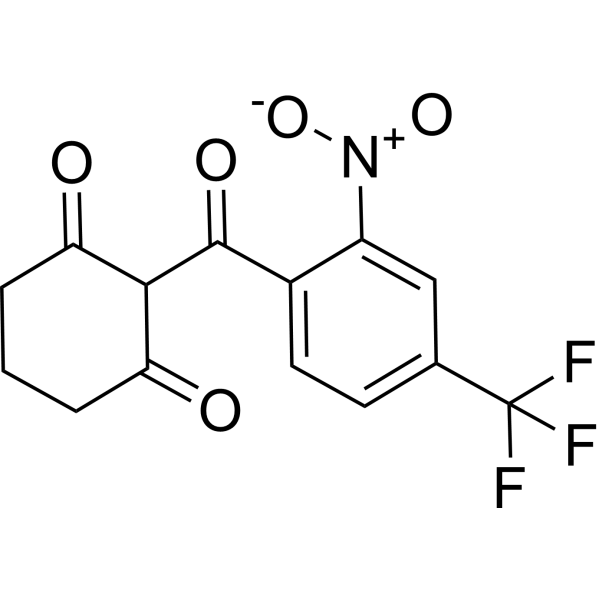
    Nitisinone
    2 Publications Verification

    NTBC; Nitisone; SC0735

    HPPD Metabolic Disease
    Nitisinone is an orally active, competitive and reversible 4-hydroxyphenylpyruvate dioxygenase (4-HPPD) inhibitor with an IC50 of 173 nM. Nitisinone promotes tyrosine accumulation in a dose-dependent manner. nitisinone can be used in studies of hereditary tyrosinemia type 1 (HT-1) (a rare genetic disorder) and albinism .
    Nitisinone
  • HY-10574
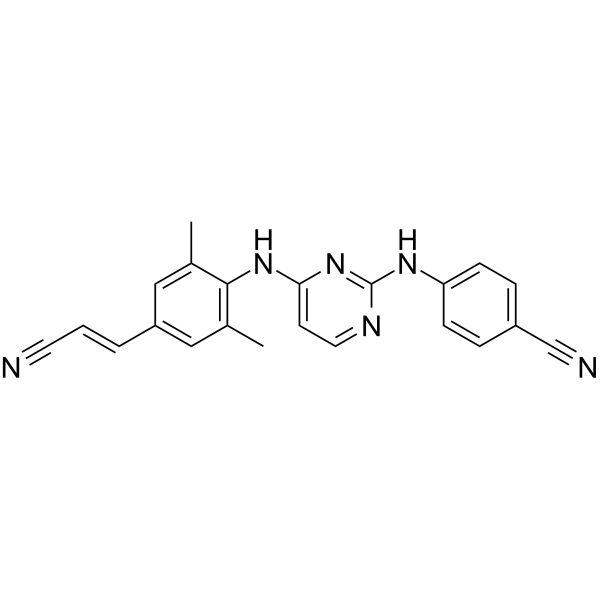
    Rilpivirine
    5+ Cited Publications

    R278474; TMC278; DB08864

    HIV Reverse Transcriptase Infection
    Rilpivirine (R278474) is a potent and specific diarylpyrimidine (DAPY) non-nucleoside reverse transcriptase inhibitor (NNRTI). Rilpivirine has high antiviral activity against wild-type HIV (EC50=0.4 nM) and mutant viruses (EC50=0.1-2.0 nM). Rilpivirine has a high genetic barrier to resistance development of HIV .
    Rilpivirine
  • HY-W088070A
    Agarose,Low melting point
    1 Publications Verification

    Biochemical Assay Reagents Others
    Agarose,Low melting point is a kind of agarose, a kind of polysaccharide that can be derived from seaweed. It is commonly used in molecular biology and biochemistry to isolate and purify DNA and RNA fragments. Agarose,Low melting point is a low melting point agarose, which is suitable for the recovery of large DNA fragments and enzymatic reactions in gels and other applications. In addition, it has been used in various techniques, such as pulsed field gel electrophoresis and capillary electrophoresis for analyzing genetic material.
    Agarose,Low melting point
  • HY-W008990
    Xanthosine 5'-monophosphate sodium salt
    1 Publications Verification

    5'-Xanthylic acid sodium salt

    DNA/RNA Synthesis Metabolic Disease
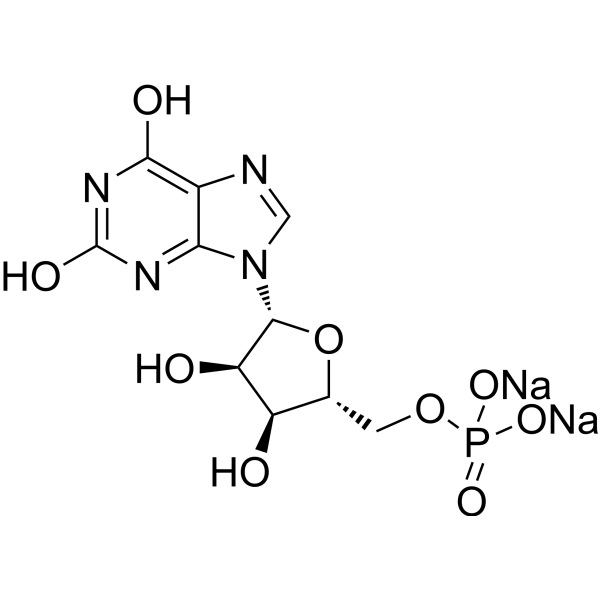
    Xanthosine 5'-monophosphate sodium salt (5'-Xanthylic acid sodium salt) is an intermediate in purine metabolism. Xanthosine 5'-monophosphate sodium salt can be used for genetic code, nucleic acid structure, and DNA, RNA and protein synthesis research .
    Xanthosine 5'-monophosphate sodium salt
  • HY-114231B
    Exaluren disulfate
    2 Publications Verification

    ELX-02 disulfate; NB-124 disulfate

    DNA/RNA Synthesis Inflammation/Immunology
    Exaluren (ELX-02; NB-124) disulfate is an synthetic eukaryotic ribosome-selective glycoside that induces read-through of nonsense mutations, resulting in normally localized full-length functional proteins. Exaluren disulfate is used for the research of cystic fibrosis caused by nonsense mutations .
    Exaluren disulfate
  • HY-W016819

    Thymidylate Synthase Parasite Infection
    5-Fluoroorotic acid is the inhibitor for thymidylate synthase that acts as a selective agent in yeast molecular genetics. 5-Fluoroorotic acid exhibits antimalarial activity .
    5-Fluoroorotic acid
  • HY-134781
    CKK-E12
    4 Publications Verification

    Liposome Others
    CKK-E12 is a ionizable lipid in combination with other lipids make up the lipid nanoparticles which are used to deliver RNA-based research. CKK-E12 is highly selective toward liver parenchymal cell in vivo,
    CKK-E12
  • HY-108786

    ENB-0040

    Phosphatase Metabolic Disease
    Asfotase alfa (ENB-0040) is a bone-targeted genetically engineered glycoprotein. Asfotase alfa increases the survival rate, bone mineralization and bone length and prevents mineralization defects of the feet, rib cage, lower limbs, jaw bones in Akp2 / knockout mice. Asfotase alfa can be used for the research of perinatal, infantile, and juvenile-onset hypophosphatasia (HPP) .
    Asfotase alfa
  • HY-P990964

    BOS-580; LLF580

    FGFR Metabolic Disease Inflammation/Immunology
    Efimosfermin alfa is a genetically engineered FGF21 variant. Efimosfermin alfa exerts its function by activating the FGFR1c/β-Klotho complex. Efimosfermin alfa is applicable to researches on metabolic dysfunction-associated steatohepatitis, obesity and mild hypertriglyceridemia .
    Efimosfermin alfa
  • HY-W062216

    Bacterial Arginase Infection
    2-Aminoimidazole is a potent antibiofilm agent that can be used as an adjuvant to antimicrobial. 2-aminoimidazoles disrupts the ability of bacteria to protect themselves by inhibiting biofilm formation and genetically-encoded antibiotic resistance traits. 2-Aminoimidazole is also a weak noncompetitive inhibitor of human arginase I with a Ki of 3.6 mM .
    2-Aminoimidazole
  • HY-126490
    Phleomycin
    2 Publications Verification

    Bacterial Antibiotic DNA/RNA Synthesis Infection Cancer
    Phleomycin is a copper-dependent DNA damaging agent and antibiotic with antitumor activity. Phleomycin binds to DNA and produces ROS in the presence of reducing agents (such as dithiothreitol and glutathione), inducing single-strand and double-strand breaks in DNA. Phleomycin can induce cell apoptosis or mutation and is widely used in cancer inhibition, microbial genetic transformation (as a screening marker to improve fungal transformation efficiency) and DNA repair mechanism research .
    Phleomycin
  • HY-W015854

    Biochemical Assay Reagents Apoptosis DNA Alkylator/Crosslinker Neurological Disease Cancer
    Ethyl methanesulfonate is an orally active biochemical agent. Ethyl methanesulfonate induces Apoptosis. Ethyl methanesulfonate acts on DNA, alkylating it and causing changes in DNA structure, which in turn triggers a series of biological effects such as mutation and cell death. Ethyl methanesulfonate induces kidney and nervous system tumors. Ethyl methanesulfonate is widely used in the field of genetic toxicology research and is often used to induce gene mutations in organisms to study gene function, the mechanism of genetic diseases, and the effects of environmental mutagenic factors, etc .
    Ethyl methanesulfonate
  • HY-I0508
    Phthalic acid
    2 Publications Verification

    Biochemical Assay Reagents Reactive Oxygen Species (ROS) Estrogen Receptor/ERR Endocrinology
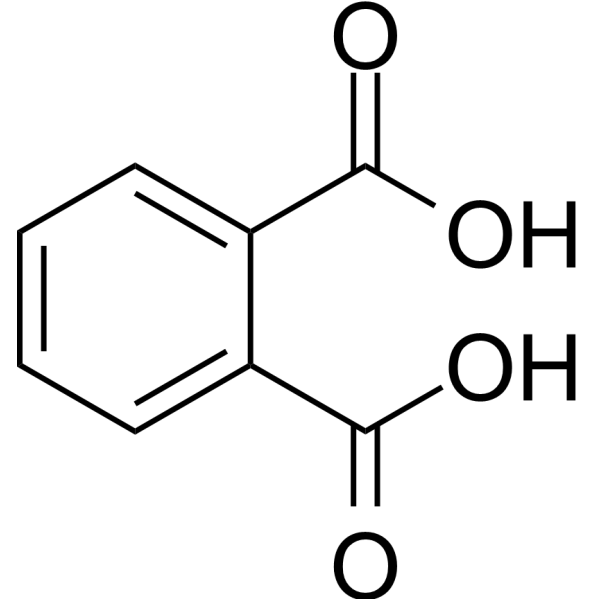
    Phthalic acid is the final common metabolite of phthalic acid esters (PAEs). Phthalic acid can be used for the synthesis of synthetic agents, such as isophthalic acid (IPA), and terephthalic acid (TPA). Phthalic acid has applications in the preparation of phthalate ester plasticizers. Phthalic acid exhibits mutagenic effect and causes genetic damage in mammalian germ cells .
    Phthalic acid
  • HY-P99384

    B-701; MFGR-1877S; RG-7444

    FGFR Cancer
    Vofatamab (B-701) is an anti-FGFR3 monoclonal antibody (mAb). Vofatamab blocks activation of both the wildtype and genetically activated receptor. Vofatamab can be used in the research of metastatic urothelial carcinoma (mUC). Recommend Isotype Controls: Human IgG1 kappa, Isotype Control (HY-P99001) .
    Vofatamab
  • HY-134669

    N-Cyclopropene-L-Lysine

    Amino Acid Derivatives Cancer
    CypK (N-Cyclopropene-L-Lysine), a cyclopropene derivative of lysine, is efficiently incorporated into antibodies through genetic-code expansion. CypK is a minimal bioorthogonal handle for the creation of stable therapeutic protein conjugates .
    CypK
  • HY-136648A

    dATP trisodium

    Endogenous Metabolite DNA/RNA Synthesis Cancer
    2'-Deoxyadenosine-5'-triphosphate (dATP) trisodium is a nucleotide used in cells for DNA synthesis (or replication), as a substrate of DNA polymerase. 2'-Deoxyadenosine-5'-triphosphate is promising for research of genetic immunodeficiency diseases adenosine deaminase deficiency and purine nucleotide phosphorylase deficiency .
    2'-Deoxyadenosine-5'-triphosphate trisodium
  • HY-W259767

    Amino Acid Derivatives
    3-Iodo-L-phenylalanine is an unnatural amino acid that can be used for partial codon redistribution. 3-Iodo-L-phenylalanine has a high efficiency in Ser AGU codon reassignment, and also has a certain effect in Ser UCG codon reassignment. 3-Iodo-L-phenylalanine can be used in the study of genetic code expansion and protein engineering .
    3-Iodo-L-phenylalanine
  • HY-W019815

    ENU; N-Nitroso-N-ethylurea

    DNA/RNA Synthesis Neurological Disease Cancer
    N-Ethyl-N-nitrosourea (ENU) is a DNA alkylating agent. N-Ethyl-N-nitrosourea induces leukemia by alkylating nucleobases, disrupting DNA, and resulting in bone marrow suppression and the formation of leukemic cells. N-Ethyl-N-nitrosourea is teratogenic in vivo, inducing tumor formation and paw malformations in pregnant rats. N-Ethyl-N-nitrosourea cause central nervous system (CNS) tumors and genetic disorders .
    N-Ethyl-N-nitrosourea
  • HY-148835

    Fluorescent Dye Others
    AzGGK is an unnatural amino acid. AzGGK is site-specifically incorporated into proteins via genetic-code expansion. AzGGK can be used as site-specific probe for ubiquitylation and SUMOylation . AzGGK is a click chemistry reagent, it contains an Azide group and can undergo copper-catalyzed azide-alkyne cycloaddition reaction (CuAAc) with molecules containing Alkyne groups. It can also undergo strain-promoted alkyne-azide cycloaddition (SPAAC) reactions with molecules containing DBCO or BCN groups.
    AzGGK
  • HY-P3016

    EC 2.6.1.1; GOT; AST

    Aminotransferases (Transaminases) Cardiovascular Disease
    Aspartate aminotransferase (EC 2.6.1.1), Genetically engineered bacteria is a metabolic regulator with the highest activity in the heart, liver and skeletal muscle. Aspartate aminotransferase, Genetically engineered bacteria comprises two isozymes: the cytoplasmic form (AST1) and the mitochondrial form (AST2). By catalyzing reversible transamination reactions between oxaloacetate, L-glutamate and other substances, it is deeply involved in key physiological processes such as amino acid metabolism, the tricarboxylic acid cycle and neurotransmitter synthesis. Aspartate aminotransferase, Genetically engineered bacteria also provides substrate support for the synthesis of urea and purines/pyrimidines. Aspartate aminotransferase, Genetically engineered bacteria is a serum marker reflecting cardiac and hepatic injury, and its abnormal levels are also closely associated with myocardial infarction, cardiovascular diseases and various cancers .
    Aspartate aminotransferase, Genetically engineered bacteria
  • HY-101937

    Fluorescent Dye Others
    L-ANAP is a genetically encodable and polarity-sensitive fluorescent unnatural amino acid (Uaa) .
    L-ANAP
  • HY-34740

    Mitochondrial Metabolism Neurological Disease Metabolic Disease
    Ethylmalonic acid is a short-chain organic dicarboxylic acid. Ethylmalonic acid synergistically induces mitochondrial permeability transition (MP) with Ca 2+, inhibits Mi-CK, and disrupts mitochondrial energy metabolism. Ethylmalonic acid can be used in the research of SCADD, EE and other genetic metabolic diseases characterized by EMA accumulation .
    Ethylmalonic acid
  • HY-161430

    DNA/RNA Synthesis Apoptosis Cancer
    RTx-161 is an allosteric Polθ polymerase inhibitor with an IC50 value of 4.1 nM. RTx-161 selectively kills HR-deficient cancer cells and suppresses PARP inhibitor (PARPi) resistance in multiple genetic backgrounds, including HR-proficient cells. Additionally, RTx-161 can induce apoptosis .
    RTx-161
  • HY-101937B

    Fluorescent Dye Others
    L-ANAP hydrochloride is a genetically encodable and polarity-sensitive fluorescent unnatural amino acid (Uaa).
    L-ANAP hydrochloride
  • HY-N3960

    PPAR Bacterial Infection Metabolic Disease
    Glycyrin is a PPAR-γ ligand of licorice. Glycyrin can decrease the blood glucose levels of genetically diabetic mice. Glycyrin also shows antibacterial activity .
    Glycyrin
  • HY-131246

    Histone Methyltransferase Cancer
    DM-01 is a powerful and selective EZH2 inhibitor for the research of diffuse large B-cell lymphoma (DLBCL), follicular lymphoma (FL), and SNF5/INI-1/SMARCB1 genetically defined solid tumors .
    DM-01
  • HY-107123
    TMC310911
    1 Publications Verification

    ASC-09

    HIV Protease Infection
    TMC310911 is a potent and orally active HIV type-1 (HIV-1) protease inhibitor with EC50 values ranged from 2.2 nM to 14.2 nM for wild-type HIV-1. TMC310911 has potent activity against a wide spectrum of recombinant HIV-1 isolates. TMC310911 has strong antiviral activity .
    TMC310911
  • HY-14948
    Carisbamate
    1 Publications Verification

    RWJ-333369

    Sodium Channel Neurological Disease
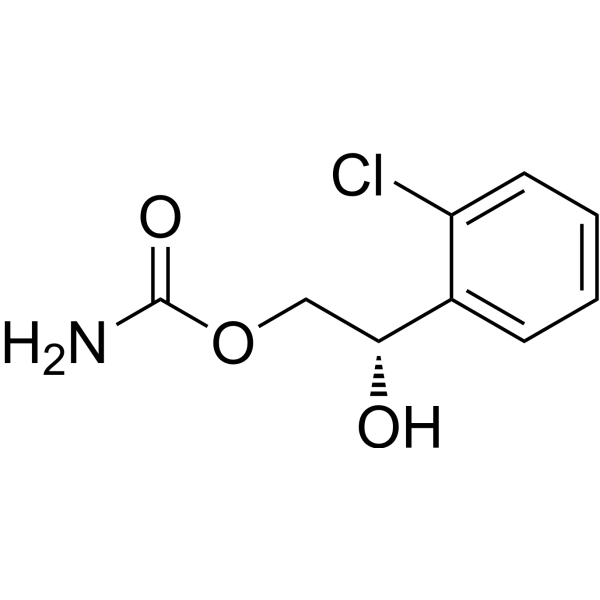
    Carisbamate (RWJ-333369) is an orally active neuromodulator. Carisbamate prevents the development and production of epilep-like discharges and has a neuroprotective effect after in vitro epilepticus-like injury. Carisbamate has good antiepileptic activity in genetic models of generalized and nonconvulsive epilepsy .
    Carisbamate
  • HY-P2454
    CSP1
    1 Publications Verification

    Bacterial Infection
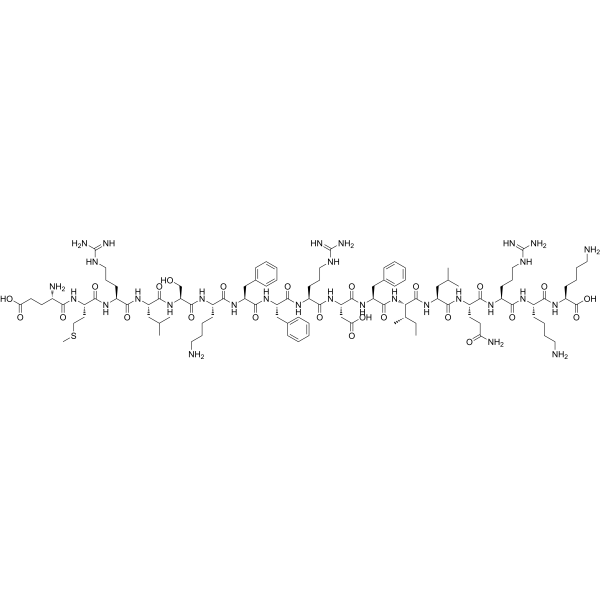
    CSP1 is a potent and selective ComD1 receptor agonist, with an IC50 of 10.3 nM. CSP1 is a major variants of competence-stimulating peptide (CSP), and it can regulate genetic transformation of S. pneumonia by modulating quorum sensing (QS). CSP1 can act as an antibacterial agent .
    CSP1
  • HY-164566

    Dynamin Mitochondrial Metabolism Neurological Disease
    POSH-IN-2 (MIDI), a mitochondrial division inhibitor, is a DRP1 inhibitor that potently blocks mitochondrial fragmentation induced by cellular stresses and genetic mitochondrial lesions. POSH-IN-2 covalently interacts with DRP1-C367 to target DRP1 interaction with multiple receptors .
    POSH-IN-2
  • HY-10574A
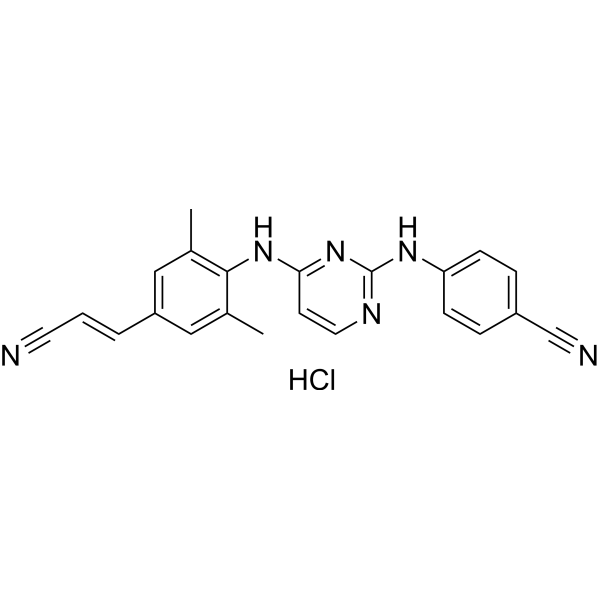
    Rilpivirine hydrochloride
    5+ Cited Publications

    TMC-278 hydrochloride

    SARS-CoV MMP Infection
    Rilpivirine (R278474) hydrochloride is a potent and specific diarylpyrimidine (DAPY) non-nucleoside reverse transcriptase inhibitor (NNRTI). Rilpivirine hydrochloride has high antiviral activity against wild-type HIV (EC50=0.4 nM) and mutant viruses (EC50=0.1-2.0 nM). Rilpivirine hydrochloride has a high genetic barrier to resistance development of HIV .
    Rilpivirine hydrochloride
  • HY-34740S

    Mitochondrial Metabolism Isotope-Labeled Compounds Neurological Disease Metabolic Disease
    Ethylmalonic acid-d3 is the deuterium labeled Ethylmalonic acid (HY-34740). Ethylmalonic acid is a short-chain organic dicarboxylic acid. Ethylmalonic acid synergistically induces mitochondrial permeability transition (MP) with Ca 2+, inhibits Mi-CK, and disrupts mitochondrial energy metabolism. Ethylmalonic acid can be used in the research of SCADD, EE and other genetic metabolic diseases characterized by EMA accumulation .
    Ethylmalonic acid-d3
  • HY-D2335

    Fluorescent Dye Neurological Disease
    SERTlight is a fluorescent agent that can specifically label serotonergic neuronal cell bodies, dendrites, and axonal projections as fluorescent substrates of the serotonin transporter (SERT). SERTlight is orthogonal to various genetically encoded sensors in terms of optics, pharmacology, and operation, enabling multiple imaging. SERTlight allows the use of GRAB5HT sensors to label distal 5HT axonal projections and simultaneously image the release of endogenous 5HT, providing a new multifunctional molecular tool for studying serotonergic systems .
    SERTlight
  • HY-157347A

    YNB Medium without Amino Acids

    Biochemical Assay Reagents Others
    Yeast Nitrogen Base Medium without Amino Acids can be used in the cultivation of bacteria in genetic engineering .
    Yeast Nitrogen Base Medium without Amino Acids
  • HY-136936

    Fluorescent Dye Others
    PYBG-BODIPY is a dye and has a role as a fluorochrome. PYBG-BODIPY specifically and efficiently labels the target genetically encoded SNAP-tags in live cells .
    PYBG-BODIPY
  • HY-120568

    Bacterial Infection Inflammation/Immunology
    M4284 is a selective and orally active biphenyl mannoside FimH antagonist. M4284 has activities against different UPEC (Urinary tract infections (UTI) caused by uropathogenic E. coli) strains in different host genetic backgrounds and gut microbial community contexts .
    M4284
  • HY-161431

    DNA/RNA Synthesis Cancer
    RTx-152 traps Polθ on DNA and is an allosteric Polθ-pol inhibitor (IC50: 6.2 nM). RTx-152 selectively kills HR-deficient cancer cells, and suppresses PARP inhibitor resistance in multiple genetic backgrounds, including homologous recombination (HR)-proficient cells. RTx-152 selectively kills BRCA2-null cells .
    RTx-152
  • HY-B1899S

    Taurodeoxycholate-d5

    Isotope-Labeled Compounds Endogenous Metabolite Apoptosis Others
    Taurodeoxycholic acid-d5 is the deuterium labeled Taurodeoxycholic acid (HY-B1899) . Taurodeoxycholic acid, a bile acid, stabilizes the mitochondrial membrane, decreases free radical formation. Taurodeoxycholic acid inhibits apoptosis by blocking a calcium-mediated apoptotic pathway as well as caspase-12 activation. Taurodeoxycholic acid exhibits neuroprotective effect in 3-nitropropionic acid induced mouse model or genetic mouse model of Huntington's disease (HD) .
    Taurodeoxycholic acid-d5
  • HY-101203

    Drug Derivative Metabolic Disease Cancer
    GJ103 is a read-through compound that can induce read through of premature stop codons. GJ103 has potential for the research of genetic disorders caused by nonsense mutations .
    GJ103
  • HY-101203A
    GJ103 sodium
    1 Publications Verification

    DNA/RNA Synthesis Metabolic Disease Cancer
    GJ103 sodium is a read-through compound that can induce read through of premature stop codons. GJ103 sodium has potential for the research of genetic disorders caused by nonsense mutations .
    GJ103 sodium
  • HY-130136A

    Ser/Thr Protease Others
    TMPRSS6-IN-1 (TFA) is a potent inhibitor of TMPRSS6 (Matriptase-2), belonging to TTSPs (transmembrane serine protease). TMPRSS6, is a type II TTSP, the genetic reduction of which will improve symptoms of hemochromatosis and beta thalassemia in mice .
    TMPRSS6-IN-1 TFA
  • HY-B0607R
    Nitisinone (Standard)
    2 Publications Verification

    NTBC (Standard); Nitisone (Standard); SC0735 (Standard)

    HPPD Reference Standards Metabolic Disease
    Nitisinone (Standard) is the analytical standard of Nitisinone. This product is intended for research and analytical applications. Nitisinone is an orally active, competitive and reversible 4-hydroxyphenylpyruvate dioxygenase (4-HPPD) inhibitor with an IC50 of 173 nM. Nitisinone promotes tyrosine accumulation in a dose-dependent manner. nitisinone can be used in studies of hereditary tyrosinemia type 1 (HT-1) (a rare genetic disorder) and albinism .
    Nitisinone (Standard)
  • HY-136607

    Biochemical Assay Reagents Others
    DiAzK is a bifunctional amino acid. DiAzK can be inserted into almost any protein interface with minimal structural perturbation using genetic code expansion .
    DiAzK
  • HY-400785

    Drug Derivative Cancer
    Dapagliflozin impurity A (Compound A) is a dapagliflozin peroxide, a genotoxic impurity, can cause damage to human genetic material at very low concentrations, leading to genetic mutations and possibly tumorigenesis .
    Dapagliflozin impurity A
  • HY-124058

    Insecticide Others
    Jacobine?is a pyrrolizidine alkaloid (PA) from Senecio jacobaea . Jacobine is active against second instar larvae of thrips .
    Jacobine
  • HY-W343900

    DL-Hydroxyproline

    Amino Acid Derivatives Metabolic Disease
    Hydroxyproline (DL-Hydroxyproline) is a non-essential amino acid and one of the main components of collagen tissue. Hydroxyproline can be used in research on endocrine and metabolic diseases, as well as genetic diseases and malformations. Hydroxyproline can also serve as a biomarker .
    Hydroxyproline
  • HY-135738

    Drug Intermediate Others
    Convicine is a pyrimidine glycoside. Convicine, as well as Vicine, is the precursor of the aglycones Divicine and Isouramil. Convicine is the main factors of favism, which is a genetic condition leading to severe hemolysis after faba bean ingestion. Convicine can be isolated from the faba bean .
    Convicine
  • HY-130136

    Ser/Thr Protease Others
    TMPRSS6-IN-1 (compound 8) is a potent inhibitor of TMPRSS6 (Matriptase-2), belonging to TTSPs (transmembrane serine protease). TMPRSS6, is a type II TTSP, the genetic reduction of which will improve symptoms of hemochromatosis and beta thalassemia in mice .
    TMPRSS6-IN-1
  • HY-111848A

    SNIPERs PROTACs Androgen Receptor Cancer
    PROTAC AR Degrader-4 comprises a IAP ligand binding group, a linker and an Androgen Receptor (AR) binding group. PROTAC AR Degrader-4 is an AR degrader. Degradation inducers based on cIAP1 are called specific and non-genetic IAP-dependent protein erasers (SNIPERs) .
    PROTAC AR Degrader-4 TFA
  • HY-111848

    SNIPERs PROTACs Androgen Receptor Cancer
    PROTAC AR Degrader-4 comprises a IAP ligand binding group, a linker and an Androgen Receptor (AR) binding group. PROTAC AR Degrader-4 is an AR degrader. Degradation inducers based on cIAP1 are called specific and non-genetic IAP-dependent protein erasers (SNIPERs) .
    PROTAC AR Degrader-4

Inquiry Online

Your information is safe with us. * Required Fields.

Salutation


Country or Region *

Applicant Name *


Organization Name *

Department *


Email Address *


Product Name *

Cat. No.


Requested quantity *

Phone Number *


Remarks

Inquiry Online

Inquiry Information

Product Name:
Cat. No.:
Quantity:
MCE Japan Authorized Agent:

