



Rilpivirine hydrochloride
Based on 11 publication(s) in Google Scholar
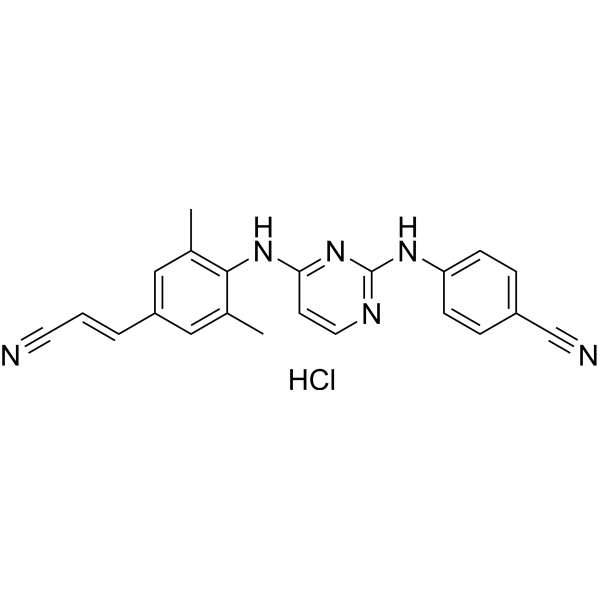
Rilpivirine (R278474) hydrochloride is a potent and specific diarylpyrimidine (DAPY) non-nucleoside reverse transcriptase inhibitor (NNRTI). Rilpivirine hydrochloride has high antiviral activity against wild-type HIV (EC50=0.4 nM) and mutant viruses (EC50=0.1-2.0 nM). Rilpivirine hydrochloride has a high genetic barrier to resistance development of HIV.
For research use only. We do not sell to patients.
- Purity : 99.54%
- CAS No.: 700361-47-3
- Formula: C22H19ClN6
- Molecular Weight:402.88
-
Storage:
4°C, sealed storage, away from moisture
* In solvent : -80°C, 6 months; -20°C, 1 month (sealed storage, away from moisture)

To place orders, for customer services and technical support, please contact: MedChemExpress USA
Tel: 609-228-6898 E-mail: [email protected] [email protected]


-
 Biological Activity
-
Chemical Information
-
Solvent & Solubility
- Protocols
- Purity & Documentation
- References
-
 Help & FAQs


-
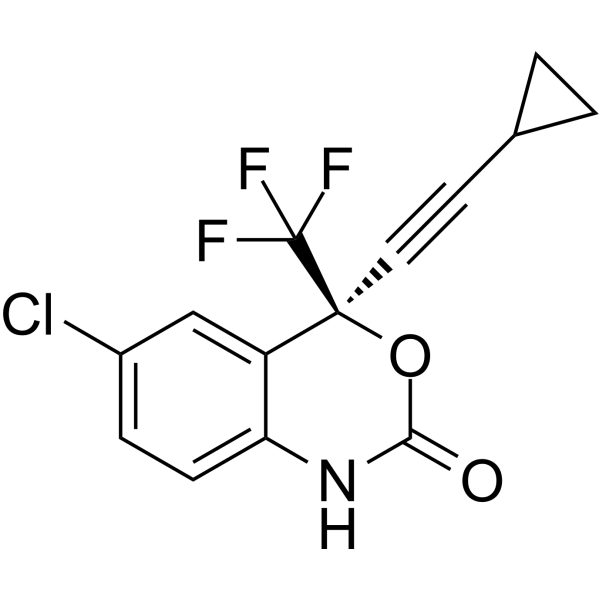
HY-10572
EfavirenzHIV NNRTI -
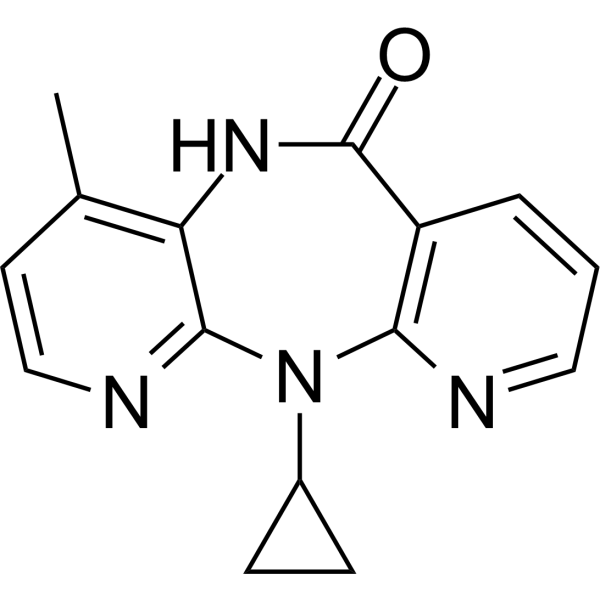
HY-10570
NevirapineHIV-1 Reverse Transcriptase Inhibitor -
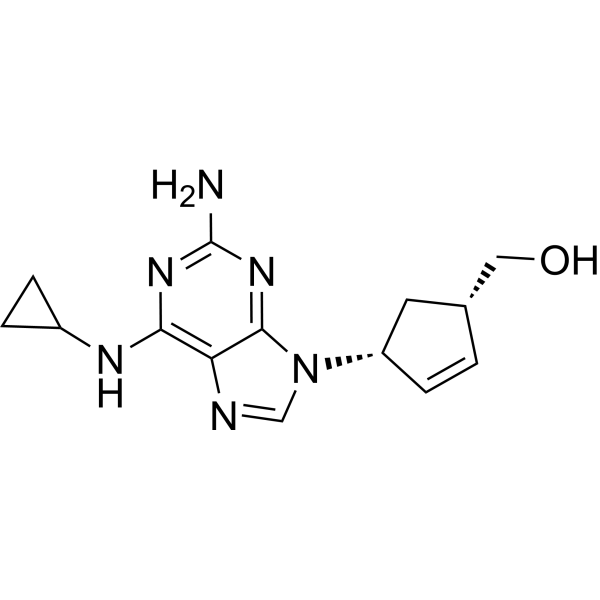
HY-17423
AbacavirReverse Transcriptase Inhibitor -
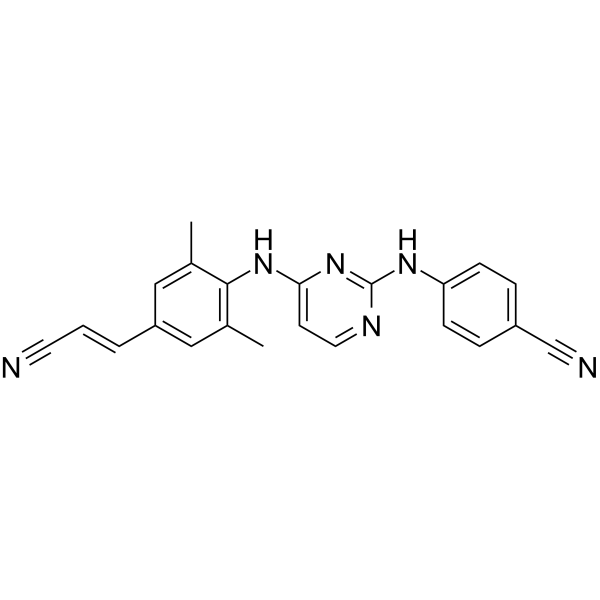
HY-10574
RilpivirineNNRTI -
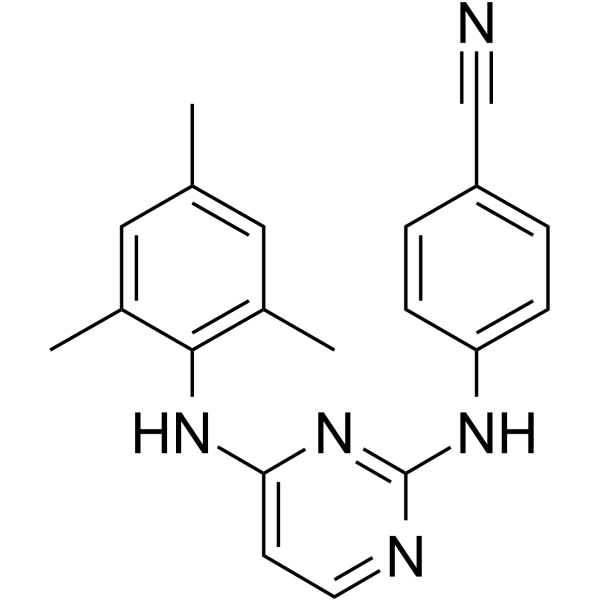
HY-14266
DapivirineNRTI -
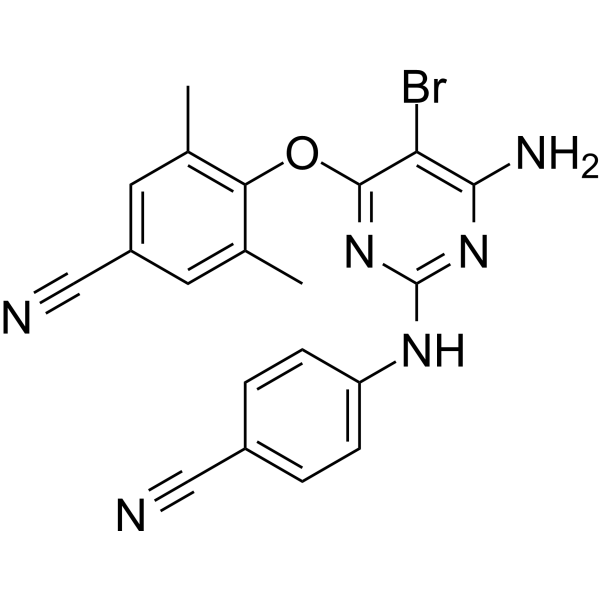
HY-90005
Etravirine -
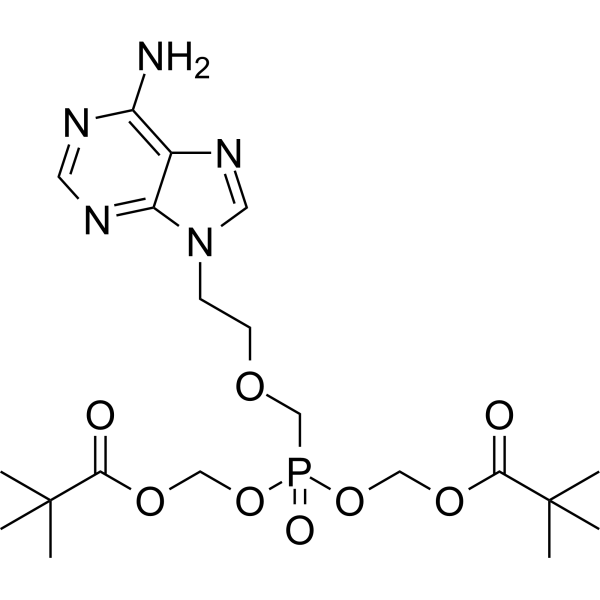
HY-B0255
Adefovir dipivoxilAdefovir Prodrug -
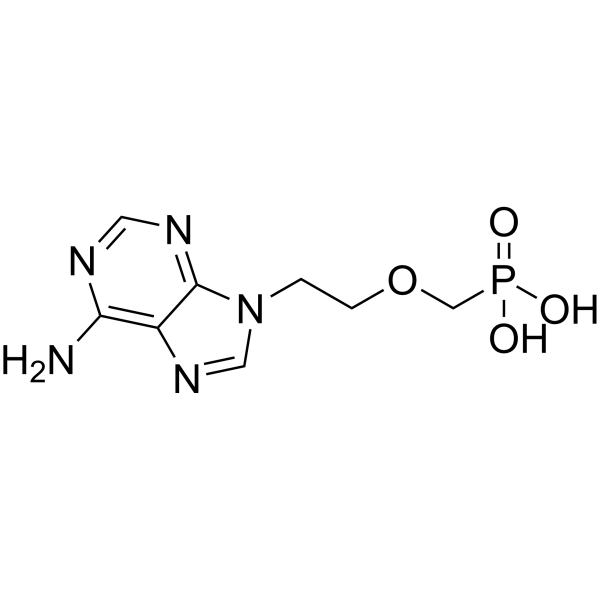
HY-B1826
AdefovirHBV Inhibitor -
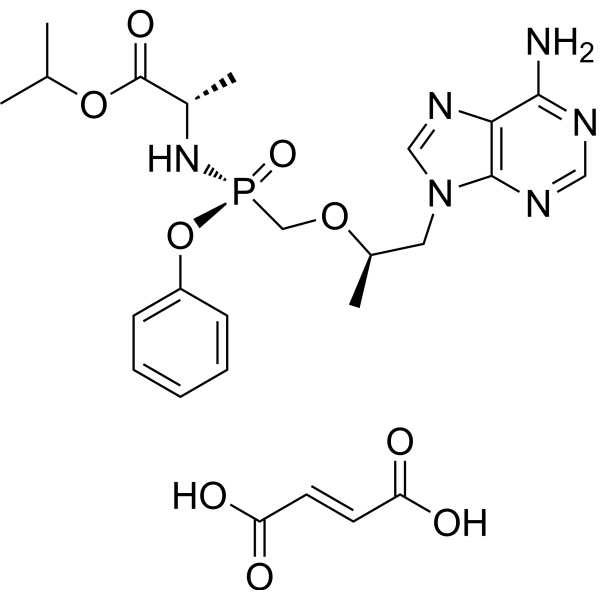
HY-15232A
Tenofovir alafenamide fumarateReverse Transcriptase Inhibitor -
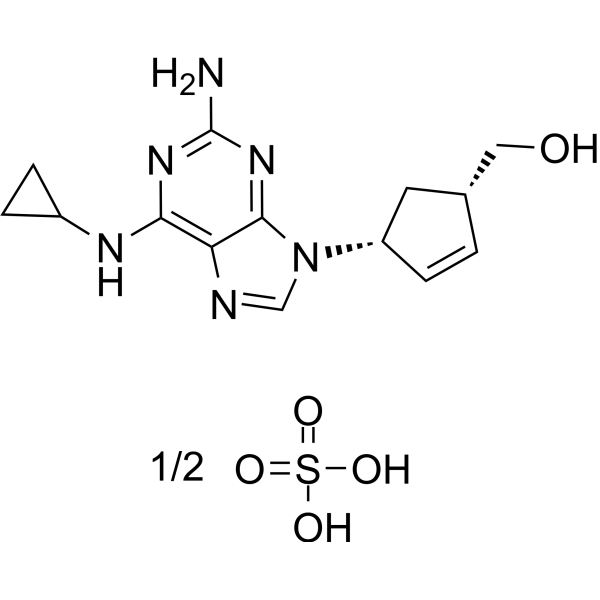
HY-17423A
Abacavir sulfateReverse Transcriptase Inhibitor -

HY-10574AR
Rilpivirine hydrochloride (Standard)NNRTI -
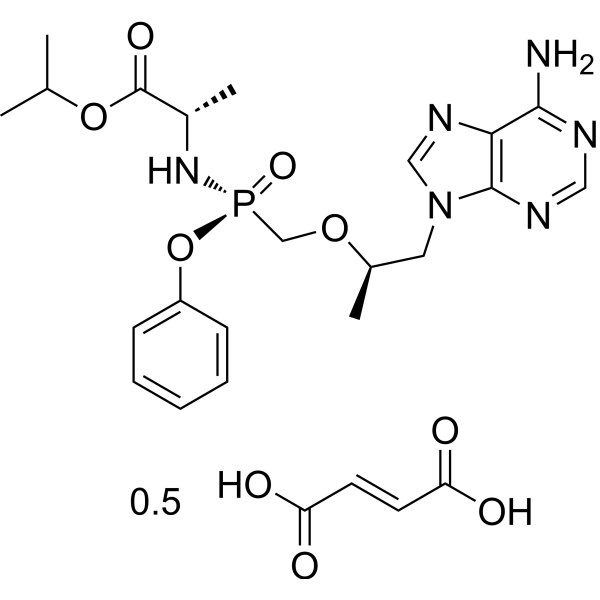
HY-15232B
Tenofovir alafenamide hemifumarateReverse Transcriptase Inhibitor
Publications Citing Use of MedChemExpress (MCE) Rilpivirine hydrochloride
More- Br J Cancer. 2023 Mar;128(7):1344-1359. [Abstract]
- J Med Chem. 2025 Oct 29. [Abstract]
- Pharmaceuticals (Basel). 2022 Sep 25;15(10):1186. [Abstract]
- Int J Antimicrob Agents. 2019 Dec;54(6):814-819. [Abstract]
- Sci Rep. 2015 Oct 29:5:15806. [Abstract]
- PLoS One. 2021 Mar 10;16(3):e0248139. [Abstract]
- Biol Pharm Bull. 2016;39(3):450-4. [Abstract]
- chemRxiv. 2026 Apr 6.
- SSRN. 2023 Sep 8.
- University of Rijeka. 2023.
- University of Oxford. 2019 Jul.
 Customer Validation & Images

-
Bio/Physico-chemical Assay

-
Bio/Physico-chemical Assay

-
Cell Imaging/Staining

-
WB

-
Flow Cytometry


Biological Activity
Description
IC50 & Target
In Vitro
R278474 is active against wild-type HIV-1 (EC50=0.4 nM) and all single and double mutants tested (EC50=0.1-2.0 nM)[1].
R278474 (10-5000 nM; 30 d) does not observe the sign of wild-type HIV-1 breakthrough at 1 μM within 30 days[1].
R278474 inhibits 81% of clinical isolates (about 1200 recombinant clinical isolates) at a 50% inhibitory concentration (EC50) less than 1 nM, and inhibits 94% at EC50 less than 10 nM[1].
TMC278 shows subnanomolar EC50s against wild-type HIV-1 group M isolates (0.07-1.01 nM)[2].
MedChemExpress (MCE) has not independently confirmed the accuracy of these methods. They are for reference only. Further protocols information, click here.
In Vivo
R278474 (i.v.) exhibits elimination half-life ranges from 4.4 h in rat to 31 h in dog, and exposure (AUCinf) amounts to 3.1 μg h/mL (4 mg/kg) in rat, 8.7 μg h/mL (1.25 mg/kg) in dog, 1.4 μg h/mL (1.25 mg/ kg) in monkey, and 44 μg h/mL (1.25 mg/kg) in rabbit[1].
R278474 (p.o.) exhibits half-life ranges between 2.8 h in rat and 39 h in dog, and oral bioavailability of 32% and 31% in rat and dog[1].
MedChemExpress (MCE) has not independently confirmed the accuracy of these methods. They are for reference only.


Chemical Information
-
CAS No. 700361-47-3
-
Appearance Solid
-
Molecular Weight 402.88
-
Formula C22H19ClN6
-
Color White to off-white
-
SMILES
N#CC1=CC=C(NC2=NC=CC(NC3=C(C)C=C(/C=C/C#N)C=C3C)=N2)C=C1.Cl
-
Synonyms
TMC-278 hydrochloride
-
Shipping
Room temperature in continental US; may vary elsewhere.
-
Storage
4°C, sealed storage, away from moisture
* In solvent : -80°C, 6 months; -20°C, 1 month (sealed storage, away from moisture)


Publications (11)
-
Journal Impact Factor
-
Most Recent
-
Br J Cancer
Transcriptome analysis of newly established carboplatin-resistant ovarian cancer cell model reveals genes shared by drug resistance and drug-induced EMT. [Abstract]2023 Mar;128(7):1344-1359. PMID: 36717670 -
J Med Chem
Selective and Orally Bioavailable Dipeptidyl Peptidase 9 Inhibitors with Potent Pyroptosis Induction Properties. [Abstract]2025 Oct 29. PMID: 41160575 -
Pharmaceuticals (Basel)
Combined In Silico and In Vitro Evidence Supporting an Aurora A Kinase Inhibitory Role of the Anti-Viral Drug Rilpivirine and an Anti-Proliferative Influence on Cancer Cells. [Abstract]2022 Sep 25;15(10):1186. PMID: 36297298
Rilpivirine hydrochloride purchased from MedChemExpress. Usage Cited in: Pharmaceuticals (Basel). 2022 Sep 25;15(10):1186. [Abstract]
The effect of rilpivirine on the activity of individual kinases. Rilpivirine, at a concentration of 10 µM, was tested in duplicate. The residual kinase activity refers to the kinase activity remaining after individual kinases were treated with Rilpivirine (10 μM).
Rilpivirine hydrochloride purchased from MedChemExpress. Usage Cited in: Pharmaceuticals (Basel). 2022 Sep 25;15(10):1186. [Abstract]
Dose-response curve of rilpivirine (0.1 nM-100 μM) against Aurora A, Aurora B, and PIM1 kinase.
Rilpivirine hydrochloride purchased from MedChemExpress. Usage Cited in: Pharmaceuticals (Basel). 2022 Sep 25;15(10):1186. [Abstract]
Effect of Rilpivirine (0-5 μM) on the formation of colonies in T47D cells.
Rilpivirine hydrochloride purchased from MedChemExpress. Usage Cited in: Pharmaceuticals (Basel). 2022 Sep 25;15(10):1186. [Abstract]
Western blot analysis of T47D cells incubated with Rilpivirine (0-20 μM) for 24 h. β-Actin antibody was used as an internal loading control.
Rilpivirine hydrochloride purchased from MedChemExpress. Usage Cited in: Pharmaceuticals (Basel). 2022 Sep 25;15(10):1186. [Abstract]
Induction of apoptosis by Rilpivirine (0-20 μM, 72 and 96 h) in T47D cells after 72 or 96 h treatment. The proportion of apoptotic cells (A2 and A4) was defined as a sum of early apoptotic (annexin V+/PI-) and late apoptotic (annexin V+/PI+) cells.
-
Int J Antimicrob Agents
2019 Dec;54(6):814-819. PMID: 31479744 -
Sci Rep
NMR characterization of HIV-1 reverse transcriptase binding to various non-nucleoside reverse transcriptase inhibitors with different activities. [Abstract]2015 Oct 29:5:15806. PMID: 26510386 -
PLoS One
Development of a novel in vitro assay to screen for neuroprotective drugs against iatrogenic neurite shortening. [Abstract]2021 Mar 10;16(3):e0248139. PMID: 33690613 -
Biol Pharm Bull
Mass Spectrometric Characterization of HIV-1 Reverse Transcriptase Interactions with Non-nucleoside Reverse Transcriptase Inhibitors. [Abstract]2016;39(3):450-4. PMID: 26934936 -
-
-
-


Solvent & Solubility
In Vitro:
DMSO : 100 mg/mL (248.21 mM; ultrasonic and warming and heat to 60°C; Hygroscopic DMSO has a significant impact on the solubility of product, please use newly opened DMSO)
Please refer to the solubility information to select the appropriate solvent. Once prepared, please aliquot and store the solution to prevent product inactivation from repeated freeze-thaw cycles.
Storage method and period of stock solution: -80°C, 6 months; -20°C, 1 month (sealed storage, away from moisture). When stored at -80°C, please use it within 6 months. When stored at -20°C, please use it within 1 month.
Please refer to the solubility information to select the appropriate solvent. Once prepared, please aliquot and store the solution to prevent product inactivation from repeated freeze-thaw cycles.
Storage method and period of stock solution: -80°C, 6 months; -20°C, 1 month (sealed storage, away from moisture). When stored at -80°C, please use it within 6 months. When stored at -20°C, please use it within 1 month.
Concentration (start) × Volume (start) = Concentration (final) × Volume (final)
In Vivo:
Select the appropriate dissolution method based on your experimental animal and administration route.
- For the following dissolution methods, please ensure to first prepare a clear stock solution using an In Vitro approach and then sequentially add co-solvents:
- To ensure reliable experimental results, the clarified stock solution can be appropriately stored based on storage conditions. As for the working solution for In Vivo experiments, it is recommended to prepare freshly and use it on the same day.
- The percentages shown for the solvents indicate their volumetric ratio in the final prepared solution. If precipitation or phase separation occurs during preparation, heat and/or sonication can be used to aid dissolution.
Add each solvent one by one: 10% DMSO 40% PEG300 5% Tween-80 45% Saline
Solubility: ≥ 5 mg/mL (12.41 mM); Clear solution
This protocol yields a clear solution of ≥ 5 mg/mL (saturation unknown).
Taking 1 mL working solution as an example, add 100 μL DMSO stock solution (50.0 mg/mL) to 400 μL PEG300, and mix evenly; then add 50 μL Tween-80 and mix evenly; then add 450 μL Saline to adjust the volume to 1 mL.
Preparation of Saline: Dissolve 0.9 g sodium chloride in ddH₂O and dilute to 100 mL to obtain a clear Saline solution.
Add each solvent one by one: 10% DMSO 90% (20% SBE-β-CD in Saline)
Solubility: ≥ 5 mg/mL (12.41 mM); Clear solution
This protocol yields a clear solution of ≥ 5 mg/mL (saturation unknown).
Taking 1 mL working solution as an example, add 100 μL DMSO stock solution (50.0 mg/mL) to 900 μL 20% SBE-β-CD in Saline, and mix evenly.
Preparation of 20% SBE-β-CD in Saline (4°C, storage for one week): 2 g SBE-β-CD powder is dissolved in 10 mL Saline, completely dissolve until clear.
In Vivo Dissolution Calculator
Please enter the basic information of animal experiments:
-
-
-
-
Recommended: Prepare an additional quantity of animals to account for potential losses during experiments.
Please enter your animal formula composition:
-
%DMSO +
Recommended: Keep the proportion of DMSO in working solution below 2% if your animal is weak.
-
%+
-
+%Tween-80 + +
-
%Saline +
The co-solvents required include: DMSO, . All of co-solvents are available by MedChemExpress (MCE). , Tween 80. All of co-solvents are available by MedChemExpress (MCE).
Working solution concentration: 0.22 mg/mL
Method for preparing stock solution: mg drug dissolved in μL DMSO. Stock solution concentration: mg/mL. * In solvent : -80°C, 6 months; -20°C, 1 month (sealed storage, away from moisture)
1. Take μL DMSO stock solution;
2. Add μL .
μL , mix evenly;
3. Then add μL Tween 80, mix evenly;
4. Then add μL
Please ensure that the stock solution in the first step is dissolved to a clear state, and add co-solvents in sequence. You can use ultrasonic heating (ultrasonic cleaner, recommended frequency 20-40 kHz), vortexing, etc. to assist dissolution.

Protocols
-
Research Protocol for Infectious Diseases
Infectious-disease experiments test how pathogens interact with host barriers, innate immune receptors, inflammatory signaling, pathogen replication, and tissue injury; pattern-recognition receptors such as TLRs, RIG-I-like receptors, NOD-like receptors, and inflammasomes detect microbial molecules and activate NF-κB, interferon, and cytokine responses. The central hypothesis is that infection severity reflects the balance between pathogen burden and host response: protective inflammation restricts pathogen growth, whereas excessive or mislocalized inflammation contributes to tissue damage and disease phenotype. Unresolved questions include which host pathways are protective versus pathogenic, why some infection models fail to translate to human disease, and which combined readouts best predict clinically relevant infection outcomes.


Purity & Documentation
-
Data Sheet (273 KB)
-
SDS (393 KB)
- English - EN (393 KB)
- Français - FR (393 KB)
- Deutsch - DE (393 KB)
- Norwegian - NO (393 KB)
- Español - ES (393 KB)
- Swedish - SV (393 KB)
- Italian - IT (393 KB)
- Korean - KR (393 KB)
- Portuguese - PT (393 KB)
-
Handling Instructions (2659 KB)
References
[1]. Shiori Haga, et al. TACE Antagonists Blocking ACE2 Shedding Caused by the Spike Protein of SARS-CoV Are Candidate Antiviral Compounds. Antiviral Res. 2010 Mar;85(3):551-5. [Content Brief]
[2]. Wang R, et al. A Disintegrin and Metalloproteinase Domain 17 Regulates Colorectal Cancer Stem Cells and Chemosensitivity Via Notch1 Signaling. Stem Cells Transl Med. 2016 Mar;5(3):331-8. [Content Brief]
[3]. Kruse MN, et al. Human meprin alpha and beta homo-oligomers: cleavage of basement membrane proteins and sensitivity to metalloprotease inhibitors. Biochem J. 2004 Mar 1;378(Pt 2):383-9. [Content Brief]


Complete Stock Solution Preparation Table
Please refer to the solubility information to select the appropriate solvent. Once prepared, please aliquot and store the solution to prevent product inactivation from repeated freeze-thaw cycles.
Storage method and period of stock solution: -80°C, 6 months; -20°C, 1 month (sealed storage, away from moisture). When stored at -80°C, please use it within 6 months. When stored at -20°C, please use it within 1 month.
| Optional Solvent | Concentration Solvent Mass | 1 mg | 5 mg | 10 mg | 25 mg |
|---|---|---|---|---|---|
| DMSO | 1 mM | 2.4821 mL | 12.4106 mL | 24.8213 mL | 62.0532 mL |
| 5 mM | 0.4964 mL | 2.4821 mL | 4.9643 mL | 12.4106 mL | |
| 10 mM | 0.2482 mL | 1.2411 mL | 2.4821 mL | 6.2053 mL | |
| 15 mM | 0.1655 mL | 0.8274 mL | 1.6548 mL | 4.1369 mL | |
| 20 mM | 0.1241 mL | 0.6205 mL | 1.2411 mL | 3.1027 mL | |
| 25 mM | 0.0993 mL | 0.4964 mL | 0.9929 mL | 2.4821 mL | |
| 30 mM | 0.0827 mL | 0.4137 mL | 0.8274 mL | 2.0684 mL | |
| 40 mM | 0.0621 mL | 0.3103 mL | 0.6205 mL | 1.5513 mL | |
| 50 mM | 0.0496 mL | 0.2482 mL | 0.4964 mL | 1.2411 mL | |
| 60 mM | 0.0414 mL | 0.2068 mL | 0.4137 mL | 1.0342 mL | |
| 80 mM | 0.0310 mL | 0.1551 mL | 0.3103 mL | 0.7757 mL | |
| 100 mM | 0.0248 mL | 0.1241 mL | 0.2482 mL | 0.6205 mL |


Rilpivirine hydrochloride Related Classifications
HY-10574A Related Classifications
 Powered by Bioz