1. Search Result
Search Result
Results for "

glutaminase activity

" in MedChemExpress (MCE) Product Catalog:

13

Inhibitors & Agonists

1

Peptides

Targets Recommended:
Cat. No. Product Name Target Research Areas Chemical Structure
  • HY-12248
    Telaglenastat
    Maximum Cited Publications
    104 Publications Verification

    CB-839

    Glutaminase Autophagy Cancer
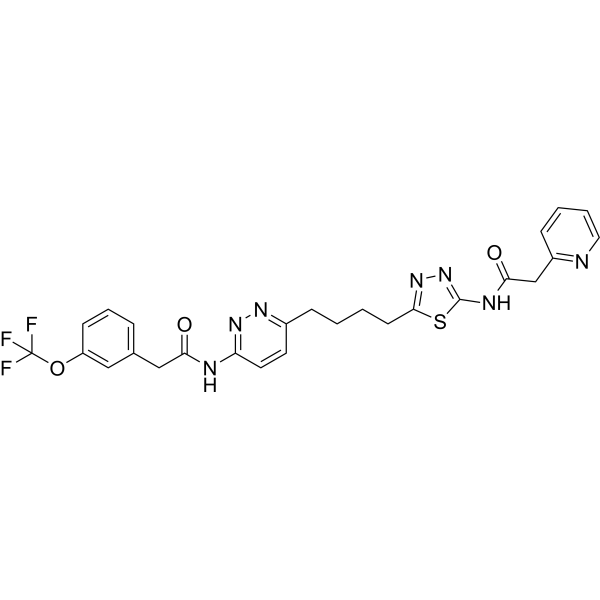
    Telaglenastat (CB-839) is a first-in-class, selective, reversible and orally active glutaminase 1 (GLS1) inhibitor. Telaglenastat selectively inhibits GLS1 splice variants KGA (kidney-type glutaminase) and GAC (glutaminase C) compared to GLS2. The IC50s are 23 nM and 28 nM for endogenous glutaminase in mouse kidney and brain, respectively. Telaglenastat inuduces autophagy and has antitumor activity .
    Telaglenastat
  • HY-122218
    JHU-083
    5+ Cited Publications

    Glutaminase Neurological Disease
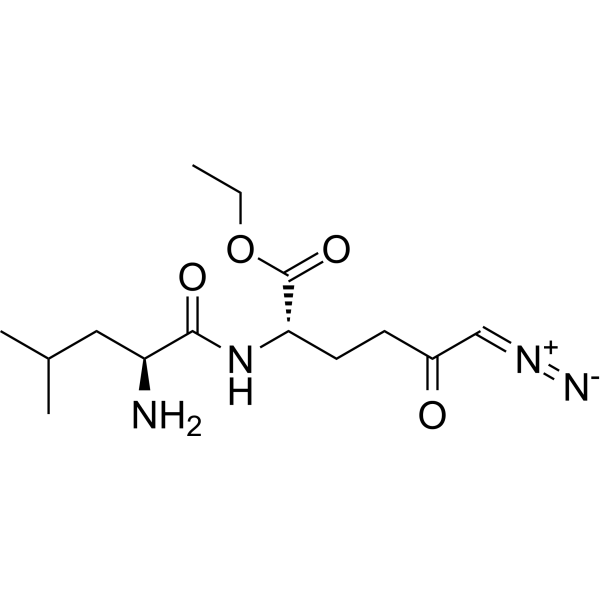
    JHU-083, a proagent of 6-diazo-5-oxo-L-norleucine (DON; HY-108357), is an orally active and selective glutaminase antagonist. JHU-083 blocks glutaminase activity in brain CD11b + cells and experimental cerebral malaria (ECM) resulting in a net decrease of glutamate levels in the animals .
    JHU-083
  • HY-114334
    Glutaminase-IN-1
    1 Publications Verification

    CB839 derivative

    Glutaminase Cancer
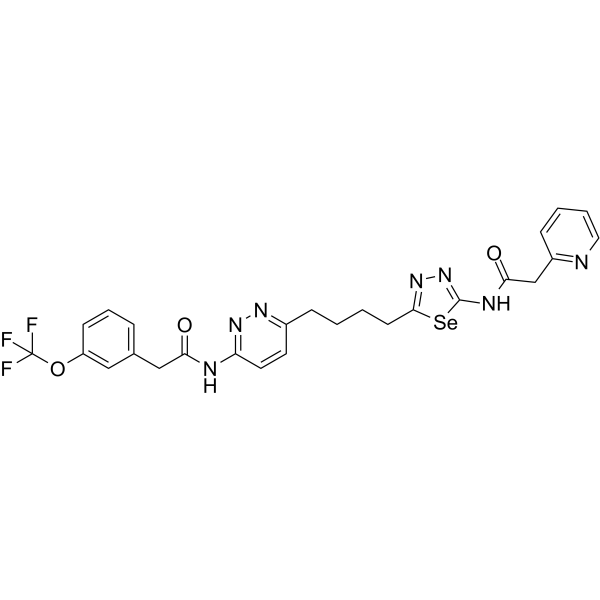
    Glutaminase-IN-1 (CB839 derivative), a CB839 derivative, is an allosteric inhibitor of 1,3,4-selenadiazole-containing kidney-type glutaminase (KGA), with an IC50 of 1 nM. Glutaminase-IN-1 (CB839 derivative) shows improved cellular uptake and antitumor activity.
    Glutaminase-IN-1
  • HY-103671

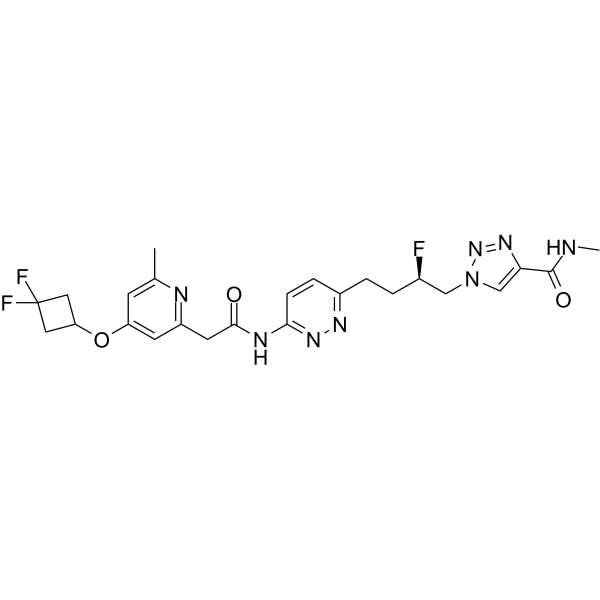
    Glutaminase Inflammation/Immunology Cancer
    IPN-60090 is an orally active and highly selective inhibitor of glutaminase 1 (GLS1; IC50=31 nM), with no activity observed against GLS-2. IPN-60090 exhibits excellent physicochemical and pharmacokinetic properties in vivo. IPN-60090 can be used for solid tumors research, such as lung and ovarian cancers .
    IPN60090
  • HY-103671A

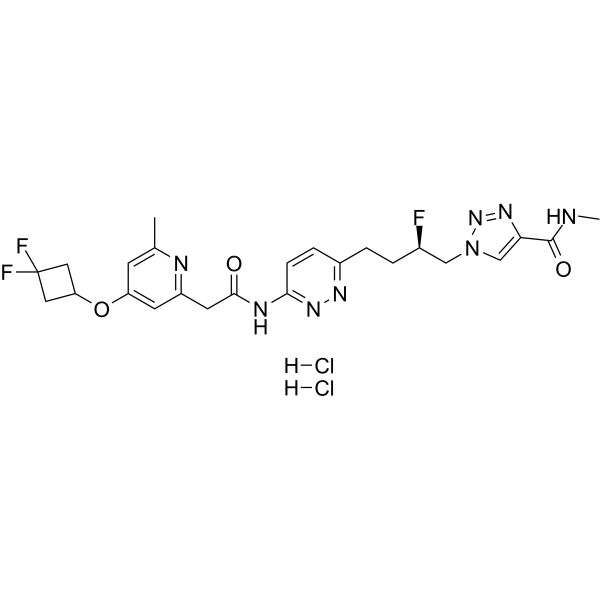
    Glutaminase Inflammation/Immunology Cancer
    IPN-60090 dihydrochloride is an orally active and highly selective inhibitor of glutaminase 1 (GLS1; IC50=31 nM), with no activity observed against GLS-2. IPN-60090 dihydrochloride exhibits excellent physicochemical and pharmacokinetic properties in vivo. IPN-60090 dihydrochloride can be used for solid tumors research, such as lung and ovarian cancers .
    IPN60090 dihydrochloride
  • HY-12248R

    CB-839 (Standard)

    Glutaminase Autophagy Reference Standards Cancer
    Telaglenastat (Standard) is the analytical standard of Telaglenastat. This product is intended for research and analytical applications. Telaglenastat (CB-839) is a first-in-class, selective, reversible and orally active glutaminase 1 (GLS1) inhibitor. Telaglenastat selectively inhibits GLS1 splice variants KGA (kidney-type glutaminase) and GAC (glutaminase C) compared to GLS2. The IC50s are 23 nM and 28 nM for endogenous glutaminase in mouse kidney and brain, respectively. Telaglenastat inuduces autophagy and has antitumor activity .
    Telaglenastat (Standard)
  • HY-W006187

    (Rac)-H-Phg(4-Me)-OH

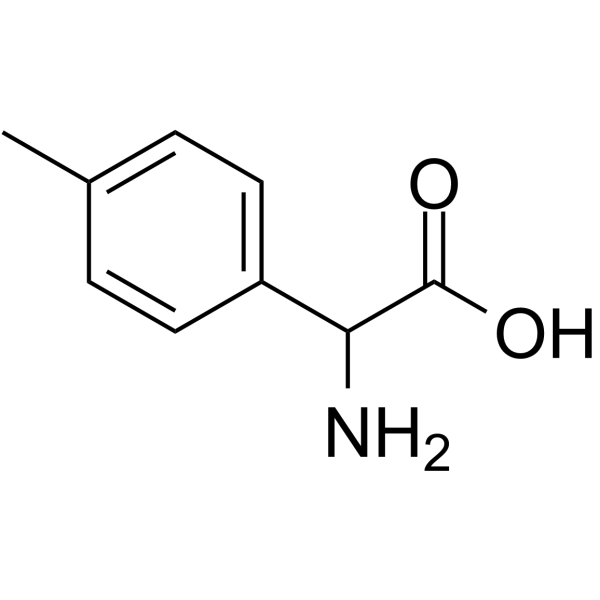
    Glutaminase Cancer
    2-Amino-2-(p-tolyl)acetic acid is used for optimizing azide skeleton, and is the intermediate in the synthesis of 1,3, 4-thiadiazole compounds. 1,3,4-thiadiazole compounds exhibit potential anti-cancer activity, and inhibit glutaminase (GLSI) .
    2-Amino-2-(p-tolyl)acetic acid
  • HY-12248A
    Telaglenastat hydrochloride
    Maximum Cited Publications
    104 Publications Verification

    CB-839 hydrochloride

    Glutaminase Autophagy Cancer
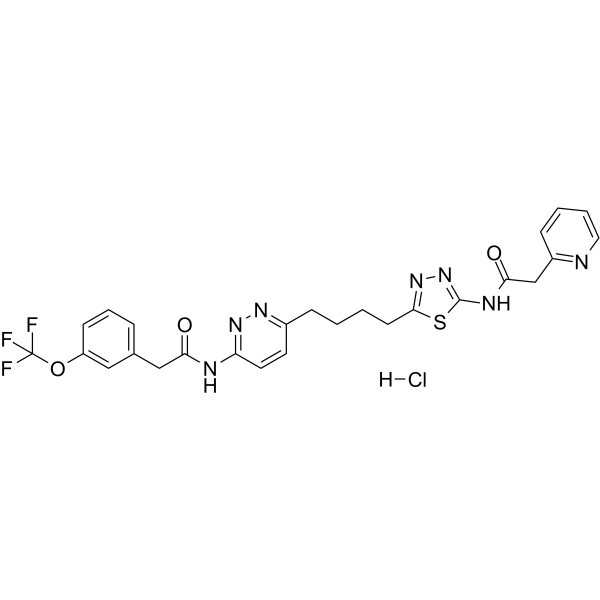
    Telaglenastat (CB-839) hydrochloride is a first-in-class, selective, reversible and orally active glutaminase 1 (GLS1) inhibitor. Telaglenastat hydrochloride selectively inhibits GLS1 splice variants KGA (kidney-type glutaminase) and GAC (glutaminase C) compared to GLS2. The IC50s are 23 nM and 28 nM for endogenous glutaminase in mouse kidney and brain, respectively. Telaglenastat hydrochloride inudces autophagy and has antitumor activity .
    Telaglenastat hydrochloride
  • HY-151434

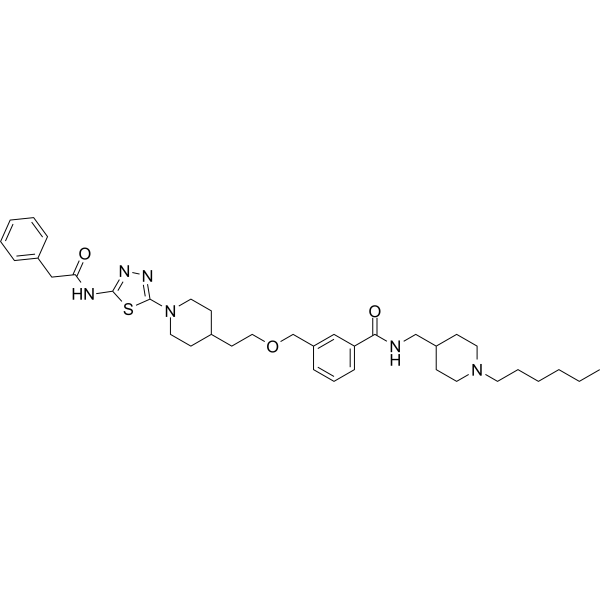
    Glutaminase Apoptosis Cancer
    GLS1 Inhibitor-6 (Compound 24y) is an orally active, potent and selective glutaminase 1 (GLS1) inhibitor (IC50=68 nM), shows 220-fold selectivity for GLS2. GLS1 Inhibitor-6 shows good anti-tumor activity, antitumor cell proliferation activity and induces apoptosis .
    GLS1 Inhibitor-6
  • HY-W353728

    N-CBZ-Tyramine

    Glutaminase Metabolic Disease
    N-Carbobenzoxytyramine (N-CBZ-Tyramine), a carbobenzoxy derivatives of amino acid, is a competitive inhibitor of glutaminase activity .
    N-Carbobenzoxytyramine
  • HY-180241

    Glutaminase Reactive Oxygen Species (ROS) Cancer
    Glutaminase C-IN-3 is a potent allosteric inhibitor of Glutaminase C (GAC) with an EC50 of 116 nM. Glutaminase C-IN-3 regulates cellular metabolites and increases reactive oxygen species (ROS) production by blocking glutamine metabolism. Glutaminase C-IN-3 exhibits strong antitumor activity in an A549 xenograft mouse model. Glutaminase C-IN-3 can be used for the research of non-small cell lung cancer (NSCLC) .
    Glutaminase C-IN-3
  • HY-103671AR

    Reference Standards Glutaminase Inflammation/Immunology Cancer
    IPN60090 dihydrochloride (Standard) is the analytical standard of IPN60090 dihydrochloride (HY-103671A). This product is intended for research and analytical applications. IPN-60090 dihydrochloride is an orally active and highly selective inhibitor of glutaminase 1 (GLS1; IC50=31 nM), with no activity observed against GLS-2. IPN-60090 dihydrochloride exhibits excellent physicochemical and pharmacokinetic properties in vivo. IPN-60090 dihydrochloride can be used for solid tumors research, such as lung and ovarian cancers .
    IPN60090 dihydrochloride (Standard)
  • HY-103671R

    Reference Standards Glutaminase Inflammation/Immunology Cancer
    IPN60090 (Standard) is the analytical standard of IPN60090 (HY-103671). This product is intended for research and analytical applications. IPN-60090 is an orally active and highly selective inhibitor of glutaminase 1 (GLS1; IC50=31 nM), with no activity observed against GLS-2. IPN-60090 exhibits excellent physicochemical and pharmacokinetic properties in vivo. IPN-60090 can be used for solid tumors research, such as lung and ovarian cancers .
    IPN60090 (Standard)

Inquiry Online

Your information is safe with us. * Required Fields.

Salutation


Country or Region *

Applicant Name *


Organization Name *

Department *


Email Address *


Product Name *

Cat. No.


Requested quantity *

Phone Number *


Remarks

Inquiry Online

Inquiry Information

Product Name:
Cat. No.:
Quantity:
MCE Japan Authorized Agent:

