14 Results for "

hCE2

" in MedChemExpress (MCE) Product Catalog:
Products (14)

14 Results for "hCE2" in MCE Product Catalog:

2
2 Cited Publications
Cat. No.: HY-N0235
CAS No.: 10309-37-2
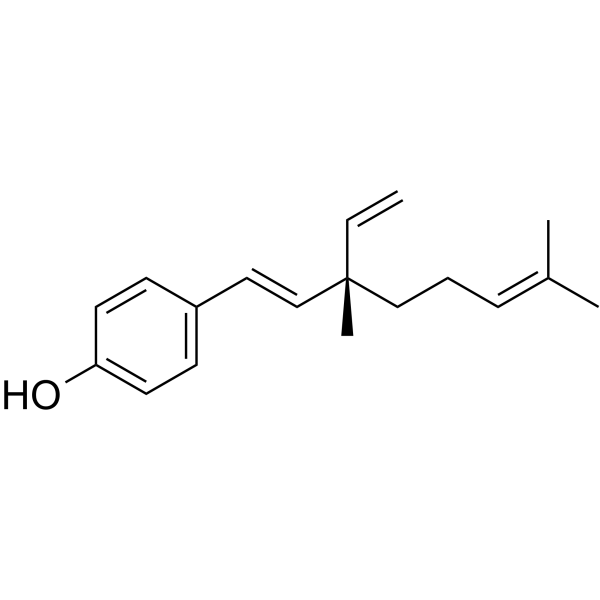
Synonyms: (S)-(+)-Bakuchiol
Bakuchiol is a phytoestrogen that can be obtained from psoralen seeds. Bakuchiol has been proven to be a non-competitive inhibitor of multiple enzymes, including UDP-glucuronosyltransferase 2B7 (UGT2B7) [2] and human carboxylesterase 2 (hCE2) , with IC50s values of 40.9 μM and 7.28 μM, respectively. Bakuchiol exhibits significant research and application potential in areas such as anti-inflammatory , antibacterial , antitumor therapies, as well as drug metabolism regulation.
loading...
    loading...
Cat. No.: HY-N1377
CAS No.: 10176-66-6
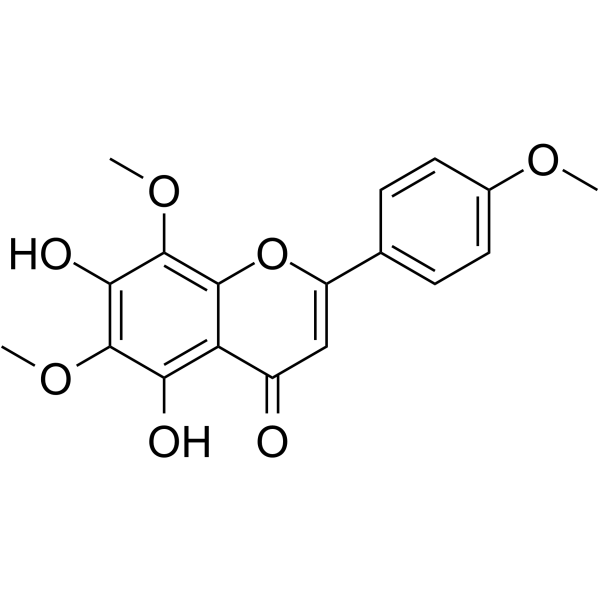
Synonyms: Lysionotin
Nevadensin (Lysionotin), a natural flavonoid, is a selective human carboxylesterase 1 (hCE1) inhibitor with an IC50 of 2.64 μM. Nevadensin is more selective for hCE1 than hCE2 (IC50 of 132.8 μM). Nevadensin can induce apoptosis and DNA damage in cancer cells. Nevadensin has a variety of pharmacological effects such as anti-inflammatory, anti-tumour, anti-hypertensive, anti-tubercular, antitussive, antioxidant and anti-microbial activities [2] .
loading...
    loading...
Cat. No.: HY-N3474
CAS No.: 94805-83-1
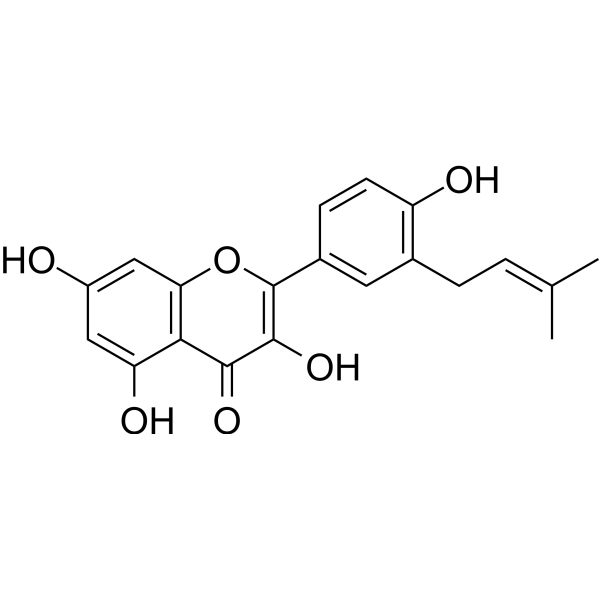
Isolicoflavonol potently inhibits hCES2A (Human carboxylesterase 2)-mediated fluorescein diacetate hydrolysis in a reversible and mixed inhibition manner, with Ki values less than 1.0 μM .
loading...
    loading...
Cat. No.: HY-N0855
CAS No.: 155521-46-3
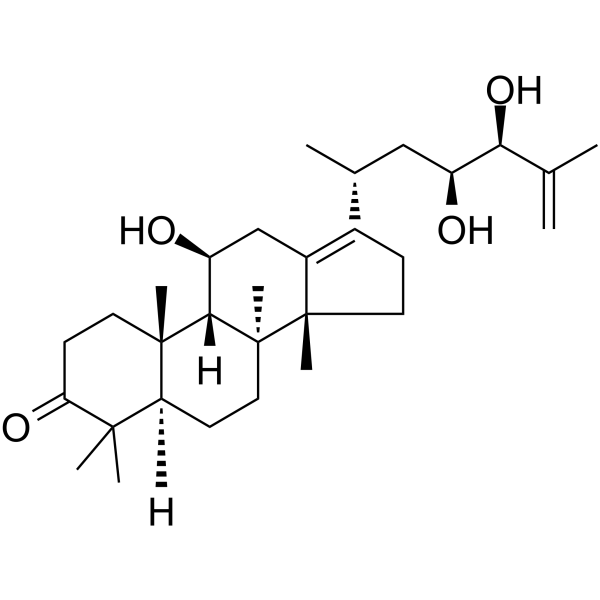
Synonyms: Alisol-G; 25-Anhydroalisol A
Alisol G (25-Anhydroalisol A) is a human carboxylesterase 2 (hCES2) inhibitor with an IC50 of 3.85 μM. Alisol G exhibits cytotoxic activity against human cancer cells, antibacterial activity against Gram-positive strains, and anti-hepatitis B virus activity. Alisol G can be used in research related to lung cancer, breast cancer, prostate cancer, bacterial infections, and HBV infections [2].
loading...
    loading...
Cat. No.: HY-N3413
CAS No.: 254886-77-6
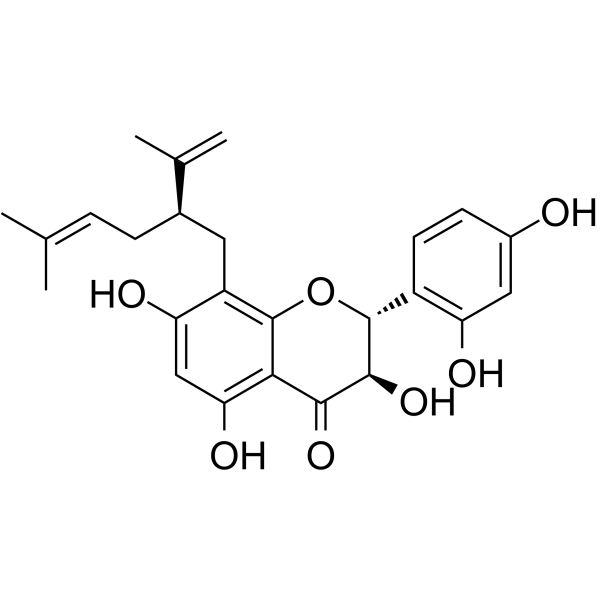
Kushenol X, a flavonoid compound isolated from the roots of Sophora flavescens. Kushenol X is a potent β-glucuronidase and human carboxylesterase 2 (hCE2) inhibitor with IC50s of 2.07 μM and 3.05 μM, respectively [2].
loading...
    loading...
Cat. No.: HY-N0235R
CAS No.: 10309-37-2
Synonyms: (S)-(+)-Bakuchiol (Standard)
Bakuchiol (Standard) is the analytical standard of Bakuchiol. This product is intended for research and analytical applications. Bakuchiol is a phytoestrogen that can be obtained from psoralen seeds. Bakuchiol has been proven to be a non-competitive inhibitor of multiple enzymes, including UDP-glucuronosyltransferase 2B7 (UGT2B7) [2] and human carboxylesterase 2 (hCE2) , with IC50s values of 40.9 μM and 7.28 μM, respectively. Bakuchiol exhibits significant research and application potential in areas such as anti-inflammatory , antibacterial , antitumor therapies, as well as drug metabolism regulation.
loading...
    loading...
Cat. No.: HY-N3921
CAS No.: 126716-36-7
Gancaonin I, an Isoflavone, exhibits moderate inhibition on human carboxylesterase 2 (hCES2A) with IC50 of 1.72 μM. Gancaonin I inhibits hCES2A-mediated fluorescein diacetate (FD) hydrolysis .
loading...
    loading...
Cat. No.: HY-N1377R
CAS No.: 10176-66-6
Synonyms: Lysionotin (Standard)
Nevadensin (Standard) (Lysionotin (Standard)) is the analytical standard of Nevadensin (HY-N1377). This product is intended for research and analytical applications. Nevadensin, a natural flavonoid, is a selective human carboxylesterase 1 (hCE1) inhibitor with an IC50 of 2.64 μM. Nevadensin is more selective for hCE1 than hCE2 (IC50 of 132.8 μM). Nevadensin can induce apoptosis and DNA damage in cancer cells. Nevadensin has a variety of pharmacological effects such as anti-inflammatory, anti-tumour, anti-hypertensive, anti-tubercular, antitussive, antioxidant and anti-microbial activities.
loading...
    loading...
Cat. No.: HY-155228
Research Areas:  

Inflammation/Immunology

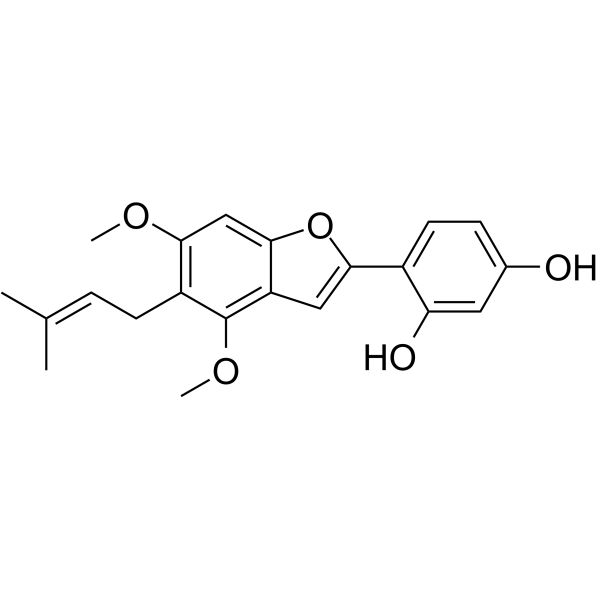
hCES2A-IN-2 (Compound 44) is an orally active human carboxylesterase 2 (hCES2A) inhibitor (IC50: 5.02 μM). hCES2A-IN-2 improves Irinotecan (HY-16562)-induced delayed diarrhea .
loading...
    loading...
Cat. No.: HY-147915
CAS No.: 2416220-53-4
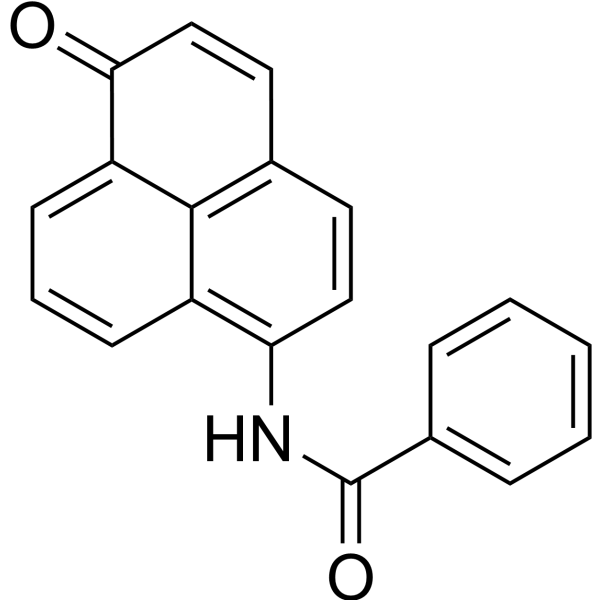
Benz-AP is a potent photosensitizer. Benz-AP produces singlet oxygen, with a negative correlation with hCES2 (Human carboxylesterase 2) activity. Benz-AP displays a higher photocytotoxicity potency in cancer cells under low hCES2 environments. Upon TPE (Two-photon excitation), Benz-AP produces ROS and kills cancer cells and tumor spheroids .
loading...
    loading...
Cat. No.: HY-176465
CAS No.: 3037959-47-7
Research Areas:  

Inflammation/Immunology

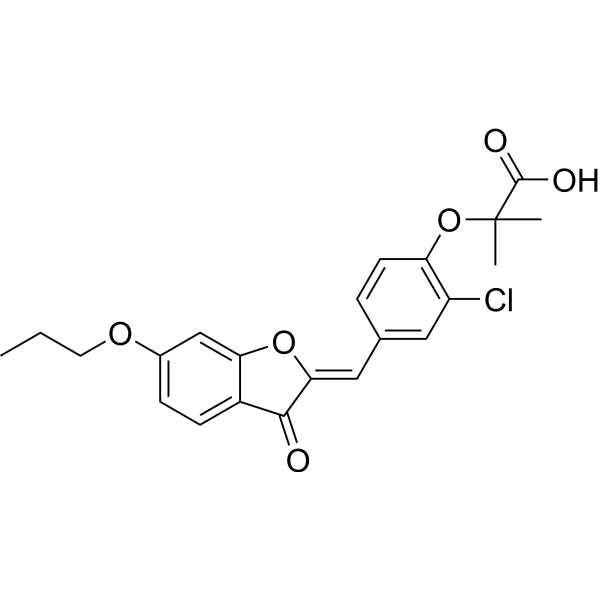
CES2A-IN-3 (Compound 9d) is a potent serine-targeting covalent human carboxylesterase 2A (hCES2A) inhibitor with an IC50 value of 0.12 nM. CES2A-IN-3 is promising for research of diarrhea and ulcerative colitis .
loading...
    loading...
Cat. No.: HY-P76193
Purity:  ≥ 90%, as determined by reducing SDS-PAGE.
Synonyms: Cocaine esterase; Carboxylesterase 2; CE-2; CES2; ICE
Species:  
Source:  
loading...
    loading...
Cat. No.: HY-P76192
Purity:  ≥ 95%, as determined by reducing SDS-PAGE.
Synonyms: Cocaine esterase; Carboxylesterase 2; CE-2; CES2; ICE
Species:  
Source:  
loading...
    loading...
Cat. No.: HY-182517
CAS No.: 2225980-49-2
Target:  

TRP Channel

Research Areas:  

Inflammation/Immunology

AG1529 is a TRPV1 inhibitor and capsaicinoid-based soft agent with a human TRPV1 IC50 of 0.9-0.93 μM. AG1529 reversibly blocks capsaicin-evoked TRPV1 activation, binds to the TRPV1 capsaicin binding site, moderately affects pH-induced TRPV1 gating, and does not alter voltage- or heat-mediated TRPV1 responses. AG1529 suppresses TRPV1-mediated neuronal excitability, reduces capsaicin- and pH-evoked neuronal firing, abolishes histaminergic and inflammation-mediated TRPV1 sensitization. AG1529 exhibits anti-nociceptive and antipruritic effects, attenuates in vivo hyperalgesia and pruritus, dose-dependently reduces acute histaminergic itch in rodents, and mildly blocks hTRPA1 and hTRPM8 channel activity. AG1529 undergoes hydrolysis and dermal deactivation, minimizes TRPV1-associated side reactions, does not evoke capsaicin-like burning sensation, and does not disrupt physiological thermal regulation. AG1529 can be used for the research of inflammatory cutaneous nociception and acute histaminergic pruritus [2].
loading...
    loading...
  • 1

