1. Search Result
Search Result
Results for "

human CB1

" in MedChemExpress (MCE) Product Catalog:

30

Inhibitors & Agonists

1

Peptides

1

Inhibitory Antibodies

5

Natural
Products

2

Recombinant Proteins

1

Isotope-Labeled Compounds

Cat. No. Product Name Target Research Areas Chemical Structure
  • HY-N0919
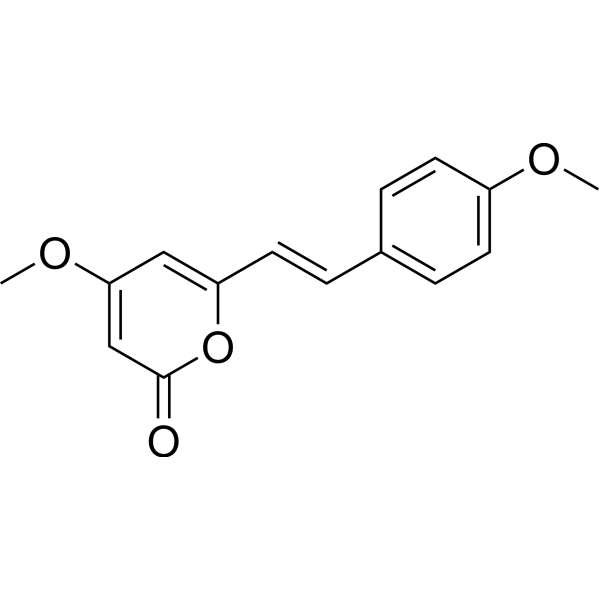
    Yangonin
    1 Publications Verification

    Cannabinoid Receptor NF-κB Autophagy Inflammation/Immunology
    Yangonin exhibits affinity for the human recombinant cannabinoid CB1 receptor with an IC50 and a Ki of 1.79 μM and 0.72 μM, respectively.
    Yangonin
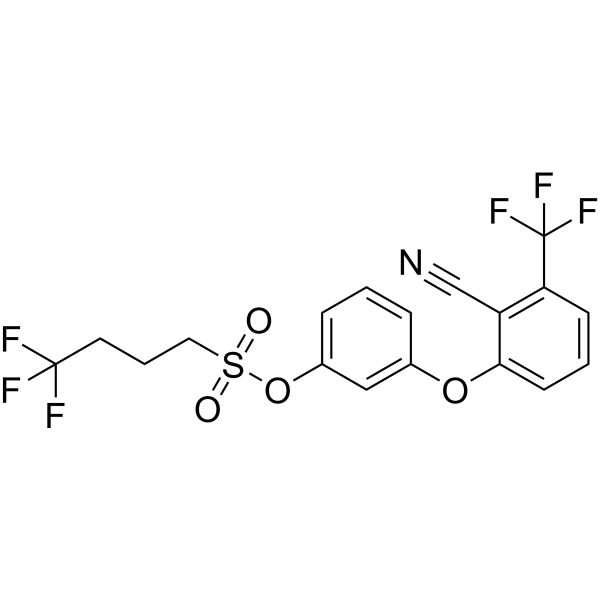
  • HY-10013
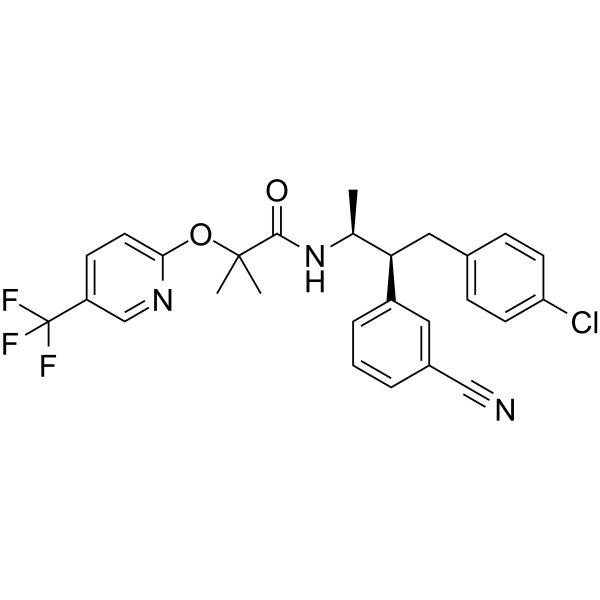
    Taranabant
    2 Publications Verification

    MK-0364

    Cannabinoid Receptor Metabolic Disease
    Taranabant is a highly potent and selective cannabinoid 1 (CB1) receptor inverse agonist that inhibits the binding and functional activity of various agonists, with a binding Ki of 0.13 nM for the human CB1R in vitro.
    Taranabant
  • HY-10871
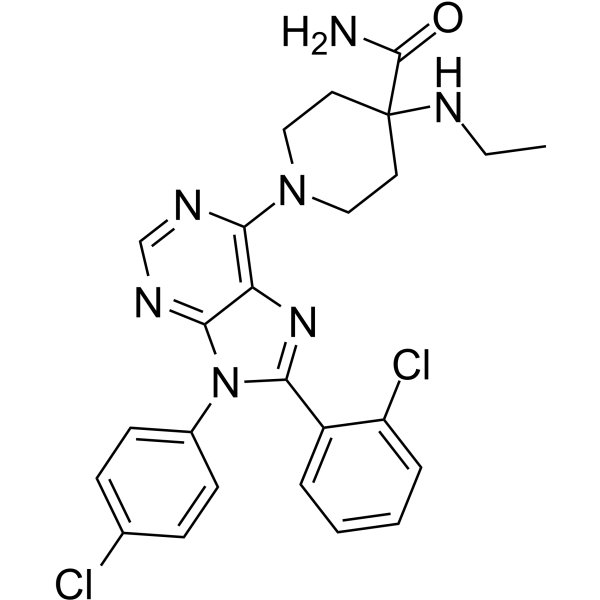
    Otenabant
    2 Publications Verification

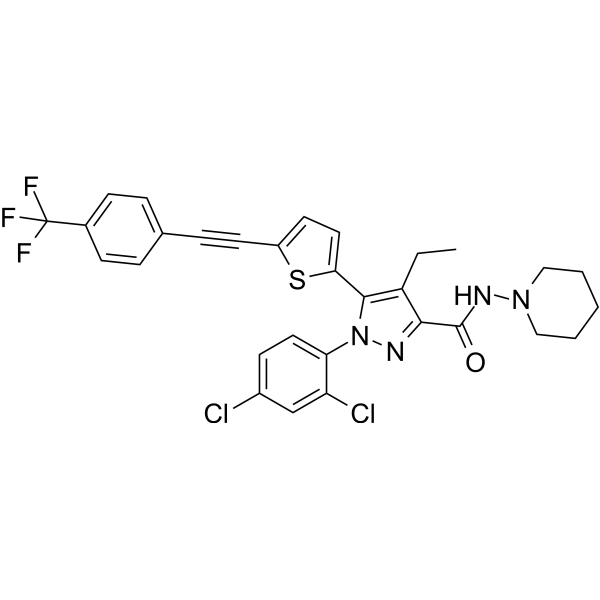
    CP-945598

    Cannabinoid Receptor Metabolic Disease
    Otenabant is a potent and selective cannabinoid receptor CB1 antagonist with Ki of 0.7 nM, exhibits 10,000-fold greater selectivity against human CB2 receptor.
    Otenabant
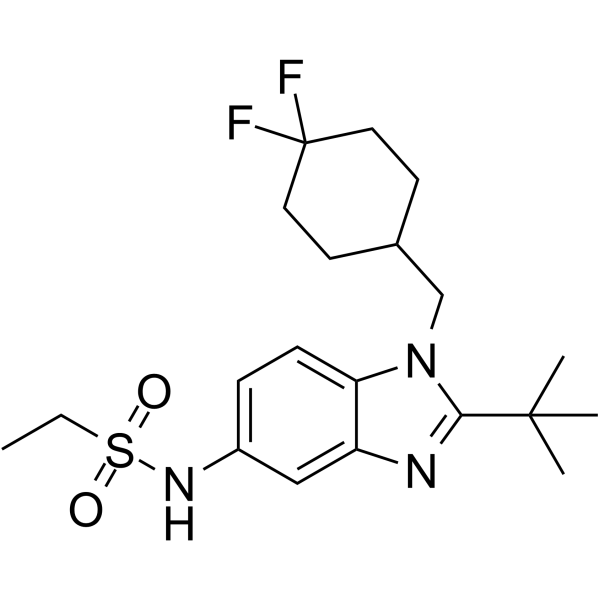
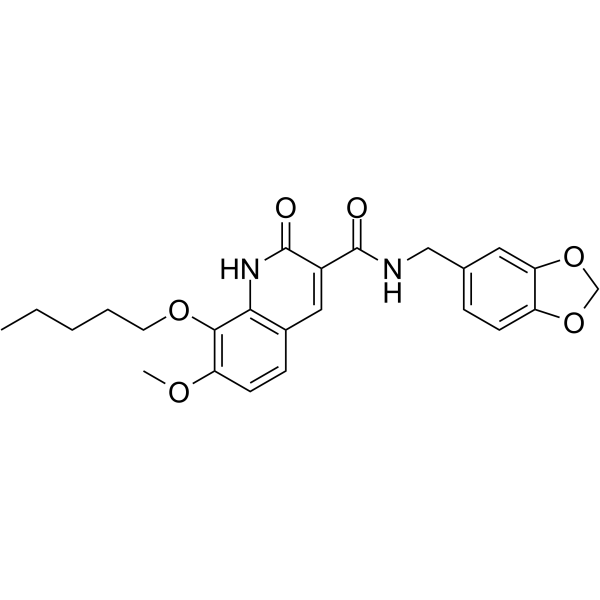
  • HY-112340

    Cannabinoid Receptor Neurological Disease Metabolic Disease
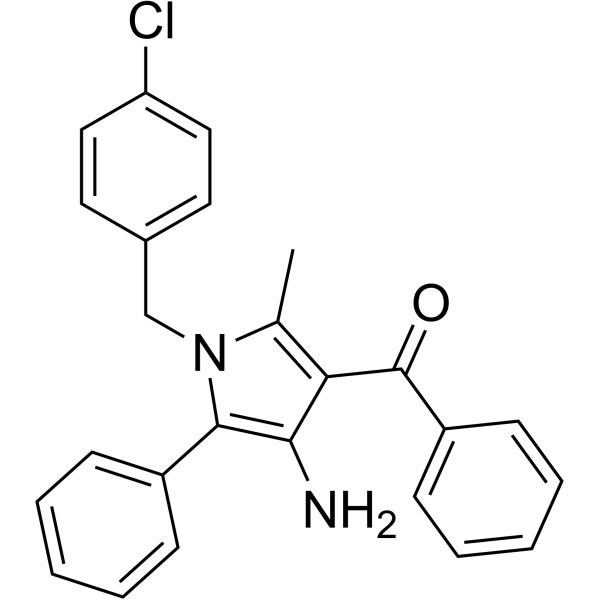
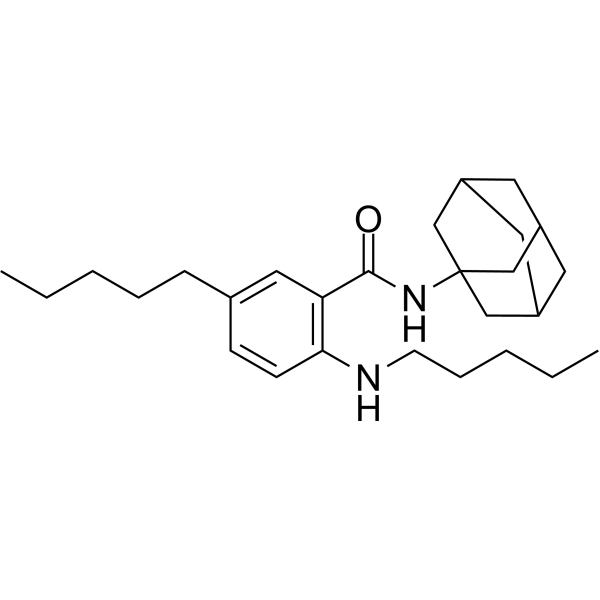
    CB1 antagonist 4 (compound 8) is a selective cannabinoid receptor 1 (CB1) inverse agonist with an IC50 of 8.5 nM for human CB1. CB1 antagonist 4 shows selective for CB1 over CB2 receptors (IC50 of 604.9 nM). CB1 antagonist 4 inhibits GTP binding to CB1-overexpressing cell membranes with an EC50 of 18.5 nM .
    CB1 antagonist 4
  • HY-100488

    Cannabinoid Receptor Cancer
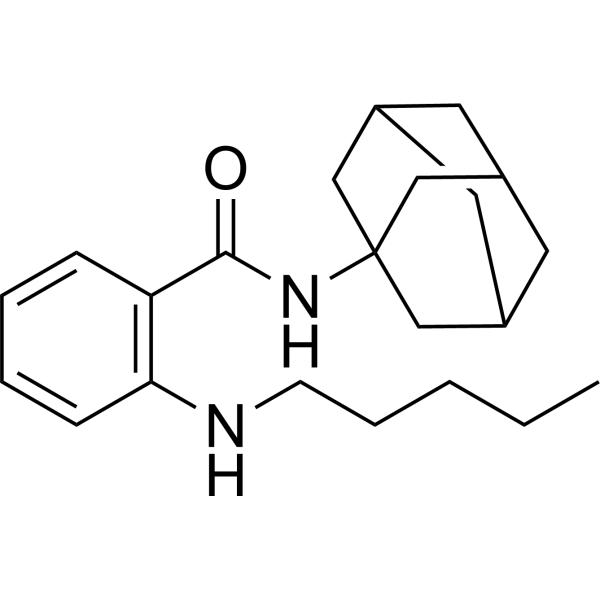
    Bay 59-3074 is a selective cannabinoid CB1/CB2 receptor partial agonist with Ki values of 48.3 and 45.5 nM at human CB1 and CB2 receptors, respectively. Bay 59-3074 has analgesic properties .
    Bay 59-3074
  • HY-103325

    Cannabinoid Receptor TRP Channel Interleukin Related ANGPTL VEGFR Metabolic Disease Inflammation/Immunology
    JTE-907 is a selective and orally active cannabinoid CB2 receptor inverse agonist and exerts anti-inflammatory effects. JTE-907 upregulates IL-6, MCP-1, IL-1β, VEGF, ANGPTL4, and TRPV1 in mature adipocytes. JTE-907 downregulates CB1, MCP-1, and IL-1β in preadipocytes. JTE-907 inhibits ear swelling in mice. JTE-907 reverses the protective effects of CB2 agonists and Anandamide (HY-10863) against cytokine-evoked colonic mucosal damage. JTE-907 can be used for the research of allergic dermatitis, obesity, and colitis .
    JTE-907
  • HY-113070

    Cannabinoid Receptor Endogenous Metabolite Neurological Disease
    Dihomo-γ-Linolenoyl Ethanolamide, an endocannabinoid, is a cannabinoid (CB) receptor agonist with Kis of 857 nM and 598 nM for human recombinant CB1 and CB2 receptors, respectively .
    Dihomo-γ-Linolenoyl Ethanolamide
  • HY-119104
    AZD1940
    1 Publications Verification

    Cannabinoid Receptor Neurological Disease
    AZD1940 is an orally active, high affinity cannabinoid CB1/CB2 receptor agonist with pKi values of 7.93 and 9.06 for human CB1R and CB2R, respectively. AZD1940 shows a robust analgesia action .
    AZD1940
  • HY-130311

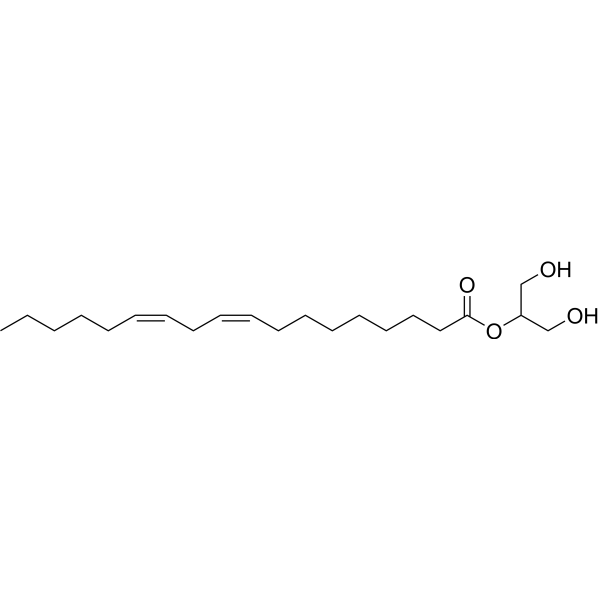
    2-Monolinolein; 2-Monolinoleoylglycerol

    Cannabinoid Receptor Neurological Disease
    2-Linoleoyl glycerol (2-Monolinolein) is a partial CB1 receptor agonist with a pEC50 of 4.781. 2-Linoleoyl glycerol activates the hCB1 receptor. 2-Linoleoyl glycerol does not induce an increase in intracellular free Ca 2+. 2-Linoleoyl glycerol can be used in the research of neurological disorders .
    2-Linoleoyl glycerol
  • HY-177425

    Cannabinoid Receptor Metabolic Disease
    AM11542 is a cannabinoid receptor 1 (CB1) agonist with a human CB1 Ki of 0.11 nM. AM11542 stabilizes the active conformational state of the CB1 receptor. AM11542 can be used for the research of obesity .
    AM11542
  • HY-120851

    Cannabinoid Receptor DAGL Metabolic Disease
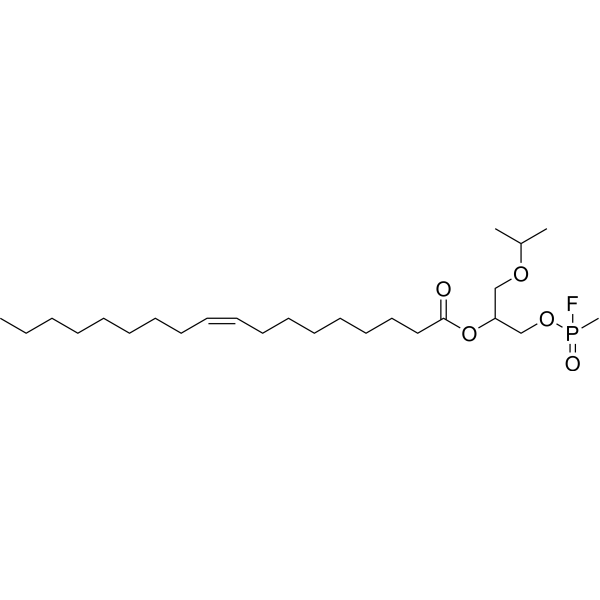
    O-7460 is a potent and selective DAGLα inhibitor, with an IC50 of 0.69 μM. O-7460 shows selectivity over onoacylglycerol lipase (MAGL), human CB1 and CB2 cannabinoid receptors. O-7460 can decrease HFD-caused an up-regulation of 2-AG levels .
    O-7460
  • HY-122964

    Cannabinoid Receptor Metabolic Disease
    URB447 is a peripherally restricted CB1 cannabinoid antagonist (IC50: 313 nM and 41 nM for rat CB1 and human CB2 receptor respectively ). URB447 lowers food intake and body-weight gain in mice without entering the brain or antagonizing central CB1-dependent responses. URB447 can be used for research of obesity .
    URB447
  • HY-110003
    Arachidonylcyclopropylamide
    2 Publications Verification

    ACPA

    Cannabinoid Receptor Neurological Disease
    Arachidonylcyclopropylamide (ACPA) is a potent and selective CB1 receptors agonist. Arachidonylcyclopropylamide inhibits forskolin-stimulated cAMP production in CHO cells transfected with human cannabinoid CB1 receptors (IC50=2 nM) .
    Arachidonylcyclopropylamide
  • HY-N6932

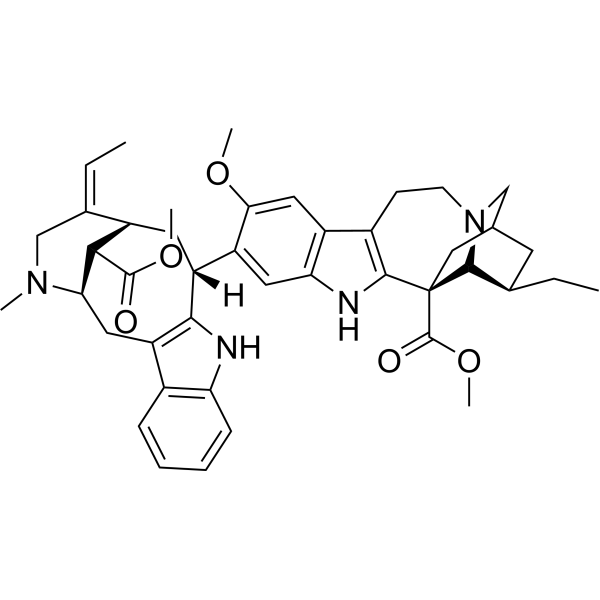
    Cannabinoid Receptor P-glycoprotein PI3K Akt mTOR Apoptosis Autophagy EGFR Metabolic Disease Cancer
    Voacamine is an indole alkaloid with cannabinoid 1 (CB1) antagonistic activity. Voacamine can inhibit nuclear translocation. Voacamine is effective in enhancing the effect of Doxorubicin (HY-15142A) as it interferes with the P-glycoprotein (P-gp) function. Voacamine promotes apoptosis-independent autophagic cell death in human osteosarcoma cells. Voacamine activates mitochondrial-associated apoptosis signaling pathway and inhibition of PI3K/Akt/mTOR signaling pathway to suppress breast cancer progression. Voacamine inhibits EGFR to exert oncogenic activity against colorectal cancer .
    Voacamine
  • HY-159161

    Orphan GPCR Inflammation/Immunology Cancer
    PSB-CB-27 is a potent and selective GPR18 inhibitor with an IC50 of 0.65 μM. PSB-CB-27 shows selectivity over Human GPR55, Human CB1 receptor, and Human CB2 receptor. PSB-CB-27 leads to a complete blockade of Δ9-Tetrahydrocannabinol (THC)-induced GPR18 activation. PSB-CB-27 can be used for inflammatory diseases and cancer immunotherapy research .
    PSB-CB-27
  • HY-10871A

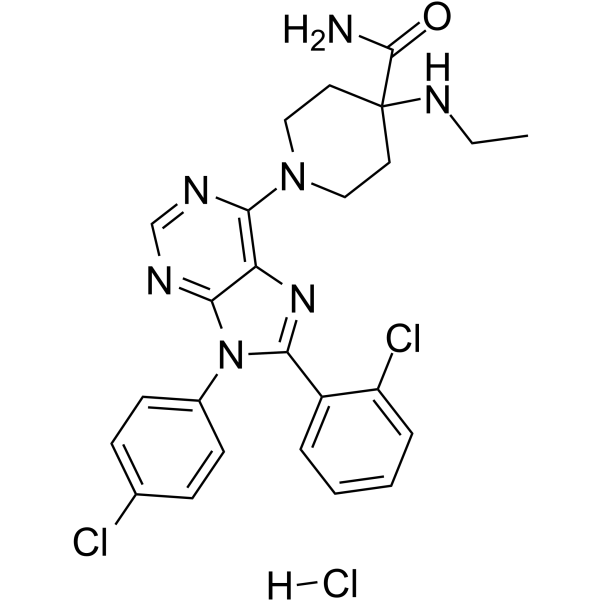
    CP 945598 Hydrochloride

    Cannabinoid Receptor Metabolic Disease
    Otenabant Hydrochloride is a potent and selective cannabinoid receptor CB1 antagonist with Ki of 0.7 nM, exhibits 10,000-fold greater selectivity against human CB2 receptor.
    Otenabant Hydrochloride
  • HY-152581

    Cannabinoid Receptor Inflammation/Immunology
    CB2R antagonist 3 is a selective antagonist of cannabinoid type 2 receptor (CB2R). CB2R antagonist 3 has high affinity for human CB2R and specific selectivity for CB1R. CB2R antagonist 3 can be combined with CB65 (HY-110047), the activator of CB2R. CB2R antagonist 3 effectively up-regulates the expression of anti-inflammatory cytokines and down-regulates the expression of pro-inflammatory cytokines .
    CB2R antagonist 3
  • HY-152576

    Cannabinoid Receptor Inflammation/Immunology
    CB2R agonist 1 is a selective ligand of cannabinoid receptor subtype 2 (CB2R) with an EC50 value of 0.56 µM. CB2R agonist 1 has high affinity and excellent selectivity for human CB2R and CB1R respectively. CB2R agonist 1 regulates the production of pro-inflammatory cytokines and anti-inflammatory cytokines and play an immunomodulatory role .
    CB2R agonist 1
  • HY-172568

    Cannabinoid Receptor Cytochrome P450 Neurological Disease Inflammation/Immunology
    (±)5(6)-EET Ethanolamide is a metabolite of Anandamide (HY-10863) generated via oxidation by cytochrome P450 enzymes. (±)5(6)-EET Ethanolamide is also a selective cannabinoid receptor 2 (CB2) agonist. (±)5(6)-EET Ethanolamide has Ki values of 11.4 μM and 8.9 nM for human CB1 and CB2, respectively . (±)5(6)-EET Ethanolamide can be used in research on immunomodulation and neuroinflammation .
    (±)5(6)-EET Ethanolamide
  • HY-119744

    Cannabinoid Receptor Neurological Disease
    BAY 38-7271 is selective and highly potent and cannabinoid CB1/CB2 receptor agonist, with Kis of 1.85 nM and 5.96 nM for recombinant human CB1 receptor and CB2 receptor, respectively. BAY 38-7271 has strong neuroprotective properties .
    BAY 38-7271
  • HY-113885

    Cannabinoid Receptor Neurological Disease Inflammation/Immunology
    MDA77 is a CB2 inverse agonist with an EC50 of 5.82 nM, showing selectivity for human CB2 and no activity on CB1 .
    MDA77
  • HY-P1397A

    Cannabinoid Receptor Cardiovascular Disease
    RVD-Hpα TFA is the N-terminally extended form of human hemopressin that acts as a selective CB1 receptor agonist. RVD-Hpα TFA increases intracellular Ca 2+ levels in cells expressing CB1 receptors in vitro. RVD-Hpα TFA also high affinity CB2 positive allosteric modulator (Ki=50 nM).
    RVD-Hpα TFA
  • HY-134110

    Endogenous Metabolite Metabolic Disease
    Anandamide (AEA) is an endogenous cannabinoid that binds to both central cannabinoid (CB1) and peripheral cannabinoid (CB2) receptors. The biological actions of AEA are terminated by cellular uptake and hydrolysis of the amide bond by the enzyme fatty acid amide hydrolase. Arachidonoyl-N-methyl amide is an analog of anandamide that binds to the human central cannabinoid (CB1) receptor with a Ki of 60 nM. It inhibits rat glial gap junction cell-cell communication 100% at a concentration of 50 μM.
    N-Methylarachidonamide
  • HY-N15177

    Δ9-Tetrahydrocannabutol

    Cannabinoid Receptor Neurological Disease Inflammation/Immunology
    Δ9-THCB (Δ9-Tetrahydrocannabutol) has a high affinity for human CB1 and CB2 receptors with the Ki values of 15 nM and 51 nM, respectively. Δ9-THCB (Δ9-Tetrahydrocannabutol) has analgesic and anti-inflammatory activities and plays partial agonistic effects on CB1 receptor in mice .
    Δ9-THCB
  • HY-134055

    Arachidonic acid-N,N-dimethyl amide

    Cannabinoid Receptor Metabolic Disease
    Anandamide (AEA) is an endogenous cannabinoid that binds to both central cannabinoid (CB1) and peripheral cannabinoid (CB2) receptors. The biological actions of AEA are terminated by cellular uptake and hydrolysis of the amide bond by the enzyme fatty acid amide hydrolase. Arachidonoyl-N,N-dimethyl amide is an analog of anandamide that exhibits weak or no binding to the human central cannabinoid (CB1) receptor (Ki >1 μM). It inhibits rat glial gap junction cell-cell communication 100% at a concentration of 50 μM.
    Arachidonoyl-N,N-dimethyl amide
  • HY-N0919R

    Reference Standards Cannabinoid Receptor NF-κB Autophagy Inflammation/Immunology
    Yangonin (Standard) is the analytical standard of Yangonin. This product is intended for research and analytical applications. Yangonin exhibits affinity for the human recombinant cannabinoid CB1 receptor with an IC50 and a Ki of 1.79 μM and 0.72 μM, respectively.
    Yangonin (Standard)
  • HY-W705168

    Isotope-Labeled Compounds Autophagy Cannabinoid Receptor NF-κB Inflammation/Immunology
    Yangonin-d3 is the deuterium labeled Yangonin (HY-N0919). Yangonin exhibits affinity for the human recombinant cannabinoid CB1 receptor with an IC50 and a Ki of 1.79 μM and 0.72 μM, respectively.
    Yangonin-d3
  • HY-124954

    Cannabinoid Receptor TNF Receptor Neurological Disease Inflammation/Immunology
    MN-25 (compound 4a) is an orally active indolpyridone that serves as a novel cannabinoid ligand. MN-25 has Ki of 245 nM and 11 nM for CB1 and CB2. MN-25 has CB2 agonist activity and inhibits TNF-R release in human peripheral blood mononuclear cells in vitro with an IC50 of 33 μM. MN-25 shows efficacy in a mouse acute inflammation model at oral doses up to 50 mg/kg >[1].
    MN-25
  • HY-10871R

    CP-945598 (Standard)

    Reference Standards Cannabinoid Receptor Metabolic Disease
    Otenabant (Standard) is the analytical standard of Otenabant (HY-10871). This product is intended for research and analytical applications. Otenabant is a potent and selective cannabinoid receptor CB1 antagonist with Ki of 0.7 nM, exhibits 10,000-fold greater selectivity against human CB2 receptor.
    Otenabant (Standard)
  • HY-179436

    9β,10β-EHHC; 9β,10β-epoxy HHC

    Cannabinoid Receptor Neurological Disease
    9β,10β-epoxy Hexahydrocannabinol is a cannabinoid receptor 1 (CB1) and CB2 receptor ligand with a binding affinity of 224 nM for CB1 and 335 nM for CB2. 9β,10β-epoxy Hexahydrocannabinol reduces locomotor activity, induces catalepsy, lowers body temperature, and produces antinociceptive effects in mice. 9β,10β-epoxy Hexahydrocannabinol can be used for the study of nervous system diseases .
    9β,10β-epoxy Hexahydrocannabinol

Inquiry Online

Your information is safe with us. * Required Fields.

Salutation


Country or Region *

Applicant Name *


Organization Name *

Department *


Email Address *


Product Name *

Cat. No.


Requested quantity *

Phone Number *


Remarks

Inquiry Online

Inquiry Information

Product Name:
Cat. No.:
Quantity:
MCE Japan Authorized Agent:

