Search Result
Results for "
hydroxycoumarin
" in MedChemExpress (MCE) Product Catalog:
4
Isotope-Labeled Compounds
| Cat. No. |
Product Name |
Target |
Research Areas |
Chemical Structure |
-
- HY-17365
-
-
-
- HY-N0573
-
|
7-hydroxycoumarin; Hydrangin; NSC 19790
|
Apoptosis
Fluorescent Dye
|
Neurological Disease
Inflammation/Immunology
Cancer
|
|
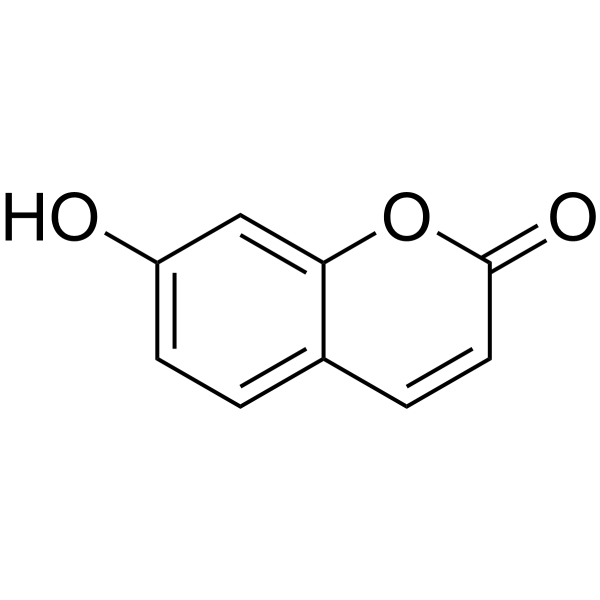
Umbelliferone (7-Hydroxycoumarin), a natural orally active product of the coumarin family, is a fluorescing compound which can be used as a sunscreen agent. Umbelliferone induces cell cycle arrest, apoptosis and DNA fragmentation in HepG2 cells. Umbelliferone exhibits significant anticancer effects. Umbelliferone attenuates the alteration characteristics of allergic airway inflammation. Umbelliferone displays the neuroprotective effects and cross the blood-brain barrier. Umbelliferone exhibits anti-inflammatory and antioxidant effects in
chronic alcohol-fed rats .
|
-
-
- HY-125586
-
|
|
DNA/RNA Synthesis
ADC Payload
|
Cancer
|
|
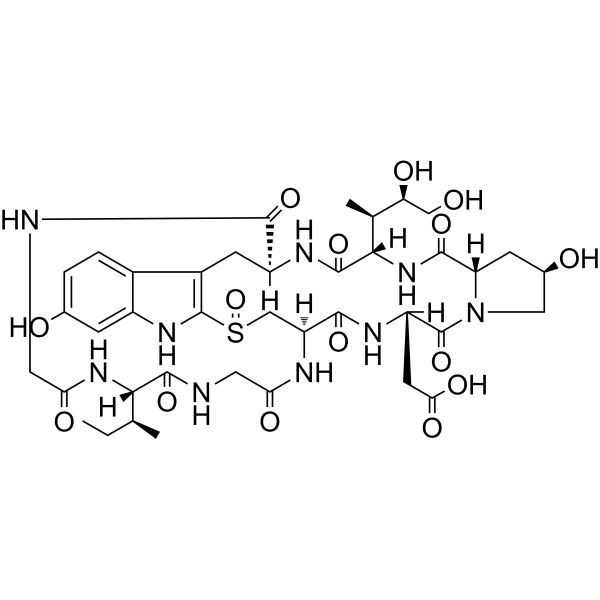
β-Amanitin is a cyclic peptide toxin in the poisonous Amanita phalloides mushroom. β-Amanitin inhibits inhibits eukaryotic RNA polymerase II and III. β-Amanitin inhibits protein synthesis. β-Amanitin can be used as a cytotoxic component of antibody-drug conjugates (ADCs) .
|
-
-
- HY-N6856
-
|
|
Bacterial
Endogenous Metabolite
|
Infection
Cancer
|
|
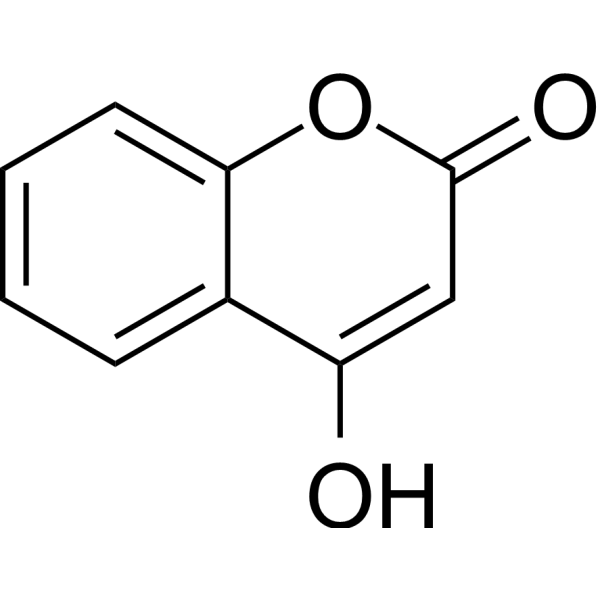
4-Hydroxycoumarin is an orally active coumarin derivative, one of the most versatile heterocyclic scaffolds, often used in the synthesis of various organic compounds. 4-Hydroxycoumarin possesses both electrophilic and nucleophilic properties. 4-Hydroxycoumarin is an HIV protease inhibitor and tyrosine kinase inhibitor. 4-Hydroxycoumarin has anti-inflammatory, antibacterial and anti-tumor effects .
|
-
-
- HY-127170
-
|
|
Lipoxygenase
Tyrosinase
|
Metabolic Disease
Inflammation/Immunology
|
|
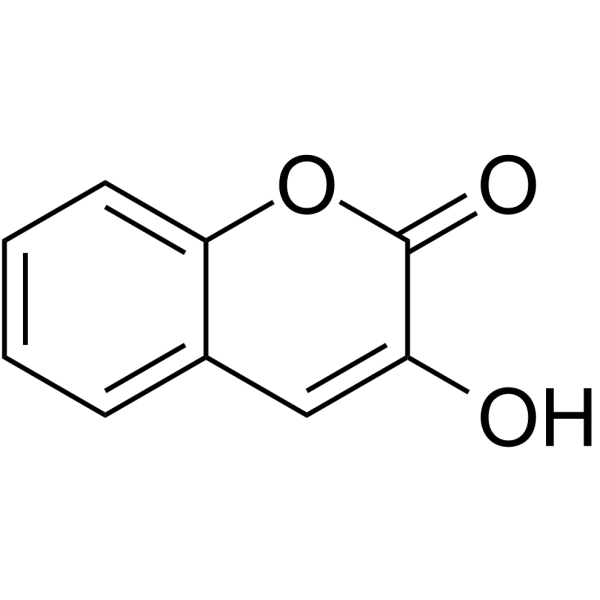
3-Hydroxycoumarin is an inhibitor of tyrosinase and lipoxygenase with an IC50 for recombinant human tyrosinase (rHT) of 26 μM, and a Ki of 3.39 μM; its IC50 for LOX is 9.5 μM. 3-Hydroxycoumarin has DPPH free radical scavenging activity (IC50 = 31.2 μM). 3-Hydroxycoumarin has photoprotective effects on sea urchin zygotes and embryos .
|
-
-
- HY-W540978
-
|
|
Biochemical Assay Reagents
|
Others
|
|
3-Azido-7-hydroxycoumarin is a click chemistry reagent containing an azido group. Under Cu (II) catalysis, it undergoes azide-alkyne cycloaddition (CuAAC) click reaction with 3-butyn-1-ol and emits a fluorescent signal .
|
-
-
- HY-133091
-
|
7-O-Ethylumbelliferone
|
Cytochrome P450
|
Metabolic Disease
|
|
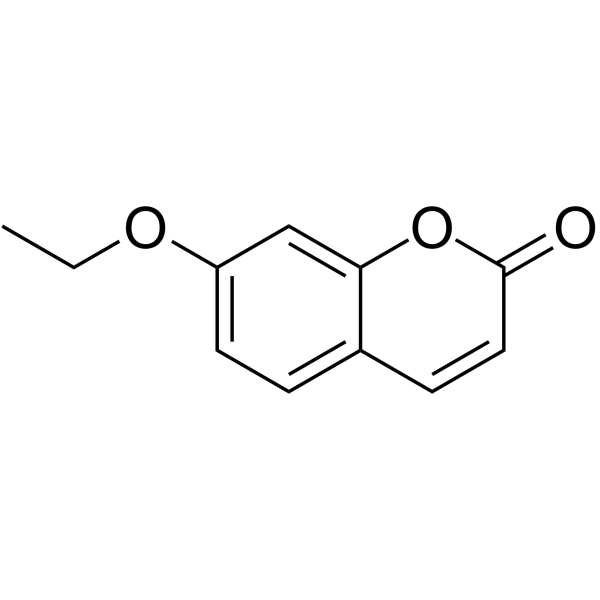
7-Ethoxycoumarin is a substrate of cytochrome P450 (CYP450). 7-Ethoxycoumarin has been used for the functional characterization of various CYPs and for the generation of 7-hydroxycoumarin (HY-N0573) .
|
-
-
- HY-N6656
-
|
|
Fungal
Bacterial
|
Inflammation/Immunology
Cancer
|
|
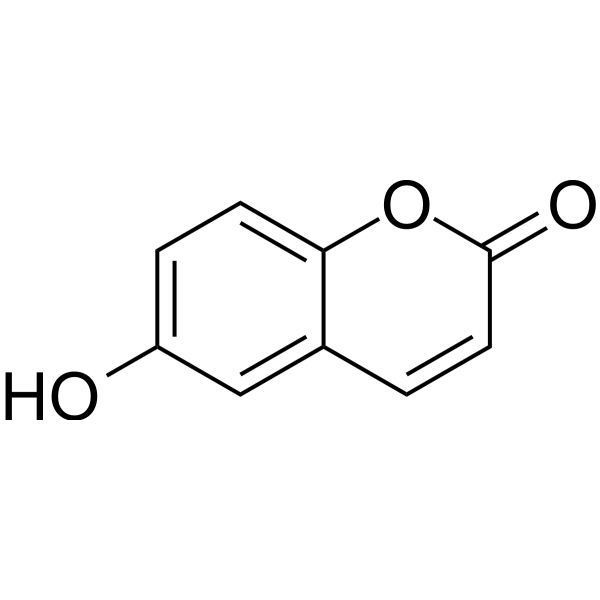
6-Hydroxycoumarin is a coumarin which has anti-inflammatory, anti-pyretic, anti-oxidant, vasodilator, anti-amoebic, anti-bacterial, anti-fungal, bacteriostatic and antitumor activity .
|
-
-
- HY-76779
-
|
|
Drug Derivative
|
Cancer
|
|
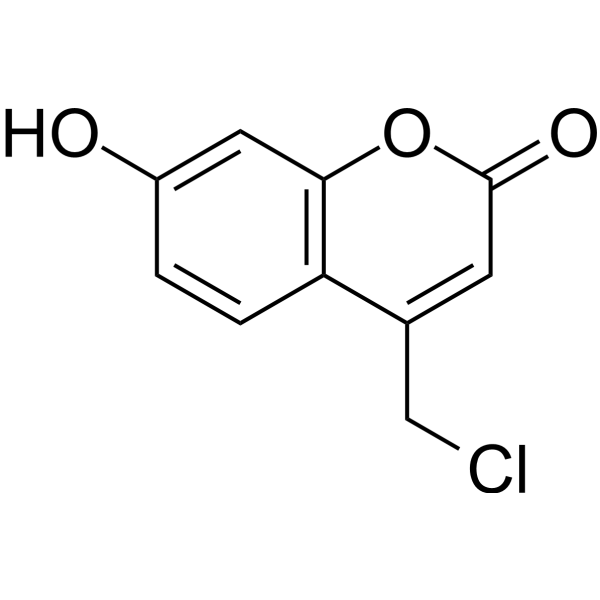
4-(Chloromethyl)-7-hydroxycoumarin (compound 4) is a hydroxycoumarin derivative with potent antioxidant effect and high hydroxyl radical-scavenging property. 4-(Chloromethyl)-7-hydroxycoumarin contains a methyl group and a chlorine group in the heterocyclic ring. A series of coumarins incorporating hydroxy-, chloro- and/or chloromethyl-moieties has been investigated as potent inhibitors of the zinc enzyme carbonic anhydrase, expecially tumor-associated isoforms CA IX and XII .
|
-
-
- HY-P10447
-
|
Fengycin IX; SNA-60-367-3
|
Phospholipase
Fungal
|
Infection
|
|
Plipastatin A1 (Fengycin IX; SNA-60-367-3) is a lipopeptide with phospholipase A2 inhibitory activity. Plipastatin A1 inhibits conidial germination of Botrytis cinerea in vitro and reduces the incidence of gray mold on tomato leaves. Plipastatin A1 is applicable to research related to gray mold [1][2].
|
-
-
- HY-N0573R
-
|
7-hydroxycoumarin (Standard); Hydrangin (Standard); NSC 19790 (Standard)
|
Reference Standards
Apoptosis
Fluorescent Dye
|
Neurological Disease
Inflammation/Immunology
Cancer
|
|
Umbelliferone (Standard) (7-Hydroxycoumarin (Standard)) is the analytical standard of Umbelliferone (HY-N0573). This product is intended for research and analytical applications. Umbelliferone (7-Hydroxycoumarin), a natural orally active product of the coumarin family, is a fluorescing compound which can be used as a sunscreen agent. Umbelliferone induces cell cycle arrest, apoptosis and DNA fragmentation in HepG2 cells. Umbelliferone exhibits significant anticancer effects. Umbelliferone attenuates the alteration characteristics of allergic airway inflammation. Umbelliferone displays the neuroprotective effects and cross the blood-brain barrier. Umbelliferone exhibits anti-inflammatory and antioxidant effects in
chronic alcohol-fed rats.
|
-
-
- HY-N0573S
-
|
7-hydroxycoumarin-d5; Hydrangin-d5; NSC 19790-d5
|
Isotope-Labeled Compounds
Apoptosis
Fluorescent Dye
|
Neurological Disease
Inflammation/Immunology
Cancer
|
|
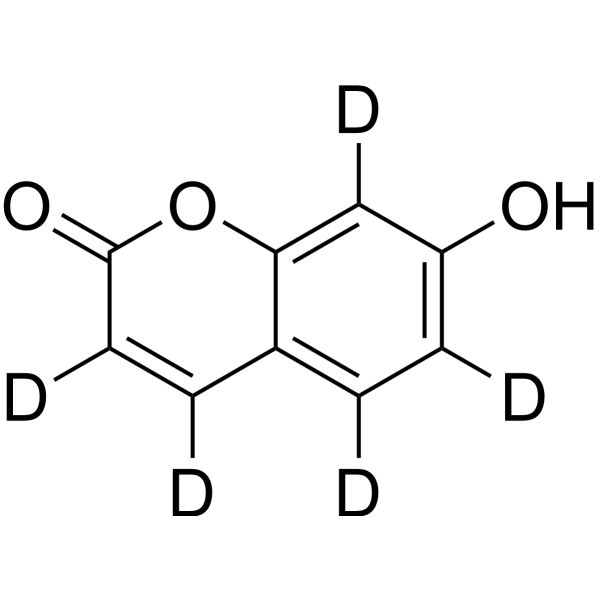
Umbelliferone-d5 (7-Hydroxycoumarin-d5) is the deuterium labeled Umbelliferone (HY-N0573 ). Umbelliferone (7-Hydroxycoumarin), a natural orally active product of the coumarin family, is a fluorescing compound which can be used as a sunscreen agent. Umbelliferone induces cell cycle arrest, apoptosis and DNA fragmentation in HepG2 cells. Umbelliferone exhibits significant anticancer effects. Umbelliferone attenuates the alteration characteristics of allergic airway inflammation. Umbelliferone displays the neuroprotective effects and cross the blood-brain barrier. Umbelliferone exhibits anti-inflammatory and antioxidant effects in chronic alcohol-fed rats .
|
-
-
- HY-N6856R
-
|
|
Reference Standards
Bacterial
Endogenous Metabolite
|
Infection
Cancer
|
|
4-Hydroxycoumarin (Standard) is the analytical standard of 4-Hydroxycoumarin. This product is intended for research and analytical applications. 4-Hydroxycoumarin is an orally active coumarin derivative, one of the most versatile heterocyclic scaffolds, often used in the synthesis of various organic compounds. 4-Hydroxycoumarin possesses both electrophilic and nucleophilic properties. 4-Hydroxycoumarin is an HIV protease inhibitor and tyrosine kinase inhibitor. 4-Hydroxycoumarin has anti-inflammatory, antibacterial and anti-tumor effects .
|
-
-
- HY-W023023
-
-
-
- HY-D0112
-
|
|
Fluorescent Dye
|
Others
|
|
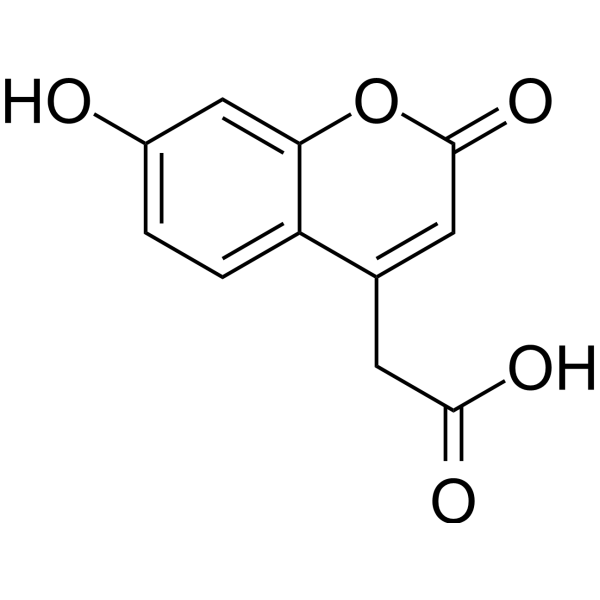
7-Hydroxycoumarin-4-acetic acid, a pH-indicator dye, is covalently bound to bovine serum albumin (BSA) at the positions of reactive amino groups (λmax=326 nm) .
|
-
-
- HY-127170R
-
|
|
Lipoxygenase
Reference Standards
|
Others
|
|
3-Hydroxycoumarin (Standard) is the analytical standard of 3-Hydroxycoumarin. This product is intended for research and analytical applications. 3-hydroxycoumarin is a potent and redox inhibitor of human 15-LOX-1. 3-hydroxycoumarin is recently demonstrated to protect sea urchin reproductive cells against ultraviolet B damage .
|
-
-
- HY-152084
-
|
|
Drug Derivative
|
Cancer
|
|
Anticancer agent 93 is a 4-Hydroxycoumarin derivative. Anticancer agent 93 can inhibit invasion and migration of lung cancer cells by modulating expression of epithelial-mesenchymal transition (EMT) effectors .
|
-
-
- HY-21509
-
|
|
NADPH Oxidase
|
Others
|
|
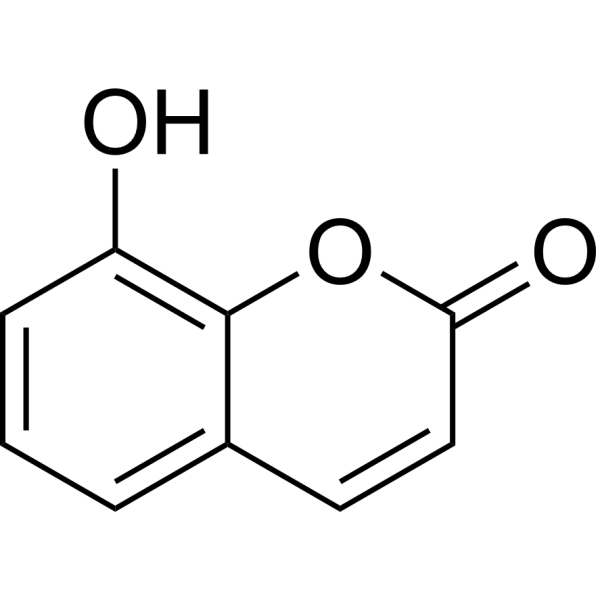
8-Hydroxycoumarin is an intermediate in the microbial transformation of quinolone .
|
-
-
- HY-P3100
-
|
|
Parasite
|
Infection
|
|
Orfamide A is a major metabolite of insecticidal biosurfactant in Pseudomonas sp. F6 and has aphidicidal activity. Orfamide A can be used for aphid control in organic agriculture. Orfamide A exhibits dose-dependent mortality against aphids with an LC50 value of 34.5 μg/mL .
|
-
-
- HY-D0115
-
|
|
DNA Stain
|
Others
|
|
7-Hydroxycoumarin-3-carboxylic acid N-succinimidyl ester is the amine-reactive succinimidyl ester of 7-Hydroxycoumarin-3-carboxylic acid. 7-Hydroxycoumarin-3-carboxylic acid N-succinimidyl ester is a blue fluorescent dye for labeling proteins and nucleic acids .
|
-
-
- HY-D0114
-
-
-
- HY-133091R
-
|
7-O-Ethylumbelliferone (Standard)
|
Cytochrome P450
Reference Standards
|
Metabolic Disease
|
|
7-Ethoxycoumarin (Standard) is the analytical standard of 7-Ethoxycoumarin. This product is intended for research and analytical applications. 7-Ethoxycoumarin is a substrate of cytochrome P450 (CYP450). 7-Ethoxycoumarin has been used for the functional characterization of various CYPs and for the generation of 7-hydroxycoumarin (HY-N0573) .
|
-
-
- HY-158104
-
|
|
ATF6
|
Others
|
|
LPPM-8 is a ligand of Med25 and an inhibitor of Med25 protein-protein interactions (PPIs). LPPM-8 engages Med25 through interaction with the H2 face of its Activator Interaction Domain and stabilizes full-length protein in the cellular proteome. LPPM-8 is an orthosteric inhibitor of H2-binding transcriptional activators (such as ATF6a). LPPM-8 can be used for studying Med25 and Mediator complex biology .
|
-
-
- HY-143935S
-
-
-
- HY-W267205
-
|
|
17β-HSD
|
Endocrinology
Cancer
|
|
3-Acetyl-7-Hydroxycoumarin (Compound 2) is a high selective 17-beta-hydroxysteroid dehydrogenase type 1 (17β-HSD1) inhibitor. 3-Acetyl-7-Hydroxycoumarin shows a significant improvement of the inhibitory potency, with 57% inhibition of 17β-HSD1 at 6 μM. 3-Acetyl-7-Hydroxycoumarin is promising for research of hormone-dependent diseases, such as breast cancer and endometriosis .
|
-
-
- HY-138145
-
|
|
Fungal
Bacterial
|
Infection
|
|
8-Acetyl-7-hydroxycoumarin is a coumarin-like compound found in Mexican patchouli (Tagetes lucida) that has anti-bacterial and anti-fungal activities .
|
-
-
- HY-150662S
-
|
|
Isotope-Labeled Compounds
|
Others
|
|
2-(7-Hydroxycoumarin-4-yl)-propanoic acid methyl ester-d3 is the deuterium labeled 2-(7-Hydroxycoumarin-4-yl)-propanoic acid methyl ester .
|
-
-
- HY-W777393
-
|
7-hydroxycoumarin-13C6; Hydrangin-13C6; NSC 19790-13C6
|
Isotope-Labeled Compounds
Apoptosis
Fluorescent Dye
|
Neurological Disease
Inflammation/Immunology
Cancer
|
|
Umbelliferone- 13C6 (7-Hydroxycoumarin- 13C6) is the 13C-labeled Umbelliferone (HY-N0573). Umbelliferone (7-Hydroxycoumarin), a natural orally active product of the coumarin family, is a fluorescing compound which can be used as a sunscreen agent. Umbelliferone induces cell cycle arrest, apoptosis and DNA fragmentation in HepG2 cells. Umbelliferone exhibits significant anticancer effects. Umbelliferone attenuates the alteration characteristics of allergic airway inflammation. Umbelliferone displays the neuroprotective effects and cross the blood-brain barrier. Umbelliferone exhibits anti-inflammatory and antioxidant effects in
chronic alcohol-fed rats .
|
-
-
- HY-N3373R
-
|
|
Reference Standards
Bacterial
|
Infection
|
|
4-Hydroxycoumarin (Standard) is the analytical standard of 4-Hydroxycoumarin. This product is intended for research and analytical applications. 4-Hydroxycoumarin is an orally active coumarin derivative, one of the most versatile heterocyclic scaffolds, often used in the synthesis of various organic compounds. 4-Hydroxycoumarin possesses both electrophilic and nucleophilic properties. 4-Hydroxycoumarin is an HIV protease inhibitor and tyrosine kinase inhibitor. 4-Hydroxycoumarin has anti-inflammatory, antibacterial and anti-tumor effects .
|
-
-
- HY-N7650
-
|
|
Biochemical Assay Reagents
|
Others
|
|
Dihydroseselin is a derivative of 7-hydroxycoumarin (HY-N0573). 7-hydroxycoumarin, a natural product of the coumarin family, is a fluorescing compound which can be used as a sunscreen agent
|
-
-
- HY-161364
-
|
|
Bacterial
|
Inflammation/Immunology
|
|
Antibacterial agent 200 (pyridyl HH 7), a unique hydrazyl hydroxycoumarin (HH), has strong antibacterial efficacy and broad antibacterial spectrum with MIC values ranging from 0.5 to 32 μg/mL for Gram-positive and Gram-negative bacteria. Antibacterial agent 200 exhibits a good inhibition against Pseudomonas aeruginosa 27853 with a low MIC value of 0.5 μg/mL. Antibacterial agent 200 can eradicate the integrity of bacterial membrane, result in the leakage of intracellular proteins, and interact with bacterial DNA gyrase via non-covalent binding .
|
-
-
- HY-152085
-
|
|
Drug Derivative
|
Cancer
|
|
Anticancer agent 94 is a 4-Hydroxycoumarin derivative. Anticancer agent 94 can inhibit invasion and migration of lung cancer cells by modulating expression of epithelial-mesenchymal transition (EMT) effectors .
|
-
-
- HY-N9440
-
|
|
Drug Metabolite
|
Inflammation/Immunology
Cancer
|
|
7-Hydroxycoumarin glucuronide is a transport substrate and main human coumarin metabolite. [1]7-Hydroxycoumarin glucuronide undergoes ATP-dependent efflux transport via MRP3 and MRP4. [1]7-Hydroxycoumarin glucuronide undergoes active transport processes for urinary excretion and is primarily excreted into urine in humans.
|
-
-
- HY-N6656R
-
|
|
Fungal
Reference Standards
Bacterial
|
Inflammation/Immunology
Cancer
|
|
6-Hydroxycoumarin (Standard) is the analytical standard of 6-Hydroxycoumarin (HY-N6656). This product is intended for research and analytical applications. 6-Hydroxycoumarin is a coumarin which has anti-inflammatory, anti-pyretic, anti-oxidant, vasodilator, anti-amoebic, anti-bacterial, anti-fungal, bacteriostatic and antitumor activity .
|
-
-
- HY-N18093
-
-
-
- HY-21510
-
|
|
Drug Intermediate
|
Others
|
|
5-Methyl-8-hydroxycoumarin is a drug intermediate for synthesis of various active compounds.
|
-
-
- HY-N17623
-
|
|
Thrombin
|
Cardiovascular Disease
|
|
Ainsliaeasin C, a 7-hydroxycoumarin derivative, is an orally active anticoagulant agent that can be found in Ainsliaea fragrans. Ainsliaeasin C exerts anticoagulant activity both in vitro and in vivo. Ainsliaeasin C can be used for the research on thrombotic disorders .
|
-
-
- HY-P11783
-
|
|
Fungal
|
Infection
|
|
Surfactin C2 is a lipopeptide produced by Bacillus subtilis A18 with antifungal activity. Surfactin C2 acts against Heterobasidion annosum and Heterobasidion parviporum. Surfactin C2 exerts its activity mainly through membrane‑active effects to disrupt fungal cell structures and inhibit mycelial growth. Surfactin C2 can be used for the research of butt rot and root rot of conifers .
|
-
-
- HY-P2209
-
|
Daechuine S27; N-Demethylamphibine H
|
Parasite
Phosphodiesterase (PDE)
|
Infection
|
|
Nummularine B (Daechuine S27; N-Demethylamphibine H) is an anti-parasite agent. Nummularine B inhibits calmodulin-dependent phosphodiesterase activity with an IC50 of 16.8 μM. Nummularine B inhibits the growth of Plasmodium and Leishmania donovani in vitro. Nummularine B inhibits the calmodulin-dependent activity of actomyosin Ca 2+-ATPase. Nummularine B is applicable to research related to malaria and visceral leishmaniasis .
|
-
-
- HY-P4948
-
|
|
Biochemical Assay Reagents
|
Others
|
|
Coumarin-phalloidin is a kind of phalloidin labeled with Coumarin (HY-N0709). Coumarin-phalloidin is a new type of actin probe that can be used for triple immunofluorescence microscopic observation of the cell skeleton .
|
-
| Cat. No. |
Product Name |
Type |
-
- HY-D0112
-
|
|
Fluorescent Dyes
|
|
7-Hydroxycoumarin-4-acetic acid, a pH-indicator dye, is covalently bound to bovine serum albumin (BSA) at the positions of reactive amino groups (λmax=326 nm) .
|
-
- HY-D0115
-
|
|
Fluorescent Dyes
|
|
7-Hydroxycoumarin-3-carboxylic acid N-succinimidyl ester is the amine-reactive succinimidyl ester of 7-Hydroxycoumarin-3-carboxylic acid. 7-Hydroxycoumarin-3-carboxylic acid N-succinimidyl ester is a blue fluorescent dye for labeling proteins and nucleic acids .
|
-
- HY-D0114
-
|
|
Fluorescent Dyes
|
|
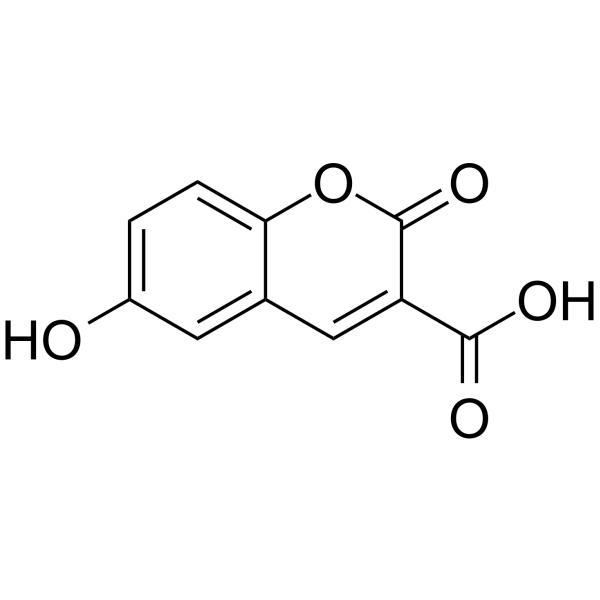
3-Carboxy-7-Hydroxycoumarin is a UV-light excitable fluorescent dye .
|
| Cat. No. |
Product Name |
Target |
Research Area |
-
- HY-17365
-
-
- HY-125586
-
|
|
DNA/RNA Synthesis
ADC Payload
|
Cancer
|
|
β-Amanitin is a cyclic peptide toxin in the poisonous Amanita phalloides mushroom. β-Amanitin inhibits inhibits eukaryotic RNA polymerase II and III. β-Amanitin inhibits protein synthesis. β-Amanitin can be used as a cytotoxic component of antibody-drug conjugates (ADCs) .
|
-
- HY-105055
-
|
|
Peptides
|
Cancer
|
|
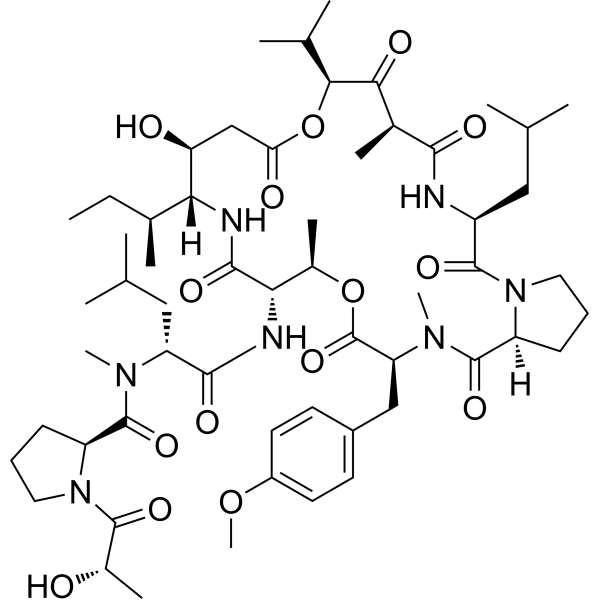
Didemnin B is a depsipeptide extracted from the marine tunicate Trididemnin cyanophorum. Didemnin B can be used for the research of cancer .
|
-
- HY-P10447
-
|
Fengycin IX; SNA-60-367-3
|
Phospholipase
Fungal
|
Infection
|
|
Plipastatin A1 (Fengycin IX; SNA-60-367-3) is a lipopeptide with phospholipase A2 inhibitory activity. Plipastatin A1 inhibits conidial germination of Botrytis cinerea in vitro and reduces the incidence of gray mold on tomato leaves. Plipastatin A1 is applicable to research related to gray mold [1][2].
|
-
- HY-P4755
-
|
|
Peptides
|
Others
|
|
N-((RS)-2-Hydroxy-propyl)-Val-Leu-anilide is a polypeptide that can be found by peptide screening. Peptide screening is a research tool that pools active peptides primarily by immunoassay. Peptide screening can be used for protein interaction, functional analysis, epitope screening, especially in the field of agent research and development .
|
-
- HY-P3100
-
|
|
Parasite
|
Infection
|
|
Orfamide A is a major metabolite of insecticidal biosurfactant in Pseudomonas sp. F6 and has aphidicidal activity. Orfamide A can be used for aphid control in organic agriculture. Orfamide A exhibits dose-dependent mortality against aphids with an LC50 value of 34.5 μg/mL .
|
-
- HY-125357
-
|
|
Peptides
|
Metabolic Disease
|
|
Ternatin (compound 2) is a cyclic heptapeptides that can be isolated from mushroom Coliorus versicolor. Ternatin inhibits fat-accumulation with an IC50 of 0.027 μM in 3T3-L1 adipocytes .
|
-
- HY-158104
-
|
|
ATF6
|
Others
|
|
LPPM-8 is a ligand of Med25 and an inhibitor of Med25 protein-protein interactions (PPIs). LPPM-8 engages Med25 through interaction with the H2 face of its Activator Interaction Domain and stabilizes full-length protein in the cellular proteome. LPPM-8 is an orthosteric inhibitor of H2-binding transcriptional activators (such as ATF6a). LPPM-8 can be used for studying Med25 and Mediator complex biology .
|
-
- HY-P11783
-
|
|
Fungal
|
Infection
|
|
Surfactin C2 is a lipopeptide produced by Bacillus subtilis A18 with antifungal activity. Surfactin C2 acts against Heterobasidion annosum and Heterobasidion parviporum. Surfactin C2 exerts its activity mainly through membrane‑active effects to disrupt fungal cell structures and inhibit mycelial growth. Surfactin C2 can be used for the research of butt rot and root rot of conifers .
|
-
- HY-P2209
-
|
Daechuine S27; N-Demethylamphibine H
|
Parasite
Phosphodiesterase (PDE)
|
Infection
|
|
Nummularine B (Daechuine S27; N-Demethylamphibine H) is an anti-parasite agent. Nummularine B inhibits calmodulin-dependent phosphodiesterase activity with an IC50 of 16.8 μM. Nummularine B inhibits the growth of Plasmodium and Leishmania donovani in vitro. Nummularine B inhibits the calmodulin-dependent activity of actomyosin Ca 2+-ATPase. Nummularine B is applicable to research related to malaria and visceral leishmaniasis .
|
-
- HY-P4948
-
|
|
Biochemical Assay Reagents
|
Others
|
|
Coumarin-phalloidin is a kind of phalloidin labeled with Coumarin (HY-N0709). Coumarin-phalloidin is a new type of actin probe that can be used for triple immunofluorescence microscopic observation of the cell skeleton .
|
| Cat. No. |
Product Name |
Category |
Target |
Chemical Structure |
| Cat. No. |
Product Name |
Chemical Structure |
-
- HY-N0573S
-
|
|
|
Umbelliferone-d5 (7-Hydroxycoumarin-d5) is the deuterium labeled Umbelliferone (HY-N0573 ). Umbelliferone (7-Hydroxycoumarin), a natural orally active product of the coumarin family, is a fluorescing compound which can be used as a sunscreen agent. Umbelliferone induces cell cycle arrest, apoptosis and DNA fragmentation in HepG2 cells. Umbelliferone exhibits significant anticancer effects. Umbelliferone attenuates the alteration characteristics of allergic airway inflammation. Umbelliferone displays the neuroprotective effects and cross the blood-brain barrier. Umbelliferone exhibits anti-inflammatory and antioxidant effects in chronic alcohol-fed rats .
|
-
-
- HY-143935S
-
|
|
|
7-Hydroxycoumarin sulfate-d5 is the deuterium labeled 7-Hydroxycoumarin sulfate .
|
-
-
- HY-150662S
-
|
|
|
2-(7-Hydroxycoumarin-4-yl)-propanoic acid methyl ester-d3 is the deuterium labeled 2-(7-Hydroxycoumarin-4-yl)-propanoic acid methyl ester .
|
-
-
- HY-W777393
-
|
|
|
Umbelliferone- 13C6 (7-Hydroxycoumarin- 13C6) is the 13C-labeled Umbelliferone (HY-N0573). Umbelliferone (7-Hydroxycoumarin), a natural orally active product of the coumarin family, is a fluorescing compound which can be used as a sunscreen agent. Umbelliferone induces cell cycle arrest, apoptosis and DNA fragmentation in HepG2 cells. Umbelliferone exhibits significant anticancer effects. Umbelliferone attenuates the alteration characteristics of allergic airway inflammation. Umbelliferone displays the neuroprotective effects and cross the blood-brain barrier. Umbelliferone exhibits anti-inflammatory and antioxidant effects in
chronic alcohol-fed rats .
|
-
Your information is safe with us. * Required Fields.
Inquiry Information
- Product Name:
- Cat. No.:
- Quantity:
- MCE Japan Authorized Agent:

