



3-Hydroxycoumarin (Standard)

Based on 1 Customer Validation
3-Hydroxycoumarin (Standard) is the analytical standard of 3-Hydroxycoumarin. This product is intended for research and analytical applications. 3-hydroxycoumarin is a potent and redox inhibitor of human 15-LOX-1. 3-hydroxycoumarin is recently demonstrated to protect sea urchin reproductive cells against ultraviolet B damage.
For research use only. We do not sell to patients.
- Purity : 98.26%
- CAS No.: 939-19-5
- Formula: C9H6O3
- Molecular Weight:162.14
-
Storage:
Please store the product under the recommended conditions in the Certificate of Analysis.


To place orders, for customer services and technical support, please contact: MedChemExpress USA
Tel: 609-228-6898 E-mail: [email protected] [email protected]


-
 Product Information
-
Chemical Information
- Purity & Documentation
-
 Help & FAQs


-
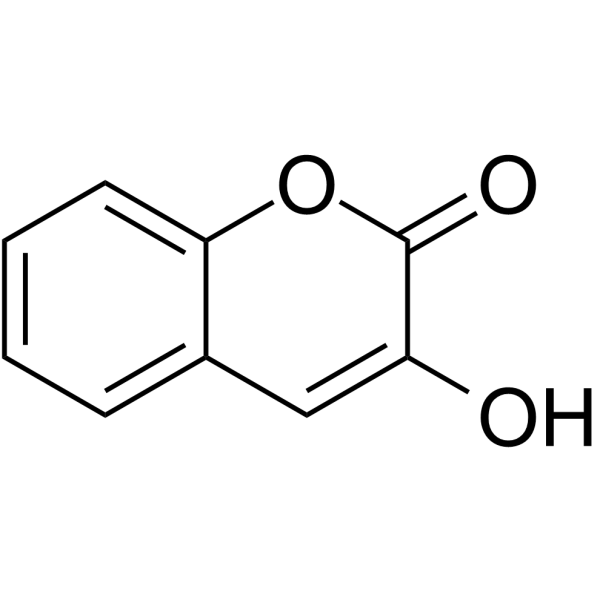
HY-127170
3-HydroxycoumarinTyrosinase/LOX Inhibitor -

HY-N7085R
Citropten (Standard)Anticancer Agent -
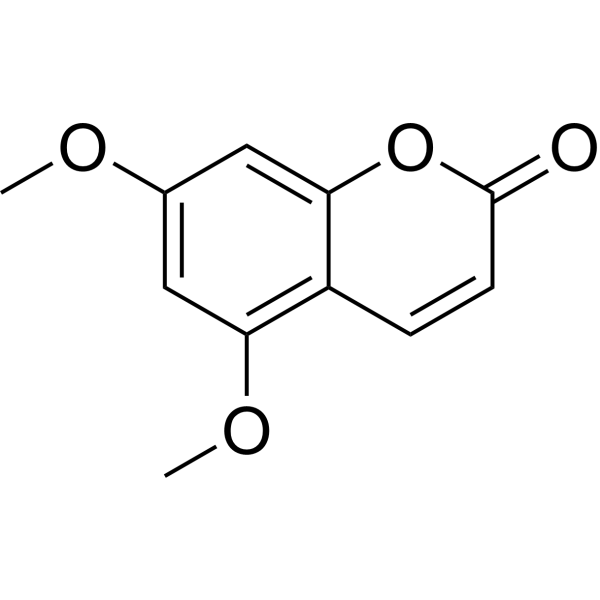
HY-N7085
CitroptenAnticancer Agent -
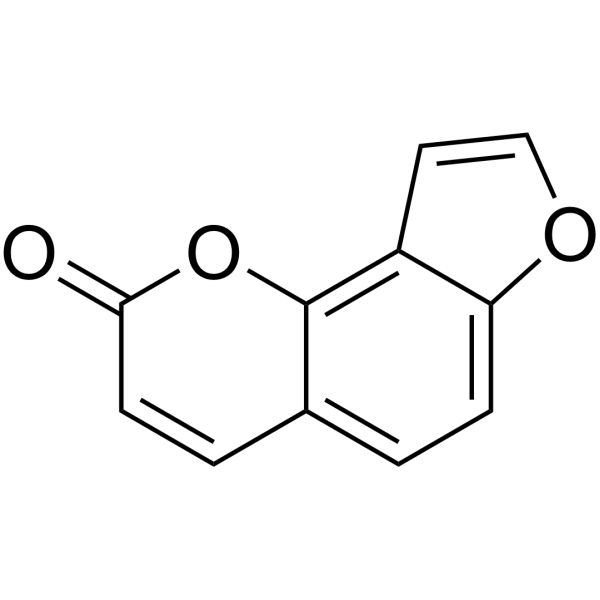
HY-N0763
AngelicinApoptosis Inducer -
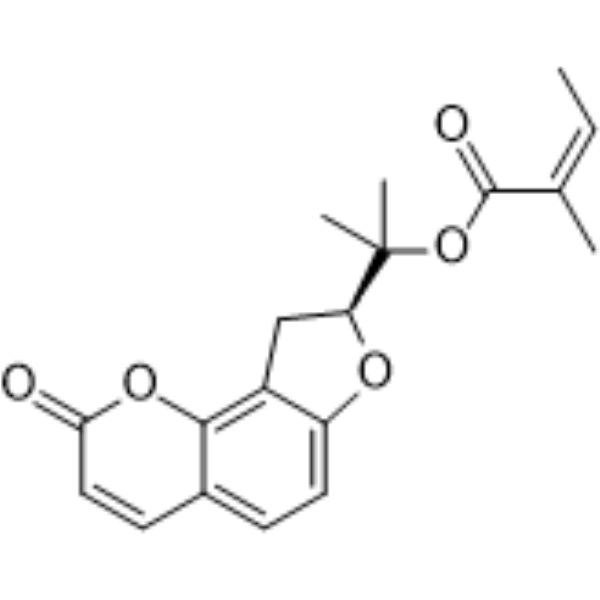
HY-N0362
ColumbianadinApoptosis Inducer -
HY-N7108
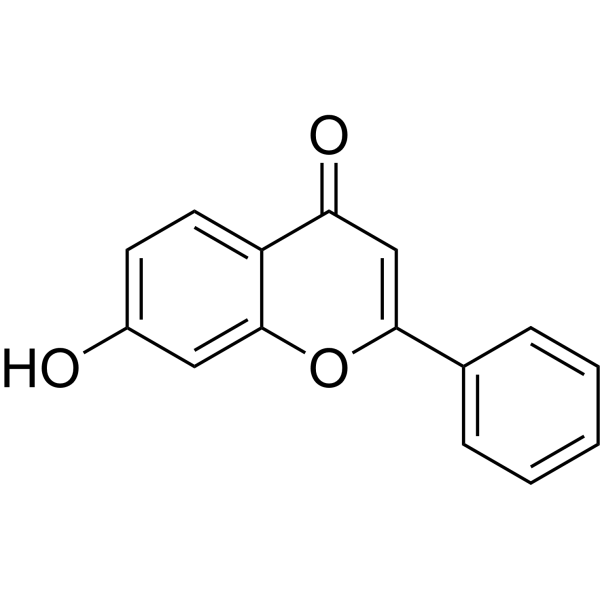
7-HydroxyflavoneAnti-inflammatory Agent -
HY-110399
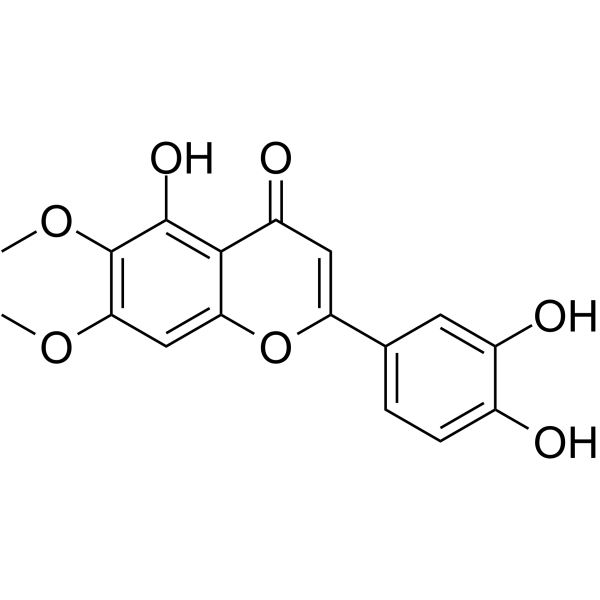
CirsiliolLipoxygenase Inhibitor -
HY-W082785A
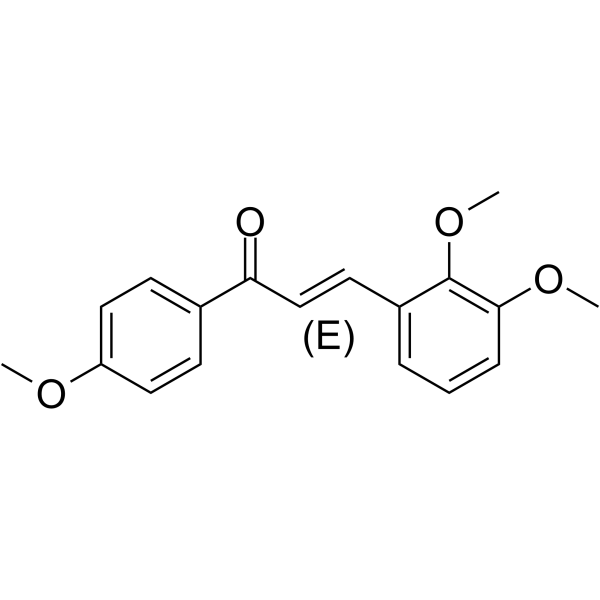
L6H21MD-2 Inhibitor -
HY-N3394
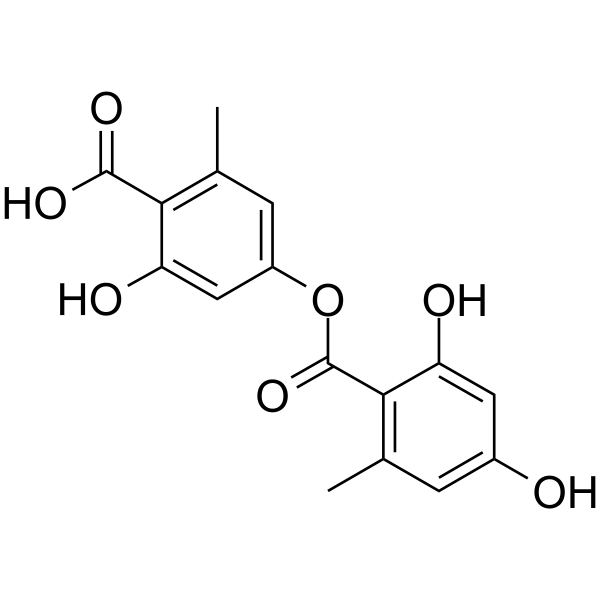
Lecanoric acidHistidine-Decarboxylase Inhibitor -
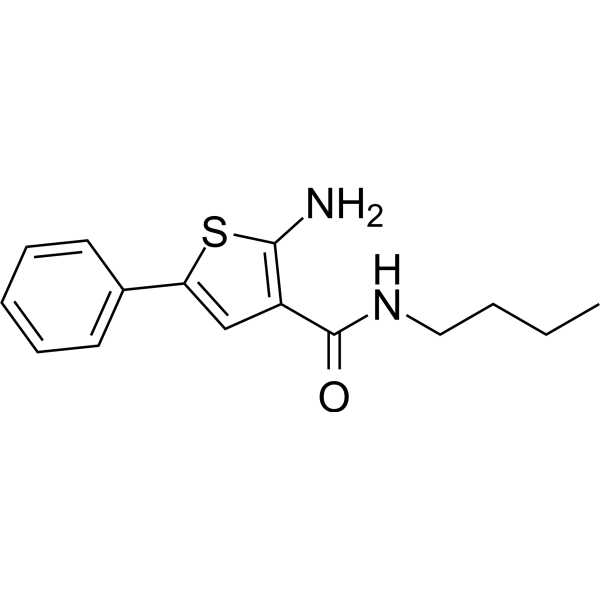
HY-139196
ThioLox15-LOX-1 Inhibitor -
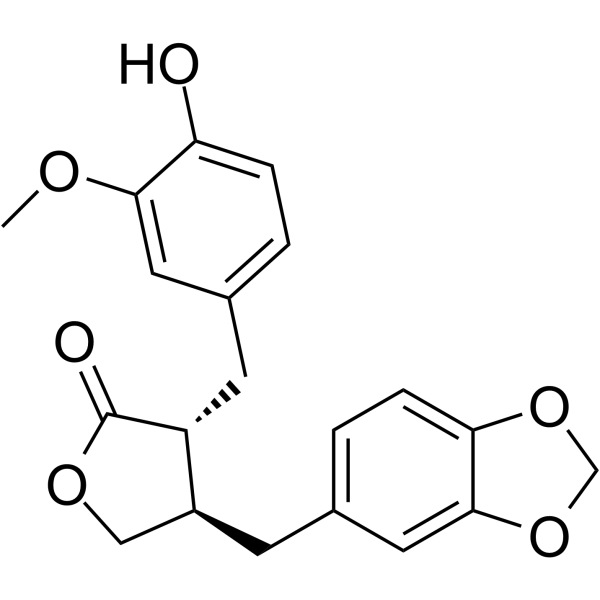
HY-N9926
PluviatolideLignan -
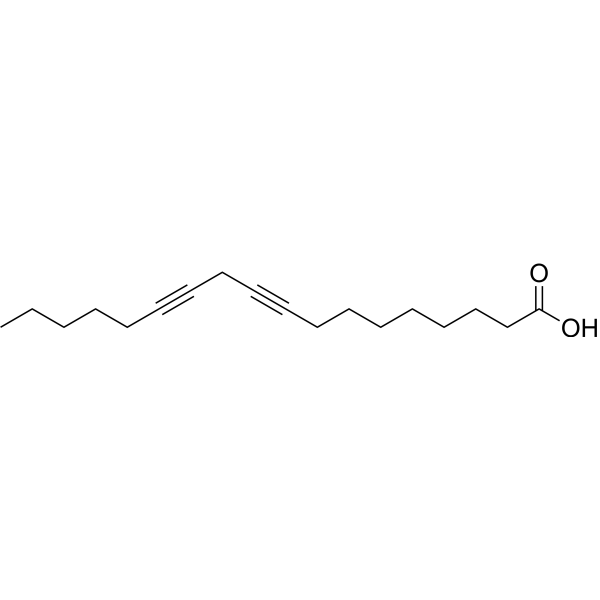
HY-N8276
Ro 3-1314Lipoxygenase Inhibitor


Product Information
Information
Application
The compound is the grade of analytical standard, which is the reference standard supplied assay. It is commonly used in qualitative, quantitative and methodological research experiments in HPLC, GC and MS.


Chemical Information
-
CAS No. 939-19-5
-
Appearance Solid
-
Molecular Weight 162.14
-
Formula C9H6O3
-
Color Colorless to light yellow
-
SMILES
O=C1C(O)=CC2=CC=CC=C2O1
-
Structure Classification
-
Initial Source
-
Shipping
Room temperature in continental US; may vary elsewhere.
-
Storage
Please store the product under the recommended conditions in the Certificate of Analysis.


Purity & Documentation
-
SDS (392 KB)
- English - EN (392 KB)
- Français - FR (392 KB)
- Deutsch - DE (392 KB)
- Norwegian - NO (392 KB)
- Español - ES (392 KB)
- Swedish - SV (392 KB)
- Italian - IT (392 KB)
- Korean - KR (392 KB)
- Portuguese - PT (392 KB)
-
Handling Instructions (2659 KB)
References
[1]. Alavi SJ, Sadeghian H, Seyedi SM, Salimi A, Eshghi H. A novel class of human 15-LOX-1 inhibitors based on 3-hydroxycoumarin. Chem Biol Drug Des. 2018;91(6):1125‐1132. [Content Brief]
[2]. Born SL, et al. Synthesis and reactivity of coumarin 3,4-epoxide. Drug Metab Dispos. 1997;25(11):1318‐1324. [Content Brief]
[3]. Asthana S, et al. Structure-Activity Relationship Study of Hydroxycoumarins and Mushroom Tyrosinase. J Agric Food Chem. 2015;63(32):7236‐7244. [Content Brief]

Calculators
Concentration (start) × Volume (start) = Concentration (final) × Volume (final)


3-Hydroxycoumarin (Standard) Related Classifications
HY-127170R Related Classifications
 Powered by Bioz