



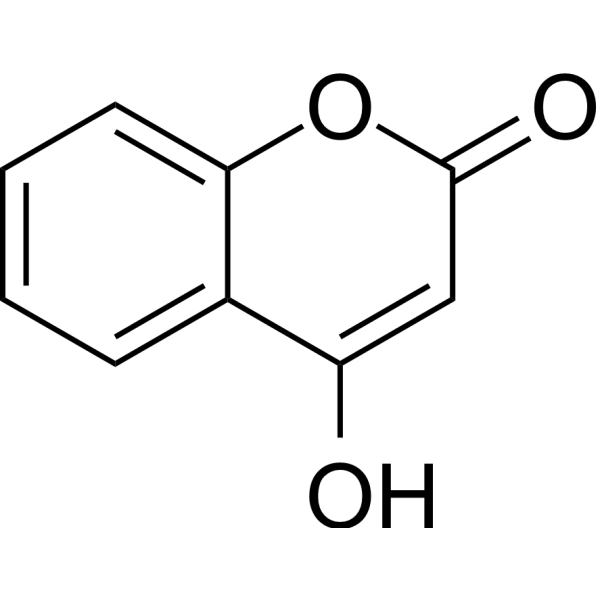
4-Hydroxycoumarin

Based on 1 Customer Validation
4-Hydroxycoumarin is an orally active coumarin derivative, one of the most versatile heterocyclic scaffolds, often used in the synthesis of various organic compounds. 4-Hydroxycoumarin possesses both electrophilic and nucleophilic properties. 4-Hydroxycoumarin is an HIV protease inhibitor and tyrosine kinase inhibitor. 4-Hydroxycoumarin has anti-inflammatory, antibacterial and anti-tumor effects.
연구목적의 판매만을 진행합니다. 환자를 대상으로 한 판매는 하지 않습니다.
- Purity : 99.96%
- CAS No.: 1076-38-6
- 화학식: C9H6O3
- 분자량:162.14
-
보관:
Store at room temperature 3 years.
In solvent -80°C, 2 years , -20°C, 1 year

To place orders, for customer services and technical support, please contact: MedChemExpress USA
Tel: 609-228-6898 E-mail: [email protected] [email protected]


-
 Biological Activity
-
Chemical Information
-
용액&용해도
- Protocol
- 순도&문서
- References
-
 Help & FAQs


-
HY-N1406
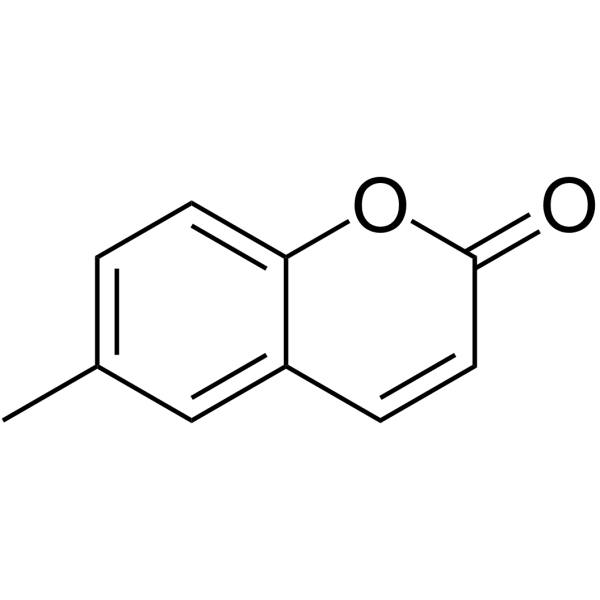
6-MethylcoumarinSynthetic Fragrance -
HY-N1366
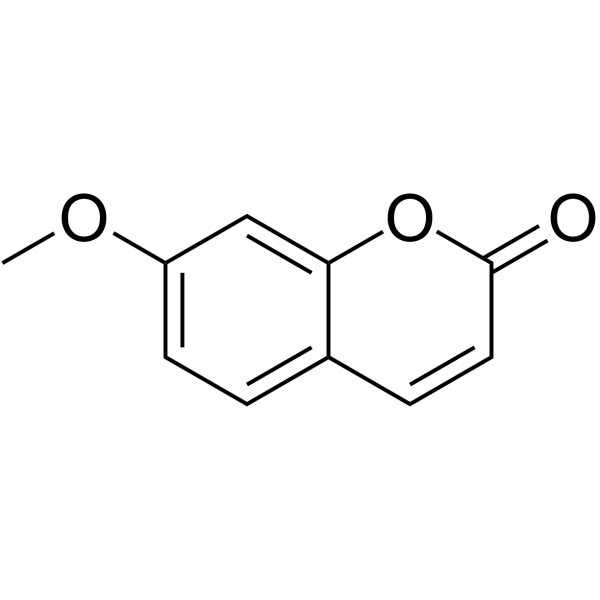
HerniarinAnticancer Agent -
HY-N0573
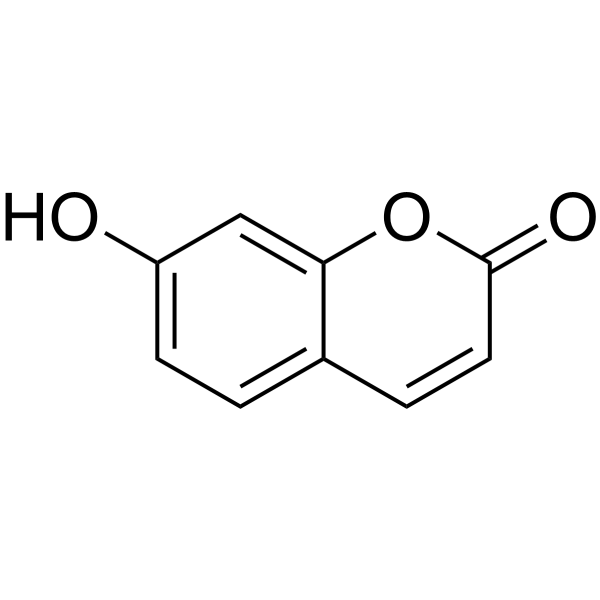
UmbelliferoneFluorescence Probe -
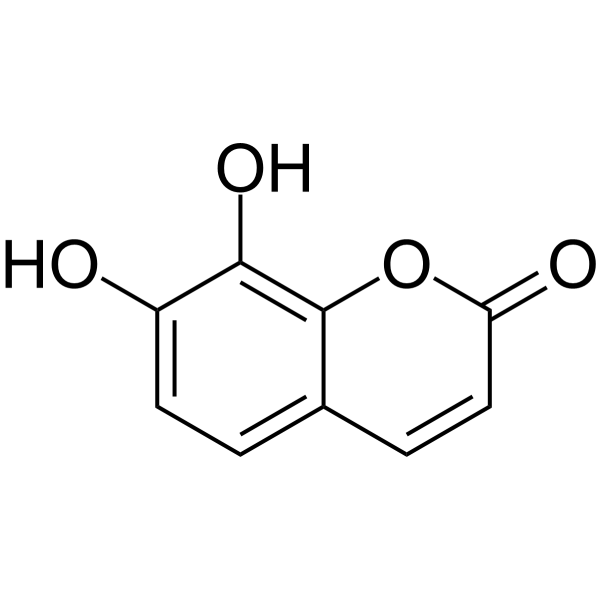
HY-N0281
DaphnetinProtein Kinase Inhibitor -

HY-N6856R
4-Hydroxycoumarin (Standard)Bacterial Inhibitor -
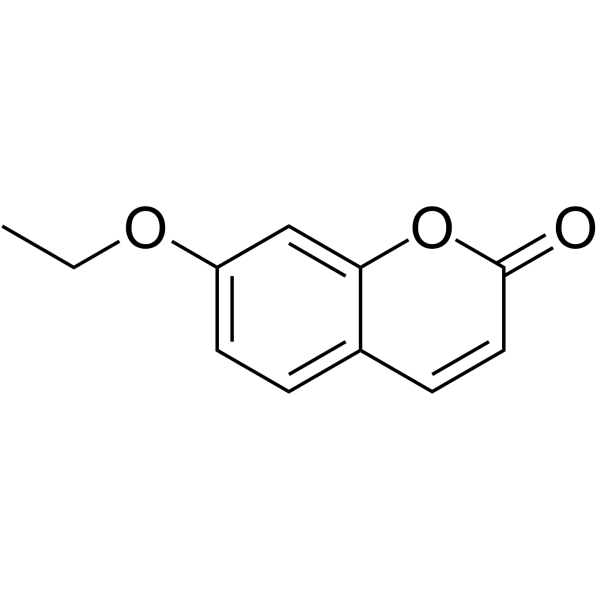
HY-133091
7-EthoxycoumarinCytochrome P451 Substrate -

HY-N0573R
Umbelliferone (Standard)Standard of Umbelliferone -
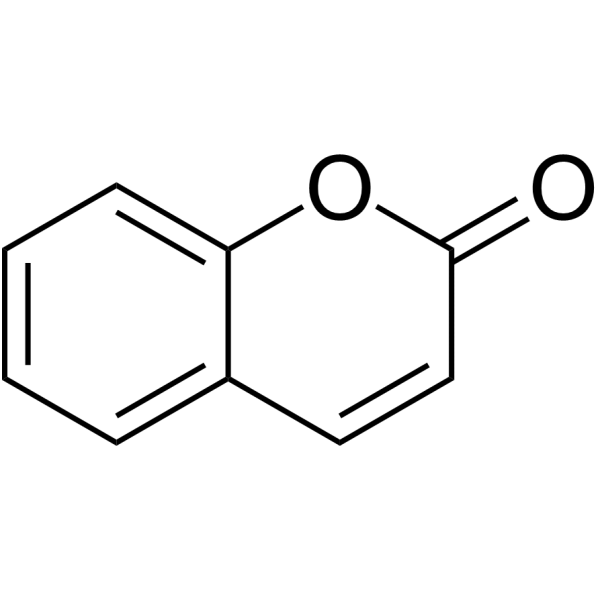
HY-N0709
CoumarinAnti-inflammatory Agent -
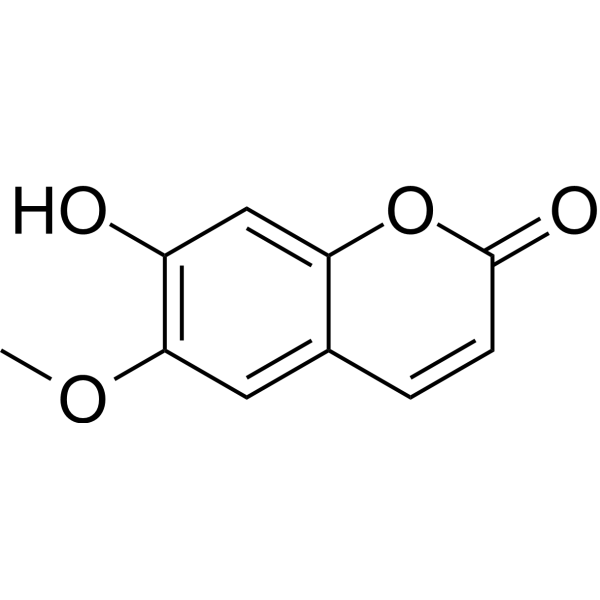
HY-N0342
ScopoletinCholinesterase (ChE) Inhibitor -

HY-N0342R
Scopoletin (Standard)Cholinesterase (ChE) Inhibitor -
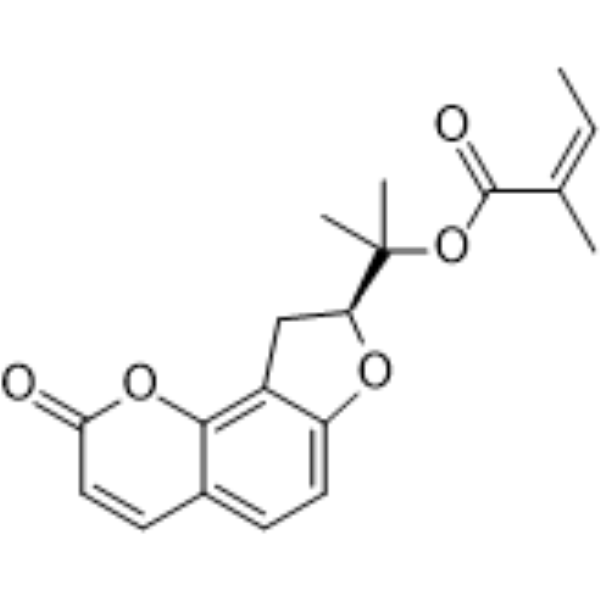
HY-N0362
ColumbianadinApoptosis Inducer -

HY-N0709R
Coumarin (Standard)Anti-inflammatory Agent
All Endogenous Metabolite Isoforms
More

Biological Activity
제품 설명
Cellular Effect
|
Cell Line

|
Type | Value | Description | References |
|---|---|---|---|---|
| B16-F10 | IC50 |
70.74 μM
Compound: 222-1
|
Cytotoxicity against mouse B16F10 cells assessed as reduction in cell viability
Cytotoxicity against mouse B16F10 cells assessed as reduction in cell viability
|
[PMID: 30594028] |
| EA.hy 926 | EC50 |
>200 μM
Compound: 3, 4-HC
|
Cytotoxicity against human EAhy926 cells assessed as reduction in cell viability after 48 hrs by MTT assay
Cytotoxicity against human EAhy926 cells assessed as reduction in cell viability after 48 hrs by MTT assay
|
[PMID: 24721833] |
| EA.hy 926 | EC50 |
>200 μM
Compound: 3, 4-HC
|
Cytotoxicity against human EAhy926 cells assessed as reduction in cell viability after 72 hrs by MTT assay
Cytotoxicity against human EAhy926 cells assessed as reduction in cell viability after 72 hrs by MTT assay
|
[PMID: 24721833] |
| LNCaP | EC50 |
100.51 μM
Compound: 3, 4-HC
|
Cytotoxicity against human LNCAP cells assessed as reduction in cell viability after 48 hrs by MTT assay
Cytotoxicity against human LNCAP cells assessed as reduction in cell viability after 48 hrs by MTT assay
|
[PMID: 24721833] |
| LNCaP | EC50 |
120.27 μM
Compound: 3, 4-HC
|
Cytotoxicity against human LNCAP cells assessed as reduction in cell viability after 72 hrs by MTT assay
Cytotoxicity against human LNCAP cells assessed as reduction in cell viability after 72 hrs by MTT assay
|
[PMID: 24721833] |
| MCF7 | EC50 |
>200 μM
Compound: 3, 4-HC
|
Cytotoxicity against human MCF7 cells assessed as reduction in cell viability after 48 hrs by MTT assay
Cytotoxicity against human MCF7 cells assessed as reduction in cell viability after 48 hrs by MTT assay
|
[PMID: 24721833] |
| MCF7 | EC50 |
199.82 μM
Compound: 3, 4-HC
|
Cytotoxicity against human MCF7 cells assessed as reduction in cell viability after 72 hrs by MTT assay
Cytotoxicity against human MCF7 cells assessed as reduction in cell viability after 72 hrs by MTT assay
|
[PMID: 24721833] |
| MCF7 | GI50 |
95.34 μM
Compound: 4a
|
Cytotoxicity against human MCF7 cells assessed as cell growth inhibition after 48 hrs by SRB assay
Cytotoxicity against human MCF7 cells assessed as cell growth inhibition after 48 hrs by SRB assay
|
[PMID: 28041801] |
| MDA-MB-231 | EC50 |
>200 μM
Compound: 3, 4-HC
|
Cytotoxicity against human MDA-MB-231 cells assessed as reduction in cell viability after 48 hrs by MTT assay
Cytotoxicity against human MDA-MB-231 cells assessed as reduction in cell viability after 48 hrs by MTT assay
|
[PMID: 24721833] |
| MDA-MB-231 | EC50 |
100.26 μM
Compound: 3, 4-HC
|
Cytotoxicity against human MDA-MB-231 cells assessed as reduction in cell viability after 72 hrs by MTT assay
Cytotoxicity against human MDA-MB-231 cells assessed as reduction in cell viability after 72 hrs by MTT assay
|
[PMID: 24721833] |
| MDA-MB-231 | IC50 |
>100 μM
Compound: 21.4
|
Antiproliferative activity against human MDA-MB-231 cells incubated for 96 hrs by MTT assay
Antiproliferative activity against human MDA-MB-231 cells incubated for 96 hrs by MTT assay
|
[PMID: 38340509] |
| MDA-MB-231 | IC50 |
>=100 μM
Compound: Hydroxycoumarin
|
Antiproliferative activity against human MDA-MB-231 cells assessed as reduction in cell viability measured after 72 hrs under hypoxia condition by MTT assay
Antiproliferative activity against human MDA-MB-231 cells assessed as reduction in cell viability measured after 72 hrs under hypoxia condition by MTT assay
|
[PMID: 38283214] |
| MDA-MB-231 | IC50 |
>=100 μM
Compound: Hydroxycoumarin
|
Antiproliferative activity against human MDA-MB-231 cells assessed as reduction in cell viability measured after 72 hrs under normoxia condition by MTT assay
Antiproliferative activity against human MDA-MB-231 cells assessed as reduction in cell viability measured after 72 hrs under normoxia condition by MTT assay
|
[PMID: 38283214] |
| M-HeLa | IC50 |
>=14.7 μM
Compound: 102a
|
Anticancer activity against human HelaM cells assessed as cell growth inhibition measured after 24 hrs by DAPI and propidium iodide staining based assay
Anticancer activity against human HelaM cells assessed as cell growth inhibition measured after 24 hrs by DAPI and propidium iodide staining based assay
|
[PMID: 36481599] |
| PC-3 | EC50 |
150.46 μM
Compound: 3, 4-HC
|
Cytotoxicity against human PC3 cells assessed as reduction in cell viability after 48 hrs by MTT assay
Cytotoxicity against human PC3 cells assessed as reduction in cell viability after 48 hrs by MTT assay
|
[PMID: 24721833] |
| PC-3 | EC50 |
173.31 μM
Compound: 3, 4-HC
|
Cytotoxicity against human PC3 cells assessed as reduction in cell viability after 72 hrs by MTT assay
Cytotoxicity against human PC3 cells assessed as reduction in cell viability after 72 hrs by MTT assay
|
[PMID: 24721833] |
| SK-MEL-28 | IC50 |
1.3 μM
Compound: 9
|
Anticancer activity against human SK-MEL-28 cells assessed as reduction in cell viability incubated for 24 hrs by MTT assay
Anticancer activity against human SK-MEL-28 cells assessed as reduction in cell viability incubated for 24 hrs by MTT assay
|
[PMID: 37197457] |
| SK-MEL3 | IC50 |
2.1 μM
Compound: 9
|
Anticancer activity against human SK-MEL3 cells assessed as reduction in cell viability incubated for 24 hrs by MTT assay
Anticancer activity against human SK-MEL3 cells assessed as reduction in cell viability incubated for 24 hrs by MTT assay
|
[PMID: 37197457] |
| TK-10 | GI50 |
>100 μM
Compound: 4a
|
Cytotoxicity against human TK10 cells assessed as cell growth inhibition after 48 hrs by SRB assay
Cytotoxicity against human TK10 cells assessed as cell growth inhibition after 48 hrs by SRB assay
|
[PMID: 28041801] |
| U-937 | EC50 |
>200 μM
Compound: 3, 4-HC
|
Cytotoxicity against human U937 cells assessed as reduction in cell viability after 48 hrs by Alamar blue assay
Cytotoxicity against human U937 cells assessed as reduction in cell viability after 48 hrs by Alamar blue assay
|
[PMID: 24721833] |
| U-937 | EC50 |
164.12 μM
Compound: 3, 4-HC
|
Cytotoxicity against human U937 cells assessed as reduction in cell viability after 72 hrs by Alamar blue assay
Cytotoxicity against human U937 cells assessed as reduction in cell viability after 72 hrs by Alamar blue assay
|
[PMID: 24721833] |
| UACC-62 | GI50 |
83.6 μM
Compound: 4a
|
Cytotoxicity against human UACC62 cells assessed as cell growth inhibition after 48 hrs by SRB assay
Cytotoxicity against human UACC62 cells assessed as cell growth inhibition after 48 hrs by SRB assay
|
[PMID: 28041801] |
In Vitro
4-Hydroxycoumarin (0, 50, 160, 500 μM, 24 h) disrupts the actin cytoskeleton in B16-F10 melanoma cells but not in B82 fibroblasts. However, they can reduce their adhesion and motility to extracellular matrix proteins[1].
MedChemExpress (MCE) has not independently confirmed the accuracy of these methods. They are for reference only. Further protocols information, click here.
-
Cell Line:B16-F10, B82
-
Concentration:0, 50, 160, 500 μM
-
Incubation Time:24 h
-
Result:Had no appreciable effect on cell viability.
-
Cell Line:B16-F10
-
Concentration:0, 50, 160, 500 μM
-
Incubation Time:24 h
-
Result:Reduced the adhesion to ECM proteins and the tyrosine phosphorylation of several proteins in a concentration-dependent manner. Inhibited the migration at 500 μM.
In Vivo
4-Hydroxycoumarin (5, 10, 25, 50 mg/kg/ day, Oral gavage) can significantly reduce symptoms in a rat model of trinitrobenzene sulfonic acid-induced colitis[4].
MedChemExpress (MCE) has not independently confirmed the accuracy of these methods. They are for reference only.
-
Animal Model:Mouse melanoma model[3]
-
Dosage:10, 20 or 40 mg/kg
-
Administration:i.g.
-
Result:Reduced >85% of the number of pulmonary tumors. Diminished the tumor size from day 22 and increased survival time at 10 mg/kg/day.
-
Animal Model:Rat colitis model [4]
-
Dosage:5, 10, 25, 50 mg/kg
-
Administration:p.o.
-
Result:Reduced damage score and extension of the lesion at doses of 10 and 25 mg/kg. Counteracted GSH content and reduced AP activity at a dose of 5 mg/kg. Showed a good recovery of the intestinal cytoarchitecture at doses of 5 and 25 mg/kg.


Chemical Information
-
CAS No. 1076-38-6
-
Appearance Solid
-
분자량 162.14
-
화학식 C9H6O3
-
Color White to off-white
-
SMILES
O=C1C=C(O)C2=CC=CC=C2O1
-
Structure Classification
-
Initial Source
-
선적
Room temperature in continental US; may vary elsewhere.
-
보관
Store at room temperature 3 years
In solvent -80°C 2 years -20°C 1 year


용액&용해도
In Vitro:
DMSO : 100 mg/mL (616.74 mM; Need ultrasonic; Hygroscopic DMSO has a significant impact on the solubility of product, please use newly opened DMSO)
Please refer to the solubility information to select the appropriate solvent. Once prepared, please aliquot and store the solution to prevent product inactivation from repeated freeze-thaw cycles.
Storage method and period of stock solution: -80°C, 2 years; -20°C, 1 year. When stored at -80°C, please use it within 2 years. When stored at -20°C, please use it within 1 year.
Please refer to the solubility information to select the appropriate solvent. Once prepared, please aliquot and store the solution to prevent product inactivation from repeated freeze-thaw cycles.
Storage method and period of stock solution: -80°C, 2 years; -20°C, 1 year. When stored at -80°C, please use it within 2 years. When stored at -20°C, please use it within 1 year.
Concentration (start) × Volume (start) = Concentration (final) × Volume (final)
In Vivo:
Select the appropriate dissolution method based on your experimental animal and administration route.
- For the following dissolution methods, please ensure to first prepare a clear stock solution using an In Vitro approach and then sequentially add co-solvents:
- To ensure reliable experimental results, the clarified stock solution can be appropriately stored based on storage conditions. As for the working solution for In Vivo experiments, it is recommended to prepare freshly and use it on the same day.
- The percentages shown for the solvents indicate their volumetric ratio in the final prepared solution. If precipitation or phase separation occurs during preparation, heat and/or sonication can be used to aid dissolution.
Add each solvent one by one: 10% DMSO 40% PEG300 5% Tween-80 45% Saline
Solubility: ≥ 2.08 mg/mL (12.83 mM); Clear solution
This protocol yields a clear solution of ≥ 2.08 mg/mL (saturation unknown).
Taking 1 mL working solution as an example, add 100 μL DMSO stock solution (20.8 mg/mL) to 400 μL PEG300, and mix evenly; then add 50 μL Tween-80 and mix evenly; then add 450 μL Saline to adjust the volume to 1 mL.
Preparation of Saline: Dissolve 0.9 g sodium chloride in ddH₂O and dilute to 100 mL to obtain a clear Saline solution.
Add each solvent one by one: 10% DMSO 90% (20% SBE-β-CD in Saline)
Solubility: ≥ 2.08 mg/mL (12.83 mM); Clear solution
This protocol yields a clear solution of ≥ 2.08 mg/mL (saturation unknown).
Taking 1 mL working solution as an example, add 100 μL DMSO stock solution (20.8 mg/mL) to 900 μL 20% SBE-β-CD in Saline, and mix evenly.
Preparation of 20% SBE-β-CD in Saline (4°C, storage for one week): 2 g SBE-β-CD powder is dissolved in 10 mL Saline, completely dissolve until clear.
In Vivo Dissolution Calculator
Please enter the basic information of animal experiments:
-
-
-
-
Recommended: Prepare an additional quantity of animals to account for potential losses during experiments.
Please enter your animal formula composition:
-
%DMSO +
Recommended: Keep the proportion of DMSO in working solution below 2% if your animal is weak.
-
%+
-
+%Tween-80 + +
-
%Saline +
The co-solvents required include: DMSO, . All of co-solvents are available by MedChemExpress (MCE). , Tween 80. All of co-solvents are available by MedChemExpress (MCE).
Working solution concentration: 0.22 mg/mL
Method for preparing stock solution: mg drug dissolved in μL DMSO. Stock solution concentration: mg/mL.
1. Take μL DMSO stock solution;
2. Add μL .
μL , mix evenly;
3. Then add μL Tween 80, mix evenly;
4. Then add μL
Please ensure that the stock solution in the first step is dissolved to a clear state, and add co-solvents in sequence. You can use ultrasonic heating (ultrasonic cleaner, recommended frequency 20-40 kHz), vortexing, etc. to assist dissolution.

Protocol
-
Research Protocol for Infectious Diseases
Infectious-disease experiments test how pathogens interact with host barriers, innate immune receptors, inflammatory signaling, pathogen replication, and tissue injury; pattern-recognition receptors such as TLRs, RIG-I-like receptors, NOD-like receptors, and inflammasomes detect microbial molecules and activate NF-κB, interferon, and cytokine responses. The central hypothesis is that infection severity reflects the balance between pathogen burden and host response: protective inflammation restricts pathogen growth, whereas excessive or mislocalized inflammation contributes to tissue damage and disease phenotype. Unresolved questions include which host pathways are protective versus pathogenic, why some infection models fail to translate to human disease, and which combined readouts best predict clinically relevant infection outcomes.
-
Research Protocol for Inflammation-related Diseases
The NLRP3 inflammasome is a cytosolic innate immune signaling platform that integrates priming signals and danger-signal activation to promote caspase-1 activation, maturation of IL-1β and IL-18, and gasdermin D-mediated pyroptotic cell death. The core experimental logic is to determine whether inflammatory disease phenotypes are driven by increased NLRP3 expression, ASC-containing inflammasome assembly, caspase-1 cleavage, GSDMD cleavage, and extracellular release of IL-1β/IL-18 rather than by nonspecific cell injury alone. The pathway is strongly linked to inflammation-related disease phenotypes because monosodium urate crystals activate NALP3/NLRP3 inflammasome signaling in gout-like crystal inflammation, cholesterol crystals activate NLRP3 inflammasomes in atherogenesis models, and DSS-induced intestinal inflammation has been reported to involve NLRP3 inflammasome activity. However, experimental colitis studies also show context-dependent protective effects of NLRP3 inflammasome co


순도&문서
-
Data Sheet (281 KB)
-
SDS (393 KB)
- English - EN (393 KB)
- Français - FR (393 KB)
- Deutsch - DE (393 KB)
- Norwegian - NO (393 KB)
- Español - ES (393 KB)
- Swedish - SV (393 KB)
- Italian - IT (393 KB)
- Korean - KR (393 KB)
- Portuguese - PT (393 KB)
-
Handling Instructions (2659 KB)
References
[1]. Mohammadi Ziarani G, et al. The molecular diversity scope of 4-hydroxycoumarin in the synthesis of heterocyclic compounds via multicomponent reactions. Mol Divers. 2019 Jan 29. doi: 10.1007/s11030-019-09918-7. [Content Brief]
[2]. Velasco-Velázquez MA, et al. 4-Hydroxycoumarin disorganizes the actin cytoskeleton in B16-F10 melanoma cells but not in B82 fibroblasts, decreasing their adhesion to extracellular matrix proteins and motility. Cancer Lett. 2003 Aug 20;198(2):179-86. [Content Brief]
[3]. Salinas-Jazmín N, et al. Antimetastatic, antineoplastic, and toxic effects of 4-hydroxycoumarin in a preclinical mouse melanoma model. Cancer Chemother Pharmacol. 2010 Apr;65(5):931-40. [Content Brief]
[4]. Luchini AC, et al. Intestinal anti-inflammatory activity of coumarin and 4-hydroxycoumarin in the trinitrobenzenesulphonic acid model of rat colitis. Biol Pharm Bull. 2008 Jul;31(7):1343-50. [Content Brief]


Complete Stock Solution Preparation Table
Please refer to the solubility information to select the appropriate solvent. Once prepared, please aliquot and store the solution to prevent product inactivation from repeated freeze-thaw cycles.
Storage method and period of stock solution: -80°C, 2 years; -20°C, 1 year. When stored at -80°C, please use it within 2 years. When stored at -20°C, please use it within 1 year.
| Optional Solvent | Concentration Solvent Mass | 1 mg | 5 mg | 10 mg | 25 mg |
|---|---|---|---|---|---|
| DMSO | 1 mM | 6.1674 mL | 30.8368 mL | 61.6736 mL | 154.1839 mL |
| 5 mM | 1.2335 mL | 6.1674 mL | 12.3347 mL | 30.8368 mL | |
| 10 mM | 0.6167 mL | 3.0837 mL | 6.1674 mL | 15.4184 mL | |
| 15 mM | 0.4112 mL | 2.0558 mL | 4.1116 mL | 10.2789 mL | |
| 20 mM | 0.3084 mL | 1.5418 mL | 3.0837 mL | 7.7092 mL | |
| 25 mM | 0.2467 mL | 1.2335 mL | 2.4669 mL | 6.1674 mL | |
| 30 mM | 0.2056 mL | 1.0279 mL | 2.0558 mL | 5.1395 mL | |
| 40 mM | 0.1542 mL | 0.7709 mL | 1.5418 mL | 3.8546 mL | |
| 50 mM | 0.1233 mL | 0.6167 mL | 1.2335 mL | 3.0837 mL | |
| 60 mM | 0.1028 mL | 0.5139 mL | 1.0279 mL | 2.5697 mL | |
| 80 mM | 0.0771 mL | 0.3855 mL | 0.7709 mL | 1.9273 mL | |
| 100 mM | 0.0617 mL | 0.3084 mL | 0.6167 mL | 1.5418 mL |


4-Hydroxycoumarin Related Classifications
HY-N6856 Related Classifications
 Powered by Bioz