



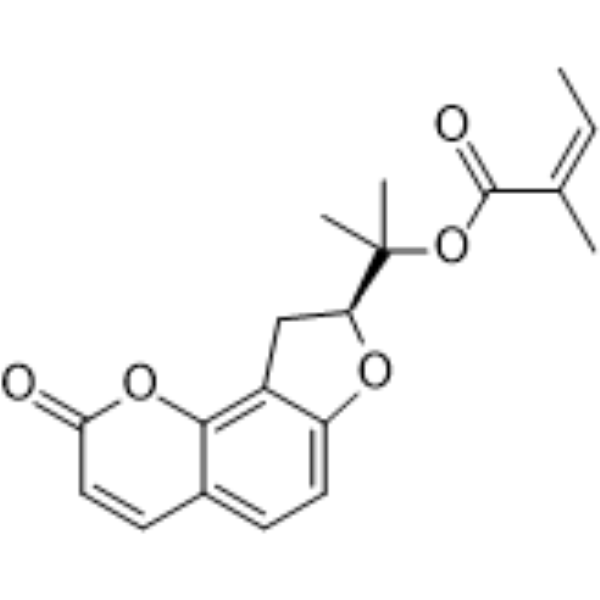
Columbianadin
Based on 4 publication(s) in Google Scholar
Columbianadin, a natural coumarin from Heracleum hemsleyanum, is known to have various biological activities including anti-inflammatory and anti-cancer effects.
Nos produits utilisent uniquement pour la recherche. Nous ne vendons pas aux patients.
- Pureté : 99.92%
- CAS No.: 5058-13-9
- Formule: C19H20O5
- Masse moléculaire:328.36
-
Stockage:Powder -20°C, 3 years , 4°C, 2 years ; In solvent -80°C, 2 years , -20°C, 1 year

To place orders, for customer services and technical support, please contact: MedChemExpress USA
Tel: 609-228-6898 E-mail: [email protected] [email protected]


-
 Activité biologique
-
Chemical Information
-
Solvant et solubilité
- Protocole
- Pureté et documentation
- Références
-
 Help & FAQs


-
HY-N0054
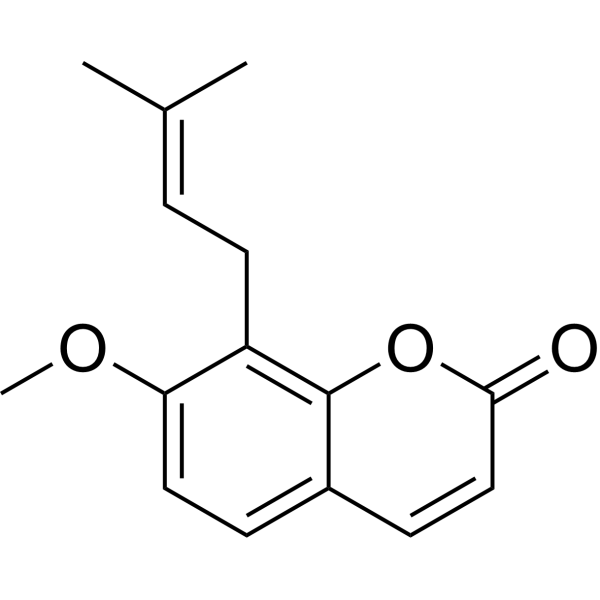
OstholeApoptosis Inducer -
HY-N0763
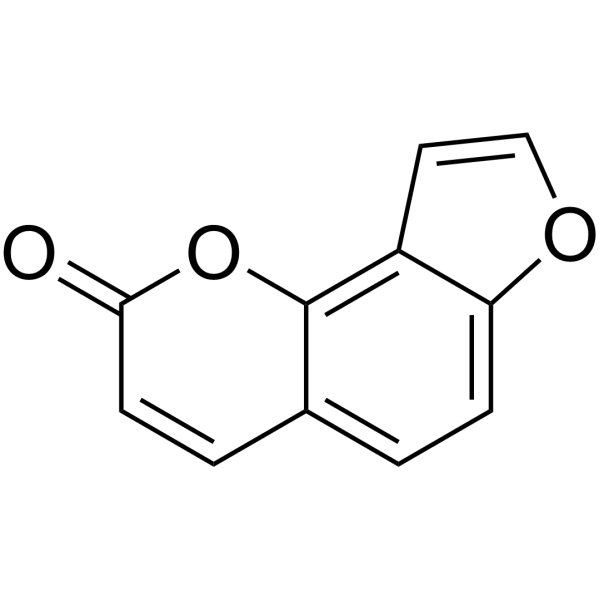
AngelicinApoptosis Inducer -
HY-N0376
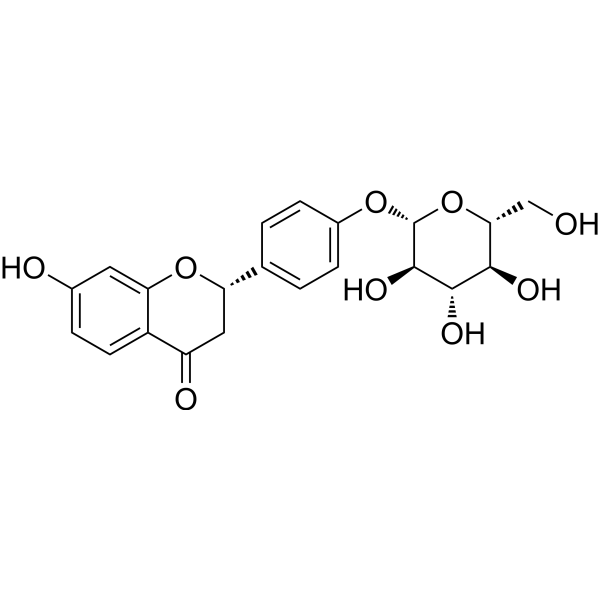
LiquiritinAKR1C1 Inhibitor -
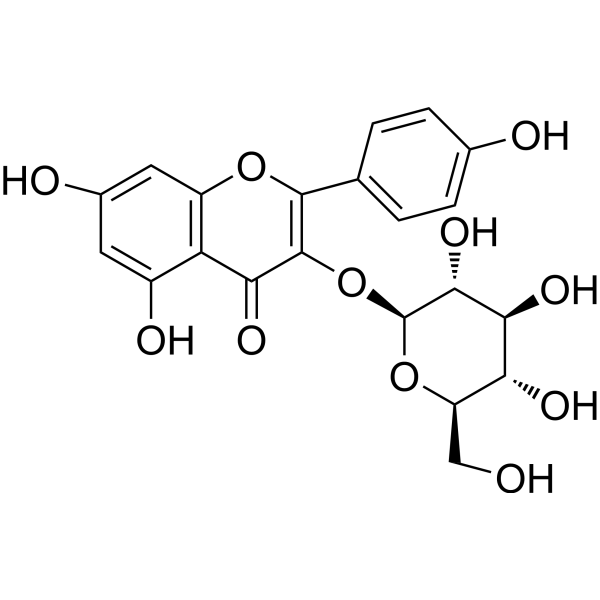
HY-N0015
AstragalinNF-κB Inhibitor -
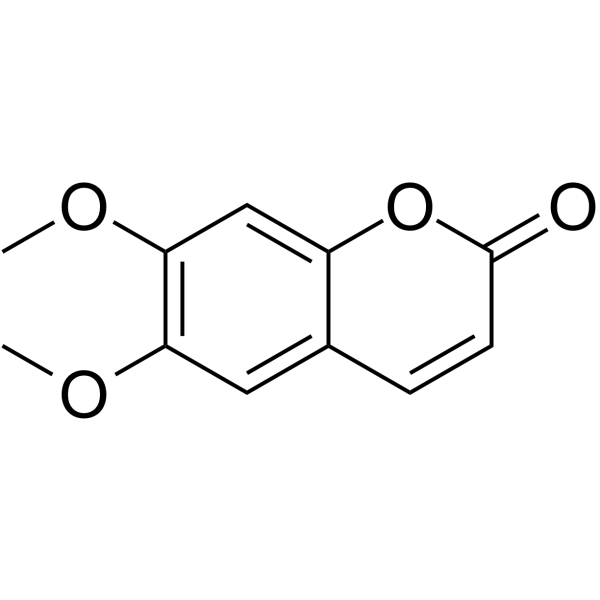
HY-N0228
ScoparoneAnti-inflammatory Agent -
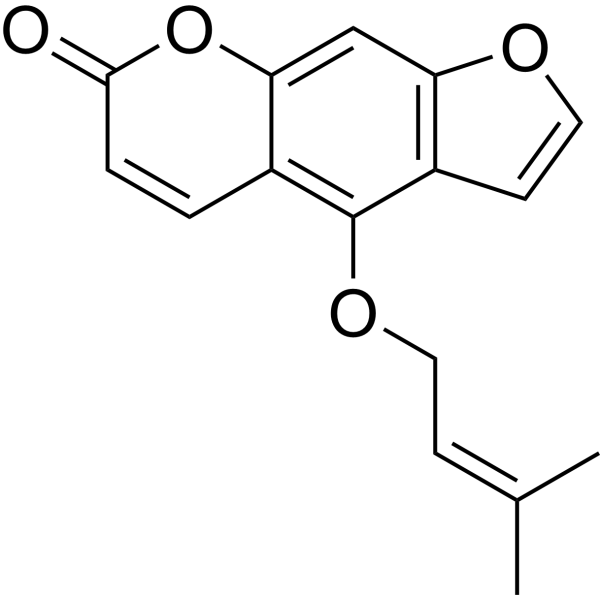
HY-N0286
IsoimperatorinCholinesterase (ChE) Inhibitor -
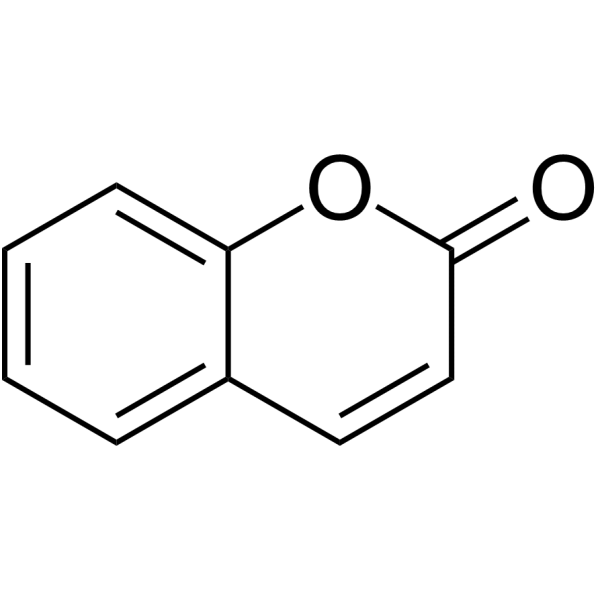
HY-N0709
CoumarinAnti-inflammatory Agent -

HY-N0709R
Coumarin (Standard)Anti-inflammatory Agent -

HY-N0362R
Columbianadin (Standard)Apoptosis Inducer -
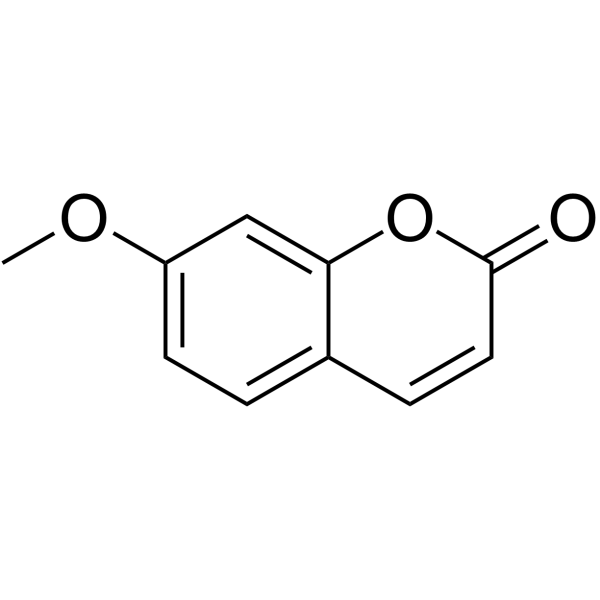
HY-N1366
HerniarinAnticancer Agent -
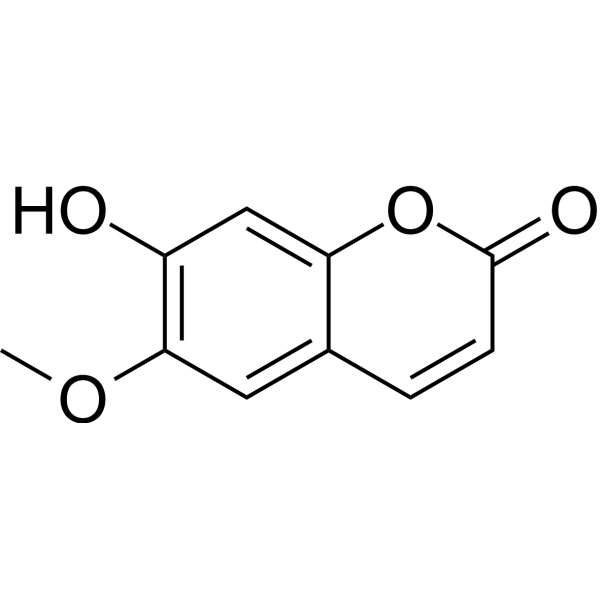
HY-N0342
ScopoletinCholinesterase (ChE) Inhibitor -

HY-N0342R
Scopoletin (Standard)Cholinesterase (ChE) Inhibitor
Publications Citing Use of MedChemExpress (MCE) Columbianadin
More

Activité biologique
Description
IC50 & Target
Apoptosis[1]
In Vitro
Columbianadin (CBN) effectively suppresses the growth of colon cancer cells. Low concentration (up to 25 μM) of Columbianadin induces apoptosis, and high concentration (50 μM) of Columbianadin induces necroptosis. The induction of apoptosis by Columbianadin is correlated with the modulation of caspase-9, caspase-3, Bax, Bcl-2, Bim and Bid, and the induction of necroptosis is related with RIP-3, and caspase-8. In addition, Columbianadin induces the accumulation of ROS and imbalance in the intracellular antioxidant enzymes such as SOD-1, SOD-2, catalase and GPx-1. Columbianadin shows the most effective growth inhibitory activity against human colorectal cancer cells. Accordingly, further study is performed using HCT116 cells to give the detailed growth-inhibitory mechanism of action mediated by Columbianadin. The cells treated with various concentrations of Columbianadin (0-100 μM) exhibit a dose- and time-dependent growth inhibition with an IC50 value of 47.2 and 32.4 μM after 48 and 72 h incubation, respectively. Treatment of various concentrations (12.5, 25, and 50 μM) of Columbianadin for 48 h in HCT116 cells decreases the number of cells and increases the floating cells. Apparent morphological changes with round-shape and dying cells are also observed at 25 and 50 μM Columbianadin -treated cells[1].
MedChemExpress (MCE) has not independently confirmed the accuracy of these methods. They are for reference only.
In Vivo
MedChemExpress (MCE) has not independently confirmed the accuracy of these methods. They are for reference only.


Chemical Information
-
CAS No. 5058-13-9
-
Appearance Solid
-
Masse moléculaire 328.36
-
Formule C19H20O5
-
Color White to off-white
-
SMILES
C/C=C(C)\C(OC(C)([C@@H]1CC2=C(O3)C(C=CC3=O)=CC=C2O1)C)=O
-
Structure Classification
-
Livraison
Room temperature in continental US; may vary elsewhere.
-
Stockage
Powder -20°C 3 years 4°C 2 years In solvent -80°C 2 years -20°C 1 year


Publications (4)
-
Journal Impact Factor
-
Most Recent
-
Phytomedicine
Columbianadin targets TRIM7 to maintain P2X7 palmitoylation, inhibiting cuproptosis in synovial M2 macrophages. [Abstract]2025 Oct:146:157091. PMID: 40768810 -
-
Acta Cir Bras
Columbianadin attenuates doxorubicin-induced cardiac injury, oxidative stress, and apoptosis via Sirt1/FOXO1 signaling pathway. [Abstract]2023 Jun 26:38:e382223. PMID: 37377248 -


Solvant et solubilité
In Vitro:
DMSO : 25 mg/mL (76.14 mM; ultrasonic and warming and heat to 60°C; Hygroscopic DMSO has a significant impact on the solubility of product, please use newly opened DMSO)
Please refer to the solubility information to select the appropriate solvent. Once prepared, please aliquot and store the solution to prevent product inactivation from repeated freeze-thaw cycles.
Storage method and period of stock solution: -80°C, 2 years; -20°C, 1 year. When stored at -80°C, please use it within 2 years. When stored at -20°C, please use it within 1 year.
Please refer to the solubility information to select the appropriate solvent. Once prepared, please aliquot and store the solution to prevent product inactivation from repeated freeze-thaw cycles.
Storage method and period of stock solution: -80°C, 2 years; -20°C, 1 year. When stored at -80°C, please use it within 2 years. When stored at -20°C, please use it within 1 year.
Concentration (start) × Volume (start) = Concentration (final) × Volume (final)
In Vivo:
Select the appropriate dissolution method based on your experimental animal and administration route.
- For the following dissolution methods, please ensure to first prepare a clear stock solution using an In Vitro approach and then sequentially add co-solvents:
- To ensure reliable experimental results, the clarified stock solution can be appropriately stored based on storage conditions. As for the working solution for In Vivo experiments, it is recommended to prepare freshly and use it on the same day.
- The percentages shown for the solvents indicate their volumetric ratio in the final prepared solution. If precipitation or phase separation occurs during preparation, heat and/or sonication can be used to aid dissolution.
In Vivo Dissolution Calculator
Please enter the basic information of animal experiments:
-
-
-
-
Recommended: Prepare an additional quantity of animals to account for potential losses during experiments.
Please enter your animal formula composition:
-
%DMSO +
Recommended: Keep the proportion of DMSO in working solution below 2% if your animal is weak.
-
%+
-
+%Tween-80 + +
-
%Saline +
The co-solvents required include: DMSO, . All of co-solvents are available by MedChemExpress (MCE). , Tween 80. All of co-solvents are available by MedChemExpress (MCE).
Working solution concentration: 0.22 mg/mL
Method for preparing stock solution: mg drug dissolved in μL DMSO. Stock solution concentration: mg/mL.
1. Take μL DMSO stock solution;
2. Add μL .
μL , mix evenly;
3. Then add μL Tween 80, mix evenly;
4. Then add μL
Please ensure that the stock solution in the first step is dissolved to a clear state, and add co-solvents in sequence. You can use ultrasonic heating (ultrasonic cleaner, recommended frequency 20-40 kHz), vortexing, etc. to assist dissolution.


Pureté et documentation
-
Fiche technique (281 KB)
-
SDS (251 KB)
- English - EN (251 KB)
- Français - FR (251 KB)
- Deutsch - DE (251 KB)
- Norwegian - NO (251 KB)
- Español - ES (251 KB)
- Swedish - SV (251 KB)
- Italian - IT (251 KB)
- Korean - KR (251 KB)
- Portuguese - PT (251 KB)
-
Instruction de manipulation (2659 KB)
Références
[1]. Kang JI, et al. Columbianadin Inhibits Cell Proliferation by Inducing Apoptosis and Necroptosis in HCT116 Colon Cancer Cells. Biomol Ther (Seoul). 2016 May 1;24(3):320-7. [Content Brief]
[2]. Zhang YB, et al. Tissue distribution study of columbianadin and its active metabolite columbianetin in rats. Biomed Chromatogr. 2016 Feb;30(2):256-62. [Content Brief]


Complete Stock Solution Preparation Table
Please refer to the solubility information to select the appropriate solvent. Once prepared, please aliquot and store the solution to prevent product inactivation from repeated freeze-thaw cycles.
Storage method and period of stock solution: -80°C, 2 years; -20°C, 1 year. When stored at -80°C, please use it within 2 years. When stored at -20°C, please use it within 1 year.
| Optional Solvent | Concentration Solvent Mass | 1 mg | 5 mg | 10 mg | 25 mg |
|---|---|---|---|---|---|
| DMSO | 1 mM | 3.0454 mL | 15.2272 mL | 30.4544 mL | 76.1360 mL |
| 5 mM | 0.6091 mL | 3.0454 mL | 6.0909 mL | 15.2272 mL | |
| 10 mM | 0.3045 mL | 1.5227 mL | 3.0454 mL | 7.6136 mL | |
| 15 mM | 0.2030 mL | 1.0151 mL | 2.0303 mL | 5.0757 mL | |
| 20 mM | 0.1523 mL | 0.7614 mL | 1.5227 mL | 3.8068 mL | |
| 25 mM | 0.1218 mL | 0.6091 mL | 1.2182 mL | 3.0454 mL | |
| 30 mM | 0.1015 mL | 0.5076 mL | 1.0151 mL | 2.5379 mL | |
| 40 mM | 0.0761 mL | 0.3807 mL | 0.7614 mL | 1.9034 mL | |
| 50 mM | 0.0609 mL | 0.3045 mL | 0.6091 mL | 1.5227 mL | |
| 60 mM | 0.0508 mL | 0.2538 mL | 0.5076 mL | 1.2689 mL |


Columbianadin Related Classifications
HY-N0362 Related Classifications
 Powered by Bioz