
1. Search Result
Search Result
Results for "

insomnia

" in MedChemExpress (MCE) Product Catalog:

60

Inhibitors & Agonists

1

Screening Libraries

1

Peptides

7

Natural
Products

7

Isotope-Labeled Compounds

Cat. No. Product Name Target Research Areas Chemical Structure
  • HY-A0014
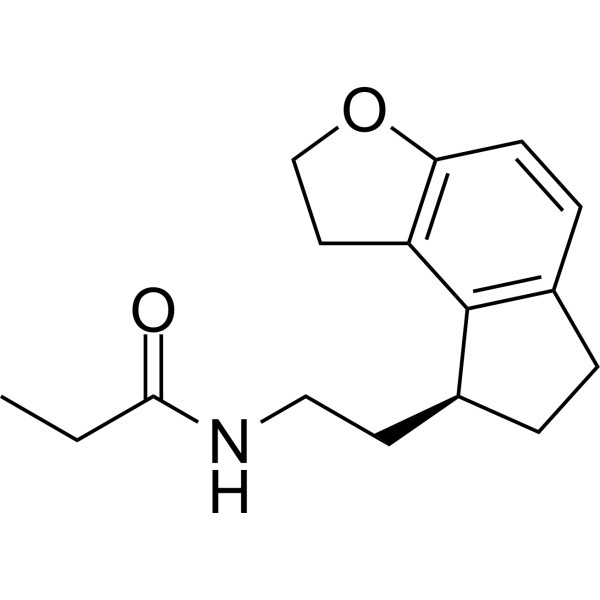
    Ramelteon
    Maximum Cited Publications
    12 Publications Verification

    TAK-375

    Melatonin Receptor Neurological Disease Endocrinology Cancer
    Ramelteon is a potent, highly selective, and orally active agonist of MT1/MT2 with Ki values of 14 and 112 pM, respectively. Ramelteon has the potential for the research of insomnia. Ramelteon consistently reduces sleep onset after long-term treatment, with no next-morning residual effects or rebound insomnia or withdrawal symptoms upon discontinuation .
    Ramelteon
  • HY-139559

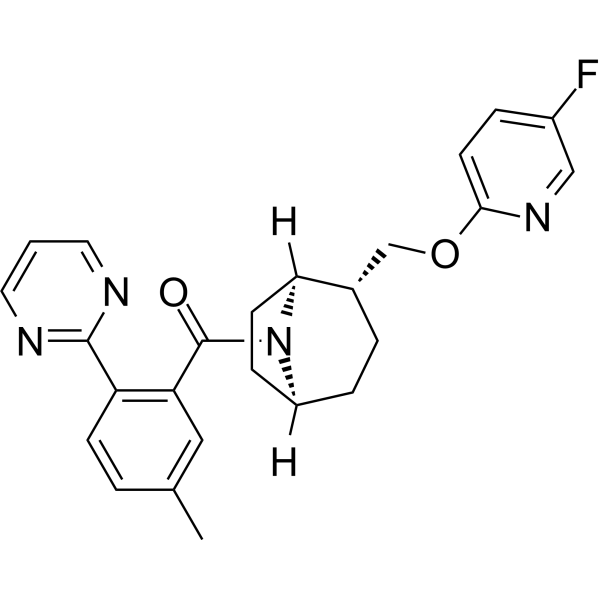
    ORN-0829; TS-142

    Orexin Receptor (OX Receptor) Neurological Disease
    Vornorexant (ORN-0829; TS-142) is a potent dual OX1R and OX2R antagonist with IC50 values of 1.05 nM and 1.27 nM, respectively. Vornorexant exhibits potent sleep-promoting effects in vivo and can be used for insomnia research research.
    Vornorexant
  • HY-109012
    Seltorexant
    3 Publications Verification

    JNJ-42847922

    Orexin Receptor (OX Receptor) Neurological Disease Endocrinology
    Seltorexant (JNJ-42847922) is an orally active, high-affinity, and selective orexin-2 receptor (OX2R) antagonist (pKi values of 8.0 and 8.1 for human and rat OX2R). Seltorexant (JNJ-42847922) crosses the blood-brain barrier and quickly occupies OX2R binding sites in the rat brain .
    Seltorexant
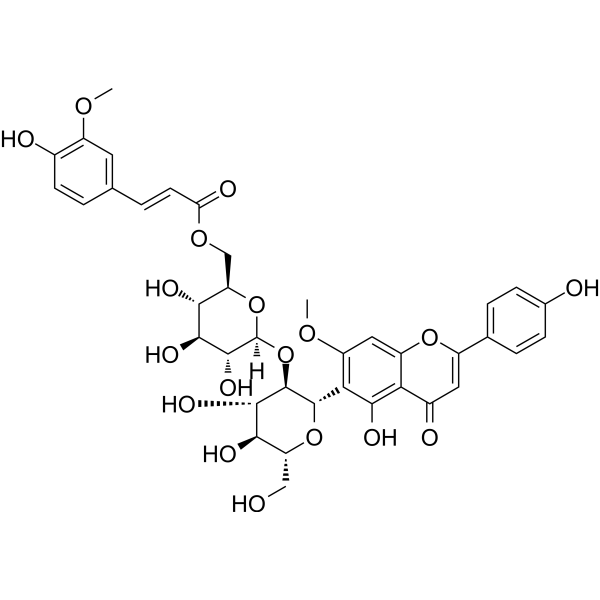
  • HY-N0659
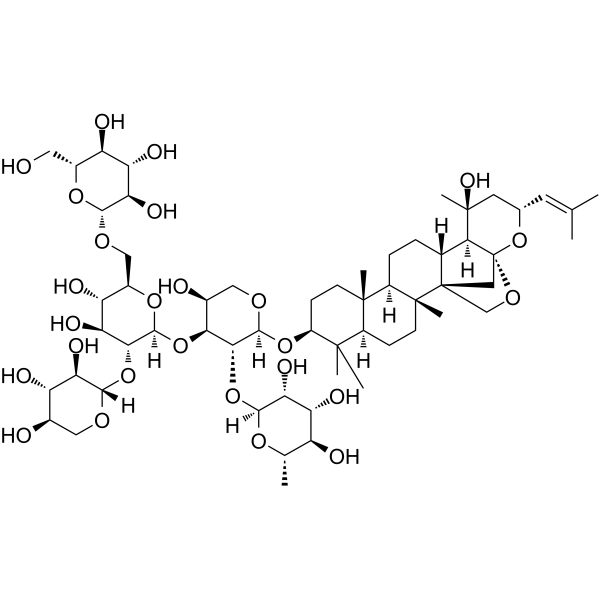
    Jujuboside A
    4 Publications Verification

    GABA Receptor Neurological Disease
    Jujuboside A is a glycoside extracted from Semen Ziziphi Spinosae, a Chinese herbal medicine used to treat insomnia and anxiety.
    Jujuboside A
  • HY-101456
    PCPA methyl ester hydrochloride
    5 Publications Verification

    4-Chloro-DL-phenylalanine methyl ester hydrochloride

    Tryptophan Hydroxylase 5-HT Receptor Neurological Disease
    PCPA methyl ester hydrochloride (4-Chloro-DL-phenylalanine methyl ester hydrochloride), a reversible tryptophan hydroxylase inhibitor, is a serotonin (5-HT) synthesis inhibitor. PCPA methyl ester hydrochloride crosses the blood brain barrier and reduces 5-HT central availability .
    PCPA methyl ester hydrochloride
  • HY-129105
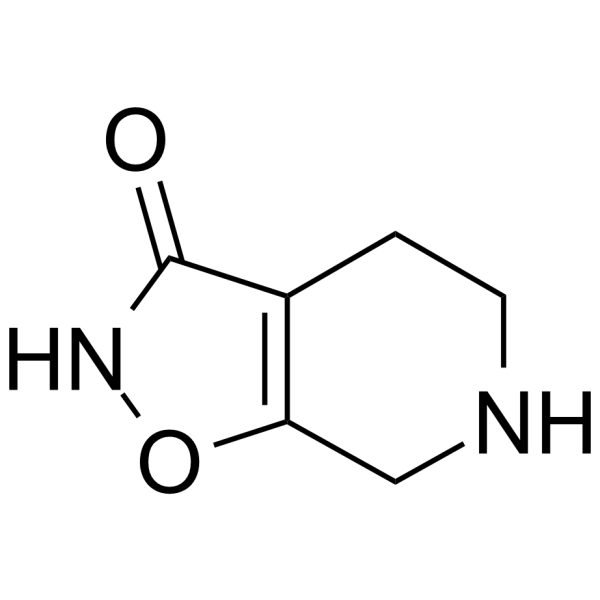
    Clomethiazole
    4 Publications Verification

    GABA Receptor Cytochrome P450 Neurological Disease
    Chlormethiazole is an potent and orally active GABAA agonist . Chlormethiazole inhibits cytochrome P450 isoforms: CYP2A6 and CYP2E1 in human liver microsomes. Chlormethiazole is an anticonvulsant agent and has the potential for treating convulsive status epilepticus .
    Clomethiazole
  • HY-19914
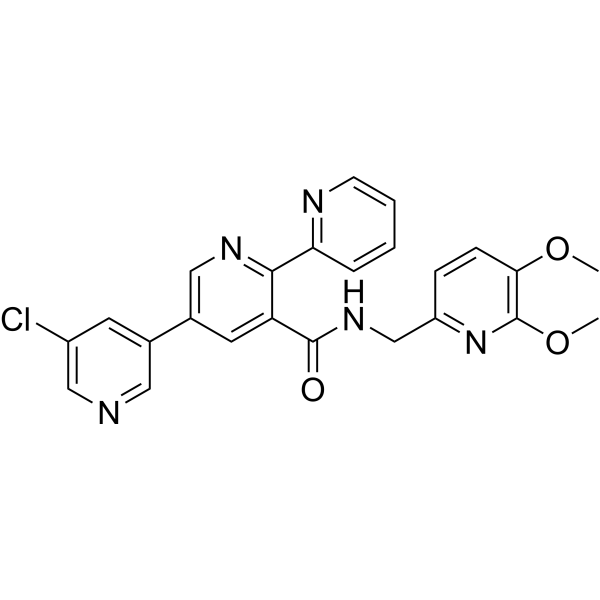
    MK-1064
    3 Publications Verification

    Orexin Receptor (OX Receptor) Endocrinology Cancer
    MK-1064 is a selective and orally active OX2R antagonist (Ki: 0.5 nM, IC50: 18 nM). MK-1064 promotes sleep in vivo. MK-1064 can be used in the research of insomnia .
    MK-1064
  • HY-109012A
    Seltorexant hydrochloride
    3 Publications Verification

    JNJ-42847922 hydrochloride

    Orexin Receptor (OX Receptor) Neurological Disease Metabolic Disease
    Seltorexant hydrochloride (JNJ-42847922 hydrochloride) is an orally active, high-affinity, and selective OX2R antagonist (pKi values of 8.0 and 8.1 for human and rat OX2R). Seltorexant hydrochloride crosses the blood-brain barrier and quickly occupies OX2R binding sites in the rat brain .
    Seltorexant hydrochloride
  • HY-152843

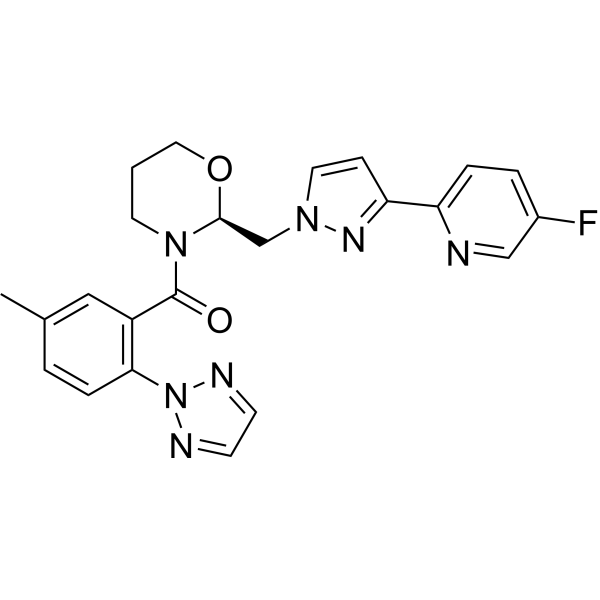
    YZJ-1139

    Orexin Receptor (OX Receptor) Neurological Disease
    Fazamorexant (YZJ-1139) is an orally active dual orexin receptor antagonist, with an IC50 of 32 nM against OX1R and an IC50 of 41 nM against OX2R. Fazamorexant prolongs total sleep time and improves sleep efficiency. Fazamorexant is applicable to related research on insomnia .
    Fazamorexant
  • HY-A0069

    Histamine Receptor Cytochrome P450 Neurological Disease Metabolic Disease
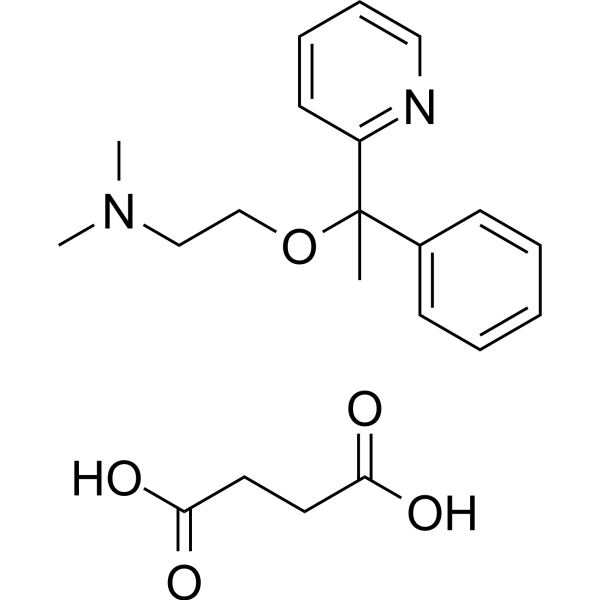
    Doxylamine succinate is a first-generation antihistamine and acts as a histamine H1 receptor antagonist. Doxylamine succinate is orally active, possessing analgesic and hypnotic activities. Doxylamine succinate enhances the activities of CYP2B, CYP2A, CYP3A and thyroxine-glucuronosyltransferase via promoting substrate hydroxylation and thyroxine metabolic pathways. Doxylamine succinate decreases serum thyroxine (T4) level and elevates serum thyroid-stimulating hormone (TSH) level. Doxylamine succinate induces liver enlargement and increases the activities of hepatic microsomal cytochrome P450, cytochrome b5 and NADPH-cytochrome c reductase. Doxylamine succinate can be used for the research of nausea, allergy, insomnia .
    Doxylamine succinate
  • HY-W050162
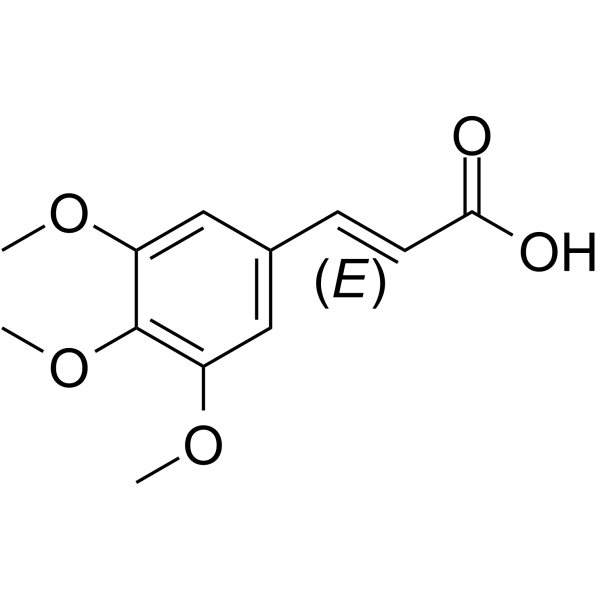
    (E)-3,4,5-Trimethoxycinnamic acid
    1 Publications Verification

    TMCA

    GABA Receptor 5-HT Receptor Neurological Disease
    (E)-3,4,5-Trimethoxycinnamic acid (TMCA) is a cinnamic acid substituted by multi-methoxy groups. (E)-3,4,5-Trimethoxycinnamic acid is an orally active and potent GABAA/BZ receptor agonist. (E)-3,4,5-Trimethoxycinnamic exhibits favourable binding affinity to 5-HT2C and 5-HT1A receptor, with IC50 values of 2.5 and 7.6 μM, respectively. (E)-3,4,5-Trimethoxycinnamic acid shows anticonvulsant and sedative activity. (E)-3,4,5-Trimethoxycinnamic acid can be used for the research of insomnia, headache and epilepsy .
    (E)-3,4,5-Trimethoxycinnamic acid
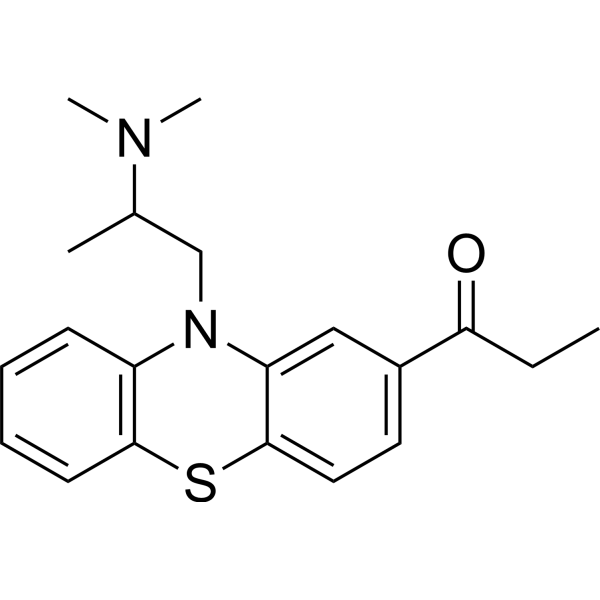
  • HY-U00051

    Histamine Receptor Dopamine Receptor Neurological Disease
    Propiomazine is an orally active antihistamine agent. Propiomazine is a potent prolactin (PRL) release stimulant, whose effect depends on the antagonism of the dopaminergic system and can inhibit the secretion of luteinizing hormone (LH). Propiomazine is mainly used for anesthesia assistance, mental disorders and anxiety-induced sedation, and can also be used in research related to insomnia .
    Propiomazine
  • HY-101834

    Orexin Receptor (OX Receptor) Others
    ACT-462206 is an orally active and potent dual Orexin 1/Orexin 2 receptor antagonist with IC50s of 60 nM (Orexin 1) and 11 nM (Orexin 2), respectively. ACT-462206 exhibits brain penetration properties, and can be used for insomnia, stress/anxiety-related disorders and addiction research .
    ACT-462206
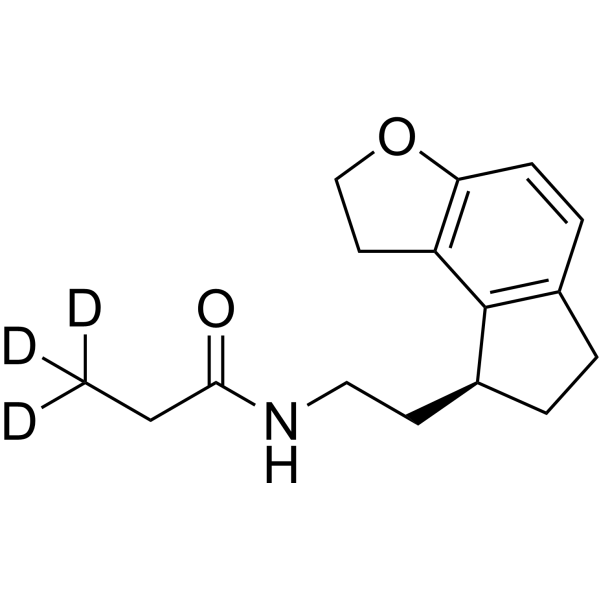
  • HY-A0014S1

    TAK-375-d3

    Melatonin Receptor Others
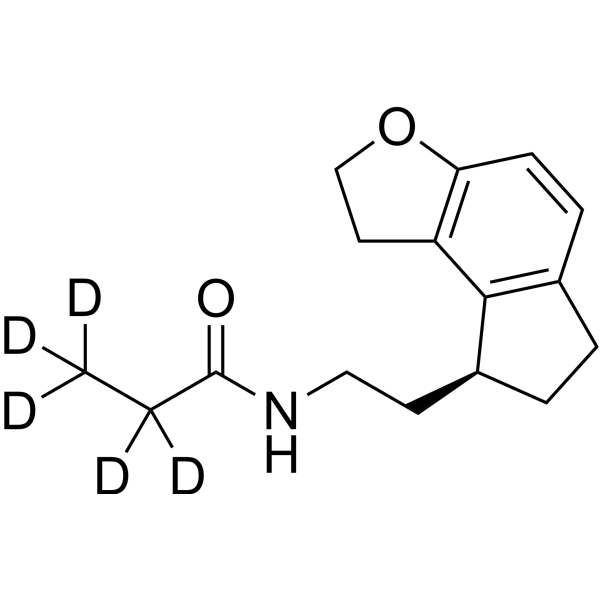
    Ramelteon-d3 (TAK-375-d3) is a deuterium-labelled Ramelteon (HY-A0014). Ramelteon is a potent, highly selective, and orally active agonist of MT1/MT2 with Ki values of 14 and 112 pM, respectively. Ramelteon has the potential for the research of insomnia. Ramelteon consistently reduces sleep onset after long-term treatment, with no next-morning residual effects or rebound insomnia or withdrawal symptoms upon discontinuation.
    Ramelteon-d3
  • HY-P1341

    Orexin A (17-33) (human, mouse, rat, bovine)

    Orexin Receptor (OX Receptor) Sigma Receptor Phospholipase Neurological Disease
    OXA (17-33) (Orexin A (17-33) (human, mouse, rat, bovine)) is the shortest active orexin peptide that selectively targets OX1 (EC50=8.29 nM), with 23-fold selectivity for the OX1 receptor over the OX2 receptor. The activity of OXA (17-33) depends on the Tyr17, Leu20, Asn25, His26 residues and the spatial conformation of the α-helix. OXA (17-33) activates signaling pathways involving inositol-1,4,5-trisphosphate receptor (IP3R), phospholipase D (PL-D) and choline-Sigma-1R, thereby increasing the cytoplasmic Ca 2+ level in nucleus accumbens neurons, an effect that is blocked by Sigma-1R antagonists. OXA (17-33) serves as an important biological probe for investigating the function of the OX1 receptor. OXA (17-33) can be modified via incorporation of mixed disulfide bonds of homocysteine and cysteamine, and is widely used in studies related to insomnia and narcolepsy .
    OXA(17-33)
  • HY-106246

    EMD 281014 free base; LY 2422347

    5-HT Receptor Neurological Disease Metabolic Disease
    Pruvanserin (EMD 281014 free base) is a selective 5-HT2A receptor antagonist. Pruvanserin alleviates tactile allodynia in diabetic rats. Pruvanserin can also be used for research of insomnia .
    Pruvanserin
  • HY-106547

    GABA Receptor Neurological Disease
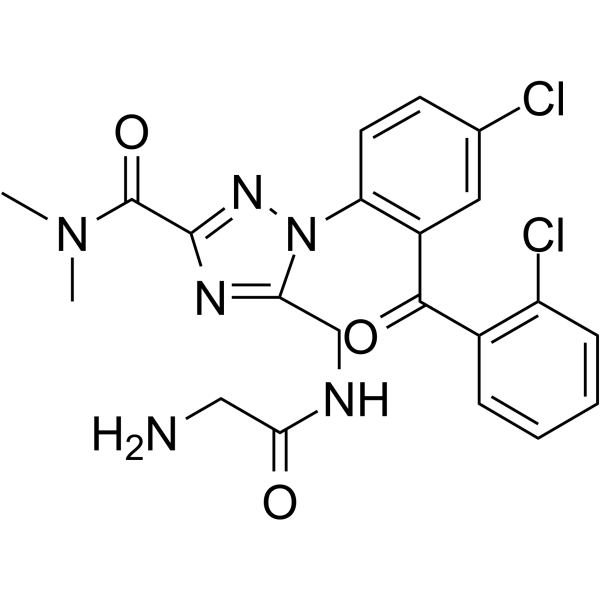
    Rilmazafone (450191S) is an orally active sleep inducer. Rilmazafone targets cytochrome P-450b and cytochrome P-450e. Rilmazafone induces hepatic drug-metabolizing enzyme activity in rats, mice and dogs. Rilmazafone is applicable for insomnia-related research .
    Rilmazafone
  • HY-139583

    S 117957; IMB 115

    Opioid Receptor Neurological Disease
    Sunobinop (S 117957; IMB 115) is an orally active and blood-brain barrier-permeable selective partial agonist of the human nociceptin/orphanin FQ receptor (NOP), which exhibits high affinity for human targets (Ki=3.3 nM; EC50=4.03 nM; Emax=47.8%) without activating μ and κ opioid receptors. Sunobinop significantly reduces wakefulness time and increases non-rapid eye movement sleep in rats by activating NOP receptors, and produces no significant side effects on learning, memory, reward, respiration or intestinal function at effective doses. Sunobinop displays competitive antagonist properties in specific signaling pathways, such as β-arrestin 2 recruitment. With these unique pharmacological properties, Sunobinop can be used to investigate insomnia, moderate-to-severe alcohol use disorder, and urinary incontinence caused by overactive bladder .
    Sunobinop
  • HY-101260

    Orexin Receptor (OX Receptor) Neurological Disease
    DORA-22 is an orally active dual orexinergic receptor antagonist, and improves the sleep disruption and memory impairment. DORA-22 can be used for study of insomnia .
    DORA-22
  • HY-135359

    Drug Metabolite Neurological Disease
    RP 48497, an impurity of Eszopiclone, is a photodegradation product of Eszopiclone. Eszopiclone is a non-benzodiazepine agent used in the treatment of insomnia .
    RP 48497
  • HY-A0014S

    TAK-375-d5

    Isotope-Labeled Compounds Melatonin Receptor Neurological Disease Endocrinology Cancer
    Ramelteon-d5 is deuterium labeled Ramelteon. Ramelteon is a potent, highly selective, and orally active agonist of MT1/MT2 with Ki values of 14 and 112 pM, respectively. Ramelteon has the potential for the research of insomnia. Ramelteon consistently reduces sleep onset after long-term treatment, with no next-morning residual effects or rebound insomnia or withdrawal symptoms upon discontinuation .
    Ramelteon-d5
  • HY-N7325

    PTEN Orexin Receptor (OX Receptor) Others
    Valerosidate is a Iridoids product that can be isolated from the herbs of Valeriana jatamansi. Valerosidate exhibites inhibitory effects on cell viability and migration in HCT116 cells via increasing the expressions of tumor suppressors (p53 and PTEN) Valerosidate is a natural orexin 2 receptor antagonist and can be used for the study of insomnia.
    Valerosidate
  • HY-123737

    Orexin Receptor (OX Receptor) Neurological Disease
    MK-8133 is an orexin-2 receptor antagonist. MK-8133 can be used in the study of insomnia .
    MK-8133
  • HY-136922

    Orexin Receptor (OX Receptor) Neurological Disease
    Orexin receptor antagonist 2 (compound 30) is a potent orexin receptor antagonist with pKis of 7.69 and 9.78. Orexin receptor antagonist 2 has the potential for the research of insomnia .
    Orexin receptor antagonist 2
  • HY-15130R

    Reference Standards Endogenous Metabolite Metabolic Disease
    Jujuboside A (Standard) is the analytical standard of Jujuboside A. This product is intended for research and analytical applications. Jujuboside A is a glycoside extracted from Semen Ziziphi Spinosae, a Chinese herbal medicine used to treat insomnia and anxiety.
    DL-O-Phosphoserine (Standard)
  • HY-177085

    Orexin Receptor (OX Receptor) Neurological Disease
    Fumiporexant (Compound Example 93) is an orally active, brain-penetrant and selective Orexin receptor 2 (OX2R) antagonist. Fumiporexant regulates the sleep-wake cycle and emotion-related pathways in the central nervous system. Fumiporexant is promising for research of nervous system diseases such as insomnia and major depressive disorder .
    Fumiporexant
  • HY-106136

    PD-6735; LY-156735

    Melatonin Receptor 5-HT Receptor Neurological Disease
    TIK-301 (PD-6735) is a chlorinated melatonin derivative and a potent, high-affinity and orally active melatonin MT1 and MT2 receptors agonist with Kis of 0.081 nM and 0.042 nM, respectively. TIK-301 is also a 5-HT2B/5-HT2C receptors antagonist with antidepressant action. TIK-301 has the potential for sleep disorders and other circadian rhythm disorders treatment .
    TIK-301
  • HY-W039283

    MCHR1 (GPR24) Neurological Disease Cancer
    MCH-1 antagonist 2 (l-BROMO-2,4-DIFLUORO-5-NITROBEN-ZENE) is a melanin concentrating hormone-1 (MCH1) receptor-selective 4-aryl piperidine. MCH-1 antagonist 2 can be used for the research of depression, anxiety, obesity, urge incontinence, urinary incontinence, major depression, bipolar disorder, agoraphobia, specific phobia, social phobia, obsessive-compulsive disorder, post-traumatic stress disorder, acute stress disorder, urinary frequency, urinary urgency, nocturia, enuresis, bulimia, bulimia nervosa, anorexia nervosa, major depressive disorder, dysthymic disorder, bipolar 1 and 2 disorders, schizoaffective disorder, cognitive disorders with depressed mood, personality disorders, insomnia, hypersomnia, narcolepsy, circadian rhythm sleep disorder, nightmare disorder, sleep terror disorder, sleepwalking disorder, panic disorder, social anxiety disorder, generalized anxiety disorder, overactive bladder .
    MCH-1 antagonist 2
  • HY-N16466

    Nardal

    Drug Derivative Neurological Disease
    Valerenal (Nardal) is a sesquiterpene found in Valeriana officinalis root oil. Valerian root can be used as an herbal sedative which is helpful in the treatment of insomnia .
    Valerenal
  • HY-113555

    Orexin Receptor (OX Receptor) Neurological Disease
    DORA 42 is a dual orexin 1 and orexin 2 receptor antagonist with sleep efficacy in rats. DORA 42 is promising for research of insomnia .
    DORA 42
  • HY-103522

    GABA Receptor Neurological Disease
    AA29504 is a ethyl carbamate with γ-aminobutyric acid (GABAA(HY-L120) receptor activity. AA29504 inhibits the delivery of the neurotransmitter gamma-aminobutyric acid in the central nervous system. AA29504 can be used to research anxiety, insomnia and other neuropsychiatric diseases .
    AA29504
  • HY-16505

    Endogenous Metabolite Neurological Disease
    Triclofos sodium is a drug used to suppress insomnia and for sedation and has sedative activity. Triclofos sodium is used in children for sedation during painless medical procedures, particularly in children with neurocognitive disorders. Triclofos sodium has similar physiological and pharmacological properties to chloral and therefore can be used as a substitute when necessary. The safety and efficacy of Triclofos sodium have been demonstrated in pediatric populations with high rates of neurocognitive disorders .
    Triclofos sodium
  • HY-A0069A

    Histamine Receptor Cytochrome P450 Neurological Disease Metabolic Disease
    Doxylamine is a first-generation antihistamine and acts as a histamine H1 receptor antagonist. Doxylamine is orally active, possessing analgesic and hypnotic activities. Doxylamine enhances the activities of CYP2B, CYP2A, CYP3A and thyroxine-glucuronosyltransferase via promoting substrate hydroxylation and thyroxine metabolic pathways. Doxylamine decreases serum thyroxine (T4) level and elevates serum thyroid-stimulating hormone (TSH) level. Doxylamine induces liver enlargement and increases the activities of hepatic microsomal cytochrome P450, cytochrome b5 and NADPH-cytochrome c reductase. Doxylamine can be used for the research of nausea, allergy, insomnia .
    Doxylamine
  • HY-A0069R

    Reference Standards Histamine Receptor Cytochrome P450 Neurological Disease Metabolic Disease
    Doxylamine succinate (Standard) is the analytical standard of Doxylamine succinate (HY-A0069). This product is intended for research and analytical applications. Doxylamine succinate is a first-generation antihistamine and acts as a histamine H1 receptor antagonist. Doxylamine succinate is orally active, possessing analgesic and hypnotic activities. Doxylamine succinate enhances the activities of CYP2B, CYP2A, CYP3A and thyroxine-glucuronosyltransferase via promoting substrate hydroxylation and thyroxine metabolic pathways. Doxylamine succinate decreases serum thyroxine (T4) level and elevates serum thyroid-stimulating hormone (TSH) level. Doxylamine succinate induces liver enlargement and increases the activities of hepatic microsomal cytochrome P450, cytochrome b5 and NADPH-cytochrome c reductase. Doxylamine succinate can be used for the research of nausea, allergy, insomnia .
    Doxylamine succinate (Standard)
  • HY-A0232

    Medomin

    Drug Derivative Neurological Disease
    Heptabarbital (Medomin) is an oral activity Barbituric acid derivative. Heptabarbital has the potential for the research of insomnia .
    Heptabarbital
  • HY-115139

    Others Neurological Disease
    Fenadiazole acts as a central nervous system agent to manage insomnia and dreaminess .
    Fenadiazole
  • HY-A0014R

    TAK-375 (Standard)

    Reference Standards Melatonin Receptor Neurological Disease Endocrinology Cancer
    Ramelteon (Standard) is the analytical standard of Ramelteon. This product is intended for research and analytical applications. Ramelteon is a potent, highly selective, and orally active agonist of MT1/MT2 with Ki values of 14 and 112 pM, respectively. Ramelteon has the potential for the research of insomnia. Ramelteon consistently reduces sleep onset after long-term treatment, with no next-morning residual effects or rebound insomnia or withdrawal symptoms upon discontinuation .
    Ramelteon (Standard)
  • HY-U00051A

    Histamine Receptor Neurological Disease
    Propiomazine hydrochloride is an orally active antihistamine agent. Propiomazine hydrochloride is a potent prolactin (PRL) release stimulant, whose effect depends on the antagonism of the dopaminergic system and can inhibit the secretion of luteinizing hormone (LH). Propiomazine hydrochloride is mainly used for anesthesia assistance, mental disorders and anxiety-induced sedation, and can also be used in research related to insomnia .
    Propiomazine hydrochloride
  • HY-101629

    Drug Intermediate Neurological Disease
    (E)-Crotylbarbital is the isomer of Crotylbarbital. Crotylbarbital is a barbiturate derivative and can be used for the research of insomnia.
    (E)-Crotylbarbital
  • HY-W518478

    Drug Metabolite Others
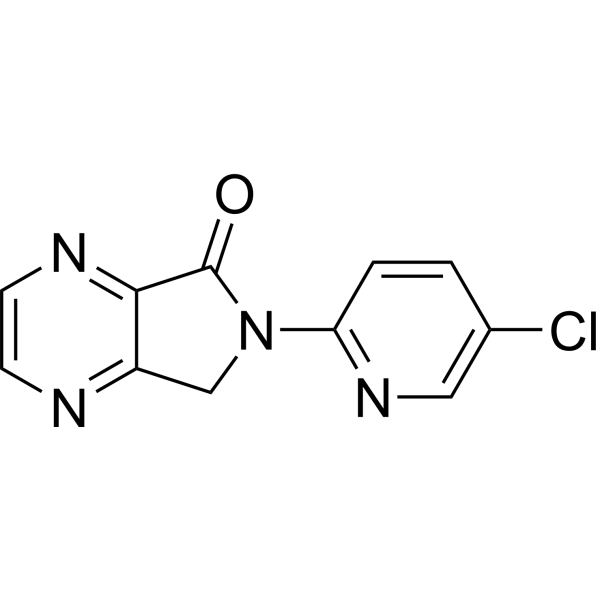
    Zolpyridine is a degradation product of Zolpidem tartrate .
    Zolpyridine
  • HY-12140

    GW597599

    Neurokinin Receptor Neurological Disease
    Vestipitant (GW597599) is a neurokinin-1 receptor antagonist (pKi: 9.4, hNK1) with hypnotic effects and the ability to suppress primary insomnia. Vestipitant can effectively block substance P-mediated extracellular regulated kinase phosphorylation and relieve anxiety and possible depression induced by the agonist GR73632 (HY-P1192) in gerbils. Vestipitant can also improve functional dyspnea, anxiety, insomnia, irritable bowel disease, gastroesophageal reflux disease, tinnitus and antiemetic effects .
    Vestipitant
  • HY-N0659R

    Reference Standards GABA Receptor Neurological Disease
    Jujuboside A (Standard) is the analytical standard of Jujuboside A. This product is intended for research and analytical applications. Jujuboside A is a glycoside extracted from Semen Ziziphi Spinosae, a Chinese herbal medicine used to treat insomnia and anxiety.
    Jujuboside A (Standard)
  • HY-135359R

    Drug Metabolite Reference Standards Neurological Disease
    Adenosine 5'-monophosphate (disodium) (Standard) is the analytical standard of Adenosine 5'-monophosphate (disodium). This product is intended for research and analytical applications. Adenosine 5'-monophosphate disodium is an orally active purine nucleotide, and participates in ATP metabolism. Adenosine 5'-monophosphate disodium is also a ligand for adenosine 2B receptor. Adenosine 5'-monophosphate disodium can activate AMPK in skeletal muscle, and ameliorates insulin resistance and impaired glucose metabolism. Adenosine 5'-monophosphate disodium can be used for research of diabetes .
    RP 48497 (Standard)
  • HY-129105R

    GABA Receptor Cytochrome P450 Reference Standards Neurological Disease
    Clomethiazole (Standard) is the analytical standard of Clomethiazole. This product is intended for research and analytical applications. Chlormethiazole is an potent and orally active GABAA agonist . Chlormethiazole inhibits cytochrome P450 isoforms: CYP2A6 and CYP2E1 in human liver microsomes. Chlormethiazole is an anticonvulsant agent and has the potential for treating convulsive status epilepticus .
    Clomethiazole (Standard)
  • HY-U00051AS1

    Isotope-Labeled Compounds Neurological Disease
    (R)-Propiomazine-d6 hydrochloride is deuterium labeled Propiomazine hydrochloride. Propiomazine hydrochloride is an orally active antihistamine agent. Propiomazine hydrochloride is a potent prolactin (PRL) release stimulant, whose effect depends on the antagonism of the dopaminergic system and can inhibit the secretion of luteinizing hormone (LH). Propiomazine hydrochloride is mainly used for anesthesia assistance, mental disorders and anxiety-induced sedation, and can also be used in research related to insomnia.
    (R)-Propiomazine-d6 hydrochloride
  • HY-U00051AS

    Isotope-Labeled Compounds Histamine Receptor Neurological Disease
    Propiomazine-d6 hydrochloride is deuterium labeled Propiomazine hydrochloride. Propiomazine hydrochloride is an orally active antihistamine agent. Propiomazine hydrochloride is a potent prolactin (PRL) release stimulant, whose effect depends on the antagonism of the dopaminergic system and can inhibit the secretion of luteinizing hormone (LH). Propiomazine hydrochloride is mainly used for anesthesia assistance, mental disorders and anxiety-induced sedation, and can also be used in research related to insomnia.
    Propiomazine-d6 hydrochloride
  • HY-U00051AS2

    Isotope-Labeled Compounds Neurological Disease
    (S)-Propiomazine-d6 hydrochloride is deuterium labeled Propiomazine hydrochloride. Propiomazine hydrochloride is an orally active antihistamine agent. Propiomazine hydrochloride is a potent prolactin (PRL) release stimulant, whose effect depends on the antagonism of the dopaminergic system and can inhibit the secretion of luteinizing hormone (LH). Propiomazine hydrochloride is mainly used for anesthesia assistance, mental disorders and anxiety-induced sedation, and can also be used in research related to insomnia.
    (S)-Propiomazine-d6 hydrochloride
  • HY-138110

    4-Methyldiphenhydramine

    Endogenous Metabolite iGluR Histamine Receptor Neurological Disease Inflammation/Immunology
    Toladryl is a derivative of Diphenhydramine (HY-B0303), capable of penetrating the blood-brain barrier and possessing oral activity, as well as antihistamine and anticholinergic activities. The anticholinergic activity of Toladryl is approximately one-tenth that of Diphenhydramine (HY-B0303), and its protective effect against lethal doses of histamine in guinea pigs is 2 to 4 times that of Diphenhydramine (HY-B0303). The side effects of Toladryl are fewer and milder than those of Diphenhydramine (HY-B0303), but at higher doses, it may cause central nervous system symptoms such as insomnia, agitation, and disorientation. Toladryl can be used for research in allergic diseases .
    Toladryl
  • HY-138110R

    4-Methyldiphenhydramine (Standard)

    Reference Standards Endogenous Metabolite iGluR Histamine Receptor Neurological Disease Inflammation/Immunology
    Toladryl (Standard) is the analytical standard of Toladryl. This product is intended for research and analytical applications. Toladryl is a derivative of Diphenhydramine (HY-B0303), capable of penetrating the blood-brain barrier and possessing oral activity, as well as antihistamine and anticholinergic activities. The anticholinergic activity of Toladryl is approximately one-tenth that of Diphenhydramine (HY-B0303), and its protective effect against lethal doses of histamine in guinea pigs is 2 to 4 times that of Diphenhydramine (HY-B0303). The side effects of Toladryl are fewer and milder than those of Diphenhydramine (HY-B0303), but at higher doses, it may cause central nervous system symptoms such as insomnia, agitation, and disorientation. Toladryl can be used for research in allergic diseases .
    Toladryl (Standard)
  • HY-A0069AS

    Isotope-Labeled Compounds Histamine Receptor Cytochrome P450 Neurological Disease Metabolic Disease
    Doxylamine-d5 is deuterium labeled Doxylamine (HY-A0069A). Doxylamine is a first-generation antihistamine and acts as a histamine H1 receptor antagonist. Doxylamine is orally active, possessing analgesic and hypnotic activities. Doxylamine enhances the activities of CYP2B, CYP2A, CYP3A and thyroxine-glucuronosyltransferase via promoting substrate hydroxylation and thyroxine metabolic pathways. Doxylamine decreases serum thyroxine (T4) level and elevates serum thyroid-stimulating hormone (TSH) level. Doxylamine induces liver enlargement and increases the activities of hepatic microsomal cytochrome P450, cytochrome b5 and NADPH-cytochrome c reductase. Doxylamine can be used for the research of nausea, allergy, insomnia .
    Doxylamine-d5

Inquiry Online

Your information is safe with us. * Required Fields.

Salutation


Country or Region *

Applicant Name *


Organization Name *

Department *


Email Address *


Product Name *

Cat. No.


Requested quantity *

Phone Number *


Remarks

Inquiry Online

Inquiry Information

Product Name:
Cat. No.:
Quantity:
MCE Japan Authorized Agent:

