Search Result
Results for "
labeling reagent
" in MedChemExpress (MCE) Product Catalog:
28
Biochemical Assay Reagents
180
Isotope-Labeled Compounds
| Cat. No. |
Product Name |
Target |
Research Areas |
Chemical Structure |
-
- HY-D0819
-
|
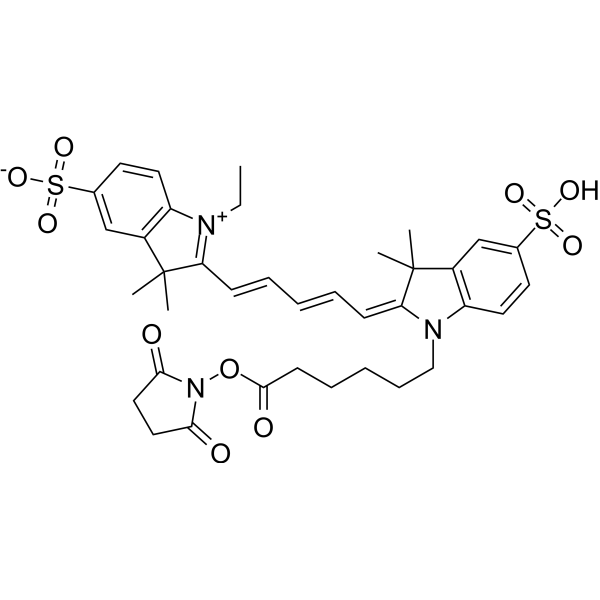
Cy5 NHS Ester; Sulfo-Cyanine5 Succinimidyl Ester
|
Fluorescent Dye
|
Others
|
|
Cy5-SE (Cy5 NHS Ester) is a reactive dye for the labeling of amino-groups in peptides, proteins, and oligonucleotides. This dye requires small amount of organic co-solvent (such as DMF or DMSO) to be used in labeling reaction. This reagent is ideal for very cost-efficient labeling of soluble proteins, as well as all kinds of peptides and oligonucleotides. This reagent also works well in organic solvents for small molecule labeling.
Excitation (nm):649, Emission (nm): 670.
|
-
-
- HY-118297
-
|
|
Biochemical Assay Reagents
|
Metabolic Disease
|
|
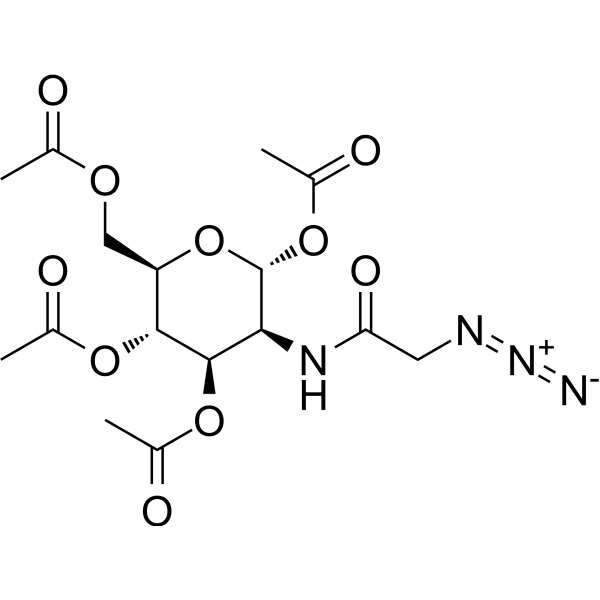
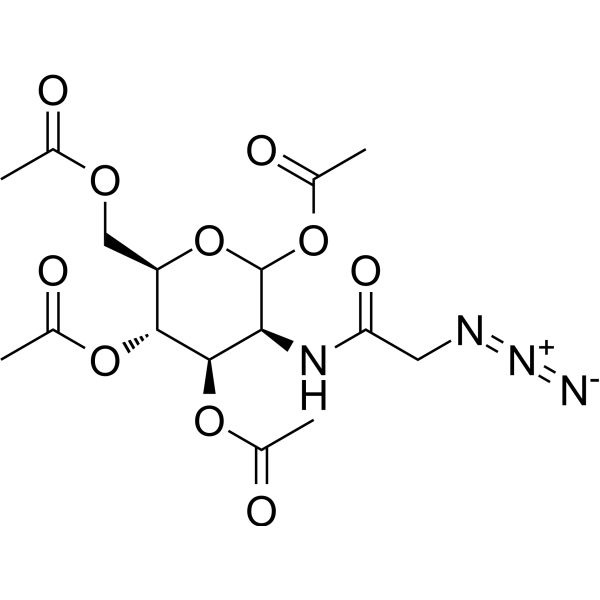
Ac4ManNAz is an azido-containing metabolic glycoprotein labeling reagent. Ac4ManNAz can be used to selectively modify proteins. Ac4ManNAz can be used in cell labeling, tracking and proteomic analysis . Ac4ManNAz is a click chemistry reagent, it contains an Azide group and can undergo copper-catalyzed azide-alkyne cycloaddition reaction (CuAAc) with molecules containing Alkyne groups. It can also undergo strain-promoted alkyne-azide cycloaddition (SPAAC) reactions with molecules containing DBCO or BCN groups.
|
-
-
- HY-111496
-
|
|
Biochemical Assay Reagents
|
Others
|
|
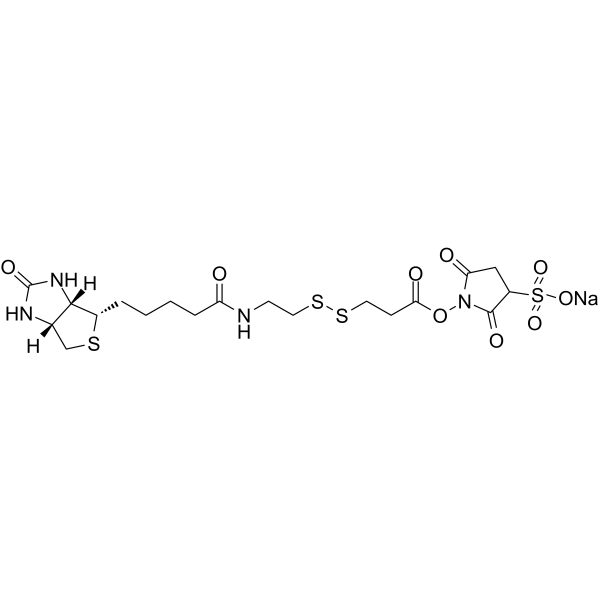
Sulfo-NHS-SS-biotin sodium is a long-chain cleavable and cell-impermeant amine-reactive biotinylation reagent. Sulfo-NHS-SS-biotin sodium can be used for the labeling and purifying of cell-surface protein .
|
-
-
- HY-66022
-
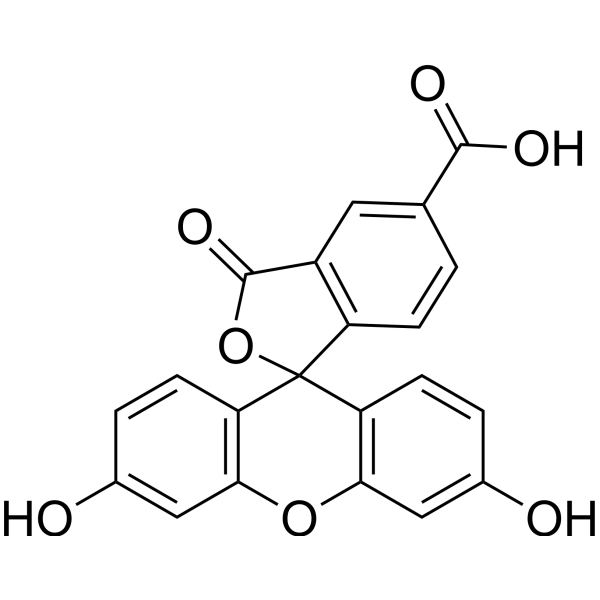
5-FAM
4 Publications Verification
5-Carboxyfluorescein
|
Fluorescent Dye
|
Others
|
|
5-FAM (5-Carboxyfluorescein) is a green fluorescent reagent used for in situ labeling peptides, proteins and nucleotides. 5-FAM is a single isomer with Ex/Em of 490 nm/520 nm .
|
-
-
- HY-136769
-
|
|
Biochemical Assay Reagents
|
Others
|
|
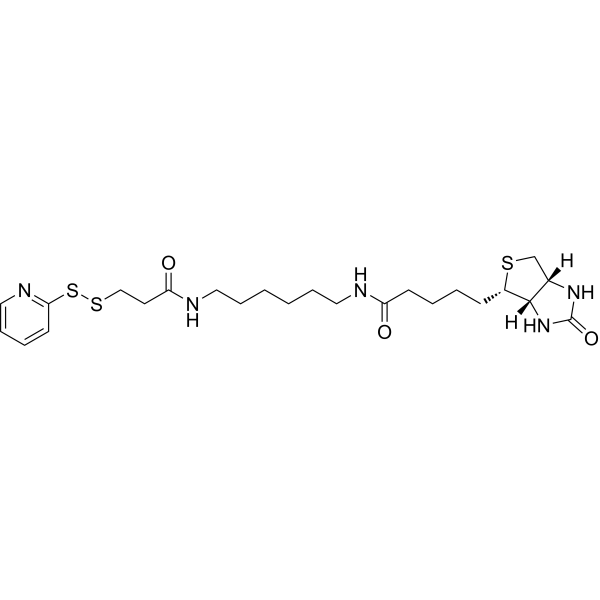
Biotin-HPDP is a biochemical reagent. Biotin-HPDP can couple with GMPS and label free protein thiols. Biotin-HPDP can be used as a biological material or organic compound for life science related research .
|
-
-
- HY-I1124
-
|
L-VALINE-2,3,4,4,4,5,5,5-d8
|
Isotope-Labeled Compounds
Arginase
Akt
Bacterial
|
Infection
|
|
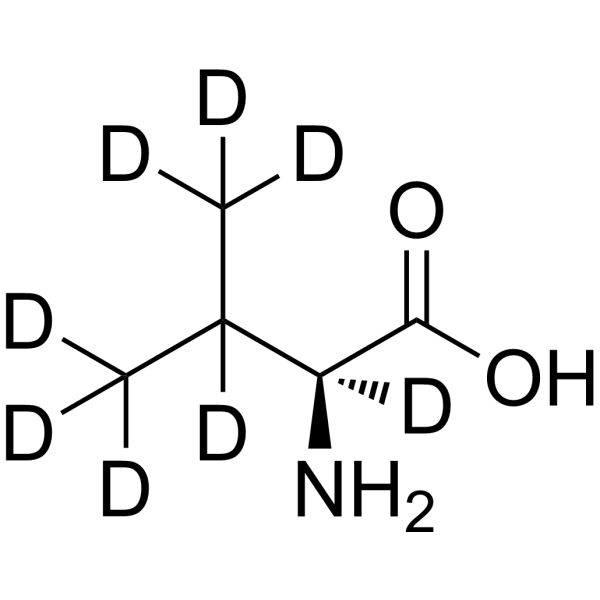
L-Valine-d8 is a deuterated form of L-Valine (HY-N0717). L-Valine ((S)-Valine) is a nonlinear semiorganic material. L-Valine causes lipid peroxidation and accumulation of malondialdehyde (MDA), exhibits inhibitory activity against cyanobacteria. L-Valine inhibits multidrug-resistant bacteria through activation of PI3K/Akt signaling pathway and inhibition of arginase .
|
-
-
- HY-15938
-
|
|
Fluorescent Dye
|
Others
|
|
5-FAM SE is a single isomer, is a fluorescent labeling reagent used for labeling peptides, proteins and nucleotides. 5-FAM SE can react with amines and can yield stable amine conjugates .
|
-
-
- HY-151685
-
|
|
ADC Linker
|
Others
|
|
Kdo Azide is a click chemistry reagent containing an azide. Kdo Azide is a metabolic labeling reagent . Kdo Azide is a click chemistry reagent, it contains an Azide group and can undergo copper-catalyzed azide-alkyne cycloaddition reaction (CuAAc) with molecules containing Alkyne groups. It can also undergo strain-promoted alkyne-azide cycloaddition (SPAAC) reactions with molecules containing DBCO or BCN groups.
|
-
-
- HY-NP052
-
|
OVA-Biotin
|
Biochemical Assay Reagents
|
Others
|
|
Ovalbumin-Biotin is a biotinylated biochemical reagent. Ovalbumin-Biotin is used to label or detect specific antigens, molecules or cellular structures .
|
-
-
- HY-W998680
-
|
5-FITC-Maleimide
|
Fluorescent Dye
|
Others
|
|
Fluorescein-maleimide (5-FITC-Maleimide) is a thiol-reactive fluorescent derivatization reagent and non-specific protein labeling reagent. Fluorescein-maleimide covalently binds to protein thiol groups for protein labeling. Fluorescein-maleimide covalently binds to protein amino and imidazole groups under neutral pH conditions. Fluorescein-maleimide is used for fluorescent labeling of proteins, nucleic acids or other molecules containing one or more thiol groups (Ex/Em = 494/519 nm) .
|
-
-
- HY-15939
-
|
|
Fluorescent Dye
|
Metabolic Disease
|
|
6-FAM SE (6-carboxyfluorescein succinimidyl ester) is a fluorescent labeling reagent. 6-FAM SE is used for oligonucleotide labeling and DNA sequencing .
|
-
-
- HY-D0022A
-
|
6-AF
|
Fluorescent Dye
|
Others
|
|
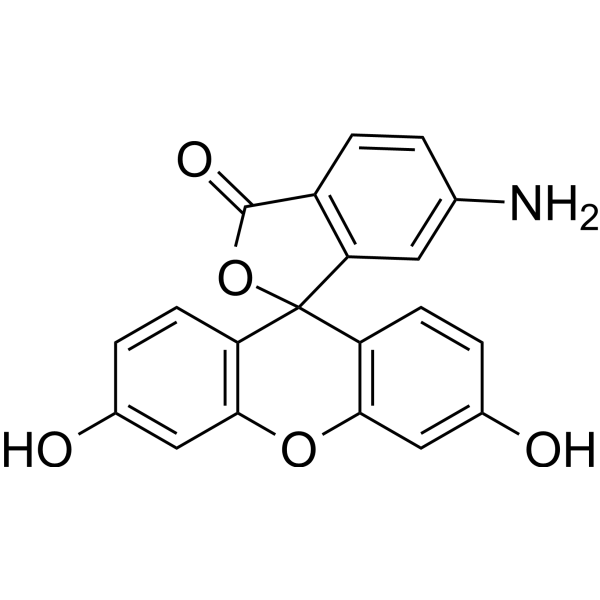
6-Aminofluorescein (6-AF) is a fluorescent labeling reagent. 6-Aminofluorescein can be used to label fullerene-based liposome nanostructures termed ‘buckysomes′ (Ex/Em = 490/515 nm) .
|
-
-
- HY-W273413
-
|
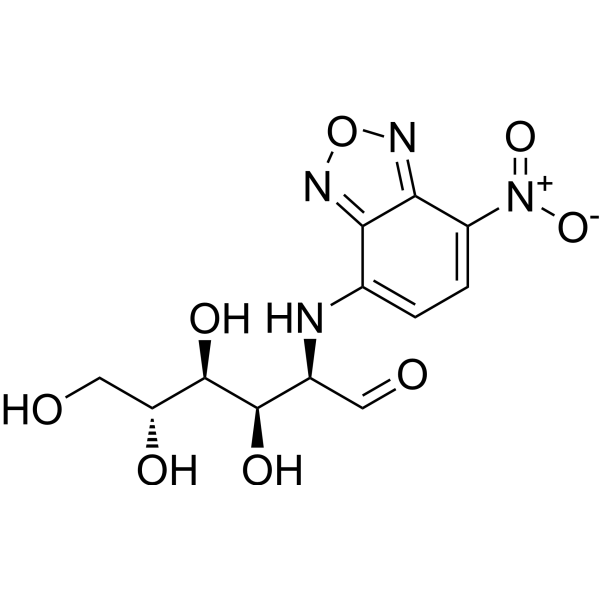
NBD-H
|
Fluorescent Dye
|
Cancer
|
|
4-Hydrazino-7-nitro-benzofurazan hydrazine adduct (NBD-H) is a fluorescent reagent used for protein labeling .
|
-
-
- HY-147168
-
|
|
Biochemical Assay Reagents
|
Others
|
|
Biocytin hydrazide is a long-chain biotin-containing hydrazide, serving as a biotin-derived active coupling reagent, selective labeling agent and biotinylating reagent. Biocytin hydrazide targets aldehyde, carboxyl, amino and guanidino groups to biotinylate glycoconjugates, K99 lectin, peptides and proteins through its hydrazide moiety, and achieves nonradioactive detection of sialic acid- and galactose-containing glycoconjugates via the avidin–biotin system .
|
-
-
- HY-D1635
-
|
Biotin-XX-SSE
|
Fluorescent Dye
Exosomes
|
Infection
|
|
Sulfo-NHS-LC-LC-Biotin (Biotin-XX-SSE), a biotin reagent, is used to label the proteins exposed to the external leaflet of intact exosomes and contains a larger spacer arm between the biotin and amine reactive linker. The size of this linker helps to overcome steric hindrance and increases labeling efficiency at the crowded exosome surface .
|
-
-
- HY-W878943
-
-
-
- HY-Y0262S1
-
|
|
Isotope-Labeled Compounds
Endogenous Metabolite
|
Others
|
|
Oxalic acid- 13C2 is the deuterium labeled Oxalic acid, 99% (HY-Y0262) . Oxalic Acid is a strong dicarboxylic acid occurring in many plants and vegetables and can be used as an analytical reagent and general reducing agent .
|
-
-
- HY-W014815
-
|
2-Bromopyridine-5-boronic acid
|
Biochemical Assay Reagents
|
Others
|
|
BPBA (2-Bromopyridine-5-boronic acid) is a new labeling reagent. BPBA is used to derivatize brassinosteroids (BRs). BPBA is used for biomarker analysis of exposure to environmental pollutants such as styrene and 1,3-butadiene .
|
-
-
- HY-W011412
-
|
|
Biochemical Assay Reagents
|
Others
|
|
TSTU is used as a coupling reagent in peptide chemistry. TSTU can convert carboxylic acids into the corresponding N-hydroxysuccinimidyl (NHS) esters. TSTU can be applied to the attachment of labels to peptides, proteins, etc .
|
-
-
- HY-D2466
-
|
|
Fluorescent Dye
|
Cardiovascular Disease
|
|
Cy3 Dextran (MW 70000) is a fluorescent labeling reagent that conjugates the Cy3 (HY-D0822) fluorescent dye with Dextran (HY-112624). The Cy3 fluorophore is commonly used in applications such as immunolabeling, nucleic acid labeling, fluorescence microscopy, and flow cytometry. The maximum emission wavelength of Cy3 is approximately 562-570 nm. Dextran inhibits platelet aggregation and coagulation factors, and serves as a plasma volume expander .
|
-
-
- HY-W012166
-
|
NHS-Bromoacetate
|
Biochemical Assay Reagents
|
Infection
|
|
N-Succinimidyl bromoacetate (NHS-Bromoacetate) is a heterobifunctional crosslinking reagent, mainly used to modify the ɛ-amino group of lysine side chains. By covalently linking its bromoacetyl moiety to the ɛ-amino group of lysine in peptidomimetics, N-Succinimidyl bromoacetate enables their conjugation with thiol-modified nanoparticles via thioether bonds. N-Succinimidyl bromoacetate also performs bromoacetylation modification on carrier proteins, which then forms stable thioether bonds with the thiol groups of cysteine in peptides, thus efficiently preparing soluble peptide-protein conjugates with high substitution ratios. N-Succinimidyl bromoacetate can be used to prepare activated Sepharose derivatives for affinity chromatography, protein affinity labeling reagents, and peptide-protein immunogen conjugates with non-immunogenic linkages. N-Succinimidyl bromoacetate is applicable to studies related to HIV-1 infection and glioblastoma multiforme .
|
-
-
- HY-W778336
-
-
-
- HY-126172
-
|
|
Fluorescent Dye
|
Cancer
|
|
9-Anthryldiazomethane is a fluorescent labeling reagent, which can be used for detecting fatty acids and derivatives .
|
-
-
- HY-DY1063
-
|
|
Fluorescent Dye
|
Others
|
Cy5-SE (Cy5 NHS Ester) (solution) is a reactive dye for the labeling of amino-groups in peptides, proteins, and oligonucleotides. This dye requires small amount of organic co-solvent (such as DMF or DMSO) to be used in labeling reaction. This reagent is ideal for very cost-efficient labeling of soluble proteins, as well as all kinds of peptides and oligonucleotides. This reagent also works well in organic solvents for small molecule labeling.
Excitation (nm) :649, Emission (nm) : 670. Solvent and concentration: DMSO: 10 mM
|
-
-
- HY-W614753
-
|
|
Biochemical Assay Reagents
|
Others
|
|
Biotin-naphthylamine is a biotinylated biochemical assay reagent, which is a substrate for ascorbate peroxidase 2 (APEX2). Biotin-naphthylamine is utilized as a novel probe for labeling DNA and RNA .
|
-
-
- HY-Y0262S
-
|
|
Endogenous Metabolite
|
Metabolic Disease
|
|
Oxalic Acid-d2 is the deuterium labeled Oxalic Acid. Oxalic Acid is a strong dicarboxylic acid occurring in many plants and vegetables and can be used as an analytical reagent and general reducing agent.
|
-
-
- HY-D2245
-
|
|
Fluorescent Dye
|
Others
|
|
Cy5.5 phosphoramidite, a cyanine derivative, is a fluorescent labeling reagent for preparing fluorescence-labeled oligonucleotides .
|
-
-
- HY-76981
-
|
|
Others
|
Others
|
|
5-hydroxy-1-tetralone can be used as a fluorescent labeling reagent for the determination of glycosphingolipid from biological samples .
|
-
-
- HY-W190984
-
|
|
Biochemical Assay Reagents
|
Others
|
|
Desthiobiotin-PEG4-alkyne is a biotinylated biochemical reagent, which can be utilized in conjunction with click chemistry for the selective labeling and enrichment of certain tRNAs .
|
-
-
- HY-148947
-
|
|
Fluorescent Dye
Phosphoramidites
|
Others
|
|
Cy5 Phosphoramidite is a fluorescent labeling reagent . Cy5 Phosphoramidite serves as a fluorescent tag for 3' terminal labeling of single-stranded DNA, enabling fluorescence-based nucleic acid detection, monitoring, quantification, and in vitro study .
|
-
-
- HY-34449S
-
|
|
Isotope-Labeled Compounds
|
Others
|
|
Methylboronic acid-d3 is the deuterium labeled Methylboronic acid (HY-34449). Methylboronic acid is a biochemical reagent that can be used as a biological material or organic compound for life science related research.
|
-
-
- HY-W012908S
-
|
|
Isotope-Labeled Compounds
|
Others
|
|
DL-Proline-d7 is the deuterium labeled DL-Proline (HY-W012908). H-DL-Pro-OH is a biochemical reagent that can be used as a biological material or organic compound for life science related research.
|
-
-
- HY-W415798
-
|
|
Endogenous Metabolite
|
Others
|
|
Ac4GalNAlk is a weakly alkyne-labeled reagent for metabolic oligosaccharide engineering (MOE) that can be used to detect protein glycosylation. MOE reagents can be activated by cellular biosynthetic machinery into nucleotide sugars, which can be further traced through the introduction of glycoproteins in bioorthogonal chemistry. Ac4GalNAlk promotes nucleotide-sugar biosynthesis and increases bioorthogonal cell surface markers .
|
-
-
- HY-151769
-
|
|
ADC Linker
|
Others
|
|
TCO-PEG2-Sulfo-NHS ester-EDC Urea is a click chemistry reagent containing an azide group. TCO-PEG2-Sulfo-NHS ester is a PEG linker containing a TCO moiety and a sulfo-NHS ester moiety. The sulfo group makes this molecule soluble in waqueous buffer. This reagent can be used to label antibodies, proteins and other primary amine-containing macromolecules with TCO moiety. Reagent grade, for research use only . TCO-PEG2-Sulfo-NHS ester-EDC Urea is a click chemistry reagent, it contains a TCO group that can undergo an inverse electron demand Diels-Alder reaction (iEDDA) with molecules containing Tetrazine groups.
|
-
-
- HY-W615327
-
|
|
Biochemical Assay Reagents
|
Others
|
|
Bis-sulfone NHS Ester is a bis-alkylating labeling reagent that is selective for the cysteine sulfur atoms from a native disulfide. These reagents undergo bis-alkylation to conjugate both thiols derived from the two cysteine residues of a reduced native disulfide bond such as the interchain disulfide bonds of an antibody. The reaction results in covalent rebridging of the disulfide bond via a three carbon bridge leaving the protein structurally intact.
|
-
-
- HY-D1352A
-
|
|
Fluorescent Dye
|
Others
|
|
Sulfo-Cyanine7 NHS ester (TEA) is an amine-reactive succinimide ester. Sulfo-Cyanine7 NHS ester (TEA) reagent allows to prepare sulfo-Cyanine7-labeled biomolecules, such as proteins, with ease. Dye labeled molecules can be subsequently used for various research and agent design related experiments.
|
-
-
- HY-151822
-
|
|
ADC Linker
|
Others
|
|
Hydroxy-PEG3-DBCO is a click chemistry reagent containing an azide group. Hydroxy-PEG3-DBCO is a PEG linker containing a DBCO moiety and a terminal primary hydroxyl group. The hydroxyl can react with a variety of functional groups and the hydrophilic PEG spacer arm can provide better solubility to labeled molecules. DBCO is commonly used for copper-free Click Chemistry reactions. Reagent grade, for research use only .
|
-
-
- HY-W097777
-
|
4,4'-Dimethoxybenzoin; 4,4′-DMB
|
Fluorescent Dye
|
Others
|
|
Anisoin (4,4'-Dimethoxybenzoin) is a pre-chromatographic fluorogenic labelling reagent for (liquid chromatography) analysis of guanidino compounds (Ex/Em = 325/435 nm) .
|
-
-
- HY-D1409
-
|
DMTr-4'-F-uridine-CED-TBDMS phosphoramidite
|
DNA Stain
Phosphoramidites
|
Cardiovascular Disease
|
|
DMTr-4'-F-U-CED-TBDMS phosphoramidite (DMTr-4'-F-uridine-CED-TBDMS phosphoramidite), a dye reagent for oligonucleotide labeling, can be used for the research of applications in RNA therapeutics, RNA aptamers, and ribozymes for elucidating RNA structure. DMTr-4'-F-U-CED-TBDMS phosphoramidite represents a probe with wide utility for elucidation of RNA structure .
|
-
-
- HY-35556
-
-
-
- HY-171491
-
|
|
Fluorescent Dye
|
Others
|
|
NSP-DMAE-HEG-Giu-NHS (Fig.18) is an activated labeling reagent containing acridine ester, and it is a key component of Cyclosporine A (HY-B0579) tracers .
|
-
-
- HY-D0045
-
|
5-ROX, SE
|
Fluorescent Dye
|
Others
|
|
5-Carboxy-X-rhodamin N-succinimidyl ester (5-ROX, SE) is a labeling reagent. 5-Carboxy-X-rhodamin N-succinimidyl ester can be used in the preparation of charge-modified dye-labeled Dideoxynucleotide Triphosphates (ddNTP) to "direct-load" DNA sequencing .
|
-
-
- HY-172285
-
|
|
Fluorescent Dye
|
Others
|
|
Cy3 hydrazide is a cyanine dye linker containing hydrazide, which can be used to label aldehydes and ketones. This reagent allows to label various carbonyl-containing molecules such as antibodies and other glycoproteins after periodate oxidation, proteins after oxidative stress or deamination, or reducing saccarides. Cyanine3 is compatible with a number of fluorescent instruments.
|
-
-
- HY-D1405
-
-
-
- HY-130916
-
|
5(6)-CarboxyrhodaMine 6G, succinimidyl ester
|
Biochemical Assay Reagents
|
Others
|
|
5(6)-CR6G,SE (5(6)-CarboxyrhodaMine 6G) is a trace fluorescent labeling reagent for fluorescence imaging of protein crystallization. 5(6)-CR6G,SE can efficiently bind to proteins to produce characteristic fluorescence under specific excitation conditions. 5(6)-CR6G,SE shows a peak absorption wavelength of approximately 525 nm and exhibits a peak fluorescence emission wavelength of around 550 nm when excited by a 530 nm green LED .
|
-
-
- HY-D1410
-
|
DMTr-4'-F-5-Methyluridine-CED phosphoramidite
|
Fluorescent Dye
Phosphoramidites
|
Others
|
|
DMTr-4'-F-5-Me-U-CED phosphoramidite (DMTr-4'-F-5-Methyluridine-CED phosphoramidite), a dye reagent for oligonucleotide labeling, acts as efficient as the incorporation of native deoxyribonucleoside phosphoramidites. DMTr-4'-F-5-Me-U-CED phosphoramidite is a building block .
|
-
-
- HY-D1411
-
|
DMTr-4'-CF3-5-Methyluridine-CED phosphoramidite
|
DNA Stain
Phosphoramidites
|
Others
|
|
DMTr-4'-CF3-5-Me-U-CED phosphoramidite (DMTr-4'-CF3-5-Methyluridine-CED phosphoramidite), the modified oligodeoxynucleotide (ODN), is a dye reagent for oligonucleotide labeling, can be used for the research of applications in RNA research .
|
-
-
- HY-D1408
-
|
DMTr-4'-Methyluridine-CED-TBDMS phosphoramidite
|
DNA Stain
Phosphoramidites
|
Cardiovascular Disease
|
|
DMTr-4'-Me-U-CED-TBDMS phosphoramidite (DMTr-4'-Methyluridine-CED-TBDMS phosphoramidite), a dye reagent for oligonucleotide labeling, can be used for the research of applications in RNA therapeutics, RNA aptamers, and ribozymes for elucidating RNA structure. DMTr-4'-Me-U-CED-TBDMS phosphoramidite represents a probe with wide utility for elucidation of RNA structure .
|
-
-
- HY-137360
-
|
|
Biochemical Assay Reagents
|
Others
|
|
Phosphine-biotin is a labeling reagent that selectively reacts with azido groups on modified proteins through the Staudinger ligation reaction .
|
-
-
- HY-D0071
-
|
|
Fluorescent Dye
|
Others
|
|
N-4-(5,6-Dimethoxy-N-phthalimidinyl)phenylmaleimide is a fluorescence reagent for labeling thiol .
|
-
- HY-141888S
-
-
- HY-D1618
-
|
|
Fluorescent Dye
|
Others
|
|
Cyanine3 maleimide tetrafluoroborate is a specific labeling reagent for sulfhydryl groups with the λex of 550 nm and λem of 580 nm. Cyanine3 maleimide tetrafluoroborate can be used for protein and peptide labeling .
|
-
- HY-130893A
-
|
|
Biochemical Assay Reagents
|
Others
|
|
Biotin-EDA TFA is a nucleophilic biotinylation reagent used for the conjugation of various substrates and identification and quantification using biotin-conjugated fluorescent labels .
|
-
- HY-W654082
-
-
- HY-W724298
-
-
- HY-W777072
-
|
|
HIV
|
Others
|
|
4-isocyanato TEMPO is a spin labeling reagent used to label the 2’-position in RNA. It has been used to study HIV-1 transactivation response RNA and hammerhead ribosome dynamics by electron paramagnetic resonance (EPR) spectroscopy.
|
-
- HY-W743351
-
-
- HY-W800840
-
|
|
Biochemical Assay Reagents
|
Others
|
|
Alkyne Sphinganine a metabolic labeling reagent that contains a terminal alkyne moiety that allows for the subsequent tagging of protein?lipid complexes by click chemistry. The terminal alkyne group can be used in a highly specific linking reaction with azide-containing reagents, known as ‘click chemistry’, in the presence of a copper (Cu)-containing catalyst allowing for the visualization and proteomic profiling of protein?sphingolipid complexes in living cells.
|
-
- HY-W800720
-
|
|
Biochemical Assay Reagents
|
Others
|
|
(S)-2-amino-4-(2-(pyridin-2-yl)disulfanyl)butanoic acid is a small molecule reagent with a 2-thiopyridine linked to a short amino acid. SPDP is a thiol-specific labeling reagent, commonly used in reversibly binding cysteine residues on proteins. The disulfide bond it forms with the cysteine is selectively cleaved in the reducing environment of the cell cytoplasm.
|
-
- HY-D1352
-
|
|
Fluorescent Dye
|
Others
|
|
Sulfo-Cyanine7 NHS ester potassium is an amine-reactive succinimide ester. Sulfo-Cyanine7 NHS ester reagent allows to prepare sulfo-Cyanine7-labeled biomolecules, such as proteins, with ease. Dye labeled molecules can be subsequently used for various research and agent design related experiments.
|
-
- HY-B0872S
-
-
- HY-W751145
-
-
- HY-W747332
-
-
- HY-W716366
-
-
- HY-W770721
-
-
- HY-157919
-
|
N-6-(Biotinylamino)hexanoyl-N'-[2-(N-maleimido)ethyl]piperazine, hydrochloride
|
Biochemical Assay Reagents
|
Others
|
|
Biotin-PEAC5-maleimide hydrochloride is a biochemical assay reagent, and can be used in biotin-PEAC5-maleimide (BPM)-labeling assay to assess modification of protein thiols by electrophiles .
|
-
- HY-112295
-
|
|
Biochemical Assay Reagents
|
Infection
|
|
AzKTB is a capture reagent which bears a short trypsin-cleavable peptide sequence between the azide module and the TAMRA/PEG-biotin labels. AzKTB is a click chemistry reagent, it contains an Azide group and can undergo copper-catalyzed azide-alkyne cycloaddition reaction (CuAAc) with molecules containing Alkyne groups. It can also undergo strain-promoted alkyne-azide cycloaddition (SPAAC) reactions with molecules containing DBCO or BCN groups.
|
-
- HY-Y0339S1
-
|
|
Isotope-Labeled Compounds
|
Others
|
|
Diphenyl ether-d4 is the deuterium labeled Diphenyl ether (HY-Y0339). Oxydibenzene is a biochemical reagent that can be used as a biological material or organic compound for life science related research .
|
-
- HY-143999S
-
|
|
Isotope-Labeled Compounds
|
Others
|
|
Norgestimate-d3 is the deuterium labeled Norgestimate . Norgestimate is a click chemistry reagent, it contains an Alkyne group and can undergo copper-catalyzed azide-alkyne cycloaddition (CuAAc) with molecules containing Azide groups.
|
-
- HY-W741285
-
-
- HY-135636
-
|
|
Fluorescent Dye
|
Others
|
|
Ponatinib Acid, an analogue of Ponatinib, is usually used as a labeled chemical or fluorescent probe. Ponatinib Acid is a click chemistry reagent, it contains an Alkyne group and can undergo copper-catalyzed azide-alkyne cycloaddition (CuAAc) with molecules containing Azide groups.
|
-
- HY-W701599
-
|
Oxiran-2-ylmethyl palmitate-d31
|
Isotope-Labeled Compounds
Biochemical Assay Reagents
|
Others
|
|
Oxiran-2-ylmethyl hexadecanoate-d31 is deuterium labeled Glycidyl palmitate. Glycidyl Palmitate is a biochemical reagent that can be used as a biological material or organic compound for life science related research .
|
-
- HY-W145492S2
-
|
|
Isotope-Labeled Compounds
|
Others
|
|
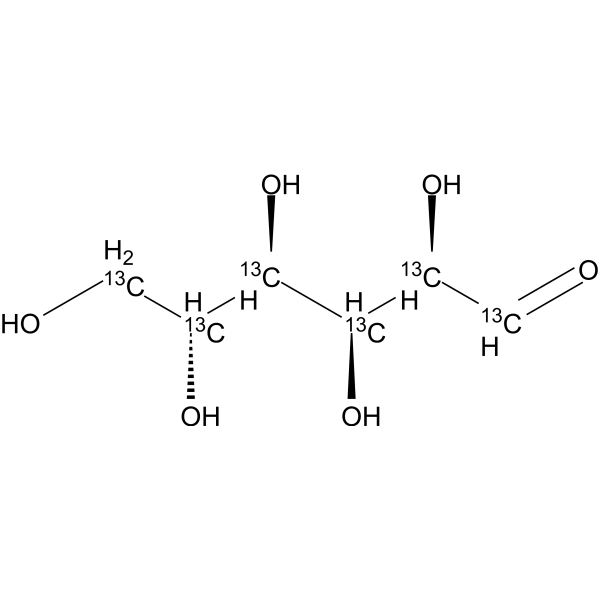
D-(+)-Talose- 13C is the 13C labeled D-(+)-Talose (HY-W145492) . D-(+)-Talose is a biochemical reagent that can be used as a biological material or organic compound for life science related research.
|
-
- HY-W004059S1
-
|
Benzhydrol-d10
|
Isotope-Labeled Compounds
Biochemical Assay Reagents
|
Others
|
|
Diphenylmethanol-d10 (Benzhydrol-d10) is the deuterium labeled Benzhydrol (HY-W004059). Diphenylmethanol is a biochemical reagent that can be used as a biological material or organic compound for life science related research.
|
-
- HY-Y1067S1
-
|
Bisbenzylamine-d4
|
Isotope-Labeled Compounds
Biochemical Assay Reagents
|
Others
|
|
Dibenzylamine-d4 (Bisbenzylamine-d4) is the deuterium labeled Dibenzylamine (HY-Y1067). Dibenzylamine is a biochemical reagent that can be used as a biological material or organic compound for life science related research.
|
-
- HY-134127S1
-
|
Methylhexacosanoat-d4
|
Isotope-Labeled Compounds
Biochemical Assay Reagents
|
Others
|
|
Methyl hexacosanoate-d4 (Methylhexacosanoat-d4) is deuterium labeled Methyl hexacosanoate. Methyl hexacosanoate is a biochemical reagent that can be used as a biological material or organic compound for life science related research .
|
-
- HY-33798S
-
-
- HY-W064054
-
|
Carboxycyclopropane-d5; Cyclopropionic acid-d5
|
Isotope-Labeled Compounds
Biochemical Assay Reagents
|
Others
|
|
Cyclopropylcarboxylic acid-d5 (Carboxycyclopropane-d5) is a deuterium labeled Cyclopropylcarboxylic acid (HY-Y0001). Cyclopropylcarboxylic acid is a biochemical reagent that can be used as a biological material or organic compound for life science related research.
|
-
- HY-W720946
-
-
- HY-W190952
-
|
|
Biochemical Assay Reagents
|
Others
|
|
Bis-sulfone-PEG4-NHS Ester is a bis-alkylating labeling reagent that is selective for the cysteine sulfur atoms from a native disulfide. These reagents undergo bis-alkylation to conjugate both thiols derived from the two cysteine residues of a reduced native disulfide bond such as the interchain disulfide bonds of an antibody. The reaction results in covalent rebridging of the disulfide bond via a three carbon bridge leaving the protein structurally intact. The hydrophilic PEG spacer increases solubility in aqueous media.
|
-
- HY-176999
-
-
- HY-185225
-
|
|
Drug Derivative
|
Others
|
|
cis-Vaccenic acid NHS ester is an N-hydroxysuccinimide (NHS)-activated ester derivative of cis-vaccenic acid (HY-113427A) (C18:1 n-7), which is commonly used as a fatty acid labeling reagent or covalent modification reagent .
|
-
- HY-W591335
-
|
Biotin-PEG5-alcohol
|
Biochemical Assay Reagents
|
Others
|
|
Biotin-PEG5-OH (Biotin-PEG5-alcohol) is a biotinylation reagent containing a primary hydroxyl that can be derivatized. The PEG spacer provides greater solubility to labeled molecules compared to reagents having only hydrocarbon spacers.
|
-
- HY-176999S
-
-
- HY-W723884
-
-
- HY-NP045
-
|
|
Biochemical Assay Reagents
|
Others
|
|
Protein A-RBITC is a biochemical reagent conjugated to fluorescein PE. Protein A-RBITC can be used to label or detect specific antigens, molecules or cellular structures .
|
-
- HY-W040203S
-
|
|
Isotope-Labeled Compounds
|
Others
|
|
Decyl β-D-maltopyranoside-d21 is the deuterium labeled Decyl β-D-maltopyranoside. Decyl β-D-maltopyranoside is a biochemical reagent .
|
-
- HY-178588
-
|
|
Nucleoside Antimetabolite/Analog
|
Cancer
|
|
Fluorescein-12-dUTP is a fluorescent labeling and detection reagent that can be used for nucleic acid synthesis. Fluorescein-12-dUTP can be used to synthesize labeled DNA probes for in situ hybridization, microarray or western blot analysis .
|
-
- HY-W011957S
-
-
- HY-W752632
-
|
|
Isotope-Labeled Compounds
Biochemical Assay Reagents
|
Others
|
|
Isopropylpiperazine-d7 is the deuterium labeled Isopropylpiperazine (HY-W012744). 1-Isopropylpiperazine is a biochemical reagent that can be used as a biological material or organic compound for life science related research.
|
-
- HY-I1029S
-
-
- HY-W005458S
-
-
- HY-I1029S1
-
-
- HY-W700770
-
|
Dodecyltrimethylammonium-d3 chloride
|
Isotope-Labeled Compounds
Biochemical Assay Reagents
|
Others
|
|
DTAC-d3 (Dodecyltrimethylammonium-d3 chloride) is the deuterium labeled DTAC (HY-W096983). DTAC is a biochemical reagent that can be used as a biological material or organic compound for life science related research.
|
-
- HY-I1029S2
-
-
- HY-D3321
-
|
|
Fluorescent Dye
|
Others
|
|
Streptavidin, R-Phycoerythrin conjugate (SAPE) is a streptavidin-labeled phycoerythrin. Streptavidin, R-Phycoerythrin conjugate (SAPE) can be used in conjunction with biotinylated reagents in anti-Biotin/biotin-labeled systems, suitable for flow cytometry detection, microarray analysis, and microplate detection (Ex/Em = 450-500 nm/575 nm).
|
-
- HY-178588A
-
|
|
Nucleoside Antimetabolite/Analog
|
Others
|
|
Fluorescein-12-dUTP (sodium) solution (1 mM) is a fluorescent labeling and detection reagent that can be used for nucleic acid synthesis. Fluorescein-12-dUTP (sodium) solution (1 mM) can be used to synthesize labeled DNA probes for in situ hybridization, microarray or western blot analysis .
|
-
- HY-140531A
-
|
|
Biochemical Assay Reagents
|
Others
|
|
N-(Biotin-PEG4)-N-bis(PEG4-acid) hydrochloride is a branched biotinylation reagent for labeling. The carboxylic acid groups can react with primary amines in the presence of EDC and HATU to form stable amide bonds.
|
-
- HY-W742281
-
-
- HY-W800627
-
|
|
Biochemical Assay Reagents
|
Others
|
|
Bis-sulfone-PEG8-NHS Ester is a bis-alkylating labeling reagent that is selective for the cysteine sulfur atoms from a native disulfide. These reagents undergo bis-alkylation to conjugate both thiols derived from the two cysteine residues of a reduced native disulfide bond such as the interchain disulfide bonds of an antibody. The reaction results in covalent rebridging of the disulfide bond via a three carbon bridge leaving the protein structurally intact. The hydrophilic PEG spacer increases solubility in aqueous media.
|
-
- HY-NP058
-
|
OVA-AF594
|
Biochemical Assay Reagents
|
Others
|
|
Ovalbumin-AF594 is a biochemical reagent conjugated to fluorescein AF594 (Ex=590 nm; Em=617 nm). Ovalbumin-AF594 can be used to label or detect specific antigens, molecules or cellular structures .
|
-
- HY-151117S
-
|
|
Isotope-Labeled Compounds
|
Others
|
|
Methylacetylene-d4 is the deuterium labeled Methylacetylene . Methylacetylene-d4 is a click chemistry reagent, it contains an Alkyne group and can undergo copper-catalyzed azide-alkyne cycloaddition (CuAAc) with molecules containing Azide groups.
|
-
- HY-W698891
-
-
- HY-W726311
-
-
- HY-W706725
-
|
|
Isotope-Labeled Compounds
Biochemical Assay Reagents
|
Others
|
|
2-Hydroxybenzonitrile-d4 is the deuterium labeled 2-Hydroxybenzonitrile (HY-W012869). 2-Hydroxybenzonitrile is a biochemical reagent that can be used as a biological material or organic compound for life science related research.
|
-
- HY-151122S
-
|
|
Isotope-Labeled Compounds
|
Others
|
|
Methylacetylene-d1 is the deuterium labeled Methylacetylene . Methylacetylene-d1 is a click chemistry reagent, it contains an Alkyne group and can undergo copper-catalyzed azide-alkyne cycloaddition (CuAAc) with molecules containing Azide groups.
|
-
- HY-NP041
-
|
BSA-PE
|
Biochemical Assay Reagents
|
Others
|
|
Bovine Serum Albumin-PE (BSA-PE) is a biochemical reagent conjugated to fluorescein PE (Ex=565 nm; Em=578 nm). Bovine Serum Albumin-PE can be used to label or detect specific antigens, molecules or cellular structures .
|
-
- HY-135639
-
|
|
Fluorescent Dye
|
Others
|
|
Alkyne-probe 1 is usually used as a Alkyne-labeled chemical or fluorescent probe. Alkyne-probe 1 is a click chemistry reagent, it contains an Alkyne group and can undergo copper-catalyzed azide-alkyne cycloaddition (CuAAc) with molecules containing Azide groups.
|
-
- HY-W002570S
-
|
|
Isotope-Labeled Compounds
|
Others
|
|
2-Naphthylboronic acid-d7 is the deuterium labeled 2-Naphthylboronic acid (HY-W002570). 2-Naphthylboronic acid is a biochemical reagent that can be used as a biological material or organic compound for life science related research.
|
-
- HY-W017086S2
-
-
- HY-130412
-
|
|
Fluorescent Dye
|
Others
|
|
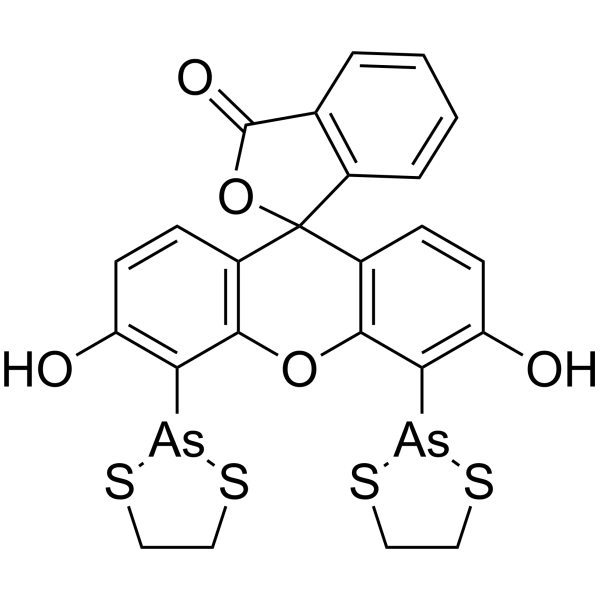
FlAsH-EDT2 is a protein labeling reagent. FlAsH-EDT2 binds to Cys4 with high affinity and emits fluorescence. FlAsH-EDT2 can cross the cell membrane and enter the interior of the cell. FlAsH-EDT2 can only be used for labeling proteins with high concentration .
|
-
- HY-D3321A
-
|
|
Fluorescent Dye
|
Others
|
|
High concentration Streptavidin, R-Phycoerythrin conjugate (SAPE) is a streptavidin-labeled phycoerythrin. High concentration Streptavidin, R-Phycoerythrin conjugate (SAPE) can be used in conjunction with biotinylated reagents in anti-Biotin/biotin-labeled systems, suitable for flow cytometry detection, microarray analysis, and microplate detection (Ex/Em = 450-500 nm/575 nm).
|
-
- HY-10572BS1
-
|
|
Isotope-Labeled Compounds
|
Others
|
|
(Rac)-Efavirenz-d5 is deuterium labeled (Rac)-Efavirenz. (Rac)-Efavirenz-d5 is a click chemistry reagent, it contains an Alkyne group and can undergo copper-catalyzed azide-alkyne cycloaddition (CuAAc) with molecules containing Azide groups.
|
-
- HY-W738417
-
|
|
Isotope-Labeled Compounds
Biochemical Assay Reagents
|
Others
|
|
Phthalaldehyde-d6 is the deuterium labeled Phthalaldehyde (HY-W012669). Phthalaldehyde is a biochemical assay reagent, which modifies the amino acid and measure the derivative through HPLC. Phthalaldehyde forms a fluorescent compound with α-amino group .
|
-
- HY-W766293
-
-
- HY-W190940
-
|
|
Biochemical Assay Reagents
|
Others
|
|
Biotin-PEG4-S-S-acid is a cleavable reagent which can efficiently introduce a biotin moiety to amine-containing biomolecules. The disulfide bond in this linker can be cleaved using reducing agents such as DTT, BME and TCEP to remove the biotin label.
|
-
- HY-143810S
-
|
RU 42633-d3
|
Isotope-Labeled Compounds
|
Others
|
|
N-Desmethyl Mifepristone-d3 is the deuterium labeled N-Desmethyl Mifepristone . N-Desmethyl Mifepristone is a click chemistry reagent, it contains an Alkyne group and can undergo copper-catalyzed azide-alkyne cycloaddition (CuAAc) with molecules containing Azide groups.
|
-
- HY-151656
-
|
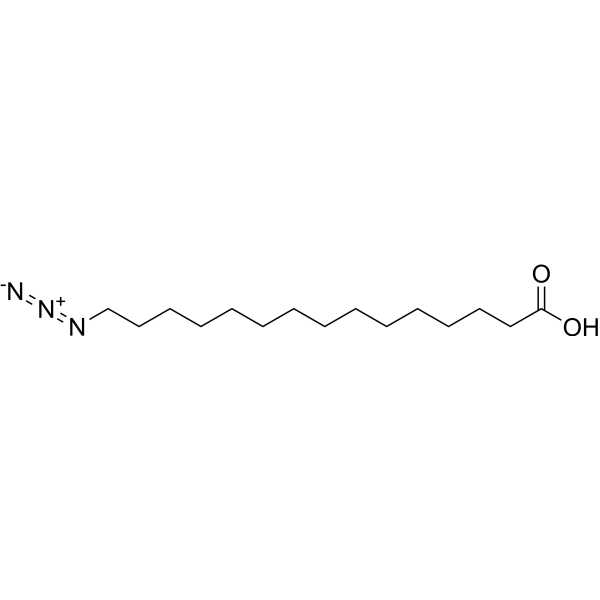
Azido Palmitic Acid
|
ADC Linker
|
Others
|
|
15-Azido-pentadecanoic acid is a click chemistry reagent containing an azide group. Azido Palmitic Acid can be used to identify and characterize post-translationally palmitylated proteins with using a simple and robust two-step labeling and detection technique . 15-Azido-pentadecanoic acid is a click chemistry reagent, it contains an Azide group and can undergo copper-catalyzed azide-alkyne cycloaddition reaction (CuAAc) with molecules containing Alkyne groups. It can also undergo strain-promoted alkyne-azide cycloaddition (SPAAC) reactions with molecules containing DBCO or BCN groups.
|
-
- HY-181228
-
|
|
Biochemical Assay Reagents
|
Others
|
|
DBCO-PEG10-Biotin is an azadibenzocyclooctyne-biotin derivative containing a biotin group and 10 PEGs. DBCO-PEG10-Biotin is a versatile biotinylation reagent used for the introduction of a biotin moiety to azide-labeled biomolecules via copper-free strain-promoted alkyne-azide click chemistry (SPAAC) reaction. DBCO-PEG10-Biotin is a click chemistry reagent, it contains a DBCO group that can undergo strain-promoted alkyne-azide cycloaddition (SPAAC) with molecules containing Azide groups .
|
-
- HY-130809
-
|
|
Biochemical Assay Reagents
|
Cancer
|
|
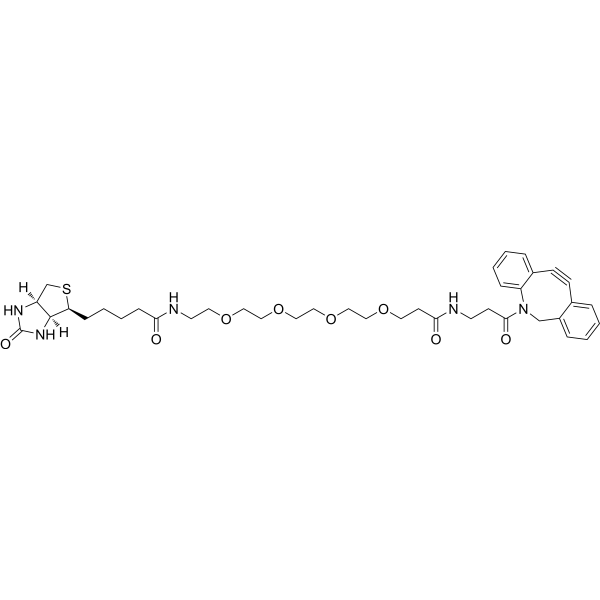
DBCO-PEG4-Biotin is an azadibenzocyclooctyne-biotin derivative containing a biotin group and 4 PEGs. DBCO-PEG4-Biotin is a versatile biotinylation reagent used for the introduction of a biotin moiety to azide-labeled biomolecules via copper-free strain-promoted alkyne-azide click chemistry (SPAAC) reaction . DBCO-PEG4-Biotin is a click chemistry reagent, it contains a DBCO group that can undergo strain-promoted alkyne-azide cycloaddition (SPAAC) with molecules containing Azide groups.
|
-
- HY-W752885
-
|
|
Isotope-Labeled Compounds
Biochemical Assay Reagents
|
Others
|
|
Decyltrimethylammonium-d30 bromide is the deuterium labeled Decyltrimethylammonium bromide (HY-W008630). N,N,N-Trimethyldecan-1-aminium bromide is a biochemical reagent that can be used as a biological material or organic compound for life science related research.
|
-
- HY-W768637
-
-
- HY-147097A
-
|
|
Bacterial
|
Infection
|
|
EDA-DA is a N-terminally tagged dipeptide probe, can be used to label Peptidoglycan (PG) of bacteria. EDA-DA is a click chemistry reagent, it contains an Alkyne group and can undergo copper-catalyzed azide-alkyne cycloaddition (CuAAc) with molecules containing Azide groups .
|
-
- HY-W013665S2
-
|
L-α-Aminoadipic acid-d4
|
Isotope-Labeled Compounds
|
Others
|
|
(S)-2-Aminohexanedioic acid-d4 is the deuterium labeled (S)-2-Aminohexanedioic acid. (S)-2-Aminohexanedioic acid is a biochemical reagent that can be used as a biological material or organic compound for life science related research .
|
-
- HY-W017086S1
-
|
|
Isotope-Labeled Compounds
|
Others
|
|
Dibenzo[b,d]furan-d2 is the deuterium labeled Dibenzo[b,d]furan (HY-W421778). Dibenzo[b,d]furan is a biochemical reagent that can be used as a biological material or organic compound for life science related research .
|
-
- HY-41755S
-
|
o-Fluorophenol-d5
|
Isotope-Labeled Compounds
Biochemical Assay Reagents
|
Others
|
|
2-Fluorophenol-d5 (o-Fluorophenol-d5) is the deuterium labeled 2-Fluorophenol (HY-41755). 2-Fluorophenol is a biochemical reagent that can be used as a biological material or organic compound for life science related research.
|
-
- HY-134127S2
-
|
C26:0 methyl ester-d3; Ceic acid methyl ester-d3; Ceotic acid methyl ester-d3; SFE 27:0-d3
|
Isotope-Labeled Compounds
Biochemical Assay Reagents
|
Others
|
|
Hexacosanoic acid methyl ester-d3 (C26:0 methyl ester-d3) is deuterium labeled Methyl hexacosanoate. Methyl hexacosanoate is a biochemical reagent that can be used as a biological material or organic compound for life science related research .
|
-
- HY-D1052
-
|
|
Fluorescent Dye
|
Cancer
|
|
Cy7-YNE is a fluorescence labeling agent (Ex=700-770 nm,Em=790 nm). Cyanine dyes are used to label proteins, antibodies, and peptides. Cy7-YNE is a click chemistry reagent, it contains an Alkyne group and can undergo copper-catalyzed azide-alkyne cycloaddition (CuAAc) with molecules containing Azide groups.
|
-
- HY-D0059
-
|
DIB-Cl
|
Fluorescent Dye
|
Others
|
|
4-(4,5-Diphenyl-1H-imidazol-2-yl)benzoyl chloride (DIB-Cl) is a fluorescent labeling reagent. 4-(4,5-Diphenyl-1H-imidazol-2-yl)benzoyl chloride can be used for labeling amines and successfully being applied to determine activator amines by HPLC .
|
-
- HY-151759
-
|
|
Fluorescent Dye
|
Cancer
|
|
Sulfo-Cy5-TCO is a water-soluble sulfonated Cy5 fluorescent reagent containing trans-cyclooctene (TCO). Sulfo-Cy5-TCO undergoes an inverse electron demand Diels‑Alder reaction with tetrazine-labeled fixed breast cancer cells to achieve cell labeling. Sulfo-Cy5-TCO is used for fluorescent labeling and imaging of biological samples such as proteins and cells .
|
-
- HY-79491S
-
|
|
Isotope-Labeled Compounds
|
Others
|
|
(S)-2-Aminobutyramide-d3 hydrochloride is the deuterium labeled (S)-2-Aminobutyramide hydrochloride (HY-79491). (S)-2-aminobutyramide hydrochloride is a biochemical reagent that can be used as a biological material or organic compound for life science related research.
|
-
- HY-20436S
-
|
4-Bromoacetophenone-d7; p-Bromoacetophenone-d7
|
Isotope-Labeled Compounds
Biochemical Assay Reagents
|
Others
|
|
4'-Bromoacetophenone-d7 (4-Bromoacetophenone-d7) is the deuterium labeled 4’-Bromoacetophenone (HY-20436). 4-Bromoacetophenone is a biochemical reagent that can be used as a biological material or organic compound for life science related research.
|
-
- HY-D0843S
-
|
NEM-d5
|
Cathepsin
Deubiquitinase
|
Others
|
|
N-Ethylmaleimide-d5 is the deuterium labeled N-Ethylmaleimide. N-Ethylmaleimide (NEM), a reagent that alkylates free sulfhydryl groups, is a cysteine protease inhibitor . N-ethylmaleimide specific inhibits phosphate transport in mitochondria . N-Ethylmaleimide is also a deubiquitinating enzyme inhibitor .
|
-
- HY-165124S
-
|
|
Isotope-Labeled Compounds
Biochemical Assay Reagents
|
Others
|
|
1,2,3,4,6,7,8-Heptachlorodibenz- 13C12 is 13C labeled 1,2,3,4,6,7,8-Heptachlorodibenz. 1,2,3,4,6,7,8-Heptachlorodibenz is a biochemical reagent.
|
-
- HY-W250735
-
|
|
Biochemical Assay Reagents
|
Others
|
|
NHS-PEG4-biotinidase resistant biotin is a biotinylation reagent with a terminal NHS ester. The hydrophilic PEG spacer increases solubility in aqueous media. The NHS ester can be used to label the primary amines (-NH2) of proteins, amine-modified oligonucleotides, and other amine-containing molecules.
|
-
- HY-W700956
-
|
|
Isotope-Labeled Compounds
Biochemical Assay Reagents
|
Others
|
|
Pyridine-2,5-dicarboxylic-d3 acid is the deuterium labeled 2,5-Pyridinedicarboxylic acid (HY-W012523). 2,5-Pyridinedicarboxylic acid is a biochemical reagent that can be used as a biological material or organic compound for life science related research.
|
-
- HY-W740746
-
|
|
Isotope-Labeled Compounds
Biochemical Assay Reagents
|
Others
|
|
1-(2-Hydroxyethyl)piperazine-d4 is the deuterium labeled 1-(2-Hydroxyethyl)piperazine (HY-41939). 1-(2-Hydroxyethyl)piperazine is a biochemical reagent that can be used as a biological material or organic compound for life science related research.
|
-
- HY-Y0121S
-
|
|
Isotope-Labeled Compounds
|
Others
|
|
Ethyl cinnamate-d5 is the deuterium labeled Ethyl cinnamate . Ethyl cinnamate is a fragrance ingredient used in many fragrance compounds. Ethyl cinnamate is a food flavor and additive for cosmetic products. Ethyl cinnamate is also an excellent clearing reagent for mammalian tissues .
|
-
- HY-D3346
-
|
|
Fluorescent Dye
|
Others
|
|
Dusquench1 NHS ester is an amino-reactive fluorescent quencher (it does not emit light and has no emission wavelength, Ex = 480-580 nM), specially designed for labeling proteins, oligonucleotides and other biopolymers containing primary amines. It is a core reagent in the fields of qPCR probes, FRET detection and molecular beacons.
|
-
- HY-173569
-
|
|
Biochemical Assay Reagents
|
Others
|
|
DBCO-propargyl-PEG5-TFP ester is an amine-reactive labeling reagent. DBCO-propargyl-PEG5-TFP ester contains a DBCO group, which can undergo a strain-promoted alkyne-azide cycloaddition (SPAAC) reaction with molecules containing an azide group [1] .
|
-
- HY-165075S
-
-
- HY-150544S
-
|
(-)-N-Desmethylselegiline-d5 hydrochloride
|
Isotope-Labeled Compounds
|
Others
|
|
N-Desmethyl Selegiline-dd5 hydrochloride is the deuterium labeled N-Desmethyl Selegiline hydrochloride . N-Desmethyl Selegiline-d5 hydrochloride is a click chemistry reagent, it contains an Alkyne group and can undergo copper-catalyzed azide-alkyne cycloaddition (CuAAc) with molecules containing Azide groups.
|
-
- HY-W142175S
-
|
1-Phenyl-1-butyne-d5
|
Isotope-Labeled Compounds
|
Others
|
|
1-Butynylbenzene-d5 is the deuterium labeled 1-Butynylbenzene . 1-Butynylbenzene-d5 is a click chemistry reagent, it contains an Alkyne group and can undergo copper-catalyzed azide-alkyne cycloaddition (CuAAc) with molecules containing Azide groups.
|
-
- HY-132692S
-
|
|
Isotope-Labeled Compounds
|
Endocrinology
|
|
N-Acetyl Norgestimate-d6 is the deuterium labeled N-Acetyl Norgestimate . N-Acetyl Norgestimate-d6 is a click chemistry reagent, it contains an Alkyne group and can undergo copper-catalyzed azide-alkyne cycloaddition (CuAAc) with molecules containing Azide groups.
|
-
- HY-D3052
-
|
|
Fluorescent Dye
|
Others
|
|
5(6)-carbonylated rhodamine 110 maleimide is a maleimide-based fluorescent reagent based on 5(6)-carbonylated rhodamine 110. Maleimide can be labeled by forming a stable thioester structure through an affinity addition reaction with a thiol group (-SH) (Ex/Em = 502/527 nm).
|
-
- HY-W700119
-
|
|
Isotope-Labeled Compounds
Biochemical Assay Reagents
|
Others
|
|
1-(4-Chlorobenzhydryl)piperazine-d8 is the deuterium labeled 1-(4-Chlorobenzhydryl)piperazine (HY-W001978). 1-(4-Chlorobenzhydryl)piperazine is a biochemical reagent that can be used as a biological material or organic compound for life science related research.
|
-
- HY-W016597S
-
|
|
Isotope-Labeled Compounds
|
Others
|
|
1,2-Diphenylethyne-d10 is the deuterium labeled 1,2-Diphenylethyne . 1,2-Diphenylethyne is a click chemistry reagent, it contains an Alkyne group and can undergo copper-catalyzed azide-alkyne cycloaddition (CuAAc) with molecules containing Azide groups.
|
-
- HY-D2421
-
|
|
Fluorescent Dye
|
Cardiovascular Disease
Cancer
|
|
DEAE-dex-Cy5 is a fluorescent labeling reagent that combines Cy5 (HY-D0821) fluorescent dye, Dextran (dex) and Diethylaminoethyl (DEAE). Cy5 is a Cyanine dye (with a long wavelength about 662nm) that can be used for molecular labeling and microscopy imaging. Dex has an inhibitory effect on thrombocyte aggregation and coagulation factors and is used as a plasma volume expander .
|
-
- HY-151646
-
|
Alkyne-PEG5-BG
|
ADC Linker
|
Others
|
|
Alkyne-PEG5-SNAP is a click chemistry reagent containing an alkyne group. Alkyne-PEG5-SNAP can alkyne conjugated benzylguanine (BG), the BG moiety reacts specifically and rapidly with SNAP-tag, a polypeptide protein tag, allowing irreversible and covalent labeling of SNAP fusion proteins with an additional alkyne functionality suitable for further conjugation . Alkyne-PEG5-SNAP is a click chemistry reagent, it contains an Alkyne group and can undergo copper-catalyzed azide-alkyne cycloaddition (CuAAc) with molecules containing Azide groups.
|
-
- HY-B0216S2
-
-
- HY-151756
-
|
|
Fluorescent Dye
|
Others
|
|
diSulfo-Cy3 alkyne is a water-soluble dye and a Click Chemistry reagent containing an alkyne group. Absorbance and emission of the dye are identical to Cy3 fluorophore. diSulfo-Cy3 alkyne can be used for the labeling of proteins, and even intact biological objects in water phase .
|
-
- HY-D3056
-
|
|
Fluorescent Dye
|
Others
|
|
5(6)-Rhodamine 6G maleimide is a maleimide-based fluorescent reagent based on Rhodamine 6G (HY-D0309). Maleimide can be labeled by forming a stable thioester structure through an affinity addition reaction with a thiol group (-SH) (Ex/Em = 526/547 nm).
|
-
- HY-12008S
-
|
CP-358774-d6 hydrochloride; NSC 718781-d6 hydrochloride; OSI-774-d6 hydrochloride
|
EGFR
Autophagy
|
Cancer
|
|
Erlotinib-d6 hydrochloride a deuterium labeled Erlotinib Hydrochloride. Erlotinib Hydrochloride inhibits purified EGFR kinase with an IC50 of 2 nM . Erlotinib-d6 (hydrochloride) is a click chemistry reagent, it contains an Alkyne group and can undergo copper-catalyzed azide-alkyne cycloaddition (CuAAc) with molecules containing Azide groups.
|
-
- HY-DN0194F
-
|
|
Fluorescent Dye
|
Others
|
|
Cy3-Asiatic acid is a fluorescent labeling reagent that combines Cy3 (HY-D0822) and Asiatic acid (HY-N0194). Cy3-Asiatic acid can be used to observe and track Asiatic acid under fluorescence microscopy (Ex/Em = 550/570 nm).
|
-
- HY-W753897
-
|
|
Isotope-Labeled Compounds
Progesterone Receptor
|
Endocrinology
|
|
Gestodene-d7 is the deuterium labeled Gestodene (HY-B0110). Gestodene is a progestin-based contraceptive. Gestodene is a click chemistry reagent. It contains an alkyne group and can undergo copper-catalyzed azide-alkyne cycloaddition reaction (CuAAc) with molecules containing an azide group .
|
-
- HY-W748204
-
|
|
Isotope-Labeled Compounds
Biochemical Assay Reagents
|
Others
|
|
1,2,3,7,8-Pentachloro dibenzo-p-dioxin- 13C12 is 13C labeled 1,2,3,7,8-Pentachlorodibenzo-p-dioxin. 1,2,3,7,8-Pentachlorodibenzo-p-dioxin is a biochemical reagent .
|
-
- HY-157920
-
|
N-Biotinyl-N'-[2-(N-maleimido)ethyl]piperazine
|
Biochemical Assay Reagents
|
Others
|
|
Biotin-PE-maleimide (N-Biotinyl-N'-[2-(N-maleimido)ethyl]piperazine) is a bulky, membrane-impermeable, sulfhydryl-containing reagent with a relatively large molecular size. Biotin-PE-maleimide can be used for biotin labeling (such as thiol groups) and detection of proteins or other biomolecules .
|
-
- HY-151774
-
|
|
Fluorescent Dye
|
Others
|
|
TAMRA hydrazide (6-isomer) is a click chemistry reagent that can be coupled to carbonyl compounds. The dye hydrazide in TAMRA hydrazide (6-isomer) labels carbonyl compounds such as aldehydes and ketones. TAMRA in TAMRA hydrazide (6-isomer) is a xanthene red fluorophore that reacts with terminal alkynes .
|
-
- HY-D2706
-
|
|
Fluorescent Dye
|
Others
|
|
Cy3 Dextran (MW 3000) is a fluorescent labeling reagent that combines Cy3 (HY-D0822) fluorescent dye and Dextran (HY-112624). The Cy3 fluorophore is commonly used in applications such as immunolabeling, nucleic acid labeling, fluorescence microscopy, and flow cytometry. Dextran has an inhibitory effect on thrombocyte aggregation and coagulation factors and is used as a plasma volume expander (Ex/Em = 550/570 nm) .
|
-
- HY-D2712
-
|
|
Fluorescent Dye
|
Others
|
|
Cy3 Dextran (MW 500000) is a fluorescent labeling reagent that combines Cy3 (HY-D0822) fluorescent dye and Dextran (HY-112624). The Cy3 fluorophore is commonly used in applications such as immunolabeling, nucleic acid labeling, fluorescence microscopy, and flow cytometry. Dextran has an inhibitory effect on thrombocyte aggregation and coagulation factors and is used as a plasma volume expander (Ex/Em = 550/570 nm) .
|
-
- HY-D2708
-
|
|
Fluorescent Dye
|
Others
|
|
Cy3 Dextran (MW 10000) is a fluorescent labeling reagent that combines Cy3 (HY-D0822) fluorescent dye and Dextran (HY-112624). The Cy3 fluorophore is commonly used in applications such as immunolabeling, nucleic acid labeling, fluorescence microscopy, and flow cytometry. Dextran has an inhibitory effect on thrombocyte aggregation and coagulation factors and is used as a plasma volume expander (Ex/Em = 550/570 nm) .
|
-
- HY-D2710
-
|
|
Fluorescent Dye
|
Others
|
|
Cy3 Dextran (MW 40000) is a fluorescent labeling reagent that combines Cy3 (HY-D0822) fluorescent dye and Dextran (HY-112624). The Cy3 fluorophore is commonly used in applications such as immunolabeling, nucleic acid labeling, fluorescence microscopy, and flow cytometry. Dextran has an inhibitory effect on thrombocyte aggregation and coagulation factors and is used as a plasma volume expander (Ex/Em = 550/570 nm) .
|
-
- HY-D2707
-
|
|
Fluorescent Dye
|
Others
|
|
Cy3 Dextran (MW 5000) is a fluorescent labeling reagent that combines Cy3 (HY-D0822) fluorescent dye and Dextran (HY-112624). The Cy3 fluorophore is commonly used in applications such as immunolabeling, nucleic acid labeling, fluorescence microscopy, and flow cytometry. Dextran has an inhibitory effect on thrombocyte aggregation and coagulation factors and is used as a plasma volume expander (Ex/Em = 550/570 nm) .
|
-
- HY-D2705
-
|
|
Fluorescent Dye
|
Others
|
|
Cy3 Dextran (MW 2000) is a fluorescent labeling reagent that combines Cy3 (HY-D0822) fluorescent dye and Dextran (HY-112624). The Cy3 fluorophore is commonly used in applications such as immunolabeling, nucleic acid labeling, fluorescence microscopy, and flow cytometry. Dextran has an inhibitory effect on thrombocyte aggregation and coagulation factors and is used as a plasma volume expander (Ex/Em = 550/570 nm) .
|
-
- HY-D2711
-
|
|
Fluorescent Dye
|
Others
|
|
Cy3 Dextran (MW 100000) is a fluorescent labeling reagent that combines Cy3 (HY-D0822) fluorescent dye and Dextran (HY-112624). The Cy3 fluorophore is commonly used in applications such as immunolabeling, nucleic acid labeling, fluorescence microscopy, and flow cytometry. Dextran has an inhibitory effect on thrombocyte aggregation and coagulation factors and is used as a plasma volume expander (Ex/Em = 550/570 nm) .
|
-
- HY-D2430
-
|
|
Fluorescent Dye
Bacterial
Fungal
|
Infection
Cancer
|
|
Chitosan-PEG-Cy3 is a fluorescent labeling reagent that combines Cy3 (HY-D0822) fluorescent dye, Chitosan and polyethylene glycol (PEG). The Cy3 fluorophore is commonly used in applications such as immunolabeling, nucleic acid labeling, fluorescence microscopy, and flow cytometry. Cy3 has an emission maximum around 562-570 nm. Chitosan exhibits antimicrobial activity against various bacteria and fungi .
|
-
- HY-W127578S1
-
|
Oxiran-2-ylmethyl palmitate-13C16
|
Isotope-Labeled Compounds
Biochemical Assay Reagents
|
Others
|
|
Glycidyl palmitate- 13C16 (Oxiran-2-ylmethyl palmitate- 13C16) is the 13C-labeled Glycidyl palmitate (HY-W127578). Glycidyl Palmitate is a biochemical reagent that can be used as a biological material or organic compound for life science related research.
|
-
- HY-B0110S
-
|
SHB 331-d6; WL 70-d6
|
Isotope-Labeled Compounds
Progesterone Receptor
|
Endocrinology
|
|
Gestodene-d6is the deuterium labeled Gestodene. Gestodene(SHB 331) is a progestogen hormonal contraceptive . Gestodene-d6 is a click chemistry reagent, it contains an Alkyne group and can undergo copper-catalyzed azide-alkyne cycloaddition (CuAAc) with molecules containing Azide groups.
|
-
- HY-B0257S1
-
|
|
Isotope-Labeled Compounds
Progesterone Receptor
|
Endocrinology
|
|
Norgestrel-d6 is the deuterium labeled Levonorgestrel. Levonorgestrel is a synthetic progestogen used as an active ingredient in some hormonal contraceptives. Norgestrel-d6 is a click chemistry reagent, it contains an Alkyne group and can undergo copper-catalyzed azide-alkyne cycloaddition (CuAAc) with molecules containing Azide groups.
|
-
- HY-125658S
-
|
|
Isotope-Labeled Compounds
|
Others
|
|
Biotinyl tyramide-d4 is a deuterated labeled Biotinyl tyramide (HY-125658). Biotinyl tyramide is a biotin derivative used for tyramide signal amplification (TSA), as a reagent to amplify both immunohistochemical signals and in situ hybridization protocols. Biotinyl tyramide can be used for the research of tyramide signal amplification .
|
-
- HY-W777440
-
-
- HY-151655
-
|
|
ADC Linker
|
Others
|
|
11-Azidoundecanoic acid is a click chemistry reagent containing an azide group. 11-Azidoundecanoic acid acts as a hydrophobic bioconjugation linker that can be further modified at the azido-position using Staudinger ligation or Click-chemistry. 11-Azidoundecanoic acid is substrate of lipoic acid ligase (LpIA) for labeling . 11-Azidoundecanoic acid is a click chemistry reagent, it contains an Azide group and can undergo copper-catalyzed azide-alkyne cycloaddition reaction (CuAAc) with molecules containing Alkyne groups. It can also undergo strain-promoted alkyne-azide cycloaddition (SPAAC) reactions with molecules containing DBCO or BCN groups.
|
-
- HY-136937
-
|
|
Fluorescent Dye
|
Others
|
|
PYBG-TMR is a dye and has a role as a fluorochrome. PYBG-TMR specifically and efficiently labels the target genetically encoded SNAP-tags in live cells . PYBG-TMR is a click chemistry reagent, it contains an Alkyne group and can undergo copper-catalyzed azide-alkyne cycloaddition (CuAAc) with molecules containing Azide groups.
|
-
- HY-D0017S1
-
|
DNSCl-13C2
|
Fluorescent Dye
Isotope-Labeled Compounds
|
Others
|
|
Dansyl chloride- 13C2 is the 13C labeled Dansyl chloride (HY-D0017) . Dansyl chloride is a reagent that produces stable blue or blue-green fluorescent sulfonamide adducts in the reaction of aliphatic and aromatic amines with primary amino groups, and is widely used for modified amino acids, protein sequencing and amino acid analysis.
|
-
- HY-D0017S
-
|
DNSCl-d6
|
Biochemical Assay Reagents
|
Others
|
|
Dansyl chloride-d6 is the deuterium labeled Dansyl chloride (HY-D0017). Dansyl chloride is a reagent that produces stable blue or blue-green fluorescent sulfonamide adducts in the reaction of aliphatic and aromatic amines with primary amino groups, and is widely used for modified amino acids, protein sequencing and amino acid analysis .
|
-
- HY-D1299
-
|
CF3-substituted Tetramethyl BODIPY
|
Fluorescent Dye
|
Cancer
|
|
meso-CF3-BODIPY 2 (CF3-substituted Tetramethyl BODIPY) is a fluorescent dye with the absorption wavelength (λabs) of 553 nm and emission wavelength (λem) of 622 nm. meso-CF3-BODIPY 2 can be used in labeling reagents and photodynamic therapy .
|
-
- HY-10284S
-
|
BI 1356-d4
|
Dipeptidyl Peptidase
Autophagy
Ferroptosis
|
Metabolic Disease
|
|
Linagliptin-d4 is deuterium labeled Linagliptin. Linagliptin is a highly potent, selective DPP-4 inhibitor with IC50 of 1 nM. Linagliptin-d4 is a click chemistry reagent, it contains an Alkyne group and can undergo copper-catalyzed azide-alkyne cycloaddition (CuAAc) with molecules containing Azide groups.
|
-
- HY-143989S
-
|
|
Isotope-Labeled Compounds
|
Others
|
|
N,N-Didesmethyl Mifepristone-d4 is the deuterium labeled N,N-Didesmethyl Mifepristone . N,N-Didesmethyl Mifepristone-d4 is a click chemistry reagent, it contains an Alkyne group and can undergo copper-catalyzed azide-alkyne cycloaddition (CuAAc) with molecules containing Azide groups.
|
-
- HY-B0389A
-
|
Glucose-13C6; D-(+)-Glucose-13C6; Dextrose-13C6
|
Endogenous Metabolite
|
Metabolic Disease
|
|
D-Glucose- 13C6 is a stable isotope-labeled counterpart of D-glucose (HY-B0389). D-Glucose- 13C6 can be used as a metabolic tracer to trace glucose-related synthetic catabolism or as synthesis ingredient, minimal media reagent, and internal standard .
|
-
- HY-W752918
-
|
|
Isotope-Labeled Compounds
Biochemical Assay Reagents
|
Others
|
|
1,2-Distearoyl-rac-glycerol-d70 is the deuterium labeled 1,2-Distearoyl-rac-glycerol (HY-W127494). 1,2-Distearoyl-rac-glycerol is a biochemical reagent that can be used as a biological material or organic compound for life science related research.
|
-
- HY-151184S
-
|
|
Isotope-Labeled Compounds
Biochemical Assay Reagents
|
Others
|
|
3,5-Dichlorobenzoic Acid-d3 is the deuterium labeled 3,5-Dichlorobenzoic acid (HY-Y0601). 3,5-Dichlorobenzoic acid (3,5-Dichlorobenzoic) is a biochemical reagent that can be used as a biological material or organic compound for life science related research .
|
-
- HY-D2709
-
|
|
Fluorescent Dye
|
Others
|
|
Cy3 Dextran (MW 20000) is a fluorescent labeling reagent that combines Cy3 (HY-D0822) fluorescent dye and Dextran (HY-112624). The Cy3 fluorophore is commonly used in applications such as immunolabeling, nucleic acid labeling, fluorescence microscopy, and flow cytometry. Dextran has an inhibitory effect on thrombocyte aggregation and coagulation factors and is used as a plasma volume expander (Ex/Em = 550/570 nm) .
|
-
- HY-W724356
-
|
p-Cresotic acid-d8
|
Isotope-Labeled Compounds
Biochemical Assay Reagents
|
Others
|
|
5-Methylsalicylic acid-d8 (p-Cresotic acid-d8) is the deuterium labeled 5-Methylsalicylic acid (HY-78573). 2-Hydroxy-5-methylbenzoic acid is a biochemical reagent that can be used as a biological material or organic compound for life science related research.
|
-
- HY-W724336
-
|
(3-Chloro-2-hydroxypropyl)trimethylammonium-d9 chloride
|
Isotope-Labeled Compounds
Biochemical Assay Reagents
|
Others
|
|
Dextrosil KA-d9 ( (3-Chloro-2-hydroxypropyl)trimethylammonium-d9 chloride) is the deuterium labeled Dextrosil KA (65% in water) (HY-D0176). Dextrosil KA is a biochemical reagent that can be used as a biological material or organic compound for life science related research.
|
-
- HY-W756265
-
|
|
Isotope-Labeled Compounds
Biochemical Assay Reagents
|
Others
|
|
(R)-(-)-N-Boc-3-pyrrolidinol-d4 is the deuterium labeled (R)-(-)-N-Boc-3-pyrrolidinol (HY-W001294). (R)-(-)-Boc-3-pyrrolidinol is a biochemical reagent that can be used as a biological material or organic compound for life science related research.
|
-
- HY-B0257S
-
|
D-Norgestrel-d8
|
Isotope-Labeled Compounds
Progesterone Receptor
|
Endocrinology
|
|
Levonorgestrel-d8 is the deuterium labeled Levonorgestrel. Levonorgestrel is a synthetic progestogen used as an active ingredient in some hormonal contraceptives . Levonorgestrel-d8 is a click chemistry reagent, it contains an Alkyne group and can undergo copper-catalyzed azide-alkyne cycloaddition (CuAAc) with molecules containing Azide groups.
|
-
- HY-D2171
-
|
|
Fluorescent Dye
|
Others
|
|
AF488 DBCO is a fluorescent dye and also a click chemistry reagent that can label azide-containing biomolecules. AF488 DBCO mediates the coupling reaction with azide-modified 2'-OMe RNA oligonucleotides. DBCO is a bioorthogonal partner of azides and enables covalent coupling without copper (Ex/Em = 470/520 nm) .
|
-
- HY-W777266
-
|
|
Isotope-Labeled Compounds
Biochemical Assay Reagents
|
Others
|
|
Cyclohexane-1,3-dione- 13C3 is the 13C-labeled Cyclohexane-1,3-dione (HY-W007466). Cyclohexane-1,3-dione is a biochemical reagent that can be used as a biological material or organic compound for life science related research.
|
-
- HY-W067615
-
|
Boronic acid,B-(phenyl-2,3,4,5,6)-d5
|
Isotope-Labeled Compounds
|
Others
|
|
Phenyl-boronic acid-d5 (Boronic acid,B-(phenyl-2,3,4,5,6)-d5) is the deuterium labeled Phenylboronic acid (HY-W001090). Phenylboronic acid is a biochemical reagent that can be used as a biological material or organic compound for life science related research.
|
-
- HY-W578278
-
|
|
Biochemical Assay Reagents
|
Others
|
|
tert-Butyl (2-(pyridin-2-yldisulfanyl)ethyl)carbamate consists of a tert-butyl group, where the protected amine can be deprotected under mild acidic conditions, and the other part of the molecule may act as a thiol-specific labeling reagent, commonly used in reversibly binding cysteine residues on proteins.
|
-
- HY-151712
-
|
|
Fluorescent Dye
|
Others
|
|
Sulfo-Cy5-Methyltetrazine is a click chemistry reagent containing a methyltetrazine group. Sulfo-Cy5-Methyltetrazine acts as a fluorophore linker for trans-cyclooctene-based labeling. Sulfo-Cy5-Methyltetrazine shows good stability at physiological pH and is also highly reactive towards cyclooctene.
|
-
- HY-D1625
-
|
|
Fluorescent Dye
|
Others
|
|
Cy5 DBCO chloride is an azide reaction probe and the addition of DBCO molecules allows the imaging of azide-labelled biomolecules by a copper-free "Click Chemistry" reaction . Cy5 DBCO (chloride) is a click chemistry reagent, it contains a DBCO group that can undergo strain-promoted alkyne-azide cycloaddition (SPAAC) with molecules containing Azide groups.
|
-
- HY-W777928
-
|
|
Isotope-Labeled Compounds
Biochemical Assay Reagents
|
Others
|
|
Cyclohexane-1,3-dione- 13C6 is the 13C-labeled Cyclohexane-1,3-dione (HY-W007466). Cyclohexane-1,3-dione is a biochemical reagent that can be used as a biological material or organic compound for life science related research.
|
-
- HY-D3051
-
|
|
Fluorescent Dye
|
Others
|
|
5(6)-carbonylated rhodamine 110 amine is a primary amine fluorescent reagent based on 5(6)-carbonylated rhodamine 110. Primary amines can be covalently linked with various functional groups such as carboxylic acids, active esters (e.g., NHS esters), and isothiocyanates to achieve labeling (Ex/Em = 502/527 nm).
|
-
- HY-D0818
-
|
Sulfo-Cyanine3-alkyne
|
Fluorescent Dye
|
Others
|
|
CY3-YNE (Sulfo-Cyanine3-alkyne) is a dye for the labeling of soluble proteins, peptides, and oligonucleotides/DNA. CY3-YNE is a click chemistry reagent, it contains an Alkyne group and can undergo copper-catalyzed azide-alkyne cycloaddition (CuAAc) with molecules containing Azide groups.
|
-
- HY-140922
-
|
|
PROTAC Linkers
|
Cancer
|
|
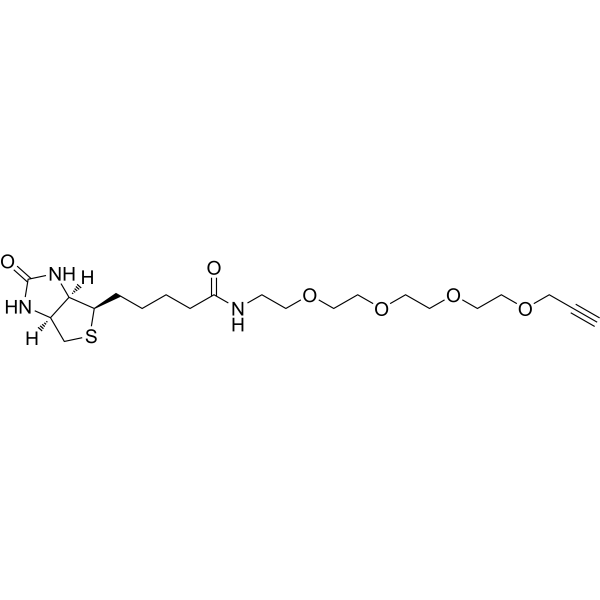
Biotin-PEG4-alkyne is a biotin-labeled, PEG-based PROTAC linker that can be used in the synthesis of PROTACs . Biotin-PEG4-alkyne is a click chemistry reagent, it contains an Alkyne group and can undergo copper-catalyzed azide-alkyne cycloaddition (CuAAc) with molecules containing Azide groups.
|
-
- HY-W004702S
-
-
- HY-W771020
-
|
Ethylene glycol monododecyl ether-d25
|
Isotope-Labeled Compounds
Biochemical Assay Reagents
|
Others
|
|
2-(Dodecyloxy)ethanol-d25 (Ethylene glycol monododecyl ether-d25) is the deuterium labeled 2-(Dodecyloxy)ethanol (HY-W250300). 2-(Dodecyloxy)ethanol is a biochemical reagent that can be used as a biological material or organic compound for life science related research.
|
-
- HY-D2441
-
|
|
Fluorescent Dye
|
Cancer
|
|
TAT-PEG-Cy3 is a fluorescent labeling reagent that combines Cy3 fluorescent dye, Cell membrane penetrating peptide (TAT) and polyethylene glycol (PEG). The Cy3 fluorophore is commonly used in applications such as immunolabeling, nucleic acid labeling, fluorescence microscopy, and flow cytometry. Cy3 has an emission maximum around 562-570 nm. TAT-PEG-Cy3 can be used for cell targeted delivery and biological imaging .
|
-
- HY-D2530
-
|
|
Fluorescent Dye
|
Others
|
|
Cy5-PEG3400-SH is a fluorescent labeling reagent that combines Cy5 (HY-D0821) fluorescent dye, polyethylene glycol (PEG) and sulfhydryl (SH) derivatives, and is suitable for molecular coupling. SH is highly reactive and can react with a variety of functional groups (such as maleimide) to form stable thioether bonds.
|
-
- HY-12008S1
-
|
CP-358774-13C6 hydrochloride; NSC 718781-13C6 hydrochloride; OSI-774-13C6 hydrochloride
|
EGFR
Autophagy
|
Cancer
|
|
Erlotinib- 13C6 hydrochloride is the 13C labeled Erlotinib Hydrochloride . Erlotinib Hydrochloride (CP-358774 Hydrochloride) inhibits purified EGFR kinase with an IC50 of 2 nM . Erlotinib- 13C6 hydrochloride is a click chemistry reagent, it contains an Alkyne group and can undergo copper-catalyzed azide-alkyne cycloaddition (CuAAc) with molecules containing Azide groups.
|
-
- HY-D2532
-
|
|
Fluorescent Dye
|
Others
|
|
Cy5-PEG10000-SH is a fluorescent labeling reagent that combines Cy5 (HY-D0821) fluorescent dye, polyethylene glycol (PEG) and sulfhydryl (SH) derivatives, and is suitable for molecular coupling. SH is highly reactive and can react with a variety of functional groups (such as maleimide) to form stable thioether bonds.
|
-
- HY-15935
-
|
|
β-glucuronidase
Fluorescent Dye
|
Others
|
|
X-Gluc Dicyclohexylamine is a dye reagent for the detection of β-glucuronidase, an enzyme produced by Escherichia coli. X-Gluc sodium can be used to detect E. coli contamination in food, water and the urinary tract. X-Gluc sodium is also widely used in molecular biology experiments to label and detect the expression of target genes (GUS reporter system) .
|
-
- HY-D2529
-
|
|
Fluorescent Dye
|
Others
|
|
Cy5-PEG2000-SH is a fluorescent labeling reagent that combines Cy5 (HY-D0821) fluorescent dye, polyethylene glycol (PEG) and sulfhydryl (SH) derivatives, and is suitable for molecular coupling. SH is highly reactive and can react with a variety of functional groups (such as maleimide) to form stable thioether bonds.
|
-
- HY-W722478
-
|
|
Isotope-Labeled Compounds
Biochemical Assay Reagents
|
Others
|
|
2-Amino-3-methoxybenzoic acid-d3 is the deuterium labeled 2-Amino-3-methoxybenzoic acid (HY-59377). 2-Amino-3-methoxybenzoic acid is a biochemical reagent that can be used as a biological material or organic compound for life science related research.
|
-
- HY-G0018S
-
|
17-Deacetyl norgestimate-d6; 17-Deacylnorgestimate-d6
|
Isotope-Labeled Compounds
Drug Metabolite
|
Others
|
|
Norgestimate metabolite norelgestromin-d6 is the deuterium labeled Norgestimate metabolite norelgestromin. Norelgestromin is a metabolite of Norgestimate, which is a progestin or synthetic progestogen. Norgestimate metabolite norelgestromin-d6 is a click chemistry reagent, it contains an Alkyne group and can undergo copper-catalyzed azide-alkyne cycloaddition (CuAAc) with molecules containing Azide groups.
|
-
- HY-131422S
-
|
|
Isotope-Labeled Compounds
|
Others
|
|
rac 8-Hydroxy Efavirenz-d4 is the deuterium labeled rac 8-Hydroxy Efavirenz . rac 8-Hydroxy Efavirenz-d4 is a click chemistry reagent, it contains an Alkyne group and can undergo copper-catalyzed azide-alkyne cycloaddition (CuAAc) with molecules containing Azide groups.
|
-
- HY-W099645S
-
|
|
Isotope-Labeled Compounds
Biochemical Assay Reagents
|
Others
|
|
Methyl-d3 (Z)-docos-13-enoate is the deuterium labeled (Z)-Methyl docos-13-enoate (HY-W099645). (Z)-Methyl docos-13-enoate is a biochemical reagent that can be used as a biological material or organic compound for life science related research.
|
-
- HY-132142
-
|
|
DNA/RNA Synthesis
|
Others
|
|
5-Propargylamino-dCTP is a sustrate for DNA polymerases. 5-Propargylamino-dCTP can conjugate to molecular markers for use in nucleic acid labeling or sequence analysis. 5-Propargylamino-dCTP is a click chemistry reagent, it contains an Alkyne group and can undergo copper-catalyzed azide-alkyne cycloaddition (CuAAc) with molecules containing Azide groups .
|
-
- HY-D2531
-
|
|
Fluorescent Dye
|
Others
|
|
Cy5-PEG5000-SH is a fluorescent labeling reagent that combines Cy5 (HY-D0821) fluorescent dye, polyethylene glycol (PEG) and sulfhydryl (SH) derivatives, and is suitable for molecular coupling. SH is highly reactive and can react with a variety of functional groups (such as maleimide) to form stable thioether bonds.
|
-
- HY-D2171A
-
|
|
Fluorescent Dye
|
Others
|
|
AF488 DBCO ditriethylamineis a fluorescent dye and also a click chemistry reagent that can label azide-containing biomolecules. AF488 DBCO ditriethylaminemediates the coupling reaction with azide-modified 2'-OMe RNA oligonucleotides. DBCO is a bioorthogonal partner of azides and enables covalent coupling without copper (Ex/Em = 470/520 nm) .
|
-
- HY-D3054
-
|
|
Fluorescent Dye
|
Others
|
|
5(6)-Rhodamine 6G amine is a primary amine fluorescent reagent based on Rhodamine 6G (HY-D0309). Primary amines can be covalently linked with various functional groups such as carboxylic acids, active esters (e.g., NHS esters), and isothiocyanates to achieve labeling (Ex/Em = 526/547 nm).
|
-
- HY-D2740
-
|
|
Fluorescent Dye
|
Others
|
|
ROX azide, 6-isomer is an alkyne-reactive derivative of ROX (Rhodamine X, Rhodamine 101) dye. ROX is a red-emitting fluorophore possessing high brightness and fluorescence quantum yield. This reagent is a pure 6-isomer. It is used for labeling alkyne and cycloalkyne-containing biomolecules via copper-catalyzed and copper-free click chemistry reactions.
|
-
- HY-W699416
-
|
Naphthalene-1-carboxylic acid-d7
|
Isotope-Labeled Compounds
Biochemical Assay Reagents
|
Others
|
|
1-Naphthoic acid-d7 (Naphthalene-1-carboxylic acid-d7) is the deuterium labeled 1-Naphthoic acid (HY-Y0236). Naphthalene-1-carboxylic acid is a biochemical reagent that can be used as a biological material or organic compound for life science related research.
|
-
- HY-185226
-
|
|
Drug Metabolite
|
Cancer
|
|
γ-Linolenic acid NHS ester is a lipid metabolite of γ-Linolenic acid (GLA) (HY-N7140), which can serve as a synthetic intermediate or probe labeling reagent for the preparation of GLA conjugates. In practical applications, γ-Linolenic acid NHS ester can be conjugated with taxanes and polysaccharides to form dual-type conjugates for drug delivery purposes .
|
-
- HY-W759459
-
|
2,2-Dimethyl-1,3-dioxane-4,6-dione-13C3
|
Isotope-Labeled Compounds
Biochemical Assay Reagents
|
Others
|
|
Meldrum's acid- 13C3 (2,2-Dimethyl-1,3-dioxane-4,6-dione- 13C3) is the 13C-labeled Meldrum's acid (HY-Y0232). Meldrum's acid is a biochemical reagent that can be used as a biological material or organic compound for life science related research.
|
-
- HY-W728531
-
|
|
Biochemical Assay Reagents
p38 MAPK
Potassium Channel
Mitochondrial Metabolism
|
Cancer
|
|
Ac4ManNAz can be taken up by cells and is an azide-containing metabolic glycoprotein labeling reagent that selectively modifies proteins. Commonly used for cell labeling, tracking and proteomic analysis. Ac4ManNAz contains an Azide group and can undergo copper-catalyzed azide-alkyne cycloaddition reaction (CuAAc) with molecules containing Alkyne groups. Ac4ManNAz can also undergo strain-promoted alkyne-azide cycloaddition (SPAAC) with molecules containing DBCO or BCN groups.
|
-
- HY-D1669
-
|
|
Fluorescent Dye
|
Others
|
|
Biotin-11-UTP is a Biotin-labeled uridine triphosphate (UTP), containing 11 atoms in the linker between biotin and UTP. Biotin-11-UTP can biotinylate transcribed RNA in vitro and has been widely used as labeling RNA probe . Biotin-11-UTP is a click chemistry reagent, it contains an Alkyne group and can undergo copper-catalyzed azide-alkyne cycloaddition (CuAAc) with molecules containing Azide groups.
|
-
- HY-D2426
-
|
|
Fluorescent Dye
Transferrin Receptor
|
Cardiovascular Disease
|
|
Cy3-Transferrin is a fluorescent labeling reagent that combines Cy3 (HY-D0822) fluorescent dye and Transferrin (HY-P3267). The Cy3 fluorophore is commonly used in applications such as immunolabeling, nucleic acid labeling, fluorescence microscopy, and flow cytometry. Cy3 has an emission maximum around 562-570 nm. Transferrin, a blood-plasma glycoprotein, is a target ligand for transferrin receptor. Transferrin can bind to and mediate the transport of iron .
|
-
- HY-D2230
-
|
|
Fluorescent Dye
|
Others
|
|
Cy3.5 alkyne, a fluorescent dye, is a click chemistry reagent, it contains an Alkyne group and can undergo copper-catalyzed azide-alkyne cycloaddition (CuAAc) with molecules containing Azide groups. Cy3.5 alkyne can be used for the detection and labeling of azide-containing molecules/ biomolecules with fluorescence spectroscopy after azide-alkyne cycloaddition .
|
-
- HY-15388S3
-
|
AGN 190168-d6
|
Isotope-Labeled Compounds
|
Inflammation/Immunology
Cancer
|
|
Tazarotene-d6 (AGN 190168-d6) is deuterium labeled Tazarotene. Tazarotene (AGN 190168) is a selective retinoic acid receptor (RAR) agonist for the treatment of plaque psoriasis and acne vulgaris. Tazarotene is a click chemistry reagent, it contains an Alkyne group and can undergo copper-catalyzed azide-alkyne cycloaddition (CuAAc) with molecules containing Azide groups.
|
-
- HY-W093399S
-
|
|
Isotope-Labeled Compounds
Biochemical Assay Reagents
Fungal
|
Infection
|
|
Ammonium bicarbonate- 15N is the 15N labeled isotope of Ammonium bicarbonate,AR,99% (HY-W093399). Ammonium bicarbonate,AR,99% is an analytical reagent-grade ammonium bicarbonate. Ammonium bicarbonate has antifungal activity. Ammonium bicarbonate is widely used in laboratory analysis, food processing, agricultural fertilization and other fields .
|
-
- HY-D2509
-
|
|
Fluorescent Dye
|
Others
|
|
Cy3-PEG1000-SH is a fluorescent labeling reagent that combines Cy3 (HY-D0822) fluorescent dye, polyethylene glycol (PEG) and sulfhydryl (SH) derivatives, and is suitable for molecular coupling. SH is highly reactive and can react with a variety of functional groups (such as maleimide) to form stable thioether bonds .
|
-
- HY-B0554S
-
|
|
Isotope-Labeled Compounds
Progesterone Receptor
|
Endocrinology
|
|
Norethindrone-d6 is the deuterium labeled Norethindrone. Norethindrone is a female progestin approved by FDA for the treatment of endometriosis, uterine bleeding caused by abnormal hormone levels, and secondary amenorrhea. Norethindrone-d6 is a click chemistry reagent, it contains an Alkyne group and can undergo copper-catalyzed azide-alkyne cycloaddition (CuAAc) with molecules containing Azide groups.
|
-
- HY-W707249
-
|
|
Isotope-Labeled Compounds
Biochemical Assay Reagents
|
Others
|
|
4-Chlorobenzene-2,5,6-d3-1,3-diol is the deuterium labeled 4-Chlororesorcinol (HY-W015658). 4-Chlorobenzene-1,3-diol is a biochemical reagent that can be used as a biological material or organic compound for life science related research.
|
-
- HY-B1637S
-
|
Sodium diethyldithiocarbamate-d10 sodium
|
Isotope-Labeled Compounds
HIV
Biochemical Assay Reagents
|
Infection
Inflammation/Immunology
Cancer
|
|
Ditiocarb-d10 sodium (Sodium diethyldithiocarbamate-d10) is the deuterium labeled Ditiocarb sodium (HY-B1637). Ditiocarb sodium (Sodium diethyldithiocarbamate) is an orally active copper reagent. Ditiocarb sodium exhibits activities such as antioxidation, chelation, anti-tumor effects, immunomodulation, and anti-HIV properties. Ditiocarb sodium can be used in the research of tumors, inflammatory, and immune-related diseases .
|
-
- HY-15388S2
-
|
AGN 190168-13C6
|
Isotope-Labeled Compounds
RAR/RXR
Autophagy
|
Inflammation/Immunology
Cancer
|
|
Tazarotene- 13C6 (AGN 190168- 13C6) is 13C labeled Tazarotene. Tazarotene (AGN 190168) is a selective retinoic acid receptor (RAR) agonist for the treatment of plaque psoriasis and acne vulgaris. Tazarotene is a click chemistry reagent, it contains an Alkyne group and can undergo copper-catalyzed azide-alkyne cycloaddition (CuAAc) with molecules containing Azide groups.
|
-
- HY-W653930
-
|
Bisphenol S-13C12; Bis(4-hydroxyphenyl) sulfone-13C12
|
Isotope-Labeled Compounds
Biochemical Assay Reagents
|
Others
|
|
4,4'-Sulfonyldiphenol- 13C12 (Bisphenol S- 13C12) is 13C labeled 4,4'-Sulfonyldiphenol. 4,4'-Sulfonyldiphenol (Bisphenol S; Bis(4-hydroxyphenyl) sulfone) is a biochemical reagent that can be used as a biological material or organic compound for life science related research .
|
-
- HY-D2512
-
|
|
Fluorescent Dye
|
Others
|
|
Cy3-PEG5000-SH is a fluorescent labeling reagent that combines Cy3 (HY-D0822) fluorescent dye, polyethylene glycol (PEG) and sulfhydryl (SH) derivatives, and is suitable for molecular coupling. SH is highly reactive and can react with a variety of functional groups (such as maleimide) to form stable thioether bonds .
|
-
- HY-E70080
-
|
|
Biochemical Assay Reagents
|
Others
|
|
Vaccinia virus capping enzyme is a transcription initiation factor. Vaccinia virus capping enzyme is a heterodimer of D1 (844 aa) and D12 (287 aa) polypeptides that executes all three steps in m7GpppRNA synthesis. Vaccinia virus capping enzyme has been used widely as a reagent for capping and cap-labeling RNAs in vitro .
|
-
- HY-D1668
-
|
|
DNA Stain
Reverse Transcriptase
|
Infection
Neurological Disease
Cancer
|
|
Biotin-11-dCTP is a biotinylated deoxynucleoside triphosphate and an important DNA labeling reagent. In random primer DNA labeling reactions, Biotin-11-dCTP incorporates into newly synthesized DNA strands to generate labeled DNA probes suitable for hybridization applications. In addition, Biotin-11-dCTP can serve as a substrate for terminal deoxynucleotidyl transferase to end-label oligonucleotides for telomere sequence detection, or to label the cut ends of linearized DNA molecules, thereby supporting streptavidin-based electron microscopy analysis. For example, Biotin-11-dCTP can label the cut ends of linearized DNA molecules under the action of dGTP and avian myeloblastosis virus reverse transcriptase .
|
-
- HY-D2439
-
|
|
Fluorescent Dye
|
Cancer
|
|
RGD-PEG-Cy3 is a fluorescent labeling reagent that combines Cy3 fluorescent dye, peptide (RGD) and polyethylene glycol (PEG). The Cy3 fluorophore is commonly used in applications such as immunolabeling, nucleic acid labeling, fluorescence microscopy, and flow cytometry. Cy3 has an emission maximum around 562-570 nm. RGD is a peptide sequence (CRGDKGPDCiRGD) that binds to αvβ3 and αvβ5 integrin receptors on tumor neovasculogenesis to achieve specific tumor tissue targeting .
|
-
- HY-D2589
-
|
|
Fluorescent Dye
|
Others
|
|
Cy7.5 PEG-SH is a fluorescent labeling reagent that combines CY7.5 (HY-D0926) fluorescent dye, polyethylene glycol (PEG) and sulfhydryl (SH) derivatives, and is suitable for molecular coupling. SH is highly reactive and can react with a variety of functional groups (such as maleimide) to form stable thioether bonds (Ex/Em = 770/820 nm).
|
-
- HY-D0820
-
|
Sulfo-Cyanine5-alkyne
|
Fluorescent Dye
|
Others
|
|
CY5-YNE (Sulfo-Cyanine5-alkyne) is a reactive dye for the labeling of amino-groups in peptides, proteins, and oligonucleotides (Ex: 650 nM; Em: 680 nm). CY5-YNE is a click chemistry reagent, it contains an Alkyne group and can undergo copper-catalyzed azide-alkyne cycloaddition (CuAAc) with molecules containing Azide groups.
|
-
- HY-D2556
-
|
|
Fluorescent Dye
|
Others
|
|
Cy5.5-PEG1000-SH is a fluorescent labeling reagent that combines Cy5.5 (HY-D0924) fluorescent dye, polyethylene glycol (PEG) and sulfhydryl (SH) derivatives, and is suitable for molecular coupling. SH is highly reactive and can react with a variety of functional groups (such as maleimide) to form stable thioether bonds.
|
-
- HY-D2557
-
|
|
Fluorescent Dye
|
Others
|
|
Cy5.5-PEG3400-SH is a fluorescent labeling reagent that combines Cy5.5 (HY-D0924) fluorescent dye, polyethylene glycol (PEG) and sulfhydryl (SH) derivatives, and is suitable for molecular coupling. SH is highly reactive and can react with a variety of functional groups (such as maleimide) to form stable thioether bonds.
|
-
- HY-W749794
-
|
|
Isotope-Labeled Compounds
Biochemical Assay Reagents
|
Others
|
|
(S)-1-Boc-3-hydroxypiperidine-d4 is the deuterium labeled (S)-1-Boc-3-hydroxypiperidine (HY-40023). (S)-1-Boc-3-hydroxypiperidine is a biochemical reagent that can be used as a biological material or organic compound for life science related research.
|
-
- HY-D2559
-
|
|
Fluorescent Dye
|
Others
|
|
Cy5.5-PEG10000-SH is a fluorescent labeling reagent that combines Cy5.5 (HY-D0924) fluorescent dye, polyethylene glycol (PEG) and sulfhydryl (SH) derivatives, and is suitable for molecular coupling. SH is highly reactive and can react with a variety of functional groups (such as maleimide) to form stable thioether bonds.
|
-
- HY-143690S
-
|
|
Isotope-Labeled Compounds
|
Others
|
|
Oxybutynin-d10 hydrochloride is the deuterium labeled Oxybutynin (HY-B0267). Oxybutynin is an anticholinergic agent, which inhibits vascular Kv channels in a concentration-dependent manner, with an IC50 of 11.51 μM . Oxybutynin is a click chemistry reagent, it contains an Alkyne group and can undergo copper-catalyzed azide-alkyne cycloaddition (CuAAc) with molecules containing Azide groups.
|
-
- HY-D2558
-
|
|
Fluorescent Dye
|
Others
|
|
Cy5.5-PEG5000-SH is a fluorescent labeling reagent that combines Cy5.5 (HY-D0924) fluorescent dye, polyethylene glycol (PEG) and sulfhydryl (SH) derivatives, and is suitable for molecular coupling. SH is highly reactive and can react with a variety of functional groups (such as maleimide) to form stable thioether bonds.
|
-
- HY-W053709A
-
|
(4-(1,2,4,5-Tetrazin-3-yl)phenyl)methanamine (monohydrochloride); Tetrazine-NH2 monohydrochloride
|
Biochemical Assay Reagents
|
Cancer
|
|
Tetrazine-Amine monohydrochloride is the monohydrochloride form of Tetrazine-Amine (HY-W053709). Tetrazine-amine is a Tetrazine linker that can be used to covalently label living cells by cycloaddition . Tetrazine-Amine (monohydrochloride) is a click chemistry reagent, it contains a Tetrazine group that can undergo an inverse electron demand Diels-Alder reaction (iEDDA) with molecules containing TCO groups.
|
-
- HY-W705408
-
|
|
Isotope-Labeled Compounds
Biochemical Assay Reagents
|
Others
|
|
1H-Imidazole-5-carboxaldehyde- 15N2 is the 15N-labeled 1H-Imidazole-5-carboxaldehyde (HY-59303). 1H-Imidazole-5-carboxaldehyde is a biochemical reagent that can be used as a biological material or organic compound for life science related research.
|
-
- HY-W441011
-
|
|
Liposome
|
Neurological Disease
Inflammation/Immunology
Cancer
|
|
DSPE-NHS is a bioconjugation phospholipid molecule with two hydrophobic lipid tails. DSPE-NHS is a self-assembling reagent which forms lipid bilayer in aqueous solution. The NHS-ester is reactive with N-terminal of protein/peptide or other amine molecule to form a stable amide linkage. DSPE-NHS labels antibodies. DSPE-NHS can be used to prepare liposomes as agent nanocarrier .
|
-
- HY-79647
-
|
N-(Fmoc-oxy)succinimide
|
Biochemical Assay Reagents
|
Others
|
|
Fmoc-OSu (N-(Fmoc-oxy)succinimide) is an acylating agent that targets amino groups (-NH2). It can selectively protect the amino groups of amino acids by covalently binding with primary or secondary amines through nucleophilic substitution reactions. Fmoc-OSu forms a stable amide bond with the amino group to avoid side reactions of the amino group in peptide synthesis. It can also be used as a fluorescent labeling reagent to react with glycosylamines for efficient labeling of N-sugar chains. Fmoc-OSu can be used as an Fmoc protection strategy in peptide synthesis, and as a fluorescent labeling and analysis method for N-sugar chains .
|
-
- HY-W019679S
-
|
P-Tolylsulfonylmethylnitrosamide diazald-d5
|
Isotope-Labeled Compounds
Biochemical Assay Reagents
|
Others
|
|
(S)-N-Methylpyrrolidine-2-methanol-d5 (P-Tolylsulfonylmethylnitrosamide diazald-d5) is the deuterium labeled (S)-N-Methylpyrrolidine-2-methanol (HY-W019679). (S)-N-Methylpyrrolidine-2-methanol is a biochemical reagent that can be used as a biological material or organic compound for life science related research.
|
-
- HY-123650
-
|
5'-p-Fluorosulfonylbenzoyladenosine
|
Biochemical Assay Reagents
|
Cancer
|
|
FSBA (5'-p-Fluorosulfonylbenzoyladenosine) hydrochloride is a covalent modifier and affinity labeling reagent for adenine nucleotide-binding proteins. FSBA hydrochloride covalently attaches to the nucleotide-binding sites of pyruvate kinase, glutamate dehydrogenase, and p56 lck, and to a lysine residue in the ATP-binding site of cAMP-dependent protein kinase, causing loss of enzymatic activity. FSBA hydrochloride can be used for the research of T lymphoma .
|
-
- HY-W190766
-
|
S-Acetyl-dPEG(R)8-NHS ester
|
Biochemical Assay Reagents
|
|
|
dPEG(R)8-SATA (S-Acetyl-dPEG(R)8-NHS ester) is a bioconjugation reagent with excellent biocompatibility and high selectivity. dPEG(R)8-SATA can be used to label and cross-link biomolecules and promote the interaction between biomolecules. dPEG(R)8-SATA plays an important role in bioimaging and compound delivery systems.
|
-
- HY-10284S1
-
|
BI 1356-13C,d3
|
Isotope-Labeled Compounds
Dipeptidyl Peptidase
Autophagy
Ferroptosis
|
Metabolic Disease
|
|
Linagliptin- 13C,d3 is the 13C- and deuterium labeled Linagliptin. Linagliptin is a highly potent, selective DPP-4 inhibitor with IC50 of 1 nM. Linagliptin-13C,d3 is a click chemistry reagent, it contains an Alkyne group and can undergo copper-catalyzed azide-alkyne cycloaddition (CuAAc) with molecules containing Azide groups.
|
-
- HY-W127532S
-
-
- HY-W127415S
-
|
|
Isotope-Labeled Compounds
Biochemical Assay Reagents
|
Others
|
|
(Rac)-1-Stearoyl-3-chloropropanediol-d5 is the deuterium labeled rac-1-Stearoyl-3-chloropropanediol (HY-W127415). rac-1-Stearoyl-3-chloropropanediol is a biochemical reagent that can be used as a biological material or organic compound for life science related research.
|
-
- HY-D0820A
-
|
Sulfo-Cyanine5-alkyne triethylamine
|
Fluorescent Dye
|
Others
|
|
CY5-YNE (Sulfo-Cyanine5-alkyne) triethylamine is a reactive dye for the labeling of amino-groups in peptides, proteins, and oligonucleotides (Ex: 650 nM; Em: 680 nm). CY5-YNE triethylamine is a click chemistry reagent, it contains an Alkyne group and can undergo copper-catalyzed azide-alkyne cycloaddition (CuAAc) with molecules containing Azide groups.
|
-
- HY-14605BS
-
|
AGN1135-13C3; TVP1012-13C3 racemic
|
Isotope-Labeled Compounds
Monoamine Oxidase
|
Neurological Disease
|
|
Rasagiline- 13C3 (mesylate racemic) is a 13C-labeled Rasagiline mesylate racemic. Rasagiline mesylate racemic is a highly potent selective irreversible mitochondrial monoamine oxidase (MAO) inhibitor . Rasagiline-13C3 (mesylate racemic) is a click chemistry reagent, it contains an Alkyne group and can undergo copper-catalyzed azide-alkyne cycloaddition (CuAAc) with molecules containing Azide groups.
|
-
- HY-W766041
-
|
2,3:4,5-Di-O-isopropylidene-β-D-fructopyranose-d12
|
Isotope-Labeled Compounds
Biochemical Assay Reagents
|
Others
|
|
Diacetone-β-D-fructose-d12 (2,3:4,5-Di-O-isopropylidene-β-D-fructopyranose-d12) is the deuterium labeled Diacetone-β-D-fructose (HY-W011792). Diacetone-β-D-fructose is a biochemical reagent that can be used as a biological material or organic compound for life science related research .
|
-
- HY-W053709
-
|
(4-(1,2,4,5-Tetrazin-3-yl)phenyl)methanamine; Tetrazine-NH2
|
MOFs
|
Cancer
|
|
Tetrazine-Amine ((4-(1,2,4,5-Tetrazin-3-yl)phenyl)methanamine) is a tetrazine linker that can be used to covalently label live cells through a cycloaddition . Tetrazine-Amine is a click chemistry reagent, it contains a Tetrazine group that can undergo an inverse electron demand Diels-Alder reaction (iEDDA) with molecules containing TCO groups.
|
-
- HY-139244S
-
|
|
Isotope-Labeled Compounds
Progesterone Receptor
|
Endocrinology
|
|
Norgestimate-d6 is the deuterium labeled Norgestimate. Norgestimate, a synthetic progesterone analog, is an orally active progestin with highly selective progestational activity and minimal androgenicity. Norgestimate is used for an oral contraceptive . Norgestimate-d6 is a click chemistry reagent, it contains an Alkyne group and can undergo copper-catalyzed azide-alkyne cycloaddition (CuAAc) with molecules containing Azide groups.
|
-
- HY-15935C
-
|
|
β-glucuronidase
Fluorescent Dye
|
Others
|
|
X-Gluc sodium is a dye reagent for the detection of β-glucuronidase (GUS), an enzyme produced by E. coli. X-Gluc sodium can be used to detect E. coli contamination in food, water and the urinary tract (GUS as a specific detection indicator). X-Gluc sodium is also widely used in molecular biology experiments to label and detect the expression of target genes (reacts with the GUS gene, appears blue) .
|
-
- HY-W744124
-
|
1-(4-Fluorophenyl)ethan-1-one-d4
|
Isotope-Labeled Compounds
Biochemical Assay Reagents
|
Others
|
|
4'-Fluoroacetophenone-d4 (1-(4-Fluorophenyl)ethan-1-one-d4) is deuterium labeled 4'-Fluoroacetophenone. 4'-Fluoroacetophenone (1-(4-Fluorophenyl)ethan-1-one) is a biochemical reagent that can be used as a biological material or organic compound for life science related research .
|
-
- HY-147206
-
|
|
Fluorescent Dye
|
Others
|
|
Biotin-PEG600-Alk is a Biotin-labeled Alkyne functionalized polyethylene glycol. Biotin-PEG600-Alk can be used to modify proteins, peptides, and oligonucleotides . Biotin-PEG600-Alk is a click chemistry reagent, it contains an Alkyne group and can undergo copper-catalyzed azide-alkyne cycloaddition (CuAAc) with molecules containing Azide groups.
|
-
- HY-W019679S1
-
|
P-Tolylsulfonylmethylnitrosamide diazald-d3
|
Isotope-Labeled Compounds
Biochemical Assay Reagents
|
Others
|
|
(S)-N-Methylpyrrolidine-2-methanol-d3 (P-Tolylsulfonylmethylnitrosamide diazald-d3) is the deuterium labeled (S)-N-Methylpyrrolidine-2-methanol (HY-W019679). (S)-N-Methylpyrrolidine-2-methanol is a biochemical reagent that can be used as a biological material or organic compound for life science related research.
|
-
- HY-D2448
-
|
|
Fluorescent Dye
|
Cancer
|
|
Cy3-PEG-Thiol (Cy3-PEG-SH) is a near infrared fluorescent labeling reagent that combines Cy3 fluorescent dye, polyethylene glycol (PEG) and sulfhydryl (SH) polyethylene glycol derivatives, and is suitable for molecular coupling. Cy3-PEG-Thiol is absorbed at 550nm and has high solubility and end-group substitution rate .
|
-
- HY-W019679S2
-
|
P-Tolylsulfonylmethylnitrosamide diazald-d6
|
Isotope-Labeled Compounds
Biochemical Assay Reagents
|
Others
|
|
(S)-N-Methylpyrrolidine-2-methanol-d6 (P-Tolylsulfonylmethylnitrosamide diazaldl-d6) is the deuterium labeled (S)-N-Methylpyrrolidine-2-methanol (HY-W019679). (S)-N-Methylpyrrolidine-2-methanol is a biochemical reagent that can be used as a biological material or organic compound for life science related research.
|
-
- HY-W800697
-
|
|
Fluorescent Dye
|
Others
|
|
BP Fluor 430 Picolyl Azide is an advanced fluorescent probe that incorporatess a copper-chelating motif to raise the effective concentration of Cu(I) at the reaction site. The rate of the CuAAC reaction depends on the concentrations of all reagents, including copper, therefore raising the effective copper concentration at the reaction site will dramatically increase the rate of CuAAC reaction without the need to increase concentration of azide reagent or copper.
In addition, the use of BP Fluor 430 Picolyl Azide instead of conventional BP Fluor 430 Azide allows for at least a tenfold reduction in the concentration of the copper catalyst without sacrificing the efficiency of labeling.
In summary, the introduction of a picolyl moiety into an azide probe leads to a substantial increase in the sensitivity of alkyne detection. This is of special value for the detection of low abundance targets or where significant increase in signal intensity is desired.
|
-
- HY-W800693
-
|
|
Fluorescent Dye
|
Others
|
|
BP Fluor 405 Picolyl Azide is an advanced fluorescent probe that incorporatess a copper-chelating motif to raise the effective concentration of Cu(I) at the reaction site. The rate of the CuAAC reaction depends on the concentrations of all reagents, including copper, therefore raising the effective copper concentration at the reaction site dramatically increases the rate of CuAAC reaction without increasing the concentrations of azide reagent or copper.
In addition, the use of picolyl azide instead of conventional azides allows for at least a tenfold reduction in the concentration of the copper catalyst without sacrificing the efficiency of labeling.
In summary, the introduction of a picolyl moiety into an azide probe leads to a substantial increase in the sensitivity of alkyne detection. This is of special value for the detection of low abundance targets or where significant increase in signal intensity is desired.
|
-
- HY-147206C
-
|
|
Fluorescent Dye
|
Others
|
|
Biotin-PEG3400-Alk is a biotin labeled PEG derivative. Biotin is an enzyme co-factor, can be used for labeling protein; PEG is a hydrophilic and water-soluble polymer with low toxicity; Alk (Alkyne), acyclic (branched or unbranched) aliphatic hydrocarbon, can react with azido, which improve the efficiency of biotin binding targets. Biotin-PEG3400-Alk is a click chemistry reagent, it contains an Alkyne group and can undergo copper-catalyzed azide-alkyne cycloaddition (CuAAc) with molecules containing Azide groups.
|
-
- HY-147206A
-
|
|
Fluorescent Dye
|
Others
|
|
Biotin-PEG1000-Alk is a biotin labeled PEG derivative. Biotin is an enzyme co-factor, can be used for labeling protein; PEG is a hydrophilic and water-soluble polymer with low toxicity; Alk (Alkyne), acyclic (branched or unbranched) aliphatic hydrocarbon, can react with azido, which improve the efficiency of biotin binding targets. Biotin-PEG1000-Alk is a click chemistry reagent, it contains an Alkyne group and can undergo copper-catalyzed azide-alkyne cycloaddition (CuAAc) with molecules containing Azide groups.
|
-
- HY-W800839
-
|
|
Biochemical Assay Reagents
|
Others
|
|
TCO-PEG4-TFP Ester is an amine-reactive labeling reagent used to modify proteins, antibodies, and other amine-containing biopolymers. A 2,3,5,6-tetrafluorophenol (TFP) is a reactive ester that displays much better stability toward hydrolysis in aqueous media resulting in more efficiency and better reproducible labeling of biopolymers. TFP ester of carboxylic acids react with primary amines at the same rate as NHS ester forming covalent amide bond that is identical to one formed by the reaction between primary amines and NHS esters or sulfo-NHS esters.
|
-
- HY-147206E
-
|
|
Fluorescent Dye
|
Others
|
|
Biotin-PEG10000-Alk is a biotin labeled PEG derivative. Biotin is an enzyme co-factor, can be used for labeling protein; PEG is a hydrophilic and water-soluble polymer with low toxicity; Alk (Alkyne), acyclic (branched or unbranched) aliphatic hydrocarbon, can react with azido, which improve the efficiency of biotin binding targets. Biotin-PEG10000-Alk is a click chemistry reagent, it contains an Alkyne group and can undergo copper-catalyzed azide-alkyne cycloaddition (CuAAc) with molecules containing Azide groups.
|
-
- HY-147206B
-
|
|
Fluorescent Dye
|
Others
|
|
Biotin-PEG2000-Alk is a biotin labeled PEG derivative. Biotin is an enzyme co-factor, can be used for labeling protein; PEG is a hydrophilic and water-soluble polymer with low toxicity; Alk (Alkyne), acyclic (branched or unbranched) aliphatic hydrocarbon, can react with azido, which improve the efficiency of biotin binding targets. Biotin-PEG2000-Alk is a click chemistry reagent, it contains an Alkyne group and can undergo copper-catalyzed azide-alkyne cycloaddition (CuAAc) with molecules containing Azide groups.
|
-
- HY-147206F
-
|
|
Fluorescent Dye
|
Others
|
|
Biotin-PEG20000-Alk is a biotin labeled PEG derivative. Biotin is an enzyme co-factor, can be used for labeling protein; PEG is a hydrophilic and water-soluble polymer with low toxicity; Alk (Alkyne), acyclic (branched or unbranched) aliphatic hydrocarbon, can react with azido, which improve the efficiency of biotin binding targets. Biotin-PEG20000-Alk is a click chemistry reagent, it contains an Alkyne group and can undergo copper-catalyzed azide-alkyne cycloaddition (CuAAc) with molecules containing Azide groups.
|
-
- HY-50896S
-
|
CP-358774-d6; NSC 718781-d6; OSI-774-d6
|
EGFR
|
Cancer
|
|
Erlotinib-d6 (CP-358774 D6) is a deuterium labeled Erlotinib (CP-358774). Erlotinib is a directly acting inhibitor EGFR tyrosine kinase inhibitor with an IC50 of 2 nM for human EGFR . Erlotinib-d6 is a click chemistry reagent, it contains an Alkyne group and can undergo copper-catalyzed azide-alkyne cycloaddition (CuAAc) with molecules containing Azide groups.
|
-
- HY-15935B
-
|
|
β-glucuronidase
Fluorescent Dye
|
Others
|
|
X-Gluc cyclohexanamine is a dye reagent for the detection of β-glucuronidase (GUS), an enzyme produced by E. coli. X-Gluc cyclohexanamine can be used to detect E. coli contamination in food, water and the urinary tract (GUS as a specific detection indicator). X-Gluc cyclohexanamine is also widely used in molecular biology experiments to label and detect the expression of target genes (reacts with the GUS gene, appears blue) .
|
-
- HY-W740373
-
|
N-Methyl-4-piperidinol-d4
|
Isotope-Labeled Compounds
Biochemical Assay Reagents
|
Others
|
|
1-Methylpiperidin-4-ol-d4 (N-Methyl-4-piperidinol-d4) is the deuterium labeled 1-Methylpiperidin-4-ol (HY-W018626). 1-Methylpiperidin-4-ol is a biochemical reagent that can be used as a biological material or organic compound for life science related research.
|
-
- HY-17600S
-
|
ACP-196-d4
|
Btk
|
Cancer
|
|
Acalabrutinib-d4 (ACP-196-d4) is a deuterium labeled Acalabrutinib. Acalabrutinib (ACP-196) is an orally active, irreversible, and highly selective second-generation BTK inhibitor . Acalabrutinib-d4 is a click chemistry reagent, it contains an Alkyne group and can undergo copper-catalyzed azide-alkyne cycloaddition (CuAAc) with molecules containing Azide groups.
|
-
- HY-W749519
-
|
trans,trans-Farnesol-13C3; (2E,6E)-Farnesol-13C3
|
Isotope-Labeled Compounds
Biochemical Assay Reagents
|
Others
|
|
(E,E)-Farnesol- 13C3 (trans,trans-Farnesol- 13C3) is the 13C-labeled (E,?E)?-?Farnesol (HY-Y0248). (E, E)-Farnesol (trans,trans-Farnesol;(2E,6E)-Farnesol) is a biochemical reagent that can be used as a biological material or organic compound for life science related research .
|
-
- HY-13256AS
-
|
|
Isotope-Labeled Compounds
Drug Metabolite
|
Cancer
|
|
Desmethyl Erlotinib-d4 is the deuterium labeled Desmethyl Erlotinib. Desmethyl Erlotinib (OSI-420 free base) is an active metabolite of Erlotinib. Erlotinib is a potent EGFR tyrosin kinase inhibitor . Desmethyl Erlotinib-d4 is a click chemistry reagent, it contains an Alkyne group and can undergo copper-catalyzed azide-alkyne cycloaddition (CuAAc) with molecules containing Azide groups.
|
-
- HY-147115
-
|
|
Fluorescent Dye
|
Others
|
|
4-Azidophlorizin is a high affinity probe and photoaffinity label for the glucose transporter in brush border membranes . 4-Azidophlorizin is a click chemistry reagent, it contains an Azide group and can undergo copper-catalyzed azide-alkyne cycloaddition reaction (CuAAc) with molecules containing Alkyne groups. It can also undergo strain-promoted alkyne-azide cycloaddition (SPAAC) reactions with molecules containing DBCO or BCN groups.
|
-
- HY-W020784
-
|
|
Biochemical Assay Reagents
|
Others
|
|
3-(N-Maleimidopropionyl)biocytin is a cysteine-specific labeling reagent and non-membrane-permeable probe. 3-(N-Maleimidopropionyl)biocytin covalently modifies the exposed cysteine residues of yeast Tim44, conjugating the biotin moiety to the polypeptide chain. 3-(N-Maleimidopropionyl)biocytin determines the topology of membrane proteins by modifying the exposed cysteine residues on the outer side of the inner mitochondrial membrane .
|
-
- HY-147097
-
|
|
Bacterial
|
Infection
|
|
EDA-DA, a N-terminally tagged dipeptide probe, can be used to label Peptidoglycan (PG) of bacteria. Peptidoglycan (PG), an essential structure in the cell walls of the vast majority of bacteria, is critical for division and maintaining cell shape and hydrostatic pressure . EDA-DA is a click chemistry reagent, itcontains an Alkyne group and can undergo copper-catalyzed azide-alkyne cycloaddition (CuAAc) with molecules containing Azide groups.
|
-
- HY-W754216
-
|
2,3:4,5-Di-O-isopropylidene-β-D-fructopyranose-13C6
|
Isotope-Labeled Compounds
Biochemical Assay Reagents
|
Others
|
|
Diacetone-β-D-fructose- 13C6 (2,3:4,5-Di-O-isopropylidene-β-D-fructopyranose- 13C6) is the 13C-labeled Diacetone-β-D-fructose (HY-W011792). Diacetone-β-D-fructose is a biochemical reagent that can be used as a biological material or organic compound for life science related research .
|
-
- HY-W700793
-
|
3-Trifluoromethyl-2-methylaniline-d3
|
Isotope-Labeled Compounds
Biochemical Assay Reagents
|
Others
|
|
2-Methyl-3-(trifluoromethyl)aniline-d3 (3-Trifluoromethyl-2-methylaniline-d3) is deuterium labeled 2-Methyl-3-(trifluoromethyl)aniline. 2-Methyl-3-(trifluoromethyl)aniline is a biochemical reagent that can be used as a biological material or organic compound for life science related research.
|
-
- HY-W740363
-
|
5-AF hydrochloride
|
Fluorescent Dye
|
|
|
5-Aminofluorescein hydrochloride (5-AF hydrochloride) is a protein fluorescent labeling reagent with excellent fluorescence activity. It is widely used in cell imaging and molecular probes in biomedical research. 5-Aminofluorescein hydrochloride can be used to observe the location of proteins and their dynamic changes, providing in-depth biological understanding. 5-Aminofluorescein hydrochloride is also used to detect interactions between biomolecules and help analyze complex biological processes.
|
-
- HY-133870
-
|
ITalk
|
Fluorescent Dye
|
Inflammation/Immunology
|
|
Itaconate-alkyne (ITalk) is a specific bioorthogonal probe for quantitative and site-specific chemoproteomic profiling of Itaconation in living cells. Itaconate-alkyne, a functional analogue of Itaconate, exhibits comparable antiinflammatory effect with Itaconate and enables the labeling of bona fide targets of Itaconate . Itaconate-alkyne is a click chemistry reagent, it contains an Alkyne group and can undergo copper-catalyzed azide-alkyne cycloaddition (CuAAc) with molecules containing Azide groups.
|
-
- HY-32149S
-
-
- HY-131442
-
|
Alkyne tyramide; Alk-Ph
|
Biochemical Assay Reagents
|
Others
|
|
Alkyne-phenol (Alk-Ph) is a clickable ascorbate peroxidase 2 (APEX2) probe. Alkyne-phenol substantially improves APEX-labeling efficiency in intact yeast cells, as it is more cell wall-permeant than APEX2 substrate biotin-phenol (BP). Alkyne-phenol also facilitates the identification of APEX-labeling sites, allowing the unambiguous assignment of membrane topology of mitochondrial proteins . Alkyne-phenol is a click chemistry reagent, it contains an Alkyne group and can undergo copper-catalyzed azide-alkyne cycloaddition (CuAAc) with molecules containing Azide groups.
|
-
- HY-129084
-
|
|
Biochemical Assay Reagents
|
Others
|
|
Propargylcholine bromide is a choline analogue containing terminal propargyl that can be incorporated into all classes of Choline-containing phospholipids such as phosphatidylcholine and sphingomyelin, labeling Choline-containing phospholipids. Propargylcholine bromide-labeled phospholipid molecules can be visualized in cells with high sensitivity and spatial resolution. Propargylcholine bromide can be used as a molecular tool to study the biochemical and metabolic processes of Choline-containing phospholipids in cells . Propargylcholine (bromide) is a click chemistry reagent, it contains an Alkyne group and can undergo copper-catalyzed azide-alkyne cycloaddition (CuAAc) with molecules containing Azide groups.
|
-
- HY-12516S2
-
|
Org-2969-13C2,d2-1
|
Isotope-Labeled Compounds
Progesterone Receptor
|
Others
|
|
Desogestrel- 13C2,d2-1 (Org-2969- 13C2,d2-1) is the deuterium labeled and 13C-labeled Desogestrel (HY-12516). Desogestrel (Org-2969) is a third-generation progesterone analogue contained in many oral contraceptive preparations. Desogestrel is a click chemistry reagent, it contains an Alkyne group and can undergo copper-catalyzed azide-alkyne cycloaddition (CuAAc) with molecules containing Azide groups .
|
-
- HY-W110146
-
|
|
Biochemical Assay Reagents
|
Others
|
|
(3aS,4S,6aR)-Biotin-PEG4-Alkyne is an alkyne-activated biotinylation reagent. (3aS,4S,6aR)-Biotin-PEG4-Alkyne can be reacted with azides via a copper-catalyzed click reaction. Biotin-labeled biomolecules can be bound to avidin or streptavidin for further purification and detection .
|
-
- HY-176846
-
|
|
Biochemical Assay Reagents
|
Others
|
|
HIPS probe-1 (Compound 1) is a click chemistry reagent containing a alkyne group. HIPS probe-1 can undergo copper-catalyzed azide-alkyne cycloaddition (CuAAc) with molecules containing Azide groups. HIPS probe-1 can be used as a chemical probe to specifically recognize and label aldehyde functional groups in DNA, especially abasic sites (AP sites) for DNA damage research .
|
-
- HY-174892
-
|
|
Biochemical Assay Reagents
|
Others
|
|
Biotin-PEG5-NHS ester is a heterobifunctional crosslinker as well as a polyethylene glycol-containing bioconjugation reagent. Biotin-PEG5-NHS ester is widely used in scientific research fields such as the construction of highly sensitive biosensors, the development of targeted drug delivery systems (e.g., liposome modification), immunofluorescence imaging, and protein affinity purification, and serves as an important tool for achieving precise labeling and functionalization of biomolecules .
|
-
- HY-B0216S
-
|
17α-Ethynylestradiol-d4; Ethynylestradiol-d4
|
Estrogen Receptor/ERR
Endogenous Metabolite
|
Endocrinology
Cancer
|
|
Ethynyl Estradiol-d4 is the deuterium labeled Ethynyl Estradiol. Ethynyl Estradiol (17α-Ethynylestradiol;Ethynylestradiol) is an orally bio-active estrogen used in almost all modern formulations of combined oral contraceptive pills. Ethynyl Estradiol-d4 is a click chemistry reagent, it contains an Alkyne group and can undergo copper-catalyzed azide-alkyne cycloaddition (CuAAc) with molecules containing Azide groups.
|
-
- HY-D1070
-
|
|
DNA Stain
|
Others
|
|
DBCO-PEG4-TAMRA is a PEG-based TAMRA dye and contains a DBCO group, which enables Click Chemistry. The TAMRA dye is a dye widely used in oligonucleotide labeling and automated DNA sequencing applications. DBCO-PEG4-TAMRA is a click chemistry reagent, it contains a DBCO group that can undergo strain-promoted alkyne-azide cycloaddition (SPAAC) with molecules containing Azide groups.
|
-
- HY-D2510
-
|
|
Fluorescent Dye
|
Cancer
|
|
Cy3-PEG2000-SH (Cy3-PEG-Thiol) is a near infrared fluorescent labeling reagent that combines Cy3 fluorescent dye, polyethylene glycol (PEG) and sulfhydryl (SH) polyethylene glycol derivatives, and is suitable for molecular coupling. Cy3-PEG2000-SH is absorbed at 550nm and has high solubility and end-group substitution rate .
|
-
- HY-143964S
-
|
|
Drug Metabolite
Isotope-Labeled Compounds
|
Others
|
|
Irbesartan impurity 14-d4 is the deuterium labeled Irbesartan impurity 14 . Irbesartan impurity 14-d4 is a click chemistry reagent, it contains an Azide group and can undergo copper-catalyzed azide-alkyne cycloaddition reaction (CuAAc) with molecules containing Alkyne groups. It can also undergo strain-promoted alkyne-azide cycloaddition (SPAAC) reactions with molecules containing DBCO or BCN groups.
|
-
- HY-D2513
-
|
|
Fluorescent Dye
|
Cancer
|
|
Cy3-PEG10000-SH (Cy3-PEG-Thiol) is a near infrared fluorescent labeling reagent that combines Cy3 fluorescent dye, polyethylene glycol (PEG) and sulfhydryl (SH) polyethylene glycol derivatives, and is suitable for molecular coupling. Cy3-PEG10000-SH is absorbed at 550nm and has high solubility and end-group substitution rate .
|
-
- HY-Z8105S
-
|
|
Isotope-Labeled Compounds
Biochemical Assay Reagents
|
Others
|
|
Beclomethasone 21-propionate-d3-1 is the deuterium labeled Beclomethasone 21-propionate (HY-167804). Beclomethasone 21-propionate is a class of biochemical reagents for the study of glycobiology. Glycobiology studies the structure, synthesis, biology, and evolution of sugars. It deals with carbohydrate chemistry, glycan formation and degradation enzymology, protein-glycan recognition, and the role of glycans in biological systems. The field is closely related to basic research, biomedicine and biotechnology .
|
-
- HY-D0823
-
CY3-SE
1 Publications Verification
Sulfo-Cy3 NHS ester; Sulfo Cyanine3 NHS ester
|
Fluorescent Dye
|
Others
|
|
Cy3-SE (Sulfo-Cy3 NHS ester; Sulfo Cyanine3 NHS ester) is a sulfonated cyanine dye-derived fluorescent labeling reagent with λex of about 515 nm and λem of about 568 nm. Cy3-SE can interact with the π-π stacking of biomolecules (e.g., nucleoside monophosphates, proteins), inhibiting the photoisomerization process and increasing the fluorescence quantum yield and lifetime .
|
-
- HY-143963S
-
|
|
Drug Metabolite
Isotope-Labeled Compounds
|
Others
|
|
Irbesartan impurity 20-d4 is the deuterium labeled Irbesartan impurity 20 . Irbesartan impurity 20-d4 is a click chemistry reagent, it contains an Azide group and can undergo copper-catalyzed azide-alkyne cycloaddition reaction (CuAAc) with molecules containing Alkyne groups. It can also undergo strain-promoted alkyne-azide cycloaddition (SPAAC) reactions with molecules containing DBCO or BCN groups.
|
-
- HY-143980S
-
|
|
Drug Metabolite
Isotope-Labeled Compounds
|
Others
|
|
Losartan impurity 21-d4 is the deuterium labeled Losartan impurity 21 . Losartan impurity 21-d4 is a click chemistry reagent, it contains an Azide group and can undergo copper-catalyzed azide-alkyne cycloaddition reaction (CuAAc) with molecules containing Alkyne groups. It can also undergo strain-promoted alkyne-azide cycloaddition (SPAAC) reactions with molecules containing DBCO or BCN groups.
|
-
- HY-W740246
-
|
|
Isotope-Labeled Compounds
Biochemical Assay Reagents
|
Others
|
|
2-Butyl-4-chloro-5-formylimidazole-d3 is the deuterium labeled 2-Butyl-4-chloro-5-formylimidazole (HY-W016155). 2-Butyl-4-chloro-5-formylimidazole is a biochemical reagent that can be used as a biological material or organic compound for life science related research.
|
-
- HY-D2511
-
|
|
Fluorescent Dye
|
Cancer
|
|
Cy3-PEG3400-SH (Cy3-PEG-Thiol) is a near infrared fluorescent labeling reagent that combines Cy3 fluorescent dye, polyethylene glycol (PEG) and sulfhydryl (SH) polyethylene glycol derivatives, and is suitable for molecular coupling. Cy3-PEG3400-SH is absorbed at 550nm and has high solubility and end-group substitution rate .
|
-
- HY-W088065S2
-
|
|
Isotope-Labeled Compounds
|
Others
|
|
Sodium formate-d is the deuterium labeled Sodium formate.Sodium formate is a biochemical assay reagent. Sodium formate can react with zinc sources (such as ZnCl2) on the surface of alpha alumina support to form a zinc oxide layer. Sodium formate acts as a deprotonating agent, promoting the deprotonation of ligands (such as 2-methylimidazole) at high temperatures. Sodium formate provides the required reducing force in the catalytic oxidation of methane to methanol by methane monooxygenase (sMMO) and inhibits further oxidation of methanol .
|
-
- HY-152429
-
|
|
Nucleoside Antimetabolite/Analog
|
Cancer
|
|
3’-Beta-C-ethynyl-5-trifluoromethyluridine is a thymidine analog. Analogs of this series have insertional activity towards replicated DNA. They can be used to label cells and track DNA synthesis . 3’-Beta-C-ethynyl-5-trifluoromethyluridine is a click chemistry reagent, it contains an Alkyne group and can undergo copper-catalyzed azide-alkyne cycloaddition (CuAAc) with molecules containing Azide groups.
|
-
- HY-D3182
-
|
|
Fluorescent Dye
Aldehyde Dehydrogenase (ALDH)
|
Cancer
|
|
AldeRed 588-A is a fluorescent labeling reagent and a substrate for aldehyde dehydrogenase (ALDH). AldeRed 588-A is metabolized by functionally active ALDH enzymes, thereby specifically labeling viable ALDH bright cell populations with red-shifted fluorescence. AldeRed 588-A supports one-step isolation and sorting of ALDH-expressing cells (including normal stem cells and cancer stem cells), and can be used in combination with green fluorophores for multicolor experimental applications. AldeRed 588-A is widely applicable to research related to various cancers such as bladder cancer, breast cancer, and head and neck cancer .
|
-
- HY-D1269
-
|
|
Fluorescent Dye
|
Others
|
|
Rhodamine-N3 chloride is an azide-rhodamine fluorescent dye that can be used to label biomolecules containing alkyne groups . Rhodamine-N3 chloride is a click chemistry reagent, it contains an Azide group and can undergo copper-catalyzed azide-alkyne cycloaddition reaction (CuAAc) with molecules containing Alkyne groups. It can also undergo strain-promoted alkyne-azide cycloaddition (SPAAC) reactions with molecules containing DBCO or BCN groups (Ex/Em = 544/576 nm).
|
-
- HY-13683S1
-
|
RU486-13C,d3; RU 38486-13C,d3
|
Isotope-Labeled Compounds
Progesterone Receptor
Glucocorticoid Receptor
NO Synthase
Autophagy
|
Endocrinology
Cancer
|
|
Mifepristone- 13C,d3 is the 13C- and deuterium labeled Mifepristone. Mifepristone (RU486) is a progesterone receptor (PR) and glucocorticoid receptor (GR) antagonist with IC50s of 0.2 nM and 2.6 nM in in vitro assay . Mifepristone-13C,d3 is a click chemistry reagent, it contains an Alkyne group and can undergo copper-catalyzed azide-alkyne cycloaddition (CuAAc) with molecules containing Azide groups.
|
-
- HY-149926
-
|
|
Ser/Thr Protease
|
Others
|
|
Cathepsin Inhibitor 3 (Compound 53k) is a non-radioactive intermediate in compound [ 18F] 2k radioactive synthesis, which has selectivity for cathepsin S. Cathepsin Inhibitor 3 can undergo radioactive fluorination and can be used for fluorine-18 labeling research . Cathepsin Inhibitor 3 is a click chemistry reagent, it contains an Alkyne group and can undergo copper-catalyzed azide-alkyne cycloaddition (CuAAc) with molecules containing Azide groups.
|
-
- HY-D1886
-
|
|
Fluorescent Dye
|
Others
|
|
Vari Fluor 647 SE is a fluorescent dye, SE stands for "succinimidyl ester". Vari Fluor 647 SE belongs to the Vari Fluor family of labeling reagents used in cell and molecular biology research. Vari Fluor 647 SE can react with an amino group to form a covalent bond, thereby introducing Vari Fluor 647 dye into the target molecule or cell. Vari Fluor 647 SE is a reactive dye that produces a fluorescent signal after binding to a target molecule or cell.
|
-
- HY-145090
-
|
|
PROTAC Linkers
ADC Linker
|
Others
|
|
DBCO-N-bis(PEG4-NHS ester) is a PEG linker which contains two PEG4-NHS ester and a DBCO group. DBCO-N-bis(PEG4-NHS ester) is useful for protein modification or labeling. DBCO-N-bis(PEG4-NHS ester) is a click chemistry reagent, it contains a DBCO group that can undergo strain-promoted alkyne-azide cycloaddition (SPAAC) with molecules containing Azide groups.
|
-
- HY-B0390S
-
|
|
Isotope-Labeled Compounds
Estrogen Receptor/ERR
|
Cancer
|
|
Mestranol-d2 is the deuterium labeled Mestranol. Mestranol is an inactive proagent and becomes biologically active on conversion to ethinyl estradiol (EE). Mestranol acts as an estrogen receptor agonist. Mestranol combines with a progestin in vivo and can be used for the research of menopausal hormone or menstrual disorders . Mestranol-d2 is a click chemistry reagent, it contains an Alkyne group and can undergo copper-catalyzed azide-alkyne cycloaddition (CuAAc) with molecules containing Azide groups.
|
-
- HY-D1598
-
|
|
Fluorescent Dye
|
Others
|
|
Sulfo-CY3 tetrazine potassium is a sulfo-Cyanine3 derivative that contains methyltetrazine moiety (Ex=548 nm, Em=563 nm). Sulfo-CY3 tetrazine potassium can be used for the labeling of metabolically engineered cell-surface glycoconjugates . Sulfo-CY3 tetrazine (potassium) is a click chemistry reagent, it contains a Tetrazine group that can undergo an inverse electron demand Diels-Alder reaction (iEDDA) with molecules containing TCO groups.
|
-
- HY-135835
-
|
|
Fluorescent Dye
|
Others
|
|
6-FAM-PEG3-Azide is a fluorescent dye that can be used to label oligonucleotide . 6-FAM-PEG3-Azide is a click chemistry reagent, it contains an Azide group and can undergo copper-catalyzed azide-alkyne cycloaddition reaction (CuAAc) with molecules containing Alkyne groups. It can also undergo strain-promoted alkyne-azide cycloaddition (SPAAC) reactions with molecules containing DBCO or BCN groups.
|
-
- HY-W400925
-
|
|
Fluorescent Dye
|
Others
|
|
Sulfo-Cy5-N3 is a click chemistry reagent containing an azide group. Cy5 is a red fluorescent label dye for imaging (Ex/Em=642/670 nm) . It contains an azide group and can undergo copper-catalyzed azide-alkyne cycloaddition (CuAAc) with molecules containing alkyne groups. It can also undergo ring strain-promoted alkyne-azide cycloaddition (SPAAC) with molecules containing DBCO or BCN groups.
|
-
- HY-W718292
-
|
|
Isotope-Labeled Compounds
Biochemical Assay Reagents
|
Others
|
|
1,1,2-Trimethyl-1H-benz[e]indole-d6 is the deuterium labeled 1,1,2-Trimethyl-1H-benz[e]indole (HY-W014437). 1,1,2-Trimethyl-1H-benzo[e]indole is a biochemical reagent that can be used as a biological material or organic compound for life science related research.
|
-
- HY-140911
-
|
|
PROTAC Linkers
|
Cancer
|
|
Biotin-PEG6-azide is a biotin-labeled, PEG-based PROTAC linker that can be used in the synthesis of PROTACs . Biotin-PEG6-azide is a click chemistry reagent, it contains an Azide group and can undergo copper-catalyzed azide-alkyne cycloaddition reaction (CuAAc) with molecules containing Alkyne groups. It can also undergo strain-promoted alkyne-azide cycloaddition (SPAAC) reactions with molecules containing DBCO or BCN groups.
|
-
- HY-W088065S
-
|
Sodium [13C]formate; Sodium formate-13C
|
Isotope-Labeled Compounds
|
Others
|
|
Formate- 13C (sodium) is the 13C labeled Sodium formate.Sodium formate is a biochemical assay reagent. Sodium formate can react with zinc sources (such as ZnCl2) on the surface of alpha alumina support to form a zinc oxide layer. Sodium formate acts as a deprotonating agent, promoting the deprotonation of ligands (such as 2-methylimidazole) at high temperatures. Sodium formate provides the required reducing force in the catalytic oxidation of methane to methanol by methane monooxygenase (sMMO) and inhibits further oxidation of methanol .
|
-
- HY-10572BS
-
|
|
Isotope-Labeled Compounds
Reverse Transcriptase
HIV
Autophagy
|
Infection
Cancer
|
|
(Rac)-Efavirenz-d4 is a labelled racemic Efavirenz. Efavirenz (DMP 266) is a potent inhibitor of the wild-type HIV-1 reverse transcriptase with a Ki of 2.93 nM and exhibits an IC95 of 1.5 nM for the inhibition of HIV-1 replicative spread in cell culture . (Rac)-Efavirenz-d4 is a click chemistry reagent, it contains an Alkyne group and can undergo copper-catalyzed azide-alkyne cycloaddition (CuAAc) with molecules containing Azide groups.
|
-
- HY-175996S
-
|
o-Toluene-azo-o-toluidine-d6
|
Isotope-Labeled Compounds
Biochemical Assay Reagents
|
Others
|
|
2-Methyl-5-(p-tolyldiazenyl)aniline-d6 (o-Toluene-azo-o-toluidine-d6) is the deuterium labeled 2-Methyl-5-(p-tolyldiazenyl)aniline (HY-W040297). 2-Methyl-5-(p-tolyldiazenyl)aniline is a biochemical reagent that can be used as a biological material or organic compound for life science related research.
|
-
- HY-W000854S
-
|
3-Methoxyphenylboronic acid-d3
|
Isotope-Labeled Compounds
|
Others
|
|
3-Methoxybenzeneboronic acid-d3 is the deuterium labeled 3-Methoxybenzeneboronic acid (HY-W000854). 3-Methoxybenzeneboronic acid (3-Methoxyphenylboronic acid) is a boronic acid derivative. 3-Methoxybenzeneboronic acid shows best suitable binding pattern at the active site by interacting non-covalently with amino acid residues of proteins. 3-Methoxybenzeneboronic acid is a biochemical reagent that can be used as a biological material or organic compound for life science related research .
|
-
- HY-139107
-
|
|
ADC Linker
|
Cancer
|
|
Biotin-PEG4-SS-azide is a cleavable, biotin-labeled, ADC linker used in the synthesis of antibody-drug conjugates (ADCs). Biotin-PEG4-SS-azide is a click chemistry reagent, it contains an Azide group and can undergo copper-catalyzed azide-alkyne cycloaddition reaction (CuAAc) with molecules containing Alkyne groups. It can also undergo strain-promoted alkyne-azide cycloaddition (SPAAC) reactions with molecules containing DBCO or BCN groups.
|
-
- HY-B0390S1
-
|
|
Isotope-Labeled Compounds
Estrogen Receptor/ERR
|
Cancer
|
|
Mestranol-d4 is the deuterium labeled Mestranol. Mestranol is an inactive proagent and becomes biologically active on conversion to ethinyl estradiol (EE). Mestranol acts as an estrogen receptor agonist. Mestranol combines with a progestin in vivo and can be used for the research of menopausal hormone or menstrual disorders . Mestranol-d4 is a click chemistry reagent, it contains an Alkyne group and can undergo copper-catalyzed azide-alkyne cycloaddition (CuAAc) with molecules containing Azide groups.
|
-
- HY-W394282
-
|
|
Isotope-Labeled Compounds
|
Others
|
|
1-(Ethynyl-d)benzene-2,3,4,5,6-d5 is the deuterium labeled 1-(Ethynyl-d)benzene . 1-(Ethynyl-d)benzene-2,3,4,5,6-d5 is a click chemistry reagent, it contains an Alkyne group and can undergo copper-catalyzed azide-alkyne cycloaddition (CuAAc) with molecules containing Azide groups.
|
-
- HY-D3172
-
|
|
Fluorescent Dye
|
Metabolic Disease
|
|
BD-105 is a glucagon-binding fluorescent probe with a Ka value of 13.3 μM. BD-105 exhibits changes in fluorescence intensity upon interaction with glucagon, and colocalizes with glucagon in cells and tissues. BD-105 is a selective cell stain that labels glucagon-secreting cells without staining insulin-secreting cells or non-endocrine control cells. BD-105 serves as an imaging reagent for glucagon in live cells and tissues .
|
-
- HY-151855
-
|
|
ADC Linker
|
Others
|
|
Azido Myristic Acid is a click chemistry reagent containing an azide group. Azido Myristic Acid can be used to identify and characterize post-translationally myristylated proteins with using a simple and robust two-step labeling and detection technique . It contains an azide group and can undergo copper-catalyzed azide-alkyne cycloaddition (CuAAc) with molecules containing alkyne groups. It can also undergo ring strain-promoted alkyne-azide cycloaddition (SPAAC) with molecules containing DBCO or BCN groups.
|
-
- HY-140910
-
|
|
PROTAC Linkers
|
Cancer
|
|
Biotin-PEG4-azide is a biotin-labeled, PEG-based PROTAC linker that can be used in the synthesis of PROTACs . Biotin-PEG4-azide is a click chemistry reagent, it contains an Azide group and can undergo copper-catalyzed azide-alkyne cycloaddition reaction (CuAAc) with molecules containing Alkyne groups. It can also undergo strain-promoted alkyne-azide cycloaddition (SPAAC) reactions with molecules containing DBCO or BCN groups.
|
-
- HY-116215
-
2-NBDG
Maximum Cited Publications
74 Publications Verification
|
Fluorescent Dye
|
Others
|
|
2-NBDG is a fluorescently-labeled deoxyglucose analog that is used primarily to directly monitor glucose uptake by living cells and tissues. It is also used as a topical contrast reagent for the detection of neoplasia. 2-NBDG can be used in real-time confocal, high-resolution, or wide-field fluorescence microscopy as well as in flow cytometry. The probe can be excited by the Argon laser at 488 nm to give the environment-sensitive fluorescence. It has lower photostability than the rhodamine-based fluorescent probes.
|
-
- HY-152488
-
|
|
Nucleoside Antimetabolite/Analog
|
Cancer
|
|
3’-β-C-Ethynyl-5-methyl uridine is a thymidine analog. Analogs of this series have insertional activity towards replicated DNA. They can be used to label cells and track DNA synthesis . 3’-β-C-Ethynyl-5-methyl uridine is a click chemistry reagent, it contains an Alkyne group and can undergo copper-catalyzed azide-alkyne cycloaddition (CuAAc) with molecules containing Azide groups.
|
-
- HY-114354
-
|
BOD FL alkyne
|
Fluorescent Dye
|
Inflammation/Immunology
|
|
BODIPY (BOD) FL alkyne is an alkyne-containing BODIPY fluorophore derivative. BODIPY FL alkyne is a bioorthogonal labeling reagent with low toxicity and extremely low non-specific reactivity, and it is widely used in fluorescent bioimaging. BODIPY FL alkyne specifically labels azide groups on intracellular glycoconjugates mainly via strain-promoted azide-alkyne cycloaddition (SPAAC), or mediates site-specific conjugation with proteins such as IL-33, and supports positive cross-linking with other probes (e.g., DBCO-SCy5) for dual labeling. With the advantages of high specificity and low background interference, BODIPY FL alkyne can be used in the research of related diseases such as asthma, atopic dermatitis and inflammatory bowel disease .
|
-
- HY-151744
-
|
|
ADC Linker
|
Others
|
|
N3-TFBA-O2Oc is a click chemistry reagent containing an azide group and an aryl group. Aryl azides are well-known precursors of nitrenes and have been introduced by Fleet et al. as versatile photoaffinity labeling agents to probe biological receptors. This type of compounds has been used as photo-cross linker (λmax=258 nm) in estrogen receptor studies and for direct surface coating of carbon and organic based polymers . N3-TFBA-O2Oc is a click chemistry reagent, it contains an Azide group and can undergo copper-catalyzed azide-alkyne cycloaddition reaction (CuAAc) with molecules containing Alkyne groups. It can also undergo strain-promoted alkyne-azide cycloaddition (SPAAC) reactions with molecules containing DBCO or BCN groups.
|
-
- HY-W591390
-
|
|
Biochemical Assay Reagents
|
Others
|
|
6-Azidohexanoic Acid STP Ester is an amine-reactive, water-soluble labeling reagent with an azide group and a terminal 4-Sulfo-2,3,5,6-tetrafluorophenyl (STP) group. 6-Azidohexanoic Acid STP Ester is used to modify proteins, antibodies, and other amine-containing biopolymers in aqueous media. The azide group can react with alkyne, BCN, DBCO via Click Chemistry to yield a stable triazole linkage. STP esters can react with primary amines, forming covalent amide bonds, and typically display much better stability toward hydrolysis in aqueous media, resulting in more efficiency and better reproducible labeling of biopolymers.
|
-
- HY-W752915
-
|
2-Methylhexan-2-ol-d8; Butyldimethylcarbinol-d8
|
Isotope-Labeled Compounds
Biochemical Assay Reagents
|
Others
|
|
2-Methyl-2-hexanol-d8 (2-Methylhexan-2-ol-d8) is the deuterium labeled 2-Methyl-2-hexanol (HY-W111893). 2-Methyl-2-hexanol (2-Methylhexan-2-ol; Butyldimethylcarbinol) is a biochemical reagent that can be used as a biological material or organic compound for life science related research .
|
-
- HY-131033
-
|
|
Biochemical Assay Reagents
|
Others
|
|
L-Azidonorleucine hydrochloride, an unnatural amino acid, is A Methionine surrogate. L-Azidonorleucine hydrochloride can be used to label mammalian cell proteins and identify a diverse set of methionyl-tRNA synthetase (MetRS) mutants . L-Azidonorleucine (hydrochloride) is a click chemistry reagent, it contains an Azide group and can undergo copper-catalyzed azide-alkyne cycloaddition reaction (CuAAc) with molecules containing Alkyne groups. It can also undergo strain-promoted alkyne-azide cycloaddition (SPAAC) reactions with molecules containing DBCO or BCN groups.
|
-
- HY-154255
-
|
|
Nucleoside Antimetabolite/Analog
|
Cancer
|
|
5-(3-Azidopropyl)uridine is a thymidine analog. Analogs of this series have insertional activity towards replicated DNA. They can be used to label cells and track DNA synthesis . 5-(3-Azidopropyl)uridine is a click chemistry reagent, it contains an Azide group and can undergo copper-catalyzed azide-alkyne cycloaddition reaction (CuAAc) with molecules containing Alkyne groups. It can also undergo strain-promoted alkyne-azide cycloaddition (SPAAC) reactions with molecules containing DBCO or BCN groups.
|
-
- HY-103700B
-
|
|
Amino Acid Derivatives
|
Others
|
|
(Rac)-Azide-phenylalanine is a racemate of Azide-phenylalanine. Azide-phenylalanine is a phenylalanine derivative and a non-natural amino acid. Azide-phenylalanine can be site-specifically incorporated into proteins and used to label proteins . (Rac)-Azide-phenylalanine is a click chemistry reagent, it contains an Azide group and can undergo copper-catalyzed azide-alkyne cycloaddition reaction (CuAAc) with molecules containing Alkyne groups. It can also undergo strain-promoted alkyne-azide cycloaddition (SPAAC) reactions with molecules containing DBCO or BCN groups.
|
-
- HY-137042
-
|
Alkyne-Cy5
|
Oxidative Phosphorylation
Mitochondrial Metabolism
|
Cancer
|
|
Cyanine5 alkyne (Alkyne-Cy5) is a fluorescent dye used to label azide proteins and can be used to analyse post-translational modifications of proteins, glycosylation etc. Cyanine5 alkyne can also be used as a mitochondrial OXPHOS inhibitor to inhibit the growth of cancer stem cells (CSC) . Cyanine5 alkyne is a click chemistry reagent, it contains an Alkyne group and can undergo copper-catalyzed azide-alkyne cycloaddition (CuAAc) with molecules containing Azide groups.
|
-
- HY-152523
-
|
|
Nucleoside Antimetabolite/Analog
|
Others
|
|
5-(Azidomethyl) arauridine is a thymidine analogue. Analogs of this series have insertional activity towards replicated DNA. They can be used to label cells and track DNA synthesis . 5-(Azidomethyl) arauridine is a click chemistry reagent, it contains an Azide group and can undergo copper-catalyzed azide-alkyne cycloaddition reaction (CuAAc) with molecules containing Alkyne groups. It can also undergo strain-promoted alkyne-azide cycloaddition (SPAAC) reactions with molecules containing DBCO or BCN groups.
|
-
- HY-D1051
-
|
|
Fluorescent Dye
|
Cancer
|
|
Cy3-N3 is a Cy3-azide fluorescent dye used to label for protein and nucleic acid. Cy3-N3 is a click chemistry reagent, it contains an Azide group and can undergo copper-catalyzed azide-alkyne cycloaddition reaction (CuAAc) with molecules containing Alkyne groups. It can also undergo strain-promoted alkyne-azide cycloaddition (SPAAC) reactions with molecules containing DBCO or BCN groups (Ex/Em = 548/563 nm).
|
-
- HY-W249514
-
|
|
Isotope-Labeled Compounds
|
Others
|
|
1-Methyl-1H-pyrazole-4-boronic acid pinacol ester-d3 is the deuterium labeled 1-Methyl-1H-pyrazole-4-boronic acid pinacol ester (HY-I0308). 1-Methyl-1H-pyrazole-4-boronic acid pinacol ester is a biochemical reagent that can be used as a biological material or organic compound for life science related research.
|
-
- HY-W778242
-
|
3,4-Dihydro-1(2H)-naphthalenon-13C6
|
Isotope-Labeled Compounds
|
Others
|
|
3,4-Dihydronaphthalen-1-one- 13C6 (3,4-Dihydro-1(2H)-naphthalenon- 13C6) is the 13C-labeled 3,4-Dihydronaphthalen-1(2H)-one (HY-76194). 3,4-Dihydronaphthalen-1(2H)-one is a biochemical reagent that can be used as a biological material or organic compound for life science related research.
|
-
- HY-W724370
-
|
TEA bromide-d20
|
Isotope-Labeled Compounds
Biochemical Assay Reagents
|
Others
|
|
Tetraethylammonium bromide-d20 (TEA bromide-d20) is the deuterium labeled Tetraethylammonium bromide (HY-W014408). Tetraethylammonium bromide is a quaternary ammonium salt consisting of a positively charged tetraethylammonium cation and a negatively charged bromide anion. This compound is commonly used as a phase transfer catalyst in organic chemical reactions, facilitating the transfer of reactants between immiscible phases. It can also be used as a reagent for the synthesis of various organic compounds, an electrolyte in electrochemical experiments, and a source of tetraethylammonium ions in biochemical and pharmacological research.
|
-
- HY-10572S
-
|
|
Reverse Transcriptase
HIV
Autophagy
|
Infection
Cancer
|
|
Efavirenz-d5 (DMP 266-d5) is the deuterium labeled Efavirenz. Efavirenz (DMP 266) is a potent inhibitor of the wild-type HIV-1 reverse transcriptase with a Ki of 2.93 nM and exhibits an IC95 of 1.5 nM for the inhibition of HIV-1 replicative spread in cell culture . Efavirenz-d5 is a click chemistry reagent, it contains an Alkyne group and can undergo copper-catalyzed azide-alkyne cycloaddition (CuAAc) with molecules containing Azide groups.
|
-
- HY-W088065S1
-
|
|
Isotope-Labeled Compounds
|
Others
|
|
Sodium formate- 13C,d1 is the deuterium and 13C labeled Sodium formate.Sodium formate is a biochemical assay reagent. Sodium formate can react with zinc sources (such as ZnCl2) on the surface of alpha alumina support to form a zinc oxide layer. Sodium formate acts as a deprotonating agent, promoting the deprotonation of ligands (such as 2-methylimidazole) at high temperatures. Sodium formate provides the required reducing force in the catalytic oxidation of methane to methanol by methane monooxygenase (sMMO) and inhibits further oxidation of methanol .
|
-
- HY-17395AS1
-
|
TDT 067-d3
|
Isotope-Labeled Compounds
Antibiotic
Fungal
Bacterial
|
Infection
|
|
Terbinafine-d3 (TDT 067-d3) is deuterium labeled Terbinafine. Terbinafine (TDT 067) is an orally active and potent antifungal agent. Terbinafine is a potent non-competitive inhibitor of squalene epoxidase from Candida, with a Ki of 30 nM. Terbinafine also shows antibacterial activity against certain Gram-positive and Gram-negative bacteria . Terbinafine is a click chemistry reagent, it contains an Alkyne group and can undergo copper-catalyzed azide-alkyne cycloaddition (CuAAc) with molecules containing Azide groups.
|
-
- HY-D3347
-
|
|
Fluorescent Dye
|
Cancer
|
|
DUPA-FITC is a fluorescent reagent targeting PSMA, which specifically binds to prostate cancer cells expressing PSMA without non-specific binding to normal blood cells. DUPA-FITC can label PSMA-expressing prostate cancer cells in whole blood, followed by internalization and trafficking to acidic intracellular endosomes, during which the fluorescence is quenched. When combined with flow cytometry and density gradient centrifugation enrichment, DUPA-FITC enables quantitative analysis of circulating tumor cells in peripheral blood samples from prostate cancer patients .
|
-
- HY-W591393
-
|
|
Biochemical Assay Reagents
|
Cancer
|
|
Biotin Azide Plus is an oxazolidine reagent that integrates azide-biotin click chemistry and a photocleavable linker arm. Biotin Azide Plus not only reacts with biotin thioether to form stable sulfinimide products, but also enables bioconjugation of proteins and DNA through biotin redox-activated chemical labeling technology. Taking advantage of the streptavidin capture and photo-release properties, Biotin Azide Plus effectively facilitates the isolation of lipid-derived electrophile-protein adducts, thus finding wide application in scientific research related to fields such as SKBR3 cancer .
|
-
- HY-50896S3
-
|
CP-358774-d8; NSC 718781-d8; OSI-774-d8
|
Isotope-Labeled Compounds
|
Cancer
|
|
Erlotinib-d8 (CP-358774-d8) is deuterium labeled Erlotinib. Erlotinib (CP-358774) is a directly acting EGFR tyrosine kinase inhibitor, with an IC50 of 2 nM for human EGFR. Erlotinib reduces EGFR autophosphorylation in intact tumor cells with an IC50 of 20 nM. Erlotinib is used for the treatment of non-small cell lung cancer . Erlotinib is a click chemistry reagent, itcontains an Alkyne group and can undergo copper-catalyzed azide-alkyne cycloaddition (CuAAc) with molecules containing Azide groups.
|
-
- HY-W701476
-
|
Ethyl benzoylformate-d5; Phenylglyoxylic acid ethyl ester-d5
|
Isotope-Labeled Compounds
Biochemical Assay Reagents
Drug Intermediate
Carboxylesterase (CES)
|
Others
|
|
Ethyl phenylglyoxylate-d5 (Ethyl benzoylformate-d5; Phenylglyoxylic acid ethyl ester-d5) is the deuterium labeled Ethyl phenylglyoxylate (HY-W016618). Ethyl phenylglyoxylate (Ethyl benzoylformate), the ethyl ester of phenylglyoxylic acid, is used as a synthetic reagent. Ethyl phenylglyoxylate is also a poor substrate but a potent inhibitor of chicken liver carboxylesterase. Additionally, Ethyl phenylglyoxylate exhibits photoreactivity, where its excited triplet carbonyl can initiate intermolecular hydrogen abstraction, radical coupling and cross-linking reactions .
|
-
- HY-79541S
-
|
|
Isotope-Labeled Compounds
|
Others
|
|
2-Bromo-1,4-difluorobenzene-d3 is the deuterium labeled 2-Bromo-1,4-difluorobenzene . 2-Bromo-1,4-difluorobenzene is a biochemical reagent that can be used as a biological material or organic compound for life science related research. 2-Bromo-1,4-difluorobenzene can be used to prepare 1,4-difluoroanthraquinone, which is a precursor to Ametantrone (HY-13550) .
|
-
- HY-D2608
-
|
|
Fluorescent Dye
|
Others
|
|
ICG PEG10000 N3 is a Indocyanine green (ICG) (HY-D0711)-azide fluorescent dye used to label for protein and nucleic acid. ICG PEG10000 N3 is a click chemistry reagent, it contains an Azide group and can undergo copper-catalyzed azide-alkyne cycloaddition reaction (CuAAc) with molecules containing Alkyne groups. It can also undergo strain-promoted alkyne-azide cycloaddition (SPAAC) reactions with molecules containing DBCO or BCN groups (Ex/Em=785/813 nm).
|
-
- HY-D2604
-
|
|
Fluorescent Dye
|
Others
|
|
ICG PEG1000 N3 is a Indocyanine green (ICG) (HY-D0711)-azide fluorescent dye used to label for protein and nucleic acid. ICG PEG1000 N3 is a click chemistry reagent, it contains an Azide group and can undergo copper-catalyzed azide-alkyne cycloaddition reaction (CuAAc) with molecules containing Alkyne groups. It can also undergo strain-promoted alkyne-azide cycloaddition (SPAAC) reactions with molecules containing DBCO or BCN groups (Ex/Em=785/813 nm).
|
-
- HY-W743931
-
|
|
Isotope-Labeled Compounds
PROTAC Linkers
|
Cancer
|
|
2-Azidoethanol-d4 is the deuterium labeled Azido-PEG1 (HY-138461). Azido-PEG1 is a PEG-based PROTAC linker that can be used in the synthesis of PROTACs . Azido-PEG1 is a click chemistry reagent, it contains an Azide group and can undergo copper-catalyzed azide-alkyne cycloaddition reaction (CuAAc) with molecules containing Alkyne groups. It can also undergo strain-promoted alkyne-azide cycloaddition (SPAAC) reactions with molecules containing DBCO or BCN groups.
|
-
- HY-D1506
-
|
|
Fluorescent Dye
|
Others
|
|
Fl-DIBO (fluorogenic dibenzocyclooctyne) is a selective and high sensitivity fluorescent probe to azide compounds. Fl-DIBO can react rapidly with azide compounds to form new highly fluorescent products with a maximum emission wavelength of 469 nm and excitation wavelength of 363 nm. Fl-DIBO can be used to label diazo-tagged proteins without detectable background signal interference . Fl-DIBO is a click chemistry reagent, it contains an Alkyne group and can undergo copper-catalyzed azide-alkyne cycloaddition (CuAAc) with molecules containing Azide groups.
|
-
- HY-141140
-
|
5-EU
|
Biochemical Assay Reagents
|
Others
|
|
5-Ethynyluridine (5-EU) is a potent cell-permeable nucleoside can be used to label newly synthesized RNA. 5-Ethynyluridine can be used for isolation and sequencing of nascent RNA from neuronal populations in vivo. 5-Ethynyluridine can be used to identify changes in transcription in vivo in nervous system disease models . 5-Ethynyluridine is a click chemistry reagent, it contains an Alkyne group and can undergo copper-catalyzed azide-alkyne cycloaddition (CuAAc) with molecules containing Azide groups.
|
-
- HY-15388S1
-
|
AGN 190168-13C2,d2
|
Isotope-Labeled Compounds
|
Inflammation/Immunology
Cancer
|
|
Tazarotene-13C2,d2 (AGN 190168-13C2,d2) is the 13C and deuterium labeled isotope of Tazarotene (HY-15388). Tazarotene (AGN 190168) is a selective retinoic acid receptor (RAR) agonist for the treatment of plaque psoriasis and acne vulgaris. Tazarotene is a click chemistry reagent, it contains an Alkyne group and can undergo copper-catalyzed azide-alkyne cycloaddition (CuAAc) with molecules containing Azide groups .
|
-
- HY-D2606
-
|
|
Fluorescent Dye
|
Others
|
|
ICG PEG3400 N3 is a Indocyanine green (ICG) (HY-D0711)-azide fluorescent dye used to label for protein and nucleic acid. ICG PEG3400 N3 is a click chemistry reagent, it contains an Azide group and can undergo copper-catalyzed azide-alkyne cycloaddition reaction (CuAAc) with molecules containing Alkyne groups. It can also undergo strain-promoted alkyne-azide cycloaddition (SPAAC) reactions with molecules containing DBCO or BCN groups (Ex/Em=785/813 nm).
|
-
- HY-D2605
-
|
|
Fluorescent Dye
|
Others
|
|
ICG PEG2000 N3 is a Indocyanine green (ICG) (HY-D0711)-azide fluorescent dye used to label for protein and nucleic acid. ICG PEG2000 N3 is a click chemistry reagent, it contains an Azide group and can undergo copper-catalyzed azide-alkyne cycloaddition reaction (CuAAc) with molecules containing Alkyne groups. It can also undergo strain-promoted alkyne-azide cycloaddition (SPAAC) reactions with molecules containing DBCO or BCN groups (Ex/Em=785/813 nm).
|
-
- HY-50896S2
-
|
CP-358774-d4; NSC 718781-d4; OSI-774-d4
|
Isotope-Labeled Compounds
Autophagy
EGFR
|
Cancer
|
|
Erlotinib-d4 (CP-358774-d4) is deuterium labeled Erlotinib. Erlotinib (CP-358774) is a directly acting EGFR tyrosine kinase inhibitor, with an IC50 of 2 nM for human EGFR. Erlotinib reduces EGFR autophosphorylation in intact tumor cells with an IC50 of 20 nM. Erlotinib is used for the treatment of non-small cell lung cancer . Erlotinib is a click chemistry reagent, itcontains an Alkyne group and can undergo copper-catalyzed azide-alkyne cycloaddition (CuAAc) with molecules containing Azide groups.
|
-
- HY-151711
-
|
|
Fluorescent Dye
|
Others
|
|
Sulfo-Cy5.5 Azide is a click chemistry reagent containing an azide group. Sulfo-Cy5.5 Azide is also a water-soluble dye (Ex=673 nm, Em=707 nm), which designed to label sensitive molecules such as peptides, proteins and oligonucleotides. It contains an azide group and can undergo copper-catalyzed azide-alkyne cycloaddition (CuAAc) with molecules containing alkyne groups. It can also undergo ring strain-promoted alkyne-azide cycloaddition (SPAAC) with molecules containing DBCO or BCN groups.
|
-
- HY-DY1019
-
|
|
Fluorescent Dye
|
Others
|
2-NBDG (solution) is a fluorescently-labeled deoxyglucose analog that is used primarily to directly monitor glucose uptake by living cells and tissues. It is also used as a topical contrast reagent for the detection of neoplasia. 2-NBDG can be used in real-time confocal, high-resolution, or wide-field fluorescence microscopy as well as in flow cytometry. The probe can be excited by the Argon laser at 488 nm to give the environment-sensitive fluorescence. It has lower photostability than the rhodamine-based fluorescent probes. Solvent and Concentration: Sterile PBS: 5 mM
|
-
- HY-D2607
-
|
|
Fluorescent Dye
|
Others
|
|
ICG PEG5000 N3 is a Indocyanine green (ICG) (HY-D0711)-azide fluorescent dye used to label for protein and nucleic acid. ICG PEG5000 N3 is a click chemistry reagent, it contains an Azide group and can undergo copper-catalyzed azide-alkyne cycloaddition reaction (CuAAc) with molecules containing Alkyne groups. It can also undergo strain-promoted alkyne-azide cycloaddition (SPAAC) reactions with molecules containing DBCO or BCN groups (Ex/Em=785/813 nm).
|
-
- HY-151662
-
|
N3-TFBA
|
ADC Linker
|
Others
|
|
4-Azido-2,3,5,6-tetrafluorobenzoic Acid (N3-TFBA) is a click chemistry reagent containing an azide group. 4-Azido-2,3,5,6-tetrafluorobenzoic Acid is a complex with FAM-labeled DNA probe. 4-Azido-2,3,5,6-tetrafluorobenzoic Acid can be used as versatile photoaffinity labeling agents to probe biological receptors. It contains an azide group and can undergo copper-catalyzed azide-alkyne cycloaddition (CuAAc) with molecules containing alkyne groups. It can also undergo ring strain-promoted alkyne-azide cycloaddition (SPAAC) with molecules containing DBCO or BCN groups.
|
-
- HY-D2537
-
|
|
Fluorescent Dye
|
Others
|
|
Cy3-PEG2000-N3 is a Cy3 (HY-D0822)-azide fluorescent dye used to label for protein and nucleic acid. Cy3-PEG2000-N3 is a click chemistry reagent, it contains an Azide group and can undergo copper-catalyzed azide-alkyne cycloaddition reaction (CuAAc) with molecules containing Alkyne groups. It can also undergo strain-promoted alkyne-azide cycloaddition (SPAAC) reactions with molecules containing DBCO or BCN groups.
|
-
- HY-15164AS
-
|
BPI-2009-d4
|
Isotope-Labeled Compounds
|
Others
|
|
Icotinib-d4 is the deuterium-labeled Icotinib (HY-15164A). Icotinib-d4 (BPI-2009) is a potent and specific EGFR inhibitor with an IC50 of 5 nM; also inhibits mutant EGFR L858R, EGFR L858R/T790M, EGFR T790M and EGFR L861Q. Icotinib-d4 is a click chemistry reagent, itcontains an Alkyne group and can undergo copper-catalyzed azide-alkyne cycloaddition (CuAAc) with molecules containing Azide groups.
|
-
- HY-D2539
-
|
|
Fluorescent Dye
|
Others
|
|
Cy3-PEG5000-N3 is a Cy3 (HY-D0822)-azide fluorescent dye used to label for protein and nucleic acid. Cy3-PEG5000-N3 is a click chemistry reagent, it contains an Azide group and can undergo copper-catalyzed azide-alkyne cycloaddition reaction (CuAAc) with molecules containing Alkyne groups. It can also undergo strain-promoted alkyne-azide cycloaddition (SPAAC) reactions with molecules containing DBCO or BCN groups.
|
-
- HY-D2590
-
|
|
Fluorescent Dye
|
Others
|
|
Cy7.5 PEG-N3 is a CY7.5 (HY-D0926)-azide fluorescent dye used to label for protein and nucleic acid. Cy7.5 PEG-N3 is a click chemistry reagent, it contains an Azide group and can undergo copper-catalyzed azide-alkyne cycloaddition reaction (CuAAc) with molecules containing Alkyne groups. It can also undergo strain-promoted alkyne-azide cycloaddition (SPAAC) reactions with molecules containing DBCO or BCN groups (Ex/Em = 770/820 nm).
|
-
- HY-D2534
-
|
|
Fluorescent Dye
|
Others
|
|
Cy5-PEG3400-N3 is a Cy5 (HY-D0821)-azide fluorescent dye used to label for protein and nucleic acid. Cy5-PEG3400-N3 is a click chemistry reagent, it contains an Azide group and can undergo copper-catalyzed azide-alkyne cycloaddition reaction (CuAAc) with molecules containing Alkyne groups. It can also undergo strain-promoted alkyne-azide cycloaddition (SPAAC) reactions with molecules containing DBCO or BCN groups.
|
-
- HY-152580
-
|
|
Nucleoside Antimetabolite/Analog
|
Others
|
|
5-[3-[(2,2,2-Trifluoroacetyl)amino]-1-propyn-1-yl]uridine is a thymidine analogue. Analogs of this series have insertional activity towards replicated DNA. They can be used to label cells and track DNA synthesis . 5-[3-[(2,2,2-Trifluoroacetyl)amino]-1-propyn-1-yl]uridine is a click chemistry reagent, it contains an Alkyne group and can undergo copper-catalyzed azide-alkyne cycloaddition (CuAAc) with molecules containing Azide groups.
|
-
- HY-114253
-
|
|
EGFR
|
Cancer
|
|
ODS-2004436 is a small molecule radiotracer that uses positron emission tomography (PET) imaging to measure the activity of the epidermal growth factor receptor (EGFR) in tumors. ODS-2004436 labeled with the radioactive isotope fluorine-18 shows significantly higher uptake in the xenograft models of lung cancer with EGFR mutations compared to the wild-type models, and could be used to distinguish the mutation status. ODS-2004436 can be used to identify EGFR-positive tumors and predict their response to certain reagent treatments, especially for non-small cell lung cancer (NSCLC) .
|
-
- HY-D2540
-
|
|
Fluorescent Dye
|
Others
|
|
Cy3-PEG10000-N3 is a Cy3 (HY-D0822)-azide fluorescent dye used to label for protein and nucleic acid. Cy3-PEG10000-N3 is a click chemistry reagent, it contains an Azide group and can undergo copper-catalyzed azide-alkyne cycloaddition reaction (CuAAc) with molecules containing Alkyne groups. It can also undergo strain-promoted alkyne-azide cycloaddition (SPAAC) reactions with molecules containing DBCO or BCN groups.
|
-
- HY-D2538
-
|
|
Fluorescent Dye
|
Others
|
|
Cy3-PEG3400-N3 is a Cy3 (HY-D0822)-azide fluorescent dye used to label for protein and nucleic acid. Cy3-PEG3400-N3 is a click chemistry reagent, it contains an Azide group and can undergo copper-catalyzed azide-alkyne cycloaddition reaction (CuAAc) with molecules containing Alkyne groups. It can also undergo strain-promoted alkyne-azide cycloaddition (SPAAC) reactions with molecules containing DBCO or BCN groups.
|
-
- HY-D2536
-
|
|
Fluorescent Dye
|
Others
|
|
Cy5-PEG10000-N3 is a Cy5 (HY-D0821)-azide fluorescent dye used to label for protein and nucleic acid. Cy5-PEG10000-N3 is a click chemistry reagent, it contains an Azide group and can undergo copper-catalyzed azide-alkyne cycloaddition reaction (CuAAc) with molecules containing Alkyne groups. It can also undergo strain-promoted alkyne-azide cycloaddition (SPAAC) reactions with molecules containing DBCO or BCN groups.
|
-
- HY-B0267BS
-
|
|
mAChR
Isotope-Labeled Compounds
|
Neurological Disease
|
|
Oxybutynin-d5 hydrochloride is deuterated labeled (R)-Oxybutynin hydrochloride (HY-B0267B). (R)-Oxybutynin hydrochloride, a (R)-isomer of Oxybutynin hydrochloride, is an orally active muscarinic receptor antagonist. (R)-Oxybutynin hydrochloride has antimuscarinic, antispasmodic and anticholinergic activity, competitively antagonizes Carbachol-induced contractions. (R)-Oxybutynin hydrochloride can be used for researching incontinence due to neurogenic bladder dysfunction . (R)-Oxybutynin hydrochloride is a click chemistry reagent, it contains an Alkyne group and can undergo copper-catalyzed azide-alkyne cycloaddition (CuAAc) with molecules containing Azide groups.
|
-
- HY-W087187G
-
|
|
Radionuclide-Drug Conjugates (RDCs)
|
Cancer
|
|
DOTAGA-anhydride (GMP) is DOTAGA-anhydride (HY-W087187) produced by using GMP guidelines. GMP small molecules works appropriately as an auxiliary reagent for cell therapy manufacture. DOTAGA-anhydride is a DOTA-based metal chelator that can bind to radionuclides and is used to prepare radionuclide drug conjugates (RDCs). DOTAGA-anhydride has been successfully used for labeling antibodies (e.g., Trastuzumab (HY-P9907)). DOTAGA-anhydride can be used for the synthesis of a bimodal tag for Single-photon emission computed tomography (SPECT) or PET/optical imaging .
|
-
- HY-D2533
-
|
|
Fluorescent Dye
|
Others
|
|
Cy5-PEG2000-N3 is a Cy5 (HY-D0821)-azide fluorescent dye used to label for protein and nucleic acid. Cy5-PEG2000-N3 is a click chemistry reagent, it contains an Azide group and can undergo copper-catalyzed azide-alkyne cycloaddition reaction (CuAAc) with molecules containing Alkyne groups. It can also undergo strain-promoted alkyne-azide cycloaddition (SPAAC) reactions with molecules containing DBCO or BCN groups.
|
-
- HY-D2535
-
|
|
Fluorescent Dye
|
Others
|
|
Cy5-PEG5000-N3 is a Cy5 (HY-D0821)-azide fluorescent dye used to label for protein and nucleic acid. Cy5-PEG5000-N3 is a click chemistry reagent, it contains an Azide group and can undergo copper-catalyzed azide-alkyne cycloaddition reaction (CuAAc) with molecules containing Alkyne groups. It can also undergo strain-promoted alkyne-azide cycloaddition (SPAAC) reactions with molecules containing DBCO or BCN groups.
|
-
- HY-D1737
-
|
|
Bacterial
|
Infection
|
|
RADA is a fluorescent D-amino acid (FDAA) with high photostability and thermostability, which emits yellow-to-orange fluorescence. RADA shows low outer membrane permeability in wild-type Gram-negative Escherichia coli, but it targets penicillin-binding proteins and L,D-transpeptidases, mimics the interaction between acyl acceptors and enzyme intermediates, and integrates into peptidoglycan during biosynthesis. As a peptidoglycan labeling reagent, RADA metabolically integrates into the nascent peptidoglycan of live bacterial cells, labels the peptidoglycan at the poles and lateral walls of mycobacteria, and enables visualization of peptidoglycan synthesis and remodeling processes. RADA serves as a non-specific stain for fixed cells, is non-toxic to bacterial cells, and its red-shifted excitation/emission spectra reduce phototoxicity. RADA also supports virtual pulse-chase labeling experiments and stochastic optical reconstruction microscopy for sub-diffraction-limited imaging of bacterial cell walls .
|
-
- HY-D2561
-
|
|
Fluorescent Dye
|
Others
|
|
Cy5.5-PEG3400-N3 is a Cy5.5 (HY-D0924)-azide fluorescent dye used to label for protein and nucleic acid. Cy5.5-PEG3400-N3 is a click chemistry reagent, it contains an Azide group and can undergo copper-catalyzed azide-alkyne cycloaddition reaction (CuAAc) with molecules containing Alkyne groups. It can also undergo strain-promoted alkyne-azide cycloaddition (SPAAC) reactions with molecules containing DBCO or BCN groups.
|
-
- HY-D2560
-
|
|
Fluorescent Dye
|
Others
|
|
Cy5.5-PEG2000-N3 is a Cy5.5 (HY-D0924)-azide fluorescent dye used to label for protein and nucleic acid. Cy5.5-PEG2000-N3 is a click chemistry reagent, it contains an Azide group and can undergo copper-catalyzed azide-alkyne cycloaddition reaction (CuAAc) with molecules containing Alkyne groups. It can also undergo strain-promoted alkyne-azide cycloaddition (SPAAC) reactions with molecules containing DBCO or BCN groups.
|
-
- HY-W767601
-
|
L-Lactide-13C2
|
Isotope-Labeled Compounds
|
Others
|
|
(3S,6S)-3,6-Dimethyl-1,4-dioxane-2,5-dione- 13C2 (L-Lactide- 13C2) is the 13C-labeled L-Lactide (HY-W020691A). (3S,6S)-3,6-Dimethyl-1,4-dioxane-2,5-dione is a biochemical reagent that can be used as a biological material or organic compound for life science related research.
|
-
- HY-D1539
-
|
CY 5.5 azide; Lumiprobe CY 5.5 azide
|
Fluorescent Dye
|
Others
|
|
Cyanine 5.5 azide (CY 5.5 azide) is a potent fluorescent dye. Cyanine 5.5 azide can label DNA. Cyanine 5.5 azide can be used for NIR live organism imaging. (λex=684 nm, λem=710 nm) . Cyanine 5.5 azide is a click chemistry reagent, it contains an Azide group and can undergo copper-catalyzed azide-alkyne cycloaddition reaction (CuAAc) with molecules containing Alkyne groups. It can also undergo strain-promoted alkyne-azide cycloaddition (SPAAC) reactions with molecules containing DBCO or BCN groups.
|
-
- HY-D2562
-
|
|
Fluorescent Dye
|
Others
|
|
Cy5.5-PEG5000-N3 is a Cy5.5 (HY-D0924)-azide fluorescent dye used to label for protein and nucleic acid. Cy5.5-PEG5000-N3 is a click chemistry reagent, it contains an Azide group and can undergo copper-catalyzed azide-alkyne cycloaddition reaction (CuAAc) with molecules containing Alkyne groups. It can also undergo strain-promoted alkyne-azide cycloaddition (SPAAC) reactions with molecules containing DBCO or BCN groups.
|
-
- HY-D2563
-
|
|
Fluorescent Dye
|
Others
|
|
Cy5.5-PEG10000-N3 is a Cy5.5 (HY-D0924)-azide fluorescent dye used to label for protein and nucleic acid. Cy5.5-PEG10000-N3 is a click chemistry reagent, it contains an Azide group and can undergo copper-catalyzed azide-alkyne cycloaddition reaction (CuAAc) with molecules containing Alkyne groups. It can also undergo strain-promoted alkyne-azide cycloaddition (SPAAC) reactions with molecules containing DBCO or BCN groups.
|
-
- HY-W754400
-
|
1,6-Anhydro-β-D-mannopyranose-13C6
|
Isotope-Labeled Compounds
Biochemical Assay Reagents
|
Others
|
|
Mannosan,95%- 13C6 (1,6-Anhydro-β-D-mannopyranose- 13C6) is the 13C-labeled Mannosan,95% (HY-124095). Mannosan,95% (1,6-Anhydro-β-D-mannopyranose,95%) is a class of biochemical reagents used in glycobiology research. Glycobiology studies the structure, synthesis, biology, and evolution of sugars. It involves carbohydrate chemistry, enzymology of glycan formation and degradation, protein-glycan recognition, and the role of glycans in biological systems. This field is closely related to basic research, biomedicine, and biotechnology .
|
-
- HY-D1327
-
|
|
Fluorescent Dye
|
Others
|
|
Cyanine3 azide chloride, an analog of Cy3 azide, is a potent green fluorescent dye. Cyanine3 azide chloride uses click chemistry coupled with Alkyne-labeled proteins. Cyanine3 azide chloride can be detected by fluorometers, imagers, and microscopes. (λex=684 nm, λem=710 nm) [1]. Cyanine3 azide (chloride) is a click chemistry reagent, it contains an Azide group and can undergo copper-catalyzed azide-alkyne cycloaddition reaction (CuAAc) with molecules containing Alkyne groups. It can also undergo strain-promoted alkyne-azide cycloaddition (SPAAC) reactions with molecules containing DBCO or BCN groups.
|
-
- HY-W201367S
-
|
|
Isotope-Labeled Compounds
|
Others
|
|
(1-Phenylpropan-2-yl)(prop-2-yn-1-yl)amine-d5 (hydrochloride) is deuterium labeled (1-Phenylpropan-2-yl)(prop-2-yn-1-yl)amine hydrochloride. (1-Phenylpropan-2-yl)(prop-2-yn-1-yl)amine-d5 (hydrochloride) is a click chemistry reagent, it contains an Alkyne group and can undergo copper-catalyzed azide-alkyne cycloaddition (CuAAc) with molecules containing Azide groups.
|
-
- HY-154461
-
|
|
Nucleoside Antimetabolite/Analog
|
Cancer
|
|
5-Azidomethyl-2’,3’,5’-tri-O-benzoyl uridine is a thymidine analog. Analogs of this series have insertional activity towards replicated DNA. They can be used to label cells and track DNA synthesis . 5-Azidomethyl-2’,3’,5’-tri-O-benzoyl uridine is a click chemistry reagent, it contains an Azide group and can undergo copper-catalyzed azide-alkyne cycloaddition reaction (CuAAc) with molecules containing Alkyne groups. It can also undergo strain-promoted alkyne-azide cycloaddition (SPAAC) reactions with molecules containing DBCO or BCN groups.
|
-
- HY-152525
-
|
|
Nucleoside Antimetabolite/Analog
|
Others
|
|
5-(Azidomethyl)-2’-O-(2-methoxyethyl)uridine is a thymidine analogue. Analogs of this series have insertional activity towards replicated DNA. They can be used to label cells and track DNA synthesis . 5-(Azidomethyl)-2’-O-(2-methoxyethyl)uridine is a click chemistry reagent, it contains an Azide group and can undergo copper-catalyzed azide-alkyne cycloaddition reaction (CuAAc) with molecules containing Alkyne groups. It can also undergo strain-promoted alkyne-azide cycloaddition (SPAAC) reactions with molecules containing DBCO or BCN groups.
|
-
- HY-140346AS
-
|
|
Isotope-Labeled Compounds
PROTAC Linkers
|
Cancer
|
|
L-Azidohomoalanine-1,2,3,4- 13C4 (hydrochloride) is the 13C- and 15N-labeled L-Azidohomoalanine hydrochloride. L-Azidohomoalanine hydrochloride is an alkyl chain-based PROTAC linker that can be used in the synthesis of PROTACs . L-Azidohomoalanine-1,2,3,4-13C4 (hydrochloride) is a click chemistry reagent, it contains an Azide group and can undergo copper-catalyzed azide-alkyne cycloaddition reaction (CuAAc) with molecules containing Alkyne groups. It can also undergo strain-promoted alkyne-azide cycloaddition (SPAAC) reactions with molecules containing DBCO or BCN groups.
|
-
- HY-B1883S
-
|
|
Isotope-Labeled Compounds
|
Others
|
|
3,5-Dichloro-N-(2-methylbut-3-yn-2-yl)benzamide-d3 is the deuterium labeled 3,5-Dichloro-N-(2-methylbut-3-yn-2-yl)benzamide . 3,5-Dichloro-N-(2-methylbut-3-yn-2-yl)benzamide-d3 is a click chemistry reagent, it contains an Alkyne group and can undergo copper-catalyzed azide-alkyne cycloaddition (CuAAc) with molecules containing Azide groups.
|
-
- HY-Y0121S1
-
|
|
Isotope-Labeled Compounds
|
Others
|
|
Ethyl cinnamate-d7 is deuterated labeled Ethyl cinnamate (HY-Y0121). Ethyl cinnamate, an orally active chemical constituent of the rhizome of Kaempferia galanga, exhibits anti-cancer, nematocidal, sedative and vasorelaxant activities. Ethyl cinnamate is a fragrance ingredient used as a food flavor and additive for cosmetic products. Ethyl cinnamate is also an excellent clearing reagent for mammalian tissues. Ethyl cinnamate suppresses tumor growth through anti-angiogenesis by attenuating VEGFR2 signal pathway in colorectal cancer. Ethyl cinnamate inhibits the tonic contractions induced by high K+ and phenylephrine (PE) with respective IC50 values of 0.30 mM and 0.38 mM in rat aorta .
|
-
- HY-154462
-
|
|
Nucleoside Antimetabolite/Analog
|
Cancer
|
|
5-Azidomethyl-2’-beta-methyl-2’,3’,5’-tri-O-benzoyluridine is a thymidine analog. Analogs of this series have insertional activity towards replicated DNA. They can be used to label cells and track DNA synthesis . 5-Azidomethyl-2’-beta-methyl-2’,3’,5’-tri-O-benzoyluridine is a click chemistry reagent, it contains an Azide group and can undergo copper-catalyzed azide-alkyne cycloaddition reaction (CuAAc) with molecules containing Alkyne groups. It can also undergo strain-promoted alkyne-azide cycloaddition (SPAAC) reactions with molecules containing DBCO or BCN groups.
|
-
- HY-D0233S
-
|
|
Isotope-Labeled Compounds
Fluorescent Dye
|
Others
|
|
Leucocrystal violet-d6 is the deuterium labeled Leucocrystal violet (HY-D0233). Leucocrystal violet is a cationic triarylmethane dye. Leucocrystal violet generates a colored purple product in the presence of hydrogen peroxide and horseradish peroxidase, or when oxidized by periodate under the catalysis of horseradish peroxidase. Leucocrystal violet serves as a chromogenic reagent for the determination of submicrogram-level hydrogen peroxide, with no interference from tryptophan, persulfate or chromate. Leucocrystal violet reacts with blood to produce a purple/violet color in the presence of hydrogen peroxide; it forms a very weak fluorophore when acting with whole blood in an unbuffered solution, with a maximum absorption wavelength of 630 nm and a maximum fluorescence emission wavelength of 665 nm upon excitation at 630 nm. Leucocrystal violet is widely used for staining blood residues on porous and non-porous materials.
|
-
- HY-118411S
-
|
EdU-13C
|
Isotope-Labeled Compounds
PROTAC Linkers
|
Cancer
|
|
5-Ethynyl-2'-deoxyuridine- 13C1 (EdU- 13C1) is the 13C-labeled 5-Ethynyl-2'-deoxyuridine (HY-118411). 5-Ethynyl-2'-deoxyuridine (EdU), a thymidine analogue, is incorporated into cellular DNA during DNA replication and the subsequent reaction of EdU with a fluorescent azide in a “Click” reaction. EdU staining is a fast, sensitive and reproducible method to study cell proliferation . 5-Ethynyl-2'-deoxyuridine is an alkyl chain-based PROTAC linker that can be used in the synthesis of PROTACs . 5-Ethynyl-2'-deoxyuridine is a click chemistry reagent, it contains an Alkyne group and can undergo copper-catalyzed azide-alkyne cycloaddition (CuAAc) with molecules containing Azide groups.
|
-
- HY-118411S1
-
|
EdU-13C2
|
Isotope-Labeled Compounds
PROTAC Linkers
|
Cancer
|
|
5-Ethynyl-2'-deoxyuridine- 13C2 (EdU- 13C2) is the 13C-labeled 5-Ethynyl-2'-deoxyuridine (HY-118411). 5-Ethynyl-2'-deoxyuridine (EdU), a thymidine analogue, is incorporated into cellular DNA during DNA replication and the subsequent reaction of EdU with a fluorescent azide in a “Click” reaction. EdU staining is a fast, sensitive and reproducible method to study cell proliferation . 5-Ethynyl-2'-deoxyuridine is an alkyl chain-based PROTAC linker that can be used in the synthesis of PROTACs . 5-Ethynyl-2'-deoxyuridine is a click chemistry reagent, it contains an Alkyne group and can undergo copper-catalyzed azide-alkyne cycloaddition (CuAAc) with molecules containing Azide groups.
|
-
- HY-160052
-
|
|
Interleukin Related
|
Inflammation/Immunology
Cancer
|
|
IL-6 aptamer sodium is an aptamer that specifically binds to IL-6, and can serve as a biological recognition receptor for high-sensitivity detection. IL-6 aptamer sodium enables label-free specific detection through changes in electrical signals of carbon nanotube microarrays or alterations in capacitive impedance on the surface of gold sensors. IL-6 aptamer sodium still maintains high selectivity even below the gray zone threshold for cancer diagnosis, and shows no significant non-specific binding to bovine serum albumin. IL-6 aptamer sodium can form an ordered self-assembled monolayer with 6-mercapto-1-hexanol on gold surfaces, making it suitable for reagent-free capacitive impedance biosensing platforms. IL-6 aptamer sodium is widely used in research related to fields such as cancer, inflammatory diseases, myeloma, liver cancer and glioma .
|
-
- HY-W127719
-
|
|
Biochemical Assay Reagents
|
Others
|
|
Photobiotin (acetate)It is a biological probe used to study biochemical processes such as protein interactions and enzymatic reactions. It is a molecule containing a photosensitive group, which can be combined with specific target molecules (such as proteins, nucleic acids, etc.) through photochemical cross-linking technology, so as to realize the labeling and detection of these molecules. During the photosensitive crosslinking process, Photobiotin (acetate)Can participate in the formation of covalent bonds and form stable compounds. In addition, the compound also has high biocompatibility and biological activity, so it is widely used in the field of biomedical research, such as enzymatic research, proteomics, western blotting and other aspects. Photobiotin (acetate) is a click chemistry reagent, it contains an Azide group and can undergo copper-catalyzed azide-alkyne cycloaddition reaction (CuAAc) with molecules containing Alkyne groups. It can also undergo strain-promoted alkyne-azide cycloaddition (SPAAC) reactions with molecules containing DBCO or BCN groups.
|
-
- HY-B1306S
-
|
p-Aminohippuric acid-d4
|
Biochemical Assay Reagents
|
Neurological Disease
Metabolic Disease
|
|
4-Aminohippuric acid-d4 (p-Aminohippuric acid-d4) is the deuterium labeled 4-Aminohippuric acid (HY-B1306). 4-Aminohippuric acid (p-Aminohippuric acid) is a coordination ligand for metal ions (such as Cu 2+, Fe 3+, Hg 2+) and a functionalization reagent for nanomaterials. 4-Aminohippuric acid can coordinate with metal ions or modify the surface of materials such as carbon nanotubes and gold nanoparticles through amino and carboxyl groups. 4-Aminohippuric acid can form stable complexes with metal ions or participate in the synthesis of nanomaterials as a reducing agent/stabilizer, enriching metal ions or giving nanoparticles peroxidase-mimicking activity. 4-Aminohippuric acid can be used to construct highly sensitive electrochemical sensors or colorimetric sensors to detect and quantitatively analyze heavy metal ions such as copper, iron, and mercury in environmental water samples and biological samples. 4-Aminohippuric acid may also be a biomarker for attention-deficit/hyperactivity disorder (ADHD) .
|
-
- HY-D2283S
-
|
|
Isotope-Labeled Compounds
|
Others
|
|
Photo-DL-lysine-d2 is the deuterium labeled Photo-DL-lysine (HY-D2283). Photo-DL-lysine is a DL-lysine-based photo-reactive amino acid, captures proteins that bind lysine post-translational modifications .
|
-
- HY-109541S2
-
|
DMPC-d9; 1,2-Dimyristoyl-sn-glycero-3-phosphocholine-d9
|
Isotope-Labeled Compounds
|
Cancer
|
|
Colfosceril miristate-d9 (DMPC-d9) is deuterium labeled Colfosceril miristate. Colfosceril miristate a synthetic phospholipid used in liposomes. Colfosceril miristate is used to study lipid monolayers, bilayers and drug delivery .
|
-
- HY-109541S5
-
|
DMPC-d67; 1,2-Dimyristoyl-sn-glycero-3-phosphocholine-d67
|
Isotope-Labeled Compounds
|
Others
|
|
1,2-Dimyristoyl-sn-glycero-3-phosphocholine-d67 is deuterium labeled 1,2-Dimyristoyl-sn-glycero-3-phosphocholine. 1,2-Dimyristoyl-sn-glycero-3-phosphocholine (DMPC) is a synthetic phospholipid used in liposomes. 1,2-Dimyristoyl-sn-glycero-3-phosphocholine
|
-
- HY-109541S3
-
|
DMPC-d13; 1,2-Dimyristoyl-sn-glycero-3-phosphocholine-d13
|
Isotope-Labeled Compounds
|
Others
|
|
Colfosceril miristate-d13 (DMPC-d13) is deuterium labeled Colfosceril miristate. Colfosceril miristate a synthetic phospholipid used in liposomes. Colfosceril miristate is used to study lipid monolayers, bilayers and drug delivery .
|
-
- HY-109541S
-
|
DMPC-d58; 1,2-Dimyristoyl-sn-glycero-3-phosphocholine-d58
|
Isotope-Labeled Compounds
|
Cancer
|
|
Colfosceril miristate-d58 (DMPC-d58) is deuterium labeled Colfosceril miristate. Colfosceril miristate a synthetic phospholipid used in liposomes. Colfosceril miristate is used to study lipid monolayers, bilayers and drug delivery .
|
-
- HY-109541S6
-
|
(Rac)-DMPC-d72; (Rac)-1,2-Dimyristoyl-sn-glycero-3-phosphocholine-d72
|
Isotope-Labeled Compounds
|
Others
|
|
(Rac)-1,2-Dimyristoyl-sn-glycero-3-phosphocholine-d72 is deuterium labeled (Rac)-1,2-Dimyristoyl-sn-glycero-3-phosphocholine. 1,2-Dimyristoyl-sn-glycero-3-phosphocholine (DMPC) is a synthetic phospholipid used in liposomes. 1,2-Dimyristoyl-sn-glycero-3-ph
|
-
- HY-W127356
-
|
|
Biochemical Assay Reagents
|
Others
|
|
rac-1,2-Distearoyl-3-chloropropanediol-d5 is a biochemical reagent that can be used as a biological material or organic compound for life science related research.
|
-
- HY-109541S1
-
|
DMPC-d4; 1,2-Dimyristoyl-sn-glycero-3-phosphocholine-d4
|
Isotope-Labeled Compounds
|
Cancer
|
|
Colfosceril miristate-d4 (DMPC-d4) is deuterium labeled Colfosceril miristate. Colfosceril miristate is a synthetic phospholipid used in liposomes. Colfosceril miristate is used to study lipid monolayers, bilayers and drug delivery .
|
-
- HY-W127572
-
-
- HY-109541S4
-
|
DMPC-d63; 1,2-Dimyristoyl-sn-glycero-3-phosphocholine-d63
|
Isotope-Labeled Compounds
|
Cancer
|
|
Colfosceril miristate-d63 (DMPC-d63) is deuterium labeled Colfosceril miristate. Colfosceril miristate a synthetic phospholipid used in liposomes. Colfosceril miristate is used to study lipid monolayers, bilayers and drug delivery .
|
-
- HY-W127841
-
-
| Cat. No. |
Product Name |
Type |
-
- HY-D0819
-
|
Cy5 NHS Ester; Sulfo-Cyanine5 Succinimidyl Ester
|
Fluorescent Dyes
|
|
Cy5-SE (Cy5 NHS Ester) is a reactive dye for the labeling of amino-groups in peptides, proteins, and oligonucleotides. This dye requires small amount of organic co-solvent (such as DMF or DMSO) to be used in labeling reaction. This reagent is ideal for very cost-efficient labeling of soluble proteins, as well as all kinds of peptides and oligonucleotides. This reagent also works well in organic solvents for small molecule labeling.
Excitation (nm):649, Emission (nm): 670.
|
-
- HY-116215
-
2-NBDG
Maximum Cited Publications
74 Publications Verification
|
Fluorescent Dyes
|
|
2-NBDG is a fluorescently-labeled deoxyglucose analog that is used primarily to directly monitor glucose uptake by living cells and tissues. It is also used as a topical contrast reagent for the detection of neoplasia. 2-NBDG can be used in real-time confocal, high-resolution, or wide-field fluorescence microscopy as well as in flow cytometry. The probe can be excited by the Argon laser at 488 nm to give the environment-sensitive fluorescence. It has lower photostability than the rhodamine-based fluorescent probes.
|
-
- HY-111496
-
|
|
Fluorescent Dyes
|
|
Sulfo-NHS-SS-biotin sodium is a long-chain cleavable and cell-impermeant amine-reactive biotinylation reagent. Sulfo-NHS-SS-biotin sodium can be used for the labeling and purifying of cell-surface protein .
|
-
- HY-66022
-
5-FAM
4 Publications Verification
5-Carboxyfluorescein
|
Fluorescent Dyes
|
|
5-FAM (5-Carboxyfluorescein) is a green fluorescent reagent used for in situ labeling peptides, proteins and nucleotides. 5-FAM is a single isomer with Ex/Em of 490 nm/520 nm .
|
-
- HY-D0823
-
CY3-SE
1 Publications Verification
Sulfo-Cy3 NHS ester; Sulfo Cyanine3 NHS ester
|
Fluorescent Dyes
|
|
Cy3-SE (Sulfo-Cy3 NHS ester; Sulfo Cyanine3 NHS ester) is a sulfonated cyanine dye-derived fluorescent labeling reagent with λex of about 515 nm and λem of about 568 nm. Cy3-SE can interact with the π-π stacking of biomolecules (e.g., nucleoside monophosphates, proteins), inhibiting the photoisomerization process and increasing the fluorescence quantum yield and lifetime .
|
-
- HY-15938
-
|
|
Fluorescent Dyes
|
|
5-FAM SE is a single isomer, is a fluorescent labeling reagent used for labeling peptides, proteins and nucleotides. 5-FAM SE can react with amines and can yield stable amine conjugates .
|
-
- HY-D2171A
-
|
|
Fluorescent Dyes
|
|
AF488 DBCO ditriethylamineis a fluorescent dye and also a click chemistry reagent that can label azide-containing biomolecules. AF488 DBCO ditriethylaminemediates the coupling reaction with azide-modified 2'-OMe RNA oligonucleotides. DBCO is a bioorthogonal partner of azides and enables covalent coupling without copper (Ex/Em = 470/520 nm) .
|
-
- HY-D1269
-
|
|
Fluorescent Dyes
|
|
Rhodamine-N3 chloride is an azide-rhodamine fluorescent dye that can be used to label biomolecules containing alkyne groups . Rhodamine-N3 chloride is a click chemistry reagent, it contains an Azide group and can undergo copper-catalyzed azide-alkyne cycloaddition reaction (CuAAc) with molecules containing Alkyne groups. It can also undergo strain-promoted alkyne-azide cycloaddition (SPAAC) reactions with molecules containing DBCO or BCN groups (Ex/Em = 544/576 nm).
|
-
- HY-D1051
-
|
|
Fluorescent Dyes
|
|
Cy3-N3 is a Cy3-azide fluorescent dye used to label for protein and nucleic acid. Cy3-N3 is a click chemistry reagent, it contains an Azide group and can undergo copper-catalyzed azide-alkyne cycloaddition reaction (CuAAc) with molecules containing Alkyne groups. It can also undergo strain-promoted alkyne-azide cycloaddition (SPAAC) reactions with molecules containing DBCO or BCN groups (Ex/Em = 548/563 nm).
|
-
- HY-D1506
-
|
|
Fluorescent Dyes
|
|
Fl-DIBO (fluorogenic dibenzocyclooctyne) is a selective and high sensitivity fluorescent probe to azide compounds. Fl-DIBO can react rapidly with azide compounds to form new highly fluorescent products with a maximum emission wavelength of 469 nm and excitation wavelength of 363 nm. Fl-DIBO can be used to label diazo-tagged proteins without detectable background signal interference . Fl-DIBO is a click chemistry reagent, it contains an Alkyne group and can undergo copper-catalyzed azide-alkyne cycloaddition (CuAAc) with molecules containing Azide groups.
|
-
- HY-W998680
-
|
5-FITC-Maleimide
|
Fluorescent Dyes
|
|
Fluorescein-maleimide (5-FITC-Maleimide) is a thiol-reactive fluorescent derivatization reagent and non-specific protein labeling reagent. Fluorescein-maleimide covalently binds to protein thiol groups for protein labeling. Fluorescein-maleimide covalently binds to protein amino and imidazole groups under neutral pH conditions. Fluorescein-maleimide is used for fluorescent labeling of proteins, nucleic acids or other molecules containing one or more thiol groups (Ex/Em = 494/519 nm) .
|
-
- HY-15939
-
|
|
Fluorescent Dyes
|
|
6-FAM SE (6-carboxyfluorescein succinimidyl ester) is a fluorescent labeling reagent. 6-FAM SE is used for oligonucleotide labeling and DNA sequencing .
|
-
- HY-D0022A
-
|
6-AF
|
Fluorescent Dyes
|
|
6-Aminofluorescein (6-AF) is a fluorescent labeling reagent. 6-Aminofluorescein can be used to label fullerene-based liposome nanostructures termed ‘buckysomes′ (Ex/Em = 490/515 nm) .
|
-
- HY-W273413
-
|
NBD-H
|
Fluorescent Dyes
|
|
4-Hydrazino-7-nitro-benzofurazan hydrazine adduct (NBD-H) is a fluorescent reagent used for protein labeling .
|
-
- HY-D1668
-
|
|
Fluorescent Dyes
|
|
Biotin-11-dCTP is a biotinylated deoxynucleoside triphosphate and an important DNA labeling reagent. In random primer DNA labeling reactions, Biotin-11-dCTP incorporates into newly synthesized DNA strands to generate labeled DNA probes suitable for hybridization applications. In addition, Biotin-11-dCTP can serve as a substrate for terminal deoxynucleotidyl transferase to end-label oligonucleotides for telomere sequence detection, or to label the cut ends of linearized DNA molecules, thereby supporting streptavidin-based electron microscopy analysis. For example, Biotin-11-dCTP can label the cut ends of linearized DNA molecules under the action of dGTP and avian myeloblastosis virus reverse transcriptase .
|
-
- HY-15935C
-
|
|
Fluorescent Dyes
|
|
X-Gluc sodium is a dye reagent for the detection of β-glucuronidase (GUS), an enzyme produced by E. coli. X-Gluc sodium can be used to detect E. coli contamination in food, water and the urinary tract (GUS as a specific detection indicator). X-Gluc sodium is also widely used in molecular biology experiments to label and detect the expression of target genes (reacts with the GUS gene, appears blue) .
|
-
- HY-W878943
-
-
- HY-D2709
-
|
|
Fluorescent Dyes
|
|
Cy3 Dextran (MW 20000) is a fluorescent labeling reagent that combines Cy3 (HY-D0822) fluorescent dye and Dextran (HY-112624). The Cy3 fluorophore is commonly used in applications such as immunolabeling, nucleic acid labeling, fluorescence microscopy, and flow cytometry. Dextran has an inhibitory effect on thrombocyte aggregation and coagulation factors and is used as a plasma volume expander (Ex/Em = 550/570 nm) .
|
-
- HY-D1669
-
|
|
Fluorescent Dyes
|
|
Biotin-11-UTP is a Biotin-labeled uridine triphosphate (UTP), containing 11 atoms in the linker between biotin and UTP. Biotin-11-UTP can biotinylate transcribed RNA in vitro and has been widely used as labeling RNA probe . Biotin-11-UTP is a click chemistry reagent, it contains an Alkyne group and can undergo copper-catalyzed azide-alkyne cycloaddition (CuAAc) with molecules containing Azide groups.
|
-
- HY-D2426
-
|
|
Fluorescent Dyes
|
|
Cy3-Transferrin is a fluorescent labeling reagent that combines Cy3 (HY-D0822) fluorescent dye and Transferrin (HY-P3267). The Cy3 fluorophore is commonly used in applications such as immunolabeling, nucleic acid labeling, fluorescence microscopy, and flow cytometry. Cy3 has an emission maximum around 562-570 nm. Transferrin, a blood-plasma glycoprotein, is a target ligand for transferrin receptor. Transferrin can bind to and mediate the transport of iron .
|
-
- HY-W400925
-
|
|
Fluorescent Dyes
|
|
Sulfo-Cy5-N3 is a click chemistry reagent containing an azide group. Cy5 is a red fluorescent label dye for imaging (Ex/Em=642/670 nm) . It contains an azide group and can undergo copper-catalyzed azide-alkyne cycloaddition (CuAAc) with molecules containing alkyne groups. It can also undergo ring strain-promoted alkyne-azide cycloaddition (SPAAC) with molecules containing DBCO or BCN groups.
|
-
- HY-114354
-
|
BOD FL alkyne
|
Fluorescent Dyes
|
|
BODIPY (BOD) FL alkyne is an alkyne-containing BODIPY fluorophore derivative. BODIPY FL alkyne is a bioorthogonal labeling reagent with low toxicity and extremely low non-specific reactivity, and it is widely used in fluorescent bioimaging. BODIPY FL alkyne specifically labels azide groups on intracellular glycoconjugates mainly via strain-promoted azide-alkyne cycloaddition (SPAAC), or mediates site-specific conjugation with proteins such as IL-33, and supports positive cross-linking with other probes (e.g., DBCO-SCy5) for dual labeling. With the advantages of high specificity and low background interference, BODIPY FL alkyne can be used in the research of related diseases such as asthma, atopic dermatitis and inflammatory bowel disease .
|
-
- HY-137042
-
|
Alkyne-Cy5
|
Fluorescent Dyes
|
|
Cyanine5 alkyne (Alkyne-Cy5) is a fluorescent dye used to label azide proteins and can be used to analyse post-translational modifications of proteins, glycosylation etc. Cyanine5 alkyne can also be used as a mitochondrial OXPHOS inhibitor to inhibit the growth of cancer stem cells (CSC) . Cyanine5 alkyne is a click chemistry reagent, it contains an Alkyne group and can undergo copper-catalyzed azide-alkyne cycloaddition (CuAAc) with molecules containing Azide groups.
|
-
- HY-D2708
-
|
|
Fluorescent Dyes
|
|
Cy3 Dextran (MW 10000) is a fluorescent labeling reagent that combines Cy3 (HY-D0822) fluorescent dye and Dextran (HY-112624). The Cy3 fluorophore is commonly used in applications such as immunolabeling, nucleic acid labeling, fluorescence microscopy, and flow cytometry. Dextran has an inhibitory effect on thrombocyte aggregation and coagulation factors and is used as a plasma volume expander (Ex/Em = 550/570 nm) .
|
-
- HY-D1299
-
|
CF3-substituted Tetramethyl BODIPY
|
Fluorescent Dyes
|
|
meso-CF3-BODIPY 2 (CF3-substituted Tetramethyl BODIPY) is a fluorescent dye with the absorption wavelength (λabs) of 553 nm and emission wavelength (λem) of 622 nm. meso-CF3-BODIPY 2 can be used in labeling reagents and photodynamic therapy .
|
-
- HY-D2171
-
|
|
Fluorescent Dyes
|
|
AF488 DBCO is a fluorescent dye and also a click chemistry reagent that can label azide-containing biomolecules. AF488 DBCO mediates the coupling reaction with azide-modified 2'-OMe RNA oligonucleotides. DBCO is a bioorthogonal partner of azides and enables covalent coupling without copper (Ex/Em = 470/520 nm) .
|
-
- HY-D0820
-
|
Sulfo-Cyanine5-alkyne
|
Fluorescent Dyes
|
|
CY5-YNE (Sulfo-Cyanine5-alkyne) is a reactive dye for the labeling of amino-groups in peptides, proteins, and oligonucleotides (Ex: 650 nM; Em: 680 nm). CY5-YNE is a click chemistry reagent, it contains an Alkyne group and can undergo copper-catalyzed azide-alkyne cycloaddition (CuAAc) with molecules containing Azide groups.
|
-
- HY-135835
-
|
|
Fluorescent Dyes
|
|
6-FAM-PEG3-Azide is a fluorescent dye that can be used to label oligonucleotide . 6-FAM-PEG3-Azide is a click chemistry reagent, it contains an Azide group and can undergo copper-catalyzed azide-alkyne cycloaddition reaction (CuAAc) with molecules containing Alkyne groups. It can also undergo strain-promoted alkyne-azide cycloaddition (SPAAC) reactions with molecules containing DBCO or BCN groups.
|
-
- HY-D2466
-
|
|
Fluorescent Dyes
|
|
Cy3 Dextran (MW 70000) is a fluorescent labeling reagent that conjugates the Cy3 (HY-D0822) fluorescent dye with Dextran (HY-112624). The Cy3 fluorophore is commonly used in applications such as immunolabeling, nucleic acid labeling, fluorescence microscopy, and flow cytometry. The maximum emission wavelength of Cy3 is approximately 562-570 nm. Dextran inhibits platelet aggregation and coagulation factors, and serves as a plasma volume expander .
|
-
- HY-126172
-
|
|
Fluorescent Dyes
|
|
9-Anthryldiazomethane is a fluorescent labeling reagent, which can be used for detecting fatty acids and derivatives .
|
-
- HY-DY1063
-
|
|
Fluorescent Dyes
|
Cy5-SE (Cy5 NHS Ester) (solution) is a reactive dye for the labeling of amino-groups in peptides, proteins, and oligonucleotides. This dye requires small amount of organic co-solvent (such as DMF or DMSO) to be used in labeling reaction. This reagent is ideal for very cost-efficient labeling of soluble proteins, as well as all kinds of peptides and oligonucleotides. This reagent also works well in organic solvents for small molecule labeling.
Excitation (nm) :649, Emission (nm) : 670. Solvent and concentration: DMSO: 10 mM
|
-
- HY-151759
-
|
|
Fluorescent Dyes
|
|
Sulfo-Cy5-TCO is a water-soluble sulfonated Cy5 fluorescent reagent containing trans-cyclooctene (TCO). Sulfo-Cy5-TCO undergoes an inverse electron demand Diels‑Alder reaction with tetrazine-labeled fixed breast cancer cells to achieve cell labeling. Sulfo-Cy5-TCO is used for fluorescent labeling and imaging of biological samples such as proteins and cells .
|
-
- HY-D0818
-
|
Sulfo-Cyanine3-alkyne
|
Fluorescent Dyes
|
|
CY3-YNE (Sulfo-Cyanine3-alkyne) is a dye for the labeling of soluble proteins, peptides, and oligonucleotides/DNA. CY3-YNE is a click chemistry reagent, it contains an Alkyne group and can undergo copper-catalyzed azide-alkyne cycloaddition (CuAAc) with molecules containing Azide groups.
|
-
- HY-D2441
-
|
|
Fluorescent Dyes
|
|
TAT-PEG-Cy3 is a fluorescent labeling reagent that combines Cy3 fluorescent dye, Cell membrane penetrating peptide (TAT) and polyethylene glycol (PEG). The Cy3 fluorophore is commonly used in applications such as immunolabeling, nucleic acid labeling, fluorescence microscopy, and flow cytometry. Cy3 has an emission maximum around 562-570 nm. TAT-PEG-Cy3 can be used for cell targeted delivery and biological imaging .
|
-
- HY-15935
-
|
|
Fluorescent Dyes
|
|
X-Gluc Dicyclohexylamine is a dye reagent for the detection of β-glucuronidase, an enzyme produced by Escherichia coli. X-Gluc sodium can be used to detect E. coli contamination in food, water and the urinary tract. X-Gluc sodium is also widely used in molecular biology experiments to label and detect the expression of target genes (GUS reporter system) .
|
-
- HY-D2245
-
|
|
Fluorescent Dyes
|
|
Cy5.5 phosphoramidite, a cyanine derivative, is a fluorescent labeling reagent for preparing fluorescence-labeled oligonucleotides .
|
-
- HY-D1052
-
|
|
Fluorescent Dyes
|
|
Cy7-YNE is a fluorescence labeling agent (Ex=700-770 nm,Em=790 nm). Cyanine dyes are used to label proteins, antibodies, and peptides. Cy7-YNE is a click chemistry reagent, it contains an Alkyne group and can undergo copper-catalyzed azide-alkyne cycloaddition (CuAAc) with molecules containing Azide groups.
|
-
- HY-DN0194F
-
|
|
Fluorescent Dyes
|
|
Cy3-Asiatic acid is a fluorescent labeling reagent that combines Cy3 (HY-D0822) and Asiatic acid (HY-N0194). Cy3-Asiatic acid can be used to observe and track Asiatic acid under fluorescence microscopy (Ex/Em = 550/570 nm).
|
-
- HY-D2529
-
|
|
Fluorescent Dyes
|
|
Cy5-PEG2000-SH is a fluorescent labeling reagent that combines Cy5 (HY-D0821) fluorescent dye, polyethylene glycol (PEG) and sulfhydryl (SH) derivatives, and is suitable for molecular coupling. SH is highly reactive and can react with a variety of functional groups (such as maleimide) to form stable thioether bonds.
|
-
- HY-D2439
-
|
|
Fluorescent Dyes
|
|
RGD-PEG-Cy3 is a fluorescent labeling reagent that combines Cy3 fluorescent dye, peptide (RGD) and polyethylene glycol (PEG). The Cy3 fluorophore is commonly used in applications such as immunolabeling, nucleic acid labeling, fluorescence microscopy, and flow cytometry. Cy3 has an emission maximum around 562-570 nm. RGD is a peptide sequence (CRGDKGPDCiRGD) that binds to αvβ3 and αvβ5 integrin receptors on tumor neovasculogenesis to achieve specific tumor tissue targeting .
|
-
- HY-D2448
-
|
|
Fluorescent Dyes
|
|
Cy3-PEG-Thiol (Cy3-PEG-SH) is a near infrared fluorescent labeling reagent that combines Cy3 fluorescent dye, polyethylene glycol (PEG) and sulfhydryl (SH) polyethylene glycol derivatives, and is suitable for molecular coupling. Cy3-PEG-Thiol is absorbed at 550nm and has high solubility and end-group substitution rate .
|
-
- HY-W591393
-
|
|
Fluorescent Dyes
|
|
Biotin Azide Plus is an oxazolidine reagent that integrates azide-biotin click chemistry and a photocleavable linker arm. Biotin Azide Plus not only reacts with biotin thioether to form stable sulfinimide products, but also enables bioconjugation of proteins and DNA through biotin redox-activated chemical labeling technology. Taking advantage of the streptavidin capture and photo-release properties, Biotin Azide Plus effectively facilitates the isolation of lipid-derived electrophile-protein adducts, thus finding wide application in scientific research related to fields such as SKBR3 cancer .
|
-
- HY-D1352A
-
|
|
Fluorescent Dyes
|
|
Sulfo-Cyanine7 NHS ester (TEA) is an amine-reactive succinimide ester. Sulfo-Cyanine7 NHS ester (TEA) reagent allows to prepare sulfo-Cyanine7-labeled biomolecules, such as proteins, with ease. Dye labeled molecules can be subsequently used for various research and agent design related experiments.
|
-
- HY-D0059
-
|
DIB-Cl
|
Fluorescent Dyes
|
|
4-(4,5-Diphenyl-1H-imidazol-2-yl)benzoyl chloride (DIB-Cl) is a fluorescent labeling reagent. 4-(4,5-Diphenyl-1H-imidazol-2-yl)benzoyl chloride can be used for labeling amines and successfully being applied to determine activator amines by HPLC .
|
-
- HY-D2706
-
|
|
Fluorescent Dyes
|
|
Cy3 Dextran (MW 3000) is a fluorescent labeling reagent that combines Cy3 (HY-D0822) fluorescent dye and Dextran (HY-112624). The Cy3 fluorophore is commonly used in applications such as immunolabeling, nucleic acid labeling, fluorescence microscopy, and flow cytometry. Dextran has an inhibitory effect on thrombocyte aggregation and coagulation factors and is used as a plasma volume expander (Ex/Em = 550/570 nm) .
|
-
- HY-136937
-
|
|
Fluorescent Dyes
|
|
PYBG-TMR is a dye and has a role as a fluorochrome. PYBG-TMR specifically and efficiently labels the target genetically encoded SNAP-tags in live cells . PYBG-TMR is a click chemistry reagent, it contains an Alkyne group and can undergo copper-catalyzed azide-alkyne cycloaddition (CuAAc) with molecules containing Azide groups.
|
-
- HY-151712
-
|
|
Fluorescent Dyes
|
|
Sulfo-Cy5-Methyltetrazine is a click chemistry reagent containing a methyltetrazine group. Sulfo-Cy5-Methyltetrazine acts as a fluorophore linker for trans-cyclooctene-based labeling. Sulfo-Cy5-Methyltetrazine shows good stability at physiological pH and is also highly reactive towards cyclooctene.
|
-
- HY-D1625
-
|
|
Fluorescent Dyes
|
|
Cy5 DBCO chloride is an azide reaction probe and the addition of DBCO molecules allows the imaging of azide-labelled biomolecules by a copper-free "Click Chemistry" reaction . Cy5 DBCO (chloride) is a click chemistry reagent, it contains a DBCO group that can undergo strain-promoted alkyne-azide cycloaddition (SPAAC) with molecules containing Azide groups.
|
-
- HY-D2531
-
|
|
Fluorescent Dyes
|
|
Cy5-PEG5000-SH is a fluorescent labeling reagent that combines Cy5 (HY-D0821) fluorescent dye, polyethylene glycol (PEG) and sulfhydryl (SH) derivatives, and is suitable for molecular coupling. SH is highly reactive and can react with a variety of functional groups (such as maleimide) to form stable thioether bonds.
|
-
- HY-D2556
-
|
|
Fluorescent Dyes
|
|
Cy5.5-PEG1000-SH is a fluorescent labeling reagent that combines Cy5.5 (HY-D0924) fluorescent dye, polyethylene glycol (PEG) and sulfhydryl (SH) derivatives, and is suitable for molecular coupling. SH is highly reactive and can react with a variety of functional groups (such as maleimide) to form stable thioether bonds.
|
- HY-D1886
-
|
|
Fluorescent Dyes
|
|
Vari Fluor 647 SE is a fluorescent dye, SE stands for "succinimidyl ester". Vari Fluor 647 SE belongs to the Vari Fluor family of labeling reagents used in cell and molecular biology research. Vari Fluor 647 SE can react with an amino group to form a covalent bond, thereby introducing Vari Fluor 647 dye into the target molecule or cell. Vari Fluor 647 SE is a reactive dye that produces a fluorescent signal after binding to a target molecule or cell.
|
- HY-D1409
-
|
DMTr-4'-F-uridine-CED-TBDMS phosphoramidite
|
Fluorescent Dyes
|
|
DMTr-4'-F-U-CED-TBDMS phosphoramidite (DMTr-4'-F-uridine-CED-TBDMS phosphoramidite), a dye reagent for oligonucleotide labeling, can be used for the research of applications in RNA therapeutics, RNA aptamers, and ribozymes for elucidating RNA structure. DMTr-4'-F-U-CED-TBDMS phosphoramidite represents a probe with wide utility for elucidation of RNA structure .
|
- HY-172285
-
|
|
Fluorescent Dyes
|
|
Cy3 hydrazide is a cyanine dye linker containing hydrazide, which can be used to label aldehydes and ketones. This reagent allows to label various carbonyl-containing molecules such as antibodies and other glycoproteins after periodate oxidation, proteins after oxidative stress or deamination, or reducing saccarides. Cyanine3 is compatible with a number of fluorescent instruments.
|
- HY-135639
-
|
|
Fluorescent Dyes
|
|
Alkyne-probe 1 is usually used as a Alkyne-labeled chemical or fluorescent probe. Alkyne-probe 1 is a click chemistry reagent, it contains an Alkyne group and can undergo copper-catalyzed azide-alkyne cycloaddition (CuAAc) with molecules containing Azide groups.
|
- HY-151774
-
|
|
Fluorescent Dyes
|
|
TAMRA hydrazide (6-isomer) is a click chemistry reagent that can be coupled to carbonyl compounds. The dye hydrazide in TAMRA hydrazide (6-isomer) labels carbonyl compounds such as aldehydes and ketones. TAMRA in TAMRA hydrazide (6-isomer) is a xanthene red fluorophore that reacts with terminal alkynes .
|
- HY-D2710
-
|
|
Fluorescent Dyes
|
|
Cy3 Dextran (MW 40000) is a fluorescent labeling reagent that combines Cy3 (HY-D0822) fluorescent dye and Dextran (HY-112624). The Cy3 fluorophore is commonly used in applications such as immunolabeling, nucleic acid labeling, fluorescence microscopy, and flow cytometry. Dextran has an inhibitory effect on thrombocyte aggregation and coagulation factors and is used as a plasma volume expander (Ex/Em = 550/570 nm) .
|
- HY-D2711
-
|
|
Fluorescent Dyes
|
|
Cy3 Dextran (MW 100000) is a fluorescent labeling reagent that combines Cy3 (HY-D0822) fluorescent dye and Dextran (HY-112624). The Cy3 fluorophore is commonly used in applications such as immunolabeling, nucleic acid labeling, fluorescence microscopy, and flow cytometry. Dextran has an inhibitory effect on thrombocyte aggregation and coagulation factors and is used as a plasma volume expander (Ex/Em = 550/570 nm) .
|
- HY-D2430
-
|
|
Fluorescent Dyes
|
|
Chitosan-PEG-Cy3 is a fluorescent labeling reagent that combines Cy3 (HY-D0822) fluorescent dye, Chitosan and polyethylene glycol (PEG). The Cy3 fluorophore is commonly used in applications such as immunolabeling, nucleic acid labeling, fluorescence microscopy, and flow cytometry. Cy3 has an emission maximum around 562-570 nm. Chitosan exhibits antimicrobial activity against various bacteria and fungi .
|
- HY-D2532
-
|
|
Fluorescent Dyes
|
|
Cy5-PEG10000-SH is a fluorescent labeling reagent that combines Cy5 (HY-D0821) fluorescent dye, polyethylene glycol (PEG) and sulfhydryl (SH) derivatives, and is suitable for molecular coupling. SH is highly reactive and can react with a variety of functional groups (such as maleimide) to form stable thioether bonds.
|
- HY-D2589
-
|
|
Fluorescent Dyes
|
|
Cy7.5 PEG-SH is a fluorescent labeling reagent that combines CY7.5 (HY-D0926) fluorescent dye, polyethylene glycol (PEG) and sulfhydryl (SH) derivatives, and is suitable for molecular coupling. SH is highly reactive and can react with a variety of functional groups (such as maleimide) to form stable thioether bonds (Ex/Em = 770/820 nm).
|
- HY-D2510
-
|
|
Fluorescent Dyes
|
|
Cy3-PEG2000-SH (Cy3-PEG-Thiol) is a near infrared fluorescent labeling reagent that combines Cy3 fluorescent dye, polyethylene glycol (PEG) and sulfhydryl (SH) polyethylene glycol derivatives, and is suitable for molecular coupling. Cy3-PEG2000-SH is absorbed at 550nm and has high solubility and end-group substitution rate .
|
- HY-D2604
-
|
|
Fluorescent Dyes
|
|
ICG PEG1000 N3 is a Indocyanine green (ICG) (HY-D0711)-azide fluorescent dye used to label for protein and nucleic acid. ICG PEG1000 N3 is a click chemistry reagent, it contains an Azide group and can undergo copper-catalyzed azide-alkyne cycloaddition reaction (CuAAc) with molecules containing Alkyne groups. It can also undergo strain-promoted alkyne-azide cycloaddition (SPAAC) reactions with molecules containing DBCO or BCN groups (Ex/Em=785/813 nm).
|
- HY-D1405
-
|
|
Fluorescent Dyes
|
|
Br-5MP-Fluorescein is a dye reagent for labeling of peptides and proteins .
|
- HY-130916
-
|
5(6)-CarboxyrhodaMine 6G, succinimidyl ester
|
Fluorescent Dyes
|
|
5(6)-CR6G,SE (5(6)-CarboxyrhodaMine 6G) is a trace fluorescent labeling reagent for fluorescence imaging of protein crystallization. 5(6)-CR6G,SE can efficiently bind to proteins to produce characteristic fluorescence under specific excitation conditions. 5(6)-CR6G,SE shows a peak absorption wavelength of approximately 525 nm and exhibits a peak fluorescence emission wavelength of around 550 nm when excited by a 530 nm green LED .
|
- HY-D1410
-
|
DMTr-4'-F-5-Methyluridine-CED phosphoramidite
|
Fluorescent Dyes
|
|
DMTr-4'-F-5-Me-U-CED phosphoramidite (DMTr-4'-F-5-Methyluridine-CED phosphoramidite), a dye reagent for oligonucleotide labeling, acts as efficient as the incorporation of native deoxyribonucleoside phosphoramidites. DMTr-4'-F-5-Me-U-CED phosphoramidite is a building block .
|
- HY-D1408
-
|
DMTr-4'-Methyluridine-CED-TBDMS phosphoramidite
|
Fluorescent Dyes
|
|
DMTr-4'-Me-U-CED-TBDMS phosphoramidite (DMTr-4'-Methyluridine-CED-TBDMS phosphoramidite), a dye reagent for oligonucleotide labeling, can be used for the research of applications in RNA therapeutics, RNA aptamers, and ribozymes for elucidating RNA structure. DMTr-4'-Me-U-CED-TBDMS phosphoramidite represents a probe with wide utility for elucidation of RNA structure .
|
- HY-D0071
-
|
|
Fluorescent Dyes
|
|
N-4-(5,6-Dimethoxy-N-phthalimidinyl)phenylmaleimide is a fluorescence reagent for labeling thiol .
|
- HY-D1618
-
|
|
Fluorescent Dyes
|
|
Cyanine3 maleimide tetrafluoroborate is a specific labeling reagent for sulfhydryl groups with the λex of 550 nm and λem of 580 nm. Cyanine3 maleimide tetrafluoroborate can be used for protein and peptide labeling .
|
- HY-D1352
-
|
|
Fluorescent Dyes
|
|
Sulfo-Cyanine7 NHS ester potassium is an amine-reactive succinimide ester. Sulfo-Cyanine7 NHS ester reagent allows to prepare sulfo-Cyanine7-labeled biomolecules, such as proteins, with ease. Dye labeled molecules can be subsequently used for various research and agent design related experiments.
|
- HY-135636
-
|
|
Fluorescent Dyes
|
|
Ponatinib Acid, an analogue of Ponatinib, is usually used as a labeled chemical or fluorescent probe. Ponatinib Acid is a click chemistry reagent, it contains an Alkyne group and can undergo copper-catalyzed azide-alkyne cycloaddition (CuAAc) with molecules containing Azide groups.
|
- HY-D2421
-
|
|
Fluorescent Dyes
|
|
DEAE-dex-Cy5 is a fluorescent labeling reagent that combines Cy5 (HY-D0821) fluorescent dye, Dextran (dex) and Diethylaminoethyl (DEAE). Cy5 is a Cyanine dye (with a long wavelength about 662nm) that can be used for molecular labeling and microscopy imaging. Dex has an inhibitory effect on thrombocyte aggregation and coagulation factors and is used as a plasma volume expander .
|
- HY-151756
-
|
|
Fluorescent Dyes
|
|
diSulfo-Cy3 alkyne is a water-soluble dye and a Click Chemistry reagent containing an alkyne group. Absorbance and emission of the dye are identical to Cy3 fluorophore. diSulfo-Cy3 alkyne can be used for the labeling of proteins, and even intact biological objects in water phase .
|
- HY-D2712
-
|
|
Fluorescent Dyes
|
|
Cy3 Dextran (MW 500000) is a fluorescent labeling reagent that combines Cy3 (HY-D0822) fluorescent dye and Dextran (HY-112624). The Cy3 fluorophore is commonly used in applications such as immunolabeling, nucleic acid labeling, fluorescence microscopy, and flow cytometry. Dextran has an inhibitory effect on thrombocyte aggregation and coagulation factors and is used as a plasma volume expander (Ex/Em = 550/570 nm) .
|
- HY-D2707
-
|
|
Fluorescent Dyes
|
|
Cy3 Dextran (MW 5000) is a fluorescent labeling reagent that combines Cy3 (HY-D0822) fluorescent dye and Dextran (HY-112624). The Cy3 fluorophore is commonly used in applications such as immunolabeling, nucleic acid labeling, fluorescence microscopy, and flow cytometry. Dextran has an inhibitory effect on thrombocyte aggregation and coagulation factors and is used as a plasma volume expander (Ex/Em = 550/570 nm) .
|
- HY-D2705
-
|
|
Fluorescent Dyes
|
|
Cy3 Dextran (MW 2000) is a fluorescent labeling reagent that combines Cy3 (HY-D0822) fluorescent dye and Dextran (HY-112624). The Cy3 fluorophore is commonly used in applications such as immunolabeling, nucleic acid labeling, fluorescence microscopy, and flow cytometry. Dextran has an inhibitory effect on thrombocyte aggregation and coagulation factors and is used as a plasma volume expander (Ex/Em = 550/570 nm) .
|
- HY-D2740
-
|
|
Fluorescent Dyes
|
|
ROX azide, 6-isomer is an alkyne-reactive derivative of ROX (Rhodamine X, Rhodamine 101) dye. ROX is a red-emitting fluorophore possessing high brightness and fluorescence quantum yield. This reagent is a pure 6-isomer. It is used for labeling alkyne and cycloalkyne-containing biomolecules via copper-catalyzed and copper-free click chemistry reactions.
|
- HY-D2230
-
|
|
Fluorescent Dyes
|
|
Cy3.5 alkyne, a fluorescent dye, is a click chemistry reagent, it contains an Alkyne group and can undergo copper-catalyzed azide-alkyne cycloaddition (CuAAc) with molecules containing Azide groups. Cy3.5 alkyne can be used for the detection and labeling of azide-containing molecules/ biomolecules with fluorescence spectroscopy after azide-alkyne cycloaddition .
|
- HY-D2509
-
|
|
Fluorescent Dyes
|
|
Cy3-PEG1000-SH is a fluorescent labeling reagent that combines Cy3 (HY-D0822) fluorescent dye, polyethylene glycol (PEG) and sulfhydryl (SH) derivatives, and is suitable for molecular coupling. SH is highly reactive and can react with a variety of functional groups (such as maleimide) to form stable thioether bonds .
|
- HY-W800697
-
|
|
Fluorescent Dyes
|
|
BP Fluor 430 Picolyl Azide is an advanced fluorescent probe that incorporatess a copper-chelating motif to raise the effective concentration of Cu(I) at the reaction site. The rate of the CuAAC reaction depends on the concentrations of all reagents, including copper, therefore raising the effective copper concentration at the reaction site will dramatically increase the rate of CuAAC reaction without the need to increase concentration of azide reagent or copper.
In addition, the use of BP Fluor 430 Picolyl Azide instead of conventional BP Fluor 430 Azide allows for at least a tenfold reduction in the concentration of the copper catalyst without sacrificing the efficiency of labeling.
In summary, the introduction of a picolyl moiety into an azide probe leads to a substantial increase in the sensitivity of alkyne detection. This is of special value for the detection of low abundance targets or where significant increase in signal intensity is desired.
|
- HY-D2513
-
|
|
Fluorescent Dyes
|
|
Cy3-PEG10000-SH (Cy3-PEG-Thiol) is a near infrared fluorescent labeling reagent that combines Cy3 fluorescent dye, polyethylene glycol (PEG) and sulfhydryl (SH) polyethylene glycol derivatives, and is suitable for molecular coupling. Cy3-PEG10000-SH is absorbed at 550nm and has high solubility and end-group substitution rate .
|
- HY-D2511
-
|
|
Fluorescent Dyes
|
|
Cy3-PEG3400-SH (Cy3-PEG-Thiol) is a near infrared fluorescent labeling reagent that combines Cy3 fluorescent dye, polyethylene glycol (PEG) and sulfhydryl (SH) polyethylene glycol derivatives, and is suitable for molecular coupling. Cy3-PEG3400-SH is absorbed at 550nm and has high solubility and end-group substitution rate .
|
- HY-D1598
-
|
|
Fluorescent Dyes
|
|
Sulfo-CY3 tetrazine potassium is a sulfo-Cyanine3 derivative that contains methyltetrazine moiety (Ex=548 nm, Em=563 nm). Sulfo-CY3 tetrazine potassium can be used for the labeling of metabolically engineered cell-surface glycoconjugates . Sulfo-CY3 tetrazine (potassium) is a click chemistry reagent, it contains a Tetrazine group that can undergo an inverse electron demand Diels-Alder reaction (iEDDA) with molecules containing TCO groups.
|
- HY-W591335
-
|
Biotin-PEG5-alcohol
|
Fluorescent Dyes
|
|
Biotin-PEG5-OH (Biotin-PEG5-alcohol) is a biotinylation reagent containing a primary hydroxyl that can be derivatized. The PEG spacer provides greater solubility to labeled molecules compared to reagents having only hydrocarbon spacers.
|
- HY-D3321
-
|
|
Fluorescent Dyes
|
|
Streptavidin, R-Phycoerythrin conjugate (SAPE) is a streptavidin-labeled phycoerythrin. Streptavidin, R-Phycoerythrin conjugate (SAPE) can be used in conjunction with biotinylated reagents in anti-Biotin/biotin-labeled systems, suitable for flow cytometry detection, microarray analysis, and microplate detection (Ex/Em = 450-500 nm/575 nm).
|
- HY-W190940
-
|
|
Fluorescent Dyes
|
|
Biotin-PEG4-S-S-acid is a cleavable reagent which can efficiently introduce a biotin moiety to amine-containing biomolecules. The disulfide bond in this linker can be cleaved using reducing agents such as DTT, BME and TCEP to remove the biotin label.
|
- HY-D3346
-
|
|
Fluorescent Dyes
|
|
Dusquench1 NHS ester is an amino-reactive fluorescent quencher (it does not emit light and has no emission wavelength, Ex = 480-580 nM), specially designed for labeling proteins, oligonucleotides and other biopolymers containing primary amines. It is a core reagent in the fields of qPCR probes, FRET detection and molecular beacons.
|
- HY-D3052
-
|
|
Fluorescent Dyes
|
|
5(6)-carbonylated rhodamine 110 maleimide is a maleimide-based fluorescent reagent based on 5(6)-carbonylated rhodamine 110. Maleimide can be labeled by forming a stable thioester structure through an affinity addition reaction with a thiol group (-SH) (Ex/Em = 502/527 nm).
|
- HY-D3056
-
|
|
Fluorescent Dyes
|
|
5(6)-Rhodamine 6G maleimide is a maleimide-based fluorescent reagent based on Rhodamine 6G (HY-D0309). Maleimide can be labeled by forming a stable thioester structure through an affinity addition reaction with a thiol group (-SH) (Ex/Em = 526/547 nm).
|
- HY-D3051
-
|
|
Fluorescent Dyes
|
|
5(6)-carbonylated rhodamine 110 amine is a primary amine fluorescent reagent based on 5(6)-carbonylated rhodamine 110. Primary amines can be covalently linked with various functional groups such as carboxylic acids, active esters (e.g., NHS esters), and isothiocyanates to achieve labeling (Ex/Em = 502/527 nm).
|
- HY-D2530
-
|
|
Fluorescent Dyes
|
|
Cy5-PEG3400-SH is a fluorescent labeling reagent that combines Cy5 (HY-D0821) fluorescent dye, polyethylene glycol (PEG) and sulfhydryl (SH) derivatives, and is suitable for molecular coupling. SH is highly reactive and can react with a variety of functional groups (such as maleimide) to form stable thioether bonds.
|
- HY-D3054
-
|
|
Fluorescent Dyes
|
|
5(6)-Rhodamine 6G amine is a primary amine fluorescent reagent based on Rhodamine 6G (HY-D0309). Primary amines can be covalently linked with various functional groups such as carboxylic acids, active esters (e.g., NHS esters), and isothiocyanates to achieve labeling (Ex/Em = 526/547 nm).
|
- HY-D2512
-
|
|
Fluorescent Dyes
|
|
Cy3-PEG5000-SH is a fluorescent labeling reagent that combines Cy3 (HY-D0822) fluorescent dye, polyethylene glycol (PEG) and sulfhydryl (SH) derivatives, and is suitable for molecular coupling. SH is highly reactive and can react with a variety of functional groups (such as maleimide) to form stable thioether bonds .
|
- HY-D2557
-
|
|
Fluorescent Dyes
|
|
Cy5.5-PEG3400-SH is a fluorescent labeling reagent that combines Cy5.5 (HY-D0924) fluorescent dye, polyethylene glycol (PEG) and sulfhydryl (SH) derivatives, and is suitable for molecular coupling. SH is highly reactive and can react with a variety of functional groups (such as maleimide) to form stable thioether bonds.
|
- HY-D2559
-
|
|
Fluorescent Dyes
|
|
Cy5.5-PEG10000-SH is a fluorescent labeling reagent that combines Cy5.5 (HY-D0924) fluorescent dye, polyethylene glycol (PEG) and sulfhydryl (SH) derivatives, and is suitable for molecular coupling. SH is highly reactive and can react with a variety of functional groups (such as maleimide) to form stable thioether bonds.
|
- HY-D2558
-
|
|
Fluorescent Dyes
|
|
Cy5.5-PEG5000-SH is a fluorescent labeling reagent that combines Cy5.5 (HY-D0924) fluorescent dye, polyethylene glycol (PEG) and sulfhydryl (SH) derivatives, and is suitable for molecular coupling. SH is highly reactive and can react with a variety of functional groups (such as maleimide) to form stable thioether bonds.
|
- HY-W800693
-
|
|
Fluorescent Dyes
|
|
BP Fluor 405 Picolyl Azide is an advanced fluorescent probe that incorporatess a copper-chelating motif to raise the effective concentration of Cu(I) at the reaction site. The rate of the CuAAC reaction depends on the concentrations of all reagents, including copper, therefore raising the effective copper concentration at the reaction site dramatically increases the rate of CuAAC reaction without increasing the concentrations of azide reagent or copper.
In addition, the use of picolyl azide instead of conventional azides allows for at least a tenfold reduction in the concentration of the copper catalyst without sacrificing the efficiency of labeling.
In summary, the introduction of a picolyl moiety into an azide probe leads to a substantial increase in the sensitivity of alkyne detection. This is of special value for the detection of low abundance targets or where significant increase in signal intensity is desired.
|
- HY-D3182
-
|
|
Fluorescent Dyes
|
|
AldeRed 588-A is a fluorescent labeling reagent and a substrate for aldehyde dehydrogenase (ALDH). AldeRed 588-A is metabolized by functionally active ALDH enzymes, thereby specifically labeling viable ALDH bright cell populations with red-shifted fluorescence. AldeRed 588-A supports one-step isolation and sorting of ALDH-expressing cells (including normal stem cells and cancer stem cells), and can be used in combination with green fluorophores for multicolor experimental applications. AldeRed 588-A is widely applicable to research related to various cancers such as bladder cancer, breast cancer, and head and neck cancer .
|
- HY-D3172
-
|
|
Fluorescent Dyes
|
|
BD-105 is a glucagon-binding fluorescent probe with a Ka value of 13.3 μM. BD-105 exhibits changes in fluorescence intensity upon interaction with glucagon, and colocalizes with glucagon in cells and tissues. BD-105 is a selective cell stain that labels glucagon-secreting cells without staining insulin-secreting cells or non-endocrine control cells. BD-105 serves as an imaging reagent for glucagon in live cells and tissues .
|
- HY-D3347
-
|
|
Fluorescent Dyes
|
|
DUPA-FITC is a fluorescent reagent targeting PSMA, which specifically binds to prostate cancer cells expressing PSMA without non-specific binding to normal blood cells. DUPA-FITC can label PSMA-expressing prostate cancer cells in whole blood, followed by internalization and trafficking to acidic intracellular endosomes, during which the fluorescence is quenched. When combined with flow cytometry and density gradient centrifugation enrichment, DUPA-FITC enables quantitative analysis of circulating tumor cells in peripheral blood samples from prostate cancer patients .
|
- HY-D2608
-
|
|
Fluorescent Dyes
|
|
ICG PEG10000 N3 is a Indocyanine green (ICG) (HY-D0711)-azide fluorescent dye used to label for protein and nucleic acid. ICG PEG10000 N3 is a click chemistry reagent, it contains an Azide group and can undergo copper-catalyzed azide-alkyne cycloaddition reaction (CuAAc) with molecules containing Alkyne groups. It can also undergo strain-promoted alkyne-azide cycloaddition (SPAAC) reactions with molecules containing DBCO or BCN groups (Ex/Em=785/813 nm).
|
- HY-D2606
-
|
|
Fluorescent Dyes
|
|
ICG PEG3400 N3 is a Indocyanine green (ICG) (HY-D0711)-azide fluorescent dye used to label for protein and nucleic acid. ICG PEG3400 N3 is a click chemistry reagent, it contains an Azide group and can undergo copper-catalyzed azide-alkyne cycloaddition reaction (CuAAc) with molecules containing Alkyne groups. It can also undergo strain-promoted alkyne-azide cycloaddition (SPAAC) reactions with molecules containing DBCO or BCN groups (Ex/Em=785/813 nm).
|
- HY-D2605
-
|
|
Fluorescent Dyes
|
|
ICG PEG2000 N3 is a Indocyanine green (ICG) (HY-D0711)-azide fluorescent dye used to label for protein and nucleic acid. ICG PEG2000 N3 is a click chemistry reagent, it contains an Azide group and can undergo copper-catalyzed azide-alkyne cycloaddition reaction (CuAAc) with molecules containing Alkyne groups. It can also undergo strain-promoted alkyne-azide cycloaddition (SPAAC) reactions with molecules containing DBCO or BCN groups (Ex/Em=785/813 nm).
|
- HY-151711
-
|
|
Fluorescent Dyes
|
|
Sulfo-Cy5.5 Azide is a click chemistry reagent containing an azide group. Sulfo-Cy5.5 Azide is also a water-soluble dye (Ex=673 nm, Em=707 nm), which designed to label sensitive molecules such as peptides, proteins and oligonucleotides. It contains an azide group and can undergo copper-catalyzed azide-alkyne cycloaddition (CuAAc) with molecules containing alkyne groups. It can also undergo ring strain-promoted alkyne-azide cycloaddition (SPAAC) with molecules containing DBCO or BCN groups.
|
- HY-DY1019
-
|
|
Fluorescent Dyes
|
2-NBDG (solution) is a fluorescently-labeled deoxyglucose analog that is used primarily to directly monitor glucose uptake by living cells and tissues. It is also used as a topical contrast reagent for the detection of neoplasia. 2-NBDG can be used in real-time confocal, high-resolution, or wide-field fluorescence microscopy as well as in flow cytometry. The probe can be excited by the Argon laser at 488 nm to give the environment-sensitive fluorescence. It has lower photostability than the rhodamine-based fluorescent probes. Solvent and Concentration: Sterile PBS: 5 mM
|
- HY-D2607
-
|
|
Fluorescent Dyes
|
|
ICG PEG5000 N3 is a Indocyanine green (ICG) (HY-D0711)-azide fluorescent dye used to label for protein and nucleic acid. ICG PEG5000 N3 is a click chemistry reagent, it contains an Azide group and can undergo copper-catalyzed azide-alkyne cycloaddition reaction (CuAAc) with molecules containing Alkyne groups. It can also undergo strain-promoted alkyne-azide cycloaddition (SPAAC) reactions with molecules containing DBCO or BCN groups (Ex/Em=785/813 nm).
|
- HY-151662
-
|
N3-TFBA
|
Fluorescent Dyes
|
|
4-Azido-2,3,5,6-tetrafluorobenzoic Acid (N3-TFBA) is a click chemistry reagent containing an azide group. 4-Azido-2,3,5,6-tetrafluorobenzoic Acid is a complex with FAM-labeled DNA probe. 4-Azido-2,3,5,6-tetrafluorobenzoic Acid can be used as versatile photoaffinity labeling agents to probe biological receptors. It contains an azide group and can undergo copper-catalyzed azide-alkyne cycloaddition (CuAAc) with molecules containing alkyne groups. It can also undergo ring strain-promoted alkyne-azide cycloaddition (SPAAC) with molecules containing DBCO or BCN groups.
|
- HY-D2537
-
|
|
Fluorescent Dyes
|
|
Cy3-PEG2000-N3 is a Cy3 (HY-D0822)-azide fluorescent dye used to label for protein and nucleic acid. Cy3-PEG2000-N3 is a click chemistry reagent, it contains an Azide group and can undergo copper-catalyzed azide-alkyne cycloaddition reaction (CuAAc) with molecules containing Alkyne groups. It can also undergo strain-promoted alkyne-azide cycloaddition (SPAAC) reactions with molecules containing DBCO or BCN groups.
|
- HY-D2539
-
|
|
Fluorescent Dyes
|
|
Cy3-PEG5000-N3 is a Cy3 (HY-D0822)-azide fluorescent dye used to label for protein and nucleic acid. Cy3-PEG5000-N3 is a click chemistry reagent, it contains an Azide group and can undergo copper-catalyzed azide-alkyne cycloaddition reaction (CuAAc) with molecules containing Alkyne groups. It can also undergo strain-promoted alkyne-azide cycloaddition (SPAAC) reactions with molecules containing DBCO or BCN groups.
|
- HY-D2590
-
|
|
Fluorescent Dyes
|
|
Cy7.5 PEG-N3 is a CY7.5 (HY-D0926)-azide fluorescent dye used to label for protein and nucleic acid. Cy7.5 PEG-N3 is a click chemistry reagent, it contains an Azide group and can undergo copper-catalyzed azide-alkyne cycloaddition reaction (CuAAc) with molecules containing Alkyne groups. It can also undergo strain-promoted alkyne-azide cycloaddition (SPAAC) reactions with molecules containing DBCO or BCN groups (Ex/Em = 770/820 nm).
|
- HY-D2534
-
|
|
Fluorescent Dyes
|
|
Cy5-PEG3400-N3 is a Cy5 (HY-D0821)-azide fluorescent dye used to label for protein and nucleic acid. Cy5-PEG3400-N3 is a click chemistry reagent, it contains an Azide group and can undergo copper-catalyzed azide-alkyne cycloaddition reaction (CuAAc) with molecules containing Alkyne groups. It can also undergo strain-promoted alkyne-azide cycloaddition (SPAAC) reactions with molecules containing DBCO or BCN groups.
|
- HY-D2540
-
|
|
Fluorescent Dyes
|
|
Cy3-PEG10000-N3 is a Cy3 (HY-D0822)-azide fluorescent dye used to label for protein and nucleic acid. Cy3-PEG10000-N3 is a click chemistry reagent, it contains an Azide group and can undergo copper-catalyzed azide-alkyne cycloaddition reaction (CuAAc) with molecules containing Alkyne groups. It can also undergo strain-promoted alkyne-azide cycloaddition (SPAAC) reactions with molecules containing DBCO or BCN groups.
|
- HY-D2538
-
|
|
Fluorescent Dyes
|
|
Cy3-PEG3400-N3 is a Cy3 (HY-D0822)-azide fluorescent dye used to label for protein and nucleic acid. Cy3-PEG3400-N3 is a click chemistry reagent, it contains an Azide group and can undergo copper-catalyzed azide-alkyne cycloaddition reaction (CuAAc) with molecules containing Alkyne groups. It can also undergo strain-promoted alkyne-azide cycloaddition (SPAAC) reactions with molecules containing DBCO or BCN groups.
|
- HY-D2536
-
|
|
Fluorescent Dyes
|
|
Cy5-PEG10000-N3 is a Cy5 (HY-D0821)-azide fluorescent dye used to label for protein and nucleic acid. Cy5-PEG10000-N3 is a click chemistry reagent, it contains an Azide group and can undergo copper-catalyzed azide-alkyne cycloaddition reaction (CuAAc) with molecules containing Alkyne groups. It can also undergo strain-promoted alkyne-azide cycloaddition (SPAAC) reactions with molecules containing DBCO or BCN groups.
|
- HY-W087187G
-
|
|
Fluorescent Dyes
|
|
DOTAGA-anhydride (GMP) is DOTAGA-anhydride (HY-W087187) produced by using GMP guidelines. GMP small molecules works appropriately as an auxiliary reagent for cell therapy manufacture. DOTAGA-anhydride is a DOTA-based metal chelator that can bind to radionuclides and is used to prepare radionuclide drug conjugates (RDCs). DOTAGA-anhydride has been successfully used for labeling antibodies (e.g., Trastuzumab (HY-P9907)). DOTAGA-anhydride can be used for the synthesis of a bimodal tag for Single-photon emission computed tomography (SPECT) or PET/optical imaging .
|
- HY-D2533
-
|
|
Fluorescent Dyes
|
|
Cy5-PEG2000-N3 is a Cy5 (HY-D0821)-azide fluorescent dye used to label for protein and nucleic acid. Cy5-PEG2000-N3 is a click chemistry reagent, it contains an Azide group and can undergo copper-catalyzed azide-alkyne cycloaddition reaction (CuAAc) with molecules containing Alkyne groups. It can also undergo strain-promoted alkyne-azide cycloaddition (SPAAC) reactions with molecules containing DBCO or BCN groups.
|
- HY-D2535
-
|
|
Fluorescent Dyes
|
|
Cy5-PEG5000-N3 is a Cy5 (HY-D0821)-azide fluorescent dye used to label for protein and nucleic acid. Cy5-PEG5000-N3 is a click chemistry reagent, it contains an Azide group and can undergo copper-catalyzed azide-alkyne cycloaddition reaction (CuAAc) with molecules containing Alkyne groups. It can also undergo strain-promoted alkyne-azide cycloaddition (SPAAC) reactions with molecules containing DBCO or BCN groups.
|
- HY-D1737
-
|
|
Fluorescent Dyes
|
|
RADA is a fluorescent D-amino acid (FDAA) with high photostability and thermostability, which emits yellow-to-orange fluorescence. RADA shows low outer membrane permeability in wild-type Gram-negative Escherichia coli, but it targets penicillin-binding proteins and L,D-transpeptidases, mimics the interaction between acyl acceptors and enzyme intermediates, and integrates into peptidoglycan during biosynthesis. As a peptidoglycan labeling reagent, RADA metabolically integrates into the nascent peptidoglycan of live bacterial cells, labels the peptidoglycan at the poles and lateral walls of mycobacteria, and enables visualization of peptidoglycan synthesis and remodeling processes. RADA serves as a non-specific stain for fixed cells, is non-toxic to bacterial cells, and its red-shifted excitation/emission spectra reduce phototoxicity. RADA also supports virtual pulse-chase labeling experiments and stochastic optical reconstruction microscopy for sub-diffraction-limited imaging of bacterial cell walls .
|
- HY-D2561
-
|
|
Fluorescent Dyes
|
|
Cy5.5-PEG3400-N3 is a Cy5.5 (HY-D0924)-azide fluorescent dye used to label for protein and nucleic acid. Cy5.5-PEG3400-N3 is a click chemistry reagent, it contains an Azide group and can undergo copper-catalyzed azide-alkyne cycloaddition reaction (CuAAc) with molecules containing Alkyne groups. It can also undergo strain-promoted alkyne-azide cycloaddition (SPAAC) reactions with molecules containing DBCO or BCN groups.
|
- HY-D2560
-
|
|
Fluorescent Dyes
|
|
Cy5.5-PEG2000-N3 is a Cy5.5 (HY-D0924)-azide fluorescent dye used to label for protein and nucleic acid. Cy5.5-PEG2000-N3 is a click chemistry reagent, it contains an Azide group and can undergo copper-catalyzed azide-alkyne cycloaddition reaction (CuAAc) with molecules containing Alkyne groups. It can also undergo strain-promoted alkyne-azide cycloaddition (SPAAC) reactions with molecules containing DBCO or BCN groups.
|
- HY-D1539
-
|
CY 5.5 azide; Lumiprobe CY 5.5 azide
|
Fluorescent Dyes
|
|
Cyanine 5.5 azide (CY 5.5 azide) is a potent fluorescent dye. Cyanine 5.5 azide can label DNA. Cyanine 5.5 azide can be used for NIR live organism imaging. (λex=684 nm, λem=710 nm) . Cyanine 5.5 azide is a click chemistry reagent, it contains an Azide group and can undergo copper-catalyzed azide-alkyne cycloaddition reaction (CuAAc) with molecules containing Alkyne groups. It can also undergo strain-promoted alkyne-azide cycloaddition (SPAAC) reactions with molecules containing DBCO or BCN groups.
|
- HY-D2562
-
|
|
Fluorescent Dyes
|
|
Cy5.5-PEG5000-N3 is a Cy5.5 (HY-D0924)-azide fluorescent dye used to label for protein and nucleic acid. Cy5.5-PEG5000-N3 is a click chemistry reagent, it contains an Azide group and can undergo copper-catalyzed azide-alkyne cycloaddition reaction (CuAAc) with molecules containing Alkyne groups. It can also undergo strain-promoted alkyne-azide cycloaddition (SPAAC) reactions with molecules containing DBCO or BCN groups.
|
- HY-D2563
-
|
|
Fluorescent Dyes
|
|
Cy5.5-PEG10000-N3 is a Cy5.5 (HY-D0924)-azide fluorescent dye used to label for protein and nucleic acid. Cy5.5-PEG10000-N3 is a click chemistry reagent, it contains an Azide group and can undergo copper-catalyzed azide-alkyne cycloaddition reaction (CuAAc) with molecules containing Alkyne groups. It can also undergo strain-promoted alkyne-azide cycloaddition (SPAAC) reactions with molecules containing DBCO or BCN groups.
|
- HY-D1327
-
|
|
Fluorescent Dyes
|
|
Cyanine3 azide chloride, an analog of Cy3 azide, is a potent green fluorescent dye. Cyanine3 azide chloride uses click chemistry coupled with Alkyne-labeled proteins. Cyanine3 azide chloride can be detected by fluorometers, imagers, and microscopes. (λex=684 nm, λem=710 nm) [1]. Cyanine3 azide (chloride) is a click chemistry reagent, it contains an Azide group and can undergo copper-catalyzed azide-alkyne cycloaddition reaction (CuAAc) with molecules containing Alkyne groups. It can also undergo strain-promoted alkyne-azide cycloaddition (SPAAC) reactions with molecules containing DBCO or BCN groups.
|
- HY-D2283S
-
|
|
Fluorescent Dyes
|
|
Photo-DL-lysine-d2 is the deuterium labeled Photo-DL-lysine (HY-D2283). Photo-DL-lysine is a DL-lysine-based photo-reactive amino acid, captures proteins that bind lysine post-translational modifications .
|
| Cat. No. |
Product Name |
Type |
-
- HY-136769
-
|
|
Biochemical Assay Reagents
|
|
Biotin-HPDP is a biochemical reagent. Biotin-HPDP can couple with GMPS and label free protein thiols. Biotin-HPDP can be used as a biological material or organic compound for life science related research .
|
-
- HY-W441011
-
|
|
Biochemical Assay Reagents
|
|
DSPE-NHS is a bioconjugation phospholipid molecule with two hydrophobic lipid tails. DSPE-NHS is a self-assembling reagent which forms lipid bilayer in aqueous solution. The NHS-ester is reactive with N-terminal of protein/peptide or other amine molecule to form a stable amide linkage. DSPE-NHS labels antibodies. DSPE-NHS can be used to prepare liposomes as agent nanocarrier .
|
-
- HY-79647
-
|
N-(Fmoc-oxy)succinimide
|
Biochemical Assay Reagents
|
|
Fmoc-OSu (N-(Fmoc-oxy)succinimide) is an acylating agent that targets amino groups (-NH2). It can selectively protect the amino groups of amino acids by covalently binding with primary or secondary amines through nucleophilic substitution reactions. Fmoc-OSu forms a stable amide bond with the amino group to avoid side reactions of the amino group in peptide synthesis. It can also be used as a fluorescent labeling reagent to react with glycosylamines for efficient labeling of N-sugar chains. Fmoc-OSu can be used as an Fmoc protection strategy in peptide synthesis, and as a fluorescent labeling and analysis method for N-sugar chains .
|
-
- HY-NP052
-
|
OVA-Biotin
|
Biochemical Assay Reagents
|
|
Ovalbumin-Biotin is a biotinylated biochemical reagent. Ovalbumin-Biotin is used to label or detect specific antigens, molecules or cellular structures .
|
-
- HY-132142
-
|
|
Biochemical Assay Reagents
|
|
5-Propargylamino-dCTP is a sustrate for DNA polymerases. 5-Propargylamino-dCTP can conjugate to molecular markers for use in nucleic acid labeling or sequence analysis. 5-Propargylamino-dCTP is a click chemistry reagent, it contains an Alkyne group and can undergo copper-catalyzed azide-alkyne cycloaddition (CuAAc) with molecules containing Azide groups .
|
-
- HY-174892
-
|
|
Biochemical Assay Reagents
|
|
Biotin-PEG5-NHS ester is a heterobifunctional crosslinker as well as a polyethylene glycol-containing bioconjugation reagent. Biotin-PEG5-NHS ester is widely used in scientific research fields such as the construction of highly sensitive biosensors, the development of targeted drug delivery systems (e.g., liposome modification), immunofluorescence imaging, and protein affinity purification, and serves as an important tool for achieving precise labeling and functionalization of biomolecules .
|
-
- HY-W011412
-
|
|
Biochemical Assay Reagents
|
|
TSTU is used as a coupling reagent in peptide chemistry. TSTU can convert carboxylic acids into the corresponding N-hydroxysuccinimidyl (NHS) esters. TSTU can be applied to the attachment of labels to peptides, proteins, etc .
|
-
- HY-NP041
-
|
BSA-PE
|
Biochemical Assay Reagents
|
|
Bovine Serum Albumin-PE (BSA-PE) is a biochemical reagent conjugated to fluorescein PE (Ex=565 nm; Em=578 nm). Bovine Serum Albumin-PE can be used to label or detect specific antigens, molecules or cellular structures .
|
-
- HY-W127572
-
-
- HY-W614753
-
|
|
Biochemical Assay Reagents
|
|
Biotin-naphthylamine is a biotinylated biochemical assay reagent, which is a substrate for ascorbate peroxidase 2 (APEX2). Biotin-naphthylamine is utilized as a novel probe for labeling DNA and RNA .
|
-
- HY-W190984
-
|
|
Biochemical Assay Reagents
|
|
Desthiobiotin-PEG4-alkyne is a biotinylated biochemical reagent, which can be utilized in conjunction with click chemistry for the selective labeling and enrichment of certain tRNAs .
|
-
- HY-W127841
-
|
|
Biochemical Assay Reagents
|
|
Citric acid-2,4- 13C2 is the 13C-labeled Citric acid (HY-N1428). Citric acid is a natural preservative and food tartness enhancer. Citric acid induces apoptosis and cell cycle arrest at G2/M phase and S phase in HaCaT cells. Citric acid cause oxidative damage of the liver by means of the decrease of antioxidative enzyme activities. Citric acid is also an acidulant, emulsifier, sequestrant and buffering agent widely used across many industries .
|
-
- HY-157920
-
|
N-Biotinyl-N'-[2-(N-maleimido)ethyl]piperazine
|
Biochemical Assay Reagents
|
|
Biotin-PE-maleimide (N-Biotinyl-N'-[2-(N-maleimido)ethyl]piperazine) is a bulky, membrane-impermeable, sulfhydryl-containing reagent with a relatively large molecular size. Biotin-PE-maleimide can be used for biotin labeling (such as thiol groups) and detection of proteins or other biomolecules .
|
-
- HY-W087187G
-
|
|
Biochemical Assay Reagents
|
|
DOTAGA-anhydride (GMP) is DOTAGA-anhydride (HY-W087187) produced by using GMP guidelines. GMP small molecules works appropriately as an auxiliary reagent for cell therapy manufacture. DOTAGA-anhydride is a DOTA-based metal chelator that can bind to radionuclides and is used to prepare radionuclide drug conjugates (RDCs). DOTAGA-anhydride has been successfully used for labeling antibodies (e.g., Trastuzumab (HY-P9907)). DOTAGA-anhydride can be used for the synthesis of a bimodal tag for Single-photon emission computed tomography (SPECT) or PET/optical imaging .
|
-
- HY-W127356
-
|
|
Biochemical Assay Reagents
|
|
rac-1,2-Distearoyl-3-chloropropanediol-d5 is a biochemical reagent that can be used as a biological material or organic compound for life science related research.
|
-
- HY-109541S1
-
|
DMPC-d4; 1,2-Dimyristoyl-sn-glycero-3-phosphocholine-d4
|
Biochemical Assay Reagents
|
|
Colfosceril miristate-d4 (DMPC-d4) is deuterium labeled Colfosceril miristate. Colfosceril miristate is a synthetic phospholipid used in liposomes. Colfosceril miristate is used to study lipid monolayers, bilayers and drug delivery .
|
-
- HY-130893A
-
|
|
Biochemical Assay Reagents
|
|
Biotin-EDA TFA is a nucleophilic biotinylation reagent used for the conjugation of various substrates and identification and quantification using biotin-conjugated fluorescent labels .
|
-
- HY-157919
-
|
N-6-(Biotinylamino)hexanoyl-N'-[2-(N-maleimido)ethyl]piperazine, hydrochloride
|
Biochemical Assay Reagents
|
|
Biotin-PEAC5-maleimide hydrochloride is a biochemical assay reagent, and can be used in biotin-PEAC5-maleimide (BPM)-labeling assay to assess modification of protein thiols by electrophiles .
|
-
- HY-NP058
-
|
OVA-AF594
|
Biochemical Assay Reagents
|
|
Ovalbumin-AF594 is a biochemical reagent conjugated to fluorescein AF594 (Ex=590 nm; Em=617 nm). Ovalbumin-AF594 can be used to label or detect specific antigens, molecules or cellular structures .
|
-
- HY-W740363
-
|
5-AF hydrochloride
|
Biochemical Assay Reagents
|
|
5-Aminofluorescein hydrochloride (5-AF hydrochloride) is a protein fluorescent labeling reagent with excellent fluorescence activity. It is widely used in cell imaging and molecular probes in biomedical research. 5-Aminofluorescein hydrochloride can be used to observe the location of proteins and their dynamic changes, providing in-depth biological understanding. 5-Aminofluorescein hydrochloride is also used to detect interactions between biomolecules and help analyze complex biological processes.
|
-
- HY-W127719
-
|
|
Biochemical Assay Reagents
|
|
Photobiotin (acetate)It is a biological probe used to study biochemical processes such as protein interactions and enzymatic reactions. It is a molecule containing a photosensitive group, which can be combined with specific target molecules (such as proteins, nucleic acids, etc.) through photochemical cross-linking technology, so as to realize the labeling and detection of these molecules. During the photosensitive crosslinking process, Photobiotin (acetate)Can participate in the formation of covalent bonds and form stable compounds. In addition, the compound also has high biocompatibility and biological activity, so it is widely used in the field of biomedical research, such as enzymatic research, proteomics, western blotting and other aspects. Photobiotin (acetate) is a click chemistry reagent, it contains an Azide group and can undergo copper-catalyzed azide-alkyne cycloaddition reaction (CuAAc) with molecules containing Alkyne groups. It can also undergo strain-promoted alkyne-azide cycloaddition (SPAAC) reactions with molecules containing DBCO or BCN groups.
|
-
- HY-109541S2
-
|
DMPC-d9; 1,2-Dimyristoyl-sn-glycero-3-phosphocholine-d9
|
Biochemical Assay Reagents
|
|
Colfosceril miristate-d9 (DMPC-d9) is deuterium labeled Colfosceril miristate. Colfosceril miristate a synthetic phospholipid used in liposomes. Colfosceril miristate is used to study lipid monolayers, bilayers and drug delivery .
|
-
- HY-109541S5
-
|
DMPC-d67; 1,2-Dimyristoyl-sn-glycero-3-phosphocholine-d67
|
Biochemical Assay Reagents
|
|
1,2-Dimyristoyl-sn-glycero-3-phosphocholine-d67 is deuterium labeled 1,2-Dimyristoyl-sn-glycero-3-phosphocholine. 1,2-Dimyristoyl-sn-glycero-3-phosphocholine (DMPC) is a synthetic phospholipid used in liposomes. 1,2-Dimyristoyl-sn-glycero-3-phosphocholine
|
-
- HY-109541S
-
|
DMPC-d58; 1,2-Dimyristoyl-sn-glycero-3-phosphocholine-d58
|
Biochemical Assay Reagents
|
|
Colfosceril miristate-d58 (DMPC-d58) is deuterium labeled Colfosceril miristate. Colfosceril miristate a synthetic phospholipid used in liposomes. Colfosceril miristate is used to study lipid monolayers, bilayers and drug delivery .
|
-
- HY-109541S6
-
|
(Rac)-DMPC-d72; (Rac)-1,2-Dimyristoyl-sn-glycero-3-phosphocholine-d72
|
Biochemical Assay Reagents
|
|
(Rac)-1,2-Dimyristoyl-sn-glycero-3-phosphocholine-d72 is deuterium labeled (Rac)-1,2-Dimyristoyl-sn-glycero-3-phosphocholine. 1,2-Dimyristoyl-sn-glycero-3-phosphocholine (DMPC) is a synthetic phospholipid used in liposomes. 1,2-Dimyristoyl-sn-glycero-3-ph
|
-
- HY-109541S4
-
|
DMPC-d63; 1,2-Dimyristoyl-sn-glycero-3-phosphocholine-d63
|
Biochemical Assay Reagents
|
|
Colfosceril miristate-d63 (DMPC-d63) is deuterium labeled Colfosceril miristate. Colfosceril miristate a synthetic phospholipid used in liposomes. Colfosceril miristate is used to study lipid monolayers, bilayers and drug delivery .
|
-
- HY-NP045
-
|
|
Biochemical Assay Reagents
|
|
Protein A-RBITC is a biochemical reagent conjugated to fluorescein PE. Protein A-RBITC can be used to label or detect specific antigens, molecules or cellular structures .
|
-
- HY-109541S3
-
|
DMPC-d13; 1,2-Dimyristoyl-sn-glycero-3-phosphocholine-d13
|
Biochemical Assay Reagents
|
|
Colfosceril miristate-d13 (DMPC-d13) is deuterium labeled Colfosceril miristate. Colfosceril miristate a synthetic phospholipid used in liposomes. Colfosceril miristate is used to study lipid monolayers, bilayers and drug delivery .
|
| Cat. No. |
Product Name |
Category |
Target |
Chemical Structure |
| Cat. No. |
Product Name |
Chemical Structure |
-
- HY-B0389A
-
|
|
|
D-Glucose- 13C6 is a stable isotope-labeled counterpart of D-glucose (HY-B0389). D-Glucose- 13C6 can be used as a metabolic tracer to trace glucose-related synthetic catabolism or as synthesis ingredient, minimal media reagent, and internal standard .
|
-
-
- HY-I1124
-
1 Publications Verification
|
|
L-Valine-d8 is a deuterated form of L-Valine (HY-N0717). L-Valine ((S)-Valine) is a nonlinear semiorganic material. L-Valine causes lipid peroxidation and accumulation of malondialdehyde (MDA), exhibits inhibitory activity against cyanobacteria. L-Valine inhibits multidrug-resistant bacteria through activation of PI3K/Akt signaling pathway and inhibition of arginase .
|
-
-
- HY-D0843S
-
|
|
|
N-Ethylmaleimide-d5 is the deuterium labeled N-Ethylmaleimide. N-Ethylmaleimide (NEM), a reagent that alkylates free sulfhydryl groups, is a cysteine protease inhibitor . N-ethylmaleimide specific inhibits phosphate transport in mitochondria . N-Ethylmaleimide is also a deubiquitinating enzyme inhibitor .
|
-
-
- HY-Y0262S1
-
|
|
|
Oxalic acid- 13C2 is the deuterium labeled Oxalic acid, 99% (HY-Y0262) . Oxalic Acid is a strong dicarboxylic acid occurring in many plants and vegetables and can be used as an analytical reagent and general reducing agent .
|
-
-
- HY-B0257S1
-
|
|
|
Norgestrel-d6 is the deuterium labeled Levonorgestrel. Levonorgestrel is a synthetic progestogen used as an active ingredient in some hormonal contraceptives. Norgestrel-d6 is a click chemistry reagent, it contains an Alkyne group and can undergo copper-catalyzed azide-alkyne cycloaddition (CuAAc) with molecules containing Azide groups.
|
-
-
- HY-10284S
-
|
|
|
Linagliptin-d4 is deuterium labeled Linagliptin. Linagliptin is a highly potent, selective DPP-4 inhibitor with IC50 of 1 nM. Linagliptin-d4 is a click chemistry reagent, it contains an Alkyne group and can undergo copper-catalyzed azide-alkyne cycloaddition (CuAAc) with molecules containing Azide groups.
|
-
-
- HY-B0216S2
-
|
|
|
Ethynyl Estradiol- 13C2 is the 13C-labeled Ethynyl Estradiol. Ethynyl Estradiol-13C2 is a click chemistry reagent, it contains an Alkyne group and can undergo copper-catalyzed azide-alkyne cycloaddition (CuAAc) with molecules containing Azide groups.
|
-
-
- HY-D0017S
-
|
|
|
Dansyl chloride-d6 is the deuterium labeled Dansyl chloride (HY-D0017). Dansyl chloride is a reagent that produces stable blue or blue-green fluorescent sulfonamide adducts in the reaction of aliphatic and aromatic amines with primary amino groups, and is widely used for modified amino acids, protein sequencing and amino acid analysis .
|
-
-
- HY-W778336
-
|
|
|
Girard's Reagent P-d5 is a deuterated labeled Girard's Reagent P-d5 .
|
-
-
- HY-Y0262S
-
|
|
|
Oxalic Acid-d2 is the deuterium labeled Oxalic Acid. Oxalic Acid is a strong dicarboxylic acid occurring in many plants and vegetables and can be used as an analytical reagent and general reducing agent.
|
-
-
- HY-34449S
-
|
|
|
Methylboronic acid-d3 is the deuterium labeled Methylboronic acid (HY-34449). Methylboronic acid is a biochemical reagent that can be used as a biological material or organic compound for life science related research.
|
-
-
- HY-W012908S
-
|
|
|
DL-Proline-d7 is the deuterium labeled DL-Proline (HY-W012908). H-DL-Pro-OH is a biochemical reagent that can be used as a biological material or organic compound for life science related research.
|
-
-
- HY-W738417
-
|
|
|
Phthalaldehyde-d6 is the deuterium labeled Phthalaldehyde (HY-W012669). Phthalaldehyde is a biochemical assay reagent, which modifies the amino acid and measure the derivative through HPLC. Phthalaldehyde forms a fluorescent compound with α-amino group .
|
-
-
- HY-12008S1
-
|
|
|
Erlotinib- 13C6 hydrochloride is the 13C labeled Erlotinib Hydrochloride . Erlotinib Hydrochloride (CP-358774 Hydrochloride) inhibits purified EGFR kinase with an IC50 of 2 nM . Erlotinib- 13C6 hydrochloride is a click chemistry reagent, it contains an Alkyne group and can undergo copper-catalyzed azide-alkyne cycloaddition (CuAAc) with molecules containing Azide groups.
|
-
-
- HY-165075S
-
|
|
|
C26 Sphingomyelin (d18:1/26:0)-d4 is deuterium labeled C26 Sphingomyelin (d18:1/26:0). C26 Sphingomyelin (d18:1/26:0) is a biochemical reagent.
|
-
-
- HY-W004702S
-
|
|
|
Methyl methanesulfonate-d3 is the deuterium labeled Methyl methanesulfonate (HY-W004702). Methyl methanesulfonate is an alkylating agent which transfers methyl groups, and induces DNA damage. Methyl methanesulfonate is a biochemical reagent that can be used as a biological material or organic compound for life science related research .
|
-
-
- HY-W002570S
-
|
|
|
2-Naphthylboronic acid-d7 is the deuterium labeled 2-Naphthylboronic acid (HY-W002570). 2-Naphthylboronic acid is a biochemical reagent that can be used as a biological material or organic compound for life science related research.
|
-
-
- HY-W142175S
-
|
|
|
1-Butynylbenzene-d5 is the deuterium labeled 1-Butynylbenzene . 1-Butynylbenzene-d5 is a click chemistry reagent, it contains an Alkyne group and can undergo copper-catalyzed azide-alkyne cycloaddition (CuAAc) with molecules containing Azide groups.
|
-
-
- HY-W067615
-
|
|
|
Phenyl-boronic acid-d5 (Boronic acid,B-(phenyl-2,3,4,5,6)-d5) is the deuterium labeled Phenylboronic acid (HY-W001090). Phenylboronic acid is a biochemical reagent that can be used as a biological material or organic compound for life science related research.
|
-
-
- HY-G0018S
-
|
|
|
Norgestimate metabolite norelgestromin-d6 is the deuterium labeled Norgestimate metabolite norelgestromin. Norelgestromin is a metabolite of Norgestimate, which is a progestin or synthetic progestogen. Norgestimate metabolite norelgestromin-d6 is a click chemistry reagent, it contains an Alkyne group and can undergo copper-catalyzed azide-alkyne cycloaddition (CuAAc) with molecules containing Azide groups.
|
-
-
- HY-131422S
-
|
|
|
rac 8-Hydroxy Efavirenz-d4 is the deuterium labeled rac 8-Hydroxy Efavirenz . rac 8-Hydroxy Efavirenz-d4 is a click chemistry reagent, it contains an Alkyne group and can undergo copper-catalyzed azide-alkyne cycloaddition (CuAAc) with molecules containing Azide groups.
|
-
-
- HY-141888S
-
|
|
|
DL-Dipalmitoylphosphatidylcholine-d62 is deuterium labeled DL-Dipalmitoylphosphatidylcholine. DL-Dipalmitoylphosphatidylcholine (DL-DPPC) is a biochemical reagent .
|
-
-
- HY-W654082
-
|
|
|
Bisphenol e- 13C6 is 13C labeled Bisphenol E. Bisphenol E (4,4'-Ethylidenediphenol) is a biochemical reagent .
|
-
-
- HY-W724298
-
|
|
|
N,N,N-Trimethylhexadecan-1-aminium-d33 chloride is the deuterium labeled Hexadecyltrimethylammonium chloride (HY-W011291). Hexadecyltrimethylammonium chloride is a biochemical assay reagent.
|
-
-
- HY-W743351
-
|
|
|
Di(ethylene glycol) dimethacrylate-d8 is the deuterium labeled Di(ethylene glycol) dimethacrylate (HY-W009560). Di(ethylene glycol) dimethacrylate is a biochemical reagent.
|
-
-
- HY-B0872S
-
|
|
|
Thidiazuron-d5 is the deuterium labeled Thidiazuron (HY-B0872). Thidiazuron is a biochemical reagent that can be used as a biological material or organic compound for life science related research.
|
-
-
- HY-W751145
-
|
|
|
Diphenyl ether- 13C12 is 13C labeled Diphenyl ether. Oxydibenzene is a biochemical reagent that can be used as a biological material or organic compound for life science related research .
|
-
-
- HY-W747332
-
|
|
|
Pyruvic aldehyde- 13C3 is the 13C-labeled Pyruvic aldehyde (HY-W020014). Pyruvic aldehyde is often used as a reagent in organic synthesis, as a flavoring agent, and in tanning.
|
-
-
- HY-W716366
-
|
|
|
L-Iditol-d8 is the deuterium labeled L-Iditol (HY-121654). L-Iditol is a biochemical reagent that can be used as a biological material or organic compound for life science related research.
|
-
-
- HY-W770721
-
|
|
|
Phenylboronic acid- 13C6 is the 13C-labeled Phenylboronic acid (HY-W001090). Phenylboronic acid is a biochemical reagent that can be used as a biological material or organic compound for life science related research.
|
-
-
- HY-Y0339S1
-
|
|
|
Diphenyl ether-d4 is the deuterium labeled Diphenyl ether (HY-Y0339). Oxydibenzene is a biochemical reagent that can be used as a biological material or organic compound for life science related research .
|
-
-
- HY-143999S
-
|
|
|
Norgestimate-d3 is the deuterium labeled Norgestimate . Norgestimate is a click chemistry reagent, it contains an Alkyne group and can undergo copper-catalyzed azide-alkyne cycloaddition (CuAAc) with molecules containing Azide groups.
|
-
-
- HY-W741285
-
|
|
|
Glycidyl laurate-d5 is the deuterium labeled Glycidyl Laurate (HY-W127405). Glycidyl Laurate is a biochemical reagent that can be used as a biological material or organic compound for life science related research.
|
-
-
- HY-W701599
-
|
|
|
Oxiran-2-ylmethyl hexadecanoate-d31 is deuterium labeled Glycidyl palmitate. Glycidyl Palmitate is a biochemical reagent that can be used as a biological material or organic compound for life science related research .
|
-
-
- HY-W145492S2
-
|
|
|
D-(+)-Talose- 13C is the 13C labeled D-(+)-Talose (HY-W145492) . D-(+)-Talose is a biochemical reagent that can be used as a biological material or organic compound for life science related research.
|
-
-
- HY-W004059S1
-
|
|
|
Diphenylmethanol-d10 (Benzhydrol-d10) is the deuterium labeled Benzhydrol (HY-W004059). Diphenylmethanol is a biochemical reagent that can be used as a biological material or organic compound for life science related research.
|
-
-
- HY-Y1067S1
-
|
|
|
Dibenzylamine-d4 (Bisbenzylamine-d4) is the deuterium labeled Dibenzylamine (HY-Y1067). Dibenzylamine is a biochemical reagent that can be used as a biological material or organic compound for life science related research.
|
-
-
- HY-134127S1
-
|
|
|
Methyl hexacosanoate-d4 (Methylhexacosanoat-d4) is deuterium labeled Methyl hexacosanoate. Methyl hexacosanoate is a biochemical reagent that can be used as a biological material or organic compound for life science related research .
|
-
-
- HY-33798S
-
|
|
|
3-Bromocarbazole-d7 is a deuterium labeled 3-Bromocarbazole (HY-33798). 3-Bromocarbazole is a biochemical reagent that can be used as a biological material or organic compound for life science related research.
|
-
-
- HY-W064054
-
|
|
|
Cyclopropylcarboxylic acid-d5 (Carboxycyclopropane-d5) is a deuterium labeled Cyclopropylcarboxylic acid (HY-Y0001). Cyclopropylcarboxylic acid is a biochemical reagent that can be used as a biological material or organic compound for life science related research.
|
-
-
- HY-W720946
-
|
|
|
2-Aminopyrimidine-d2 is the deuterium labeled 2-Aminopyrimidine (HY-41340). 2-Aminopyrimidine is a biochemical reagent that can be used as a biological material or organic compound for life science related research.
|
-
-
- HY-151117S
-
|
|
|
Methylacetylene-d4 is the deuterium labeled Methylacetylene . Methylacetylene-d4 is a click chemistry reagent, it contains an Alkyne group and can undergo copper-catalyzed azide-alkyne cycloaddition (CuAAc) with molecules containing Azide groups.
|
-
-
- HY-W698891
-
|
|
|
2-Nitrobenzaldehyde-d4 is the deuterium labeled 2-Nitrobenzaldehyde (HY-W007454). 2-Nitrobenzaldehyde is a biochemical reagent that can be used as a biological material or organic compound for life science related research.
|
-
-
- HY-W726311
-
|
|
|
6-Aminoquinoline-d6 is the deuterium labeled 6-Aminoquinoline (HY-W007404). 6-Aminoquinoline is a biochemical reagent that can be used as a biological material or organic compound for life science related research.
|
-
-
- HY-151122S
-
|
|
|
Methylacetylene-d1 is the deuterium labeled Methylacetylene . Methylacetylene-d1 is a click chemistry reagent, it contains an Alkyne group and can undergo copper-catalyzed azide-alkyne cycloaddition (CuAAc) with molecules containing Azide groups.
|
-
-
- HY-W017086S2
-
|
|
|
Dibenzo[b,d]furan- 13C12 is 13C labeled Dibenzo[b,d]furan. Dibenzo[b,d]furan is a biochemical reagent that can be used as a biological material or organic compound for life science related research .
|
-
-
- HY-W766293
-
|
|
|
1-Hydroxypyrene β-D-glucuronide-d9 is the deuterium labeled 1-Hydroxypyrene β-D-glucuronide (HY-W699225). 1-Hydroxypyrene β-D-glucuronide is a biochemical reagent.
|
-
-
- HY-10572BS1
-
|
|
|
(Rac)-Efavirenz-d5 is deuterium labeled (Rac)-Efavirenz. (Rac)-Efavirenz-d5 is a click chemistry reagent, it contains an Alkyne group and can undergo copper-catalyzed azide-alkyne cycloaddition (CuAAc) with molecules containing Azide groups.
|
-
-
- HY-143810S
-
|
|
|
N-Desmethyl Mifepristone-d3 is the deuterium labeled N-Desmethyl Mifepristone . N-Desmethyl Mifepristone is a click chemistry reagent, it contains an Alkyne group and can undergo copper-catalyzed azide-alkyne cycloaddition (CuAAc) with molecules containing Azide groups.
|
-
-
- HY-W768637
-
|
|
|
N-(3-Indolylacetyl)glycine- 13C2, 15N is the 13C- and 15N-labeled Indole-3-acetylglycine (HY-W317414). Indole-3-acetylglycine is a biochemical assay reagent.
|
-
- HY-W017086S1
-
|
|
|
Dibenzo[b,d]furan-d2 is the deuterium labeled Dibenzo[b,d]furan (HY-W421778). Dibenzo[b,d]furan is a biochemical reagent that can be used as a biological material or organic compound for life science related research .
|
-
- HY-134127S2
-
|
|
|
Hexacosanoic acid methyl ester-d3 (C26:0 methyl ester-d3) is deuterium labeled Methyl hexacosanoate. Methyl hexacosanoate is a biochemical reagent that can be used as a biological material or organic compound for life science related research .
|
-
- HY-Y0121S
-
|
|
|
Ethyl cinnamate-d5 is the deuterium labeled Ethyl cinnamate . Ethyl cinnamate is a fragrance ingredient used in many fragrance compounds. Ethyl cinnamate is a food flavor and additive for cosmetic products. Ethyl cinnamate is also an excellent clearing reagent for mammalian tissues .
|
-
- HY-W700956
-
|
|
|
Pyridine-2,5-dicarboxylic-d3 acid is the deuterium labeled 2,5-Pyridinedicarboxylic acid (HY-W012523). 2,5-Pyridinedicarboxylic acid is a biochemical reagent that can be used as a biological material or organic compound for life science related research.
|
-
- HY-W740746
-
|
|
|
1-(2-Hydroxyethyl)piperazine-d4 is the deuterium labeled 1-(2-Hydroxyethyl)piperazine (HY-41939). 1-(2-Hydroxyethyl)piperazine is a biochemical reagent that can be used as a biological material or organic compound for life science related research.
|
-
- HY-150544S
-
|
|
|
N-Desmethyl Selegiline-dd5 hydrochloride is the deuterium labeled N-Desmethyl Selegiline hydrochloride . N-Desmethyl Selegiline-d5 hydrochloride is a click chemistry reagent, it contains an Alkyne group and can undergo copper-catalyzed azide-alkyne cycloaddition (CuAAc) with molecules containing Azide groups.
|
-
- HY-132692S
-
|
|
|
N-Acetyl Norgestimate-d6 is the deuterium labeled N-Acetyl Norgestimate . N-Acetyl Norgestimate-d6 is a click chemistry reagent, it contains an Alkyne group and can undergo copper-catalyzed azide-alkyne cycloaddition (CuAAc) with molecules containing Azide groups.
|
-
- HY-W700119
-
|
|
|
1-(4-Chlorobenzhydryl)piperazine-d8 is the deuterium labeled 1-(4-Chlorobenzhydryl)piperazine (HY-W001978). 1-(4-Chlorobenzhydryl)piperazine is a biochemical reagent that can be used as a biological material or organic compound for life science related research.
|
-
- HY-12008S
-
|
|
|
Erlotinib-d6 hydrochloride a deuterium labeled Erlotinib Hydrochloride. Erlotinib Hydrochloride inhibits purified EGFR kinase with an IC50 of 2 nM . Erlotinib-d6 (hydrochloride) is a click chemistry reagent, it contains an Alkyne group and can undergo copper-catalyzed azide-alkyne cycloaddition (CuAAc) with molecules containing Azide groups.
|
-
- HY-W753897
-
|
|
|
Gestodene-d7 is the deuterium labeled Gestodene (HY-B0110). Gestodene is a progestin-based contraceptive. Gestodene is a click chemistry reagent. It contains an alkyne group and can undergo copper-catalyzed azide-alkyne cycloaddition reaction (CuAAc) with molecules containing an azide group .
|
-
- HY-W748204
-
|
|
|
1,2,3,7,8-Pentachloro dibenzo-p-dioxin- 13C12 is 13C labeled 1,2,3,7,8-Pentachlorodibenzo-p-dioxin. 1,2,3,7,8-Pentachlorodibenzo-p-dioxin is a biochemical reagent .
|
-
- HY-W127578S1
-
|
|
|
Glycidyl palmitate- 13C16 (Oxiran-2-ylmethyl palmitate- 13C16) is the 13C-labeled Glycidyl palmitate (HY-W127578). Glycidyl Palmitate is a biochemical reagent that can be used as a biological material or organic compound for life science related research.
|
-
- HY-B0110S
-
|
|
|
Gestodene-d6is the deuterium labeled Gestodene. Gestodene(SHB 331) is a progestogen hormonal contraceptive . Gestodene-d6 is a click chemistry reagent, it contains an Alkyne group and can undergo copper-catalyzed azide-alkyne cycloaddition (CuAAc) with molecules containing Azide groups.
|
-
- HY-125658S
-
|
|
|
Biotinyl tyramide-d4 is a deuterated labeled Biotinyl tyramide (HY-125658). Biotinyl tyramide is a biotin derivative used for tyramide signal amplification (TSA), as a reagent to amplify both immunohistochemical signals and in situ hybridization protocols. Biotinyl tyramide can be used for the research of tyramide signal amplification .
|
-
- HY-W777440
-
|
|
|
4-Chloro resorcinol- 13C6 is the 13C-labeled 4-Chlororesorcinol (HY-W015658). 4-Chlorobenzene-1,3-diol is a biochemical reagent that can be used as a biological material or organic compound for life science related research.
|
-
- HY-143989S
-
|
|
|
N,N-Didesmethyl Mifepristone-d4 is the deuterium labeled N,N-Didesmethyl Mifepristone . N,N-Didesmethyl Mifepristone-d4 is a click chemistry reagent, it contains an Alkyne group and can undergo copper-catalyzed azide-alkyne cycloaddition (CuAAc) with molecules containing Azide groups.
|
-
- HY-151184S
-
|
|
|
3,5-Dichlorobenzoic Acid-d3 is the deuterium labeled 3,5-Dichlorobenzoic acid (HY-Y0601). 3,5-Dichlorobenzoic acid (3,5-Dichlorobenzoic) is a biochemical reagent that can be used as a biological material or organic compound for life science related research .
|
-
- HY-W771020
-
|
|
|
2-(Dodecyloxy)ethanol-d25 (Ethylene glycol monododecyl ether-d25) is the deuterium labeled 2-(Dodecyloxy)ethanol (HY-W250300). 2-(Dodecyloxy)ethanol is a biochemical reagent that can be used as a biological material or organic compound for life science related research.
|
-
- HY-W756265
-
|
|
|
(R)-(-)-N-Boc-3-pyrrolidinol-d4 is the deuterium labeled (R)-(-)-N-Boc-3-pyrrolidinol (HY-W001294). (R)-(-)-Boc-3-pyrrolidinol is a biochemical reagent that can be used as a biological material or organic compound for life science related research.
|
-
- HY-B0257S
-
|
|
|
Levonorgestrel-d8 is the deuterium labeled Levonorgestrel. Levonorgestrel is a synthetic progestogen used as an active ingredient in some hormonal contraceptives . Levonorgestrel-d8 is a click chemistry reagent, it contains an Alkyne group and can undergo copper-catalyzed azide-alkyne cycloaddition (CuAAc) with molecules containing Azide groups.
|
-
- HY-W777266
-
|
|
|
Cyclohexane-1,3-dione- 13C3 is the 13C-labeled Cyclohexane-1,3-dione (HY-W007466). Cyclohexane-1,3-dione is a biochemical reagent that can be used as a biological material or organic compound for life science related research.
|
-
- HY-W777928
-
|
|
|
Cyclohexane-1,3-dione- 13C6 is the 13C-labeled Cyclohexane-1,3-dione (HY-W007466). Cyclohexane-1,3-dione is a biochemical reagent that can be used as a biological material or organic compound for life science related research.
|
-
- HY-W099645S
-
|
|
|
Methyl-d3 (Z)-docos-13-enoate is the deuterium labeled (Z)-Methyl docos-13-enoate (HY-W099645). (Z)-Methyl docos-13-enoate is a biochemical reagent that can be used as a biological material or organic compound for life science related research.
|
-
- HY-W699416
-
|
|
|
1-Naphthoic acid-d7 (Naphthalene-1-carboxylic acid-d7) is the deuterium labeled 1-Naphthoic acid (HY-Y0236). Naphthalene-1-carboxylic acid is a biochemical reagent that can be used as a biological material or organic compound for life science related research.
|
-
- HY-W759459
-
|
|
|
Meldrum's acid- 13C3 (2,2-Dimethyl-1,3-dioxane-4,6-dione- 13C3) is the 13C-labeled Meldrum's acid (HY-Y0232). Meldrum's acid is a biochemical reagent that can be used as a biological material or organic compound for life science related research.
|
-
- HY-176999S
-
|
|
|
EOTMBA-d3 is the deuterium labeled EOTMBA (HY-176999). EOTMBA is a peptide labeling reagent and can be used for quantitative analysis of dipeptides and tripeptides .
|
-
- HY-W723884
-
|
|
|
Sodium n-decyl-d21 Sulfate sodium is the deuterium labeled Sodium decyl sulfate(Reagent for Ion-Pair Chromatography,99%).
|
-
- HY-W040203S
-
|
|
|
Decyl β-D-maltopyranoside-d21 is the deuterium labeled Decyl β-D-maltopyranoside. Decyl β-D-maltopyranoside is a biochemical reagent .
|
-
- HY-W011957S
-
|
|
|
1,4-Bis-maleimidobutane-d8 is the deuterium labeled 1,4-Bis-maleimidobutane (HY-W011957). 1,4-Bis-maleimidobutane is a biochemical reagent.
|
-
- HY-W752632
-
|
|
|
Isopropylpiperazine-d7 is the deuterium labeled Isopropylpiperazine (HY-W012744). 1-Isopropylpiperazine is a biochemical reagent that can be used as a biological material or organic compound for life science related research.
|
-
- HY-I1029S
-
|
|
|
L-Homophenylalanine-d4 is the deuterium labeled L-Homophenylalanine (HY-I1029). L-Homophenylalanine is a biochemical reagent that can be used as a biological material or organic compound for life science related research.
|
-
- HY-W005458S
-
|
|
|
Methyl picolinate-d4 is the deuterium labeled Methyl picolinate (HY-W005458). Methyl picolinate is a biochemical reagent that can be used as a biological material or organic compound for life science related research.
|
-
- HY-I1029S1
-
|
|
|
L-Homophenylalanine-d2 is the deuterium labeled L-Homophenylalanine (HY-I1029). L-Homophenylalanine is a biochemical reagent that can be used as a biological material or organic compound for life science related research.
|
-
- HY-W700770
-
|
|
|
DTAC-d3 (Dodecyltrimethylammonium-d3 chloride) is the deuterium labeled DTAC (HY-W096983). DTAC is a biochemical reagent that can be used as a biological material or organic compound for life science related research.
|
-
- HY-I1029S2
-
|
|
|
L-Homophenylalanine-d2-1 is the deuterium labeled L-Homophenylalanine (HY-I1029). L-Homophenylalanine is a biochemical reagent that can be used as a biological material or organic compound for life science related research.
|
-
- HY-W742281
-
|
|
|
4'-Bromoacetophenone-d4 is the deuterium labeled 4’-Bromoacetophenone (HY-20436). 4-Bromoacetophenone is a biochemical reagent that can be used as a biological material or organic compound for life science related research.
|
-
- HY-W706725
-
|
|
|
2-Hydroxybenzonitrile-d4 is the deuterium labeled 2-Hydroxybenzonitrile (HY-W012869). 2-Hydroxybenzonitrile is a biochemical reagent that can be used as a biological material or organic compound for life science related research.
|
-
- HY-W752885
-
|
|
|
Decyltrimethylammonium-d30 bromide is the deuterium labeled Decyltrimethylammonium bromide (HY-W008630). N,N,N-Trimethyldecan-1-aminium bromide is a biochemical reagent that can be used as a biological material or organic compound for life science related research.
|
-
- HY-W013665S2
-
|
|
|
(S)-2-Aminohexanedioic acid-d4 is the deuterium labeled (S)-2-Aminohexanedioic acid. (S)-2-Aminohexanedioic acid is a biochemical reagent that can be used as a biological material or organic compound for life science related research .
|
-
- HY-41755S
-
|
|
|
2-Fluorophenol-d5 (o-Fluorophenol-d5) is the deuterium labeled 2-Fluorophenol (HY-41755). 2-Fluorophenol is a biochemical reagent that can be used as a biological material or organic compound for life science related research.
|
-
- HY-79491S
-
|
|
|
(S)-2-Aminobutyramide-d3 hydrochloride is the deuterium labeled (S)-2-Aminobutyramide hydrochloride (HY-79491). (S)-2-aminobutyramide hydrochloride is a biochemical reagent that can be used as a biological material or organic compound for life science related research.
|
-
- HY-20436S
-
|
|
|
4'-Bromoacetophenone-d7 (4-Bromoacetophenone-d7) is the deuterium labeled 4’-Bromoacetophenone (HY-20436). 4-Bromoacetophenone is a biochemical reagent that can be used as a biological material or organic compound for life science related research.
|
-
- HY-165124S
-
|
|
|
1,2,3,4,6,7,8-Heptachlorodibenz- 13C12 is 13C labeled 1,2,3,4,6,7,8-Heptachlorodibenz. 1,2,3,4,6,7,8-Heptachlorodibenz is a biochemical reagent.
|
-
- HY-W016597S
-
|
|
|
1,2-Diphenylethyne-d10 is the deuterium labeled 1,2-Diphenylethyne . 1,2-Diphenylethyne is a click chemistry reagent, it contains an Alkyne group and can undergo copper-catalyzed azide-alkyne cycloaddition (CuAAc) with molecules containing Azide groups.
|
-
- HY-D0017S1
-
|
|
|
Dansyl chloride- 13C2 is the 13C labeled Dansyl chloride (HY-D0017) . Dansyl chloride is a reagent that produces stable blue or blue-green fluorescent sulfonamide adducts in the reaction of aliphatic and aromatic amines with primary amino groups, and is widely used for modified amino acids, protein sequencing and amino acid analysis.
|
-
- HY-W752918
-
|
|
|
1,2-Distearoyl-rac-glycerol-d70 is the deuterium labeled 1,2-Distearoyl-rac-glycerol (HY-W127494). 1,2-Distearoyl-rac-glycerol is a biochemical reagent that can be used as a biological material or organic compound for life science related research.
|
-
- HY-W724356
-
|
|
|
5-Methylsalicylic acid-d8 (p-Cresotic acid-d8) is the deuterium labeled 5-Methylsalicylic acid (HY-78573). 2-Hydroxy-5-methylbenzoic acid is a biochemical reagent that can be used as a biological material or organic compound for life science related research.
|
-
- HY-W724336
-
|
|
|
Dextrosil KA-d9 ( (3-Chloro-2-hydroxypropyl)trimethylammonium-d9 chloride) is the deuterium labeled Dextrosil KA (65% in water) (HY-D0176). Dextrosil KA is a biochemical reagent that can be used as a biological material or organic compound for life science related research.
|
-
- HY-W722478
-
|
|
|
2-Amino-3-methoxybenzoic acid-d3 is the deuterium labeled 2-Amino-3-methoxybenzoic acid (HY-59377). 2-Amino-3-methoxybenzoic acid is a biochemical reagent that can be used as a biological material or organic compound for life science related research.
|
-
- HY-15388S3
-
|
|
|
Tazarotene-d6 (AGN 190168-d6) is deuterium labeled Tazarotene. Tazarotene (AGN 190168) is a selective retinoic acid receptor (RAR) agonist for the treatment of plaque psoriasis and acne vulgaris. Tazarotene is a click chemistry reagent, it contains an Alkyne group and can undergo copper-catalyzed azide-alkyne cycloaddition (CuAAc) with molecules containing Azide groups.
|
-
- HY-W093399S
-
|
|
|
Ammonium bicarbonate- 15N is the 15N labeled isotope of Ammonium bicarbonate,AR,99% (HY-W093399). Ammonium bicarbonate,AR,99% is an analytical reagent-grade ammonium bicarbonate. Ammonium bicarbonate has antifungal activity. Ammonium bicarbonate is widely used in laboratory analysis, food processing, agricultural fertilization and other fields .
|
-
- HY-B0554S
-
|
|
|
Norethindrone-d6 is the deuterium labeled Norethindrone. Norethindrone is a female progestin approved by FDA for the treatment of endometriosis, uterine bleeding caused by abnormal hormone levels, and secondary amenorrhea. Norethindrone-d6 is a click chemistry reagent, it contains an Alkyne group and can undergo copper-catalyzed azide-alkyne cycloaddition (CuAAc) with molecules containing Azide groups.
|
-
- HY-W707249
-
|
|
|
4-Chlorobenzene-2,5,6-d3-1,3-diol is the deuterium labeled 4-Chlororesorcinol (HY-W015658). 4-Chlorobenzene-1,3-diol is a biochemical reagent that can be used as a biological material or organic compound for life science related research.
|
-
- HY-B1637S
-
|
|
|
Ditiocarb-d10 sodium (Sodium diethyldithiocarbamate-d10) is the deuterium labeled Ditiocarb sodium (HY-B1637). Ditiocarb sodium (Sodium diethyldithiocarbamate) is an orally active copper reagent. Ditiocarb sodium exhibits activities such as antioxidation, chelation, anti-tumor effects, immunomodulation, and anti-HIV properties. Ditiocarb sodium can be used in the research of tumors, inflammatory, and immune-related diseases .
|
-
- HY-15388S2
-
|
|
|
Tazarotene- 13C6 (AGN 190168- 13C6) is 13C labeled Tazarotene. Tazarotene (AGN 190168) is a selective retinoic acid receptor (RAR) agonist for the treatment of plaque psoriasis and acne vulgaris. Tazarotene is a click chemistry reagent, it contains an Alkyne group and can undergo copper-catalyzed azide-alkyne cycloaddition (CuAAc) with molecules containing Azide groups.
|
-
- HY-W653930
-
|
|
|
4,4'-Sulfonyldiphenol- 13C12 (Bisphenol S- 13C12) is 13C labeled 4,4'-Sulfonyldiphenol. 4,4'-Sulfonyldiphenol (Bisphenol S; Bis(4-hydroxyphenyl) sulfone) is a biochemical reagent that can be used as a biological material or organic compound for life science related research .
|
-
- HY-W749794
-
|
|
|
(S)-1-Boc-3-hydroxypiperidine-d4 is the deuterium labeled (S)-1-Boc-3-hydroxypiperidine (HY-40023). (S)-1-Boc-3-hydroxypiperidine is a biochemical reagent that can be used as a biological material or organic compound for life science related research.
|
-
- HY-143690S
-
|
|
|
Oxybutynin-d10 hydrochloride is the deuterium labeled Oxybutynin (HY-B0267). Oxybutynin is an anticholinergic agent, which inhibits vascular Kv channels in a concentration-dependent manner, with an IC50 of 11.51 μM . Oxybutynin is a click chemistry reagent, it contains an Alkyne group and can undergo copper-catalyzed azide-alkyne cycloaddition (CuAAc) with molecules containing Azide groups.
|
-
- HY-W705408
-
|
|
|
1H-Imidazole-5-carboxaldehyde- 15N2 is the 15N-labeled 1H-Imidazole-5-carboxaldehyde (HY-59303). 1H-Imidazole-5-carboxaldehyde is a biochemical reagent that can be used as a biological material or organic compound for life science related research.
|
-
- HY-W019679S
-
|
|
|
(S)-N-Methylpyrrolidine-2-methanol-d5 (P-Tolylsulfonylmethylnitrosamide diazald-d5) is the deuterium labeled (S)-N-Methylpyrrolidine-2-methanol (HY-W019679). (S)-N-Methylpyrrolidine-2-methanol is a biochemical reagent that can be used as a biological material or organic compound for life science related research.
|
-
- HY-10284S1
-
|
|
|
Linagliptin- 13C,d3 is the 13C- and deuterium labeled Linagliptin. Linagliptin is a highly potent, selective DPP-4 inhibitor with IC50 of 1 nM. Linagliptin-13C,d3 is a click chemistry reagent, it contains an Alkyne group and can undergo copper-catalyzed azide-alkyne cycloaddition (CuAAc) with molecules containing Azide groups.
|
-
- HY-W127532S
-
|
|
|
cis-4-Hepten-1-ol-d2 is deuterated labeled cis-4-Hepten-1-ol (HY-W127532). cis-4-Hepten-1-ol is a biochemical reagent that can be used as a biological material or organic compound for life science related research.
|
-
- HY-W127415S
-
|
|
|
(Rac)-1-Stearoyl-3-chloropropanediol-d5 is the deuterium labeled rac-1-Stearoyl-3-chloropropanediol (HY-W127415). rac-1-Stearoyl-3-chloropropanediol is a biochemical reagent that can be used as a biological material or organic compound for life science related research.
|
-
- HY-14605BS
-
|
|
|
Rasagiline- 13C3 (mesylate racemic) is a 13C-labeled Rasagiline mesylate racemic. Rasagiline mesylate racemic is a highly potent selective irreversible mitochondrial monoamine oxidase (MAO) inhibitor . Rasagiline-13C3 (mesylate racemic) is a click chemistry reagent, it contains an Alkyne group and can undergo copper-catalyzed azide-alkyne cycloaddition (CuAAc) with molecules containing Azide groups.
|
-
- HY-W766041
-
|
|
|
Diacetone-β-D-fructose-d12 (2,3:4,5-Di-O-isopropylidene-β-D-fructopyranose-d12) is the deuterium labeled Diacetone-β-D-fructose (HY-W011792). Diacetone-β-D-fructose is a biochemical reagent that can be used as a biological material or organic compound for life science related research .
|
-
- HY-139244S
-
|
|
|
Norgestimate-d6 is the deuterium labeled Norgestimate. Norgestimate, a synthetic progesterone analog, is an orally active progestin with highly selective progestational activity and minimal androgenicity. Norgestimate is used for an oral contraceptive . Norgestimate-d6 is a click chemistry reagent, it contains an Alkyne group and can undergo copper-catalyzed azide-alkyne cycloaddition (CuAAc) with molecules containing Azide groups.
|
-
- HY-W744124
-
|
|
|
4'-Fluoroacetophenone-d4 (1-(4-Fluorophenyl)ethan-1-one-d4) is deuterium labeled 4'-Fluoroacetophenone. 4'-Fluoroacetophenone (1-(4-Fluorophenyl)ethan-1-one) is a biochemical reagent that can be used as a biological material or organic compound for life science related research .
|
-
- HY-W019679S1
-
|
|
|
(S)-N-Methylpyrrolidine-2-methanol-d3 (P-Tolylsulfonylmethylnitrosamide diazald-d3) is the deuterium labeled (S)-N-Methylpyrrolidine-2-methanol (HY-W019679). (S)-N-Methylpyrrolidine-2-methanol is a biochemical reagent that can be used as a biological material or organic compound for life science related research.
|
-
- HY-W019679S2
-
|
|
|
(S)-N-Methylpyrrolidine-2-methanol-d6 (P-Tolylsulfonylmethylnitrosamide diazaldl-d6) is the deuterium labeled (S)-N-Methylpyrrolidine-2-methanol (HY-W019679). (S)-N-Methylpyrrolidine-2-methanol is a biochemical reagent that can be used as a biological material or organic compound for life science related research.
|
-
- HY-50896S
-
|
|
|
Erlotinib-d6 (CP-358774 D6) is a deuterium labeled Erlotinib (CP-358774). Erlotinib is a directly acting inhibitor EGFR tyrosine kinase inhibitor with an IC50 of 2 nM for human EGFR . Erlotinib-d6 is a click chemistry reagent, it contains an Alkyne group and can undergo copper-catalyzed azide-alkyne cycloaddition (CuAAc) with molecules containing Azide groups.
|
-
- HY-W740373
-
|
|
|
1-Methylpiperidin-4-ol-d4 (N-Methyl-4-piperidinol-d4) is the deuterium labeled 1-Methylpiperidin-4-ol (HY-W018626). 1-Methylpiperidin-4-ol is a biochemical reagent that can be used as a biological material or organic compound for life science related research.
|
-
- HY-17600S
-
|
|
|
Acalabrutinib-d4 (ACP-196-d4) is a deuterium labeled Acalabrutinib. Acalabrutinib (ACP-196) is an orally active, irreversible, and highly selective second-generation BTK inhibitor . Acalabrutinib-d4 is a click chemistry reagent, it contains an Alkyne group and can undergo copper-catalyzed azide-alkyne cycloaddition (CuAAc) with molecules containing Azide groups.
|
-
- HY-W749519
-
|
|
|
(E,E)-Farnesol- 13C3 (trans,trans-Farnesol- 13C3) is the 13C-labeled (E,?E)?-?Farnesol (HY-Y0248). (E, E)-Farnesol (trans,trans-Farnesol;(2E,6E)-Farnesol) is a biochemical reagent that can be used as a biological material or organic compound for life science related research .
|
-
- HY-13256AS
-
|
|
|
Desmethyl Erlotinib-d4 is the deuterium labeled Desmethyl Erlotinib. Desmethyl Erlotinib (OSI-420 free base) is an active metabolite of Erlotinib. Erlotinib is a potent EGFR tyrosin kinase inhibitor . Desmethyl Erlotinib-d4 is a click chemistry reagent, it contains an Alkyne group and can undergo copper-catalyzed azide-alkyne cycloaddition (CuAAc) with molecules containing Azide groups.
|
-
- HY-W754216
-
|
|
|
Diacetone-β-D-fructose- 13C6 (2,3:4,5-Di-O-isopropylidene-β-D-fructopyranose- 13C6) is the 13C-labeled Diacetone-β-D-fructose (HY-W011792). Diacetone-β-D-fructose is a biochemical reagent that can be used as a biological material or organic compound for life science related research .
|
-
- HY-W700793
-
|
|
|
2-Methyl-3-(trifluoromethyl)aniline-d3 (3-Trifluoromethyl-2-methylaniline-d3) is deuterium labeled 2-Methyl-3-(trifluoromethyl)aniline. 2-Methyl-3-(trifluoromethyl)aniline is a biochemical reagent that can be used as a biological material or organic compound for life science related research.
|
-
- HY-32149S
-
|
|
|
1-Bromo-3-iodobenzene-d4 is the deuterium labeled 1-Bromo-3-iodobenzene (HY-32149). 1-Bromo-3-iodobenzene is a biochemical reagent and an important organic synthetic intermediate. 1-Bromo-3-iodobenzene can be used for the synthesis of other active compounds .
|
-
- HY-12516S2
-
|
|
|
Desogestrel- 13C2,d2-1 (Org-2969- 13C2,d2-1) is the deuterium labeled and 13C-labeled Desogestrel (HY-12516). Desogestrel (Org-2969) is a third-generation progesterone analogue contained in many oral contraceptive preparations. Desogestrel is a click chemistry reagent, it contains an Alkyne group and can undergo copper-catalyzed azide-alkyne cycloaddition (CuAAc) with molecules containing Azide groups .
|
-
- HY-B0216S
-
|
|
|
Ethynyl Estradiol-d4 is the deuterium labeled Ethynyl Estradiol. Ethynyl Estradiol (17α-Ethynylestradiol;Ethynylestradiol) is an orally bio-active estrogen used in almost all modern formulations of combined oral contraceptive pills. Ethynyl Estradiol-d4 is a click chemistry reagent, it contains an Alkyne group and can undergo copper-catalyzed azide-alkyne cycloaddition (CuAAc) with molecules containing Azide groups.
|
-
- HY-143964S
-
|
|
|
Irbesartan impurity 14-d4 is the deuterium labeled Irbesartan impurity 14 . Irbesartan impurity 14-d4 is a click chemistry reagent, it contains an Azide group and can undergo copper-catalyzed azide-alkyne cycloaddition reaction (CuAAc) with molecules containing Alkyne groups. It can also undergo strain-promoted alkyne-azide cycloaddition (SPAAC) reactions with molecules containing DBCO or BCN groups.
|
-
- HY-Z8105S
-
|
|
|
Beclomethasone 21-propionate-d3-1 is the deuterium labeled Beclomethasone 21-propionate (HY-167804). Beclomethasone 21-propionate is a class of biochemical reagents for the study of glycobiology. Glycobiology studies the structure, synthesis, biology, and evolution of sugars. It deals with carbohydrate chemistry, glycan formation and degradation enzymology, protein-glycan recognition, and the role of glycans in biological systems. The field is closely related to basic research, biomedicine and biotechnology .
|
-
- HY-143963S
-
|
|
|
Irbesartan impurity 20-d4 is the deuterium labeled Irbesartan impurity 20 . Irbesartan impurity 20-d4 is a click chemistry reagent, it contains an Azide group and can undergo copper-catalyzed azide-alkyne cycloaddition reaction (CuAAc) with molecules containing Alkyne groups. It can also undergo strain-promoted alkyne-azide cycloaddition (SPAAC) reactions with molecules containing DBCO or BCN groups.
|
-
- HY-143980S
-
|
|
|
Losartan impurity 21-d4 is the deuterium labeled Losartan impurity 21 . Losartan impurity 21-d4 is a click chemistry reagent, it contains an Azide group and can undergo copper-catalyzed azide-alkyne cycloaddition reaction (CuAAc) with molecules containing Alkyne groups. It can also undergo strain-promoted alkyne-azide cycloaddition (SPAAC) reactions with molecules containing DBCO or BCN groups.
|
-
- HY-W740246
-
|
|
|
2-Butyl-4-chloro-5-formylimidazole-d3 is the deuterium labeled 2-Butyl-4-chloro-5-formylimidazole (HY-W016155). 2-Butyl-4-chloro-5-formylimidazole is a biochemical reagent that can be used as a biological material or organic compound for life science related research.
|
-
- HY-W088065S2
-
|
|
|
Sodium formate-d is the deuterium labeled Sodium formate.Sodium formate is a biochemical assay reagent. Sodium formate can react with zinc sources (such as ZnCl2) on the surface of alpha alumina support to form a zinc oxide layer. Sodium formate acts as a deprotonating agent, promoting the deprotonation of ligands (such as 2-methylimidazole) at high temperatures. Sodium formate provides the required reducing force in the catalytic oxidation of methane to methanol by methane monooxygenase (sMMO) and inhibits further oxidation of methanol .
|
-
- HY-13683S1
-
|
|
|
Mifepristone- 13C,d3 is the 13C- and deuterium labeled Mifepristone. Mifepristone (RU486) is a progesterone receptor (PR) and glucocorticoid receptor (GR) antagonist with IC50s of 0.2 nM and 2.6 nM in in vitro assay . Mifepristone-13C,d3 is a click chemistry reagent, it contains an Alkyne group and can undergo copper-catalyzed azide-alkyne cycloaddition (CuAAc) with molecules containing Azide groups.
|
-
- HY-B0390S
-
|
|
|
Mestranol-d2 is the deuterium labeled Mestranol. Mestranol is an inactive proagent and becomes biologically active on conversion to ethinyl estradiol (EE). Mestranol acts as an estrogen receptor agonist. Mestranol combines with a progestin in vivo and can be used for the research of menopausal hormone or menstrual disorders . Mestranol-d2 is a click chemistry reagent, it contains an Alkyne group and can undergo copper-catalyzed azide-alkyne cycloaddition (CuAAc) with molecules containing Azide groups.
|
-
- HY-W718292
-
|
|
|
1,1,2-Trimethyl-1H-benz[e]indole-d6 is the deuterium labeled 1,1,2-Trimethyl-1H-benz[e]indole (HY-W014437). 1,1,2-Trimethyl-1H-benzo[e]indole is a biochemical reagent that can be used as a biological material or organic compound for life science related research.
|
-
- HY-W088065S
-
|
|
|
Formate- 13C (sodium) is the 13C labeled Sodium formate.Sodium formate is a biochemical assay reagent. Sodium formate can react with zinc sources (such as ZnCl2) on the surface of alpha alumina support to form a zinc oxide layer. Sodium formate acts as a deprotonating agent, promoting the deprotonation of ligands (such as 2-methylimidazole) at high temperatures. Sodium formate provides the required reducing force in the catalytic oxidation of methane to methanol by methane monooxygenase (sMMO) and inhibits further oxidation of methanol .
|
-
- HY-10572BS
-
|
|
|
(Rac)-Efavirenz-d4 is a labelled racemic Efavirenz. Efavirenz (DMP 266) is a potent inhibitor of the wild-type HIV-1 reverse transcriptase with a Ki of 2.93 nM and exhibits an IC95 of 1.5 nM for the inhibition of HIV-1 replicative spread in cell culture . (Rac)-Efavirenz-d4 is a click chemistry reagent, it contains an Alkyne group and can undergo copper-catalyzed azide-alkyne cycloaddition (CuAAc) with molecules containing Azide groups.
|
-
- HY-175996S
-
|
|
|
2-Methyl-5-(p-tolyldiazenyl)aniline-d6 (o-Toluene-azo-o-toluidine-d6) is the deuterium labeled 2-Methyl-5-(p-tolyldiazenyl)aniline (HY-W040297). 2-Methyl-5-(p-tolyldiazenyl)aniline is a biochemical reagent that can be used as a biological material or organic compound for life science related research.
|
-
- HY-W000854S
-
|
|
|
3-Methoxybenzeneboronic acid-d3 is the deuterium labeled 3-Methoxybenzeneboronic acid (HY-W000854). 3-Methoxybenzeneboronic acid (3-Methoxyphenylboronic acid) is a boronic acid derivative. 3-Methoxybenzeneboronic acid shows best suitable binding pattern at the active site by interacting non-covalently with amino acid residues of proteins. 3-Methoxybenzeneboronic acid is a biochemical reagent that can be used as a biological material or organic compound for life science related research .
|
-
- HY-B0390S1
-
|
|
|
Mestranol-d4 is the deuterium labeled Mestranol. Mestranol is an inactive proagent and becomes biologically active on conversion to ethinyl estradiol (EE). Mestranol acts as an estrogen receptor agonist. Mestranol combines with a progestin in vivo and can be used for the research of menopausal hormone or menstrual disorders . Mestranol-d4 is a click chemistry reagent, it contains an Alkyne group and can undergo copper-catalyzed azide-alkyne cycloaddition (CuAAc) with molecules containing Azide groups.
|
-
- HY-W394282
-
|
|
|
1-(Ethynyl-d)benzene-2,3,4,5,6-d5 is the deuterium labeled 1-(Ethynyl-d)benzene . 1-(Ethynyl-d)benzene-2,3,4,5,6-d5 is a click chemistry reagent, it contains an Alkyne group and can undergo copper-catalyzed azide-alkyne cycloaddition (CuAAc) with molecules containing Azide groups.
|
-
- HY-W752915
-
|
|
|
2-Methyl-2-hexanol-d8 (2-Methylhexan-2-ol-d8) is the deuterium labeled 2-Methyl-2-hexanol (HY-W111893). 2-Methyl-2-hexanol (2-Methylhexan-2-ol; Butyldimethylcarbinol) is a biochemical reagent that can be used as a biological material or organic compound for life science related research .
|
-
- HY-W249514
-
|
|
|
1-Methyl-1H-pyrazole-4-boronic acid pinacol ester-d3 is the deuterium labeled 1-Methyl-1H-pyrazole-4-boronic acid pinacol ester (HY-I0308). 1-Methyl-1H-pyrazole-4-boronic acid pinacol ester is a biochemical reagent that can be used as a biological material or organic compound for life science related research.
|
-
- HY-W778242
-
|
|
|
3,4-Dihydronaphthalen-1-one- 13C6 (3,4-Dihydro-1(2H)-naphthalenon- 13C6) is the 13C-labeled 3,4-Dihydronaphthalen-1(2H)-one (HY-76194). 3,4-Dihydronaphthalen-1(2H)-one is a biochemical reagent that can be used as a biological material or organic compound for life science related research.
|
-
- HY-W724370
-
|
|
|
Tetraethylammonium bromide-d20 (TEA bromide-d20) is the deuterium labeled Tetraethylammonium bromide (HY-W014408). Tetraethylammonium bromide is a quaternary ammonium salt consisting of a positively charged tetraethylammonium cation and a negatively charged bromide anion. This compound is commonly used as a phase transfer catalyst in organic chemical reactions, facilitating the transfer of reactants between immiscible phases. It can also be used as a reagent for the synthesis of various organic compounds, an electrolyte in electrochemical experiments, and a source of tetraethylammonium ions in biochemical and pharmacological research.
|
-
- HY-10572S
-
|
|
|
Efavirenz-d5 (DMP 266-d5) is the deuterium labeled Efavirenz. Efavirenz (DMP 266) is a potent inhibitor of the wild-type HIV-1 reverse transcriptase with a Ki of 2.93 nM and exhibits an IC95 of 1.5 nM for the inhibition of HIV-1 replicative spread in cell culture . Efavirenz-d5 is a click chemistry reagent, it contains an Alkyne group and can undergo copper-catalyzed azide-alkyne cycloaddition (CuAAc) with molecules containing Azide groups.
|
-
- HY-W088065S1
-
|
|
|
Sodium formate- 13C,d1 is the deuterium and 13C labeled Sodium formate.Sodium formate is a biochemical assay reagent. Sodium formate can react with zinc sources (such as ZnCl2) on the surface of alpha alumina support to form a zinc oxide layer. Sodium formate acts as a deprotonating agent, promoting the deprotonation of ligands (such as 2-methylimidazole) at high temperatures. Sodium formate provides the required reducing force in the catalytic oxidation of methane to methanol by methane monooxygenase (sMMO) and inhibits further oxidation of methanol .
|
-
- HY-17395AS1
-
|
|
|
Terbinafine-d3 (TDT 067-d3) is deuterium labeled Terbinafine. Terbinafine (TDT 067) is an orally active and potent antifungal agent. Terbinafine is a potent non-competitive inhibitor of squalene epoxidase from Candida, with a Ki of 30 nM. Terbinafine also shows antibacterial activity against certain Gram-positive and Gram-negative bacteria . Terbinafine is a click chemistry reagent, it contains an Alkyne group and can undergo copper-catalyzed azide-alkyne cycloaddition (CuAAc) with molecules containing Azide groups.
|
-
- HY-50896S3
-
|
|
|
Erlotinib-d8 (CP-358774-d8) is deuterium labeled Erlotinib. Erlotinib (CP-358774) is a directly acting EGFR tyrosine kinase inhibitor, with an IC50 of 2 nM for human EGFR. Erlotinib reduces EGFR autophosphorylation in intact tumor cells with an IC50 of 20 nM. Erlotinib is used for the treatment of non-small cell lung cancer . Erlotinib is a click chemistry reagent, itcontains an Alkyne group and can undergo copper-catalyzed azide-alkyne cycloaddition (CuAAc) with molecules containing Azide groups.
|
-
- HY-W701476
-
|
|
|
Ethyl phenylglyoxylate-d5 (Ethyl benzoylformate-d5; Phenylglyoxylic acid ethyl ester-d5) is the deuterium labeled Ethyl phenylglyoxylate (HY-W016618). Ethyl phenylglyoxylate (Ethyl benzoylformate), the ethyl ester of phenylglyoxylic acid, is used as a synthetic reagent. Ethyl phenylglyoxylate is also a poor substrate but a potent inhibitor of chicken liver carboxylesterase. Additionally, Ethyl phenylglyoxylate exhibits photoreactivity, where its excited triplet carbonyl can initiate intermolecular hydrogen abstraction, radical coupling and cross-linking reactions .
|
-
- HY-79541S
-
|
|
|
2-Bromo-1,4-difluorobenzene-d3 is the deuterium labeled 2-Bromo-1,4-difluorobenzene . 2-Bromo-1,4-difluorobenzene is a biochemical reagent that can be used as a biological material or organic compound for life science related research. 2-Bromo-1,4-difluorobenzene can be used to prepare 1,4-difluoroanthraquinone, which is a precursor to Ametantrone (HY-13550) .
|
-
- HY-W743931
-
|
|
|
2-Azidoethanol-d4 is the deuterium labeled Azido-PEG1 (HY-138461). Azido-PEG1 is a PEG-based PROTAC linker that can be used in the synthesis of PROTACs . Azido-PEG1 is a click chemistry reagent, it contains an Azide group and can undergo copper-catalyzed azide-alkyne cycloaddition reaction (CuAAc) with molecules containing Alkyne groups. It can also undergo strain-promoted alkyne-azide cycloaddition (SPAAC) reactions with molecules containing DBCO or BCN groups.
|
-
- HY-15388S1
-
|
|
|
Tazarotene-13C2,d2 (AGN 190168-13C2,d2) is the 13C and deuterium labeled isotope of Tazarotene (HY-15388). Tazarotene (AGN 190168) is a selective retinoic acid receptor (RAR) agonist for the treatment of plaque psoriasis and acne vulgaris. Tazarotene is a click chemistry reagent, it contains an Alkyne group and can undergo copper-catalyzed azide-alkyne cycloaddition (CuAAc) with molecules containing Azide groups .
|
-
- HY-50896S2
-
|
|
|
Erlotinib-d4 (CP-358774-d4) is deuterium labeled Erlotinib. Erlotinib (CP-358774) is a directly acting EGFR tyrosine kinase inhibitor, with an IC50 of 2 nM for human EGFR. Erlotinib reduces EGFR autophosphorylation in intact tumor cells with an IC50 of 20 nM. Erlotinib is used for the treatment of non-small cell lung cancer . Erlotinib is a click chemistry reagent, itcontains an Alkyne group and can undergo copper-catalyzed azide-alkyne cycloaddition (CuAAc) with molecules containing Azide groups.
|
-
- HY-15164AS
-
|
|
|
Icotinib-d4 is the deuterium-labeled Icotinib (HY-15164A). Icotinib-d4 (BPI-2009) is a potent and specific EGFR inhibitor with an IC50 of 5 nM; also inhibits mutant EGFR L858R, EGFR L858R/T790M, EGFR T790M and EGFR L861Q. Icotinib-d4 is a click chemistry reagent, itcontains an Alkyne group and can undergo copper-catalyzed azide-alkyne cycloaddition (CuAAc) with molecules containing Azide groups.
|
-
- HY-B0267BS
-
|
|
|
Oxybutynin-d5 hydrochloride is deuterated labeled (R)-Oxybutynin hydrochloride (HY-B0267B). (R)-Oxybutynin hydrochloride, a (R)-isomer of Oxybutynin hydrochloride, is an orally active muscarinic receptor antagonist. (R)-Oxybutynin hydrochloride has antimuscarinic, antispasmodic and anticholinergic activity, competitively antagonizes Carbachol-induced contractions. (R)-Oxybutynin hydrochloride can be used for researching incontinence due to neurogenic bladder dysfunction . (R)-Oxybutynin hydrochloride is a click chemistry reagent, it contains an Alkyne group and can undergo copper-catalyzed azide-alkyne cycloaddition (CuAAc) with molecules containing Azide groups.
|
-
- HY-W767601
-
|
|
|
(3S,6S)-3,6-Dimethyl-1,4-dioxane-2,5-dione- 13C2 (L-Lactide- 13C2) is the 13C-labeled L-Lactide (HY-W020691A). (3S,6S)-3,6-Dimethyl-1,4-dioxane-2,5-dione is a biochemical reagent that can be used as a biological material or organic compound for life science related research.
|
-
- HY-W754400
-
|
|
|
Mannosan,95%- 13C6 (1,6-Anhydro-β-D-mannopyranose- 13C6) is the 13C-labeled Mannosan,95% (HY-124095). Mannosan,95% (1,6-Anhydro-β-D-mannopyranose,95%) is a class of biochemical reagents used in glycobiology research. Glycobiology studies the structure, synthesis, biology, and evolution of sugars. It involves carbohydrate chemistry, enzymology of glycan formation and degradation, protein-glycan recognition, and the role of glycans in biological systems. This field is closely related to basic research, biomedicine, and biotechnology .
|
-
- HY-W201367S
-
|
|
|
(1-Phenylpropan-2-yl)(prop-2-yn-1-yl)amine-d5 (hydrochloride) is deuterium labeled (1-Phenylpropan-2-yl)(prop-2-yn-1-yl)amine hydrochloride. (1-Phenylpropan-2-yl)(prop-2-yn-1-yl)amine-d5 (hydrochloride) is a click chemistry reagent, it contains an Alkyne group and can undergo copper-catalyzed azide-alkyne cycloaddition (CuAAc) with molecules containing Azide groups.
|
-
- HY-140346AS
-
|
|
|
L-Azidohomoalanine-1,2,3,4- 13C4 (hydrochloride) is the 13C- and 15N-labeled L-Azidohomoalanine hydrochloride. L-Azidohomoalanine hydrochloride is an alkyl chain-based PROTAC linker that can be used in the synthesis of PROTACs . L-Azidohomoalanine-1,2,3,4-13C4 (hydrochloride) is a click chemistry reagent, it contains an Azide group and can undergo copper-catalyzed azide-alkyne cycloaddition reaction (CuAAc) with molecules containing Alkyne groups. It can also undergo strain-promoted alkyne-azide cycloaddition (SPAAC) reactions with molecules containing DBCO or BCN groups.
|
-
- HY-B1883S
-
|
|
|
3,5-Dichloro-N-(2-methylbut-3-yn-2-yl)benzamide-d3 is the deuterium labeled 3,5-Dichloro-N-(2-methylbut-3-yn-2-yl)benzamide . 3,5-Dichloro-N-(2-methylbut-3-yn-2-yl)benzamide-d3 is a click chemistry reagent, it contains an Alkyne group and can undergo copper-catalyzed azide-alkyne cycloaddition (CuAAc) with molecules containing Azide groups.
|
-
- HY-Y0121S1
-
|
|
|
Ethyl cinnamate-d7 is deuterated labeled Ethyl cinnamate (HY-Y0121). Ethyl cinnamate, an orally active chemical constituent of the rhizome of Kaempferia galanga, exhibits anti-cancer, nematocidal, sedative and vasorelaxant activities. Ethyl cinnamate is a fragrance ingredient used as a food flavor and additive for cosmetic products. Ethyl cinnamate is also an excellent clearing reagent for mammalian tissues. Ethyl cinnamate suppresses tumor growth through anti-angiogenesis by attenuating VEGFR2 signal pathway in colorectal cancer. Ethyl cinnamate inhibits the tonic contractions induced by high K+ and phenylephrine (PE) with respective IC50 values of 0.30 mM and 0.38 mM in rat aorta .
|
-
- HY-D0233S
-
|
|
|
Leucocrystal violet-d6 is the deuterium labeled Leucocrystal violet (HY-D0233). Leucocrystal violet is a cationic triarylmethane dye. Leucocrystal violet generates a colored purple product in the presence of hydrogen peroxide and horseradish peroxidase, or when oxidized by periodate under the catalysis of horseradish peroxidase. Leucocrystal violet serves as a chromogenic reagent for the determination of submicrogram-level hydrogen peroxide, with no interference from tryptophan, persulfate or chromate. Leucocrystal violet reacts with blood to produce a purple/violet color in the presence of hydrogen peroxide; it forms a very weak fluorophore when acting with whole blood in an unbuffered solution, with a maximum absorption wavelength of 630 nm and a maximum fluorescence emission wavelength of 665 nm upon excitation at 630 nm. Leucocrystal violet is widely used for staining blood residues on porous and non-porous materials.
|
-
- HY-118411S
-
|
|
|
5-Ethynyl-2'-deoxyuridine- 13C1 (EdU- 13C1) is the 13C-labeled 5-Ethynyl-2'-deoxyuridine (HY-118411). 5-Ethynyl-2'-deoxyuridine (EdU), a thymidine analogue, is incorporated into cellular DNA during DNA replication and the subsequent reaction of EdU with a fluorescent azide in a “Click” reaction. EdU staining is a fast, sensitive and reproducible method to study cell proliferation . 5-Ethynyl-2'-deoxyuridine is an alkyl chain-based PROTAC linker that can be used in the synthesis of PROTACs . 5-Ethynyl-2'-deoxyuridine is a click chemistry reagent, it contains an Alkyne group and can undergo copper-catalyzed azide-alkyne cycloaddition (CuAAc) with molecules containing Azide groups.
|
-
- HY-118411S1
-
|
|
|
5-Ethynyl-2'-deoxyuridine- 13C2 (EdU- 13C2) is the 13C-labeled 5-Ethynyl-2'-deoxyuridine (HY-118411). 5-Ethynyl-2'-deoxyuridine (EdU), a thymidine analogue, is incorporated into cellular DNA during DNA replication and the subsequent reaction of EdU with a fluorescent azide in a “Click” reaction. EdU staining is a fast, sensitive and reproducible method to study cell proliferation . 5-Ethynyl-2'-deoxyuridine is an alkyl chain-based PROTAC linker that can be used in the synthesis of PROTACs . 5-Ethynyl-2'-deoxyuridine is a click chemistry reagent, it contains an Alkyne group and can undergo copper-catalyzed azide-alkyne cycloaddition (CuAAc) with molecules containing Azide groups.
|
-
- HY-B1306S
-
|
|
|
4-Aminohippuric acid-d4 (p-Aminohippuric acid-d4) is the deuterium labeled 4-Aminohippuric acid (HY-B1306). 4-Aminohippuric acid (p-Aminohippuric acid) is a coordination ligand for metal ions (such as Cu 2+, Fe 3+, Hg 2+) and a functionalization reagent for nanomaterials. 4-Aminohippuric acid can coordinate with metal ions or modify the surface of materials such as carbon nanotubes and gold nanoparticles through amino and carboxyl groups. 4-Aminohippuric acid can form stable complexes with metal ions or participate in the synthesis of nanomaterials as a reducing agent/stabilizer, enriching metal ions or giving nanoparticles peroxidase-mimicking activity. 4-Aminohippuric acid can be used to construct highly sensitive electrochemical sensors or colorimetric sensors to detect and quantitatively analyze heavy metal ions such as copper, iron, and mercury in environmental water samples and biological samples. 4-Aminohippuric acid may also be a biomarker for attention-deficit/hyperactivity disorder (ADHD) .
|
-
- HY-D2283S
-
|
|
|
Photo-DL-lysine-d2 is the deuterium labeled Photo-DL-lysine (HY-D2283). Photo-DL-lysine is a DL-lysine-based photo-reactive amino acid, captures proteins that bind lysine post-translational modifications .
|
-
- HY-109541S2
-
|
|
|
Colfosceril miristate-d9 (DMPC-d9) is deuterium labeled Colfosceril miristate. Colfosceril miristate a synthetic phospholipid used in liposomes. Colfosceril miristate is used to study lipid monolayers, bilayers and drug delivery .
|
-
- HY-109541S5
-
|
|
|
1,2-Dimyristoyl-sn-glycero-3-phosphocholine-d67 is deuterium labeled 1,2-Dimyristoyl-sn-glycero-3-phosphocholine. 1,2-Dimyristoyl-sn-glycero-3-phosphocholine (DMPC) is a synthetic phospholipid used in liposomes. 1,2-Dimyristoyl-sn-glycero-3-phosphocholine
|
-
- HY-109541S3
-
|
|
|
Colfosceril miristate-d13 (DMPC-d13) is deuterium labeled Colfosceril miristate. Colfosceril miristate a synthetic phospholipid used in liposomes. Colfosceril miristate is used to study lipid monolayers, bilayers and drug delivery .
|
-
- HY-109541S
-
|
|
|
Colfosceril miristate-d58 (DMPC-d58) is deuterium labeled Colfosceril miristate. Colfosceril miristate a synthetic phospholipid used in liposomes. Colfosceril miristate is used to study lipid monolayers, bilayers and drug delivery .
|
-
- HY-109541S6
-
|
|
|
(Rac)-1,2-Dimyristoyl-sn-glycero-3-phosphocholine-d72 is deuterium labeled (Rac)-1,2-Dimyristoyl-sn-glycero-3-phosphocholine. 1,2-Dimyristoyl-sn-glycero-3-phosphocholine (DMPC) is a synthetic phospholipid used in liposomes. 1,2-Dimyristoyl-sn-glycero-3-ph
|
-
- HY-W127356
-
|
|
|
rac-1,2-Distearoyl-3-chloropropanediol-d5 is a biochemical reagent that can be used as a biological material or organic compound for life science related research.
|
-
- HY-109541S1
-
|
|
|
Colfosceril miristate-d4 (DMPC-d4) is deuterium labeled Colfosceril miristate. Colfosceril miristate is a synthetic phospholipid used in liposomes. Colfosceril miristate is used to study lipid monolayers, bilayers and drug delivery .
|
-
- HY-W127572
-
|
|
|
Glycerol-d8 is the deuterium labeled Glycerol .
|
-
- HY-109541S4
-
|
|
|
Colfosceril miristate-d63 (DMPC-d63) is deuterium labeled Colfosceril miristate. Colfosceril miristate a synthetic phospholipid used in liposomes. Colfosceril miristate is used to study lipid monolayers, bilayers and drug delivery .
|
-
- HY-W127841
-
|
|
|
Citric acid-2,4- 13C2 is the 13C-labeled Citric acid (HY-N1428). Citric acid is a natural preservative and food tartness enhancer. Citric acid induces apoptosis and cell cycle arrest at G2/M phase and S phase in HaCaT cells. Citric acid cause oxidative damage of the liver by means of the decrease of antioxidative enzyme activities. Citric acid is also an acidulant, emulsifier, sequestrant and buffering agent widely used across many industries .
|
-
| Cat. No. |
Product Name |
|
Classification |
-
- HY-118297
-
|
|
|
Labeling and Fluorescence Imaging
Azide
|
|
Ac4ManNAz is an azido-containing metabolic glycoprotein labeling reagent. Ac4ManNAz can be used to selectively modify proteins. Ac4ManNAz can be used in cell labeling, tracking and proteomic analysis . Ac4ManNAz is a click chemistry reagent, it contains an Azide group and can undergo copper-catalyzed azide-alkyne cycloaddition reaction (CuAAc) with molecules containing Alkyne groups. It can also undergo strain-promoted alkyne-azide cycloaddition (SPAAC) reactions with molecules containing DBCO or BCN groups.
|
-
- HY-130809
-
|
|
|
DBCO
|
|
DBCO-PEG4-Biotin is an azadibenzocyclooctyne-biotin derivative containing a biotin group and 4 PEGs. DBCO-PEG4-Biotin is a versatile biotinylation reagent used for the introduction of a biotin moiety to azide-labeled biomolecules via copper-free strain-promoted alkyne-azide click chemistry (SPAAC) reaction . DBCO-PEG4-Biotin is a click chemistry reagent, it contains a DBCO group that can undergo strain-promoted alkyne-azide cycloaddition (SPAAC) with molecules containing Azide groups.
|
-
- HY-141140
-
|
5-EU
|
|
Alkynes
|
|
5-Ethynyluridine (5-EU) is a potent cell-permeable nucleoside can be used to label newly synthesized RNA. 5-Ethynyluridine can be used for isolation and sequencing of nascent RNA from neuronal populations in vivo. 5-Ethynyluridine can be used to identify changes in transcription in vivo in nervous system disease models . 5-Ethynyluridine is a click chemistry reagent, it contains an Alkyne group and can undergo copper-catalyzed azide-alkyne cycloaddition (CuAAc) with molecules containing Azide groups.
|
-
- HY-151656
-
|
Azido Palmitic Acid
|
|
Azide
Labeling and Fluorescence Imaging
|
|
15-Azido-pentadecanoic acid is a click chemistry reagent containing an azide group. Azido Palmitic Acid can be used to identify and characterize post-translationally palmitylated proteins with using a simple and robust two-step labeling and detection technique . 15-Azido-pentadecanoic acid is a click chemistry reagent, it contains an Azide group and can undergo copper-catalyzed azide-alkyne cycloaddition reaction (CuAAc) with molecules containing Alkyne groups. It can also undergo strain-promoted alkyne-azide cycloaddition (SPAAC) reactions with molecules containing DBCO or BCN groups.
|
-
- HY-131442
-
|
Alkyne tyramide; Alk-Ph
|
|
Labeling and Fluorescence Imaging
Alkynes
|
|
Alkyne-phenol (Alk-Ph) is a clickable ascorbate peroxidase 2 (APEX2) probe. Alkyne-phenol substantially improves APEX-labeling efficiency in intact yeast cells, as it is more cell wall-permeant than APEX2 substrate biotin-phenol (BP). Alkyne-phenol also facilitates the identification of APEX-labeling sites, allowing the unambiguous assignment of membrane topology of mitochondrial proteins . Alkyne-phenol is a click chemistry reagent, it contains an Alkyne group and can undergo copper-catalyzed azide-alkyne cycloaddition (CuAAc) with molecules containing Azide groups.
|
-
- HY-140910
-
|
|
|
PROTAC Synthesis
Azide
|
|
Biotin-PEG4-azide is a biotin-labeled, PEG-based PROTAC linker that can be used in the synthesis of PROTACs . Biotin-PEG4-azide is a click chemistry reagent, it contains an Azide group and can undergo copper-catalyzed azide-alkyne cycloaddition reaction (CuAAc) with molecules containing Alkyne groups. It can also undergo strain-promoted alkyne-azide cycloaddition (SPAAC) reactions with molecules containing DBCO or BCN groups.
|
-
- HY-131033
-
|
|
|
Azide
|
|
L-Azidonorleucine hydrochloride, an unnatural amino acid, is A Methionine surrogate. L-Azidonorleucine hydrochloride can be used to label mammalian cell proteins and identify a diverse set of methionyl-tRNA synthetase (MetRS) mutants . L-Azidonorleucine (hydrochloride) is a click chemistry reagent, it contains an Azide group and can undergo copper-catalyzed azide-alkyne cycloaddition reaction (CuAAc) with molecules containing Alkyne groups. It can also undergo strain-promoted alkyne-azide cycloaddition (SPAAC) reactions with molecules containing DBCO or BCN groups.
|
-
- HY-151685
-
|
|
|
Azide
Labeling and Fluorescence Imaging
|
|
Kdo Azide is a click chemistry reagent containing an azide. Kdo Azide is a metabolic labeling reagent . Kdo Azide is a click chemistry reagent, it contains an Azide group and can undergo copper-catalyzed azide-alkyne cycloaddition reaction (CuAAc) with molecules containing Alkyne groups. It can also undergo strain-promoted alkyne-azide cycloaddition (SPAAC) reactions with molecules containing DBCO or BCN groups.
|
-
- HY-133870
-
|
ITalk
|
|
Alkynes
|
|
Itaconate-alkyne (ITalk) is a specific bioorthogonal probe for quantitative and site-specific chemoproteomic profiling of Itaconation in living cells. Itaconate-alkyne, a functional analogue of Itaconate, exhibits comparable antiinflammatory effect with Itaconate and enables the labeling of bona fide targets of Itaconate . Itaconate-alkyne is a click chemistry reagent, it contains an Alkyne group and can undergo copper-catalyzed azide-alkyne cycloaddition (CuAAc) with molecules containing Azide groups.
|
-
- HY-D2171A
-
|
|
|
DBCO
|
|
AF488 DBCO ditriethylamineis a fluorescent dye and also a click chemistry reagent that can label azide-containing biomolecules. AF488 DBCO ditriethylaminemediates the coupling reaction with azide-modified 2'-OMe RNA oligonucleotides. DBCO is a bioorthogonal partner of azides and enables covalent coupling without copper (Ex/Em = 470/520 nm) .
|
-
- HY-W053709A
-
|
(4-(1,2,4,5-Tetrazin-3-yl)phenyl)methanamine (monohydrochloride); Tetrazine-NH2 monohydrochloride
|
|
Tetrazine
|
|
Tetrazine-Amine monohydrochloride is the monohydrochloride form of Tetrazine-Amine (HY-W053709). Tetrazine-amine is a Tetrazine linker that can be used to covalently label living cells by cycloaddition . Tetrazine-Amine (monohydrochloride) is a click chemistry reagent, it contains a Tetrazine group that can undergo an inverse electron demand Diels-Alder reaction (iEDDA) with molecules containing TCO groups.
|
-
- HY-129084
-
|
|
|
Alkynes
|
|
Propargylcholine bromide is a choline analogue containing terminal propargyl that can be incorporated into all classes of Choline-containing phospholipids such as phosphatidylcholine and sphingomyelin, labeling Choline-containing phospholipids. Propargylcholine bromide-labeled phospholipid molecules can be visualized in cells with high sensitivity and spatial resolution. Propargylcholine bromide can be used as a molecular tool to study the biochemical and metabolic processes of Choline-containing phospholipids in cells . Propargylcholine (bromide) is a click chemistry reagent, it contains an Alkyne group and can undergo copper-catalyzed azide-alkyne cycloaddition (CuAAc) with molecules containing Azide groups.
|
-
- HY-B0216S
-
|
17α-Ethynylestradiol-d4; Ethynylestradiol-d4
|
|
Alkynes
|
|
Ethynyl Estradiol-d4 is the deuterium labeled Ethynyl Estradiol. Ethynyl Estradiol (17α-Ethynylestradiol;Ethynylestradiol) is an orally bio-active estrogen used in almost all modern formulations of combined oral contraceptive pills. Ethynyl Estradiol-d4 is a click chemistry reagent, it contains an Alkyne group and can undergo copper-catalyzed azide-alkyne cycloaddition (CuAAc) with molecules containing Azide groups.
|
-
- HY-D1269
-
|
|
|
Azide
Labeling and Fluorescence Imaging
|
|
Rhodamine-N3 chloride is an azide-rhodamine fluorescent dye that can be used to label biomolecules containing alkyne groups . Rhodamine-N3 chloride is a click chemistry reagent, it contains an Azide group and can undergo copper-catalyzed azide-alkyne cycloaddition reaction (CuAAc) with molecules containing Alkyne groups. It can also undergo strain-promoted alkyne-azide cycloaddition (SPAAC) reactions with molecules containing DBCO or BCN groups (Ex/Em = 544/576 nm).
|
-
- HY-D1051
-
|
|
|
Azide
Labeling and Fluorescence Imaging
|
|
Cy3-N3 is a Cy3-azide fluorescent dye used to label for protein and nucleic acid. Cy3-N3 is a click chemistry reagent, it contains an Azide group and can undergo copper-catalyzed azide-alkyne cycloaddition reaction (CuAAc) with molecules containing Alkyne groups. It can also undergo strain-promoted alkyne-azide cycloaddition (SPAAC) reactions with molecules containing DBCO or BCN groups (Ex/Em = 548/563 nm).
|
-
- HY-D1506
-
|
|
|
Labeling and Fluorescence Imaging
|
|
Fl-DIBO (fluorogenic dibenzocyclooctyne) is a selective and high sensitivity fluorescent probe to azide compounds. Fl-DIBO can react rapidly with azide compounds to form new highly fluorescent products with a maximum emission wavelength of 469 nm and excitation wavelength of 363 nm. Fl-DIBO can be used to label diazo-tagged proteins without detectable background signal interference . Fl-DIBO is a click chemistry reagent, it contains an Alkyne group and can undergo copper-catalyzed azide-alkyne cycloaddition (CuAAc) with molecules containing Azide groups.
|
-
- HY-D1668
-
|
|
|
Labeling and Fluorescence Imaging
|
|
Biotin-11-dCTP is a biotinylated deoxynucleoside triphosphate and an important DNA labeling reagent. In random primer DNA labeling reactions, Biotin-11-dCTP incorporates into newly synthesized DNA strands to generate labeled DNA probes suitable for hybridization applications. In addition, Biotin-11-dCTP can serve as a substrate for terminal deoxynucleotidyl transferase to end-label oligonucleotides for telomere sequence detection, or to label the cut ends of linearized DNA molecules, thereby supporting streptavidin-based electron microscopy analysis. For example, Biotin-11-dCTP can label the cut ends of linearized DNA molecules under the action of dGTP and avian myeloblastosis virus reverse transcriptase .
|
-
- HY-151662
-
|
N3-TFBA
|
|
Azide
|
|
4-Azido-2,3,5,6-tetrafluorobenzoic Acid (N3-TFBA) is a click chemistry reagent containing an azide group. 4-Azido-2,3,5,6-tetrafluorobenzoic Acid is a complex with FAM-labeled DNA probe. 4-Azido-2,3,5,6-tetrafluorobenzoic Acid can be used as versatile photoaffinity labeling agents to probe biological receptors. It contains an azide group and can undergo copper-catalyzed azide-alkyne cycloaddition (CuAAc) with molecules containing alkyne groups. It can also undergo ring strain-promoted alkyne-azide cycloaddition (SPAAC) with molecules containing DBCO or BCN groups.
|
-
- HY-W878943
-
|
|
|
Azide
|
|
FAM azide, 5-isomer is a Click Chemistry labeling reagent.
|
-
- HY-B0257S1
-
|
|
|
Alkynes
|
|
Norgestrel-d6 is the deuterium labeled Levonorgestrel. Levonorgestrel is a synthetic progestogen used as an active ingredient in some hormonal contraceptives. Norgestrel-d6 is a click chemistry reagent, it contains an Alkyne group and can undergo copper-catalyzed azide-alkyne cycloaddition (CuAAc) with molecules containing Azide groups.
|
-
- HY-151655
-
|
|
|
Azide
|
|
11-Azidoundecanoic acid is a click chemistry reagent containing an azide group. 11-Azidoundecanoic acid acts as a hydrophobic bioconjugation linker that can be further modified at the azido-position using Staudinger ligation or Click-chemistry. 11-Azidoundecanoic acid is substrate of lipoic acid ligase (LpIA) for labeling . 11-Azidoundecanoic acid is a click chemistry reagent, it contains an Azide group and can undergo copper-catalyzed azide-alkyne cycloaddition reaction (CuAAc) with molecules containing Alkyne groups. It can also undergo strain-promoted alkyne-azide cycloaddition (SPAAC) reactions with molecules containing DBCO or BCN groups.
|
-
- HY-B0554S
-
|
|
|
Alkynes
|
|
Norethindrone-d6 is the deuterium labeled Norethindrone. Norethindrone is a female progestin approved by FDA for the treatment of endometriosis, uterine bleeding caused by abnormal hormone levels, and secondary amenorrhea. Norethindrone-d6 is a click chemistry reagent, it contains an Alkyne group and can undergo copper-catalyzed azide-alkyne cycloaddition (CuAAc) with molecules containing Azide groups.
|
-
- HY-W400925
-
|
|
|
Azide
|
|
Sulfo-Cy5-N3 is a click chemistry reagent containing an azide group. Cy5 is a red fluorescent label dye for imaging (Ex/Em=642/670 nm) . It contains an azide group and can undergo copper-catalyzed azide-alkyne cycloaddition (CuAAc) with molecules containing alkyne groups. It can also undergo ring strain-promoted alkyne-azide cycloaddition (SPAAC) with molecules containing DBCO or BCN groups.
|
-
- HY-151855
-
|
|
|
Labeling and Fluorescence Imaging
Azide
|
|
Azido Myristic Acid is a click chemistry reagent containing an azide group. Azido Myristic Acid can be used to identify and characterize post-translationally myristylated proteins with using a simple and robust two-step labeling and detection technique . It contains an azide group and can undergo copper-catalyzed azide-alkyne cycloaddition (CuAAc) with molecules containing alkyne groups. It can also undergo ring strain-promoted alkyne-azide cycloaddition (SPAAC) with molecules containing DBCO or BCN groups.
|
-
- HY-137042
-
|
Alkyne-Cy5
|
|
Alkynes
Labeling and Fluorescence Imaging
|
|
Cyanine5 alkyne (Alkyne-Cy5) is a fluorescent dye used to label azide proteins and can be used to analyse post-translational modifications of proteins, glycosylation etc. Cyanine5 alkyne can also be used as a mitochondrial OXPHOS inhibitor to inhibit the growth of cancer stem cells (CSC) . Cyanine5 alkyne is a click chemistry reagent, it contains an Alkyne group and can undergo copper-catalyzed azide-alkyne cycloaddition (CuAAc) with molecules containing Azide groups.
|
-
- HY-151646
-
|
Alkyne-PEG5-BG
|
|
Labeling and Fluorescence Imaging
Alkynes
|
|
Alkyne-PEG5-SNAP is a click chemistry reagent containing an alkyne group. Alkyne-PEG5-SNAP can alkyne conjugated benzylguanine (BG), the BG moiety reacts specifically and rapidly with SNAP-tag, a polypeptide protein tag, allowing irreversible and covalent labeling of SNAP fusion proteins with an additional alkyne functionality suitable for further conjugation . Alkyne-PEG5-SNAP is a click chemistry reagent, it contains an Alkyne group and can undergo copper-catalyzed azide-alkyne cycloaddition (CuAAc) with molecules containing Azide groups.
|
-
- HY-B0216S2
-
|
17α-Ethynylestradiol-13C2; Ethynylestradiol-13C2
|
|
Alkynes
|
|
Ethynyl Estradiol- 13C2 is the 13C-labeled Ethynyl Estradiol. Ethynyl Estradiol-13C2 is a click chemistry reagent, it contains an Alkyne group and can undergo copper-catalyzed azide-alkyne cycloaddition (CuAAc) with molecules containing Azide groups.
|
-
- HY-D2171
-
|
|
|
DBCO
|
|
AF488 DBCO is a fluorescent dye and also a click chemistry reagent that can label azide-containing biomolecules. AF488 DBCO mediates the coupling reaction with azide-modified 2'-OMe RNA oligonucleotides. DBCO is a bioorthogonal partner of azides and enables covalent coupling without copper (Ex/Em = 470/520 nm) .
|
-
- HY-D0820
-
|
Sulfo-Cyanine5-alkyne
|
|
Alkynes
Labeling and Fluorescence Imaging
|
|
CY5-YNE (Sulfo-Cyanine5-alkyne) is a reactive dye for the labeling of amino-groups in peptides, proteins, and oligonucleotides (Ex: 650 nM; Em: 680 nm). CY5-YNE is a click chemistry reagent, it contains an Alkyne group and can undergo copper-catalyzed azide-alkyne cycloaddition (CuAAc) with molecules containing Azide groups.
|
-
- HY-D1070
-
|
|
|
Labeling and Fluorescence Imaging
DBCO
|
|
DBCO-PEG4-TAMRA is a PEG-based TAMRA dye and contains a DBCO group, which enables Click Chemistry. The TAMRA dye is a dye widely used in oligonucleotide labeling and automated DNA sequencing applications. DBCO-PEG4-TAMRA is a click chemistry reagent, it contains a DBCO group that can undergo strain-promoted alkyne-azide cycloaddition (SPAAC) with molecules containing Azide groups.
|
-
- HY-135835
-
|
|
|
Azide
Labeling and Fluorescence Imaging
|
|
6-FAM-PEG3-Azide is a fluorescent dye that can be used to label oligonucleotide . 6-FAM-PEG3-Azide is a click chemistry reagent, it contains an Azide group and can undergo copper-catalyzed azide-alkyne cycloaddition reaction (CuAAc) with molecules containing Alkyne groups. It can also undergo strain-promoted alkyne-azide cycloaddition (SPAAC) reactions with molecules containing DBCO or BCN groups.
|
-
- HY-140911
-
|
|
|
Azide
PROTAC Synthesis
|
|
Biotin-PEG6-azide is a biotin-labeled, PEG-based PROTAC linker that can be used in the synthesis of PROTACs . Biotin-PEG6-azide is a click chemistry reagent, it contains an Azide group and can undergo copper-catalyzed azide-alkyne cycloaddition reaction (CuAAc) with molecules containing Alkyne groups. It can also undergo strain-promoted alkyne-azide cycloaddition (SPAAC) reactions with molecules containing DBCO or BCN groups.
|
-
- HY-151711
-
|
|
|
Azide
Labeling and Fluorescence Imaging
|
|
Sulfo-Cy5.5 Azide is a click chemistry reagent containing an azide group. Sulfo-Cy5.5 Azide is also a water-soluble dye (Ex=673 nm, Em=707 nm), which designed to label sensitive molecules such as peptides, proteins and oligonucleotides. It contains an azide group and can undergo copper-catalyzed azide-alkyne cycloaddition (CuAAc) with molecules containing alkyne groups. It can also undergo ring strain-promoted alkyne-azide cycloaddition (SPAAC) with molecules containing DBCO or BCN groups.
|
-
- HY-D1539
-
|
CY 5.5 azide; Lumiprobe CY 5.5 azide
|
|
Labeling and Fluorescence Imaging
Azide
|
|
Cyanine 5.5 azide (CY 5.5 azide) is a potent fluorescent dye. Cyanine 5.5 azide can label DNA. Cyanine 5.5 azide can be used for NIR live organism imaging. (λex=684 nm, λem=710 nm) . Cyanine 5.5 azide is a click chemistry reagent, it contains an Azide group and can undergo copper-catalyzed azide-alkyne cycloaddition reaction (CuAAc) with molecules containing Alkyne groups. It can also undergo strain-promoted alkyne-azide cycloaddition (SPAAC) reactions with molecules containing DBCO or BCN groups.
|
-
- HY-151759
-
|
|
|
TCO
Labeling and Fluorescence Imaging
|
|
Sulfo-Cy5-TCO is a water-soluble sulfonated Cy5 fluorescent reagent containing trans-cyclooctene (TCO). Sulfo-Cy5-TCO undergoes an inverse electron demand Diels‑Alder reaction with tetrazine-labeled fixed breast cancer cells to achieve cell labeling. Sulfo-Cy5-TCO is used for fluorescent labeling and imaging of biological samples such as proteins and cells .
|
-
- HY-D0818
-
|
Sulfo-Cyanine3-alkyne
|
|
Alkynes
|
|
CY3-YNE (Sulfo-Cyanine3-alkyne) is a dye for the labeling of soluble proteins, peptides, and oligonucleotides/DNA. CY3-YNE is a click chemistry reagent, it contains an Alkyne group and can undergo copper-catalyzed azide-alkyne cycloaddition (CuAAc) with molecules containing Azide groups.
|
-
- HY-W053709
-
|
(4-(1,2,4,5-Tetrazin-3-yl)phenyl)methanamine; Tetrazine-NH2
|
|
Tetrazine
|
|
Tetrazine-Amine ((4-(1,2,4,5-Tetrazin-3-yl)phenyl)methanamine) is a tetrazine linker that can be used to covalently label live cells through a cycloaddition . Tetrazine-Amine is a click chemistry reagent, it contains a Tetrazine group that can undergo an inverse electron demand Diels-Alder reaction (iEDDA) with molecules containing TCO groups.
|
-
- HY-50896S
-
|
CP-358774-d6; NSC 718781-d6; OSI-774-d6
|
|
Alkynes
|
|
Erlotinib-d6 (CP-358774 D6) is a deuterium labeled Erlotinib (CP-358774). Erlotinib is a directly acting inhibitor EGFR tyrosine kinase inhibitor with an IC50 of 2 nM for human EGFR . Erlotinib-d6 is a click chemistry reagent, it contains an Alkyne group and can undergo copper-catalyzed azide-alkyne cycloaddition (CuAAc) with molecules containing Azide groups.
|
-
- HY-D1327
-
|
|
|
Labeling and Fluorescence Imaging
Azide
|
|
Cyanine3 azide chloride, an analog of Cy3 azide, is a potent green fluorescent dye. Cyanine3 azide chloride uses click chemistry coupled with Alkyne-labeled proteins. Cyanine3 azide chloride can be detected by fluorometers, imagers, and microscopes. (λex=684 nm, λem=710 nm) [1]. Cyanine3 azide (chloride) is a click chemistry reagent, it contains an Azide group and can undergo copper-catalyzed azide-alkyne cycloaddition reaction (CuAAc) with molecules containing Alkyne groups. It can also undergo strain-promoted alkyne-azide cycloaddition (SPAAC) reactions with molecules containing DBCO or BCN groups.
|
-
- HY-W190984
-
|
|
|
Alkynes
|
|
Desthiobiotin-PEG4-alkyne is a biotinylated biochemical reagent, which can be utilized in conjunction with click chemistry for the selective labeling and enrichment of certain tRNAs .
|
-
- HY-147097A
-
|
|
|
Alkynes
|
|
EDA-DA is a N-terminally tagged dipeptide probe, can be used to label Peptidoglycan (PG) of bacteria. EDA-DA is a click chemistry reagent, it contains an Alkyne group and can undergo copper-catalyzed azide-alkyne cycloaddition (CuAAc) with molecules containing Azide groups .
|
-
- HY-D1052
-
|
|
|
Labeling and Fluorescence Imaging
Alkynes
|
|
Cy7-YNE is a fluorescence labeling agent (Ex=700-770 nm,Em=790 nm). Cyanine dyes are used to label proteins, antibodies, and peptides. Cy7-YNE is a click chemistry reagent, it contains an Alkyne group and can undergo copper-catalyzed azide-alkyne cycloaddition (CuAAc) with molecules containing Azide groups.
|
-
- HY-12008S1
-
|
CP-358774-13C6 hydrochloride; NSC 718781-13C6 hydrochloride; OSI-774-13C6 hydrochloride
|
|
Alkynes
|
|
Erlotinib- 13C6 hydrochloride is the 13C labeled Erlotinib Hydrochloride . Erlotinib Hydrochloride (CP-358774 Hydrochloride) inhibits purified EGFR kinase with an IC50 of 2 nM . Erlotinib- 13C6 hydrochloride is a click chemistry reagent, it contains an Alkyne group and can undergo copper-catalyzed azide-alkyne cycloaddition (CuAAc) with molecules containing Azide groups.
|
-
- HY-W110146
-
|
|
|
Labeling and Fluorescence Imaging
|
|
(3aS,4S,6aR)-Biotin-PEG4-Alkyne is an alkyne-activated biotinylation reagent. (3aS,4S,6aR)-Biotin-PEG4-Alkyne can be reacted with azides via a copper-catalyzed click reaction. Biotin-labeled biomolecules can be bound to avidin or streptavidin for further purification and detection .
|
-
- HY-145090
-
|
|
|
DBCO
ADC Synthesis
PROTAC Synthesis
|
|
DBCO-N-bis(PEG4-NHS ester) is a PEG linker which contains two PEG4-NHS ester and a DBCO group. DBCO-N-bis(PEG4-NHS ester) is useful for protein modification or labeling. DBCO-N-bis(PEG4-NHS ester) is a click chemistry reagent, it contains a DBCO group that can undergo strain-promoted alkyne-azide cycloaddition (SPAAC) with molecules containing Azide groups.
|
-
- HY-W415798
-
|
|
|
Alkynes
|
|
Ac4GalNAlk is a weakly alkyne-labeled reagent for metabolic oligosaccharide engineering (MOE) that can be used to detect protein glycosylation. MOE reagents can be activated by cellular biosynthetic machinery into nucleotide sugars, which can be further traced through the introduction of glycoproteins in bioorthogonal chemistry. Ac4GalNAlk promotes nucleotide-sugar biosynthesis and increases bioorthogonal cell surface markers .
|
-
- HY-151769
-
|
|
|
Labeling and Fluorescence Imaging
TCO
|
|
TCO-PEG2-Sulfo-NHS ester-EDC Urea is a click chemistry reagent containing an azide group. TCO-PEG2-Sulfo-NHS ester is a PEG linker containing a TCO moiety and a sulfo-NHS ester moiety. The sulfo group makes this molecule soluble in waqueous buffer. This reagent can be used to label antibodies, proteins and other primary amine-containing macromolecules with TCO moiety. Reagent grade, for research use only . TCO-PEG2-Sulfo-NHS ester-EDC Urea is a click chemistry reagent, it contains a TCO group that can undergo an inverse electron demand Diels-Alder reaction (iEDDA) with molecules containing Tetrazine groups.
|
-
- HY-151822
-
|
|
|
DBCO
|
|
Hydroxy-PEG3-DBCO is a click chemistry reagent containing an azide group. Hydroxy-PEG3-DBCO is a PEG linker containing a DBCO moiety and a terminal primary hydroxyl group. The hydroxyl can react with a variety of functional groups and the hydrophilic PEG spacer arm can provide better solubility to labeled molecules. DBCO is commonly used for copper-free Click Chemistry reactions. Reagent grade, for research use only .
|
-
- HY-151712
-
|
|
|
Tetrazine
Labeling and Fluorescence Imaging
|
|
Sulfo-Cy5-Methyltetrazine is a click chemistry reagent containing a methyltetrazine group. Sulfo-Cy5-Methyltetrazine acts as a fluorophore linker for trans-cyclooctene-based labeling. Sulfo-Cy5-Methyltetrazine shows good stability at physiological pH and is also highly reactive towards cyclooctene.
|
-
- HY-D1625
-
|
|
|
DBCO
Labeling and Fluorescence Imaging
|
|
Cy5 DBCO chloride is an azide reaction probe and the addition of DBCO molecules allows the imaging of azide-labelled biomolecules by a copper-free "Click Chemistry" reaction . Cy5 DBCO (chloride) is a click chemistry reagent, it contains a DBCO group that can undergo strain-promoted alkyne-azide cycloaddition (SPAAC) with molecules containing Azide groups.
|
- HY-14605BS
-
|
AGN1135-13C3; TVP1012-13C3 racemic
|
|
Alkynes
|
|
Rasagiline- 13C3 (mesylate racemic) is a 13C-labeled Rasagiline mesylate racemic. Rasagiline mesylate racemic is a highly potent selective irreversible mitochondrial monoamine oxidase (MAO) inhibitor . Rasagiline-13C3 (mesylate racemic) is a click chemistry reagent, it contains an Alkyne group and can undergo copper-catalyzed azide-alkyne cycloaddition (CuAAc) with molecules containing Azide groups.
|
- HY-176846
-
|
|
|
Alkynes
|
|
HIPS probe-1 (Compound 1) is a click chemistry reagent containing a alkyne group. HIPS probe-1 can undergo copper-catalyzed azide-alkyne cycloaddition (CuAAc) with molecules containing Azide groups. HIPS probe-1 can be used as a chemical probe to specifically recognize and label aldehyde functional groups in DNA, especially abasic sites (AP sites) for DNA damage research .
|
- HY-154255
-
|
|
|
Azide
|
|
5-(3-Azidopropyl)uridine is a thymidine analog. Analogs of this series have insertional activity towards replicated DNA. They can be used to label cells and track DNA synthesis . 5-(3-Azidopropyl)uridine is a click chemistry reagent, it contains an Azide group and can undergo copper-catalyzed azide-alkyne cycloaddition reaction (CuAAc) with molecules containing Alkyne groups. It can also undergo strain-promoted alkyne-azide cycloaddition (SPAAC) reactions with molecules containing DBCO or BCN groups.
|
- HY-135639
-
|
|
|
Labeling and Fluorescence Imaging
Alkynes
|
|
Alkyne-probe 1 is usually used as a Alkyne-labeled chemical or fluorescent probe. Alkyne-probe 1 is a click chemistry reagent, it contains an Alkyne group and can undergo copper-catalyzed azide-alkyne cycloaddition (CuAAc) with molecules containing Azide groups.
|
- HY-173569
-
|
|
|
DBCO
Alkynes
|
|
DBCO-propargyl-PEG5-TFP ester is an amine-reactive labeling reagent. DBCO-propargyl-PEG5-TFP ester contains a DBCO group, which can undergo a strain-promoted alkyne-azide cycloaddition (SPAAC) reaction with molecules containing an azide group [1] .
|
- HY-G0018S
-
|
17-Deacetyl norgestimate-d6; 17-Deacylnorgestimate-d6
|
|
Alkynes
|
|
Norgestimate metabolite norelgestromin-d6 is the deuterium labeled Norgestimate metabolite norelgestromin. Norelgestromin is a metabolite of Norgestimate, which is a progestin or synthetic progestogen. Norgestimate metabolite norelgestromin-d6 is a click chemistry reagent, it contains an Alkyne group and can undergo copper-catalyzed azide-alkyne cycloaddition (CuAAc) with molecules containing Azide groups.
|
- HY-147097
-
|
|
|
Alkynes
|
|
EDA-DA, a N-terminally tagged dipeptide probe, can be used to label Peptidoglycan (PG) of bacteria. Peptidoglycan (PG), an essential structure in the cell walls of the vast majority of bacteria, is critical for division and maintaining cell shape and hydrostatic pressure . EDA-DA is a click chemistry reagent, itcontains an Alkyne group and can undergo copper-catalyzed azide-alkyne cycloaddition (CuAAc) with molecules containing Azide groups.
|
- HY-139107
-
|
|
|
ADC Synthesis
Azide
|
|
Biotin-PEG4-SS-azide is a cleavable, biotin-labeled, ADC linker used in the synthesis of antibody-drug conjugates (ADCs). Biotin-PEG4-SS-azide is a click chemistry reagent, it contains an Azide group and can undergo copper-catalyzed azide-alkyne cycloaddition reaction (CuAAc) with molecules containing Alkyne groups. It can also undergo strain-promoted alkyne-azide cycloaddition (SPAAC) reactions with molecules containing DBCO or BCN groups.
|
- HY-151744
-
|
|
|
Azide
Labeling and Fluorescence Imaging
|
|
N3-TFBA-O2Oc is a click chemistry reagent containing an azide group and an aryl group. Aryl azides are well-known precursors of nitrenes and have been introduced by Fleet et al. as versatile photoaffinity labeling agents to probe biological receptors. This type of compounds has been used as photo-cross linker (λmax=258 nm) in estrogen receptor studies and for direct surface coating of carbon and organic based polymers . N3-TFBA-O2Oc is a click chemistry reagent, it contains an Azide group and can undergo copper-catalyzed azide-alkyne cycloaddition reaction (CuAAc) with molecules containing Alkyne groups. It can also undergo strain-promoted alkyne-azide cycloaddition (SPAAC) reactions with molecules containing DBCO or BCN groups.
|
- HY-140346AS
-
|
|
|
Azide
PROTAC Synthesis
|
|
L-Azidohomoalanine-1,2,3,4- 13C4 (hydrochloride) is the 13C- and 15N-labeled L-Azidohomoalanine hydrochloride. L-Azidohomoalanine hydrochloride is an alkyl chain-based PROTAC linker that can be used in the synthesis of PROTACs . L-Azidohomoalanine-1,2,3,4-13C4 (hydrochloride) is a click chemistry reagent, it contains an Azide group and can undergo copper-catalyzed azide-alkyne cycloaddition reaction (CuAAc) with molecules containing Alkyne groups. It can also undergo strain-promoted alkyne-azide cycloaddition (SPAAC) reactions with molecules containing DBCO or BCN groups.
|
- HY-112295
-
|
|
|
Azide
|
|
AzKTB is a capture reagent which bears a short trypsin-cleavable peptide sequence between the azide module and the TAMRA/PEG-biotin labels. AzKTB is a click chemistry reagent, it contains an Azide group and can undergo copper-catalyzed azide-alkyne cycloaddition reaction (CuAAc) with molecules containing Alkyne groups. It can also undergo strain-promoted alkyne-azide cycloaddition (SPAAC) reactions with molecules containing DBCO or BCN groups.
|
- HY-143999S
-
|
|
|
Alkynes
|
|
Norgestimate-d3 is the deuterium labeled Norgestimate . Norgestimate is a click chemistry reagent, it contains an Alkyne group and can undergo copper-catalyzed azide-alkyne cycloaddition (CuAAc) with molecules containing Azide groups.
|
- HY-151117S
-
|
|
|
Alkynes
|
|
Methylacetylene-d4 is the deuterium labeled Methylacetylene . Methylacetylene-d4 is a click chemistry reagent, it contains an Alkyne group and can undergo copper-catalyzed azide-alkyne cycloaddition (CuAAc) with molecules containing Azide groups.
|
- HY-151122S
-
|
|
|
Alkynes
|
|
Methylacetylene-d1 is the deuterium labeled Methylacetylene . Methylacetylene-d1 is a click chemistry reagent, it contains an Alkyne group and can undergo copper-catalyzed azide-alkyne cycloaddition (CuAAc) with molecules containing Azide groups.
|
- HY-150544S
-
|
(-)-N-Desmethylselegiline-d5 hydrochloride
|
|
Alkynes
|
|
N-Desmethyl Selegiline-dd5 hydrochloride is the deuterium labeled N-Desmethyl Selegiline hydrochloride . N-Desmethyl Selegiline-d5 hydrochloride is a click chemistry reagent, it contains an Alkyne group and can undergo copper-catalyzed azide-alkyne cycloaddition (CuAAc) with molecules containing Azide groups.
|
- HY-132692S
-
|
|
|
Alkynes
|
|
N-Acetyl Norgestimate-d6 is the deuterium labeled N-Acetyl Norgestimate . N-Acetyl Norgestimate-d6 is a click chemistry reagent, it contains an Alkyne group and can undergo copper-catalyzed azide-alkyne cycloaddition (CuAAc) with molecules containing Azide groups.
|
- HY-12008S
-
|
CP-358774-d6 hydrochloride; NSC 718781-d6 hydrochloride; OSI-774-d6 hydrochloride
|
|
Alkynes
|
|
Erlotinib-d6 hydrochloride a deuterium labeled Erlotinib Hydrochloride. Erlotinib Hydrochloride inhibits purified EGFR kinase with an IC50 of 2 nM . Erlotinib-d6 (hydrochloride) is a click chemistry reagent, it contains an Alkyne group and can undergo copper-catalyzed azide-alkyne cycloaddition (CuAAc) with molecules containing Azide groups.
|
- HY-151756
-
|
|
|
Alkynes
Labeling and Fluorescence Imaging
|
|
diSulfo-Cy3 alkyne is a water-soluble dye and a Click Chemistry reagent containing an alkyne group. Absorbance and emission of the dye are identical to Cy3 fluorophore. diSulfo-Cy3 alkyne can be used for the labeling of proteins, and even intact biological objects in water phase .
|
- HY-B0110S
-
|
SHB 331-d6; WL 70-d6
|
|
Alkynes
|
|
Gestodene-d6is the deuterium labeled Gestodene. Gestodene(SHB 331) is a progestogen hormonal contraceptive . Gestodene-d6 is a click chemistry reagent, it contains an Alkyne group and can undergo copper-catalyzed azide-alkyne cycloaddition (CuAAc) with molecules containing Azide groups.
|
- HY-B0257S
-
|
D-Norgestrel-d8
|
|
Alkynes
|
|
Levonorgestrel-d8 is the deuterium labeled Levonorgestrel. Levonorgestrel is a synthetic progestogen used as an active ingredient in some hormonal contraceptives . Levonorgestrel-d8 is a click chemistry reagent, it contains an Alkyne group and can undergo copper-catalyzed azide-alkyne cycloaddition (CuAAc) with molecules containing Azide groups.
|
- HY-D2740
-
|
|
|
Azide
|
|
ROX azide, 6-isomer is an alkyne-reactive derivative of ROX (Rhodamine X, Rhodamine 101) dye. ROX is a red-emitting fluorophore possessing high brightness and fluorescence quantum yield. This reagent is a pure 6-isomer. It is used for labeling alkyne and cycloalkyne-containing biomolecules via copper-catalyzed and copper-free click chemistry reactions.
|
- HY-D2230
-
|
|
|
Alkynes
|
|
Cy3.5 alkyne, a fluorescent dye, is a click chemistry reagent, it contains an Alkyne group and can undergo copper-catalyzed azide-alkyne cycloaddition (CuAAc) with molecules containing Azide groups. Cy3.5 alkyne can be used for the detection and labeling of azide-containing molecules/ biomolecules with fluorescence spectroscopy after azide-alkyne cycloaddition .
|
- HY-139244S
-
|
|
|
Alkynes
|
|
Norgestimate-d6 is the deuterium labeled Norgestimate. Norgestimate, a synthetic progesterone analog, is an orally active progestin with highly selective progestational activity and minimal androgenicity. Norgestimate is used for an oral contraceptive . Norgestimate-d6 is a click chemistry reagent, it contains an Alkyne group and can undergo copper-catalyzed azide-alkyne cycloaddition (CuAAc) with molecules containing Azide groups.
|
- HY-147206
-
|
|
|
Alkynes
|
|
Biotin-PEG600-Alk is a Biotin-labeled Alkyne functionalized polyethylene glycol. Biotin-PEG600-Alk can be used to modify proteins, peptides, and oligonucleotides . Biotin-PEG600-Alk is a click chemistry reagent, it contains an Alkyne group and can undergo copper-catalyzed azide-alkyne cycloaddition (CuAAc) with molecules containing Azide groups.
|
- HY-147206C
-
|
|
|
Alkynes
|
|
Biotin-PEG3400-Alk is a biotin labeled PEG derivative. Biotin is an enzyme co-factor, can be used for labeling protein; PEG is a hydrophilic and water-soluble polymer with low toxicity; Alk (Alkyne), acyclic (branched or unbranched) aliphatic hydrocarbon, can react with azido, which improve the efficiency of biotin binding targets. Biotin-PEG3400-Alk is a click chemistry reagent, it contains an Alkyne group and can undergo copper-catalyzed azide-alkyne cycloaddition (CuAAc) with molecules containing Azide groups.
|
- HY-147206A
-
|
|
|
Alkynes
|
|
Biotin-PEG1000-Alk is a biotin labeled PEG derivative. Biotin is an enzyme co-factor, can be used for labeling protein; PEG is a hydrophilic and water-soluble polymer with low toxicity; Alk (Alkyne), acyclic (branched or unbranched) aliphatic hydrocarbon, can react with azido, which improve the efficiency of biotin binding targets. Biotin-PEG1000-Alk is a click chemistry reagent, it contains an Alkyne group and can undergo copper-catalyzed azide-alkyne cycloaddition (CuAAc) with molecules containing Azide groups.
|
- HY-147206E
-
|
|
|
Alkynes
|
|
Biotin-PEG10000-Alk is a biotin labeled PEG derivative. Biotin is an enzyme co-factor, can be used for labeling protein; PEG is a hydrophilic and water-soluble polymer with low toxicity; Alk (Alkyne), acyclic (branched or unbranched) aliphatic hydrocarbon, can react with azido, which improve the efficiency of biotin binding targets. Biotin-PEG10000-Alk is a click chemistry reagent, it contains an Alkyne group and can undergo copper-catalyzed azide-alkyne cycloaddition (CuAAc) with molecules containing Azide groups.
|
- HY-147206B
-
|
|
|
Alkynes
|
|
Biotin-PEG2000-Alk is a biotin labeled PEG derivative. Biotin is an enzyme co-factor, can be used for labeling protein; PEG is a hydrophilic and water-soluble polymer with low toxicity; Alk (Alkyne), acyclic (branched or unbranched) aliphatic hydrocarbon, can react with azido, which improve the efficiency of biotin binding targets. Biotin-PEG2000-Alk is a click chemistry reagent, it contains an Alkyne group and can undergo copper-catalyzed azide-alkyne cycloaddition (CuAAc) with molecules containing Azide groups.
|
- HY-147206F
-
|
|
|
Alkynes
|
|
Biotin-PEG20000-Alk is a biotin labeled PEG derivative. Biotin is an enzyme co-factor, can be used for labeling protein; PEG is a hydrophilic and water-soluble polymer with low toxicity; Alk (Alkyne), acyclic (branched or unbranched) aliphatic hydrocarbon, can react with azido, which improve the efficiency of biotin binding targets. Biotin-PEG20000-Alk is a click chemistry reagent, it contains an Alkyne group and can undergo copper-catalyzed azide-alkyne cycloaddition (CuAAc) with molecules containing Azide groups.
|
- HY-13256AS
-
|
|
|
Alkynes
|
|
Desmethyl Erlotinib-d4 is the deuterium labeled Desmethyl Erlotinib. Desmethyl Erlotinib (OSI-420 free base) is an active metabolite of Erlotinib. Erlotinib is a potent EGFR tyrosin kinase inhibitor . Desmethyl Erlotinib-d4 is a click chemistry reagent, it contains an Alkyne group and can undergo copper-catalyzed azide-alkyne cycloaddition (CuAAc) with molecules containing Azide groups.
|
- HY-147115
-
|
|
|
Azide
|
|
4-Azidophlorizin is a high affinity probe and photoaffinity label for the glucose transporter in brush border membranes . 4-Azidophlorizin is a click chemistry reagent, it contains an Azide group and can undergo copper-catalyzed azide-alkyne cycloaddition reaction (CuAAc) with molecules containing Alkyne groups. It can also undergo strain-promoted alkyne-azide cycloaddition (SPAAC) reactions with molecules containing DBCO or BCN groups.
|
- HY-143964S
-
|
|
|
Azide
|
|
Irbesartan impurity 14-d4 is the deuterium labeled Irbesartan impurity 14 . Irbesartan impurity 14-d4 is a click chemistry reagent, it contains an Azide group and can undergo copper-catalyzed azide-alkyne cycloaddition reaction (CuAAc) with molecules containing Alkyne groups. It can also undergo strain-promoted alkyne-azide cycloaddition (SPAAC) reactions with molecules containing DBCO or BCN groups.
|
- HY-143963S
-
|
|
|
Azide
|
|
Irbesartan impurity 20-d4 is the deuterium labeled Irbesartan impurity 20 . Irbesartan impurity 20-d4 is a click chemistry reagent, it contains an Azide group and can undergo copper-catalyzed azide-alkyne cycloaddition reaction (CuAAc) with molecules containing Alkyne groups. It can also undergo strain-promoted alkyne-azide cycloaddition (SPAAC) reactions with molecules containing DBCO or BCN groups.
|
- HY-143980S
-
|
|
|
Azide
|
|
Losartan impurity 21-d4 is the deuterium labeled Losartan impurity 21 . Losartan impurity 21-d4 is a click chemistry reagent, it contains an Azide group and can undergo copper-catalyzed azide-alkyne cycloaddition reaction (CuAAc) with molecules containing Alkyne groups. It can also undergo strain-promoted alkyne-azide cycloaddition (SPAAC) reactions with molecules containing DBCO or BCN groups.
|
- HY-152429
-
|
|
|
Alkynes
|
|
3’-Beta-C-ethynyl-5-trifluoromethyluridine is a thymidine analog. Analogs of this series have insertional activity towards replicated DNA. They can be used to label cells and track DNA synthesis . 3’-Beta-C-ethynyl-5-trifluoromethyluridine is a click chemistry reagent, it contains an Alkyne group and can undergo copper-catalyzed azide-alkyne cycloaddition (CuAAc) with molecules containing Azide groups.
|
- HY-B0390S
-
|
|
|
Alkynes
|
|
Mestranol-d2 is the deuterium labeled Mestranol. Mestranol is an inactive proagent and becomes biologically active on conversion to ethinyl estradiol (EE). Mestranol acts as an estrogen receptor agonist. Mestranol combines with a progestin in vivo and can be used for the research of menopausal hormone or menstrual disorders . Mestranol-d2 is a click chemistry reagent, it contains an Alkyne group and can undergo copper-catalyzed azide-alkyne cycloaddition (CuAAc) with molecules containing Azide groups.
|
- HY-W394282
-
|
|
|
Alkynes
|
|
1-(Ethynyl-d)benzene-2,3,4,5,6-d5 is the deuterium labeled 1-(Ethynyl-d)benzene . 1-(Ethynyl-d)benzene-2,3,4,5,6-d5 is a click chemistry reagent, it contains an Alkyne group and can undergo copper-catalyzed azide-alkyne cycloaddition (CuAAc) with molecules containing Azide groups.
|
- HY-149926
-
|
|
|
Alkynes
|
|
Cathepsin Inhibitor 3 (Compound 53k) is a non-radioactive intermediate in compound [ 18F] 2k radioactive synthesis, which has selectivity for cathepsin S. Cathepsin Inhibitor 3 can undergo radioactive fluorination and can be used for fluorine-18 labeling research . Cathepsin Inhibitor 3 is a click chemistry reagent, it contains an Alkyne group and can undergo copper-catalyzed azide-alkyne cycloaddition (CuAAc) with molecules containing Azide groups.
|
- HY-D1598
-
|
|
|
Tetrazine
Labeling and Fluorescence Imaging
|
|
Sulfo-CY3 tetrazine potassium is a sulfo-Cyanine3 derivative that contains methyltetrazine moiety (Ex=548 nm, Em=563 nm). Sulfo-CY3 tetrazine potassium can be used for the labeling of metabolically engineered cell-surface glycoconjugates . Sulfo-CY3 tetrazine (potassium) is a click chemistry reagent, it contains a Tetrazine group that can undergo an inverse electron demand Diels-Alder reaction (iEDDA) with molecules containing TCO groups.
|
- HY-B0390S1
-
|
|
|
Alkynes
|
|
Mestranol-d4 is the deuterium labeled Mestranol. Mestranol is an inactive proagent and becomes biologically active on conversion to ethinyl estradiol (EE). Mestranol acts as an estrogen receptor agonist. Mestranol combines with a progestin in vivo and can be used for the research of menopausal hormone or menstrual disorders . Mestranol-d4 is a click chemistry reagent, it contains an Alkyne group and can undergo copper-catalyzed azide-alkyne cycloaddition (CuAAc) with molecules containing Azide groups.
|
- HY-152488
-
|
|
|
Alkynes
|
|
3’-β-C-Ethynyl-5-methyl uridine is a thymidine analog. Analogs of this series have insertional activity towards replicated DNA. They can be used to label cells and track DNA synthesis . 3’-β-C-Ethynyl-5-methyl uridine is a click chemistry reagent, it contains an Alkyne group and can undergo copper-catalyzed azide-alkyne cycloaddition (CuAAc) with molecules containing Azide groups.
|
- HY-W591390
-
|
|
|
Azide
|
|
6-Azidohexanoic Acid STP Ester is an amine-reactive, water-soluble labeling reagent with an azide group and a terminal 4-Sulfo-2,3,5,6-tetrafluorophenyl (STP) group. 6-Azidohexanoic Acid STP Ester is used to modify proteins, antibodies, and other amine-containing biopolymers in aqueous media. The azide group can react with alkyne, BCN, DBCO via Click Chemistry to yield a stable triazole linkage. STP esters can react with primary amines, forming covalent amide bonds, and typically display much better stability toward hydrolysis in aqueous media, resulting in more efficiency and better reproducible labeling of biopolymers.
|
- HY-103700B
-
|
|
|
Azide
|
|
(Rac)-Azide-phenylalanine is a racemate of Azide-phenylalanine. Azide-phenylalanine is a phenylalanine derivative and a non-natural amino acid. Azide-phenylalanine can be site-specifically incorporated into proteins and used to label proteins . (Rac)-Azide-phenylalanine is a click chemistry reagent, it contains an Azide group and can undergo copper-catalyzed azide-alkyne cycloaddition reaction (CuAAc) with molecules containing Alkyne groups. It can also undergo strain-promoted alkyne-azide cycloaddition (SPAAC) reactions with molecules containing DBCO or BCN groups.
|
- HY-152523
-
|
|
|
Azide
|
|
5-(Azidomethyl) arauridine is a thymidine analogue. Analogs of this series have insertional activity towards replicated DNA. They can be used to label cells and track DNA synthesis . 5-(Azidomethyl) arauridine is a click chemistry reagent, it contains an Azide group and can undergo copper-catalyzed azide-alkyne cycloaddition reaction (CuAAc) with molecules containing Alkyne groups. It can also undergo strain-promoted alkyne-azide cycloaddition (SPAAC) reactions with molecules containing DBCO or BCN groups.
|
- HY-W201367S
-
|
|
|
Alkynes
|
|
(1-Phenylpropan-2-yl)(prop-2-yn-1-yl)amine-d5 (hydrochloride) is deuterium labeled (1-Phenylpropan-2-yl)(prop-2-yn-1-yl)amine hydrochloride. (1-Phenylpropan-2-yl)(prop-2-yn-1-yl)amine-d5 (hydrochloride) is a click chemistry reagent, it contains an Alkyne group and can undergo copper-catalyzed azide-alkyne cycloaddition (CuAAc) with molecules containing Azide groups.
|
- HY-154461
-
|
|
|
Azide
|
|
5-Azidomethyl-2’,3’,5’-tri-O-benzoyl uridine is a thymidine analog. Analogs of this series have insertional activity towards replicated DNA. They can be used to label cells and track DNA synthesis . 5-Azidomethyl-2’,3’,5’-tri-O-benzoyl uridine is a click chemistry reagent, it contains an Azide group and can undergo copper-catalyzed azide-alkyne cycloaddition reaction (CuAAc) with molecules containing Alkyne groups. It can also undergo strain-promoted alkyne-azide cycloaddition (SPAAC) reactions with molecules containing DBCO or BCN groups.
|
- HY-152525
-
|
|
|
Azide
|
|
5-(Azidomethyl)-2’-O-(2-methoxyethyl)uridine is a thymidine analogue. Analogs of this series have insertional activity towards replicated DNA. They can be used to label cells and track DNA synthesis . 5-(Azidomethyl)-2’-O-(2-methoxyethyl)uridine is a click chemistry reagent, it contains an Azide group and can undergo copper-catalyzed azide-alkyne cycloaddition reaction (CuAAc) with molecules containing Alkyne groups. It can also undergo strain-promoted alkyne-azide cycloaddition (SPAAC) reactions with molecules containing DBCO or BCN groups.
|
- HY-B1883S
-
|
|
|
Alkynes
|
|
3,5-Dichloro-N-(2-methylbut-3-yn-2-yl)benzamide-d3 is the deuterium labeled 3,5-Dichloro-N-(2-methylbut-3-yn-2-yl)benzamide . 3,5-Dichloro-N-(2-methylbut-3-yn-2-yl)benzamide-d3 is a click chemistry reagent, it contains an Alkyne group and can undergo copper-catalyzed azide-alkyne cycloaddition (CuAAc) with molecules containing Azide groups.
|
- HY-154462
-
|
|
|
Azide
|
|
5-Azidomethyl-2’-beta-methyl-2’,3’,5’-tri-O-benzoyluridine is a thymidine analog. Analogs of this series have insertional activity towards replicated DNA. They can be used to label cells and track DNA synthesis . 5-Azidomethyl-2’-beta-methyl-2’,3’,5’-tri-O-benzoyluridine is a click chemistry reagent, it contains an Azide group and can undergo copper-catalyzed azide-alkyne cycloaddition reaction (CuAAc) with molecules containing Alkyne groups. It can also undergo strain-promoted alkyne-azide cycloaddition (SPAAC) reactions with molecules containing DBCO or BCN groups.
|
- HY-118411S
-
|
EdU-13C
|
|
Alkynes
|
|
5-Ethynyl-2'-deoxyuridine- 13C1 (EdU- 13C1) is the 13C-labeled 5-Ethynyl-2'-deoxyuridine (HY-118411). 5-Ethynyl-2'-deoxyuridine (EdU), a thymidine analogue, is incorporated into cellular DNA during DNA replication and the subsequent reaction of EdU with a fluorescent azide in a “Click” reaction. EdU staining is a fast, sensitive and reproducible method to study cell proliferation . 5-Ethynyl-2'-deoxyuridine is an alkyl chain-based PROTAC linker that can be used in the synthesis of PROTACs . 5-Ethynyl-2'-deoxyuridine is a click chemistry reagent, it contains an Alkyne group and can undergo copper-catalyzed azide-alkyne cycloaddition (CuAAc) with molecules containing Azide groups.
|
- HY-118411S1
-
|
EdU-13C2
|
|
Alkynes
|
|
5-Ethynyl-2'-deoxyuridine- 13C2 (EdU- 13C2) is the 13C-labeled 5-Ethynyl-2'-deoxyuridine (HY-118411). 5-Ethynyl-2'-deoxyuridine (EdU), a thymidine analogue, is incorporated into cellular DNA during DNA replication and the subsequent reaction of EdU with a fluorescent azide in a “Click” reaction. EdU staining is a fast, sensitive and reproducible method to study cell proliferation . 5-Ethynyl-2'-deoxyuridine is an alkyl chain-based PROTAC linker that can be used in the synthesis of PROTACs . 5-Ethynyl-2'-deoxyuridine is a click chemistry reagent, it contains an Alkyne group and can undergo copper-catalyzed azide-alkyne cycloaddition (CuAAc) with molecules containing Azide groups.
|
- HY-W127719
-
|
|
|
Azide
|
|
Photobiotin (acetate)It is a biological probe used to study biochemical processes such as protein interactions and enzymatic reactions. It is a molecule containing a photosensitive group, which can be combined with specific target molecules (such as proteins, nucleic acids, etc.) through photochemical cross-linking technology, so as to realize the labeling and detection of these molecules. During the photosensitive crosslinking process, Photobiotin (acetate)Can participate in the formation of covalent bonds and form stable compounds. In addition, the compound also has high biocompatibility and biological activity, so it is widely used in the field of biomedical research, such as enzymatic research, proteomics, western blotting and other aspects. Photobiotin (acetate) is a click chemistry reagent, it contains an Azide group and can undergo copper-catalyzed azide-alkyne cycloaddition reaction (CuAAc) with molecules containing Alkyne groups. It can also undergo strain-promoted alkyne-azide cycloaddition (SPAAC) reactions with molecules containing DBCO or BCN groups.
|
| Cat. No. |
Product Name |
|
Classification |
-
- HY-W441011
-
|
|
|
Phospholipids
|
|
DSPE-NHS is a bioconjugation phospholipid molecule with two hydrophobic lipid tails. DSPE-NHS is a self-assembling reagent which forms lipid bilayer in aqueous solution. The NHS-ester is reactive with N-terminal of protein/peptide or other amine molecule to form a stable amide linkage. DSPE-NHS labels antibodies. DSPE-NHS can be used to prepare liposomes as agent nanocarrier .
|
-
- HY-132142
-
|
|
|
Nucleotide Analogs
|
|
5-Propargylamino-dCTP is a sustrate for DNA polymerases. 5-Propargylamino-dCTP can conjugate to molecular markers for use in nucleic acid labeling or sequence analysis. 5-Propargylamino-dCTP is a click chemistry reagent, it contains an Alkyne group and can undergo copper-catalyzed azide-alkyne cycloaddition (CuAAc) with molecules containing Azide groups .
|
-
- HY-148947
-
|
|
|
Phosphoramidites
Fluorescent Dye Phosphoramidite
|
|
Cy5 Phosphoramidite is a fluorescent labeling reagent . Cy5 Phosphoramidite serves as a fluorescent tag for 3' terminal labeling of single-stranded DNA, enabling fluorescence-based nucleic acid detection, monitoring, quantification, and in vitro study .
|
-
- HY-160052
-
|
|
|
Aptamers
|
|
IL-6 aptamer sodium is an aptamer that specifically binds to IL-6, and can serve as a biological recognition receptor for high-sensitivity detection. IL-6 aptamer sodium enables label-free specific detection through changes in electrical signals of carbon nanotube microarrays or alterations in capacitive impedance on the surface of gold sensors. IL-6 aptamer sodium still maintains high selectivity even below the gray zone threshold for cancer diagnosis, and shows no significant non-specific binding to bovine serum albumin. IL-6 aptamer sodium can form an ordered self-assembled monolayer with 6-mercapto-1-hexanol on gold surfaces, making it suitable for reagent-free capacitive impedance biosensing platforms. IL-6 aptamer sodium is widely used in research related to fields such as cancer, inflammatory diseases, myeloma, liver cancer and glioma .
|
-
- HY-154255
-
|
|
|
Nucleoside Analogs
Uridine
|
|
5-(3-Azidopropyl)uridine is a thymidine analog. Analogs of this series have insertional activity towards replicated DNA. They can be used to label cells and track DNA synthesis . 5-(3-Azidopropyl)uridine is a click chemistry reagent, it contains an Azide group and can undergo copper-catalyzed azide-alkyne cycloaddition reaction (CuAAc) with molecules containing Alkyne groups. It can also undergo strain-promoted alkyne-azide cycloaddition (SPAAC) reactions with molecules containing DBCO or BCN groups.
|
-
- HY-D1409
-
|
DMTr-4'-F-uridine-CED-TBDMS phosphoramidite
|
|
Phosphoramidites
Uracil
|
|
DMTr-4'-F-U-CED-TBDMS phosphoramidite (DMTr-4'-F-uridine-CED-TBDMS phosphoramidite), a dye reagent for oligonucleotide labeling, can be used for the research of applications in RNA therapeutics, RNA aptamers, and ribozymes for elucidating RNA structure. DMTr-4'-F-U-CED-TBDMS phosphoramidite represents a probe with wide utility for elucidation of RNA structure .
|
-
- HY-D1410
-
|
DMTr-4'-F-5-Methyluridine-CED phosphoramidite
|
|
Phosphoramidites
Uracil
|
|
DMTr-4'-F-5-Me-U-CED phosphoramidite (DMTr-4'-F-5-Methyluridine-CED phosphoramidite), a dye reagent for oligonucleotide labeling, acts as efficient as the incorporation of native deoxyribonucleoside phosphoramidites. DMTr-4'-F-5-Me-U-CED phosphoramidite is a building block .
|
-
- HY-D1411
-
|
DMTr-4'-CF3-5-Methyluridine-CED phosphoramidite
|
|
Phosphoramidites
Uracil
|
|
DMTr-4'-CF3-5-Me-U-CED phosphoramidite (DMTr-4'-CF3-5-Methyluridine-CED phosphoramidite), the modified oligodeoxynucleotide (ODN), is a dye reagent for oligonucleotide labeling, can be used for the research of applications in RNA research .
|
-
- HY-D1408
-
|
DMTr-4'-Methyluridine-CED-TBDMS phosphoramidite
|
|
Phosphoramidites
Uracil
|
|
DMTr-4'-Me-U-CED-TBDMS phosphoramidite (DMTr-4'-Methyluridine-CED-TBDMS phosphoramidite), a dye reagent for oligonucleotide labeling, can be used for the research of applications in RNA therapeutics, RNA aptamers, and ribozymes for elucidating RNA structure. DMTr-4'-Me-U-CED-TBDMS phosphoramidite represents a probe with wide utility for elucidation of RNA structure .
|
-
- HY-152429
-
|
|
|
Nucleoside Analogs
Uridine
|
|
3’-Beta-C-ethynyl-5-trifluoromethyluridine is a thymidine analog. Analogs of this series have insertional activity towards replicated DNA. They can be used to label cells and track DNA synthesis . 3’-Beta-C-ethynyl-5-trifluoromethyluridine is a click chemistry reagent, it contains an Alkyne group and can undergo copper-catalyzed azide-alkyne cycloaddition (CuAAc) with molecules containing Azide groups.
|
-
- HY-152488
-
|
|
|
Nucleoside Analogs
Uridine
|
|
3’-β-C-Ethynyl-5-methyl uridine is a thymidine analog. Analogs of this series have insertional activity towards replicated DNA. They can be used to label cells and track DNA synthesis . 3’-β-C-Ethynyl-5-methyl uridine is a click chemistry reagent, it contains an Alkyne group and can undergo copper-catalyzed azide-alkyne cycloaddition (CuAAc) with molecules containing Azide groups.
|
-
- HY-152523
-
|
|
|
Nucleoside Analogs
Uridine
|
|
5-(Azidomethyl) arauridine is a thymidine analogue. Analogs of this series have insertional activity towards replicated DNA. They can be used to label cells and track DNA synthesis . 5-(Azidomethyl) arauridine is a click chemistry reagent, it contains an Azide group and can undergo copper-catalyzed azide-alkyne cycloaddition reaction (CuAAc) with molecules containing Alkyne groups. It can also undergo strain-promoted alkyne-azide cycloaddition (SPAAC) reactions with molecules containing DBCO or BCN groups.
|
-
- HY-152580
-
|
|
|
Nucleoside Analogs
Uridine
|
|
5-[3-[(2,2,2-Trifluoroacetyl)amino]-1-propyn-1-yl]uridine is a thymidine analogue. Analogs of this series have insertional activity towards replicated DNA. They can be used to label cells and track DNA synthesis . 5-[3-[(2,2,2-Trifluoroacetyl)amino]-1-propyn-1-yl]uridine is a click chemistry reagent, it contains an Alkyne group and can undergo copper-catalyzed azide-alkyne cycloaddition (CuAAc) with molecules containing Azide groups.
|
-
- HY-154461
-
|
|
|
Nucleoside Analogs
Uridine
|
|
5-Azidomethyl-2’,3’,5’-tri-O-benzoyl uridine is a thymidine analog. Analogs of this series have insertional activity towards replicated DNA. They can be used to label cells and track DNA synthesis . 5-Azidomethyl-2’,3’,5’-tri-O-benzoyl uridine is a click chemistry reagent, it contains an Azide group and can undergo copper-catalyzed azide-alkyne cycloaddition reaction (CuAAc) with molecules containing Alkyne groups. It can also undergo strain-promoted alkyne-azide cycloaddition (SPAAC) reactions with molecules containing DBCO or BCN groups.
|
-
- HY-152525
-
|
|
|
Nucleoside Analogs
Uridine
|
|
5-(Azidomethyl)-2’-O-(2-methoxyethyl)uridine is a thymidine analogue. Analogs of this series have insertional activity towards replicated DNA. They can be used to label cells and track DNA synthesis . 5-(Azidomethyl)-2’-O-(2-methoxyethyl)uridine is a click chemistry reagent, it contains an Azide group and can undergo copper-catalyzed azide-alkyne cycloaddition reaction (CuAAc) with molecules containing Alkyne groups. It can also undergo strain-promoted alkyne-azide cycloaddition (SPAAC) reactions with molecules containing DBCO or BCN groups.
|
-
- HY-154462
-
|
|
|
Nucleoside Analogs
Uridine
|
|
5-Azidomethyl-2’-beta-methyl-2’,3’,5’-tri-O-benzoyluridine is a thymidine analog. Analogs of this series have insertional activity towards replicated DNA. They can be used to label cells and track DNA synthesis . 5-Azidomethyl-2’-beta-methyl-2’,3’,5’-tri-O-benzoyluridine is a click chemistry reagent, it contains an Azide group and can undergo copper-catalyzed azide-alkyne cycloaddition reaction (CuAAc) with molecules containing Alkyne groups. It can also undergo strain-promoted alkyne-azide cycloaddition (SPAAC) reactions with molecules containing DBCO or BCN groups.
|
-
- HY-178588
-
|
|
|
Nucleoside Analogs
Nucleotide Analogs
|
|
Fluorescein-12-dUTP is a fluorescent labeling and detection reagent that can be used for nucleic acid synthesis. Fluorescein-12-dUTP can be used to synthesize labeled DNA probes for in situ hybridization, microarray or western blot analysis .
|
| Cat. No. |
Product Name |
Target |
Research Areas |
Chemical Structure |
-
- HY-W087187G
-
|
|
Radionuclide-Drug Conjugates (RDCs)
|
Cancer
|
|
DOTAGA-anhydride (GMP) is DOTAGA-anhydride (HY-W087187) produced by using GMP guidelines. GMP small molecules works appropriately as an auxiliary reagent for cell therapy manufacture. DOTAGA-anhydride is a DOTA-based metal chelator that can bind to radionuclides and is used to prepare radionuclide drug conjugates (RDCs). DOTAGA-anhydride has been successfully used for labeling antibodies (e.g., Trastuzumab (HY-P9907)). DOTAGA-anhydride can be used for the synthesis of a bimodal tag for Single-photon emission computed tomography (SPECT) or PET/optical imaging .
|
-
Your information is safe with us. * Required Fields.
Inquiry Information
- Product Name:
- Cat. No.:
- Quantity:
- MCE Japan Authorized Agent:

