18 Results for "

lactating mice

" in MedChemExpress (MCE) Product Catalog:
Products (18)

18 Results for "lactating mice" in MCE Product Catalog:

3
3 Cited Publications
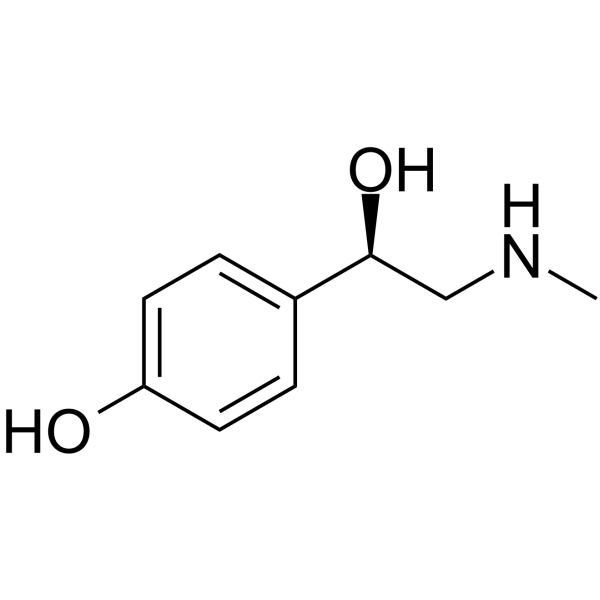
Cat. No.: HY-113236
CAS No.: 614-35-7
Purity:  98.04%
p-Synephrine is an orally active alkaloid dietary supplement without indirect sympathomimetic activity or cardiovascular stimulatory activity. p-Synephrine stimulates AMPK phosphorylation and mediates Glut4 translocation to increase glucose consumption and lactate production in skeletal muscle cells. p-Synephrine also downregulates the p38 MAPK and NF-κB signaling pathways to inhibit pro-inflammatory cytokine production and alter oxidative metabolism. p-Synephrine exhibits low subchronic toxicity in mice. p-Synephrine can be applied to research related to systemic inflammatory response syndrome, obesity, and type 2 diabetes .
loading...
    loading...
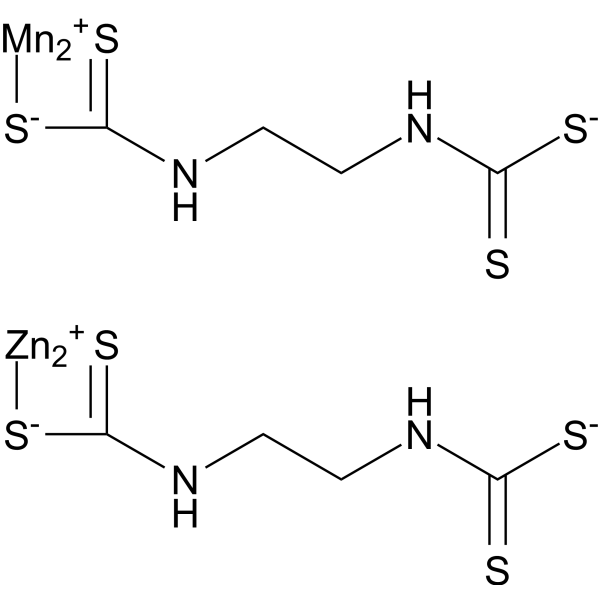
Cat. No.: HY-B0854
CAS No.: 8018-01-7
Mancozeb is a widely used fungicide that is effective against fungal diseases in most cereals, vegetables, fruits and ornamental plants. In addition, Mancozeb can cause liver damage in mice by activating the Keap1/Nrf2 signaling pathway. Mancozeb upregulates lactate dehydrogenase and cytochrome c to alter cell metabolism and induce cell death. Mancozeb has reproductive toxicity and can induce apoptosis in ovarian cells .
loading...
    loading...
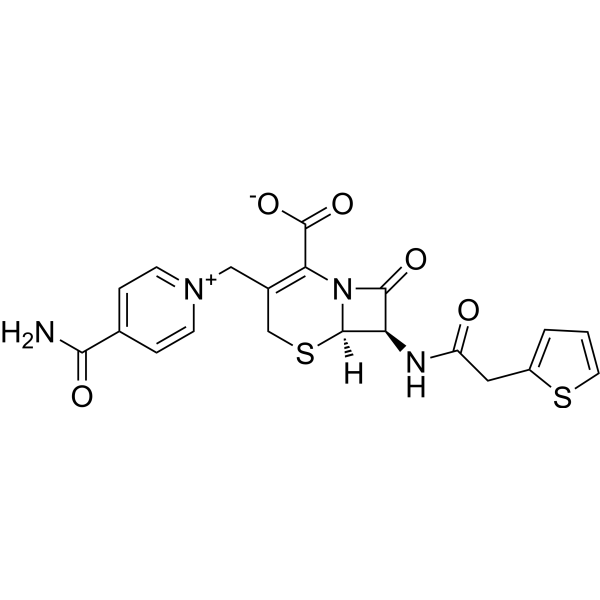
Cat. No.: HY-B1252
CAS No.: 5575-21-3
Target:  

Antibiotic Bacterial

Research Areas:  

Infection Inflammation/Immunology

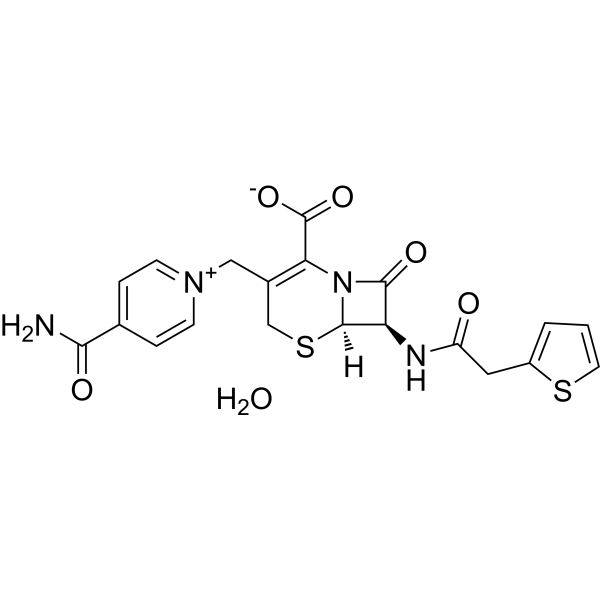
Cefalonium is a first-generation cephalosporin bactericidal antimicrobial agent. Cefalonium can be used in studies related to bovine mastitis, Staphylococcus aureus-induced mastitis and intramammary infections .
loading...
    loading...
Cat. No.: HY-W170255
CAS No.: 10255-67-1
Sodium mercaptopyruvate serves as a substrate for Lactate dehydrogenase and Sulfurtransferase. Sodium mercaptopyruvate forms through enzymatic transamination and oxidative deamination of L-cysteine (HY-Y0337). Sodium mercaptopyruvate abolishes lactate dehydrogenase reaction activity. It increases urinary thiosulfate excretion, fails to sustain rat growth by replacing L-cystine (HY-N0394), and does not induce morbidity or mortality in mice. Sodium mercaptopyruvate is applicable to research related to 3-mercaptopyruvate disulfiduria and 3-mercaptolactate disulfiduria .
loading...
    loading...
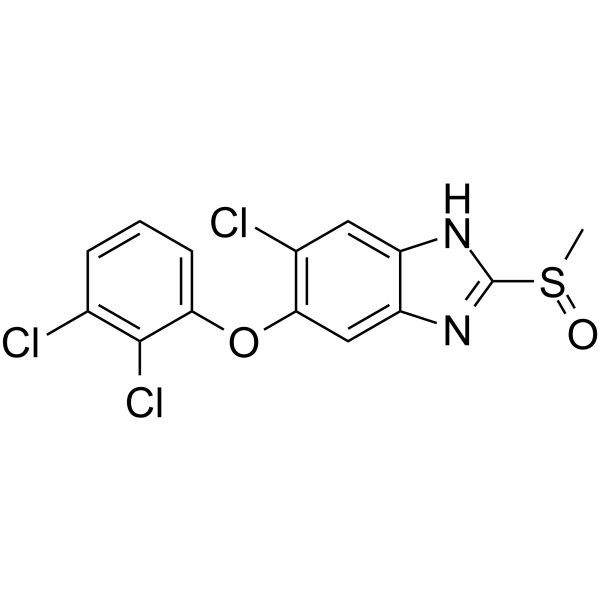
Cat. No.: HY-136450
CAS No.: 100648-13-3
Purity:  98.78%
Synonyms: TCBZ-SO
Target:  

Parasite BCRP

Research Areas:  

Infection Cancer

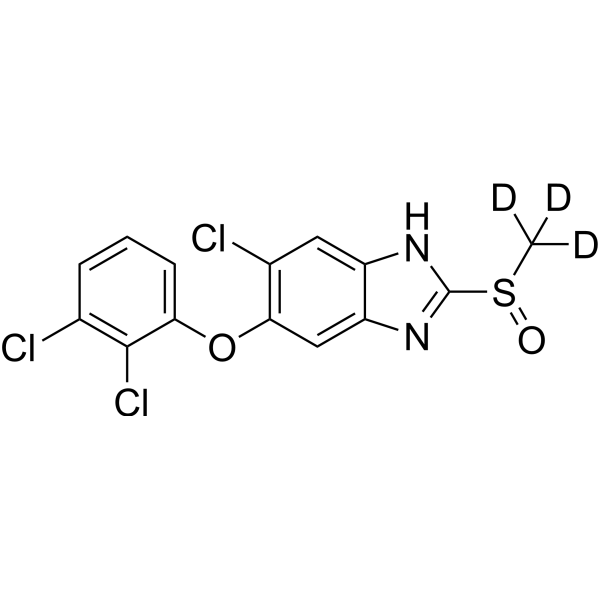
Triclabendazole sulfoxide (TCBZ-SO) is an orally active ABCG2 inhibitor with antiparasitic activity. Triclabendazole sulfoxide inhibits ABCG2-mediated active efflux and ATPase activity. Triclabendazole sulfoxide increases the intracellular accumulation of Mitoxantrone (HY-13502). Triclabendazole sulfoxide reduces the apical-directed transepithelial transport of Nitrofurantoin and Danofloxacin, while increasing their basolateral-directed transepithelial transport. Triclabendazole sulfoxide elevates the plasma levels of sulfasalazine in wild-type mice. Triclabendazole sulfoxide decreases ABCG2-mediated secretion of Nitrofurantoin into milk in wild-type lactating mice. Triclabendazole sulfoxide can be used in the research of insecticidal agents and cancers such as breast cancer .
loading...
    loading...
Cat. No.: HY-178761
CAS No.: 3093312-81-0
PGK1-IN-1 (Compound 6e) is a potent and selective PGK1 inhibitor (IC50: 33 nM). PGK1-IN-1 inhibits PGK1-mediated glycolytic metabolism and reduces glucose consumption/lactate production. PGK1-IN-1 enhances Nrf2 accumulation and HO-1 expression, and suppresses the transcription and protein levels of the inflammatory cytokines IL-1β and IL-6. PGK1-IN-1 ameliorates Dextran sulfate sodium (DSS) (HY-116282C)-induced experimental colitis in mice. PGK1-IN-1 can be used for research of inflammatory bowel disease (IBD) .
loading...
    loading...
Cat. No.: HY-178748
PKM2-IN-12 is an orally active PKM2 inhibitor with an IC50 of 10 nM. PKM2-IN-12 inhibits COLO-205 cell proliferation and migration, arrests the cell cycle, and induces apoptosis. PKM2-IN-12 significantly reduces cellular levels of lactate, pyruvate, and ROS. PKM2-IN-12 directly kills cancer cells and restores disrupted gut microbiota balance in mice model. PKM2-IN-12 can be used to study colorectal cancer .
loading...
    loading...
Cat. No.: HY-162831
Research Areas:  

Others

MPC-IN-1 (compound 4i) is a cyanocinnamate-based, mitochondrial pyruvate transporter (MPC) inhibitor, and is a derivative of UK-5099 (HY-15475). MPC inhibitors promote the development of hair follicle stem cells without affecting normal cells. MPC-IN-1 promotes cellular lactate production and promotes significant hair growth in mice, and has the potential to be used to inhibit hair loss .
loading...
    loading...
Cat. No.: HY-B1252A
CAS No.: 1486466-27-6
Target:  

Antibiotic Bacterial

Research Areas:  

Infection Inflammation/Immunology

Cefalonium hydrate is a first-generation cephalosporin bactericidal antimicrobial agent. Cefalonium hydrate can be used in studies related to bovine mastitis, Staphylococcus aureus-induced mastitis and intramammary infections .
loading...
    loading...
Cat. No.: HY-136450R
CAS No.: 100648-13-3
Synonyms: TCBZ-SO (Standard)
Research Areas:  

Infection

Triclabendazole sulfoxide (Standard) is the analytical standard of Triclabendazole sulfoxide. This product is intended for research and analytical applications. Triclabendazole sulfoxide (TCBZ-SO) is an orally active ABCG2 inhibitor with antiparasitic activity. Triclabendazole sulfoxide inhibits ABCG2-mediated active efflux and ATPase activity. Triclabendazole sulfoxide increases the intracellular accumulation of Mitoxantrone (HY-13502). Triclabendazole sulfoxide reduces the apical-directed transepithelial transport of Nitrofurantoin and Danofloxacin, while increasing their basolateral-directed transepithelial transport. Triclabendazole sulfoxide elevates the plasma levels of sulfasalazine in wild-type mice. Triclabendazole sulfoxide decreases ABCG2-mediated secretion of Nitrofurantoin into milk in wild-type lactating mice. Triclabendazole sulfoxide can be used in the research of insecticidal agents and cancers such as breast cancer .
loading...
    loading...
Cat. No.: HY-136450S
Synonyms: TCBZ-SO-d3
Triclabendazole sulfoxide-d3 is the deuterium labeled Triclabendazole sulfoxide. Triclabendazole sulfoxide (TCBZ-SO) is an orally active ABCG2 inhibitor with antiparasitic activity. Triclabendazole sulfoxide inhibits ABCG2-mediated active efflux and ATPase activity. Triclabendazole sulfoxide increases the intracellular accumulation of Mitoxantrone (HY-13502). Triclabendazole sulfoxide reduces the apical-directed transepithelial transport of Nitrofurantoin and Danofloxacin, while increasing their basolateral-directed transepithelial transport. Triclabendazole sulfoxide elevates the plasma levels of sulfasalazine in wild-type mice. Triclabendazole sulfoxide decreases ABCG2-mediated secretion of Nitrofurantoin into milk in wild-type lactating mice. Triclabendazole sulfoxide can be used in the research of insecticidal agents and cancers such as breast cancer .
loading...
    loading...
Cat. No.: HY-136450S1
Synonyms: TCBZ-SO-13C,d3
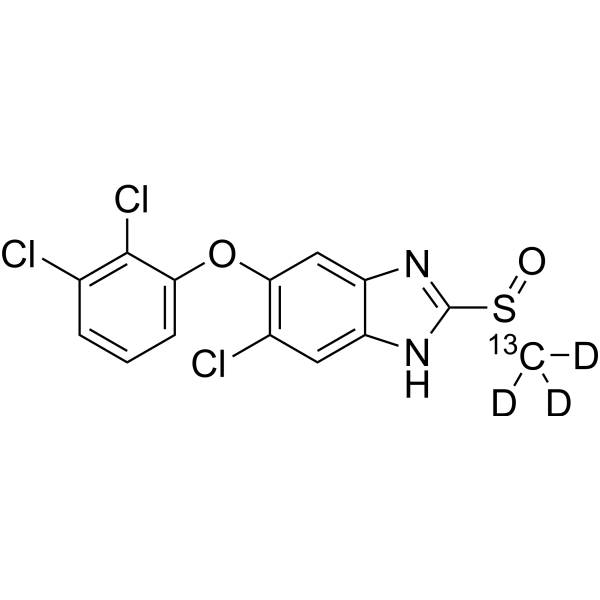
Triclabendazole sulfoxide- 13C,d3 is the 13C- and deuterium labeled Triclabendazole sulfoxide. Triclabendazole sulfoxide (TCBZ-SO) is an orally active ABCG2 inhibitor with antiparasitic activity. Triclabendazole sulfoxide inhibits ABCG2-mediated active efflux and ATPase activity. Triclabendazole sulfoxide increases the intracellular accumulation of Mitoxantrone (HY-13502). Triclabendazole sulfoxide reduces the apical-directed transepithelial transport of Nitrofurantoin and Danofloxacin, while increasing their basolateral-directed transepithelial transport. Triclabendazole sulfoxide elevates the plasma levels of sulfasalazine in wild-type mice. Triclabendazole sulfoxide decreases ABCG2-mediated secretion of Nitrofurantoin into milk in wild-type lactating mice. Triclabendazole sulfoxide can be used in the research of insecticidal agents and cancers such as breast cancer .
loading...
    loading...
Cat. No.: HY-B1252AS
Cefalonium-d4 hydrate is the deuterated-labeled Cefalonium hydrate (HY-B1252A). Cefalonium hydrate is a first-generation cephalosporin bactericidal antimicrobial agent. Cefalonium hydrate can be used in studies related to bovine mastitis, Staphylococcus aureus-induced mastitis and intramammary infections .
loading...
    loading...
Cat. No.: HY-B1252B
CAS No.: 1385046-35-4
Target:  

Antibiotic Bacterial

Research Areas:  

Infection Inflammation/Immunology

Cefalonium dihydrate is a first-generation cephalosporin bactericidal antimicrobial agent. Cefalonium dihydrate can be used in studies related to bovine mastitis, Staphylococcus aureus-induced mastitis and intramammary infections .
loading...
    loading...
Cat. No.: HY-B1252BR
CAS No.: 1385046-35-4
Cefalonium dihydrate (Standard) is the analytical standard of Cefalonium dihydrate (HY-B1252B). This product is intended for research and analytical applications. Cefalonium dihydrate is a first-generation cephalosporin bactericidal antimicrobial agent. Cefalonium dihydrate can be used in studies related to bovine mastitis, Staphylococcus aureus-induced mastitis and intramammary infections .
loading...
    loading...
Cat. No.: HY-B1252R
CAS No.: 5575-21-3
Cefalonium (Standard) is the analytical standard of Cefalonium (HY-B1252). This product is intended for research and analytical applications. Cefalonium is a first-generation cephalosporin bactericidal antimicrobial agent. Cefalonium can be used in studies related to bovine mastitis, Staphylococcus aureus-induced mastitis and intramammary infections .
loading...
    loading...
Cat. No.: HY-180388
CAS No.: 15489-16-4
Stibophen is a potent antiparasitic agent is effective against Litomosoides carinii, Dipetalonema witei, and Brugia pahangi. Stibophen inhibits lactate accumulation and phosphofructokinases (PFK) activity in adult filariids. Stibophen also inhibits Ascaris and Hymenolepis diminuta PFK without inhibiting mammalian liver PFK. Stibophen can be used for the research of schistosomiasis and filariid infections .
loading...
    loading...
Cat. No.: HY-182469
FuBIG is an iminoguanidine derivative with neuroprotective effects. FuBIGL inhibits L-LDH activation and reduces lactate production. FuBIGL exerts protective effects on inflammatory nerve cells, upregulates the expressions of AMPK, pAMPK and FOXO3, and activates the AMPK pathway in cells. FuBIG exerts anti-inflammatory effects by reducing pro-inflammatory cytokines (IL-6, IL-1β, TNF-α) and increasing the anti-inflammatory cytokine IL-10. FuBIG maintains mitochondrial membrane potential, alleviates mitochondrial dysfunction, reduces ROS production, and relieves oxidative stress. FuBIG upregulates Bcl-2, downregulates Bax and Caspase-3, and inhibits cell apoptosis (apoptosis). FuBIG improves metabolic disorders in diabetic mice, decreases the levels of LDL-C, ALT and AST, and increases HDL-C level simultaneously. FuBIG can be used in the research of diabetic neuroinflammation .
loading...
    loading...
  • 1

