



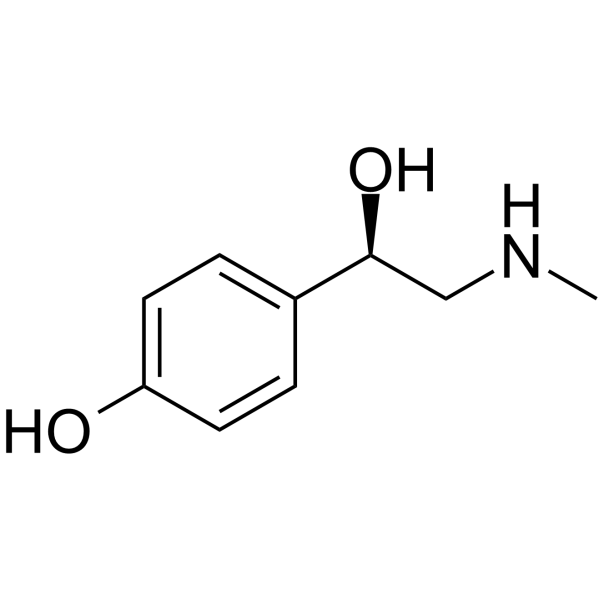
p-Synephrine
Based on 3 publication(s) in Google Scholar
p-Synephrine is an orally active alkaloid dietary supplement without indirect sympathomimetic activity or cardiovascular stimulatory activity. p-Synephrine stimulates AMPK phosphorylation and mediates Glut4 translocation to increase glucose consumption and lactate production in skeletal muscle cells. p-Synephrine also downregulates the p38 MAPK and NF-κB signaling pathways to inhibit pro-inflammatory cytokine production and alter oxidative metabolism. p-Synephrine exhibits low subchronic toxicity in mice. p-Synephrine can be applied to research related to systemic inflammatory response syndrome, obesity, and type 2 diabetes.
For research use only. We do not sell to patients.
- Purity : 99.90%
- CAS No.: 614-35-7
- Formula: C9H13NO2
- Molecular Weight:167.21
-
Storage:
4°C, stored under nitrogen
* In solvent : -80°C, 6 months; -20°C, 1 month (stored under nitrogen)

To place orders, for customer services and technical support, please contact: MedChemExpress USA
Tel: 609-228-6898 E-mail: [email protected] [email protected]


-
 Biological Activity
-
Chemical Information
-
Solvent & Solubility
- Protocols
- Purity & Documentation
- References
-
 Help & FAQs



Publications Citing Use of MedChemExpress (MCE) p-Synephrine
MoreAll Adrenergic Receptor Isoforms
MoreAll AMPK Isoforms
More

Biological Activity
Description
IC50 & Target
[1]|
GLUT4 |
In Vitro
p-Synephrine (10 μg/mL) exerts lipolytic activity equivalent to 60% of that of isoproterenol in rat white adipocytes, and this proportion is 10% in human adipocytes[1].
p-Synephrine activates glucose transport in human adipocytes[1].
p-Synephrine binds to neuromedin U2 receptors in the HEK293 cell line with high efficiency and high affinity[1].
p-Synephrine increases the basal glucose consumption of L6 skeletal muscle cells by more than 50% in a dose-dependent manner via AMP-activated protein kinase phosphorylation-mediated Glut4-dependent uptake, with no effect on cell viability[1].
p-Synephrine reduces glucose production in H411E rat hepatocytes in a dose-dependent manner, and this effect is independent of α- and β-adrenergic receptor signaling pathways[1].
p-Synephrine exerts anti-inflammatory effects in normal human fibroblasts and NIH/3 T3 mouse fibroblasts by inhibiting STAT6 phosphorylation to block IL-4-induced eotaxin-1 (eotaxin-1) expression[1].
p-Synephrine inhibits inflammatory responses in LPS-stimulated RAW264.7 cells by downregulating the p38 MAPK and NF-κB signaling pathways via β-adrenergic receptors, thereby suppressing the production of proinflammatory cytokines and nitric oxide[2].
p-Synephrine inhibits inflammatory responses in LPS-stimulated primary peritoneal macrophages by downregulating the p38 MAPK and NF-κB signaling pathways via β-adrenergic receptors, thereby suppressing the production of proinflammatory cytokines[2].
p-Synephrine (0-100 μM; 24 h) does not affect the viability of differentiated L6 skeletal muscle myotubes, nor does it induce cytotoxicity in them[4].
p-Synephrine (25-200 μM; 2 h) increases basal glucose consumption in differentiated L6 skeletal muscle myotubes in a dose-dependent manner, with the maximal effect observed at a concentration of 50 μM; it also enhances insulin-stimulated glucose consumption[4].
p-Synephrine (25-50 μM; 7 h) increases both basal and insulin-stimulated lactate production in differentiated L6 skeletal muscle myotubes to more than 1.3-fold of the original levels[4].
p-Synephrine (50 μM; 10 min) does not stimulate Akt phosphorylation at the Ser473 site, nor does it alter insulin-induced Akt phosphorylation, in differentiated L6 skeletal muscle myotubes[4].
p-Synephrine (50 μM; 2 h) induces AMPK phosphorylation in differentiated L6 skeletal muscle myotubes, with greater potency than 1 mM AICAR[4].
p-Synephrine (50 μM; 2 h) induces Glut4 translocation to the plasma membrane and stimulates glucose consumption in differentiated L6 skeletal muscle myotubes. Both of these effects depend on AMPK activity but are independent of PI3 kinase activity[4].
MedChemExpress (MCE) has not independently confirmed the accuracy of these methods. They are for reference only. Further protocols information, click here.
-
Cell Line:differentiated L6 rat skeletal muscle myotubes
-
Concentration:0-100 μM
-
Incubation Time:24 h
-
Result:Did not cause significant changes in LDH cytotoxicity compared to control.
Did not cause significant changes in cell viability compared to control.
Showed no abnormal microscopic features indicating cell damage.
-
Cell Line:differentiated L6 rat skeletal muscle myotubes
-
Concentration:50 μM; 50 μM combined with 10 nM insulin
-
Incubation Time:10 min
-
Result:Failed to stimulate Akt phosphorylation at Ser473.
Did not affect insulin-stimulated Akt phosphorylation at Ser473.
-
Cell Line:differentiated L6 rat skeletal muscle myotubes
-
Concentration:50 μM
-
Incubation Time:2 h
-
Result:Stimulated AMPK phosphorylation.
Induced a stronger degree of AMPK phosphorylation than 1 mM AICAR.
-
Cell Line:differentiated L6 rat skeletal muscle myotubes
-
Concentration:50 μM; 50 μM with 100 nM wortmannin pretreatment; 50 μM with 10 μM compound-C pretreatment
-
Incubation Time:2 h (p-Synephrine treatment); 30 min (pretreatment)
-
Result:Induced translocation of Glut4 from the cytoplasm to the plasma membrane, comparable to insulin-induced translocation.
Suppressed Glut4 translocation when pretreated with compound-C but not wortmannin.
Significantly reduced p-Synephrine-stimulated glucose consumption when pretreated with compound-C (p < 0.01).
Did not affect p-Synephrine-stimulated glucose consumption when pretreated with wortmannin.
In Vivo
p-Synephrine exhibits antioxidant and tissue protective activities in normal mouse livers by modulating glutathione and antioxidant enzyme levels[1].
p-Synephrine (30-300 mg/kg; p.o.; daily; 28 days) administered orally to healthy male CF1 mice for 28 days reduces body weight gain, alters oxidative stress biomarkers and shows low subchronic toxicity with no observed mortality or overt organ damage[3].
MedChemExpress (MCE) has not independently confirmed the accuracy of these methods. They are for reference only.
-
Animal Model:CF1 (male, 42.57 g)[3]
-
Dosage:30 mg/kg; 300 mg/kg
-
Administration:p.o.; daily; 28 days
-
Result:Reduced body weight gain compared to controls.
Reduced total plasma proteins to 54.0 g/l (control: 61.2 g/l) at 30 mg/kg dose.
Increased catalase (CAT) activity to 110.08 U/mL (control: 18.65 U/mL) at 30 mg/kg dose.
Inhibited glutathione peroxidase (GPx) activity by 59.7% (30 mg/kg, 13.94 nmol NAD/min/mL; control: 23.35 nmol NAD/min/mL) and 64.1% (300 mg/kg, 14.98 nmol NAD/min/mL) relative to controls.
Increased reduced glutathione (GSH) concentration to 2.44 mM (30 mg/kg) and 2.30 mM (300 mg/kg; control: 1.08 mM).
Caused no changes in organ relative weights, most biochemical/hematological parameters, malondialdehyde (MDA) levels, or superoxide dismutase (SOD) activity.
Caused no clinical signs of toxicity or mortality.


Chemical Information
-
CAS No. 614-35-7
-
Appearance Solid
-
Molecular Weight 167.21
-
Formula C9H13NO2
-
Color White to off-white
-
SMILES
OC1=CC=C([C@@H](O)CNC)C=C1
-
Structure Classification
-
Initial Source
-
Shipping
Room temperature in continental US; may vary elsewhere.
-
Storage
4°C, stored under nitrogen
* In solvent : -80°C, 6 months; -20°C, 1 month (stored under nitrogen)


Publications (3)
-
Journal Impact Factor
-
Most Recent
-
Nutrients
In Vitro Activation of Human Adrenergic Receptors and Trace Amine-Associated Receptor 1 by Phenethylamine Analogues Present in Food Supplements. [Abstract]2024 May 22;16(11):1567. PMID: 38892500 -
Eur J Pharmacol
Phenethylamines in pre-workout supplements alter arterial pressure, heart rate, and body temperature in rats. [Abstract]2026 Jun 10:1026:178966. PMID: 42128191 -
Biol Pharm Bull
p-Synephrine Loaded by Injectable Gelma Hydrogel Ameliorates Cartilage Degeneration in Osteoarthritis by Inhibiting the MAPK and NF-κB Signaling Pathways. [Abstract]2025;48(6):882-894. PMID: 40545361


Solvent & Solubility
In Vitro:
DMSO : 125 mg/mL (747.56 mM; Need ultrasonic; Hygroscopic DMSO has a significant impact on the solubility of product, please use newly opened DMSO)
H2O : 2 mg/mL (11.96 mM; Need ultrasonic)
Please refer to the solubility information to select the appropriate solvent. Once prepared, please aliquot and store the solution to prevent product inactivation from repeated freeze-thaw cycles.
Storage method and period of stock solution: -80°C, 6 months; -20°C, 1 month (stored under nitrogen). When stored at -80°C, please use it within 6 months. When stored at -20°C, please use it within 1 month.
* Note: If you choose water as the stock solution, please dilute it to the working solution, then filter and sterilize it with a 0.22 μm filter before use.
Please refer to the solubility information to select the appropriate solvent. Once prepared, please aliquot and store the solution to prevent product inactivation from repeated freeze-thaw cycles.
Storage method and period of stock solution: -80°C, 6 months; -20°C, 1 month (stored under nitrogen). When stored at -80°C, please use it within 6 months. When stored at -20°C, please use it within 1 month.
* Note: If you choose water as the stock solution, please dilute it to the working solution, then filter and sterilize it with a 0.22 μm filter before use.
Concentration (start) × Volume (start) = Concentration (final) × Volume (final)
In Vivo:
For the following dissolution methods, please prepare the working solution directly:
It is recommended to prepare fresh solutions and use them promptly within a short period of time.
The percentages shown for the solvents indicate their volumetric ratio in the final prepared solution. If precipitation or phase separation occurs during preparation, heat and/or sonication can be used to aid dissolution.
Add each solvent one by one: PBS
Solubility: 5 mg/mL (29.90 mM); Clear solution; Need ultrasonic and warming and heat to 60°C

Protocols
-
Kinase activity and phosphorylation assays
Kinase activity assays measure the ability of kinases to transfer phosphate groups from ATP to specific substrates, while phosphorylation assays detect the presence and levels of phosphorylated proteins. Common methods include radiolabeled ATP incorporation (e. g. ,), ADP release detection via bioluminescence (e. g. ,[3]), enzyme-linked immunosorbent assays (ELISA) for phospho-specific epitopes (e. g. ,[6]), and microtiter-based formats for high-throughput screening (e. g. ,[8]). The ADP-Glo assay quantifies kinase activity by measuring ADP produced during phosphorylation using a luciferase-based system. Radiometric assays involve autoradiography or scintillation counting after incorporation of 32P-labeled ATP into substrate proteins. ELISA-based approaches rely on phospho-specific antibodies to detect activated kinases in cell lysates or purified samples.
-
Western Blot
Western blotting (WB) is a commonly used experimental method in molecular biology, biochemistry, and immunogenetics for identifying and quantifying target proteins. It combines gel electrophoresis with immunoassay, enabling researchers to analyze protein expression, post-translational modifications, and molecular weight.
-
Subchronic/Chronic Toxicity Study
A subchronic/chronic oral toxicity study detects systemic adverse effects caused by repeated administration of a test article, using mortality, clinical signs, body weight, food/water intake, ophthalmology, urinalysis, hematology, serum biochemistry, organ weights, gross necropsy, and histopathology as integrated readouts. The readout reflects dose-related physiological injury, target-organ pathology, reversibility after recovery, and derivation of NOAEL, LOAEL, or related point-of-departure values when the dataset supports them.
-
Repeated-Dose Oral Toxicity Study
A repeated-dose oral toxicity study evaluates systemic toxic effects after daily oral exposure to a test substance for a defined period, commonly 28 days, 6 weeks, 90 days, or 13 weeks in rodent studies. The readout is generated by integrating mortality, clinical signs, body-weight change, food and water intake, functional or behavioral observations, hematology, serum biochemistry, urinalysis, organ weights, necropsy, and histopathology to identify dose-related adverse effects, target organs, and the no-observed-adverse-effect level (NOAEL).
-
Protocol for Kinase activity and phosphorylation assays
Kinase activity assays measure transfer of phosphate from ATP to a protein or peptide substrate, generating phosphorylated substrate, ADP, or incorporated radiolabeled phosphate as the readout; phosphorylation assays measure site-specific phosphorylation in cells or tissues as a proxy for kinase-pathway activation, inhibition, or substrate regulation. Phosphorylation can be detected by phospho-specific Western blot, immunoprecipitation kinase assay, phospho-immunofluorescence, phospho-flow cytometry, luminescent ADP detection, radiolabeled ATP incorporation, or reporter-based pathway assays, and these readouts can be applied to cancer cells, primary neurons, mouse tumors, organoids, inflammatory macrophages, ferroptosis studies, and mitophagy studies when the kinase target is biologically relevant.
-
Research Protocol for Inflammation-related Diseases
The NLRP3 inflammasome is a cytosolic innate immune signaling platform that integrates priming signals and danger-signal activation to promote caspase-1 activation, maturation of IL-1β and IL-18, and gasdermin D-mediated pyroptotic cell death. The core experimental logic is to determine whether inflammatory disease phenotypes are driven by increased NLRP3 expression, ASC-containing inflammasome assembly, caspase-1 cleavage, GSDMD cleavage, and extracellular release of IL-1β/IL-18 rather than by nonspecific cell injury alone. The pathway is strongly linked to inflammation-related disease phenotypes because monosodium urate crystals activate NALP3/NLRP3 inflammasome signaling in gout-like crystal inflammation, cholesterol crystals activate NLRP3 inflammasomes in atherogenesis models, and DSS-induced intestinal inflammation has been reported to involve NLRP3 inflammasome activity. However, experimental colitis studies also show context-dependent protective effects of NLRP3 inflammasome co
-
Research Protocol for Metabolic Diseases
AMP-activated protein kinase, AMPK, is a conserved cellular energy sensor that responds to reduced cellular energy status and coordinates metabolism by increasing ATP-generating catabolic pathways while suppressing ATP-consuming anabolic processes. In metabolic disease research, the AMPK pathway is experimentally relevant because it regulates hepatic lipid synthesis, fatty acid oxidation, glucose production, skeletal-muscle glucose disposal, mTORC1-linked biosynthesis, autophagy, mitochondrial homeostasis, and whole-body energy balance. The central pathway logic is that energy stress, metformin, exercise-like stimulation, or direct AMPK activators increase AMPKα Thr172 phosphorylation and downstream substrate phosphorylation, including ACC and RAPTOR. Phosphorylation of ACC suppresses lipogenesis and supports fatty acid oxidation, whereas phosphorylation of RAPTOR suppresses mTORC1 signaling and links cellular energy status to growth and protein synthesis control. The pathway is linked


Purity & Documentation
-
Data Sheet (291 KB)
-
SDS (394 KB)
- English - EN (394 KB)
- Français - FR (394 KB)
- Deutsch - DE (394 KB)
- Norwegian - NO (394 KB)
- Español - ES (394 KB)
- Swedish - SV (394 KB)
- Italian - IT (394 KB)
- Korean - KR (394 KB)
- Portuguese - PT (394 KB)
-
Handling Instructions (2659 KB)
References
[1]. Stohs SJ, Shara M, Ray SD. p-Synephrine, ephedrine, p-octopamine and m-synephrine: Comparative mechanistic, physiological and pharmacological properties. Phytotherapy research : PTR. 2020 Aug;34(8):1838-1846. [Content Brief]
[2]. Ishida M, Takekuni C, Nishi K, et al.. -Synephrine suppresses inflammatory responses in lipopolysaccharide-stimulated RAW264.7 cells and alleviates systemic inflammatory response syndrome in mice. Food & function. 2022 May 10;13(9):5229-5239. [Content Brief]
[3]. Arbo MD, Schmitt GC, Limberger MF, et al.. Subchronic toxicity of Citrus aurantium L. (Rutaceae) extract and p-synephrine in mice. Regulatory toxicology and pharmacology : RTP. 2009 Jul;54(2):114-7. [Content Brief]
[4]. Hong NY, Cui ZG, Kang HK, et al.. p-Synephrine stimulates glucose consumption via AMPK in L6 skeletal muscle cells. Biochemical and biophysical research communications. 2012 Feb 24;418(4):720-4. [Content Brief]


Complete Stock Solution Preparation Table
Please refer to the solubility information to select the appropriate solvent. Once prepared, please aliquot and store the solution to prevent product inactivation from repeated freeze-thaw cycles.
Storage method and period of stock solution: -80°C, 6 months; -20°C, 1 month (stored under nitrogen). When stored at -80°C, please use it within 6 months. When stored at -20°C, please use it within 1 month.
| Optional Solvent | Concentration Solvent Mass | 1 mg | 5 mg | 10 mg | 25 mg |
|---|---|---|---|---|---|
| H2O / DMSO | 1 mM | 5.9805 mL | 29.9025 mL | 59.8050 mL | 149.5126 mL |
| 5 mM | 1.1961 mL | 5.9805 mL | 11.9610 mL | 29.9025 mL | |
| 10 mM | 0.5981 mL | 2.9903 mL | 5.9805 mL | 14.9513 mL | |
| DMSO | 15 mM | 0.3987 mL | 1.9935 mL | 3.9870 mL | 9.9675 mL |
| 20 mM | 0.2990 mL | 1.4951 mL | 2.9903 mL | 7.4756 mL | |
| 25 mM | 0.2392 mL | 1.1961 mL | 2.3922 mL | 5.9805 mL | |
| 30 mM | 0.1994 mL | 0.9968 mL | 1.9935 mL | 4.9838 mL | |
| 40 mM | 0.1495 mL | 0.7476 mL | 1.4951 mL | 3.7378 mL | |
| 50 mM | 0.1196 mL | 0.5981 mL | 1.1961 mL | 2.9903 mL | |
| 60 mM | 0.0997 mL | 0.4984 mL | 0.9968 mL | 2.4919 mL | |
| 80 mM | 0.0748 mL | 0.3738 mL | 0.7476 mL | 1.8689 mL | |
| 100 mM | 0.0598 mL | 0.2990 mL | 0.5981 mL | 1.4951 mL |
* Note: If you choose water as the stock solution, please dilute it to the working solution, then filter and sterilize it with a 0.22 μm filter before use.


p-Synephrine Related Classifications
HY-113236 Related Classifications
 Powered by Bioz