

1. Search Result
Search Result
Results for "

lipid vesicles

" in MedChemExpress (MCE) Product Catalog:

45

Inhibitors & Agonists

3

Screening Libraries

9

Fluorescent Dyes

6

Biochemical Assay Reagents

6

Peptides

5

Natural
Products

13

Oligonucleotides

Cat. No. Product Name Target Research Areas Chemical Structure
  • HY-D0040
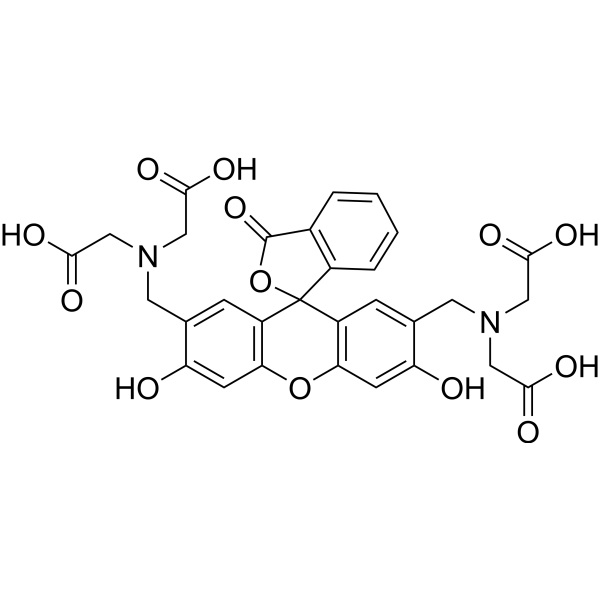
    Calcein
    10+ Cited Publications

    Fluorexon

    Fluorescent Dye Others
    Calcein is a fluorescent dye and self-quenching probe, used as an indicator of lipid vesicle leakage, and also as a complexometric indicator for titration of calcium ions with EDTA, and for fluorometric determination of calcium. Calcein cannot directly cross the intact cell membrane of a living cell, unlike Calcein-AM (HY-D0041) which is cell-permeable. Calcein can also be used as a model drug for evaluating efficiency and bioavailability of drug delivery systems .
    Calcein
  • HY-D1736

    Fluorescent Dye Others
    BODIPY FL-C16 is a BODIPY-labeled analog of Palmitic acid (HY-N0830), which serves as a fluorescent lipid tracer. BODIPY FL-C16 also acts as a ligand for liver fatty acid-binding protein (L-FABP) and intestinal fatty acid-binding protein (I-FABP) , with Kd values of 270 nM and 330 nM, respectively. BODIPY FL-C16 is rapidly taken up by cells, and after metabolic conversion to phospholipids, it is incorporated into the membrane structures of intracellular organelles and extracellular vesicles .
    BODIPY FL-C16
  • HY-121447

    Endogenous Metabolite Metabolic Disease
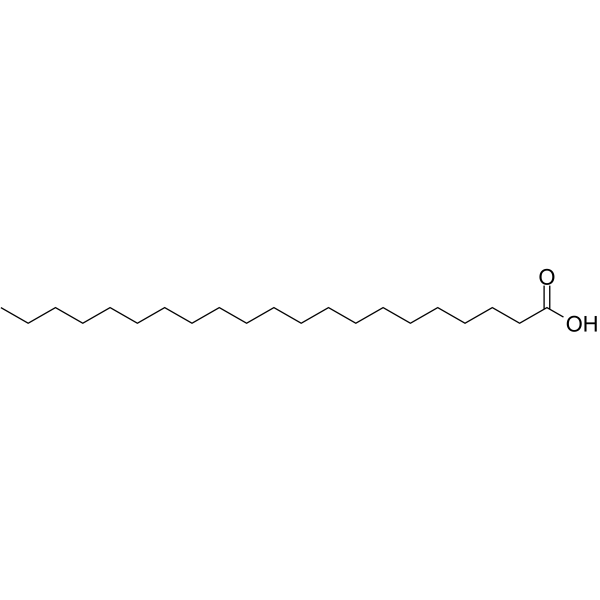
    Heneicosanoic acid is an odd-chain saturated fatty acid widely present in human milk, fish, seeds, and cerebrosides in the cell membranes of the nervous system. Heneicosanoic acid can form Langmuir monolayers and is often used as a model to study lipid self-assembly and disassembly processes in biological membranes and drug delivery systems. In the low-temperature L'2 and CS crystalline phases, Heneicosanoic acid undergoes local oscillations, which in turn drive the spontaneous formation and expulsion of micelles and vesicles .
    Heneicosanoic acid
  • HY-W590549

    DODAC

    Liposome Cancer
    Dioleyldimethylammonium chloride (DODAC) is a positively charged lipid promoter with membrane-disrupting activity, which is often formulated into cationic liposomes with dioleoylphosphatidylethanolamine. Dioleyldimethylammonium chloride is used in gene transfection research; through electrostatic interactions, it effectively promotes the binding of programmable fusion vesicles to cells and induces membrane disruption. Dioleyldimethylammonium chloride is also applied in studies on L1210 leukemia and LS180 human colon cancer .
    Dioleyldimethylammonium chloride
  • HY-150220

    Liposome Others
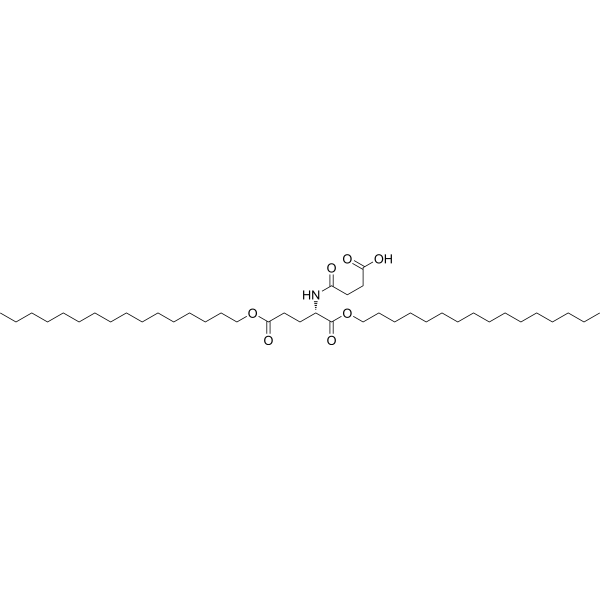
    1,5-Dihexadecyl N-(3-carboxy-1-oxopropyl)-L-glutamate is a lipid used in the synthesis of phospholipid vesicles. 1,5-Dihexadecyl N-(3-carboxy-1-oxopropyl)-L-glutamate works with other lipids to convert polydisperse vesicles into vesicles of uniform size by freeze-thaw and extrusion techniques. 1,5-Dihexadecyl N-(3-carboxy-1-oxopropyl)-L-glutamate can enhance protein encapsulation efficiency for drug delivery and biochemical applications .
    1,5-Dihexadecyl N-(3-carboxy-1-oxopropyl)-L-glutamate
  • HY-D1435

    Na+/K+ ATPase Fluorescent Dye Metabolic Disease
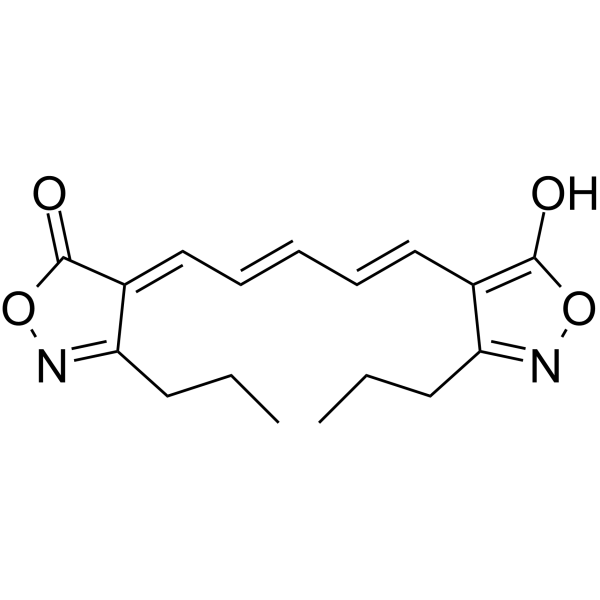
    Oxonol VI is an optical indicator of membrane potential in lipid vesicles (excitation/emission wavelengths: 614/646 nm). Oxonol VI can be used to detect changes in membrane potential associated with (Na + + K +)-ATPase activity in reconstituted vesicles .
    Oxonol VI
  • HY-W440986

    DSPS sodium

    Liposome Others
    Distearoylphosphatidylserine sodium is an anionic phospholipid with stearic acid tails (18:0) and contains a carboxylic acid (COOH) and amine (NH2) in their head group. It has been used in the preparation of lipid-mixing vesicles, liposome, or artificial membrane. Due to the medium size of fatty acid chain, DLPS is used to form thinner membranes/walls.
    Distearoylphosphatidylserine sodium
  • HY-P0269

    Magainin I

    Bacterial Fungal Antibiotic Infection
    Magainin 1 (Magainin I) is an antimicrobial and amphipathic peptide isolated from the skin of Xenopus laevis. Magainin 1 exhibits antibiotic activity against numerous Gram-negative and Gram-positive bacteria .
    Magainin 1
  • HY-N15871

    Liposome Others
    18:1 DGS-NTA(Ni) is a nickel chelating lipid. 18:1 DGS-NTA(Ni) has high affinity for histidine-tags and can bind histidine tags of recombinant proteins. 18:1 DGS-NTA(Ni) can be used for preparation of liposomes and nanosize multilamellar vesicles (NMVs) which are used in protein and peptide binding studies and antigen delivery .
    18:1 DGS-NTA(Ni)
  • HY-W714524

    16:0-18:1 PS (POPS)

    Liposome Others
    2-Oleoyl-1-palmitoyl-sn-glycero-3-phospho-L-serine sodium (16:0-18:1 PS (POPS)) is an anionic phospholipid with oleic acid (18:1) and palmitic acid (16:0) tails containing a carboxylic acid (COOH) and amine (NH2) in their head group. 2-Oleoyl-1-palmitoyl-sn-glycero-3-phospho-L-serine sodium has been used in the preparation of lipid-mixing vesicles, liposomes, and artificial membranes .
    1-Palmitoyl-2-oleoyl-sn-glycero-3-PS sodium
  • HY-135115

    3,4-DHPEA-EA

    α-synuclein HDAC Adrenergic Receptor Inflammation/Immunology
    Oleuropein Aglycone (3,4-DHPEA-EA) is a polyphenol and the aglycone form of oleuropein (HY-N0292), formed by enzymatic, acidic or acetylated hydrolysis of oleuropein. Dietary intake of oleuropein Aglycone (50 mg/kg diet) increases the number of neuronal autophagic vesicles, reverses cognitive deficits in the TgCRND8 transgenic mouse model of Alzheimer's disease, and reduces the levels of histone deacetylase 2 (HDAC2) in the cortex and hippocampus. Oleuropein Aglycone increases urinary norepinephrine, interscapular brown adipose tissue epinephrine, and UCP1 protein levels, and reduced plasma leptin levels and total abdominal adipose tissue weight in a rat model of high-fat diet-induced obesity. Oleuropein Aglycone also reduced lung neutrophil infiltration, lipid peroxidation, and IL-1β levels in a mouse model of carrageenan-induced pleurisy.
    Oleuropein Aglycone
  • HY-W440982

    PC(18:0/18:1); 2-Oleoyl-1-stearoyl-sn-glycero-3-phosphocholine

    Liposome Others
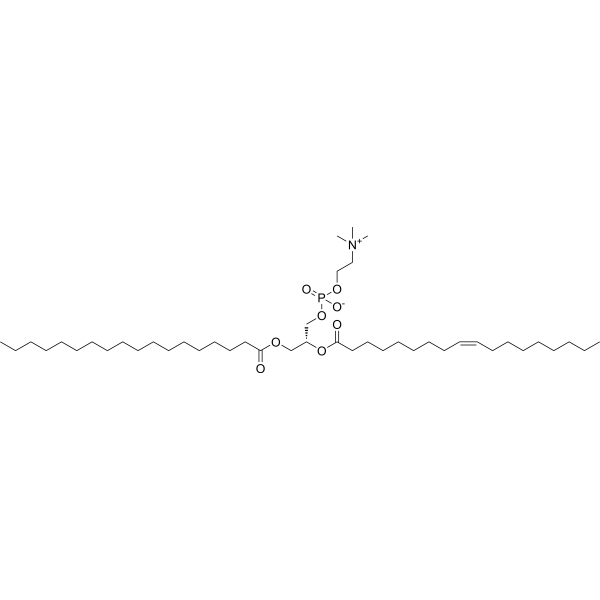
    SOPC (PC (18:0/18:1)) is a phosphatidylcholine lipid, which is an unsaturated phospholipid containing a cis double bond. When SOPC binds to Imatinib (HY-15463), Imatinib easily penetrates into its unsaturated liposome bilayer structure, and SOPC forms ordered, larger parallel stripe domains .
    SOPC
  • HY-142989

    Liposome HIV HCV HBV Infection Cancer
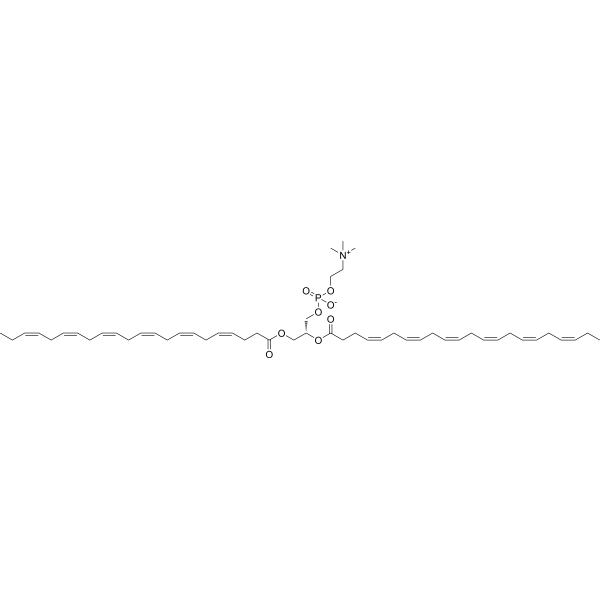
    1,2-Didocosahexaenoyl-sn-glycero-3-phosphocholine is a polyunsaturated phospholipid that serves as a component of lipid monolayers and small unilamellar vesicles. 1,2-Didocosahexaenoyl-sn-glycero-3-phosphocholine can be used to prepare endoplasmic reticulum-targeted liposomes (PERLs), which are composed of 1,2-didocosahexaenoyl-sn-glycero-3-phosphoethanolamine, l-α-phosphatidylinositol and l-α-phosphatidylserine at a molar ratio of 1.5:1.5:1:1. PERLs reduce cholesterol levels in human peripheral blood mononuclear cells (PBMCs) and decrease HIV-1 particle secretion from HIV-1-infected PBMCs. Liposomes formed from 1,2-Didocosahexaenoyl-sn-glycero-3-phosphocholine exhibit cytotoxicity against leukemia cells. 1,2-Didocosahexaenoyl-sn-glycero-3-phosphocholine is applicable to studies related to hepatitis C virus infection, HIV infection, hepatitis B virus infection and leukemia .
    1,2-Didocosahexaenoyl-sn-glycero-3-phosphocholine
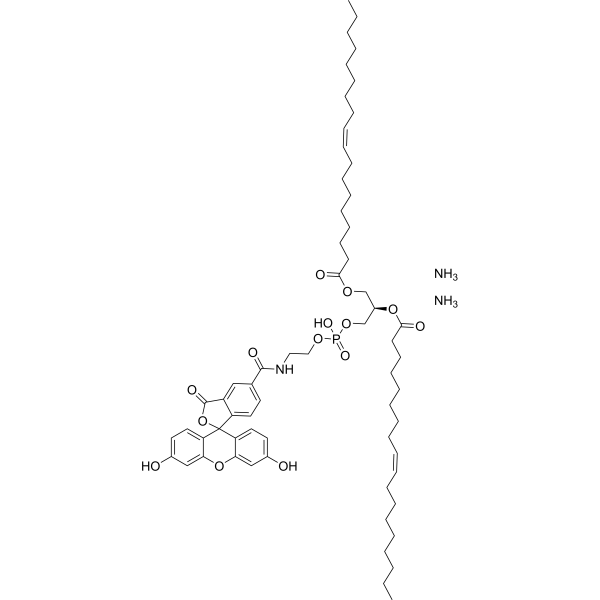
  • HY-D1556

    1,2-dioleoyl-sn-glycero-3-phosphoethanolamine-N-(carboxyfluorescein) ammonium

    Fluorescent Dye Cancer
    18:1 PE CF (1,2-dioleoyl-sn-glycero-3-phosphoethanolamine-N-(carboxyfluorescein) (ammonium)) is a pH-sensitive fluorescent indicator. 18:1 PE CF exhibits changes in fluorescence intensity in response to pH variations and reflects the electrostatic states of cationic liposomes and lipoplexes. 18:1 PE CF supports real-time visualization of pH distribution and membrane deformation in giant unilamellar vesicles and is suitable for steady-state fluorescence testing in large unilamellar vesicle membranes. 18:1 PE CF is capable of monitoring the surface electrical potential of cationic liposomes and lipoplexes and can effectively label lipid bilayers and nanomicelles. 18:1 PE CF can be used for the research of the investigation of lung cancer (Ex = 495 nm; Em = 520 nm) .
    18:1 PE CF
  • HY-157624

    18:0-22:6 PE

    Liposome Others
    1-Stearoyl-2-docosahexaenoyl-sn-glycero-3-phosphoethanolamine (18:0-22:6 PE) is a lipid compound that can be used for liposome preparation. Liposomes are the main component of vesicles with concentric phospholipid bilayer membranes, which can be used to construct drug delivery systems for anti-cancer and anti-infection fields. Highly polar water-soluble loads can be captured in the internal aqueous space of liposomes, while lipophilic loads can be distributed into the lipid bilayer and become part of the lipid bilayer. Especially for the delivery of antisense oligonucleotides, it can overcome the problems of inefficient cellular uptake and rapid loss in the body.
    1-Stearoyl-2-docosahexaenoyl-sn-glycero-3-phosphoethanolamine
  • HY-131682

    3-Hexanoyl-NBD-cholesterol

    Fluorescent Dye Others
    3-C6-NBD-cholesterol is a fluorescent analog of Chol that can be used to measure the kinetics of membrane and intracellular trafficking .
    3-C6-NBD-cholesterol
  • HY-156237
    Beclin1-ATG14L interaction inhibitor 1
    2 Publications Verification

    Autophagy Others
    Beclin1-ATG14L interaction inhibitor 1 (com 19) is a selective Beclin1-ATG14L interaction inhibitor. This protein interaction mechanism specifically targets complex I of the lipid kinase VPS34 without affecting complex II. Because the integrity of VPS34 complex II depends on the Beclin 1-UVRAG interaction. Beclin1-ATG14L interaction inhibitor 1 can disrupt the formation of VPS34 complex I and inhibit autophagy, but does not affect complex II-related vesicle transport .
    Beclin1-ATG14L interaction inhibitor 1
  • HY-D1560

    Fluorescent Dye Others
    FG 488 DHPE is a lipid-coupled fluorochrome, has be used as a fluorophore Oregon Green 488. FG 488 DHPE monitors acidification of lipid vesicles with λex/λem=508/534 nm.FG 488 DHPE is also used for Hv1-induced proton translocation quantificatio with λex/λem=508/534 nm as well .
    FG 488 DHPE
  • HY-P11430

    Biochemical Assay Reagents Infection
    UBI (31-38) is a Ubiquicidin-derived octapeptide and anti-bacterial agent. UBI (31-38) selectively interacts with anionic phospholipid membranes and restricts lipid lateral motion. UBI (31-38) induces anionic vesicle aggregation via electrostatic repulsion screening, and undergoes conformational changes in membrane-mimicking environments. UBI (31-38) can be used for the research of infection imaging probes .
    UBI (31-38)
  • HY-148977

    Endogenous Metabolite Metabolic Disease
    18:0,22:6 PS sodium is a lipid component of synaptic vesicles and cholesterol, which can be used for metabolic research .
    18:0,22:6 PS sodium
  • HY-143695

    Liposome Others
    16:0 TAP is a lipid product. 16:0 TAP can be used for the preparation of giant unilamellar vesicles to deliver agents .
    16:0 TAP
  • HY-W073074
    Mesoporphyrin IX dihydrochloride
    1 Publications Verification

    VSV Infection
    Mesoporphyrin IX (dihydrochloride) is a photosensitizer that can be used to modify liposomes. Mesoporphyrin IX (dihydrochloride) can insert into lipid vesicles and disrupt the viral membrane structure in vesicular stomatitis virus (VSV), inducing cross-linking of VSV glycoproteins, thereby inhibiting viral activity .
    Mesoporphyrin IX dihydrochloride
  • HY-W440985

    1,2-dilauroyl-sn-glycero-3-phospho-L-serine

    Liposome Cancer
    DLPS is an anionic phospholipid with lauric acid tails (12:0) and contains a carboxylic acid (COOH) and amine (NH2) in their head group. It has been used in the preparation of lipid-mixing vesicles, liposome, or artificial membrane. Due to the medium size of fatty acid chain, DLPS is used to form thinner membranes/walls.
    DLPS
  • HY-40118

    Boc-L-proline methyl ester

    Liposome Others
    Boc-Pro-OMe (Boc-L-proline methyl ester) is a lipid compound that can be used for liposome preparation. Liposomes are the main component of vesicles with concentric phospholipid bilayer membranes, which can be used to construct drug delivery systems for anti-cancer and anti-infection fields. Highly polar water-soluble loads can be captured in the internal aqueous space of liposomes, while lipophilic loads can be distributed into the lipid bilayer and become part of the lipid bilayer. Especially for the delivery of antisense oligonucleotides, it can overcome the problems of inefficient cellular uptake and rapid loss in the body.
    Boc-Pro-OMe
  • HY-165975

    (2S)-3-Keto-C6-dihydrosphingosine hydrochloride

    Liposome Others
    (2S)-3-Keto sphinganine (d6:0) ((2S)-3-Keto-C6-dihydrosphingosine) hydrochloride is a lipid compound that can be used for liposome preparation. Liposomes are the main component of vesicles with concentric phospholipid bilayer membranes, which can be used to construct drug delivery systems for anti-cancer and anti-infection fields. Highly polar water-soluble loads can be captured in the internal aqueous space of liposomes, while lipophilic loads can be distributed into the lipid bilayer and become part of the lipid bilayer. Especially for the delivery of antisense oligonucleotides, it can overcome the problems of inefficient cellular uptake and rapid loss in the body.
    (2S)-3-Keto sphinganine (d6:0) hydrochloride
  • HY-W591449

    Liposome Cancer
    DOPE-PEG2000-Azide is a liposome to simulate biological phospholipid membrane. Liposomes are the main component of vesicles with concentric phospholipid bilayer membranes, which can be used to construct drug delivery systems for anti-cancer and anti-infection fields. Highly polar water-soluble payloads can be trapped in the internal aqueous space of liposomes, while lipophilic payloads can partition into and become part of the lipid bilayer. Especially for delivering antisense oligonucleotides, it can overcome problems such as inefficient cellular uptake and rapid loss in the body .
    DOPE-PEG2000-Azide
  • HY-157696

    1,2-Di-O-octadecyl-sn-glycero-3-phosphocholine

    Biochemical Assay Reagents Others
    18:0 Diether PC (1,2-Di-O-octadecyl-sn-glycero-3-phosphocholine) is a glycerophospholipid that can be used as a nonhydrolizable ether lipid in calcein-containing vesicles .
    18:0 Diether PC
  • HY-145502

    Biochemical Assay Reagents Others
    1,2-Dipalmitoyl-sn-glycero-3-PE-N-(cap biotin) sodium is used in the composition of lipid vesicles for supported lipid bilayer (SLB) formation. 1,2-Dipalmitoyl-sn-glycero-3-PE-N-(cap biotin) sodium can be used as a probe for understanding the interactions between proteins and lipid-tethered ligands .
    1,2-Dipalmitoyl-sn-glycero-3-PE-N-(cap biotin) sodium
  • HY-134939

    Drug Derivative Others
    thio-Miltefosine is a modulator of rafts in membrane tissue. Rafts are nanoscale aggregates of different lipids and proteins that profoundly affect cellular function. Thio-Miltefosine modulates membrane phase behavior on cell-derived giant plasma membrane vesicles .
    thio-Miltefosine
  • HY-P5878

    Biochemical Assay Reagents Metabolic Disease
    RG33 Peptide is a diabetes inhibitor that significantly improves glucose clearance in insulin-resistant mice. RG33 Peptide effectively solubilizes lipid vesicles and promotes cholesterol efflux in cultured macrophages. RG33 Peptide is used in research into type 2 diabetes (T2D) .
    RG33 Peptide
  • HY-P0269A

    Bacterial Fungal Antibiotic Infection
    Magainin 1 TFA (Magainin I TFA) is an antimicrobial and amphipathic peptide isolated from the skin of Xenopus laevis. Magainin 1 TFA exhibits antibiotic activity against numerous Gram-negative and Gram-positive bacteria .
    Magainin 1 TFA
  • HY-115739

    Ras Neurological Disease Cancer
    RTIL 13 is a potent inhibitor of dynamin GTPase, with an IC50 of 2.3 μM for dynamin I GTPase. RTIL 13 also targets pleckstrin homology lipid binding domain. RTIL 13 can inhibit receptor-mediated and synaptic vesicle endocytosis, with IC50s of 9.3 μM and 7.1 μM, respectively .
    RTIL 13
  • HY-13321
    Anguizole
    2 Publications Verification

    HCV Infection
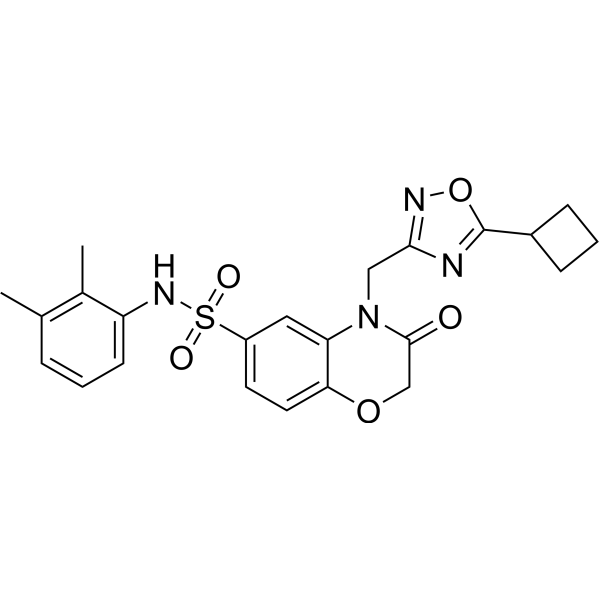
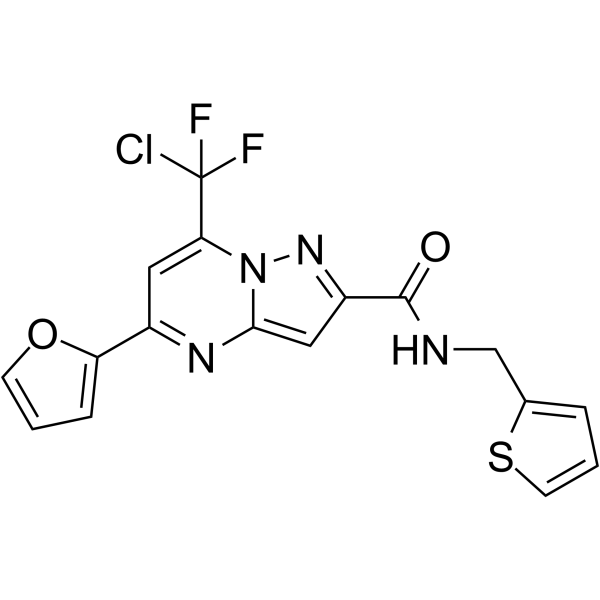
    Anguizole is an HCV NS4B inhibitor. Anguizole interacts with NS4B-AH2, inhibits AH2 lipid vesicle aggregation, disrupts NS4B dimerization/multimerization and impairs NS4B-NS5A interaction. Anguizole exhibits little host cell toxicity. Anguizole can be used for the research of HCV infection .
    Anguizole
  • HY-W419044A

    Fluorescent Dye Others
    Calcein calcium potassium is a fluorescent dye and self-quenching probe, used as an indicator of lipid vesicle leakage, and also as a complexometric indicator for titration of calcium ions with EDTA, and for fluorometric determination of calcium. Calcein cannot directly cross the intact cell membrane of a living cell, unlike Calcein-AM (HY-D0041) which is cell-permeable. Calcein can also be used as a model drug for evaluating efficiency and bioavailability of drug delivery systems .
    Calcein calcium potassium
  • HY-W329161

    Fluorescent Dye Others
    Calcein sodium is a fluorescent dye and self-quenching probe, used as an indicator of lipid vesicle leakage, and also as a complexometric indicator for titration of calcium ions with EDTA, and for fluorometric determination of calcium. Calcein cannot directly cross the intact cell membrane of a living cell, unlike Calcein-AM (HY-D0041) which is cell-permeable. Calcein can also be used as a model drug for evaluating efficiency and bioavailability of drug delivery systems .
    Calcein sodium salt
  • HY-153725

    Liposome Cancer
    17:1 Lyso PC is a liposome to simulate biological phospholipid membrane. Liposomes are the main component of vesicles with concentric phospholipid bilayer membranes, which can be used to construct drug delivery systems for anti-cancer and anti-infection fields. Highly polar water-soluble payloads can be trapped in the internal aqueous space of liposomes, while lipophilic payloads can partition into and become part of the lipid bilayer. Especially for delivering antisense oligonucleotides, it can overcome problems such as inefficient cellular uptake and rapid loss in the body .
    17:1 Lyso PC
  • HY-W340113

    1,2-Dipentadecanoyl-sn-glycero-3-phosphocholine

    Biochemical Assay Reagents Others
    15:0 PC (1,2-Dipentadecanoyl-sn-glycero-3-phosphocholine) is a phosphatidylcholine that can be used for giant unilamellar lipid vesicles (GUVs) preparation .
    15:0 PC
  • HY-D3394

    Fluorescent Dye Others
    SGC5 is a fluorescence enhancer and membrane dissociator with millisecond-scale membrane dissociation kinetics, with an emission spectrum of 500-650 nm. SGC5 produces strong fluorescence upon binding to lipid membranes, exhibits fast partitioning dissociation kinetics at higher temperatures, and is unaffected by pH or cholesterol. SGC5 does not belong to the FM dye family and shows the highest membrane-bound fluorescence intensity among the tested styryl/FM dyes. SGC5 can be used to study synaptic vesicle cycling in neurons .
    SGC5
  • HY-164579

    Liposome Others
    NH2-GG-DSPE is a lipid compound that can be used for liposome preparation. Liposomes are the main component of vesicles with concentric phospholipid bilayer membranes, which can be used to construct drug delivery systems for anti-cancer and anti-infection fields. Highly polar water-soluble loads can be captured in the internal aqueous space of liposomes, while lipophilic loads can be distributed into the lipid bilayer and become part of the lipid bilayer. Especially for the delivery of antisense oligonucleotides, it can overcome the problems of inefficient cellular uptake and rapid loss in the body.
    NH2-GG-DSPE
  • HY-157678

    18:2 PS sodium

    Liposome Others
    1,2-Dilinoleoyl-sn-glycero-3-phospho-L-serine sodium (18:2 PS sodium) is a lipid compound that can be used for liposome preparation. Liposomes are the main component of vesicles with concentric phospholipid bilayer membranes, which can be used to construct drug delivery systems for anti-cancer and anti-infection fields. Highly polar water-soluble loads can be captured in the internal aqueous space of liposomes, while lipophilic loads can be distributed into the lipid bilayer and become part of the lipid bilayer. Especially for the delivery of antisense oligonucleotides, it can overcome the problems of inefficient cellular uptake and rapid loss in the body.
    1,2-Dilinoleoyl-sn-glycero-3-phospho-L-serine sodium
  • HY-W339816

    Lipocalin Family Endogenous Metabolite Others
    (S,R)-Bis(monomyristoylglycero)phosphate ammonium actively contributes to cargo sorting by promoting the degradation and sorting of lipids, and it plays a critical role in the sorting of polyunsaturated fatty acids (PUFAs) within acidic organelles. This phospholipid features two phosphate-linked glycerol molecules arranged in a unique sn-1 glycerophospho-sn-1′ glycerol stereoconformation, with each glycerol molecule esterified to a myristic acid. Typically, it is found in the intraluminal vesicles (ILVs) of late endosomes and lysosomes.
    (S,R)-Bis(monomyristoylglycero)phosphate ammonium
  • HY-W714524A

    16:0-18:1 PS (POPS) free acid

    Liposome Others
    2-Oleoyl-1-palmitoyl-sn-glycero-3-phospho-L-serine (16:0-18:1 PS (POPS) free acid) is an anionic phospholipid with oleic acid (18:1) and palmitic acid (16:0) tails containing a carboxylic acid (COOH) and amine (NH2) in their head group. 2-Oleoyl-1-palmitoyl-sn-glycero-3-phospho-L-serine has been used in the preparation of lipid-mixing vesicles, liposomes, and artificial membranes .
    1-Palmitoyl-2-oleoyl-sn-glycero-3-PS
  • HY-203233

    Fluorescent Dye Others
    Rhodamine-DHPE is a fluorescently labeled phosphatidylethanolamine lipid that labels phospholipid bilayers. Rhodamine-DHPE serves as a fluorescence quenching substrate and membrane stain. The fluorescence lifetime of Rhodamine-DHPE decreases significantly in the presence of Cu 2+-PS complexes. Rhodamine-DHPE effectively stains the membranes of human red blood cells and mouse fibroblasts, and supports lifetime-resolved imaging via pump-probe fluorescence microscopy .
    Rhodamine-DHPE
  • HY-DY1091

    Fluorexon (solution)

    Fluorescent Dye Others
    Calcein (solution) (Fluorexon (solution)) is a fluorescent dye and self-quenching probe, used as an indicator of lipid vesicle leakage, and also as a complexometric indicator for titration of calcium ions with EDTA, and for fluorometric determination of calcium. Calcein cannot directly cross the intact cell membrane of a living cell, unlike Calcein-AM (HY-D0041) which is cell-permeable. Calcein can also be used as a model drug for evaluating efficiency and bioavailability of drug delivery systems .
    Solvent and concentration: DMSO: 2 mM
    The 1 mL volume is defined as the base specification. All larger sizes correspond to incremental volumes of this base.
    Calcein (solution)
  • HY-DY1102

    Fluorescent Dye Others
    BODIPY FL-C16 (solution) is a BODIPY-labeled analog of Palmitic acid (HY-N0830), which serves as a fluorescent lipid tracer. BODIPY FL-C16 (solution) also acts as a ligand for liver fatty acid-binding protein (L-FABP) and intestinal fatty acid-binding protein (I-FABP) , with Kd values of 270 nM and 330 nM, respectively. BODIPY FL-C16 (solution) is rapidly taken up by cells, and after metabolic conversion to phospholipids, it is incorporated into the membrane structures of intracellular organelles and extracellular vesicles .
    Solvent and concentration: DMSO: 5 mM
    BODIPY FL-C16 (solution)

Inquiry Online

Your information is safe with us. * Required Fields.

Salutation


Country or Region *

Applicant Name *


Organization Name *

Department *


Email Address *


Product Name *

Cat. No.


Requested quantity *

Phone Number *


Remarks

Inquiry Online

Inquiry Information

Product Name:
Cat. No.:
Quantity:
MCE Japan Authorized Agent:

