1. Search Result
Search Result
Results for "

luminal

" in MedChemExpress (MCE) Product Catalog:

31

Inhibitors & Agonists

4

Fluorescent Dyes

6

Natural
Products

2

Recombinant Proteins

3

Isotope-Labeled Compounds

2

Antibodies

Cat. No. Product Name Target Research Areas Chemical Structure
  • HY-108537
    L 012 sodium salt
    2 Publications Verification

    Reactive Oxygen Species (ROS) Inflammation/Immunology
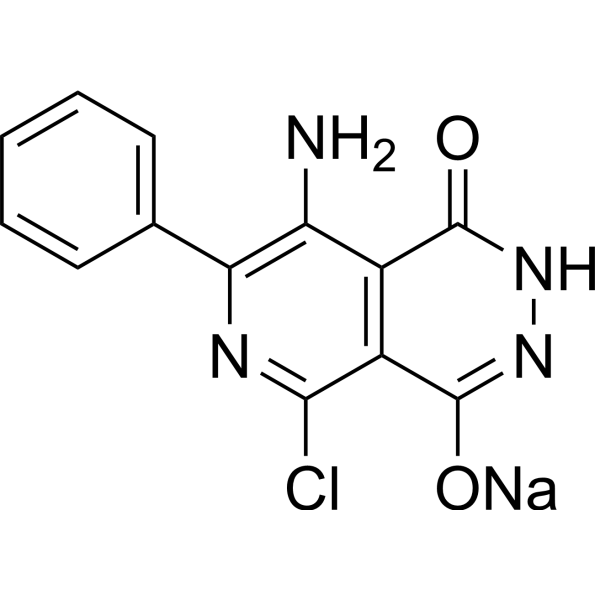
    L 012 sodium salt is a luminal-based chemiluminescent probe. L 012 sodium salt can detect NADPH oxidase (Nox)-derived superoxide and nitrogen species (reactive oxygen species (ROS) and reactive nitrogen species (RNS)) .
    L 012 sodium salt
  • HY-12956
    Dinoprost
    5+ Cited Publications

    Prostaglandin F2α; PGF2α

    Prostaglandin Receptor Endogenous Metabolite Autophagy Apoptosis Endocrinology
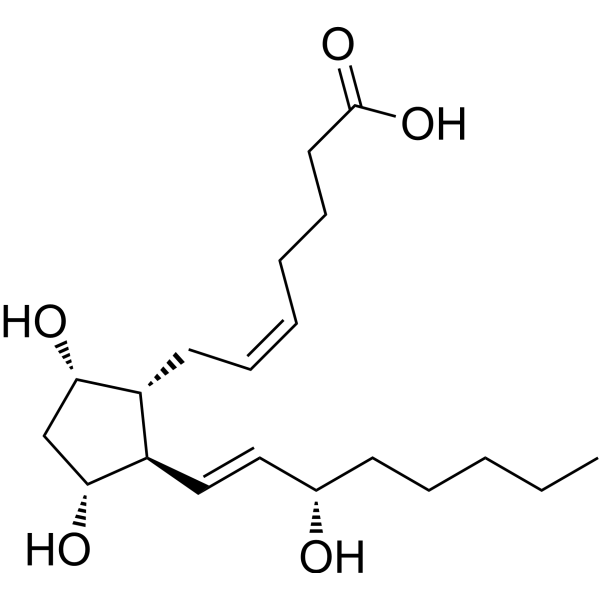
    Dinoprost (Prostaglandin F2α) is an orally active, potent prostaglandin F (PGF) receptor (FP receptor) agonist. Dinoprost is a luteolytic hormone produced locally in the endometrial luminal epithelium and corpus luteum (CL). Dinoprost plays a key role in the onset and progression of labour .
    Dinoprost
  • HY-B0557
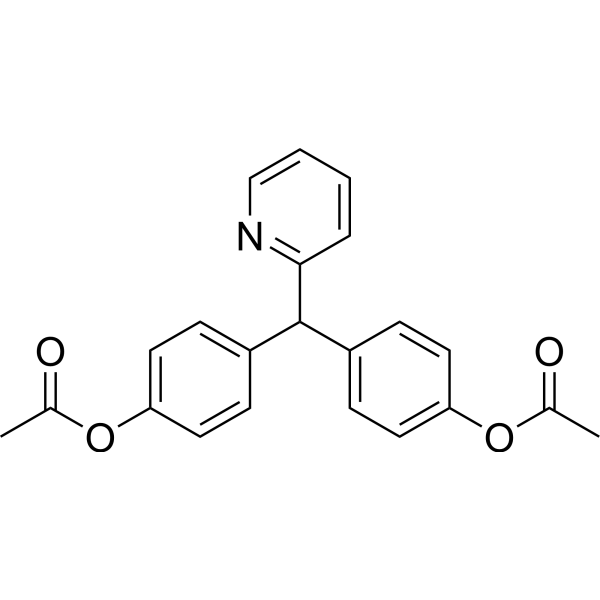
    Bisacodyl
    2 Publications Verification

    Dopamine Transporter Opioid Receptor Metabolic Disease Cancer
    Bisacodyl is a stimulant laxative agent that works directly on the colon to produce a bowel movement. Bisacodyl increases the secretion of PGE2 by direct activation of colon macrophages. PGE2 acts as a paracrine factor and decreases the expression of AQP3 in the colon, which inhibits water transfer from the luminal to the vascular side and leads to a laxative effect .
    Bisacodyl
  • HY-N16308

    Fluorescent Dye Others
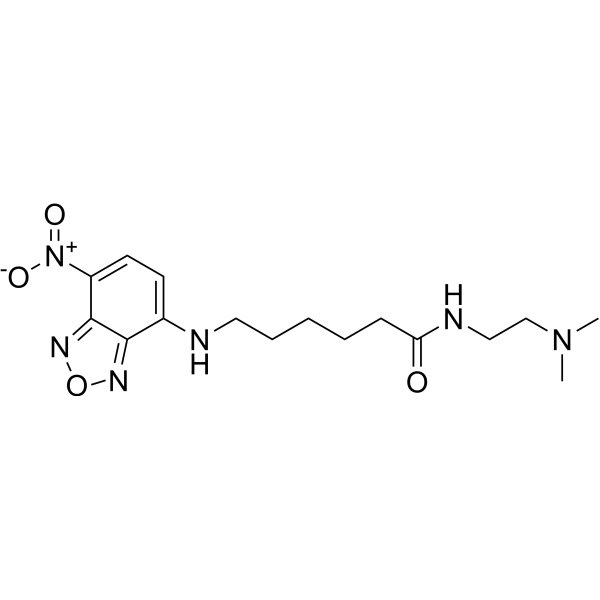
    ER-Laurdan is a derivative of the membrane-permeable fluorescent probe Laurdan (HY-D0080) that targets the endoplasmic reticulum (ER). As a membrane fluidity reporter, ER-Laurdan specifically localizes to the ER luminal membrane, and exhibits a prominent solvatochromic response to fluidity changes caused by membrane packing and exogenous saturated fatty acid stress. ER-Laurdan shows no overlapping localization with mitochondria, enables quantitative analysis of ER membrane fluidity via generalized polarization ratio measurement, and allows automatic signal masking with the help of ER markers. With high specificity and quantitative capability, ER-Laurdan serves as an important tool for investigating metabolic disorders and associated changes in the physical properties of cell membranes .
    ER-Laurdan
  • HY-118315
    L-012
    2 Publications Verification

    Fluorescent Dye Inflammation/Immunology
    L-012 is a luminal-based chemiluminescent probe. L-012 sodium salt can detect NADPH oxidase (Nox)-derived superoxide and nitrogen species (reactive oxygen species (ROS) and reactive nitrogen species (RNS)) .
    L-012
  • HY-12956A
    Dinoprost tromethamine salt
    5+ Cited Publications

    Prostaglandin F2α tromethamine salt; PGF2α THAM; Prostaglandin F2α THAM

    Prostaglandin Receptor Endogenous Metabolite Autophagy Apoptosis Endocrinology
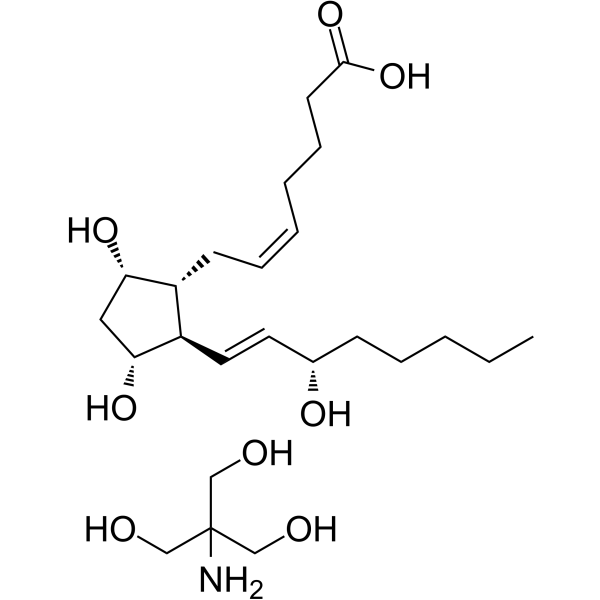
    Dinoprost tromethamine salt (Prostaglandin F2α tromethamine salt) is an orally active, potent prostaglandin F (PGF) receptor (FP receptor) agonist. Dinoprost tromethamine salt is a luteolytic hormone produced locally in the endometrial luminal epithelium and corpus luteum (CL). Dinoprost tromethamine salt plays a key role in the onset and progression of labour .
    Dinoprost tromethamine salt
  • HY-D1694

    Fluorescent Dye Others
    LysoTracker Yellow HCK 123 is a potent yellow membrane-permeable fluorescent probe. LysoTracker Yellow HCK 123 is a weakly basic amine that selectively accumulates in cellular compartments with low luminal pH .
    LysoTracker Yellow HCK 123
  • HY-12956S

    Prostaglandin F2a-d4; PGF2α-d4

    Isotope-Labeled Compounds Prostaglandin Receptor Endogenous Metabolite Autophagy Apoptosis Endocrinology
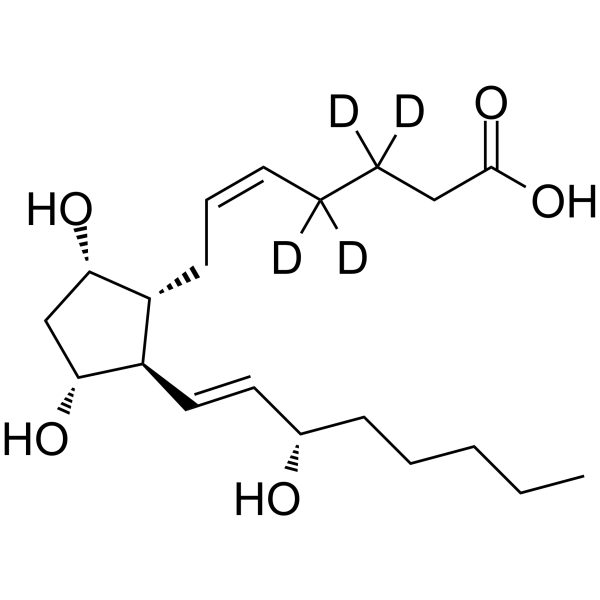
    Dinoprost-d4 is the deuterium labeled Dinoprost. Dinoprost (Prostaglandin F2α) is an orally active, potent prostaglandin F (PGF) receptor (FP receptor) agonist. Dinoprost is a luteolytic hormone produced locally in the endometrial luminal epithelium and corpus luteum (CL). Dinoprost plays a key role in the onset and progression of labour .
    Dinoprost-d4
  • HY-B1403

    Estrogen Receptor/ERR Endocrinology
    Dienestrol is an orally active nonsteroidal estrogen. Dienestrol prevents the formation of implantation swellings in the uterus by inhibiting ovum discharge .
    Dienestrol
  • HY-B1147
    Diloxanide furoate
    1 Publications Verification

    Parasite Infection
    Diloxanide furoate is the proagent of Diloxanide. Diloxanide furoate is a potent and orally active anti-protozoal agent and can be used for the research of amebiasis, mild intestinal amebiasis or asymptomatic cyst carriers .
    Diloxanide furoate
  • HY-119972

    Parasite Infection
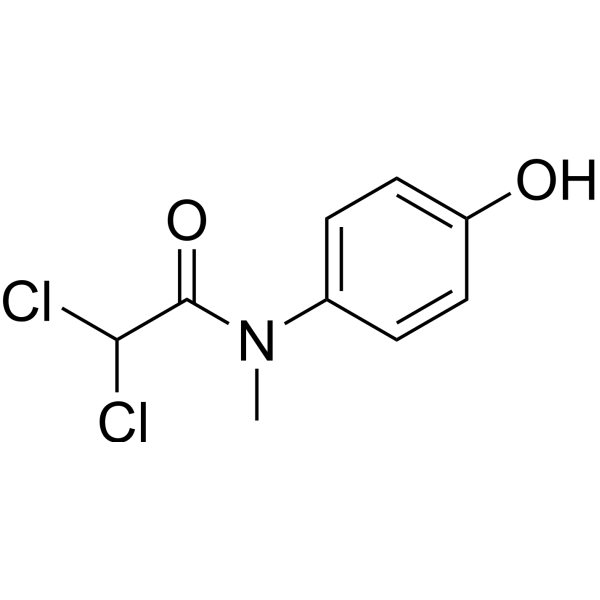
    Diloxanide is an anti-protozoal agent and can be used for the research of asymptomatic-intestinal amebiasis caused by Entamoeba histolytica or some other protozoal infections. Diloxanide is an active luminal amebicide and hydrolyzed in the gastrointestinal tract from its proagent Diloxanide furoate (HY-B1147) .
    Diloxanide
  • HY-160160

    PPAR Cancer
    BAY-5516 is a inverse-agonist o PPARG, with the IC50 value of 6.1±3.6 nM that has anti-tumor effect .
    BAY-5516
  • HY-W018397

    NSC 130828

    Parasite Infection
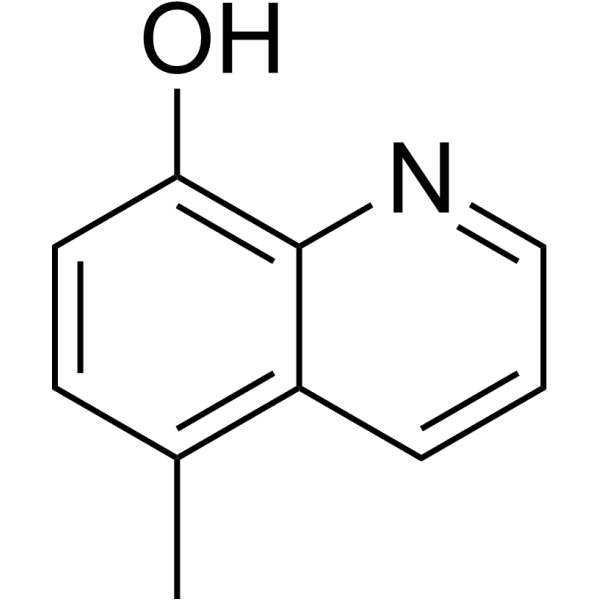
    Tiliquinol (NSC 130828) is a non-absorbed anti-amoebic luminal agent. Tiliquinol is used in combination with tibroquinol. Tiliquinol can be used for the research of amebic liver abscess .
    Tiliquinol
  • HY-B1147R

    Reference Standards Parasite Infection
    Diloxanide furoate (Standard) is the analytical standard of Diloxanide furoate. This product is intended for research and analytical applications. Diloxanide furoate is the proagent of Diloxanide. Diloxanide furoate is a potent and orally active anti-protozoal agent and can be used for the research of amebiasis, mild intestinal amebiasis or asymptomatic cyst carriers .
    Diloxanide furoate (Standard)
  • HY-W711035

    AC 900001

    p38 MAPK PI3K Calcium Channel Reactive Oxygen Species (ROS) Apoptosis Cytochrome P450 Inflammation/Immunology
    Picolinafen is a pyridine-class herbicide that acts as a phytoene desaturase (PDS) inhibitor. Picolinafen effectively controls broadleaf weeds and disrupts carotenoid biosynthesis. Picolinafen exhibits cytotoxicity to porcine trophectoderm (pTr) and luminal epithelial (pLE) cells. Picolinafen induces (ROS accumulation, calcium depletion, and activates (MAPK and PI3K signaling pathways, leading to decreased cell viability, increased apoptosis, impaired migration, and altered expression of implantation-related genes. Picolinafen has an LD50 value of 2.7 mg/kg in mammals and 7 μg/L in fish. Picolinafen exhibits toxic effects during zebrafish embryogenesis [1][2].
    Picolinafen
  • HY-160188

    PPAR Cancer
    BAY-9683 is an orally active covalent PPARG inverse agonist. BAY-9683 can be used in the study of diseases with overactive PPARG, such as luminal bladder cancer .
    BAY-9683
  • HY-113909

    Prostaglandin F2α (methoxyamine); PGF2α (methoxyamine)

    Prostaglandin Receptor Endogenous Metabolite Autophagy Apoptosis Endocrinology
    Dinoprost methoxyamine is an orally active, potent prostaglandin F (PGF) receptor (FP receptor) agonist. Dinoprost methoxyamine is a luteolytic hormone produced locally in the endometrial luminal epithelium and corpus luteum (CL). Dinoprost methoxyamine plays a key role in the onset and progression of labour .
    Dinoprost (methoxyamine)
  • HY-12956R

    Prostaglandin F2α (Standard); PGF2α (Standard)

    Reference Standards Prostaglandin Receptor Endogenous Metabolite Autophagy Apoptosis Endocrinology
    Dinoprost (Standard) is the analytical standard of Dinoprost. This product is intended for research and analytical applications. Dinoprost (Prostaglandin F2α) is an orally active, potent prostaglandin F (PGF) receptor (FP receptor) agonist. Dinoprost is a luteolytic hormone produced locally in the endometrial luminal epithelium and corpus luteum (CL). Dinoprost plays a key role in the onset and progression of labour .
    Dinoprost (Standard)
  • HY-12956S2

    Prostaglandin F2α-13C5; PGF2α-13C5

    Prostaglandin Receptor Endogenous Metabolite Autophagy Apoptosis Isotope-Labeled Compounds Endocrinology
    Dinoprost- 13C5 is 13C labeled Dinoprost (HY-12956). Dinoprost (Prostaglandin F2α) is an orally active, potent prostaglandin F (PGF) receptor (FP receptor) agonist. Dinoprost is a luteolytic hormone produced locally in the endometrial luminal epithelium and corpus luteum (CL). Dinoprost plays a key role in the onset and progression of labour .
    Dinoprost-13C5
  • HY-12956AR

    Prostaglandin F2α tromethamine salt (Standard); PGF2α THAM (Standard); Prostaglandin F2α THAM (Standard)

    Reference Standards Prostaglandin Receptor Endogenous Metabolite Autophagy Apoptosis Endocrinology
    Dinoprost (tromethamine salt) (Standard) is the analytical standard of Dinoprost (tromethamine salt). This product is intended for research and analytical applications. Dinoprost tromethamine salt (Prostaglandin F2α tromethamine salt) is an orally active, potent prostaglandin F (PGF) receptor (FP receptor) agonist. Dinoprost tromethamine salt is a luteolytic hormone produced locally in the endometrial luminal epithelium and corpus luteum (CL). Dinoprost tromethamine salt plays a key role in the onset and progression of labour .
    Dinoprost tromethamine salt (Standard)
  • HY-160161

    PPAR Cancer
    BAY-5094 is a PPAR gamma (PPARG) inverse agonist. BAY-5094 has oral activity. BAY-5094 can be used in the research of luminal bladder cancer .
    BAY-5094
  • HY-12956S1

    Prostaglandin F2a-d9; PGF2α-d9

    Isotope-Labeled Compounds Prostaglandin Receptor Endogenous Metabolite Autophagy Apoptosis Endocrinology
    Dinoprost-d9 is the deuterium labeled Dinoprost. Dinoprost (Prostaglandin F2α) is an orally active, potent prostaglandin F (PGF) receptor (FP receptor) agonist. Dinoprost is a luteolytic hormone produced locally in the endometrial luminal epithelium and corpus luteum (CL). Dinoprost plays a key role in the onset and progression of labour .
    Dinoprost-d9
  • HY-B0557R

    Reference Standards Dopamine Transporter Opioid Receptor Metabolic Disease Cancer
    Bisacodyl (Standard) is the analytical standard of Bisacodyl. This product is intended for research and analytical applications. Bisacodyl is a stimulant laxative agent that works directly on the colon to produce a bowel movement. Bisacodyl increases the secretion of PGE2 by direct activation of colon macrophages. PGE2 acts as a paracrine factor and decreases the expression of AQP3 in the colon, which inhibits water transfer from the luminal to the vascular side and leads to a laxative effect .
    Bisacodyl (Standard)
  • HY-D1447

    Fluorescent Dye Others
    Fluo-3FF pentapotassium is a cell-impermeant fluorescent calcium indicator. Fluo-3FF is a di-fluorinated analog of Fluo-3 with a 100-fold lower affinity than Fluo-3 for calcium (Kds=42 and 0.4 μM, respectively). For its low affinity, Fluo-3FF is used for studying compartments with high concentrations of calcium, such as endoplasmic reticulum, where high affinity dyes will be insensitive to luminal fluctuations.
    Fluo-3FF pentapotassium
  • HY-181670

    Androgen Receptor c-Myc Akt mTOR ERK PDK-1 PI3K Apoptosis Metabolic Disease Cancer
    WH23 is a dehydrogenase/reductase SDR family member 11 (DHRS11) inhibitor with IC50 values of 0.037 μM. WH23 binds to DHRS11, forming a hydrogen bond with the enzyme’s His210 residue. WH23 suppresses androgen receptor mRNA and protein expression, reduces c-Myc expression, and inhibits cancer cell proliferation. WH23 inhibits PI3K/AKT signaling by reducing phosphorylation of PDK1, AKT, mTOR, and ERK. WH23 enhances Capivasertib (HY-15431)-induced cytotoxicity and apoptosis. WH23 can be used for the research of luminal androgen receptor-positive triple-negative breast cancer .
    WH23
  • HY-108537R

    Reactive Oxygen Species (ROS) Reference Standards Inflammation/Immunology
    L 012 sodium salt (Standard) is the analytical standard of L 012 (sodium salt) (HY-108537). This product is intended for research and analytical applications. L 012 sodium salt is a luminal-based chemiluminescent probe. L 012 sodium salt can detect NADPH oxidase (Nox)-derived superoxide and nitrogen species (reactive oxygen species (ROS) and reactive nitrogen species (RNS)) .
    L 012 sodium salt (Standard)
  • HY-185344

    TRX01

    NF-κB Cancer
    Ratutrelvir is a NF-κB p65 inhibitor. Ratutrelvir blocks the translocation of NF-κB p65 from the cytoplasm to the nucleus, reduces the phosphorylation levels of NF-κB p65 and IκBα, and inhibits the DNA-binding activity of NF-κB p65. Ratutrelvir inhibits the migration and invasion abilities of breast cancer cells, and reduces their viability and colony-forming capacity. Ratutrelvir can be used for the research of luminal A breast cancer .
    Ratutrelvir
  • HY-P2752B

    Endogenous Metabolite Metabolic Disease
    Lipoprotein Lipase, Burkholderia sp. (EC 3.1.1.34) belongs to the lipase gene family and is a water-soluble enzyme that hydrolyzes triglycerides in lipoproteins (such as those in chylomicrons and very low-density lipoproteins (VLDL)) into two free fatty acid molecules and one monoacylglycerol molecule. Lipoprotein also participates in promoting cellular uptake of chylomicron remnants, cholesterol-rich lipoproteins, and free fatty acids. Lipoprotein requires ApoC-II as a cofactor. Lipoprotein attaches to the luminal surface of capillary endothelial cells via glycosylphosphatidylinositol high-density lipoprotein-binding protein 1 (GPIHBP1) and heparan sulfate proteoglycan.
    Lipoprotein Lipase, Burkholderia sp.
  • HY-P2752A

    Endogenous Metabolite Metabolic Disease
    Lipoprotein lipase, Bovine (EC 3.1.1.34) belongs to the lipase gene family and is a water-soluble enzyme that hydrolyzes triglycerides in lipoproteins (such as those in chylomicrons and very low-density lipoproteins (VLDL)) into two free fatty acid molecules and one monoacylglycerol molecule. Lipoprotein also participates in promoting cellular uptake of chylomicron remnants, cholesterol-rich lipoproteins, and free fatty acids. Lipoprotein requires ApoC-II as a cofactor. Lipoprotein attaches to the luminal surface of capillary endothelial cells via glycosylphosphatidylinositol high-density lipoprotein-binding protein 1 (GPIHBP1) and heparan sulfate proteoglycan.
    Lipoprotein Lipase, Bovine
  • HY-N19420

    Renin Bacterial Interleukin Related TNF Receptor Cardiovascular Disease Inflammation/Immunology
    Theasinensin C is an orally effective renin inhibitor and gut microbiota modulator, with an IC50 of 40.21 μM against renin activity. Theasinensin C selectively enriches Akkermansia muciniphila in the gut microbiota, enhances the Akkermansia muciniphila-mediated hydrolysis of the PTS domain of mucin, drives the accumulation of luminal glutamine and serine, and regulates the gut-kidney-liver glutamine/serine metabolic signaling pathway to promote creatine biosynthesis. Theasinensin C improves cognitive function, reduces pro-inflammatory cytokines, alleviates neuropathological changes and restores intestinal barrier integrity. Theasinensin C can be used in research related to hypertension and neuroinflammation induced by high-fructose diet .
    Theasinensin C
  • HY-183118

    CDK Apoptosis Neurological Disease Cancer
    CID-078 is an orally active macrocyclic cyclin A and cyclin B inhibitor. CID-078 binds cyclin hydrophobic patches, disrupting interactions of cyclin A-Cdk2 with E2F1 and cyclin B-Cdk1 with Myt1, and selectively targets RxL binding motifs to block complex-substrate interactions. CID-078 induces DNA damage, G2/M cell cycle arrest, apoptosis, mitotic catastrophe, spindle assembly checkpoint activation, and neomorphic cyclin B-CDK2 complex formation, driving synthetic lethality in E2F-driven cancer cells. CID-078 can be used for the research of small cell lung cancer, non-small cell lung cancer, triple negative breast cancer, advanced solid tumors, luminal HR +/HER 2- breast cancer, RB1-altered solid tumors, and neuroblastoma .
    CID-078

Inquiry Online

Your information is safe with us. * Required Fields.

Salutation


Country or Region *

Applicant Name *


Organization Name *

Department *


Email Address *


Product Name *

Cat. No.


Requested quantity *

Phone Number *


Remarks

Inquiry Online

Inquiry Information

Product Name:
Cat. No.:
Quantity:
MCE Japan Authorized Agent:

