

27 Results for "

machinery

" in MedChemExpress (MCE) Product Catalog:
Products (27)

27 Results for "machinery" in MCE Product Catalog:

15
15 Publications Verification
Cat. No.: HY-13452
CAS No.: 314042-01-8
Purity:  99.71%
Synonyms: ML282
Target:  

Ras

Research Areas:  

Inflammation/Immunology

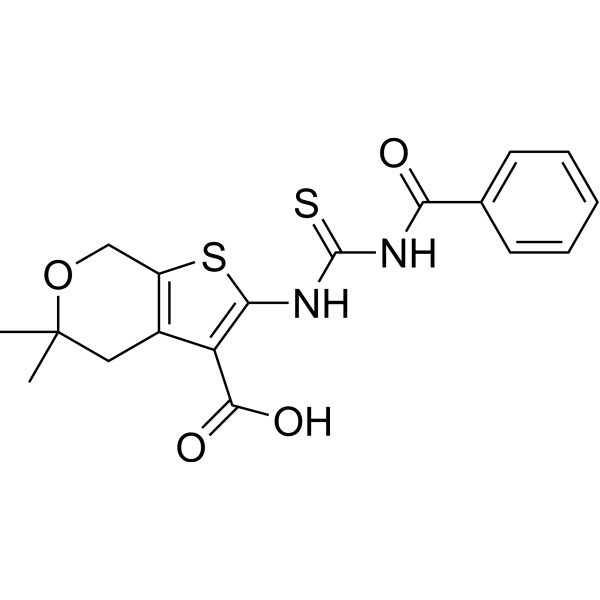
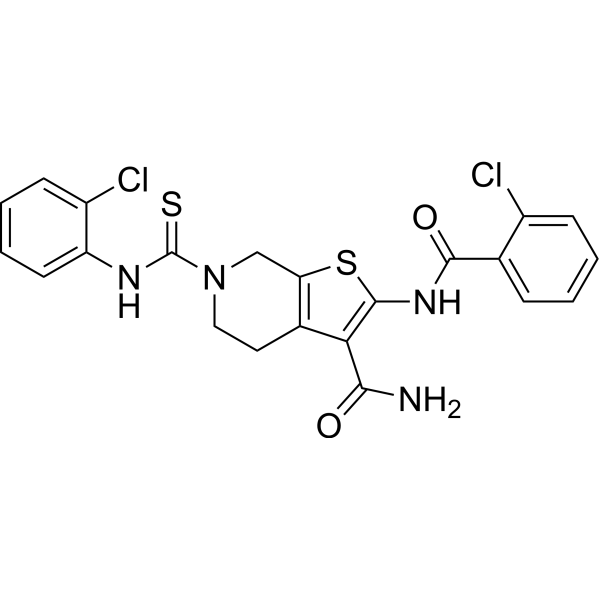
CID-1067700 (ML282) is a pan GTPase inhibitor, and competitively inhibits Ras-related in brain 7 (Rab7) with a Ki of 13 nM.
loading...
    loading...
2
2 Cited Publications
Cat. No.: HY-138830
CAS No.: 1818252-53-7
Purity:  99.81%
Target:  

Histone Demethylase

Research Areas:  

Neurological Disease

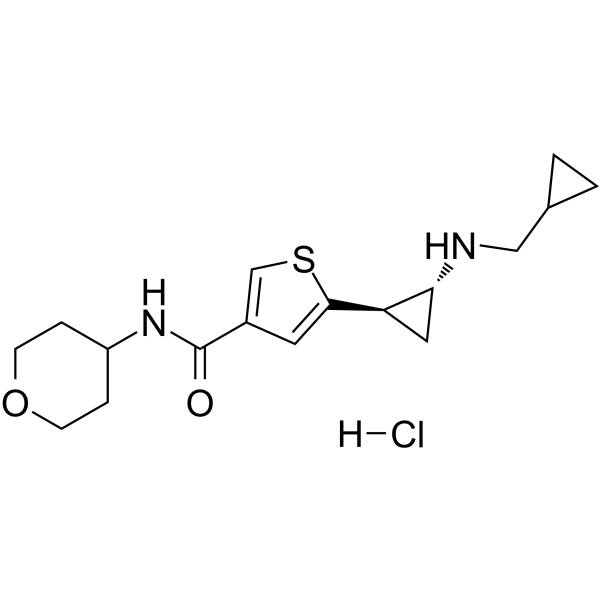
TAK-418 is a selective, orally active LSD1 (KDM1A) enzyme inhibitor with an IC50 of 2.9 nM. TAK-418 unlocks aberrant epigenetic machinery and improves autism symptoms in neurodevelopmental disorder models .
loading...
    loading...
1
1 Cited Publications
Cat. No.: HY-163699
CAS No.: 3082549-87-6
Target:  

Endonuclease

Research Areas:  

Cancer

MUS81-IN-1 (compound 23) is a MUS81 inhibitor. MUS81-IN-1 can be used in cancer research .
loading...
    loading...
Cat. No.: HY-W011725
CAS No.: 2002-35-9
Synonyms: m6dA
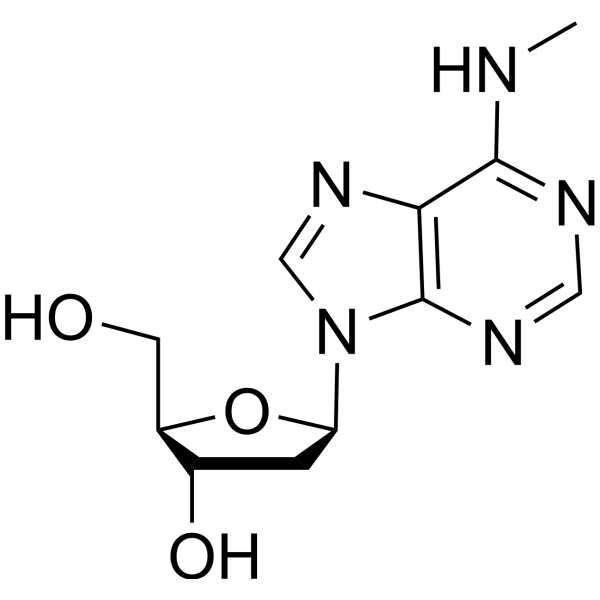
N-6-Methyl-2-deoxyadenosine (m6dA) is an adenine nucleoside analogue. N-6-Methyl-2-deoxyadenosine targets nuclear processes and DNA replication machineries including WER, SATB1, TFAM, Jumu, SSBP1, DNA polymerase η and phage polymerase Gp90 exo . N-6-Methyl-2-deoxyadenosine acts as a multifunctional epigenetic regulator that modulates transcription, DNA damage response, cell cycle, transposon silencing, stress adaptation, epigenetic crosstalk, and nucleosome organization in both prokaryotes and eukaryotes. N-6-Methyl-2-deoxyadenosine regulates mitochondrial epigenetic inheritance and is required for fear extinction memory in mice. N-6-Methyl-2-deoxyadenosine exhibits dysregulated levels in cancers. N-6-Methyl-2-deoxyadenosine can be used for the research of glioblastoma, triple negative breast cancer, and conditioned fear (fear extinction impairment) .
loading...
    loading...
Cat. No.: HY-174216
CAS No.: 3068830-89-4
PZL-A is a activator of mitochondrial DNA (mtDNA) synthesis. PZL-A restores wild-type-like activity to mutant forms of polymerase γ (POLγ) with AC50 s of 160 and 20 nM for A467T and G848S. PZL-A activates mtDNA synthesis in cells, enhancing biogenesis of the oxidative phosphorylation machinery and cellular respiration. PZL-A is promising for relieving POLG disease and other severe conditions linked to depletion of mtDNA .
loading...
    loading...
Cat. No.: HY-16662
CAS No.: 75629-57-1
Research Areas:  

Cancer

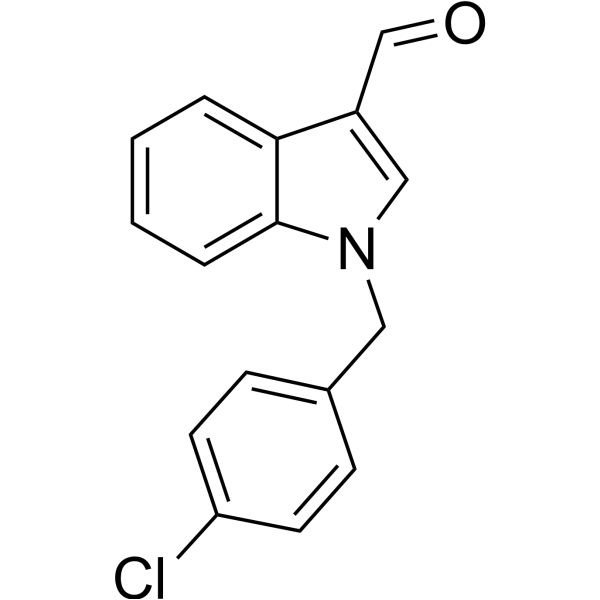
Oncrasin-1 is an RNA polymerase inhibitor. Oncrasin-1 suppresses the phosphorylation of the largest subunit of RNA polymerase II and the expression of intronless reporter genes in sensitive cells. Oncrasin-1 effectively kills various human lung cancer cells with K-Ras mutations. Oncrasin-1 leads to coaggregation of PKCι and splicing factors into megaspliceosomes. Oncrasin-1 induces malfunction in the RNA processing machinery. Oncrasin-1 is an anti-cancer agent and can therefore be studied in research for lung cancer .
loading...
    loading...
Cat. No.: HY-W725179
CAS No.: 2044520-06-9
Target:  

EBV

Research Areas:  

Cancer

VK-2019 is an orally bioavailable selective inhibitor of EBNA1. By binding to the protein-DNA interface to interfere with the recruitment and anchoring of the viral DNA replication machinery, VK-2019 effectively blocks the replication and proliferation of EBV in latently infected cells. VK-2019 reduces the copy number and gene expression level of Epstein-Barr virus in tumor cells, decreases the number of EBER-positive cells, and exhibits significant antiviral, immunomodulatory and antiproliferative activities. VK-2019 successfully inhibits tumor growth in EBV-dependent xenograft models. VK-2019 has favorable systemic exposure and acceptable safety profiles, and is widely used in research on advanced nasopharyngeal carcinoma and various EBV-associated cancers .
loading...
    loading...
Cat. No.: HY-147426
CAS No.: 2437257-11-7
Synonyms: ADS-007; ARO HIF2
Zifcasiran (ADS-007; ARO HIF2) is an siRNA synthetic double-stranded RNAi trigger. Zifcasiran sodium selectively target hypoxia-inducible factor-2α (HIF2α) interrupting downstream pro-oncogenic signaling in clear cell renal cell carcinoma (ccRCC). Zifcasiran sodium engages the cell's RNAi machinery to target HIF2α (EPAS1) mRNA for degradation, thereby reducing the amount of free HIF2α mRNA available for translation .
loading...
    loading...
Cat. No.: HY-173364
CAS No.: 3114073-95-6
Synonyms: BAK-04-212
Target:  

BCL6

Research Areas:  

Cancer

EB-TCIP (BAK-04-212) is a proof-of-concept tool specifically designed for Ewing sarcoma research, serving as an EWSR1::FLI1 binder tagged with BCL6 and FKBP12 F36V. EB-TCIP forms a ternary complex with the tagged fusion protein, specifically recruits EWSR1::FLI1 to BCL6-bound DNA loci, and induces rapid chromatin remodeling and relocalization. By mediating relocalization, EB-TCIP remodels the transcriptional machinery and activates the expression of BCL6 target genes that are originally repressed. EB-TCIP is used in studies related to novel epigenetic therapies for Ewing sarcoma .
loading...
    loading...
Cat. No.: HY-168221
CAS No.: 2951015-30-6
Target:  

PROTACs SWI/SNF Complex

Research Areas:  

Cancer

YD54 is an orally active and selective SMARCA2 PROTAC degrader. YD54 induces SMARCA4 degradation but with low potency and selectivity. YD54 selectively inhibits the growth of various cancer cells and suppresses tumor growth in mouse xenograft models. YD54 can be used for the research of SMARCA4-mutant lung cancer .
loading...
    loading...
Cat. No.: HY-179512
CAS No.: 2414478-45-6
Target:  

PROTACs FAK

Research Areas:  

Cancer

BSJ-04-146 is a highly efficient and selective PROTAC targeting focal adhesion kinase (FAK) inhibitor(IC50 = 26 nM). BSJ-04-146 achieves rapid and potent FAK degradation with high proteome-wide specificity in cancer cells and induces durable degradation in mice. BSJ-04-146 binds FAK and requires the ubiquitin-proteasome machinery to achieve FAK degradation. BSJ-04-146 can be used for the study of pancreatic cancer and triple-negative breast cancer .
loading...
    loading...
Cat. No.: HY-P2114
CAS No.: 173959-12-1
Target:  

Peptides

Research Areas:  

Cancer

IT9302 is a synthetic IL-10 agonist with the activity of inducing tolerogenic dendritic cells. IT9302 is able to mimic multiple effects of IL-10, including downregulating the antigen presentation machinery and increasing the sensitivity of tumor cells to natural killer cell-mediated lysis. IT9302 can also hinder the response of human monocytes to differentiation factors and reduce the antigen presentation and co-stimulatory capacity of dendritic cells. Dendritic cells treated with IT9302 showed a weakened ability to stimulate T cell proliferation and interferon-γ production. IT9302 exerts its effects through mechanisms that are partially different from IL-10, involving STAT3 inactivation and regulation of the NF-κB intracellular pathway. IT9302-treated dendritic cells showed enhanced expression of membrane-bound TGF-β, associated with the effective induction of foxp3+ regulatory T cells .
loading...
    loading...
Cat. No.: HY-W415798
CAS No.: 1810852-60-8
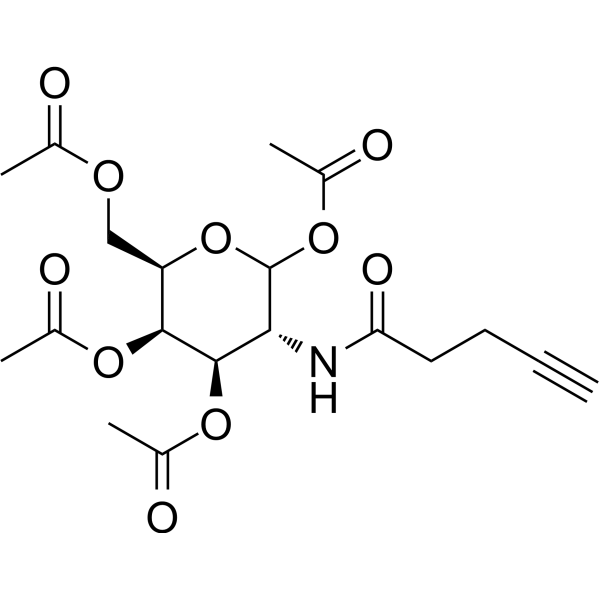
Ac4GalNAlk is a weakly alkyne-labeled reagent for metabolic oligosaccharide engineering (MOE) that can be used to detect protein glycosylation. MOE reagents can be activated by cellular biosynthetic machinery into nucleotide sugars, which can be further traced through the introduction of glycoproteins in bioorthogonal chemistry. Ac4GalNAlk promotes nucleotide-sugar biosynthesis and increases bioorthogonal cell surface markers .
loading...
    loading...
Cat. No.: HY-147426A
CAS No.: 2437257-12-8
Synonyms: ADS-007 sodium; ARO HIF2 sodium
Zifcasiran (ADS-007) sodium is an siRNA synthetic double-stranded RNAi trigger. Zifcasiran sodium selectively target hypoxia-inducible factor-2α (HIF2α) interrupting downstream pro-oncogenic signaling in clear cell renal cell carcinoma (ccRCC). Zifcasiran sodium engages the cell's RNAi machinery to target HIF2α (EPAS1) mRNA for degradation, thereby reducing the amount of free HIF2α mRNA available for translation .
loading...
    loading...
Cat. No.: HY-119505
CAS No.: 69301-27-5
Target:  

HDAC

Research Areas:  

Others

Curcuphenol is a compound with histone deacetylase enhancing activity and has the activity of reversing immune escape. Curcuphenol can reverse the immune escape of tumors by restoring the expression of antigen presentation machinery. Its two synthetic analogs have histone deacetylase enhancing activity and play an important role in the immune recognition of metastatic tumors.
loading...
    loading...
Cat. No.: HY-E70830
Target:  

DYRK

Research Areas:  

Cancer

Homeodomain interacting protein kinase 2 (HIPK2) is an evolutionary conserved serine/threonine kinase that regulates gene expression by phosphorylation of transcription factors and accessory components of the transcription machinery. HIPK2 is activated in response to DNA-damaging agents or morphogenic signals. HIPK2 Recombinant Human Active Protein Kinase is a recombinant HIPK2 protein that can be used to study HIPK2-related functions .
loading...
    loading...
Cat. No.: HY-163147
CAS No.: 2378640-67-4
Research Areas:  

Infection

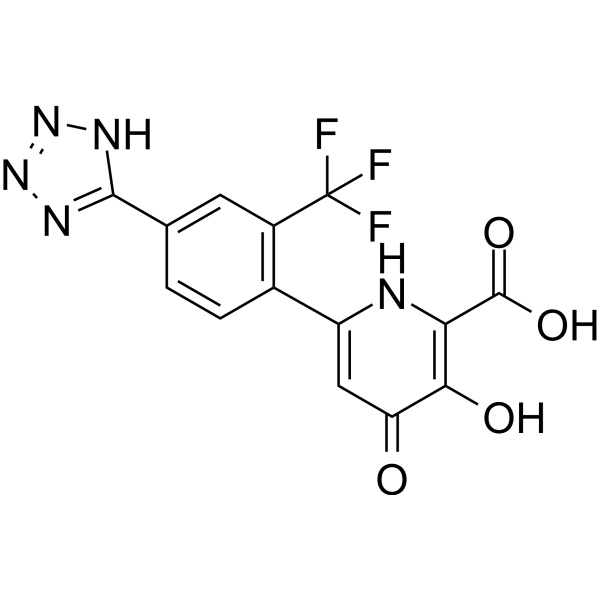
PAN endonuclease-IN-1 (Compound 23) is a potent PAN endonuclease inhibitor, with Kd values of 277 μM, 384 μM and 328 μM for WT, I38T and E23K PAN endonucleases, respectively. The RNA-dependent RNA polymerase acidic N-terminal (PAN) endonuclease, a critical component of influenza viral replication machinery, is an antiviral target .
loading...
    loading...
Cat. No.: HY-138215
CAS No.: 2414916-45-1
Target:  

ERK

Research Areas:  

Cancer

ADTL-EI1712 is a potent, orally active, and selective dual-target inhibitor of ERK1 and ERK5, inhibition rates of ERK1/5 at 1 μM are 93.54% and 89.35%, respectively. ADTL-EI1712 can induce regulated cell death, a form of cell death that relies on the activation of genetically encoded machinery, to overcome compensatory mechanism in specific cancer cells in vitro and in vivo .
loading...
    loading...
Cat. No.: HY-117746
CAS No.: 1638100-63-6
Target:  

Bacterial

Research Areas:  

Infection

KSK120 is a potent inhibitor of drug-resistant infections with specific activity against Chlamydia trachomatis (C. trachomatis). KSK120 inhibits the developmental cycle of C. trachomatis, thereby reducing the infectivity of progeny bacteria. KSK120 targets the glucose-6-phosphate (G-6P) metabolic pathway of C. trachomatis, showing its potential application in antimicrobial inhibition. The mechanism of KSK120 may involve inhibition of the transcriptional machinery, which provides new ideas for the development of specific drugs against C. trachomatis infection .
loading...
    loading...
Cat. No.: HY-165604
CAS No.: 2639634-82-3
Target:  

Liposome

Research Areas:  

Others

C14-490 is an ionizable cationic lipid used for the formulation of lipid nanoparticles (LNPs) for mRNA delivery. C14-490 LNPs can be surface-functionalized with CD45 antibodies to enable targeted delivery to hematopoietic stem cells (HSCs), mediate efficient mRNA delivery and CRISPR-Cas9 gene editing in fetal HSCs in utero, with potent and durable genome modulation in HSCs and their progeny. C14-490 is a key component of the Systematically optimized Targeted Editing Machinery (STEM) LNPs for in vivo HSC gene editing applications .
loading...
    loading...

