6 Results for "

menstrual disorder

" in MedChemExpress (MCE) Product Catalog:
Products (6)

6 Results for "menstrual disorder" in MCE Product Catalog:

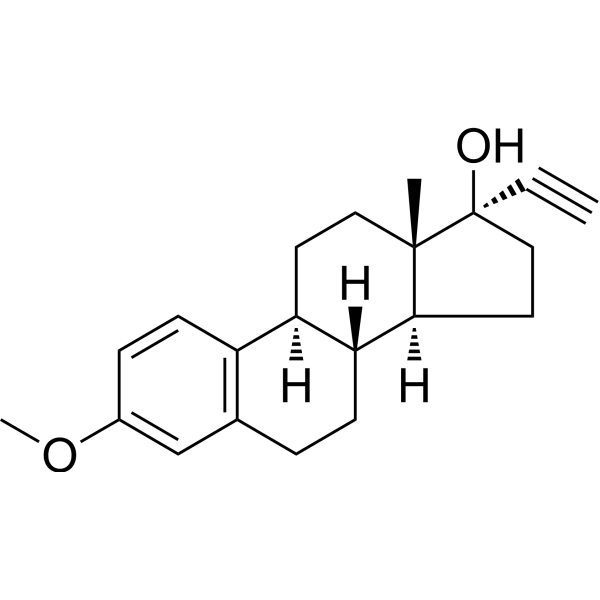
Cat. No.: HY-B0390
CAS No.: 72-33-3
Mestranol is an inactive proagent and becomes biologically active on conversion to ethinyl estradiol (EE). Mestranol acts as an estrogen receptor agonist. Mestranol combines with a progestin in vivo and can be used for the research of menopausal hormone or menstrual disorders. Mestranol is a click chemistry reagent, it contains an Alkyne group and can undergo copper-catalyzed azide-alkyne cycloaddition (CuAAc) with molecules containing Azide groups.
loading...
    loading...
Cat. No.: HY-B0390R
CAS No.: 72-33-3
Mestranol (Standard) is the analytical standard of Mestranol. This product is intended for research and analytical applications. Mestranol is an inactive proagent and becomes biologically active on conversion to ethinyl estradiol (EE). Mestranol acts as an estrogen receptor agonist. Mestranol combines with a progestin in vivo and can be used for the research of menopausal hormone or menstrual disorders. Mestranol is a click chemistry reagent, it contains an Alkyne group and can undergo copper-catalyzed azide-alkyne cycloaddition (CuAAc) with molecules containing Azide groups.
loading...
    loading...
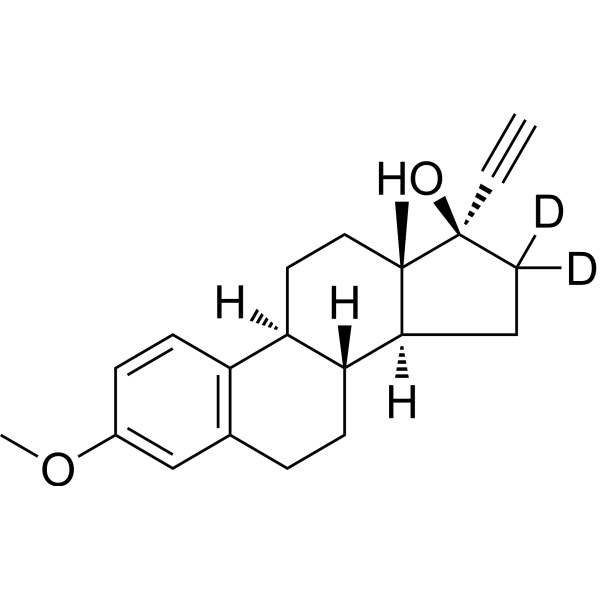
Cat. No.: HY-B0390S
Mestranol-d2 is the deuterium labeled Mestranol. Mestranol is an inactive proagent and becomes biologically active on conversion to ethinyl estradiol (EE). Mestranol acts as an estrogen receptor agonist. Mestranol combines with a progestin in vivo and can be used for the research of menopausal hormone or menstrual disorders . Mestranol-d2 is a click chemistry reagent, it contains an Alkyne group and can undergo copper-catalyzed azide-alkyne cycloaddition (CuAAc) with molecules containing Azide groups.
loading...
    loading...
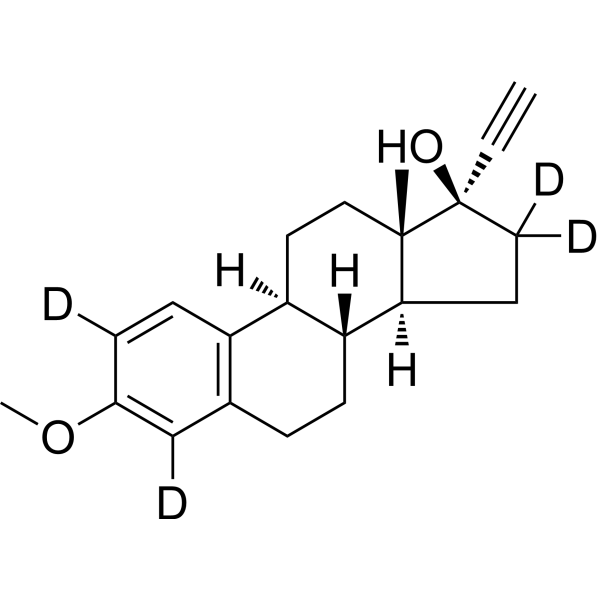
Cat. No.: HY-B0390S1
Mestranol-d4 is the deuterium labeled Mestranol. Mestranol is an inactive proagent and becomes biologically active on conversion to ethinyl estradiol (EE). Mestranol acts as an estrogen receptor agonist. Mestranol combines with a progestin in vivo and can be used for the research of menopausal hormone or menstrual disorders . Mestranol-d4 is a click chemistry reagent, it contains an Alkyne group and can undergo copper-catalyzed azide-alkyne cycloaddition (CuAAc) with molecules containing Azide groups.
loading...
    loading...
Cat. No.: HY-N18680
CAS No.: 84082-61-1
Category:  

Extract

Target:  

Others

Melissa officinalis extract is rich in various bioactive compounds, such as citronellol, geraniol, glycosides, caffeic acid derivatives, flavonoids, and triterpenoids. Melissa officinalis extract can be used in research on conditions such as nervous tension, anxiety, insomnia, and menstrual disorders.
loading...
    loading...
Cat. No.: HY-L088
3,660 compounds

Angiogenesis is the physiological process through which new blood vessels are formed from pre-existing vessels. It occurs in various physiological processes e.g. embryonic development, menstrual cycle, exercise and wound healing etc. Angiogenesis is regulated by both endogenous activators and inhibitors. Some key activators of angiogenesis include vascular endothelial growth factor (VEGF), basic fibroblast growth factor (bFGF), angiogenin, TGF-β, etc. whereas angiogenesis inhibitors are angiostatin, endostatin, interferon, platelet factor 4, etc. The loss of balance between these opposing signals leads to life threatening diseases like cancer, cardiovascular and ischemic diseases etc. which are thus controlled by exogenous angiogenesis activators (for cardiovascular/ischemic disorders) and inhibitors (for cancer).

MCE offers a unique collection of 3,660 compounds with validated angiogenesis targets modulating properties. MCE angiogenesis-related compound library is an effective tool for angiogenesis research and discovery of angiogenesis-related drugs.

