1. Search Result
Search Result
Results for "

mouse brains

" in MedChemExpress (MCE) Product Catalog:

9

Inhibitors & Agonists

1

Fluorescent Dye

1

Peptides

2

Natural
Products

Cat. No. Product Name Target Research Areas Chemical Structure
  • HY-B1122
    L-Cycloserine
    2 Publications Verification

    (S)-Cycloserine; (S)-4-Amino-3-isoxazolidone

    GABA Receptor HIV Neurological Disease Cancer
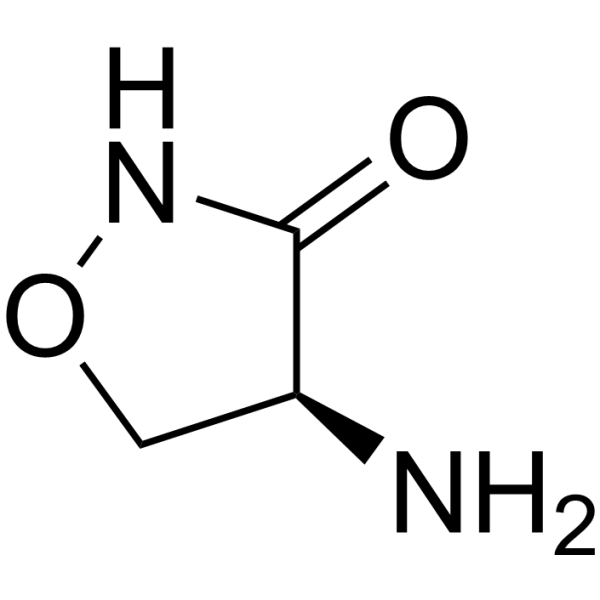
    L-Cycloserine ((S)-4-Amino-3-isoxazolidone) is an oral inhibitor of the enzyme gamma-aminobutyric acid (GABA) transaminase (GABA-t) and branched-chain transaminases in Mycobacterium tuberculosis. L-Cycloserine has anticonvulsant properties and inhibits the synthesis of neurotensin in mouse brains .
    L-Cycloserine
  • HY-114332

    MAP3K JNK Neurological Disease Metabolic Disease
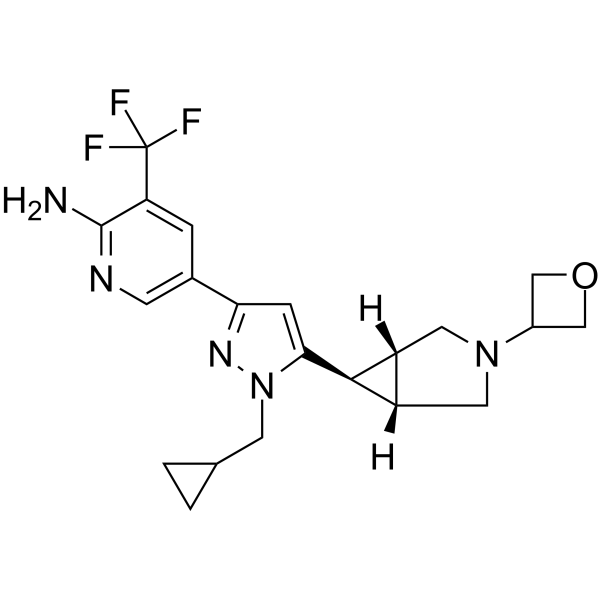
    GNE-8505 is an orally active, blood-brain barrier-permeable selective dual leucine zipper kinase (DLK) inhibitor. GNE-8505 has an IC50 of 0.144 μM for pJNK, and EC50 of 0.457 μM for DRG. GNE-8505 inhibits the DLK/JNK pathway, reduces stress-induced c-Jun phosphorylation levels, decreases neuronal death and suppresses axonal degeneration. GNE-8505 reduces phosphorylated c-Jun levels in the retina, spinal cord and brain tissues of mice. GNE-8505 is applicable to research related to Alzheimer's disease and amyotrophic lateral sclerosis (ALS) .
    GNE-8505
  • HY-175748

    Radionuclide-Drug Conjugates (RDCs) α-synuclein Neurological Disease
    MK-7337 is an α-synuclein ligand with an affinity of < 1 nM. MK-7337 labeled with 11C can be used as a PET tracer for neurodegenerative disorders like Parkinson’s disease imagination .
    MK-7337
  • HY-126031

    DAGL Inflammation/Immunology
    (R)-KT109 is a peripherally restricted serine hydrolase inhibitor that cannot cross the blood-brain barrier. (R)-KT109 irreversibly inhibits ABHD6, DAGLα and DAGLβ via carbamoylation of the active-site serine. (R)-KT109 exerts selective inhibitory effects on serine hydrolases in mouse brains, with pIC50 values of 8.6, 9.1 and 8.2 against human ABHD6, DAGLα and DAGLβ, respectively. (R)-KT109 effectively reduces the levels of 2-arachidonoylglycerol, arachidonic acid, eicosanoids and TNF-α. (R)-KT109 is widely used in studies of metabolic syndrome-related diseases and neuroinflammation .
    (R)-KT109
  • HY-B1122R

    (S)-Cycloserine (Standard); (S)-4-Amino-3-isoxazolidone (Standard)

    Reference Standards GABA Receptor HIV Neurological Disease Cancer
    L-Cycloserine (Standard) is the analytical standard of L-Cycloserine. This product is intended for research and analytical applications. L-Cycloserine ((S)-4-Amino-3-isoxazolidone) is an oral inhibitor of the enzyme gamma-aminobutyric acid (GABA) transaminase (GABA-t) and branched-chain transaminases in Mycobacterium tuberculosis. L-Cycloserine has anticonvulsant properties and inhibits the synthesis of neurotensin in mouse brains[1][2][3][4].
    L-Cycloserine (Standard)
  • HY-P10977

    Sodium Channel RIP kinase Neurological Disease
    Tat-ASIC1a (1-20) (mouse, rat) is a competitive ASIC1a membrane-penetrating peptide. Tat-ASIC1a (1-20) (mouse, rat) has significantly neuroprotection effects, and reduces neuronal damage against acidotoxicity by targeting the ASIC1a-RIPK1 pathway and auto-inhibitory mechanism. Tat-ASIC1a (1-20) (mouse, rat) effectively protects brains from ischemic injury in ischemic stroke mice model. Tat-ASIC1a (1-20) (mouse, rat) can be used for neurodegenerative diseases research, such as Huntington disease and Parkinson’s disease .
    Tat-ASIC1a (1-20) (mouse, rat)
  • HY-114239

    Amyloid-β Neurological Disease
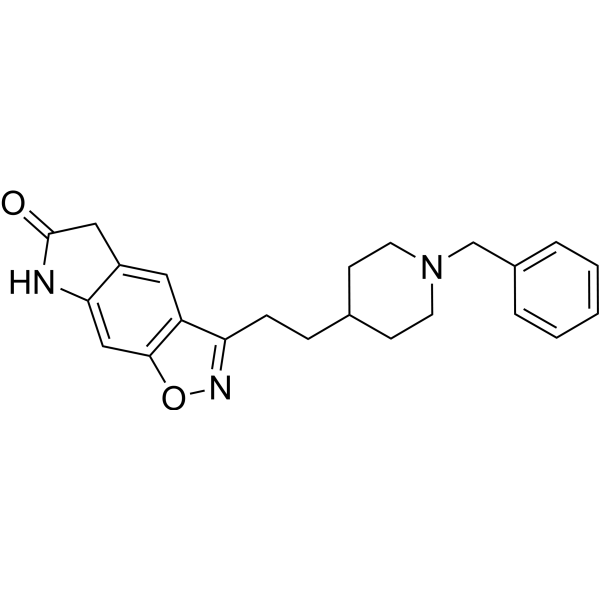
    JBPOS-0101 is a phenyl carbamate compound. JBPOS-0101 exhibits neuroprotective and antiepileptic effects. JBPOS-0101 can attenuate the accumulation of in 5XFAD mouse brains and rescue the deficits in learning and memory. JBPOS-0101 can be used for the research of neurological disease, such as Alzheimer's disease (AD) .
    JBPOS-0101
  • HY-D3171

    Fluorescent Dye Cholinesterase (ChE) Neurological Disease
    AD-BChE/HClO is a dual-target two-photon fluorescent probe. AD-BChE/HClO can release 4-methylumbelliferone via butyrylcholinesterase-mediated hydrolysis of the ester bond at position 7, as well as hypochlorous acid-mediated thiocarbonyl oxidation. AD-BChE/HClO enables two-photon imaging in nerve cells and mouse brain tissues via tail vein injection. AD-BChE/HClO can be used for the research of Alzheimer's disease .
    AD-BChE/HClO
  • HY-118807A

    Pyrilamine hydrochloride

    Histamine Receptor Potassium Channel Neurological Disease Inflammation/Immunology
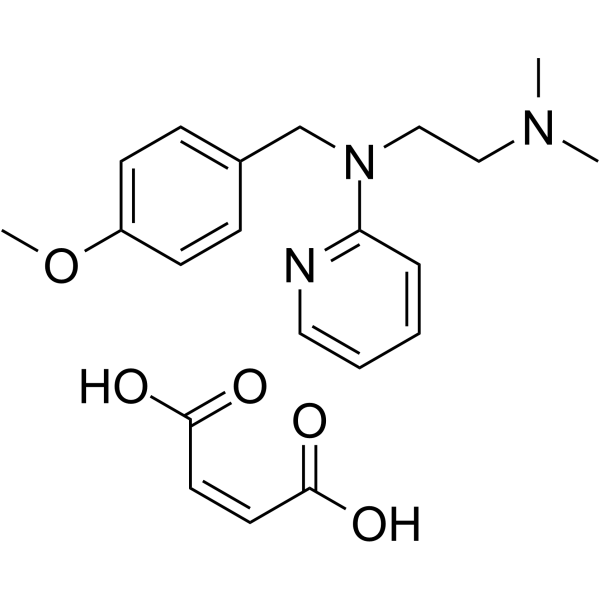
    Mepyramine hydrochloride (Pyrilamine hydrochloride) is a selective histamine H1 receptor antagonist and KCNQ channel inhibitor, with an IC50 of 12.5 μM against KCNQ2/Q3. Mepyramine hydrochloride shows no activity against allergic asthma in mice when used alone, but modulates the effect of JNJ 7777120 (HY-13508) on allergic asthma in mice; it inhibits the development of morphine physical dependence and increases histamine levels in mouse brains. Mepyramine hydrochloride can be used in studies related to seizures, convulsions, allergic asthma and morphine physical dependence .
    Mepyramine hydrochloride

Inquiry Online

Your information is safe with us. * Required Fields.

Salutation


Country or Region *

Applicant Name *


Organization Name *

Department *


Email Address *


Product Name *

Cat. No.


Requested quantity *

Phone Number *


Remarks

Inquiry Online

Inquiry Information

Product Name:
Cat. No.:
Quantity:
MCE Japan Authorized Agent:

