

1. Search Result
Search Result
Results for "

mouse fluids

" in MedChemExpress (MCE) Product Catalog:

22

Inhibitors & Agonists

1

Fluorescent Dye

1

Biochemical Assay Reagents

3

Natural
Products

3

Isotope-Labeled Compounds

Cat. No. Product Name Target Research Areas Chemical Structure
  • HY-111355B

    Sirtuin Endogenous Metabolite PKC AMPK DOCK Metabolic Disease Inflammation/Immunology Cancer
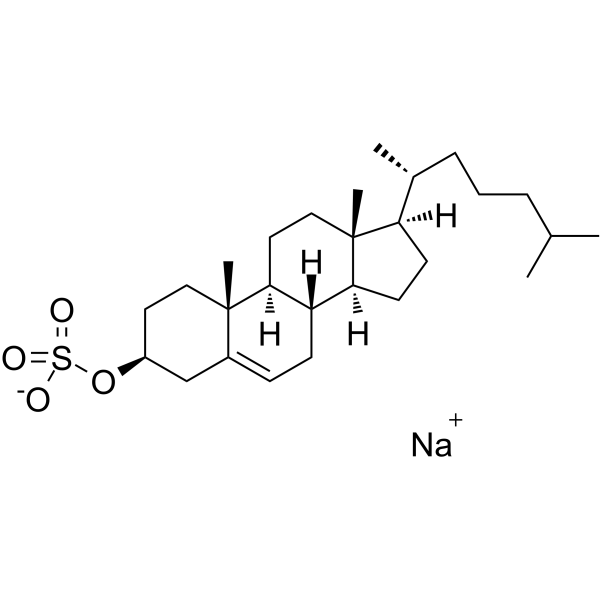
    Cholesterol sulfate sodium is a naturally occurring, orally active cholesterol derivative that is widely distributed in various tissues and body fluids. Cholesterol sulfate sodium acts as a DOCK2 inhibitor, with IC50 values of 2 μM and 2.9 μM against mouse and human targets, respectively. Cholesterol sulfate sodium restricts excessive neutrophil infiltration and alleviates intestinal inflammation and damage. Cholesterol sulfate sodium serves as an activator of protein kinase C (PKC), which promotes squamous cell differentiation and inhibits skin carcinogenesis. Cholesterol sulfate sodium regulates cholesterol homeostasis and cellular metabolism by activating the AMPK-Sirt1 pathway. Cholesterol sulfate sodium can be used in research related to actinic keratitis, ulcerative colitis, skin cancer, and other conditions .
    Cholesteryl sulfate sodium
  • HY-B0590
    Tetrabenazine
    1 Publications Verification

    Ro 1-9569

    Monoamine Transporter Dopamine Receptor Neurological Disease
    Tetrabenazine (Ro 1-9569) is a brain-penetrant and orally active VMAT2-selective ligand with human VMAT2 Ki 100 nM. Tetrabenazine binds VMAT2 to block monoamine uptake into synaptic vesicles, potentiates cytoplasmic monoamine degradation. Tetrabenazine weakly blocks dopamine D2 receptors, and increases dopamine turnover via elevated cerebrospinal fluid homovanillic acid. Tetrabenazine can be used for the research of Huntington’s disease, tardive dyskinesia, and Tourette’s syndrome .
    Tetrabenazine
  • HY-B0590S

    Ro 1-9569-d6

    Monoamine Transporter Neurological Disease
    Tetrabenazine-d6 (Deutetrabenazine) is a deuterium-labled Tetrabenazine (HY-B0590). Tetrabenazine (Ro 1-9569) is a brain-penetrant and orally active VMAT2-selective ligand with human VMAT2 Ki 100 nM. Tetrabenazine binds VMAT2 to block monoamine uptake into synaptic vesicles, potentiates cytoplasmic monoamine degradation. Tetrabenazine weakly blocks dopamine D2 receptors, and increases dopamine turnover via elevated cerebrospinal fluid homovanillic acid. Tetrabenazine can be used for the research of Huntington’s disease, tardive dyskinesia, and Tourette’s syndrome .
    Tetrabenazine-d6
  • HY-W009749A

    Drug Intermediate Others
    DL-Cystathionine is a mixture of 4 isomers of cystathionine and allocystathionine. DL-Cystathionine also is an intermediate in the biosynthesis of amino acid cysteine. DL-Cystathionine serves as a standard for quantifying tissue cystathionine .
    DL-Cystathionine
  • HY-111355

    Endogenous Metabolite DOCK PKC AMPK Sirtuin Metabolic Disease Inflammation/Immunology Cancer
    Cholesterol sulfate is a naturally occurring, orally active cholesterol derivative that is widely distributed in various tissues and body fluids. Cholesterol sulfate acts as a DOCK2 inhibitor, with IC50 values of 2 μM and 2.9 μM against mouse and human targets, respectively. Cholesterol sulfate restricts excessive neutrophil infiltration and alleviates intestinal inflammation and damage. Cholesterol sulfate serves as an activator of protein kinase C (PKC), which promotes squamous cell differentiation and inhibits skin carcinogenesis. Cholesterol sulfate regulates cholesterol homeostasis and cellular metabolism by activating the AMPK-Sirt1 pathway. Cholesterol sulfate can be used in research related to actinic keratitis, ulcerative colitis, skin cancer, and other conditions .
    Cholesterol sulfate
  • HY-N0352
    Tuberostemonine
    1 Publications Verification

    Parasite Infection
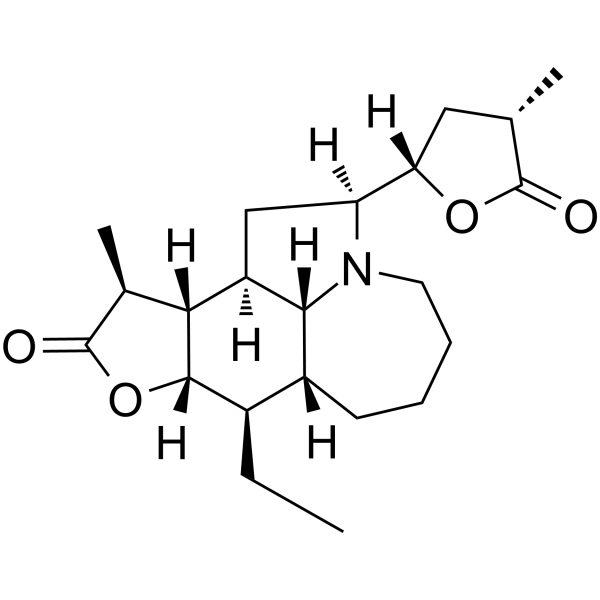
    Tuberostemonine is a stenine alkaloid that can be isolated from Stemona tuberosa and Stemona sessifolia. Tuberostemonine is an antimalarial agent that has inhibitory activity against Ferredoxin-NADP + reductases (FNRs) from Plasmodium falciparum (PfFNR). Tuberostemonine can reduce the number of citric acid-induced coughs in guinea pigs. Tuberostemonine decreases bronchoalveolar lavage fluid (BALF), neutrophil and macrophage infiltration and reduces peribronchial and perivascular inflammatory cell infiltration in mouse model of acute lung inflammation. Tuberostemonine has a level of activity as a feeding deterrent .
    Tuberostemonine
  • HY-156696

    Na+/H+ Exchanger (NHE) Metabolic Disease
    S3226 is a highly selective NHE-3 inhibitor (IC50<1 μM) that specifically blocks NHE-3-mediated sodium transport. S3226 significantly inhibits blastocyst formation and expansion in mouse embryos, and reduces fluid and electrolyte reabsorption in rat proximal tubules in a dose-dependent manner. S3226 effectively alleviates ischemia-induced acute renal failure by improving renal function parameters, reducing renal tubular injury and restoring intracellular pH homeostasis, without interfering with the normal tubuloglomerular feedback response. S3226 is widely used in studies of acute renal failure and related pathological mechanisms .
    S3226
  • HY-B0590A

    Ro 1-9569 Racemate

    Monoamine Transporter Dopamine Receptor Neurological Disease
    Tetrabenazine (Ro 1-9569) Racemate is a brain-penetrant and orally active VMAT2-selective ligand with human VMAT2 Ki 100 nM. Tetrabenazine Racemate binds VMAT2 to block monoamine uptake into synaptic vesicles, potentiates cytoplasmic monoamine degradation. Tetrabenazine Racemate weakly blocks dopamine D2 receptors, and increases dopamine turnover via elevated cerebrospinal fluid homovanillic acid. Tetrabenazine Racemate can be used for the research of Huntington’s disease, tardive dyskinesia, and Tourette’s syndrome .
    Tetrabenazine Racemate
  • HY-173447

    NTPDase CD73 Cancer
    8-BuS-AMP is a NTPDase1 inhibitor and a CD73/CD39 inhibitor, with an IC50 of 35 μM and a Ki value of 0.292 μM against human NTPDase1; its Ki values against human CD73 and CD39 are 1.19 μM and 0.847 μM, respectively. 8-BuS-AMP binds to the substrate-binding pockets of NTPDase1 and CD73 to effectively block the conversion of ATP and AMP to adenosine, thereby enhancing the activation and proliferation of human peripheral T lymphocytes. 8-BuS-AMP possesses excellent enzymatic hydrolysis resistance and metabolic stability, resists hydrolysis by multiple NTPDase subtypes, and shows no activity against P2Y1 and P2Y12 receptors. 8-BuS-AMP can be used in purinergic signaling pathway and cancer-related studies .
    8-BuS-AMP
  • HY-Y1269D

    Salmiac, for molecular biology

    TGF-beta/Smad Apoptosis Chloride Channel Neurological Disease Cancer
    Ammonium chloride (Salmiac), for molecular biology is an inhibitor of Slc26a4 and SMAD2. Ammonium chloride, for molecular biology reduces the protein expression level of Slc26a4 in lung tissue, and attenuates ozone-induced increases in proinflammatory cytokines, inflammatory cells, pulmonary resistance, goblet cell hyperplasia, peribronchial inflammation and thiocyanate levels in mouse tissues and bronchoalveolar lavage fluid. Ammonium chloride, for molecular biology decreases the level of phosphorylated SMAD2, inhibits autophagy by reducing autophagy-related proteins, and enhances Cisplatin (HY-17394)-induced cancer cell apoptosis and DNA double-strand breaks. Ammonium chloride, for molecular biology also inhibits the TCA cycle, reduces ATP production, increases glucose utilization, regulates the levels of lactic acid, glutamic acid and ATP, and induces morphological degeneration of neuroblastoma cells. Ammonium chloride, for molecular biology can be used in studies related to ozone-induced airway injury, hepatocellular carcinoma, human cervical cancer, hepatic encephalopathy, Reye syndrome, epilepsy and neurodegenerative diseases .
    Ammonium chloride, for molecular biology
  • HY-B1202
    Alrestatin
    1 Publications Verification

    AY-22284

    Aldose Reductase Metabolic Disease
    Alrestatin (AY-22284) is an aldose reductase inhibitor. Alrestatin reduces fructose levels in the uterine fluid of mice. Alrestatin interferes with sperm capacitation and impairs fertilization function in mice. Alrestatin decreases basal and tyramine-induced norepinephrine release in rat pancreatic specimens in vitro. Alrestatin enhances glucose- and arginine-stimulated insulin secretion in vivo. Alrestatin can be used in studies related to diabetes and reproductive diseases .
    Alrestatin
  • HY-111355S

    Isotope-Labeled Compounds Sirtuin Endogenous Metabolite PKC AMPK DOCK Metabolic Disease Inflammation/Immunology Cancer
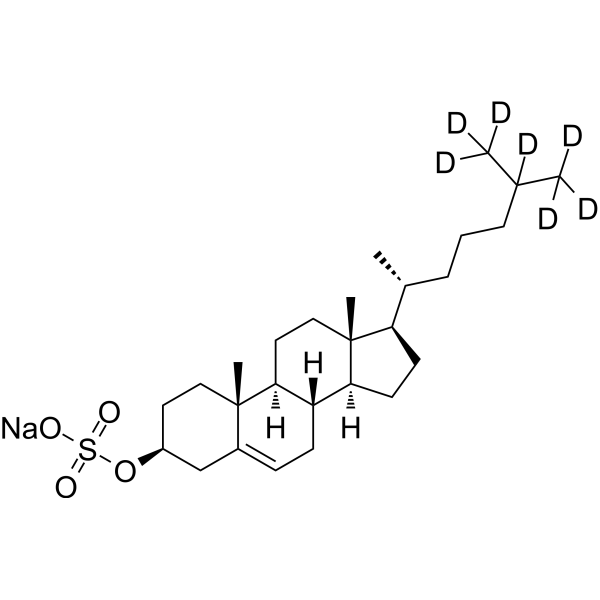
    Cholesterol sulfate sodium-d7 is the deuterium labeled Cholesterol sulfate sodium. Cholesterol sulfate sodium is a naturally occurring, orally active cholesterol derivative that is widely distributed in various tissues and body fluids. Cholesterol sulfate sodium acts as a DOCK2 inhibitor, with IC50 values of 2 μM and 2.9 μM against mouse and human targets, respectively. Cholesterol sulfate sodium restricts excessive neutrophil infiltration and alleviates intestinal inflammation and damage. Cholesterol sulfate sodium serves as an activator of protein kinase C (PKC), which promotes squamous cell differentiation and inhibits skin carcinogenesis. Cholesterol sulfate sodium regulates cholesterol homeostasis and cellular metabolism by activating the AMPK-Sirt1 pathway. Cholesterol sulfate sodium can be used in research related to actinic keratitis, ulcerative colitis, skin cancer, and other conditions.
    Cholesterol sulfate-d7 sodium
  • HY-11046A

    Endogenous Metabolite Inflammation/Immunology
    KRP-109 is a neutrophil elastase (NE) inhibitor with activity in reducing lung inflammation. KRP-109 improves survival in mouse models and reduces the number of neutrophils and inflammation in the alveolar walls. KRP-109 significantly reduced cell and neutrophil counts in bronchoalveolar lavage fluid, as well as cytokine levels such as interleukin 1β and macrophage inflammatory protein 2. KRP-109 can be used in the research of severe pneumonia .
    KRP-109
  • HY-167715

    Histamine Receptor Phosphodiesterase (PDE) Inflammation/Immunology
    Traxanox is an orally available diuretic that enhances phagocytosis of yeast granules by mouse peritoneal macrophages and rat peritoneal polymorphonuclear leukocytes in vitro. Traxanox inhibits IgE-mediated histamine release and cyclic AMP phosphodiesterase activity.Traxanox exhibits anti-inflammatory activity, as it inhibits the anaphylactoid reaction and reduces pleural fluid accumulation in experimental models of inflammation. Traxanox also demonstrates a synergistic effect when combined with hydrocortisone or indomethacin in suppressing adjuvant arthritis in rats.
    Traxanox
  • HY-B1202A

    AY-22284A

    Aldose Reductase Metabolic Disease
    Alrestatin (AY-22284) sodium is an aldose reductase inhibitor. Alrestatin sodium reduces fructose levels in the uterine fluid of mice. Alrestatin sodium interferes with sperm capacitation and impairs fertilization function in mice. Alrestatin sodium decreases basal and tyramine-induced norepinephrine release in rat pancreatic specimens in vitro. Alrestatin sodium enhances glucose- and arginine-stimulated insulin secretion in vivo. Alrestatin sodium can be used in studies related to diabetes and reproductive diseases .
    Alrestatin sodium
  • HY-137936

    Antibiotic Infection
    Terrecyclic acid is a sesquiterpene originally isolated from A. terreus with antibiotic and anticancer activity. It is active against S. aureus, B. subtilis, and M. roseus (MICs=25, 50, and 25 μg/mL, respectively). Terrecyclic acid induces a heat shock response, increases levels of reactive oxygen species (ROS), and inhibits NF-κB activity and cell growth in 3T3-Y9-B12 cells.2 In vivo, terrecyclic acid (0.1, 1, and 10 mg/ml) reduces the number of ascitic fluid tumor cells in a mouse model of P388 murine leukemia.
    Terrecyclic Acid
  • HY-119234

    CXCR Inflammation/Immunology
    CX4338 is a CXCL8-mediated chemokine inhibitor with the activity of inhibiting CXCR2-mediated cell migration. CX4338 selectively inhibits CXCR2-mediated β-arrestin-2 recruitment and receptor internalization while enhancing CXCR2-mediated MAPK activation. CX4338 also inhibited CXCL8-induced chemotaxis, showing efficacy in CXCR2-overexpressing cells and human neutrophils. In vivo, CX4338 significantly reduced LPS-induced neutrophil numbers in mouse bronchoalveolar lavage fluid. The mechanism of action of CX4338 is to selectively inhibit CXCR2-mediated β-arrestin-2 activation, which is sufficient to inhibit CXCL8-mediated chemotaxis .
    CX4338
  • HY-B0590E

    Ro 1-9569 mesylate

    Monoamine Transporter Dopamine Receptor Neurological Disease
    Tetrabenazine (Ro 1-9569) mesylate is a brain-penetrant and orally active VMAT2-selective ligand with human VMAT2 Ki 100 nM. Tetrabenazine mesylate binds VMAT2 to block monoamine uptake into synaptic vesicles, potentiates cytoplasmic monoamine degradation. Tetrabenazine mesylate weakly blocks dopamine D2 receptors, and increases dopamine turnover via elevated cerebrospinal fluid homovanillic acid. Tetrabenazine mesylate can be used for the research of Huntington’s disease, tardive dyskinesia, and Tourette’s syndrome .
    Tetrabenazine mesylate
  • HY-B0590R

    Ro 1-9569 (Standard)

    Reference Standards Monoamine Transporter Dopamine Receptor Neurological Disease
    Tetrabenazine (Standard) is the analytical standard of Tetrabenazine (HY-B0590). This product is intended for research and analytical applications. Tetrabenazine (Ro 1-9569) is a brain-penetrant and orally active VMAT2-selective ligand with human VMAT2 Ki 100 nM. Tetrabenazine binds VMAT2 to block monoamine uptake into synaptic vesicles, potentiates cytoplasmic monoamine degradation. Tetrabenazine weakly blocks dopamine D2 receptors, and increases dopamine turnover via elevated cerebrospinal fluid homovanillic acid. Tetrabenazine can be used for the research of Huntington’s disease, tardive dyskinesia, and Tourette’s syndrome .
    Tetrabenazine (Standard)
  • HY-B0590S3

    TBZ-d7-d7; Ro 1-9569-d7

    Isotope-Labeled Compounds Monoamine Transporter Dopamine Receptor Neurological Disease
    Tetrabenazine-d7 (TBZ-d7-d7) is deuterium labeled Tetrabenazine (HY-B0590). Tetrabenazine (Ro 1-9569) is a brain-penetrant and orally active VMAT2-selective ligand with human VMAT2 Ki 100 nM. Tetrabenazine binds VMAT2 to block monoamine uptake into synaptic vesicles, potentiates cytoplasmic monoamine degradation. Tetrabenazine weakly blocks dopamine D2 receptors, and increases dopamine turnover via elevated cerebrospinal fluid homovanillic acid. Tetrabenazine can be used for the research of Huntington’s disease, tardive dyskinesia, and Tourette’s syndrome .
    Tetrabenazine-d7
  • HY-11046

    Elastase Inflammation/Immunology
    KRP-109 is a neutrophil elastase (NE) inhibitor with activity in reducing lung inflammation. KRP-109 improves survival in mouse models and reduces the number of neutrophils and inflammation in the alveolar walls. KRP-109 significantly reduced cell and neutrophil counts in bronchoalveolar lavage fluid, as well as cytokine levels such as interleukin 1β and macrophage inflammatory protein 2. KRP-109 can be used in the research of severe pneumonia .
    AX-9657
  • HY-D3419

    Fluorescent Dye Neurological Disease
    Neuro-DiO 4-chlorobenzenesulfonate is a hydrophobic C18 alkyl chain carbocyanine dye with green fluorescence, commonly used as a vascular marker, cell internalizer and deposition agent. Neuro-DiO 4-chlorobenzenesulfonate inserts its alkyl chain into the endothelial plasma membrane via liposome-mediated perfusion to achieve vascular labeling. Neuro-DiO chlorobenzenesulfonate can also stain the cell membrane and cytoplasm of cancer cells to assist in confocal microscopy observations. Neuro-DiO chlorobenzenesulfonate can be released from nanosponges and accumulate on the surface of mouse retina, then internalize into retinal ganglion cells, which is applicable to researches related to glaucoma and other diseases. It should be noted that during liposome-mediated vascular staining in mice, Neuro-DiO 4-chlorobenzenesulfonate may cause leakage of airway lavage fluid .
    Neuro-DiO 4-chlorobenzenesulfonate

Inquiry Online

Your information is safe with us. * Required Fields.

Salutation


Country or Region *

Applicant Name *


Organization Name *

Department *


Email Address *


Product Name *

Cat. No.


Requested quantity *

Phone Number *


Remarks

Inquiry Online

Inquiry Information

Product Name:
Cat. No.:
Quantity:
MCE Japan Authorized Agent:

