22 Results for "

mutagenic potential

" in MedChemExpress (MCE) Product Catalog:
Products (22)

22 Results for "mutagenic potential" in MCE Product Catalog:

5
5 Cited Publications
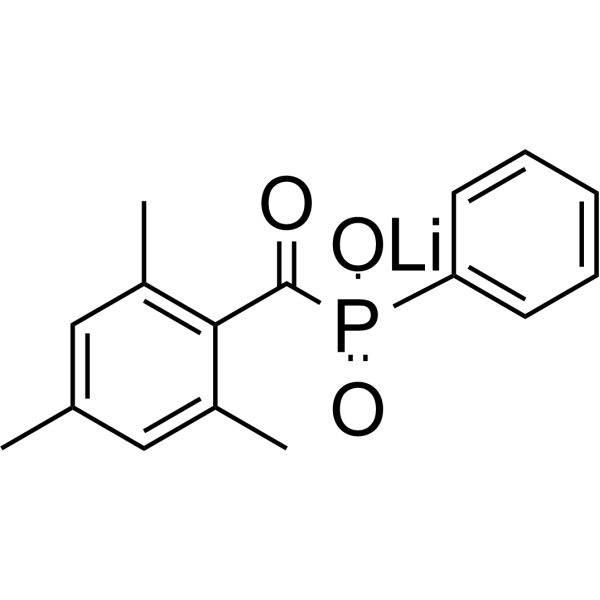
Cat. No.: HY-44076
CAS No.: 85073-19-4
Synonyms: Lithium phenyl-2,4,6-trimethylbenzoylphosphinate
LAP (Lithium phenyl-2,4,6-trimethylbenzoylphosphinate) is a free radical initiator. The free radicals produced by LAP under bioprinting conditions are potentially cytotoxic and mutagenic. In addition, the concentration of LAP affects the mechanical strength of 3D printed scaffolds. Generally, the concentration range of LAP used for curing is 0.05%-1%. The elastic modulus produced at a concentration of 0.1% is the highest, with enhanced mechanical properties and excellent biocompatibility .
loading...
    loading...
5
5 Cited Publications
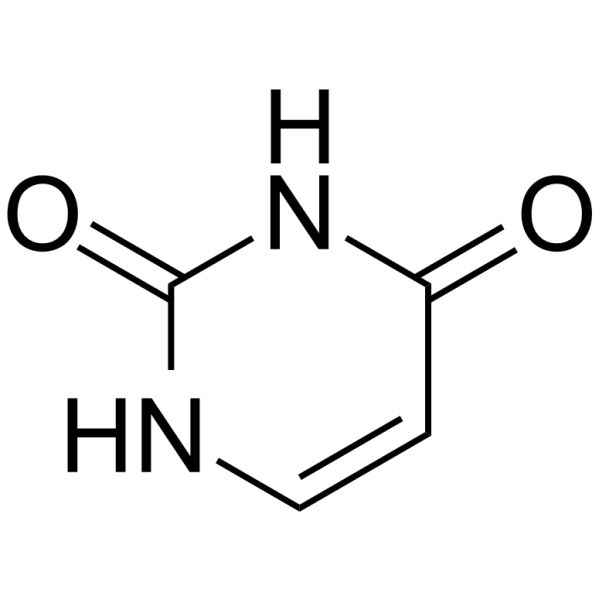
Cat. No.: HY-I0960
CAS No.: 66-22-8
Uracil is a pyrimidine derivative and one of the four nucleobases in the nucleic acid of RNA. Uracil is a frequently occurring DNA base damage that results from the spontaneous or chemically induced deamination of cytosine and is mutagenic at the level of replication. Uracil could potentially alter transcriptional fidelity, resulting in production of mutant proteins .
loading...
    loading...
2
2 Cited Publications
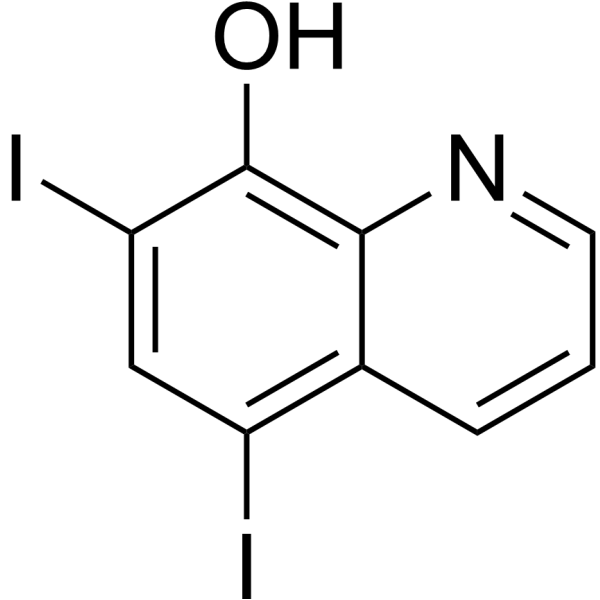
Cat. No.: HY-B1400
CAS No.: 83-73-8
Synonyms: Iodoquinol; 5,7-Diiodo-8-hydroxyquinoline; 5,7-Diiodo-8-quinolinol
Diiodohydroxyquinoline (Iodoquinol, 5,7-Diiodo-8-hydroxyquinoline, 5,7-Diiodo-8-quinolinol) has an orally active and satisfactory antiparasitic properties. Diiodohydroxyquinoline exhibits mutagenic potential in mice and potent anti-SARS-CoV-2 activity with an EC50 value of 1.38 μM in VeroE6 cells. Diiodohydroxyquinoline's antimutagen is ascorbic acid. Diiodohydroxyquinoline is promising for research in inflammationin, testinal amebiasis, amebic liver abscess and chronic nonspecific diarrheas .
loading...
    loading...
2
2 Cited Publications
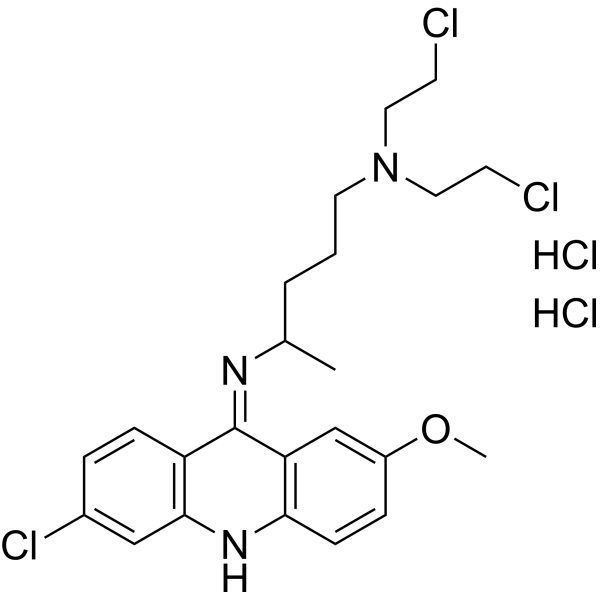
Cat. No.: HY-W127705
CAS No.: 4213-45-0
Quinacrine mustard dihydrochloride is a fluorochrome. Quinacrine mustard dihydrochloride as a polycyclic aromatic agent can be used as mutagenic agent induces the mutants of bacteria. Quinacrine mustard dihydrochloride induces cell cycle arrest at G2/M-phase. Quinacrine mustard dihydrochloride has the potential for the research of plant, animal, or human chromosomes .
loading...
    loading...
1
1 Cited Publications
Cat. No.: HY-103609
CAS No.: 129-00-0
Purity:  99.72%
Synonyms: Benzo[def]phenanthrene
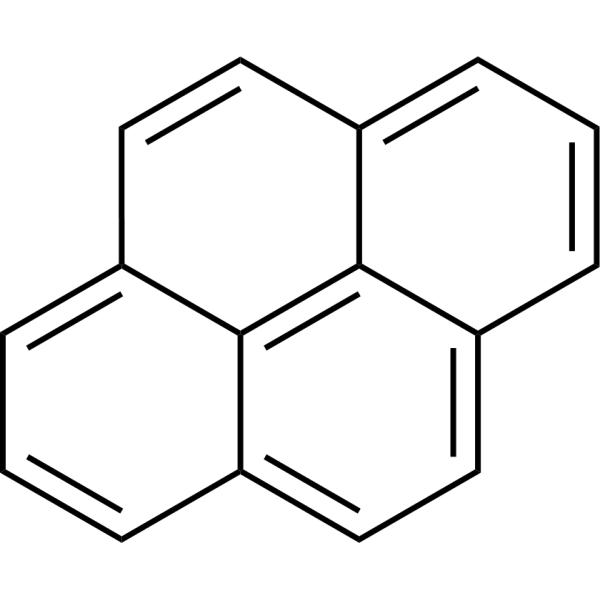
Pyrene is a polycyclic aromatic hydrocarbon (PAH) composed of four fused benzene rings. It has a distinct aromatic odor, produced by incomplete combustion of organic matter. Pyrene exhibits strong fluorescence, emitting in the blue region of the spectrum, making it useful as a probe for studying molecular interactions in solution and on surfaces. Pyrene is also used as a model compound for the study of PAHs in various environments and biological systems because of its ubiquity in these environments. However, long-term exposure to pyrene has been associated with potential health risks, including carcinogenicity and mutagenicity.
loading...
    loading...
1
1 Cited Publications
Cat. No.: HY-B1173
CAS No.: 464-49-3
Synonyms: D-(+)-Camphor; (1R)-(+)-Camphor
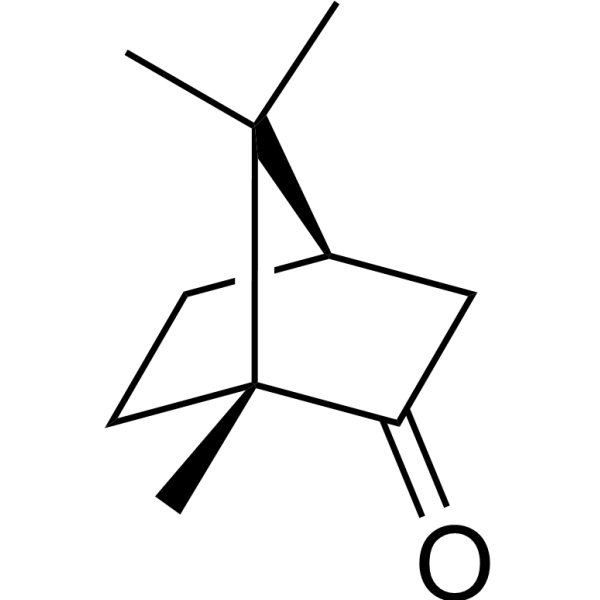
(+)-Camphor (D-(+)-Camphor; (1R)-(+)-Camphor) is an isomer of Camphor. Camphor is an agonist of monoterpenoid transient receptor potential (TRP) channels (such as TRPV1, TRPV3, TRPM8) and an inhibitor of TRPA1 channels. Camphor's derivatives have multiple biological activities, including antibacterial, antiviral, antioxidant, analgesic and anticancer. Camphor can selectively activate cold-sensitive TRP channels and inhibit TRPA1-mediated nociceptive signals. Camphor stimulates the cold-sensing nerve endings in the skin and regulates the activity of ion channels to exert analgesic, anti-inflammatory and anti-itching effects. It also has anti-proliferative and anti-mutagenic activities on tumor cells, which may be related to inhibiting ribosome function or inducing cell apoptosis. Camphor can be absorbed through the skin and (+)-Camphor can be used in the study of muscle and joint pain and inflammation .
loading...
    loading...
Cat. No.: HY-W002199
CAS No.: 647-42-7
Synonyms: 6:2 FTOH; 1H,1H,2H,2H-Perfluoro-1-octanol; 2-(Perfluorohexyl)ethanol
6:2 Fluorotelomer alcohol (6:2 FTOH) is an orally active, blood-brain barrier-permeable modulator of cyclin D1 and ETS1. 6:2 Fluorotelomer alcohol downregulates cyclin D1 expression, upregulates ETS1 via the TNF-α/ERK 1/2 pathway, impairs mitochondrial membrane potential and respiratory function, increases reactive oxygen species levels, disrupts calcium homeostasis and activates endoplasmic reticulum stress markers, and induces cell proliferation inhibition and endothelial-mesenchymal transition. Furthermore, 6:2 Fluorotelomer alcohol induces morphological abnormalities in zebrafish embryos and liver developmental damage, while disrupting the brain immune microenvironment in mice, causing systemic toxicity and delayed pup maturation in CD-1 mice. 6:2 Fluorotelomer alcohol also induces cortical neuron apoptosis, glial cell activation, synaptic abnormalities, colonic barrier damage, intestinal dysbiosis and autism spectrum disorder-like symptoms in mice. 6:2 Fluorotelomer alcohol shows no mutagenic, clastogenic, primary skin/eye irritation or skin sensitizing effects, exhibits no selective reproductive toxicity in CD-1 mice, and is classified as GHS Category 4 for acute oral toxicity. 6:2 Fluorotelomer alcohol can be used in studies of neurodevelopmental disorders and autism spectrum disorders .
loading...
    loading...
Cat. No.: HY-W002820
CAS No.: 33421-40-8
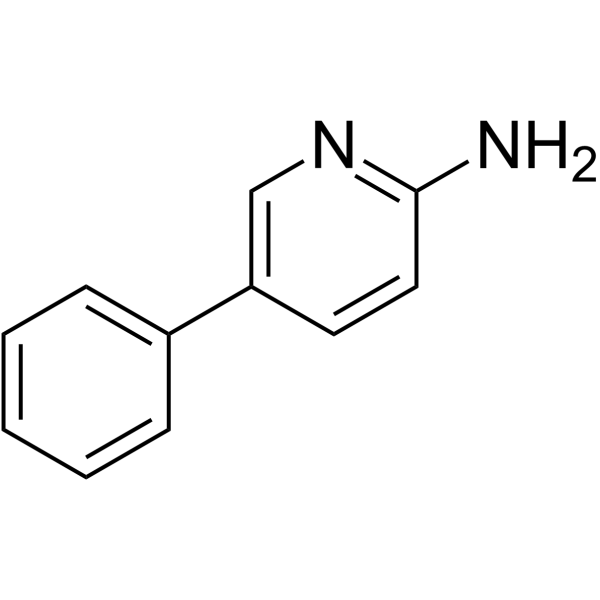
2-Amino-5-phenylpyridine is a mutagenic heterocyclic aromatic amine that is formed by pyrolysis of phenylalanine in proteins. 2-Amino-5-phenylpyridine is in broiled sardines and is considered as potentially carcinogenic .
loading...
    loading...
Cat. No.: HY-42045
CAS No.: 321724-19-0
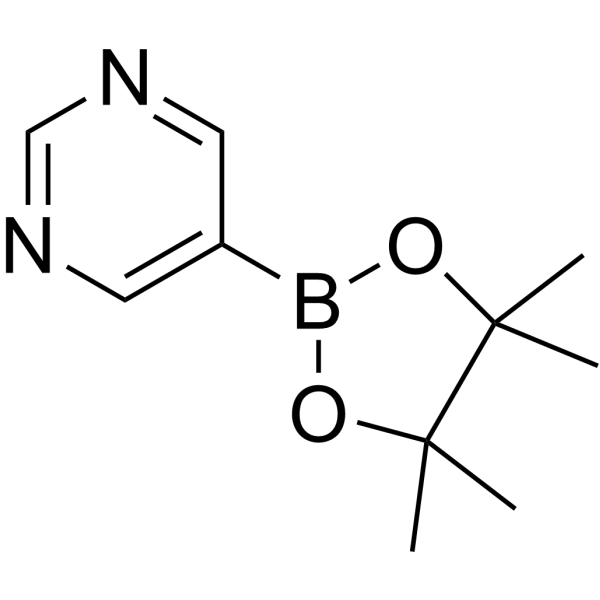
Pyrimidine-5-boronic acid pinacol ester is a derivative of Boronic acid. Boronic acid is an intermediate commonly used in organic synthesis reactions and can be used as a key reagent in the Suzuki-Miyaura reaction. It generates organic free radicals through oxygen-mediated oxidation and exhibits potential mutagenic activity. Boronic acid is mainly used in research in the fields of drug synthesis and catalytic reactions. Pyrimidine-5-boronic acid pinacol ester serves as a building block in DNA-compatible one-pot click chemistry for synthesis of DNA-encoded libraries .
loading...
    loading...
Cat. No.: HY-135212S
CAS No.: 1156508-86-9
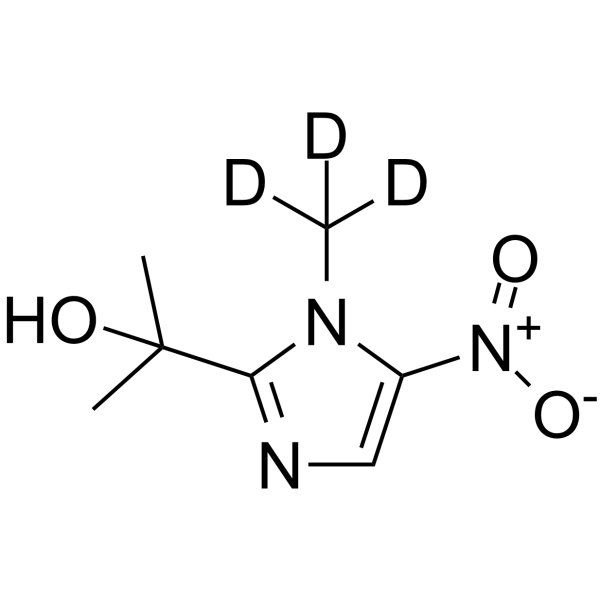
Hydroxy ipronidazole-d3 is the deuterium labeled Hydroxy ipronidazole. Hydroxy ipronidazole (Ipronidazole-OH) is a metabolite of nitroimidazole antibiotics, such as ipronidazole (IPZ). Hydroxy ipronidazole may has similar mutagenic potential as the parent compound .
loading...
    loading...
Cat. No.: HY-B1400R
CAS No.: 83-73-8
Synonyms: Iodoquinol (Standard); 5,7-Diiodo-8-hydroxyquinoline (Standard); 5,7-Diiodo-8-quinolinol (Standard)
Diiodohydroxyquinoline (Standard) is the analytical standard of Diiodohydroxyquinoline. This product is intended for research and analytical applications. Diiodohydroxyquinoline (Iodoquinol, 5,7-Diiodo-8-hydroxyquinoline, 5,7-Diiodo-8-quinolinol) has an orally active and satisfactory antiparasitic properties. Diiodohydroxyquinoline exhibits mutagenic potential in mice and potent anti-SARS-CoV-2 activity with an EC50 value of 1.38 μM in VeroE6 cells. Diiodohydroxyquinoline's antimutagen is ascorbic acid. Diiodohydroxyquinoline is promising for research in inflammationin, testinal amebiasis, amebic liver abscess and chronic nonspecific diarrheas .
loading...
    loading...
Cat. No.: HY-135212
CAS No.: 35175-14-5
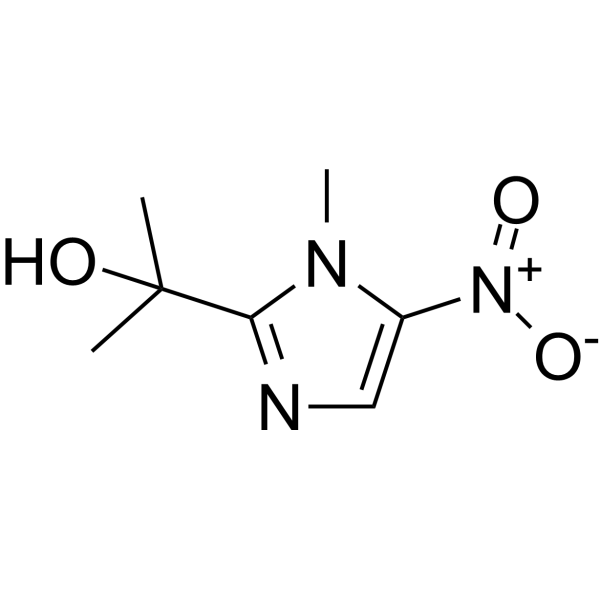
Hydroxy ipronidazole (Ipronidazole-OH) is a metabolite of nitroimidazole antibiotics, such as ipronidazole (IPZ). Hydroxy ipronidazole may has similar mutagenic potential as the parent compound .
loading...
    loading...
Cat. No.: HY-W019780
CAS No.: 75-27-4
Synonyms: Dichlorobromomethane
Research Areas:  

Metabolic Disease Cancer

Bromodichloromethane (Dichlorobromomethane) is a type of trihalomethane, commonly found in chlorinated drinking water for disinfection, and is a disinfection by-product. The bromination of bromodichloromethane can cause the formation of mutagenic intermediates through the transformation mediated by glutathione S-transferase (GST). Bromodichloromethane inhibits the differentiation of human placental trophoblast cells and reduces the secretion of chorionic gonadotropin (CG). Bromodichloromethane has potential reproductive toxicity and carcinogenicity .
loading...
    loading...
Cat. No.: HY-N7402
CAS No.: 6378-65-0
Category:  

Natural Products Animals

Target:  

Others

Hexyl hexanoate is a fruit aroma component with potential food and beverage additive activity. Hexyl hexanoate is found in alcoholic beverages and is used to blend fruit flavors. Hexyl hexanoate is present in many fruits, Parmesan cheese, alcoholic beverages, and black tea. Hexyl hexanoate is a volatile component produced as a result of fruit ripening. Toxicity assessments of hexyl hexanoate showed that it is not mutagenic and that exposure is below safety thresholds for repeated dose, reproduction, and local respiratory toxicity. Hexyl hexanoate is also below thresholds in skin sensitization assessments, and for phototoxicity and photosensitization, the results showed that it does not present a relevant risk. Hexyl hexanoate is considered non-persistent, non-bioaccumulative, and non-toxic according to the environmental criteria of the International Fragrance Association .
loading...
    loading...
Cat. No.: HY-B1173R
CAS No.: 464-49-3
Synonyms: D-(+)-Camphor (Standard); (1R)-(+)-Camphor (Standard)
(+)-Camphor (Standard) is the analytical standard of (+)-Camphor. This product is intended for research and analytical applications. (+)-Camphor (D-(+)-Camphor; (1R)-(+)-Camphor) is an isomer of Camphor. Camphor is an agonist of monoterpenoid transient receptor potential (TRP) channels (such as TRPV1, TRPV3, TRPM8) and an inhibitor of TRPA1 channels. Camphor's derivatives have multiple biological activities, including antibacterial, antiviral, antioxidant, analgesic and anticancer. Camphor can selectively activate cold-sensitive TRP channels and inhibit TRPA1-mediated nociceptive signals. Camphor stimulates the cold-sensing nerve endings in the skin and regulates the activity of ion channels to exert analgesic, anti-inflammatory and anti-itching effects. It also has anti-proliferative and anti-mutagenic activities on tumor cells, which may be related to inhibiting ribosome function or inducing cell apoptosis. Camphor can be absorbed through the skin and (+)-Camphor can be used in the study of muscle and joint pain and inflammation .
loading...
    loading...
Cat. No.: HY-W002820R
CAS No.: 33421-40-8
2-Amino-5-phenylpyridine is a mutagenic heterocyclic aromatic amine that is formed by pyrolysis of phenylalanine in proteins. 2-Amino-5-phenylpyridine is in broiled sardines and is considered as potentially carcinogenic .
loading...
    loading...
Cat. No.: HY-135212R
CAS No.: 35175-14-5
Hydroxy ipronidazole (Standard) is the analytical standard of Hydroxy ipronidazole. This product is intended for research and analytical applications. Hydroxy ipronidazole (Ipronidazole-OH) is a metabolite of nitroimidazole antibiotics, such as ipronidazole (IPZ). Hydroxy ipronidazole may has similar mutagenic potential as the parent compound .
loading...
    loading...
Cat. No.: HY-103609R
CAS No.: 129-00-0
Synonyms: Benzo[def]phenanthrene (Standard)
Pyrene (Standard) is the analytical standard of Pyrene. This product is intended for research and analytical applications. Pyrene is a polycyclic aromatic hydrocarbon (PAH) composed of four fused benzene rings. It has a distinct aromatic odor, produced by incomplete combustion of organic matter. Pyrene exhibits strong fluorescence, emitting in the blue region of the spectrum, making it useful as a probe for studying molecular interactions in solution and on surfaces. Pyrene is also used as a model compound for the study of PAHs in various environments and biological systems because of its ubiquity in these environments. However, long-term exposure to pyrene has been associated with potential health risks, including carcinogenicity and mutagenicity.
loading...
    loading...
Cat. No.: HY-134273A
Synonyms: 8-Bromo-dGTP sodium
Research Areas:  

Others

8-Br-dGTP (8-Bromo-dGTP) sodium (Compound 5), an 8-brominated purine nucleotide, is a syn-oriented analog of dGTP. 8-Br-dGTP sodium can be hydrolyzed by the enzyme hMTH1 protein (HY-P74740). 8-Br-dGTP sodium inhibits dGTP-activated ADP reduction with a Ki of 56  μM. 8-Br-dGTP sodium has no significant genotoxicity and mutagenic potentials during DNA synthesis .
loading...
    loading...
Cat. No.: HY-W727391
CAS No.: 50277-34-4
β-calacorene is an essential oil metabolite. β-calacorene shows AMES toxicity or mutagenic potential. β-calacorene can be used in the research of Staphylococcus aureus infections.
loading...
    loading...

