1. Search Result
Search Result
Results for "

object

" in MedChemExpress (MCE) Product Catalog:

33

Inhibitors & Agonists

1

Fluorescent Dye

1

Peptides

5

Natural
Products

1

Click Chemistry

Cat. No. Product Name Target Research Areas Chemical Structure
  • HY-100784
    Dihydrokainic acid
    1 Publications Verification

    EAAT Neurological Disease
    Dihydrokainic acid is a glutamate transporters (especially GLT1) inhibitor. Dihydrokainic acid targets GLT1 with high affinity, effectively inhibiting its transport function. Dihydrokainic acid exerts its effect by inhibiting the uptake of glutamate, leading to an increase in extracellular glutamate concentration, thereby affecting neuronal excitability and neurotransmission. Dihydrokainic acid is mainly applied in the field of neuroscience for research on glutamate-related neural functions, epilepsy, learning, and memory .
    Dihydrokainic acid
  • HY-30004

    Environmental Pollutants Endogenous Metabolite Cardiovascular Disease Metabolic Disease
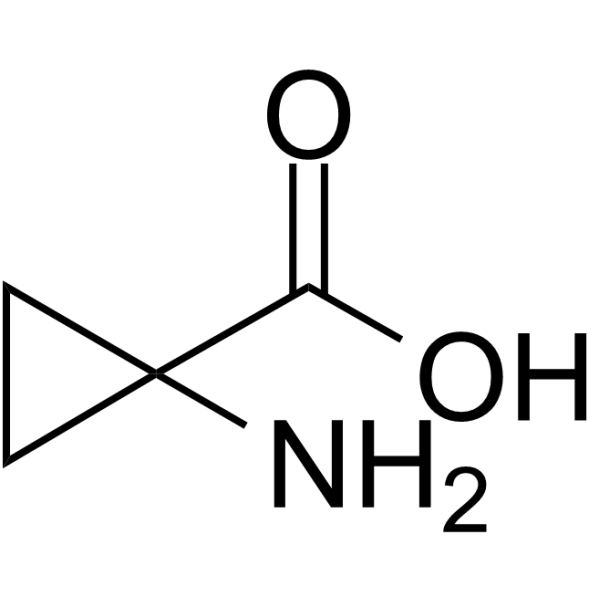
    1-Aminocyclopropane-1-carboxylic acid is an endogenous metabolite. In the presence of low concentrations (1 μM) of glutamate, 1-Aminocyclopropane-1-carboxylic acid acts as a small molecule agonist of NMDA receptors with an EC50 of 0.7-0.9 μM. At high concentrations (10 μM) of glutamate, 1-Aminocyclopropane-1-carboxylic acid acts as a competitive antagonist of NMDA receptors with an EC50 of 81.6 nM. 1-Aminocyclopropane-1-carboxylic acid exerts neuroprotective activity by moderately activating NMDA receptors to prevent neuronal cell death in ischemic animal models. Additionally, 1-Aminocyclopropane-1-carboxylic acid is an antagonist of NMDA receptors, inducing blood pressure reduction and antioxidant effects in stroke-prone hypertensive rats. 1-Aminocyclopropane-1-carboxylic acid enhances object recognition memory and cognitive flexibility dependent on the prefrontal cortex, but does not affect impulsivity nor exhibit an antipsychotic-like profile. 1-Aminocyclopropane-1-carboxylic acid shows promise for research in the field of neurotoxicity. .
    1-Aminocyclopropane-1-carboxylic acid
  • HY-161307

    HDAC Microtubule/Tubulin Neurological Disease
    T-518 is an orally active, BBB-penetrant and potent DFMO-based HDAC6 inhibitor with high selectivity (IC50 = 36 nM). T-518 improves axonal transport. T-518 ameliorates object recognition deficit. T-518 can be studied in research for Alzheimer’s disease and tauopathy .
    T-518
  • HY-N0307

    Bcl-2 Family NF-κB DNA/RNA Synthesis Apoptosis Cardiovascular Disease Neurological Disease
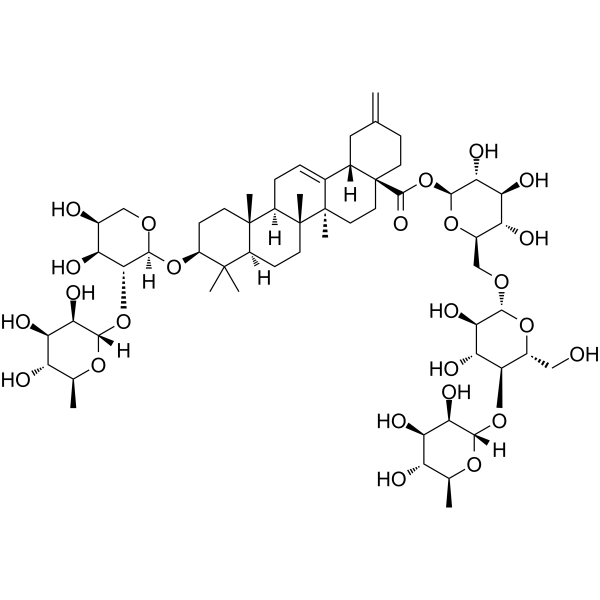
    Ciwujianoside B is an orally active, blood-brain barrier penetrable radioprotective agent and memory enhancer. Ciwujianoside B reduces radiation-induced DNA damage, cell cycle arrest and apoptosis, downregulates NF-κB and the Bax/Bcl-2 ratio, and enhances the proliferative capacity of bone marrow cells. Ciwujianoside B enhances object recognition memory in normal mice and induces dendritic extension in primary cultured cortical neurons. Ciwujianoside B can be used in studies related to hematopoietic system radiation injury and memory enhancement .
    Ciwujianoside B
  • HY-15618

    M1 receptor modulator

    mAChR Calcium Channel Neurological Disease
    MK-7622 (M1 receptor modulator) is an orally active positive allosteric modulator of muscarinic M1 acetylcholine receptors (mAChRs). MK-7622 enhances ACh-induced calcium flux in CHO cells expressing human M1 receptors (EC50 = 21 nM) and shows robust agonist activity in rat M1-expressing CHO cells, increasing intracellular calcium. MK-7622 reverses Scopolamine (HY-N0296)-induced cognitive deficits in rhesus macaques in an object retrieval detour task. MK-7622 can be used for the study of Alzheimer's disease (AD) .
    MK-7622
  • HY-N4134

    NO Synthase Inflammation/Immunology
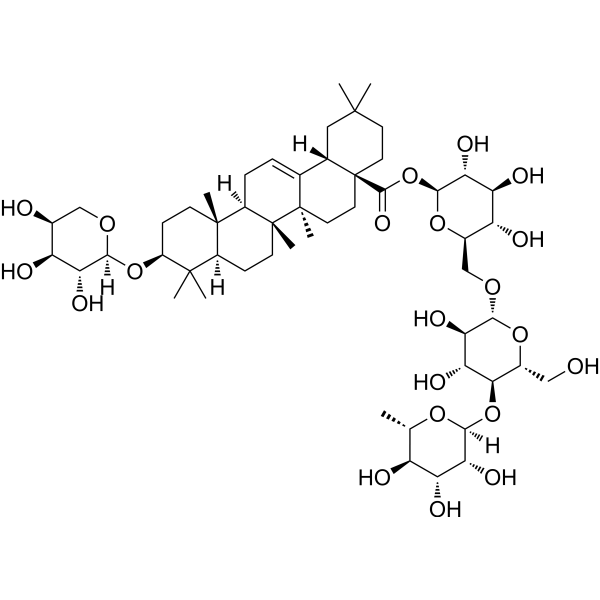
    Ciwujianoside C3, an orally active and brain penetrated compound, is isolated the leaves of Acanthopanax henryi Harms. Ciwujianoside C3 has anti-inflammatory effect and can reinforces object recognition memory .
    Ciwujianoside C3
  • HY-10936

    iGluR Neurological Disease
    S 18986 is a selective, orally active, brain penetrant positive allosteric modulator of AMPA-type receptors. S 18986 shows cognitive enhancing properties in rodents. S 18986 activates the release of noradrenaline and acetylcholine in rat hippocampus and enhances rat memory in object-recognition tests .
    S 18986
  • HY-30004R

    Reference Standards Endogenous Metabolite Cardiovascular Disease Metabolic Disease
    1-Aminocyclopropane-1-carboxylic acid (Standard) is the analytical standard of 1-Aminocyclopropane-1-carboxylic acid. This product is intended for research and analytical applications. 1-Aminocyclopropane-1-carboxylic acid is an endogenous metabolite. In the presence of low concentrations (1 μM) of glutamate, 1-Aminocyclopropane-1-carboxylic acid acts as a small molecule agonist of NMDA receptors with an EC50 of 0.7-0.9 μM. At high concentrations (10 μM) of glutamate, 1-Aminocyclopropane-1-carboxylic acid acts as a competitive antagonist of NMDA receptors with an EC50 of 81.6 nM. 1-Aminocyclopropane-1-carboxylic acid exerts neuroprotective activity by moderately activating NMDA receptors to prevent neuronal cell death in ischemic animal models. Additionally, 1-Aminocyclopropane-1-carboxylic acid is an antagonist of NMDA receptors, inducing blood pressure reduction and antioxidant effects in stroke-prone hypertensive rats. 1-Aminocyclopropane-1-carboxylic acid enhances object recognition memory and cognitive flexibility dependent on the prefrontal cortex, but does not affect impulsivity nor exhibit an antipsychotic-like profile. 1-Aminocyclopropane-1-carboxylic acid shows promise for research in the field of neurotoxicity. .
    1-Aminocyclopropane-1-carboxylic acid (Standard)
  • HY-117604
    THPP-1
    1 Publications Verification

    Phosphodiesterase (PDE) Neurological Disease
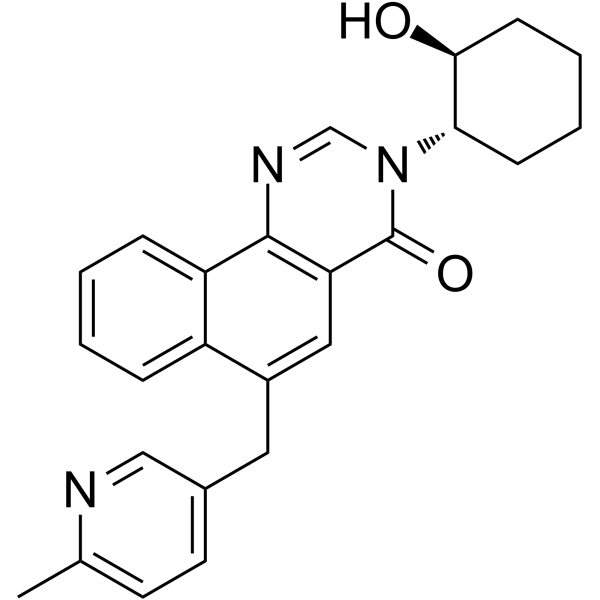
    THPP-1, a SGC chemical probe, is a potent and orally bioavailable phosphodiesterase 10A (PDE10A) inhibitor, with Ki values of 1 nM and 1.3 nM for human and rat PDE10A, respectively. THPP-1 has excellent pharmacokinetic properties in preclinical species .
    THPP-1
  • HY-179004

    VU6022856

    Potassium Channel Neurological Disease
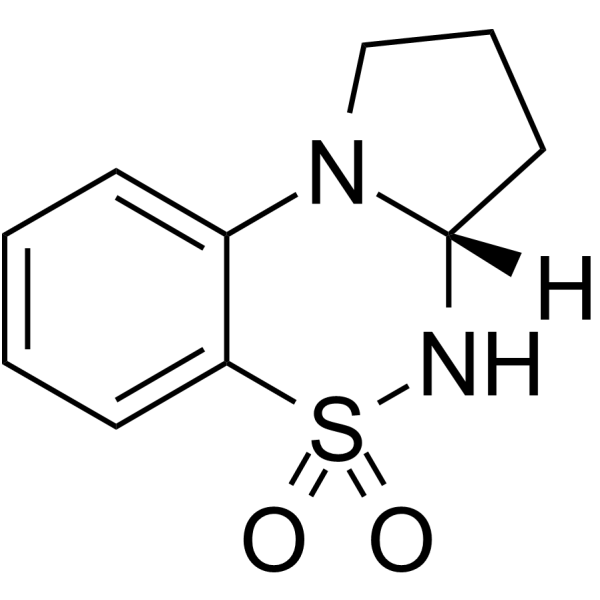
    ONO-9517601 is a potent, orally active, selective and CNS penetrant dual TREK-1/TREK-2 inhibitor (TREK-1 IC50= 0.067 μM, TREK-2 IC50= 0.23 μM). ONO-9517601 displays robust efficacy in an MK-801 (HY-15084B) challenge rat novel object recognition (NOR) paradigm. ONO-9517601 can be used for research on neurological and cognitive disorders .
    ONO-9517601
  • HY-153369

    BAY 1165747

    Guanylate Cyclase Cardiovascular Disease Neurological Disease
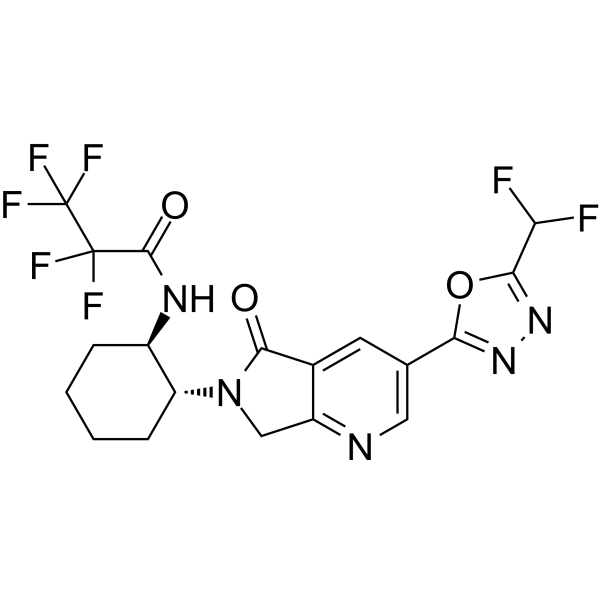
    BAY-747 (BAY 1165747) is an orally active and brain-penetrant stimulator of soluble guanylate cyclase (sGC). BAY-747 reverses L-NAME induced memory impairments and enhances cognition of rats in the object location task (OLT). BAY-747 also decreases blood pressure in both conscious normotensive and spontaneously hypertensive rats (SHR). BAY-747 improves function of the skeletal muscle associated with Duchenne muscular dystrophy (DMD) in mdx/mTRG2 mice model .
    BAY-747
  • HY-107652

    mAChR Neurological Disease
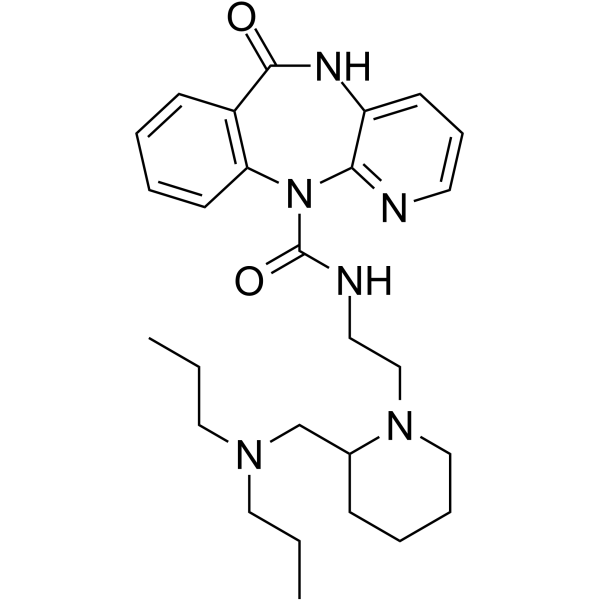
    AF-DX 384 is a selective antagonist of M2 and M4 muscarinic acetylcholine receptors (Kis=6.03 and 10 nM, respectively) . AF-DX 384 reverses deficits in novel object recognition and passive avoidance in aged rats, as well as in young rats with impairments induced by scopolamine .
    AF-DX 384
  • HY-123272

    5-HT Receptor Neurological Disease
    E6801 is a 5-HT6 receptor agonist that improves recognition memory by jointly modulating cholinergic and glutamatergic neurotransmission. E6801 can be used in studies of dementia, depression, obesity, epilepsy, etc .
    E6801
  • HY-W391641

    Biochemical Assay Reagents Endogenous Metabolite
    F8BT is a polymer material with excellent photoelectric properties. F8BT is widely used in organic light-emitting diodes (OLEDs) and organic solar cells (PLEDs), and can effectively improve the luminous efficiency and energy conversion efficiency of the devices. The structure of F8BT makes it perform well in photoelectric conversion and electron transport, making it an important object of modern electronic material research.
    F8BT
  • HY-170499

    BI02982816

    mGluR Neurological Disease
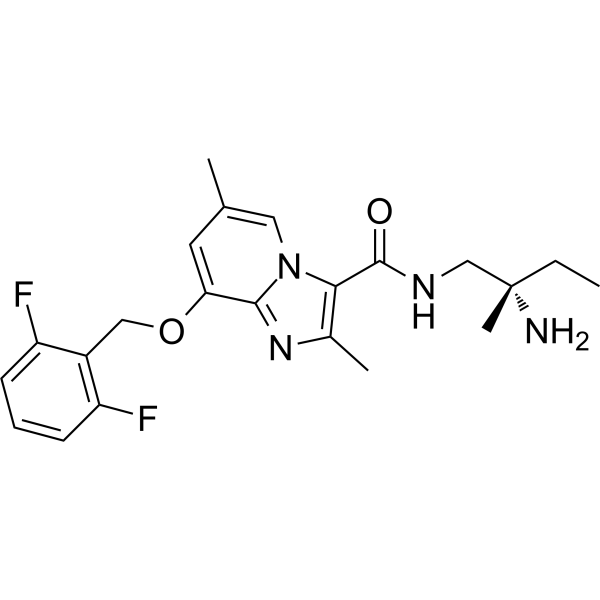
    VU6024578 (BI02982816) is a selective, orally active positive allosteric modulator (PAM) for metabotropic glutamate receptor (mGluR1), that activates human mGluR1 and rat mGluR1 with EC50 of 54 nM and 46 nM. VU6024578 exhibits antipsychotic activity in rats amphetamine-induced hyperactivity models and MK-801 (HY-15084B)-induced novel object recognition (NOR) models. VU6024578 is blood brain barrier penetrable .
    VU6024578
  • HY-179005

    VU6024391

    Potassium Channel Neurological Disease
    ONO-7927846 is a potent, orally active, selective and CNS penetrant dual TREK-1/TREK-2 inhibitor (TREK-1 IC50= 0.11 μM, TREK-2 IC50= 0.29 μM). ONO-7927846 displays robust efficacy in an MK-801 (HY-15084B) challenge rat novel object recognition (NOR) paradigm. ONO-7927846 can be used for research on neurological and cognitive disorders .
    ONO-7927846
  • HY-141460

    Ile-Ala; L-Isoleucyl-L-alanine

    Biochemical Assay Reagents Others
    H-Ile-Ala-OH (Ile-Ala; L-Isoleucyl-L-alanine) is a linear aliphatic dipeptide and self-reactive cyclization reagent that self-assembles into amorphous films or spherical structures from specific solvents. H-Ile-Ala-OH also serves as a precursor for the synthesis of the cyclic peptide cyclo (L-isoleucyl-L-alanine) (HY-N9251). H-Ile-Ala-OH undergoes solid-state cyclization when heated above 206 °C, and its initiation temperature is closely related to the size of side-chain substituents .
    H-Ile-Ala-OH
  • HY-100784R

    Reference Standards EAAT Neurological Disease
    Dihydrokainic acid (Standard) is the analytical standard of Dihydrokainic acid. This product is intended for research and analytical applications. Dihydrokainic acid (DHK) is a glutamate transporter GLT1 (EAAT2) inhibitor. Dihydrokainic acid impairs novel object recognition (NOR) memory performance in mice. Dihydrokainic acid also shows epileptogenic effects .
    Dihydrokainic acid (Standard)
  • HY-P10435

    Dopamine Receptor Neurological Disease
    KEMPFPKYPVEP is a 12-amino acids neuropeptide, which upregulates levels of dopamine (DA) and norepinephrine (NE) in the prefrontal cortex, exhibits spatial and object recognition memory promoting ability in Scopolamine (HY-N0296)-induced amnesia mouse model .
    KEMPFPKYPVEP
  • HY-151756

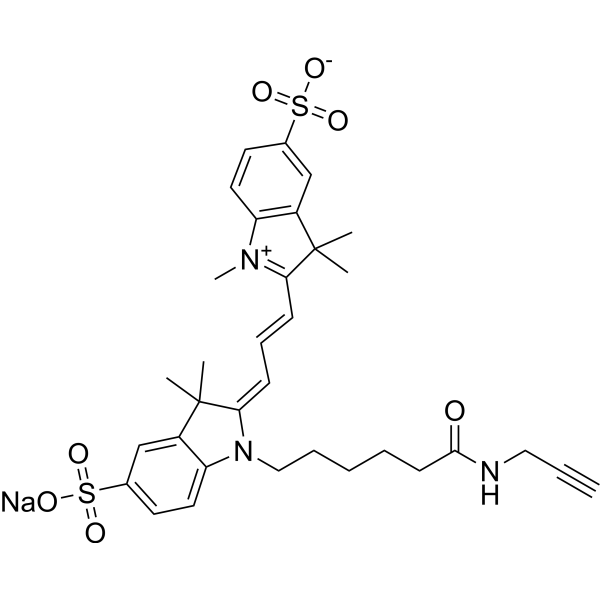
    Fluorescent Dye Others
    diSulfo-Cy3 alkyne is a water-soluble dye and a Click Chemistry reagent containing an alkyne group. Absorbance and emission of the dye are identical to Cy3 fluorophore. diSulfo-Cy3 alkyne can be used for the labeling of proteins, and even intact biological objects in water phase .
    diSulfo-Cy3 alkyne
  • HY-120710

    Phosphodiesterase (PDE) Neurological Disease
    DNS-8254 is an oral active and brain-penetrating PDE2a inhibitor with the IC50 of 8 nM. DNS-8254 shows memory enhancing effects in a rat model .
    DNS-8254
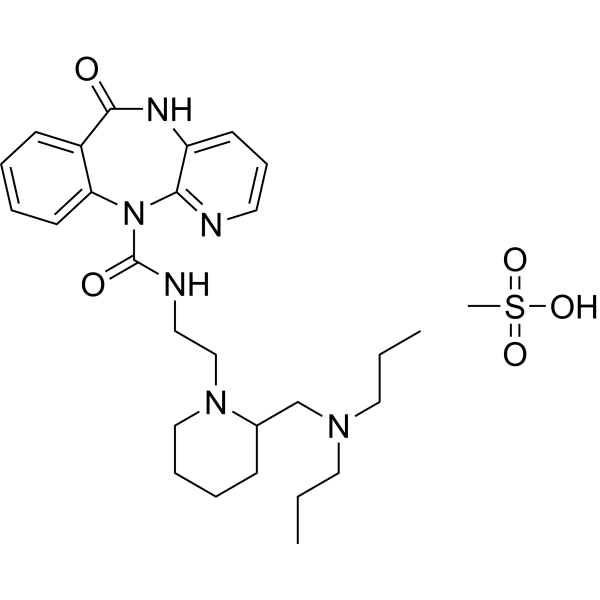
  • HY-124223

    mAChR Neurological Disease
    AF-DX 384 (methanesulfonate) is a selective antagonist of M2 and M4 muscarinic acetylcholine receptors (Kis=6.03 and 10 nM, respectively) . AF-DX 384 (methanesulfonate) reverses deficits in novel object recognition and passive avoidance in aged rats, as well as in young rats with impairments induced by scopolamine .
    AF-DX 384 methanesulfonate
  • HY-W034154

    Tetrakis(triphenylphosphine)ruthenium dihydride

    Drug Intermediate Endogenous Metabolite
    Dihydridotetrakis(triphenylphosphine)ruthenium(II) (Tetrakis(triphenylphosphine)ruthenium dihydride) is a catalyst with good catalytic activity. Dihydridotetrakis(triphenylphosphine)ruthenium(II) can be used in organic synthesis reactions, especially in hydrogenation and dehydrogenation reactions. Dihydridotetrakis(triphenylphosphine)ruthenium(II) has received extensive attention in the study of metal catalysts, and its high efficiency makes it an ideal research object.
    Dihydridotetrakis(triphenylphosphine)ruthenium(II)
  • HY-120783

    Endogenous Metabolite Neurological Disease
    Lu AF58801 is a potent, orally available, brain-penetrant positive allosteric modulator of α7 nicotinic acetylcholine receptors with efficacy in a novel object recognition task in mice. Lu AF58801 was shown to selectively enhance the activity of α7 nicotinic acetylcholine receptors. Lu AF58801 was able to improve cognitive function in mice treated with subchronic fluchlorothiazol (PCP) .
    Lu AF58801
  • HY-123459

    ABT-232; NS-49; PNO-49B

    Adrenergic Receptor Endocrinology
    Garomefrine hydrochlorid (ABT-232) is an α1A-adrenergic agonist with the potential to inhibit urinary incontinence. Garomefrine hydrochlorid showed the greatest contractility in pig nasal mucosal vessels. The biological activity of Garomefrine hydrochlorid has been shown to give it a competitive advantage compared to other drugs. The potency of Garomefrine hydrochlorid makes it a valuable research object in related research .
    Garomefrine (hydrochlorid)
  • HY-133732

    GEA 654 hydrochloride; A03 hydrochloride

    Serotonin Transporter 5-HT Receptor iGluR Neurological Disease
    Alaproclate (GEA 654) hydrochloride is a selective and orally active serotonin re-uptake inhibitor (SSRI). Alaproclate hydrochloride also acts as a potent, reversible and noncompetitive antagonist of the NMDA receptor coupled ion flow .
    Alaproclate hydrochloride
  • HY-117560

    GABA Receptor Neurological Disease
    PWZ-029 is a selective inverse agonist for 5 GABAA receptors. PWZ-029 is a benzodiazepine site ligand. PWZ-029 shows a weak but significant partial agonistic effect at 1- and 3-containing receptors. PWZ-029 significantly increases retention session latency in mouse fibroblast cells. PWZ-029 can improve object recognition in normal and scopolamine-treated rat model .
    PWZ-029
  • HY-117408

    mAChR Neurological Disease
    VU6004256 is a potent and selective M1 muscarinic positive allosteric modulator (PAM) with an EC50 value of 155 nM. VU6004256 has the potential for the research of schizophrenia .
    VU6004256
  • HY-N0307R

    Reference Standards Bcl-2 Family NF-κB DNA/RNA Synthesis Apoptosis Cardiovascular Disease Neurological Disease
    Ciwujianoside B (Standard) is the analytical standard of Ciwujianoside B. This product is intended for research and analytical applications. Ciwujianoside B is an orally active, blood-brain barrier penetrable radioprotective agent and memory enhancer. Ciwujianoside B reduces radiation-induced DNA damage, cell cycle arrest and apoptosis, downregulates NF-κB and the Bax/Bcl-2 ratio, and enhances the proliferative capacity of bone marrow cells. Ciwujianoside B enhances object recognition memory in normal mice and induces dendritic extension in primary cultured cortical neurons. Ciwujianoside B can be used in studies related to hematopoietic system radiation injury and memory enhancement.
    Ciwujianoside B (Standard)
  • HY-155330

    5-HT Receptor Monoamine Oxidase Neurological Disease
    PZ-1922 (Compound 16) is a BBB-penetrable 5-HT6R/5-HT3R antagonist (Ki: 17 nM, 0.45 nM for 5-HT6R/5-HT3R respectively). PZ-1922 reversibly inhibits MAO-B (pIC50: 8.93). PZ-1922 reverses Scopolamine (SCOP) (HY-N0296) induced memory deficits in the novel object recognition (NOR) test in rats. PZ-1922 prevents Aβ-induced memory decline in the T-maze test .
    PZ-1922
  • HY-155330A

    5-HT Receptor Monoamine Oxidase Neurological Disease
    PZ-1922 free base is a BBB-penetrable 5-HT6R/5-HT3R antagonist (Ki: 17 nM, 0.45 nM for 5-HT6R/5-HT3R respectively). PZ-1922 free base reversibly inhibits MAO-B (pIC50: 8.93). PZ-1922 free base reverses Scopolamine (SCOP) (HY-N0296) induced memory deficits in the novel object recognition (NOR) test in rats. PZ-1922 free base prevents Aβ-induced memory decline in the T-maze test .
    PZ-1922 free base
  • HY-101384

    Dopamine Receptor Neurological Disease
    Ro 10-5824 is a potent and selective D4R partial agonist with a Ki of 5.2 nM. Ro 10-5824 increases novel object exploration in C57 mice .
    Ro 10-5824
  • HY-179724A

    5-HT Receptor Dopamine Receptor MMP Potassium Channel Neurological Disease
    PZ-1657 hydrochloride (Compound 57) is a potent, selective and orally active 5-HT7 receptor inverse agonist with a Ki of 5 nM. PZ-1657 hydrochloride can inhibit the constitutive cAMP production mediated by the Gs signaling pathway (EC50 = 2.93 nM). PZ-1657 hydrochloride can significantly reduce the MMP-9 activity mediated by 5-HT7 receptors in the hippocampus of mice, and the effect is comparable to that of SB-269970 (HY-15370). PZ-1657 hydrochloride can reverse the cognitive deficits observed in the rat novel object recognition test induced by Phencyclidine without affecting the animals' spontaneous activities. PZ-1657 hydrochloride can be used for the research of emotional disorders, such as depression and bipolar disorder .
    PZ-1657 hydrochloride

Inquiry Online

Your information is safe with us. * Required Fields.

Salutation


Country or Region *

Applicant Name *


Organization Name *

Department *


Email Address *


Product Name *

Cat. No.


Requested quantity *

Phone Number *


Remarks

Inquiry Online

Inquiry Information

Product Name:
Cat. No.:
Quantity:
MCE Japan Authorized Agent:

