

1. Search Result
Search Result
Results for "

prokaryotes

" in MedChemExpress (MCE) Product Catalog:

25

Inhibitors & Agonists

1

Biochemical Assay Reagents

2

Peptides

10

Natural
Products

2

Isotope-Labeled Compounds

1

Oligonucleotides

Cat. No. Product Name Target Research Areas Chemical Structure
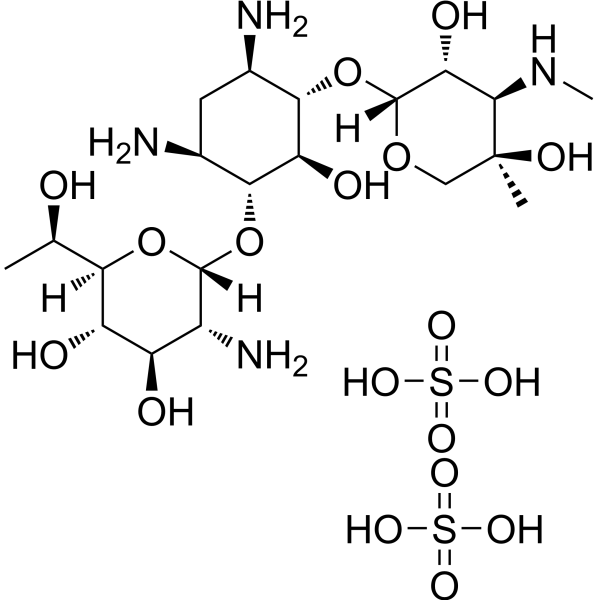
  • HY-17561
    G-418 disulfate
    Maximum Cited Publications
    61 Publications Verification

    Geneticin sulfate; Antibiotic G-418 sulfate

    Bacterial Antibiotic Infection
    G-418 disulfate (Geneticin sulfate), is an aminoglycoside antibiotic, inhibits protein synthesis in eukaryotes and prokaryotes. G-418 disulfate is commonly used as a selective agent for eukaryotic cells .
    G-418 disulfate
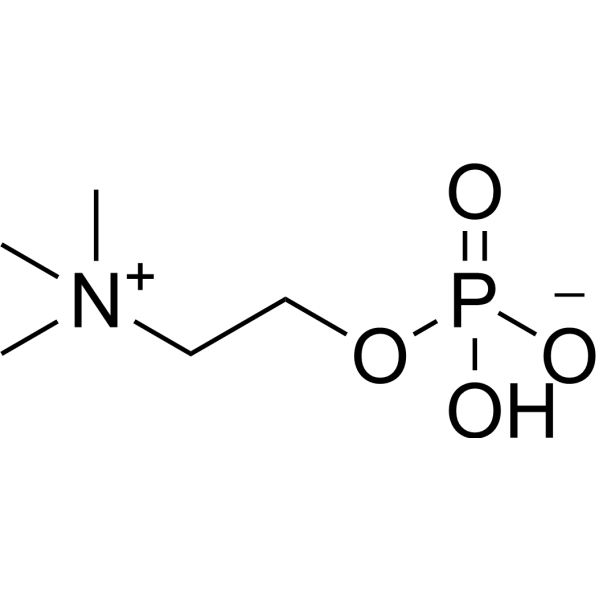
  • HY-B2233B
    Phosphorylcholine
    10+ Cited Publications

    Phosphocholine

    Endogenous Metabolite Adrenergic Receptor Cardiovascular Disease Neurological Disease Inflammation/Immunology
    Phosphatidylcholine is the main phospholipid component in eukaryotic biofilms. Phosphatidylcholine exists in commensal or pathogenic bacteria associated with eukaryotes in prokaryotes. Phosphorylcholine exhibits a surprising range of immunomodulatory properties .
    Phosphorylcholine
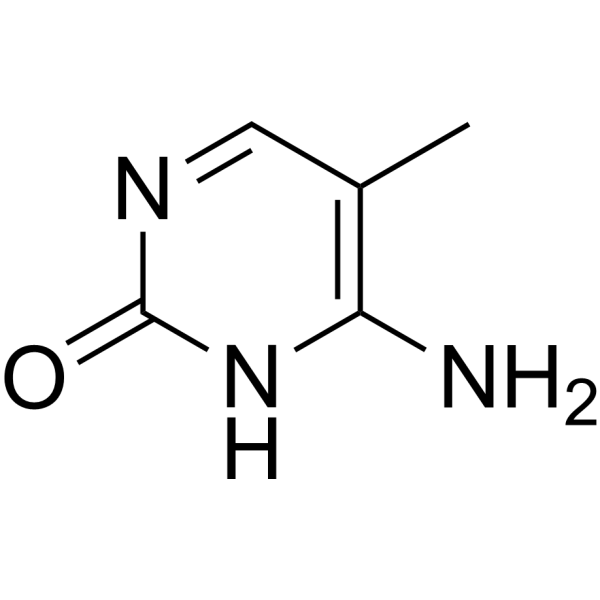
  • HY-W008091
    5-Methylcytosine
    2 Publications Verification

    DNA/RNA Synthesis Endogenous Metabolite Cancer
    5-Methylcytosine is a well-characterized DNA modification in prokaryotes and eukaryotes. 5-Methylcytosine forms symmetrical methylation on CpG dinucleotides in DNA, stabilizes tRNA/rRNA structure in RNA, and affects mRNA translation. 5-Methylcytosine can be oxidized to generate 5hmC, 5fC, and 5caC. 5-Methylcytosine can be used in epigenetics, developmental biology, and the study of diseases such as colorectal cancer and hepatocellular carcinoma .
    5-Methylcytosine
  • HY-P1775

    EC 4.2.1.1

    Carbonic Anhydrase Neurological Disease Metabolic Disease Cancer
    Carbonic anhydrase, Bovine erythrocytes (EC 4.2.1.1) is ubiquitous zinc-containing metalloenzyme present in prokaryotes and eukaryotes. Carbonic anhydrase can catalyze reversible conversion of carbon dioxide to bicarbonate and protons. Carbonic anhydrase can be used for the research of cancer, glaucoma, obesity and epilepsy .

    Carbonic anhydrase, Bovine erythrocytes
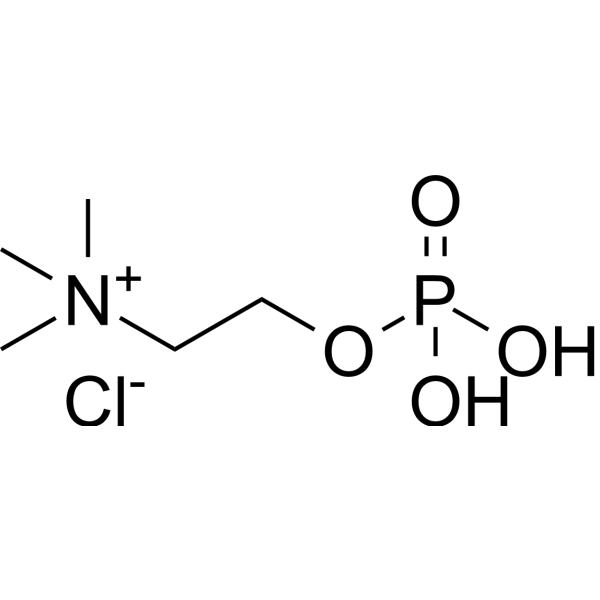
  • HY-B2233
    Phosphorylcholine chloride
    10+ Cited Publications

    Phosphocholine chloride

    Endogenous Metabolite Adrenergic Receptor Cardiovascular Disease Neurological Disease Inflammation/Immunology
    Phosphorylcholine chloride (Phosphocholine chloride) is the main phospholipid component in eukaryotic biofilms. Phosphorylcholine chloride exists in commensal or pathogenic bacteria associated with eukaryotes in prokaryotes. Phosphorylcholine chloride exhibits a surprising range of immunomodulatory properties .
    Phosphorylcholine chloride
  • HY-W011725

    m6dA

    Nucleoside Antimetabolite/Analog Mitochondrial Metabolism DNA/RNA Synthesis Neurological Disease Cancer
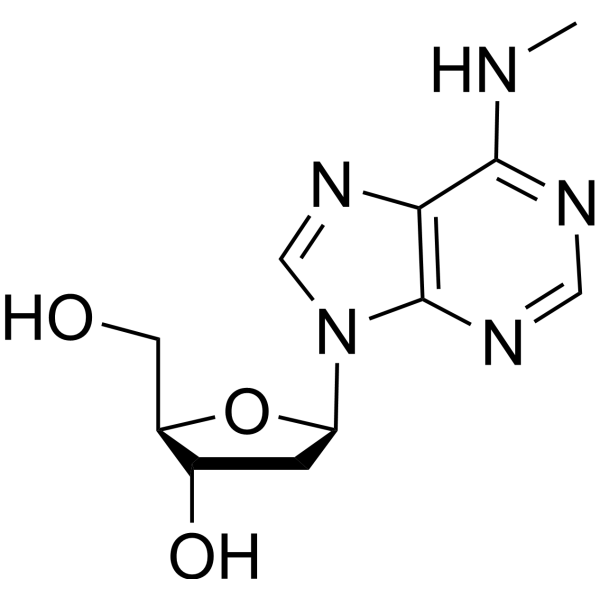
    N-6-Methyl-2-deoxyadenosine (m6dA) is an adenine nucleoside analogue. N-6-Methyl-2-deoxyadenosine targets nuclear processes and DNA replication machineries including WER, SATB1, TFAM, Jumu, SSBP1, DNA polymerase η and phage polymerase Gp90 exo . N-6-Methyl-2-deoxyadenosine acts as a multifunctional epigenetic regulator that modulates transcription, DNA damage response, cell cycle, transposon silencing, stress adaptation, epigenetic crosstalk, and nucleosome organization in both prokaryotes and eukaryotes. N-6-Methyl-2-deoxyadenosine regulates mitochondrial epigenetic inheritance and is required for fear extinction memory in mice. N-6-Methyl-2-deoxyadenosine exhibits dysregulated levels in cancers. N-6-Methyl-2-deoxyadenosine can be used for the research of glioblastoma, triple negative breast cancer, and conditioned fear (fear extinction impairment) .
    N-6-Methyl-2-deoxyadenosine
  • HY-17561R

    Geneticin sulfate (Standard); Antibiotic G-418 sulfate (Standard)

    Reference Standards Bacterial Antibiotic Infection
    G-418 (disulfate) (Standard) is the analytical standard of G-418 (disulfate). This product is intended for research and analytical applications. G-418 disulfate (Geneticin sulfate), is an aminoglycoside antibiotic, inhibits protein synthesis in eukaryotes and prokaryotes. G-418 disulfate is commonly used as a selective agent for eukaryotic cells[1].
    G-418 disulfate (Standard)
  • HY-112747

    LPI; PE (soy)

    Phospholipase Infection
    Soy PE (LPI) is the most abundant phospholipid in prokaryotes and the second most abundant found in the membrane of mammalian, plant, and yeast cells, comprising approximately 25% of total mammalian phospholipids. In the brain, phosphatidylethanolamine comprises almost half of the total phospholipids. It is synthesized mainly through the cytidine diphosphate-ethanolamine and phosphatidylserine decarboxylation pathways, which occur in the endoplasmic reticulum (ER) and mitochondrial membranes, respectively. It is a precursor in the synthesis of phosphatidylcholine and arachidonoyl ethanolamide and is a source of ethanolamine used in various cellular functions. In E.coli, phosphatidylethanolamine deficiency prevents proper assembly of lactose permease, suggesting a role as a lipid chaperone. It is a cofactor in the propagation of prions in vitro and can convert recombinant mammalian proteins into infectious molecules even in the absence of RNA. This product contains phosphatidylethanolamine molecular species with variable fatty acyl chain lengths at the sn-1 and sn-2 positions .
    Soy PE
  • HY-E70003

    Biochemical Assay Reagents Endocrinology
    Glutamate dehydrogenase is an enzyme in both prokaryotes and eukaryotic mitochondria. Glutamate dehydrogenase can be used for the enzymatic determination of ammonia, alpha-ketoglutaric acid, L-glutamate and urease .
    Glutamate dehydrogenase
  • HY-P1775A

    Carbonic Anhydrase Neurological Disease Metabolic Disease Cancer
    Carbonic anhydrase isoenzyme is the isoenzyme of Carbonic anhydrase (HY-P1775). Carbonic anhydrase isoenzyme is ubiquitous zinc-containing metalloenzyme present in prokaryotes and eukaryotes. Carbonic anhydrase isoenzyme catalyzes reversible conversion of carbon dioxide to bicarbonate and protons, and can be used for the research of cancer, glaucoma, obesity and epilepsy .
    Carbonic anhydrase (isoenzyme)
  • HY-E70308

    Endogenous Metabolite Others
    Glucose isomerase (immobilized) is glucose isomerase, which catalyzes the reversible isomerization of D-glucose and D-xylose into D-fructose and D-xylulose, respectively. Glucose isomerase (immobilized) can be used to produce fructose syrup under high-temperature conditions above 90 ℃. Glucose isomerase (immobilized) is widely distributed in prokaryotes .
    Glucose isomerase (immobilized)
  • HY-P5731

    Bacterial Infection
    Bac7(1-35) is a proline-rich antimicrobial peptide. Bac7(1-35) efficiently binds to different regions of prokaryote ribosomes, leading to the inhibition of protein synthesis. Bac7(1-35) demonstrates in vitro activity against P. aeruginosa strains .
    Bac7(1-35)
  • HY-B2233A

    Biochemical Assay Reagents Adrenergic Receptor Cardiovascular Disease Neurological Disease Inflammation/Immunology
    Calcium phosphorylcholine chloride, 98% is the main phospholipid component in eukaryotic biofilms. Calcium phosphorylcholine chloride, 98% exists in commensal or pathogenic bacteria associated with eukaryotes in prokaryotes. Calcium phosphorylcholine chloride, 98% exhibits a surprising range of immunomodulatory properties .
    Calcium phosphorylcholine chloride, 98%
  • HY-B2233AS

    Phosphocholine-d9 chloride calcium

    Endogenous Metabolite Isotope-Labeled Compounds Adrenergic Receptor Cardiovascular Disease Neurological Disease Inflammation/Immunology
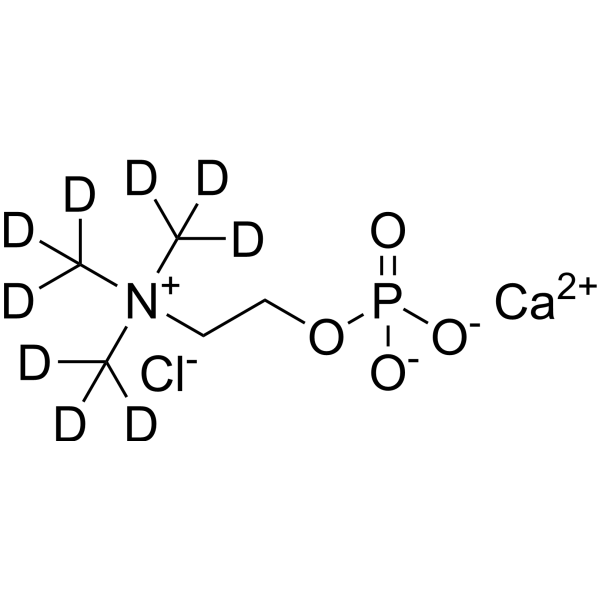
    Calcium phosphorylcholine-d9 (chloride) is the deuterium labeled Calcium phosphorylcholine chloride. Calcium phosphorylcholine chloride is the main phospholipid component in eukaryotic biofilms. Calcium phosphorylcholine chloride exists in commensal or pathogenic bacteria associated with eukaryotes in prokaryotes. Calcium phosphorylcholine chloride exhibits a surprising range of immunomodulatory properties .
    Calcium phosphorylcholine-d9 chloride
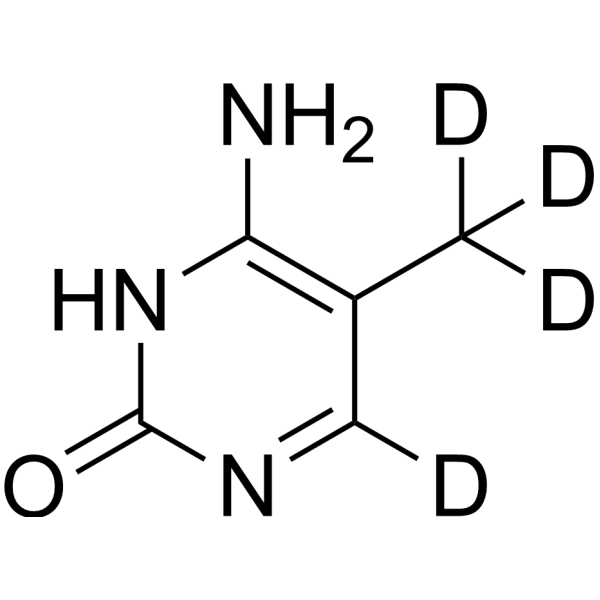
  • HY-W008091S

    DNA/RNA Synthesis Endogenous Metabolite Isotope-Labeled Compounds Cancer
    5-Methylcytosine-d4 is the deuterium labeled 5-Methylcytosine (HY-W008091). 5-Methylcytosine is a well-characterized DNA modification in prokaryotes and eukaryotes. 5-Methylcytosine forms symmetrical methylation on CpG dinucleotides in DNA, stabilizes tRNA/rRNA structure in RNA, and affects mRNA translation. 5-Methylcytosine can be oxidized to generate 5hmC, 5fC, and 5caC. 5-Methylcytosine can be used in epigenetics, developmental biology, and the study of diseases such as colorectal cancer and hepatocellular carcinoma .
    5-Methylcytosine-d4
  • HY-W008091R
    5-Methylcytosine (Standard)
    1 Publications Verification

    Reference Standards DNA/RNA Synthesis Endogenous Metabolite Cancer
    5-Methylcytosine (Standard) is the analytical standard of 5-Methylcytosine (HY-W008091). This product is intended for research and analytical applications. 5-Methylcytosine is a well-characterized DNA modification in prokaryotes and eukaryotes. 5-Methylcytosine forms symmetrical methylation on CpG dinucleotides in DNA, stabilizes tRNA/rRNA structure in RNA, and affects mRNA translation. 5-Methylcytosine can be oxidized to generate 5hmC, 5fC, and 5caC. 5-Methylcytosine can be used in epigenetics, developmental biology, and the study of diseases such as colorectal cancer and hepatocellular carcinoma .
    5-Methylcytosine (Standard)
  • HY-E70025

    GlcNAc1pUT

    Others Others
    N-acetylglucosamine-1-P uridyltransferase (AGX1) (EC 2.3.1.157) (GlcNAc1pUT) is a bifunctional acetyltransferase/uridyltransferase. N-acetylglucosamine-1-P uridyltransferase (AGX1) binds GlcNAc-1-P and UTP, and catalyzes an uridyltransfer reaction to synthesize UDP-GlcNAc. N-acetylglucosamine-1-P uridyltransferase (AGX1) is a bifunctional enzyme exclusive to prokaryotes .
    N-Acetylglucosamine-1-P uridyltransferase, Homo sapien
  • HY-P5731A

    Bacterial Infection
    Bac7(1-35) acetate is a proline-rich antimicrobial peptide. Bac7(1-35) acetate efficiently binds to different regions of prokaryote ribosomes, leading to the inhibition of protein synthesis. Bac7(1-35) acetate demonstrates in vitro activity against P. aeruginosa strains .
    Bac7(1-35) acetate
  • HY-116887R

    Endogenous Metabolite Nucleoside Antimetabolite/Analog DNA/RNA Synthesis Reference Standards Cancer
    N6-Methyladenine (Standard) is the analytical standard of N6-Methyladenine (HY-116887). This product is intended for research and analytical applications. N6-Methyladenine is a modified purine that is widely present in prokaryotes. In prokaryotes, N6-Methyladenine plays an important role in distinguishing host DNA from exogenous DNA and controls many biological functions, such as DNA replication, transcription, mismatch repair, and chromosome replication. N6-Methyladenine can be used for the kidney diseases .
    N6-Methyladenine (Standard)
  • HY-W008091A
    5-Methylcytosine hydrochloride
    2 Publications Verification

    DNA/RNA Synthesis Endogenous Metabolite Cancer
    5-Methylcytosine hydrochloride is a well-characterized DNA modification in prokaryotes and eukaryotes. 5-Methylcytosine hydrochloride forms symmetrical methylation on CpG dinucleotides in DNA, stabilizes tRNA/rRNA structure in RNA, and affects mRNA translation. 5-Methylcytosine hydrochloride can be oxidized to generate 5hmC, 5fC, and 5caC. 5-Methylcytosine hydrochloride can be used in epigenetics, developmental biology, and the study of diseases such as colorectal cancer and hepatocellular carcinoma .
    5-Methylcytosine hydrochloride
  • HY-B2233BR

    Phosphocholine (Standard)

    Endogenous Metabolite Adrenergic Receptor Reference Standards Cardiovascular Disease Neurological Disease Inflammation/Immunology
    Phosphorylcholine (Standard) is the analytical standard of Phosphorylcholine. This product is intended for research and analytical applications. Phosphatidylcholine is the main phospholipid component in eukaryotic biofilms. Phosphatidylcholine exists in commensal or pathogenic bacteria associated with eukaryotes in prokaryotes. Phosphorylcholine exhibits a surprising range of immunomodulatory properties .
    Phosphorylcholine (Standard)
  • HY-B2233R

    Phosphocholine chloride (Standard)

    Endogenous Metabolite Adrenergic Receptor Reference Standards Cardiovascular Disease Neurological Disease Inflammation/Immunology
    Phosphorylcholine (chloride) (Standard) is the analytical standard of Phosphorylcholine (chloride). This product is intended for research and analytical applications. Phosphorylcholine chloride (Phosphocholine chloride) is the main phospholipid component in eukaryotic biofilms. Phosphorylcholine chloride exists in commensal or pathogenic bacteria associated with eukaryotes in prokaryotes. Phosphorylcholine chloride exhibits a surprising range of immunomodulatory properties .
    Phosphorylcholine chloride (Standard)
  • HY-N9923

    Bacterial Infection
    2-C-Methyl-D-erythritol 4-phosphate is a metabolite intermediate exclusive to the non-mevalonate MEP pathway, predominantly found in prokaryotes, serving as a precursor for the synthesis of isoprenoids and non-isoprenoids, including vitamins; its absence in humans makes it a promising target for the development of bacterium-specific drugs aimed at treating infectious diseases.
    2-C-Methyl-D-erythritol 4-phosphate
  • HY-P2807L

    Lactate Dehydrogenase Metabolic Disease
    L-Lactate Dehydrogenase, Porcine is an enzyme found in nearly all living cells (animals, plants, and prokaryotes). L-Lactate Dehydrogenase catalyzes the conversion of pyruvate to lactate and back, as it converts NADH to NAD+ and back.
    L-Lactate Dehydrogenase, Porcine
  • HY-E70963

    Lactate Dehydrogenase Metabolic Disease
    L-Lactic Dehydrogenase, Porcine (EC 1.1.1.27) is an enzyme found in nearly all living cells (animals, plants, and prokaryotes). L-Lactate Dehydrogenase catalyzes the conversion of pyruvate to lactate and back, as it converts NADH to NAD+ and back.
    L-Lactic Dehydrogenase, Porcine

Inquiry Online

Your information is safe with us. * Required Fields.

Salutation


Country or Region *

Applicant Name *


Organization Name *

Department *


Email Address *


Product Name *

Cat. No.


Requested quantity *

Phone Number *


Remarks

Inquiry Online

Inquiry Information

Product Name:
Cat. No.:
Quantity:
MCE Japan Authorized Agent:

