1. Search Result
Search Result
Results for "

rat brain

" in MedChemExpress (MCE) Product Catalog:

396

Inhibitors & Agonists

1

Fluorescent Dye

4

Biochemical Assay Reagents

43

Peptides

1

Inhibitory Antibodies

39

Natural
Products

4

Recombinant Proteins

12

Isotope-Labeled Compounds

5

Click Chemistry

2

Oligonucleotides

Cat. No. Product Name Target Research Areas Chemical Structure
  • HY-15084
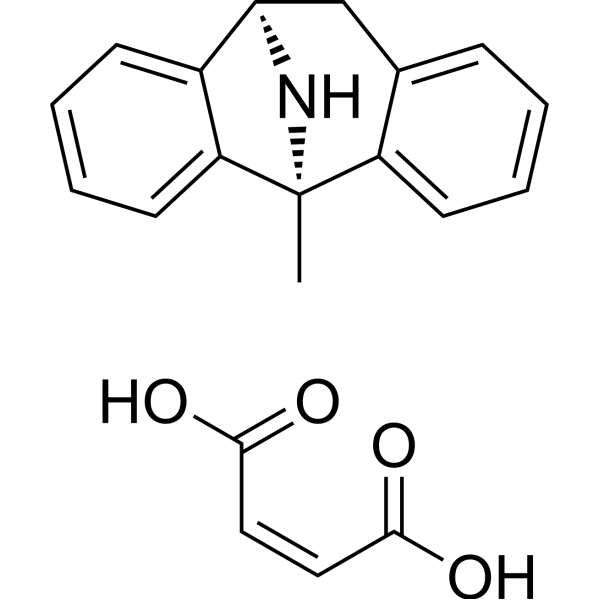
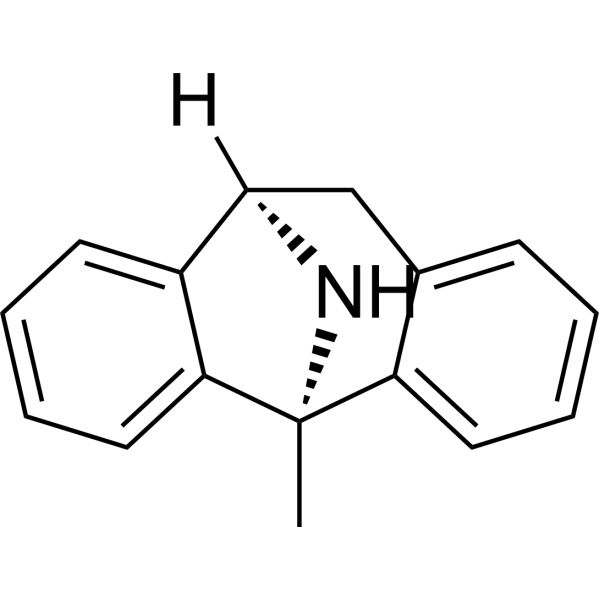
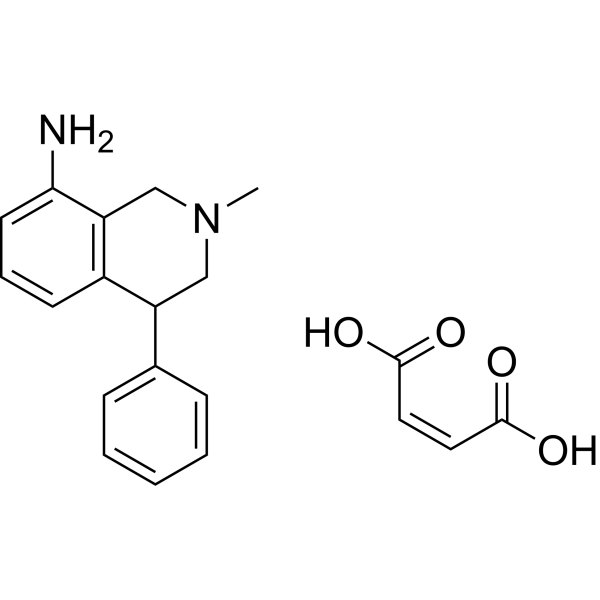
    Dizocilpine maleate
    Maximum Cited Publications
    44 Publications Verification

    (+)-MK 801 Maleate

    iGluR Neurological Disease
    Dizocilpine maleate (MK-801 maleate) is a potent, selective and non-competitive NMDA receptor antagonist with Kd of 37.2 nM in rat brain membranes.
    Dizocilpine maleate
  • HY-N2070
    Acevaltrate
    4 Publications Verification

    Na+/K+ ATPase Neurological Disease
    Acevaltrate inhibits the Na +/K +-ATPase activity in the rat kidney and brain hemispheres with IC50s of 22.8 μM and 42.3 μM, respectively .
    Acevaltrate
  • HY-109012
    Seltorexant
    3 Publications Verification

    JNJ-42847922

    Orexin Receptor (OX Receptor) Neurological Disease Endocrinology
    Seltorexant (JNJ-42847922) is an orally active, high-affinity, and selective orexin-2 receptor (OX2R) antagonist (pKi values of 8.0 and 8.1 for human and rat OX2R). Seltorexant (JNJ-42847922) crosses the blood-brain barrier and quickly occupies OX2R binding sites in the rat brain .
    Seltorexant
  • HY-10864
    URB-597
    5 Publications Verification

    KDS-4103

    FAAH Autophagy Mitophagy Neurological Disease
    URB-597 (KDS-4103) is an orally bioavailable and selective FAAH inhibitor. URB-597 inhibits FAAH activity with an IC50s of approximately 5 nM in rat brain membranes, 0.5 nM in intact rat neurons, 3 nM in human liver microsomes. Antidepressant-like effects. Analgesic activity .
    URB-597
  • HY-108463
    A-967079
    15+ Cited Publications

    TRP Channel Neurological Disease Inflammation/Immunology
    A-967079 is a selective TRPA1 receptor antagonist with IC50s of 67 nM and 289 nM at human and rat TRPA1 receptors, respectively, and has good penetration into the blood-brain barrier .
    A-967079
  • HY-148195

    NNZ-2591

    Biochemical Assay Reagents Neurological Disease
    Ercanetide (NNZ 2591) is a synthetic analogue of a small peptide of cyclic glycine proline (cGP). Ercanetide shows orally active and cross the blood-brain barrier. Ercanetide shows neuroprotective after ischemic brain injury. NNZ 2591 improves motor function in a rat model of Parkinson's disease. Ercanetide has the potential for the research of ischemic brain injury and angelman syndrome .
    Ercanetide
  • HY-109012A
    Seltorexant hydrochloride
    3 Publications Verification

    JNJ-42847922 hydrochloride

    Orexin Receptor (OX Receptor) Neurological Disease Metabolic Disease
    Seltorexant hydrochloride (JNJ-42847922 hydrochloride) is an orally active, high-affinity, and selective OX2R antagonist (pKi values of 8.0 and 8.1 for human and rat OX2R). Seltorexant hydrochloride crosses the blood-brain barrier and quickly occupies OX2R binding sites in the rat brain .
    Seltorexant hydrochloride
  • HY-107729

    Neuropeptide Y Receptor Neurological Disease
    Lu AA33810 is a selective, orally active and brain-penetrant antagonist of neuropeptide Y5 receptor with a Ki of 1.5 nM for the rat receptor. Lu AA33810 exhibts antianxiolytic-like and antidepressant-like effects .
    Lu AA33810
  • HY-19740
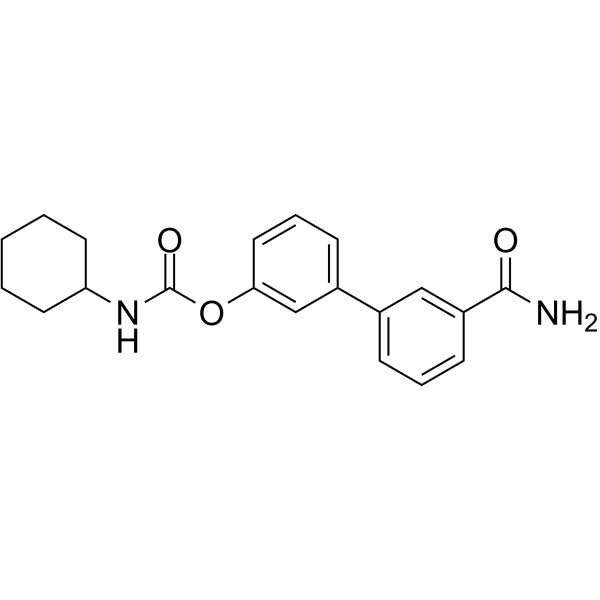
    BIA 10-2474
    2 Publications Verification

    FAAH Autophagy Neurological Disease
    BIA 10-2474 is an inhibitor of fatty acid amide hydrolase (FAAH) with IC50 values of 50 to 70mg/kg in various rat brain regions.
    BIA 10-2474
  • HY-135026
    DL-Norepinephrine tartrate
    2 Publications Verification

    Adrenergic Receptor Neurological Disease
    DL-Norepinephrine tartrate is an external racemic catecholamine neurotransmitter, which is an equal mixture of the left-handed (L-, with activity) and right-handed (D-, with very low or no activity) stereoisomers. DL-Norepinephrine tartrate after being labeled with tritium can be used as a tracer for the research on Parkinson's disease .
    DL-Norepinephrine tartrate
  • HY-N7142
    DL-Norepinephrine hydrochloride
    2 Publications Verification

    Adrenergic Receptor Neurological Disease
    DL-Norepinephrine hydrochloride is an external racemic catecholamine neurotransmitter, which is an equal mixture of the left-handed (L-, with activity) and right-handed (D-, with very low or no activity) stereoisomers. DL-Norepinephrine hydrochloride after being labeled with tritium can be used as a tracer for the research on Parkinson's disease .
    DL-Norepinephrine hydrochloride
  • HY-14174
    MRK-560
    4 Publications Verification

    γ-secretase Neurological Disease Cancer
    MRK-560, a chemical probe, is an orally active, brain barrier-penetrated γ-Secretase inhibitor, reducing Aβ peptide in rat brain and cerebrospinal fluid. MRK-560 decreases mutant NOTCH1 processing by selectively inhibiting PSEN1. MRK-560 can be used in studies of Alzheimer's disease and T-cell acute lymphoblastic leukaemia (T-ALL) .
    MRK-560
  • HY-11095

    mGluR CaSR PI3K Akt mTOR Autophagy Apoptosis Bcl-2 Family Caspase Cardiovascular Disease Neurological Disease
    NPS 2390 is an allosteric antagonist of calcium-sensing receptor (CaSR) and mGluR1/5. NPS 2390 inhibits the PI3K/Akt/mTOR signaling pathway, reduces hypoxia-induced intracellular calcium elevation, decreases the expression of autophagy (autophagy) proteins, regulates the expression of phenotypic marker proteins, and inhibits the proliferation of pulmonary artery smooth muscle cells. NPS 2390 attenuates the endogenous apoptosis (apoptosis) pathway, increases the expression level of Bcl-2, downregulates the expression levels of Bax, cytochrome c and caspase-3, alleviates cerebral edema and improves neurological function in rat models. NPS 2390 can be used in studies related to hypoxic pulmonary hypertension, traumatic brain injury, stroke and pain .
    NPS 2390
  • HY-N13258

    β-Citrylglutamic acid

    Others Others
    β-Citryl-L-glutamic acid (β-Citrylglutamic acid) is a citrylglutamic acid, that can be isolated from newborn rat brain .
    β-Citryl-L-glutamic acid
  • HY-13929
    Isocarboxazid
    2 Publications Verification

    Monoamine Oxidase Neurological Disease
    Isocarboxazid is a non-selective and irreversible inhibitor of monoamine oxidase, with an IC50 of 4.8 μM for rat brain monoamine oxidase in vitro .
    Isocarboxazid
  • HY-128976

    DHED

    Estrogen Receptor/ERR Neurological Disease Metabolic Disease
    10β,17β-dihydroxyestra-1,4-dien-3-one (DHED) is a brain-targeting bioprecursor proagent of the main human estrogen, 17β-estradiol, alleviates hot flushes in rat models of thermoregulatory dysfunction of the brain .
    10β,17β-dihydroxyestra-1,4-dien-3-one
  • HY-12332
    JW 642
    3 Publications Verification

    MAGL Neurological Disease
    JW 642 is a potent inhibitor of monoacylglycerol lipase (MAGL) that displays IC50 values of 7.6, 14, and 3.7 nM for inhibition of MAGL in mouse, rat, and human brain membranes, respectively.
    JW 642
  • HY-U00050

    E-10-OH-NT

    Drug Metabolite Adrenergic Receptor mAChR Neurological Disease
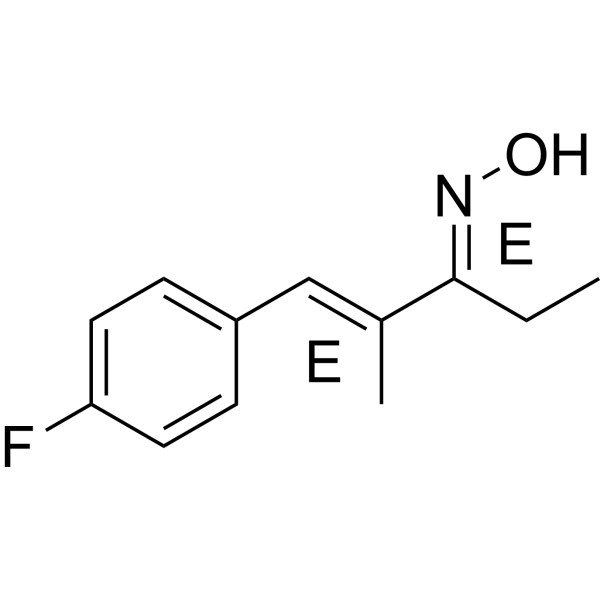
    (E)-10-Hydroxynortriptyline (E-10-OH-NT) is a blood-brain barrier-permeable norepinephrine uptake inhibitor. (E)-10-Hydroxynortriptyline effectively promotes central norepinephrine neuronal transmission, with little interindividual variation in in vivo potency. (E)-10-Hydroxynortriptyline has low affinity for muscarinic receptors, exhibits only extremely weak anticholinergic activity, and does not inhibit salivary secretion. (E)-10-Hydroxynortriptyline can be used in studies related to depression .
    (E)-10-Hydroxynortriptyline
  • HY-48917

    Phospholipase Apoptosis Inflammation/Immunology
    C10 Bisphosphonate is an acid sphingomyelinase (aSMase) inhibitor with an IC50 of 0.02 μM in rats. C10 Bisphosphonate inhibits Dexamethasone (HY-14648)-induced cell apoptosis (apoptosis) and alleviates platelet-activating factor (PAF)-induced pulmonary edema. C10 Bisphosphonate can be used for the research of pulmonary edema .
    C10 Bisphosphonate
  • HY-103169
    SCH442416
    2 Publications Verification

    Adenosine Receptor Neurological Disease
    SCH442416 is a potent, selective and brain-penetrant antagonist of adenosine A2A receptor (A2AR), with Kis of 0.048 and 0.5 nM for human and rat A2AR respectively. SCH442416 displays more than 23000-fold selectivity over A1R, A2BR, and A3R (Ki=1111, 10000, and 10000 nM, respectively). SCH442416 can be used for imaging of adenosine A2A receptors in rat and primate brain .
    SCH442416
  • HY-104003

    Histamine Receptor Neurological Disease Endocrinology
    S 38093 is a brain-penetrant, orally active antagonist of H3 receptor, with Kis of 8.8, 1.44 and 1.2 μM for rat, mouse and human H3 receptors, respectively.
    S 38093
  • HY-168366

    Opioid Receptor Neurological Disease
    R-6890 is a Brorphine-related opioid receptor antagonist that exhibits differential binding activities toward rat opioid receptors (IC50=4.6 nM (0.05 M Tris; pH 7.4) and 170 nM (0.05 M Tris+0.1 M NaCl)). R-6890 displaces bound labeled opioids from receptors, and its binding affinity is affected by environmental factors, decreasing in the presence of NaCl. R-6890 crosses the blood-brain barrier (BBB) and exerts analgesic effects in the warm water-induced tail-flick reflex model of male Wistar rats .
    R-6890
  • HY-106584

    Clospipramine

    Drug Derivative Dopamine Receptor 5-HT Receptor Neurological Disease
    Mosapramine (Clospipramine) is an orally active antipsychotic agent and one of the metabolites of Clocapramine (HY-B2073) after oral absorption. Mosapramine exerts its effects by specifically binding to striatal dopamine D2 receptors and frontal lobe 5-HT2 receptors, with a D2/5-HT2 receptor occupancy ratio of 7.4. Mosapramine induces typical neuropharmacological responses in rat brain regions, including extrapyramidal symptoms, hyperprolactinemia, increased salivation, constipation, and upregulated Fos protein expression. Mosapramine also features a reduced incidence of weight loss. Mosapramine is applicable to research related to schizophrenia .
    Mosapramine
  • HY-100792

    Bacterial Cancer
    URB602 is a selective monoacylglycerol lipase (MGL) inhibitor, which inhibits rat brain MGL with IC50 of 28±4 μM through a noncompetitive mechanism.
    URB602
  • HY-10936

    iGluR Neurological Disease
    S 18986 is a selective, orally active, brain penetrant positive allosteric modulator of AMPA-type receptors. S 18986 shows cognitive enhancing properties in rodents. S 18986 activates the release of noradrenaline and acetylcholine in rat hippocampus and enhances rat memory in object-recognition tests .
    S 18986
  • HY-12567

    VU0483253

    mAChR Neurological Disease
    ML375 (VU0483253) is a potent, highly selective, brain-penetrant and orally active M5 mAChR negative allosteric modulator (NAM) with IC50s of 300 nM and 790 nM for human and rat M5, respectively. ML375 is inactive at human and rat M1-M4 .
    ML375
  • HY-121156A

    LF 16-0687 hydrochloride; XY-2405 hydrochloride

    Bradykinin Receptor Neurological Disease
    Anatibant (LF 16-0687; XY-2405) hydrochloride is a selective non-peptide bradykinin B2 receptor antagonist. Anatibant hydrochloride binds to the human, rat and guinea-pig recombinant B2 receptor with Ki values of 0.67 nM, 1.74 nM and 1.37 nM, respectively. Anatibant hydrochloride crosses the blood-brain barrier (BBB). Anatibant hydrochloride can be used in research on brain damage diseases .
    Anatibant hydrochloride
  • HY-P1519B

    BNP (1-32), rat acetate

    Angiotensin Receptor Cardiovascular Disease
    Brain Natriuretic Peptide (1-32), rat acetate (BNP (1-32), rat acetate) is a 32 amino acid polypeptide secreted by the ventricles of the heart in response to excessive stretching of heart muscle cells (cardiomyocytes) .
    Brain Natriuretic Peptide (1-32), rat acetate
  • HY-150209

    Fluorescent Dye Neurological Disease
    MODAG-001 can bind to synuclein fibrils in a rat brain. MODAG-001 is a candidate α-syn imaging probe .
    MODAG-001
  • HY-120963

    Endogenous Metabolite Metabolic Disease
    Several different arachidonoyl amino acids, including N-arachidonoyl dopamine and N-arachidonoyl serine, have been isolated and characterized from bovine brain.1 During mass spectral lipidomics analysis of rat brain, a series of fatty acyl amides of a third amino acid, taurine, were discovered.2 This novel class of compounds is present in kidney and activates members of the transient receptor potential (TRP) family of calcium channels.3 N-Oleoyl taurine is an amino-acyl endocannabinoid isolated from rat brain that may activate TRPV1 and TRPV4.
    N-Oleoyl Taurine
  • HY-P1090

    Cannabinoid Receptor Neurological Disease
    Hemopressin(rat) is a nonapeptide derived from the α1-chain of hemoglobin, is originally isolated from rat brain homogenates. Hemopressin(rat) is orally active, selective and inverse agonist of CB1 cannabinoid receptors. Hemopressin(rat) exerts antinociceptive action in inflammatory pain models .
    Hemopressin(rat)
  • HY-108295

    CXB-722

    GABA Receptor Neurological Disease
    Pivagabine (CXB 722) is a hydrophobic 4-aminobutyric acid derivative with neuromodulatory activity. Pivagabine penetrates the blood-brain barrier in rats. Pivagabine antagonizes the effects of foot shock on both GABAA receptor function and corticotropin-releasing factor (CRF) concentrations in rat brain .
    Pivagabine
  • HY-W004425

    3,7-Dimethyl-1-propargylxanthine

    Adenosine Receptor Neurological Disease
    DMPX (3,7-Dimethyl-1-propargylxanthine) is a selective A2A adenosine receptor (A2A AR) antagonist that crosses the blood-brain barrier, with a Ki of 11 μM for rat A2 adenosine receptor and a Ki of 45 μM for rat A1 adenosine receptor. By blocking A2A receptors in specific brain regions, DMPX protects dopaminergic and GABAergic neurons from mitochondrial dysfunction. DMPX is applicable to research related to depression, Parkinson's disease and Huntington's disease .
    DMPX
  • HY-W009234

    6-Chloroguanosine

    Nucleoside Antimetabolite/Analog Others
    6-Chloroguanineriboside (6-Chloroguanosine) is a purine nucleoside analog. 6-Chloroguanineriboside has extremely low affinity for guanosine binding sites in rat brain (Ki: 253.1 μM) .
    6-Chloroguanineriboside
  • HY-107686

    5-I A-85380 dihydrochloride

    nAChR Neurological Disease
    5-Iodo-A-85380 dihydrochloride is a selective ligand of nAChR. 5-Iodo-A-85380 dihydrochloride binds to α4β2 nAChRs in rat and human brain with Kds of 12 and 14 pM,respectively .
    5-Iodo-A-85380 dihydrochloride
  • HY-P3219

    Endogenous Metabolite Endocrinology
    N-Acetyloxytocin is isolated and characterized in the neurointermediate lobe of the rat pituitary (NIL) and their presence in several brain areas of the rat .
    N-Acetyloxytocin
  • HY-120965

    Endogenous Metabolite Metabolic Disease
    Several different arachidonoyl amino acids, including N-arachidonoyl dopamine (NADA) and N-arachidonoyl serine (ARA-S), have been isolated and characterized from bovine brain.1 During mass spectral lipidomic analysis of rat brain, a series of fatty acyl amides of a third amino acid, taurine, is discovered. N-Palmitoyl taurine is a prominent amino-acyl endocannabinoid isolated from rat brain during lipidomics profiling. Its function is currently under investigation.
    N-Palmitoyl Taurine
  • HY-P1303

    5-HT Receptor Neurological Disease
    CART(62-76)(human,rat) is a neuropeptide (62-76 residues of the CART peptide) with neurotransmitter-like effects. CART(62-76)(human,rat) can modulate the activity of striatal noradrenergic and corticostriatal and hypothalamic serotoninergic (5-HT) system in the rat brain .
    CART(62-76)(human,rat)
  • HY-101169
    Tetrindole mesylate
    1 Publications Verification

    Monoamine Oxidase Neurological Disease
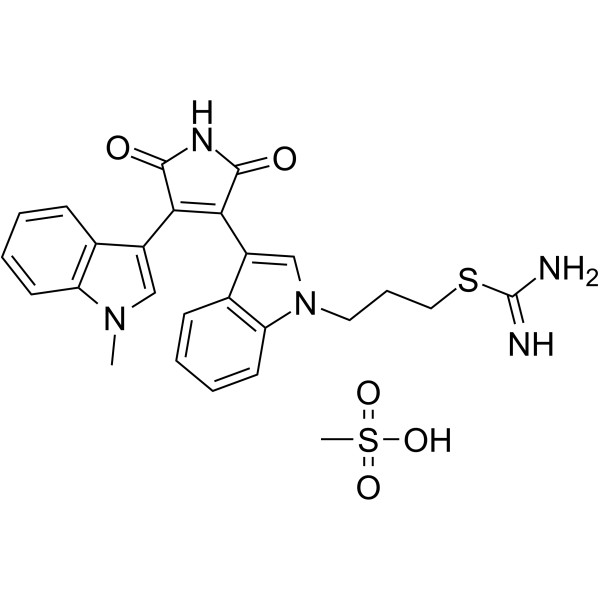
    Tetrindole mesylate is a selective inhibitor of monoamine oxidase A (MAO A). Tetrindole mesylate inhibits rat brain mitochondrial MAO A in a competitive manner with a Ki value of 0.4 μM and inhibits MAO B with a Ki of 110 μM. Tetrindole mesylate has antidepressant activity .
    Tetrindole mesylate
  • HY-100605

    mGluR Others
    VU0483605 is a potent and brain-penetrated mGlu1 receptor positive allosteric modulator (PAM). VU0483605 shows excellent mGlu1 PAM activity at both human and rat, with EC50 values of 390 and 356 nM, respectively .
    VU0483605
  • HY-P1573

    BNP-45, rat

    Natriuretic Peptide Receptor (NPR) Cardiovascular Disease
    Brain Natriuretic Peptide-45, rat (BNP-45, rat) is a circulating form of rat brain natriuretic peptide isolated from rat heart with potent hypotensive and natriuretic potency .
    Brain Natriuretic Peptide-45, rat
  • HY-P1519

    BNP (1-32), rat

    Angiotensin Receptor Cardiovascular Disease
    Brain Natriuretic Peptide (1-32), rat (BNP (1-32), rat) is a 32 amino acid polypeptide secreted by the ventricles of the heart in response to excessive stretching of heart muscle cells (cardiomyocytes) .
    Brain Natriuretic Peptide (1-32), rat
  • HY-108616

    Phospholipase Cancer
    VU 0364739 hydrochloride is a highly selective phospholipase D2 (PLD2) inhibitor with IC50s of 20 and 1500 nM for PLD2 and PLD1, respectively. VU 0364739 hydrochloride induces apoptosis and it can be used for cancer research .
    VU 0364739 hydrochloride
  • HY-120964

    Endogenous Metabolite Metabolic Disease
    Several different arachidonoyl amino acids, including N-arachidonoyl dopamine (NADA) and N-arachidonoyl serine (ARA-S), have been isolated and characterized from bovine brain.1 During mass spectral lipidomic analysis of rat brain, a series of fatty acyl amides of a third amino acid, taurine, is discovered.2 This novel class of compounds is present in kidney and activates members of the transient receptor potential (TRP) family of calcium channels.3 N-Stearoyl taurine is a prominent amino-acyl endocannabinoid isolated from rat brain during lipidomics profiling.
    N-Stearoyl Taurine
  • HY-130238

    (±)8-HDoHE; 8-hydroxy Docosahexaenoic acid; (±)8-HDoHE

    Endogenous Metabolite Metabolic Disease
    (±)8-HDHA is an autoxidation product of docosahexaenoic acid (DHA) in vitro. It is also produced from incubations of DHA in rat liver, brain, and intestinal microsomes. (±)8-HDHA is a potential marker of oxidative stress in brain and retina where DHA is an abundant polyunsaturated fatty acid.
    (±)8-HDHA
  • HY-108973A

    CGP-15210G

    5-HT Receptor Neurological Disease
    Ifoxetine (CGP 15210G) is an inhibitor of 5-HT reuptake. Ifoxetine specifically and selectively blocks the 5-HT reuptake in the brain without affecting the 5-HT uptake processes in the periphery (blood platelets). Ifoxetine inhibits the uptake of radiolabelled 5-HT into rat brain synaptosomes in vitro or ex vivo. Ifoxetine has antidepressant properties .
    Ifoxetine
  • HY-116663

    (±)20-HDoHE

    Endogenous Metabolite Neurological Disease
    (±)20-HDHA ((±)20-HDoHE) is a racemic mixture and is an autoxidation product of Docosahexaenoic acid (DHA). (±)20-HDHA is also formed by peroxidation process in human platelets and rat brain homogenate .
    (±)20-HDHA
  • HY-130288

    (±)13-HDoHE; 13-hydroxy Docosahexaenoic acid; (±)13-HDoHE

    Lipoxygenase Inflammation/Immunology
    (±)13-HDHA is an autoxidation product of docosahexaenoic acid (DHA) in vitro. It is also produced from incubations of DHA in rat liver, brain, and intestinal microsomes. Fresh water hydra is shown to metabolize DHA to 13(R)-HDHA, presumably via the 11R-lipoxygenase activity. (±)13-HDHA is a potential marker of oxidative stress in brain and retina where DHA is an abundant polyunsaturated fatty acid.
    (±)13-HDHA
  • HY-101169A

    Monoamine Oxidase Neurological Disease
    Tetrindole hydrochloride is a selective inhibitor of monoamine oxidase A (MAO A). Tetrindole hydrochloride inhibits rat brain mitochondrial MAO A in a competitive manner with a Ki value of 0.4 μM and inhibits MAO B with a Ki of 110 μM. Tetrindole hydrochloride has antidepressant activity .
    Tetrindole hydrochloride
  • HY-P2636

    Prepro CCK Fragment V-9-M

    Histamine Receptor Metabolic Disease
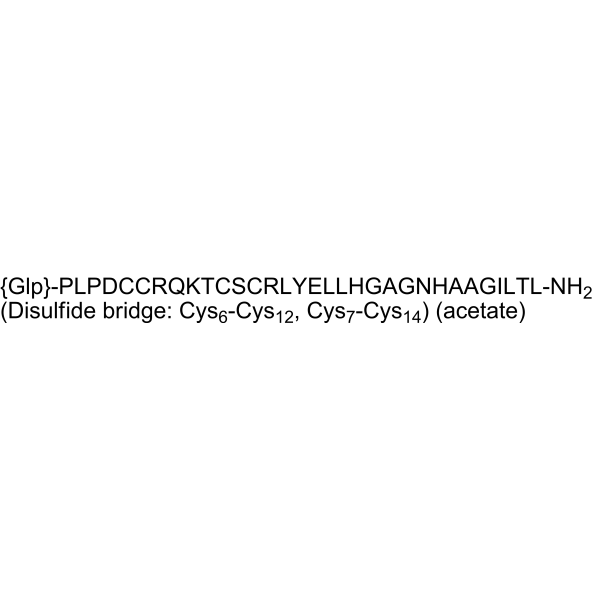
    Cholecystokinin Precursor (24-32) (rat) is a cholecystokinin precursor that can be expressed in the heart, lungs, and kidneys as well as in the gastrointestinal tract and brain. Cholecystokinin is a brain-gut peptide that stimulates gallbladder contraction and pancreatic exocrine secretion and also acts as a neurotransmitter .
    Cholecystokinin Precursor (24-32) (rat)

Inquiry Online

Your information is safe with us. * Required Fields.

Salutation


Country or Region *

Applicant Name *


Organization Name *

Department *


Email Address *


Product Name *

Cat. No.


Requested quantity *

Phone Number *


Remarks

Inquiry Online

Inquiry Information

Product Name:
Cat. No.:
Quantity:
MCE Japan Authorized Agent:

