



DPCPX
Based on 10 publication(s) in Google Scholar
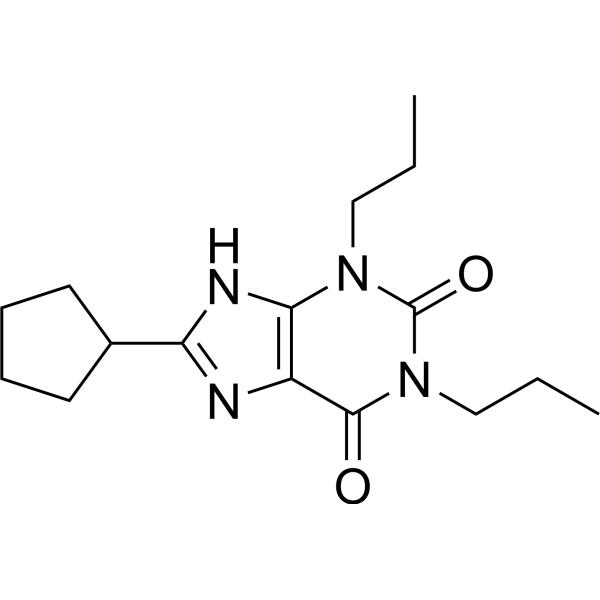
DPCPX (PD 116948), a xanthine derivative, is a highly potent and selective Adenosine A1 receptor antagonist, with a Ki of 0.46 nM in 3H-CHA binding to A1 receptors in rat whole brain membranes.
For research use only. We do not sell to patients.
- Purity : 99.96%
- CAS No.: 102146-07-6
- Formula: C16H24N4O2
- Molecular Weight:304.39
-
Storage:Powder -20°C, 3 years , 4°C, 2 years ; In solvent -80°C, 6 months , -20°C, 1 month

To place orders, for customer services and technical support, please contact: MedChemExpress USA
Tel: 609-228-6898 E-mail: [email protected] [email protected]


-
 Biological Activity
-
Chemical Information
-
Solvent & Solubility
- Purity & Documentation
- References
-
 Help & FAQs


-
HY-19533
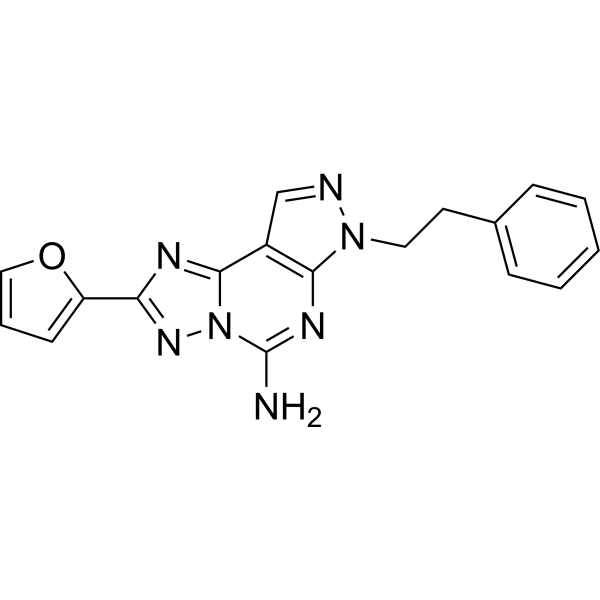
SCH 58261A2A Receptor Antagonist -
HY-19532
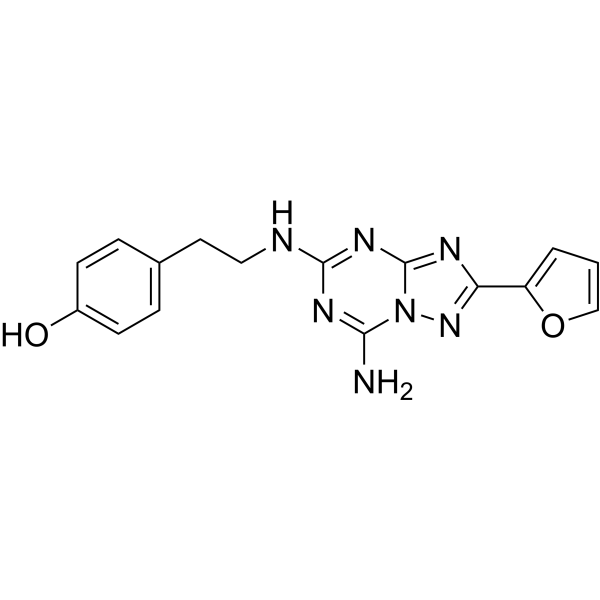
ZM241385A2A Receptor Antagonist -
HY-103181
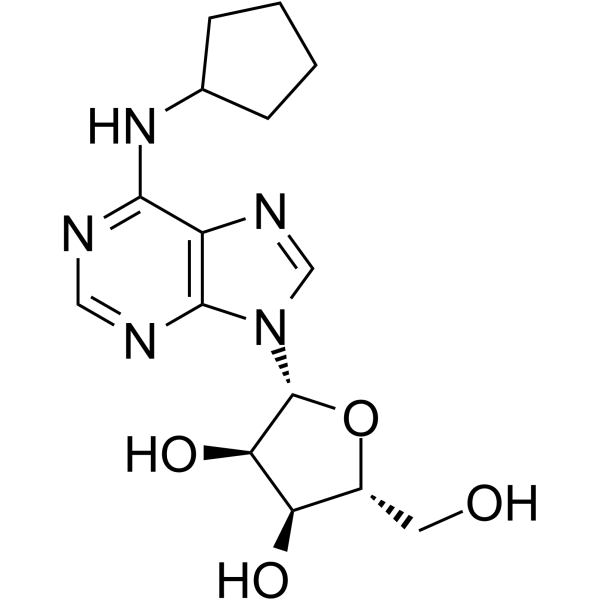
N6-CyclopentyladenosineAdenosine A1 Receptor Agonist -
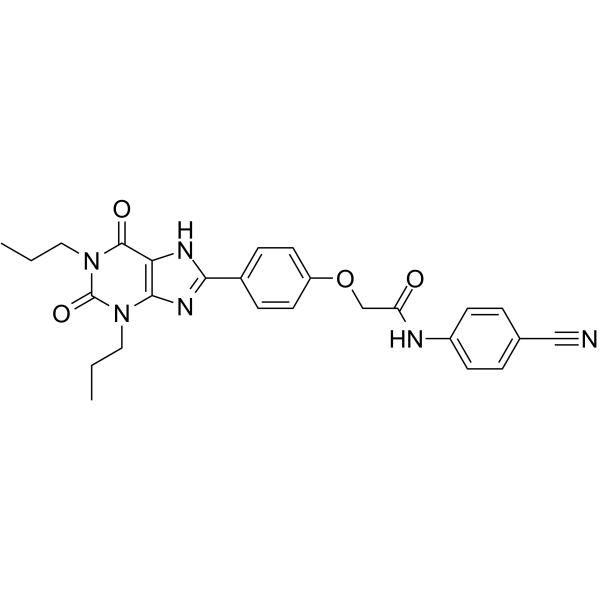
HY-14121
MRS 1754A2B Antagonist -
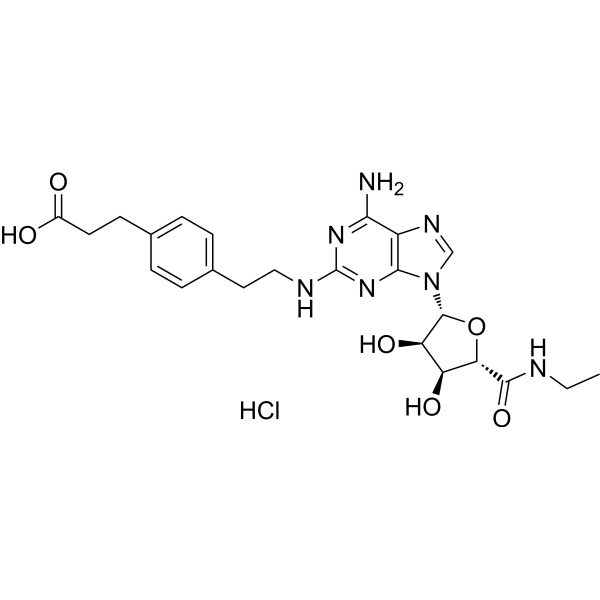
HY-13201A
CGS 21680 HydrochlorideAdenosine A2A Receptor Agonist -
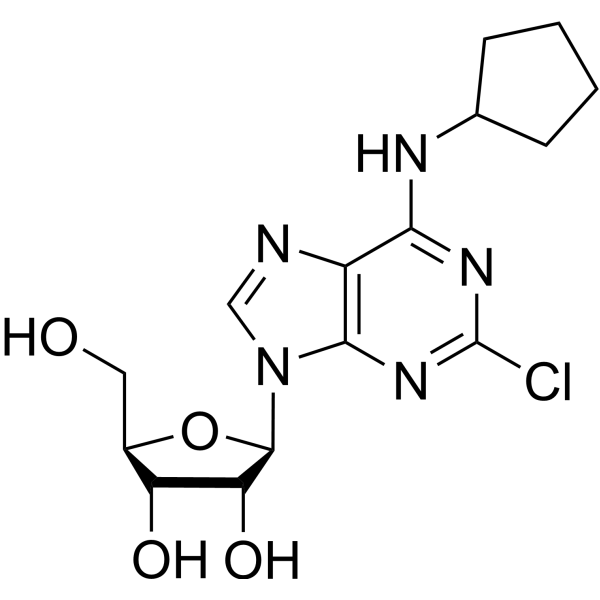
HY-103185
CCPAA1 Adenosine Receptor Agonist -
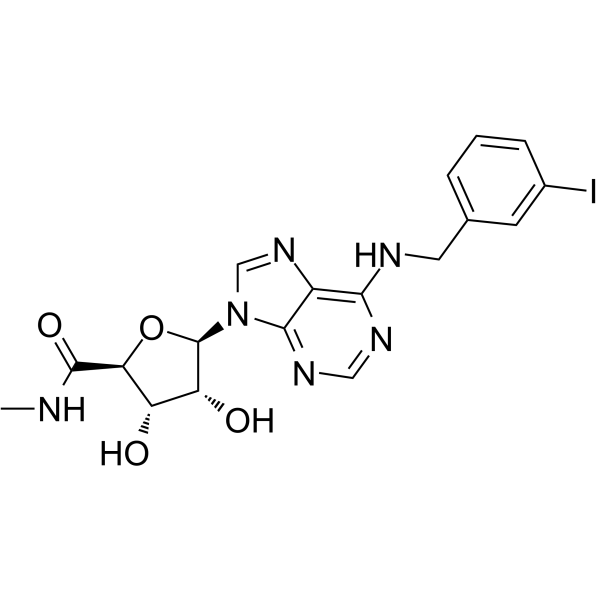
HY-13591
PiclidenosonA3AR Agonist -
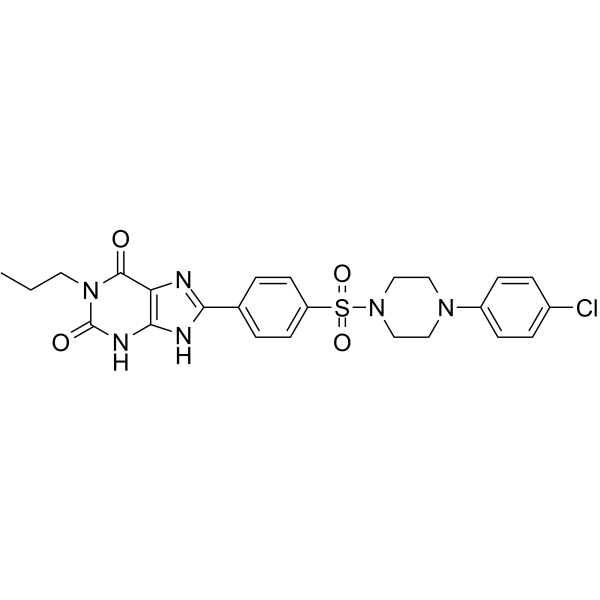
HY-103166
PSB-603A2B Receptor Antagonist -
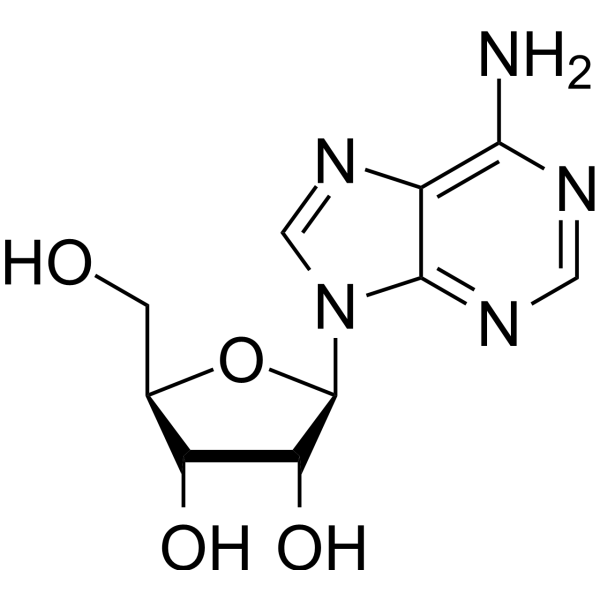
HY-B0228
AdenosineEndogenous Autacoid -
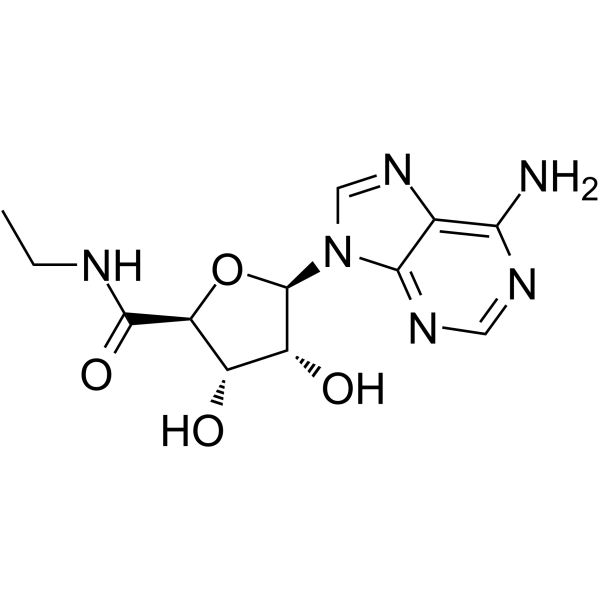
HY-103173
5'-N-EthylcarboxamidoadenosineAdenosine Receptor Agonist -
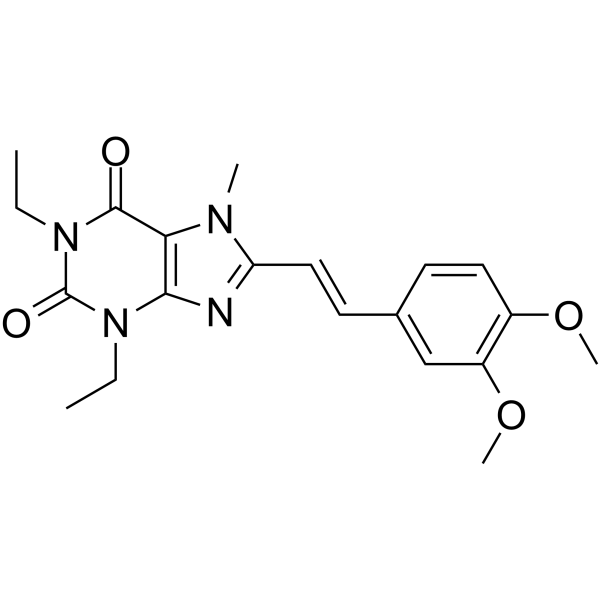
HY-10888
IstradefyllineAdenosine A2A Receptor Antagonist -
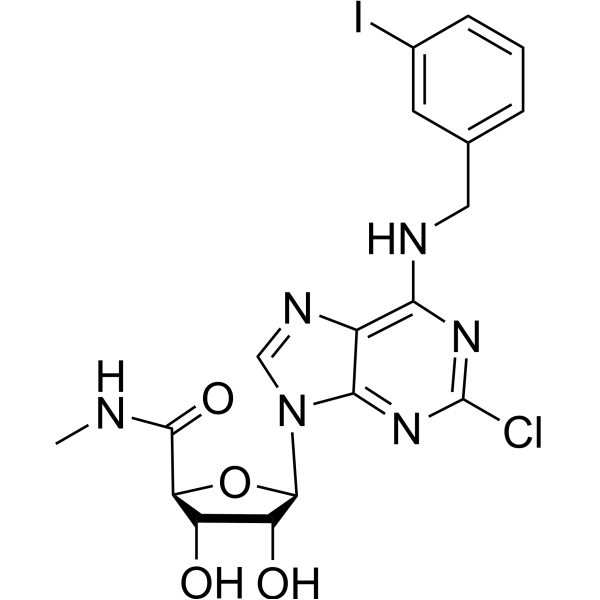
HY-12365
NamodenosonA3AR Agonist
Publications Citing Use of MedChemExpress (MCE) DPCPX
More- Nat Commun. 2023 Jun 8;14(1):3364. [Abstract]
- Redox Biol. 2023 Nov:67:102884. [Abstract]
- Mol Psychiatry. 2024 Nov;29(11):3381-3394. [Abstract]
- Neurosci Bull. 2026 Aug 12.
- CNS Neurosci Ther. 2024 May;30(5):e14726. [Abstract]
- Drug Des Devel Ther. 2026 Mar 24:20:575035. [Abstract]
- Reprod Biol Endocrinol. 2024 Nov 12;22(1):143. [Abstract]
- J Neurochem. 2022 Nov;163(4):310-326. [Abstract]
- bioRxiv. 2024 November 03.
- bioRxiv. 2023 Oct 6.
 Customer Validation & Images

-
In Vivo Efficacy Study
-
Bio/Physico-chemical Assay
-
Bio/Physico-chemical Assay
-
IF
-
Bio/Physico-chemical Assay
All Adenosine Receptor Isoforms
More

Biological Activity
Description
IC50 & Target
Ki: 0.46 nM (3H-CHA binding to A1 receptors in rat whole brain membranes); 340 nM (3H-NECA binding to A2 receptors in rat striatal membranes)[2].
Cellular Effect
|
Cell Line

|
Type | Value | Description | References |
|---|---|---|---|---|
| CHO | IC50 |
5 x 10⁻¹⁰ M
Compound: DPCPX
|
Displacement of [3H]DPCPX from human recombinant adenosine A1 receptor expressed in CHO cells
Displacement of [3H]DPCPX from human recombinant adenosine A1 receptor expressed in CHO cells
|
[PMID: 26988801] |
| CHO | IC50 |
5 x 10⁻¹⁰ M
Compound: DPCPX
|
Displacement of [3H]DPCPX from human recombinant adenosine receptor A1 expressed in CHO cells measured after 60 mins by scintillation counting method
Displacement of [3H]DPCPX from human recombinant adenosine receptor A1 expressed in CHO cells measured after 60 mins by scintillation counting method
|
[PMID: 27876250] |
| CHO | EC50 |
1.52 nM
Compound: DPCPX
|
Inverse agonist activity at human A1AR expressed in CHO cells assessed as increase in forskolin-stimulated cAMP production by alphascreen assay
Inverse agonist activity at human A1AR expressed in CHO cells assessed as increase in forskolin-stimulated cAMP production by alphascreen assay
|
[PMID: 31306001] |
| CHO | IC50 |
132 nM
Compound: DPCPX
|
Antagonist activity at human A2AR expressed in CHO cells assessed as inhibition of CGS21680-stimulated cAMP production by alphascreen assay
Antagonist activity at human A2AR expressed in CHO cells assessed as inhibition of CGS21680-stimulated cAMP production by alphascreen assay
|
[PMID: 31306001] |
| CHO | IC50 |
43 nM
Compound: DPCPX
|
Antagonist activity at human A2BR expressed in CHO cells assessed as inhibition of NECA-stimulated cAMP production by alphascreen assay
Antagonist activity at human A2BR expressed in CHO cells assessed as inhibition of NECA-stimulated cAMP production by alphascreen assay
|
[PMID: 31306001] |
| CHO | EC50 |
>1000 nM
Compound: DPCPX
|
Agonist activity at human A2B expressed in CHO cells assessed as stimulation of cAMP production by alphascreen assay
Agonist activity at human A2B expressed in CHO cells assessed as stimulation of cAMP production by alphascreen assay
|
[PMID: 31306001] |
| HCT-116 | IC50 |
>10 μM
Compound: DPCPX
|
Cytotoxicity against human HCT-116 cells assessed as cell viability incubated for 72 to 96 hrs by MTT assay
Cytotoxicity against human HCT-116 cells assessed as cell viability incubated for 72 to 96 hrs by MTT assay
|
[PMID: 35707146] |
| HEK293 | IC50 |
261 nM
Compound: DPCPX
|
Inhibitory activity against membranes from HEK293 cells stably expressing the human A2a receptor (hA2a)
Inhibitory activity against membranes from HEK293 cells stably expressing the human A2a receptor (hA2a)
|
[PMID: 10476879] |
| Huh-7 | CC50 |
>8.26 μM
Compound: GNF-Pf-2224
|
NOVARTIS: Cytotoxicity against human hepatocellular carcinoma cell line (Huh7)
NOVARTIS: Cytotoxicity against human hepatocellular carcinoma cell line (Huh7)
|
[PMID: 18579783] |
| PC-3 | IC50 |
>10 μM
Compound: DPCPX
|
Cytotoxicity against human PC-3 cells assessed as cell viability incubated for 72 to 96 hrs by MTT assay
Cytotoxicity against human PC-3 cells assessed as cell viability incubated for 72 to 96 hrs by MTT assay
|
[PMID: 35707146] |
| ScN2a | EC50 |
>25 μM
Compound: DPCPX
|
Reduction of PrPSC accumulation in ScN2a cells
Reduction of PrPSC accumulation in ScN2a cells
|
[PMID: 17201410] |
| WI-38 | IC50 |
>10 μM
Compound: DPCPX
|
Cytotoxicity against human WI-38 cells assessed as cell viability incubated for 72 to 96 hrs by MTT assay
Cytotoxicity against human WI-38 cells assessed as cell viability incubated for 72 to 96 hrs by MTT assay
|
[PMID: 35707146] |
In Vivo
MedChemExpress (MCE) has not independently confirmed the accuracy of these methods. They are for reference only.


Chemical Information
-
CAS No. 102146-07-6
-
Appearance Solid
-
Molecular Weight 304.39
-
Formula C16H24N4O2
-
Color White to off-white
-
SMILES
O=C(N1CCC)N(CCC)C2=C(N=C(C3CCCC3)N2)C1=O
-
Synonyms
PD 116948
-
Shipping
Room temperature in continental US; may vary elsewhere.
-
Storage
Powder -20°C 3 years 4°C 2 years In solvent -80°C 6 months -20°C 1 month


Publications (10)
-
Journal Impact Factor
-
Most Recent
-
Nat Commun
Transcriptional control of pancreatic cancer immunosuppression by metabolic enzyme CD73 in a tumor-autonomous and -autocrine manner. [Abstract]2023 Jun 8;14(1):3364. PMID: 37291128 -
Redox Biol
Accumulation of endogenous adenosine improves cardiomyocyte metabolism via epigenetic reprogramming in an ischemia-reperfusion model. [Abstract]2023 Nov:67:102884. PMID: 37725888 -
Mol Psychiatry
Adenosine mediates the amelioration of social novelty deficits during rhythmic light treatment of 16p11.2 deletion female mice. [Abstract]2024 Nov;29(11):3381-3394. PMID: 38740879
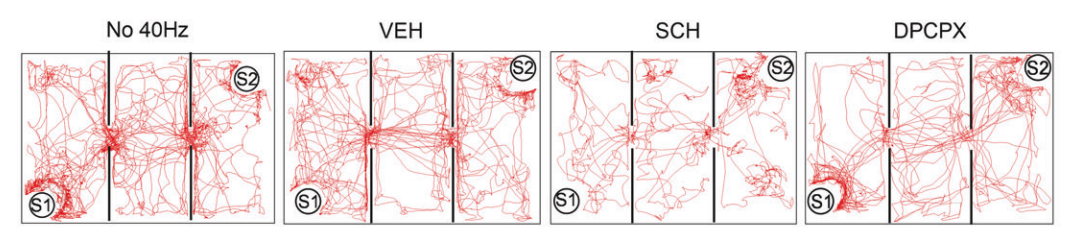
DPCPX purchased from MedChemExpress. Usage Cited in: Mol Psychiatry. 2024 Nov;29(11):3381-3394. [Abstract]
DPCPX (4 mg/kg; i.g.; 14 d) blocked the 40 Hz light flicker's prosocial effect on social novelty preference in mice with 16p11.2 deletion.
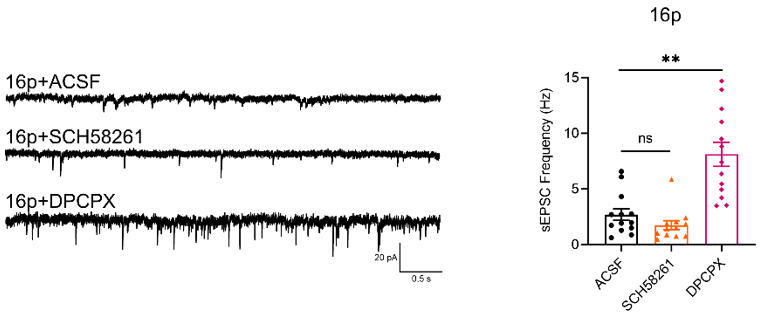
DPCPX purchased from MedChemExpress. Usage Cited in: Mol Psychiatry. 2024 Nov;29(11):3381-3394. [Abstract]
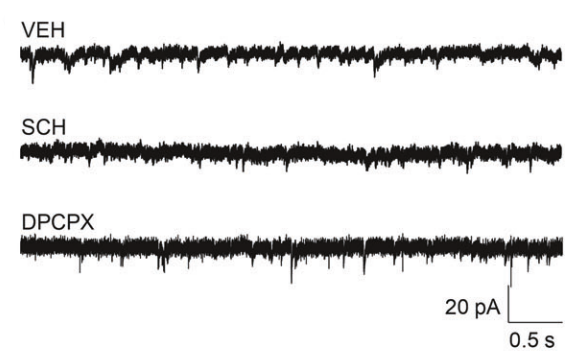
The A1R antagonist DPCPX (0.3 µM) significantly elevated the sEPSC frequency in mice with 16p11.2 deletion.
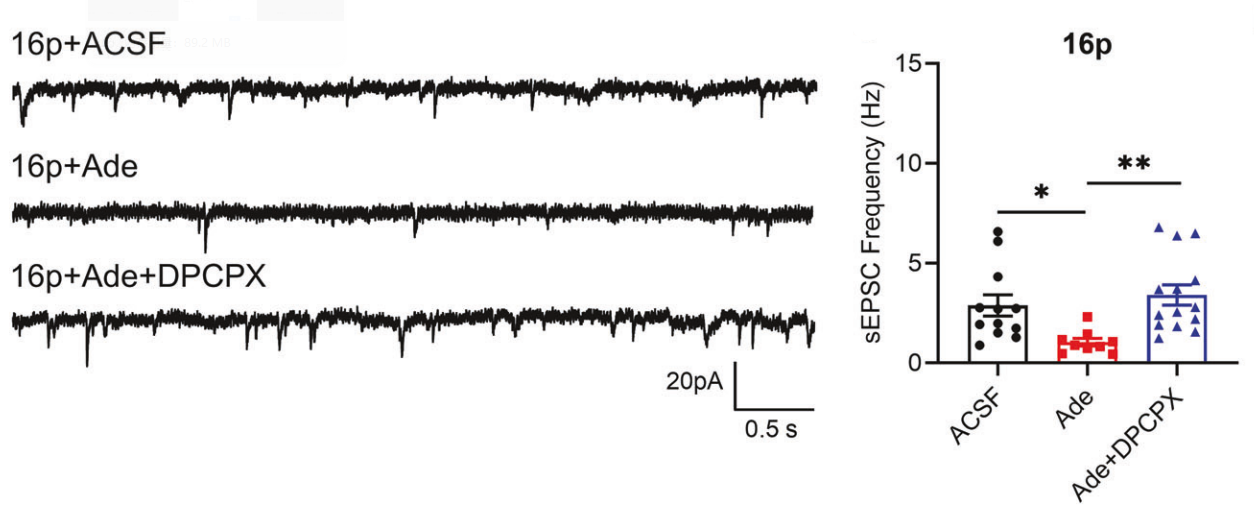
DPCPX purchased from MedChemExpress. Usage Cited in: Mol Psychiatry. 2024 Nov;29(11):3381-3394. [Abstract]
DPCPX (0.3 µM), the A1R antagonist, blocked the reduction in sEPSC frequency induced by in-vitro application of adenosine in 16p11.2 deletion female mice.
DPCPX purchased from MedChemExpress. Usage Cited in: Mol Psychiatry. 2024 Nov;29(11):3381-3394. [Abstract]
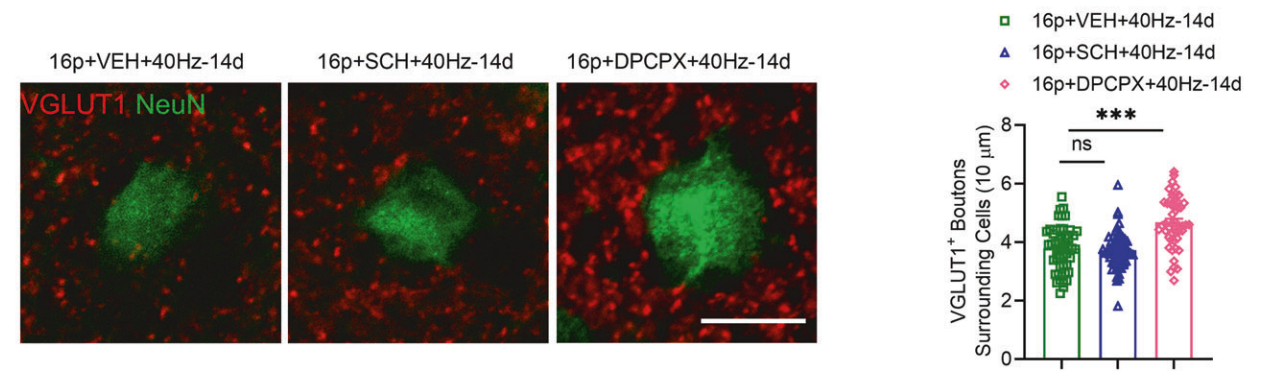
DPCPX (4 mg/kg; i.g.; 14 d) blocked the 40 Hz light flicker's effect on excitatory synapses with increasing VGLUT1+ boutons surrounding neurons in mice with 16p11.2 deletion.
DPCPX purchased from MedChemExpress. Usage Cited in: Mol Psychiatry. 2024 Nov;29(11):3381-3394. [Abstract]
DPCPX (0.3 µM) blocked the 40 Hz light flicker's effect on sEPSCs, with significantly increased sEPSC frequency and amplitude.
-
-
CNS Neurosci Ther
Astrocytes in preoptic area regulate acute nociception-induced hypothermia through adenosine receptors. [Abstract]2024 May;30(5):e14726. PMID: 38715251 -
Drug Des Devel Ther
Cordycepin Ameliorates Dextran Sulfate Sodium-Induced Ulcerative Colitis in Mice by Inhibiting IL-6/IL-6R-Mediated p38 MAPK and NF-κB Activation Through Adenosine A2A Receptor Stimulation. [Abstract]2026 Mar 24:20:575035. PMID: 41908945 -
Reprod Biol Endocrinol
Cordycepin improves hyperactivation and acrosome reaction through adenosine receptors during human sperm capacitation in vitro. [Abstract]2024 Nov 12;22(1):143. PMID: 39533327 -
J Neurochem
Somatostatin interneurons inhibit excitatory transmission mediated by astrocytic GABAB and presynaptic GABAB and adenosine A1 receptors in the hippocampus. [Abstract]2022 Nov;163(4):310-326. PMID: 35775994 -
-


Solvent & Solubility
In Vitro:
DMSO : 10 mg/mL (32.85 mM; Need ultrasonic; Hygroscopic DMSO has a significant impact on the solubility of product, please use newly opened DMSO)
Please refer to the solubility information to select the appropriate solvent. Once prepared, please aliquot and store the solution to prevent product inactivation from repeated freeze-thaw cycles.
Storage method and period of stock solution: -80°C, 6 months; -20°C, 1 month. When stored at -80°C, please use it within 6 months. When stored at -20°C, please use it within 1 month.
Please refer to the solubility information to select the appropriate solvent. Once prepared, please aliquot and store the solution to prevent product inactivation from repeated freeze-thaw cycles.
Storage method and period of stock solution: -80°C, 6 months; -20°C, 1 month. When stored at -80°C, please use it within 6 months. When stored at -20°C, please use it within 1 month.
Concentration (start) × Volume (start) = Concentration (final) × Volume (final)
In Vivo:
Select the appropriate dissolution method based on your experimental animal and administration route.
- For the following dissolution methods, please ensure to first prepare a clear stock solution using an In Vitro approach and then sequentially add co-solvents:
- To ensure reliable experimental results, the clarified stock solution can be appropriately stored based on storage conditions. As for the working solution for In Vivo experiments, it is recommended to prepare freshly and use it on the same day.
- The percentages shown for the solvents indicate their volumetric ratio in the final prepared solution. If precipitation or phase separation occurs during preparation, heat and/or sonication can be used to aid dissolution.
For the following dissolution methods, please prepare the working solution directly:
It is recommended to prepare fresh solutions and use them promptly within a short period of time.
The percentages shown for the solvents indicate their volumetric ratio in the final prepared solution. If precipitation or phase separation occurs during preparation, heat and/or sonication can be used to aid dissolution.
Add each solvent one by one: 15% Cremophor EL 85% Saline
Solubility: 20 mg/mL (65.71 mM); Suspended solution; Need ultrasonic
In Vivo Dissolution Calculator
Please enter the basic information of animal experiments:
-
-
-
-
Recommended: Prepare an additional quantity of animals to account for potential losses during experiments.
Please enter your animal formula composition:
-
%DMSO +
Recommended: Keep the proportion of DMSO in working solution below 2% if your animal is weak.
-
%+
-
+%Tween-80 + +
-
%Saline +
The co-solvents required include: DMSO, . All of co-solvents are available by MedChemExpress (MCE). , Tween 80. All of co-solvents are available by MedChemExpress (MCE).
Working solution concentration: 0.22 mg/mL
Method for preparing stock solution: mg drug dissolved in μL DMSO. Stock solution concentration: mg/mL.
1. Take μL DMSO stock solution;
2. Add μL .
μL , mix evenly;
3. Then add μL Tween 80, mix evenly;
4. Then add μL
Please ensure that the stock solution in the first step is dissolved to a clear state, and add co-solvents in sequence. You can use ultrasonic heating (ultrasonic cleaner, recommended frequency 20-40 kHz), vortexing, etc. to assist dissolution.


Purity & Documentation
-
Data Sheet (274 KB)
-
SDS (396 KB)
- English - EN (396 KB)
- Français - FR (396 KB)
- Deutsch - DE (396 KB)
- Norwegian - NO (396 KB)
- Español - ES (396 KB)
- Swedish - SV (396 KB)
- Italian - IT (396 KB)
- Korean - KR (396 KB)
- Portuguese - PT (396 KB)
-
Handling Instructions (2659 KB)
References
[1]. S J Haleen, et al. PD 116,948, a Highly Selective A1 Adenosine Receptor Antagonist. Life Sci. 1987 Feb 9;40(6):555-61. [Content Brief]
[2]. R F Bruns, et al. Binding of the A1-selective Adenosine Antagonist 8-cyclopentyl-1,3-dipropylxanthine to Rat Brain Membranes. Naunyn Schmiedebergs Arch Pharmacol. 1987 Jan;335(1):59-63. [Content Brief]
[3]. POSTER COMMUNICATIONS Part II. Br J Pharmacol. 1989 Jul; 97(Suppl): 496P–535P.


Complete Stock Solution Preparation Table
Please refer to the solubility information to select the appropriate solvent. Once prepared, please aliquot and store the solution to prevent product inactivation from repeated freeze-thaw cycles.
Storage method and period of stock solution: -80°C, 6 months; -20°C, 1 month. When stored at -80°C, please use it within 6 months. When stored at -20°C, please use it within 1 month.
| Optional Solvent | Concentration Solvent Mass | 1 mg | 5 mg | 10 mg | 25 mg |
|---|---|---|---|---|---|
| DMSO | 1 mM | 3.2853 mL | 16.4263 mL | 32.8526 mL | 82.1315 mL |
| 5 mM | 0.6571 mL | 3.2853 mL | 6.5705 mL | 16.4263 mL | |
| 10 mM | 0.3285 mL | 1.6426 mL | 3.2853 mL | 8.2131 mL | |
| 15 mM | 0.2190 mL | 1.0951 mL | 2.1902 mL | 5.4754 mL | |
| 20 mM | 0.1643 mL | 0.8213 mL | 1.6426 mL | 4.1066 mL | |
| 25 mM | 0.1314 mL | 0.6571 mL | 1.3141 mL | 3.2853 mL | |
| 30 mM | 0.1095 mL | 0.5475 mL | 1.0951 mL | 2.7377 mL |


DPCPX Related Classifications
HY-100937 Related Classifications
 Powered by Bioz