1. Search Result
Search Result
Results for "

specific chelator

" in MedChemExpress (MCE) Product Catalog:

23

Inhibitors & Agonists

3

Biochemical Assay Reagents

1

Peptides

Targets Recommended:
Cat. No. Product Name Target Research Areas Chemical Structure
  • HY-D0861
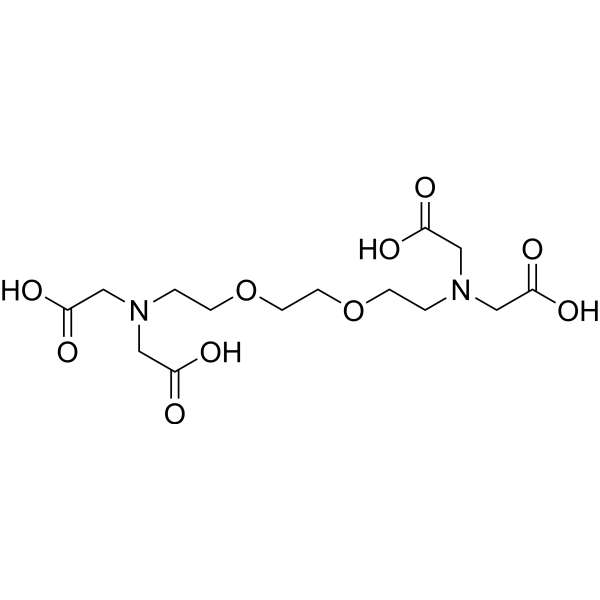
    EGTA
    20+ Cited Publications

    Biochemical Assay Reagents Inflammation/Immunology
    EGTA is a cell-impermeant specific calcium ion chelator. EGTA has an apparent calcium dissociation constant (Kd) of 60.5 nM at physiological pH (7.4) and has very high specificity for Ca 2+ over Mg 2+ (Mg 2+ Kd 1-10 mM). EGTA significantly inhibits the substrate adherence capacity of inflammatory macrophages .
    EGTA
  • HY-117410
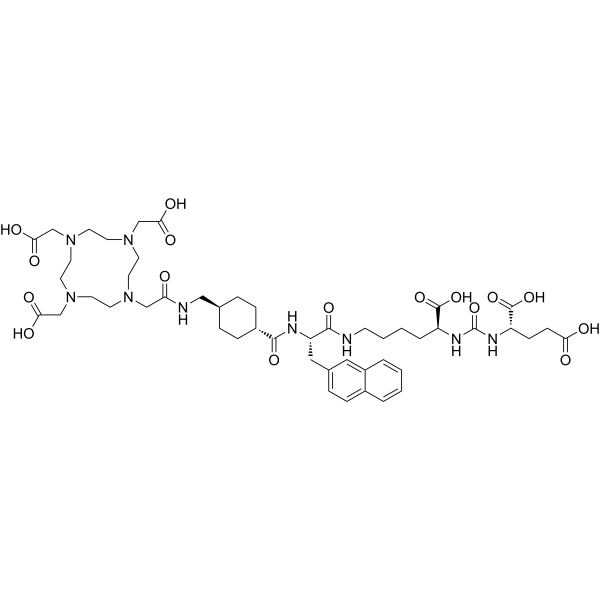
    Vipivotide tetraxetan
    15+ Cited Publications

    PSMA-617

    Drug-Linker Conjugates for ADC Cancer
    Vipivotide tetraxetan (PSMA-617) is a high potent prostate-specific membrane antigen (PSMA) inhibitor, with a Ki of 0.37 nM. Vipivotide tetraxetan (PSMA-617) is designed consisting of three components: the pharmacophore Glutamate-urea-Lysine, the chelator DOTA able to complex both 68Ga or 177Lu, and a linker connecting these two entities. Glutamate-urea-Lysine is the selective pharmacophore to bind to prostate specific membrane antigen.
    Vipivotide tetraxetan
  • HY-100202
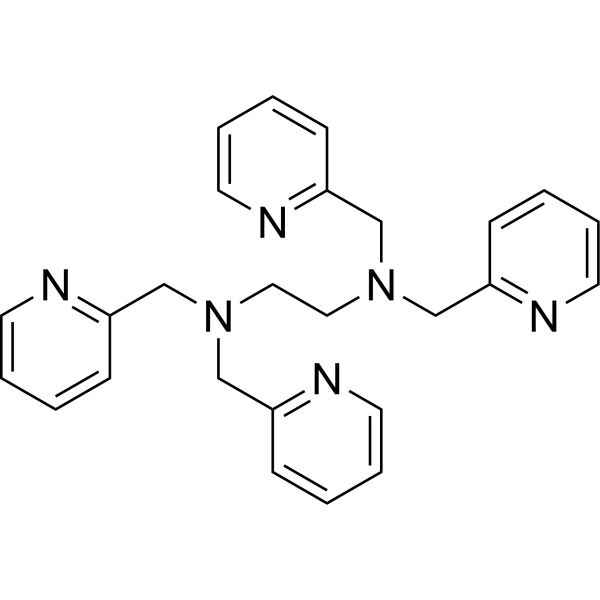
    TPEN
    20+ Cited Publications

    TPEDA

    MOFs Reactive Oxygen Species (ROS) Apoptosis Autophagy Cancer
    TPEN (TPEDA) is a specific cell-permeable heavy metal chelator. TPEN has a higher affinity for Zn 2+, but a lower affinity for Mg 2+ and Ca 2+. TPEN induces DNA damage and increases intracellular ROS production. TPEN also inhibits cell proliferation and induces apoptosis .
    TPEN
  • HY-114758
    Pyridoxal isonicotinoyl hydrazone
    4 Publications Verification

    Biochemical Assay Reagents Ferrochelatase Cardiovascular Disease
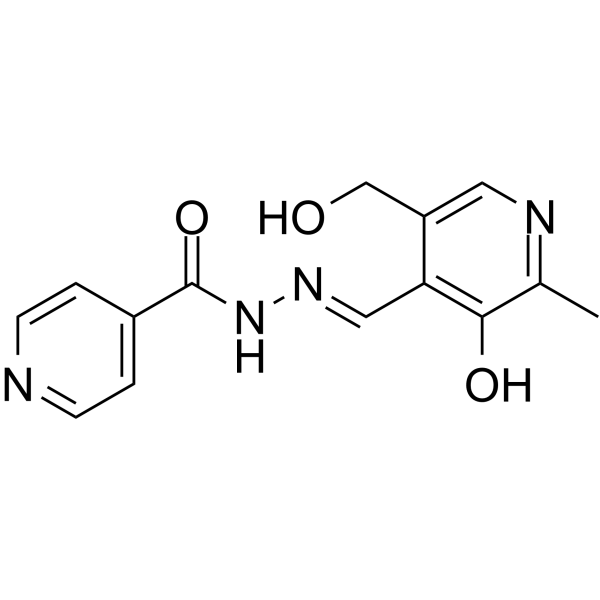
    Pyridoxal isonicotinoyl hydrazone is an orally active and lipophilic iron-specific chelator that acts as a non-competitive inhibitor of ferrochelatase (FECH) by binding iron ions. Pyridoxal isonicotinoyl hydrazone disrupts heme biosynthesis, leading to reduced FECH stability and increased protoporphyrin IX (PPIX) accumulation. Pyridoxal isonicotinoyl hydrazone is promising for research of iron-overload diseases (e.g., β-thalassemia) .
    Pyridoxal isonicotinoyl hydrazone
  • HY-D0861A
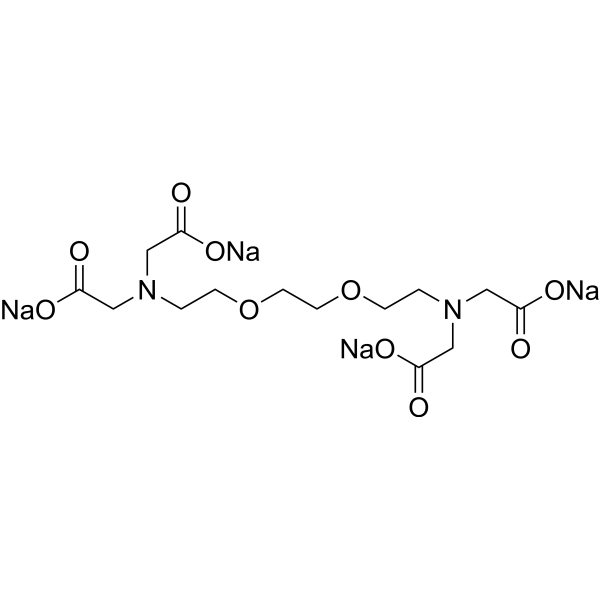
    EGTA tetrasodium
    20+ Cited Publications

    Biochemical Assay Reagents Inflammation/Immunology
    EGTA tetrasodium is a cell-impermeant specific calcium ion chelator. EGTA tetrasodium has an apparent calcium dissociation constant (Kd) of 60.5 nM at physiological pH (7.4) and has very high specificity for Ca 2+ over Mg 2+ (Mg 2+ Kd 1-10 mM). EGTA tetrasodium significantly inhibits the substrate adherence capacity of inflammatory macrophages .
    EGTA tetrasodium
  • HY-164574

    Radionuclide-Drug Conjugates (RDCs) Cancer
    BCN-DOTA is a cyclooctyne-linked DOTA chelator that can be radiolabeled with zirconium-89 as a radionuclide-labeled drug conjugate (RDC) to target specific biomolecules, cells, or tissues.
    BCN-DOTA
  • HY-W012898

    Biacetyl dioxime

    Biochemical Assay Reagents Others
    Dimethylglyoxime (Biacetyl dioxime) belongs to the class of oximes and consists of two acetyl groups attached to a nitrogen atom, which in turn is attached to another nitrogen atom through a diimine bond. Dimethylglyoxime is a specific chelator of Ni that inhibits or slows the aggregation of Aβ peptides in vitro .
    Dimethylglyoxime
  • HY-164577

    Radionuclide-Drug Conjugates (RDCs) Cancer
    BCN-DOTA-GA is a cyclooctyne-linked DOTA chelator that can be labeled with radioactive zirconium-89 and used as a radionuclide-labeled drug conjugate (RDC) to target specific biomolecules, cells or tissues.
    BCN-DOTA-GA
  • HY-160607

    Radionuclide-Drug Conjugates (RDCs) Exosomes Others
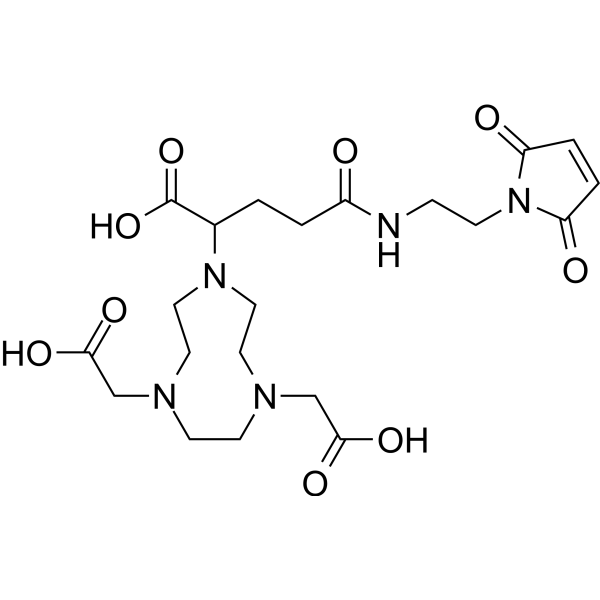
    MMA-NODAGA is a chelator for site-specific labeling of targeting proteins containing unpaired cysteine. MMA-NODAGA can be used to conjugate with exosome and 64Cu in image with positron emission tomography (PET) <[2].
    MMA-NODAGA
  • HY-158119A

    Felivotide mopaxetan

    PSMA Cancer
    PSMA-trillium (Felivotide mopaxetan) is a PSMA-targeted molecule that contains a highly specific PSMA-binding motif, an albumin-binding domain optimized for tumor uptake and retention, and a Macropa chelator conjugated to the α-emitter 225Ac. PSMA-trillium binds to albumin to prolong plasma retention time and binds to PSMA via its specific motif. 225Ac-PSMA-Trillium exhibits dose-dependent inhibition of LNCaP tumor growth in mice. PSMA-trillium can be used in research related to prostate cancer and metastatic castration-resistant prostate cancer .
    PSMA-trillium
  • HY-164576

    NODA-Bz-SCN

    Radionuclide-Drug Conjugates (RDCs) Cancer
    NCS-MP-NODA (NODA-Bz-SCN) is a bifunctional chelator that can be used to bind to the labeled peptide DK222 with high specificity for PD-L1. The corresponding fluorinated radioactive is synthesized by the aluminum fluoride method, and NCS-MP-NODA targets DK222 to obtain the radioactive analog [18/19F]DK222. [18F]DK222 can quantify PD-L1 in vivo via PET tracking in xenograft models of multiple cancer types.
    NCS-MP-NODA
  • HY-164575

    Radionuclide-Drug Conjugates (RDCs) PSMA Cancer
    NH2-NODAGA is a NODAGA-type metal chelator that can bind to radionuclides to prepare radionuclide conjugates (RDCs). NH2-NODAGA can react with diethyl squarate in 0.5M phosphate buffer to obtain NODAGA.SA. NODAGA.SA can target L-lysine urea-L-glutamate (KuE), which is a key structure of prostate-specific membrane antigen (PSMA). NODAGA.SA.KuE can bind [68]Ga and can be used for PET examination of NMRInu/nu nude mice bearing LNCaP tumors.
    NH2-NODAGA
  • HY-D1636

    Fluorescent Dye Others
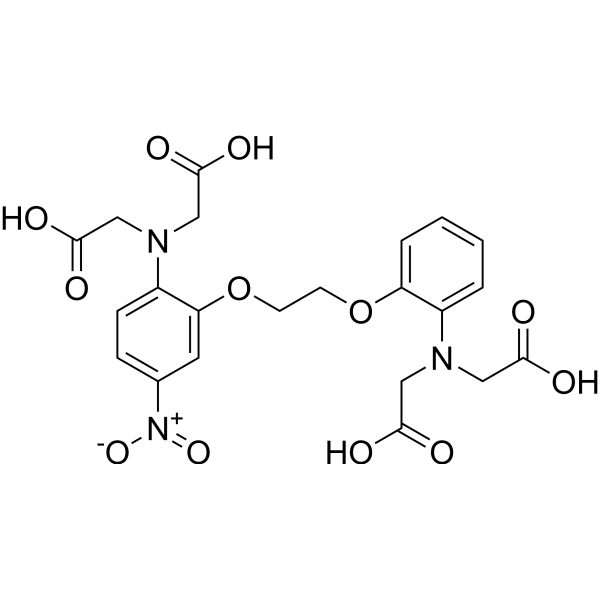
    5-Nitro BAPTA is a calcium chelator, combinded with 2-Me-substituted TM ( as a fluorescent moiety), can be used to form a red fluorescent probe (CaTM-2 AM), for imaging of cytoplasmic Ca 2+ in cultured living cells. 5-Nitro BAPTA is a building block used in the synthesis of Ca 2+ specific chelators, Ca 2+ buffers, and fluorescent Ca 2+ indicators .
    5-Nitro BAPTA
  • HY-P10743

    Radionuclide-Drug Conjugates (RDCs) PSMA Cancer
    BQ7876 is a probe targeting prostate-specific membrane antigen (PSMA) that contains a DOTA chelator. BQ7876, after being radiolabeled with radionuclide (177Lu), functions in both radionuclide imaging and tumor cell destruction by specifically binding to PSMA. BQ7876 shows potential for research in the field of metastatic castration-resistant prostate cancer (mCRPC) . BQ7876 can be used for the synthesis/research of Radionuclide-Drug Conjugates (RDCs).
    BQ7876
  • HY-13950

    Biochemical Assay Reagents Others
    S186 is a new type of strontium-specific chelator.
    S186
  • HY-W339484

    Biochemical Assay Reagents Others
    1-Ethyl-2-methyl-3-hydroxypyrid-4-one is an α-ketohydroxypyridinium iron chelator with high specificity for iron and no specific activity against other metal ions such as copper, zinc, calcium and magnesium. In rabbits with iron overload, 1-Ethyl-2-methyl-3-hydroxypyrid-4-one increased iron excretion after oral or parenteral administration.
    1-Ethyl-2-methyl-3-hydroxypyrid-4-one
  • HY-174447

    PARP Cancer
    ADP-ribose/PARP-IN-1 (Compound Ex.16) is a conjugated compound. ADP-ribose/PARP-IN-1 contains disease targeting moieties, PARP inhibitor moieties, cleavable linkers, chelators. ADP-ribose/PARP-IN-1 targets specific targets through the disease targeting moiety and selectively delivers PARP inhibitors to tumor cells. The cleavable linker of ADP-ribose/PARP-IN-1 releases the PARP inhibitor under appropriate conditions, inhibiting PARP to prevent DNA damage repair, while the radionuclide carried by the chelator exerts a killing effect. ADP-ribose/PARP-IN-1 can be used in the research of prostate cancer .
    ADP-ribose/PARP-IN-1
  • HY-100202R

    TPEDA (Standard)

    Reactive Oxygen Species (ROS) Reference Standards Apoptosis Autophagy Cancer
    TPEN (Standard) is the analytical standard of TPEN (HY-100202). This product is intended for research and analytical applications. TPEN (TPEDA) is a specific cell-permeable heavy metal chelator. TPEN has a higher affinity for Zn2+, but a lower affinity for Mg2+ and Ca2+. TPEN induces DNA damage and increases intracellular ROS production. TPEN also inhibits cell proliferation and induces apoptosis .
    TPEN (Standard)
  • HY-178271

    Drug Intermediate Cancer
    P-SCN-Bn-NOTA is a metal chelator and molecular imaging probe precursor that allows radiolabeling with Ga-68. P-SCN-Bn-NOTA can be conjugated to CD70-specific molecules B3, B6, ABDB3 and ABDB6 to form NOTA-labeled derivatives. P-SCN-Bn-NOTA is applicable for preclinical PET/CT imaging of CD70-expressing tumors in NCG mouse PDX models. P-SCN-Bn-NOTA can be used in studies related to CD70-positive tumors .
    P-SCN-Bn-NOTA
  • HY-164575B

    Radionuclide-Drug Conjugates (RDCs) PSMA Cancer
    NH2-NODAGA hydrochloride is a NODAGA-type metal chelator that can bind to radionuclides to prepare radionuclide conjugates (RDCs). NH2-NODAGA hydrochloride can react with diethyl squarate in 0.5M phosphate buffer to obtain NODAGA.SA. NODAGA.SA can target L-lysine urea-L-glutamate (KuE), which is a key structure of prostate-specific membrane antigen (PSMA). NODAGA.SA.KuE can bind [68]Ga and can be used for PET examination of NMRInu/nu nude mice bearing LNCaP tumors.
    NH2-NODAGA hydrochloride
  • HY-164575A

    Radionuclide-Drug Conjugates (RDCs) PSMA Cancer
    NH2-NODAGA TFA is a NODAGA-type metal chelator that can bind to radionuclides to prepare radionuclide conjugates (RDCs). NH2-NODAGA TFA can react with diethyl squarate in 0.5M phosphate buffer to obtain NODAGA.SA. NODAGA.SA can target L-lysine urea-L-glutamate (KuE), which is a key structure of prostate-specific membrane antigen (PSMA). NODAGA.SA.KuE can bind [68]Ga and can be used for PET examination of NMRInu/nu nude mice bearing LNCaP tumors.
    NH2-NODAGA TFA
  • HY-165381

    MDM-2/p53 Reactive Oxygen Species (ROS) Cancer
    ZMC2 is a thiosemicarbazone-class metal ion chelator and zinc ionophore with a human mutant p53 R175H binding Ka of 27.4 nM.ZMC2 binds Fe, Cu, Mn, Zn, and other transition metals.ZMC2 facilitates zinc transport across membranes.ZMC2 restores zinc binding to zinc-deficient p53 mutants, restoring wild-type structure and function, including site-specific DNA binding.ZMC2 generates reactive oxygen species (ROS).ZMC2 can be used for the research of cancer .
    ZMC2
  • HY-164575C

    Drug Isomer Cancer
    (S)-NH2-NODAGA hydrochloride is the S isomer of NH2-NODAGA hydrochloride (HY-164575B). NH2-NODAGA hydrochloride is a NODAGA-type metal chelator that can bind to radioactive nuclides to prepare nuclide conjugates (RDC). NH2-NODAGA hydrochloride can react with diethyl fumarate in 0.5M phosphoric acid buffer to obtain NODAGA.SA. NODAGA.SA can target L-lysine urea-L-glutamic acid (KuE), and KuE is a key structure of prostate-specific membrane antigen (PSMA). NODAGA.SA.KuE can bind [68]Ga and can be used for PET examination in NMRInu/nu nude mice carrying LNCaP tumors.
    (S)-NH2-NODAGA hydrochloride

Inquiry Online

Your information is safe with us. * Required Fields.

Salutation


Country or Region *

Applicant Name *


Organization Name *

Department *


Email Address *


Product Name *

Cat. No.


Requested quantity *

Phone Number *


Remarks

Inquiry Online

Inquiry Information

Product Name:
Cat. No.:
Quantity:
MCE Japan Authorized Agent:

