1. Search Result
Search Result
Results for "

substituent

" in MedChemExpress (MCE) Product Catalog:

47

Inhibitors & Agonists

1

Fluorescent Dye

5

Biochemical Assay Reagents

4

Natural
Products

2

Click Chemistry

2

Oligonucleotides

Cat. No. Product Name Target Research Areas Chemical Structure
  • HY-134813
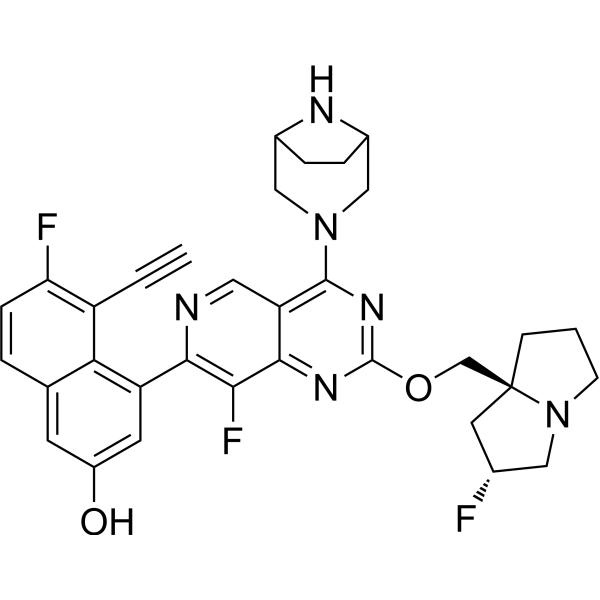
    MRTX1133
    45+ Cited Publications

    Ras Cancer
    MRTX1133 is a noncovalent, potent, and selective alkyne-based KRAS G12D inhibitor. MRTX1133 optimally fills the switch II pocket and extends three substituents to favorably interact with the protein, resulting in an estimated KD against KRAS G12D of 0.2 pM. MRTX1133 prevents SOS1-catalyzed nucleotide exchange and/or formation of the KRAS G12D/GTP/RAF1 complex, thereby inhibiting mutant KRAS-dependent signal transduction. MRTX1133 selectively inhibits KRAS G12D mutant, but not KRAS wild-type, tumor cells. MRTX1133 has single digit nanomolar activity in cellular assays and marked in vivo efficacy in tumor models harboring KRAS G12D mutations .
    MRTX1133
  • HY-B0323
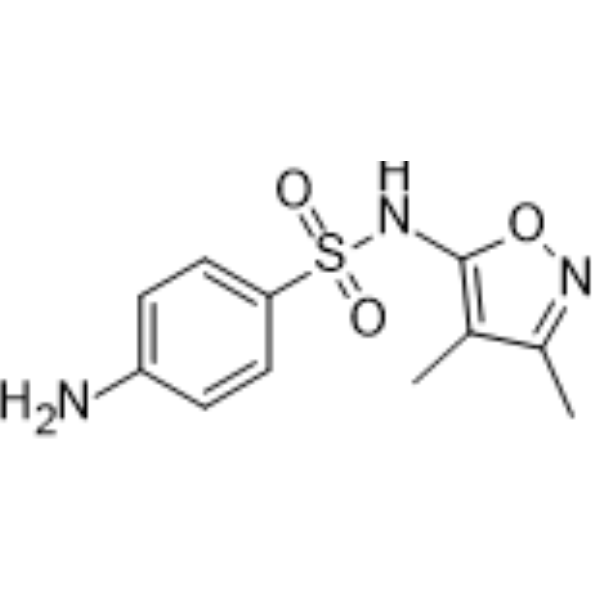
    Sulfisoxazole
    5 Publications Verification

    Sulfafurazole

    Endothelin Receptor Bacterial Antibiotic Infection Endocrinology Cancer
    Sulfisoxazole (Sulfafurazole) is an orally active endothelin receptor antagonist with IC50 values of 0.60 μM and 22 μM against endothelin receptor A and endothelin receptor B, respectively. Sulfisoxazole is a sulfonamide antibacterial agent with an oxazole substituent. Sulfisoxazole inhibits breast cancer exosome release by targeting endothelin receptor A .
    Sulfisoxazole
  • HY-Y0694
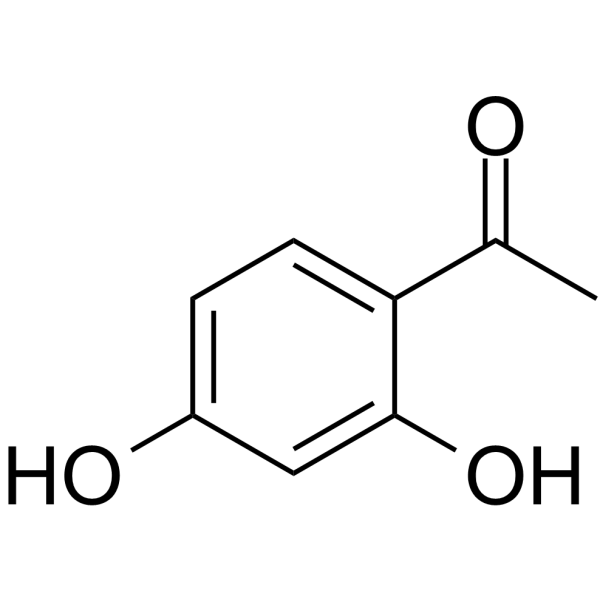
    2',4'-Dihydroxyacetophenone
    1 Publications Verification

    Resacetophenone; 1-​(2,​4-​Dihydroxyphenyl)​ethanone

    Endogenous Metabolite COX Cancer
    2',4'-Dihydroxyacetophenone (Resacetophenone) is acetophenone carrying hydroxy substituents at positions 2' and 4'. 2',4'-Dihydroxyacetophenone involves in a practical CsHCO3-mediated alkylation that efficiently provide 4-alkylated products with excellent regioselectivity, good isolated yields and a broad substrate scope. 2',4'-Dihydroxyacetophenone is a plant metabolite .
    2',4'-Dihydroxyacetophenone
  • HY-W075603

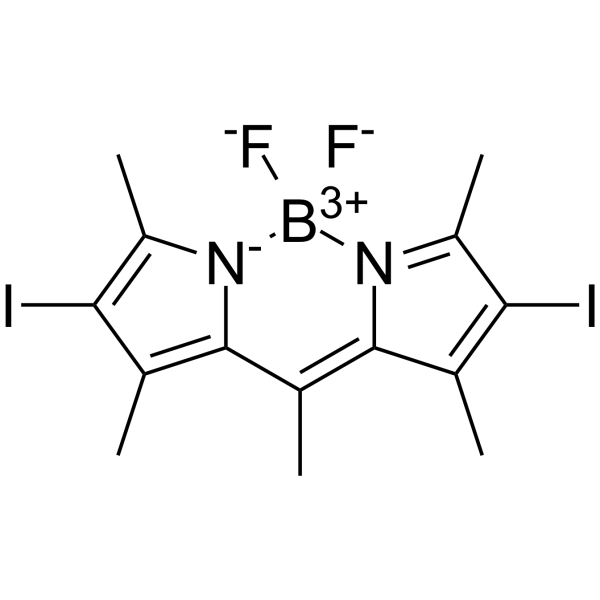
    2,6-Diiodo-Pyrromethene 546

    Fluorescent Dye Others
    2,6-Diiodo-BODIPY 493/503 is an F-Bodipy fluorescent dye with diiodo substitution at the (pyrrole) 2,6 position. 2,6-Diiodo-BODIPY 493/503 has a pyrrole iodine substituent that turns it red .
    2,6-Diiodo-BODIPY 493/503
  • HY-136563

    Proteasome Apoptosis Reactive Oxygen Species (ROS) Cancer
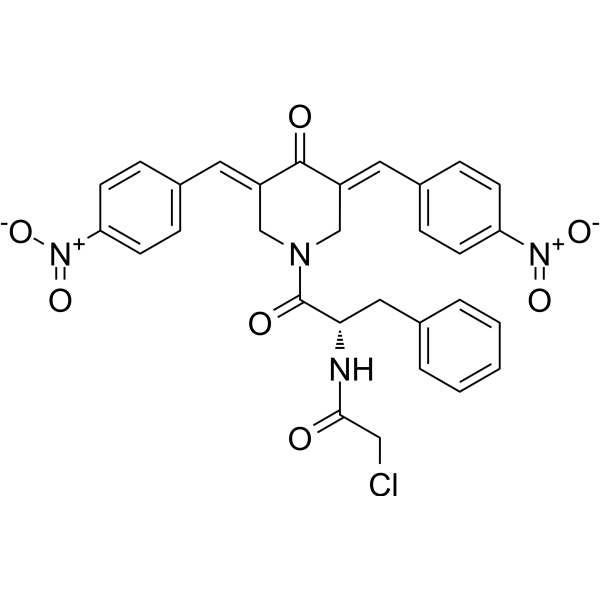
    RA375 is a RPN13 (26S proteasome regulatory subunit) inhibitor. RA375 activates UPR signaling, ROS production and apoptosis. RA375 exhibits ten-fold greater activity against cancer lines than RA190, reflecting its nitro ring substituents and the addition of a chloroacetamide warhead .
    RA375
  • HY-160496

    STAT Cancer
    STAT3-IN-25 (Compound 2p) is a potent STAT3 inhibitor with a p-trifluoroethoxy benzyl substituent. STAT3-IN-25 shows STAT3 luciferase inhibition activity using HEK293T cells with an IC50 of 22.3 nM and ATP production inhibition activity using BxPC-3 cells with an IC50 of 32.5 nM. STAT3-IN-25 has the potential for pancreatic cancer research .
    STAT3-IN-25
  • HY-100982

    trans-4-Hydroxycrotonic acid; trans-γ-Hydroxycrotonic acid; T‐HCA

    GABA Receptor Neurological Disease
    (E)-4-Hydroxycrotonic acid (T-HCA) is a high-affinity ligand for GHB binding sites, with a ki value of 1.1 μM. The introduction of diaryl substituents into (E)-4-Hydroxycrotonic acid significantly enhances its affinity for GHB binding sites, with ki values ranging from 0.023 to 0.075 μM. (E)-4-Hydroxycrotonic acid holds promise for optimizing GHB ligand structures and assisting in the development of effective three-dimensional pharmacophore models .
    (E) -4-Hydroxycrotonic acid
  • HY-117664

    Reverse Transcriptase Inflammation/Immunology Cancer
    PNR-7-02 inhibits Pol η function with an IC50 value of near 8 μM, which binds to the little finger domain. PNR-7-02 is also an inhibitor against hRev1 and hpol lambda (λ). PNR-7-02 acts synergistically with Cisplatin (HY-17394) to kill chronic myeloid leukaemia and ovarian cancer cell lines. PNR-7-02 is an indole thio-barbituric acid (ITBA) derivative with both N-napthoyl moiety and 5-chloro substituent on the indole ring .
    PNR-7-02
  • HY-121935

    Environmental Pollutants Fungal Infection
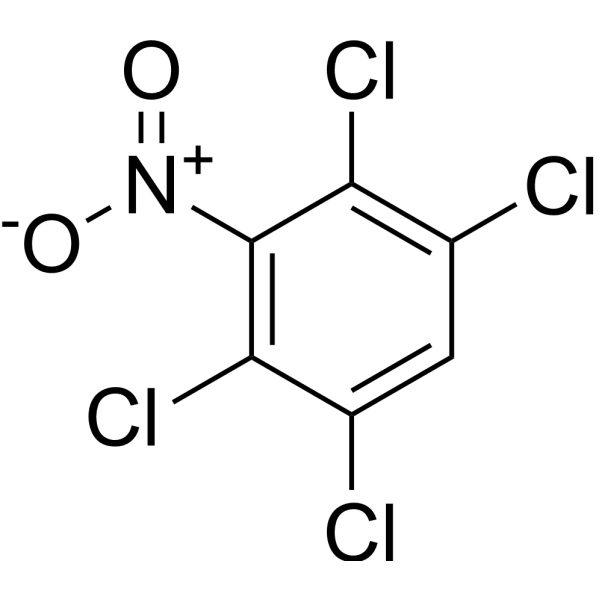
    Tecnazene is a dinitroaromatic fungicide and plant growth regulator. Tecnazene binds irreversibly to human skin tissues and exhibits acute toxicity in Rattus norvegicus (brown rat). Tecnazene exerts sprouting-inhibiting and antifungal activities by inhibiting the sprouting of potato tuber buds and blocking the growth and reproduction of fungi that cause dry rot. Tecnazene has significant antifungal and sprouting-inhibiting activities, and shows high toxicity to aquatic organisms such as freshwater fish and crustaceans. Tecnazene is used for sprouting inhibition and dry rot control during potato storage .
    Tecnazene
  • HY-W002593

    Biochemical Assay Reagents Others
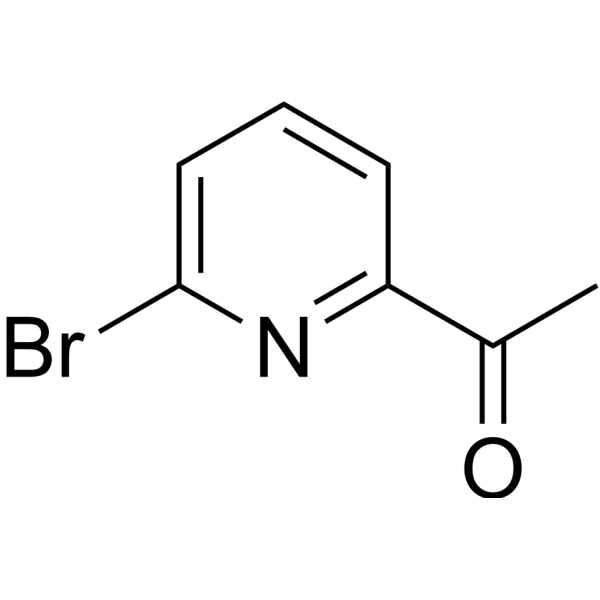
    2-Acetyl-6-bromopyridine is a biochemical reagent that can be used as a biological material or organic compound for life science related research. 2-Acetyl-6-bromopyridine can be used to synthesize Schiff bases containing cycloalkyl substituents .
    2-Acetyl-6-bromopyridine
  • HY-W007431

    Biochemical Assay Reagents Others
    Methyl 3,4-diaminobenzoate is an analogue of 3,4-diaminobenzoic acid, which contains the CO2H group protected as a methyl ester and the amino (NH2) substituents required to form the quinoxaline .
    Methyl 3,4-diaminobenzoate
  • HY-W128798

    5-HT Receptor Neurological Disease
    Sulfabenz (Compound 9) is an amine-substituted N1-phenylsulfonyl indole derivative. Sulfabenz has binding activity to human 5-HT6 serotonin receptor (Ki: 200 nM). Sulfabenz can be used to study the ligand binding mechanism of 5-HT6 receptor and 5-HT6 receptor-related neurological diseases .
    Sulfabenz
  • HY-W010865

    Biochemical Assay Reagents Others
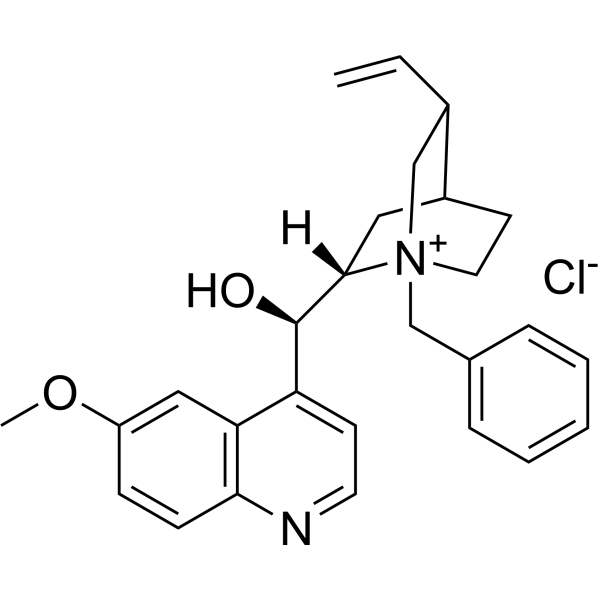
    N-Benzylquinine (chloride) is an organic compound. N-Benzylquinine is a derivative of quinoxalines with benzyl substituents. N-Benzylquinine salts are beneficial for the production of tetrahydrofuran trans epoxides .
    N-Benzylquinine chloride
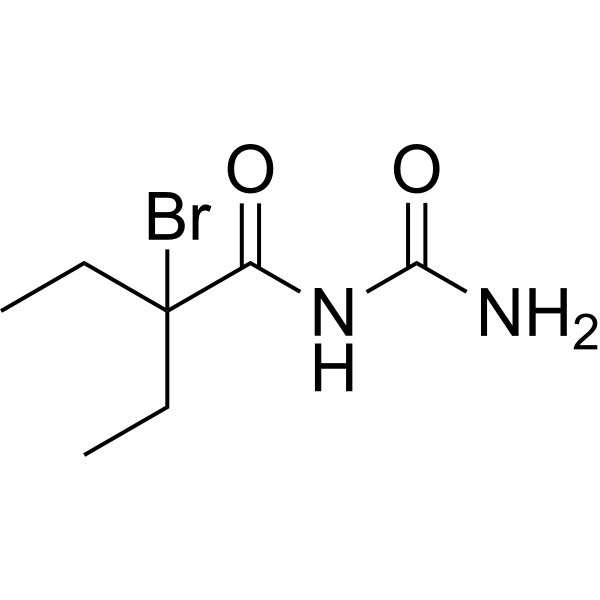
  • HY-B1594

    Adalin; Adisomnol; Bromacetocarbamide

    Others Neurological Disease
    Carbromal (Adalin; Adisomnol) is a sedative with centrally depressant effects .
    Carbromal
  • HY-N16396

    Drug Derivative Others
    Ampelanol is a derivative of Altersolanol A (HY-125461). Ampelanol has no anticancer and anti-inflammatory activity through the reduction of one of a carbonyl group and removal of hydroxyl substituents within Altersolanol A. Ampelanol can be used as a negative control .
    Ampelanol
  • HY-W590536

    1-Palmitoyl-2-Lauroyl-sn-glycero-3-Phosphatidylcholine; 1-Palmitoyl-2-Lauroyl-sn-glycero-3-Phosphocholine

    Liposome Cancer
    1,2-PLPC is a phospholipid containing palmitoyl (16:0) and lauryl (12:0) acyl substituents at the sn-1 and sn-2 positions, respectively. It can be used in the generation of micelles, liposomes, and other types of artificial membranes.
    1,2-PLPC
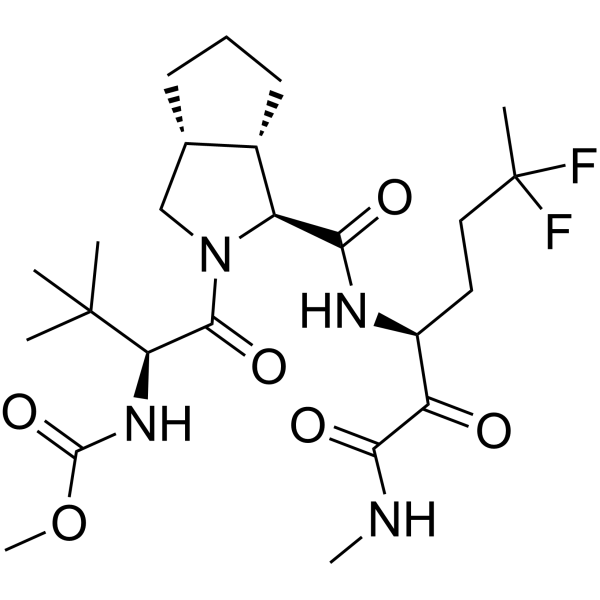
  • HY-157778

    SARS-CoV Infection
    MK-7845 is a reversible covalent SARS-CoV-2 3CL protease inhibitor with an IC50 of 8.7 nM .
    MK-7845
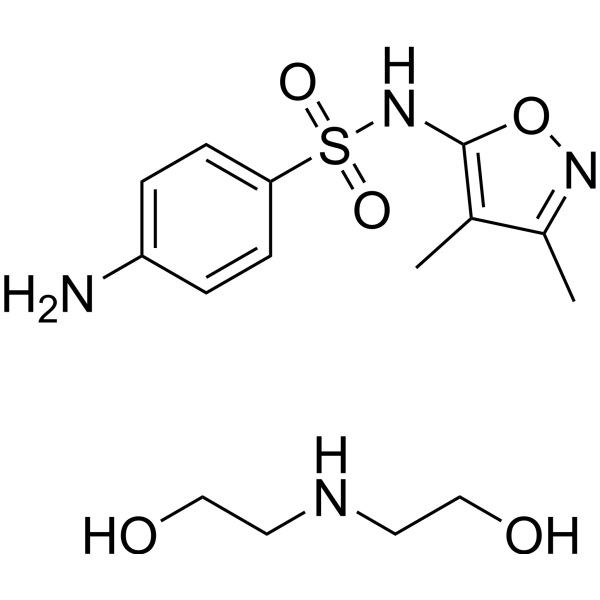
  • HY-B0323A

    Sulfafurazole diethanolamine

    Endothelin Receptor Antibiotic Bacterial Infection Endocrinology Cancer
    Sulfisoxazole (Sulfafurazole) diethanolamine is an endothelin receptor antagonist with IC50 values of 0.60 μM and 22 μM against endothelin receptor A and endothelin receptor B, respectively. Sulfisoxazole diethanolamine is a sulfonamide antibacterial with an oxazole substituent. Sulfisoxazole diethanolamine inhibits breast cancer exosome release by targeting endothelin receptor A .
    Sulfisoxazole diethanolamine
  • HY-W034392

    Biochemical Assay Reagents Endogenous Metabolite Others
    Stewart-Grubbs catalyst is an effective catalyst for the cross-metathesis of olefins with a large number of allylic substituents. In addition, ChemBeads are chemically coated glass beads that improve flowability and chemical homogeneity, making them ideal for automated solid dispensing and high-throughput experiments. Notably, the manufacture of ChemBeads does not require additional chemicals or surfactants, allowing for precise dispensing of sub-milligram amounts of catalyst.
    Stewart-Grubbs catalyst
  • HY-176731

    P2X Receptor Neurological Disease
    MSK-9 is a positive allosteric modulator of the P2X4 receptor with dual activities of enhancing ion conductance and delaying receptor inactivation. MSK-9 stabilizes the open state of the P2X4 receptor through rigid 3-piperidinyl and hydrophobic menthyl substituents. MSK-9 can be used in the study of multiple sclerosis (MS) .
    MSK-9
  • HY-W024881

    2,3,3-Trimethylindolenine-5-sulfonic acid potassium salt

    Drug Intermediate Others
    Potassium 2,3,3-trimethylindole-5-sulfonate (2,3,3-Trimethylindolenine-5-sulfonic acid potassium salt) is an indole derivative containing a sodium sulfonate group and is commonly used as a key intermediate in dye synthesis. Potassium 2,3,3-trimethylindole-5-sulfonate can be coupled to peptides, proteins, nucleic acids, RNA, DNA, carbohydrates, polymers, and small molecules via the sulfonyl substituent .
    Potassium 2,3,3-trimethylindole-5-sulfonate
  • HY-141460

    Ile-Ala; L-Isoleucyl-L-alanine

    Biochemical Assay Reagents Others
    H-Ile-Ala-OH (Ile-Ala; L-Isoleucyl-L-alanine) is a linear aliphatic dipeptide and self-reactive cyclization reagent that self-assembles into amorphous films or spherical structures from specific solvents. H-Ile-Ala-OH also serves as a precursor for the synthesis of the cyclic peptide cyclo (L-isoleucyl-L-alanine) (HY-N9251). H-Ile-Ala-OH undergoes solid-state cyclization when heated above 206 °C, and its initiation temperature is closely related to the size of side-chain substituents .
    H-Ile-Ala-OH
  • HY-134813A

    Ras Cancer
    MRTX1133 formic is a noncovalent, potent, and selective KRAS G12D inhibitor. MRTX1133 formic optimally fills the switch II pocket and extends three substituents to favorably interact with the protein, resulting in an estimated KD against KRAS G12D of 0.2 pM. MRTX1133 formic prevents SOS1-catalyzed nucleotide exchange and/or formation of the KRASG12D/GTP/RAF1 complex, thereby inhibiting mutant KRAS-dependent signal transduction. MRTX1133 formic shows efficacy in tumor models harboring KRAS G12D mutations .
    MRTX1133 formic
  • HY-136627

    Prostaglandin Receptor Endocrinology
    PGF2α analogue-1 is an analog of Dinoprost (HY-12956) containing an acetylenic fluorobenzene substituent in the lower side chain.
    PGF2α analogue-1
  • HY-130219

    Endogenous Metabolite Others
    18-HETE (compound 3) is a monooxygenase metabolite of cytochrome P450 (CYP450).18- HETE consists of arachidonic acid bearing a hydroxy substituent at position 18 .
    18-HETE
  • HY-161249

    Pantetheinase Inflammation/Immunology
    Vanin-1-IN-4 (compound (S)-1) is vanin-1 inhibitor with a chiral methyl substituent, with profils as potent drug-candidate but exist as an amorphous solid .
    Vanin-1-IN-4
  • HY-123567

    5-HT Receptor Neurological Disease
    LY86057 is an ergoline derivative without N1 substituents. It has higher affinity for porcine, squirrel monkey and human 5-HT2 receptors than rats and is an antagonist of 5-HT2 receptors. When studying the differences in recognition of a series of ergolines between species, LY86057 was found to be more selective for 5-HT2 receptors. Compared with LY53857, LY108742 resulted in a higher affinity for rat 5-HT2 receptors even when the N1 substituent was only methyl.
    LY86057
  • HY-B1594R

    Adalin (Standard); Adisomnol (Standard); Bromacetocarbamide (Standard)

    GABA Receptor Reference Standards Neurological Disease
    Carbromal (Standard) is the analytical standard of Carbromal. This product is intended for research and analytical applications. Carbromal (Adalin; Adisomnol) is a sedative with centrally depressant effects .
    Carbromal (Standard)
  • HY-CE00612

    Biochemical Assay Reagents Metabolic Disease
    2'-(5''-Phosphoribosyl)-3'-dephospho-CoA is an adenosine 5'-phosphate derivative that has the structure of coenzyme A dephosphorylated at C-3' and with a 5''-phospho-D-ribosyl substituent at C-2'.
    2'-(5''-Phosphoribosyl)-3'-dephospho-CoA
  • HY-12210

    HIV Integrase Infection
    (S)-BI-1001 (Compound 11) is an active S-enantiomer of BI-1001. (S)-BI-1001 exhibits antiviral potency against HIV-1 integrase with an IC50 of 28 nM, an EC50 of 450 nM and a Kd of 4.7 μM .
    (S)-BI-1001
  • HY-103030

    PI3K Cancer
    PI3K-IN-32 is an imidazopyridine derivative with a 3-NH2 substituent, and also a PI3K p110α inhibitor. PI3K-IN-32 is applicable for cancer research .
    PI3K-IN-32
  • HY-117697

    mGluR Others
    Lu AF11205 is a mGlu5 receptor positive allosteric modulator with activity modulating mGlu5 receptor activity. Optimization of Lu AF11205 resulted in a series of potent fused thiazole analogs whose structures and activities were influenced by substituents and which could affect receptor function in cell lines expressing mGlu5 receptors.
    Lu AF11205
  • HY-Y0694R

    Reference Standards Endogenous Metabolite COX Cancer
    2',4'-Dihydroxyacetophenone (Resacetophenone) is acetophenone carrying hydroxy substituents at positions 2' and 4'. 2',4'-Dihydroxyacetophenone involves in a practical CsHCO3-mediated alkylation that efficiently provide 4-alkylated products with excellent regioselectivity, good isolated yields and a broad substrate scope. 2',4'-Dihydroxyacetophenone is a plant metabolite .
    2',4'-Dihydroxyacetophenone (Standard)
  • HY-B0323R

    Sulfafurazole (Standard)

    Reference Standards Endothelin Receptor Bacterial Antibiotic Infection Endocrinology Cancer
    Sulfisoxazole (Standard) is the analytical standard of Sulfisoxazole. This product is intended for research and analytical applications. Sulfisoxazole (Sulfafurazole) is an orally active endothelin receptor antagonist with IC50 values of 0.60 μM and 22 μM against endothelin receptor A and endothelin receptor B, respectively. Sulfisoxazole is a sulfonamide antibacterial agent with an oxazole substituent. Sulfisoxazole inhibits breast cancer exosome release by targeting endothelin receptor A .
    Sulfisoxazole (Standard)
  • HY-161505

    Transthyretin (TTR) Others
    Transthyretin-IN-3 (compound 6) is a designed benzofuran analogue. Transthyretin-IN-3 selectively binds to plasma transthyretin (TTR) to inhibit Amyloid aggregation (IC50=5.0±0.2 μM). Transthyretin-IN-3 can bind to TTR's thyroxine binding site specifically by carrying chlorine substituents at specific locations in its structure. This binding can prevent TTR tetramers from dissociating into unstable monomers .
    Transthyretin-IN-3
  • HY-19145

    CI-992

    Renin Cancer
    PD-134672 (CI-992) is a renin inhibitor containing a 2-amino-4-thiazolyl substituent. PD-134672 potently inhibits monkey renin in vitro and only weakly inhibits the related aspartic protease bovine feline hepsin D. The compound exhibits oral hypotensive activity in hyperreninemic normotensive monkeys. Based on its superior efficacy and long-lasting effects in vitro and in the normotensive macaque model, PD-134672 was selected for further evaluation in renal hypertensive monkeys.
    PD-134672
  • HY-130418

    Adrenergic Receptor Cancer
    (-)-Domesticine is an anti-α-1D-adrenoceptor compound with cytotoxic activity. (-)-Domesticine showed activity in MTS cytotoxicity assays against human colon cancer cell lines HCT-116 and Caco-2. (-)-Domesticine tolerates alkoxy substituents and benzoate functional groups at the C1 position in modifications of its chemical structure. The most potent compounds of (-)-Domesticine have IC50 values in the range of 23-38 μM, similar to the known cytotoxic compound etoposide .
    (-)-Domesticine
  • HY-129907

    2-Aminoethyl methylphosphonate

    GABA Receptor Neurological Disease
    2-AEMP (2-Aminoethyl methylphosphonate) is an anti-GABA(A)-ρ1 receptor compound with antagonist activity. 2-AEMP exhibits competitive inhibition compared to TPMPA with an IC(50) value of 18 μM, compared to 7 μM for TPMPA. The release rate of inhibition at termination of 2-AEMP is significantly higher than that of TPMPA. The preincubation time required for the onset of inhibition of 2-AEMP is much shorter than that of TPMPA. Some analogs of 2-AEMP, especially those with benzyl or n-butyl substituents, show lower potency in terms of biological activity .
    2-AEMP
  • HY-13590

    VEGFR Cancer
    CEP-7055 (compound 21) is a novel vascular endothelial growth factor R2 (VEGF-R2) tyrosine kinase inhibitor with potent inhibitory activity. Studies have found that the inhibitor activity can be significantly improved by optimizing the R9 substituent. Compound 21 has potent low nanomolar inhibition of human VEGF-R tyrosine kinase and shows good selectivity against multiple tyrosine and serine/threonine kinases. N,N-dimethylglycine ester 40 was prepared to improve its water solubility and oral bioavailability. In animal pharmacokinetic studies, a significant increase in the plasma level of 21 was observed after oral administration of 40. Compound 21 showed significant in vivo antitumor activity in multiple tumor models and has entered phase I clinical trials as a water-soluble N,N-dimethylglycine ester proagent of 40 (CEP-7055).
    CEP-7055
  • HY-151754

    ADC Linker Others
    DACN(Tos2,6-OH) is a click chemistry reagent containing an Azide. The alkyne moiety within the ring has a unique bent structure and high reactivity toward cycloaddition reactions. The reactivity of an alkyne heavily depends on the electronic and steric characteristics of the substituents as well as structural strain. In comparison to nonbent acyclic alkynes, cyclononyne alkynes show remarkably high reactivity. Such strain-promoted azide-alkyne cycloadditions (SPAAC) using cycloalkynes have served for reliable molecular conjugation in a broad range of fields. The nitrogens are used as connection points for a variety of functional units. In comparison to cyclooctynes, DACNs possess high thermal and chemical stability along with comparable click reactivity . DACN(Tos2,6-OH) is a click chemistry reagent, it contains an Alkyne group and can undergo copper-catalyzed azide-alkyne cycloaddition (CuAAc) with molecules containing Azide groups.
    DACN(Tos2,6-OH)
  • HY-W280622

    Drug Derivative Neurological Disease
    N-Ethyl-4-methoxyamphetamine hydrochloride is an analog of 4-Methoxyamphetamine. The addition of an N-ethyl substituent decreases analgesic potency.
    N-Ethyl-4-methoxyamphetamine hydrochloride
  • HY-CE00614

    Biochemical Assay Reagents Metabolic Disease
    2'-(5-Triphosphoribosyl)-3'-dephospho-CoA is an adenosine 5'-phosphate derivative that has the structure of coenzyme A dephosphorylated at C-3' and with a 5-triphospho-alpha-D-ribosyl substituent at C-2'.
    2'-(5-Triphosphoribosyl)-3'-dephospho-CoA
  • HY-W089785

    Biochemical Assay Reagents Others
    Methyl α-D-galactopyranoside monohydrate is an alpha-D-galactoside having a methyl substituent at the anomeric position. Methyl α-D-galactopyranoside inhibits debaryomyces hansenii UFV-1 extracellular and intracellular α-galactosidases with Ki values of 0.82 and 1.12 mM, respectively .
    Methyl α-D-galactopyranoside monohydrate
  • HY-118260

    Adrenergic Receptor Endocrinology
    Phendioxan is a compound with binding activity at the α(1)-adrenaline receptor subtype. The facilitated membrane diffusion of phendioxan is thought to be associated with improved α(1d)-AR affinity. Docking simulations of phendioxan at biological targets supported the stoichiometric analysis and revealed the importance of polar, electrostatic, hydrophobic, and shape effects of its phenoxy terminal orthogonal substituents on ligand binding .
    Phendioxan
  • HY-N18359

    Others Others
    Lanatin is a Furanocoumarin .
    Lanatin
  • HY-183022

    Biochemical Assay Reagents Others
    1-(3-Azidopropyl)-1H-pyrrole-2,5-dione is a maleimide derivative with a 3-azidopropyl substituent, used to introduce an azide functional group to bovine serum albumin (BSA). 1-(3-Azidopropyl)-1H-pyrrole-2,5-dione reacts with the free, solvent-accessible thiol group of BSA to produce azide-functionalized BSA, which is used in click chemistry to form a TLL-BSA hetero-dimer .
    3-Azidopropyl-1-maleimide
  • HY-182518

    Adenosine Receptor Neurological Disease
    MDL-102234 is a potent and selective adenosine A1 receptor antagonist with a Ki value of 23.2 nM at the adenosine A1 receptor. MDL-102234 can be used for the study of cognition enhancement-related neural functions .
    MDL-102234

Inquiry Online

Your information is safe with us. * Required Fields.

Salutation


Country or Region *

Applicant Name *


Organization Name *

Department *


Email Address *


Product Name *

Cat. No.


Requested quantity *

Phone Number *


Remarks

Inquiry Online

Inquiry Information

Product Name:
Cat. No.:
Quantity:
MCE Japan Authorized Agent:

