
Search Result
Results for "
sulfone
" in MedChemExpress (MCE) Product Catalog:
19
Biochemical Assay Reagents
35
Isotope-Labeled Compounds
| Cat. No. |
Product Name |
Target |
Research Areas |
Chemical Structure |
-
- HY-B0688
-
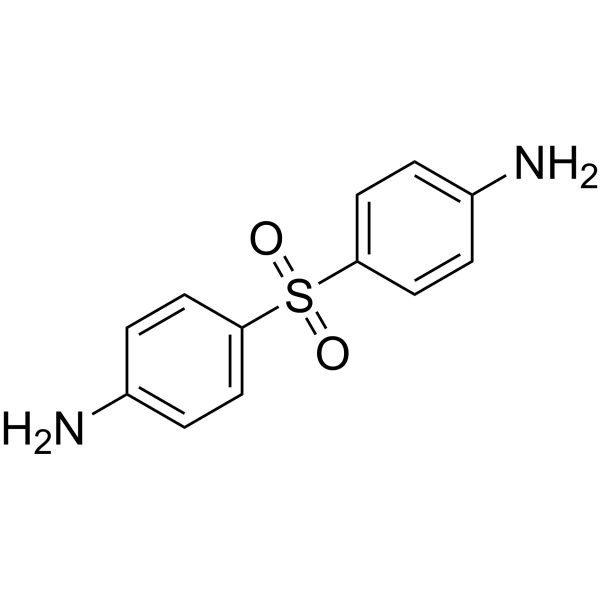
Dapsone
4 Publications Verification
4,4′-Diaminodiphenyl sulfone; DDS
|
Antibiotic
Parasite
Bacterial
Reactive Oxygen Species (ROS)
|
Infection
Inflammation/Immunology
|
|
Dapsone (4,4′-Diaminodiphenyl sulfone) is an orally active and blood-brain penetrant sulfonamide antibiotic with bacteriostatic, antimycobacterial and antiprotozoal activities . Dapsone?exerts effective antileprosy activity?and inhibits folate synthesis in cell extracts of?M. leprae. Dapsone is used for dermatologic disorder research, including leprosy, dermatitis herpetiformis, acne vulgaris et al .
|
-
-
- HY-17530
-
-
-
- HY-Y1314
-
|
|
Bacterial
|
Metabolic Disease
|
|
Dimethyl sulfone (Methyl Sulfonyl Methane) is a metabolic product of endogenous methanethiol metabolism and intestinal bacterial metabolism. Dimethyl sulfone inhibits choriocapillary endothelial (CCE) cell proliferation, also has many biological effects, including antiinflammatory, antioxidant, and local anesthetic effects that could be neuroprotective .
|
-
-
- HY-17008
-
|
Ponazuril
|
Parasite
|
Infection
|
|
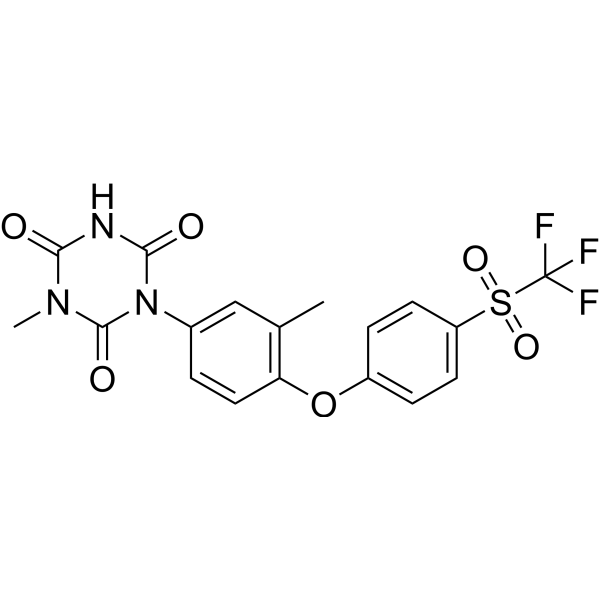
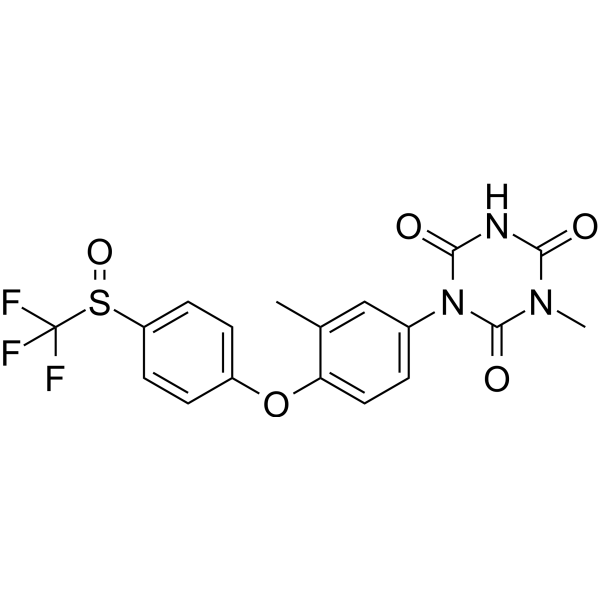
Toltrazuril sulfone (Ponazuril) is a metabolite of Toltrazuril (HY-B0175), with antiprotozoal activity. Toltrazuril sulfone is a triazine anticoccidial that is developed to prevent coccidiosis in poultry .
|
-
-
- HY-G0007
-
|
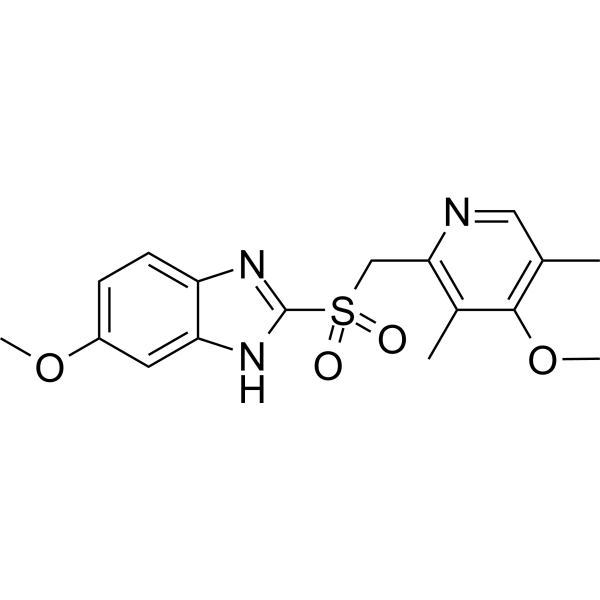
Omeprazole sulphone
|
Drug Metabolite
Cytochrome P450
Aryl Hydrocarbon Receptor
|
Inflammation/Immunology
|
|
Omeprazole sulfone (Omeprazole sulphone) is one of the major circulating metabolites of Omeprazole (HY-B0113) in vivo, and belongs to class 4 non-mutagenic impurities. Omeprazole sulfone does not bind to the aryl hydrocarbon receptor (AhR), nor does it induce the expression of CYP1A1 or CYP1A2. However, Omeprazole sulfone promotes the migration of gastric epithelial cells under basal conditions and reverses the inhibitory effect of Indomethacin (HY-14397) on cell migration. Omeprazole sulfone does not promote cell proliferation, nor does it upregulate COX-2 expression or activate signaling pathways such as ERK, P38 MAPK and PI3K. Omeprazole sulfone maintains basal ulcer healing under non-acid-dependent conditions and can be used in studies related to gastric ulcer repair .
|
-
-
- HY-113268
-
|
|
Endogenous Metabolite
|
Metabolic Disease
|
|
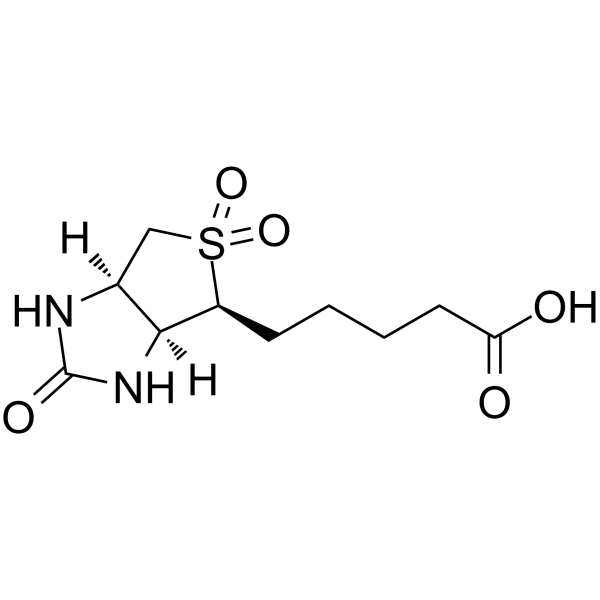
Biotin sulfone, a structural analog and metabolite of Biotin (HY-B0511), exerts competitive inhibition against Biotin in Lactobacillus arabinosus 17-5 .
|
-
-
- HY-B1787
-
|
|
mTOR
Drug Metabolite
CDK
PPAR
Apoptosis
|
Cancer
|
|
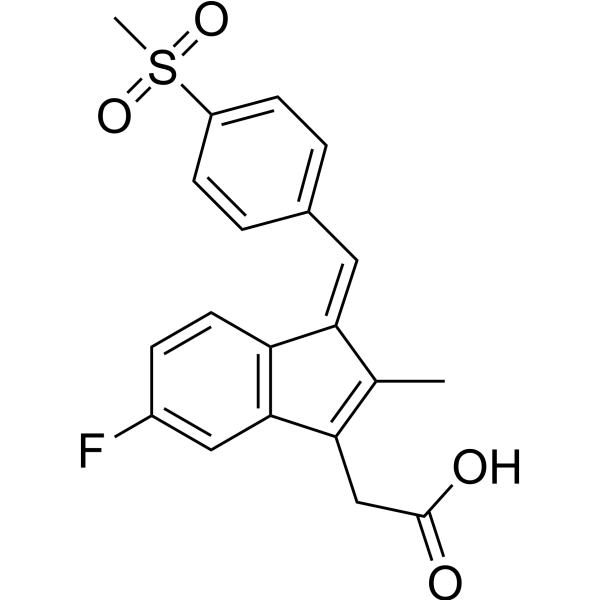
Sulindac sulfone is an orally active metabolite of Sulindac (HY-B0008). Sulindac sulfone activates PPARγ and drives transcriptional induction of SSAT by binding to the PPRE-2 element. Sulindac sulfone induces Apoptosis. Sulindac sulfone negatively regulates the function of VDAC1/2 to inhibit the mTORC1 pathway, reduces Cyclin D1 levels, and induces G1 cell cycle arrest in colon cancer cells. Sulindac sulfone exerts colon cancer preventive effects through a COX-independent mechanism. Sulindac sulfone can be used in research related to colon cancer .
|
-
-
- HY-W097491
-
|
|
Amino Acid Derivatives
|
Others
|
|
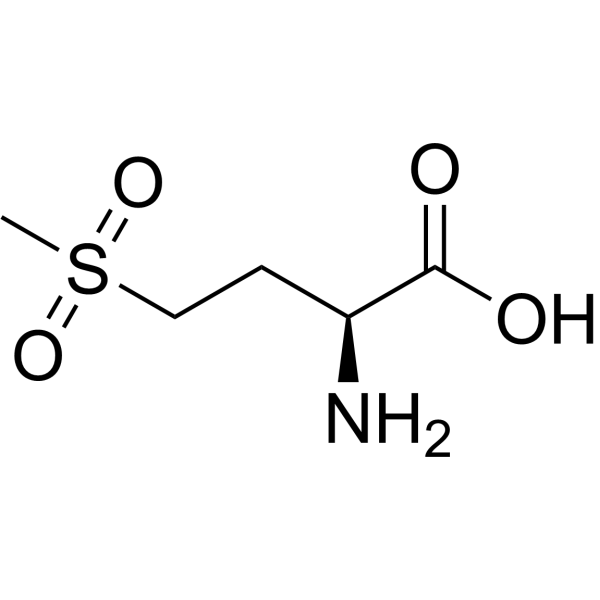
L-Methionine sulfone is a sulfonic acid derivative of L-Methionine (HY-N0326). L-Methionine in the presence of a number of oxidizing systems is readily converted to L-Methionine sulfone .
|
-
-
- HY-112349
-
|
|
Drug Derivative
Interleukin Related
Lipoxygenase
|
Inflammation/Immunology
|
|
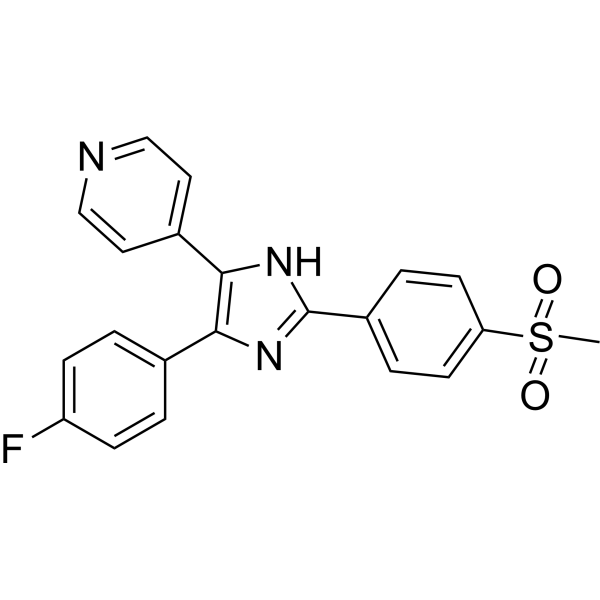
SB 203580 sulfone is an analog of p38 MAP kinase inhibitor SB 203580. SB 203580 sulfone inhibits the IL-1 production (IC50 of 0.2 μM in monocytes) and binds competitively with CSAID binding proteins (CSBP), inhibits it mediated stress response signaling with an IC50 of 0.03 μM. SB 203580 sulfone inhibits 5-LO with an IC50 value of 24 µM. SB 203580 sulfone can be used in the research of inflammatory diseases .
|
-
-
- HY-W019773
-
|
|
Parasite
Drug Metabolite
|
Infection
|
|
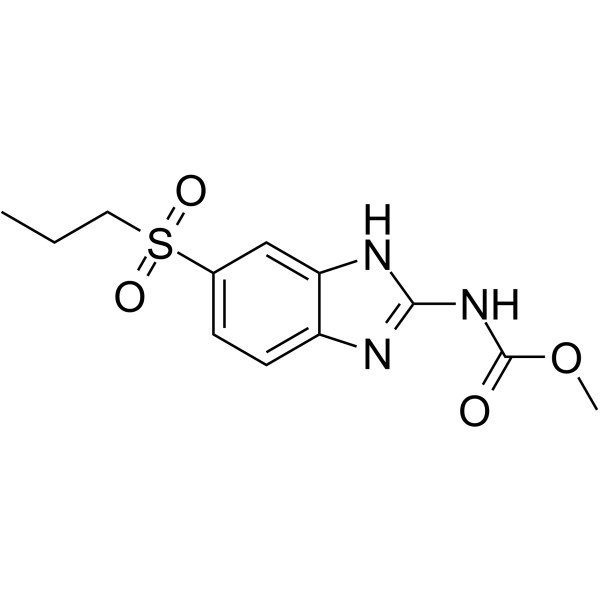
Albendazole sulfone is a metabolite of Albendazole, and exhibits anti-parasite effect against Echinococcus multilocularis Metacestodes .
|
-
-
- HY-138745
-
|
|
ADC Linker
|
Cancer
|
|
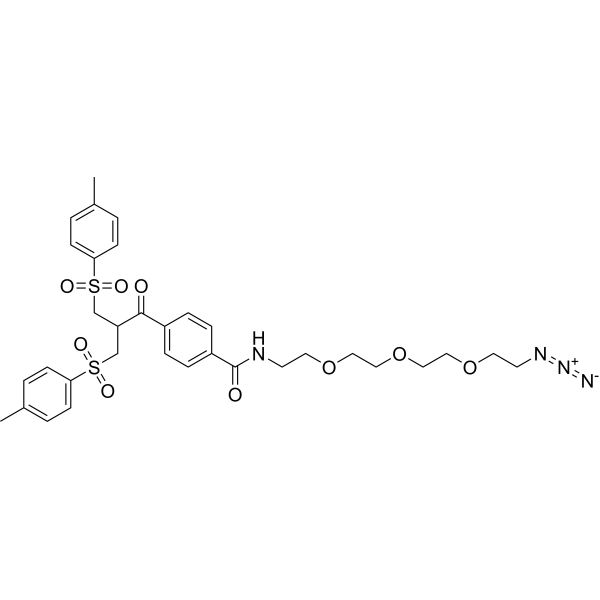
Bis-sulfone-PEG3-Azide is a cleavable ADC linker used in the synthesis of antibody-drug conjugates (ADCs). Bis-sulfone-PEG3-Azide is a click chemistry reagent, it contains an Azide group and can undergo copper-catalyzed azide-alkyne cycloaddition reaction (CuAAc) with molecules containing Alkyne groups. It can also undergo strain-promoted alkyne-azide cycloaddition (SPAAC) reactions with molecules containing DBCO or BCN groups.
|
-
-
- HY-W008614
-
|
AG-1813
|
Drug Metabolite
Proton Pump
|
Metabolic Disease
|
|
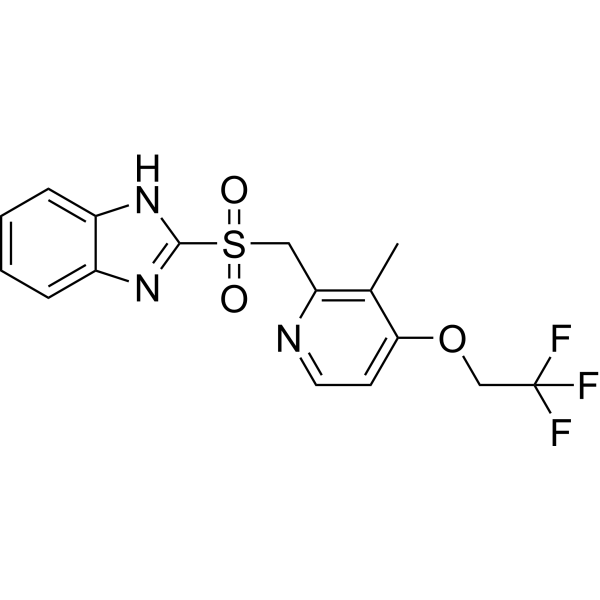
Lansoprazole sulfone (AG-1813) is an orally active and selective inhibitor of H +, K +-ATPase. Lansoprazole sulfone can significantly stimulates gastric acid secretion by inhibiting H +, K +-ATPase. Lansoprazole sulfone has potential applications in duodenal ulcer, gastric ulcer, gastroesophageal reflux disease and Zolinger Ellison disease .
|
-
-
- HY-125296
-
|
|
GABA Receptor
|
Neurological Disease
|
|
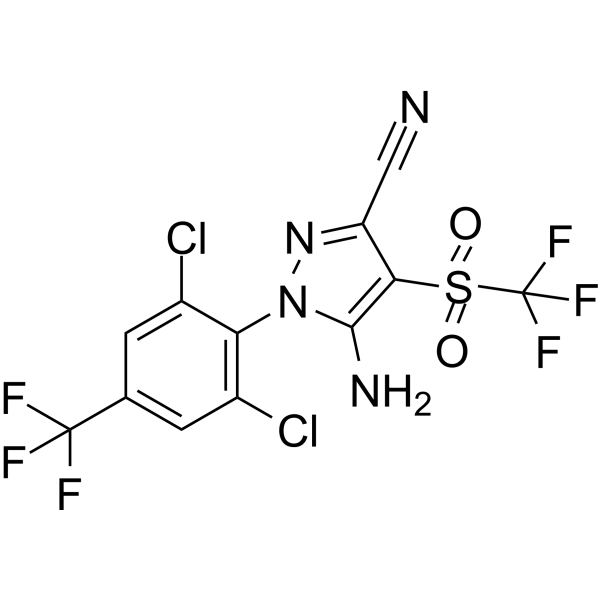
Fipronil sulfone is the major metabolite of Fipronil.Fipronil sulfone selectively inhibits GABA receptor with IC50 of 175 nM (assayed by displacement of 4′-ethynyl-4-n-[2,3-3H2]- propylbicycloorthobenzoate ([3H]EBOB) from the noncompetitive blocker site).
|
-
-
- HY-14774S1
-
|
|
nAChR
|
Cancer
|
|
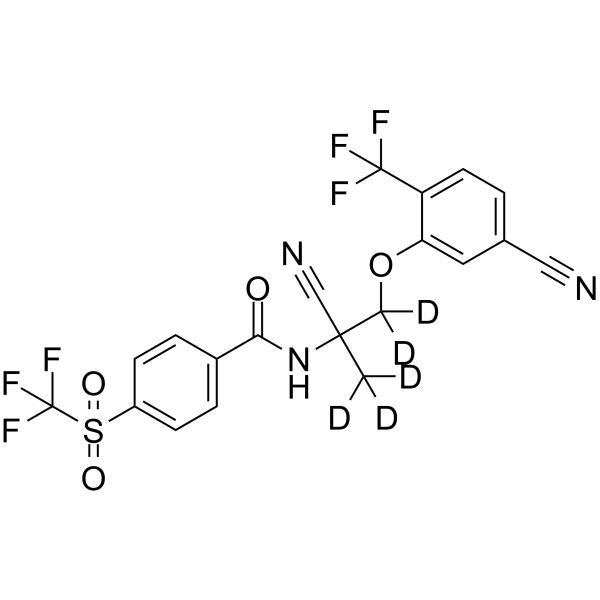
(Rac)-Monepantel sulfone-d5 is deuterium labeled Monepantel. Monepantel is organic anthelmintic, and acts as a positive allosteric modulator of a nematode-specific clade of nicotinic acetylcholine receptor (nAChR) subunits.
|
-
-
- HY-Z2337
-
|
|
Drug Intermediate
|
Others
|
|
Rabeprazole sulfone is a metabolite of the proton pump inhibitor Rabeprazole and is an impurity reference for Rabeprazole .
|
-
-
- HY-W110319
-
|
3,7-Diamino-2,8-dimethyldibenzothiophene sulfone(contains 2,6-Dimethyl isomer)
|
Drug Intermediate
|
Others
|
|
o-Tolidine Sulfone(contains 2,6-Dimethyl isomer) (3,7-Diamino-2,8-dimethyldibenzothiophene sulfone(contains 2,6-Dimethyl isomer)) is a drug intermediate for synthesis of various active compounds.
|
-
-
- HY-178219
-
|
|
Drug-Linker Conjugates for ADC
Microtubule/Tubulin
Apoptosis
|
Cancer
|
|
Bis-sulfone-(PEG24)-Glu-Val-Cit-PAB-MMAE is a drug-linker conjugate for ADC. Bis-sulfone-(PEG24)-Glu-Val-Cit-PAB-MMAE contains a linker and bioactive small molecule toxins MMAE (HY-15162). Bis-sulfone-(PEG24)-Glu-Val-Cit-PAB-MMAE can conjugate with NN2101 (HY-P991293) (anti c-Kit) for synthesizing NN3201. NN3201 rapidly internalizes and inhibits SCF-driven signaling, thereby delivering its payload to induce cell cycle arrest and apoptosis. NN3201 exhibits significant c-Kit-dependent anti-tumor efficacies in various tumor models, such as small cell lung cancer (SCLC) and gastrointestinal stromal tumor (GIST) .
|
-
-
- HY-W011239
-
|
Oxfendazole sulfone; FBZ-SO2
|
Parasite
|
Infection
|
|
Fenbendazole sulfone (Oxfendazole sulfone;FBZ-SO2) is a minor metabolite of Fenbendazole in plasma and is a benzimidazole anthelmintic agent .
|
-
-
- HY-W1048867B
-
|
4-Arm-PEG10000-VS
|
Biochemical Assay Reagents
|
Others
|
|
4-Arm-PEG10000-Vinyl sulfone (4-Arm-PEG10000-VS) is a four-armed PEG derivative. The core structure of 4-Arm-PEG10000-Vinyl sulfone consists of four PEG chains, each modified at the end with a vinyl sulfone (Vinyl sulfone) group. 4-Arm-PEG10000-Vinyl sulfone can be used for bioconjugation and drug delivery.
|
-
-
- HY-140601
-
|
|
PROTAC Linkers
|
Cancer
|
|
Sulfone-Bis-PEG4-acid is a PEG-based PROTAC linker that can be used in the synthesis of PROTACs .
|
-
-
- HY-W073382
-
|
Bis–sulfone Acid
|
Biochemical Assay Reagents
|
Others
|
|
4-(3-Tosyl-2-(tosylmethyl)propanoyl)benzoic acid (Bis-sulfone Acid) is a strong covalent linker featuring a free carboxylic acid and two tosyl groups.
|
-
-
- HY-W615327
-
|
|
Biochemical Assay Reagents
|
Others
|
|
Bis-sulfone NHS Ester is a bis-alkylating labeling reagent that is selective for the cysteine sulfur atoms from a native disulfide. These reagents undergo bis-alkylation to conjugate both thiols derived from the two cysteine residues of a reduced native disulfide bond such as the interchain disulfide bonds of an antibody. The reaction results in covalent rebridging of the disulfide bond via a three carbon bridge leaving the protein structurally intact.
|
-
-
- HY-143991S
-
-
-
- HY-W587559
-
-
-
- HY-125296S
-
-
-
- HY-146481S
-
-
-
- HY-W654190
-
-
-
- HY-117225
-
-
-
- HY-G0007R
-
|
Omeprazole sulphone (Standard)
|
Reference Standards
Drug Metabolite
Cytochrome P450
Aryl Hydrocarbon Receptor
|
Infection
Cancer
|
|
Omeprazole sulfone (Standard) is the analytical standard of Omeprazole sulfone. This product is intended for research and analytical applications. Omeprazole sulfone (Omeprazole sulphone) is one of the major circulating metabolites of Omeprazole (HY-B0113) in vivo, and belongs to class 4 non-mutagenic impurities. Omeprazole sulfone does not bind to the aryl hydrocarbon receptor (AhR), nor does it induce the expression of CYP1A1 or CYP1A2. However, Omeprazole sulfone promotes the migration of gastric epithelial cells under basal conditions and reverses the inhibitory effect of Indomethacin (HY-14397) on cell migration. Omeprazole sulfone does not promote cell proliferation, nor does it upregulate COX-2 expression or activate signaling pathways such as ERK, P38 MAPK and PI3K. Omeprazole sulfone maintains basal ulcer healing under non-acid-dependent conditions and can be used in studies related to gastric ulcer repair .
|
-
-
- HY-138199S
-
-
-
- HY-W008614S
-
|
AG-1813-d4
|
Isotope-Labeled Compounds
Proton Pump
Drug Metabolite
|
Inflammation/Immunology
|
|
Lansoprazole sulfone (AG-1813)-d4 is the deuterium labeled Lansoprazole sulfone (HY-W008614). Lansoprazole sulfone, Lansoprazole (HY-13662) metabolite, is a H +, K +-ATPase inhibitor. Lansoprazole sulfone has potential applications in duodenal ulcer, gastric ulcer, gastroesophageal reflux disease and Zolinger Ellison disease .
|
-
-
- HY-W018359
-
|
|
Environmental Pollutants
Bacterial
|
Infection
|
|
Tolyl diiodomethyl sulfone is an organic antibacterial agent that does not cause significant changes in the number of resorbed fetuses, the number of dead fetuses, or the body weight of live fetuses in rats .
|
-
-
- HY-140513
-
|
|
PROTAC Linkers
|
Cancer
|
|
Active-mono-sulfone-PEG8-acid is a PEG-based PROTAC linker that can be used in the synthesis of PROTACs .
|
-
-
- HY-W008614R
-
|
AG-1813 (Standard)
|
Drug Metabolite
Reference Standards
Proton Pump
|
Inflammation/Immunology
|
|
Lansoprazole sulfone (AG-1813) (Standard) is the analytical standard of Lansoprazole sulfone (HY-W008614). This product is intended for research and analytical applications. Lansoprazole sulfone, Lansoprazole (HY-13662) metabolite, is a H +, K +-ATPase inhibitor. Lansoprazole sulfone has potential applications in duodenal ulcer, gastric ulcer, gastroesophageal reflux disease and Zolinger Ellison disease .
|
-
-
- HY-137802
-
|
S-Adenosyl-L-homocysteine sulfone
|
Amino Acid Derivatives
|
Others
|
|
SAHO2 is the sulfone form of the methyl donor S-(5'-adenosyl)-L-methionine chloride (SAM) and serves as a substrate for radical SAM enzymes .
|
-
-
- HY-Y1314S
-
-
-
- HY-136451S
-
-
-
- HY-B1787S
-
-
-
- HY-W011239R
-
|
Oxfendazole sulfone (Standard); FBZ-SO2 (Standard)
|
Reference Standards
Parasite
|
Infection
|
|
Fenbendazole sulfone (Standard) is the analytical standard of Fenbendazole sulfone. This product is intended for research and analytical applications. Fenbendazole sulfone (Oxfendazole sulfone;FBZ-SO2) is a minor metabolite of Fenbendazole in plasma and is a benzimidazole anthelmintic agent .
|
-
-
- HY-144167S
-
-
-
- HY-142751S
-
-
-
- HY-W587559R
-
|
|
Endogenous Metabolite
Reference Standards
|
Others
|
|
Fenthion sulfone (Standard) is the analytical standard of Fenthion sulfone. This product is intended for research and analytical applications. Fenthion sulfone is an active compound.
|
-
-
- HY-W742805
-
|
|
Isotope-Labeled Compounds
mTOR
Drug Metabolite
|
Cancer
|
|
Sulindac Sulfone-d6 is the deuterium labeled Sulindac sulfone (HY-B1787). Sulindac sulfone is an mTORC1 pathway inhibitor and a metabolite of Sulindac. Sulindac sulfone inhibits colon cancer cell growth and induces cell cycle arrest. Sulindac sulfone is used in cancer research .
|
-
-
- HY-W019773S1
-
-
-
- HY-17530R
-
|
|
Reference Standards
Cholinesterase (ChE)
Parasite
Drug Metabolite
|
Infection
|
|
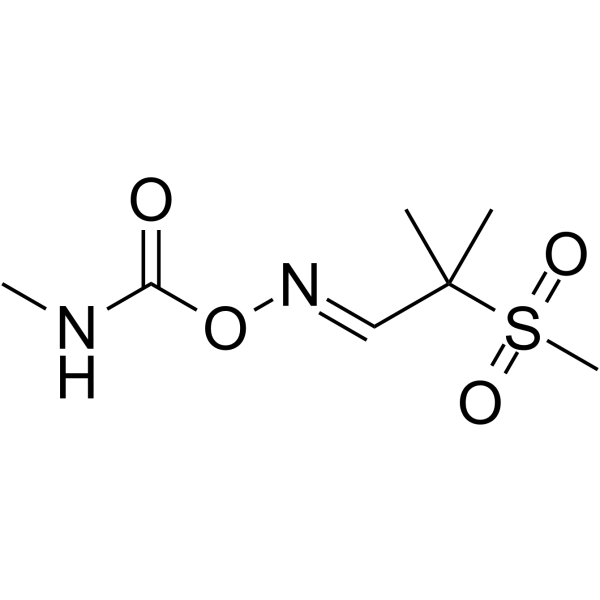
Aldicarb sulfone (Standard) is the analytical standard of Aldicarb sulfone (HY-17530). This product is intended for research and analytical applications. Aldicarb sulfone is one of the metabolites of the carbamate pesticide Aldicarb and has insecticidal activity. Aldicarb sulfone is also an inhibitor of cholinesterase.
|
-
-
- HY-146485S
-
-
-
- HY-W019773S
-
-
-
- HY-W019773R
-
|
|
Reference Standards
Parasite
Drug Metabolite
|
Infection
|
|
Albendazole sulfone (Standard) is the analytical standard of Albendazole sulfone. This product is intended for research and analytical applications. Albendazole sulfone is a metabolite of Albendazole, and exhibits anti-parasite effect against Echinococcus multilocularis Metacestodes .
|
-
-
- HY-W709055
-
-
-
- HY-Y1314R
-
|
|
Drug Metabolite
Reference Standards
Endogenous Metabolite
|
Metabolic Disease
|
|
Dimethyl sulfone (Standard) is the analytical standard of Dimethyl sulfone. This product is intended for research and analytical applications. Dimethyl sulfone (Methyl Sulfonyl Methane) is a metabolic product of endogenous methanethiol metabolism and intestinal bacterial metabolism. Dimethyl sulfone inhibits choriocapillary endothelial (CCE) cell proliferation, also has many biological effects, including antiinflammatory, antioxidant, and local anesthetic effects that could be neuroprotective .
|
-
- HY-W743691
-
-
- HY-W800682
-
|
|
Biochemical Assay Reagents
|
Others
|
|
Bis-Sulfone-PEG4-acid is a reagent with a sulfone and an acid. The sulfone group can be conjugated with thiol groups of proteins. The terminal acid reacts with primary amines with the help of activators (EDC or HATU) to from stable amide bonds.
|
-
- HY-17008R
-
|
Ponazuril (Standard)
|
Reference Standards
Parasite
|
Infection
|
|
Toltrazuril (sulfone) (Standard) is the analytical standard of Toltrazuril (sulfone). This product is intended for research and analytical applications. Toltrazuril sulfone (Ponazuril) is a metabolite of Toltrazuril (HY-B0175), with antiprotozoal activity. Toltrazuril sulfone is a triazine anticoccidial that is developed to prevent coccidiosis in poultry .
|
-
- HY-125296R
-
|
|
GABA Receptor
Reference Standards
|
Neurological Disease
|
|
Fipronil sulfone (Standard) is the analytical standard of Fipronil sulfone. This product is intended for research and analytical applications. Fipronil sulfone is the major metabolite of Fipronil.Fipronil sulfone selectively inhibits GABA receptor with IC50 of 175 nM (assayed by displacement of 4′-ethynyl-4-n-[2,3-3H2]- propylbicycloorthobenzoate ([3H]EBOB) from the noncompetitive blocker site).
|
-
- HY-113268R
-
|
|
Reference Standards
Endogenous Metabolite
|
Metabolic Disease
|
|
Biotin sulfone (Standard) is the analytical standard of Biotin sulfone (HY-113268). This product is intended for research and analytical applications. Biotin sulfone, a structural analog and metabolite of Biotin (HY-B0511), exerts competitive inhibition against Biotin in Lactobacillus arabinosus 17-5 .
|
-
- HY-137306
-
-
- HY-Z0054
-
-
- HY-G0007S
-
|
Omeprazole sulfone-d3; Omeprazole sulphone-d3
|
Isotope-Labeled Compounds
Drug Metabolite
Cytochrome P450
Aryl Hydrocarbon Receptor
|
Infection
Cancer
|
|
Omeprazole sulfone-d3 is the deuterium labeled Omeprazole sulfone. Omeprazole sulfone (Omeprazole sulphone) is one of the major circulating metabolites of Omeprazole (HY-B0113) in vivo, and belongs to class 4 non-mutagenic impurities. Omeprazole sulfone does not bind to the aryl hydrocarbon receptor (AhR), nor does it induce the expression of CYP1A1 or CYP1A2. However, Omeprazole sulfone promotes the migration of gastric epithelial cells under basal conditions and reverses the inhibitory effect of Indomethacin (HY-14397) on cell migration. Omeprazole sulfone does not promote cell proliferation, nor does it upregulate COX-2 expression or activate signaling pathways such as ERK, P38 MAPK and PI3K. Omeprazole sulfone maintains basal ulcer healing under non-acid-dependent conditions and can be used in studies related to gastric ulcer repair .
|
-
- HY-138199S1
-
-
- HY-17530S
-
-
- HY-W141863
-
-
- HY-Z7659
-
|
|
Drug Metabolite
|
Metabolic Disease
Inflammation/Immunology
|
|
Lansoprazole sulfone N-Oxide (Comound 3) is the overoxidized by-product found in the synthesis of the proton pump inhibitor Lansoprazole (HY-13662). Lansoprazole sulfone N-Oxide is promising for research of duodenal and gastric ulcers, reflux oesophagitis, and Zollinger–Ellison syndrome .
|
-
- HY-108227
-
|
|
5-HT Receptor
|
Neurological Disease
|
|
Quetiapine sulfone is a main metabolite of Quetiapine (HY-14544). Quetiapine is a 5-HT receptors agonist and a dopamine receptor antagonist .
|
-
- HY-W128222
-
-
- HY-B0113S2
-
|
Omeprazole sulphone (methoxy-d3)
|
Isotope-Labeled Compounds
Na+/K+ ATPase
Interleukin Related
Proton Pump
Cytochrome P450
Bacterial
Apoptosis
Autophagy
TNF Receptor
Atg8/LC3
|
Infection
Cancer
|
|
Omeprazole sulfone (methoxy-d3) is the deuterium labeled Omeprazole sulfone. Omeprazole sulfone (H 16868) is an orally active H +,K +-ATPase inhibitor and a proton pump inhibitor. Omeprazole sulfone competitively inhibits CYP2C19, CYP3A4, and CYP2C9 activity. Omeprazole sulfone inhibits gastric acid secretion and can be used for acid-related gastrointestinal disorders. Omeprazole sulfone inhibits pancreatic cancer cell proliferation, induces apoptosis, autophagosome accumulation (elevated LC3-I and LC3-II levels), oxidative stress, and cytogenetic imbalance, modulates lysosomal transport, reduces inflammatory cytokines. Omeprazole sulfone alters small intestinal morphology and magnesium absorption, and induces gastric mucosa morphologic changes. Omeprazole sulfone aslo has neuroprotective and antibacterial effects .
|
-
- HY-148051
-
|
|
Drug Metabolite
|
Inflammation/Immunology
Cancer
|
|
Ilaprazole sulfone is the major metabolite of Ilaprazole (HY-101664), is predominantly catalysed by CYP3A4/5. Ilaprazole (IY-81149) is an orally active proton pump inhibitor .
|
-
- HY-G0007S1
-
|
Omeprazole sulfone-13C,d3; Omeprazole sulphone-13C,d3
|
Isotope-Labeled Compounds
Drug Metabolite
Cytochrome P450
Aryl Hydrocarbon Receptor
|
Others
|
|
Omeprazole sulfone- 13C,d3 is the deuterium and 13C labeled Omeprazole sulfone. Omeprazole sulfone (Omeprazole sulphone) is one of the major circulating metabolites of Omeprazole (HY-B0113) in vivo, and belongs to class 4 non-mutagenic impurities. Omeprazole sulfone does not bind to the aryl hydrocarbon receptor (AhR), nor does it induce the expression of CYP1A1 or CYP1A2. However, Omeprazole sulfone promotes the migration of gastric epithelial cells under basal conditions and reverses the inhibitory effect of Indomethacin (HY-14397) on cell migration. Omeprazole sulfone does not promote cell proliferation, nor does it upregulate COX-2 expression or activate signaling pathways such as ERK, P38 MAPK and PI3K. Omeprazole sulfone maintains basal ulcer healing under non-acid-dependent conditions and can be used in studies related to gastric ulcer repair .
|
-
- HY-W008614S1
-
|
AG-1813-13C6
|
Isotope-Labeled Compounds
Proton Pump
Drug Metabolite
|
Inflammation/Immunology
|
|
Lansoprazole sulfone (AG-1813)- 13C6 is 13C labeled Lansoprazole sulfone (HY-W008614). Lansoprazole sulfone, Lansoprazole (HY-13662) metabolite, is a H +, K +-ATPase inhibitor. Lansoprazole sulfone has potential applications in duodenal ulcer, gastric ulcer, gastroesophageal reflux disease and Zolinger Ellison disease .
|
-
- HY-140610
-
|
|
PROTAC Linkers
|
Cancer
|
|
Propargyl-PEG4-Sulfone-PEG4-acid is a PEG-based PROTAC linker that can be used in the synthesis of PROTACs . Propargyl-PEG4-Sulfone-PEG4-acid is a click chemistry reagent, it contains an Alkyne group and can undergo copper-catalyzed azide-alkyne cycloaddition (CuAAc) with molecules containing Azide groups.
|
-
- HY-140607
-
|
|
PROTAC Linkers
|
Cancer
|
|
m-PEG3-Sulfone-PEG3 is a PEG-based PROTAC linker that can be used in the synthesis of PROTACs .
|
-
- HY-140605
-
|
|
PROTAC Linkers
|
Cancer
|
|
m-PEG3-Sulfone-PEG3-acid is a PEG-based PROTAC linker that can be used in the synthesis of PROTACs .
|
-
- HY-140611
-
|
|
PROTAC Linkers
|
Cancer
|
|
Propargyl-peg3-sulfone-peg3-propargyl is a PEG-based PROTAC linker that can be used in the synthesis of PROTACs . Propargyl-peg3-sulfone-peg3-propargyl is a click chemistry reagent, it contains an Alkyne group and can undergo copper-catalyzed azide-alkyne cycloaddition (CuAAc) with molecules containing Azide groups.
|
-
- HY-140612
-
|
|
PROTAC Linkers
|
Cancer
|
|
Propargyl-PEG4-Sulfone-PEG4-Boc is a PEG-based PROTAC linker that can be used in the synthesis of PROTACs . Propargyl-PEG4-Sulfone-PEG4-Boc is a click chemistry reagent, it contains an Alkyne group and can undergo copper-catalyzed azide-alkyne cycloaddition (CuAAc) with molecules containing Azide groups.
|
-
- HY-140608
-
|
|
PROTAC Linkers
|
Cancer
|
|
m-PEG3-Sulfone-PEG4-propargyl is a PEG-based PROTAC linker that can be used in the synthesis of PROTACs . m-PEG3-Sulfone-PEG4-propargyl is a click chemistry reagent, it contains an Alkyne group and can undergo copper-catalyzed azide-alkyne cycloaddition (CuAAc) with molecules containing Azide groups.
|
-
- HY-B0965S
-
|
|
Isotope-Labeled Compounds
Dopamine Receptor
Apoptosis
Bacterial
Autophagy
5-HT Receptor
|
Infection
Neurological Disease
Cancer
|
|
Thioridazine-d3 2-Sulfone is the deuterium labeled Thioridazine hydrochloride. Thioridazine hydrochloride, an orally active antagonist of the dopamine receptor D2 family proteins, exhibits potent anti-psychotic and anti-anxiety activities. Thioridazine hydrochloride is also a potent inhibitor of PI3K-Akt-mTOR signaling pathways with anti-angiogenic effect. Thioridazine hydrochloride shows antiproliferative and apoptosis induction effects in various types of cancer cells, with specificity on targeting cancer stem cells (CSCs) .
|
-
- HY-140602
-
|
|
PROTAC Linkers
|
Cancer
|
|
Azido-PEG3-Sulfone-PEG4-acid is a PEG-based PROTAC linker that can be used in the synthesis of PROTACs . Azido-PEG3-Sulfone-PEG4-acid is a click chemistry reagent, it contains an Azide group and can undergo copper-catalyzed azide-alkyne cycloaddition reaction (CuAAc) with molecules containing Alkyne groups. It can also undergo strain-promoted alkyne-azide cycloaddition (SPAAC) reactions with molecules containing DBCO or BCN groups.
|
-
- HY-140609
-
|
|
PROTAC Linkers
|
Cancer
|
|
m-PEG3-Sulfone-PEG3-Boc is a PEG-based PROTAC linker that can be used in the synthesis of PROTACs .
|
-
- HY-140613
-
|
|
PROTAC Linkers
|
Cancer
|
|
Boc-PEG4-sulfone-PEG4-Boc is a PEG-based PROTAC linker that can be used in the synthesis of PROTACs .
|
-
- HY-140604
-
|
|
PROTAC Linkers
|
Cancer
|
|
Azido-PEG3-Sulfone-PEG4-Boc is a PEG-based PROTAC linker that can be used in the synthesis of PROTACs . Azido-PEG3-Sulfone-PEG4-Boc is a click chemistry reagent, it contains an Azide group and can undergo copper-catalyzed azide-alkyne cycloaddition reaction (CuAAc) with molecules containing Alkyne groups. It can also undergo strain-promoted alkyne-azide cycloaddition (SPAAC) reactions with molecules containing DBCO or BCN groups.
|
-
- HY-140603
-
|
|
PROTAC Linkers
|
Cancer
|
|
Azide-PEG3-Sulfone-PEG3-azide is a PEG-based PROTAC linker that can be used in the synthesis of PROTACs . Azide-PEG3-Sulfone-PEG3-azide is a click chemistry reagent, it contains an Azide group and can undergo copper-catalyzed azide-alkyne cycloaddition reaction (CuAAc) with molecules containing Alkyne groups. It can also undergo strain-promoted alkyne-azide cycloaddition (SPAAC) reactions with molecules containing DBCO or BCN groups.
|
-
- HY-140606
-
|
|
PROTAC Linkers
|
Cancer
|
|
m-PEG3-Sulfone-PEG3-azide is a PEG-based PROTAC linker that can be used in the synthesis of PROTACs . m-PEG3-Sulfone-PEG3-azide is a click chemistry reagent, it contains an Azide group and can undergo copper-catalyzed azide-alkyne cycloaddition reaction (CuAAc) with molecules containing Alkyne groups. It can also undergo strain-promoted alkyne-azide cycloaddition (SPAAC) reactions with molecules containing DBCO or BCN groups.
|
-
- HY-113840
-
|
Ro 14-9706
|
Drug Derivative
|
Metabolic Disease
Inflammation/Immunology
|
|
Sumarotene (Ro 14-9706), an arotinoid methyl sulfone, is a potent dermatologic agent for the repair of photodamage, antikeratinization, and antiproliferation. Sumarotene exhibits in rats a prolactin-suppressive activity which affects lactation .
|
-
- HY-133992
-
|
|
Drug Metabolite
|
Others
|
|
Fensulfothion sulfone is a metabolite of the organophosphorus insecticide fensulfothion.
|
-
- HY-W707950
-
-
- HY-W588214
-
|
|
Insecticide
Cholinesterase (ChE)
|
Infection
|
|
Phorate sulfone, Phorate metabolite, is an insecticide. Phorate sulfone shows inhibitory activity aainst acetylcholinesterase with an IC50 of 40 μM, leading to acetylcholine accumulation at cellular and subcellular levels. Phorate sulfone can be used for the research of severe phorate poisoning .
|
-
- HY-W701712
-
|
|
Drug Derivative
|
Others
|
|
Fenamiphos sulfone is the oxidative metabolite of the organophosphorus pesticide fenamiphos. Fenamiphos sulfone undergoes biotransformation and accumulates in aquatic and terrestrial algal species .
|
-
- HY-107852
-
|
|
Insecticide
|
Others
|
|
Demeton-S-methyl sulfone is an organophosphorus insecticide metabolite.Demeton-S-methyl sulfone serves as a substrate for metabolic breakdown.Demeton-S-methyl sulfone forms via oxidation of demeton S-methyl sulfoxide in sugar-beet cell suspension cultures.Demeton-S-methyl sulfone undergoes thioester bond cleavage, producing ethanethiols that convert into S-methylated compounds or S-glucosides .
|
-
- HY-W338799
-
-
- HY-W751122
-
|
|
Parasite
|
Infection
|
|
Thiofanox sulfone is an oxidative metabolite of the insecticide/nematicide Thiofanox.
|
-
- HY-Z8199
-
|
Fulvestrant 9-sulfone
|
Drug Intermediate
|
Others
|
|
Fulvestrant impurity 1 (Fulvestrant 9-sulfone) is an impurity of Fulvestrant.
|
-
- HY-134099
-
|
|
Drug Metabolite
|
Others
|
|
Vamidothion-sulfone is the oxidative metabolite of the insecticide and acaricide Vamidothion (HY-116870) .
|
-
- HY-136305
-
|
|
Drug Intermediate
|
Others
|
|
Clethodim sulfone is a clethodim oxidation metabolite. Clethodim is one of the most widely used herbicides in agriculture
|
-
- HY-W741033
-
|
|
Drug Metabolite
|
Others
|
|
Demeton-S sulfone is an oxidative metabolite of the organophosphorus insecticide Disulfoton .
|
-
- HY-B1942
-
-
- HY-W587940
-
|
|
Drug Derivative
|
Others
|
|
Fensulfothion oxon sulfone is a Fensulfothion oxon (HY-131483) derivative. Fensulfothion oxon is a pesticide containing a sulfoxide group.
|
-
- HY-W123001
-
-
- HY-W1048867C
-
|
4-Arm-PEG20000-VS
|
Biochemical Assay Reagents
|
Others
|
|
4-Arm-PEG20000-Vinyl sulfone (4-Arm-PEG20000-VS) is a four-armed PEG derivative. The core structure of 4-Arm-PEG20000-Vinyl sulfone consists of four PEG chains, each modified at the end with a vinyl sulfone (Vinyl sulfone) group. 4-Arm-PEG20000-Vinyl sulfone can be used for bioconjugation and drug delivery.
|
-
- HY-W1048867A
-
|
4-Arm-PEG5000-VS
|
Biochemical Assay Reagents
|
Others
|
|
4-Arm-PEG5000-Vinyl sulfone (4-Arm-PEG5000-VS) is a four-armed PEG derivative. The core structure of 4-Arm-PEG5000-Vinyl sulfone consists of four PEG chains, each modified at the end with a vinyl sulfone (Vinyl sulfone) group. 4-Arm-PEG5000-Vinyl sulfone can be used for bioconjugation and drug delivery.
|
-
- HY-W1048867
-
|
4-Arm-PEG2000-VS
|
Biochemical Assay Reagents
|
Others
|
|
4-Arm-PEG2000-Vinyl sulfone (4-Arm-PEG2000-VS) is a four-armed PEG derivative. The core structure of 4-Arm-PEG2000-Vinyl sulfone consists of four PEG chains, each modified at the end with a vinyl sulfone (Vinyl sulfone) group. 4-Arm-PEG2000-Vinyl sulfone can be used for bioconjugation and drug delivery.
|
-
- HY-W747290
-
|
|
Isotope-Labeled Compounds
|
Others
|
|
Bis(methylsulfinylethyl)sulfone- 13C4 is the 13C-labeled 1-(Methylsulfinyl)-2-((2-(methylsulfinyl)ethyl)sulfonyl)ethane (HY-W713530).
|
-
- HY-W800627
-
|
|
Biochemical Assay Reagents
|
Others
|
|
Bis-sulfone-PEG8-NHS Ester is a bis-alkylating labeling reagent that is selective for the cysteine sulfur atoms from a native disulfide. These reagents undergo bis-alkylation to conjugate both thiols derived from the two cysteine residues of a reduced native disulfide bond such as the interchain disulfide bonds of an antibody. The reaction results in covalent rebridging of the disulfide bond via a three carbon bridge leaving the protein structurally intact. The hydrophilic PEG spacer increases solubility in aqueous media.
|
-
- HY-W190952
-
|
|
Biochemical Assay Reagents
|
Others
|
|
Bis-sulfone-PEG4-NHS Ester is a bis-alkylating labeling reagent that is selective for the cysteine sulfur atoms from a native disulfide. These reagents undergo bis-alkylation to conjugate both thiols derived from the two cysteine residues of a reduced native disulfide bond such as the interchain disulfide bonds of an antibody. The reaction results in covalent rebridging of the disulfide bond via a three carbon bridge leaving the protein structurally intact. The hydrophilic PEG spacer increases solubility in aqueous media.
|
-
- HY-162121
-
|
|
Others
|
Cancer
|
|
Antitumor agent-129 (Compound 68) is a thiazolidin-4-one sulfone derivative and an Osteosarcoma (OS) inhibitor with an IC50 value of 0.217 μM, a half-life of 73.8 min (mouse liver microsome) and an excellent pharmacokinetic profile (in vivo bioavailability F = 115%, intraperitoneal administration). Antitumor agent-129 is a potential candidate for OS research .
|
-
- HY-156579
-
|
|
DNA/RNA Synthesis
|
Cancer
|
|
WRN inhibitor 3 (example 110), a cyclic vinyl sulfone compound, is a Wemer Syndrome ATP dependent helicase enzyme (WRN) inhibitor. WRN inhibitor 3 can be used for the research of cancer .
|
-
- HY-B0688R
-
|
4,4′-Diaminodiphenyl sulfone (Standard); DDS (Standard)
|
Reference Standards
Antibiotic
Parasite
Bacterial
Reactive Oxygen Species (ROS)
|
Infection
Inflammation/Immunology
|
|
Dapsone (Standard) is the analytical standard of Dapsone. This product is intended for research and analytical applications. Dapsone (4,4′-Diaminodiphenyl sulfone) is an orally active and blood-brain penetrant sulfonamide antibiotic with bacteriostatic, antimycobacterial and antiprotozoal activities . Dapsone exerts effective antileprosy activity and inhibits folate synthesis in cell extracts of M. leprae. Dapsone is used for dermatologic disorder research, including leprosy, dermatitis herpetiformis, acne vulgaris et al .
|
-
- HY-B0688S3
-
|
4,4′-Diaminodiphenyl sulfone-15N2; DDS-15N2
|
Isotope-Labeled Compounds
Antibiotic
Reactive Oxygen Species (ROS)
Bacterial
Parasite
|
Infection
Inflammation/Immunology
|
|
Dapsone- 15N2 (4,4′-Diaminodiphenyl sulfone- 15N2) is 15N labeled Dapsone. Dapsone (4,4′-Diaminodiphenyl sulfone) is an orally active and blood-brain penetrant sulfonamide antibiotic with bacteriostatic, antimycobacterial and antiprotozoal activities . Dapsone?exerts effective antileprosy activity?and inhibits folate synthesis in cell extracts of?M. leprae. Dapsone is used for dermatologic disorder research, including leprosy, dermatitis herpetiformis, acne vulgaris et al .
|
-
- HY-156581
-
|
|
DNA/RNA Synthesis
|
Cancer
|
|
WRN inhibitor 5, a cyclic vinyl sulfone compound, is a Wemer Syndrome ATP dependent helicase enzyme (WRN) inhibitor. WRN inhibitor 5 can be used for the research of cancer, including cancers characterized by microsatellite instability (MSI) and/or defective DNA mismatch repair system (dMMR) .
|
-
- HY-B0688S1
-
|
4,4′-Diaminodiphenyl sulfone-d4; DDS-d4
|
Isotope-Labeled Compounds
Antibiotic
Parasite
Bacterial
Reactive Oxygen Species (ROS)
|
Infection
Inflammation/Immunology
|
|
Dapsone-d4 is the deuterium labeled Dapsone. Dapsone (4,4′-Diaminodiphenyl sulfone) is an orally active and blood-brain penetrant sulfonamide antibiotic with bacteriostatic, antimycobacterial and antiprotozoal activities . Dapsone?exerts effective antileprosy activity?and inhibits folate synthesis in cell extracts of?M. leprae. Dapsone is used for dermatologic disorder research, including leprosy, dermatitis herpetiformis, acne vulgaris et al .
|
-
- HY-W011927
-
|
Bisphenol S; Bis(4-hydroxyphenyl) sulfone
|
Estrogen Receptor/ERR
Histone Methyltransferase
Thyroid Hormone Receptor
PI3K
Akt
mTOR
Androgen Receptor
Drug Derivative
|
Cardiovascular Disease
Neurological Disease
Metabolic Disease
Inflammation/Immunology
Cancer
|
|
4,4'-Sulfonyldiphenol (Bisphenol S; Bis(4-hydroxyphenyl) sulfone), a substitute for Bisphenol A (HY-18260), is widely used in industrial and consumer products. 4,4'-Sulfonyldiphenol is an oally ative estrogen receptor (ER) agonist and can competitively bind to thyroid hormone receptors (TR) with IC50 values for TRα and TRβ are 2650 μM and 2294 μM respectively, thereby affecting breast development and reducing the expression of androgen receptor (AR) in fetal testes. 4,4'-Sulfonyldiphenol promotes the progression of glioblastoma by upregulating the EZH2 mediated PI3K/AKT/mTOR pathway. Under chronic exposure, 4,4'-Sulfonyldiphenol can cause significant lipid deposition and dyslipidemia in the mouse liver by upregulating JunB and Atf3, and has a role in causing obesity at low doses. 4,4'-Sulfonyldiphenol induces intestinal inflammation by altering the intestinal microbiome. 4,4'-Sulfonyldiphenol accelerates the progression of atherosclerosis in zebrafish embryo larvae .
|
-
- HY-W653930
-
|
Bisphenol S-13C12; Bis(4-hydroxyphenyl) sulfone-13C12
|
Isotope-Labeled Compounds
Biochemical Assay Reagents
|
Others
|
|
4,4'-Sulfonyldiphenol- 13C12 (Bisphenol S- 13C12) is 13C labeled 4,4'-Sulfonyldiphenol. 4,4'-Sulfonyldiphenol (Bisphenol S; Bis(4-hydroxyphenyl) sulfone) is a biochemical reagent that can be used as a biological material or organic compound for life science related research .
|
-
- HY-65119R
-
|
|
Endogenous Metabolite
Reference Standards
|
Others
|
|
Fenthion sulfone (Standard) is the analytical standard of Fenthion sulfone. This product is intended for research and analytical applications. Fenthion sulfone is an active compound.
|
-
- HY-B0688S2
-
|
4,4′-Diaminodiphenyl sulfone-13C12; DDS-13C12
|
Isotope-Labeled Compounds
Antibiotic
Parasite
Bacterial
Reactive Oxygen Species (ROS)
|
Infection
Inflammation/Immunology
|
|
Dapsone- 13C12 is the 13C12 labeled Dapsone (HY-B0688). Dapsone (4,4′-Diaminodiphenyl sulfone) is an orally active and blood-brain penetrant sulfonamide antibiotic with bacteriostatic, antimycobacterial and antiprotozoal activities. Dapsone exerts effective antileprosy activity and inhibits folate synthesis in cell extracts of M. leprae. Dapsone is used for dermatologic disorder research, including leprosy, dermatitis herpetiformis, acne vulgaris et al .
|
-
- HY-W011927R
-
|
Bisphenol S (Standard); Bis(4-hydroxyphenyl) sulfone (Standard)
|
Reference Standards
Estrogen Receptor/ERR
Histone Methyltransferase
Thyroid Hormone Receptor
PI3K
Akt
mTOR
Androgen Receptor
Drug Derivative
|
Cardiovascular Disease
Metabolic Disease
Inflammation/Immunology
Endocrinology
Cancer
|
|
4,4'-Sulfonyldiphenol (Bisphenol S; Bis(4-hydroxyphenyl) sulfone) (Standard) is the analytical standard of 4,4'-Sulfonyldiphenol (HY-W011927). This product is intended for research and analytical applications. 4,4'-Sulfonyldiphenol, a substitute for Bisphenol A (HY-18260), is widely used in industrial and consumer products. 4,4'-Sulfonyldiphenol is an estrogen receptor (ER) agonist and can competitively bind to thyroid hormone receptors (TR) with IC50 values for TRα and TRβ are 2650 μM and 2294 μM respectively, thereby affecting breast development and reducing the expression of androgen receptor (AR) in fetal testes. 4,4'-Sulfonyldiphenol promotes the progression of glioblastoma by upregulating the EZH2 mediated PI3K/AKT/mTOR pathway. Under chronic exposure, 4,4'-Sulfonyldiphenol can cause significant lipid deposition and dyslipidemia in the mouse liver by upregulating JunB and Atf3, and has a role in causing obesity at low doses. 4,4'-Sulfonyldiphenol induces intestinal inflammation by altering the intestinal microbiome. 4,4'-Sulfonyldiphenol accelerates the progression of atherosclerosis in zebrafish embryo larvae.
|
-
- HY-Z0054R
-
|
|
Reference Standards
|
|
|
(Methylsulfonyl)benzene (Standard) is the analytical standard of (Methylsulfonyl)benzene. This product is intended for research and analytical applications.
|
-
- HY-129969
-
-
- HY-W654084
-
-
- HY-120425
-
|
|
Environmental Pollutants
Insecticide
|
Infection
|
|
Ethiprole is an insecticide.Metabolic sulfones are produced faster than Fipronil (HY-B0822) in CYP3A4-expressing cells and in vivo in mouse brain and liver.Ethiprole's sulfide, sulfoxide, sulfone and desulfinyl derivatives have better biological activity .
|
-
- HY-W247856R
-
|
Diethyl sulfone (Standard)
|
Reference Standards
|
|
|
(Ethylsulfonyl)ethane (Standard) is the analytical standard of (Ethylsulfonyl)ethane. This product is intended for research and analytical applications.
|
-
- HY-120425R
-
|
|
Insecticide
Reference Standards
|
Infection
|
|
Ethiprole (Standard) is the analytical standard of Ethiprole. This product is intended for research and analytical applications. Ethiprole is an insecticide.Metabolic sulfones are produced faster than Fipronil (HY-B0822) in CYP3A4-expressing cells and in vivo in mouse brain and liver.Ethiprole's sulfide, sulfoxide, sulfone and desulfinyl derivatives have better biological activity .
|
-
- HY-W013598
-
|
|
Biochemical Assay Reagents
|
Others
|
|
Sodium benzenesulfinate is a reagent used in organic synthesis to create other compounds, such as sulfones. Sodium benzenesulfinate undergoes rhodium-catalyzed desulfinative coupling with aldehydes to yield ketones .
|
-
- HY-34444S
-
|
Bondelane A-d8; Cyclic tetramethylene sulfone-d8; Cyclotetramethylene sulfone-d8
|
Isotope-Labeled Compounds
|
Others
|
|
1,1-Dioxothiolan-d8 is the deuterium labeled 1,1-Dioxothiolan .
|
-
- HY-161337
-
|
|
Pyruvate Kinase
|
Metabolic Disease
|
|
PKL-IN-1 is a potent inhibitor of pyruvate kinase (PKL) with an IC50 of 0.07 μM. PKL-IN-1 can be used in the study of non-alcoholic fatty liver disease .
|
-
- HY-A0241A
-
|
RP54476 mesylate
|
Antibiotic
Bacterial
|
Infection
|
|
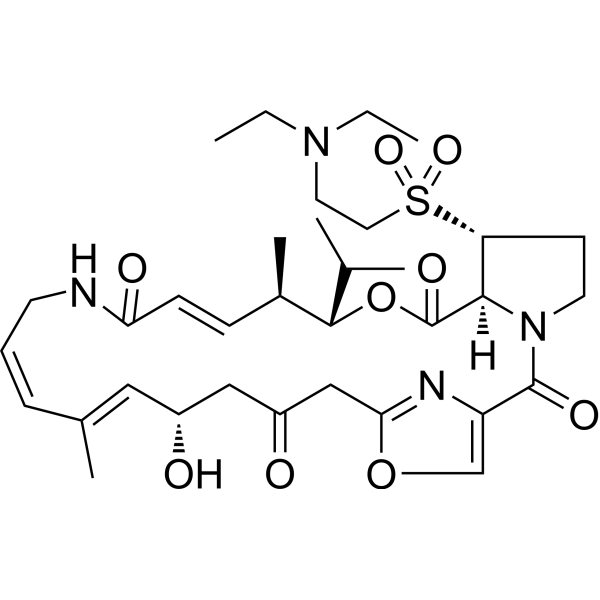
Dalfopristin (RP54476) mesylate is a semisynthetic sulfone antibiotic. Dalfopristin mesylate alone has limited antibacterial activity, but synergistically with Quinupristin it has significant bactericidal activity against many pathogenic Gram-positive cocci .
|
-
- HY-A0241
-
|
RP54476
|
Antibiotic
Bacterial
|
Infection
|
|
Dalfopristin (RP54476) is a semisynthetic sulfone antibiotic. Dalfopristin alone has limited antibacterial activity, but synergistically with Quinupristin it has significant bactericidal activity against many pathogenic Gram-positive cocci .
|
-
- HY-108338
-
|
|
mTOR
|
Cancer
|
|
PF-05139962 is a cyclic sulfone mTOR kinase inhibitor. PF-05139962 exhibits potent mTOR (Ki = 5 nM, pS473 IC50 = 48 nM, pS6 IC50 = 6 nM) inhibitory activity and high selectivity .
|
-
- HY-136438
-
-
- HY-129225
-
WRR139
2 Publications Verification
|
Keap1-Nrf2
Transglutaminase
|
Cancer
|
|
WRR139 is a peptide vinyl sulfone involving in disease processes such as inflammation and cancer. WRR139 is also a cytosolic enzyme N-glycanase 1 (NGLY1) and Nrf1 inhibitor. WRR139 enhances Carfilzomib cytotoxicity against cancer cells .
|
-
- HY-176218
-
|
|
Drug Derivative
|
Inflammation/Immunology
|
|
TTTE is a sulfone bischalcone derivative. TTTE has major anti-necrotic, anti-inflammatory and anti-fibrotic activities. TTTE exerts regulatory effects by downregulating key molecules such as Caspase-3, TNF-α, NF-κB and TGF-β. TTTE can be used in the study of liver injury .
|
-
- HY-168844
-
|
|
Bacterial
Reactive Oxygen Species (ROS)
|
Infection
|
|
Antibacterial agent 259 (K3) is a bactericide, with EC50 values of 1.5, 1.7 and 4.9 mg/L for Xoo, Xoc and Xac, respectively. Antibacterial agent 259 can induce pathogens to produce reactive oxygen species (ROS), leading to their death. Antibacterial agent 259 can be used in the prevention and control of plant bacterial diseases .
|
-
- HY-B0688S
-
|
4,4′-Diaminodiphenyl sulfone-d8; DDS-d8
|
Antibiotic
Parasite
Bacterial
Reactive Oxygen Species (ROS)
|
Infection
Inflammation/Immunology
Cancer
|
|
Dapsone-d8 is a deuterium labeled Dapsone. Dapsone is an orally active and blood-brain penetrant sulfonamide antibiotic with antibacterial, antigenic and anti-inflammatory activities . Dapsone?exerts effective antileprosy activity?and inhibits folate synthesis in cell extracts of?M. leprae. Dapsone can be used as an anticonvulsant and also in the research of skin and glioblastoma diseases .
|
-
- HY-147516
-
|
|
SARS-CoV
|
Infection
|
|
SARS-CoV-2-IN-21 (compound 10), a penicillin sulfone benzyl C6 derivative, is a potent SARS-CoV-2 main protease inhibitor, with an IC50 of 5.3 μM. SARS-CoV-2-IN-21 can be used for COVID-19 research .
|
-
- HY-W440907
-
|
|
Biochemical Assay Reagents
|
Others
|
|
DSPE-PEG5000-Vinylsulfone is a viniyl sulfone PEG lipid which can be used for bioconjugation with cysteine or other thiol molecule through thiol-ene reaction. The polymer is a self-assembling reagetn which forms lipid bilayer in water and can be used as drug carrier to delivery therapeutic agents, such as mRNA or DNA vaccine.
|
-
- HY-W440904
-
|
|
Biochemical Assay Reagents
|
Others
|
|
DSPE-PEG1000-Vinylsulfone is a viniyl sulfone PEG lipid which can be used for bioconjugation with cysteine or other thiol molecule through thiol-ene reaction. The polymer is a self-assembling reagetn which forms lipid bilayer in water and can be used as drug carrier to delivery therapeutic agents, such as mRNA or DNA vaccine.
|
-
- HY-136438R
-
|
|
Reference Standards
Endogenous Metabolite
Parasite
|
Metabolic Disease
Inflammation/Immunology
|
|
Toltrazuril sulfoxide (Standard) is the analytical standard of Toltrazuril sulfoxide. This product is intended for research and analytical applications. Toltrazuril sulfoxide is a short-lived intermediary metabolite of Toltrazuril (HY-B0175), and then can be metabolized to the reactive toltrazuril sulfone (TZR-SO2) in vivo. Toltrazuril is an antiprotozoal agent that acts upon Coccidia parasites .
|
-
- HY-W440906
-
|
|
Biochemical Assay Reagents
|
Others
|
|
DSPE-PEG3400-Vinylsulfone is a viniyl sulfone PEG lipid which can be used for bioconjugation with cysteine or other thiol molecule through thiol-ene reaction. The polymer is a self-assembling reagetn which forms lipid bilayer in water and can be used as drug carrier to delivery therapeutic agents, such as mRNA or DNA vaccine.
|
-
- HY-128777
-
|
|
VDAC
Apoptosis
|
Cancer
|
|
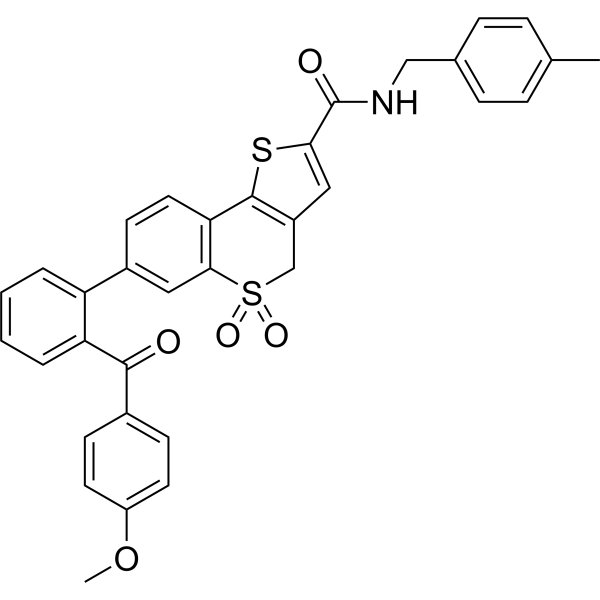
WEHI-9625 is a tricyclic sulfone, first-in-class inhibitor of apoptosis with an EC50 of 69 nM. WEHI-9625 binds to VDAC2 and promotes its ability to inhibit apoptosis driven by mouse BAK. WEHI-9625 is completely inactive against both human BAK and the closely related apoptosis effector BAX .
|
-
- HY-W440905
-
|
|
Biochemical Assay Reagents
|
Others
|
|
DSPE-PEG2000-Vinylsulfone is a viniyl sulfone PEG lipid which can be used for bioconjugation with cysteine or other thiol molecule through thiol-ene reaction. The polymer is a self-assembling reagetn which forms lipid bilayer in water and can be used as drug carrier to delivery therapeutic agents, such as mRNA or DNA vaccine.
|
-
- HY-161762
-
|
RA-2034
|
CHIKV
Virus Protease
|
Infection
|
|
RA-0002034 is a Chikungunya virus (CHIKV) nsP2 protease inhibitor with an IC50 of 58 nM. RA-0002034 covalently modifies the catalytic cysteine in a site-specific manner .
|
-
- HY-125273
-
|
|
Fluorescent Dye
Phosphoglycerate Dehydrogenase (PHGDH)
|
Others
|
|
DNS-pE is a 3-phosphoglycerate dehydrogenase (PHGDH) inhibitor with a Ki of 7.4 μM. DNS-pE selectively and irreversibly covalently modifies endogenous PHGDH in live mammalian cells, its vinyl sulfone moiety acts as a fluorescence quencher that becomes highly fluorescent upon covalent modification of PHGDH. DNS-pE can be used as a fluorescent dye for live-cell imaging .
|
-
- HY-128971
-
LHVS
3 Publications Verification
|
Cathepsin
Parasite
|
Infection
Neurological Disease
|
|
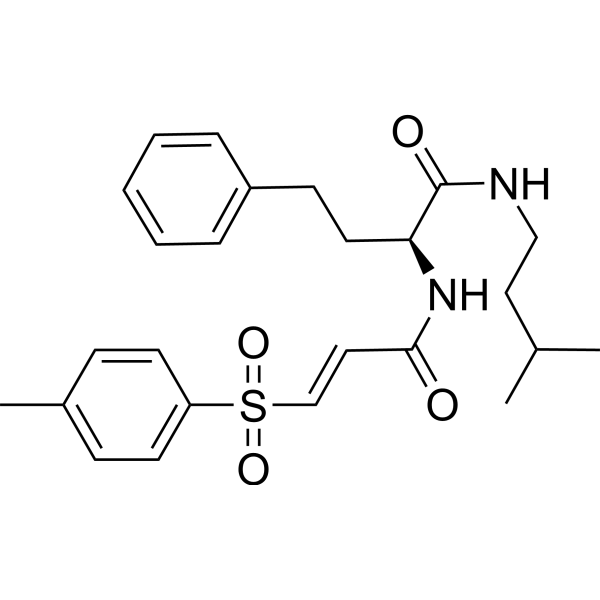
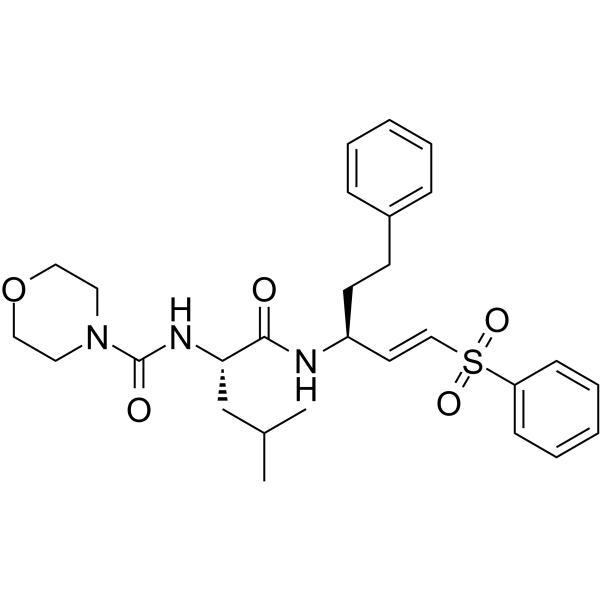
LHVS is a potent, non-selective, irreversible, cell-permeable cysteine protease and cathepsin inhibitor. LHVS decreases actin ring formation. LHVS inhibits T. gondii invasion with an IC50 of 10 μM .
|
-
- HY-W1048545H
-
|
Amine-PEG1000-Thiol hydrochloride
|
Biochemical Assay Reagents
|
Others
|
|
H2N-PEG1000-SH (Amine-PEG1000-Thiol) hydrochloride is a linear heterobifunctional PEGylated product containing thiol and amine. H2N-PEG1000-SH hydrochloride is an important cross-linking or bioconjugation reagent with PEG chains. Thiol or SH, sulfhydryl or thiol selectively reacts with maleimide, OPSS, vinyl sulfone and transition metal surfaces (including gold, silver, etc.) .
|
-
- HY-W1048545I
-
|
Amine-PEG3400-Thiol hydrochloride
|
Biochemical Assay Reagents
|
Others
|
|
H2N-PEG3400-SH (Amine-PEG3400-Thiol) hydrochloride is a linear heterobifunctional PEGylated product containing thiol and amine. H2N-PEG3400-SH hydrochloride is an important cross-linking or bioconjugation reagent with PEG chains. Thiol or SH, sulfhydryl or thiol selectively reacts with maleimide, OPSS, vinyl sulfone and transition metal surfaces (including gold, silver, etc.) .
|
-
- HY-W1048545E
-
|
Amine-PEG20000-Thiol hydrochloride
|
Biochemical Assay Reagents
|
Others
|
|
H2N-PEG20000-SH (Amine-PEG20000-Thiol) hydrochloride is a linear heterobifunctional PEGylated product containing thiol and amine. H2N-PEG20000-SH hydrochloride is an important cross-linking or bioconjugation reagent with PEG chains. Thiol or SH, sulfhydryl or thiol selectively reacts with maleimide, OPSS, vinyl sulfone and transition metal surfaces (including gold, silver, etc.) .
|
-
- HY-W1048545D
-
|
Amine-PEG10000-Thiol hydrochloride
|
Biochemical Assay Reagents
|
Others
|
|
H2N-PEG10000-SH (Amine-PEG10000-Thiol) hydrochloride is a linear heterobifunctional PEGylated product containing thiol and amine. H2N-PEG10000-SH hydrochloride is an important cross-linking or bioconjugation reagent with PEG chains. Thiol or SH, sulfhydryl or thiol selectively reacts with maleimide, OPSS, vinyl sulfone and transition metal surfaces (including gold, silver, etc.) .
|
-
- HY-W1048545A
-
|
Amine-PEG2000-Thiol hydrochloride
|
Biochemical Assay Reagents
|
Others
|
|
H2N-PEG2000-SH (Amine-PEG2000-Thiol) hydrochloride is a linear heterobifunctional PEGylated product containing thiol and amine. H2N-PEG2000-SH hydrochloride is an important cross-linking or bioconjugation reagent with PEG chains. Thiol or SH, sulfhydryl or thiol selectively reacts with maleimide, OPSS, vinyl sulfone and transition metal surfaces (including gold, silver, etc.) .
|
-
- HY-W1048545J
-
|
Amine-PEG40000-Thiol hydrochloride
|
Biochemical Assay Reagents
|
Others
|
|
H2N-PEG40000-SH (Amine-PEG40000-Thiol) hydrochloride is a linear heterobifunctional PEGylated product containing thiol and amine. H2N-PEG40000-SH hydrochloride is an important cross-linking or bioconjugation reagent with PEG chains. Thiol or SH, sulfhydryl or thiol selectively reacts with maleimide, OPSS, vinyl sulfone and transition metal surfaces (including gold, silver, etc.) .
|
-
- HY-W1048545C
-
|
Amine-PEG5000-Thiol hydrochloride
|
Biochemical Assay Reagents
|
Others
|
|
H2N-PEG5000-SH (Amine-PEG5000-Thiol) hydrochloride is a linear heterobifunctional PEGylated product containing thiol and amine. H2N-PEG5000-SH hydrochloride is an important cross-linking or bioconjugation reagent with PEG chains. Thiol or SH, sulfhydryl or thiol selectively reacts with maleimide, OPSS, vinyl sulfone and transition metal surfaces (including gold, silver, etc.) .
|
-
- HY-168500
-
|
|
Beta-lactamase
Bacterial
|
Infection
|
|
Metallo-β-lactamase-IN-16 (compound 18) is a sulfone containing metallo-β-lactamase inhibitor with an anti-bacterial activity. Metallo-β-lactamase-IN-16 inhibits NDM-1 (New Dehli metallo-β-lactamase-1), IMP-1 (imipenemase-1), VIM-1 (Verona integron-encoded metallo-β-lactamase), and VIM-2 with IC50 values of 0.16 nM, 0.23 nM, 0.31 nM and 1.0 nM, respectively .
|
-
- HY-W587665
-
|
|
Insecticide
|
Infection
|
|
Demeton-S sulfoxide is a systemic insecticide. When Demeton-S sulfoxide is topically applied to cotton stems, it is absorbed and transported to cotton leaves, whereas its penetration and diffusion capabilities are limited when it is topically applied to young lemon leaves .
|
-
- HY-121195
-
|
PC-904
|
Bacterial
|
Infection
|
|
Apalcillin (PC-904) in combination with Ro 48-1220, a penam sulfone β-lactamase inhibitor, demonstrated broad-spectrum activity against gram-negative aerobic and anaerobic bacteria, excluding Klebsiella oxytoca. It exhibited potent activity against β-lactamase-producing Moraxella catarrhalis, Haemophilus influenzae, and Neisseria gonorrhoeae, with effective MICs (11 μg/mL). The combination also inhibited Pseudomonas aeruginosa, Stenotrophomonas maltophilia, and Acinetobacter species at low MICs (0.25 to 4 μg/mL). However, its efficacy against oxacillin-resistant staphylococci and certain gram-positive organisms was limited. Apalcillin/Ro 48-1220 showed comparable efficacy to piperacillin/tazobactam against some extended-spectrum β-lactamase-producing Escherichia coli but was less effective against SHV-type β-lactamases .
|
-
- HY-W011927S
-
|
Bisphenol S (4,4'-Sulfonyldiphenol)-d8
|
Isotope-Labeled Compounds
Estrogen Receptor/ERR
Histone Methyltransferase
Thyroid Hormone Receptor
PI3K
Akt
mTOR
Androgen Receptor
|
Cardiovascular Disease
Metabolic Disease
Inflammation/Immunology
Endocrinology
Cancer
|
|
4,4'-Sulfonyldiphenol-d8 (Bisphenol S (4,4'-Sulfonyldiphenol)-d8) is the deuterium labeled 4,4'-Sulfonyldiphenol (HY-W011927).4,4'-Sulfonyldiphenol (Bisphenol S; Bis(4-hydroxyphenyl) sulfone), a substitute for Bisphenol A (HY-18260), is widely used in industrial and consumer products. 4,4'-Sulfonyldiphenol is an estrogen receptor (ER) agonist and can competitively bind to thyroid hormone receptors (TR) with IC50 values for TRα and TRβ are 2650 μM and 2294 μM respectively, thereby affecting breast development and reducing the expression of androgen receptor (AR) in fetal testes. 4,4'-Sulfonyldiphenol promotes the progression of glioblastoma by upregulating the EZH2 mediated PI3K/AKT/mTOR pathway. Under chronic exposure, 4,4'-Sulfonyldiphenol can cause significant lipid deposition and dyslipidemia in the mouse liver by upregulating JunB and Atf3, and has a role in causing obesity at low doses. 4,4'-Sulfonyldiphenol induces intestinal inflammation by altering the intestinal microbiome. 4,4'-Sulfonyldiphenol accelerates the progression of atherosclerosis in zebrafish embryo larvae.
|
-
| Cat. No. |
Product Name |
Type |
-
- HY-W011927
-
|
Bisphenol S; Bis(4-hydroxyphenyl) sulfone
|
Biochemical Assay Reagents
|
|
4,4'-Sulfonyldiphenol (Bisphenol S; Bis(4-hydroxyphenyl) sulfone), a substitute for Bisphenol A (HY-18260), is widely used in industrial and consumer products. 4,4'-Sulfonyldiphenol is an oally ative estrogen receptor (ER) agonist and can competitively bind to thyroid hormone receptors (TR) with IC50 values for TRα and TRβ are 2650 μM and 2294 μM respectively, thereby affecting breast development and reducing the expression of androgen receptor (AR) in fetal testes. 4,4'-Sulfonyldiphenol promotes the progression of glioblastoma by upregulating the EZH2 mediated PI3K/AKT/mTOR pathway. Under chronic exposure, 4,4'-Sulfonyldiphenol can cause significant lipid deposition and dyslipidemia in the mouse liver by upregulating JunB and Atf3, and has a role in causing obesity at low doses. 4,4'-Sulfonyldiphenol induces intestinal inflammation by altering the intestinal microbiome. 4,4'-Sulfonyldiphenol accelerates the progression of atherosclerosis in zebrafish embryo larvae .
|
-
- HY-W011927R
-
|
Bisphenol S (Standard); Bis(4-hydroxyphenyl) sulfone (Standard)
|
Biochemical Assay Reagents
|
|
4,4'-Sulfonyldiphenol (Bisphenol S; Bis(4-hydroxyphenyl) sulfone) (Standard) is the analytical standard of 4,4'-Sulfonyldiphenol (HY-W011927). This product is intended for research and analytical applications. 4,4'-Sulfonyldiphenol, a substitute for Bisphenol A (HY-18260), is widely used in industrial and consumer products. 4,4'-Sulfonyldiphenol is an estrogen receptor (ER) agonist and can competitively bind to thyroid hormone receptors (TR) with IC50 values for TRα and TRβ are 2650 μM and 2294 μM respectively, thereby affecting breast development and reducing the expression of androgen receptor (AR) in fetal testes. 4,4'-Sulfonyldiphenol promotes the progression of glioblastoma by upregulating the EZH2 mediated PI3K/AKT/mTOR pathway. Under chronic exposure, 4,4'-Sulfonyldiphenol can cause significant lipid deposition and dyslipidemia in the mouse liver by upregulating JunB and Atf3, and has a role in causing obesity at low doses. 4,4'-Sulfonyldiphenol induces intestinal inflammation by altering the intestinal microbiome. 4,4'-Sulfonyldiphenol accelerates the progression of atherosclerosis in zebrafish embryo larvae.
|
-
- HY-W1048867B
-
|
4-Arm-PEG10000-VS
|
Biochemical Assay Reagents
|
|
4-Arm-PEG10000-Vinyl sulfone (4-Arm-PEG10000-VS) is a four-armed PEG derivative. The core structure of 4-Arm-PEG10000-Vinyl sulfone consists of four PEG chains, each modified at the end with a vinyl sulfone (Vinyl sulfone) group. 4-Arm-PEG10000-Vinyl sulfone can be used for bioconjugation and drug delivery.
|
-
- HY-W013598
-
|
|
Biochemical Assay Reagents
|
|
Sodium benzenesulfinate is a reagent used in organic synthesis to create other compounds, such as sulfones. Sodium benzenesulfinate undergoes rhodium-catalyzed desulfinative coupling with aldehydes to yield ketones .
|
-
- HY-W1048545H
-
|
Amine-PEG1000-Thiol hydrochloride
|
Biochemical Assay Reagents
|
|
H2N-PEG1000-SH (Amine-PEG1000-Thiol) hydrochloride is a linear heterobifunctional PEGylated product containing thiol and amine. H2N-PEG1000-SH hydrochloride is an important cross-linking or bioconjugation reagent with PEG chains. Thiol or SH, sulfhydryl or thiol selectively reacts with maleimide, OPSS, vinyl sulfone and transition metal surfaces (including gold, silver, etc.) .
|
-
- HY-W440907
-
|
|
Biochemical Assay Reagents
|
|
DSPE-PEG5000-Vinylsulfone is a viniyl sulfone PEG lipid which can be used for bioconjugation with cysteine or other thiol molecule through thiol-ene reaction. The polymer is a self-assembling reagetn which forms lipid bilayer in water and can be used as drug carrier to delivery therapeutic agents, such as mRNA or DNA vaccine.
|
-
- HY-W440904
-
|
|
Biochemical Assay Reagents
|
|
DSPE-PEG1000-Vinylsulfone is a viniyl sulfone PEG lipid which can be used for bioconjugation with cysteine or other thiol molecule through thiol-ene reaction. The polymer is a self-assembling reagetn which forms lipid bilayer in water and can be used as drug carrier to delivery therapeutic agents, such as mRNA or DNA vaccine.
|
-
- HY-W440905
-
|
|
Biochemical Assay Reagents
|
|
DSPE-PEG2000-Vinylsulfone is a viniyl sulfone PEG lipid which can be used for bioconjugation with cysteine or other thiol molecule through thiol-ene reaction. The polymer is a self-assembling reagetn which forms lipid bilayer in water and can be used as drug carrier to delivery therapeutic agents, such as mRNA or DNA vaccine.
|
-
- HY-W1048545D
-
|
Amine-PEG10000-Thiol hydrochloride
|
Biochemical Assay Reagents
|
|
H2N-PEG10000-SH (Amine-PEG10000-Thiol) hydrochloride is a linear heterobifunctional PEGylated product containing thiol and amine. H2N-PEG10000-SH hydrochloride is an important cross-linking or bioconjugation reagent with PEG chains. Thiol or SH, sulfhydryl or thiol selectively reacts with maleimide, OPSS, vinyl sulfone and transition metal surfaces (including gold, silver, etc.) .
|
-
- HY-W1048545A
-
|
Amine-PEG2000-Thiol hydrochloride
|
Biochemical Assay Reagents
|
|
H2N-PEG2000-SH (Amine-PEG2000-Thiol) hydrochloride is a linear heterobifunctional PEGylated product containing thiol and amine. H2N-PEG2000-SH hydrochloride is an important cross-linking or bioconjugation reagent with PEG chains. Thiol or SH, sulfhydryl or thiol selectively reacts with maleimide, OPSS, vinyl sulfone and transition metal surfaces (including gold, silver, etc.) .
|
-
- HY-W123001
-
-
- HY-W1048867C
-
|
4-Arm-PEG20000-VS
|
Biochemical Assay Reagents
|
|
4-Arm-PEG20000-Vinyl sulfone (4-Arm-PEG20000-VS) is a four-armed PEG derivative. The core structure of 4-Arm-PEG20000-Vinyl sulfone consists of four PEG chains, each modified at the end with a vinyl sulfone (Vinyl sulfone) group. 4-Arm-PEG20000-Vinyl sulfone can be used for bioconjugation and drug delivery.
|
-
- HY-W1048867A
-
|
4-Arm-PEG5000-VS
|
Biochemical Assay Reagents
|
|
4-Arm-PEG5000-Vinyl sulfone (4-Arm-PEG5000-VS) is a four-armed PEG derivative. The core structure of 4-Arm-PEG5000-Vinyl sulfone consists of four PEG chains, each modified at the end with a vinyl sulfone (Vinyl sulfone) group. 4-Arm-PEG5000-Vinyl sulfone can be used for bioconjugation and drug delivery.
|
-
- HY-W1048867
-
|
4-Arm-PEG2000-VS
|
Biochemical Assay Reagents
|
|
4-Arm-PEG2000-Vinyl sulfone (4-Arm-PEG2000-VS) is a four-armed PEG derivative. The core structure of 4-Arm-PEG2000-Vinyl sulfone consists of four PEG chains, each modified at the end with a vinyl sulfone (Vinyl sulfone) group. 4-Arm-PEG2000-Vinyl sulfone can be used for bioconjugation and drug delivery.
|
-
- HY-W440906
-
|
|
Biochemical Assay Reagents
|
|
DSPE-PEG3400-Vinylsulfone is a viniyl sulfone PEG lipid which can be used for bioconjugation with cysteine or other thiol molecule through thiol-ene reaction. The polymer is a self-assembling reagetn which forms lipid bilayer in water and can be used as drug carrier to delivery therapeutic agents, such as mRNA or DNA vaccine.
|
-
- HY-W1048545I
-
|
Amine-PEG3400-Thiol hydrochloride
|
Biochemical Assay Reagents
|
|
H2N-PEG3400-SH (Amine-PEG3400-Thiol) hydrochloride is a linear heterobifunctional PEGylated product containing thiol and amine. H2N-PEG3400-SH hydrochloride is an important cross-linking or bioconjugation reagent with PEG chains. Thiol or SH, sulfhydryl or thiol selectively reacts with maleimide, OPSS, vinyl sulfone and transition metal surfaces (including gold, silver, etc.) .
|
-
- HY-W1048545E
-
|
Amine-PEG20000-Thiol hydrochloride
|
Biochemical Assay Reagents
|
|
H2N-PEG20000-SH (Amine-PEG20000-Thiol) hydrochloride is a linear heterobifunctional PEGylated product containing thiol and amine. H2N-PEG20000-SH hydrochloride is an important cross-linking or bioconjugation reagent with PEG chains. Thiol or SH, sulfhydryl or thiol selectively reacts with maleimide, OPSS, vinyl sulfone and transition metal surfaces (including gold, silver, etc.) .
|
-
- HY-W1048545J
-
|
Amine-PEG40000-Thiol hydrochloride
|
Biochemical Assay Reagents
|
|
H2N-PEG40000-SH (Amine-PEG40000-Thiol) hydrochloride is a linear heterobifunctional PEGylated product containing thiol and amine. H2N-PEG40000-SH hydrochloride is an important cross-linking or bioconjugation reagent with PEG chains. Thiol or SH, sulfhydryl or thiol selectively reacts with maleimide, OPSS, vinyl sulfone and transition metal surfaces (including gold, silver, etc.) .
|
-
- HY-W1048545C
-
|
Amine-PEG5000-Thiol hydrochloride
|
Biochemical Assay Reagents
|
|
H2N-PEG5000-SH (Amine-PEG5000-Thiol) hydrochloride is a linear heterobifunctional PEGylated product containing thiol and amine. H2N-PEG5000-SH hydrochloride is an important cross-linking or bioconjugation reagent with PEG chains. Thiol or SH, sulfhydryl or thiol selectively reacts with maleimide, OPSS, vinyl sulfone and transition metal surfaces (including gold, silver, etc.) .
|
| Cat. No. |
Product Name |
Target |
Research Area |
| Cat. No. |
Product Name |
Category |
Target |
Chemical Structure |
| Cat. No. |
Product Name |
Chemical Structure |
-
- HY-W011927S
-
1 Publications Verification
|
|
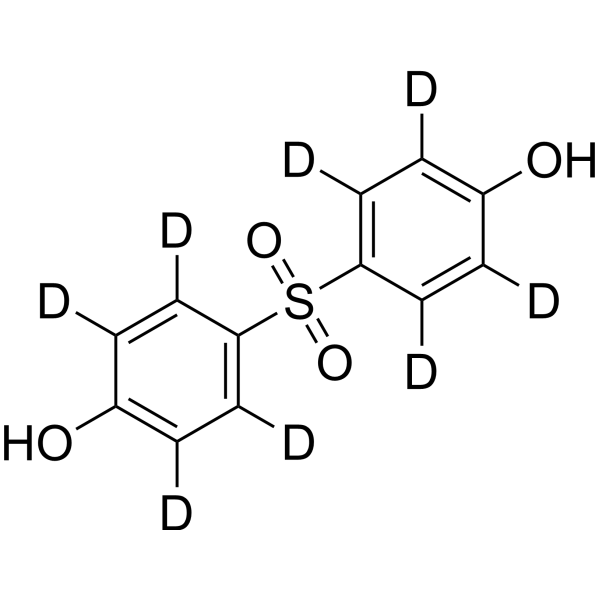
4,4'-Sulfonyldiphenol-d8 (Bisphenol S (4,4'-Sulfonyldiphenol)-d8) is the deuterium labeled 4,4'-Sulfonyldiphenol (HY-W011927).4,4'-Sulfonyldiphenol (Bisphenol S; Bis(4-hydroxyphenyl) sulfone), a substitute for Bisphenol A (HY-18260), is widely used in industrial and consumer products. 4,4'-Sulfonyldiphenol is an estrogen receptor (ER) agonist and can competitively bind to thyroid hormone receptors (TR) with IC50 values for TRα and TRβ are 2650 μM and 2294 μM respectively, thereby affecting breast development and reducing the expression of androgen receptor (AR) in fetal testes. 4,4'-Sulfonyldiphenol promotes the progression of glioblastoma by upregulating the EZH2 mediated PI3K/AKT/mTOR pathway. Under chronic exposure, 4,4'-Sulfonyldiphenol can cause significant lipid deposition and dyslipidemia in the mouse liver by upregulating JunB and Atf3, and has a role in causing obesity at low doses. 4,4'-Sulfonyldiphenol induces intestinal inflammation by altering the intestinal microbiome. 4,4'-Sulfonyldiphenol accelerates the progression of atherosclerosis in zebrafish embryo larvae.
|
-
-
- HY-14774S1
-
|
|
|
(Rac)-Monepantel sulfone-d5 is deuterium labeled Monepantel. Monepantel is organic anthelmintic, and acts as a positive allosteric modulator of a nematode-specific clade of nicotinic acetylcholine receptor (nAChR) subunits.
|
-
-
- HY-W653930
-
|
|
|
4,4'-Sulfonyldiphenol- 13C12 (Bisphenol S- 13C12) is 13C labeled 4,4'-Sulfonyldiphenol. 4,4'-Sulfonyldiphenol (Bisphenol S; Bis(4-hydroxyphenyl) sulfone) is a biochemical reagent that can be used as a biological material or organic compound for life science related research .
|
-
-
- HY-B0688S2
-
|
|
|
Dapsone- 13C12 is the 13C12 labeled Dapsone (HY-B0688). Dapsone (4,4′-Diaminodiphenyl sulfone) is an orally active and blood-brain penetrant sulfonamide antibiotic with bacteriostatic, antimycobacterial and antiprotozoal activities. Dapsone exerts effective antileprosy activity and inhibits folate synthesis in cell extracts of M. leprae. Dapsone is used for dermatologic disorder research, including leprosy, dermatitis herpetiformis, acne vulgaris et al .
|
-
-
- HY-34444S
-
|
|
|
1,1-Dioxothiolan-d8 is the deuterium labeled 1,1-Dioxothiolan .
|
-
-
- HY-B0688S
-
|
|
|
Dapsone-d8 is a deuterium labeled Dapsone. Dapsone is an orally active and blood-brain penetrant sulfonamide antibiotic with antibacterial, antigenic and anti-inflammatory activities . Dapsone?exerts effective antileprosy activity?and inhibits folate synthesis in cell extracts of?M. leprae. Dapsone can be used as an anticonvulsant and also in the research of skin and glioblastoma diseases .
|
-
-
- HY-143991S
-
|
|
|
Modafinil acid sulfone-d5 is the deuterium labeled Modafinil acid sulfone .
|
-
-
- HY-125296S
-
|
|
|
Fipronil sulfone- 13C6 is the 13C-labeled Fipronil sulfone .
|
-
-
- HY-146481S
-
|
|
|
Lansoprazole sulfone N-oxide-d4 is the deuterium labeled Lansoprazole sulfone N-oxide .
|
-
-
- HY-W654190
-
|
|
|
Fipronil sulfone- 13C2, 15N2 is a deuterated labeled Fipronil sulfone .
|
-
-
- HY-138199S
-
|
|
|
Omeprazole sulfone N-oxide- 13C,d3 is the deuterium and 13C labeled Omeprazole sulfone N-Oxide .
|
-
-
- HY-W008614S
-
|
|
|
Lansoprazole sulfone (AG-1813)-d4 is the deuterium labeled Lansoprazole sulfone (HY-W008614). Lansoprazole sulfone, Lansoprazole (HY-13662) metabolite, is a H +, K +-ATPase inhibitor. Lansoprazole sulfone has potential applications in duodenal ulcer, gastric ulcer, gastroesophageal reflux disease and Zolinger Ellison disease .
|
-
-
- HY-B0688S1
-
|
|
|
Dapsone-d4 is the deuterium labeled Dapsone. Dapsone (4,4′-Diaminodiphenyl sulfone) is an orally active and blood-brain penetrant sulfonamide antibiotic with bacteriostatic, antimycobacterial and antiprotozoal activities . Dapsone?exerts effective antileprosy activity?and inhibits folate synthesis in cell extracts of?M. leprae. Dapsone is used for dermatologic disorder research, including leprosy, dermatitis herpetiformis, acne vulgaris et al .
|
-
-
- HY-Y1314S
-
|
|
|
Dimethyl sulfone-d6 is the deuterium labeled Dimethyl sulfone. Dimethyl sulfone is an endogenous metabolite.
|
-
-
- HY-136451S
-
|
|
|
Triclabendazole sulfone-d3 is the deuterium labeled Triclabendazole sulfone.
|
-
-
- HY-B1787S
-
|
|
|
Sulindac sulfone-d3 is deuterium labeled Sulindac sulfone.
|
-
-
- HY-144167S
-
|
|
|
Methiocarb sulfone-d3 is the deuterium labeled Methiocarb sulfone .
|
-
-
- HY-142751S
-
|
|
|
Fenthion sulfone-d6 is the deuterium labeled Fenthion sulfone .
|
-
-
- HY-W742805
-
|
|
|
Sulindac Sulfone-d6 is the deuterium labeled Sulindac sulfone (HY-B1787). Sulindac sulfone is an mTORC1 pathway inhibitor and a metabolite of Sulindac. Sulindac sulfone inhibits colon cancer cell growth and induces cell cycle arrest. Sulindac sulfone is used in cancer research .
|
-
-
- HY-W019773S1
-
|
|
|
Albendazole sulfone-d3 is the deuterium labeled Albendazole sulfone. Albendazole sulfone is a metabolite of Albendazole, and exhibits anti-parasite effect against Echinococcus multilocularis Metacestodes.
|
-
-
- HY-146485S
-
|
|
|
Fulvestrant-9-sulfone-d3 is the deuterium labeled Fulvestrant-9-sulfone .
|
-
-
- HY-W019773S
-
|
|
|
Albendazole sulfone-d7 is the deuterium labeled Albendazole sulfone. Albendazole sulfone is a metabolite of Albendazole, and exhibits anti-parasite effect against Echinococcus multilocularis Metacestodes .
|
-
-
- HY-W709055
-
|
|
|
Pantoprazole sulfone-d6 (major) is the deuterium labeled Pantoprazole sulfone (HY-117225). Pantoprazole sulfone is a metabolite of the gastric H+/K+ ATPase pump inhibitor Pantoprazole (HY-17507) .
|
-
-
- HY-W743691
-
|
|
|
2,4'-Dihydroxydiphenyl sulfone-d8 is deuterium-labeled 2,4'-Dihydroxydiphenyl sulfone .
|
-
-
- HY-G0007S
-
|
|
|
Omeprazole sulfone-d3 is the deuterium labeled Omeprazole sulfone. Omeprazole sulfone (Omeprazole sulphone) is one of the major circulating metabolites of Omeprazole (HY-B0113) in vivo, and belongs to class 4 non-mutagenic impurities. Omeprazole sulfone does not bind to the aryl hydrocarbon receptor (AhR), nor does it induce the expression of CYP1A1 or CYP1A2. However, Omeprazole sulfone promotes the migration of gastric epithelial cells under basal conditions and reverses the inhibitory effect of Indomethacin (HY-14397) on cell migration. Omeprazole sulfone does not promote cell proliferation, nor does it upregulate COX-2 expression or activate signaling pathways such as ERK, P38 MAPK and PI3K. Omeprazole sulfone maintains basal ulcer healing under non-acid-dependent conditions and can be used in studies related to gastric ulcer repair .
|
-
-
- HY-138199S1
-
|
|
|
Omeprazole sulfone N-oxide-d3 is the deuterium labeled Omeprazole sulfone N-Oxide .
|
-
-
- HY-17530S
-
|
|
|
Aldicarb sulfone- 13C2,d3 is the deuterium and 13C labeled Aldicarb sulfone (HY-17530). Aldicarb sulfone is one of the metabolites of the carbamate pesticide Aldicarb and has insecticidal activity. Aldicarb sulfone is also an inhibitor of cholinesterase .
|
-
-
- HY-B0113S2
-
|
|
|
Omeprazole sulfone (methoxy-d3) is the deuterium labeled Omeprazole sulfone. Omeprazole sulfone (H 16868) is an orally active H +,K +-ATPase inhibitor and a proton pump inhibitor. Omeprazole sulfone competitively inhibits CYP2C19, CYP3A4, and CYP2C9 activity. Omeprazole sulfone inhibits gastric acid secretion and can be used for acid-related gastrointestinal disorders. Omeprazole sulfone inhibits pancreatic cancer cell proliferation, induces apoptosis, autophagosome accumulation (elevated LC3-I and LC3-II levels), oxidative stress, and cytogenetic imbalance, modulates lysosomal transport, reduces inflammatory cytokines. Omeprazole sulfone alters small intestinal morphology and magnesium absorption, and induces gastric mucosa morphologic changes. Omeprazole sulfone aslo has neuroprotective and antibacterial effects .
|
-
-
- HY-G0007S1
-
|
|
|
Omeprazole sulfone- 13C,d3 is the deuterium and 13C labeled Omeprazole sulfone. Omeprazole sulfone (Omeprazole sulphone) is one of the major circulating metabolites of Omeprazole (HY-B0113) in vivo, and belongs to class 4 non-mutagenic impurities. Omeprazole sulfone does not bind to the aryl hydrocarbon receptor (AhR), nor does it induce the expression of CYP1A1 or CYP1A2. However, Omeprazole sulfone promotes the migration of gastric epithelial cells under basal conditions and reverses the inhibitory effect of Indomethacin (HY-14397) on cell migration. Omeprazole sulfone does not promote cell proliferation, nor does it upregulate COX-2 expression or activate signaling pathways such as ERK, P38 MAPK and PI3K. Omeprazole sulfone maintains basal ulcer healing under non-acid-dependent conditions and can be used in studies related to gastric ulcer repair .
|
-
-
- HY-W008614S1
-
|
|
|
Lansoprazole sulfone (AG-1813)- 13C6 is 13C labeled Lansoprazole sulfone (HY-W008614). Lansoprazole sulfone, Lansoprazole (HY-13662) metabolite, is a H +, K +-ATPase inhibitor. Lansoprazole sulfone has potential applications in duodenal ulcer, gastric ulcer, gastroesophageal reflux disease and Zolinger Ellison disease .
|
-
-
- HY-B0965S
-
|
|
|
Thioridazine-d3 2-Sulfone is the deuterium labeled Thioridazine hydrochloride. Thioridazine hydrochloride, an orally active antagonist of the dopamine receptor D2 family proteins, exhibits potent anti-psychotic and anti-anxiety activities. Thioridazine hydrochloride is also a potent inhibitor of PI3K-Akt-mTOR signaling pathways with anti-angiogenic effect. Thioridazine hydrochloride shows antiproliferative and apoptosis induction effects in various types of cancer cells, with specificity on targeting cancer stem cells (CSCs) .
|
-
-
- HY-B0688S3
-
|
|
|
Dapsone- 15N2 (4,4′-Diaminodiphenyl sulfone- 15N2) is 15N labeled Dapsone. Dapsone (4,4′-Diaminodiphenyl sulfone) is an orally active and blood-brain penetrant sulfonamide antibiotic with bacteriostatic, antimycobacterial and antiprotozoal activities . Dapsone?exerts effective antileprosy activity?and inhibits folate synthesis in cell extracts of?M. leprae. Dapsone is used for dermatologic disorder research, including leprosy, dermatitis herpetiformis, acne vulgaris et al .
|
-
-
- HY-W654084
-
|
|
|
24 Bisphenol S- 13C12 is the 13C-labeled 2,4'-Dihydroxydiphenyl sulfone (HY-W128222). 2,4'-Dihydroxydiphenyl sulfone is an active small molecule and can be used as fire-resistant polyester compositions .
|
-
-
- HY-W707950
-
|
|
|
Cenicriviroc sulfone-d9 is the deuterium labeled Cenicriviroc sulfone.
|
-
-
- HY-W747290
-
|
|
|
Bis(methylsulfinylethyl)sulfone- 13C4 is the 13C-labeled 1-(Methylsulfinyl)-2-((2-(methylsulfinyl)ethyl)sulfonyl)ethane (HY-W713530).
|
-
| Cat. No. |
Product Name |
|
Classification |
-
- HY-138745
-
|
|
|
Azide
ADC Synthesis
|
|
Bis-sulfone-PEG3-Azide is a cleavable ADC linker used in the synthesis of antibody-drug conjugates (ADCs). Bis-sulfone-PEG3-Azide is a click chemistry reagent, it contains an Azide group and can undergo copper-catalyzed azide-alkyne cycloaddition reaction (CuAAc) with molecules containing Alkyne groups. It can also undergo strain-promoted alkyne-azide cycloaddition (SPAAC) reactions with molecules containing DBCO or BCN groups.
|
-
- HY-140610
-
|
|
|
PROTAC Synthesis
Alkynes
|
|
Propargyl-PEG4-Sulfone-PEG4-acid is a PEG-based PROTAC linker that can be used in the synthesis of PROTACs . Propargyl-PEG4-Sulfone-PEG4-acid is a click chemistry reagent, it contains an Alkyne group and can undergo copper-catalyzed azide-alkyne cycloaddition (CuAAc) with molecules containing Azide groups.
|
-
- HY-140611
-
|
|
|
PROTAC Synthesis
Alkynes
|
|
Propargyl-peg3-sulfone-peg3-propargyl is a PEG-based PROTAC linker that can be used in the synthesis of PROTACs . Propargyl-peg3-sulfone-peg3-propargyl is a click chemistry reagent, it contains an Alkyne group and can undergo copper-catalyzed azide-alkyne cycloaddition (CuAAc) with molecules containing Azide groups.
|
-
- HY-140612
-
|
|
|
Alkynes
PROTAC Synthesis
|
|
Propargyl-PEG4-Sulfone-PEG4-Boc is a PEG-based PROTAC linker that can be used in the synthesis of PROTACs . Propargyl-PEG4-Sulfone-PEG4-Boc is a click chemistry reagent, it contains an Alkyne group and can undergo copper-catalyzed azide-alkyne cycloaddition (CuAAc) with molecules containing Azide groups.
|
-
- HY-140608
-
|
|
|
Alkynes
PROTAC Synthesis
|
|
m-PEG3-Sulfone-PEG4-propargyl is a PEG-based PROTAC linker that can be used in the synthesis of PROTACs . m-PEG3-Sulfone-PEG4-propargyl is a click chemistry reagent, it contains an Alkyne group and can undergo copper-catalyzed azide-alkyne cycloaddition (CuAAc) with molecules containing Azide groups.
|
-
- HY-140602
-
|
|
|
PROTAC Synthesis
Azide
|
|
Azido-PEG3-Sulfone-PEG4-acid is a PEG-based PROTAC linker that can be used in the synthesis of PROTACs . Azido-PEG3-Sulfone-PEG4-acid is a click chemistry reagent, it contains an Azide group and can undergo copper-catalyzed azide-alkyne cycloaddition reaction (CuAAc) with molecules containing Alkyne groups. It can also undergo strain-promoted alkyne-azide cycloaddition (SPAAC) reactions with molecules containing DBCO or BCN groups.
|
-
- HY-140604
-
|
|
|
PROTAC Synthesis
Azide
|
|
Azido-PEG3-Sulfone-PEG4-Boc is a PEG-based PROTAC linker that can be used in the synthesis of PROTACs . Azido-PEG3-Sulfone-PEG4-Boc is a click chemistry reagent, it contains an Azide group and can undergo copper-catalyzed azide-alkyne cycloaddition reaction (CuAAc) with molecules containing Alkyne groups. It can also undergo strain-promoted alkyne-azide cycloaddition (SPAAC) reactions with molecules containing DBCO or BCN groups.
|
-
- HY-140603
-
|
|
|
PROTAC Synthesis
Azide
|
|
Azide-PEG3-Sulfone-PEG3-azide is a PEG-based PROTAC linker that can be used in the synthesis of PROTACs . Azide-PEG3-Sulfone-PEG3-azide is a click chemistry reagent, it contains an Azide group and can undergo copper-catalyzed azide-alkyne cycloaddition reaction (CuAAc) with molecules containing Alkyne groups. It can also undergo strain-promoted alkyne-azide cycloaddition (SPAAC) reactions with molecules containing DBCO or BCN groups.
|
-
- HY-140606
-
|
|
|
PROTAC Synthesis
Azide
|
|
m-PEG3-Sulfone-PEG3-azide is a PEG-based PROTAC linker that can be used in the synthesis of PROTACs . m-PEG3-Sulfone-PEG3-azide is a click chemistry reagent, it contains an Azide group and can undergo copper-catalyzed azide-alkyne cycloaddition reaction (CuAAc) with molecules containing Alkyne groups. It can also undergo strain-promoted alkyne-azide cycloaddition (SPAAC) reactions with molecules containing DBCO or BCN groups.
|
| Cat. No. |
Product Name |
|
Classification |
-
- HY-W440904
-
|
|
|
Pegylated Lipids
|
|
DSPE-PEG1000-Vinylsulfone is a viniyl sulfone PEG lipid which can be used for bioconjugation with cysteine or other thiol molecule through thiol-ene reaction. The polymer is a self-assembling reagetn which forms lipid bilayer in water and can be used as drug carrier to delivery therapeutic agents, such as mRNA or DNA vaccine.
|
-
- HY-W440905
-
|
|
|
Pegylated Lipids
|
|
DSPE-PEG2000-Vinylsulfone is a viniyl sulfone PEG lipid which can be used for bioconjugation with cysteine or other thiol molecule through thiol-ene reaction. The polymer is a self-assembling reagetn which forms lipid bilayer in water and can be used as drug carrier to delivery therapeutic agents, such as mRNA or DNA vaccine.
|
-
- HY-W440906
-
|
|
|
Pegylated Lipids
|
|
DSPE-PEG3400-Vinylsulfone is a viniyl sulfone PEG lipid which can be used for bioconjugation with cysteine or other thiol molecule through thiol-ene reaction. The polymer is a self-assembling reagetn which forms lipid bilayer in water and can be used as drug carrier to delivery therapeutic agents, such as mRNA or DNA vaccine.
|
Your information is safe with us. * Required Fields.
Inquiry Information
- Product Name:
- Cat. No.:
- Quantity:
- MCE Japan Authorized Agent:

