10 Results for "

terpenoid pathway

" in MedChemExpress (MCE) Product Catalog:
Products (10)

10 Results for "terpenoid pathway" in MCE Product Catalog:

1
1 Cited Publications
Cat. No.: HY-121262
CAS No.: 495-62-5
Synonyms: Bisabolene; γ-Bisabolene
Bisabolene (mixture of isomers) (Bisabolene) is a sesquiterpenoid plant natural product and also a hydrocarbon precursor for various industry-relevant chemicals. Bisabolene (mixture of isomers) serves as an important precursor for the production of industry-relevant chemicals such as biofuels, bioplastics, pharmaceuticals and cosmetics .
loading...
    loading...
Cat. No.: HY-W130074
CAS No.: 1686-14-2
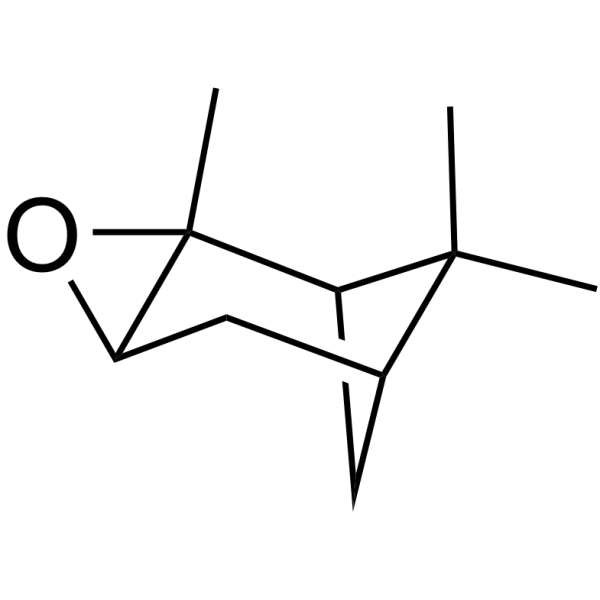
α-Pinene oxide is a type of monoterpene epoxidation intermediate. α-Pinene oxide is produced via the cytochrome P-450-mediated oxidation pathway in Dendroctonus terebrans body microsomes and rat liver microsomes, and can be further converted into alcohols, ketones and insect pheromone derivatives. α-Pinene oxide can generate the perfume intermediate myrtenal. α-Pinene oxide is used in studies related to terpenoid metabolism and perfume synthesis .
loading...
    loading...
Cat. No.: HY-N3925
CAS No.: 104700-97-2
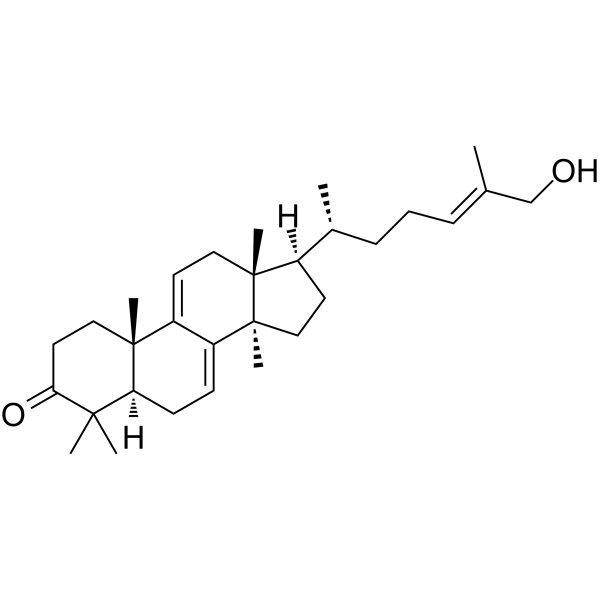
Ganoderol A is a terpenoid extracted from Ganoderma lucidum with antimicrobial activities. Ganoderol A inhibits cholesterol synthesis pathway and has significant anti-inflammatory activity and protection against ultraviolet A (UVA) damage .
loading...
    loading...
Cat. No.: HY-N12196
CAS No.: 71911-90-5
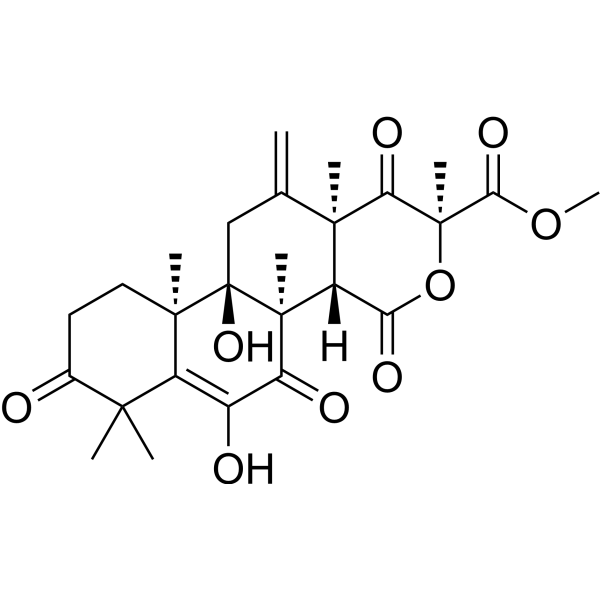
Terretonin is a fungal terpenoid isolated from Aspergillus terreus. The complete biosynthetic pathway of terretonin includes: cytochrome P450 Trt6 catalyzes the oxidation of terrenoid to obtain an unstable intermediate; then it is catalyzed by isomerase Trt14 and processed by non-heme iron-dependent dioxygenase Trt7 to complete the biosynthesis of terretonin .
loading...
    loading...
Cat. No.: HY-N4189
CAS No.: 17278-28-3
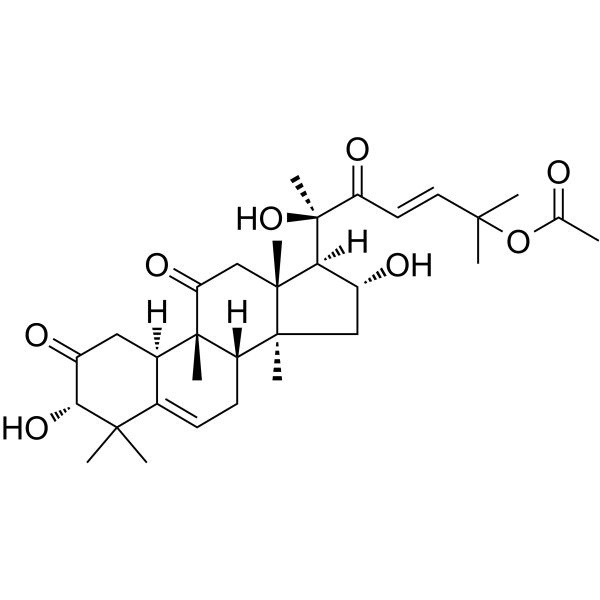
Isocucurbitacin B is a natural terpenoid compound found in Pedicellus Melo. Isocucurbitacin B can inhibit the PI3K/AKT, MAPK, and STAT3 signaling pathways and downregulate CAV1 expression. Isocucurbitacin B can inhbit cancer cell proliferation, migration and invision. Isocucurbitacin B can induce apoptosis and cause G2/M phase arrest. Isocucurbitacin B can decrease intracellular cholesterol and PH levels and increase intracellular calcium levels. Isocucurbitacin B can be used for the research of cancer, such as glioma [1][2].

loading...
    loading...
Cat. No.: HY-171664
CAS No.: 21738-30-7
Synonyms: ent-CPP
ent-Copalyl diphosphate (ent-CPP) is a terpenoid precursor and metabolite involved in plant biosynthetic pathways. ent-Copalyl diphosphate participates in metabolism of natural products including phytoalexins in rice and maize, and steviol glycoside in Stevia rebaudiana .
loading...
    loading...
Cat. No.: HY-E71489
Research Areas:  

Others

2-C-Methyl-D-erythritol 2,4-cyclodiphosphate synthase (EC 4.6.1.12) requires Mg2+ or Mn2+ for its catalytic activity and is part of the non-mevalonate pathway for terpenoid biosynthesis.
loading...
    loading...
Cat. No.: HY-E71709
Research Areas:  

Others

3α(S)-Strictosidine β-glucosidase (EC 3.2.1.105) is a glycosidase and a key initiating enzyme in the plant terpenoid indole alkaloid biosynthetic pathway; it catalyzes the cleavage of the β-glucosidic bond of strictosidine to generate an active indole alkaloid precursor.
loading...
    loading...
Cat. No.: HY-W130074R
CAS No.: 1686-14-2
α-Pinene oxide (Standard) is the analytical standard of α-Pinene oxide (HY-W130074). This product is intended for research and analytical applications. α-Pinene oxide is a type of monoterpene epoxidation intermediate. α-Pinene oxide is produced via the cytochrome P-450-mediated oxidation pathway in Dendroctonus terebrans body microsomes and rat liver microsomes, and can be further converted into alcohols, ketones and insect pheromone derivatives. α-Pinene oxide can generate the perfume intermediate myrtenal. α-Pinene oxide is used in studies related to terpenoid metabolism and perfume synthesis .
loading...
    loading...
Cat. No.: HY-L163
305 compounds

Traditional Chinese medicine provides abundant natural resources for medicinal compounds, which are often considered effective and safe for drug discovery. Traditional Chinese medicine is based on the principle of "multiple components, multiple targets, and multiple pathways", and naturally has multiple pharmacological effects. As herbal medicine, the secondary plant metabolites in Chinese herbal medicine play an important role in alleviating many diseases in Traditional medicine and folk use. Therefore, the identification of traditional Chinese medicine derived compounds is also an important process in drug development and a necessary factor in dissecting the overall mechanism of action of traditional Chinese medicine. FDA listed compounds have completed extensive preclinical and clinical studies, exhibiting good biological activity, safety, and bioavailability.

MCE designs a unique collection of 305 FDA/EMA/NMPA/PMDA etc-approved traditional Chinese medicine active compounds, including flavonoids, polyphenols, alkaloids, terpenoids, and other structural types. It is a good tool for drug reuse and screening drugs from traditional Chinese medicine sources.

