
1. Search Result
Search Result
Results for "

use disorders

" in MedChemExpress (MCE) Product Catalog:

1458

Inhibitors & Agonists

16

Screening Libraries

8

Fluorescent Dyes

16

Biochemical Assay Reagents

71

Peptides

14

Inhibitory Antibodies

117

Natural
Products

112

Isotope-Labeled Compounds

6

Click Chemistry

26

Oligonucleotides

2

GMP Molecules

Cat. No. Product Name Target Research Areas Chemical Structure
  • HY-B0193A
    Prazosin hydrochloride
    15+ Cited Publications

    Adrenergic Receptor Autophagy Cardiovascular Disease Endocrinology Cancer
    Prazosin hydrochloride is a well-tolerated, CNS-active α1-adrenergic receptor antagonist for the research of high blood pressure and alcohol use disorders . Prazosin hydrochloride potently inhibits Norepinephrine (NE)-stimulated 45Ca efflux with an IC50 of 0.15 nM .Prazosin hydrochloride inhibits organic cation transporters OCT-1 and OCT-3 with IC50s of 1.8, and 13 μM, respectively .
    Prazosin hydrochloride
  • HY-B0161A
    Duloxetine hydrochloride
    10+ Cited Publications

    (S)-Duloxetine hydrochloride; LY-248686 hydrochloride

    Serotonin Transporter Neurological Disease Cancer
    Duloxetine hydrochloride ((S)-Duloxetine hydrochloride) is a serotonin-norepinephrine reuptake inhibitor (SNRI) with a Ki of 4.6 nM, used for treatment of major depressive disorder and generalized anxiety disorder (GAD) .
    Duloxetine hydrochloride
  • HY-B0161
    Duloxetine
    10+ Cited Publications

    LY248686

    Serotonin Transporter Neurological Disease Cancer
    Duloxetine is a serotonin-norepinephrine reuptake inhibitor with a Ki of 4.6 nM, used for treatment of major depressive disorder and generalized anxiety disorder (GAD) .
    Duloxetine
  • HY-175199

    BPN-0026709

    Myosin Neurological Disease
    MT-228 (BPN-0026709) is a selective and blood-brain barrier permeable non-muscle myosin II inhibitor. MT-228 markedly improves tolerability by selectively targeting NMIIB (KI = 1.5 μM) over CMII (KI = 17 μM), and the sequence of SmMll MD is 83.6% identical to that of NMllB. MT-228 shows long-lasting efficacy in animal models of stimulant use disorder .
    MT-228
  • HY-118424

    iGluR Neurological Disease Metabolic Disease
    JNJ-55511118 is a selective TARP γ-8 binding AMPA receptor modulator with oral bioavailability and blood-brain barrier permeability, with a Ki of 26 nM. JNJ-55511118 reduces voluntary intake of sweetened alcohol in male mice. In rodent models, JNJ-55511118 inhibits hippocampal neurotransmission, reduces specific electroencephalogram frequency bands, induces transient hyperlocomotion, impairs learning and memory abilities, and exerts anticonvulsant effects. JNJ-55511118 is applicable to research related to alcohol use disorder and seizures .
    JNJ-55511118
  • HY-175188

    BPN-0027490

    Myosin Neurological Disease
    MT-110 (BPN-0027490) is a non-muscle myosin NMIIB-selective inhibitor with high brain penetration and favorable safety profile. MT-110 specifically disrupts NMIIB-dependent actin dynamics in dendritic spines, while it exerts no significant adverse effects on cardiac myosin II and cardiac functions (such as cardiac output and heart rate) at tested concentrations. A single administration of MT-110 produces long-lasting (sustained for several weeks) blockade of methamphetamine motivation associated with environmental cues. MT-110 exhibits extremely high specificity, with no interference with cocaine motivation, hippocampus-dependent memory, fear memory, or locomotor and anxiety-like behaviors. MT-110 serves as a valuable tool compound for investigating the mechanisms of methamphetamine use disorder .
    MT-110
  • HY-15522
    WAY-267464
    2 Publications Verification

    Oxytocin Receptor Neurological Disease
    WAY-267464 is a non-peptide oxytocin receptor (OTR) agonist. WAY-267464 can impair social recognition memory in rats through a vasopressin 1A receptor antagonist action. WAY-267464 can be used for the research of psychiatric disorders, such disorders include autism spectrum disorder, schizophrenia, and social anxiety disorder .
    WAY-267464
  • HY-W250174

    3,5-Diiodosalicylic acid lithium salt

    Biochemical Assay Reagents Others
    Lithium 3,5-diiodosalicylate is a compound used in the study of bipolar disorder and other psychiatric disorders. It contains lithium and a salicylate. Lithium 3,5-diiodosalicylate works by affecting the levels of certain neurotransmitters in the brain, including dopamine and serotonin.
    Lithium 3,5-diiodosalicylate
  • HY-167856

    GPR88 Neurological Disease
    RTI-122 is a selective, blood-brain barrier-permeable GPR88 agonist (cAMP EC50=11 nM), with EC50 values of 11.5 nM and 155 nM for human and mouse GPR88, respectively ([ 35S]GTPγS assay). By activating the GPR88 receptor to regulate the cAMP signaling pathway and G protein activity, RTI-122 significantly attenuates Binge-like drinking, reduces alcohol intake, and decreases alcohol-seeking motivation. RTI-122 blocks the reinstatement of alcohol-seeking behavior without affecting water or sucrose intake. RTI-122 exhibits metabolic stability in mice (T1/2=5.8 h) and can be used to investigate alcohol use disorder .
    RTI-122
  • HY-B0485

    Glucocorticoid Receptor Inflammation/Immunology Endocrinology
    Fluocinonide (Vanos) is a potent glucocorticoid steroid used topically as anti-inflammatory agent for the treatment of skin disorders.
    Fluocinonide
  • HY-103620

    ROCK Inflammation/Immunology Cancer
    ROCK2-IN-2 (Example 2) is a ROCK2 inhibitor that can be used for the study of multiple medical disorders, such as fibrosis, inflammatory disorders, autoimmune disorders, and cardiovascular disorders .
    ROCK2-IN-2
  • HY-148502
    VU6019650
    2 Publications Verification

    mAChR Neurological Disease
    VU6019650 is a potent and selective orthosteric antagonist of M5 mAChR (IC50=36 nM), can be used for opioid use disorder (OUD) relief. VU6019650 can cross blood brain barrier, potentially modulates the mesolimbic dopaminergic reward circuitry. VU6019650 blocks Oxotremorine M iodide (HY-101372A) induced increases of neuronal firing rates of midbrain dopamine neurons in the ventral tegmental area (VTA) .
    VU6019650
  • HY-B0445B

    α-Nicotinamide Adenine Dinucleotide

    Mitochondrial Metabolism Endogenous Metabolite Metabolic Disease
    α-NAD (α-Nicotinamide Adenine Dinucleotide) serves as a substrate for reninase, functions as an analog of β-NAD, affects the kinetics of NAD-dependent enzymes, and also plays a critical role as a cofactor in mitochondrial redox reactions .
    α-NAD
  • HY-108679
    WAY-267464 hydrochloride
    2 Publications Verification

    Oxytocin Receptor Neurological Disease
    WAY-267464 (hydrochloride) is a non-peptide oxytocin receptor (OTR) agonist. WAY-267464 (hydrochloride) can impair social recognition memory in rats through a vasopressin 1A receptor antagonist action. WAY-267464 (hydrochloride) can be used for the research of psychiatric disorders, such disorders include autism spectrum disorder, schizophrenia, and social anxiety disorder .
    WAY-267464 hydrochloride
  • HY-B2177

    Allylisopropylacetylurea; Apronalide

    Drug Derivative Neurological Disease
    Apronal (Allylisopropylacetylurea, Apronalide) can bu used for the research of neuropsychiatry disorders.
    Apronal
  • HY-17475

    Biochemical Assay Reagents Inflammation/Immunology
    Nifenazone is a pyrazole agent which can be used in the in the treatment of a variety of rheumatic disorders.
    Nifenazone
  • HY-119440

    PDGFR Cardiovascular Disease
    Xanthinol is a vasodilator that can be used for the study of peripheral and cerebral vascular disorders .
    Xanthinol
  • HY-15413A

    LY 2216684 hydrochloride

    Serotonin Transporter Neurological Disease
    Edivoxetine (LY 2216684) hydrochloride is a potent and selective norepinephrine reuptake inhibitor. Edivoxetine hydrochloride can be used for the study of major depressive disorder (MDD) and attention-deficit/hyperactivity disorder (ADHD) .
    Edivoxetine hydrochloride
  • HY-P991694

    VGA-039

    Factor VIII Cardiovascular Disease
    Latarcibart is an anti-protein S monoclonal antibody.Latarcibart can be used for the research of bleeding disorders .
    Latarcibart
  • HY-132818

    P-1037

    Sodium Channel Others
    Idrevloride, an epithelial sodium channel (ENaC) inhibitor (WO2016133967), can be used for the research of skin disorders .
    Idrevloride
  • HY-148325

    nAChR Neurological Disease
    α7 Nicotinic receptor agonist-1 (Preparation 5) is an α7 nAChR agonist. α7 Nicotinic receptor agonist-1 can be used in studies of psychiatric disorders (such as schizophrenia, manic or hypomanic depression and anxiety disorders) and intellectual disorders (such as alzheimer's disease, learning deficits, cognitive deficits, attention deficits, memory loss, lewy body dementia and attention deficit hyperactivity disorder) .
    α7 Nicotinic receptor agonist-1
  • HY-112077A

    RAR/RXR Inflammation/Immunology
    Viaminate is a derivative of Retinoic acid, which is used for the study of severe acne and other keratinization disorders.
    Viaminate
  • HY-B0161S

    Isotope-Labeled Compounds Serotonin Transporter Neurological Disease
    Duloxetine-d7 ((S)-Duloxetine-d7) is the deuterium labeled Duloxetine. Duloxetine is a serotonin-norepinephrine reuptake inhibitor with a Ki of 4.6 nM, used for treatment of major depressive disorder and generalized anxiety disorder (GAD) .
    Duloxetine-d7
  • HY-101665

    (+)-RP-59037; IP-456; RP-62955

    GABA Receptor Neurological Disease
    Pagoclone is an active (+)-enantiomer of the racemate RP 59037. Pagoclone is a partial GABA(A) receptor agonist used for the treatment of panic and anxiety disorders.
    Pagoclone
  • HY-158013

    Dopamine Transporter Neurological Disease
    JJC8-088, a Modafinil-derived ligand, is a dopamine transporter (DAT) inhibitor with a Ki of 2.53 nM. JJC8-088 dioxalate can be to study psychostimulant use disorders .
    JJC8-088
  • HY-145486

    20:4 Lyso PA

    Liposome Neurological Disease
    1-Arachidonoyl-sn-glycerol 3-phosphate ammonium (20:4 Lyso PA) is a phospholipid and an LPA derived from arachidonic acid. The concentration of 1-Arachidonoyl-sn-glycerol 3-phosphate ammonium in plasma is significantly correlated with the age of onset of cocaine use and the duration of abstinence. 1-Arachidonoyl-sn-glycerol 3-phosphate ammonium can be used in the research of biomarkers for cocaine use disorder (CUD) .
    1-Arachidonoyl-sn-glycerol 3-phosphate ammonium
  • HY-107121

    LY 2196044

    Opioid Receptor Neurological Disease
    Ondelopran (LY 2196044) is a non-selective opioid receptor antagonist. Ondelopran inhibits the release of dopamine in the nucleus accumbens induced by alcohol, reduces the rewarding effect of alcohol consumption, and lowers the craving. Ondelopran can be used for alcohol use disorder (AUD) .
    Ondelopran
  • HY-W039283

    MCHR1 (GPR24) Neurological Disease Cancer
    MCH-1 antagonist 2 (l-BROMO-2,4-DIFLUORO-5-NITROBEN-ZENE) is a melanin concentrating hormone-1 (MCH1) receptor-selective 4-aryl piperidine. MCH-1 antagonist 2 can be used for the research of depression, anxiety, obesity, urge incontinence, urinary incontinence, major depression, bipolar disorder, agoraphobia, specific phobia, social phobia, obsessive-compulsive disorder, post-traumatic stress disorder, acute stress disorder, urinary frequency, urinary urgency, nocturia, enuresis, bulimia, bulimia nervosa, anorexia nervosa, major depressive disorder, dysthymic disorder, bipolar 1 and 2 disorders, schizoaffective disorder, cognitive disorders with depressed mood, personality disorders, insomnia, hypersomnia, narcolepsy, circadian rhythm sleep disorder, nightmare disorder, sleep terror disorder, sleepwalking disorder, panic disorder, social anxiety disorder, generalized anxiety disorder, overactive bladder .
    MCH-1 antagonist 2
  • HY-148331

    Prolyl Endopeptidase (PREP) Neurological Disease
    Z-Thioprolyl-Thioproline is a bovine brain prolyl endopeptidase (PEP) inhibitor (IC50=16 µM; Ki=37 µM). Z-Thioprolyl-Thioproline is used in the study of neurological disorders such as memory disorders and cognitive disorders .
    Z-Thioprolyl-Thioproline
  • HY-145809

    Fatty Acid Synthase (FASN) Metabolic Disease Inflammation/Immunology Cancer
    FASN-IN-5 (example 11), a FASN inhibitor, can be used for the research of TH17- or CSF1 -mediated disease or disorder such as cancer, immunological disorders, and obesity .
    FASN-IN-5
  • HY-103146

    5-HT Receptor Neurological Disease
    GR125487 sulfamate is an orally active and selective antagonist of 5-HT4R. GR125487 sulfamate effectively blocks the cognition enhancing effect. GR125487 sulfamate can be used to study memory disorders, gastrointestinal disorders, mood disorders and urinary tract dysfunction .
    GR125487 sulfamate
  • HY-172418

    mAChR Neurological Disease
    Betovumeline is the agonist for muscarinic receptor and can be used for researchs of neurological disorders .
    Betovumeline
  • HY-A0243

    1664CB; Acepromethazine

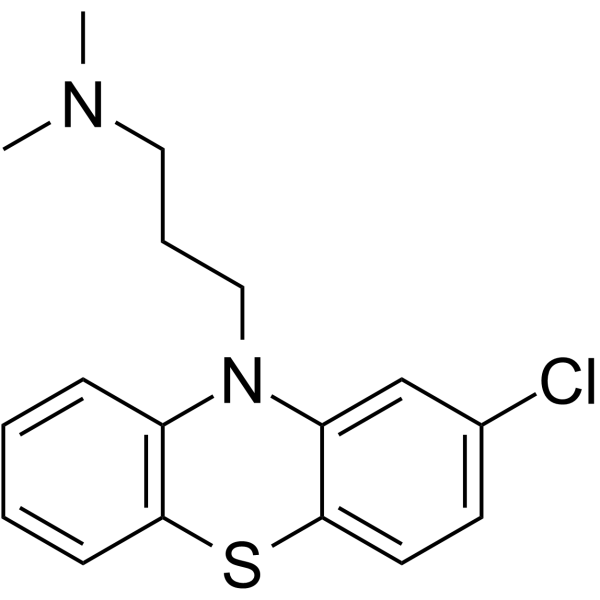
    Histamine Receptor Neurological Disease
    Aceprometazine (1664CB) is an orally active antipsychotic. Aceprometazine can be used in the study of psychiatric disorders, such as depression .
    Aceprometazine
  • HY-144609

    Opioid Receptor Neurological Disease
    Mu opioid receptor antagonist 4 (compound 31) is a potent and selective μ opioid receptor (MOR) antagonist with a Ki of 0.38 nM and an EC50 of 1.07 nM. Mu opioid receptor antagonist 4 has remarkable CNS antagonism against morphine, and precipitated fewer withdrawal symptoms than Naloxone. Mu opioid receptor antagonist 4 Mu opioid receptor antagonist 4 can be used for researching opioid use disorders (OUD) .
    Mu opioid receptor antagonist 4
  • HY-144607

    Opioid Receptor Neurological Disease
    Mu opioid receptor antagonist 2 (compound 25) is a potent, selective and blood-brain barrier (BBB) penetrant μ opioid receptor (MOR) antagonist with a Ki of 0.37 nM and an EC50 of 0.44 nM. Mu opioid receptor antagonist 2 has remarkable CNS antagonism against morphine, and precipitated fewer withdrawal symptoms than Naloxone. Mu opioid receptor antagonist 2 can be used for researching opioid use disorders (OUD) .
    Mu opioid receptor antagonist 2
  • HY-162771

    Opioid Receptor Neurological Disease
    Mu opioid receptor agonist 1 (compound 12) is a Mu opioid receptor agonist. Mu opioid receptor agonist 1 can be used in nervous system related research .
    Mu opioid receptor agonist 1
  • HY-138879B

    (1S,5R)-CP-601927

    nAChR Neurological Disease
    CP-601932 ((1S,5R)-CP-601927) is a high-affinity partial agonist at α3β4 nAChR (Ki=21 nM; EC50=~ 3 μM). CP-601932 has the same high-binding affinity at α4β2 nAChR (Ki=21 nM) and an order of magnitude lower affinity for α6 and α7 nAChR subtypes. CP-601932 selectively decreases ethanol but not sucrose consumption and operant self-administration following long-term exposure. CP-601932 can penetrate the CNS .
    CP-601932
  • HY-135698

    M-CAM

    Opioid Receptor Neurological Disease
    Methocinnamox (M-CAM) a selective and long-acting μ-opioid receptor (MOR) antagonist with a Ki of 0.6 nM. Methocinnamox binds to the orthosteric site of the MOR in a pseudo-irreversible, non-covalent manner, resulting in prolonged receptor blockade that persists until new receptors are synthesized. Methocinnamox acts as a reversible antagonist at both the kappa-opioid receptor (KOR) (Ki = 4.9 nM) and delta-opioid receptor (DOR) (Ki = 2.2 nM), and it exhibits no intrinsic agonist activity at these receptors. Methocinnamox can be used to reverse and prevent opioid overdose and addiction .
    Methocinnamox
  • HY-110029
    Paroxetine maleate
    5+ Cited Publications

    BRL29060 maleate

    Serotonin Transporter Neurological Disease
    Paroxetine maleate is a potent and selective inhibitor of SSRI. Paroxetine maleate is used in generalized anxiety disorder, post traumatic stress disorder, premenstrual dysphoric disorder and chronic headache research .
    Paroxetine maleate
  • HY-153458

    Orexin Receptor (OX Receptor) Cardiovascular Disease Neurological Disease Metabolic Disease
    Orexin receptor modulator-1 is an orexin receptor modulator. Orexin receptor modulator-1 can be used for the research of substance addiction, panic disorder, anxiety, post-traumatic stress disorder, pain, depression, seasonal affective disorder, an eating disorder, or hypertension .
    Orexin receptor modulator-1
  • HY-W726640

    MAPKAPK2 (MK2) Cardiovascular Disease Metabolic Disease
    Peraquinsin is a MK2 activator. Peraquinsin can be used for the research of vascular disorder or endothelial barrier disorder. Peraquinsin also is an antihypertensive agent .
    Peraquinsin
  • HY-177639A

    NN-6020 sodium

    Aldehyde Dehydrogenase (ALDH) Metabolic Disease
    Lefelsiran sodium is a siRNA targeted to ALDH2. It is used for the study of alcohol use disorder.
    Lefelsiran sodium
  • HY-U00298

    Glucocorticoid Receptor Inflammation/Immunology Endocrinology
    Amebucort is a synthetic glucocorticoid corticosteroid, may used for the research of inflammatory disorders.
    Amebucort
  • HY-177639

    NN-6020

    Aldehyde Dehydrogenase (ALDH) Metabolic Disease
    Lefelsiran (NN-6020) is a siRNA targeted to ALDH2. It is used for the study of alcohol use disorder.
    Lefelsiran
  • HY-U00375

    Cholecystokinin Receptor Endocrinology
    Gastrin/CCK antagonist 1 is an antagonist of gastrin/CCK, used for the research of gastrointestinal disorders.
    Gastrin/CCK antagonist 1
  • HY-W900240

    IRAK Inflammation/Immunology
    BMS-978299 is an IRAK4 inhibitor that can be used for the study of immune disorders .
    BMS-978299
  • HY-148322

    Sirtuin Infection Neurological Disease Metabolic Disease Inflammation/Immunology Cancer
    Sirtuin modulator 5 is a sirtuin modulating agent. Sirtuin modulator 5 can activate SIRT1 with a DC50 value of <50 μM. Sirtuin modulator 5 can be used for increasing the lifespan of a cell and used for the research of variety of diseases including, for example, diseases or disorders related to aging or stress, diabetes, obesity, neurodegenerative diseases, cardiovascular disease, blood clotting disorders, inflammation, cancer, and/or flushing as well as diseases or disorders that would benfit from increased mitochondrial activity .
    Sirtuin modulator 5
  • HY-16505

    Endogenous Metabolite Neurological Disease
    Triclofos sodium is a drug used to suppress insomnia and for sedation and has sedative activity. Triclofos sodium is used in children for sedation during painless medical procedures, particularly in children with neurocognitive disorders. Triclofos sodium has similar physiological and pharmacological properties to chloral and therefore can be used as a substitute when necessary. The safety and efficacy of Triclofos sodium have been demonstrated in pediatric populations with high rates of neurocognitive disorders .
    Triclofos sodium
  • HY-156458

    REV-ERB Inflammation/Immunology
    SR-29065 is a selective REV-ERBα agonist, can be used for autoimmune disorders research .
    SR-29065
  • HY-174307

    Dopamine Receptor Neurological Disease
    Dopamine D3 receptor ligand-6 (Compound 196476) is a selective dopamine D3 receptor (D3) antagonist. Dopamine D3 receptor ligand-6 is promising for research of substance use disorders (such as opioid and psychostimulant addiction) .
    Dopamine D3 receptor ligand-6

Inquiry Online

Your information is safe with us. * Required Fields.

Salutation


Country or Region *

Applicant Name *


Organization Name *

Department *


Email Address *


Product Name *

Cat. No.


Requested quantity *

Phone Number *


Remarks

Inquiry Online

Inquiry Information

Product Name:
Cat. No.:
Quantity:
MCE Japan Authorized Agent:

