Search Result
Results for "
zebrafish liver
" in MedChemExpress (MCE) Product Catalog:
3
Biochemical Assay Reagents
1
Isotope-Labeled Compounds
| Cat. No. |
Product Name |
Target |
Research Areas |
Chemical Structure |
-
- HY-119976
-
|
|
Environmental Pollutants
Apoptosis
Fungal
Mitochondrial Metabolism
Succinate Dehydrogenase
|
Infection
|
|
Boscalid is a succinate dehydrogenase (SDHI) inhibitor with antifungal activity. Boscalid binds to the ubiquinone-binding site of fungal mitochondrial complex II, blocks ATP production and aerobic respiration, exhibits good control efficacy against a variety of plant fungal diseases including gray mold, sclerotinia rot and powdery mildew, and is widely used for disease control in agriculture. Boscalid induces apoptosis, altered lipid metabolism, mitochondrial dysfunction, respiratory impairment, oxidative stress, ROS accumulation and neurodevelopmental disorders in zebrafish. Boscalid reduces foraging ability, shortens median death time and causes chronic toxicity in exposed honeybees. Boscalid also possesses genotoxicity, cytotoxicity, elevated mitochondrial superoxide levels and early-stage apoptosis .
|
-
-
- HY-W011927
-
|
Bisphenol S; Bis(4-hydroxyphenyl) sulfone
|
Estrogen Receptor/ERR
Histone Methyltransferase
Thyroid Hormone Receptor
PI3K
Akt
mTOR
Androgen Receptor
Drug Derivative
|
Cardiovascular Disease
Neurological Disease
Metabolic Disease
Inflammation/Immunology
Cancer
|
|
4,4'-Sulfonyldiphenol (Bisphenol S; Bis(4-hydroxyphenyl) sulfone), a substitute for Bisphenol A (HY-18260), is widely used in industrial and consumer products. 4,4'-Sulfonyldiphenol is an oally ative estrogen receptor (ER) agonist and can competitively bind to thyroid hormone receptors (TR) with IC50 values for TRα and TRβ are 2650 μM and 2294 μM respectively, thereby affecting breast development and reducing the expression of androgen receptor (AR) in fetal testes. 4,4'-Sulfonyldiphenol promotes the progression of glioblastoma by upregulating the EZH2 mediated PI3K/AKT/mTOR pathway. Under chronic exposure, 4,4'-Sulfonyldiphenol can cause significant lipid deposition and dyslipidemia in the mouse liver by upregulating JunB and Atf3, and has a role in causing obesity at low doses. 4,4'-Sulfonyldiphenol induces intestinal inflammation by altering the intestinal microbiome. 4,4'-Sulfonyldiphenol accelerates the progression of atherosclerosis in zebrafish embryo larvae .
|
-
-
- HY-B2004
-
|
|
Environmental Pollutants
Fungal
Mitochondrial Metabolism
|
Infection
|
|
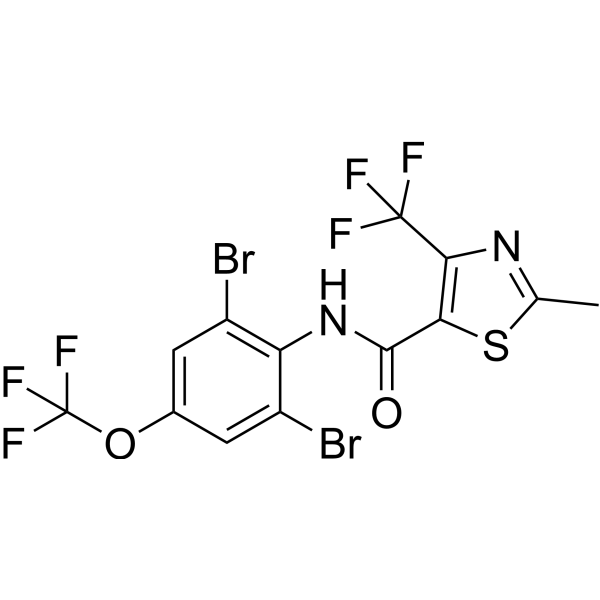
Thifluzamide is a fungicide that inhibits fungal respiration by blocking the ubiquinone-binding site in mitochondrial complex II. Thifluzamide exhibits significant activity against Basidiomycota pathogens (such as Rhizoctonia cerealis, Ustilago and Puccinia genera) and is commonly used in studies on wheat sharp eyespot. Thifluzamide displays a dual mechanism in regulating lipid metabolism: it reduces fatty acid synthase activity to inhibit endogenous fatty acid synthesis, and increases carnitine palmitoyltransferase-I activity to accelerate fatty acid β-oxidation, thereby reducing total cholesterol and triglyceride levels in the liver. Thifluzamide also induces hepatotoxicity in zebrafish models and carries a risk of developmental toxicity. Thifluzamide inhibition of Rhizoctonia cerealis may result in low to moderate levels of drug resistance, leading to the generation of stable drug-resistant mutants .
|
-
-
- HY-B0842
-
-
-
- HY-122652
-
|
|
Apoptosis
Aldose Reductase
|
Neurological Disease
Cancer
|
|
MitoBloCK-6 is a potent Erv1/ALR inhibitor, with an IC50 of 900 nM and 700 nM, respectively. MitoBloCK-6 also inhibits Erv2 (IC50=1.4 μM). MitoBloCK-6 can induce Apoptosis via cytochrome c release. MitoBloCK-6 inhibits growth of developing zebrafish motor neurons. MitoBloCK-6 has anticancer activity against liver cancer and leukemia .
|
-
-
- HY-B2011
-
|
|
Environmental Pollutants
Succinate Dehydrogenase
Fungal
Mitochondrial Metabolism
|
Infection
|
|
Flutolanil is a succinate dehydrogenase complex inhibitor and fungicide. Flutolanil blocks electron transfer between the redox center of succinate dehydrogenase and coenzyme Q, inhibits mycelial oxygen consumption, and suppresses mycelial growth. Flutolanil induces acute and sublethal toxicity in zebrafish at different life stages. Flutolanil can be used in studies on plant disease control .
|
-
-
- HY-W002199
-
|
6:2 FTOH; 1H,1H,2H,2H-Perfluoro-1-octanol; 2-(Perfluorohexyl)ethanol
|
Bacterial
Apoptosis
ERK
TNF Receptor
|
Infection
Neurological Disease
|
|
6:2 Fluorotelomer alcohol (6:2 FTOH) is an orally active, blood-brain barrier-permeable modulator of cyclin D1 and ETS1. 6:2 Fluorotelomer alcohol downregulates cyclin D1 expression, upregulates ETS1 via the TNF-α/ERK 1/2 pathway, impairs mitochondrial membrane potential and respiratory function, increases reactive oxygen species levels, disrupts calcium homeostasis and activates endoplasmic reticulum stress markers, and induces cell proliferation inhibition and endothelial-mesenchymal transition. Furthermore, 6:2 Fluorotelomer alcohol induces morphological abnormalities in zebrafish embryos and liver developmental damage, while disrupting the brain immune microenvironment in mice, causing systemic toxicity and delayed pup maturation in CD-1 mice. 6:2 Fluorotelomer alcohol also induces cortical neuron apoptosis, glial cell activation, synaptic abnormalities, colonic barrier damage, intestinal dysbiosis and autism spectrum disorder-like symptoms in mice. 6:2 Fluorotelomer alcohol shows no mutagenic, clastogenic, primary skin/eye irritation or skin sensitizing effects, exhibits no selective reproductive toxicity in CD-1 mice, and is classified as GHS Category 4 for acute oral toxicity. 6:2 Fluorotelomer alcohol can be used in studies of neurodevelopmental disorders and autism spectrum disorders .
|
-
-
- HY-W275295
-
-
-
- HY-W012657
-
|
|
Environmental Pollutants
Parasite
|
Infection
|
|
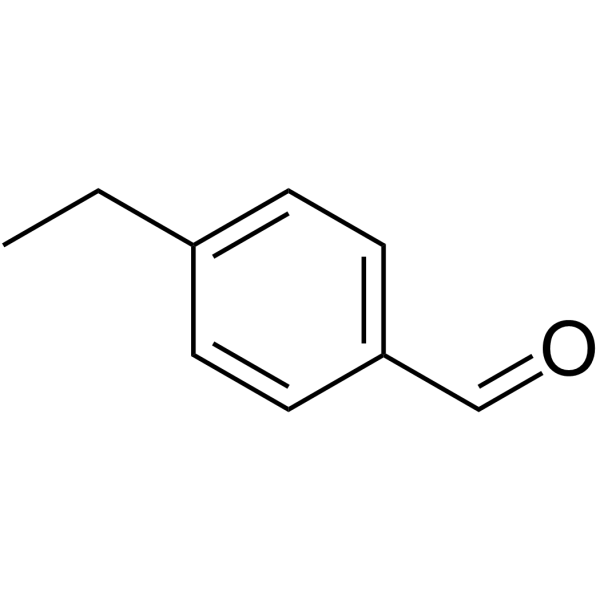
4-Ethylbenzaldehyde is an aldehyde type organic compound with an almond-like odor. 4-Ethylbenzaldehyde is naturally present in various foods such as grilled meat, black tea, peanuts, etc. 4-Ethylbenzaldehyde has significant effects in controlling plant parasitic nematodes. 4-Ethylbenzaldehyde has genotoxicity and potential for liver damage in zebrafish models .
|
-
-
- HY-21191
-
|
PFBS
|
Biochemical Assay Reagents
PPAR
Reactive Oxygen Species (ROS)
|
Metabolic Disease
|
|
Perfluorobutanesulfonic acid (PFBS) is a short-chain perfluoroalkyl substance and the main replacement for perfluorooctanesulfonic acid. Perfluorobutanesulfonic acid induces fat accumulation in human HepG2 hepatoma cells. Perfluorobutanesulfonic acid promotes lipid accumulation by activating PPARγ pathway and triggering oxidative stress, endoplasmic reticulum stress and calcium dyshomeostasis. Perfluorobutanesulfonic acid impairs reproduction and causes developmental disorders in offspring of Caenorhabditis elegans. Perfluorobutanesulfonic acid disrupts pancreatic organogenesis and lipid homeostasis in zebrafish embryos. Perfluorobutanesulfonic acid can be used in environmental toxicology, lipid metabolism and developmental toxicity studies .
|
-
-
- HY-W011927S
-
|
Bisphenol S (4,4'-Sulfonyldiphenol)-d8
|
Isotope-Labeled Compounds
Estrogen Receptor/ERR
Histone Methyltransferase
Thyroid Hormone Receptor
PI3K
Akt
mTOR
Androgen Receptor
|
Cardiovascular Disease
Metabolic Disease
Inflammation/Immunology
Endocrinology
Cancer
|
|
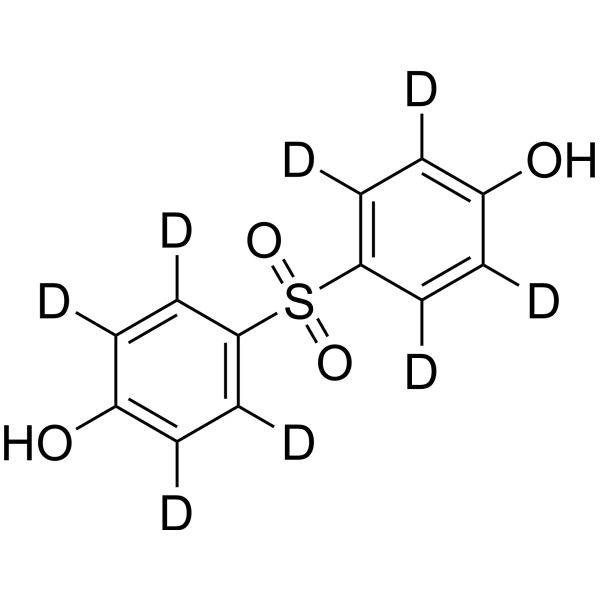
4,4'-Sulfonyldiphenol-d8 (Bisphenol S (4,4'-Sulfonyldiphenol)-d8) is the deuterium labeled 4,4'-Sulfonyldiphenol (HY-W011927).4,4'-Sulfonyldiphenol (Bisphenol S; Bis(4-hydroxyphenyl) sulfone), a substitute for Bisphenol A (HY-18260), is widely used in industrial and consumer products. 4,4'-Sulfonyldiphenol is an estrogen receptor (ER) agonist and can competitively bind to thyroid hormone receptors (TR) with IC50 values for TRα and TRβ are 2650 μM and 2294 μM respectively, thereby affecting breast development and reducing the expression of androgen receptor (AR) in fetal testes. 4,4'-Sulfonyldiphenol promotes the progression of glioblastoma by upregulating the EZH2 mediated PI3K/AKT/mTOR pathway. Under chronic exposure, 4,4'-Sulfonyldiphenol can cause significant lipid deposition and dyslipidemia in the mouse liver by upregulating JunB and Atf3, and has a role in causing obesity at low doses. 4,4'-Sulfonyldiphenol induces intestinal inflammation by altering the intestinal microbiome. 4,4'-Sulfonyldiphenol accelerates the progression of atherosclerosis in zebrafish embryo larvae.
|
-
-
- HY-178367
-
|
|
Phosphatase
Apoptosis
Caspase
PARP
|
Cancer
|
|
PFKFB4-IN-1 is a potent and selective ATP-competitive PFKFB4 inhibitor (IC50 = 4.50 μM) that reduces intracellular PFKFB4 protein levels. PFKFB4-IN-1 exhibits >12-fold selectivity over PFKFB1/4 and PFKFB3/4. PFKFB4-IN-1 inhibits cancer cell proliferation, induces apoptosis, and inhibits cell migration. PFKFB4-IN-1 inhibits tumor growth in the MDA-MB-231 xenograft mouse model. PFKFB4-IN-1 can be used for breast, lung and liver cancer research .
|
-
-
- HY-W011927R
-
|
Bisphenol S (Standard); Bis(4-hydroxyphenyl) sulfone (Standard)
|
Reference Standards
Estrogen Receptor/ERR
Histone Methyltransferase
Thyroid Hormone Receptor
PI3K
Akt
mTOR
Androgen Receptor
Drug Derivative
|
Cardiovascular Disease
Metabolic Disease
Inflammation/Immunology
Endocrinology
Cancer
|
|
4,4'-Sulfonyldiphenol (Bisphenol S; Bis(4-hydroxyphenyl) sulfone) (Standard) is the analytical standard of 4,4'-Sulfonyldiphenol (HY-W011927). This product is intended for research and analytical applications. 4,4'-Sulfonyldiphenol, a substitute for Bisphenol A (HY-18260), is widely used in industrial and consumer products. 4,4'-Sulfonyldiphenol is an estrogen receptor (ER) agonist and can competitively bind to thyroid hormone receptors (TR) with IC50 values for TRα and TRβ are 2650 μM and 2294 μM respectively, thereby affecting breast development and reducing the expression of androgen receptor (AR) in fetal testes. 4,4'-Sulfonyldiphenol promotes the progression of glioblastoma by upregulating the EZH2 mediated PI3K/AKT/mTOR pathway. Under chronic exposure, 4,4'-Sulfonyldiphenol can cause significant lipid deposition and dyslipidemia in the mouse liver by upregulating JunB and Atf3, and has a role in causing obesity at low doses. 4,4'-Sulfonyldiphenol induces intestinal inflammation by altering the intestinal microbiome. 4,4'-Sulfonyldiphenol accelerates the progression of atherosclerosis in zebrafish embryo larvae.
|
-
-
- HY-177869
-
|
|
Drug Derivative
Apoptosis
Caspase
PARP
|
Cancer
|
|
CHNQD-00824 is a Terphenyllin (HY-119821) derivative with potent anticancer effect. CHNQD-00824 inhibits the proliferation and migration of cancer cells via DNA damage. CHNQD-00824 triggers apoptosis and inhibits Doxycin Hydrochloride (DOX)-induced liver-specific enlargement in zebrafish embryos. CHNQD-00824 can be used for cancer research, such as liver and breast cancer .
|
-
-
- HY-162657
-
|
|
Cholinesterase (ChE)
|
Cancer
|
|
AChE-IN-74 (Compound 10) is a modulator for cholinesterase. AChE-IN-74 inhibits the proliferation of liver cancer cell Hep3B and SkHep1 with IC50 of 3.6 and 19.9 μM. AChE-IN-74 exhibits a low embryonic toxicity in zebrafish models (10-15 μM) .
|
-
-
- HY-W011616
-
|
CDNG1/vuc230
|
Wnt
|
Cardiovascular Disease
Cancer
|
|
Cardionogen 1 (CDNG1/vuc230) is a Wnt signaling pathway inhibitor that slows down Myc-induced liver tumorigenesis. Cardionogen 1 treatment of zebrafish embryos before gastrulation inhibits cardiomyocyte formation, whereas treatment during or after gastrulation induces cardiomyocyte formation. Cardionogen 1 has potential in research into cancer and cardiovascular disease .
|
-
-
- HY-W012657R
-
|
|
Reference Standards
Parasite
|
Infection
|
|
4-Ethylbenzaldehyde (Standard) is the analytical standard of 4-Ethylbenzaldehyde (HY-W012657). This product is intended for research and analytical applications. 4-Ethylbenzaldehyde is an aldehyde type organic compound with an almond-like odor. 4-Ethylbenzaldehyde is naturally present in various foods such as grilled meat, black tea, peanuts, etc. 4-Ethylbenzaldehyde has significant effects in controlling plant parasitic nematodes. 4-Ethylbenzaldehyde has genotoxicity and potential for liver damage in zebrafish models.
|
-
-
- HY-163982
-
|
|
NF-κB
FOXO
|
Inflammation/Immunology
|
|
FOXJ1 agonist 1 (compound 16c) is an orally effective small molecule that can effectively enhance the expression of FOXJ1. Foxj1-IN-1 acts on the mammalian airway system composed of multiciliated cells (MCC) to prevent the development and onset of chronic obstructive pulmonary disease (COPD). Foxj1-IN-1 can induce the production of motile cilia in the respiratory system of zebrafish and mammals, and inhibit elastase-induced COPD mouse models. Foxj1-IN-1 has good liver microsomal stability, in vivo PK curve and AUC; it has no significant inhibition of CYP and hERG, and does not have significant cytotoxicity .
|
-
-
- HY-B2004R
-
|
|
Reference Standards
Fungal
Mitochondrial Metabolism
|
Infection
|
|
Thifluzamide (Standard) is the analytical standard of Thifluzamide. This product is intended for research and analytical applications. Thifluzamide is a fungicide that inhibits fungal respiration by blocking the ubiquinone-binding site in mitochondrial complex II. Thifluzamide exhibits significant activity against Basidiomycota pathogens (such as Rhizoctonia cerealis, Ustilago and Puccinia genera) and is commonly used in studies on wheat sharp eyespot. Thifluzamide displays a dual mechanism in regulating lipid metabolism: it reduces fatty acid synthase activity to inhibit endogenous fatty acid synthesis, and increases carnitine palmitoyltransferase-I activity to accelerate fatty acid β-oxidation, thereby reducing total cholesterol and triglyceride levels in the liver. Thifluzamide also induces hepatotoxicity in zebrafish models and carries a risk of developmental toxicity. Thifluzamide inhibition of Rhizoctonia cerealis may result in low to moderate levels of drug resistance, leading to the generation of stable drug-resistant mutants .
|
-
-
- HY-W685358
-
|
|
Insecticide
Apoptosis
|
Infection
Metabolic Disease
Inflammation/Immunology
|
|
D-Tetramethrin is a type I synthetic pyrethroid insecticide and hepatotoxicity inducer. D-Tetramethrin induces oxidative stress in the liver of zebrafish. D-Tetramethrin induces Apoptosis and inflammatory responses. D-Tetramethrin causes severe liver damage in zebrafish. D-Tetramethrin can be used in studies related to hepatotoxicity .
|
-
-
- HY-180141
-
|
|
Insecticide
Cholinesterase (ChE)
SOD
|
Infection
|
|
AF03 is a larvicide against Aedes aegypti Vector Larvae with a LC50 of 41.6 μg/mL. AF03 binds stably to the sterol carrier protein-2 (AeSCP-2) of Aedes aegypti, interfering with lipid metabolism in larvae. AF03 can increase acetylcholinesterase (AChE) activity in the zebrafish brain, slightly elevate catalase (CAT) activity in the liver and heart, and increased superoxide dismutase (SOD) activity in the brain. AF03 can be used for the research of arboviruses infection, such as Dengue .
|
-
-
- HY-183647
-
|
|
NO Synthase
|
Inflammation/Immunology
|
|
iNOs-IN-9 is a selective inducible nitric oxide synthase (iNOS) inhibitor with an IC50 of 82 nM against hiNOS. iNOs-IN-9 reduces cytokine-induced inflammatory responses and cell necrosis in inflammatory cell models. iNOs-IN-9 can be used for research related to psoriasis .
|
-
| Cat. No. |
Product Name |
Type |
-
- HY-119976
-
|
|
Biochemical Assay Reagents
|
|
Boscalid is a succinate dehydrogenase (SDHI) inhibitor with antifungal activity. Boscalid binds to the ubiquinone-binding site of fungal mitochondrial complex II, blocks ATP production and aerobic respiration, exhibits good control efficacy against a variety of plant fungal diseases including gray mold, sclerotinia rot and powdery mildew, and is widely used for disease control in agriculture. Boscalid induces apoptosis, altered lipid metabolism, mitochondrial dysfunction, respiratory impairment, oxidative stress, ROS accumulation and neurodevelopmental disorders in zebrafish. Boscalid reduces foraging ability, shortens median death time and causes chronic toxicity in exposed honeybees. Boscalid also possesses genotoxicity, cytotoxicity, elevated mitochondrial superoxide levels and early-stage apoptosis .
|
-
- HY-W011927
-
|
Bisphenol S; Bis(4-hydroxyphenyl) sulfone
|
Biochemical Assay Reagents
|
|
4,4'-Sulfonyldiphenol (Bisphenol S; Bis(4-hydroxyphenyl) sulfone), a substitute for Bisphenol A (HY-18260), is widely used in industrial and consumer products. 4,4'-Sulfonyldiphenol is an oally ative estrogen receptor (ER) agonist and can competitively bind to thyroid hormone receptors (TR) with IC50 values for TRα and TRβ are 2650 μM and 2294 μM respectively, thereby affecting breast development and reducing the expression of androgen receptor (AR) in fetal testes. 4,4'-Sulfonyldiphenol promotes the progression of glioblastoma by upregulating the EZH2 mediated PI3K/AKT/mTOR pathway. Under chronic exposure, 4,4'-Sulfonyldiphenol can cause significant lipid deposition and dyslipidemia in the mouse liver by upregulating JunB and Atf3, and has a role in causing obesity at low doses. 4,4'-Sulfonyldiphenol induces intestinal inflammation by altering the intestinal microbiome. 4,4'-Sulfonyldiphenol accelerates the progression of atherosclerosis in zebrafish embryo larvae .
|
-
- HY-W011927R
-
|
Bisphenol S (Standard); Bis(4-hydroxyphenyl) sulfone (Standard)
|
Biochemical Assay Reagents
|
|
4,4'-Sulfonyldiphenol (Bisphenol S; Bis(4-hydroxyphenyl) sulfone) (Standard) is the analytical standard of 4,4'-Sulfonyldiphenol (HY-W011927). This product is intended for research and analytical applications. 4,4'-Sulfonyldiphenol, a substitute for Bisphenol A (HY-18260), is widely used in industrial and consumer products. 4,4'-Sulfonyldiphenol is an estrogen receptor (ER) agonist and can competitively bind to thyroid hormone receptors (TR) with IC50 values for TRα and TRβ are 2650 μM and 2294 μM respectively, thereby affecting breast development and reducing the expression of androgen receptor (AR) in fetal testes. 4,4'-Sulfonyldiphenol promotes the progression of glioblastoma by upregulating the EZH2 mediated PI3K/AKT/mTOR pathway. Under chronic exposure, 4,4'-Sulfonyldiphenol can cause significant lipid deposition and dyslipidemia in the mouse liver by upregulating JunB and Atf3, and has a role in causing obesity at low doses. 4,4'-Sulfonyldiphenol induces intestinal inflammation by altering the intestinal microbiome. 4,4'-Sulfonyldiphenol accelerates the progression of atherosclerosis in zebrafish embryo larvae.
|
| Cat. No. |
Product Name |
Category |
Target |
Chemical Structure |
| Cat. No. |
Product Name |
Chemical Structure |
-
- HY-W011927S
-
1 Publications Verification
|
|
4,4'-Sulfonyldiphenol-d8 (Bisphenol S (4,4'-Sulfonyldiphenol)-d8) is the deuterium labeled 4,4'-Sulfonyldiphenol (HY-W011927).4,4'-Sulfonyldiphenol (Bisphenol S; Bis(4-hydroxyphenyl) sulfone), a substitute for Bisphenol A (HY-18260), is widely used in industrial and consumer products. 4,4'-Sulfonyldiphenol is an estrogen receptor (ER) agonist and can competitively bind to thyroid hormone receptors (TR) with IC50 values for TRα and TRβ are 2650 μM and 2294 μM respectively, thereby affecting breast development and reducing the expression of androgen receptor (AR) in fetal testes. 4,4'-Sulfonyldiphenol promotes the progression of glioblastoma by upregulating the EZH2 mediated PI3K/AKT/mTOR pathway. Under chronic exposure, 4,4'-Sulfonyldiphenol can cause significant lipid deposition and dyslipidemia in the mouse liver by upregulating JunB and Atf3, and has a role in causing obesity at low doses. 4,4'-Sulfonyldiphenol induces intestinal inflammation by altering the intestinal microbiome. 4,4'-Sulfonyldiphenol accelerates the progression of atherosclerosis in zebrafish embryo larvae.
|
-
Your information is safe with us. * Required Fields.
Inquiry Information
- Product Name:
- Cat. No.:
- Quantity:
- MCE Japan Authorized Agent:

