



Vactosertib Hydrochloride
Based on 13 publication(s) in Google Scholar
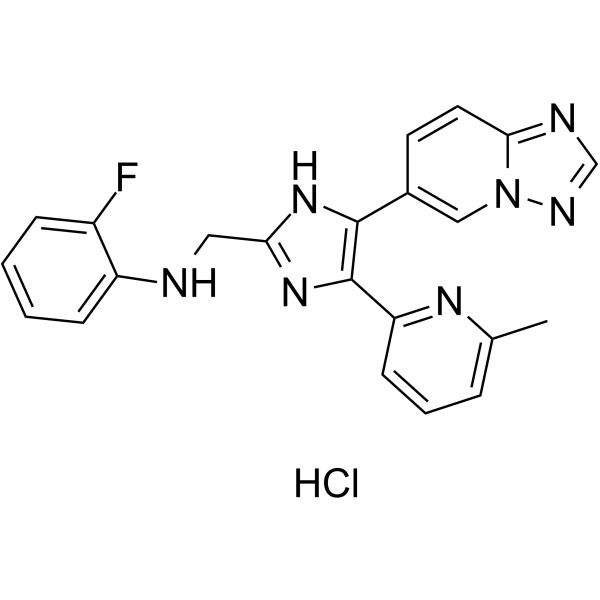
Vactosertib Hydrochloride (EW-7197 Hydrochloride) is a potent, orally active and ATP-competitive activin receptor-like kinase 5 (ALK5) inhibitor with an IC50 of 12.9 nM. Vactosertib Hydrochloride also inhibits ALK2 and ALK4 (IC50 of 17.3 nM) at nanomolar concentrations. Vactosertib Hydrochloride has potently antimetastatic activity and anticancer effect.
For research use only. We do not sell to patients.
- Purity : 99.22%
- CAS No.: 1352610-25-3
- Formula: C22H19ClFN7
- Molecular Weight:435.88
-
Storage:
-20°C, stored under nitrogen, away from moisture
* In solvent : -80°C, 6 months; -20°C, 1 month (stored under nitrogen, away from moisture)

To place orders, for customer services and technical support, please contact: MedChemExpress USA
Tel: 609-228-6898 E-mail: [email protected] [email protected]


-
 Biological Activity
-
Chemical Information
-
Solvent & Solubility
- Protocols
- Purity & Documentation
- References
-
 Help & FAQs


-
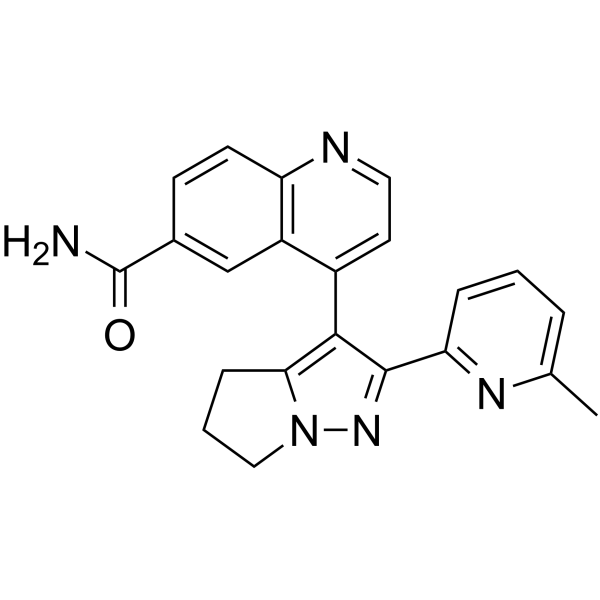
HY-13226
GalunisertibTGFβRI Inhibitor -
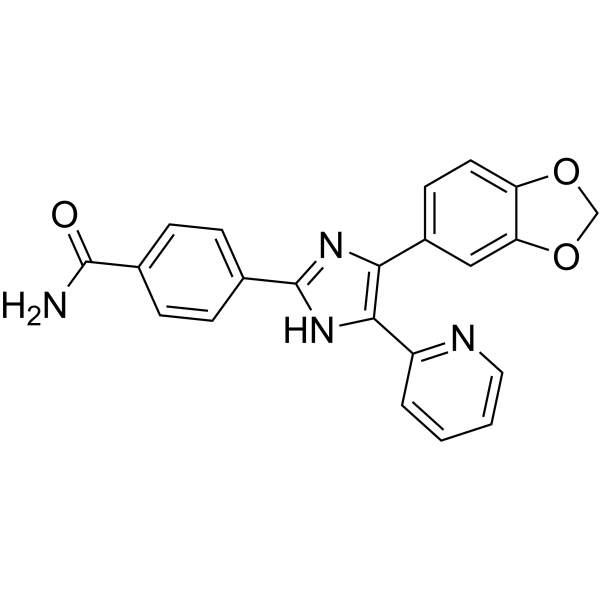
HY-10431
SB-431542TGF-β Receptor Kinase Inhibitor -
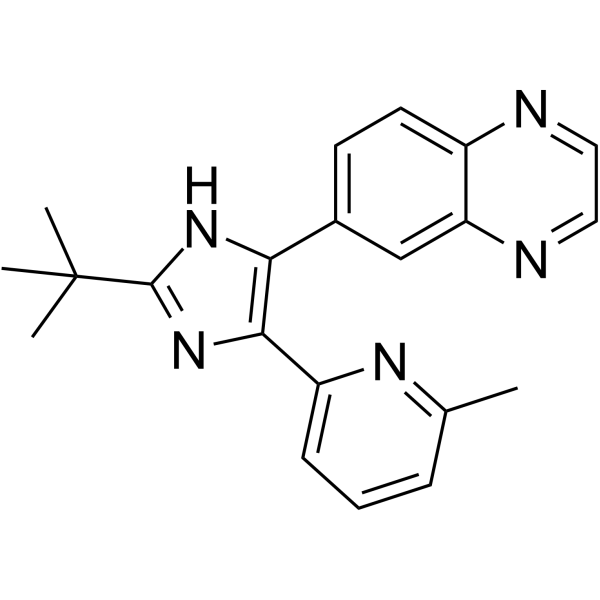
HY-12043
SB 525334ALK5 Inhibitor -
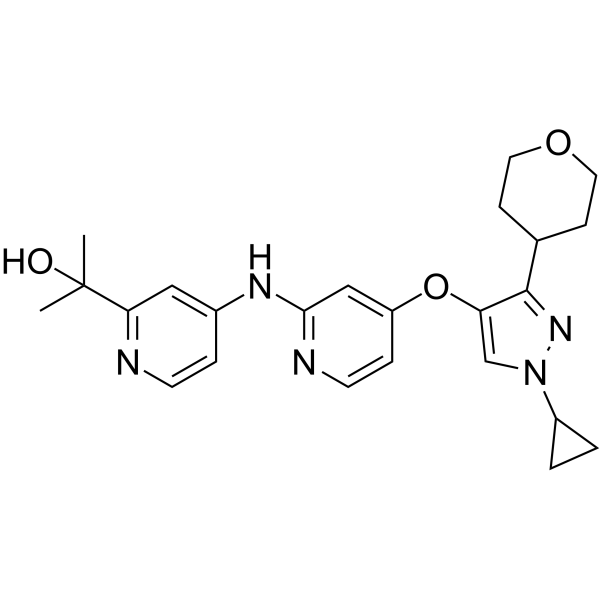
HY-103021
LY3200882ALK5 Inhibitor -
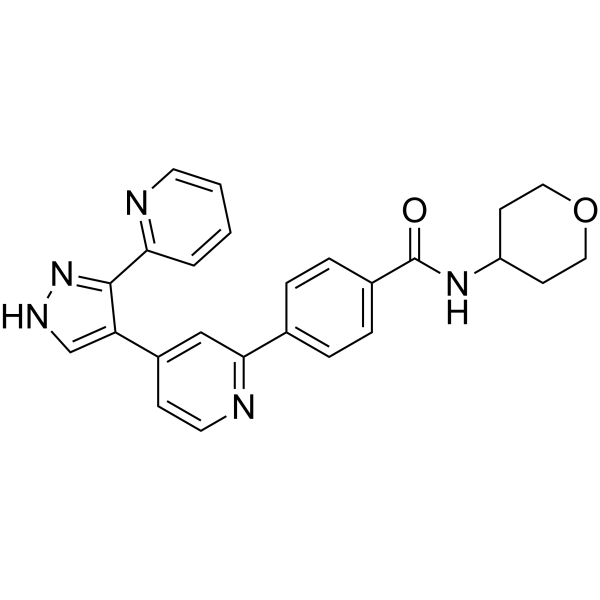
HY-10326
GW788388ALK5 Inhibitor -

HY-10432
A 83-01ALK4/5/7 Inhibitor -

HY-12704
ITD-1TGF-β Receptor Inhibitor -
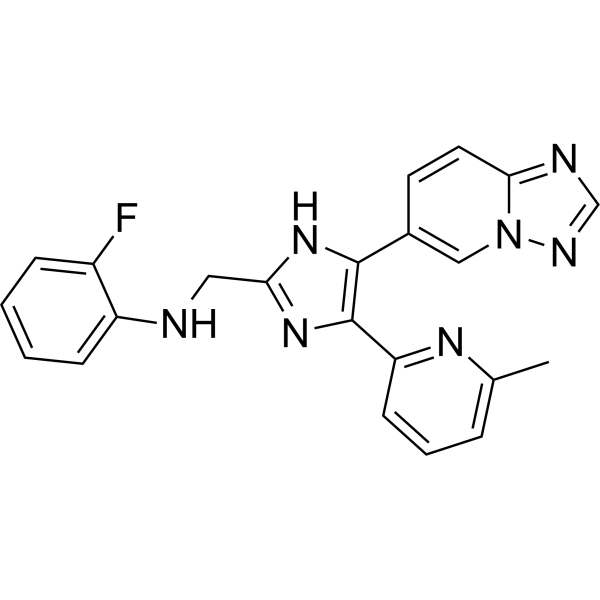
HY-19928
VactosertibALK5 Inhibitor -

HY-10432G
A 83-01 (GMP)ALK4/5/7 Inhibitor -
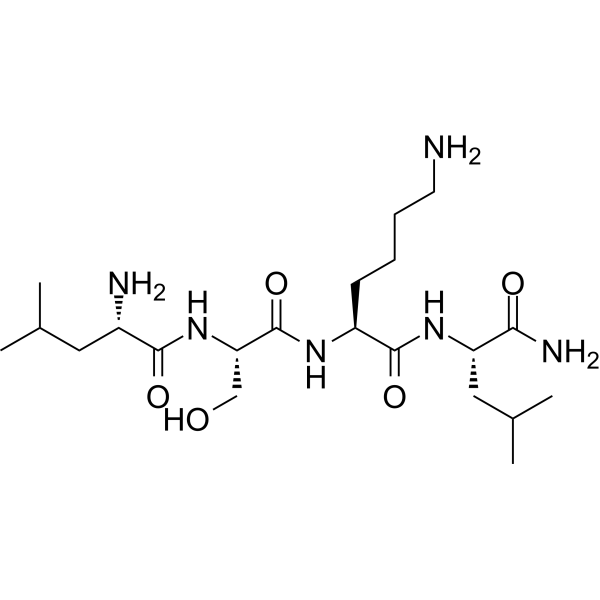
HY-P0299
LSKL, Inhibitor of Thrombospondin (TSP-1)TGF-β1 Antagonist -

HY-10432R
A 83-01 (Standard)ALK4/5/7 Inhibitor -

HY-124697
BMP signaling agonist sb4BMP Agonist
Publications Citing Use of MedChemExpress (MCE) Vactosertib Hydrochloride
More- Nat Commun. 2024 Aug 27;15(1):7388. [Abstract]
- Cell Discov. 2022 Sep 20;8(1):94. [Abstract]
- J Exp Med. 2025 Jan 6;222(1):e20241442. [Abstract]
- Lab Chip. 2025 Dec 9:10.1039/d5lc00856e. [Abstract]
- Cancer Sci. 2026 Feb 27. [Abstract]
- Cancers (Basel). 2020 Jun 30;12(7):1737. [Abstract]
- J Cell Mol Med. 2025 Sep;29(17):e70815. [Abstract]
- Exp Cell Res. 2026 Aug 1;461(1):115098. [Abstract]
- Dev Growth Differ. 2025 Apr;67(3):149-164. [Abstract]
- bioRxiv. 2026 Jun 26.
- bioRxiv. 2026 May 19.
- Patent. US20240197729A1.
- Res Sq. 2023 Jul 17:rs.3.rs-3112163. [Abstract]
 Customer Validation & Images

-
WB
-
RT-PCR
-
Cell Migration/Invasion Assay
-
Flow Cytometry
-
Flow Cytometry


Biological Activity
Description
IC50 & Target
[1]|
ALK5 12.9 nM (IC50) |
In Vitro
Vactosertib (10-1000 nM; 30 minutes; 4T1 cells) treatment blocks the TGFβ-induced phosphorylation of Smad2 or Smad3 in a dose-dependent manner in 4T1 cells[1].
Vactosertib suppresses the TGFβ-induced nuclear translocation of Smad2/3 in 4T1 cells and MCF10A cells. The IC50 value of Vactosertib on pSmad3 in 4T1 cells is 10-30 nM[1].
Vactosertib abrogates TGFb1-induced tumor cell migration and invasion[1].
TGFβ1 downregulated the mRNA level of CDH1 and upregulated the mRNA levels of FN1, HMGA2 (high-mobility group AT-hook 2), SNAI1, and SNAI2 (Snail family zinc finger 1 and 2, respectively). Moreover, Vactosertib abolishes the TGFβ1-induced effects on genes related to epithelial-to-mesenchymal transition (EMT)[1].
MedChemExpress (MCE) has not independently confirmed the accuracy of these methods. They are for reference only. Further protocols information, click here.
-
Cell Line:4T1 cells
-
Concentration:10 nM, 30 µM, 50 nM, 100 µM, 300 nM, 500 nM, 1000 nM
-
Incubation Time:30 minutes
-
Result:Blocked the TGFb-induced phosphorylation of Smad2 or Smad3 in a dose-dependent manner.
In Vivo
Vactosertib also inhibits the epithelial-to-mesenchymal transition (EMT) in both TGFβ-treated breast cancer cells and 4T1 orthotopic-grafted mice. Furthermore, Vactosertib enhances cytotoxic T lymphocyte activity in 4T1 orthotopic-grafted mice and increased the survival time of 4T1-Luc and 4T1 breast tumor-bearing mice[1].
MedChemExpress (MCE) has not independently confirmed the accuracy of these methods. They are for reference only.
-
Animal Model:Mammary tumor virus (MMTV)/c-Neu female mice (32-week-old)[1]
-
Dosage:40 mg/kg
-
Administration:Intraperitoneal injection; every other day; for 10 weeks
-
Result:Inhibited Smad/TGFβ signaling, cell migration, invasion, and lung metastasis in MMTV/c-Neu mice.


Chemical Information
-
CAS No. 1352610-25-3
-
Appearance Solid
-
Molecular Weight 435.88
-
Formula C22H19ClFN7
-
Color Light yellow to yellow
-
SMILES
CC1=CC=CC(C2=C(C3=CN4C(C=C3)=NC=N4)NC(CNC5=CC=CC=C5F)=N2)=N1.Cl
-
Synonyms
EW-7197 Hydrochloride; TEW-7197 Hydrochloride
-
Shipping
Room temperature in continental US; may vary elsewhere.
-
Storage
-20°C, stored under nitrogen, away from moisture
* In solvent : -80°C, 6 months; -20°C, 1 month (stored under nitrogen, away from moisture)


Publications (13)
-
Journal Impact Factor
-
Most Recent
-
Nat Commun
The TGFβ type I receptor kinase inhibitor vactosertib in combination with pomalidomide in relapsed/refractory multiple myeloma: a phase 1b trial. [Abstract]2024 Aug 27;15(1):7388. PMID: 39191755 -
Cell Discov
Single-cell transcriptome reveals cellular hierarchies and guides p-EMT-targeted trial in skull base chordoma. [Abstract]2022 Sep 20;8(1):94. PMID: 36127333
Vactosertib Hydrochloride purchased from MedChemExpress. Usage Cited in: Cell Discov. 2022 Sep 20;8(1):94. [Abstract]
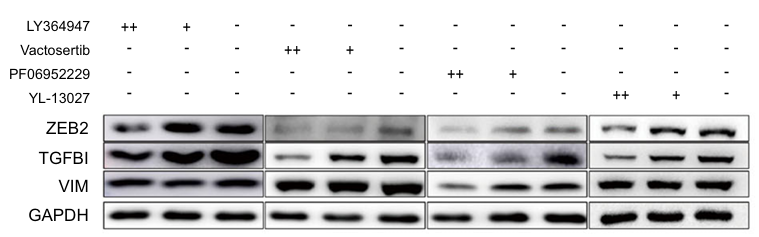
Treatment with four TGF-βR1 inhibitors (LY364947, Vactosertib, PF06952229, and YL-13027; used at 100 μM [++] or 10 μM [+]) for 48 h repressed the p-EMT-like program, as evidenced by decreased ZEB2 and TGFBI protein levels in the UM‑Chor1 cell line.
Vactosertib Hydrochloride purchased from MedChemExpress. Usage Cited in: Cell Discov. 2022 Sep 20;8(1):94. [Abstract]
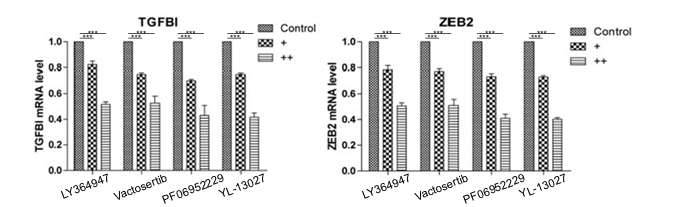
Treatment with four TGF-βR1 inhibitors (LY364947, Vactosertib, PF06952229, and YL-13027; used at 100 μM [++] or 10 μM [+]) for 48 h repressed the p-EMT-like program, as evidenced by decreased ZEB2 and TGFBI mRNA levels in the UM‑Chor1 cell line.
Vactosertib Hydrochloride purchased from MedChemExpress. Usage Cited in: Cell Discov. 2022 Sep 20;8(1):94. [Abstract]
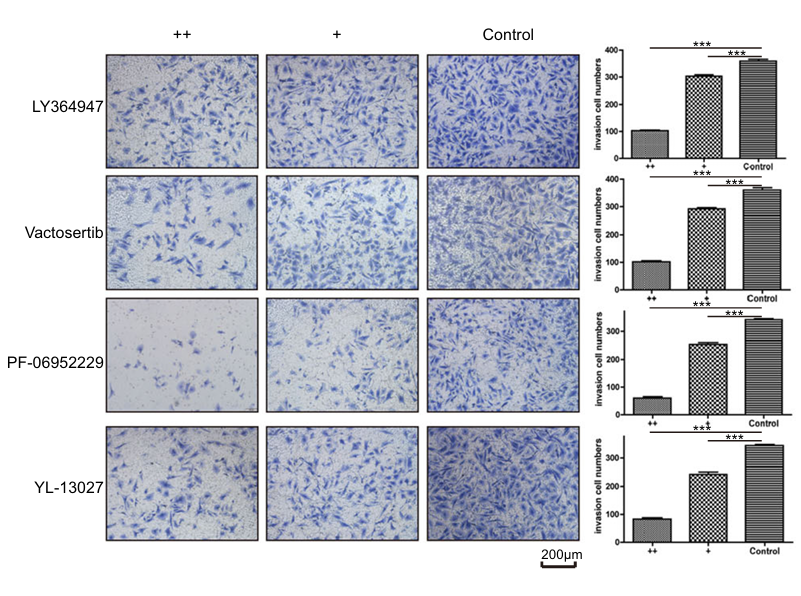
Treatment with four TGF-βR1 inhibitors (LY364947, Vactosertib, PF06952229, and YL-13027; used at 100 μM [++] or 10 μM [+]) for 48 h attenuated the invasiveness of UM‑Chor1 cells.
-
J Exp Med
Tumor-associated neutrophils attenuate the immunosensitivity of hepatocellular carcinoma. [Abstract]2025 Jan 6;222(1):e20241442. PMID: 39636298 -
Lab Chip
DCMiC: a double-cylinder micro-chamber platform for high-throughput drug screening and modeling of microenvironmental resistance in Ewing sarcoma. [Abstract]2025 Dec 9:10.1039/d5lc00856e. PMID: 41362255 -
Cancer Sci
TGF-β Inhibitor Potentiates Osimertinib-Induced Anti-Tumor Immunity in Egfr-Mutant Lung Cancer. [Abstract]2026 Feb 27. PMID: 41757675 -
Cancers (Basel)
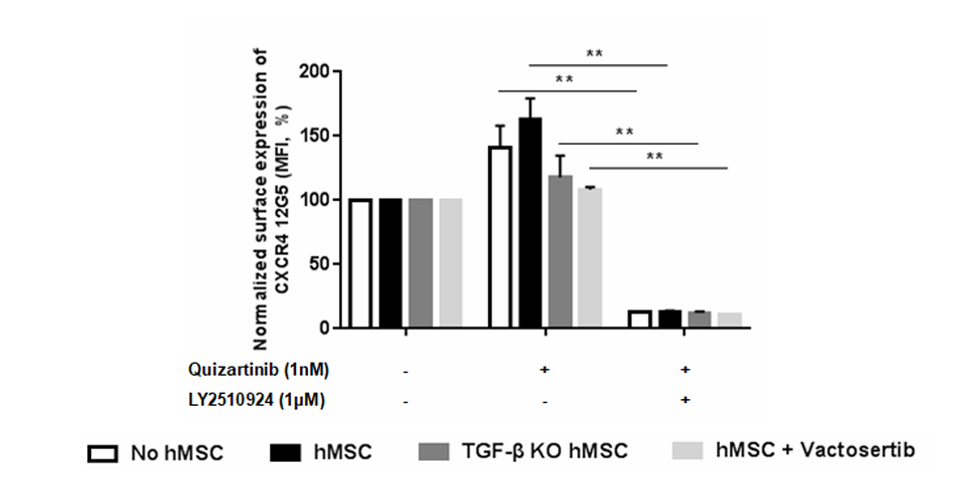
CXCR4 Inhibition Enhances Efficacy of FLT3 Inhibitors in FLT3-Mutated AML Augmented by Suppressed TGF-b Signaling. [Abstract]2020 Jun 30;12(7):1737. PMID: 32629802
Vactosertib Hydrochloride purchased from MedChemExpress. Usage Cited in: Cancers (Basel). 2020 Jun 30;12(7):1737. [Abstract]
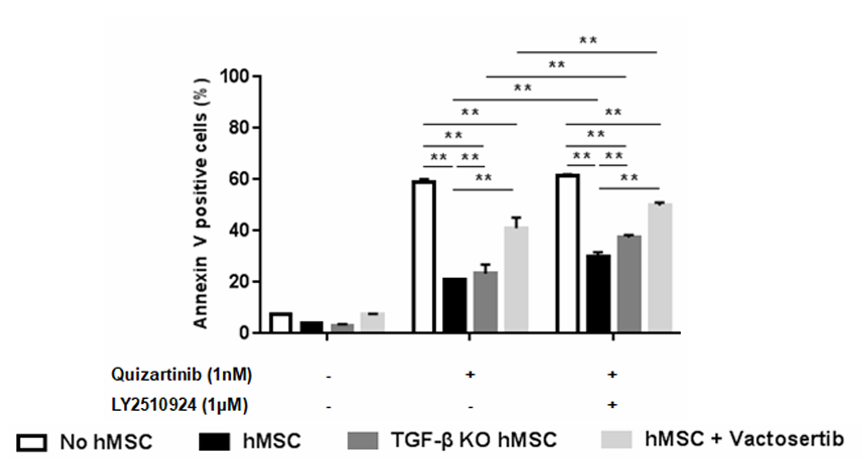
Vactosertib (1 nM, 72 h) in co-culture of MOLM-14 cells with TGF-β knockdown hMSC enhanced apoptosis induced by quizartinib (1 μM, 72 h), and even more so by the combined treatment.
Vactosertib Hydrochloride purchased from MedChemExpress. Usage Cited in: Cancers (Basel). 2020 Jun 30;12(7):1737. [Abstract]
Vactosertib (1 nM, 72 h) in co-culture of MOLM-14 cells with TGF-β knock-down hMSC showed effective blockade of CXCR4.
-
J Cell Mol Med
Pharmacological Targeting of DHHC9-Mediated STRN4 Palmitoylation to Suppress YAP-Driven Cancer Metastasis. [Abstract]2025 Sep;29(17):e70815. PMID: 40903842 -
Exp Cell Res
Vactosertib reverses ABCG2-mediated multidrug resistance through dual inhibition of drug efflux and transporter expression. [Abstract]2026 Aug 1;461(1):115098. PMID: 42264120 -
Dev Growth Differ
Transforming growth factor-β-mediated regulation of atoh1-expressing neural progenitors is involved in the generation of cerebellar granule cells in larval and adult zebrafish. [Abstract]2025 Apr;67(3):149-164. PMID: 40012512 -
-
-
-
Res Sq
Vactosertib, a novel TGF-β1 type I receptor kinase inhibitor, improves T-cell fitness: a single-arm, phase 1b trial in relapsed/refractory multiple myeloma. [Abstract]2023 Jul 17:rs.3.rs-3112163. PMID: 37503043


Solvent & Solubility
In Vitro:
DMSO : 100 mg/mL (229.42 mM; Need ultrasonic; Hygroscopic DMSO has a significant impact on the solubility of product, please use newly opened DMSO)
Please refer to the solubility information to select the appropriate solvent. Once prepared, please aliquot and store the solution to prevent product inactivation from repeated freeze-thaw cycles.
Storage method and period of stock solution: -80°C, 6 months; -20°C, 1 month (stored under nitrogen, away from moisture). When stored at -80°C, please use it within 6 months. When stored at -20°C, please use it within 1 month.
Please refer to the solubility information to select the appropriate solvent. Once prepared, please aliquot and store the solution to prevent product inactivation from repeated freeze-thaw cycles.
Storage method and period of stock solution: -80°C, 6 months; -20°C, 1 month (stored under nitrogen, away from moisture). When stored at -80°C, please use it within 6 months. When stored at -20°C, please use it within 1 month.
Concentration (start) × Volume (start) = Concentration (final) × Volume (final)
In Vivo:
Select the appropriate dissolution method based on your experimental animal and administration route.
- For the following dissolution methods, please ensure to first prepare a clear stock solution using an In Vitro approach and then sequentially add co-solvents:
- To ensure reliable experimental results, the clarified stock solution can be appropriately stored based on storage conditions. As for the working solution for In Vivo experiments, it is recommended to prepare freshly and use it on the same day.
- The percentages shown for the solvents indicate their volumetric ratio in the final prepared solution. If precipitation or phase separation occurs during preparation, heat and/or sonication can be used to aid dissolution.
Add each solvent one by one: 10% DMSO 40% PEG300 5% Tween-80 45% Saline
Solubility: ≥ 2.5 mg/mL (5.74 mM); Clear solution
This protocol yields a clear solution of ≥ 2.5 mg/mL (saturation unknown).
Taking 1 mL working solution as an example, add 100 μL DMSO stock solution (25.0 mg/mL) to 400 μL PEG300, and mix evenly; then add 50 μL Tween-80 and mix evenly; then add 450 μL Saline to adjust the volume to 1 mL.
Preparation of Saline: Dissolve 0.9 g sodium chloride in ddH₂O and dilute to 100 mL to obtain a clear Saline solution.
Add each solvent one by one: 10% DMSO 90% (20% SBE-β-CD in Saline)
Solubility: ≥ 2.5 mg/mL (5.74 mM); Clear solution
This protocol yields a clear solution of ≥ 2.5 mg/mL (saturation unknown).
Taking 1 mL working solution as an example, add 100 μL DMSO stock solution (25.0 mg/mL) to 900 μL 20% SBE-β-CD in Saline, and mix evenly.
Preparation of 20% SBE-β-CD in Saline (4°C, storage for one week): 2 g SBE-β-CD powder is dissolved in 10 mL Saline, completely dissolve until clear.
For the following dissolution methods, please prepare the working solution directly:
It is recommended to prepare fresh solutions and use them promptly within a short period of time.
The percentages shown for the solvents indicate their volumetric ratio in the final prepared solution. If precipitation or phase separation occurs during preparation, heat and/or sonication can be used to aid dissolution.
Add each solvent one by one: PBS
Solubility: 25 mg/mL (57.36 mM); Clear solution; Need ultrasonic and adjust pH to 2 with 1 M HCl
In Vivo Dissolution Calculator
Please enter the basic information of animal experiments:
-
-
-
-
Recommended: Prepare an additional quantity of animals to account for potential losses during experiments.
Please enter your animal formula composition:
-
%DMSO +
Recommended: Keep the proportion of DMSO in working solution below 2% if your animal is weak.
-
%+
-
+%Tween-80 + +
-
%Saline +
The co-solvents required include: DMSO, . All of co-solvents are available by MedChemExpress (MCE). , Tween 80. All of co-solvents are available by MedChemExpress (MCE).
Working solution concentration: 0.22 mg/mL
Method for preparing stock solution: mg drug dissolved in μL DMSO. Stock solution concentration: mg/mL. * In solvent : -80°C, 6 months; -20°C, 1 month (stored under nitrogen, away from moisture)
1. Take μL DMSO stock solution;
2. Add μL .
μL , mix evenly;
3. Then add μL Tween 80, mix evenly;
4. Then add μL
Please ensure that the stock solution in the first step is dissolved to a clear state, and add co-solvents in sequence. You can use ultrasonic heating (ultrasonic cleaner, recommended frequency 20-40 kHz), vortexing, etc. to assist dissolution.

Protocols
-
Cell Cytotoxicity Assay
Cytotoxicity assays are usually based on the assessment of cell membrane damage, which can also be indirectly detected by measuring cell viability. Detection methods include MTT assay, CKK-8 assay, LDH assay and ATP assay, etc.


Purity & Documentation
-
Data Sheet (282 KB)
-
SDS (393 KB)
- English - EN (393 KB)
- Français - FR (393 KB)
- Deutsch - DE (393 KB)
- Norwegian - NO (393 KB)
- Español - ES (393 KB)
- Swedish - SV (393 KB)
- Italian - IT (393 KB)
- Korean - KR (393 KB)
- Portuguese - PT (393 KB)
-
Handling Instructions (2659 KB)
References
[1]. Son JY, et al. EW-7197, a novel ALK-5 kinase inhibitor, potently inhibits breast to lung metastasis. Mol Cancer Ther. 2014 Jul;13(7):1704-16. [Content Brief]
[2]. Naka K, et al. Novel oral transforming growth factor-β signaling inhibitor EW-7197 eradicates CML-initiating cells. Cancer Sci. 2016 Feb;107(2):140-8. [Content Brief]


Complete Stock Solution Preparation Table
Please refer to the solubility information to select the appropriate solvent. Once prepared, please aliquot and store the solution to prevent product inactivation from repeated freeze-thaw cycles.
Storage method and period of stock solution: -80°C, 6 months; -20°C, 1 month (stored under nitrogen, away from moisture). When stored at -80°C, please use it within 6 months. When stored at -20°C, please use it within 1 month.
| Optional Solvent | Concentration Solvent Mass | 1 mg | 5 mg | 10 mg | 25 mg |
|---|---|---|---|---|---|
| DMSO | 1 mM | 2.2942 mL | 11.4710 mL | 22.9421 mL | 57.3552 mL |
| 5 mM | 0.4588 mL | 2.2942 mL | 4.5884 mL | 11.4710 mL | |
| 10 mM | 0.2294 mL | 1.1471 mL | 2.2942 mL | 5.7355 mL | |
| 15 mM | 0.1529 mL | 0.7647 mL | 1.5295 mL | 3.8237 mL | |
| 20 mM | 0.1147 mL | 0.5736 mL | 1.1471 mL | 2.8678 mL | |
| 25 mM | 0.0918 mL | 0.4588 mL | 0.9177 mL | 2.2942 mL | |
| 30 mM | 0.0765 mL | 0.3824 mL | 0.7647 mL | 1.9118 mL | |
| 40 mM | 0.0574 mL | 0.2868 mL | 0.5736 mL | 1.4339 mL | |
| 50 mM | 0.0459 mL | 0.2294 mL | 0.4588 mL | 1.1471 mL | |
| 60 mM | 0.0382 mL | 0.1912 mL | 0.3824 mL | 0.9559 mL | |
| 80 mM | 0.0287 mL | 0.1434 mL | 0.2868 mL | 0.7169 mL | |
| 100 mM | 0.0229 mL | 0.1147 mL | 0.2294 mL | 0.5736 mL |


Vactosertib Hydrochloride Related Classifications
HY-19928A Related Classifications
 Powered by Bioz