



GLPG0187
Based on 19 publication(s) in Google Scholar
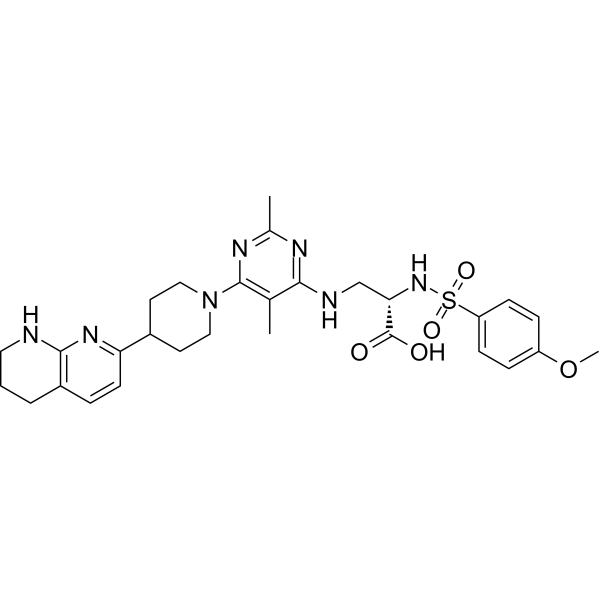
GLPG0187 is a broad spectrum integrin receptor antagonist with antitumor activity; inhibits αvβ1-integrin with an IC50 of 1.3 nM. GLPG0187 inhibits migrasome biogenesis without cytotoxicity.
For research use only. We do not sell to patients.
- Purity : 99.43%
- CAS No.: 1320346-97-1
- Formula: C29H37N7O5S
- Molecular Weight:595.71
-
Storage:Powder -20°C, 3 years , 4°C, 2 years ; In solvent -80°C, 2 years , -20°C, 1 year

To place orders, for customer services and technical support, please contact: MedChemExpress USA
Tel: 609-228-6898 E-mail: [email protected] [email protected]


-
 Biological Activity
-
Chemical Information
-
Solvent & Solubility
- Protocols
- Purity & Documentation
- References
-
 Help & FAQs


-
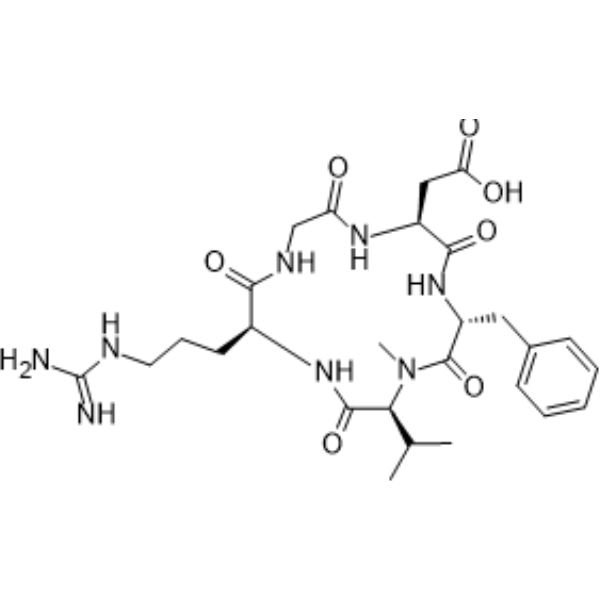
HY-16141
CilengitideIntegrin Inhibitor -
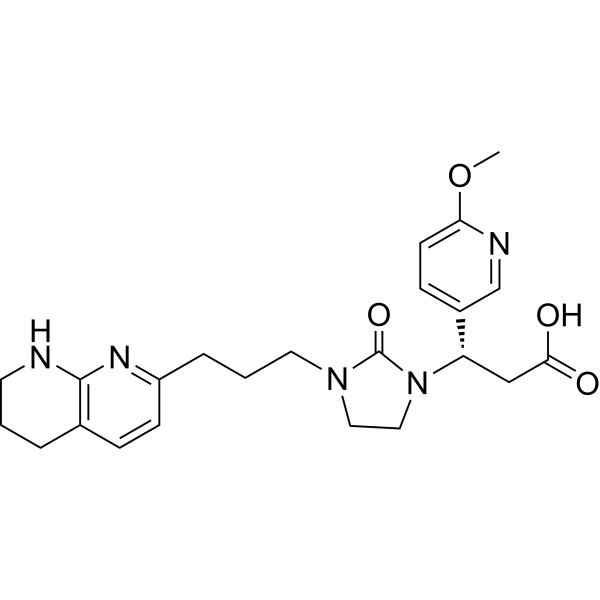
HY-15102
MK-0429αvβ3 Integrin Inhibitor -
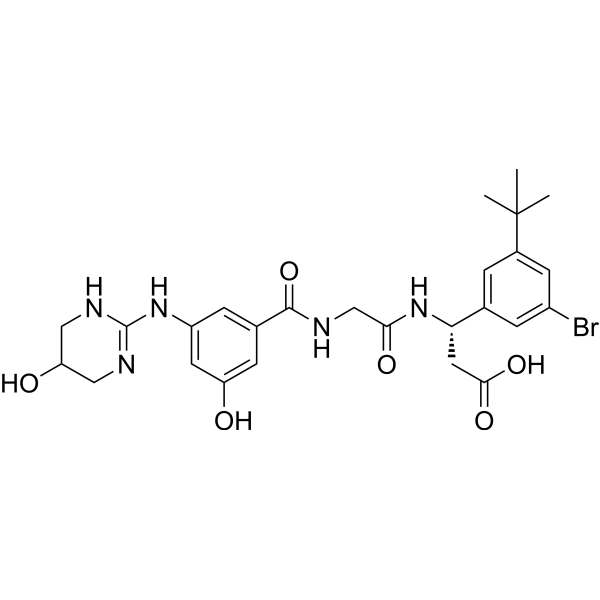
HY-18644
CWHM-12αV Integrins Inhibitor -
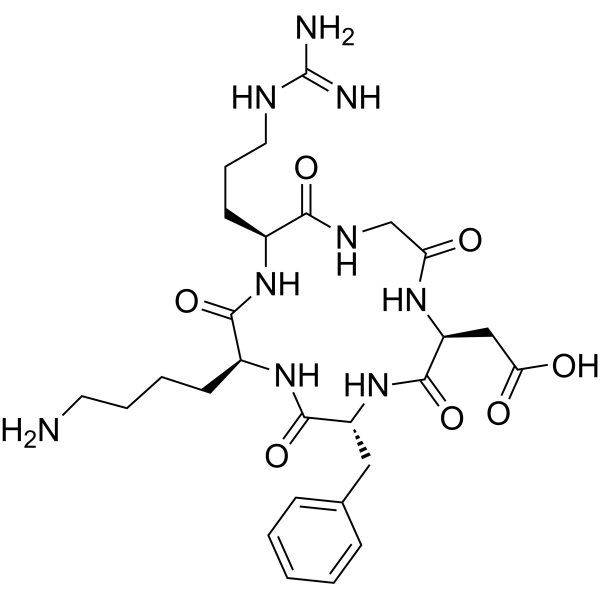
HY-P0023
Cyclo(-RGDfK)αvβ3 Integrin Inhibitor -
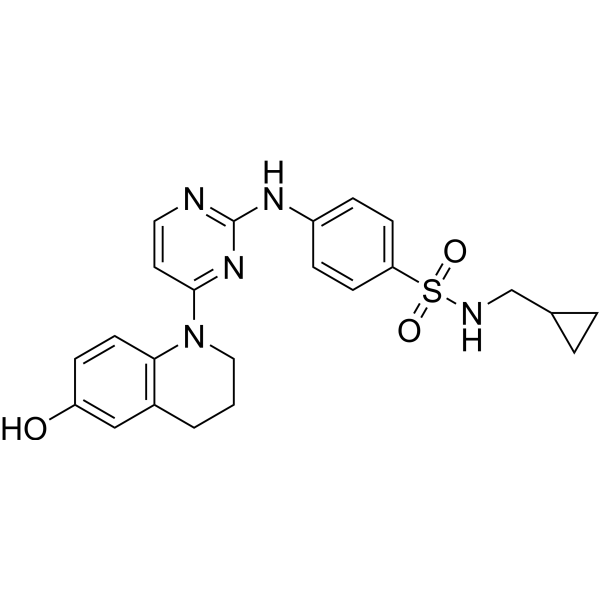
HY-13306
Pyrintegrinβ1-integrin Agonist -
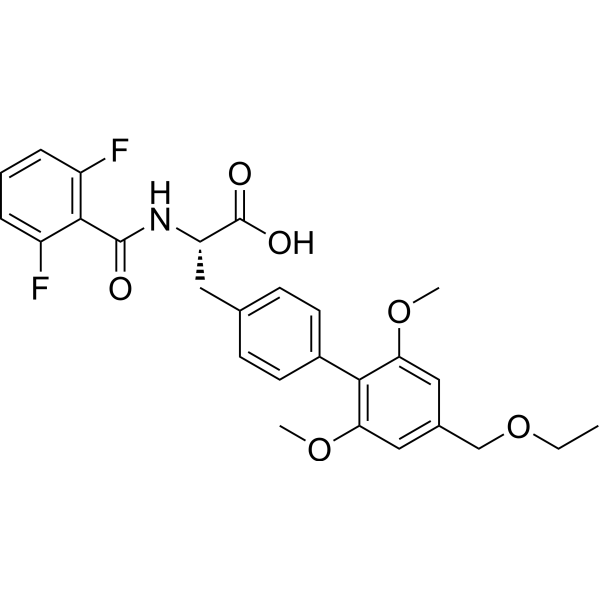
HY-14951
FirategrastIntegrin Antagonist -
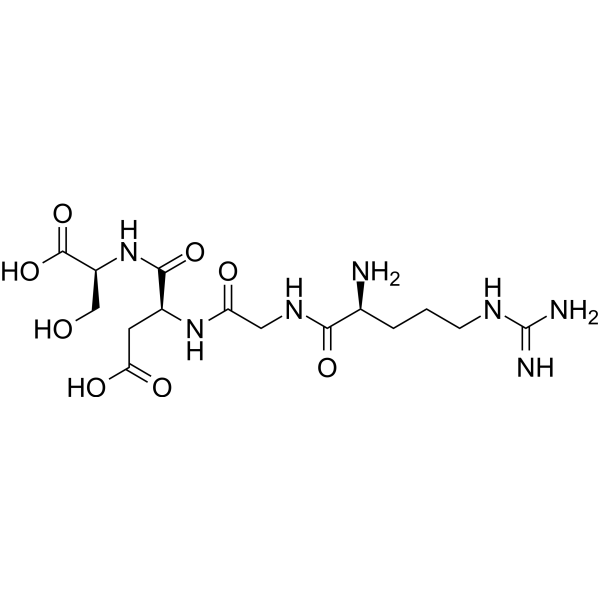
HY-12290
Arg-Gly-Asp-SerIntegrin Inhibitor -
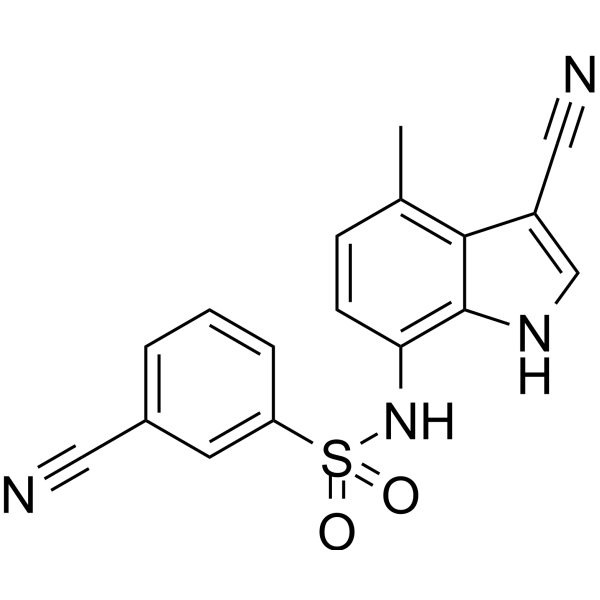
HY-14571
E7820Angiogenesis Inhibitor -
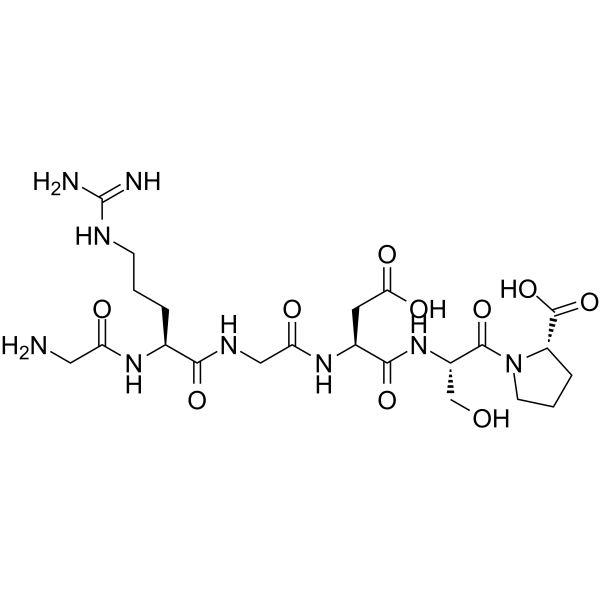
HY-P0290
GRGDSPIntegrin Inhibitor -
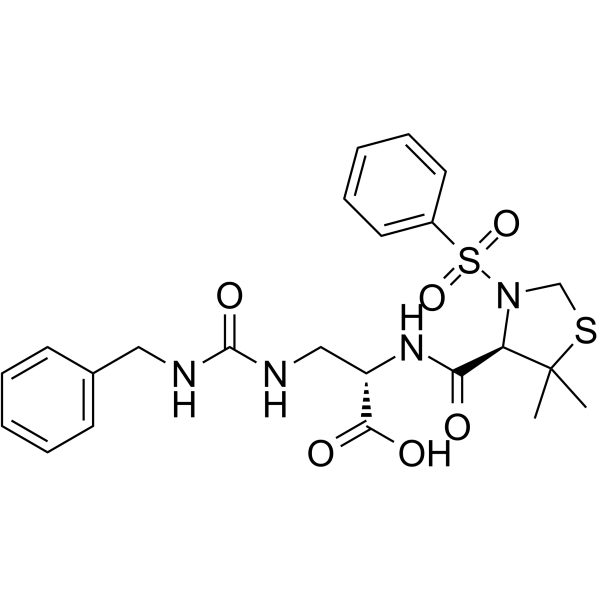
HY-107588
TC-I 15α2β1 Inhibitor -
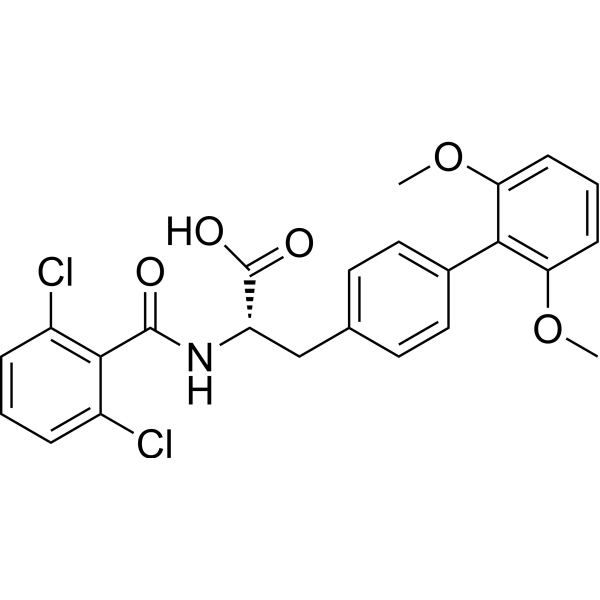
HY-15770
TR-14035α4β7/α4β1 Antagonist -
HY-13535
ATN-161α5β1/αvβ3 Integrin Binder
Publications Citing Use of MedChemExpress (MCE) GLPG0187
More- Cell. 2021 Sep 16;184(19):4919-4938.e22. [Abstract]
- Cell Res. 2024 Aug;34(8):572-585. [Abstract]
- Cancer Commun (Lond). 2024 Oct;44(10):1106-1129. [Abstract]
- Gut. 2022 Jan;71(1):55-67. [Abstract]
- Clin Mol Hepatol. 2024 Jul;30(3):449-467. [Abstract]
- Cell Discov. 2024 Dec 9;10(1):121. [Abstract]
- Adv Sci (Weinh). 2025 Sep 2:e07411. [Abstract]
- Biomaterials. 2025 Dec:323:123407. [Abstract]
- Arterioscler Thromb Vasc Biol. 2023 Jul;43(7):1134-1153. [Abstract]
- ACS Appl Mater Interfaces. 2024 Oct 23;16(42):56801-56814. [Abstract]
- Breast Cancer Res. 2024 Dec 20;26(1):187. [Abstract]
- J Cell Biol. 2024 Dec 2;223(12):e202403195. [Abstract]
- Cancer Sci. 2025 Feb;116(2):406-419. [Abstract]
- Mol Oncol. 2025 Jul 30. [Abstract]
- Nanotoxicology. 2026 May 19:1-18. [Abstract]
- J Pharm Biomed Anal. 2021 Feb 20:195:113825. [Abstract]
- University of Toronto. 2024.
- SSRN. 2024 Nov 5.
- Oxid Med Cell Longev. 2020 May 16:2020:6384803. [Abstract]
 Customer Validation & Images

-
Cell Imaging/Staining
-
Cell Imaging/Staining
-
WB
-
IF
-
Cell Migration/Invasion Assay


Biological Activity
Description
IC50 & Target
IC50: 1.3 nM (αvβ1)[1]
In Vitro
In a solid-phase assay, GLPG0187 shows selectivity for several RGD integrin receptors with IC50s of 1.3, 3.7, 2.0, 1.4, 1.2, 7.7 nM for αvβ1, αvβ3, αvβ5, αvβ6,αvβ8, and α5β1. GLPG0187 is a potent inhibitor of osteoclastic bone resorption and angiogenesis. Treatment with GLPG0187 dose-dependently increases the E-cadherin/vimentin ratio, rendering the cells a more epithelial, sessile phenotype. GLPG0187 dose-dependently diminishes the size of the aldehyde dehydrogenase high subpopulation of prostate cancer cells[1]. GLPG0187 treatment results in cell rounding and clumping. GLPG0187 demonstrates a dose-dependent significant reduction in tumour cell migration. GLPG0187 at all concentrations significantly reduces cell proliferation[2].
MedChemExpress (MCE) has not independently confirmed the accuracy of these methods. They are for reference only. Further protocols information, click here.
In Vivo
MedChemExpress (MCE) has not independently confirmed the accuracy of these methods. They are for reference only.
Clinical Trial
| NCT Number | Sponsor | Condition | Start Date |
Phase

|
|---|---|---|---|---|
| NCT01329991 | Plexxikon| | 2011-05 | PHASE1 |


Chemical Information
-
CAS No. 1320346-97-1
-
Appearance Solid
-
Molecular Weight 595.71
-
Formula C29H37N7O5S
-
Color White to off-white
-
SMILES
O=C(O)[C@H](CNC1=NC(C)=NC(N2CCC(C3=NC4=C(CCCN4)C=C3)CC2)=C1C)NS(=O)(C5=CC=C(OC)C=C5)=O
-
Shipping
Room temperature in continental US; may vary elsewhere.
-
Storage
Powder -20°C 3 years 4°C 2 years In solvent -80°C 2 years -20°C 1 year


Publications (19)
-
Journal Impact Factor
-
Most Recent
-
Cell
Directed evolution of a family of AAV capsid variants enabling potent muscle-directed gene delivery across species. [Abstract]2021 Sep 16;184(19):4919-4938.e22. PMID: 34506722 -
Cell Res
2024 Aug;34(8):572-585. PMID: 38918584
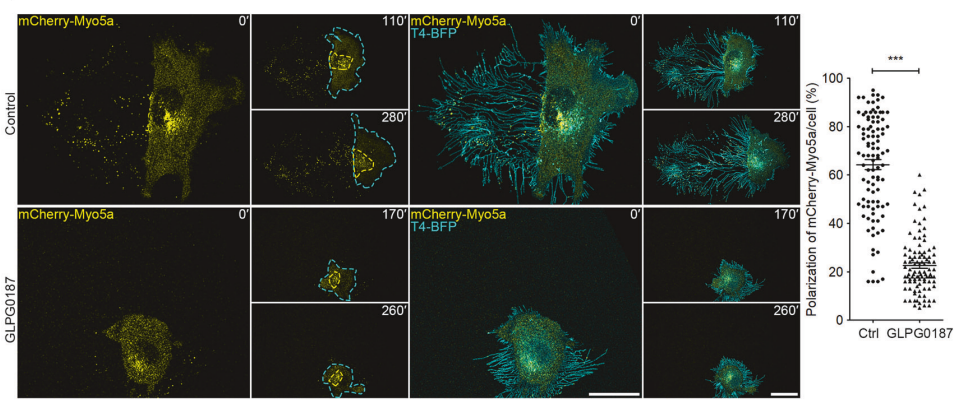
GLPG0187 purchased from MedChemExpress. Usage Cited in: Cell Res. 2024 Aug;34(8):572-585. [Abstract]
L929 cells stably expressing mCherry-Myo5a and T4-BFP, treated with or without 10 μM GLPG0187, were subjected to time-lapse imaging. Time interval, 10 min. Cyan dashed lines outline the cell body, and yellow dashed lines outline mCherry-Myo5a puncta. Scale bar, 20 μm. Polarization of mCherry-Myo5a was quantified and shown as the means ± SEM for triplicate samples of > 50 cells.
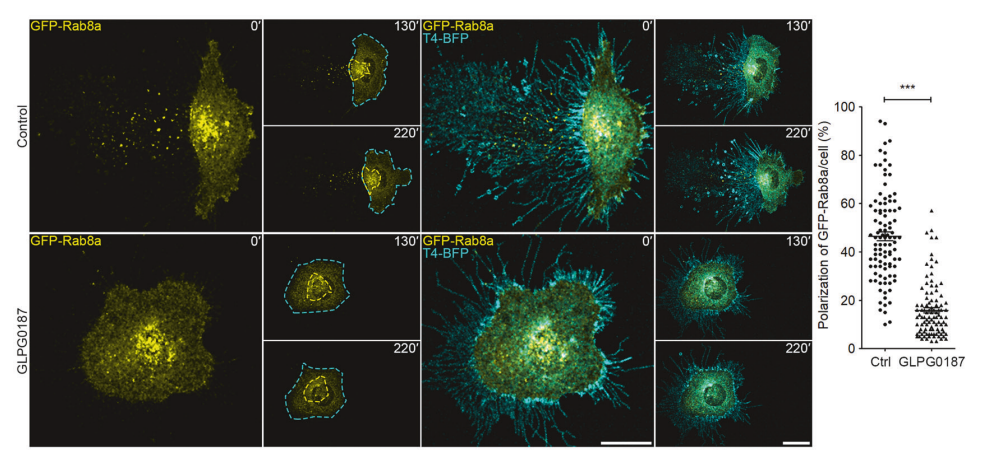
GLPG0187 purchased from MedChemExpress. Usage Cited in: Cell Res. 2024 Aug;34(8):572-585. [Abstract]
L929 cells stably expressing GFP-Rab8a and T4-BFP, treated with or without 10 μM GLPG0187, were subjected to time-lapse imaging. Time interval, 10 min. Cyan dashed lines outline the cell body, and yellow dashed lines outline GFP-Rab8a vesicles, respectively. Scale bar, 20 μm. Polarization of GFP-Rab8a was quantified and shown as the means ± SEM for triplicate samples of > 50 cells. Two-tailed unpaired t-test was used for statistical analyses (right panel).
-
Cancer Commun (Lond)
Galectin 3-binding protein (LGALS3BP) depletion attenuates hepatic fibrosis by reducing transforming growth factor-β1 (TGF-β1) availability and inhibits hepatocarcinogenesis. [Abstract]2024 Oct;44(10):1106-1129. PMID: 39073023 -
Gut
Activated intestinal muscle cells promote preadipocyte migration: a novel mechanism for creeping fat formation in Crohn's disease. [Abstract]2022 Jan;71(1):55-67. PMID: 33468536
GLPG0187 purchased from MedChemExpress. Usage Cited in: Gut. 2022 Jan;71(1):55-67. [Abstract]
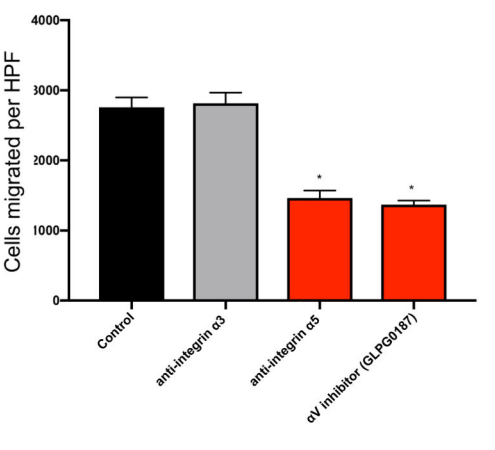
Integrin α5 blocking antibody and GLPG0187 (integrin αv antagonist) but not α3 blocking antibody reduced the migration of pre-adipocytes towards HIMC conditioned medium in the Boyden chamber.
GLPG0187 purchased from MedChemExpress. Usage Cited in: Gut. 2022 Jan;71(1):55-67. [Abstract]
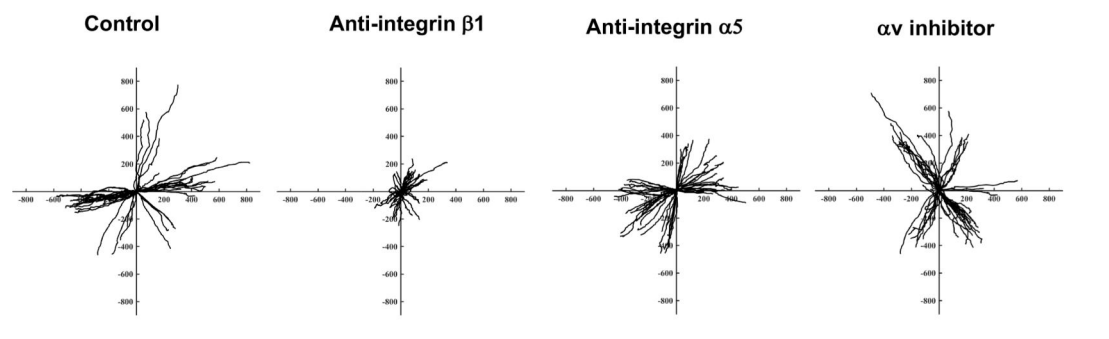
Representative tracking of pre-adipocytes seeded on decellularized human muscularis propria was performed for 24 h in the absence (control) and presence of integrin β1 blocking antibody, α5 blocking antibody, and GLPG0187 (integrin αv antagonist).
GLPG0187 purchased from MedChemExpress. Usage Cited in: Gut. 2022 Jan;71(1):55-67. [Abstract]
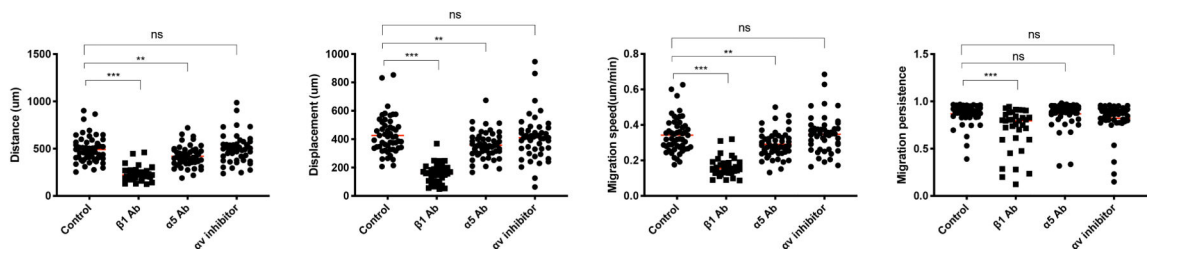
Distance, displacement, velocity and migration persistence of pre-adipocytes migration on decellularized human intestine with adding integrin β1 and α5 blocking antibody, and GLPG0187 (integrin αv antagonist).
-
Clin Mol Hepatol
Ursolic acid targets secreted phosphoprotein 1 to regulate Th17 cells against non-alcoholic fatty liver disease. [Abstract]2024 Jul;30(3):449-467. PMID: 38623614 -
Cell Discov
2024 Dec 9;10(1):121. PMID: 39648224 -
Adv Sci (Weinh)
Succinic Acid-Induced Macrophage Endocytosis Promotes Extracellular Vesicle-Based Integrin Beta1 Transfer Accelerating Fibroblast Activation and Sepsis-Associated Pulmonary Fibrosis. [Abstract]2025 Sep 2:e07411. PMID: 40898357 -
Biomaterials
CD44 and αV-integrins dual-targeting bimetallic nanozymes for lung adenocarcinoma therapy via NIR-enhanced ferroptosis/apoptosis. [Abstract]2025 Dec:323:123407. PMID: 40403445 -
Arterioscler Thromb Vasc Biol
Lineage-Specific Induced Pluripotent Stem Cell-Derived Smooth Muscle Cell Modeling Predicts Integrin Alpha-V Antagonism Reduces Aortic Root Aneurysm Formation in Marfan Syndrome Mice. [Abstract]2023 Jul;43(7):1134-1153. PMID: 37078287
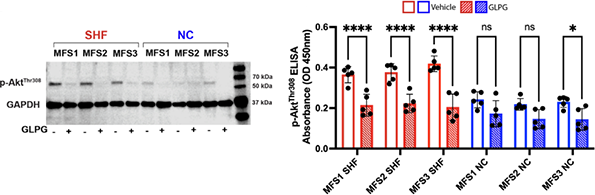
GLPG0187 purchased from MedChemExpress. Usage Cited in: Arterioscler Thromb Vasc Biol. 2023 Jul;43(7):1134-1153. [Abstract]
GLPG0187 (10 nM; 24 h) significantly reduces the expression of p-AktThr308 signaling in SHF and NC cells.
GLPG0187 purchased from MedChemExpress. Usage Cited in: Arterioscler Thromb Vasc Biol. 2023 Jul;43(7):1134-1153. [Abstract]
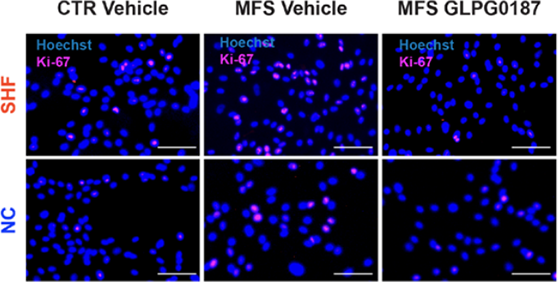
GLPG0187 (10 nM; 24 h) significantly reduces the expression of Ki-67 in SHF and NC cells.
-
ACS Appl Mater Interfaces
Regulation of Osteogenic Differentiation of hBMSCs by the Overlay Angles of Bone Lamellae-like Matrices. [Abstract]2024 Oct 23;16(42):56801-56814. PMID: 39389937 -
Breast Cancer Res
2024 Dec 20;26(1):187. PMID: 39707454 -
J Cell Biol
2024 Dec 2;223(12):e202403195. PMID: 39347717 -
Cancer Sci
2025 Feb;116(2):406-419. PMID: 39581761 -
Mol Oncol
ITGAV and SMAD4 influence the progression and clinical outcome of pancreatic ductal adenocarcinoma. [Abstract]2025 Jul 30. PMID: 40739706 -
Nanotoxicology
Polystyrene nanoplastics promote tumor lung metastasis by inducing sodium overload in macrophages in an NMDAR-dependent way. [Abstract]2026 May 19:1-18. PMID: 42154607 -
J Pharm Biomed Anal
A stop-flow comprehensive two-dimensional HK-2 and HK-2/CIKI cell membrane chromatography comparative analysis system for screening the active ingredients from Pyrrosia calvata (Bak.) Ching against crystal-induced kidney injury. [Abstract]2021 Feb 20:195:113825. PMID: 33339641 -
-
-
Oxid Med Cell Longev
FNDC5 Attenuates Oxidative Stress and NLRP3 Inflammasome Activation in Vascular Smooth Muscle Cells via Activating the AMPK-SIRT1 Signal Pathway. [Abstract]2020 May 16:2020:6384803. PMID: 32509148


Solvent & Solubility
In Vitro:
DMSO : 12.5 mg/mL (20.98 mM; ultrasonic and warming and heat to 60°C; Hygroscopic DMSO has a significant impact on the solubility of product, please use newly opened DMSO)
H2O : < 0.1 mg/mL (insoluble)
Please refer to the solubility information to select the appropriate solvent. Once prepared, please aliquot and store the solution to prevent product inactivation from repeated freeze-thaw cycles.
Storage method and period of stock solution: -80°C, 2 years; -20°C, 1 year. When stored at -80°C, please use it within 2 years. When stored at -20°C, please use it within 1 year.
Please refer to the solubility information to select the appropriate solvent. Once prepared, please aliquot and store the solution to prevent product inactivation from repeated freeze-thaw cycles.
Storage method and period of stock solution: -80°C, 2 years; -20°C, 1 year. When stored at -80°C, please use it within 2 years. When stored at -20°C, please use it within 1 year.
Concentration (start) × Volume (start) = Concentration (final) × Volume (final)
In Vivo:
Select the appropriate dissolution method based on your experimental animal and administration route.
- For the following dissolution methods, please ensure to first prepare a clear stock solution using an In Vitro approach and then sequentially add co-solvents:
- To ensure reliable experimental results, the clarified stock solution can be appropriately stored based on storage conditions. As for the working solution for In Vivo experiments, it is recommended to prepare freshly and use it on the same day.
- The percentages shown for the solvents indicate their volumetric ratio in the final prepared solution. If precipitation or phase separation occurs during preparation, heat and/or sonication can be used to aid dissolution.
Add each solvent one by one: 10% DMSO 40% PEG300 5% Tween-80 45% Saline
Solubility: ≥ 1.25 mg/mL (2.10 mM); Clear solution
This protocol yields a clear solution of ≥ 1.25 mg/mL (saturation unknown).
Taking 1 mL working solution as an example, add 100 μL DMSO stock solution (12.5 mg/mL) to 400 μL PEG300, and mix evenly; then add 50 μL Tween-80 and mix evenly; then add 450 μL Saline to adjust the volume to 1 mL.
Preparation of Saline: Dissolve 0.9 g sodium chloride in ddH₂O and dilute to 100 mL to obtain a clear Saline solution.
For the following dissolution methods, please prepare the working solution directly:
It is recommended to prepare fresh solutions and use them promptly within a short period of time.
The percentages shown for the solvents indicate their volumetric ratio in the final prepared solution. If precipitation or phase separation occurs during preparation, heat and/or sonication can be used to aid dissolution.
Add each solvent one by one: 50% PEG300 50% Saline
Solubility: 10 mg/mL (16.79 mM); Suspended solution; Need ultrasonic
In Vivo Dissolution Calculator
Please enter the basic information of animal experiments:
-
-
-
-
Recommended: Prepare an additional quantity of animals to account for potential losses during experiments.
Please enter your animal formula composition:
-
%DMSO +
Recommended: Keep the proportion of DMSO in working solution below 2% if your animal is weak.
-
%+
-
+%Tween-80 + +
-
%Saline +
The co-solvents required include: DMSO, . All of co-solvents are available by MedChemExpress (MCE). , Tween 80. All of co-solvents are available by MedChemExpress (MCE).
Working solution concentration: 0.22 mg/mL
Method for preparing stock solution: mg drug dissolved in μL DMSO. Stock solution concentration: mg/mL.
1. Take μL DMSO stock solution;
2. Add μL .
μL , mix evenly;
3. Then add μL Tween 80, mix evenly;
4. Then add μL
Please ensure that the stock solution in the first step is dissolved to a clear state, and add co-solvents in sequence. You can use ultrasonic heating (ultrasonic cleaner, recommended frequency 20-40 kHz), vortexing, etc. to assist dissolution.

Protocols
-
Cell Cytotoxicity Assay
Cytotoxicity assays are usually based on the assessment of cell membrane damage, which can also be indirectly detected by measuring cell viability. Detection methods include MTT assay, CKK-8 assay, LDH assay and ATP assay, etc.
-
Mammalian live/dead viability and cytotoxicity staining
Live/dead viability and cytotoxicity staining assays are based on the simultaneous detection of intracellular esterase activity in metabolically active (viable) cells and membrane integrity loss in non-viable cells. In commonly used dual-staining approaches, membrane-permeant fluorogenic substrates are converted by intracellular esterases into fluorescent products in live cells, while impermeant DNA-binding dyes selectively enter cells with compromised plasma membranes and label nucleic acids in dead or dying cells, enabling discrimination between viable and non-viable populations by fluorescence microscopy or flow cytometry.
-
Subcutaneous Cell-Line-Derived Xenograft
Subcutaneous cell-line-derived xenograft (CDX) models are established by implanting cultured human cancer cell lines into immunodeficient mice, where the injected cells form localized tumors that can be monitored in vivo as a measure of tumorigenic potential, growth kinetics, and treatment response. These models are widely used in oncology research because they allow reproducible tumor formation and enable comparative assessment of tumor growth between different cell lines or genetic manipulations in a controlled in vivo microenvironment. Subcutaneous implantation of cancer cells in immunodeficient mice is a standard approach for evaluating tumor growth behavior and therapeutic response across multiple cancer types, including prostate, esophageal, pancreatic, and colon cancer models.
-
Cell Viability Determination by MTT Colorimetric Assay
The following protocol uses the MTT colorimetric assay as a classic literature-established method for assessing cell viability/metabolic activity in cultured mammalian cells. MTT[3-(4,5-dimethylthiazol-2-yl)-2,5-diphenyltetrazolium bromide] is reduced by metabolically active cells to a colored formazan product; the amount of formazan is quantified spectrophotometrically and provides an indirect measure of metabolically active viable cells. Importantly, MTT reduction reflects cellular oxidoreductase/metabolic activity rather than an absolute direct count of living cells, so changes in cellular metabolism can alter the signal independently of cell number.


Purity & Documentation
-
Data Sheet (277 KB)
-
SDS (251 KB)
- English - EN (251 KB)
- Français - FR (251 KB)
- Deutsch - DE (251 KB)
- Norwegian - NO (251 KB)
- Español - ES (251 KB)
- Swedish - SV (251 KB)
- Italian - IT (251 KB)
- Korean - KR (251 KB)
- Portuguese - PT (251 KB)
-
Handling Instructions (2659 KB)
References
[1]. van der Horst G, et al. Targeting of α(v)-integrins in stem/progenitor cells and supportive microenvironment impairs bone metastasis in human prostate cancer. Neoplasia. 2011 Jun;13(6):516-25. [Content Brief]
[2]. Reeves KJ, et al. Prostate cancer cells home to bone using a novel in vivo model: modulation by the integrin antagonist GLPG0187. Int J Cancer. 2015 Apr 1;136(7):1731-40. [Content Brief]
[3]. Puzhong Lu, et al. Chemical screening identifies ROCK1 as a regulator of migrasome formation. Cell Discov. 2020 Aug 4;6(1):51. [Content Brief]


Complete Stock Solution Preparation Table
Please refer to the solubility information to select the appropriate solvent. Once prepared, please aliquot and store the solution to prevent product inactivation from repeated freeze-thaw cycles.
Storage method and period of stock solution: -80°C, 2 years; -20°C, 1 year. When stored at -80°C, please use it within 2 years. When stored at -20°C, please use it within 1 year.
| Optional Solvent | Concentration Solvent Mass | 1 mg | 5 mg | 10 mg | 25 mg |
|---|---|---|---|---|---|
| DMSO | 1 mM | 1.6787 mL | 8.3933 mL | 16.7867 mL | 41.9667 mL |
| 5 mM | 0.3357 mL | 1.6787 mL | 3.3573 mL | 8.3933 mL | |
| 10 mM | 0.1679 mL | 0.8393 mL | 1.6787 mL | 4.1967 mL | |
| 15 mM | 0.1119 mL | 0.5596 mL | 1.1191 mL | 2.7978 mL | |
| 20 mM | 0.0839 mL | 0.4197 mL | 0.8393 mL | 2.0983 mL |


GLPG0187 Related Classifications
HY-100506 Related Classifications
 Powered by Bioz